Monday, December 29, 2025

Our Unequal Economy Means the US Can’t Quit War

The unprecedented concentration of wealth in the hands of a group of oligarchs pushes the United States toward a military economy.


US President Donald Trump arrives to announce the US Navy's new Golden Fleet initiative, unveiling a new class of warships, at Mar-a-Lago in Palm Beach, Florida, on December 22, 2025.
(Photo by Andrew Caballero-Reynolds/AFP via Getty Images)

Emanuel Pastreich
Dec 29, 2025
Foreign Policy In Focus


The United States is drawn to war on every front, like a moth to a candle. It does not matter that Americans are sick of foreign wars stretching back 25 years in Afghanistan, Iraq, SyriaLibya, and now Venezuela, wars that have bankrupted the nation. It has no effect that the United States lacks the economic, technological, and manufacturing capacity necessary to sustain a conventional war. Nor would the United States likely win an unconventional war employing nanotechnology, biotechnology, and information warfare.

The critics allowed to appear on TV like John Mearsheimer and Jeffrey Sachs attribute this warmongering to the foolishness and the ignorance of political leaders like President Donald Trump, or to the incompetence of bureaucrats. They intentionally avoid any analysis of the economic structure of the United States, or the role of multinational banks and corporations in the formulation of policy. Their only explanation for the drive for war is the foolish actions of a “few bad apples.”

No one wants war, including the rich and powerful on all sides, in Beijing and Washington, in Berlin and Moscow, in Tehran and Tel Aviv. Yet the beating of the drums of war continues, and it grows louder. The appetite for war spreads like a vermillion fungus across the entire nation, with a military culture pushed through newspapers, movies, and television broadcasts. Preparation for war is a means of controlling the “little people” in a totalitarian manner.

The US government is pressuring every ally to rapidly increase defense spending, up to 5%, and to do so far more rapidly than can possibly be done in such a short time without massive corruption and waste. The military buildup is but a transfer of wealth, not an increase in security.
So, Why War?

The United States is collapsing as an economy, as a society, and as a civilization, weighed down by a massive debt, burdened by collapsing infrastructure and dying educational and research institutions, and strangled by a culture of pornography and narcissism. Above all, the extreme concentration of wealth over the last 20 years, since government was captured completely by the super rich, has meant that a handful of conceited frauds can determine the policy for the entire nation, and decide the fate of everyone. The basic interests of the vast majority of citizens are entirely ignored. The republic, and all traces of participatory democracy, have been consigned to the trash bin of history.

The international trade system and the embrace of “free trade” ideology played a major role in pushing the United States toward war around the world. Supply chains link together factories in loops that encircle the globe. Manufactured goods and agricultural products are brought into the United States from over the world, not because doing so is good for Americans, but because the multinational banks that control the economy seek out the cheapest labor and cheapest goods. Virtually all consumer goods in the United States go through logistics and distribution systems controlled by multinational corporations. Unlike the situation in 1945, a large part of the money that citizens (rebranded as “consumers”) spend at Walmart, Best Buy, or Amazon goes to the stockholders of those corporations and offers little or no benefit for the local economy.

The increase in military spending is a policy choice; it is the only way to avoid economic collapse.

Until the 1950s, most of what Americans ate came from local, family-owned farms. Clothes and furniture were also produced locally. Now that production and distribution have been spread all over the globe, events far away directly impact the US economy, and sometimes politicians feel pressure to use military threats, or responses, to protect American corporate interests (repackaged as “national security”).

So, too, US dependency on petroleum did not exist in the 1920s or dependency on rare earth metals in the 1980s. These are problems created by the decisions of corporations to introduce technologies that offered some conveniences, but at the price of extreme dependency of citizens on technology, which has generated large corporate profits.

The relocation of American manufacturing overseas also means that the only employment available in many regions, especially rural areas, is as police officers, guards at prisons, soldiers, or other positions in the military, police, or surveillance system. These days, security and the military are the only parts of the government budget that are growing.

The last decade has seen employment in defense surge by 40%, reaching 1.4% of the total employment base. In 2022-2023 alone the workforce expanded by 4.8% in contrast to an average of 1.7%.

No politician can oppose the increase in the military budget because, although constant foreign wars do great damage to the economy as a whole, the military has become the only part of government that increases opportunities for employment locally.

The US economy is increasingly controlled by a small number of rich families. The wages of American workers have been reduced, and the costs of living greatly increased for the profit of the few. The unprecedented concentration of wealth in the hands of a group of oligarchs has changed everything. This restructuring of society may not seem to be military in nature, but it pushes the United States toward a military economy.
The End of the Welfare State

The disposable income of workers increased beginning in the 1940s because of the redistribution of wealth forced by the reforms of the New Deal. These reforms also allowed for corporations to make enormous profits after the 1950s by selling consumer products to working people who had the disposable income to purchase them. From the 1960s on, consumption, growth, and the stock market became the primary tools for assessing the health of the economy.

Particularly from the 1970s on, this system effectively funneled wealth from working people to the wealthiest. But today consumption by workers, the middle class, and even the upper-middle class is no longer sufficient to generate profits for corporations because the people cannot spend any more. Banks have been forced to look for some other source of profit to pay off their debts. One direction they looked has been the military. Military spending creates steady demand that is not tied to market conditions, or economic booms and busts. It is funded by the people through taxes, or through the inflation created by the deficit spending that funds military expenditures.

The increase in military spending is a policy choice; it is the only way to avoid economic collapse. It must be justified by threats from China, Russia, and Iran, or terrorism. Intelligence agencies responding to the demands of banks to do everything they can to create trouble with those countries.

The true three branches of government are the politicians, the bankers, and the generals.

Companies like Oracle, Palantir, Google, and Amazon not only grow fat like ticks feeding on the military and intelligence budgets, they are merging with banks and using their control of the IT systems that power banks as a means to seize control of money itself through digitalization of the dollar, or the introduction of cryptocurrencies.

One of the most powerful billionaires, Larry Ellison, has launched a campaign to dominate media through the control of social media, entertainment, and news broadcasting. The Trump administration forced TikTok’s Chinese owner ByteDance to turn over its operations in the United States to a consortium headed by Ellison’s company Oracle in December 2025. Oracle grew to global influence as a major contractor for the CIA, and Ellison is a strong Trump supporter.

Since Ellison’s son David was installed as CEO in August 2025 of the new entertainment conglomerate Paramount Skydance—the merger of Paramount Global, Skydance Media, and National Amusements—father and son have been raising enormous funds for a hostile takeover of Warner Brothers that would give them unprecedented control over entertainment and journalism in the United States. Already CBS, under Ellison rule, has cancelled at the last minute a “60 Minutes” report on the notorious El Salvadorian prison CECOT.

These IT firms made those billions by taking out massive loans that they then used to buy back their own stock. They have nothing but debt and money in digital form. War, the threat of war, the buildup for war, is what keeps them going.
Impact on Governance

The United States government is a republic consisting of three branches: the executive, the legislative, and the judicial. The three branches complement each other, and they also regulate and balance out each other. This system ensures that power is not concentrated in any one place.

That was a long time ago. How does politics really work today?

There are three real branches of government today, and they are quite different than those described in the Constitution. The true three branches of government are the politicians, the bankers, and the generals. They are the ultimate powers behind the government, and they balance each other out because they operate at different levels and have different strengths.

The concentration of wealth has almost eliminated the impact of citizens on policy.

The politicians are able to form temporary alliances among interest groups in business, finance, and government and negotiate among them to determine policy. The bankers control money and have the power of financial manipulation to shut down the entire economy, or the activities of opponents. The generals possess a chain of command that cannot be easily broken by exterior forces, even by money, and they have the ability to use force directly, without relying on a third party, to achieve their goals.

In a healthy society, where citizens actually play a role in politics, the politicians rise to the top because their primary mission is serving the needs of their clients, whether they are bankers, businessmen, generals, or other interest groups in the general population. Politicians can play the central role because they reflect the needs of citizens. As long as politicians can effectively meet the needs of the bankers, the generals, and the citizens, and keep the money flowing to them, the system remains stable.

If wealth is too concentrated, however, to the degree that the bankers can pay off everyone and gain complete control of the economy, then they rise to the top because bankers need only service a small number of the super rich to obtain absolute power. The politicians become their puppets, and the generals are paid off by the bankers. That is what the political system in the United States has become today.

A political system run by bankers, however, will encounter enormous problems over time because everything will be decided on the basis of short-term profits, and no one will do anything for the sake of others, or follow an ideal greater than personal interest. As a result, the foundations of government, and of society, will crumble. Eventually the government will collapse into anarchy, or it will drift into war as a means of generating profits and enforcing the bankers’ iron-fisted rule over the people.

At that historical moment, the generals rise to the top because they have a viable chain of command that continues to function even as the government fails, and because they speak the language of force and violence, which will become the only language that has authority once the legitimacy of politicians and bankers has been destroyed.

The concentration of wealth has almost eliminated the impact of citizens on policy. The finance-driven speculative economy has brought trust in government and business to a new low. As a result, the only politicians in the Democratic Party who are able to take on the Trump administration are all former military and intelligence, and the election of a former CIA officer Abigail Spanberger as governor of Virginia suggests that the “CIA Democrats” have become the driving force in an ideologically bankrupt Democratic Party.

The financial kings, the bankers and billionaires, need make only one little mistake in order for the chain of command to be handed over to the military in the United States. Although military officers may not want war as individuals, once the order goes down, the entire process, especially in light of the massive increase in drones and robots in the military, will be literally on automatic.


© 2023 Foreign Policy In Focus


Emanuel Pastreich
Emanuel Pastreich directs the Asia Institute in Seoul, South Korea.
Full Bio >
Trump Slashes US Humanitarian Aid Pledge as His Cuts Kill Hundreds of Thousands Globally

One tracker estimates that the Trump administration’s assault on foreign aid programs has killed more than 700,000 people so far—a majority of them children.


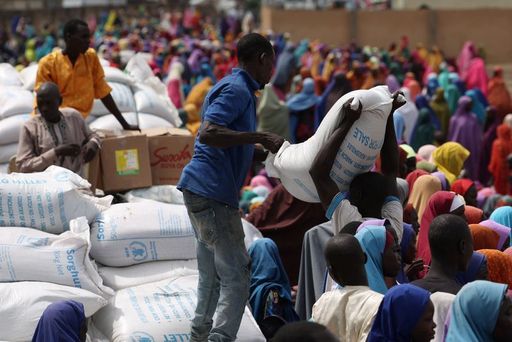
People receive aid at Almanar feeding center in Mayo Mandala on the outskirts of Omdurman, 
Sudan on May 25, 2025.
(Photo: Carolyn Van Houten/The Washington Post via Getty Images)

Jake Johnson
Dec 29, 2025
COMMON DREAMS


The Trump administration on Monday announced a commitment of $2 billion to United Nations humanitarian assistance efforts, a fraction of what the US has previously provided as President Donald Trump’s foreign aid cuts continue to wreak deadly havoc worldwide.

The US State Department said the funds will be tied to reform efforts pushed by the administration, as it warns individual UN agencies to “adapt, shrink, or die”—all while giving massive handouts to billionaires.

“The agreement requires the UN to consolidate humanitarian functions to reduce bureaucratic overhead, unnecessary duplication, and ideological creep,” said the State Department.

Al Jazeera reported that the reduced commitment “is a sharp contrast to the assistance of up to $17 billion the US has provided as the UN’s leading funder in recent years.”

“The $2 billion will create a pool of funds that can be directed at specific countries or crises, with 17 countries—including Bangladesh, the Democratic Republic of the Congo, Haiti, Syria, and Ukraine—initially targeted,” the outlet noted. “Afghanistan is not included on the list, nor is Palestine, which officials say will be covered by money included in Trump’s yet-to-be-completed Gaza plan.”

The Associated Press observed that “even as the US pulls back its aid, needs have ballooned across the world: Famine has been recorded this year in parts of conflict-ridden Sudan and Gaza, and floods, drought, and natural disasters that many scientists attribute to climate change have taken many lives or driven thousands from their homes.”

The new funding pledge comes after the Trump administration’s lawless dismantling of the US Agency for International Development (USAID), which was the United States’ primary body for foreign aid.

Experts say the destruction of USAID at the hands of billionaire Elon Musk and others inside the Trump White House has killed hundreds of thousands of people across the globe—and could kill millions more in the coming years.

A conservative tracker maintained by Boston University epidemiologist Brooke Nichols estimates that the Trump administration’s assault on foreign aid programs has killed more than 700,000 people—a majority of them children.

In a blog post for the Center for Global Development earlier this month, Charles Kenny and Justin Sandefur wrote that “while quantification is difficult, there is little doubt many people have died as a result, and without action many more will die in the future.”

HUMANITARIAN AID

United States pledges €1.7bn for UN humanitarian aid, lower than previous years


The United States on Monday unveiled a €1.7 billion pledge for United Nations humanitarian aid, even as President Donald Trump’s administration continues to scale back foreign assistance and warns UN agencies to “adapt, shrink or die” in line with new financial realities.


Issued on: 29/12/2025 - RFI

Displaced Palestinians chase after trucks travelling along Salah al-Din road in the central Gaza Strip, near Deir al-Balah, as they attempt to obtain humanitarian aid on 9 November, 2025. AFP - EYAD BABA


The sum represents a fraction of previous US contributions but is presented as a generous commitment designed to preserve America’s position as the world’s largest humanitarian donor.

The money will be placed in a central fund and distributed to UN agencies under a new system of stricter oversight, a key condition of Washington’s push for sweeping reform that has alarmed aid groups and forced deep cuts to services.

In recent years, total US humanitarian funding for UN-backed programmes has reached as much as €14.4 billion annually, according to UN data, of which €7– 9 billion came as voluntary contributions. Critics argue the drastic cut risks worsening hunger, displacement and disease and undermines US soft power overseas.

“We are watching the lifeline for millions of people disintegrate before our eyes,” according to Cindy McCain, executive director of the World Food Program.

Turbulent year

The announcement caps a turbulent year for UN bodies such as the WFP, the refugee agency UNHCR and the International Organisation for Migration, all of which have faced severe budget strain following massive US aid reductions.

Other western donors, including Britain and Germany, have also reduced contributions.

The new pledge forms part of a preliminary agreement with the UN Office for the Coordination of Humanitarian Affairs (OCHA), headed by former British diplomat Tom Fletcher.

Despite global needs soaring – with famine declared in parts of Sudan and Gaza and extreme weather disasters displacing thousands – OCHA has been forced to lower its fundraising targets.

The US seeks what officials describe as “more consolidated leadership authority” in how aid is delivered.

Under the plan, OCHA will act as a central conduit for funding rather than separate US allocations to individual agencies.

“This humanitarian reset should deliver more aid with fewer tax dollars,” said US ambassador to the UN, Michael Waltz.
Reduce bureaucratic overhead

According to the State Department, “the agreement requires the UN to consolidate humanitarian functions to reduce bureaucratic overhead, unnecessary duplication, and ideological creep”.

“Individual UN agencies will need to adapt, shrink, or die,” the statement said.

It called the arrangement “a critical step” in reforming how humanitarian operations are funded and monitored.

Initially, the funds will focus on 17 countries, including Bangladesh, the Democratic Republic of Congo, Haiti, Syria and Ukraine. Afghanistan and the Palestinian territories are not on the list, with US officials saying they will be addressed under Trump’s proposed Gaza peace plan.

The United Nations estimates that some 240 million people – in conflict zones, suffering from epidemics, or victims of natural disasters and climate change – are in need of emergency aid.

In 2025, the UN's appeal for more than €38 billion was only funded to the €10 billion mark, the lowest in a decade.

That only allowed it to help 98 million people, 25 million fewer than the year before.

(With newswires)


US pledges $2B for UN humanitarian aid amid sweeping foreign assistance cuts

Critics say the Western aid cutbacks have been shortsighted, driven millions toward hunger, displacement or disease, and harmed US soft power around the world.

The cuts have major implications for UN affiliates like the International Organization for Migration, the World Food Program and refugee agency UNHCR. / AP

The United States on Monday announced a $2 billion pledge for UN humanitarian aid as President Donald Trump’s administration continues to slash US foreign assistance and warns United Nations agencies to “adapt, shrink or die” in a time of new financial realities.

The money is a small fraction of what the US has contributed in the past but reflects what the administration believes is a generous amount that will maintain the United States’ status as the world’s largest humanitarian donor.

The pledge creates an umbrella fund from which money will be doled out to individual agencies and priorities, a key part of US demands for drastic changes across the world body that have alarmed many humanitarian workers and led to severe reductions in programs and services.

The $2 billion is only a sliver of traditional US humanitarian funding for UN-backed programs, which has run as high as $17 billion annually in recent years, according to UN data. US officials say only $8-$10 billion of that has been in voluntary contributions. The United States also pays billions in annual dues related to its UN membership.

Critics say the Western aid cutbacks have been shortsighted, driven millions toward hunger, displacement or disease, and harmed US soft power around the world.


RelatedTRT World - UN refugee agency hails record early donations amid US aid cuts


A year of crisis in aid

The move caps a crisis year for many UN organisations like its refugee, migration and food aid agencies. The Trump administration has already cut billions in US foreign aid, prompting them to slash spending, aid projects and thousands of jobs. Other traditional Western donors have reduced outlays, too.

The announced US pledge for aid programs of the United Nations, the world’s top provider of humanitarian assistance and biggest recipient of US humanitarian aid money, takes shape in a preliminary deal with the UN Office for the Coordination of Humanitarian Affairs, or OCHA, run by Tom Fletcher, a former British diplomat and government official.

Even as the US pulls back its aid, needs have ballooned across the world: Famine has been recorded this year in parts of conflict-ridden Sudan and Gaza, and floods, drought and natural disasters that many scientists attribute to climate change have taken many lives or driven thousands from their homes.

The cuts will have major implications for UN affiliates like the International Organization for Migration, the World Food Program and the refugee agency UNHCR. They have already received billions less from the US this year than under annual allocations from the previous Biden administration, or even during Trump’s first term.

Now, the idea is that Fletcher’s office, which last year set in motion a “humanitarian reset” to improve efficiency, accountability and effectiveness of money spent, will become a funnel for US and other aid money that can then be redirected to those agencies, rather than scattered US contributions to a variety of individual appeals for aid.

US seeks aid consolidation

The United States wants to see “more consolidated leadership authority” in UN aid delivery systems, said a senior State Department official, speaking on condition of anonymity to provide details before the announcement at the US diplomatic mission in Geneva.

Under the plan, Fletcher and his coordination office “are going to control the spigot” on how money is distributed to agencies, the official said.

“This humanitarian reset at the United Nations should deliver more aid with fewer tax dollars, providing more focused, results-driven assistance aligned with US foreign policy,” said US Ambassador to the United Nations Michael Waltz.

US officials say the $2 billion is just a first outlay to help fund OCHA’s annual appeal for money, announced earlier this month. Fletcher, noting the upended aid landscape, already slashed the request this year. Other traditional UN donors like Britain, France, Germany and Japan have reduced aid allocations and sought reforms this year.

“The agreement requires the UN to consolidate humanitarian functions to reduce bureaucratic overhead, unnecessary duplication, and ideological creep,” the State Department said in a statement. “Individual UN agencies will need to adapt, shrink, or die.”

“Nowhere is reform more important than the humanitarian agencies, which perform some of the UN’s most critical work,” the department added. “Today’s agreement is a critical step in those reform efforts, balancing President Trump’s commitment to remaining the world’s most generous nation, with the imperative to bring reform to the way we fund, oversee, and integrate with UN humanitarian efforts.”

At its core, the reform project will help establish pools of funding that can be directed either to specific crises or countries in need. A total of 17 countries will be targeted initially, including Bangladesh, Congo, Haiti, Syria and Ukraine.

One of the world’s most desperate countries, Afghanistan, is not included, nor are the Palestinian territories, which officials say will be covered by money stemming from Trump’s as-yet-incomplete Gaza peace plan.

The project, months in the making, stems from Trump’s longtime view that the world body has great promise, but has failed to live up to it, and has, in his eyes, drifted too far from its original mandate to save lives while undermining American interests, promoting radical ideologies and encouraging wasteful, unaccountable spending.

Fletcher praised the deal, saying in a statement, “At a moment of immense global strain, the United States is demonstrating that it is a humanitarian superpower, offering hope to people who have lost everything.”

SOURCE:AP


Working Families Party Seeks Banner Year as Trump-Led GOP Appears Poised for ‘Landslide Electoral Defeat’

“I don’t think there’s been a better and more right time for a third party to emerge in this country that speaks to the interest of everyday working people,” said Maurice Mitchell, national director of the Working Families Party.


New York Working Families Party co-directors Ana Maria Archila and Jasmine Gripper take the stage during a rally in support of Zohran Mamdani at Brooklyn Steel in Brooklyn New York on May 4 2025.
(Photo by Madison Swart/Hans Lucas/AFP via Getty Images)


Brad Reed
Dec 29, 2025
COMMON DREAMS


The Working Families Party is gearing up to have a banner year in the 2026 midterms at a time when political trends show the Republican Party led by President Donald Trump heading for a major loss.

The party, which is now active in 18 states, is preparing to “ramp up its involvement in primary elections, supporting candidates that emphasize working-class politics and seek to disrupt the political status quo,” according to a Monday report in the Guardian.

The Working Families Party (WFP) had a number of victories in 2025, highlighted by its election of democratic socialist Zohran Mamdani as mayor of New York City.

Maurice Mitchell, national director of the WFP, told the Guardian that he thinks now is the right time for a populist progressive insurgency given that both Democrats’ and Republicans’ brands are underwater with US voters.

“Less and less people are identifying as being a Democrat or Republican,” he said. “I don’t think there’s been a better and more right time for a third party to emerge in this country that speaks to the interest of everyday working people. I believe that our time has come.”

Although the WFP has traditionally worked within the confines of Democratic Party primary politics, the party this year elected some candidates in the New Jersey General Assembly that lacked backing from state Democratic Party bigwigs.

“This is really the first time that there’s been Working Families candidates that ran outside of the Democratic Party structure, and so we’re building what that future looks like and what it means,” Katie Brennan, a New Jersey assemblywoman-elect endorsed by the WFP who won without official Democratic Party backing, told the Guardian. “They’ve grown and have been making progress year in and year out, and this next year will be big for us. Now we’re in the statehouse, and what does that mean? I think it’ll continue to bring attention to the Working Families party.”

One issue that the WFP hopes will propel its candidates to victory in 2026 is the nationwide backlash to artificial intelligence data centers.

In an announcement made earlier this month, the WFP said it is recruiting candidates to run against building AI data centers, which have been blamed for spiking utility bills and draining water resources, in their local communities.

“Billionaires are getting richer from data centers, while working people see their electricity and water bills go through the roof,” said Ravi Mangla, national press secretary for the WFP. “Fortunately, regular people are joining with their neighbors to push back against these big tech takeovers. We’re inviting local leaders who are fighting back to consider running for the seats where decisions about data centers are being made.”

Another reason the party may sense an opportunity is that the Trump-led GOP appears headed for brutal elections in 2026.

Polling expert G. Elliot Morris published an analysis on Monday showing that Trump’s current net approval rating of -16 percentage points will likely translate into a “landslide electoral defeat” for Republicans next year.

Morris added that Trump’s approval on the issue of inflation was “downright catastrophic,” and noted that the president has been bleeding support even in states that voted for him by decisive margins last year.

“Trump’s approval rating is not just underwater because of Democratic resistance,” he observed. “Lots of independents and Republicans disapprove of how he’s running the country, too. In fact, the decline from Trump’s vote margin in 2024 is steeper in redder parts of the country.”
Top Trump commerce official 'confused about rudimentary economic details': analysis


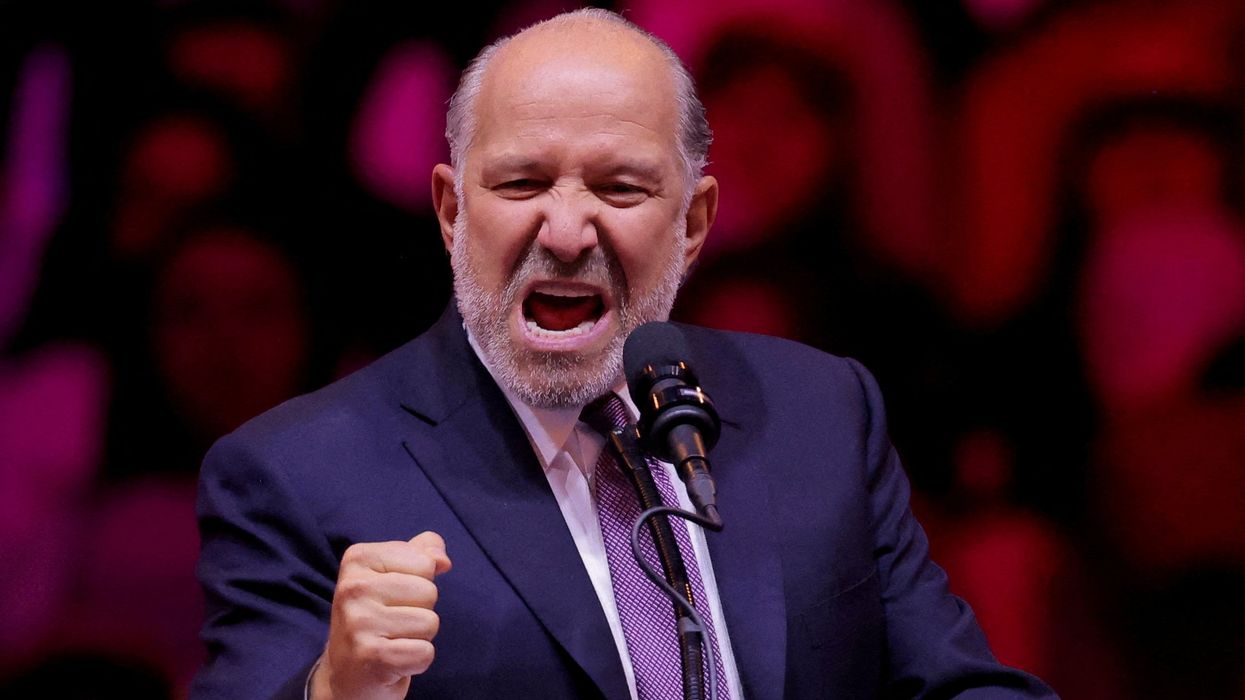
Howard Lutnick, Chairman and CEO of Cantor Fitzgerald, gestures as he speaks during a rally for Donald Trump at Madison Square Garden, in New York, U.S., October 27, 2024. REUTERS/Andrew Kelly/File Photo

December 29, 2025
ALTERNET


Howard Lutnick, Donald Trump's Secretary of Commerce, seems to be "confused about rudimentary economic details," according to a new analysis from MS NOW, making verifiably false claims on a regular basis, and it's gotten worse with his most recent "completely wrong" defense of the economy.

Writing for MS NOW on Monday, Steve Benen, a producer for Rachel Maddow and regular contributor to the network, first highlighted claims Lutnick made back in September that "didn't make any sense." In a post to social media, the billionaire-turned-secretary claimed that the economy under former President Joe Biden "could never reach 3 percent."

However, as Benen pointed out, Biden's economy posted that level of growth "several times," and sometimes saw growth of 4-6 percent. In fact, the total growth for all of Biden's first year in office, 2021, was 6.2 percent, "the strongest in nearly four decades."

"Given that the Department of Commerce, which Lutnick ostensibly leads, is responsible for compiling and releasing GDP data, the secretary’s apparent confusion was difficult to defend," Benen wrote. Still, Lutnick's fundamentally incorrect claims got worse last week.

During an appearance on Fox News, the secretary cited recent preliminary economic data for the third quarter of 2025, including a 4.3 percent growth in the country's gross domestic product (GDP). Lutnick then claimed that this equated to American workers across the board getting a 4.3 percent raise in their income, a complete misrepresentation of what GDP actually is. As Benen explained, while wages and overall economic growth can often move in tandem, they are not inherently linked and move independently of each other all the time.

The question of why Lutnick says things like this, however, remains up in the air, but the trend suggests that he is either incompetent enough to believe the falsehoods he shares, or that he is deliberately using them to spin a narrative about Trump's economy, which voters have turned against considerably.

"The broader question is whether the head of the Commerce Department is genuinely confused about this, or whether he’s pretending to be genuinely confused about this," Benen wrote. "If it’s the former, how did Lutnick manage to get this job? (For that matter, how did he run an investment bank?) If it’s the latter, why would he deliberately choose to appear ignorant about basic information his own department released to the public?"
Nearly Half of Americans Say Their Financial Security Is Getting Worse Under Trump

In a recent focus group, one voter who supported the president in 2024 said Trump’s recent claims that the economy is strong were “delusional.”


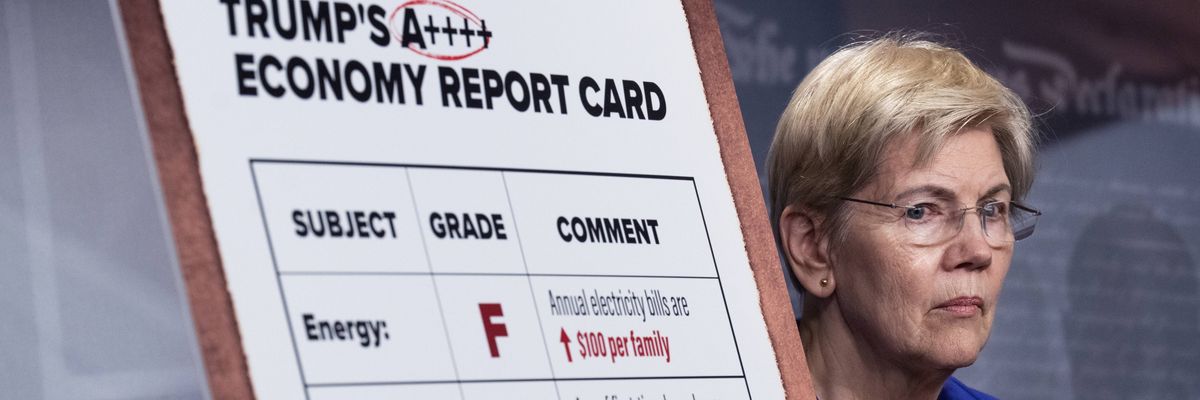
Sen. Elizabeth Warren (D-Mass.) is seen with a sign referencing President Donald Trump’s “report card,” during a news conference on a new “Democratic initiative to lower costs,” in the U.S. Capitol on December 17, 2025.
(Photo by Tom Williams/CQ-Roll Call, Inc. via Getty Images)


Julia Conley
Dec 29, 2025
COMMON DREAMS

New polling from The Guardian on Monday bolstered recent analyses that have shown low consumer confidence and job creation numbers and higher household costs and unemployment: Americans are struggling under President Donald Trump’s economic policies, and they increasingly believe the White House—for all Trump’s claims that the economy is strong—is to blame.

The poll, conducted by Harris for the news outlet between December 11 and 13, found that respondents were twice as likely to say their financial security is getting worse as they were to report an improvement.

Nearly half of those surveyed said their financial situation is worsening, and 57% said they perceived that the US is in a recession—although that would be defined by two quarters of negative growth in the US economy, which the country has not experienced at this point.

Despite that, the poll—along with recent focus groups including members of Trump’s 2024 base, held by Syracuse University and reported on Monday by NBC News—illustrated how Trump’s focus on imposing tariffs on countries around the world and his promotion of policies that have raised household bills for millions of people have left Americans feeling pessimistic about their own financial health and that of the country.

Democratic voters were far more likely than Republicans to tell Harris that their financial security is getting worse, with 52% of the latter saying so compared with 27% of the former.

But 54% of independent voters agreed that they are struggling more financially, despite Trump’s recent claim that he would give the economy a grade of “A-plus-plus-plus-plus-plus.”

“We have seen a shift among these voters collectively, cracks in their faith, more questioning, oscillating, or outright change of heart about Trump.”

Respondents from across the political spectrum were more likely than ever before to blame the White House for their financial struggles, Harris said.

More than three-quarters of Democrats blamed Trump’s policies and “government management of the economy,” along with 72% of independents and more than half of Republicans—55%.

Analyses this year have shown Trump’s tariffs, which he claimed soon after taking office would “liberate” Americans from the national debt, are raising costs for small businesses and making it harder for them to stay afloat, and are passing on higher prices to consumers—resulting in ballooning grocery bills for millions of Americans.

Trump made lowering grocery prices a central promise of his campaign last year, along with repeatedly pledging that he was “going to get your energy prices down by 50%.”

But the president’s embrace of artificial intelligence and the expansion of data centers—something he and congressional Republicans have aggressively pushed states to allow despite public disapproval—is unlikely to result in lower utility prices for households. Those costs have risen by 13% since Trump took office, with the president’s cancellation of renewable energy projects to blame as well as energy-sucking data centers.

The focus groups held by Syracuse recently found that voters who supported the president last year have rapidly grown discouraged by his economic policies, including his tariffs, which one participant called “a tax on the American people.”

“That’s who pays for it, so I don’t support it,” David S. of New Jersey told NBC. “The people who are buying those imports are paying the tax.”

With less than a year until voters are set to decide if Republicans should keep their majorities in the US House and Senate, fewer than half of the people surveyed in four focus groups said they believed Trump has made it a priority to fight inflation and reduce their costs. Robert L. of Virginia told Syracuse researchers that the president’s recent comments painting a sunny picture of the economy were “delusional.”

Another Virginia voter, Justin K., said the president has been focused on “prosecuting his political enemies” and “pardoning people” and has not “tried at all” to tackle the rising cost of living.

A number of those surveyed said they had decided to back Democratic candidates Abigail Spanberger and Mikie Sherrill in this year’s gubernatorial elections in Virginia and New Jersey just a year after supporting Trump.

“Many of these voters gave President Trump a long runway well into the summer because they believed that he understands how business works better than they do and that his own fortune would eventually translate to enriching the country and their own finances,” Margaret Talev, director of Syracuse University’s Institute for Democracy, Journalism, and Citizenship, told NBC on Monday.

“But as the year wore on, we have seen a shift among these voters collectively, cracks in their faith, more questioning, oscillating, or outright change of heart about Trump,” Talev said. “What we almost never see is a wish for a do-over vote or a rush toward Democrats for the answer.”


‘Trump’s Economic Policies Did This’: US Business Bankruptcies Surge to 15-Year High

At least 717 US companies filed for bankruptcy through November 2025—the highest figure recorded since the aftermath of the Great Recession.


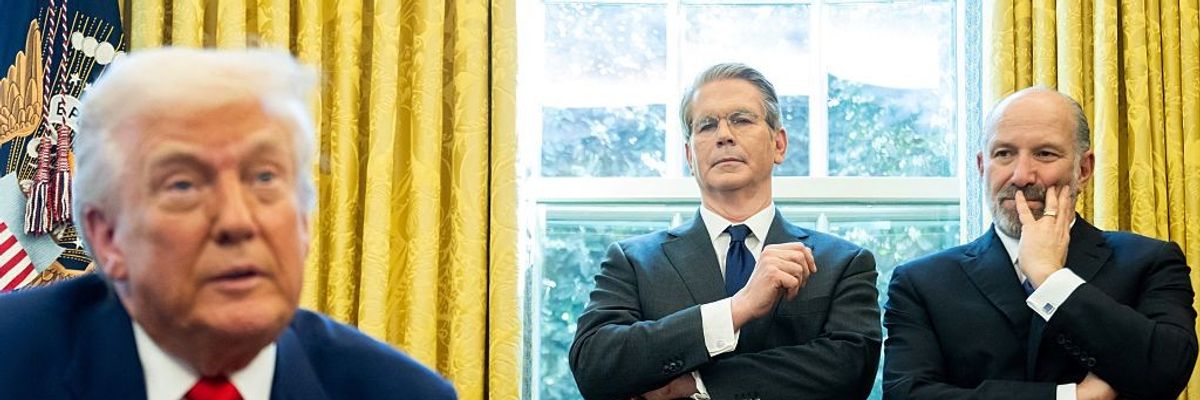
US Treasury Secretary Scott Bessent and Commerce Secretary Howard Lutnick look on as President Donald Trump speaks on April 9, 2025.
(Photo: Saul Loeb/AFP via Getty Images)

Jake Johnson
Dec 29, 2025
COMMON DREAMS


Businesses in the United States have filed for bankruptcy this year at a level not seen since 2010 as President Donald Trump’s tariff regime has jacked up costs for companies in manufacturing and other major sectors.

Citing data from S&P Global Market Intelligence, the Washington Post reported over the weekend that at least 717 US companies filed for bankruptcy through November 2025, the highest figure recorded since the aftermath of the Great Recession and a 14% increase compared to the same period last year.

“Companies cited inflation and interest rates among the factors contributing to their financial challenges, as well as Trump administration trade policies that have disrupted supply chains and pushed up costs,” the Post noted. “But in a shift from previous years, the rise in filings is most apparent among industrials—companies tied to manufacturing, construction, and transportation. The sector has been hit hard by President Donald Trump’s ever-fluid tariff policies—which he’s long insisted would revive American manufacturing.”


Recent data shows that the US has lost 49,000 manufacturing jobs since Trump’s return to office.

The bankruptcy figures add to the growing pile of evidence showing that Trump’s tariffs and broader policy agenda have harmed the US economy—weakening job growth, driving the unemployment rate up to the highest level since the Covid-19 pandemic, and worsening the nation’s cost-of-living crisis.

Democrats immediately seized on the new reporting as evidence of Trump’s failed stewardship of the US economy, messaging that’s likely to be central as the 2026 midterms approach.

Ken Martin, chair of the Democratic National Committee, said Monday that “when Donald Trump signed his Big Ugly Bill into law, he cemented the Republican Party as the party of billionaires and special interests—not working families, farmers, or small business owners.”

“While millions of working families are already being squeezed to afford groceries, utilities, and rent, Trump chose to strip them of their healthcare and food assistance just so he could give his ultrawealthy friends and donors an extra buck,” said Martin. “Make no mistake: Trump’s ‘signature achievement’ will be the nail in the coffin for the Republican majority when voters head to the polls next November.”

A look at America minus immigrants as Trump immigration crackdown reshapes daily life

Hospitals, farms, classrooms and local businesses feel the impact of fewer arrivals as labour gaps widen communities, thin out and the US economy faces slower growth pressures


Lydia Depillis, 
Campbell Robertson
 Published 29.12.25


Eugene Graham watches as protesters stand off against police at a US Immigration and Customs Enforcement facility in Portland, Oregon, on October 5.AP

Across the US, someone is missing.


One year into President Donald Trump’s immigration crackdown, construction firms in Louisiana are scrambling to find carpenters. Hospitals in West Virginia have lost out on doctors and nurses who were planning to come from overseas. A neighbourhood football league in Memphis cannot field enough teams because immigrant children have stopped showing up.

America is closing its doors to the world, sealing the border, squeezing the legal avenues to entry and sending new arrivals and longtime residents to the exits.


Visa fees have been jacked up, refugee admissions are almost zero and international student admissions have dropped. The rollback of temporary legal statuses granted under the Biden administration has rendered hundreds of thousands more people newly vulnerable to removal at any time. The administration says it has already expelled more than 600,000 people.

Shrinking the foreign-born population won’t happen overnight. Oxford Economics estimates that net immigration is running at about 450,000 people a year under current policies. That is well below the two million to three million a year who came in under the Biden administration. The share of the country’s population that is foreign-born hit 14.8 per cent in 2024, a high not seen since 1890.

But White House officials have made clear they are aiming for something closer to the immigration shutdown of the 1920s, when Congress, at the crest of a decades-long surge in nativism, barred entry of people from half of the world and brought net immigration down to zero. The share of the foreign-born population bottomed out at 4.7 per cent in 1970.

There’s little doubt that major changes are in store. Immigration has woven itself so tightly through the country’s fabric — in classrooms and hospital wards, city parks and concert halls, corporate boardrooms and factory floors — that walling off the country now will profoundly alter daily life for millions of Americans.

Grocery stores and churches are quieter in immigrant neighbourhoods. Fewer students show up in Los Angeles and New York City. In South Florida, Billo’s Caracas Boys, a Venezuelan orchestra, puts on an annual holiday concert where generations of families come to dance salsas and paso dobles. This year, the orchestra announced at the last minute that it was cancelling the show because so many people are nervous about leaving home.

The changes will also be felt hundreds of kilometres from any ocean or national border, even in the snow-washed streets of Marshalltown, Iowa.

First Mexicans, some undocumented, came to Marshalltown in the 1990s to work at the pork processing plant. After a high-profile immigration raid there in 2006, refugees with more solid legal status arrived from Myanmar, Haiti and the Democratic Republic of Congo.

Now, Mexican, Chinese and Vietnamese restaurants dot the blocks around the grand, 19th-century courthouse. The population is 19 per cent foreign-born, and some 50 dialects are spoken in the public schools. The pews at the Spanish-language Mass at the local Catholic church overflow on Sundays, and, in 2021, a Burmese religious society built a towering statue of Buddha on the outskirts of town.

“You have more energy in the community,” said Michael Ladehoff, Marshalltown’s mayor-elect. “If you stay stagnant, and you don’t have new people coming to your community, you start ageing out.”


But with Trump’s crackdown on immigration gaining strength, local festivals are more thinly attended. Parents pull their children out of school when they hear about people being detained. The supervisor overseeing the construction of a high school sports stadium received a deportation letter, creating a conspicuous absence as the work finished up. The pork plant has let workers go as their work permits have expired.


Echo of past


Over the country’s first century, immigration was essentially unrestricted at the federal level. This began to change in the late 1800s, with the “great wave” of immigrants fleeing political oppression or seeking work. Starting in the 1870s and over the decades that followed, Congress barred criminals, anarchists, the indigent and all Chinese labourers.


By the turn of the 20th century, anti-immigrant sentiment was rampant.


Evidence is mixed on the effect of the 1920s restrictions on assimilation. Some researchers have found that, without newcomers arriving from their home countries, immigrants were more likely to marry American-born citizens and less likely to live in ethnically homogenous neighbourhoods.


Although the effects of the 1924 immigration restrictions are difficult to untangle from other developments — wars, technological advancements, the baby boom — wages rose for US-born workers in places affected by the immigrant restrictions. But only briefly. Employers avoided paying more by hiring workers from Mexico and Canada, countries not subject to immigration caps; American-born workers from small towns migrated to urban areas and alleviated shortages. Farms turned to automation to replace the missing labour. The coal mining industry, which was powered by immigrants now barred from entry, shrank.


And today? Construction wages have been rising, even as home building has been sluggish — a potential indication that deportations in the immigrant-heavy industry are bidding up salaries. The union representing workers in the pork processing industry sees an upside, too.


“I will certainly bring it up at the bargaining table that the way to solve a labour shortage is to pay more money,” said Mark Lauritsen, head of the meatpacking division at the United Food and Commercial Workers Union International.


The same is true in landscaping. Immigrant crews, working outside, were an easy deportation target over the summer. Come spring, said Kim Hartmann, an executive at a Chicago-area landscaping firm, the labour force could be 10 to 20 per cent smaller.


“It’s going to be much more competitive to find that individual who’s been a
foreman or a supervisor and has years of experience,” Hartmann said. “We know that drives costs up.”


Hands still matter


Many services still require humans, in person.


“If you’re an obstetrician, delivering a baby right in the moment, you need hands to lay on the patient,” said David Goldberg, a vice-president of Vandalia Health, a network of hospitals and medical offices in West Virginia.


Nearly a fifth of nursing positions are currently vacant in West Virginia — a state that is older, sicker and poorer than most — and the state faces a serious shortage of physicians in the coming years. The answer has been to look abroad. A third of West Virginia’s physicians graduated from medical schools overseas. Now that option is narrowing.


Similarly, nobody has figured out how to harvest delicate crops with machines.


“It’s not going to hop from the ground into a package without somebody’s hands being involved somewhere along the way,” said Luke Brubaker, who runs a dairy farm in Pennsylvania. To milk cows, feed them and deliver calves, he relies on more than a dozen foreign-born workers, most of them Mexican. He is not optimistic that he will be able to replace them.


Land of opportunity?


Dan Simpson, the chief executive of Taziki’s, a fast casual Mediterranean restaurant chain based in the Southeast, has been losing employees since the beginning of the year. These were not only dishwashers and cooks but also managers and assistant managers, who had come to the US with advanced degrees.


“If you zoom back, the bigger problem is that we’re tarnishing the brand of America,” Simpson said. Even if the United States opens up again, he said, “we’re going to need a campaign to fix the idea that America is not the land of opportunity.”


International students pay full-freight tuition that helps fund new programmes and basic costs at many US colleges. As international enrollment has dropped, many schools are facing budget holes.


Nearly half of the immigrants who legally came to the US from 2018 to 2022 were college-educated, according to the Migration Policy Institute, a nonpartisan think tank. Immigrants are far more likely than US citizens to start businesses; nearly half of this year’s Fortune 500 companies were founded by immigrants or the children of immigrants.


“You have an economy that is smaller, less dynamic and less diversified,” said Exequiel Hernandez, a professor at the Wharton School at the University of Pennsylvania.


Over the longer term, low immigration will collide with one inexorable trend: an ageing population in need of care just as fewer workers are available to provide it.


New York Times News Service
'No immigration for a decade': Bannon pushes Trump to ban all immigrants for 10 years

David Edwards
December 29, 2025 
RAW STORY


Real America's Voice/screen grab

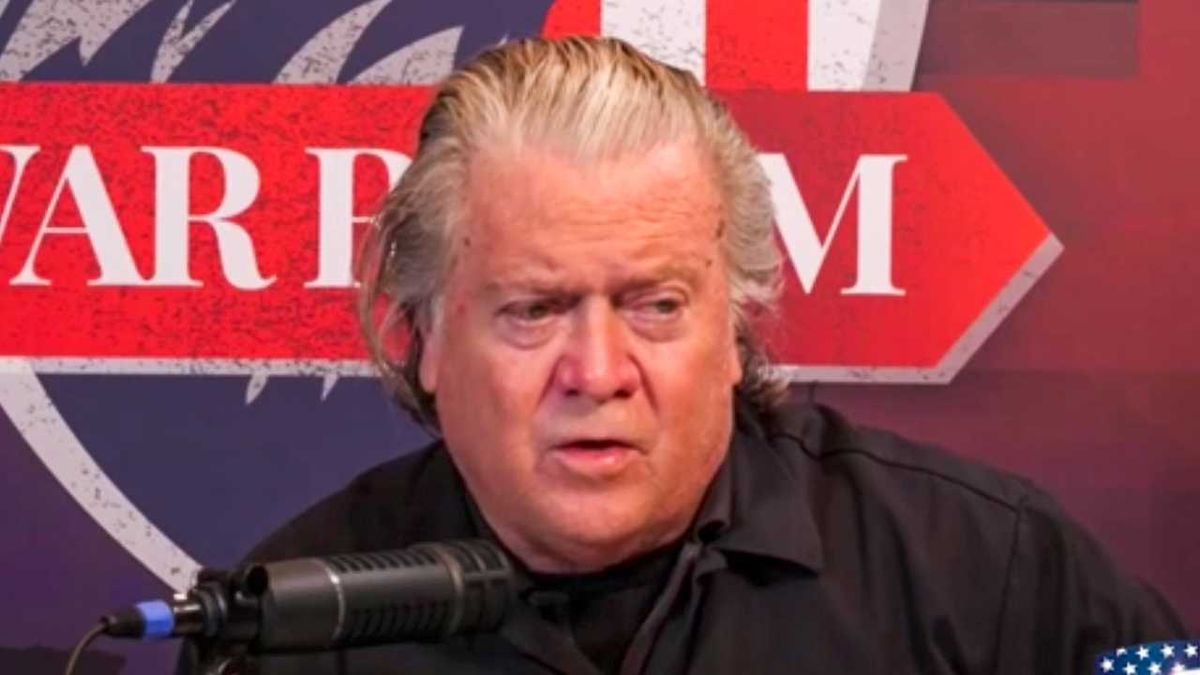
MAGA influencer Steve Bannon is calling on President Donald Trump to ban all immigration into the United States for at least 10 years

During a Monday interview with MyPillow CEO Mike Lindell on Real America's Voice, Bannon used alleged fraud in the daycare industry to push for Somali immigrants to be deported.

"They're stealing money and laughing in your face," Bannon said. "When somebody shows up, they got a million-in-one excuse, and they play dumb: 'Oh, I don't know, you're white, I don't speak the language.' They've got to all be deported."

"If you can't figure out there's $9 billion missing, you're in the wrong business," Lindell, a candidate for Minnesota governor, agreed. "And then transparency, Steve, I'll tell you what, I'll be the most transparent governor this country's ever seen. The people are going to know where the problems lie, and then we fix them."

Bannon then told anti-immigration activist Rosemary Jenks that Trump should implement "a 10-year moratorium on immigration."

"No immigration!" he insisted. "Not just getting rid of the H-1B visas, but moratoriums across the board on no immigration for a decade until we get this mess sorted out."

"I think most Americans would say, yeah, okay, what's wrong with that?" Jenks replied. "Nothing at all."

"We're done. It's over. We're not doing this anymore. We are not paying taxes so that you can throw our money away. We need a moratorium," she added. "It would go probably longer, for 10 years actually."

"You got to get rid of H-1Bs today and ship them all home and give those jobs for American citizens," Bannon agreed. "And then a 10-year moratorium on every other program."


"That's how long it's going to take to take this thing back to the basics and reconstruct it."


'Twisted homunculus' Stephen Miller nailed for his 'dumb as a box of hair' hate screeds


Tom Boggioni
December 29, 2025 
RAW STORY


A series of anti-immigrant posts by Donald Trump adviser Stephen Miller over the holiday weekend got a swift dismissal by longtime conservative Charlie Sykes, who questioned the intelligence of the president’s resident “evil genius.”

On his Substack platform, Sykes noted the controversial Miller making broad-based attacks on immigrants, including writing what Sykes sarcastically characterized as a “Deep Thought.”

Miller wrote he watched a Christmas special with his family that featured Frank Sinatra and Dean Martin and commented, “Imagine watching that and thinking America needed infinity migrants from the third world.”

Critics have fired back at Miller and pointed out, “Enjoy your racism grift while it lasts. Dean Martin’s dad came here from Italy at a time when Italy was considered third-world. Both of Frank Sinatra’s parents came here from Italy.”

Sykes pointed out that Miller wasn’t done sneering.

“Someone should write an alternate historical novel where Americans are the first to master the automobile, the first in flight, the first to harness the atom, the first to land on the moon — but just keep going and never open our borders to the entire third world for sixty years,” Miller claimed — ignoring the substantial number of foreign scientists who made major contributions to the Manhattan Project.

That led Sykes to launch a broadside at Trump’s key adviser.

“My contrarian take: I hope Stephen Miller goes on tweeting, because it exposes not merely his rancid bigotry (which was known), but also his invincible ignorance, because it turns out that this twisted homunculus — the evil genius behind Trump’s mass deportations — is actually as dumb as a box of hair,” he wrote.

You can read here.


Bio-inspired copper composite achieves zero thermal expansion with high thermal conductivity and toughness


Hefei Institutes of Physical Science, Chinese Academy of Sciences
Bio-Inspired Copper Composite Achieves Zero Thermal Expansion with High Thermal Conductivity and Toughness 

image: 

A bioinspired laminated copper composite exhibiting zero thermal expansion, high directional thermal conductivity and superior toughness.

view more 

Credit: TONG Peng


Zero-thermal-expansion (ZTE) materials are widely used in precision optics, cryogenic equipment, sensors, where even small temperature changes can cause performance problems. Yet creating ZTE materials that also conduct heat efficiently and remain mechanically robust has long been a challenge. Most conventional ZTE materials transfer heat poorly, while ZTE metal matrix composites often sacrifice strength and toughness due to the large amount of brittle negative-thermal-expansion particles they contain.

Inspired by hierarchical structures found in nature, a research team from the Hefei Institutes of Physical Science of the Chinese Academy of Sciences developed a novel bio-inspired laminated ZTE metal matrix composite that overcomes these limitations. The design draws inspiration from the "brick-and-mortar" laminated structure of abalone nacre, which is known for its exceptional strength and toughness, as well as the thin inner membranes of bamboo stems that enable efficient transport of water and nutrients.

The results were published in Acta Materialia recently.

In this study, the researchers designed a laminated composite composed of alternating pure copper foil layers and copper layers reinforced with Zn₀.₅Sn₀.₃Mn₀.₂NMn₃ (ZSM) NTE particles showing negative thermal expansion.. In this architecture, the copper foil layers serve as continuous heat-transfer pathways, effectively preserving the high intrinsic thermal conductivity of copper. As a result, a laminated composite incorporating 100 μm-thick copper foils exhibits a thermal conductivity about three times higher than that of conventional homogeneous ZTE metal matrix composites, ranking among the highest values reported for ZTE materials.

"The key innovation lies in separating the functions of heat conduction and thermal expansion compensation into different layers," said Prof. TONG Peng, who led the team, "By allowing copper to act as a 'thermal highway' while the NTE-reinforced layers regulate dimensional stability, we successfully avoid the performance compromise seen in traditional ZTE composites."

The structure also significantly improves mechanical performance. The copper foil layers reduce stress concentration and suppress crack propagation, causing multiple cracks to form and deflect instead of a single catastrophic failure. This mechanism allows the composite to absorb much more fracture energy, with the flexural fracture energy reaching 53 kJ·m⁻²—four times higher than that of the monolithic composite.

Meanwhile, thermal stresses at the semi-coherent interfaces between adjacent layers offset each layer' s intrinsic expansion and contraction. This stress-coupling effect results in zero thermal expansion perpendicular to the lamination direction and ultimately produces isotropic ZTE behavior.

"This design provides a new paradigm for developing ZTE materials with both high thermal conductivity and high toughness," Prof. TONG added, "It expands the application potential of ZTE composites, especially in environments involving repeated thermal shocks and mechanical impacts.”

Bio-Inspired Copper Composite Achieves Zero Thermal Expansion with High Thermal Conductivity and Toughness [VIDEO]