Tuesday, December 30, 2025

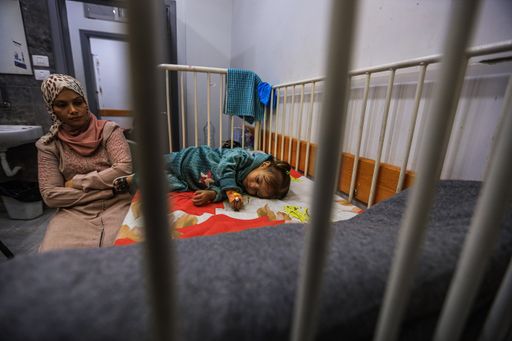
Many in Gaza to ‘Lose Access to Critical Medical Care’ as Israel Suspends Doctors Without Borders

ZIONISM IS CRUEL AND INHUMANE

“The humanitarian response in Gaza is already highly restricted, and cannot afford further dismantlement,” the renowned organization warned.



People attend the funeral of Dr. Hussein Najjar, a member of the Doctors Without Borders team who was killed by shrapnel from an Israeli airstrike, in Deir al Balah, Gaza on September 16, 2025
(Photo by Alaa Y. M. Abumohsen/Anadolu via Getty Images)

Jake Johnson
Dec 30, 2025
COMMON DREAMS

The Israeli government said Tuesday that Doctors Without Borders, one of the largest medical organizations currently operating in Gaza, is among the 25 humanitarian groups that will be suspended at the start of the new year for their alleged failure to comply with Israel’s widely criticized new registration rules for international NGOs.

According to the Associated Press, Israel’s Ministry of Diaspora Affairs “said the organizations that will be banned on January 1 did not meet new requirements for sharing staff, funding, and operations information.” The Israeli government specifically accused Doctors Without Borders, known internationally as Médecins Sans Frontières (MSF), of “failing to clarify the roles of some staff that Israel accused of cooperation with Hamas and other militant groups,” AP reported.

Israel’s Continued Blockade on Medical Supplies Worsening ‘Destruction’ of Gaza’s Health System


In addition to providing medical assistance to desperate Palestinians, MSF has been an outspoken critic of what has it described as Israel’s “campaign of total destruction” in Gaza. The group said in a report released last December that its teams’ experiences on the ground in Gaza were “consistent with the descriptions provided by an increasing number of legal experts and organizations concluding that genocide is taking place.”

Ahead of Tuesday’s announcement, Doctors Without Borders warned that the looming withdrawal of registration from international NGOs “would prevent organizations, including MSF, from providing essential services to people in Gaza and the West Bank.”

“With Gaza’s health system already destroyed, the loss of independent and experienced humanitarian organizations’ access to respond would be a disaster for Palestinians,” the group said in a statement last week. “The humanitarian response in Gaza is already highly restricted, and cannot afford further dismantlement.”

“If Israeli authorities revoke MSF’s access to Gaza in 2026, a large portion of people in Gaza will lose access to critical medical care, water, and lifesaving support,” the group added. “MSF’s activities serve nearly half a million people in Gaza through our vital support to the destroyed health system. MSF continues to seek constructive engagement with Israeli authorities to continue its activities.”

Pascale Coissard, MSF’s emergency coordinator for Gaza, noted that “in the last year, MSF teams have treated hundreds of thousands of patients and delivered hundreds of millions of liters of water.”

“MSF teams are trying to expand activities and support Gaza’s shattered health system,” said Coissard. “In 2025 alone, we carried out almost 800,000 outpatient consultations and handled more than 100,000 trauma cases.”

Israel’s announcement came shortly after Prime Minister Benjamin Netanyahu met with US President Donald Trump in Florida, where both dodged questions about their supposed “peace plan” for Gaza after more than two years of relentless bombing. The Israeli military has been accused of violating an existing ceasefire agreement hundreds of times since it took effect in October.

Al Jazeera reported Tuesday that “Israeli forces have carried out strikes across the Gaza Strip as they continue with their near-daily violations of the ceasefire agreement, with Israel’s genocidal war on the besieged enclave continuing apace and displaced Palestinians enduring the destruction of their few remaining possessions in flooding brought about by heavy winter rains.”
All UN Security Council Members Except US Join Somalia in Condemning Israel’s Recognition of Somaliland

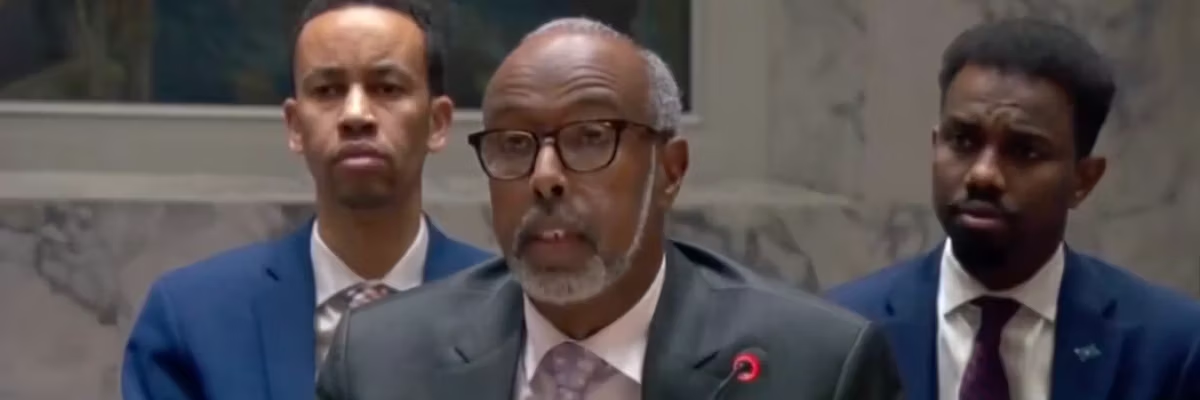
Somalia’s UN ambassador said Israel plans to “relocate the Palestinian population from Gaza to the northwestern region of Somalia,” and warned that “this utter disdain for law and morality must be stopped now.”


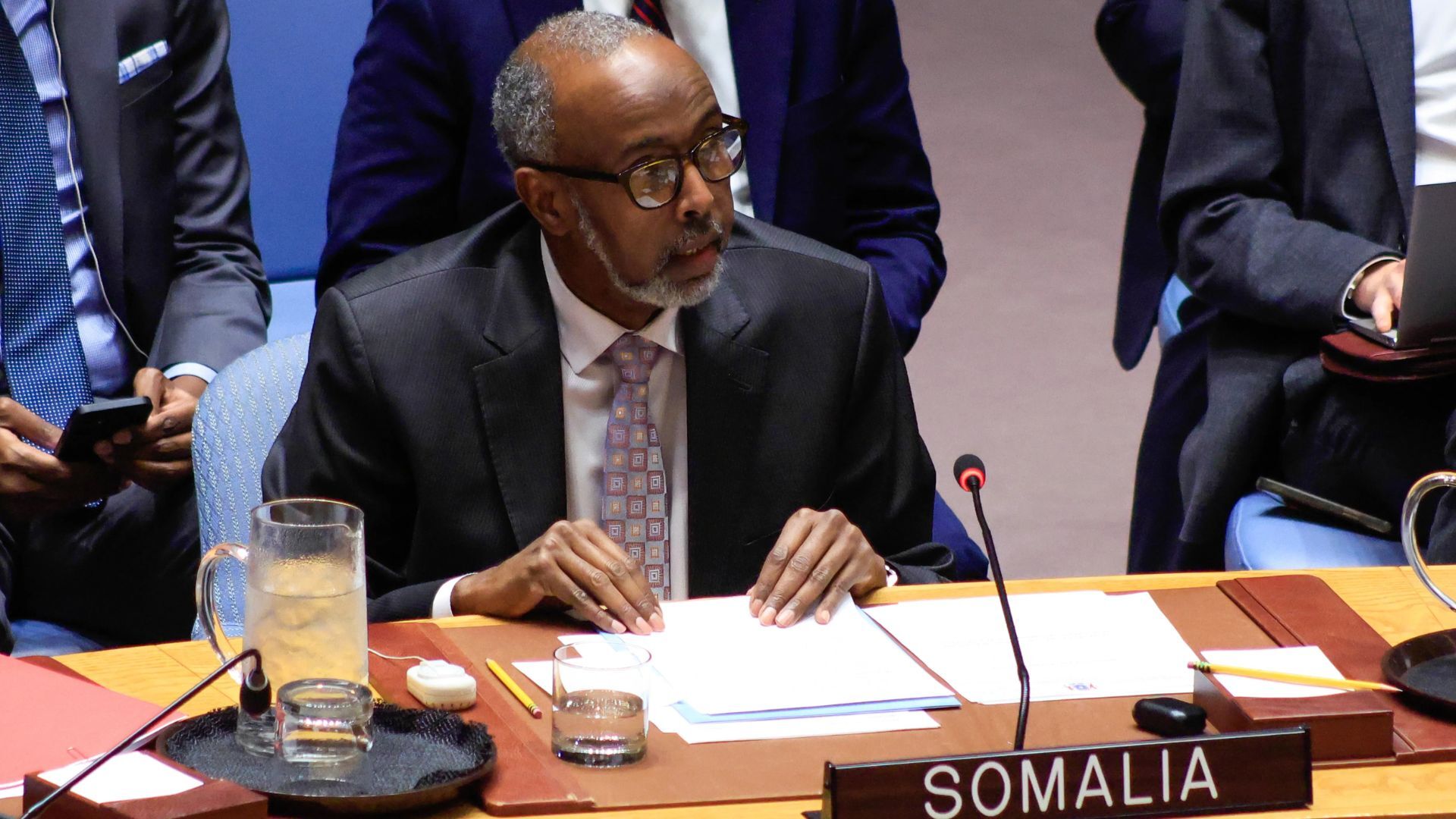
Abukar Osman, Somalia’s permanent representative to the United Nations, spoke at an emergency meeting of the UN Security Council on December 29, 2025.
(Photo: screenshot)

Julia Conley
Dec 30, 2025
COMMON DREAMS

At an emergency meeting of the United Nations Security Council on Monday regarding Israel’s recognition of the breakaway region of Somaliland, 14 of 15 member states joined Somalia’s permanent representative to the UN in condemning what the ambassador called an “act of aggression”—and at least one denounced the Trump administration’s defense of Israel’s move.

The emergency summit was called days after Israel announced its formal recognition of the region, which declared independence in 1991 after a civil war, but which has not been acknowledged by any other country. Somalia continues to claim Somaliland as part of the country while the region’s leaders say the state is the successor to the former British protectorate.

Israel announced its decision months after Prime Minister Benjamin Netanyahu spoke with leaders in Somaliland about a potential deal to trade formal recognition of the region for help with illegally deporting Palestinians from Gaza, and as Israeli policy advisers have argued that Somaliland could be used as a base for military operations against the Houthis in Yemen.

Despite evidence that Israel formally acknowledged Somaliland to further its own military and territorial interests, Israeli Deputy Permanent Representative Jonathan Miller arrived at the meeting Monday with the aim of explaining the “historical context” for the country’s decision.

“Entire cities were destroyed,” said Miller. “Civilians were deliberately targeted. These crimes are now widely recognized as a genocide... Israel’s then-acting permanent representative, Yohanan Bein, submitted this letter to this very council warning of grave human rights violations in Somalia... That history provides essential context for the discussion surrounding Israel’s recognition of Somaliland today.”

Abukar Dahir Osman, Somalia’s permanent representative to the UN, suggested Miller’s comments only added insult to injury, considering Israel has been assaulting Gaza for more than two years—with attacks continuing despite a “ceasefire”—and has killed more than 71,000 Palestinians in what numerous human rights groups and experts have called a genocide.

“If we want to talk about genocide, it’s Israel that’s committed this to our own eyes every day,” said Osman. “[Miller] represents a government that killed more than 70,000 people. Civilians, including children, women, elderly, doctors and other health workers, and patients in hospitals. Destroying infrastructures, deliberately starving people of Gaza.”

“To come to this place, and lecture us [on] humanity and genocide and human rights and independence and democracy. And we know what you’re doing on a daily basis,” said Osman. “It’s just an insult.”


Warning that the recognition of the breakaway region could destabilize Somalia as well as the broader Horn of Africa, the ambassador also expressed concern that Israel plans to “relocate the Palestinian population from Gaza to the northwestern region of Somalia.”

“This utter disdain for law and morality must be stopped now,” said Osman.

Other representatives expressed similar outrage, with the UN envoy for the 22-member Arab League, Maged Abdelfattah Abdelaziz, saying the group would reject “any measures arising from this illegitimate recognition aimed at facilitating forced displacement of the Palestinian people, or exploiting northern Somali ports to establish military bases.”

Muhammad Usman Iqbal Jadoon, deputy UN ambassador for Pakistan, said Israel’s move following its previous comments on potentially deporting Palestinians to Somaliland was “deeply troubling.”

Tammy Bruce, who was sworn in Monday as deputy US representative to the United Nations, was alone in backing Israel’s recognition of Somaliland, though she noted that US policy on the region has not changed.

“Israel has the same right to conduct diplomatic relations as any other sovereign state,” said Bruce. “Earlier this year, several countries, including members of this council, made the unilateral decision to recognize a nonexistent Palestinian state. And yet, no emergency meeting was called to express this council’s outrage.”

More than 150 countries, including a number of major US allies, have recognized Palestinian statehood, with nearly two dozen governments announcing their recognition since Israel began its assault on Gaza in 2023.

Samuel Zbogar, Slovenia’s UN ambassador, pushed back against Bruce’s comparison.

“Slovenia recognized Palestine as an independent state,” he said. “We did so in response to undeniable right of Palestinian people to self-determination. Palestine is not part of any state. It is an illegally occupied territory as declared by the [International Court of Justice], among others. Palestine is also an observer state in this organization.”

“Somaliland, on the other hand, is part of a UN member state and recognizing it goes against Article 2, paragraph 4 of the UN Charter,” he said.

On Tuesday, protests erupted in cities across Somalia, including the capital of Mogadishu, with demonstrators calling for national unity.


Somalis rally against Israel’s world-first recognition of Somaliland

Demonstrations sweep Somalia as the government seeks global diplomatic support.


Protesters gather at Mogadishu Stadium to denounce Israel's recognition of Somaliland, December 28, 2025 [Hassan Ali Elmi/AFP]


By Faisal Ali
On 30 Dec 2025
AL JAZEERA

Protests have erupted across Somalia following Israel’s formal world-first recognition of the breakaway region of Somaliland, with demonstrators taking to the streets in multiple cities, including the capital, Mogadishu.

On Tuesday morning, large crowds gathered at locations including Mogadishu’s main football stadium and around the city’s airport, where protesters waved Somali flags and chanted slogans calling for national unity.

The demonstrations, which also took place in Baidoa, Dhusamareb, Las Anod, Hobyo and Somalia’s northeastern regions, came as President Hassan Sheikh Mohamud travelled to Istanbul for talks with his Turkish counterpart Recep Tayyip Erdogan following a stop in neighbouring Djibouti.

Somalia and Turkiye have close political and security ties, with Ankara emerging as a regional rival to Israel in recent months.

Small gatherings also took place in Borama, a city in western Somaliland, where the population has appeared more ambivalent about separation from Somalia, to express opposition.

Somaliland unilaterally declared independence in 1991 following a civil war, but has failed to gain international recognition despite maintaining its own currency, passport and army.

Somaliland’s leaders say the state is the successor to the former British protectorate, which voluntarily merged with Italian Somaliland and has now reclaimed its independence. Somalia continues to claim Somaliland as part of its territory and does not recognise its independence.


Israel became the first and only country to formally recognise it as a sovereign state last Friday, describing the move as being in the spirit of the Abraham Accords that normalised ties between Israel and several Arab nations.

President Mohamud urged Somaliland’s leadership over the weekend to reverse the decision, warning that its territory, overlooking the strategic gateway to the Red Sea, must not be used as a base for targeting other nations.

Yemen’s Houthi rebels have said any Israeli presence in Somaliland would be considered “a military target for our armed forces”.

Shortly after Somaliland announced mutual recognition with Israel on Friday, President Abdirahman Mohamed Abdullahi said the move “is not a threat, not an act of hostility” towards any state, and warned that Somalia’s insistence on unified institutions risks “prolonging divisions rather than healing” them.

The widespread public anger in Somalia reflects a rare show of political unity, where leaders across the spectrum have condemned Israel’s decision.

On Monday, the National Consultative Council — chaired by Mohamud and including the prime minister, federal state presidents and regional governors — rejected the recognition as an “illegal step” that threatens regional security stretching from the Red Sea to the Gulf of Aden.

Four federal member states issued coordinated statements over the weekend denouncing the move. However, Puntland and Jubbaland — both of which recently announced their withdrawal from Somalia’s federal system over electoral and constitutional disputes — have remained silent.


Most United Nations Security Council (UNSC) members slammed Israel’s recognition of Somaliland at a meeting convened on Monday in response to the move, which several countries said may also have serious implications for Palestinians in Gaza.

The United States was the only member of the 15-member body not to condemn Israel’s formal recognition at the emergency meeting in New York on Monday, although it said its own position on Somaliland had not changed.

Somalia’s UN ambassador, Abu Bakr Dahir Osman, warned that the recognition “aims to promote the fragmentation of Somalia” and raised concerns it could facilitate the forced relocation of Palestinians from Gaza to northwestern Somalia, a fear echoed by several other nations.

“This utter disdain for law and morality must be stopped now,” he said.

US deputy representative Tammy Bruce told the council that “Israel has the same right to establish diplomatic relations as any other sovereign state”, though she added Washington had made “no announcement” regarding its own recognition of Somaliland.

Israel’s deputy UN ambassador, Jonathan Miller, defended the decision as “not a hostile step toward Somalia” and made the case to the UNSC for other countries to follow its lead.

Somalia’s state minister for foreign affairs, Ali Omar, thanked UNSC members for their “clear and principled” stance on the issue in a post on X.


Why Israel’s ‘recognition’ of Somaliland is fuelling fears of Palestinian resettlement

Any policy advocating the forced relocation of Palestinians from Gaza will constitute a clear violation of the commitments made under the Gaza peace plan, analysts say.


TRT WORLD
Kazim Alam
2 hours ago


Israel's decision on December 26 to become the first country to formally recognise the separatist entity of Somaliland as an “independent and sovereign state” has triggered widespread international outrage, deepening fears that it is part of a strategy to forcibly displace Palestinians from Gaza.

Even though it seceded from Somalia in 1991, Somaliland is recognised by neither the African Union nor the UN as an independent state.

Israeli Prime Minister Benjamin Netanyahu's announcement, made during a phone call with Somaliland's self-proclaimed president Abdirahman Mohamed Abdullahi, was framed as expanding cooperation in agriculture, health and technology.

Yet the move has been widely condemned as a blatant violation of Somalia's sovereignty and territorial integrity, with many linking it directly to Israel's ongoing aggression in Gaza.

The Arab League, African Union, Egypt, Türkiye, Saudi Arabia and numerous other states have rejected the recognition, explicitly warning that it could facilitate the forced relocation of Palestinians, a policy critics describe as ethnic cleansing.

At a UN Security Council briefing on Israel’s recognition of Somaliland, Pakistan called Tel Aviv’s act “deeply troubling”, given that Israeli officials have previously referred to the territory as a “destination for the deportation of Palestinian people, especially from Gaza”. 
RelatedTRT World - MSF accuses Israel of 'weaponising' aid as Gaza medical crisis persists despite truce


Yunus Turhan, a post-doctoral researcher at Harvard University’s African Studies Center, frames Israel's action as driven by dangerous strategic motives tied to Gaza.

“Israel’s decision to recognise Somaliland, despite receiving criticism from across the African continent and beyond, can be assessed within the framework of strategic calculations,” Turhan tells TRT World.

“In the short term, this move may be linked to ongoing discussions concerning forced population transfer scenarios in the context of Gaza, with Somaliland potentially being considered as one such option,” he says.

He points out that the Netanyahu government has been exploring Somaliland as an alternative destination for Palestinians.

Sudan, Somalia, Ethiopia, Libya and Indonesia are some of the other countries that Israel has reportedly approached for the resettlement of about two million Palestinians uprooted by the war in Gaza.

Israel’s plans have faced global criticism, and even Donald Trump’s 20-point Gaza peace plan explicitly states that no one will be forced to leave Gaza, and those who wish to leave will be free to do so and free to return.

Turhan says that any policy advocating the forced relocation of Palestinians will constitute a clear violation of the commitments endorsed during the first phase of the peace plan.

But the fact remains that Israel has shown little regard for peace agreements.

Since the announcement of a ceasefire on October 10, Tel Aviv has repeatedly violated the truce, killing more than 400 Palestinians.

“Israel has repeatedly deviated from such commitments in the past, and the Somaliland issue should therefore be interpreted as presenting Gazans, already exhausted by prolonged warfare, with an almost impossible choice,” he says.

Any relocation of Palestinians from Gaza will only exacerbate an already catastrophic humanitarian situation, likely resulting in additional casualties, he adds.


RelatedTRT World - Israel launches renewed air strikes across Gaza, violating ceasefire


According to Kaan Devecioglu, the coordinator for North and East African Studies at the Ankara-based think tank ORSAM, Israel’s recent discourse on “permanent security control” in Gaza cannot be reduced to a single official document establishing a direct intent-policy link with allegations of forced displacement or ethnic cleansing.

“Nevertheless, developments on the ground, including the confinement of the population to specific areas, the large-scale destruction of civilian infrastructure, and debates over plans to ‘concentrate’ the population, significantly reinforce these concerns,” he tells TRT World.

Devecioglu says the ongoing discourse threatens the Palestinians’ right to self-determination in two fundamental ways.

First, the possibility of forced displacement that weakens the people’s de facto link to their land would render any future political settlement “demographically and spatially” meaningless, he says.

Second, determining Gaza’s political future through the military and political decisions of external powers, rather than through local will, runs counter to the very essence of self-determination, he adds.

A threat to regional stability

The recognition of Somaliland’s sovereignty also advances Israel's military ambitions in the Red Sea, according to analysts.

Turhan says Israel’s engagement with Somaliland will provide it with strategic access to the Bab al-Mandeb Strait, a 32-kilometre-wide body of water between the Arabian Peninsula and Africa, connecting the Red Sea with the Gulf of Aden, a key maritime route.

“This access would enable Tel Aviv to conduct discreet intelligence, surveillance, and security operations along a critical global maritime corridor without the need for large-scale military deployment,” he says.

Devecioglu says Israel’s attempt to complement its military objectives against the Houthis in Yemen by expanding access in the Red Sea-Gulf of Aden corridor puts regional stability at risk.

He says that Israel’s recognition of a separatist entity risks encouraging the redrawing of borders in Africa through unilateral secession.

“If the African Union’s long-standing principle of preserving existing borders were to erode, pressures for chain-reaction secessionism could emerge... This would increase the risk of internal conflict across fragile states,” he says.

Turhan echoes this view, noting that Israel’s unilateral act of recognition threatens Africa’s political integrity: The move can spur more than 30 active separatist movements in 27 African countries, he says.

In early 2023, violent clashes between two major clans and the Somaliland administration resulted in the de facto separation of significant portions of three eastern provinces, he says.

These clans subsequently established a new regional administration integrated into the Federal Republic of Somalia, known as the Northeastern State of Somalia, which now exercises de facto control over nearly half of the territory commonly referred to as Somaliland, Turhan adds.

“Israel’s recognition largely overlooks these on-the-ground realities.”

SOURCE:TRT World


FALSE FLAG

Russia offers no proof that Ukraine targeted Putin residence in drone attack


The Kremlin said on Tuesday that it could not prove its claim that Ukrainian drones targeted one of President Vladimir Putin's residences because the drones were all "shot down". Moscow accused Ukraine of launching 91 long-range drones at Putin's home in the Novgorod region in what it called a "personal attack against Putin", vowing to retaliate.


Issued on: 30/12/2025 
By: FRANCE 24
Video by: Andrew HILLIAR

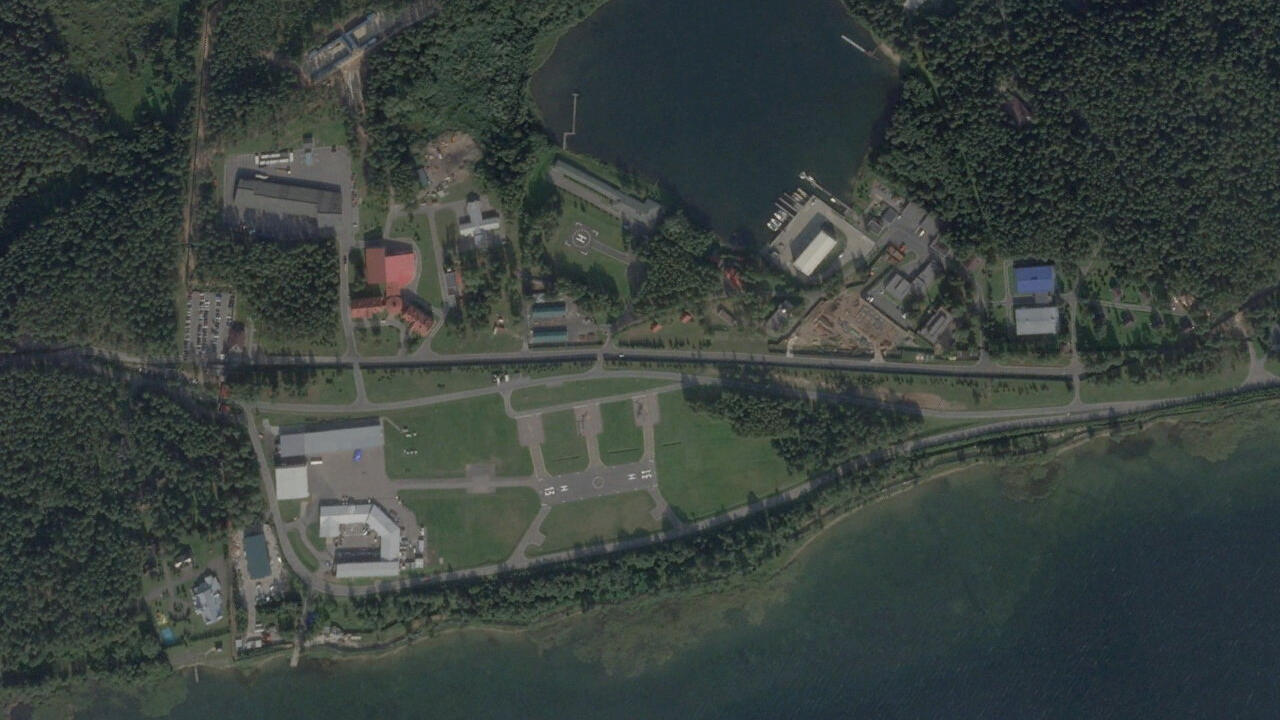
Satellite imagery shows Vladimir Putin's residential complex in Roshchino, Novgorod Region, Russia on August 31, 2023. © 2025 Planet Labs PBC, via Reuters (archive)
01:55

Kyiv said Tuesday there was no "plausible" evidence that it launched a drone attack on one of Vladimir Putin's residences, accusing Moscow of peddling false claims to try to manipulate peace talks on ending its invasion.

Ukraine stressed Moscow had provided no evidence, despite almost 24 hours transpiring since Russia made the claim.

"Almost a day passed and Russia still hasn't provided any plausible evidence," Foreign Minister Andriy Sybiga said on social media.

"And they won't. Because there's none. No such attack happened."

Moscow on Monday said Ukraine had launched 91 long-range attack drones at Putin's secluded home in the Novgorod region, between Moscow and Saint Petersburg, and that Moscow would retaliate.

The Kremlin said Tuesday it considered it a "terrorist act" and a "personal attack against Putin" – but added it could not provide evidence for its claim as the drones were "all shot down".

It also said the Russian army had chosen "how, when and where" to retaliate against Ukraine.

READ MORELive: Russia declines to provide proof of alleged drone attack on Putin's home

Russia has hit Ukraine with an almost daily barrage of drones and missiles for almost four years, killing thousands.

The Kremlin also said it would now "toughen" its negotiating position in talks to end Europe's worst conflict since WWII.

Zelensky dismissed the Russian accusations as "another round of lies" aimed at justifying additional ‍attacks on Ukraine and to prolong the war under way since Putin sent troops into Ukraine in February 2022.


"This alleged 'residence strike' story is a complete fabrication intended to justify additional attacks against Ukraine, including Kyiv, as well as Russia’s own ​refusal to take necessary steps to end the war. Typical Russian lies," he said.

President Volodymyr Zelensky warned a day earlier Russia was preparing the ground for an attack on Kyiv, calling on residents of the capital to be on alert.

European leaders rallied around Zelensky following Moscow's allegation and – according to Poland – were set to discuss the war later on Tuesday.

"We are moving the peace process forward. Transparency and honesty are now required from everyone – including Russia," German Chancellor Friedrich Merz said on social media.

US President Donald Trump – who spoke to Putin on Monday – directed criticism at Kyiv on Monday, despite Ukraine calling the incident a Russian fabrication.

"You know who told me about it? President Putin, early in the morning, he said he was attacked. It's no good," Trump said.

"It's one thing to be offensive because they're offensive. It's another thing to attack his house," the US leader said.

Russia has not said where Putin was at the time.

The longtime Russian leader's residences are shrouded in secrecy in Russia – as is much of his private life.
Secretive residence

The late Russian opposition leader Alexei Navalny, who died in an Arctic prison last year, had published investigations into Putin's luxury lake-side residence in the Novgorod region.

Putin had increasingly used the residency since the Ukraine war began, as it was more secluded and better protected by air defence installations, according to an investigation by RFE/RL.

Russia's claim came after Zelensky held talks with Trump in Florida, with the Ukrainian leader saying it was a "fabrication" intended to sabotage diplomatic progress made by the US and Kyiv.

Moscow's allegation comes at a pivotal moment for diplomacy to end the war.

Ukraine has said it has agreed to 90 percent of a US-drafted peace plan, but Russia has been hesitant to accept a deal that does not meet its maximalist demands.

Putin has repeatedly said that Russia intends to seize the rest of Ukrainian land he has proclaimed as Russian if diplomacy fails.

Russia's advance in eastern Ukraine picked up pace in autumn, with Moscow's troops seizing more villages with every week since.

Ukraine on Tuesday also ordered the mandatory evacuation of several villages in the northern Chernigiv region, which borders Moscow-allied Belarus, due to intense Russian shelling.

(FRANCE 24 with AFP)


Kyiv says no evidence for Putin residence attack


By AFP
December 30, 2025


Russia's invasion of Ukraine has dragged on for nearly four years - Copyright AFP ATTA KENARE


Stanislav DOSHCHITSYN

Kyiv said Tuesday there was no “plausible” evidence it launched a drone attack on one of Vladimir Putin’s residences, accusing Moscow of peddling false claims to try to manipulate talks on ending its invasion.

President Volodymyr Zelensky warned a day earlier Russia was preparing the ground for an attack on Kyiv, calling on residents of the capital to be on alert.

Moscow on Monday said Ukraine had launched drones at Putin’s secluded home in the Novgorod region, between Moscow and Saint Petersburg.

The Kremlin said Tuesday it considered it a “terrorist act” and a “personal attack against Putin” — but added it could not provide evidence for its claim as the drones were “all shot down”.

It also said the Russian army had chosen “how, when and where” to retaliate against Ukraine.

Russia has hit Ukraine with an almost daily barrage of drones and missiles for almost four years, killing thousands.

The Kremlin also said it would now “toughen” its negotiating position in talks to end Europe’s worst conflict since WWII.

Kyiv stressed Moscow had provided no evidence, despite almost 24 hours transpiring since Russia made the claim.

“Almost a day passed and Russia still hasn’t provided any plausible evidence,” its foreign minister Andriy Sybiga said on social media.

“And they won’t. Because there’s none. No such attack happened.”

European leaders rallied around Zelensky following Moscow’s allegation and — according to Poland — were set to discuss the war later on Tuesday.

“We are moving the peace process forward. Transparency and honesty are now required from everyone – including Russia,” German Chancellor Friedrich Merz said on social media.

US President Donald Trump — who spoke to Putin on Monday — directed criticism at Kyiv on Monday, despite Ukraine calling the incident a Russian fabrication.

“You know who told me about it? President Putin, early in the morning, he said he was attacked. It’s no good,” Trump said.

“It’s one thing to be offensive because they’re offensive. It’s another thing to attack his house,” the US leader said.

Russia has not said where Putin was at the time.

The longtime Russian leader’s residences are shrouded in secrecy in Russia — as is much of his private life.


– Secretive residence –


The late Russian opposition leader Alexei Navalny, who died in an Arctic prison last year, had published investigations into Putin’s luxury lake-side residence in the Novgorod region.

Putin had increasingly used the residency since the Ukraine war began, as it was more secluded and better protected by air defence installations, according to an investigation by RFE/RL.

Russia’s claim came after Zelensky held talks with Trump in Florida, with the Ukrainian leader saying it was a “fabrication” intended to sabotage diplomatic progress made by the US and Kyiv.

Moscow’s allegation comes at a pivotal moment for diplomacy to end the war.

Ukraine has said it has agreed to 90 percent of a US-drafted peace plan, but Russia has been hesitant to accept a deal that does not meet its maximalist demands.

Putin has repeatedly said that Russia intends to seize the rest of Ukrainian land he has proclaimed as Russian if diplomacy fails.

Russia’s advance in eastern Ukraine picked up pace in autumn, with Moscow’s troops seizing more villages with every week since.

Ukraine on Tuesday also ordered the mandatory evacuation of several villages in the northern Chernigiv region, which borders Moscow-allied Belarus, due to intense Russian shelling.


French officials cast doubt on evidence for alleged attack on Putin

Yenişafak English AA
30/12/2025, Tuesday


AAFrench President Emmanuel Macron


Sources close to French President Emmanuel Macron say there is "no solid evidence" to substantiate Russian accusations that Ukraine carried out a drone attack on Vladimir Putin's residence. The statement highlights Western skepticism regarding Moscow's claims about the incident.

France has cast significant doubt on Russia's claim that Ukraine launched a drone attack targeting President Vladimir Putin's official residence. Sources within French President Emmanuel Macron's office stated on Tuesday that they found "no solid evidence" to support the serious allegations made by the Kremlin, even after cross-checking information with international partners.

Contradictory Russian Accounts and a Firm Ukrainian Denial

The French assessment, reported by broadcaster BFMTV, pointed to what it called inconsistencies in the Russian narrative. "The Russian authorities themselves are saying everything and its opposite about what actually happened, notably regarding the number of vectors involved and the regions targeted," a presidential source said. The remark followed a statement by Russian Foreign Minister Sergey Lavrov, who alleged on Monday that Kyiv attacked the Novgorod region residence with 91 drones, all of which were destroyed without causing casualties. Ukrainian President Volodymyr Zelenskyy has firmly denied any involvement, arguing the accusation is meant to undermine diplomacy and justify further aggression.

An Incident at the Center of High-Stakes Diplomacy

The alleged attack has become a flashpoint in international diplomacy. US President Donald Trump earlier this week expressed anger over the reported incident, calling it inappropriate during sensitive peace negotiations, while also suggesting it might not have occurred. The conflicting statements from Moscow, Kyiv, Washington, and now Paris underscore the difficulty in establishing facts amid the ongoing war and the high political stakes involved in US-led ceasefire talks.

Strategic Implications and Broader Skepticism

France's public questioning of the evidence reflects a broader Western wariness of Russian claims, which are often viewed as potential pretexts for escalation. By highlighting a lack of corroborating proof, Paris aligns itself with a cautious, evidence-based approach to the volatile situation. This development is watched closely by other key mediators and regional powers, including Türkiye, which maintains communication channels with both sides and has an interest in de-escalation and credible diplomacy.

KYIV BLOG: Did Ukraine attack Putin’s residence?

KYIV BLOG: Did Ukraine attack Putin’s residence?
Following the failure to make a breakthrough in the Mar-a-Lago peace talks Russia accused Ukraine of firing 91 drones at president Vladimir Putin’s official residence and vowed a retaliation and to toughen its conditions for a ceasefire. / bne IntelliNews
By Ben Aris in Berlin December 30, 2025

Following the failure to make a breakthrough in the Mar-a-Lago peace talks Russia accused Ukraine of firing 91 drones at president Vladimir Putin’s official residence and vowed a retaliation and to toughen its conditions for a ceasefire.

Ukrainian President Volodymyr Zelenskiy immediately denied the accusation and warned of a new intense missile attack on Ukraine. Accusations and counter accusations have been flying back and forth since. Both Russian Foreign Minister Sergei Lavrov and Zelenskiy made statements blaming the other side.

The situation is now very confusing. Pro-Ukraine supporters claim that the attack shows that Russia has no intention of ending the war and the talks in Florida were yet another ruse by the Kremlin to spin out the process to buy more time for battlefield advances. Putin told his generals the day after the US meeting ended to push ahead with the campaign in Ukraine.

However, there is another, equally plausible explanation. The Kremlin was hoping for Zelenskiy to capitulate at the weekend and when an agreement failed to appear it was simply giving itself an excuse to ratchet up the pressure further. The main take away from the Kremlin’s comment is that: the conditions of an inevitable ceasefire deal are now going to be tougher.

'They are looking for a pretext,' Zelenskiy said on his Telegram channel. He dismissed Russia's claims that Ukrainian drones attempted to attack Putin's state residence as "another lie," warning that Moscow is using the allegation to justify potential strikes, "most likely on Kyiv."

“It is clear that yesterday we had a meeting with Trump. And it is clear that for the “Russians,” if there is no scandal between us and America, and instead we have progress, this is a failure for them, Zelenskiy said. “Because they do not want to end this war. They are capable of ending it only under pressure.”

“Now, with their statement that some residence of theirs was attacked, they are simply preparing — I am convinced of this — preparing, in principle, the ground to launch strikes, most likely on the capital and probably on government buildings,” he said. “This already happened to us in September; there was a missile strike on the Cabinet of Ministers of Ukraine, you remember this. Therefore, everyone needs to be attentive now, absolutely everyone. A strike on the capital may be carried out.”

Tougher terms

Lavrov said that on the night of December 29, Ukraine launched an attack on Putin's state residence in the Novgorod Region using 91 drones, all of which were shot down. According to the head of Russia's Ministry of Foreign Affairs, in response, Moscow will “revise its negotiating position without completely withdrawing from the negotiations,” and will also “carry out a retaliatory strike,” with the timing and targets already determined.

“We do not intend to withdraw from the negotiating process with the USA,” Lavrov said. “However, given the final degeneration of the criminal Kiev regime, which has turned to a policy of state terrorism, Russia's negotiating position will be revised.”

Russia has been slowly ramping up the pressure in the run up to the Mar-a-Lago talks, significant as US president Donald Trump personally participated and earlier said he would not personally get involved unless a deal was “very close.”

Zelenskiy arrived in Florida with his revised 20-point peace plan, but the US is still backing the 27-point plan thrashed out at a Moscow meeting on December 3 between the US envoys and Putin personally.

In the Mar-a-Lago end the talks failed as no agreement was found on the key questions of territories and security guarantees. The two sides parted saying talks would continue immediately at the level of working groups, but time to close the deal is running out.

Russia ratchets up the pressure

Russia’s strategy is transparent. While most of the attention has focused on the frontline battles in the Donbas for strategically important cities like the battle for Pokrovsk, at the same time the Kremlin has been slowly destroying Ukraine’s power infrastructure.

The campaign began in 2023 when Russia started destroying the non-nuclear power stations, but with most of the generating capacity destroyed by the end of 2024 the tactics changed this summer, when the war transitioned from a drone war to a missile war. Since then Russia has widened its attacks on crucial economic infrastructure to include railway lines and crucial power substations. The attacks on both this year have already exceeded all the attacks on these objects in 2023 and 2024 combined.

The change comes as Russia’s missile production goes into surplus as it is on course to double the number of missiles it produces this year to over 2,000. With dwindling air defence ammo, Ukraine is increasingly unable to protect itself from these attacks and after two years of relative calm, residents of Kyiv are once again to overnight in metro stations as the drones and missiles rain down on the capital and other cities on almost a daily basis.

However, as bne IntelliNews reported, Putin has been pulling his punches on the attacks on the power infrastructure, so far avoiding targeting the key ultra-high voltage 750kV substations. Ukraine has a total of about 90 of these substations, powerful distribution nodes that supply entire cities with power and interconnect the regional power networks.

As the peace talks progress, Russia has begun to hit the 750kV substations. The first strike was in October, knocking out the power to the Sumy region. The second was earlier this month blacking out the whole of Odesa for several days. The most recent was on the eve of the Mar-a-Lago talks, when a third of Kyiv was plunged into darkness just as the mercury falls below zero and snowstorms begin to sweep the country.

The invention of a Ukrainian attack on Putin’s residency – regardless of if it happened or now – is a convenient excuse for Russia to intensify its attacks on these assets in response to what the Kremlin has dubbed Ukraine’s “state sponsored terrorism.” Cutting off the power to Ukraine’s major cities will trigger a fresh humanitarian catastrophe and could possibly spark a fresh wave of refugees escaping freezing conditions in their homes. Indeed, a fresh 150,000 people fled to Germany in the late autumn and Berlin authorities have been warned to prepare for a possible new wave of refugees during the winter, according to bne IntelliNews sources.

But floating the news of an attack on his residency and the extremely belligerent and rapid response to the news can be interpreted as a fresh warning: “do a deal quickly as the terms will only get worse if you don't.”


Von der Leyen signals push for Ukraine's EU accession as Russia derails talks with attack claim

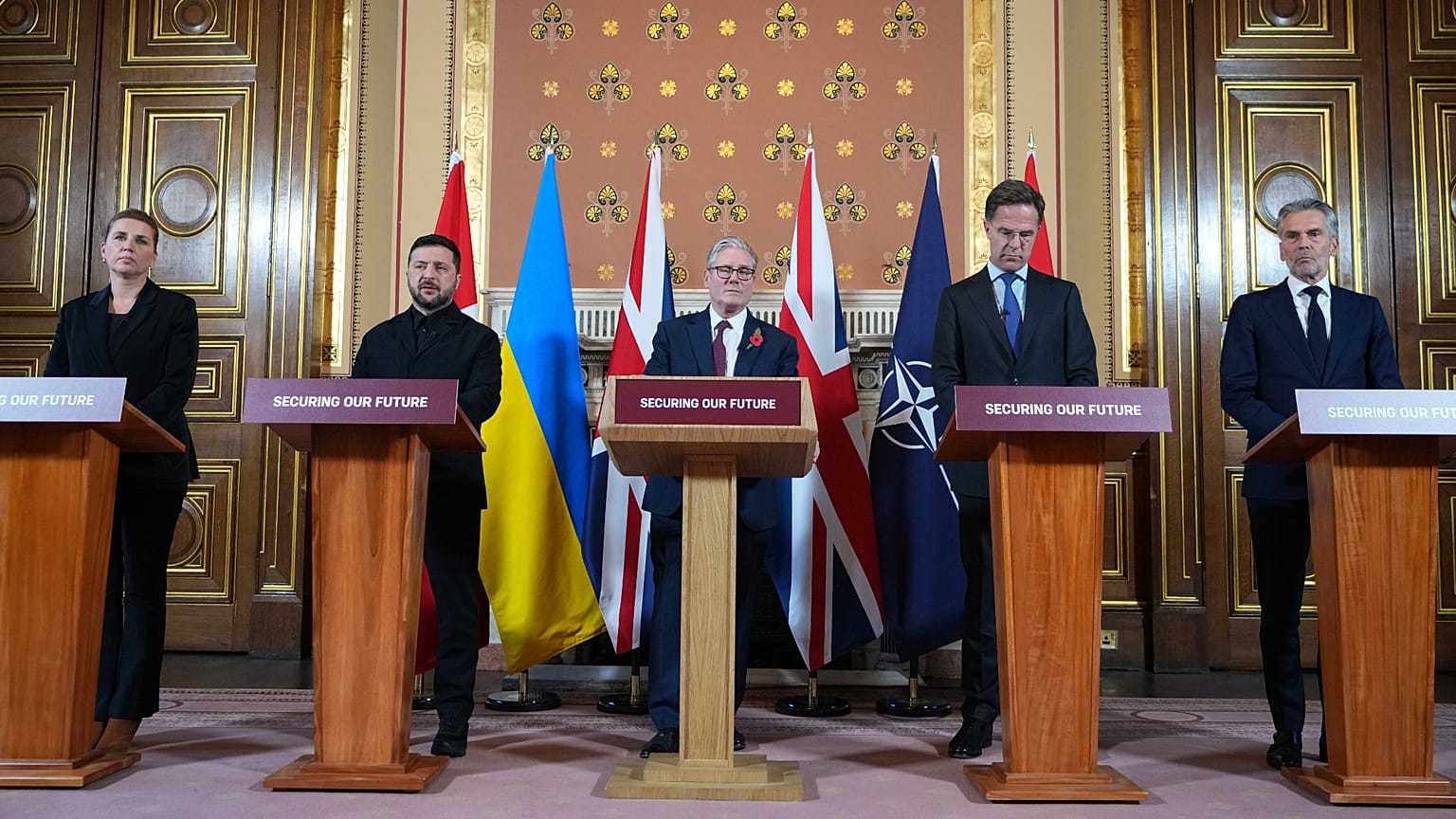
Coalition of the Willing during a meeting in London hosted by PM Starmer
Copyright AP Photo

By Maria Tadeo
Published on 

High-stakes diplomacy is set to continue next week, with the "Coalition of the Willing" convening as Ukraine seeks to secure European support. Meanwhile, Von der Leyen doubled down on Ukraine's EU membership as part of a security guarantees package for Kyiv after talks with European leaders.

European Commission President Ursula von der Leyen insisted Ukraine's accession to the European Union is a key component of the country's future security guarantees after holding talks with European leaders to debrief peace talks on Tuesday.

Von der Leyen said that accession to the 27-member bloc, which Ukraine aspires to join, represents "a key security guarantee in its own right," in a social media post following a call within the Berlin Format, which includes the leaders of Germany, France, and Poland, among others.

"Ultimately, the prosperity of a free Ukrainian state lies in the accession to the EU," she said. "Accession doesn't only benefit countries that join; as the successive waves of enlargement show, the show of Europe benefits."

Her comments follow a week of high-stakes diplomacy between US, Ukrainian and European officials. After a bilateral meeting with US President Donald Trump, his Ukrainian counterpart Volodymyr Zelenskyy said security guarantees between the three are "almost agreed".

Accession to the EU is seen as a critical component, but one that comes with multiple challenges for the bloc. Joining the EU requires significant reforms and must be unanimously approved by all 27 leaders.

For the Commission, Ukraine's accession represents a delicate balancing between implementing a merit-based process equal for all candidate countries while acknowledging the extraordinary situation of the country with peace talks ongoing.

Ukraine is also facing a veto from Hungarian Prime Minister Viktor Orbán, who has repeatedly argued that Kyiv does not meet the criteria to join the EU, instead suggesting a close partnership at best. This year, his veto has blocked any progress on Ukraine's accession negotiations, including through the technical cluster process.

The European Commission argues that Ukraine is technically ready to advance in the process. Frustration with the slow pace has prompted debate on unanimity rules for accession, but proposals for legal tweaks have not advanced either.

After the call among the Berlin Group on Tuesday morning, Dutch caretaker Prime Minister Dick Schoof said the "Coalition of the Willing," a group of countries supportive of Ukraine led by France, the UK and broader European security establishment, will convene next week.

German chancellor calls for 'honesty' in talks

After a bilateral meeting in Mar-a-Lago on Sunday, Trump and Zelenskyy hailed progress towards a US-led peace deal.

However, talks were delayed after Russia claimed Ukraine had attacked a personal residence of President Vladimir Putin in a further escalation of hostilities.

Kyiv has denied any attack on Putin's residence, calling it a "total fabrication" designed to hinder peace efforts.

Trump told reporters on Monday that he was informed by Putin about the alleged incident.

"This is not good, I don't like it," the US president said. "This is not the right time to do any of that. One thing is to be offensive, another thing is to attack his house."

The US president did not say whether US intelligence agencies had any information related to the alleged attack, instead citing the Russian president.

Russian Foreign Minister Sergei Lavrov said Monday that Russia would retaliate after the alleged attack. Over the weekend, Russia pounded Ukraine with another round of drone and missile strikes, mainly targeting the capital of Kyiv.

European leaders appeared less credulous about the Russian claims.

In a post on social media after hosting a conference call with European leaders on Monday, German Chancellor Friedrich Merz said the peace process is moving forward, but it will "require honest and transparency from everyone - including Russia."

After speaking with Zelenskyy, Putin and European leaders, the US president sounded optimistic about the prospects of a peace settlement, arguing that it is in the interest of both parties to end the war.

Still, the US president said the question of possible territorial concessions by Kyiv — including Russia's demands to gain control over the entirety of the Ukrainian eastern region of the Donbas — remains unresolved and is a "very tough" issue.

Trump also said Europeans would have to shoulder, for the most part, the effort around security guarantees, but added that the US would also help.

Separately, Zelenskyy told reporters in a WhatsApp briefing on Monday that US security guarantees would be set for 15 years, but Kyiv is seeking to extend them.

The Ukrainian president pointed instead to a period of 30 to 50 years, arguing that Russia had attacked his country for more than a decade by now, so going longer would represent a game-changer for Ukraine. "It would be a historic decision," he said.


Russian losses in Ukraine rising faster than ever, finds new analysis

Analysis reveals a significant rise in the number of obituaries of soldiers published in Russia in the past five months


Maira Butt
Tuesday 30 December 2025
THE INDEPENDENT


Putin warns Russia will accomplish goals by force if Ukraine doesn’t want to resolve conflict peacefully

From reproductive rights to climate change to Big Tech, The Independent is on the ground when the story is developing. Whether it's investigating the financials of Elon Musk's pro-Trump PAC or producing our latest documentary, 'The A Word', which shines a light on the American women fighting for reproductive rights, we know how important it is to parse out the facts from the messaging.

At such a critical moment in US history, we need reporters on the ground. Your donation allows us to keep sending journalists to speak to both sides of the story.

The Independent is trusted by Americans across the entire political spectrum. And unlike many other quality news outlets, we choose not to lock Americans out of our reporting and analysis with paywalls. We believe quality journalism should be available to everyone, paid for by those who can afford it.Your support makes all the difference.Read more

Russian losses in the war in Ukraine have been growing at a faster rate than at any point so far since the invasion began in February 2022, new analysis suggests.

Analysis by the BBC found that 40 per cent more obituaries of soldiers were published in Russia this year compared with 2024.

The broadcaster, along with independent outlet Mediazona, compiled a list of named individuals using official reports, newspapers and social media as well as new memorials and graves. In total, they were able to confirm the names of around 160,000 people who have been killed.

Experts told the broadcaster that the figure is likely to be far higher, with the BBC's toll only likely to represent between 45 and 65 per cent of the overall total. This would mean that Moscow has suffered between 243,000 and 352,000 casualties since the war began.


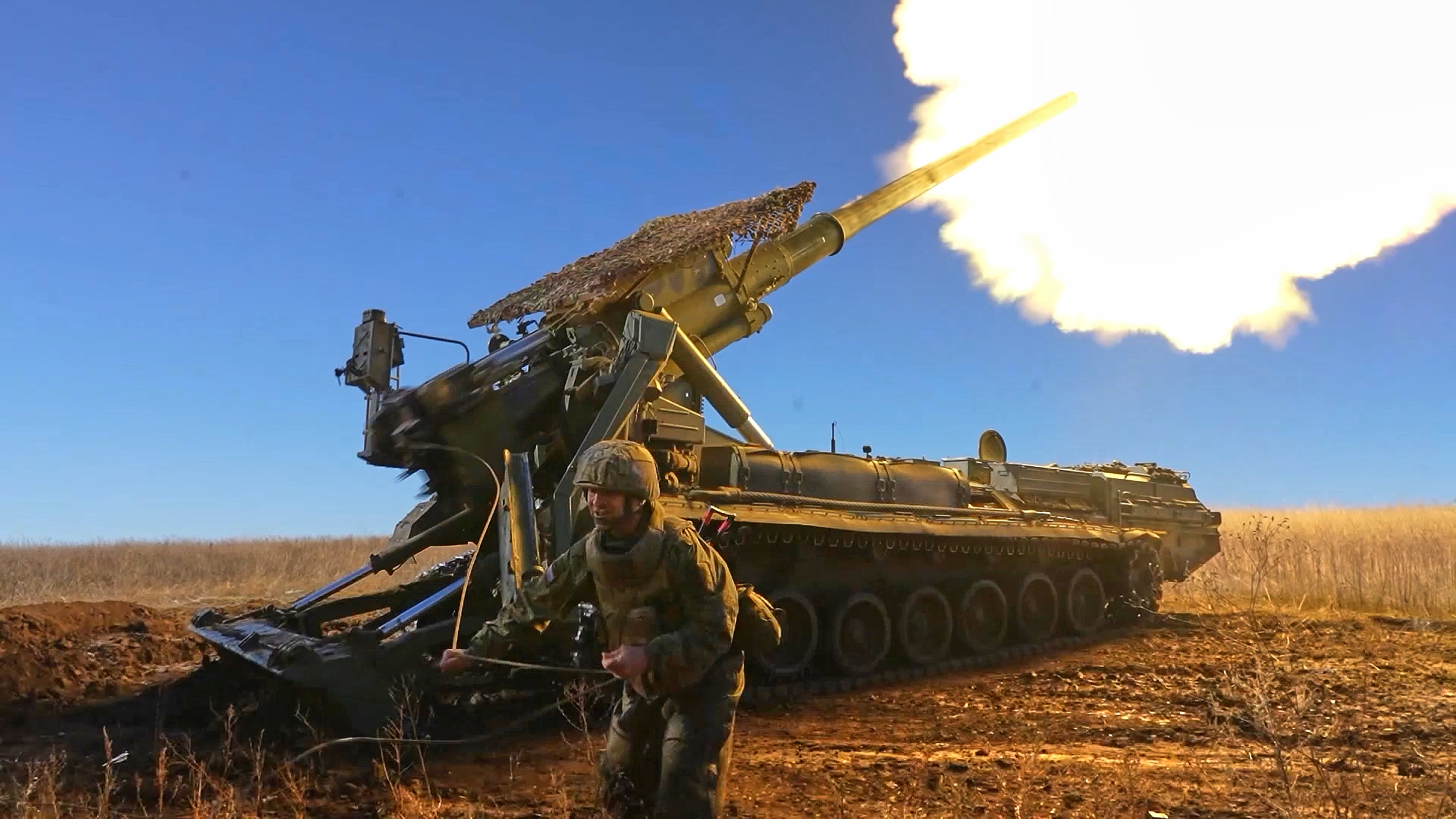
A Russian soldier fires a Malka self-propelled gun towards Ukrainian positions (Russian Defense Ministry Press Service)

The BBC's data shows that the number of obituaries being published in Russia this year saw a considerable spike in August - the same month that Vladimir Putin met with Donald Trump in Alaska for the first US-Russia summit since the war began. It peaked at 12,035 in August.

Between July 2024 and July 2025, the number of obituaries being published did not exceed 7,155.

The BBC's overall death toll appears to reflect assessments by international governments. In October, a Nato official said that more than 250,000 Russian troops had been killed in Ukraine, as part of a total of up to 1.1 million battlefield casualties.

Ukraine has seen more than 140,000 of its soldiers killed in the war, according to the BBC.


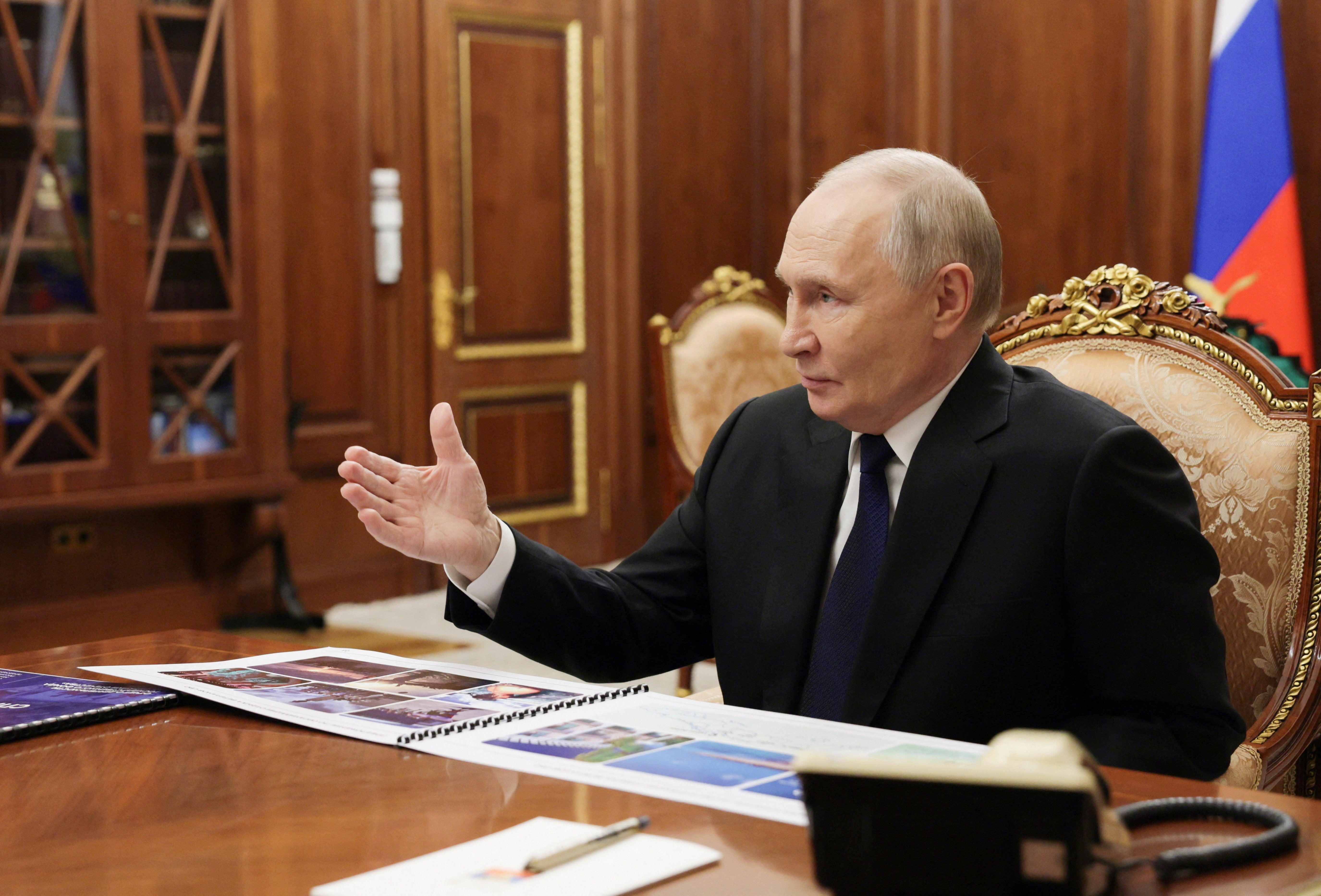
Vladimir Putin attends a meeting in the Kremlin (Sputnik)

Meanwhile, Washington's hopes of brokering a peace agreement in the near future were dashed on Tuesday after Russia accused Ukraine of launching a drone attack at one of Putin's residences - a claim emphatically denied by Kyiv.

Zelensky said the claim was a "complete fabrication" aimed at derailing the peace process, after Moscow signalled that it would harden its negotiating position in response.

Ukrainian Foreign Minister Andrii Sybiha said on Tuesday that Russia had not provided any plausible evidence of its accusations.

"Russia has a long record of false claims it's their signature tactic," Sybiha said.

Asked by reporters whether Russia had physical evidence of the drone attack, Kremlin spokesman Dmitry Peskov said air defences shot the drones down but that the question of wreckage was for the defence ministry.

Russia completes 135,000 autumn conscription as Putin sets 261,000 target for 2026

Russia completes 135,000 autumn conscription as Putin sets 261,000 target for 2026
Russian conscripts called up in increasing numbers. / Russian News Agency Tass: CC
By bne IntelliNews December 29, 2025

Russia has said it has concluded its autumn 2025 military draft, calling up 135,000 conscripts for service, whilst President Vladimir Putin signed a decree creating a new target of 261,000 conscripts for 2026, the Defence Ministry and TASS reported on December 29.

The Ukraine war has triggered a silent exodus from Russia, with roughly 800,000–900,000 citizens leaving the country and up to 700,000 believed to have fled or tried to flee conscription since 2022, while OSINT estimates suggest as many as 70,000 soldiers could desert from the army in 2025 alone.

This mix of draft dodgers and battlefield deserters does not have a precise official tally, but taken together, it points to a level of resistance to mobilisation large enough to force the Kremlin into tougher digital draft laws and border controls for military‑age men.

Putin signed the 2026 conscription decree for citizens aged 18 to 30 not in reserve, to serve from January 1 to December 31, 2026, marking the first time annual conscription targets have been published in a single decree following implementation of year-round military draft legislation.

The autumn 2025 call-up followed Presidential Decree No 690 issued on September 29, 2025, mobilising 135,000 conscripts for the Russian Armed Forces and other troops and military formations.

Conscripts had the right to choose military service in various branches and armed services, taking into account health conditions and the results of psychological selection.

Most conscripts were assigned to training units and military formations to learn to operate modern military hardware and acquire military specialities.

Putin previously signed two separate decrees before spring and autumn drafts with conscript numbers specified individually. The current decree represents the first unified annual conscription target under new year-round draft legislation.