Tuesday, December 30, 2025

Why the Zaporizhzhia nuclear plant is a sticking point in Ukraine peace talks


Control over the Zaporizhzhia nuclear power plant in east Ukraine has remained one of the main sticking points in peace negotiations since Russia took control of it in March 2022. Zaporizhzhia's proximity to the front lines has sparked international fears for the safety and stability of the nuclear plant, which is Europe's largest.


Issued on: 29/12/2025 
By: FRANCE 24
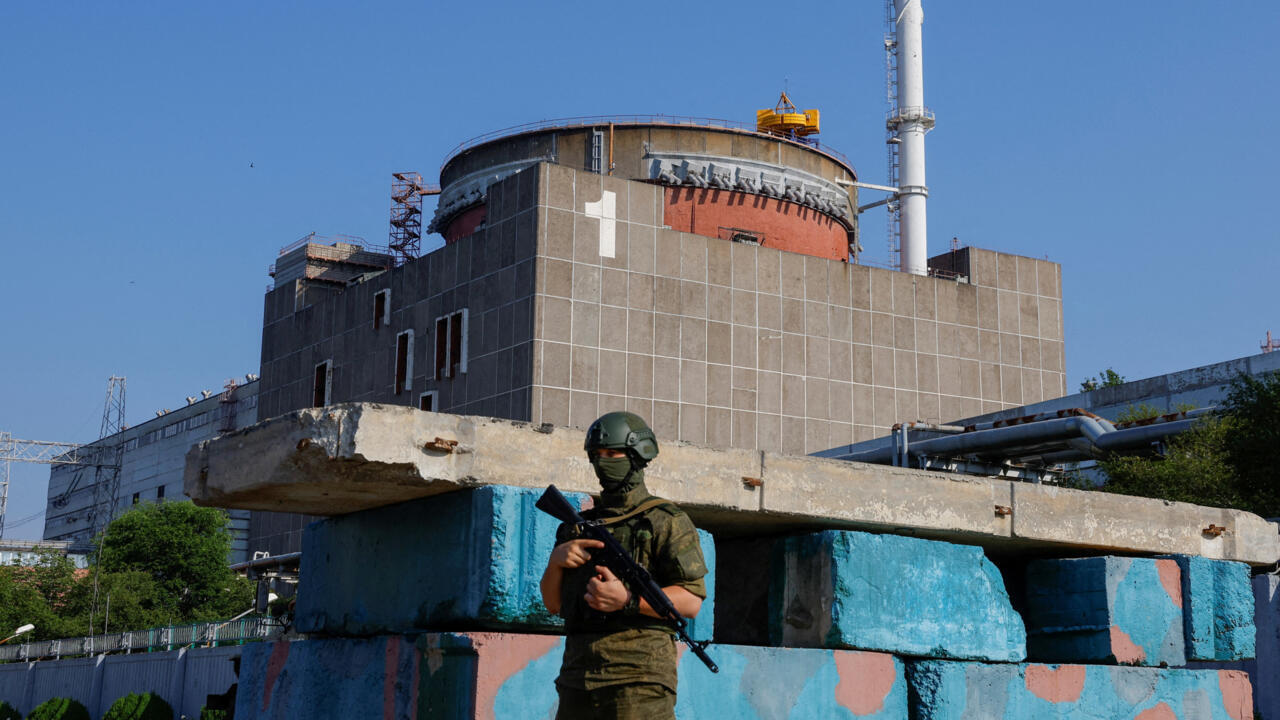

A Russian service member stands guard at a checkpoint near the Zaporizhzhia Nuclear Power Plant on June 15, 2023 © Alexander Ermochenko, Reuters file photo

The Zaporizhzhia nuclear power plant is one of the main sticking points in the US peace plan to end the war between Russia and Ukraine. The issue is one of 20 points laid out by Ukrainian President Volodymyr Zelensky in a framework peace plan that he discussed with his US counterpart Donald Trump in Florida on Sunday.

Here are some of the outstanding issues regarding the facility.
What plans are being discussed ?

Russia took control of the plant, which lies close to the front ​lines, in March 2022 and announced plans to connect it to its power grid.

Almost all countries agree that it belongs to Ukraine, but Russia says it is owned by Russia ‍and a unit of Russia's state-owned Rosatom nuclear corporation runs the plant.

Zelensky stated in December that the US had proposed joint trilateral operation of the nuclear power plant with an American chief manager.

Zelensky said the Ukrainian proposal envisages Ukrainian-American use of the plant, with the US itself determining how ​to use 50% of the energy produced.

Russia has considered joint Russian-US use of the plant, according to the Kommersant newspaper.

After his talks with Zelensky on ​Sunday, Trump said negotiators had made progress on deciding the fate of the plant, which can "start up almost immediately". The US president said "it's a big step" that Russia had not bombed the facility.
What is the current status ?

The plant is located in Enerhodar on the banks of the Dnipro River and the Kakhovka Reservoir, 550 km (342 miles) southeast of the capital Kyiv.

The Zaporizhzhia nuclear power plant has six Soviet-designed reactors with a total capacity of 5.7 gigawatts, according to an International Atomic Energy Agency (IAEA) database.

It is not currently producing electricity but relies on external power to keep the nuclear material cool and avoid a meltdown.

Ukraine: What is blocking the peace deal negotiations?

The plant's equipment is powered by electricity supplied from Ukraine. Over the past four years these supplies have been interrupted at least 11 times due to breaks in power lines, forcing the plant to switch to emergency diesel generators.

Both Russia and Ukraine accuse each other of striking the nuclear plant and of severing power lines ‍leading to it.

IAEA Director General Rafael Grossi says fighting a war around a nuclear plant has put nuclear safety and security in constant jeopardy.

The Russian head of the station said on Monday the facility could restart power generation by mid-2027 if the war concluded soon.

Why does Russia want the Zaporizhzhia plant ?

Russia has been preparing to restart the station but says that doing so will depend on the situation in the area. Rosatom chief Alexei Likhachev has not ruled out the supply of electricity produced there to parts of Ukraine.

Oleksandr Kharchenko, director of the Energy Research Centre in Kyiv, said Moscow intended to use the plant to cover a significant energy deficit in ‌Russia's south.

In December, Russia's Federal Service for Environmental, Technological and Nuclear Supervision issued a license for the operation of reactor No. 1, a key step towards restarting the reactor.

Ukraine's energy ministry called the move illegal and irresponsible, risking a nuclear accident.

Why does Ukraine need the plant ?

Russia has been pummelling Ukraine's energy infrastructure throughout the war. In ‍recent months, Russia has sharply increased the scale and intensity of its attacks, plunging entire regions into darkness.

Analysts say Ukraine's generation capacity deficit is about 4 gigawatts, or the equivalent of four Zaporizhzhia reactors.

Kharchenko says it would take Ukraine five to seven years to build the generating capacity to compensate for the loss of the Zaporizhzhia plant.

Kharchenko said that if Kyiv regained control of the plant, it would take at least two to three years to understand what condition it was in and another three years to restore the equipment and return it to full operation.

Both Ukrainian state nuclear operator Energoatom and Kharchenko said Ukraine did not know the real condition of the nuclear power plant today.


What about cooling the fuel ?

In the long term, there is the unresolved problem of the lack of water resources to cool the reactors after the vast Kakhovka hydro-electric dam was blown up in 2023, destroying the reservoir that supplied water ‍to the plant.

Besides reactors, there are spent fuel pools at each reactor site used to cool down used nuclear fuel. Without water supply to the pools, the water evaporates and temperatures increase, risking fire.

An emission of hydrogen from a spent fuel ‌pool caused an explosion in Japan's Fukushima ​nuclear disaster in 2011.

Energoatom said the level of the Zaporizhzhia power plant cooling pond had dropped by more than 15%, or 3 metres, since the destruction of the dam, and continued to fall.

Ukrainian officials previously said the available water reserves may be sufficient to operate one or, at most, two nuclear reactors.

(FRANCE 24 with Reuters)


Afghan farmers suffer heavy losses after Taliban ban opium poppy cultivation, report says

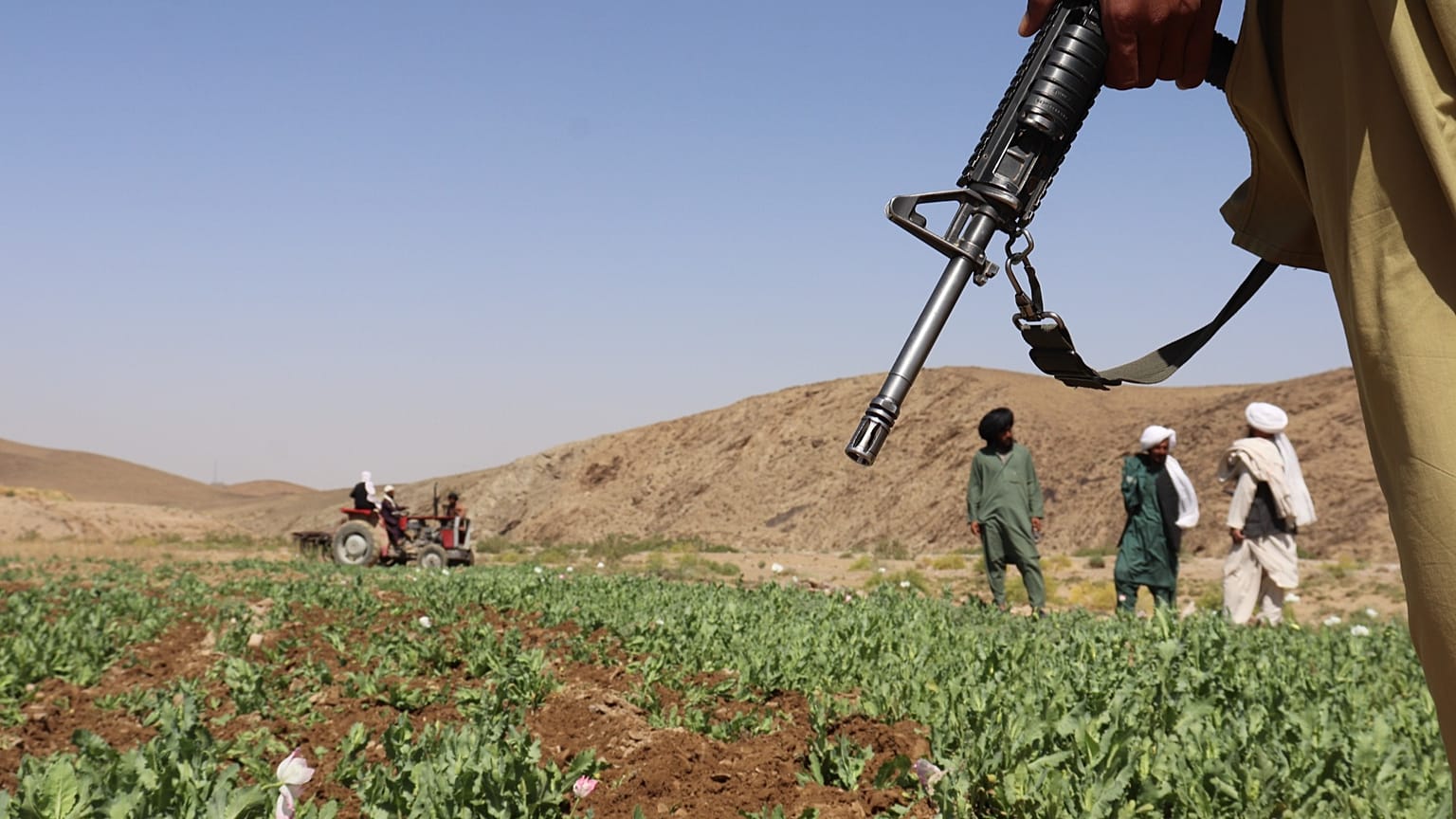
Taliban operatives destroying poppy field in Helmand in 2022
Copyright AP Photo


By Euronews
Published

UNODC survey found 85% of families in northern provinces unable to replace poppy income. Production fell 32% to 296 tonnes as synthetic drugs surged.

Afghanistan's opium poppy cultivation fell to 10,200 hectares this year, one of the lowest levels recorded in the country's history, the UN Office on Drugs and Crime said, but the Taliban ban has pushed farmers in northern provinces into severe economic hardship.

The nationwide ban has reduced cultivation from 232,000 hectares in 2022, before the Taliban returned to power, but caused a shift in cultivation patterns from traditional southern areas to northern provinces farther from direct Taliban control, UNODC said.

In Badakhshan province on the Tajikistan border, poppy production has increased since the Taliban returned to power in 2021.

In Badakhshan and neighbouring provinces of Kunduz and Balkh, "on average, 85% of households reported either no replacement or only partial replacement of (their poppy) income" after abandoning production, according to a UNODC survey released Monday.

Many farmers turned to growing wheat and other grains, but in 2023 "the average per-hectare income from wheat was just $770 (€654.6), whereas opium poppy yielded around $10,000 (€8,500) per hectare," the agency said.

"This income loss goes far beyond households, weakening rural purchasing power, reducing local economic activity, and increasing communities' overall vulnerability to poverty and food insecurity," said Oliver Stolpe, UNODC regional representative for Afghanistan, Central Asia, Iran and Pakistan.

The agency called for efforts to encourage farmers to cultivate high-value crops such as saffron, nuts including almonds, pistachios and walnuts, medicinal plants and fruits including apricots and grapes, which are better adapted to Afghanistan's arid climate and mountainous terrain.

Opium production fell 32% to an estimated 296 tonnes this year, down from 436 tonnes in 2024, according to a UNODC report released in November. Farmers' income from opium sales fell 48% from $260 million (€221m) in 2024 to $134 million (€114m) in 2025.

Surveys in Badakhshan, Balkh and Kunduz showed 85% of households have been unable to compensate for lost income, leaving communities in urgent need of economic support, UNODC said.

Despite this, compliance with the ban remains high in surveyed areas, with 95% of farmers in Badakhshan and Balkh reporting they stopped growing poppy due to legal restrictions.

The price of dry opium fell 27% to $570 (€484) per kilogramme in 2025 compared with $780 (€663) in 2024, but remains five times higher than the pre-ban average.

Opium down but synthetic drugs surge

The Taliban banned opium poppy cultivation, as well as production, sale and trafficking of all narcotics, in April 2022, the year after they returned to power in Kabul. Taliban authorities reported eradicating more than 4,000 hectares of opium poppy this year.

Prior to the Taliban's return to power in 2021, revenues from poppies were for years considered one of Afghanistan's main sources of economic output. Afghanistan's opium output peaked in 2017 at nearly 9,900 tonnes worth $1.4 billion (€1.19bn), accounting for about 7% of the country's GDP.

"Afghanistan's path to overcoming illicit crop cultivation requires coordinated, long-term investments, including through international partnerships," Stolpe said.

"It is about placing equal emphasis on empowering Afghan farmers through alternative income-generating activities, eradicating illicit crops and countering drug trafficking, while reducing demand through enhanced prevention and treatment."

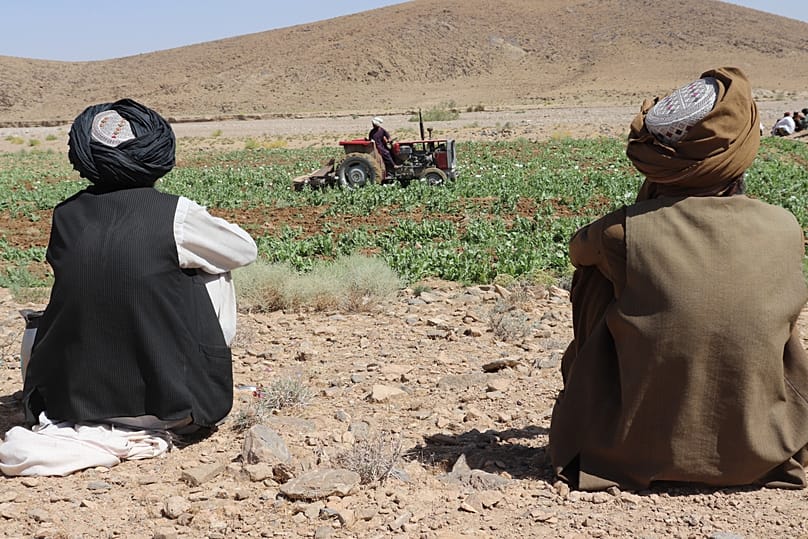
Poppy fields destroyed in Afghanistan
Poppy fields destroyed in Afghanistan AP Photo

Worsening weather conditions including droughts and low rainfall have left more than 40% of agricultural land barren, UNODC said.

The return of approximately 4 million Afghans from neighbouring countries, representing around 10% of the country's population, has intensified competition for scarce jobs and resources. These factors, combined with reductions in humanitarian aid, could make opium poppy cultivation more attractive.

Production and trafficking of synthetic drugs, especially methamphetamine, continues to increase since the ban. Seizures in and around Afghanistan were about 50% more frequent by the end of 2024 compared with the third quarter of 2023

"As agricultural-based opiate production declines, synthetic drugs appear to have become the new business model for organised crime groups due to the relative ease of production, the greater difficulty in detection and relative resilience to climate changes," UNODC said.

Counter-narcotics strategies must broaden beyond opium to integrate synthetic drugs in monitoring, interdiction and analysis, as well as demand-reduction responses, the agency said.

"Afghanistan's drug problem is not confined to its borders. The dynamics of supply, demand and trafficking involve both Afghan and international actors," said Georgette Gagnon, deputy special representative of the secretary-general for Afghanistan and officer in charge of the UN political mission in the country.

"Addressing this challenge requires collaboration among key stakeholders," Gagnon concluded.

Situation in Gaza is 'catastrophic’, foreign


ministers from 10 countries warn

A group of 10 countries, including France, warned on Tuesday that the situation in Gaza was "catastrophic" due to the "renewed deterioration of the humanitarian situation" in the Palestinian enclave. They called on Israel to allow greater access for NGOs and to lift restrictions on importing essential medical and shelter equipment.


Issued on: 30/12/2025 
By: FRANCE 24


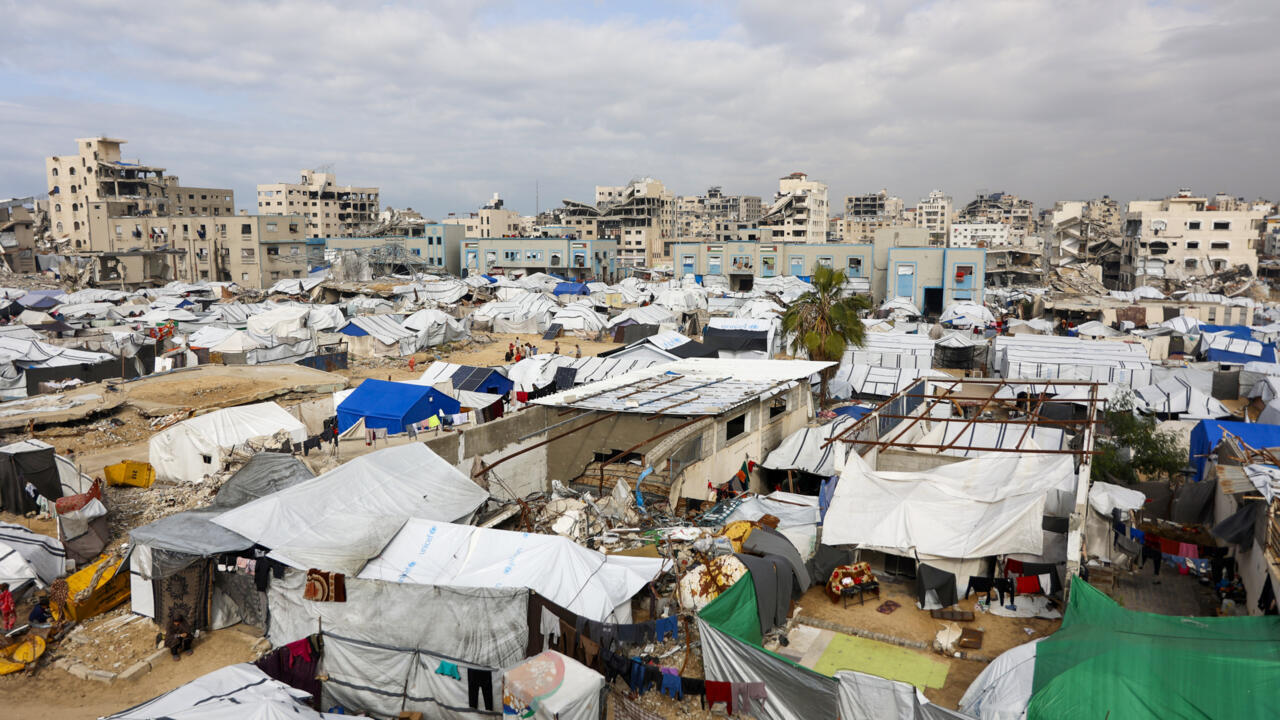
A fragile ceasefire in Gaza holds but living conditions continue to be dire. © Omar Al-Qattaa, AFP

The foreign ministers of 10 nations on Tuesday expressed "serious concerns" about a "renewed deterioration of the humanitarian situation" in Gaza, saying the situation was "catastrophic".

The warning came a day after US President Donald Trump warned Palestinian militant group Hamas there would be "hell to pay" if it fails to disarm in Gaza, as he presented a united front with Israeli Prime Minister Benjamin Netanyahu.

"As winter draws in, civilians in Gaza are facing appalling conditions with heavy rainfall and temperatures dropping," the ministers of Britain, Canada, Denmark, Finland, France, Iceland, Japan, Norway, Sweden and Switzerland said in a joint statement released by the UK's Foreign Office.

"1.3 million people still require urgent shelter support. More than half of health facilities are only partially functional and face shortages of essential medical equipment and supplies. The total collapse of sanitation infrastructure has left 740,000 people vulnerable to toxic flooding," the statement added.

Trump's comments on Monday also downplayed reports of tensions with Netanyahu over the second stage of the fragile Gaza ceasefire.

The president, speaking at a news conference with Netanyahu in Florida, said Israel had "lived up" to its commitments and that the onus was on Hamas.

The foreign ministers in their statement said they welcomed the progress that had been made to end the bloodshed in Gaza and secure the release of Israeli hostages.

"However we will not lose focus on the plight of civilians in Gaza," they said, calling on the government of Israel to take a string of "urgent and essential" steps.

These included ensuring that international NGOs could operate in Gaza in a "sustained and predictable" way.

"As 31 December approaches, many established international NGO partners are at risk of being deregistered because of the government of Israel's restrictive new requirements," the statement said.

It also called for the UN and its partners to be able to continue their work in Gaza and for the lifting of "unreasonable restrictions on imports considered to have a dual use".

This included medical and shelter equipment.

READ MOREGaza truce: Where does it stand and what's supposed to happen under phase two?
'Vital supplies'

The ministers also called for the opening of crossings to boost the flow of humanitarian aid into Gaza.

While welcoming the partial opening of the Allenby crossing, they said other corridors for moving goods remained closed or severely restricted for humanitarian aid, including Rafah.

"Bureaucratic customs processes and extensive screenings are causing delays, while commercial cargo is being allowed in more freely," the statement said.

"The target of 4,200 trucks per week, including an allocation of 250 UN trucks per day, should be a floor not a ceiling. These targets should be lifted so we can be sure the vital supplies are getting in at the vast scale needed," it added.

The Gaza ceasefire in October is considered one of the major achievements of Trump's first year back in power, and Washington and regional mediators have hoped to keep their foot on the gas.

The Axios news site said Trump seeks to make announcements as soon as January on an interim government and an international force.

But Trump on Monday gave few details beyond saying that he hoped "reconstruction" could begin soon in the Palestinian territory, devastated by Israeli attacks in response to Hamas's October 7, 2023 attacks.

The disarmament of Hamas however continued to be a sticking point, with its armed wing again saying that it would not surrender its arms.

(FRANCE 24 with AFP)


Israel says it will halt operations of some aid organisations in Gaza starting in 2026

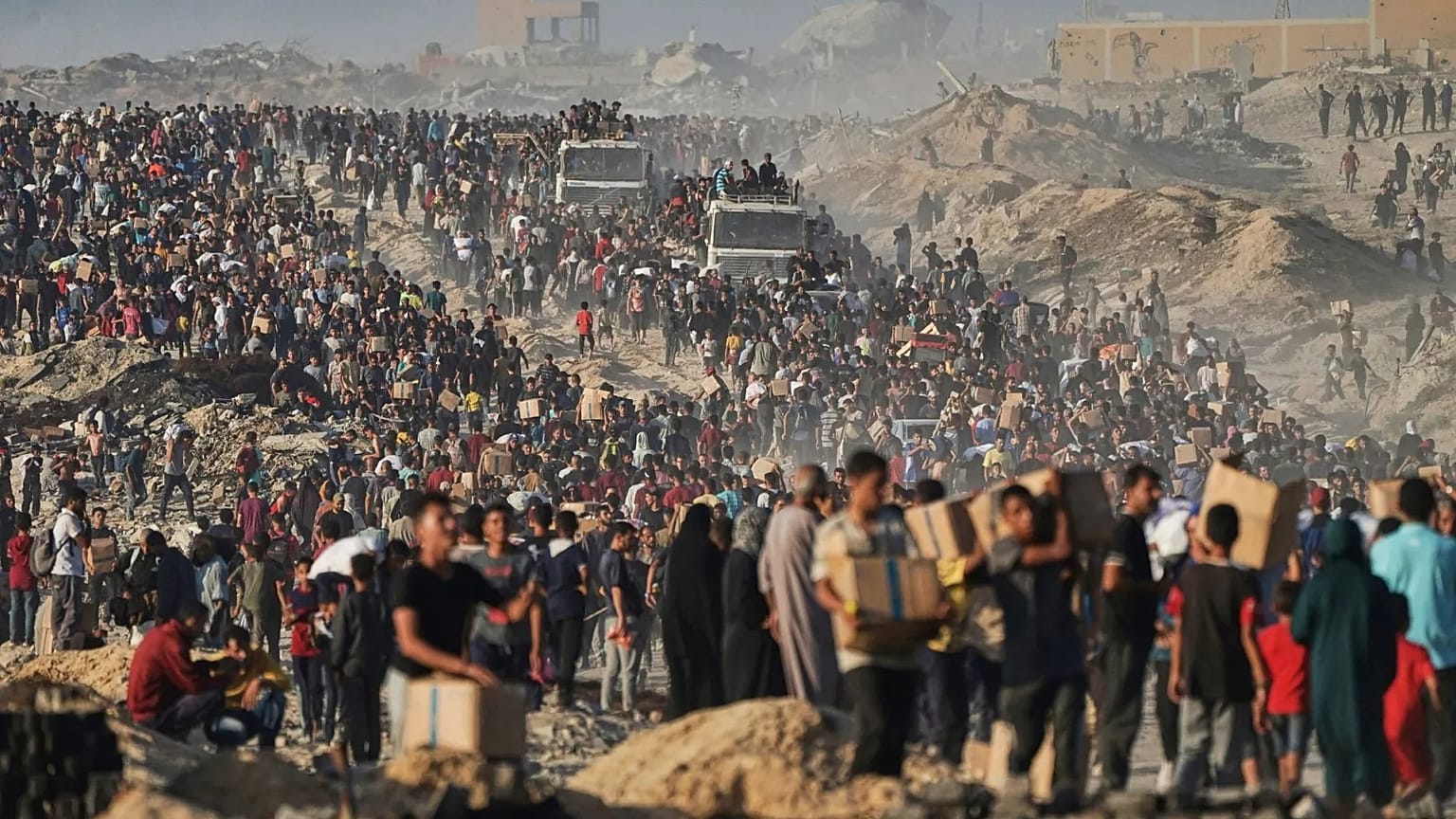
People carry humanitarian aid that was unloaded from a World Food Programme convoy in the northern Gaza Strip, 16 June, 2025
Copyright AP Photo


By Gavin Blackburn
Published on 


Earlier this year, Israel changed its registration process for aid groups, which included a requirement to submit a list of staff, including Palestinians in Gaza.

Israel said on Tuesday that it will suspend the work of more than two dozen humanitarian organisations for failing to meet its new rules to vet international agencies working in Gaza.

The Ministry of Diaspora Affairs said that the organisations facing bans on 1 January didn't meet new requirements for sharing staff, funding and operations information.

The ministry said that around 25 organisations, or 15%, of non-governmental organisations working in Gaza didn't have their permits renewed.

It accused Doctors Without Borders (MSF), one of the largest health organisations operating in Gaza, of failing to clarify the roles of some staff that Israel accused of cooperation with Hamas and other militant groups.

Other major organisations whose permits weren't renewed include the Norwegian Refugee Council, CARE International, the International Rescue Committee, and divisions of major charities such as Oxfam and Caritas, according to a list from the ministry

Palestinians stand next to a tent set up on the rubble of buildings destroyed during Israeli air and ground operations in Gaza City, 30 December, 2025 AP Photo

The organisations help with a variety of social services, including food distribution, health care, disability services, education and mental health.

Israel and international groups have been at odds over the amount of aid going into Gaza. Israel says it's upholding the aid commitments laid out in the latest ceasefire that took effect on 10 October, but humanitarian agencies dispute Israel’s numbers and say more aid is desperately needed in the devastated Palestinian territory of more than 2 million people.

New regulations

Earlier this year, Israel changed its registration process for aid groups, which included a requirement to submit a list of staff, including Palestinians in Gaza

Some aid groups say they didn't submit the list of Palestinian staff for fear they'd be targeted by Israel and because of data protection laws in Europe.

"It comes from a legal and safety perspective. In Gaza, we saw hundreds of aid workers get killed," said Shaina Low, communications adviser for the Norwegian Refugee Council.

The decision not to renew aid groups’ licenses means offices in Israel and East Jerusalem will close and organisations won’t be able to send international staff or aid into Gaza.

"Despite the ceasefire, the needs in Gaza are enormous and yet we and dozens of other organisations are and will continue to be blocked from bringing in essential life-saving assistance," Low said. "Not being able to send staff into Gaza means all of the workload falls on our exhausted local staff."

Israel says exploitation unwelcome

The decision means the aid groups will have their license revoked on 1 January and if they are located in Israel, they will need to leave by 1 March, according to the ministry.

"The message is clear: humanitarian assistance is welcome — the exploitation of humanitarian frameworks for terrorism is not," said Amichai Chikli, the minister of diaspora affairs and combating antisemitism.

The Israeli defence body that oversees humanitarian aid to Gaza, COGAT, said that the organisations on the list contribute less than 1% of the total aid going into the Gaza Strip and that help will continue to enter from more than 20 organisations that did receive permits to continue operating in Gaza.

"The registration process is intended to prevent the exploitation of aid by Hamas, which in the past operated under the cover of certain international aid organizations, knowingly or unknowingly," COGAT said in a statement.

This isn't the first time Israel has tried to crack down on international humanitarian groups. Throughout the war, Israel has accused the UN Relief and Works Agency (UNRWA) of being infiltrated by Hamas, using its facilities and taking aid. The United Nations has denied it.

Israel also has said that hundreds of Palestinian militants work for UNRWA, the top UN agency working with Palestinians.

UNRWA has denied knowingly aiding armed groups and says it acts quickly to purge any suspected militants.

After months of criticism from Israeli Prime Minister Benjamin Netanyahu and his far-right allies, Israel banned UNRWA from operating on its territory in January.

The US, formerly the largest donor to UNRWA, halted funding to the agency in early 2024.

NGOs say Israel vague over data use

Israel failed to confirm that the data collected from the new regulations wouldn't be used for military or intelligence purposes, raising serious security concerns, said Athena Rayburn, the executive director of AIDA, an umbrella organization representing over 100 organisations that operate in the Palestinian territories.

She noted that more than 500 aid workers have been killed in Gaza during the war.

"Agreeing for a party to the conflict to vet our staff, especially under the conditions of occupation, is a violation of humanitarian principles, specifically neutrality and independence," she said.

Rayburn said organisations expressed their concerns and offered alternatives to submitting staff lists, such as third-party vetting, but that Israel refused to engage in dialogue.

MULTIPOLARITY

South Korea’s Lee to visit China for talks with Xi

South Korea’s Lee to visit China for talks with Xi
/ 이재명 - X
By bno - Busan Office December 30, 2025

South Korea’s President Lee Jae Myung will travel to China early next week for summit talks with Chinese President Xi Jinping, in a visit that underscores Seoul’s effort to stabilise relations with its largest trading partner amid wider regional tensions.

According to South Korea’s Yonhap News Agency, Lee is due to leave for Beijing on January 4 for meetings with the Chinese leader before travelling on to Shanghai on January 6. He is expected to return to South Korea the following day, according to the Korean presidential office. The visit will be Lee’s first trip to China since taking office in June and the first state visit by a South Korean president to the country in eight years.

The summit will be the second meeting between Lee and Xi in just over two months, following their encounter on the margins of the Asia-Pacific Economic Cooperation summit held in Gyeongju in November. Officials in Seoul say the discussions are intended to build momentum towards restoring a more comprehensive strategic partnership between the two neighbours.

Talks are expected to focus on deepening economic cooperation, with particular attention to supply chains, digital industries and cross-border investment. The two leaders are also likely to address collaboration on issues that have a direct impact on citizens, including responses to transnational crime, Yonhap adds.

The trip comes as Lee has pledged to pursue a pragmatic and predictable approach towards Beijing, at a time when South Korea is seeking Chinese support for renewed dialogue with North Korea. Seoul has repeatedly urged China to use its influence in Pyongyang to help ease tensions on the Korean Peninsula, a position Beijing has said it broadly supports.

While in Shanghai, it is understood Lee will attend events marking the 150th anniversary of the birth of Kim Gu, a leading figure in Korea’s independence movement, as well as the centenary of the establishment of the Provisional Government of the Republic of Korea in the city during Japan’s colonial rule.


KIST develops eco-friendly palladium recovery technology to safeguard resource security


World-leading recovery technology using titanium-based Maxine


Pee

National Research Council of Science & Technology

[Figure 1] Palladium Recovery-Upcycling-Recycling Closed-Loop System 

image: 

Using TiOx/Ti3C2Tx nanosheets, we selectively recovered palladium from spent catalysts and repurposed it as a hydrogen evolution catalyst. Subsequently, we achieved high-purity separation of the nanosheets and palladium for industrial reuse, while reusing the nanosheets themselves. This completes a fully closed-loop resource recycling system.

view more 

Credit: Korea Institute of Science and Technology


Palladium (Pd) is widely used in various industries and everyday products, including smartphones, semiconductor manufacturing processes, and hydrogen fuel cells. Palladium is an essential metal that acts as an excellent catalyst even in minute quantities, reducing pollutants and enhancing energy efficiency. However, palladium production is concentrated in a few countries, leading to unstable supply. While South Korea generates significant amounts of spent catalysts and electronic waste annually, a lack of eco-friendly and efficient recovery technologies means much is discarded or relies on foreign technology.

A research team led by Dr. Jae-Woo Choi from the Water Resources Recycling Research Group and Dr. Jin Young Kim from the Center for Hydrogen and Fuel Cells at the Korea Institute of Science and Technology (KIST, President Sangrok Oh) has developed an eco-friendly palladium recovery technology based on titanium-based maxene material ('TiOx/Ti3C2Tx') nanosheets. Existing overseas technologies operated only in strongly acidic environments, limiting their applicability to weakly acidic wastewater commonly found in industrial settings.

This technology features the high-density arrangement of 'TiOx nanoclusters' with unsaturated oxygen on the surface of nanomaterials. It enables the recovery of 99.9% high-purity palladium within 30 minutes, even in weakly acidic environments where recovery is difficult using conventional methods. It requires no toxic chemicals or power supply, and the recovered palladium naturally reduces to its metallic state, allowing separation through simple filtration. This means it can significantly reduce energy consumption and carbon emissions compared to existing strong acid processes.

Furthermore, this material exhibits world-leading adsorption performance at 1,983 mg/g and maintains approximately 90% efficiency even after more than 10 cycles of reuse, confirming its stability and reusability. The recovered palladium-nanosheet composite can be recycled back into a hydrogen evolution catalyst, making it suitable for implementing a complete precious metal recycling system.

This technology operates at room temperature and does not require high-temperature processing or strong acidic chemicals, so it is expected to reduce carbon emissions by up to 80% or more compared to existing processes. It also has low cost burdens due to no electricity usage and high industrial value as it can be reused repeatedly.

Its broad range of applications is also considered a major advantage. It is suitable not only as a catalyst for use in various industries such as refining, petrochemicals, automotive, and hydrogen fuel cells, but also for recovering palladium contained in electronic waste like smartphones and circuit boards.

KIST researchers anticipate further refining this technology to enable real-time treatment of palladium-containing wastewater generated in industrial settings. They aim to establish a circular resource ecosystem where recovered palladium is reintroduced as a catalyst and electronic material. Additionally, through technology transfer and commercialization, they plan to advance the self-sufficiency of domestic precious metal recovery technology. Future expansion plans include developing recovery technologies for other precious metals such as platinum, gold, and silver.

Dr. Jae-Woo Choi of KIST stated, "This research represents a technological turning point that can contribute to the self-sufficiency of Korea's resource circulation system and reduce dependence on precious metal imports by enabling the easy recovery of precious metals previously discarded in spent catalysts or electronic waste." He added, "We plan to enhance commercialization potential by developing a modular recovery system in the future." Dr. Jin Young Kim of KIST, who collaborated on the research, explained, "We confirmed that the recovered palladium can be applied not merely as recycled material, but as an electrochemical electrode catalyst material for producing high-efficiency hydrogen." He added, "We verified the potential for it to be utilized not as a 'discarded metal,' but as a circular resource supporting clean energy production.“

 [Figure 3] Inside Back Cover for the journal Advanced Functional Materials 

This study illustrates the palladium recovery Maxine nanosheets developed in this research, likening them to fish that selectively recover palladium from industrial wastewater, produce hydrogen, and then leap back to the surface to send the palladium for recycling in industry. The fish then return to the industrial wastewater outlet to recover palladium again.

Credit

Korea Institute of Science and Technology

###

KIST was established in 1966 as the first government-funded research institute in Korea. KIST now strives to solve national and social challenges and secure growth engines through leading and innovative research. For more information, please visit KIST’s website at https://www.kist.re.kr/eng/index.do

This research was conducted as part of KIST's Institutional Program and the Solar Panel Recycling Technology Development Project (RS-2025-02223005), supported by the Ministry of Science and ICT (Minister Bae Kyung-hoon) and the Ministry of Climate, Energy, and Environment (Minister Kim Sung-hwan). The research findings were published in the latest issue of the international academic journal Advanced Functional Materials (IF: 19, JCR (%): 4.5%).