Palestinians are in a political crisis. With Palestinian society divided, and no unified national leadership to represent it, regional and global powers are drawing up plans for the future of Gaza and Palestine - without any say from Palestinians.
December 29, 2025
MONDOWEISS
MONDOWEISS
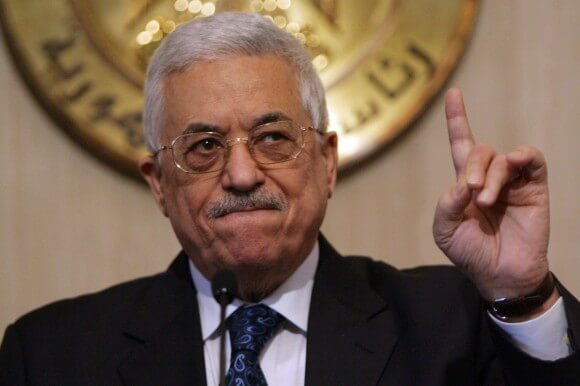
Palestinian Authority President Mahmoud Abbas. (Photo: Khaled Desouki/AFP)
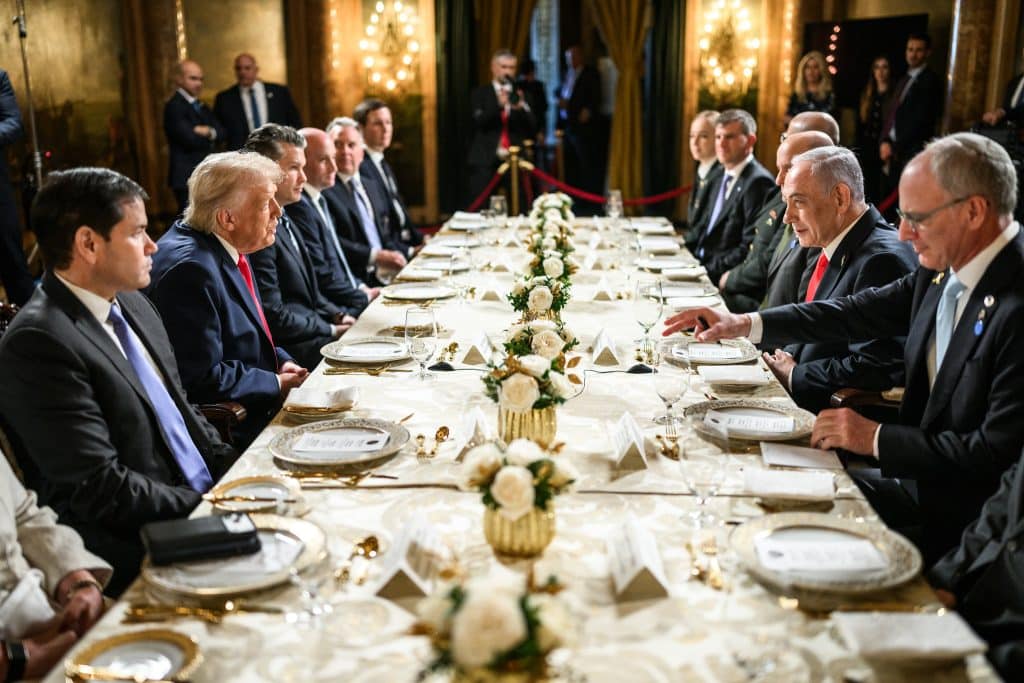
Before the signing of the Gaza ceasefire in Egypt last October, U.S. President Trump began to draw up his 20-point “peace” plan by meeting leaders from Arab and Islamic countries before amending the plan with Israeli Prime Minister Benjamin Netanyahu. European countries also had their say as expected funders of the reconstruction effort, along with Arab countries. But amid all these interlocking interests, one side has continued to be absent: the Palestinian people.
While Palestinians have routinely throughout history been sidelined when negotiations and decisions are made around their own future, one reason for this glaring absence in the current moment is that the Palestinian people are undergoing an internal political crisis. The nature of the crisis has often been characterized as one of political representation and factional disunity — a question of political differences between Hamas and Fatah, or even more trivially, a difference over which faction runs the ministries or who signs the paychecks of public employees.
But there’s another reason for the political marginalization of Palestinians, and it doesn’t boil down to political differences over tactics, strategy, and how national aspirations are articulated: it is because Palestinian society is itself divided.
The result of this fragmentation is that while regional and global powers draw plans for the future of Gaza and Palestine, Palestinians still struggle to have a national leadership and representation that rises to the occasion and addresses this pivotal moment in Palestinian history.
A crisis of society, institutions, and elites
The real crisis is not one of representation, but of society, says Khaled Odetallah, a Palestinian intellectual and founder of the Suleiman Halabi Center for Colonial and Liberation Studies. The essence of the Palestinian political crisis is nothing more than a “symptom” of a deeper social crisis, Odetallah argues, stressing that “political elites are, in the end, the reflection of social forces, which in the Palestinian case have been exposed to relentless targeting by colonial policies seeking to destroy the social fabric,” he told Mondoweiss.
“The crisis is one of a society which is currently incapable of drawing a single definition of its aim of liberation, after its social bodies were destroyed by the Israeli occupation,” he explained. “The occupation’s violence has decimated social bodies like unions, student movements, and associations, killing many and putting thousands in prison. It has also segregated Palestinians into different geographical realities,” he went on.
“The separation between Gaza and the West Bank, for instance, has been years in the making, and there have been different realities created between the north and the south of the West Bank, let alone Jerusalem and Palestinians holding Israeli citizenship, and there are many social groups with different interests in each of these parts,” Odetallah noted.
“Political representation is usually born out of interaction and struggle among social groups, which builds the representation of a society from the bottom up. This process has been systematically aborted by Israeli segregation and crackdown, and that is reflected in the lack of a united leadership,” he said.
For Odetallah, Palestinian political institutions have lost their representative capacity because they have lost their capacity to lead a liberation project. “The PLO has become a tool for political survival,” he pointed out. “It has given up much of its liberation movement role for the sake of survival and recognition, which is why it has lost much of its significance.”
“Palestinians are at a moment where they have to rebuild their political movement from scratch, based on their social reality from the most local level up, just like in the post-Nakba years in the early 1950s,” he added.
The origins of the crisis
Since the establishment of the Palestine Liberation Organization (PLO) in 1964, as the post-Nakba embodiment of the Palestinian national movement, the entire Palestinian struggle has mainly centered around reclaiming Palestinian agency. In the 1970s, the UN and the Arab League’s recognition of the PLO was in fact a revolutionary breakthrough, because it meant the admission that the leadership and representation of the Palestinian people at the time, with its political program, was a legitimate party to any political discussion on the future of Palestine.
Today, however, the recognition of a Palestinian state is considered by many as merely symbolic — because there is no unified Palestinian representative that can present a vision of self-determination.
This representation crisis has, in fact, been deepening for at least 15 years, predating the Israeli war on Gaza following October 7, 2023.
The last time Palestinians voted to elect a leadership was in 2005 and 2006. The head of Fatah, Mahmoud Abbas, was elected president in the first, and Hamas won a simple majority of seats in the Palestinian Legislative Council in the second. The duality of radically different political programs, and the stance of Western sponsors of the Palestinian Authority against having such a duality, created a political crisis, which exploded in 2007, when Hamas took over by force the administrative institutions in Gaza. As a consequence, two Palestinian entities emerged, with two leaderships. Palestinian politics have ever since been largely dominated by this split, marginalizing the other components of the Palestinian political scene and obstructing the formation of unified political representation for Palestinians.
Since 2007, Fatah and Hamas, sometimes with other factions, have met for talks and concluded agreements more than 10 times, under Egyptian, Saudi, or Qatari auspices. In at least two of these agreements, general elections were foreseen but never took place.
The only notable exception came in 2014, as a result of an agreement between both sides following talks at the Shati’ refugee camp in western Gaza City, without any third-party auspices. The agreement included the formation of a “national consensus government” reuniting the Palestinian ministries, although maintaining their actual administration under the separate control of Hamas in Gaza and Fatah in the West Bank (this is why the Palestinian health ministry, for example, is the same in both places, and their figures of Palestinians killed in Israeli bombings are not “Hamas figures”).
This situation was supposed to be temporary, but it has lasted until today. Although the government was officially one between the West Bank and Gaza, actual control and administration remained separated, and Palestinian political division has continued to this day.
The elections that never happened in 2021
In 2020, Palestinian factions agreed on holding general elections that would include the PA’s Legislative Council (in the West Bank and Gaza) and the PLO’s National Council (in Palestine and the diaspora). Such a move would have meant a fresh representative body for all Palestinians, which would have led to electing a new Palestinian leadership and drafting a unified national political program.
In comparison to the 11 candidates’ lists in the 2006 elections, no fewer than 36 lists signed up for the 2021 legislative elections in the West Bank and Gaza. Among these were nine non-partisan lists made up of independents, including lists formed by public functionaries who had previously taken part in union strikes, young professionals, and youth groups.
“It was an opportunity to make the new voices of the Palestinian people heard,” Inès Abdel Razek, director of the Palestinian Institute for Public Diplomacy (PIPD), told Mondoweiss. “There is an urgent need for political renewal in Palestinian politics, and one of the obstacles to it is that, out of 14 million Palestinians in the world, only those in the West Bank and Gaza are directly included in PA politics. Only they are able to vote in any PA elections.”
Abdel Razek was part of a youth group that presented a list for the elections under the name of the Generation of Democratic Renewal. “I myself am the daughter of a Palestinian refugee who isn’t a resident of Palestine,” she said. “Although I am a Palestinian, I can’t participate in Palestinian politics in Palestine.”
Another example was the “Freedom and Dignity” electoral list, headed by noted Palestinian political dissident Nizar Banat, who would later be assassinated by members of the PA security forces in June 2021. His extrajudicial lynching sparked widespread protests against PA repression and its crackdown on dissent, solidifying widespread perceptions of PA corruption and complicity in security coordination.
According to Abdel Razek, “the political fabric has been decimated by the Israeli occupation, and it has become unable to give birth to an inclusive and united political representation.”
Despite the knowledge that little can be achieved through Palestinian political institutions, Abdel Razek says that “many of us thought in 2021 that we should use the opportunity of announced elections to get some representation, before the elections were called off.”
But the elections were called off by PA President Mahmoud Abbas in April 2021, under the pretext that holding elections without the participation of Palestinian residents of Jerusalem — who hold Israeli residency permits and are prevented by Israel from participating in PA institutions or elections — constituted an unacceptable erosion of the Palestinian claim to Jerusalem.
At the time, Nizar Banat derisively remarked that such pretexts concealed the PA’s abandonment of Jerusalem through its signing of the Oslo Accords in 1993, sarcastically mocking the statement of one Fatah official as akin to the more radical and politically uncompromising discourse of the Palestinian Islamic Jihad.
But the fact that Palestinian political life has atrophied is no coincidence. It is the product of direct Israeli interference and the cultivation of a social and political class whose interests lie in maintaining the status quo. For Abdel Razek, Israeli policy has “engineered” Palestinian society and politics through a variety of instruments, from “keeping leaders in prison or assassinating them,” to segregating Palestinians geographically, to banning political meetings, and most recently, to supporting collaborators like the now-deceased gang leader Yasser Abu Shabab in Gaza.
“Preventing dissent is a way to prevent a healthy political life,” Abdel Razek noted. “Then we, Palestinians, are blamed for not being capable of governing ourselves, but the crisis is not one of the Palestinian people, because Palestinians agree on the essentials and on our priorities, despite our differences.”
That’s why the crisis of representation is a crisis of institutions and political classes, Abdel Razek maintains, adding that “it is maintained by the occupation’s interruption of our political life.”
Over the course of Israel’s genocide in Gaza, Palestinian factions attempted to unify their representation in order to take part in Gaza’s postwar arrangements. In July 2024, Palestinian factions agreed in Beijing to form a technocratic, non-political committee to run Gaza after the war and prepare it for general elections. Then in March 2024, they agreed on the same thing in Cairo. Last October, they reaffirmed the same commitments yet again following the signing of the ongoing tenuous ceasefire in Gaza.
Yet because Palestinians are politically divided, they are unable to act in unison and exercise collective leverage in the postwar political process. This has guaranteed that Palestinians are unable to have a say in their own fate, and it is what made the consecration of Trump’s colonial postwar plan at the UN Security Council possible.
Before the signing of the Gaza ceasefire in Egypt last October, U.S. President Trump began to draw up his 20-point “peace” plan by meeting leaders from Arab and Islamic countries before amending the plan with Israeli Prime Minister Benjamin Netanyahu. European countries also had their say as expected funders of the reconstruction effort, along with Arab countries. But amid all these interlocking interests, one side has continued to be absent: the Palestinian people.
While Palestinians have routinely throughout history been sidelined when negotiations and decisions are made around their own future, one reason for this glaring absence in the current moment is that the Palestinian people are undergoing an internal political crisis. The nature of the crisis has often been characterized as one of political representation and factional disunity — a question of political differences between Hamas and Fatah, or even more trivially, a difference over which faction runs the ministries or who signs the paychecks of public employees.
But there’s another reason for the political marginalization of Palestinians, and it doesn’t boil down to political differences over tactics, strategy, and how national aspirations are articulated: it is because Palestinian society is itself divided.
The result of this fragmentation is that while regional and global powers draw plans for the future of Gaza and Palestine, Palestinians still struggle to have a national leadership and representation that rises to the occasion and addresses this pivotal moment in Palestinian history.
A crisis of society, institutions, and elites
The real crisis is not one of representation, but of society, says Khaled Odetallah, a Palestinian intellectual and founder of the Suleiman Halabi Center for Colonial and Liberation Studies. The essence of the Palestinian political crisis is nothing more than a “symptom” of a deeper social crisis, Odetallah argues, stressing that “political elites are, in the end, the reflection of social forces, which in the Palestinian case have been exposed to relentless targeting by colonial policies seeking to destroy the social fabric,” he told Mondoweiss.
“The crisis is one of a society which is currently incapable of drawing a single definition of its aim of liberation, after its social bodies were destroyed by the Israeli occupation,” he explained. “The occupation’s violence has decimated social bodies like unions, student movements, and associations, killing many and putting thousands in prison. It has also segregated Palestinians into different geographical realities,” he went on.
“The separation between Gaza and the West Bank, for instance, has been years in the making, and there have been different realities created between the north and the south of the West Bank, let alone Jerusalem and Palestinians holding Israeli citizenship, and there are many social groups with different interests in each of these parts,” Odetallah noted.
“Political representation is usually born out of interaction and struggle among social groups, which builds the representation of a society from the bottom up. This process has been systematically aborted by Israeli segregation and crackdown, and that is reflected in the lack of a united leadership,” he said.
For Odetallah, Palestinian political institutions have lost their representative capacity because they have lost their capacity to lead a liberation project. “The PLO has become a tool for political survival,” he pointed out. “It has given up much of its liberation movement role for the sake of survival and recognition, which is why it has lost much of its significance.”
“Palestinians are at a moment where they have to rebuild their political movement from scratch, based on their social reality from the most local level up, just like in the post-Nakba years in the early 1950s,” he added.
The origins of the crisis
Since the establishment of the Palestine Liberation Organization (PLO) in 1964, as the post-Nakba embodiment of the Palestinian national movement, the entire Palestinian struggle has mainly centered around reclaiming Palestinian agency. In the 1970s, the UN and the Arab League’s recognition of the PLO was in fact a revolutionary breakthrough, because it meant the admission that the leadership and representation of the Palestinian people at the time, with its political program, was a legitimate party to any political discussion on the future of Palestine.
Today, however, the recognition of a Palestinian state is considered by many as merely symbolic — because there is no unified Palestinian representative that can present a vision of self-determination.
This representation crisis has, in fact, been deepening for at least 15 years, predating the Israeli war on Gaza following October 7, 2023.
The last time Palestinians voted to elect a leadership was in 2005 and 2006. The head of Fatah, Mahmoud Abbas, was elected president in the first, and Hamas won a simple majority of seats in the Palestinian Legislative Council in the second. The duality of radically different political programs, and the stance of Western sponsors of the Palestinian Authority against having such a duality, created a political crisis, which exploded in 2007, when Hamas took over by force the administrative institutions in Gaza. As a consequence, two Palestinian entities emerged, with two leaderships. Palestinian politics have ever since been largely dominated by this split, marginalizing the other components of the Palestinian political scene and obstructing the formation of unified political representation for Palestinians.
Since 2007, Fatah and Hamas, sometimes with other factions, have met for talks and concluded agreements more than 10 times, under Egyptian, Saudi, or Qatari auspices. In at least two of these agreements, general elections were foreseen but never took place.
The only notable exception came in 2014, as a result of an agreement between both sides following talks at the Shati’ refugee camp in western Gaza City, without any third-party auspices. The agreement included the formation of a “national consensus government” reuniting the Palestinian ministries, although maintaining their actual administration under the separate control of Hamas in Gaza and Fatah in the West Bank (this is why the Palestinian health ministry, for example, is the same in both places, and their figures of Palestinians killed in Israeli bombings are not “Hamas figures”).
This situation was supposed to be temporary, but it has lasted until today. Although the government was officially one between the West Bank and Gaza, actual control and administration remained separated, and Palestinian political division has continued to this day.
The elections that never happened in 2021
In 2020, Palestinian factions agreed on holding general elections that would include the PA’s Legislative Council (in the West Bank and Gaza) and the PLO’s National Council (in Palestine and the diaspora). Such a move would have meant a fresh representative body for all Palestinians, which would have led to electing a new Palestinian leadership and drafting a unified national political program.
In comparison to the 11 candidates’ lists in the 2006 elections, no fewer than 36 lists signed up for the 2021 legislative elections in the West Bank and Gaza. Among these were nine non-partisan lists made up of independents, including lists formed by public functionaries who had previously taken part in union strikes, young professionals, and youth groups.
“It was an opportunity to make the new voices of the Palestinian people heard,” Inès Abdel Razek, director of the Palestinian Institute for Public Diplomacy (PIPD), told Mondoweiss. “There is an urgent need for political renewal in Palestinian politics, and one of the obstacles to it is that, out of 14 million Palestinians in the world, only those in the West Bank and Gaza are directly included in PA politics. Only they are able to vote in any PA elections.”
Abdel Razek was part of a youth group that presented a list for the elections under the name of the Generation of Democratic Renewal. “I myself am the daughter of a Palestinian refugee who isn’t a resident of Palestine,” she said. “Although I am a Palestinian, I can’t participate in Palestinian politics in Palestine.”
Another example was the “Freedom and Dignity” electoral list, headed by noted Palestinian political dissident Nizar Banat, who would later be assassinated by members of the PA security forces in June 2021. His extrajudicial lynching sparked widespread protests against PA repression and its crackdown on dissent, solidifying widespread perceptions of PA corruption and complicity in security coordination.
According to Abdel Razek, “the political fabric has been decimated by the Israeli occupation, and it has become unable to give birth to an inclusive and united political representation.”
Despite the knowledge that little can be achieved through Palestinian political institutions, Abdel Razek says that “many of us thought in 2021 that we should use the opportunity of announced elections to get some representation, before the elections were called off.”
But the elections were called off by PA President Mahmoud Abbas in April 2021, under the pretext that holding elections without the participation of Palestinian residents of Jerusalem — who hold Israeli residency permits and are prevented by Israel from participating in PA institutions or elections — constituted an unacceptable erosion of the Palestinian claim to Jerusalem.
At the time, Nizar Banat derisively remarked that such pretexts concealed the PA’s abandonment of Jerusalem through its signing of the Oslo Accords in 1993, sarcastically mocking the statement of one Fatah official as akin to the more radical and politically uncompromising discourse of the Palestinian Islamic Jihad.
But the fact that Palestinian political life has atrophied is no coincidence. It is the product of direct Israeli interference and the cultivation of a social and political class whose interests lie in maintaining the status quo. For Abdel Razek, Israeli policy has “engineered” Palestinian society and politics through a variety of instruments, from “keeping leaders in prison or assassinating them,” to segregating Palestinians geographically, to banning political meetings, and most recently, to supporting collaborators like the now-deceased gang leader Yasser Abu Shabab in Gaza.
“Preventing dissent is a way to prevent a healthy political life,” Abdel Razek noted. “Then we, Palestinians, are blamed for not being capable of governing ourselves, but the crisis is not one of the Palestinian people, because Palestinians agree on the essentials and on our priorities, despite our differences.”
That’s why the crisis of representation is a crisis of institutions and political classes, Abdel Razek maintains, adding that “it is maintained by the occupation’s interruption of our political life.”
Over the course of Israel’s genocide in Gaza, Palestinian factions attempted to unify their representation in order to take part in Gaza’s postwar arrangements. In July 2024, Palestinian factions agreed in Beijing to form a technocratic, non-political committee to run Gaza after the war and prepare it for general elections. Then in March 2024, they agreed on the same thing in Cairo. Last October, they reaffirmed the same commitments yet again following the signing of the ongoing tenuous ceasefire in Gaza.
Yet because Palestinians are politically divided, they are unable to act in unison and exercise collective leverage in the postwar political process. This has guaranteed that Palestinians are unable to have a say in their own fate, and it is what made the consecration of Trump’s colonial postwar plan at the UN Security Council possible.





.jpg)