Friday, January 02, 2026

THE DONROE DOCTRINE

America's Strategy for the Western Hemisphere


January 01, 2026
Policy Office
VOA


After years of neglect, the United States will reassert and enforce the Monroe Doctrine to restore American preeminence in the Western Hemisphere, and to protect the U.S. homeland and its access to key geographies throughout the region.

The Western Hemisphere is a top priority region for President Donald Trump’s National Security Strategy.

After years of neglect, the United States will reassert and enforce the Monroe Doctrine to restore American preeminence in the Western Hemisphere, and to protect the U.S. homeland and its access to key geographies throughout the region.


The U.S. will deny non-Hemispheric competitors the ability to position forces or other threatening capabilities, or to own or control strategically vital assets, in the Western Hemisphere. This “Trump Corollary” to the Monroe Doctrine is a common-sense and potent restoration of American power and priorities, consistent with American security interests.


America will enlist established friends in the Hemisphere to control migration, stop drug flows, and strengthen stability and security on land and sea. It will expand by cultivating and strengthening new partners while bolstering its appeal as the Hemisphere’s economic and security partner of choice.

The U.S. will reward and encourage the region’s governments, political parties, and movements broadly aligned with our principles and strategy. But America must not overlook governments with different outlooks with whom we nonetheless share interests and who want to work with us.

The United States must reconsider our military presence in the Western Hemisphere. This means a readjustment of our global military presence to address urgent threats in our Hemisphere, especially the missions identified in this strategy, and away from theaters whose relative import to American national security has declined in recent decades or years.

It means targeted deployments to secure the border and defeat cartels, including where necessary the use of lethal force to replace the failed law enforcement-only strategy of the last several decades.

And it means establishing or expanding access in strategically important locations. The United States will prioritize commercial diplomacy, to strengthen our own to strengthen our own economy and industries, using tariffs and reciprocal trade agreements as powerful tools. The goal is for our partner nations to build up their domestic economies, while an economically stronger and more sophisticated Western Hemisphere becomes an increasingly attractive market for American commerce and investment.

As we deepen our partnerships with countries with whom America presently has strong relations, America must look to expand its network in the region. We want other nations to see us as their partner of first choice, and we will through various means discourage their collaboration with others.

The United States must be preeminent in the Western Hemisphere as a condition of our security and prosperity — a condition that allows the U.S. to assert itself confidently where and when it needs to in the region.
‘The deepest sort of spiritual disorientation’ Historian Joseph Kellner on the zeitgeist of the Soviet collapse and its lessons for today’s democracies

January 1, 2026
Source: Meduza


For decades, Russia’s “wild 1990s” have been remembered for economic hardship, libertarian freedoms, and rampant crime. Historian Joseph Kellner suggests another defining feature of the era: profound spiritual disorientation. In his book, The Spirit of Socialism: Culture and Belief at the Soviet Collapse, Kellner tells the cultural story of the “end of history” and argues that the USSR’s disintegration was the final blow to a centuries-old European idea of progress. He also describes what emerged from the ruins as a “seeking phenomenon” — an explosion of mystics, astrologers, and fringe sects in Russia in the early 1990s. For Meduza, journalist and author of the Playing Civilization research project Georgy Birger spoke with Joseph Kellner about what drove post-Soviet Russians toward radical new worldviews, how this spiritual crisis paved the way for Putinism, and why the West — now facing its own crises of meaning and truth — might be walking a similar path.

The following Q&A has been lightly edited and abridged for length and clarity.

Joseph Kellner

— For those unfamiliar with your work, can you briefly describe what your book is about?

— The book is, I believe, the first cultural history of the Soviet collapse. There are many good studies of late-Soviet culture; it’s a booming field right now. Previously, historians would have called it the Era of Stagnation and said that nothing significant happened in the 1970s and 1980s. Now, there’s a major effort by many scholars to reverse that and reassess late-Soviet culture. There are also histories of the collapse — roughly 1989 to 1993 — that focus, for good reasons, on the economic crisis and the various traumas of transition.

Instead, I focus on a spectacular and visible flourishing of new and radical worldviews, spiritualities, and orientations that cropped up all at once around the time of the collapse. That includes the popularity of Hare Krishnas, astrologers, apocalyptic sects, and [Anatoly] Fomenko’s New Chronology. I see all these things together as an acute manifestation of the cultural crisis that comes with the collapse.

What’s all this about?


The book takes up the people I collectively call “the seekers” and looks at two things. First, why did they come to believe the things they did? For instance, why was astrology so credible to so many people all at once? Or “extrasensory healing” [by TV psychics] like Kashpirovsky and Chumak? And second, why the seeking? Why in this period do you see this amazing public searching? Because not every crisis brings this kind of cultural ferment.

Essentially, I find that what unites all these people is a set of deep questions about the world. They are looking for orientation in a world where it has been lost. There are questions of intellectual authority: who can we believe, and where does true knowledge derive? Then, [there are] questions of identity: what does it mean to be a Russian at this time? In Russia, the identity question often takes this form of East versus West: are we Europeans, or are we not? And finally, questions about the direction of historical time — where it is headed and where it has been. There is a deep spiritual orientation to all this: how do we affix ourselves to something permanent when so much of our world has eroded?

— The question about time was probably tied to the concept of the “end of history.”

— Certainly. The concept of the “end of history” didn’t survive very long, but the notion was a triumphal one in the West and in the United States, where it was coined. In the Soviet Union, there was another, real sense to this concept. Soviet ideology was fixated on history, historical meaning, and the “right” direction of history. So, when that great vision collapsed completely, it left people afraid and unsure where anything was headed.

That is why people were looking to astrology, for instance; it offered a cyclical understanding of the world, putting the crisis in a much larger context. Or they looked to nostalgic worldviews — Hare Krishnas are, in fact, very nostalgic. They looked for different golden ages because the Soviet one so obviously failed.

— How did those questions about the direction of historical time manifest?

— When I look at these different groups — like the one around Fomenko’s New Chronology — I see a fixation on time. Fomenko is a Soviet mathematician who, in the 1990s, came out with this extraordinary revision of history, claiming all history happened in the last 1,000 years. He shifted all of history around and made a total, psychedelic new understanding of time.

I think the reason everyone was so fixated on time was that, during the crisis, there was a sense that the past was now unknown. Glasnost and the revelations of the Soviet press of the 1980s were all about uncovering Soviet crimes. Everything you learned in history class turned out to be untrue. History teachers were writing to the newspapers saying, “I can’t believe I’ve been lying to my students all this time.” There was no consensus anymore about what the past was.

Then, when the crisis is so acute, the future becomes equally dark. There is no natural “bottom” to the crisis, no sense of when it will end. People feel isolated and completely lost in time. That lends the sense of temporal displacement — of being nowhere. That is the deepest sort of spiritual disorientation.

— The way I understand it is that the loss of the Soviet timeline was, in a way, more psychologically damaging than the loss of the Soviet economy.

— The two things are hard to compare. The material crisis was staggering — male life expectancy dropped six years, murder and suicide rates spiked. But I do think the spiritual crisis is a meaningful compounding factor. After all, you can have an economic crisis of a similar scale — like the Great Depression — without this fundamental loss of orientation or this desperate attempt to reimagine everything about the world.

The spiritual crisis came from how certain Soviet ideology was about the big questions. Knowledge derived from reason along Western scientific lines; Soviet identity was a fixed thing with a clear place in world history. Even if people didn’t literally believe in communism per se by the 1970s and 1980s, it was the water they swam in. It was in the media and the education [system]: the values of Soviet society still rested on these Enlightenment values and the sense of progress. Seeing it collapse in a couple of years was spiritually jarring.

Perhaps the book’s biggest claim rests on the fact that Soviet communism and its value system were an heir to the Enlightenment and saw itself explicitly as carrying that mantle. And in this way, Soviet communism derived from the same time and place as 19th‑century liberalism. So, the collapse represented the end point of a very long, shared European arc of history, thought, and philosophy — a major, and perhaps the final, blow to the broader idea of historical progress, that shared 19th‑century belief among liberals and socialists that progress was effectively a law of history. Even after World War II, both sides of the Cold War remained fundamentally optimistic about progress, whereas 1989 and the Soviet collapse marked the end of this centuries‑long arc. This is an event whose consequences are still unfolding, including in the West, and whose full scale will be hard to grasp without greater historical distance.

In this sense, the “seekers” of the late-Soviet and early post‑Soviet period are like the canary in the coal mine: they are the first to go out actively searching for entirely new worldviews once this big idea of history has died.

— One thing I’ve found surprising is the claim that figures like Chumak or Fomenko were not just anti-rational charlatans, but also a way to preserve a scientific way of thinking. Can you explain that?

— Certainly. Kashpirovsky, for example, claimed authority as an educated psychiatrist; it was his medical background. The astrologers I focus on almost all have backgrounds in the hard sciences, such as mathematics, astronomy, or physics. At no point do they forsake that education; they still put enormous value on science. The dispute was over who defined science. And the truth is that it’s impossible to define pseudoscience. It is defined by whoever holds the scientific authority to do so.

In a time when official Soviet authorities were losing credibility, these people offered alternatives, but they did it in the language of science because there was still a deep understanding that science is a powerful window to the world. Even the Soviet Hare Krishnas, unlike their American counterparts, tried to demonstrate the scientific validity of their beliefs. It demonstrates a deep, lasting Soviet respect for science, even while, from the outside, it looks like unscientific ideas coming to the fore.

— Can you recall any immediate impact of seekers on Russian politics in the 1990s?

— It’s interesting because the seekers themselves were almost universally not invested in politics. They considered politics to be superficial and were not after political solutions. That is an important thing that gets lost. People try to draw lines from the 1990s to the Putin era to explain Putinism, and while one helps explain the other, these seekers were not necessarily proto-Putinists.

Rather, political fatigue was almost universal in the early 1990s. Having invested so much hope in Gorbachev’s reforms and seen them fail, then seeing [Russian President Boris] Yeltsin as an inspiration and quickly hating him — there was no sense that the political system was going to save people. So, as they had in the 1970s and 1980s, they looked elsewhere for meaning. They looked outside the official political world.

— But did this movement still affect the current state of Russia?

— Yes. What is remarkable is that Putinism has concrete, confident answers to the driving questions of the 1990s: the shape and direction of history, what it means to be Russian, and who you can trust. It has a clear view of the West and where Russia stands. The questions that plagued the 1990s are now “settled” in a somewhat frightening mode that is hostile to pluralism. That may be one reason for the appeal of Putinism — it provided answers in a very uncertain world. The right wing always has a very simple story to tell, and it can be a very compelling story.

— So, did these fringe theories of the 1990s simply migrate from the grassroots to the Kremlin?

— I think most of these specific currents that I wrote about subsided by the end of the 1990s. The energy behind extrasensory healing, astrology, and the Hare Krishnas was in retreat by the time Putin came on the scene. However, there are still mystical currents within Russian culture — for example, people often see Eurasianism as a mystic, quasi-scientific nationalism. So, there are continuities you can find, and I think Eurasianism is probably the easiest one to point out.

— In an article for Jacobin, you argue that similar things are happening in the U.S. now. Who would be the Kashpirovsky or Fomenko of this process?

— I don’t think we have them yet. We don’t have an equivalent seeking phenomenon, although we certainly have a lively world of conspiracy thinking. We don’t have a similar cultural crisis, at least not in the form that I described in the Soviet case. And we haven’t had a big economic crisis yet — though everyone is expecting it, whether from the debt ceiling games, an AI bubble, or fossil fuels. I wouldn’t be surprised if such a crisis caused a dramatic spiritual seeking or “Great Awakening.”

For now, the major cultural figures setting trends are more explicitly political and tend to be on the right wing — people laying out visions that get a lot of followers. People like [white nationalist] Nick Fuentes and [right-wing blogger] Curtis Yarvin. But I don’t know anyone who I would draw parallels directly to Kashpirovsky and Chumak.

[Billionaire Peter Thiel’s theories about the Antichrist] might be as close as we get — the merger of reactionary politics and fundamentalist evangelical Christianity with tech utopianism/dystopianism. That is the making of a frightening ideology. All the ingredients are here. If an American “Fomenkoism” were to emerge with a charismatic leader, I think it’s easy to imagine millions of readers because there is nobody in America who has the authority to dispute such a theory anymore.

— Historians rarely draw parallels between Russia’s case of de-democratization and current worldwide and U.S. trends. The usual explanation is that democracy was too young and fragile in Russia, and that’s why it crumbled. What arguments do you have in favor of learning from post-Soviet Russia’s experience?

— Well, I can’t dismiss out of hand that democracy requires institutional memory. Imagining a democratic Russia is a very difficult task, especially compared to the United States, where there is a deeply rooted sense of popular power. But the common feature of both countries, as they move in the opposite direction of democracy, is the current state of capitalism. In the 1990s, Russia got the business end of capitalism — the sharpest and most aggressive form of the system — applied to a country that, coming out of the Soviet experience, simply could not compete on the world market and was picked apart by foreign capital and by its own state through corrupt privatization under Yeltsin. The rise of the oligarchs in a state with weak institutions and a huge concentration of wealth in a small circle of people is very hard to square with democracy, because those people end up functioning as a kind of pseudo‑government, producing the mafia state of the 1990s.​

The Yeltsin government attempted to install neoliberal capitalism as it existed in the United States: eliminating subsidies, leaving no real space for unions, keeping taxes low, and placing great faith in markets to solve every problem. In Russia [this was a] catastrophic and very fast [process], whereas in the U.S., it has been a slower, forty‑year process with similar results. In both countries, this has meant huge inequality, a dramatic loss of faith in the political system and in democracy, and a concentration of power in a very small set of oligarchs — though Americans are allergic to that word, even as today’s billionaires surpass the Rockefellers and Carnegies of their time. These shared developments make the similarity of the reaction unsurprising, and what we are seeing now is the long‑standing conflict between capitalism and democracy becoming extremely sharp.
How New York City Mayor Zohran Mamdani connected with jailed activist Umar Khalid

A handwritten letter from New York Mayor Zohran Mamdani to jailed activist Umar Khalid in India gained traction online


Updated: January 02, 2026


A handwritten letter penned by newly sworn-in New York Mayor Zohran Mamdani to jailed student activist Umar Khalid has gained traction on social media.

The letter surfaced right after Mamdani’s oath-taking ceremony on Thursday. The 34-year-old is the city’s youngest and first Muslim and Asian origin mayor of the city.

In the handwritten note which was handed to Umar Khalid’s parents, former JNU professor SQR Ilyas and social worker Naseem, in December while they were in the United States, the Democrat leader said, “We are all thinking of you.”

The note was shared on X by Khalid's partner, Banojyotsna Lahiri.

"Dear Umar, I think of your words on bitterness often, and the importance of not letting it consume one’s. It was a pleasure to meet your parents. We are all thinking of you," Mamdani wrote in the note.


Note from Zohran Mamdani written to Umar Khalid | X @banojyotsna

Lahirir said that the Khalid’s parents had visited the US before the wedding of their youngest daughter to meet one of their elder daughters who lives there. “They met Mamdani and a few others in the US and spent quite some time with him. That’s when he wrote this note,” Lahirir had told the Indian Express.

They had also met Ranking Member of the House Rules Committee and Co-chair of the Tom Lantos Human Rights Commission, Democrat Jim McGovern.

In a post on X, McGovern said, “I met with the parents of Umar Khalid, who has been jailed in India for over 5 years without trial. Representative Raskin and I are leading our colleagues to urge that he be granted bail and a fair, timely trial in accordance with international law.”

U.S. lawmakers also penned a letter where they demanded that India 'uphold the rights of individuals to receive a fair trial.' The letter was signed by Congressman Jamie Raskin, Senator Chris Van Hollen, Senator Peter Welch, Congresswoman Pramila Jayapal, Congresswoman Rashida Tlaib, Congressman Jan Schakowsky, and Congressman Lloyd Doggett.

Khalid, 37, was arrested in September 2020 for his alleged involvement in the Delhi riots and has been in Tihar Jail since then. He is a former Jawaharlal Nehru University student leader and activist.

Delhi police arrested him under the Unlawful Activities (Prevention) Act (UAPA) and Indian Penal Code sections for allegedly masterminding the February 2020 north-east Delhi riots. He was granted bail last month for his sister's wedding from December 16 to 29. Before that, multiple bail pleas he appealed for, have faced setbacks.

In 2023, Mamdani, who was then a New York State Assembly member, read excerpts from Khalid's prison writing at the ‘Howdy Democracy’ event ahead of PM Narendra Modi’s White House visit.

“I’m going to be reading a letter from Umar Khalid, who is a scholar and a former student activist at the Jawaharlal Nehru University in Delhi…who organised a campaign against lynching and hate. He has been in jail for more than 1,000 days under the Unlawful Activities Prevention Act and has yet to face trial, though his bail application has been repeatedly denied. He has also faced an assassination attempt,” Mamdani said at the event.
New York: Mamdani builds his team of progressive policymakers

Zohran Mamdani hasn't wasted any time in lining up a new team of progressive policymakers on his first day as mayor of New York City.


Brooke Anderson
Washington, DC
01 January, 2026
THE NEW ARAB

Mamdani announced a series of political appointments just before his inauguration [Getty]

Newly inaugurated New York City Mayor Zohran Mamdani hasn't wasted any time in lining up a new team of progressive policymakers on his first day as mayor of New York City.

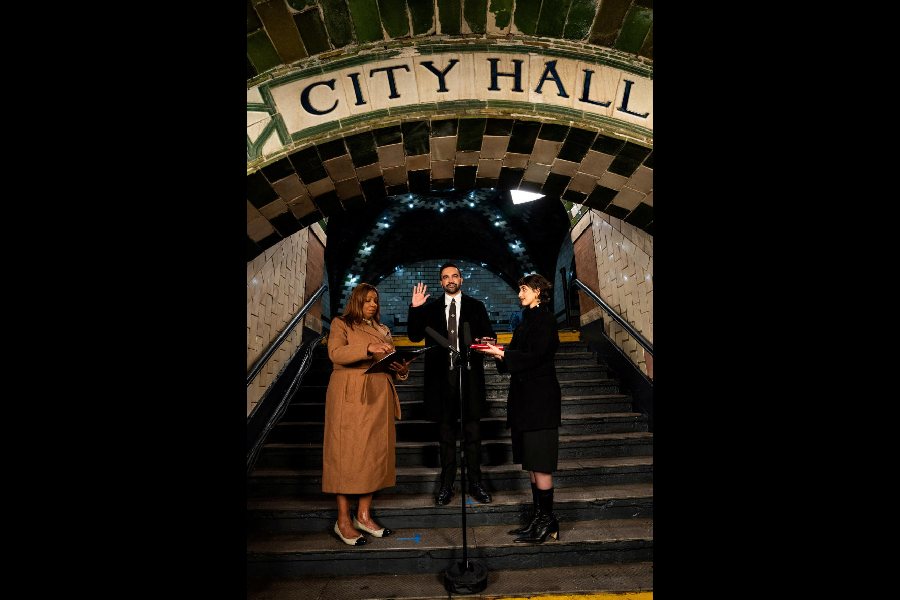
In his first speech at the Old City Hall subway station after becoming mayor in the early hours of the first day of 2026, he appointed Mike Flynn as his new Department of Transportation commissioner.

He described the historic station as “a testament to the importance of public transit to the vitality, the health and the legacy of our city.”

Two days earlier, at Elmhurst Hospital in the borough of Queens, he held a press conference, where he introduced new appointments for his healthcare and legal team.

These include Ramzi Kassem from City University of New York, appointed as general counsel. In a short speech, Kassem described New York City as his first stable home after spending his childhood living in conflict zones.

In another appointment, Mamdani name Steven Banks, former head of the Legal Aid Society, as the city’s Corporation Counsel

At the same press conference, he tapped Helen Arteaga, who had been serving as CEO of Elmhurst Hospital, to be Deputy Mayor for Health and Human Services. She was the hospital’s first Latina CEO and oversaw care during the Covid-19 pandemic. She described her position as the safety net that New Yorkers rely on.

On his website, Mamdani lists the leaders of his transition team, along with their biographies.

Grace Bonilla is serving as transition co-chair. She has until now been the head of United Way, assisting low-income New Yorkers.

His second listed transition co-chair is Lina Khan. She is something of a rock star in American left-wing politics.While serving as Federal Trade Commission Chair under former President Joe Biden, Khan regularly gave late-night TV interviews on consumer protection and anti-trust law and was greeted with standing ovations.

His third listed transition co-chair is Maria Torres-Springer. Most recently, she has served as First Deputy Mayor in City Hall. Her professional background is in housing advocacy.

His fourth co-chair listed is Melanie Hartzog, who has until now been working as president and CEO of the New York Foundling, advocating for families in need.

The transition executive director is Elana Leopold, who has been serving as a senior advisor for Mamdani’s campaign. She previously held senior roles in former Mayor Bill de Blasio’s administration.

Dean Fuleihan is starting his tenure as First Deputy Mayor. The son of Lebanese immigrants, Fuleihan brings experience in overseeing New York budgets, having spent over 30 in state politics.

Elle Bisgaard-Church is serving as Mamdani’s chief of staff. She has played a major role in Mamdani’s transportation initiatives and his affordability agenda.


On the website, there are hundreds of new positions and names listed in housing, legal affairs, housing, education, technology and social services.
New York Mayor Zohran Mamdani redefines oath with Quran, a first in the city’s history

Showcasing the Quran that belonged to Schomburg, an Afro-Latino writer whose work shaped the Harlem Renaissance, underlines the city’s blend of faiths and racial and ethnic backgrounds

Maya King Published 02.01.26, 
THE TELEGRAPH CALCUTTA


Zohran Mamdani being sworn in using a Quran as mayor of New York City, flanked by his wife Rama Duwaji (right) and attorney-general Letitia James, at Old City Hall Station on Thursday. Amir Hamja/Pool via Reuters

Mayor Zohran Mamdani represents a range of demographics that New York City has not seen before in top leadership: South Asian, millennial, Muslim.

For the hundreds of thousands of Muslim residents who have taken pride in seeing one of their own rise to the mayoralty, his inauguration brought another significant first.

During his swearing-in ceremony shortly after midnight on Thursday, he put his hand on the Quran, Islam’s holiest book, making him the first mayor in New York City to do so.

One of the Qurans was from Mamdani’s grandfather. The other once belonged to Arturo Schomburg, the Black writer and historian. It was lent to the mayor by the New York Public Library.

For a separate public ceremony at City Hall on Thursday afternoon, Mamdani used his grandfather’s Quran and one owned by his grandmother.

Showcasing the Quran that belonged to Schomburg, an Afro-Latino writer whose work shaped the Harlem Renaissance, underlines the city’s blend of faiths and racial and ethnic backgrounds.

“It’s a highly symbolic choice because we’re about to have a Muslim mayor swearing in using the Quran, but also a mayor who was born on the African continent, in Uganda,” Hiba Abid, the library’s curator for Middle Eastern and Islamic Studies, said ahead of Mamdani’s swearing-in ceremony.

Abid helped Zara Rahim, a senior adviser to Mamdani, and Rama Duwaji, Mamdani’s wife, select the Quran for the inauguration. “It really brings together here elements of faith, identity and New York history,” she said.

Schomburg’s Quran will be on public display for the first time as part of a special exhibit at the New York Public Library that coincides with a yearlong celebration of the 100th anniversary of the Schomburg Center. The exhibit will begin on Tuesday.

Schomburg, who was born in Puerto Rico, was not a Muslim but kept the Quran as part of his archive of books and artefacts. He sold his collection, which contained more than 4,000 pieces, to the New York Public Library in 1926, building the foundation of the Schomburg Center for Research in Black Culture. He died in 1938.

His inclusion of the Quran in his collection was meant to show the full expanse of Black artistic, cultural and religious life.

He also wanted to rebut a claim from a childhood teacher, who once remarked to him that Black people lacked significant figures or history. His Quran was acquired from Ottoman Syria and was written and designed for everyday use, as evidenced by the style of its script and binding.

Abid said she hoped that putting Schomburg’s Quran on display would allow New Yorkers to learn more about the holy book and Muslim life in the city. She and Mamdani’s advisers also plan to use the display to encourage more people to take advantage of the archival resources that are available at the library.

Though it is traditional for most elected officials to take the oath of office with their hand on a religious text, they are not required by law to use one — or any book,for that matter.

Most past mayors have placed their hands on a Bible. But Mamdani’s faith was a defining feature of his campaign.

In a statement, Rahim said that Mamdani’s use of the Quran would correct “a long-deferred absence” of Muslims in the city’s public life.

“This moment will mark a turning point in the civic history of New York City, and it belongs to every New Yorker whose lives shaped this city quietly, without ever being reflected back to them,” she said.

Mayors have opted for a mix of personal heirlooms and artefacts while being sworn in. In 2021, Eric Adams took his oath of office with one hand on his mother’s Bible and in the other a framed photo of her image floating in a brandy snifter. His predecessor, Bill de Blasio, put his hand on a Bible that once belonged to President Franklin D. Roosevelt.

Mamdani will join a small group of prominent elected officials in the US to use a Quran for their swearing-in. Keith Ellison, Minnesota’s attorney general, became one of the first American elected officials to put his hand on the book when he was sworn into Congress in 2007. Representative Ilhan Omar of Minnesota, who succeeded Ellison, also put her hand on a Quran for her swearing-in.

In New York, Shahana Hanif was sworn in to the City Council in 2022 with her hand on a family Quran that her sister used during her wedding. Hanif said Mamdani’s plan to use the Quran highlighted the inroads that Muslims have made in city politics.

“Let’s be honest, Muslims have not been in electoral life for decades like other ethnic groups and communities,” she said. “I think the Quran represents this example of extending solidarity to the Muslim community in New York City and, really, abroad.”

New York Times News Service

New York Mayor Mamdani vows to enact democratic socialist agenda


New York City Mayor Zohran Mamdani delivers a speech during his inauguration ceremony in New York City, US, Jan 1, 2026.
PHOTO: Reuters

January 01, 2026 


NEW YORK — Democrat Zohran Mamdani became New York City's mayor on Thursday (Jan 1), vowing during a public swearing-in ceremony on the steps of City Hall to enact an aggressive agenda aimed at making the nation's largest city more affordable for working people.

Mamdani, a member of his party's left-wing democratic socialist faction, was elected last November in a prominent victory that could influence this year's midterm elections that will determine control of the US Congress. Some Democrats have embraced his style while Republicans portray him as a foil on the national political stage.

The 34-year-old campaigned heavily on cost-of-living issues and was sharply critical of Republican President Donald Trump, whose approval rating has fallen over the past year amid economic concerns.

Many of New York's eight million residents — some with hope, some with trepidation — expect him to be a disruptive political force. In a speech following his public swearing-in, Mamdani promoted core campaign promises of universal childcare, affordable rents and free bus service.

"We will answer to all New Yorkers, not to any billionaire or oligarch who thinks they can buy our democracy," he said. "I was elected as a democratic socialist and I will govern as a democratic socialist."

Crowd chants 'tax the rich'

The programme for Mamdani's inauguration included remarks by US Senator Bernie Sanders and US Representative Alexandria Ocasio-Cortez, fellow democratic socialists at the vanguard of the Democratic Party's liberal wing.

Sanders, whom Mamdani calls his inspiration, defended Mamdani's agenda.

"Making sure that people can live in affordable housing is not radical," Sanders said. "It is the right and decent thing to do."

The crowd of several thousand cheered loudly when Sanders called on America's millionaires and billionaires to pay more in taxes, breaking into a chant of "tax the rich."

Even with temperatures well below freezing, the city set up a viewing area along Broadway to allow thousands more to watch a livestream of the ceremony, which included musical performances.

Mae Hardman-Hill, 27, volunteered for Mamdani's campaign and said it felt like his political momentum was growing.

"I'm a native New Yorker. I've watched the city like you just become less and less affordable, less and less livable," Hardman-Hill said. "I'm really excited for... regular people to get some power back again."

Prior to the public ceremony, Mamdani was privately sworn in as New York City's mayor in the first minutes of the New Year on Thursday at the historic City Hall subway station, which was decommissioned decades ago and is accessible only a few times a year through guided tours.

Reflecting his Muslim faith, he used a Quran, Islam's holiest book, for his swearing-in, a first for a New York City mayor.

Republicans blast Mamdani


Hours after Mamdani took office, the lead group tasked with electing Republicans to the US House of Representatives sought to portray him as a "radical socialist."

"Every time Mamdani opens his mouth or swipes his pen, he tattoos the Democrat Party's failures onto every House Democrat facing voters in 2026," spokesperson Mike Marinella said in a statement that signalled the sizable role Mamdani is likely to play on the national campaign stage.

Mamdani, a former state lawmaker, promised a freeze on rents and free buses and childcare, building a campaign around affordability issues that some have seen as a path forward for the Democratic Party around the country ahead of November midterm elections.

Dean Fuleihan, the incoming deputy mayor, told the Financial Times that Mamdani will move ahead with plans to increase taxes on millionaires to pay for his campaign promises and balance New York's budget. He added that he doesn't expect rich people to leave the city as a result of potentially higher taxes.

New York Governor Kathy Hochul has said she opposes raising personal income taxes but is considering raising corporate taxes to pay for a potential budget shortfall amid federal cuts.

In one early reversal, Mamdani said on Wednesday that he would no longer seek to end mayoral control of New York City's public school system, the largest in the US, naming veteran educator Kamar Samuels as chancellor.

Mamdani inspired a record-breaking turnout of more than two million voters and took 50 per cent of the vote in November, nearly 10 points ahead of Andrew Cuomo running as an independent and well ahead of Republican Curtis Sliwa.

Inauguration of a new era

The Uganda-born Mamdani has been a sharp critic of Trump on issues such as immigration and said his differences with the president were numerous after a warm White House meeting.

Mamdani raised US$2.6 million (S$3.33 million) for the transition and celebrations from nearly 30,000 contributors, more than other mayors on record this century, both by the total and single donations, according to official campaign data that presents disclosures of inaugural expenses beginning with Michael Bloomberg's first term in 2001.

As mayor, Mamdani will move from his one-bedroom Astoria apartment, protected from sharp price hikes by the city rent-stabilisation programme, to Gracie Mansion, the official residence of New York City mayors on Manhattan's upscale Upper East Side.

Bankers and others in New York, the nation's financial capital, had expressed concern about Mamdani, but since his election many have explored how to work with him.

Source: Reuters


New Yorkers brave the cold to welcome Zohran Mamdani as their new mayor

FRANCE24
Issued on: 02/01/2026 

Zohran Mamdani was sworn in as New York City's mayor after his election in November 2025. Mamdani won on his promise to tackle cost-of-living issues in the city while sharply criticising the US president, Republican Donald Trump. Many New York residents expect him to be a disruptive political force. FRANCE 24's Jessica Le Masurier went to ask them what Mamdani represented for them.


Brazil’s Supreme Court rejects Jair Bolsonaro’s request for house arrest


Bolsonaro’s latest petition, one in a series, comes after he spent the week in hospital for a hernia and hiccups.

A motorcade transports Brazil's former President Jair Bolsonaro from prison to a hospital on December 24, 2025 [Mateus Bonomi/Reuters]


ByAl Jazeera Staff and News Agencies
Published On 1 Jan 2026


The Brazilian Federal Supreme Court has again denied a request from the defence team of former President Jair Bolsonaro to move him from prison to house arrest.

Bolsonaro, 70, has been in and out of hospital over the past week, undergoing multiple treatments for aggressive hiccups and a hernia.

But on Thursday, his petition for house arrest on “humanitarian grounds” was denied, a day after it was filed.

In explaining the court’s decision, Justice Alexandre de Moraes argued that Bolsonaro already has access to round-the-clock medical care in police custody.

The former right-wing leader is currently being held at the federal police headquarters in the capital, Brasilia, after being sentenced to 27 years in prison for attempting to overturn his 2022 electoral defeat.

De Moraes also questioned whether Bolsonaro’s health merited “humanitarian” accommodations.

“Contrary to what the defence alleges, there has been no worsening of Jair Messias Bolsonaro’s health condition,” the justice said in his decision.

“Rather, his clinical condition showed improvement in the discomfort he was experiencing after undergoing elective surgeries, as indicated in the report from his own doctors.”

Following the denial on Thursday, hospital authorities confirmed that Bolsonaro had been released after being treated without complication. The Associated Press reported he was taken back to prison by car.Dr Brasil Caiado speaks after Bolsonaro underwent surgery to treat hiccups on December 29, 2025 [Mateus Bonomi/Reuters]

Multiple requests

This is not the first time the court has rejected a similar petition from Bolsonaro, who has reportedly suffered from lingering conditions, including hiccups, related to an abdominal stabbing he survived on the campaign trail in 2018.

Bolsonaro was taken into custody in November after damaging an ankle monitor that allowed him to remain at home while pursuing appeals. He had been convicted in September.


But shortly after Bolsonaro was remanded into custody, his defence team filed a request for house arrest, warning of life-threatening conditions behind bars.

“It is certain that keeping the petitioner in a prison environment would pose a concrete and immediate risk to his physical integrity and even his life,” his lawyers wrote.

That request, and a subsequent one in December, have been denied.

On December 23, though, the Supreme Court approved Bolsonaro’s request to leave prison, in order to undergo surgery for a hernia, resulting from damage to his abdominal muscles.

He travelled to Brasilia’s DF Star hospital to receive treatment and has since pursued other procedures, including a phrenic nerve block treatment and an endoscopy, to address his persistent hiccups.

Election controversy

A former army captain, Bolsonaro became a rising star in Brazil’s far right and served as president for a single term, from 2019 to 2023.

During his term, he faced scrutiny for comments he made praising Brazil’s military dictatorship, which ruled the country from 1964 to 1985 and oversaw the systematic torture and killings of political dissidents.

He also allegedly used his office to cast doubt on the integrity of Brazil’s electronic voting system.

In 2023, Brazil’s Superior Electoral Court (TSE) would ultimately bar Bolsonaro from holding public office for eight years, citing instances where he broadcast unfounded allegations about the election system on state TV and social media.

Still, Bolsonaro was considered a frontrunner going into the 2022 presidential race, where he faced two-term former President Luiz Inacio Lula da Silva.

The race advanced to an October 30 run-off. Lula eked out a narrow win, besting the incumbent Bolsonaro by less than two percentage points, with 50.9 percent of the vote.

In the aftermath, Bolsonaro refused to publicly concede defeat, although media reports indicate he may have done so in private.

Meanwhile, he and his allies filed a legal challenge against the election outcome that was quickly rejected for its “total absence of any evidence”. Bolsonaro’s coalition was fined nearly $4.3m for the “bad faith” petition.

But the unfounded belief that Bolsonaro’s defeat was somehow illegitimate prompted his supporters to take to the streets. Some blocked highways. Others attacked the federal police headquarters.

The tensions culminated on January 8, 2023, a week after Lula’s inauguration, when thousands of Bolsonaro supporters stormed Brasilia’s Three Powers Plaza and broke into buildings representing Congress, the presidency and the Supreme Court.

Some supporters expressed hope that they could lead to a military coup that would remove Lula from power.

Senator Flavio Bolsonaro holds bobble-head dolls depicting US President Donald Trump and Bolsonaro on December 19, 2025 [Adriano Machado/Reuters]


Legal jeopardy

That attack prompted wide-ranging investigations, and in November 2024, federal police issued a sweeping report accusing Bolsonaro and 36 allies of attempting to “violently dismantle” Brazil’s constitutional order.

The report detailed alleged instances where Bolsonaro and his allies discussed invalidating the election results — or even assassinating Lula.

Last February, prosecutors formally charged Bolsonaro and dozens of codefendants for attempting to overthrow the 2022 election.

His trial unfolded despite high-level international pressure from right-wing figures like United States President Donald Trump, who imposed steep tariffs on Brazil in August to protest against the prosecution.

Still, in September, Bolsonaro was found guilty on five counts, including attempted coup d’etat, armed conspiracy, attempted abolition of the rule of law, destruction of public property and damage to national heritage.

Bolsonaro has denied wrongdoing throughout the case and has called his prosecution an attempt to silence a political rival.

He remains a popular figure on the right, and his eldest son, Senator Flavio Bolsonaro, announced last month his intention to challenge Lula for the presidency this upcoming October.

Last month, Brazil’s conservative-led Congress also passed a bill that could shorten Bolsonaro’s sentence, though Lula has pledged to veto it.
Disney will pay £7.4 million fine over children's privacy violations on YouTube

Entertainment giant settles with US regulators after failing to properly label children's content, enabling targeted advertising without parental consent


The settlement specifically addresses content distribution on YouTube and does not involve Disney's own digital platforms
Getty Images

Dec 31, 2025
EASTERN EYE

Highlights

Disney to pay £7.4m settlement for violating children's online privacy laws.

Company failed to mark videos from Frozen, Toy Story and The Incredibles as child-directed content.

Settlement requires Disney to create compliance programme for children's data protection.


The Walt Disney Company has agreed to pay £7.4m ($10m) to settle claims that it violated children's privacy laws by improperly labelling YouTube videos as made for children, allowing targeted advertising and data collection without parental permission.

The settlement with the US Federal Trade Commission, initially announced in September, was formalised by a federal court order on Tuesday.

The case centred on Disney's alleged failure to properly categorise children's content uploaded to YouTube, which resulted in youngsters receiving targeted advertisements and having their personal information collected without their parents' knowledge or consent.

Under the agreement, Disney Worldwide Services Inc and Disney Entertainment Operations LLC must establish a comprehensive programme to comply with children's data protection regulations.

The settlement specifically addresses content distribution on YouTube and does not involve Disney's own digital platforms.

Brett Shumate, an assistant attorney general in the US Justice Department's civil division, said in a statement "The Justice Department is firmly devoted to ensuring parents have a say in how their children's information is collected and used."

How rules apply

The case stems from requirements introduced after a 2019 settlement between the FTC and Google, YouTube's parent company.

Content creators were mandated to label videos directed towards children to prevent targeted advertising and personal data collection, which are prohibited under the 1998 Children's Online Privacy Protection Act (COPPA).

This law requires creators making content for children under 13 to notify parents and obtain consent before gathering personal information.

According to the Justice Department's complaint filed in California, Disney uploaded videos to more than 1,250 YouTube channels through various subsidiaries since 2020.

Many of these videos, particularly those uploaded during the pandemic, proved extremely popular, with viewership surging during the early months of Covid-19.

Government lawyers alleged that Disney was aware of failures to properly mark children's videos as early as June 2020, when YouTube informed the company that it had changed labels on more than 300 videos, including content from The Incredibles, Toy Story and Frozen franchises.

The misclassification allegedly resulted in YouTube collecting personal information and placing targeted advertisements on child-directed videos on Disney's behalf.

A Disney spokesperson confirmed the company has agreed to the terms originally announced in September.
INDIA

Platforms boost gig pay, deliver record orders despite strike

Platforms offered enhanced incentives as over 75 lakh orders delivered despite union protests over working conditions


Platforms offered enhanced incentives as part of their standard festive period practice
Getty Images


ByAshya Rose
Jan 01, 2026
EASTERN EYE


Highlights

Zomato and Blinkit delivered over 75 lakh orders with 4.5 lakh delivery partners on New Year's Eve.
Platforms offered Rs 120-150 per order during peak hours, with Swiggy promising up to Rs 10,000 across two days.

Over 1.7 lakh workers threatened strike while unions claim 1 lakh participated, but operations remained largely unaffected.

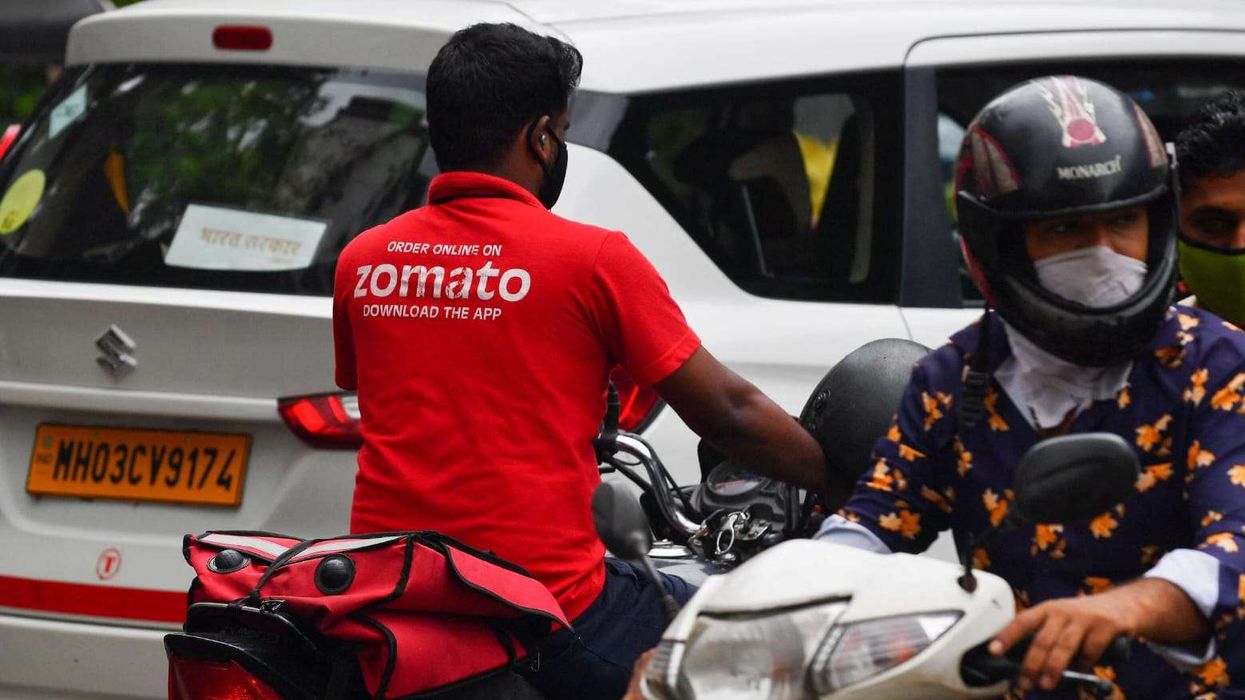
Food delivery platforms Zomato, Swiggy and Magicpin reported record-breaking order volumes on New Year's Eve despite a nationwide strike call by gig workers' unions demanding better payouts and improved working conditions.

Eternal founder Deepinder Goyal announced that Zomato and Blinkit delivered more than 75 lakh orders to over 63 lakh customers, describing it as an "all-time high". The platforms remained "unaffected by calls for strikes", with over 4.5 lakh delivery partners completing deliveries.

Platforms offered enhanced incentives as part of their standard festive period practice. Zomato offered payouts of Rs 120 to Rs 150 per order during peak hours between 6pm and 12am, with promised earnings of up to Rs 3,000 over the day.

The platform temporarily waived penalties on order denials and cancellations.

An Eternal spokesperson told PTI "This is part of our standard annual operating protocol during festive periods, which typically see higher earning opportunities due to increased demand."

Swiggy offered delivery workers earnings of up to Rs 10,000 across December (31) and January (1), advertising peak-hour earnings of up to Rs 2,000 for the six-hour period on New Year's Eve.

The Telangana Gig and Platform Workers' Union (TGPWU) and Indian Federation of App-Based Transport Workers (IFAT) claimed over 1.7 lakh workers confirmed participation in the strike.


The Gig and Platform Service Workers Union (GIPSWU) said over 1 lakh workers from 22 cities joined, including 14,000 members from Delhi and Mumbai.

However, with over 12.7 m gig workers in India, the strike's impact remained minimal. Magicpin founder Anshoo Sharma said the company saw "no impact" of the strike.

In a joint statement, TGPWU and IFAT said the action followed the December strike (25), stating "Companies responded with silence – no rollback of reduced payouts, no dialogue with workers, and no concrete assurances on safety or working hours. This continued indifference has made today's strike unavoidable."

Goyal thanked delivery partners who "showed up despite intimidation" and described the gig economy as "one of India's largest organised job creation engines".
Yemen is back from the brink, but frenemies Saudi Arabia and UAE have much to negotiate


ANALYSIS

The UAE this week announced a withdrawal of its troops from southern Yemen, marking a de-escalation in year-end tensions with its ally Saudi Arabia. But 2026 offers little hope for a strategic patch-up between the two Gulf powerhouses. That could mean more trouble for Yemen, the region, and the international community in the world’s chokehold zone.


Issued on: 02/01/2026
FRANCE24
By: Leela JACINTO


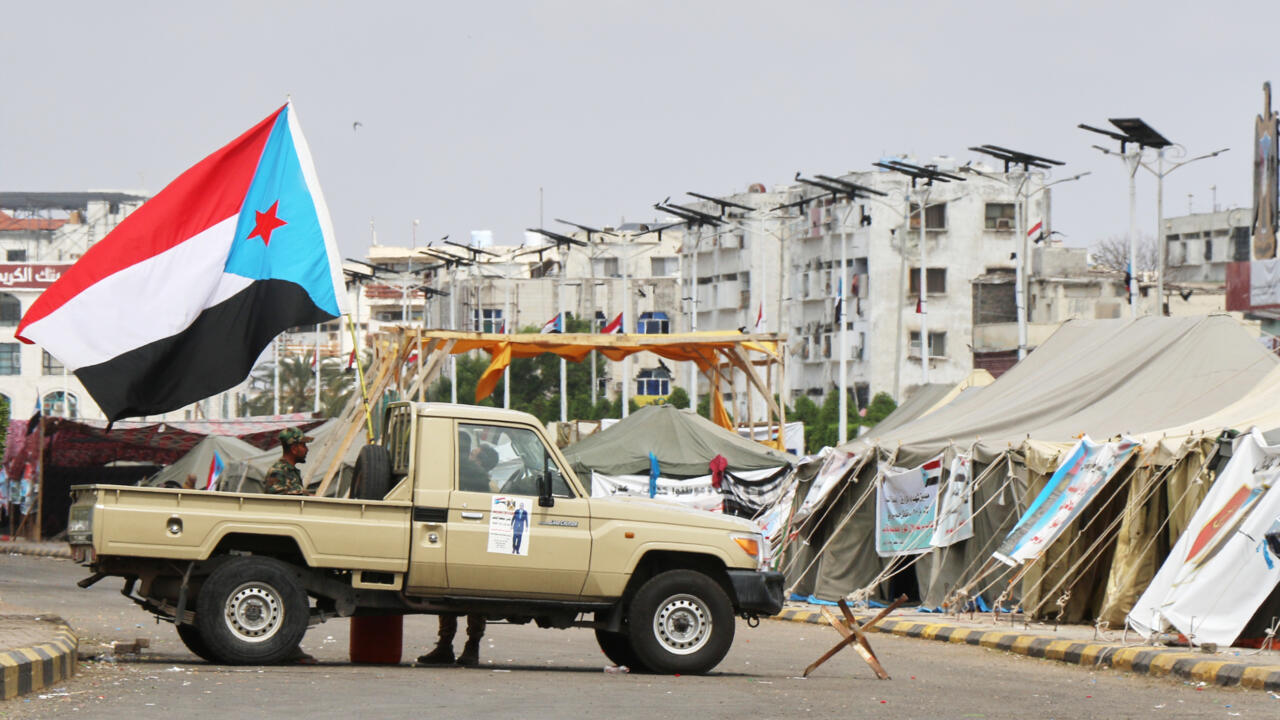
Southern Transitional Council (STC) soldiers under a South Yemen flag man a check point, in Aden, Yemen, December 31, 2025. 

The New Year kicked off with Yemen, an unstable country straddling a strategic maritime corridor between the Gulf of Aden and the Red Sea, seemingly back from the brink.

After an explosive, public blowout in the last weeks of 2025 that saw Saudi Arabia bomb an alleged arms shipment from the United Arab Emirates (UAE) to its proxies in Yemen, tensions have cooled. Abu Dhabi denied the arms shipment accusations, but nonetheless complied with a 24-hour deadline to withdraw its forces in southern Yemen.

READ MOREWhat we know about the Saudi-led air strikes in Yemen

Saudi Arabia and the UAE came together in a military coalition in 2015 to prevent a takeover of Yemen by Iran-backed Shiite Houthi rebels. But a decade later, the two Gulf powerhouses, who officially refer to each other as “brotherly” countries, have turned into frenemies. Ambition has driven a wedge between Saudi Crown Prince Mohammed bin Salman and UAE President Mohammed bin Zayed al-Nahyan and a once-close relationship between the two royals has been ripped by a divergence of strategic vision.

The Houthis have not been vanquished, but the coalition against them is hanging by a thread. Riyadh backs the internationally recognised Yemeni government under the Presidential Leadership Council (PLC), an unwieldy umbrella body that includes the Islah party, which the UAE accuses of ties to the Muslim Brotherhood and the party denies. Abu Dhabi supports the Southern Transitional Council (STC), which is also within the PLC, but has secessionist aspirations that are at odds with its coalition partners.

The year may have begun with the UAE pulling its “counterterrorism teams” from southern Yemen, but few expect Abu Dhabi to stop wielding its influence and economic heft in a geostrategic coastal zone.

On the regional front, Emirati interests in the Red Sea area are increasing exponentially. Its co-signatory to the Abraham Accords, Israel, ended 2025 with the surprise recognition of the breakaway region of Somaliland, just across the Gulf of Aden from Yemen. Meanwhile the Houthis continue to target Red Sea shipping lanes and Israeli cities under Iran’s “axis of resistance” banner.

Finally, the latest Saudi-UAE spat in Yemen unfolded in the volatile southern region that has long been an al Qaeda stronghold and offers ideal terrain for jihadist groups.

It may not be a very happy new year for Yemenis who have borne the brunt of a devastating conflict, nor for the international community scrambling to cope with the fast-moving pieces on the Middle East chessboard. By the end of the week, Saudi air strikes had already slammed southern separatist camps, causing deaths and injuries, according to a senior STC official.

‘Mixed messaging’


In southern Yemen, this week's de-escalation came just as swiftly as the dramatic escalation. On Thursday, the UAE-backed STC said Saudi-aligned government forces would enter territories it had seized in recent weeks.

In its statement, the STC said it would continue to operate in the regions but had agreed to the deployment of the Riyadh-backed National Shield government force. “Today, we launched an operation to integrate the southern National Shield forces so that they can assume the responsibilities and missions that fall to our armed forces,” they announced.

But in Yemen, the devil lies in the official statement details. “We are seeing mixed messaging,” said Mohammed Al-Basha, founder of the Basha Report, a US-based risk advisory, in a post on X, noting that while Saudi-aligned figures claimed National Shield forces “will take over security” in Hadramawt, “STC influencers say an agreement was reached to share security responsibilities, tasks, and even garrisons and bases”.

The current crisis was sparked by the STC’s lightening sweep in early December from its heartlands around the southwestern port city of Aden towards the east, seizing parts of the resource-rich Hadramawt and Al Mahra provinces.

Yemen’s history has been marked by a north-south divide, with its southern coastal regions – centred around the ancient strategic port of Aden – culturally distinct from the northern area which includes the capital Sanaa. The STC is the latest iteration of longstanding southern secessionist movements fed by grievances against the north.

Over the past few years, “the STC ran most of the south”, said Basha. “Any diplomat, envoy, journalist going to the south did not see any symbols of the Republic of Yemen, it existed only on paper.”


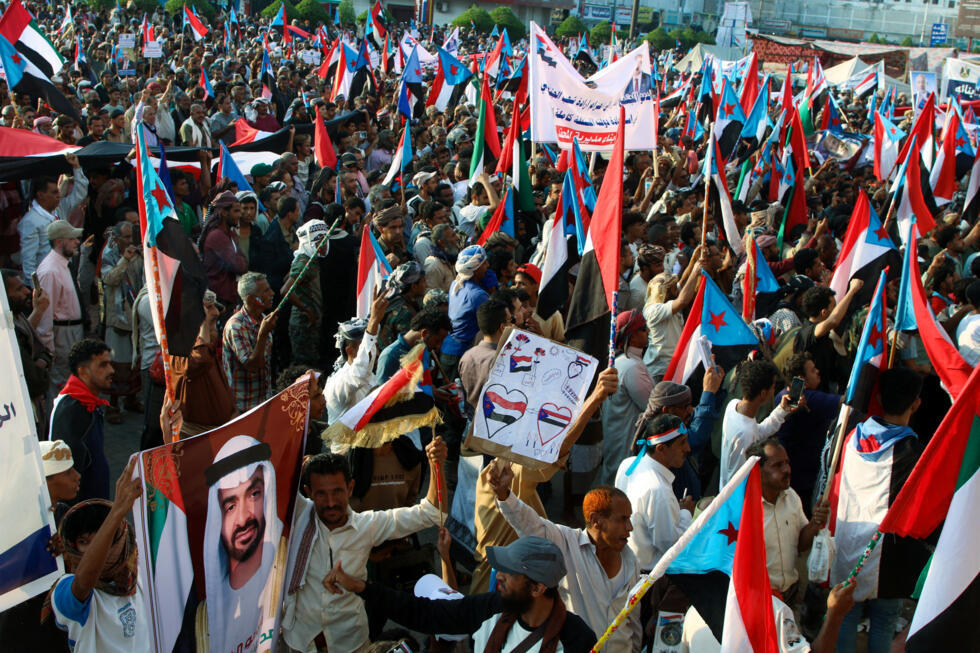
STC supporters hold a poster of UAE President Mohammed bin Zayed al-Nahyan at a rally in Aden, Yemen, January 1, 2026. © Fawaz Salman, Reuters

Defining ‘the south’

The “southern question”, as it’s known in Yemen policy circles, is a legitimate issue, analysts concede. But in its current form, there are two “major points of contention”, according to Elisabeth Kendall, president of Girton College at the University of Cambridge and a seasoned Yemen expert.

“One is, does the southern cause mean a separate southern region, or does it mean a separate southern state that's independent and sovereign? And two, how big is that southern region or state? Is it just the southern heartlands, the four governorates that are in and around Aden? Or does it include the two vast eastern governorates of Hadramawt and Al Mahra? The Saudis would argue that it does not include Hadramawt and Al Mahra because they border Saudi Arabia,” she added.

The easternmost Al Mahra governorate also borders Oman, a neutral Gulf country that has strained to contain a spillover of the Yemeni conflict into its own Dhofar region that has seen rebellions in the past. “Neither Saudi Arabia nor Oman want a UAE-influenced state on their borders,” Kendall said.

Within Yemen, there are divides between the southwestern and eastern states, notes Basha. “There's no cohesiveness, even though the STC is the largest political bloc. In theory they could run the south, but they don't have the support of the east,” he noted.

While the eruption of the “southern question” exposed the faultlines with the east, it did little to address Yemen’s core security issues. “Two groups are benefiting from everything that's happening right now in the east and the south. It's the Houthis and AQAP,” noted Basha, referring to al Qaeda in the Arabian Peninsula. “The Houthis are sitting back, watching the anti-Houthi coalition fight each other, watching the two regional backers have a very public divorce,” he explained. “And al Qaeda loves to flourish wherever there's a vacuum.”

File photo taken October 20, 2020, of the picturesque Haid al-Jazil village perched on a rock in Dawan directorate in the Hadramawt governorate. © AFP file photo

One of the key reasons for the STC’s lightening sweep to the east in December was the fear that the Saudis could reach a peace deal with the Houthis, leaving the Shiite rebels in a commanding position in the north while sidelining southern powerbrokers.

A prisoner swap between the Houthis and the Yemeni government last year sparked some hopes for a peace deal. But given the complexities of the conflict, expectations are low.

“In 2026, will we see a peace deal between the Saudis and the Houthis? Absolutely, yes. Is it going to be implementable on the ground? I am not sure,” said Basha. “The real problems in Yemen will appear after a peace agreement is signed,” he added, predicting that the country’s myriad armed groups are likely to “just either fight each other for territory and resources, or collapse, or join AQAP, or form other militant groups”.
Realpolitik sidelines nation-building

While the UAE agreed to troop withdrawal from southern Yemen to avert a military confrontation with Saudi Arabia, analysts question whether it will mark an end to Abu Dhabi’s funding and support for its proxies in the region.

The 2025 crisis in Yemen has put a spotlight on the UAE’s increasingly assertive foreign policy and extension of its sphere of influence in Middle East, Africa and the seas in between.

“These maritime locations are supremely important geopolitically. The area that the UAE seeks to extend its influence in, via the STC, is right on that very important corner of the Arabian Peninsula, where the Gulf of Aden meets the Red Sea,” explained Kendall.

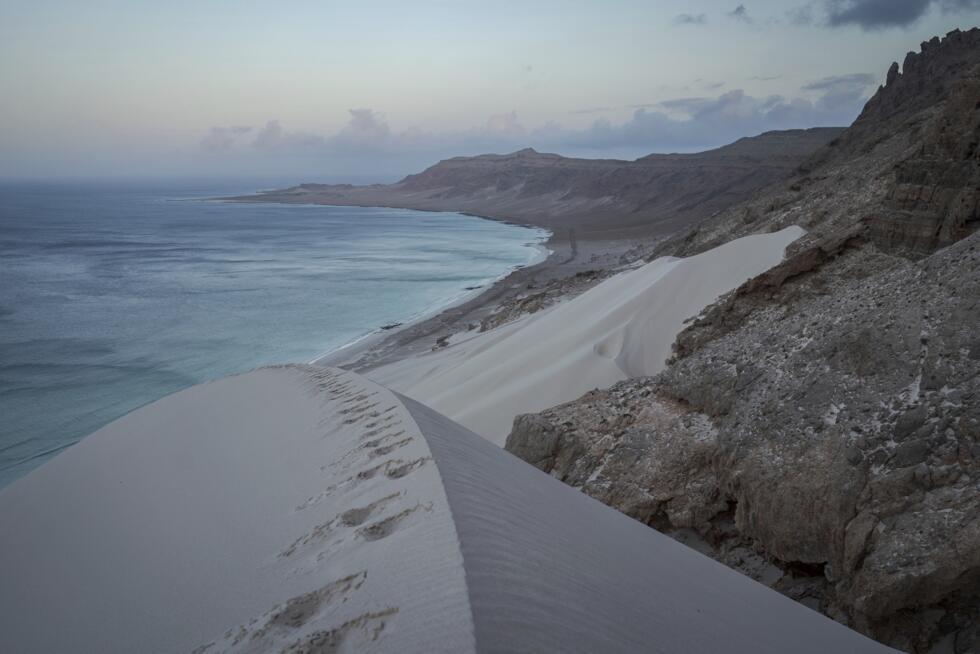
Yemeni territory includes the island of Perim, located in the Bab el-Mandeb Strait, which is a gateway for oil tankers heading to Europe via the Suez Canal. Further east lies Socotra, an archipelago and UNESCO World Heritage Site that is also a part of Yemen.

Sand dunes plunge into the sea on the Yemeni island of Socotra on September 21, 2024. © AP file photo


Satellite imagery reveals an expanded network of airstrips, military and intelligence bases built by the UAE, according to investigative reports. They extend from Socotra in the Indian Ocean to Yemen’s Arabian Peninsula coast to the Horn of Africa.

The UAE’s strategic partnership with Israel, strengthened by the Abrahams Accord, has also come under the spotlight during the recent tensions in Yemen.

Israeli media last month speculated about the resulting benefits of an independent southern Yemen under Abu Dhabi’s patronage. Arab outlets noted The National’s interview with Aidarous Al Zubaidi, head of the UAE-backed STC and also vice president of the Saudi-backed PLC, wherein he said he believed “we will be part of the [Abraham] accords”.

While this may be music to the Trump administration’s ears, it adds credence among local populations to the Houthis' self-declared role as defenders of the Palestinian cause.

Last month, when Israel suddenly recognised Somalia’s breakaway region of Somaliland, it raised eyebrows in Middle Eastern capitals and policy circles – and protests in Mogadishu.

Israel's recognition of Somaliland drives divides

It also drew attention to the UAE’s goals in the region. Noting Abu Dhabi’s strategic sweep from Perim island in the west to Socotra in the east, Kendall remarked that the UAE “has a stranglehold on the Gulf of Aden. Add to that, the fact that it was silent when its ally in the Abraham Accords, Israel, expressed its solidarity with the breakaway ‘nation of Somaliland’ on the other side of the Gulf of Aden, and it looks like that whole area is encircled by the UAE.”

Meanwhile across the Red Sea in Sudan, UN sanctions monitors have described what they deemed credible allegations that the UAE provided military support to Sudan's paramilitary Rapid Support Forces (RSF) in the civil war against the Sudanese army. Abu Dhabi denies the allegations.

The problem, many analysts say, is not Abu Dhabi’s goal of increasing strategic influence, but its effects on weak states. The UAE bases its foreign policy on “realpolitik and doesn't mind working with secessionist movements or with minorities”, said Basha. “You see that with the Rapid Support Forces. You're seeing that with the southerners in the STC. The Saudis are completely against that.”

This year, until and unless the two Gulf brotherly nations-turned-frenemies manage to sort out their differences, Yemen – and the wider Middle East – is unlikely to enjoy a lasting peace.

Gulf countries edgy after very rare and very public spat between Saudi Arabia and UAE

2 January 2026
COMMONSPACE.EU


The very public, and very rare, spat between Saudi Arabia and the United Arab Emirates, which saw Saudi planes bombarding cargo in Mukalla in Southern Yemen, which had just been unloaded from two ships that arrived from the UAE port of Fujairah, has caused concern among the four other GCC countries, and other neighbours in the region.

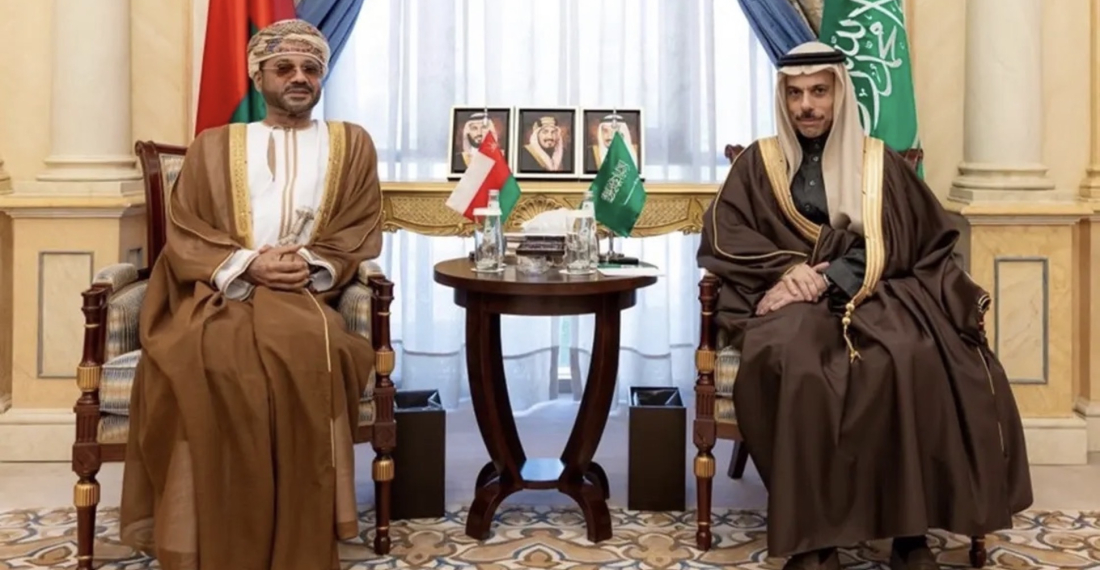
Omani Foreign Minister Badr Al Busaidi visited Riyadh on Wednesday for talks with Saudi Foreign Minister Prince Faisal bin Farhan on the developments in Yemen, which have raised concern across the region.

Oman's Foreign Ministry said the meeting between the ministers “addressed efforts to contain the escalation of violence and ways to support the political process aimed at addressing the root causes of the crisis”.

Tension has risen in recent weeks after the military takeover of Mahra and Hadhramaut, which share a 700km border with Saudi Arabia, by the Southern Transitional Council. The STC is the largest faction within the forces of the ruling Presidential Leadership Council, led by Rashad al-Alimi.

In Riyadh, Mr Al Busaidi and Prince Faisal discussed “achieving a comprehensive and sustainable settlement that preserves the sovereignty of the Republic of Yemen over its security and stability, while also taking into account the aspirations of its people and the higher national security interests of neighbouring countries and the rest of the region”, Oman's Foreign Ministry said.

Oman has played a vital mediation role in Yemen since Houthi rebels seized the capital, Sanaa, in 2014, forcing the government to flee south. A Saudi-led coalition, including the UAE, intervened at the request of the government to counter the Houthis, who control most of the north.

On Monday ( 28 December) the UAE announced that it was heeding calls by Mr Alimi, backed by Saudi statements, which called for the withdrawal of UAE forces from Yemen. This in turn raised concerns about internationally backed efforts to counter terror groups there.

Gulf countries have called for calm and restraint following the recent escalation. GCC members, Bahrain, Qatar, Oman and Kuwait, said they were monitoring the situation closely, highlighting the important role played in the past by Saudi Arabia and the UAE in supporting “stability and security” in Yemen.

Bahrain expressed its “confidence in the leadership of the Kingdom of Saudi Arabia and the United Arab Emirates and their ability to contain any differences in viewpoints within the framework of a unified Gulf

Qatar and Kuwait commended statements issued by the UAE and Saudi Arabia, which reflected “a commitment to prioritising the interests of the region, strengthening the principles of good neighbourliness and adhering to the foundations and principles upon which the GCC Charter is based”, Qatar's Foreign Ministry said.

Beyond the Gulf, Egypt said it was confident that the UAE and Saudi Arabia would approach the recent developments “wisely”, adding that it will continue to work with all sides towards de-escalation.

Jordan's Foreign Ministry said it held in high regard the “wisdom of the leaderships of the sisterly kingdom of Saudi Arabia and the United Arab Emirates in addressing the situation in Yemen”, which reflects their keenness to preserve Yemen's security and interests.

The STC, which is seeking to re-establish a separate state in southern Yemen, said on Wednesday that “the south does not harbour any hostility towards any country in the region or its Arab surroundings, especially the kingdom of Saudi Arabia, with which the south has deep and long-standing historical ties”.

Source: commonspace.eu, with the National (Abu Dhabi), Al Jazeera (Doha) and agencies.

Picture: Oman's Foreign Minister Badr Al Busaidi and Saudi Foreign Minister Prince Faisal bin Farhan in Riyadh on Wednesday, 31 December. (Photo courtesy of the Foreign Ministry of Oman).
FOR PROFIT HEALTHCARE

US health insurance costs to rise by 114% for millions as subsidies expire

More than 20 million people in the United States will face sharply higher health insurance costs as of January 1 after enhanced tax credits that helped enrollees in the Affordable Care Act afford coverage expired overnight. The expiration of the subsidies will mostly affect families, small business owners and self-employed workers.


Issued on: 01/01/2026
By: FRACE 24

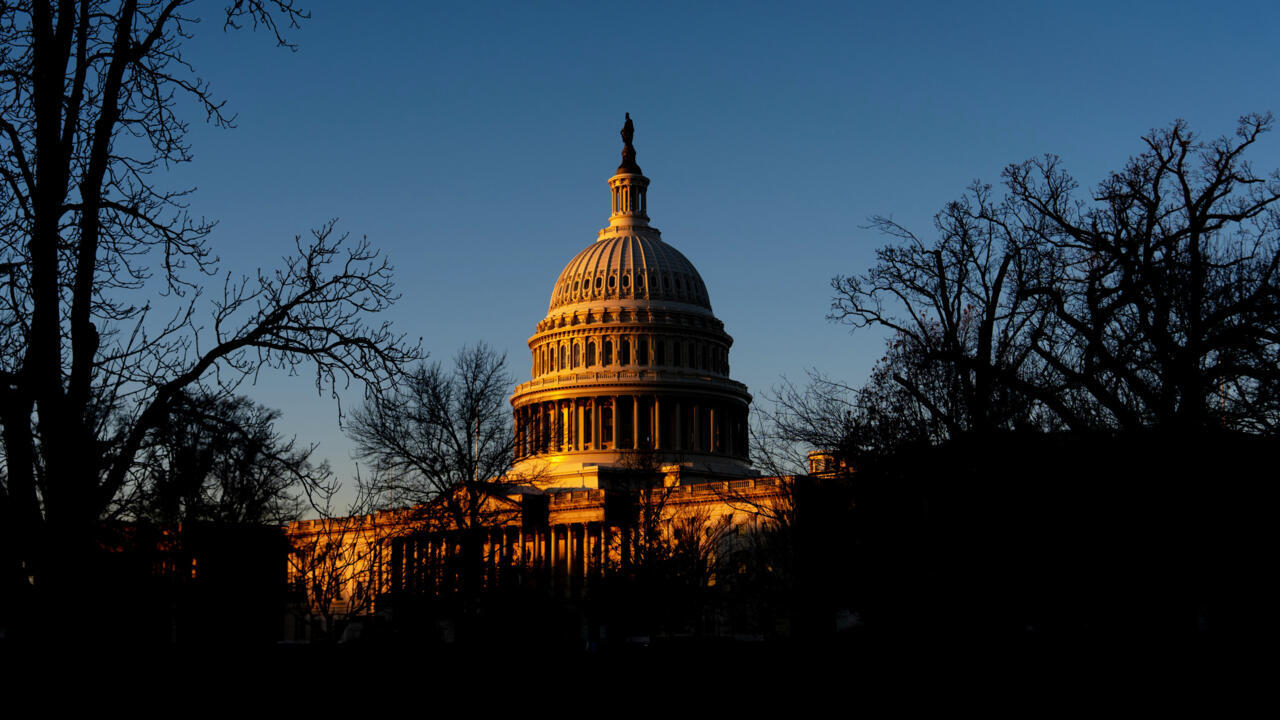
US Capitol is seen shortly after sunrise, December 16, 2025, in Washington. © Julia Demaree Nikhinson, AP

Enhanced tax credits that have helped reduce the cost of health insurance for the vast majority of Affordable Care Act (ACA, also known as "Obamacare") enrollees expired overnight, cementing higher health costs for millions of people in the United States at the start of the new year.

The change affects a diverse cross-section of the population who don’t get their health insurance from an employer and don’t qualify for Medicaid or Medicare – a group that includes many self-employed workers, small business owners, farmers and ranchers.

On average, the more than 20 million subsidised enrollees in the Affordable Care Act programme are seeing their premium costs rise by 114 percent in 2026, according to an analysis by the healthcare research nonprofit KFF.

The subsidies were first given to Affordable Care Act enrollees in 2021 as a temporary measure to help US residents get through the Covid-19 pandemic. Democrats in power at the time then extended them, pushing the expiration date to the start of 2026. Some lower-income enrollees received health care with no premiums, and high earners paid no more than 8.5 percent of their income. Eligibility for middle-class earners was also expanded.

Democrats forced a 43-day government shutdown over the issue, demanding the health subsidies be extended before they agreed to a new Republican budget. Some Republicans also called for a bipartisan solution to save their 2026 political aspirations, given the ACA's popularity – two-thirds of Americans favour the system, according to KFF.

But while congressional Republicans acknowledged the issue needed to be addressed, they refused to put it to a vote until late in the year. A House vote expected in January could offer another chance, but success is far from guaranteed.

Health analysts have predicted the expiration of the subsidies will drive many of the 24 million total Affordable Care Act enrollees – especially younger and healthier Americans – to forgo health insurance coverage altogether.

Over time, that could make the programme more expensive for the older, sicker population that remains.

Rising costs across the board

The surging healthcare prices come alongside an overall increase in health costs in the US, which are further driving up out-of-pocket costs in many plans.

It also comes at the start of a high-stakes midterm election year, with affordability – including the cost of health care – topping the list of voters’ concerns.

“It really bothers me that the middle class has moved from a squeeze to a full suffocation, and they continue to just pile on and leave it up to us,” said 37-year-old single mom Katelin Provost, whose healthcare costs are set to jump. “I’m incredibly disappointed that there hasn’t been more action.”

Some enrollees, like Salt Lake City freelance filmmaker and adjunct professor Stan Clawson, have absorbed the extra expense. Clawson said he was paying just under $350 a month for his premiums last year, a number that will jump to nearly $500 a month this year. It’s a strain for the 49-year-old, but one he’s willing to take on because he needs health insurance as someone who lives with paralysis from a spinal cord injury.

Others, like Provost, are dealing with steeper hikes. The social worker’s monthly premium payment is increasing from $85 a month to nearly $750.

An analysis conducted last September by the Urban Institute and Commonwealth Fund projected the higher premiums from expiring subsidies would prompt some 4.8 million Americans to drop coverage in 2026.

But with the window to select and change plans still ongoing until January 15 in most states, the final effect on enrollment is yet to be determined.

Provost said she is holding out hope that Congress finds a way to revive the subsidies early in the year – but if not, she’ll drop herself off the insurance and keep it only for her 4-year-old daughter.

She can’t afford to pay for coverage for both of them without the subsidies.

After Republicans cut more than $1 trillion in federal healthcare and food assistance by passing Trump’s big tax and spending cuts bill, Democrats repeatedly called for the ACA subsidies to be extended.

In December, the GOP-controlled Senate rejected two partisan healthcare bills – a Democratic pitch to extend the subsidies for three more years and a Republican alternative that would instead provide Americans with health "savings accounts".

In the House, four Republicans broke with GOP leadership and joined forces with Democrats to force a vote that could come as soon as January on a three-year extension of the tax credits. But with the Senate already having rejected such a plan, it’s unclear whether it could get enough momentum to pass.

Meanwhile, Americans whose premiums are skyrocketing say lawmakers don’t understand what it’s really like to struggle to get by as health costs ratchet up with no relief.

Many say they want the subsidies restored alongside broader reforms to make health care more affordable for all Americans.

“Both Republicans and Democrats have been saying for years, oh, we need to fix it. Then do it,” said Chad Bruns, a 58-year-old Affordable Care Act enrollee in Wisconsin. “They need to get to the root cause, and no political party ever does that.”

(FRANCE 24 with AP)

Americans brace to start New Year without healthcare

1 day ago
BBC
Ana Faguy
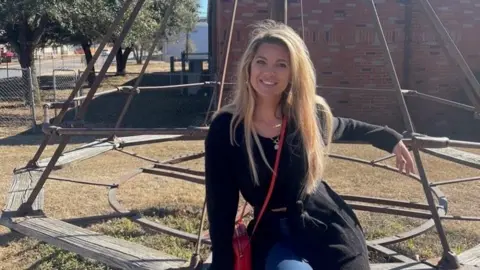
Adrienne Martin


Adrienne Martin faced a difficult choice after her monthly healthcare premium increased dramatically

Adrienne Martin and her family are starting the New Year off without healthcare.

The 47-year-old Texas mother had to make a difficult choice when she found out her monthly healthcare premium was increasing in 2026 from what she described as a manageable $630 (£467) to an unaffordable $2,400 (£1,781).

Her husband depends on an IV medication to treat a blood-clotting disease that costs $70,000 a month without insurance. Knowing their benefits would expire, the family stockpiled the drug to survive the first few months of the year.

"It would be like paying two mortgage payments," she said of the new monthly price for healthcare. "We can't pay $30,000 for insurance a year."

Ms Martin and her family are not the only ones facing this conundrum. Millions of Americans will see their healthcare bills skyrocket when these subsidies, which were provided through the Affordable Care Act (ACA), also known as Obamacare, expire.

Some members of Congress on both sides of the aisle attempted to extend these subsidies into 2026, but Washington was gridlocked. A vote in the new year could offer hope, but until then, many like Ms Martin will have to live without insurance or see their bills steeply increase.

About 24 million Americans buy health insurance through the ACA marketplace, and the majority were used to receiving tax credits to lower the monthly price.

Those tax credits, also referred to as subsidies, were first introduced through former President Barack Obama's ACA in 2014. They were then expanded during Covid.

The fight to extend the subsidies became the centre of the longest government shutdown in US history, which went on for more than 40 days earlier this year.

Democrats wanted to force Republicans to extend the subsidies for an additional three years, which would cost $35bn per year. Republicans did not want the government to foot the bill for another three years of subsidies without spending cuts.

The weeks-long shutdown - which left millions without essential government services - ended when a group of Democratic senators agreed to reopen the government, if Republicans in the Senate agreed to vote on extending the subsidies.

But that vote still hasn't happened yet, despite efforts from Democrats and four Republicans to put the issue to Congress before the subsidies expired.

"I am pissed for the American people," New York Congressman Mike Lawler, a Republican who pushed to save the subsidies, said. "Everybody has a responsibility to serve their district, to their constituents. You know what is funny? Three-quarters of people on Obamacare are in states Donald Trump won."

Without the subsidies, the monthly cost of healthcare could rise by 114% on average, according to health research non-profit KFF.

Adrienne Martin and Stephanie Petersen

Maddie Bannister is among the Americans bracing for that.

The California mother, who just had her second child, was paying $124 a month for her family of three in 2025. Now, with a new baby and no ACA subsidies, she is preparing to pay $908 a month.

"So many people are going to choose to be uninsured because it's cheaper to pay a penalty for being uninsured than it is to have healthcare," she said.

For Ms Bannister's family, the increased cost of healthcare means putting off other spending: "We were saving for a home, and saving money for that is going to take way longer if we have to spend $11,000 a year on healthcare that we barely use."

While Ms Bannister is stomaching her new bill, and Ms Martin is going without healthcare, others are resorting to different government programmes to get their coverage.

For years, Stephanie Petersen used Medicaid - a healthcare program for lower-income Americans - to get healthcare coverage. Just recently, she was able to switch and get her coverage through the ACA - a welcome change for the 38-year-old.

Because her health care is skyrocketing from $75 to $580 a month, she is returning to Medicaid coverage in the New Year.

"I'm trying to stay optimistic but the way things have been going, I'm not hopeful," the Illinois resident said. "Everyone should have affordable, good healthcare, and not have to jump through all these hoops."

A vote on the three-year extension of the ACA subsidies is now expected the week of 5 January when Congress returns to Washington.

Until then, Ms Martin will be one of the more than 27 million Americans without health insurance in 2026.

A number that is likely to grow, experts warn, as healthcare costs increase.

"We're not low-income people, we make decent money, but we can't afford $30,000 a year for insurance, that's crazy," she said.

"We've done everything we're supposed to do, we've worked our whole lives, we work hard, and we just get screwed. The whole system is a nightmare."