Saturday, January 03, 2026


Vale Indonesia halts mining activities on delayed approval for 2026 output plan

Credit: Vale Indonesia

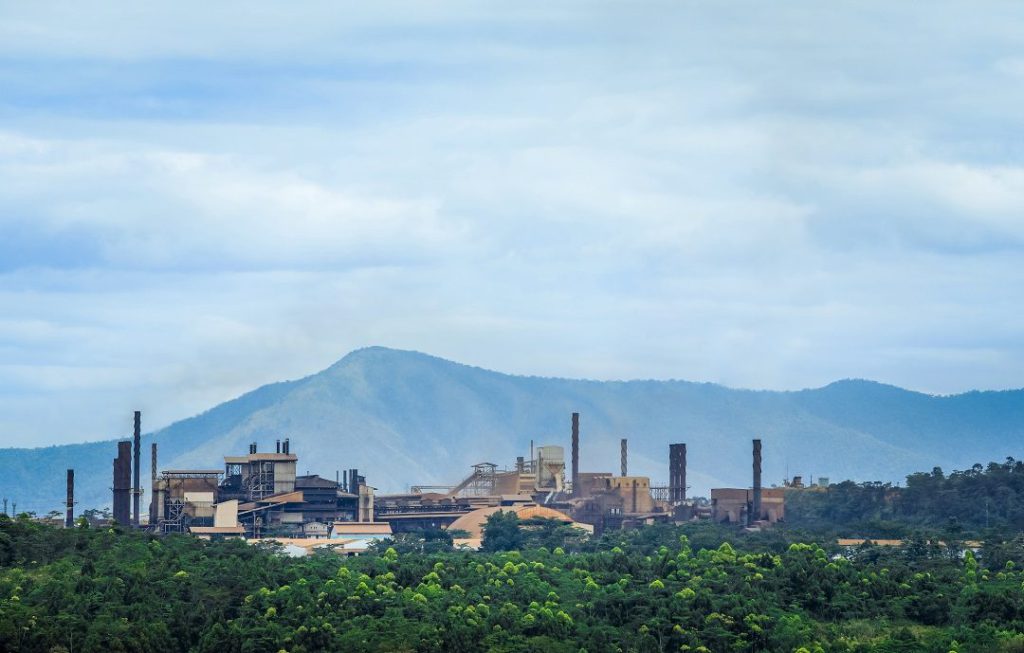
Nickel miner PT Vale Indonesia Tbk said on Friday it was suspending mining activities in Southeast Asia’s largest economy due to delays in the approval of its annual production plan.

All miners in resource-rich Indonesia are required to submit an annual production plan, known as RKAB, for official approval with the government setting output quotas for the industry. Expectations of a lower output quota in Indonesia, the world’s top nickel producer, sent prices soaring towards the end of last year.

Vale said it could not carry out mining operations without the RKAB approval.

“The company believes that this delay will not disrupt overall operational sustainability and expects that the 2026 RKAB approval can be issued in the near future,” it added in a stock exchange filing.

Asked about the overall 2026 RKAB issuance for nickel, Deputy Mining Minister Yuliot Tanjung told reporters the approval was “currently being consolidated” and declined to give an indication of the quota.

Mining Minister Bahlil Lahadalia said last week the government would cut mining output quotas to support prices.

Yuliot said on Friday the quota would be adjusted to meet demand from domestic smelters.

Indonesia’s nickel smelter association FINI is forecasting that demand to reach around 340 million to 350 million metric tons in 2026, which the group said represents an annual increase of up to 50 million tons.

(By Fransiska Nangoy; Editing by Kate Mayberry)

Miners go on strike at Capstone Copper’s Mantoverde mine in Chile after talks fail

Mantoverde. (Credit: Capstone Copper)

Hundreds of miners began a strike on Friday at Capstone Copper’s Mantoverde copper and gold mine in northern Chile after talks between the main union and the company on new labour contracts broke down.

In a statement Friday, the Union No. 2 of Mantoverde said it had enough resources to sustain the strike for at least two months, which it claims could generate losses of up to $160 million.

The union said its 645 members began the strike at 8 a.m. local time (11:00 GMT) after failing to reach an agreement late on Thursday. The union said negotiations fell apart after the company didn’t agree to the union’s final demands, which had estimated cost of about $500,000 a year, representing about 0.03% of the company’s projected income of $1.4 billion.

Chile is the world’s largest copper producer and the strike comes at a time when global copper prices have soared to record highs.

In a statement after the mediated talks failed late on Thursday, Canada-based Capstone said it was open to talks to resolve the dispute, adding that the striking workers represented about half of the workers at the mine and 22% of the company’s total workforce. It also expects output to run at up to 30% during the stoppage.

Capstone owns 70% of Mantoverde with Mitsubishi Materials owning the remaining 30%. The mine’s expected 2025 production is between 29,000 and 32,000 metric tons of copper. In total, Chile’s copper production in 2025 was expected to be about 5.5 million tons, according to state copper commission Cochilco.

(By Alexander Villegas; Editing by Susan Fenton)


Mare Island Dry Dock Closes After Losing USCG Contract

Mare Island California
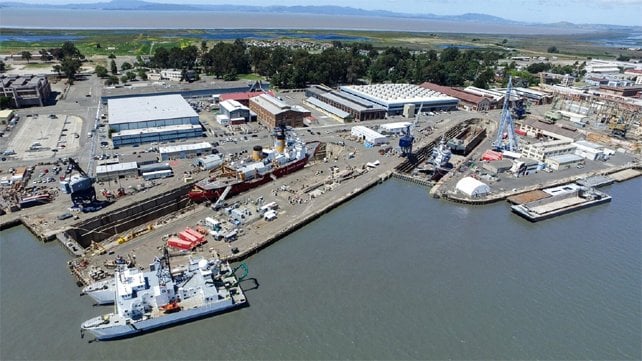
After 12 years, Mare Island Dry Dock has closed following the loss of a USCG maintenance contract (MIDD)

Published Jan 1, 2026 5:28 PM by The Maritime Executive


California’s Mare Island Dry Dock posted a notice on its webpage on January 1 reporting that it has made the “difficult decision” to end operations due to “unfortunate circumstances beyond our control.” The decision to close the operation was effective immediately and reportedly puts as many as 80 full-time employees out of work.

The City of Vallejo, California, said it had been informed of the business decision by the dry dock company on December 30. They called it an unfortunate development noting that the company and the shipyard facilities on Mare Island had been a long-term contributor to the area’s economy. 

“According to MIDD, the closure stems from unforeseen business circumstances, including the loss of a critical U.S. Coast Guard contract that had an immediate and material impact on the company’s financial stability,” reported the City. “Despite efforts to secure additional financing and contracts, MIDD determined that continuing operations was no longer viable.”

Mare Island is the historic home of the first U.S. naval station on the West Coast and until 1996 was the location of the Mare Island Naval Shipyard. Mare Island Dry Dock had been in operation since 2013 having taken over the shipyard facilities, including two concrete graving docks able to accommodate ships up to 700 feet (213 meters) in length. It also had 1,300 linear feet (almost 400 meters) of berthing. Reports said at its peak, the company employed as many as 1,000 people. The Vallejo Sun newspaper however reports the yard’s sales were down 65 percent over the past three years.

Mare Island had provided maintenance services to the U.S. Coast Guard for the icebreakers Healy and Polar Star. Reports are the yard recently lost a competition for maintenance of the Healy which instead will go to Vigor Marine. 

After the loss of the contract for the Healy, the company said it was looking for replacement work but its finances had been greatly weakened. The company was also bidding for a new 5-year maintenance contract for the heavy icebreaker Polar Star.


Mid-Sized South Korean Shipbuilder Daesun Completes Sale of Shipyard

South Korean Daesun Shipbuilding
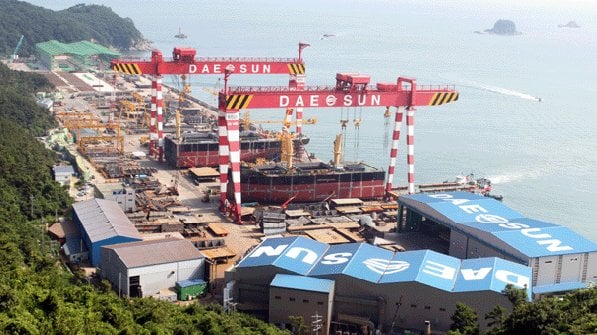
Daesun which dates to 1945 sold it main yard and will work as a subcontractor building blocks (Daesun Shipbuilding)

Published Jan 1, 2026 5:03 PM by The Maritime Executive


After two years of financial restructuring, the smallest of South Korea’s surviving midsized shipbuilders, Daesun Shipbuilding, completed the sale of its primary yard at the end of December 2025, bringing to a close a long heritage in the industry. Started in 1945, Daesun was considered the oldest of the South Korean shipyards but had in recent years struggled with mounting debt.

The sale of the Yeongdo facility in the Busan area was completed on December 26, going to Hanla IMS, a specialized marine equipment manufacturer. Hanla has been growing its operations, including the 2021 acquisition of a yard in Gwangyang and, in 2024, commissioning a 7,000-ton floating dry dock. The company looks to expand its base in specialized equipment as well as further expansion into the ship maintenance, repair, and overhaul sector.

South Korea’s mid-sized shipbuilders had rebounded in recent years based on the strong demand and the lack of capacity at the major shipyards. The sector, however, has also consolidated from more than 20 companies down to just four companies.

Daesun had been in financial difficulties but was able to turn around its business, posting a profit in the first half of 2025. It had been working with creditors since 2023 and, in October, selected Hanla as the leading bidder for the yard. It conducted a “stalking horse” round where other bidders had the chance to beat the proposal from Hanla. Bidding closed in early December, and the sale was completed to Hanla at a reported price of approximately $74 million.

Daesun reports it will use the proceeds to repay debt and complete its financial restructuring. Operations will be consolidated at the Dadaepo shipyard, also in Busan. The company plans to focus on manufacturing ship equipment, hull sections, and superstructures as a subcontractor to the larger builders. It said it might return to shipbuilding in the mid-to longer term.

The remaining three primary midsized shipbuilders are Daehan Shipbuilding, which at mid-year reported a $2.2 billion backlog, as well as HJ Shipbuilding and K Shipbuilding. Reports indicate that K Shipbuilding, the former STX, is also in the final stages of a sale. KHI Investment and United Asset Management Company (UAMCO), South Korea's biggest bad debt investor, took control of the troubled shipbuilder in 2021, and after a turnaround, announced in mid-2025 plans to sell the company. KHI also joined an investor consortium that acquired Daehan Shipbuilding, and in July 2025, announced it would be selling its investment as part of an initial public offering for Daehan.


British Ports Welcome New UK Marine Safety Compliance Exercise

British Ports Association

Published Jan 2, 2026 6:08 PM by The Maritime Executive


[By British Ports Association]

The British Ports Association (BPA) has welcomed the launch of the latest three-yearly compliance exercise for the Ports and Marine Facilities Safety Code (PMSC), covering the 2026–28 period. Open until the end of March 2026, the exercise is led by the Maritime and Coastguard Agency and covers the whole of the UK. It invites ports, harbours and marine facilities of all size and ownership structure, to demonstrate their alignment with the Code via a new, step-by-step online submission process on the GOV.UK website.

The BPA is encouraging strong participation from all types of port, and particularly from facilities that are not harbour authorities in their own right, to underline the sector’s commitment to high safety standards. The PMSC remains a cornerstone of the UK port sector’s approach to marine safety and the BPA is suggesting that widespread engagement in the compliance exercise will help show that the Code is effective, well-regarded, and delivering real value.

Keen to see wider compliance, the UK Government is pushing the Code out as wide as possible to all marine facilities such as terminals and marinas as well as very small harbours and jetties that often have limited marine activities.

Commenting, Richard Ballantyne, Chief Executive of the British Ports Association, the industry’s trade body for ports and marine facilities operators, said:  “We strongly welcome the opening of this latest PMSC compliance exercise and want to see as many port operators participate as is possible. Safety is at the heart of everything UK ports do, and this process provides an important opportunity for ports and marine facilities to demonstrate their commitment to best practice. By engaging fully, the sector can show that the Code is working well and that a non-statutory, partnership-based approach continues to serve both industry and government effectively.”

The PMSC Compliance Exercise opened formally on 1 January 2026 and runs through to 26 March, with details and the online form.

The Code was first introduced 25 years ago following a major review of safety in the ports sector and it has evolved into a world leading resource for ports to use to identify, assess, and manage marine risks.

It is owned and managed by the UK Department for Transport and Maritime and Coastguard Agency but with close industry involvement around its development and evolution. The PMSC outlines the key principles for port duty holders, and its associated Guide to Good Practice gives operational staff more granular guidance on how to manage their marine safety risks.

The BPA is the UK’s national association for ports, harbours and marine facilities, covering over 400 such sites across the UK, from the largest to the smallest. It runs periodic briefings for port duty holders with specialist consultants ABPmer, and those interested can find further details here.

Meanwhile, Port Skills and Safety is the industry’s professional safety and skills membership organisation for ports which looks at safety across the board. It has a host of guidance on its website here.
 

The products and services herein described in this press release are not endorsed by The Maritime Executive.


UAE Withdrawal Underway from Red Sea and Gulf of Aden Positions

Yemen MSTC map
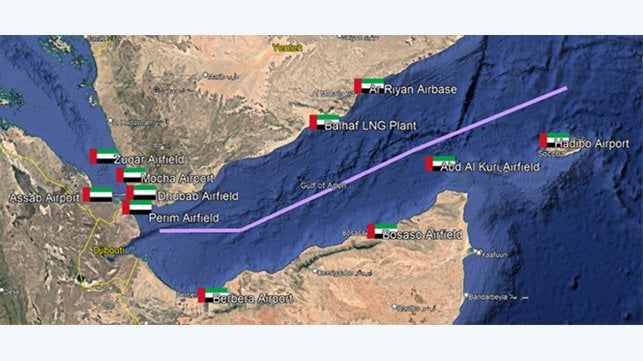
Airfields in the Red Sea and Gulf of Aden astride the MSTC (purple) where an Emirati presence has been noted (LandSat/Copernicus/CJRC)

Published Jan 2, 2026 10:28 AM by The Maritime Executive


The deployment of Emirati forces in locations to the north and south of the Maritime Security Transit Corridor (MSTC) in the Gulf of Aden, and in similar positions dominating sea routes through the southern Red Sea, is currently in the middle of a significant upheaval. The process is ongoing, and it remains to be seen what Emirati footprint remains in the area once the withdrawal is announced as complete.

This development comes after two advances in which allies and proxies of the United Arab Emirates made two dramatic moves to increase their dominance in the area. In the first, forces of the UAE-supported Southern Transition Council (STC) occupied positions in the Hadramawt and Mahra provinces of eastern Yemen, displacing forces aligned with Yemen’s International Recognized Government (IRG) and supported by the Saudis. As a coup de main, this was never likely to work long-term; locals in these areas enjoy their semi-autonomy and are difficult to dominate contrary to tribal wishes. Opposition from the IRG, the Saudis and the Omanis, muted and diplomatic at first, grew, as it appeared that the Emiratis had over-reached themselves in their ambitions.

Opposition to the UAE move was consolidated on the day after Christmas, when Israel granted diplomatic recognition to Somaliland, the first country to do so since Somaliland’s unilateral declaration of independence in 1991. The UAE was not directly associated with this move, but regional sentiment assumed that it was, given the UAE’s military presence in Somaliland, its support for the breakaway Somaliland government and Benjamin Netanyahu’s statement that the move was in ‘the spirit’ of the Abraham Accords, to which the UAE is a party.

The convergence of opposition to both these moves generated a hardening of regional push-back to the Emirati attempts to consolidate the position of the STC, which many assumed was a precursor to the STC making a unilateral attempt to reestablish Southern Arabia as an independent sovereign state. On December 30, the IRG formally withdrew its mandate for the Emirati military presence in Yemen, demanding that UAE forces withdraw within 24 hours; this precipitated what appears to have been the very well-organized UAE withdrawal operation.

Emirati C-17, C-130 and CN-235M transport aircraft have since been observed at most of the airfields where a UAE presence has been noted, with aircraft flying multiple return trips to the UAE. Military airlift has probably been supplemented by the civil IL-76 heavy lift aircraft frequently chartered by the Emiratis. An Emirati-chartered ship, the Ro-Ro cargo ship MV Greenland (IMO 8222111) returned to the port of Mukalla to re-load military vehicles which had been targeted by a Saudi airstrike in the meantime. The Greenland is managed by the Salem Al Makrani Cargo Company, based in Dubai. 


MV Greenland docked in Mukalla port, imaged by a Saudi surveillance drone (KSA Ministry of Defence)


At this point, it is not clear if any Emirati military assets remain in Yemen. It is not apparent if the Emirati withdrawal extends to the humanitarian organizations which have been used to bolster support for those favored by the Emiratis in its Aid to the Civil Community effort. Nor is it clear if STC-affiliated military organizations, such as Major General Tareq Saleh’s National Resistance Forces in the coastal and offshore area around Mocha, or the Southern Giants Brigade, whose forces had moved in to the Hadramawt and Mahra, will continue to receive Emirati sponsorship. If they do not, then the military efficiency and effectiveness of these organizations may well tail off, to the detriment of the fight against the Houthis. They may also be in the market for alternative sponsors, which in turn could prompt a realignment of the coalition within the IRG – or possibly even with the Houthis.

While the Emirati withdrawal has proceeded, but its full extent remains unclear, Yemeni forces loyal to the STC are still in the field, and are now being encouraged by Saudi airstrikes to withdraw. The situation remains in flux.

The Emiratis had invested heavily in the network of airfields overlooking the southern Red Sea and Gulf of Aden. These outposts however were rarely if ever used as bases for Emirati strike assets, which suggests their primary purpose was to conduct surveillance and to gather intelligence, using only a lightweight footprint on or near these bases. If that was indeed the purpose of these bases – to host and support an intelligence collection effort - then it is difficult to see what immediate advantage this has brought the maritime community. Notwithstanding the presence of naval forces as escorts, civilian shipping remained vulnerable to Houthi attacks until a ceasefire was declared politically, mediated and delivered as usual by the Omanis in the wake of Israeli and US airstrikes.

Not directly pertinent to the maritime community, a retrenchment of Emirati force deployments in the area may also impact Emirati support for General Khalifa Haftar’s forces in Eastern Libya and the Regional Support Forces fighting in Sudan’s civil war. Emirati air bridge support for both these factions has been flown through the network of Red Sea and Gulf of Aden air bases. 


Appeals Court Suspends Hawaii’s “Green Fee” for Cruise Ships Pending Appeal

cruise ship in Honolulu
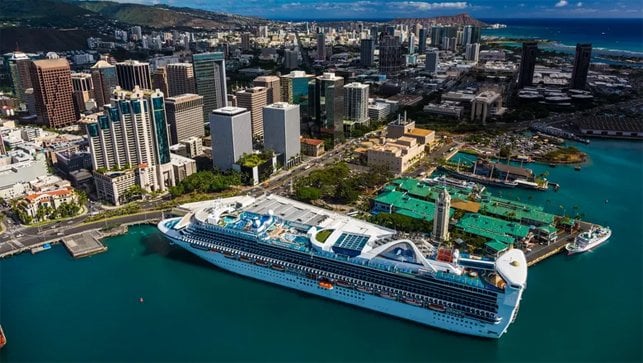
Hawaii was to start charging an up to 14% tax in cruise fares for the days the ships are in Hawaiian waters (Hawaii Tourism Authority)

Published Jan 2, 2026 2:46 PM by The Maritime Executive


Hawaii’s hotly contested and closely followed “Green Fee,” a new tax on hotels, short-stay rentals, and cruises, suffered a setback just hours before it was due to go into effect. It is the first tax of its kind imposed on tourists to contribute to the state’s costs of addressing environmental issues.

Two judges on the U.S. 9th Circuit Court granted on New Year’s Eve (December 31) a last-minute request for an injunction in a suit brought by the cruise industry trade group, Cruise Lines International Association, challenging the legality of the tax. A lower court had denied the request for an injunction, saying the cruise industry had failed to show it was likely to prevail in its lawsuit against the State of Hawaii.

The lower court had cleared the way for the 11 percent tax to be imposed for the first time against the fares paid by cruise passengers starting on January 1. The law, which was signed by Hawaii’s government in May 2025, extends the “green fee” to cruises for the first time for the days the ships are in Hawaiian waters, regardless of port calls or at sea. In addition, the law permits the local authorities to add a further three percent surcharge, bringing the total to a 14 percent tax for each day a cruise ship passenger is in Hawaiian waters.

The circuit court let the law stand, which also includes an increase in the green fee charged to hotel guests and short-term rentals, starting on January 1. The court, however, halted enforcement on cruise ship passengers while the legal challenge is being decided.

Hawaii’s governor had said the new fees could provide $100 million per year that the state would use to fight the impact of climate change. It could include projects for sand replenishment as well as other coastal activities. The government cited the issues from rising sea level and erosion, as well as devastating wildfires such as the one that destroyed Lahaina in 2023 and more recent ones last fall in Hilo and the Big Island of Hawaii.

The cruise industry argues that the U.S. Constitution limits states' rights to charge taxes on interstate commerce and for waterway use. They contend that only the U.S. Congress could impose such fees for entry into a state’s waterways and noted that the fees are not for services or the ports. They said the fees would make the cost of cruises prohibitive, especially for families. They also challenged a requirement for the cruise lines to advertise participation and to educate their passengers.

The lower court judge had noted uncertainty in the application of the laws and the U.S. Constitution when it comes to these types of challenges. The court had said, however, that CLIA failed to prove its case to a level of certainty to warrant the preliminary injunction. The merits of the complaint are yet to be heard.

Many jurisdictions have looked to find steps to limit the environmental impact and issues such as overtourism on popular destinations. Juneau in Alaska has agreed to a daily cap on the number of cruise ships and passengers, while Bar Harbor, Maine, has begun refusing large cruise ships, and Key West, Florida placed limits on large cruise ships. The cruise industry counters that it is at the forefront of environmental issues and that commercial shipping plays a much larger role in the environmental concerns of ports and coastal communities.


U.S. Navy Supply Ship Starts 2026 by Rescuing Adrift Filipino Fishermen

USNS supply ship
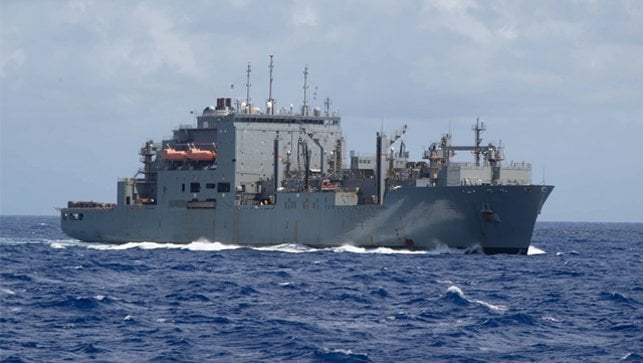
USNS Cesar Chavez came across three Filipino fishermen adrift after their boat was swamped (USNS photo)

Published Jan 2, 2026 3:35 PM by The Maritime Executive


The crew of a U.S. Navy supply ship started 2026 on a high note as they rescued three Filipino fishermen who had been adrift at sea for five days. They earned the thanks of the Philippine government, which highlighted the value of close cooperation. 

On January 1, 2026, the crew aboard the dry cargo ship USNS Cesar Chavez, a Lewis and Clark-class provision ship supporting the U.S. Navy, located the fishermen clinging to the wreckage of their boat in the South China Sea. U.S. commanders reported that the three fishermen had been surviving on rationed food and water since December 28, when their fishing vessel flooded and started to drift. 

The Commander of the U.S. 7th Fleet said in a statement that upon spotting the distressed vessel, watch standers immediately notified the bridge, prompting the ship to launch a rigid-hulled inflatable boat that went on to recover the fishermen.

The three individuals, later identified as Philippines citizens, were brought aboard Cesar Chavez and evaluated by the ship’s medical staff. Philippine authorities were notified, and they arranged to transfer the three men to a Philippine Coast Guard vessel to be returned home.

The Philippine Coast Guard reports its investigation revealed that while returning from a fishing venture, the three men encountered engine trouble and were struck by strong waves, causing their motorbanca to submerge. It said the fisherfolk were sighted clinging to their submerged motorbanca, which was tied to a payao (a float used for fishing).

The rescue occurred while Cesar Chavez was conducting routine logistics and resupply missions in support of the U.S. 7th Fleet.

Launched in 2021 and named after the famous American civil rights leader and Navy veteran Cesar Chavez, the 210-meter ship has a cargo capacity of more than 10,000 tonnes with its primary mission being the delivery of food, ammunition, fuel, and other provisions to combat ships at sea.

In August last year, the ship made headlines following revelations that the U.S. federal government was considering removing the name of the activist from the ship. Cesar Chavez served in the Navy from 1946 to 1948 and was an American farmworker and labor leader who co-founded what today is the United Farm Workers labor union. Protests and lobbying succeeded in getting the government to abandon the plans, stating that Cesar Chavez will keep her name in order to keep honoring the name and legacy of the famed activist. The protests came as the U.S. Navy ordered the remaining of one of her sister ships, the USNS Harvey Milk, now known as the USNS Oscar V. Peterson.


Finland and Estonia Cooperate on Investigation into Damaged Telecom Cables

Fitburg detained in Finland
Finland continues to interview the crew and investigate the circumstances of the subsea cable damage (Finnish Customs)

Published Jan 2, 2026 11:54 AM by The Maritime Executive


The Helsinki Police confirmed that they are making progress on the investigation into the damage to a subsea cable running between Finland and Estonia as they continue to interview the crew of a detained cargo ship. They are also working with colleagues in Estonia, who are investigating the damage on two other subsea cables, and the two countries plan to work together after completing their initial efforts.

Two unidentified crewmembers from the Turkish-owned cargo ship Fitburg remain under arrest in Finland, although the police declined to provide additional details. They said two additional crewmembers have been ordered to remain in Finland during the preliminary investigation into aggravated damage and attempted damage to subsea cables.

Speaking with the Finnish media, officials said they believe the Fitburg’s anchor had been down for several hours. The cable damage happened at approximately 0500 local time on Wednesday, December 31. Officials from Estonia said the damage occurred approximately 60 kilometers (37 miles) from the Estonian coast, near the border of the economic zones between Estonia and Finland.

By the time the Fitburg was identified as the prime suspect, the vessel had sailed into the Finnish EEZ. Officials said it was decided for practical reasons that Finland should take control of the vessel and lead that portion of the investigation. Weather conditions, which were severe at the time, prevented an Estonian patrol boat from operating in the Baltic where the damage occurred.

Undersea investigations are now underway to survey the cables. They are using equipment from the Finnish Board Guard and Defence forces.

The police said interviews with the crewmembers were continuing on Friday. The crew has been cooperating, and the efforts have clarified the course of events. They also defined the different roles of the crewmembers aboard the vessel.

The Finnish Transport and Communications Agency completed a Port State inspection of the Fitburg and only identified minor deficiencies. They said the condition of the vessel was normal considering its age. Fitburg was built in 2001.

The owners of the vessel, according to reports in the Finnish media, have retained legal counsel, and the Russian Embassy in Finland has offered its assistance. The media report said the company retained the same lawyers who defended the shadow tanker Eagle S, and that were successful in having the legal case against the captain and two crewmembers of the Eagle S dismissed in October on the grounds that the damage to cables on December 25, 2024, had happened outside Finland’s jurisdiction.

Finland’s Customs Authority is expected to release its opinion next week on the nature of sanction violations for the structural steel cargo that was loaded aboard the ship in Russia. They have seized the cargo, saying it is a violation of European Union sanctions. The Transport agency said it would also issue a full report next week on the results of the Port State Control inspection.


NYK Plans Long-Term Preservation of Japan’s Last Surviving Ocean Liner

Hikawa Maru Japan
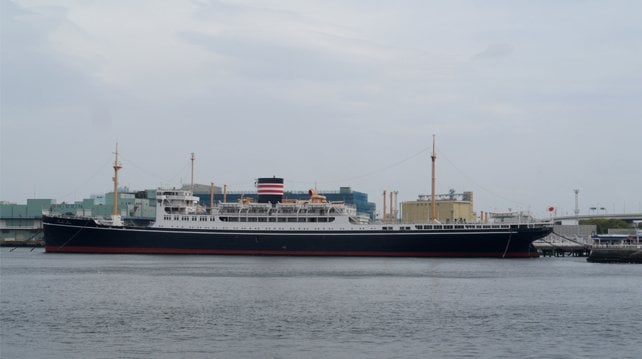
Hikawa Maru has been berthed as a museum since 1961 in Yokohama, Japan -- photo by Zairon (CC BY-SA 4.0)

Published Jan 2, 2026 3:44 PM by The Maritime Executive


Planning is underway for the long-term preservation of the 95-year-old former ocean liner Hikawa Maru, which is now on permanent display in Yokohama. Considered a nationally important cultural property, the vessel was the largest Japanese passenger ship to survive World War II and today is celebrated as a key part of NYK and Japan’s maritime heritage.

The company reports that an expert committee specialized in ship preservation and architecture will meet for the first time on January 8, 2026. The committee’s goal is to establish technical and conservation policies for repairs, while determining the best practices for the future upkeep of the vessel. They will also explore exhibition strategies to help revitalize the Yokohama waterfront.

“This long-term preservation project aims not only to ensure the ship’s structural soundness but also to enhance public engagement with the ship’s rich historical legacy,” reports NYK.

Since 2024, NYK reports it has been conducting surveys on the hull of the Hikawa Maru to assess its safety and structural integrity in preparation for large-scale repairs. The project aims to preserve its historic shipbuilding and design heritage while ensuring safety through expertise from Japan and abroad.
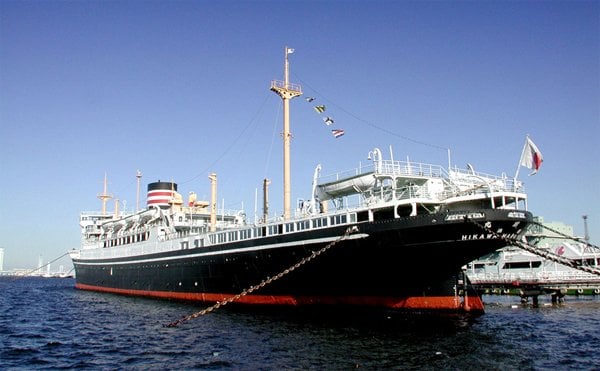
 

Surveys are determining the condition of the 95-year-old vessel (NYK)


Nippon Yusen Kabushiki Kaisha (NYK), established in 1885, today operates more than 800 ships worldwide, ranging from dry bulk to energy and car carriers, as well as being one of the three founding partners of Ocean Network Express (ONE). While it has a small cruise ship division, Asuka Cruise, the company has a long heritage in passenger shipping, which is celebrated in a maritime museum in Yokohama (currently closed for renovations) and by preserving its liner, Hikawa Maru.

Built by the Yokohama Dry Dock Company (now part of Mitsubishi Heavy Industries) and having entered service in May 1930 as the first of three sister ships, Hikawa Maru was not the largest, nor most prestigious, of the Japanese passenger fleet. At 11,600 gross tons, she was a passenger-cargo vessel specifically designed for the service between Japan and Seattle, along with her sisters Hiye Maru and Heian Maru. There were each 163 meters (535 feet) in length with a maximum speed of 18 knots and as built carried 76 passengers in first class, 69 in tourist class, and 183 in third or steerage.

Over the next 11 years, before its service was suspended in July 1941, NYK reports Hikawa Maru completed 73 crossings of the Pacific carrying about 10,000 passengers. Among the notables that sailed aboard the ship was silent movie star and producer Charlie Chaplin, and in 1937, the vessel carried members of the Japanese royal family home from Victoria, Canada, after attending the coronation ceremonies of the UK’s King George VI.
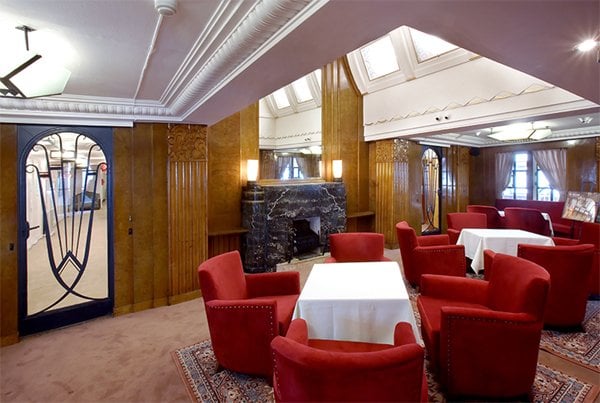
 

First Class lounge (NYK)


During World War II, she operated as a hospital ship, making 24 trips transporting over 30,000 wounded soldiers back to Japan. NYK reports that on three occasions she struck mines, but avoided catastrophic damage. Both her sister ships and much of NYK’s passenger fleet, however, were destroyed. The company lost a total of 185 ships during World War II, with only 37 surviving. Faced with strict post-war rules, for a time, Hikawa Maru was considered an American war prize, and when returned in 1947 was only permitted to sail a domestic service. In 1949, she was permitted to haul rice from Burma (Myanmar) and resumed her Pacific passenger-cargo service in March 1951.

Through the 1950s, the ship made seven annual voyages between Japan, Seattle, and Vancouver. She had completed a total of 254 voyages on the Pacific and carried more than 25,000 passengers when NYK decommissioned her in 1960. 
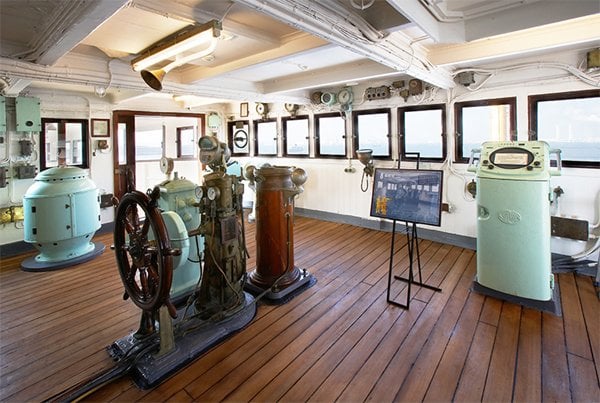
 

Preserved bridge of the former liner (NYK)


She was likely to have been scrapped when the city fathers of Yokohama requested that NYK moor the ship as part of the efforts to revitalize the port. She was opened as a museum ship, classroom, and youth hostel starting in 1961. Hikawa Maru was closed in 2006 for a large-scale restoration project and reopened two years later as a museum managed by NYK. Japan’s Ministry of Education, Culture, Sports, Science and Technology designated her as an Important Cultural Property in 2016.

Visitors to the ship see various exhibits and can tour spaces including the bridge, captain’s office, the first class lounge, a deluxe cabin, a third class cabin, and the engine room. Exterior deck spaces are also accessible. The company says it authentically showcases the shipbuilding technology and interior decoration of the time, and as such, remains an important icon of the past.

Top photo of Hikawa Maru in 2018 by Zairon (CC BY-SA 4.0)