Saturday, January 03, 2026

Protests held in Sweden against US strikes on Venezuela, Israeli attacks on Gaza

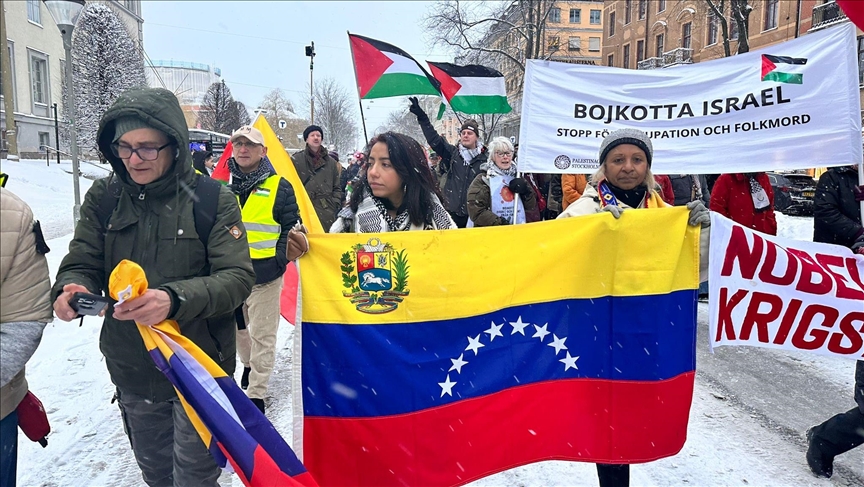
Demonstrators in Stockholm condemn continued violence in Gaza, US bombing of Caracas

Atila Altuntas |03.01.2026 - TRT/AA


STOCKHOLM

Hundreds of people gathered in Sweden’s capital Stockholm on Saturday to protest Israel’s continued attacks on Gaza despite a ceasefire and the latest US strikes on Venezuela that also led to the capture of President Nicolas Maduro.

Responding to calls from several civil society organizations, the demonstrators assembled at Odenplan Square.

Participants carried banners reading "Children are being killed in Gaza," "End food shortages in Palestine," "No to war in Venezuela," and "Venezuela’s oil belongs to Venezuela," calling for an end to military interventions in both Gaza and Venezuela.

Swedish Jewish activist Dror Feiler told Anadolu that they condemned Israel’s attacks on Gaza despite calls for peace.

As for the US, Feiler said Washington seeks to overthrow governments that do not serve its interests. "Americans are doing what they always do, trying to overthrow regimes that do not allow themselves to be governed by them."

Linking the situation in Palestine with US involvement in Venezuela, Feiler said: "The Palestinian cause is our cause, just like the cause of the Venezuelan people."

Describing Israel’s presence in Gaza, Lebanon and Syria’s Golan Heights as an "illegal occupation," Feiler stressed the importance of sovereignty. "Whether you like Maduro’s policies or not is irrelevant. He is the elected president of a country. No one has the right to enter a country and capture its president, just as Israel has no right to decide who governs Gaza or Lebanon," he said. "We must restore international law."
Trump ushers in a new era of rogue superpowers

With the strike on Venezuela, the US joins Russia and China in carving up the globe into spheres of influence


By Katie Stallard
 New Statesman’
3 January 2026

In his final hours in charge of Venezuela, Nicolás Maduro was at the presidential palace in Caracas meeting with China’s special envoy Qiu Xiaoqi. Maduro did not look like a man who understood that his time was running out. He joked with the Chinese delegation about his zodiac sign – a tiger – wished them a happy new year and repeated the usual diplomatic pablum about his commitment to their strategic relationship and shared vision of “building a multipolar world of development and peace”.

That night, around 2 am, the United States launched its assault. Video footage posted on social media showed large explosions in the capital and at nearby military facilities. American military helicopters flew low over Caracas, firing at targets on the ground. Shortly afterwards, Donald Trump announced that the US had captured Maduro, along with his wife Cilia Flores, and flown them out of the country. Qiu was almost certainly the last foreign diplomat to see Maduro in power. It is not clear if the Chinese diplomats were still in Caracas during the US attack.

The timing is almost certainly a coincidence. Trump is said to have given the order to strike Venezuela and capture Maduro days ago, but weather conditions and military planning delayed the operation until now. Yet there is a symbolic resonance to the images of Maduro meeting the Chinese envoy as the last act of his presidency and the prelude to the new world order Trump seems determined to bomb into existence.


On the face of it, Trump’s rationale for attacking Venezuela is nonsensical. Maduro was indicted in the US on charges of corruption and drug trafficking in 2020, and the Trump administration has claimed that he is the leader of a violent drug smuggling ring known as the Cartel de Los Soles. But analysts, including former US Drug Enforcement Administration officials, say the organisation does not exist in the form that the Trump administration claims, and the US has not offered credible evidence of a threat to US national security that would justify the use of military force under the terms of the UN Charter.

But such concerns are quaint in this new era of rogue superpowers. This is not the first time the US has embarked on military action in defiance of international law. Nor is this Washington’s first attempt at regime change in Latin America, where the US has tried, and often failed, to overthrow its rivals in favour of more friendly governments. In fact, the clearest explanation for the attack on Venezuela and removal of Maduro is spelled out clearly in Trump’s new national security strategy. Released late one night in November, the document asserts the right, even the necessity, for the US to exercise dominance over the “Western Hemisphere” to ensure it is controlled by “governments [who] cooperate with us against narco-terrorists, cartels, and other transnational criminal organisations,” and that it remains “free of hostile foreign incursion or ownership of key assets”.

This means China, whose influence in Latin America has rapidly increased in recent years, propelled by massive investment in strategic infrastructure and critical mineral extraction. It also applies to Russia, which ratified a new military agreement with Cuba last October and had deployed military advisers to Venezuela in recent months as well as selling missile defences to the Maduro regime, apparently to little avail.

The strategic case for hemispheric dominance dates back to President James Monroe in 1823, who claimed Latin America as part of the US’s sphere of influence and warned that the US would intervene to prevent incursions by foreign powers, which became known as the Monroe Doctrine. Theodore Roosevelt expanded on that definition in 1904, contributing the “Roosevelt Corollary” and warning that the US would exercise an “international police power” to prevent European interference and protect its interests in the Western Hemisphere. The new national security strategy promised to assert and enforce a “Trump Corollary” to that doctrine. We are now witnessing what that looks like in practice.

The concept of spheres of influence is entirely familiar to Moscow and Beijing. Vladimir Putin, who claimed his own fantastical premise for invading Ukraine, where he still claims to be waging a “denazification” campaign, wants to control Ukrainian territory and subjugate its government precisely because he believes it forms part of Russia’s historical sphere of influence. Xi Jinping used his New Year’s Eve address to repeat his insistence that China’s “reunification” with Taiwan was “unstoppable” after staging major military exercises around the self-ruling democracy in recent weeks. He views Taiwan as an integral part of China’s historical territory – although the Chinese Communist Party has never ruled the island – and the wider region, including the South China Sea, as rightfully belonging to China’s own sphere of influence.

By attacking Venezuela and removing Maduro under such spurious circumstances, Trump has now fatally undermined future US efforts to rally opposition to similar attempts at regime change elsewhere. (Although, of course, Russia, China, and many others have long claimed that Washington is hypocritical and highly selective in its approach to international law.) What is the difference, Putin’s supporters will ask, between Trump’s actions and Russia intervening to remove an unfriendly government within its own sphere of influence, or even to capture Volodymyr Zelensky and put him on trial in Moscow for his supposed crimes? If Xi views Taiwan’s president, Lai Ching-te, as a dangerous separatist, cultivating a pro-independence movement against Beijing, couldn’t he claim, according to Trump’s new doctrine, justification of acting to protect China’s interests in what he views as his own backyard? By casting off any pretence of adhering to international law and the so-called rules-based order, Trump is endorsing a dangerous new era of “might makes right” with military strength as the ultimate guarantor of sovereignty. Trump’s doctrine could have implications far beyond Latin America as well. Denmark – and its Nato allies – should take his claims to Greenland seriously and urgently.

Trump appears to believe that this approach will usher in a new golden age of strategic stability, with the leaders of the world’s great powers carving up the globe amongst them and agreeing to respect each other’s spheres of influence. He envisions the new Venezuela as a beacon of democratic governance and prosperity, allied to the US, that will justify his far-sighted intervention and appease even the critics among his own base. It is more likely that he has just unleashed an almighty struggle for power, both in Venezuela and much further afield. Xi Jinping likes to say that the world is now experiencing “great changes unseen in a century”. On this, at least, he is correct. We are witnessing the birth of a new world order, but neither Trump, Putin nor Xi yet knows precisely what form it will take.

[Further reading: Is Trump the last neoconservative?]


What are the charges against Venezuela's Nicolás Maduro?

January 3, 2026
Ryan Lucas


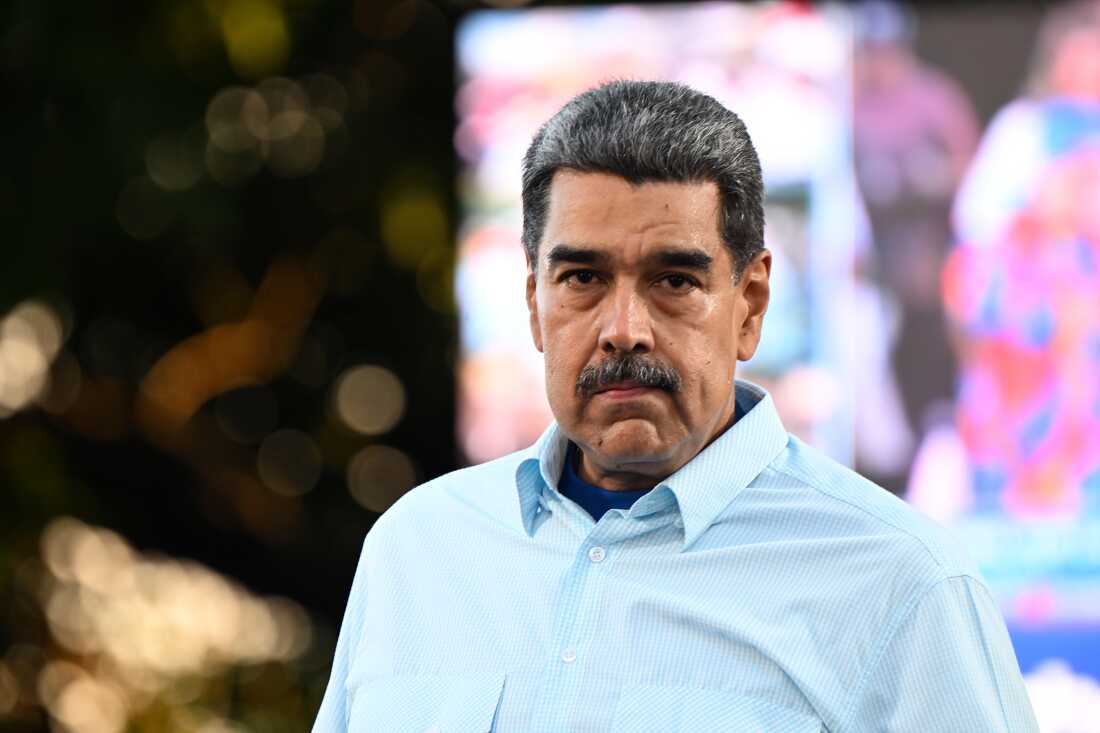
Venezuelan President Nicolás Maduro in Caracas, Venezuela, on Aug. 17, 2024.Alfredo Lasry R/Getty Images

Venezuela's Nicolás Maduro and his wife, Cilia Flores, face a raft of charges in the United States following President Trump's announcement early Saturday that the U.S. attacked Caracas and took them into custody.

Maduro, Flores and senior Venezuelan officials face charges related to alleged "drug trafficking and narco-terrorism conspiracies," according to an unsealed indictment posted on social media Saturday by U.S. Attorney General Pam Bondi.

The indictment alleges that, starting in 1999, the defendants partnered with international drug trafficking organizations to ultimately transport thousands of tons of cocaine into the United States.

Maduro and his wife "will soon face the full wrath of American justice on American soil in American courts," Bondi wrote in an earlier post on X.


The new indictment adds to charges from the first Trump administration, when the U.S. Justice Department announced a federal indictment against Maduro in March 2020.

That indictment alleged that Maduro was the leader of the Cartel de los Soles, and that he and other defendants took part in a narco-terrorism conspiracy with the Colombian guerrilla group known as the Revolutionary Armed Forces of Colombia (FARC).

Prosecutors said that the Cartel de los Soles was made up of high-ranking Venezuelan officials who abused the Venezuelan people and corrupted the nation's institutions to import large quantities of cocaine into the United States.

According to the 2020 indictment, Maduro helped manage and ultimately lead the Cartel de los Soles, which sought to get rich and flood the U.S. with cocaine, allegedly using the drug as a weapon against the United States.

Prosecutors said that Maduro helped negotiate multi-ton shipments of cocaine, and directed the Cartel de los Soles to provide military-grade weapons to FARC.

He also allegedly coordinated foreign affairs with Honduras and others to facilitate large-scale drug trafficking.

The current Trump administration has ramped up the pressure over the past year. In November 2025, the U.S. designated the Cartel de los Soles as a foreign terrorist organization.

The new indictment released Saturday reiterates these charges and also alleges that Maduro "partnered" with organizations including the Sinaloa Cartel, the Zetas and Tren de Aragua.

Separately, the International Criminal Court has been investigating the Venezuelan government for alleged torture, sexual violence and arbitrary detentions.

This is a developing story, which may be updated.

Lady Macbeth: Who's Maduro's powerful wife, Cilia Flores, a TV star with narco links?


Nicknamed 'Lady Macbeth' for her ambition and influence, Venezuelan President Nicolas Maduro's wife, Cilia Flores, has long been seen as the power behind the regime in Caracas. With the US capturing Maduro and Flores, her journey from lawyer and TV figure to a part of a narco-terrorism case is under global scrutiny.


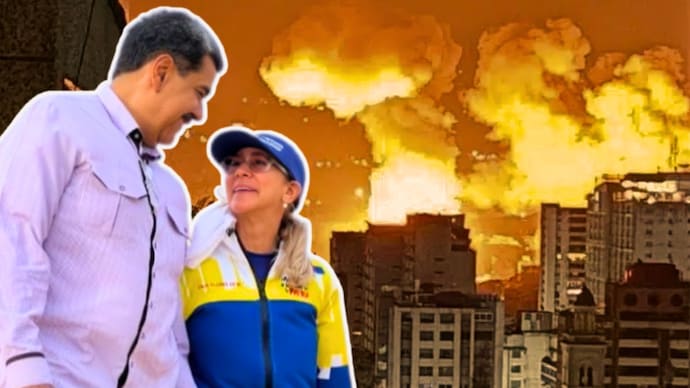
Venezuelan President Nicolas Maduro and his wife, Cilia Flores, have been captured by American special forces. (Images: File/Social Media)

India Today News Desk
New Delhi,
 Jan 3, 2026 
Written By: Sushim Mukul

Ambitious, manipulative, ruthless and complex all at once, Lady Macbeth is one of William Shakespeare's most famous and studied characters. It is because of these traits that many in Venezuela have bestowed the title on President Nicolas Maduro's wife and "first combatant", Cilia Flores. Early on Saturday, the US Delta Force raided the Venezuelan capital, Caracas. Hours later, US President Donald Trump said Maduro and his wife had been captured by American forces following what he described as "large-scale airstrikes".

US attorney general Pam Bondi said Maduro, and his wife, Flores, who were flown out of Caracas and were aboard the USS Iwo Jima, would face criminal charges after an indictment in New York, which she called "the full wrath of American justice on American soil in American courts".

So, who's Cilia Flores? Why is she called the "Lady Macbeth" and the "first combatant"? What role does she have in the narco-terrorism charges that the US has brought against her?

HOW MADURO'S WIFE, ROSE FROM MODEST UPBRINGING TO POWER

Sixty-nine-year-old Cilia Flores de Maduro was born in 1956 in a small town in Venezuela's Cojedes state. Raised in modest circumstances, she was known in her youth as a "biker girl", according to reports. The label reflects her assertive and unconventional personality. That determination would later shape her entry into law and politics.

Flores was trained as a lawyer, though details of her formal education remain limited in public records. Her professional rise began in the 1990s, closely tied to the ascent of former Venezuelan President Hugo Chavez and the Bolivarian Revolution.

It was the same Chavez, who was Maduro's mentor, whose regime the US tried to topple in 2002.

CILIA FLORES'S TV, LEGAL CAREER CEMENTED HER ROLE IN POLITICS

Cilia Flores first came into national prominence as a lawyer defending Hugo Chavez after his failed 1992 coup against then president Carlos Andres Perez. As lead counsel on his defence team, she played a key role in securing his release from prison in 1994. It cemented her position within the Venezuelan socialist revolutionary movement.

Beyond the courtroom, Flores also cultivated a public profile through television. She hosted a show that featured beneficiaries of government welfare schemes, helping project the regime's social outreach.

She was also a devotee of Indian spiritual guru Sathya Sai Baba, according to a 2013 report by news agency Reuters. In 2005, while serving as Venezuela's foreign minister, the couple travelled to Puttaparthi in Andhra Pradesh. The couple visited the Prasanthi Nilayam ashram, where they reportedly had a private audience with spiritual leader Sathya Sai Baba. Photographs from the visit on social media show Maduro seated on the floor.


CILIA FLORES'S POLITICAL PLUNGE. SHE PRESIDED OVER VENEZUELAN PARLIAMENT TOO

Following Chavez's election in 1999, Flores's political career accelerated.

She served as a member of the National Assembly between 2000 and 2012.

In 2006, she became the first woman to serve as President of the National Assembly, succeeding Nicolas Maduro. She held the post until 2011.

She later served as Attorney General from 2012 to 2013 under both Chavez and Maduro.

In 2017, amid political unrest, Flores resigned from the National Assembly to join the controversial Constituent National Assembly tasked with rewriting the constitution, where she remained until early 2026.

Within the ruling United Socialist Party of Venezuela (PSUV), Flores emerged as a central organiser. She played a key role in Chavez's Tactical Command for the Revolution.

WHY MADURO'S WIFE IS CALLED LADY MACBETH

Flores met Nicolas Maduro in the 1990s through their shared political network under Chavez. Their relationship developed over time, and they married in July 2013, shortly after Maduro assumed the presidency following Chavez's death from cancer.

Both had divorced previous spouses. Maduro has frequently praised Flores in public, referring to her as his closest adviser and often appearing alongside her at public events. This projection of a united leadership image, earned Flores the title "first combatant".

Within Venezuela, Flores has earned the nickname "Lady Macbeth", a reference to her perceived ambition and influence behind the scenes.

Critics, however, described her as a "puppet master" or compared her to House of Cards character Claire Underwood.

Political scientist John Polga-Hecimovich has described Flores as a committed ideologue who has helped soften Maduro's public image and broaden his appeal, according to a 2019 report by the US-based Fox News.

CILIA FLORES'S NARCO LINKS, CHARGES OF NEPOTISM

During her tenure in power, Flores faced repeated allegations of nepotism, with reports claiming as many as 16 relatives held posts in the National Assembly. Flores dismissed these accusations as a smear campaign.

Her son, Walter Jacob Gavidia Flores, has drawn scrutiny for reported luxury travel despite having no visible source of income. Maduro's son from a previous relationship, Nicolas Maduro Guerra, has also received government appointments.

Flores's family has also been linked to drug trafficking cases.

In 2015, her nephews, Efrain Antonio Campo Flores and Francisco Flores de Freitas, whom she helped raise, were arrested by the US Drug Enforcement Administration in Haiti while attempting to smuggle 800 kg of cocaine into the United States.

They were convicted in 2016 and sentenced to 18 years in prison. They reportedly admitted that the scheme was intended to generate funds to help keep their family in power. Though they carried Venezuelan diplomatic passports, they did not have immunity. They were released in 2022 as part of a US-Venezuela prisoner swap.

Flores, in 2016, was indicted in the Southern District of New York on narco-terrorism charges, alongside Maduro. The allegations were consistently denied by the couple. Maduro has publicly defended his wife, calling the charges politically motivated.

In 2018, the US Treasury sanctioned Flores along with Maduro's inner circle, accusing them of corruption and propping up an authoritarian regime. Canada, Panama and Colombia later followed with their own sanctions.

On Saturday, Trump claimed that American forces captured Maduro and Flores following what he described as large-scale airstrikes on Caracas. Flores, long seen as the power behind the throne, now is at the centre of what could become the most consequential chapter in Venezuela's political history. She, along with Maduro, will be tried in New York on narco-terror charges.

- Ends

We are going to run Venezuela: Trump after US's overnight strikes, Maduro capture

Trump said the US would not allow another leader to take over Venezuela without safeguarding the interests of its people. He added that the US presence would continue in Venezuela during the transition period.


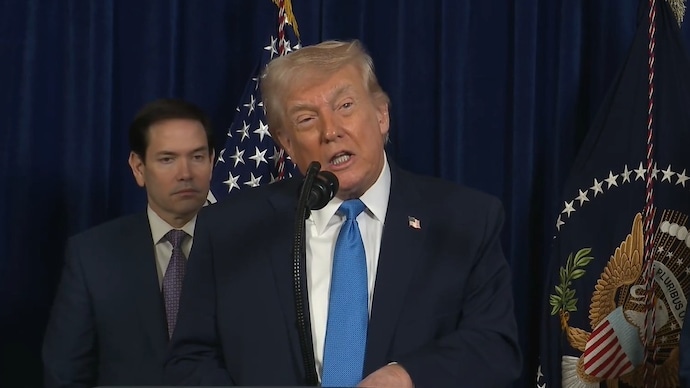
President Trump holds press conference following US military strike on Venezuela.


India Today World Desk
New Delhi,
 Jan 3, 2026 
Edited By: Anuja Jha

US President Donald Trump on Saturday said the United States would “run” Venezuela for the time being following overnight US strikes that led to the capture of Venezuelan President Nicols Maduro.

Speaking at a press conference in Florida, Trump claimed Washington would oversee the country until a transition is put in place, though he offered no details on how this would work. “We’re going to run the country until such time as we can do a safe, proper and judicious transition,” he said.

Trump opened the briefing by praising the US military operation, codenamed Operation Absolute Resolve, carried out overnight, calling it “one of the most stunning attacks and effective and powerful displays of American military might and competence in American history.”

“No nation in the world could achieve what America achieved yesterday, or frankly, in such a short period of time,” he said, adding that “all Venezuelan military capacities were rendered powerless” as US forces, working with law enforcement agencies, “successfully captured Maduro in the dead of night.”

The US president described Maduro’s leadership as “both horrible and breathtaking” and said the operation was aimed at securing peace and stability for Venezuelans. “We want peace, liberty and justice for the great people of Venezuela,” Trump said, also referring to Venezuelans living in the United States who, he claimed, want to return to their homeland.

Trump said the US would not allow another leader to take over Venezuela without safeguarding the interests of its people. “We can’t take a chance that somebody else takes over Venezuela that doesn’t have the good of the Venezuelan people in mind [after] decades of that. We’re not going to let that happen,” he said.

He added that the US presence would continue during the transition period. “We’re there now... we’re going to stay until such time as a proper transition can take place.”

Trump also linked the operation to Venezuela’s vast oil reserves, saying US companies would play a key role in rebuilding the sector. “We’re going to have our very large US oil companies, the biggest anywhere in the world, go in, spend billions of dollars, fix the badly broken infrastructure, the oil infrastructure, and start making money for the country,” he said.

The president revealed that US forces were prepared for further military action if required. “We are ready to stage a second and much larger attack if we need to do so,” Trump said, noting that a second wave of strikes had been planned but was ultimately not needed.

- Ends

Machado Calls For Power Transfer As Venezuela Crisis Deepens

Nobel laureate urges installation of opposition leader Edmundo González


Outlook News Desk
Curated by: Snehal Srivastava
Updated on: 3 January 2026 


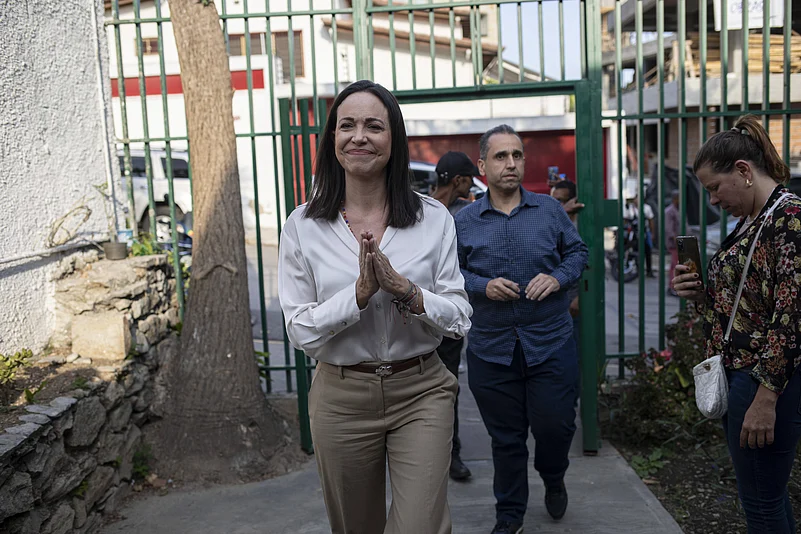
Venezuelan opposition leader Maria Corina Machado Photo: IMAGO/ Anadolu Agency

Summary of this article

María Corina Machado called for “popular sovereignty” and urged Edmundo González Urrutia to assume leadership as Venezuela’s legitimate president.

She said Nicolás Maduro now faces international justice and backed US action after his refusal of a negotiated exit.

González echoed her call, saying Venezuela is ready for a democratic transition and national reconstruction.

Venezuelan opposition politician and Nobel Peace Prize winner María Corina Machado says the time has come for “popular sovereignty” in Venezuela and the installation of opposition candidate Edmundo González Urrutia as the country’s leader.

In a letter addressed to the people of Venezuela and just posted on X, Machado said: “Nicolás Maduro from today faces international justice for the atrocious crimes committed against Venezuelans and against citizens of many other nations.”

“Given his refusal to accept a negotiated solution, the government of the United States has fulfilled its promise to enforce the law.”

“The time has come for popular sovereignty and national sovereignty to rule in our country,” Machado says, adding: “We are going to restore order, free political prisoners, build an exceptional country, and bring our children back home.”

Gonzalez was voted as the legitimate president of Venezuela in the 2024 presidential election, according to Machado. Despite intense international allegations that the election was rigged, Maduro took office in January of last year.

“He must immediately assume his constitutional mandate and be recognized as commander-in-chief of the national armed forces by all the officers and soldiers who make up its ranks,” Machado added.

“Today we are prepared to enforce our mandate and take power. Let us remain vigilant, active, and organized until the democratic transition is achieved. A transition that needs ALL of us,” Machado said.

For his part, González shared Machado’s post and added:”Venezuelans, these are decisive hours, know that we are ready for the great operation of the reconstruction of our nation.”
Maria Corina Machado is most likely in Oslo, Norway, where she had travelled to collect her Nobel Peace Prize last month. It was her first public appearance after spending over a year in hiding in Venezuela.

The rescue operation to get Machado out of Venezuela involved disguises, two boats through choppy seas and a flight, the man who says he led it told the BBC.


Venezuelan opposition leader María Corina Machado releases letter after Maduro's capture. Read the full text.


María Corina Machado released a letter addressing the Venezuelan people after leader Nicolás Maduro and his wife were captured in a U.S. operation overnight Saturday. 

Machado, an opposition leader who has mostly been in hiding over the last year, said Maduro will "face international justice for the atrocious crimes committed against Venezuelans and against citizens of many other nations." 

"The time for freedom has come!" Machado, who was awarded the 2025 Nobel Peace Prize, wrote in the letter posted on X.

It was not clear on Saturday if Machado, who escaped to Norway in a secret mission last month, was in Venezuela. She told CBS News in mid-December that she was "absolutely" supportive of President Trump's increasing military pressure on the Maduro regime and said she would welcome "more and more pressure so that Maduro understands that he has to go."

Read the full text of her letter, translated by CBS News, below. 

María Corina Machado's letter to Venezuelans 

Venezuelans, The time for freedom has come!

Nicolás Maduro from today will face international justice for the atrocious crimes committed against Venezuelans and against citizens of many other nations. Given his refusal to accept a negotiated solution, the United States government has fulfilled its promise to enforce the law.

The time has come for popular sovereignty and national sovereignty to prevail in our country. We are going to restore order, release the political prisoners, build an exceptional country, and bring our children back home.

We have fought for years, we have given it our all, and it has been worth it. What was meant to happen is happening

This is the hour of the citizens. Those of us who risked everything for democracy on June 28th. Those of us who elected Edmundo Gonzalez Urrutia as the legitimate President of Venezuela, who must immediately assume his constitutional mandate and be recognized as Commander-in-Chief of the National Armed Forces by all the officers and soldiers who comprise it.

Today we are ready to assert our mandate and take power. Let us remain vigilant, active, and organized until the democratic transition is complete. A transition that needs ALL of us.

To the Venezuelans who are currently in our country, be ready to put into action what we will be communicating to you very soon through our official channels.

To Venezuelans abroad, we need you to be mobilized, engaging the governments and citizens of the world and committing them from now on to the great operation of building the new Venezuela.

In these crucial hours, receive all my strength, my confidence, and my affection. We remain vigilant and in contact.

VENEZUELA WILL BE FREE! We go hand in hand with God, until the end.

The US Government is Not the Daddy of US Oil Companies


 January 3, 2026

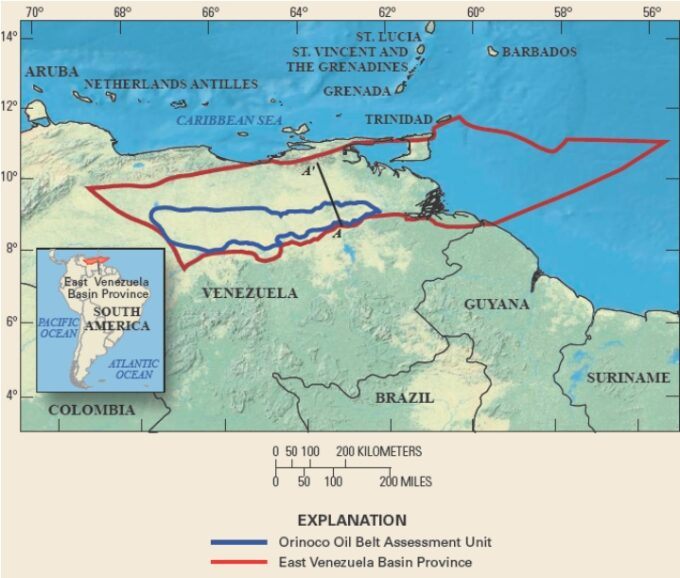
Oil reserves of the Orinoco Belt, Venezuela. US Geological Survey.

Among the many rationalizations that the Trump administration is using to initiate massive force and violence against the Venezuelan people is that the Venezuelan government nationalized American oil interests many years ago. The notion is that since “they stole our oil” several decades ago, it is entirely proper, U.S. officials say, for the U.S. government to retaliate against Venezuela, including, presumably, getting back the oil they supposedly “stole from us.”

But contrary to what many Americans now have convinced themselves is true, Venezuela never stole “our oil,” especially if one is referring to you and me and most other American citizens with the use of the possessive pronoun “our.” That’s because neither you nor I or the vast majority of other Americans ever owned Venezuelan oil.

For that matter, the U.S. government didn’t own any Venezuelan oil either. It was U.S. oil companies that were granted concessions from the Venezuelan government near the beginning of the 20th century to extract oil from Venezuela in return for payment of concession fees to the Venezuelan government.

The situation was similar to what happens when an oil company enters into a lease contract with a private landowner here in the United States. The oil company pays the landowner a bonus to sign the lease. If it later strikes oil, the oil company pays royalties to the landowner.

Essentially, the same thing happened with Venezuela, with the Venezuelan government serving as owner of the mineral rights. It should be pointed out that the terms of the concessions were extremely generous to the oil companies.

But there is one critically important point that we must keep in mind: There is always the risk of nationalization when it comes to operating in foreign countries. Every oil company executive knows that. Nationalization, of course, is impossible to defend on a libertarian basis. It constitutes a severe breach of contract. But the fact is that it happens, and everyone knows that. It’s a risk of doing business in a foreign country. If an oil company doesn’t want to take that risk, then it should simply limit its operations to the domestic United States.

In other words, oil company executives are big boys. They themselves choose to take the risk of nationalization if they decide to drill in a foreign country. If things don’t pan out and their operations are nationalized, they shouldn’t be looking to the U.S. government to be their daddy. They simply have to take their lumps.

And don’t forget: the U.S. oil companies made a lot of money with their oil concessions in Venezuela before the Venezuelan government nationalized their oil interests in 1976.

We also shouldn’t forget that it’s not only foreign countries that engage in nationalization. So does the U.S. government. In the 1930s, it nationalized privately owned gold coins, which had been the official money of the American people under the Constitution for more than 125 years. In other words, the U.S. government “stole our money.” When is it going to return “our money” to us?

It’s also worth reminding ourselves that we’ve heard this “they stole our oil” argument before. When the democratically elected prime minister of Iran, Mohammad Mossadegh, nationalized British oil interests in Iran in 1951, British officials ran to U.S. officials to seek their help in getting “their oil back.” That’s what led to the CIA coup that ousted Mossadegh from power, installed the brutal, tyrannical, and dictatorial rule of the Shah, and destroyed Iran’s democratic system. That U.S.-installed and U.S.-supported tyranny led to the Iranian revolution in 1979, which brought the brutal theocratic regime in Iran that is now considered to be a permanent official enemy of the United States.

What happened in Iran was just another dark and sordid legacy of the U.S. national-security state and its foreign policy of interventionism, including coups, assassinations, sanctions, embargoes, ship seizures, freezing of assets, single-tap and double-tap killings, and military invasions. No doubt the Pentagon, the CIA, and the NSA are hoping to have better results with their interventionism against Venezuela.

This first appeared on Hornberger’s Explore Freedom blog.

Jacob G. Hornberger is founder and president of The Future of Freedom Foundation.


Inside Venezuela’s oil industry: World’s

 largest oil reserves, failing infrastructure

US President Donald Trump told Fox News ‍on Saturday that the ‍US was ⁠going to be "very strongly involved" in Venezuela's ​oil ‍industry in the ​wake of the operation to ​capture Venezuelan President Nicolas Maduro. Here are some key facts ‍about Venezuela's oil industry.


Issued on: 03/01/2026 - 
By: FRANCE 24
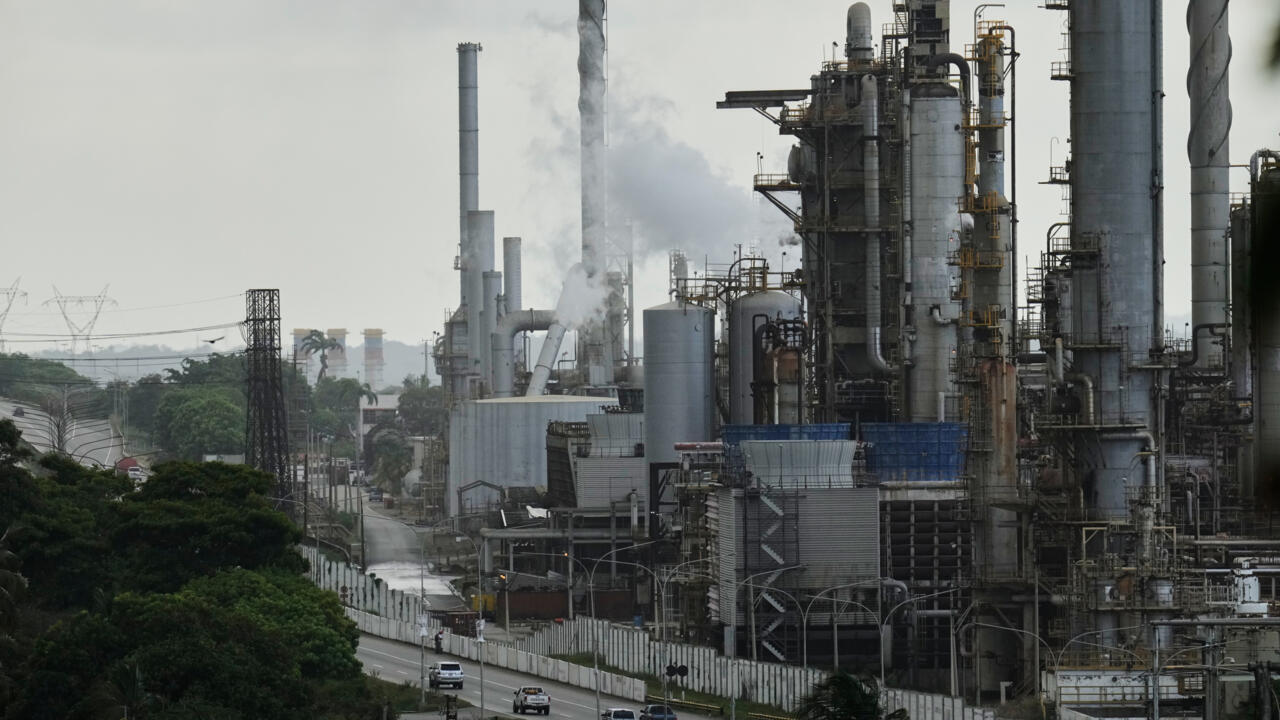

Vehicles drive past the El Palito refinery in Puerto Cabello, Venezuela on December 21, 2025. © Matias Delacroix, AP

⁠The ‍United ​States is ⁠going to be "very strongly involved" in Venezuela's ​oil ‍industry in the ​wake of the operation to ​capture Venezuelan President Nicolas Maduro, President Donald Trump told Fox News ‍on Saturday.

"We have ​the greatest oil companies in the ‌world, the biggest, the greatest, ‍and we're going to be very much involved.

Here's what we know about Venezuela’s oil industry.

Vast Reserves, Minimal Output

Venezuela holds the world’s largest oil reserves – about 303 billion barrels, or 17% of global reserves – surpassing OPEC+ leader Saudi Arabia, according to the London-based Energy Institute. Most of its reserves are heavy oil in the Orinoco Belt, making production costly, though technically straightforward, according to the US Energy Department.

Despite its vast reserves, Venezuela’s crude output remains far below capacity due to mismanagement, underinvestment, and sanctions. Production, which once peaked at 3.5 million barrels per day in the 1970s (over 7% of global output), fell below 2 million bpd during the 2010s and averaged around 1.1 million bpd last year.

Analysts note that any regime change could eventually boost production if sanctions are lifted and foreign investment returns. However, historical precedents in Libya and Iraq suggest recovery is unlikely to be rapid.
Joint Ventures and Nationalisation

Venezuela nationalised its oil sector in the 1970s, creating Petroleos de Venezuela S.A. (PDVSA). In the 1990s, it briefly opened up to foreign investment, but under Hugo Chavez from 1999 onward, PDVSA was required to maintain majority ownership in all projects. The state company partnered with firms including Chevron, China National Petroleum Corporation, ENI, Total, and Russia’s Rosneft to boost production.
Exports and Refining

The United States was formerly Venezuela’s main oil buyer, but sanctions shifted the main market to China over the past decade. Exports halted entirely after the Trump administration’s blockade on vessels entering or leaving Venezuela in December 2025. PDVSA also owns significant refining capacity abroad, including CITGO in the US, though creditors are contesting control through long-standing legal cases in American courts.

(FRANCE 24 with Reuters)


Did Trump bring down Nicolas Maduro with

eye on Venezuelan oil industry? President

says US will be 'very involved'

Donald Trump said, 'We have the greatest oil companies in the world, the biggest and the best, and we’re going to be very much involved in it'


 By The Week News Desk 
 January 03, 2026 

After capturing and indicting deposed Venezuelan President Nicolas Maduro, the US has indicated that it has its eye on the South American country's oil industry.

Speaking to Fox News, US President Donald Trump said the US will be "very strongly involved" in Venezuela's oil industry.

"We have the greatest oil companies in the world, the biggest and the best, and we’re going to be very much involved in it," he said.

Vice President JD Vance said Trump had "offered multiple off ramps, but was very clear throughout this process: the drug trafficking must stop, and the stolen oil must be returned to the United States."

"Maduro is the newest person to find out that President Trump means what he says," Vance posted on X.

It should be noted that the US spared the Petróleos de Venezuela, S.A (PDVSA), the Venezuelan state-owned oil and natural gas company, while carrying out airstrikes on Venezuela.

In December, the US blockaded oil tankers entering or leaving the country, besides seizing two cargoes of Venezuelan oil.

Interestingly, Maduro was captured just a day after he said Venezuela is ready to discuss a drug-trafficking deal and oil investments with the US.

"The US government knows, because we've told many of their spokespeople, that if they want to seriously discuss an agreement to combat drug trafficking, we're ready," he said. "If they want oil, Venezuela is ready for U.S. investment, like with Chevron, whenever they want it, wherever they want it and however they want it."

He also alleged that the US wants to change the regime in Venezuela so that it can access the oil reserves in the country. It is clear the U.S. wants "to impose themselves through threats, intimidation and force," he said.