It’s possible that I shall make an ass of myself. But in that case one can always get out of it with a little dialectic. I have, of course, so worded my proposition as to be right either way (K.Marx, Letter to F.Engels on the Indian Mutiny)
Monday, January 12, 2026
ROFLMAO
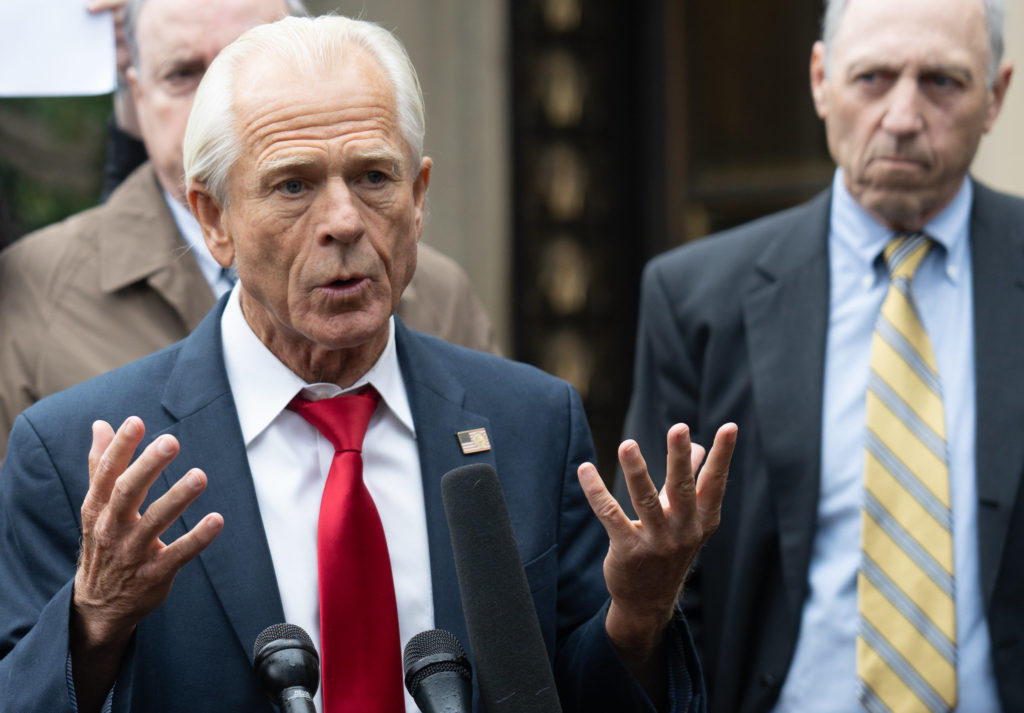
Navarro sees US ending Chinese dominance of critical minerals
US President Donald Trump’s White House trade adviser predicted American industrial breakthroughs would help boost domestic production and eliminate China’s market dominance of rare earths.
“China has been flexing its muscles now in Europe, in India, in the United States saying, basically, we’re gonna do what we want, and if you try to stop us, we’re gonna take away your critical minerals,” Peter Navarro said in an interview on Bloomberg’s The Mishal Husain Show. “Because they have, they think they have a monopoly on it, but that’s just a matter of time.”
American innovation would “quickly wipe away” China’s “weaponization,” he continued.
China is the world’s dominant supplier of rare earths, and Beijing’s efforts to withhold supplies last year helped fuel a trade war with the US that saw both sides raise tariffs to astronomical levels.
Trump and Chinese President Xi Jinping reached a trade truce last October, but Washington has continued to pursue policies intended to wean the nation off Chinese supplies of magnets used in a wide variety of consumer products, including autos and electronics.
“So what do you do in the meantime? You do diplomacy. And if people want to call that soft, then they don’t understand the chessboard,” Navarro said.
Under the agreement, China consented to a one-year suspension of tighter export controls. In return, Trump halved tariffs on Chinese goods that were enacted in response to the flow of chemical ingredients for fentanyl into the US to 10%.
Navarro said it was critical to Trump’s efforts to maintain open lines of communication with “vicious dictators,” a group that the aide said included Xi, Russian President Vladimir Putin and Turkey’s Recep Tayyip Erdogan.
China is home to more than 90% of global rare earths and permanent magnets refining capacity, compared with just 4% for second-place Malaysia, according to the International Energy Agency, a Paris-based intergovernmental organization.
The US has sought out agreements with eight allied nations as part of a broader effort to strengthen supply chains and reduce Western dependence on China for critical minerals. US officials met with their counterparts from Japan, South Korea, Singapore, the Netherlands, the UK, Israel, the United Arab Emirates and Australia in December to strike agreements on energy, critical minerals, advanced manufacturing, semiconductors, AI infrastructure and transportation logistics.
Trump and Commerce Secretary Howard Lutnick suggested to reporters aboard Air Force One on Sunday the US could also tap into supplies of rare earths in Venezuela following the capture and arrest of leader Nicolas Maduro.
EU pressure
In his interview with Husain, Navarro also urged the European Union to impose higher tariffs on China, a request that could raise fresh tensions in the transatlantic trade relationship that has already been marred by a dispute over digital taxes on American firms.
“We are strongly encouraging Europe to adopt exactly the same level of tariffs that we adopt for the simple reason that when the president puts up tariffs to defend America from Chinese cheating, China can’t sell as much here,” he said. “Where does it sell it? Dumps it in Europe, dumps it in Mexico.”
As the 2026 midterm elections approach, Navarro acknowledged that the White House bears responsibility in alleviating economic pain felt by Americans. He said the president’s tariff regime would eventually boost US manufacturing and create jobs.
He likened the scenario to former President Ronald Reagan inheriting his predecessor Jimmy Carter’s economy, suggesting it took time for the Republican’s policies to take hold. When faced with voters during the 1982 midterms, Democrats won back the House and “paralyzed government,” he said. Trump, he added, faces a similar predicament.
“We understand that history and we’re trying to make sure we don’t get caught in that same vise,” he said. “So what we have to do is explain very clearly to the American people.”
Price concerns
The administration in recent months has focused on addressing affordability, a major voter concern that propelled Democrats to office in November’s state and local elections in Virginia, New Jersey and New York.
Navarro conceded that the administration’s tariff policy on some kitchen-table products has added to economic pressures facing American households. The administration has since reduced tariffs on more than 200 food products including staples such as beef, tomatoes, coffee, orange juice and bananas.
“I’m totally supportive of no tariffs on products we don’t make,” Navarro said. “It happened and now we make adjustments.”
The administration’s shifting trade policy throughout its first year has added to the economic uncertainty. US manufacturing activity shrank in December by the most since 2024, capping a rough year for American factories.
The Institute for Supply Management’s manufacturing index edged down to 47.9 from 48.2, according to data released Monday. The measure has been below 50, which indicates contraction, for 10 straight months.
(By Courtney Subramanian and Mishal Husain)
RARE EARTHS
University of Arizona research aims to turn mine waste into US critical minerals domestic resource
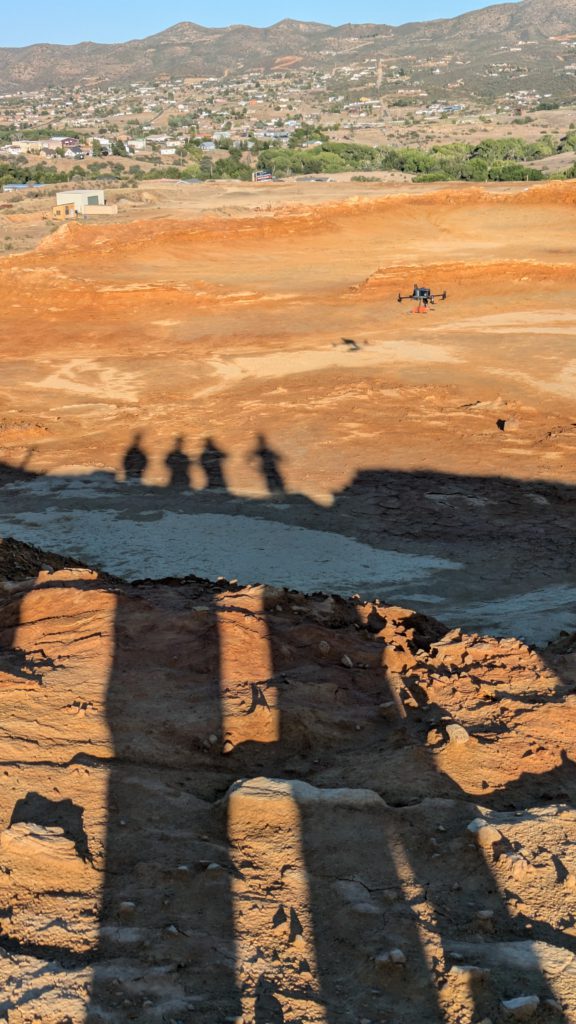
Photo credit: Lacey Bouzan Singh, Program Coordinator, Center for Environmentally Sustainable Mining.
A University of Arizona–led, $3.6 million Arbor-funded research initiative is assessing whether Arizona’s historic copper mine tailings—amounting to billions of tonnes—can be economically reprocessed to recover both critical minerals and hazardous elements while reducing environmental risk.
The University Tailings Center initiative, led by Dr. Isabel Barton, Associate Professor of Mining Engineering, isfocused on recovering critical minerals such as arsenic, zinc and possibly tungsten from copper mine tailings, using advanced geometallurgy and mineral characterization to turn mine waste into a domestic resource.
The project combines remote sensing, industry data-sharing, field sampling, mineralogical characterization, and techno-economic analysis, with early findings suggesting unexpected mineral occurrences at some sites, according to Barton.
While not a full resource definition, the work aims to de-risk future reprocessing and byproduct recovery, including potential changes to current mining flowsheets to prevent valuable elements from first entering tailings. Finding out how much actual usable metal can be extracted from the tailings is the end goal of the project.
“The Arizona state mine inspector for research’s office was interested in finding out whether Arizona’s billions of tons of copper mine tailings constitute a potential resource of critical elements, which many of them are also hazardous in various ways to the environment,” Barton told MINING.COM in an interview.
“The idea is that if any of them is recoverable, then recovering that would contribute to the US critical metals supply as well as reducing the environmental hazards.”
The project kicked off in Q1 2024 with 17.5 billion tons of mine waste, including copper tailings, and is accumulating at a rate of upwards of 100 million metric tons a year, Barton said.
Re-characterizing tailings
For many years public awareness about tailings was extremely limited, Barton pointed out.
“It was by definition a waste product, and so why waste money characterizing it?” And while many companies have very strong characterization programs now, and they know what they’re putting out in tailings facilities, that wasn’t always the case. I would say for most of the 20th century it was not, and so where we’ve been playing catch-up, on figuring out what’s actually in these, added to which they’ve been active geochemical systems.”
The research team is working on sampling and characterization to start, conducting remote sensing studies to characterize tailings, both at a statewide level and more focused UAV-based mapping of individual tailings facilities, working towards developing new methods.
“We are getting data from partner companies in industry, many of whom have characterized their own tailings and have been kind enough to share that information with us,” Barton said.
“The surface samples from drilling down into the tailings become the basis for extraction studies to look at how much of which critical elements we can get out relatively easily. It ends with a techno-economic analysis to look at under what, if any, market conditions extraction would make sense.”
Historical backlash
There has been significant historical backlash against projects and products that contained arsenic, mainly because of concerns about its toxicity, threats to public health and environmental hazards.
The irony is that the US needs arsenic — its classified as a critical mineral by the US Geological Survey (USGS) and other nations because it’s crucial for gallium arsenide (GaAs) semiconductors used in LED lights, lasers, integrated circuits, solar panels, and telecommunications. It also hardens lead and copper alloys, used in ammunition.
“We’re 100% import reliant on arsenic, as well as most of these other semi-metallic elements,” Barton said. Being able to produce even a small amount of those domestically would significantly help US critical metals supply.”
This year, the team is starting the techno-economic analysis using standard extraction methods, such as magnetic separation and basic leaching, and is beginning to feed data to that team.
“We have found a few exciting things,” Barton said. “Minerals that we didn’t expect in a few places have been turning up, and that actually makes me somewhat optimistic that we’ll continue to find results that we didn’t think we were going to that might lead to viable tailings reprocessing.”
“I promise you, if you put me in a fully equipped lab, I can extract anything out of any source material,” Barton said. “The difficulty is doing it cheaply enough that you don’t break the bank with the materials and labor cost of the extraction. That’s one of the things we’re trying to find out in this project…[so] we can point the way for future work.”
Career momentum
Barton noted there has been a growing recognition that the US has outsourced most of its mineral production, and that it is problematic in a geopolitical context.
“For a long time, I think people were either unaware of the drawbacks or ignored them, but recently they’ve become too obvious to ignore.”
What bodes well is that the shift could potentially attract a new generation of talent.
“The workforce is rapidly decaying, and capacity to meet the material demands of a technological future is seriously in doubt. What we’re seeing is a scramble to make up some of that ground,” she said.
“It’s an industry with a stable and bright future, and I realize that calling the mining industry stable is going to raise a few eyebrows, but the fact is we always need metals. We always need industrial minerals – the demand for them isn’t going away. It’s only increasing.”
“The other thing I would point to is a workforce retiring en masse. We’re going to need more mining engineers in 10 years than we have now, more economic geologists, more metallurgists, more of everybody related to mining.”
US to push for quicker action in reducing reliance on China for rare earths
US Treasury Secretary Scott Bessent will urge Group of Seven nations and others to step up their efforts to reduce reliance on critical minerals from China when he hosts a dozen top finance officials on Monday, a senior US official said.
The meeting, which kicks off with a dinner on Sunday evening, will include finance ministers or cabinet ministers from the G7 advanced economies, the European Union, Australia, India, South Korea and Mexico, said the official who was not authorized to speak publicly.
Together, the grouping accounts for 60% of global demand for critical minerals.
“Urgency is the theme of the day. It’s a very big undertaking. There’s a lot of different angles, a lot of different countries involved and we really just need to move faster,” the official said.
Bessent on Friday told Reuters that he had been pressing for a separate meeting on the issue since a G7 leaders summit in Canada in June, where he delivered a rare earths presentation to gathered heads of state from the US, Britain, Japan, Canada, Germany, France, Italy and the European Union.
Leaders agreed to an action plan at the summit to secure their supply chains and boost their economies, but Bessent has grown frustrated about the lack of urgency demonstrated by attendees, the official said.
Aside from Japan, which took action after China abruptly cut off its critical minerals supplies in 2010, G7 members remain heavily dependent on critical minerals from China, which has threatened to impose strict export controls.
China dominates the critical minerals supply chain, refining between 47% and 87% of copper, lithium, cobalt, graphite and rare earths, according to the International Energy Agency. These minerals are used in defense technologies, semiconductors, renewable energy components, batteries and refining processes.
The US is expected to issue a statement after the meeting, but no specific joint action is likely, the official added.
US urges others to follow its lead
“The United States is in the posture of calling everyone together, showing leadership, sharing what we have in mind going forward,” said the official. “We’re ready to move with those who feel a similar level of urgency … and others can join as they come to the realization of how serious this is.”
The official gave no details on what further steps were planned by the Trump administration, which is pushing forward to boost domestic production and reduce reliance on China through agreements with Australia, Ukraine and other producers.
The US signed an agreement with Australia in October aimed at countering China’s dominance in critical minerals that includes an $8.5 billion project pipeline. The deal leverages Australia’s proposed strategic reserve, which will supply metals like rare earths and lithium that are vulnerable to disruption.
The official said there had been progress, but more work was needed. “It’s not solved,” they added.
Canberra has said it has subsequently received interest from Europe, Japan, South Korea and Singapore.
Monday’s meeting comes days after reports that China had begun restricting exports to Japanese companies of rare earths and powerful magnets containing them, as well as banning exports of dual-use items to the Japanese military.
The meeting was planned well before that action, US officials said. China was still living up to its commitments to purchase US soybeans and ship critical minerals to US firms.
(By Andrea Shalal; Editing by Michael Perry)
Japan sets sail on rare earth hunt as China tightens supplies
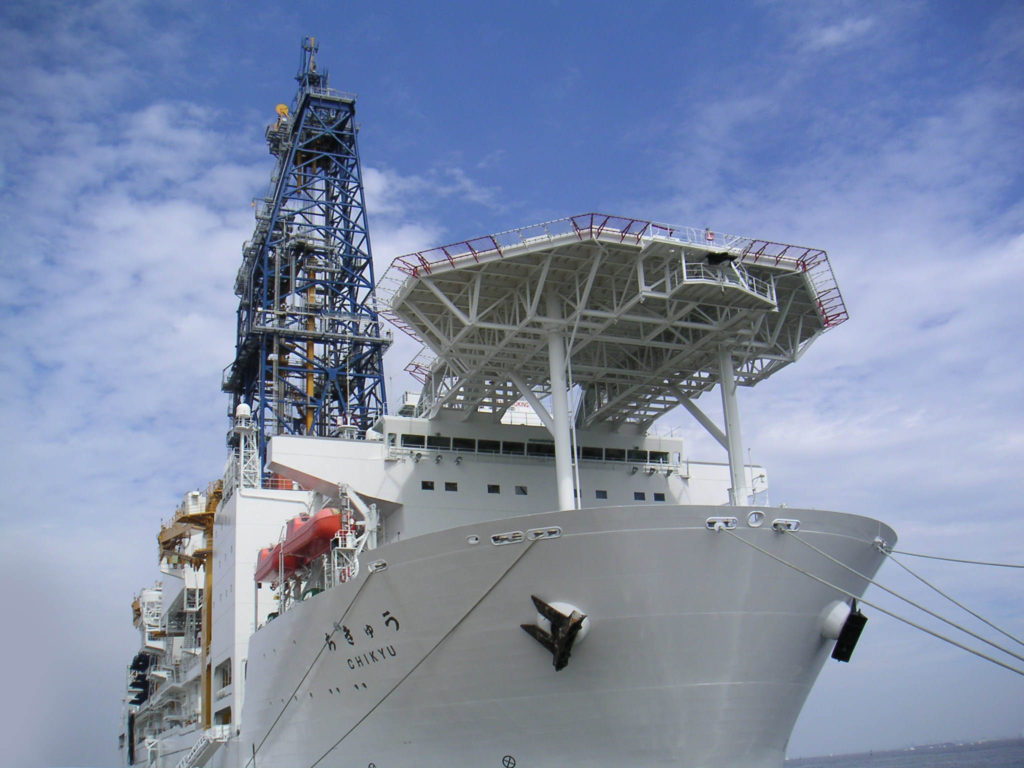
Chikyu is a Japanese scientific drilling ship built for the Integrated Ocean Drilling Program. Photo taken at Yokosuka New Port, Kanagawa by Gleam, under Creative Commons licence CC BY-SA 3.0.
A Japanese mining ship departed on Monday for a remote coral atoll to probe mud rich in rare earths, part of Tokyo’s drive to curb its reliance on China for critical minerals as Beijing tightens supply.
The month-long mission of the test vessel Chikyu near Minamitori Island some 1,900 km (1,200 miles) southeast of Tokyo, will mark the world’s first attempt to continuously lift rare earth seabed sludge from 6 km (4 miles) deep onto a ship.
Japan, like its Western allies, has been reducing its dependence on China for the minerals vital to the production of cars, smartphones and military equipment, an effort that has taken on urgency amid a major diplomatic dispute with Beijing.
“After seven years of steady preparation, we can finally begin the confirmation tests. It’s deeply moving,” Shoichi Ishii, the head of the government-backed project told Reuters, as the vessel departed the port city of Shizuoka on a bright sunny day, with a snow-capped Mount Fuji in the background.
“If this project succeeds, it will be of great significance in diversifying Japan’s rare earth resource procurement,” he said, adding that recovering the key minerals from 6 km below sea level would be a major technological achievement.
The vessel, with 130 crew and researchers, is scheduled to return to the port on February 14.
Reducing reliance on China won’t be easy
China last week banned exports of items destined for Japan’s military that have civilian and military uses, including some critical minerals. The Wall Street Journal reported Beijing has also begun restricting rare earth exports to Japan more broadly.
Japan has condemned China’s dual-use ban but declined to comment on the report of a broader ban, which China has not confirmed or denied. Chinese state media, though, have said Beijing was weighing the measure.
Finance ministers from the Group of Seven industrial powers will discuss rare earth supplies at a meeting in Washington on Monday, sources familiar with the matter told Reuters.
Japan is no stranger to facing China’s wrath over rare earths. In 2010, China held back exports following an incident near disputed islands in the East China Sea.
Since then, Japan has reduced its reliance on China to 60% from 90% by investing in overseas projects like trading house Sojitz’s tie-up with Australia’s Lynas Rare Earths, and promoting rare earths recycling and manufacturing processes that rely less on the minerals.
The Minamitori Island project, however, is the first to attempt to source rare earths domestically.
“The fundamental solution is to be able to produce rare earths inside Japan,” said Takahide Kiuchi, executive economist at Nomura Research Institute.
“If this new round of export controls ends up covering a lot of rare earths, Japanese companies will again make efforts to move away from China, but I don’t think it will be easy,” he said.
For some heavy rare earths, such as those used for magnets in electric- and hybrid-vehicle motors, Japan is almost totally dependent on China, analysts say – a major risk for its key automotive industry.
Long-term project
Since the 2010 scare, the Japanese government and private companies have built stockpiles of the minerals, though they do not disclose volumes.
At a New Year’s party for Japan’s mining industry on Wednesday, several executives said they were better prepared than before to cope with the potential disruption, citing Japan’s diversification efforts and stockpiles.
But Kazumi Nishikawa, principal director of economic security at the trade ministry, said the government had to continually remind companies to diversify their supply chains.
“Sometimes, you know, some event happened, then the business reacts, but the event finishes, the business forgets. We have to maintain continuous efforts,” Nishikawa said on the China Talk podcast this week.
The Minamitori Island project, into which the government has sunk 40 billion yen ($250 million) since 2018, is also a long-term play.
Its estimated reserves have not been disclosed and no production target has been set. But if it succeeds, a full-scale mining trial will be conducted in February 2027.
Mining the mud was previously viewed as uneconomical due to high costs. But if supply disruption from China continues and buyers become willing to pay higher prices, the project could become viable in coming years, said Kotaro Shimizu, principal analyst at Mitsubishi UFJ Research and Consulting.
China is keeping a close watch. When the ship was conducting surveys around the island in June last year, a fleet of Chinese naval ships sailed nearby, Ishii said.
“We feel a strong sense of crisis that such intimidating actions were taken,” he said. China said its actions were in line with international law and called on Japan to “refrain from hyping up threats”.
(By Yuka Obayashi, Katya Golubkova, Tim Kelly and John Geddie; Editing by William Mallard)
Bessent says Australia, India invited to G7 meeting on critical minerals
US Treasury Secretary Scott Bessent said Australia and several other countries would join a meeting of finance ministers from the Group of Seven advanced economies that he is hosting in Washington on Monday to discuss critical minerals.
Bessent said he had been pressing for a separate meeting on the issue since last summer’s summit of G7 leaders, and finance ministers had already held a virtual meeting in December.
India was also invited to attend the meeting, Bessent told Reuters in an interview after touring the Minneapolis-area engineering lab of RV and boat maker Winnebago Industries. He said he was unsure if it had accepted the invitation.
It was not immediately clear which other countries had been invited.
The G7 includes the United States, Britain, Japan, France, Germany, Italy and Canada, as well as the European Union, most of whom are heavily dependent on rare earths supplies from China. The group last June agreed on an action plan to secure their supply chains and boost their economies.
Australia signed an agreement with the US in October aimed at countering China’s dominance in critical minerals. It included an $8.5 billion project pipeline and leverages Australia’s proposed strategic reserve, which will supply metals like rare earths and lithium that are vulnerable to disruption.
Canberra has said it has subsequently received interest from Europe, Japan, South Korea and Singapore.
China dominates the critical minerals supply chain, refining between 47% and 87% of copper, lithium, cobalt, graphite and rare earths, according to the International Energy Agency. These minerals are used in defense technologies, semiconductors, renewable energy components, batteries and refining processes.
Western countries have sought to reduce their dependence on China’s critical minerals in recent years, given moves by China to impose strict export controls on rare earths.
Monday’s meeting comes days after reports that China had begun restricting exports to Japanese companies of rare earths and powerful magnets containing them, as well as banning exports of dual-use items to the Japanese military.
Bessent said China was still living up to its commitments to purchase US soybeans and ship critical minerals to US firms.
(By David Lawder and Andrea Shalal; Editing by Stephen Coates)
CU
Pan Pacific hikes 2026 Japan copper premium to record $330/t
Pan Pacific Copper (PPC), Japan’s largest supplier of the refined metal, offered last month to sell it to domestic customers at a record premium of $330 per metric ton for 2026, a company source said on Friday.
The rate for physical delivery, which is more than three times the 2025 figure of $88, is paid on top of benchmark LME prices and reflects demand and supply fundamentals. It also covers costs, including those for transport and taxes.
This year’s increase reflects a sharp fall in treatment and refining charges (TC/RCs), or the fees miners pay smelters to turn concentrate into refined metal, which have boosted raw material procurement costs, prompting the company to pass on the burden to customers, the source added.
In addition, concerns that the United States could impose tariffs on copper ingots later this year have spurred speculative flows of metal into North America, tightening supply in Asia.
The source declined to be identified due to the sensitivity of the issue.
PPC is 47.8% owned by JX Advanced Metals; Mitsui Mining and Smelting owns 32.2% of the company and Marubeni owns 20%.
Like their global peers, Japanese copper smelters are contending with tumbling TC/RCs, shrinking smelting margins due to a shortage of concentrate supply and growing smelting capacity in China.
Last month, Chilean miner Antofagasta and a Chinese copper smelter agreed zero TC/RCs in 2026, two sources with knowledge of the matter said.
In 2025, outages at key mines, such as Indonesia’s Grasberg and Kamoa-Kakula in the Democratic Republic of Congo tightened supply so much that spot processing fees turned negative, leaving smelters paying for what is normally a key source of revenue.
(By Yuka Obayashi; Editing by Clarence Fernandez)
Mercuria redoubles metals push with $1.2 billion Kazakh deal
Mercuria Energy Group Ltd. is lending $1.2 billion to help fund the buyout of major Kazakh copper producer Kazakhmys, the latest in a breakneck series of deals from the trading house that’s rapidly becoming a major force in metals.
The Kazakh deal shows how Mercuria has carved out a position for itself as the most aggressive of a clutch of companies that have recently entered or returned to metals markets long dominated by rivals Trafigura Group and Glencore Plc. It’s the largest of more than $3.5 billion in metals financing and prepayment deals struck by Mercuria in little over a year since it embarked on its metals drive hiring former Trafigura co-head of metals Kostas Bintas.
Bintas, long a bullish voice on copper, has seized on a market in which supply chain fissures and the threat of US tariffs have helped drive the price of the metal to record highs above $13,000 a ton and boosted profits for traders.
In an interview, he said the Kazakhmys deal was “one of the biggest pre-financing deals ever in metals. Definitely it is the biggest of my career.”
“Historically we’ve seen deals like this more in the energy market, in terms of tenor and quantum,” he said.
Mercuria’s financing facility extends over eight years with the firm getting 200,000 tons of copper cathodes per year for the first four years and a percentage of production thereafter, Bintas said.
The deal highlights how Mercuria is rapidly becoming a key player in Kazakhstan — a country traditionally dominated by Glencore in metals and Vitol Group in oil. Mercuria has stepped in to provide financing amid the prospect of a sweeping change of ownership of the country’s most prized metals assets — as wealth and power shifts away from people who flourished during the era of former president Nursultan Nazarbayev and a new elite rises under President Kassym-Jomart Tokayev.
Once part of one of the London Stock Exchange’s biggest listed copper producers, Kazakhmys was recently bought by construction magnate Nurlan Artykbayev for an undisclosed sum. Bloomberg reported in November that Artykbayev was in talks to acquire the company, which announced in December that an agreement to sell the firm had been reached, without naming the buyer. The new owner is Qazaq Acquisition Corp., wholly owned by Artykbayev, a government registry showed on Jan. 8.
Neither Kazakhmys nor Artykbayev, approached through his company Qazaq Stroy, provided a comment in response to Bloomberg’s requests.
Mercuria earlier struck a prepayment deal with Eurasian Resources Group, another major Kazakh miner which is also facing the prospect of a change in ownership.
Trading houses have long been financiers of metal miners and smelters, paying cash upfront to be repaid by a flow of commodities, and Mercuria has stepped up the pace of its dealmaking as copper prices have ratcheted higher, in recent months announcing copper financing deals in Bulgaria, Chile, Democratic Republic of Congo and Zambia.
Bintas said that Mercuria was keen to do further such deals, and that its metals financing deals in 2026 might exceed those done last year. “There is more appetite for these sort of facilities. There is appetite to support producers on a long term basis,” he said.
The surge in copper prices is a vindication for Bintas, who has been predicting record copper prices above $12,000 since 2021. He said that the deal with Artykbayev’s company represented “a vote of confidence in our well established views of the copper market — that have by now materialized in the way we were hoping for.”
Still, he acknowledged that the rally in price led to a strong pullback in buying from physical consumers in China, which accounts for more than half of global demand for the metal.
“It’s surprising how much price rejection is taking place. The Chinese are just not buying copper, it’s true. But it’s finite — at some point you need to buy,” he said.
He predicted that the premium for US copper would pick up in the coming months as a decision on potential import tariffs nears. The threat of tariffs has been the major driving factor of copper astonishing rally, creating a premium in the US futures market and incentivizing traders to rush hundreds of thousands of tons to the US in a massive arbitrage trade.
“As you’re getting closer to June decision, we’ll see the arb recover substantially,” Bintas said.
(By Archie Hunter, Jack Farchy and Nariman Gizitdinov)
Column: US tariff pull on copper drains China’s bonded warehouses
China’s exports of refined copper surged to record levels last year as the world’s top buyer found itself in unusual competition with the US for spare metal.
The CME’s US copper contract continues to command a sizeable premium over the international price traded on the London Metal Exchange (LME) as the market prices in the potential for US tariffs. A decision has been deferred until June this year.
The premium for US delivery is sucking metal out of the global supply chain, with the ripple effect now emptying China’s bonded warehouse zones.
China’s outbound shipments jumped to 143,000 metric tons in November, bringing the year-to-date total to 698,500 tons, already an annual record.
The November tally included 57,700 tons headed to the US, all of it sourced from stocks held in bonded warehouses at Chinese ports such as Shanghai.
Refined copper was also dispatched in bulk to European destinations as the lingering tariff threat continues to fracture global trading patterns.
China’s exports of refined copper
China’s bonded stocks raided (again)
The blowout of the CME-LME arbitrage last year created an unprecedented opportunity for traders to profit by shipping physical copper to the US.
CME stocks of copper have mushroomed to over 450,000 tons, which is more than the combined inventory held by the LME and the Shanghai Futures Exchange.
LME stocks of desirable brands for US delivery, particularly Chilean metal, have been exhausted. Chinese and Russian copper accounted for 95% of registered inventory at the end of November.
Attention has returned to what has been sitting in China’s bonded warehouse zones, metal that has been physically unloaded but not yet cleared through customs for delivery to a mainland buyer.
It’s the second time this bonded inventory has been raided.
China exported, or rather redirected, 120,000 tons of refined copper to the US between February and July last year, when import tariffs seemed a racing certainty.
US President Donald Trump’s decision in July to go ahead with tariffs, but only on copper products rather than copper in refined form, appeared to kill the tariff trade.
But the CME premium has been widening again ever since as traders bet the tariff threat has only been deferred.
The November jump in shipments from Chinese ports to the United States is testament to the renewed lure of US delivery.
CME copper premium over London Metal Exchange
Plugging the gaps
China’s port-side copper inventory is also leaving to plug gaps that have opened up elsewhere as traders strip the supply chain of brands of metal that can be delivered against the CME contract to ensure a frictionless arbitrage trade.
November’s outbound flows included 16,500 tons bound for Italy as well as smaller tonnages destined for Germany, Greece and Sweden.
Such has been the scramble to ship to the US that availability has fallen and physical premiums have risen everywhere else.
Europe’s biggest producer Aurubis has aggressively hiked its premium for term sales this year to $315 from $228 per ton over the LME basis price.
Chilean state producer Codelco is asking its European customers for $325 per ton and its Chinese buyers a whopping $350 per ton, reflecting trader competition for its brands.
China remains the world’s largest copper importer, although the jump in outbound shipments caused the country’s net pull on units from the rest of the world to contract by 11% in the first 11 months of 2025.
But it too has been struggling to compete with the US premium when it comes to CME-deliverable brands.
China’s imports of Chilean copper slumped by 43% year-on-year in January-November, while those of Peruvian metal fell by a steeper 50%.
Chinese buyers have become increasingly dependent on shipments from the Democratic Republic of Congo and Russia, which accounted for 37% and 11% respectively of total imports in the first eleven months of 2025.
Global exchange stocks of copper
Signal confusion
It’s hard to know just how much copper has been sitting in China’s bonded warehouse zones in recent years.
Classified by the country’s customs department as an import, the metal only becomes statistically visible if it’s reshipped somewhere else, in which case it turns up on the export side of the trade ledger under a unique code.
But it’s clear there is a lot less now than there was before Trump first mooted import tariffs back in February.
The stripping of China’s port stocks is a sign of just how much the potential for US tariffs has upended global flows of physical copper.
It’s also a big problem when it comes to assessing what’s going on in a market that is currently punching out all-time price highs on a regular basis.
Global exchange inventory closed 2025 above 800,000 tons for the first time since 2013, which might be expected to put a dampener on the market’s bullish exuberance.
But the driver of higher visible stocks has been the CME, where copper is still arriving daily. Some of that metal may have come from the statistical shadows of China’s bonded warehouse zones, adding complexity to the global inventory picture.
The tectonic relocation of copper stocks to the US is still playing out and continues to distort both the physical supply chain and the inventory price signal.
The drain on availability everywhere else, including China’s port stocks, risks becoming more acute as long as the Trump tariff threat creates a CME premium sufficiently large to cover the costs of physical shipment.
(The opinions expressed here are those of the author, Andy Home, a columnist for Reuters.)
(Editing by Marguerita Choy)
Codelco delivers on copper growth goal — by slimmest of margins
Codelco chairman Maximo Pacheco. Credit: Codelco via Flickr
Codelco chairman Máximo Pacheco is meeting his goal of raising production at the state-owned copper giant — though only just.
Despite a fatal collapse at its largest mine, Codelco produced 1.333 million metric tons of copper last year from the Chilean operations it runs, Pacheco said in an interview. That was 5,000 tons, or 0.4%, more than the previous year.
The former Chilean energy minister and International Paper Co. executive has been working to revive output after production sank to a 25-year low amid declining ore grades and setbacks at mines and expansion projects.
That effort has been further complicated by a prolonged recovery at El Teniente, where a July 31 accident cut output by about 45,000 tons last year, Pacheco said. The 72-year-old’s term as chairman ends in May.
Codelco is targeting another modest increase this year, with output budgeted at 1.344 million tons, he said. Even a marginal gain would be welcomed by a copper market unsettled by supply disruptions that have helped drive prices to record highs.
The state company achieved the 2025 target thanks to a bumper December, which consultancy Plusmining estimates at 40% above November levels. While December typically comes in higher, that month has been exceptionally strong the past two years.
“Output is becoming increasingly concentrated toward year-end, likely reflecting more aggressive inventory management tied to meeting full-year production targets,” Plusmining founder Juan Carlos Guajardo wrote in a note on Wednesday.
(By James Attwood)
SEC to drop long-running fraud case against ex-Rio Tinto CFO over African coal assets
The US Securities and Exchange Commission is dropping a fraud lawsuit against former Rio Tinto Ltd. chief financial officer Guy Elliott, eight years after accusing him and others of inflating the value of African coal assets the company acquired in a disastrous 2011 deal.
Lawyers for the SEC and Elliott jointly asked a federal judge in New York to end the case, according to a filing Friday. The agency didn’t elaborate on its decision except to say it was “in the exercise of its discretion.” Elliott’s attorneys called the dismissal “a complete vindication,” according to a statement.
The case was part of the SEC’s 2017 fraud claims against the international mining company, its former chief executive officer and Elliott over a Mozambique coal mining business. Rio Tinto purchased the business for $3.7 billion in 2011, but sold it three years later for $50 million.
According to the regulator, company executives concealed setbacks in the business and hid the true value of the assets from the board of directors, audit committee and investors. The SEC alleged the company failed to follow proper accounting rules to accurately record and value the assets.
Rio Tinto settled the SEC claims in 2023, agreeing to pay a $28 million fine, and former Rio CEO Tom Albanese agreed to pay a $50,000 penalty. Neither the company nor Albanese admitted or denied the SEC’s allegations. Elliott had continued to fight them.
The case is Securities and Exchange Commission v. Rio Tinto, 17-cv-7994, US District Court, Southern District of New York (Manhattan).
(By Nicola M White)
Strike continues at Capstone Copper’s Mantoverde mine after negotiations fail
The Mantoverde operation in Chile is 70% owned by Capstone Copper and 30% by Misubishi Materials. Credit: Mantos Copper
A workers’ strike at Capstone Copper’s Mantoverde mine in northern Chile will continue after negotiations between the company and the union failed, the union said on Wednesday.
The union in a statement said it expected a lengthy strike and that the mine was almost completely shut down. The concentrator was being fed at 30% capacity with stockpiled inventory that will run out in a couple of days, the statement added.
The strike began on Friday after Union No. 2, the mine’s largest, and Capstone failed to reach a collective bargaining agreement. The union, which represents 645 members, said negotiations fell apart over final demands that it said would have cost the company about $500,000 a year.
Vancouver-based Capstone did not immediately respond to a request for comment. After initial negotiations failed, the company said it was open to talks to resolve the dispute and that striking workers represented about 22% of its workforce.
Capstone owns 70% of Mantoverde with Mitsubishi Materials owning the remaining 30%. The mine had an expected 2025 production of 29,000 metric tons to 32,000 metric tons of copper cathodes. Chile’s total production for last year was projected to amount to 4.4 million tons, according to state copper commission Cochilco.
(By Fabian Cambero and Alexander Villegas; Editing by Daina Beth Solomon)
World’s First Large LCO2/Multi-Gas Carrier Delivered to Capital
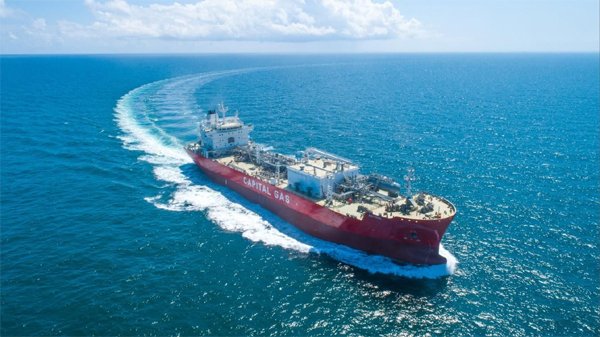
Active is the first large LCO2/multi-gas carrier and will operate in the charter market (Capital Clean Energy Carriers)
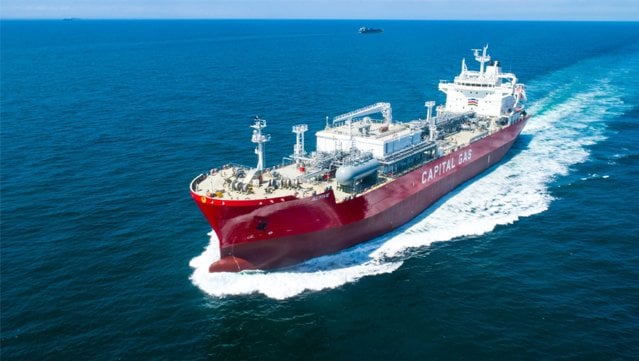
The first large capacity vessel designed to support the efforts for the capture, transport, and storage or reuse of CO2 has been completed, marking a new segment for shipping. The vessel, which has a capacity of 22,000 cubic meters, is designed for charter operations and can move seamlessly between LCO2 transport and gas cargos, including LPG, ammonia, and selected petrochemicals.
Greece’s Capital Maritime Group launched the new operation known as Capital Clean Energy Carriers to develop the emerging market. It initially placed an order for two vessels in July 2023 with South Korea’s Hyundai Mipo Dockyard and later expanded it to four vessels. The ships were designed with an approximate length of 525 feet and a unique cargo system. Capital is saying the vessels will “stand out for their versatility and optionality as they adapt to shifting market dynamics.”
They use a semi-refrigerated gas carrier system. The first ship, named Active (27,926 dwt), was delivered on January 6, and it will be immediately deployed under a six-month charter transporting LPG for an energy trading company. The charter has an option to extend the contract for an additional six months. Active is registered in the Marshall Islands.
Unlike the first LCO2 carriers, which were built tied to the specific Northern Lights project, these ships are owned by a company well established as a tanker operator. In addition to cargo versatility, they can be shifted to support different projects and cargo uses. They are also much larger than the 10,170 dwt Northern Pioneer and her sisters operating to transport LCO2 to the storage project in Norway.
Active completed sea trials in South Korea and now enters the charter market (Capital Clean Energy Carriers)
Capital highlights the emerging market opportunities tied to Carbon Capture, Utilization, and Storage. They note that the current carbon capture capacity is around 50 million tonnes per year. They cite data from the International Energy Agency that says capture capacity could reach approximately 430 million tonnes per year by 2030. At the same time, storage capacity, they note could reach approximately 670 million tonnes per year.
As a first mover in this new segment, Capital Clean Energy Carriers is saying the vessels demonstrate its commitment to fleet diversification. The company’s fleet includes 12 vessels to transport LNG. It has nine additional LNG carriers, six dual-fuel medium gas carriers, and three handy LCO2/multi-gas carriers on order to be delivered between the second quarter of 2026 and the first quarter of 2029.