Monday, January 12, 2026


Why the U.S. and China Are Taking Opposite Sides in the Energy Transition


  • The global energy landscape is increasingly polarized between "petrostates" prioritizing fossil fuels (like the US, Saudi Arabia, and Russia) and "electrostates" pursuing electrification and clean energy (like China and Europe).

  • The emergence of artificial intelligence is heightening this division by creating enormous, urgent new demands for energy security that force nations to reconsider their energy plans.

  • While a "just transition" off fossil fuels presents short-term economic and employment challenges for petrostates that rely on oil, gas, and coal revenue, global economic reality shows that renewable energy is increasingly becoming the more economical option.

Global economies are increasingly splitting into two opposing camps when it comes to energy policy. While many nations are moving toward electrification and installing record-breaking amounts of clean energy capacity, other nations – most notably the United States, the world’s biggest economy – are installing more fossil fuels than ever before. Put simply, the future of the global energy balance now depends on the results of a high-stakes battle between petro-states and electro-states. 

The emergence of artificial intelligence is only raising the stakes. The runaway energy demand of the tech sector is pushing nations around the globe to reconsider their energy plans and priorities, as energy security becomes an increasingly urgent concern. “With AI emerging as the central arena for great power completion, which model will work best at providing the power the new technologies need?” asked a recent op-ed for Wood Mackenzie. 

This global divide was stark at last year’s United Nations COP30 climate change conference in Belém, Brazil. While more than 80 nations at the conference supported the suggested creation of a formal road map toward weaning the global economy off of fossil fuels, an opposition group of petrostates, including a large contingency of Middle Eastern nations, pushed back against the idea. The United States, for its part, didn’t even send high-level representation to the landmark event. 

But that doesn’t mean that the United States is silent on the direction that energy policy should take on the global stage going forward. Indeed, the Trump administration has been kicking in its tactical efforts to strong-arm other nations into pivoting away from clean energy planning and back toward fossil fuel development.

For many nations, the idea of sticking to a fossil-fuel-powered agenda is a tempting one. Many countries rely on coal, oil, and gas for a significant portion of their revenues, and a clean energy agenda presents a bumpy road for economic development in the short term. For nations that rely on fossil fuel industries for the majority of their revenue and as a jobs-producer for their public, designing a ‘just transition’ is a tall and expensive order, and it’s not clear where that funding will come from

However, many of those same nations stand to suffer the most from a changing climate. Nigeria, for example, derives between 80 percent and 90 percent of total government revenue and foreign exchange earnings from oil exports. But Africa also stands to lose the most from rising temperatures, and has enormous potential for clean energy buildout thanks to abundant sunshine, among other natural resource riches. 

And, on a global level, it’s increasingly apparent that renewables are simply too cheap to fail. “Over the past three decades, advances in technology and a maturing development ecosystem have made renewable energy projects more economical, less risky, and increasingly rewarding for landowners,” reads a recent Yale Insights article. This is particularly true in many developing economies, such as Pakistan, where residential solar offers a critical opportunity for affordable and reliable electricity in rural and off-grid areas.

“Yet,” hedges Yale Insights, “as the [renewable energy]  industry has grown more mainstream, it has also become more politicized, adding new challenges to an otherwise thriving sector.” In many cases, it’s difficult to tell where economic realities end and political battle of the wills begins.

“The global energy order is entering a period of profound realignment,” states a 2025 article from The National Interest. “Three fossil-fuel giants (or PetroStates)—the United States, Saudi Arabia, and Russia—are consolidating influence, even as China, the emerging ElectroState, pursues a divergent technological trajectory more aligned with Europe’s green ambitions. The result may be a volatile, asymmetric contest for energy dominance, pitting hydrocarbons against electrons and defining the energy and geopolitical landscape of the next decade.”

By Haley Zaremba for Oilprice.com


Somalia Bets on Solar and Wind as Power Demand Grows

  • Somalia has vast solar and wind potential but remains heavily reliant on diesel, with limited electricity access, especially in rural areas.

  • International funding and government-backed renewable energy plans aim to expand clean power, lower costs, and support economic growth.

  • Alongside renewables, Somalia is pursuing offshore oil and gas exploration with Turkey, signaling a dual-track energy strategy.

Somalia has lagged many other African countries when it comes to energy output, despite its strong potential for renewable energy production. Much of Somalia’s population still does not have access to electricity or clean cooking fuels. However, greater investment in the expansion of Somalia’s wind and solar power sectors, with support from strong regulatory frameworks, could help rapidly transform the country into a regional clean energy power. 

Somalia has an installed capacity of approximately 400 MW, with roughly 300 MW coming from diesel and 100 MW from solar and wind power. Around 80 percent of Somalia’s urban population, and just 24 percent of its rural communities, have access to electricity, according to data from the World Bank. Meanwhile, roughly 80 percent of Somalia’s energy consumption for cooking still comes from biomass fuels, which leads to greater deforestation and biodiversity loss. 

Somalia is considered to be a climate-vulnerable state, and developing its renewable energy sector is key to reducing environmental degradation and driving down poverty. Somalia has significant renewable energy potential, with solar irradiance averaging 5–7 kWh/m²/day. However, to develop its natural resources, the government must establish favourable policies and regulatory frameworks, as well as attract higher levels of private investment to the country’s energy sector. 

The Somalian government’s National Transformation Plan (NTP) sets out ambitious clean energy targets, such as increasing electricity coverage from the current 69.1 percent to 80 percent and decreasing the disparity between urban and rural areas. In October, Somalia’s Federal Ministry of Energy and Water Resources, in collaboration with UNDP, held a two-day stakeholder engagement workshop in Mogadishu to validate and advance Somalia’s renewable energy roadmap

Somalia’s State Minister for Energy and Water Resources, Mohamed Abdullahi Farah, also attended a key ministerial meeting of the International Solar Alliance in Accra, Ghana, in September to advance Somalia’s solar ambitions and foster greater regional collaboration. 

In December, the African Development Fund approved a $23.36 million grant package to expand access to clean electricity in Bosaso, in north-eastern Somalia, to address chronic shortages and reduce electricity costs. 

The Rehabilitation and Expansion of the Bosaso Power Grid project will be financed by the African Development Bank Group and the African Development Fund. It will include the development of new solar power generation capacity, the expansion of the distribution network, and the modernization of metering systems. It will also support the rollout of solar home systems for those who do not have access to the grid. 

The Bank Group’s Lead Operations Advisor for Somalia, Bubacarr Sankareh, said that he expects the project to deliver transformative benefits. Sankareh explained, “This project will change lives in Bosaso for families and small businesses. It will make electricity cheaper, cleaner, and more reliable, and is also a major step toward a stronger and more resilient energy future for Somalia.”

Providing more stable access to electricity is expected to support economic growth by helping businesses operate more reliably. The project will also support short- and long-term job creation in the region, and is also expected decrease reliance on diesel, which will reduce emissions and support the country’s sustainability goals.

Other international institutions are also contributing to the expansion of Somalia’s renewable energy sector. In October, the European Union announced funds of $638.6 million for projects focused on modernising power grids, increasing access to renewable energy, and supporting clean energy projects in nine African countries, with Somalia set to receive $53.3 million to improve access to affordable renewable energy.

As several international institutions encourage Somalia to expand its renewable energy sector, the government also intends to exploit its fossil fuel reserves. In December, Turkish Energy and Natural Resources Minister Alparslan Bayraktar and Somali Petroleum and Mineral Resources Minister Dahir Shire Mohamed discussed the potential for cooperation in hydrocarbon exploitation activities in Somalia’s land and sea territory.

Bayraktar stated at the time, “We are building Türkiye-Somalia energy cooperation on solid foundations. As Türkiye, we view Somalia as one of our most important partners in Africa, and we believe that our cooperation in the hydrocarbon sector will hopefully open the doors to a new era in the near future.”

At the beginning of January, Bayraktar announced plans to launch oil and gas exploration activities off the coast of Somalia. The drilling vessel Cagri Bay is expected to arrive in Somali waters in February. The project will be carried out as part of a bilateral energy agreement signed between Turkey and Somalia in 2024, and the project will be Turkey’s first overseas deepwater oil and gas exploration venture. Full-scale drilling is expected to commence in 2026, according to Bayraktar, and will extend to onshore areas. 

Despite having some of the lowest access to electricity in the world, Somalia has significant renewable energy potential. Developing its clean energy sector will require government support, in terms of policy and regulation, as well as high levels of private investment and expertise. Meanwhile, Somalia is collaborating with Turkey to explore its hydrocarbon potential. 

By Felicity Bradstock for Oilprice.com

CRIMINAL CAPITALI$M

Audit Uncovers $30 Million Net Loss at Tajikistan's Power Megaproject

  • An independent audit of the Rogun Dam project's 2024 financial statements found a $540 million accounting discrepancy and resulted in a "qualified opinion," indicating the firm could not confirm the complete accuracy of the books.

  • The audit report warned about the project's viability as a going concern, citing the hesitation of international lenders to continue funding until a viable plan is presented to pay back billions in loans without substantially increasing public debt.

  • Despite a net positive cash flow, the project experienced a net loss of approximately $30 million in 2024, and auditors noted that management failed to provide information to accurately determine the value of the entity's claimed $5.3 billion in total assets.

The numbers are not adding up at Tajikistan’s signature infrastructure project, the Rogun Dam. An independent audit of the project’s financial statements has found a $540 million accounting gap and has determined that electricity-production operations at the work-in-progress facility are losing money.

Controversy is nothing new for the Rogun project, which if completed to its maximum specifications would become the world’s tallest dam. Critics argue the dam is a white elephant in the making that threatens to upend a delicate regional water balance that causes economic and social harm. Tajik officials, meanwhile, argue that Rogun’s completion and full operation will give the country a greater degree of economic independence, ensuring regular power supplies and providing much-needed revenue from electricity exports.

According to a report published by the Asia-Plus news agency, the audit, performed by a local affiliate of the global firm Baker Tilly International, gave Rogun’s financial statements for the 2024 fiscal year a “qualified opinion.” That means the firm could not confirm that the numbers presented in Rogun’s books were completely accurate. 

Perhaps the most alarming aspect of the report is Baker Tilly’s warning about Rogun’s viability as a going concern moving forward. It cites the hesitation of international lenders to continue providing funding for Rogun’s construction until officials come up with a viable plan to pay back billions in loans without substantially raising the public debt. 

Baker Tilly auditors did “not participate in the planned and annual inventories of cash, fixed assets, and inventories” at the end of 2024, thus increasing “the risk of misstatement in the financial statements,” Asia-Plus reported. The report did not elaborate on a reason for the absence of Baker Tilley representatives’ participation in what are normally routine audit procedures.

The audit firm’s report stated that Rogun had a net positive cash flow. Even so it estimated that Rogun experienced a net loss of about $30 million in 2024, an improvement over the previous year’s net loss of almost $36 million. Baker Tilly auditors also noted that Rogun management failed to provide information that would allow auditors to determine an accurate value of the entity’s fixed assets. The entity claimed its total assets amounted to about $5.3 billion.

By Eurasianet.org

SALTING

Nova Minerals downplays report of sourcing antimony from Pakistan

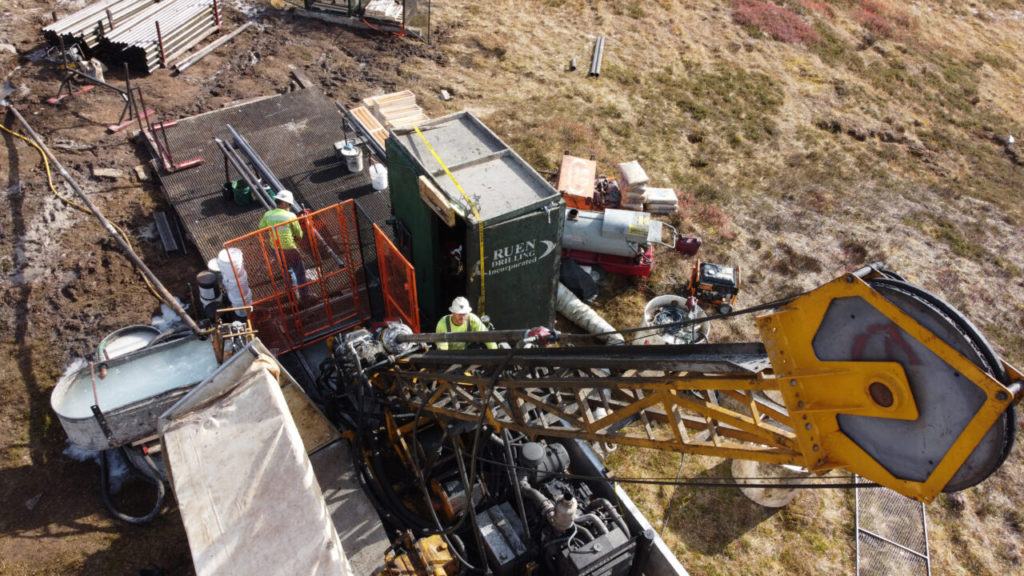
A drill rig on the Estelle project northwest of Anchorage, Alaska. Credit: Nova Minerals

Nova Minerals (NASDAQ, ASX: NVA) has downplayed recent reports of the company buying antimony produced in Pakistan for testing and processing at its Alaska-based facilities.

According to a Dec. 29 report by the Financial Times, the dual-listed miner is said to have partnered with a Pakistani company for the exploration of antimony as part of strengthened economic ties between the US and the Asian nation. Under the partnership, Nova would buy over 100 tonnes of Pakistani antimony concentrates for about $2 million early in 2026, FT reported, citing company CEO Christopher Gerteisen.

However, Nova issued a statement on Jan. 5 saying that only “preliminary discussions” took place about sourcing antimony from Pakistan, and the talks remain “exploratory” in nature.

Despite this clarification, shares in Nova Minerals surged by more than 6% on Tuesday, sending its market capitalization to nearly $396 million in New York.

Focus on Alaska

For this year, Nova said its focus is to complete a feasibility study for its gold assets in Alaska. Its flagship Estelle project comprises over 500 km2 in state mining claims in the Tintina Gold Belt, a region known to hold over 220 million oz. of primarily bulk-tonnage gold deposits.

To date, the company has identified as many as 20 prospects on the property, including four large, near-surface, intrusion-related gold deposits across a 35-km long corridor. Together, they hold a total gold resource of nearly 10 million oz., making it one of the largest undeveloped gold projects in the world.

In addition to gold, many prospects hold traces of antimony, a widely recognized critical mineral due to its importance to the defense sector. Historically, the Tintina region had been a major source of North American supply. Government data shows that antimony ores from at least 25 deposits in the state were shipped to markets between 1905 and 1986, and the mineral is found to be associated with some of Alaska’s major gold deposits.

With respect to this critical mineral, Nova said it will continue its work on starting the production of military-grade antimony trisulfide. Since 2016, the US has not produced any antimony commercially and has been relying on foreign imports.

In support of the company’s antimony plans, which revolve around a proposed mining and refining hub based in Alaska, the US Department of War last year provided $43.4 million in funding under the Defense Production Act.


BlueScope Steel rejects $8.8B takeover offer

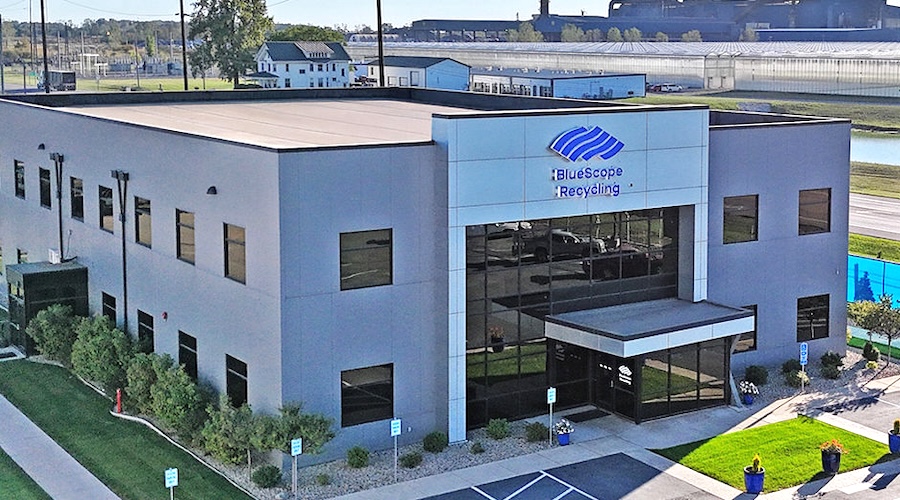
BlueScope Recycling is one of the company’s businesses in North America. (Image courtesy of BlueScope.)

BlueScope (ASX: BSL) has rejected an $8.8 billion takeover bid by US steelmaker Steel Dynamics (NASDAQ: STLD) and Australian conglomerate SGH (ASX: SGH), accusing the bidders of trying to buy the company “on the cheap”.

The company’s board said on Wednesday the proposal failed to properly reflect the value of BlueScope’s assets and came during a period of weaker steel spreads in Asia, conditions it argued masked the company’s longer-term earnings power. It was the fourth approach from Steel Dynamics since late 2024.

“Let me be clear – this proposal was an attempt to take BlueScope from its shareholders on the cheap,” BlueScope Chair Jane McAloon said, adding the board’s position had not changed across multiple approaches.

The board also cited a period of lower steel spreads in Asia as one of the reasons for refusing the offer.

Steel Dynamics and SGH, which is controlled by billionaire Kerry Stokes, offered A$30 ($20.2) a share for the Australian steelmaker. Steel Dynamics would have acquired BlueScope’s North American operations, while SGH would have retained the rest of the business.

Shares in Australia’s largest steelmaker closed up 1.12% at A$29.90 on Wednesday, before the board announced its decision, after jumping nearly 21% a day earlier following news of the bid.

Target

BlueScope has long been viewed as a potential takeover target because of its sizeable North American footprint, which includes five businesses and contributed about 45% of revenue in the 2025 financial year. Its assets include a steel mill in Ohio, about 130 km from a Steel Dynamics-owned facility, as well as a building products division.

The rejection comes as the global steel sector adjusts to a 50% US tariff on steel imports imposed by President Donald Trump on national security grounds. BlueScope operates close to 100 sites across Australia, with its domestic business generating A$6.95 billion in sales last financial year.

The company is also working with Asian steelmakers, including Japan’s Nippon Steel and Korea’s Posco, to explore a potential acquisition of the Whyalla steelworks in South Australia, previously owned by British businessman Sanjeev Gupta.

LI


Lithium Has Become a National Security Priority for the United States

  • The Trump administration is using government stakes, tariffs, and industrial policy to rapidly expand U.S. lithium production and reduce foreign dependence.

  • Advanced lithium extraction technologies could unlock vast domestic brine resources while lowering environmental and energy costs.

  • Rising demand from EVs and energy storage is expected to push lithium demand beyond supply later this decade, reinforcing the strategic importance of U.S. production.

As the world races to mine and refine more lithium, the United States has big production plans to boost self-sufficiency and reduce its reliance on China. President Trump aims to rapidly expand the United States’ mining sector during his second term in office, to begin developing a wide array of new metals and minerals projects, aimed at enhancing both energy and national security over the coming decades.

Since President Trump came into office in January 2025, he has raced ahead with plans to expand the United States minerals and metals industry through a greater openness to mining and a push to develop the country’s manufacturing capacity. In addition, the introduction of U.S. tariffs on a wide number of countries and products is encouraging companies to invest in U.S.-based projects and resources. Several advances have been made in the U.S. lithium industry over the last year, with several more expected to come in 2026.

The global demand for lithium is rapidly increasing, driven primarily by electric vehicles (EVs) and large-scale energy storage systems (BESS). According to a Mordor Intelligence forecast, the lithium market size was estimated at 0.85 million lithium carbonate equivalent (LCE) tons in 2025, and is expected to reach 2.08 million LCE tons by 2030, expanding at a CAGR of 19.57 percent between 2025 and 2030.

Since 2022, there has been an excess of lithium supply, as producers invested heavily in the sector in anticipation of the growing demand. Meanwhile, the uptake of EVs has increased at a slower pace than originally expected in several regions of the world. However, an increase in the rollout of renewable energy, greater investment in BESS, and the continued growth of the EV market are expected to contribute to significant growth in the lithium market over the coming decades, with demand expected to gradually outpace supply.

In October, the U.S. Department of Energy took a 5 percent stake in Lithium Americas Corp. (LAC) and a separate 5% stake in the company’s Thacker Pass joint venture with General Motors, which is expected to be the largest lithium source in the Western Hemisphere. This was aimed at solidifying the launch of the only domestic source of lithium carbonate in the U.S. 

At the time, U.S. Energy Secretary Chris Wright stated, “Despite having some of the largest deposits, the United States produces less than 1% percent of the global supply of lithium. Thanks to President Trump’s bold leadership, American lithium production is going to skyrocket.” Wright added, “Today’s announcement helps reduce our dependence on foreign adversaries for critical minerals by strengthening domestic supply chains and ensuring better stewardship of American taxpayer dollars. President Trump promised to do both, and he is delivering."

The U.S. has significant lithium reserves, mainly in the form of massive underground brines in south Arkansas and east Texas. However, recovering the lithium in these reserves using conventional techniques would be an energy-intensive and environmentally damaging undertaking. This has deterred several companies from investing in domestic lithium mining activities. Meanwhile, researchers have been exploring ways to access U.S. lithium more efficiently.

The MIT-based startup, Lithios, is exploring the potential use of a recovery method known as Advanced Lithium Extraction, which uses electricity to drive a reaction with electrode materials that capture lithium from salty brine water, leaving behind other impurities. Lithios believes its method is more selective and efficient than conventional extraction techniques, as well as less energy-intensive.

The startup has been conducting a pilot project since June, with a system that extracts lithium from brine waters. The system is also expected to be trialled by a commercial partner in Arkansas. In 2026, Lithois plans to commence the operation of a larger system, capable of producing 10 to 100 tons of lithium carbonate a year, for an annual production of 25,000 tons of lithium carbonate. At present, domestic lithium production stands at around 5,000 tons a year. 

In December, the Trump administration announced plans to establish more “historic deals” with the domestic mining sector to increase critical mineral production for the national defence and high-tech sectors. In addition to Lithium Americas, the government also took stakes in MP Materials and Trilogy Metals last year, and more partnerships are still expected to come.

Jarrod Agen, the executive director of the White House’s National Energy Dominance Council, stated, “What we want to see is the ability for the U.S. to not be reliant on any adversary out there or any other foreign entity, that we control our own destiny when it comes to our supply chain and our critical minerals.” Agen added, “We’ve set a good pace so far, but this is just the first year.” 

Lithium mining in the United States is expected to grow rapidly over the coming decades, owing to greater support from the government to expand domestic metal and mineral production and refining. This is expected to be supported by advancements in lithium extraction technology, which could significantly enhance lithium mining operations. 

By Felicity Bradstock for Oilprice.com


Intrepid Potash weighs potential to develop battery-grade lithium processing plant in Utah

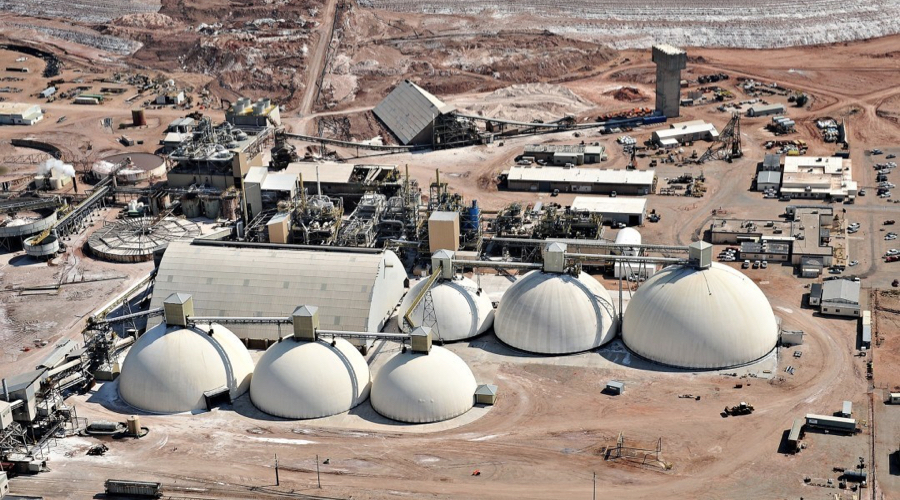
Intrepid Potash’s bulk storage in Carlsbad, New Mexico. (Reference Image courtesy of Dome Technology)

Intrepid Potash (NYSE: IPI), Aquatech International and Adionics SAS reported Tuesday the successful completion of test work to produce battery-grade lithium carbonate from byproduct brine at Intrepid’s potash facility in Wendover, Utah.

Intrepid is a supplier of high-quality potassium, magnesium, sulfur, salt and water products used in agriculture, animal feed, and the oil and gas industry. The Denver, Colorado-based company is the only US producer of muriate of potash, which is used in several industrial applications and as an ingredient in animal feed. It has two production facilities in Utah (Wendover and Moab) and one in Carlsbad, New Mexico.

Intrepid said the potential to develop a lithium processing facility in Wendover has continued to progress as Adionics and Aquatech successfully produced battery-grade lithium carbonate in a demonstration test of Intrepid’s Wendover brine.

The testing results achieved a lithium extraction rate of 92.9%, producing an overall lithium chloride purity above 99.5%, the company said. The lithium that was produced from Adionics’ facility was further processed by Aquatech to validate the conversion and refining to battery-grade lithium carbonate.

In additional testing, Aquatech said it successfully converted the lithium-rich brine to a more than 99.5%-pure lithium carbonate product, meeting key specifications for battery manufacturing. With the successful testing results, the parties will continue to move forward under the current joint development agreement with their evaluation of a lithium facility in Wendover, it added.

We are very excited to partner with Aquatech and Adionics to continue the development of our lithium resource at Wendover,” Intrepid CEO Kevin Crutchfield said in a news release. “Advancements in direct lithium extraction (DLE) technologies have come at the perfect time, as the United States has reprioritized increasing its production of critical minerals.”

Crutchfield added that the company believes the existing infrastructure at its Wendover potash operation and the presence of lithium in its post-process brine differentiates this opportunity from other lithium development projects.

“We’re hopeful our Wendover lithium project will be among the first domestic projects to enter the market,” Crutchfield said.

“For this project, we still plan to limit our capital exposure and risk, and will continue to maintain our focus on our core fertilizer operations, but successfully monetizing lithium from our byproduct magnesium chloride brine will constitute an important step forward in driving margin improvement at Wendover.”

By market close, Intrepid Potash’s stock was up 2.85% in New York. The company has a $382 million market capitalization.

African states, business groups eyeing stake in De Beers, CEO says

De Beers has attracted interest from several business groups and African governments as parent Anglo American looks to offload its stake in the firm, the diamond giant’s CEO told Reuters.

Botswana, Angola and Namibia – all major diamond producers – have expressed interest in acquiring equity in De Beers, alongside “a number of business-led groups,” CEO Al Cook said, stopping short of commenting on the status of talks or the names of some of the interested parties.

Reuters reported in June, citing sources, that billionaire Anil Agarwal, Indian diamond groups and Qatari investment funds were among those that had shown interest in De Beers.

Anglo American, which owns 85% of De Beers, has valued the diamond producer at about $4.9 billion.

When asked about who it would prefer as the company’s new owner, Cook said the focus was not on identity but on alignment with its long-term strategy, including its emphasis on natural diamonds, partnerships with producer nations and growth in key markets.

De Beers is sharpening its focus on India, which Cook called “a tremendously important market.” He expects demand for natural diamonds in the country to double, with the market for the precious stone hitting 1.5 trillion rupees ($16.7  billion) by 2030.

The group opened its fifth Forevermark store, its largest store globally, in Mumbai this week and plans to expand the network to 25 outlets by the year-end, with a long‑term goal of crossing 100 stores.

De Beers, whose revenue slid 13% to $1.95 billion in the first half of 2025 due in part to low prices, is banking on rising self-purchases in India as demand globally has shifted away from a gifting-led model.

The group is also doubling down on its Element Six business, which brought in about $300 million in revenue last year by supplying synthetic diamond wafers to data centers for their use as heat conductors. It discontinued its lab-grown diamond jewellery brand Lightbox last year.

($1 = 89.8090 Indian rupees)

(By Praveen Paramasivam; Editing by Anil D’Silva)


De Beers bets on India’s rich to boost natural diamond demand

(Image courtesy of William | stock.adobe.com.)

De Beers is betting on India’s surging affluent class to fuel growth in natural diamond demand, even as the global market remains challenging and a pending US-India trade deal disrupts supply chains.

The unit of Anglo American Plc is opening its fifth and largest global ‘Forevermark’ store in Mumbai this week and plans to reach 25 outlets nationwide by the end of 2026, chief executive officer Al Cook said in an interview. Demand in India has grown in “double-digits” annually over the last four years and it “should continue” into 2026, he said.

Yet the optimism comes against a tougher backdrop. Globally, De Beers has been grappling with weak diamond demand in key markets such as China, where economic uncertainty has curbed luxury spending. Rising competition from cheaper lab-grown diamonds — popular among younger buyers — has further squeezed margins in traditional markets.

In India, structural hurdles remain. Steep 50% tariffs by the US have rattled India’s diamond cutting and polishing industry, which exports to the American market, with trade flows “down by around half,” Cook said. He did not elaborate on the details of the trade flows, but said he is hopeful of a pact being signed soon between the two countries.


It would be the “biggest tailwind” heading into 2026, Cook said.

Even so, De Beers is leaning on India’s luxury boom, banking on rising affluence to sustain demand for diamonds and jewelry as global retailers move in.

India is now the firm’s second-largest market after the US. Long a hub for cutting and polishing rough stones, the country is increasingly central to its consumer-driven growth strategy.

100 stores

De Beers is eventually targeting a network of 100 stores by 2030, according to Shweta Harit, global senior vice president of De Beers Group and CEO of Forevermark. Some of these stores will run on a franchise model, she said.

Expansion is focused beyond top metros, targeting smaller cities where new wealth from entrepreneurship is reshaping consumption. A store in Chandigarh will open in February, with outlets in Lucknow and Jaipur to follow.

These customers are “actually going to be the game changer,” Harit said. “We’ve got to grab that opportunity.”

(By Satviki Sanjay)