Monday, January 12, 2026

This Kew Gardens Botanical Art Exhibition Revealed the British Empire’s 'Darker Side'

John Elliott
12/Jan/2026
THE WIRE

INDIA


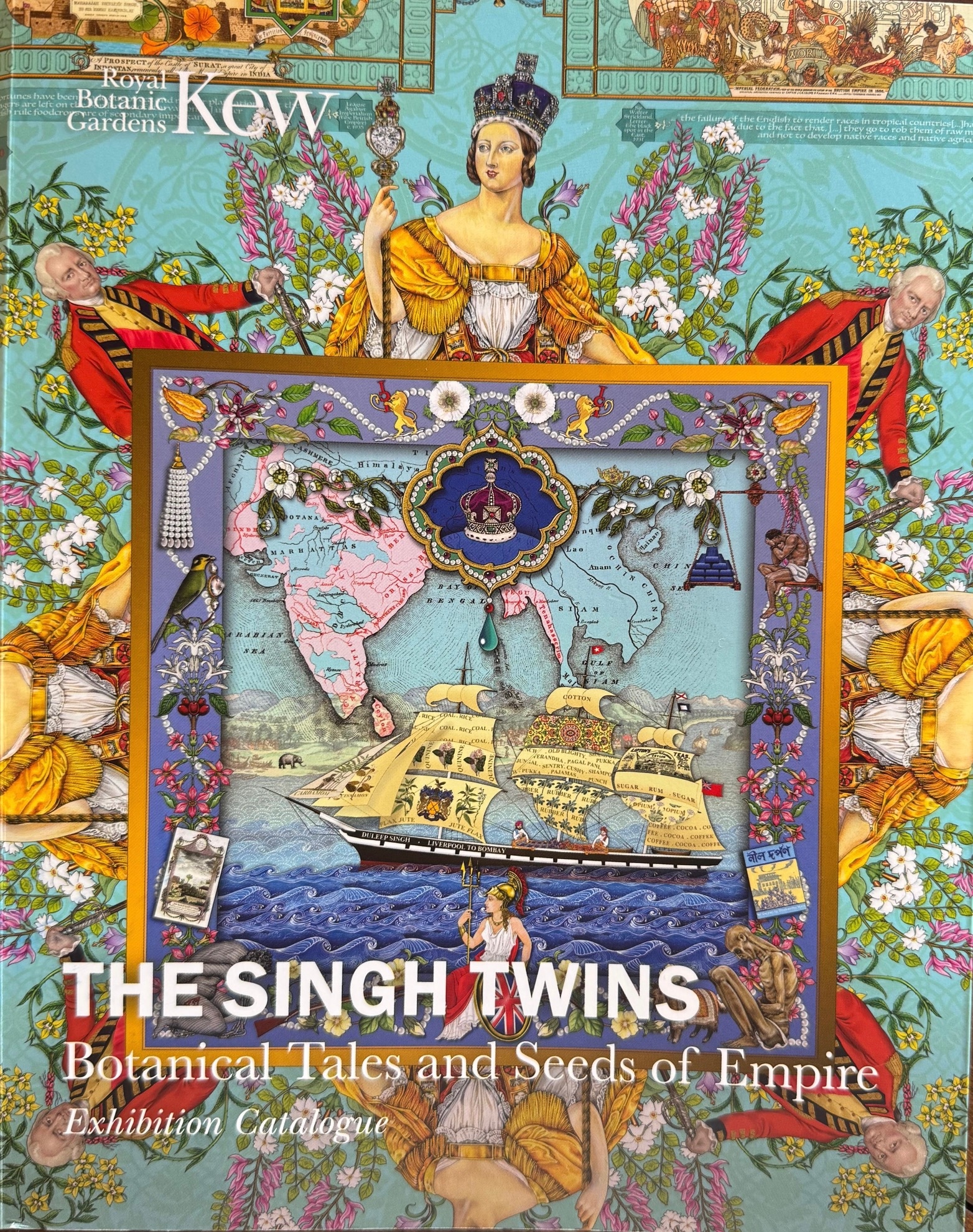
Kew invited the artists, the Singh Twins, to explore Kew’s archives and plants, and track the links to colonisation


The Singh Twins, as photographed by Christopher Doyle.

The important role played by Britain’s Royal Botanic Gardens at Kew in the country’s controversial colonial history is being graphically exposed and criticised by an art exhibition that challenges the image of the peaceful green spaces with their rare plants, magnificent trees and iconic glasshouses.
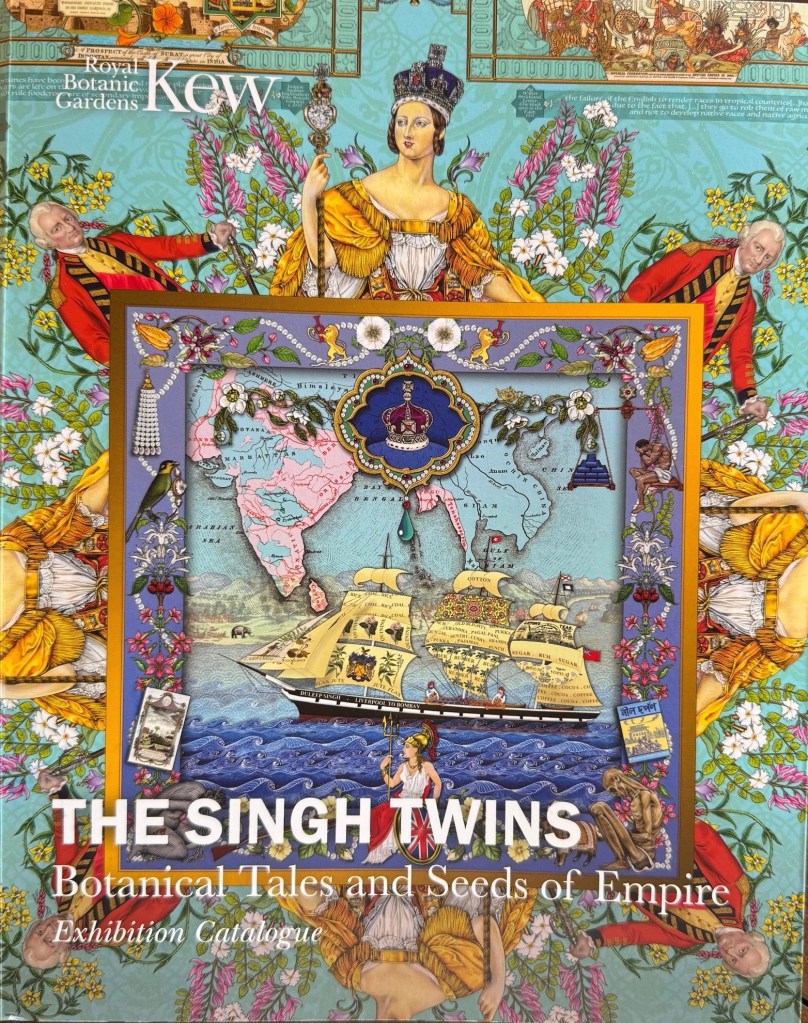

Kew Gardens, as it’s usually known, invited the Singh Twins (below), who are established artists of Indian origin living in Liverpool, to focus their critical approach to the British empire on the institution’s massive and rare botanical collection contained both in extensive archives and as live plants.

The result is an exhibition titled ‘THE SINGH TWINS Botanical Tales and Seeds of Empire’ that is open till April 12 in the Gardens’ Shirley Sherwood Gallery of Botanical Art. It reflects the way that museums and other British institutions have become increasingly willing in recent years to look into their collections and expose what the twins call “the darker side of what is revealed”.

Kew’s role in colonisation comes alive with a dramatic series of large back-lit works of art on fabric. These show how plants such as cotton, spices and dyes played a pivotal role in Britain’s colonial expansion as well as more positively in the transfer of botanical knowledge and experience across continents. There are also smaller works on the symbolism and significance of plants in global trade, and a tough film highlighting the negative message.

“The Singh Twins were a natural choice because of their unique ability to combine rigorous historical research with a powerful contemporary artistic voice,” Maria Devaney the galleries and exhibition leader told me.

“Kew’s history is closely entwined with Britain’s imperial past, and it’s important to acknowledge and respond to those complexities. We have a responsibility to engage honestly with our own history and with the wider histories that shape our collections and our work today. This is part of Kew’s ongoing commitment to inclusion and to presenting, plants, science and culture in their full historical contexts”.


“Imperialism: By the Yardstick and Sword” – the main figure symbolises Western Imperialism surrounded by examples of its impact

The toughest message comes in an allegorical work titled Imperialism: By the Yardstick and Sword that focuses, says the exhibition’s coffee-table style catalogue, on “the impoverishment and enslavement of India under western colonial expansion and in particular British rule”.

The main figure is a female warrior representing Western Imperialism standing above a tiger, piercing it in the mouth. Smaller images surrounding the figure illustrate the exploitation with a quotation saying, “India was ruthlessly conquered as an outlet for British goods”, which actively contributed to the “destruction of India’s industries”.

The Golden Bird: Envy of the West shows an allegorical figure representing pre-colonial India “with the world at her feet” before the British arrived. It was a “fabled land of untold riches and prosperity”.

Dying for a Cuppa deals with the “British colonial history of tea”, highlighting the tea trade’s “links with sugar and opium, commodities inextricably linked to enslavement, conflict, violence, land grabbing, deforestation and drug addiction”.

The Twins say Kew was aware of their work and had seen an earlier exhibition in 2018 on the same theme in Liverpool. This demonstrated, they say, Kew’s “willingness to look at its collections in a different light and bring out those histories….they knew exactly what they were buying into”. When the Twins pointed out that they would be looking at the “darker side” of Imperialism, they were told “this is actually what we want you to do”.

They were “overwhelmed” by the breadth of Kew’s documentation, processing, and archiving of material relating to plants, but they had already done research and “knew what we wanted to get out of it”.

That was to look at colonial links in botany following on from their Liverpool exhibition in 2018 where they focussed on similar narratives connected to India’s historical trade in cotton and other textile links.

“Kew was a central cog in the economic exploitation of plants, playing a key role in the Empire’s collection transportation and cultivation of commercial crops such as cotton, rubber and cinchona,” says Richard Deverell, the Gardens’ director and ceo, in an introduction to the catalogue.


Showing alongside the Twins’ works, under an overall Flora Indica title, is the first-ever public display of 52 rediscovered botanical watercolours (above) by Indian artists who were commissioned by British botanists between 1790 and 1850. Hidden for over a century, the works show how artists helped shape botanical knowledge from India, Nepal, Bangladesh and Myanmar. The Twins studied these and other archived works commissioned by Britain’s East India Company that controlled India for a century till 1858.

Over the past 17 years, the Twins have been exploring and exposing what they describe as the “exploitative nature of colonialism and empire”. They are proud of having “always spoken loudly about things we believe”.


“The Golden Bird: Envy of the West” – India is personified “with the world at her feet”, along with depictions below of European merchants, soldiers and others who invaded her

Born in the UK with a Sikh father who emigrated from India in 1947, Amrit Kaur Singh and Rabindra Kaur Singh are identical twins in their late 50s. They always dress alike and talk together, interrupting and finishing each other’s sentences. Their father, and their Sikh background, flow through many of the works.

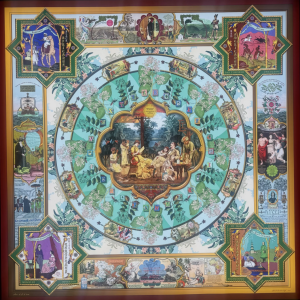
The Twins adapt the intricate and colourful style of Mughal miniature paintings into a form of pop art where a series of individual small compositions cluster around a central image, together telling a multi-illustrated story. With up to around 15 images in a single work, the Twins estimate that the Kew exhibition has more than 200 compositions.

That was apparent when I first interviewed them, in 2011, at an exhibition in New Delhi that combined challenging the misuse of power by the Indian and other governments with recording the lives of Indians living in Liverpool and elsewhere in the UK.

“They have been fighting convention since they were at university in Liverpool,” I wrote.

The show included Partners in Crime, Deception and Lies with US president George W. Bush and UK prime minister Tony Blair standing on a burning blood-strewn globe of the world after the invasion of Iraq.

That was the year that they were both awarded an MBE, becoming Members of the Order of the British Empire. Their art had been shown in 2010 at London’s National Portrait Gallery, which describes their work as continuing “a long tradition of artistic interaction and influence between cultures”.

As students in Liverpool, they were told that the Indian miniatures style was no longer relevant and that they should be learning from Matisse, Gaugin and Picasso.

“We said that Gaugin and others had been influenced by India and other foreign works, and that we were being denied our own way of expressing ourselves,” was their reply. “There was pressure to conform to Western ideas, but we were challenging accepted notions of heritage and identity”.


A triptych dedicated to the memory of the Twins’ late father, Dr Karnail Singh, in “The Perfect Garden” with “The Arts of Botany” (left) and “The Science of Botany” (right)
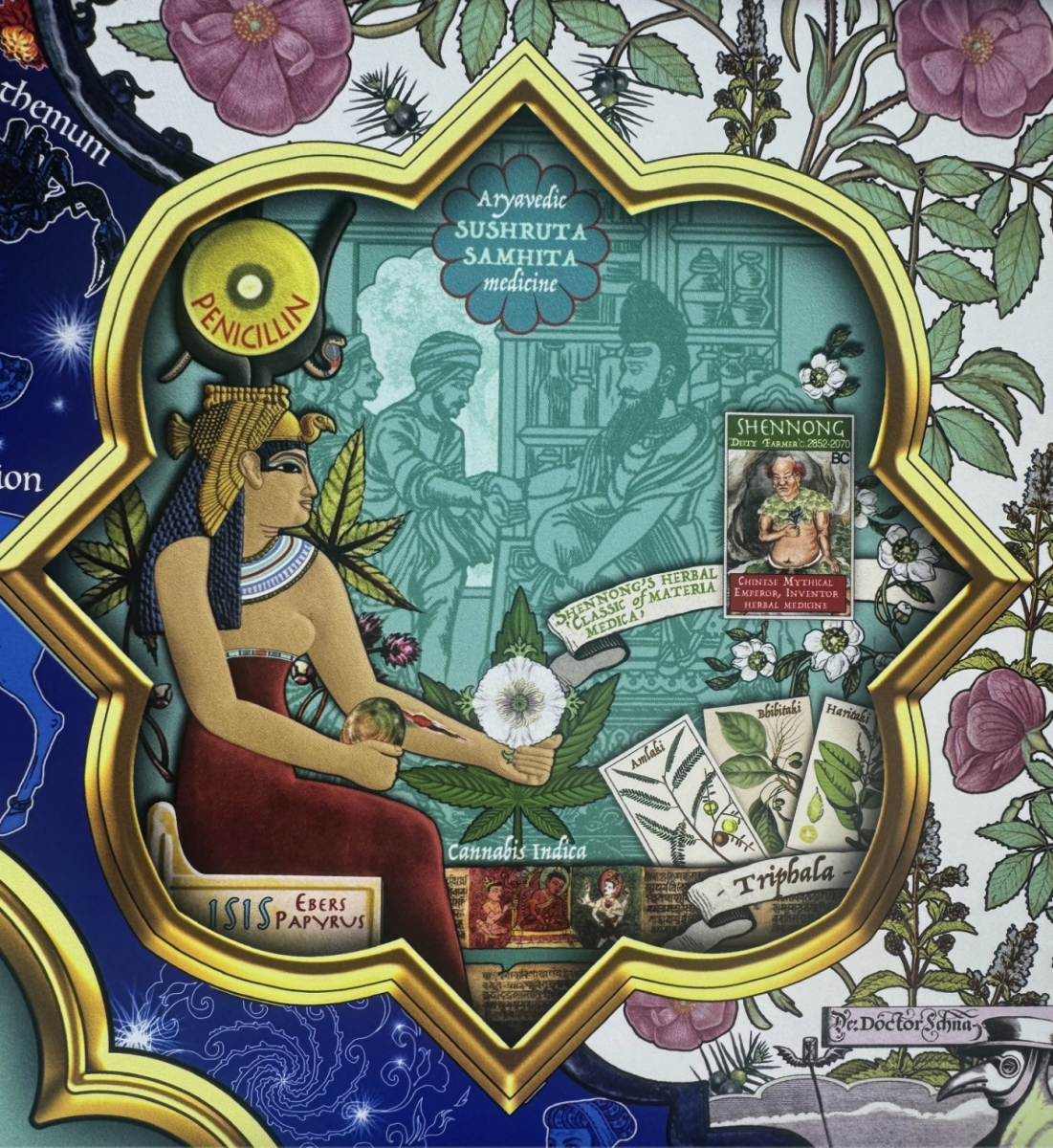

A detailed picture on the “Science of Botany”

Their interest in the negative aspects of colonialism began when they were part of a British Arts Council trip in 2014 to the French city of Nantes in Upper Brittany. There they visited the Château des Ducs museum that has a large section on slavery marking the Atlantic coastal port’s significant role in the international trade, similar to Liverpoool’s.They also found displays of Indian textiles commissioned by French traders to be sold to African tribal chiefs as part of the slave trade, which made them realise the wide range of the trade beyond the transatlantic triangle

That led to the 2018 exhibition, titled Slaves of Fashion, at Liverpool’s Walker Art Gallery where the Twins developed their criticism of empire by focussing on the history of Indian textiles, especially cotton, enslavement and luxury consumerism. That is “a global story of conflict, conquest, slavery, environmental exploitation, cultural exchange and changing fashion,” they say, relating it also to current debates on ethical consumerism, racism and the politics of trade.
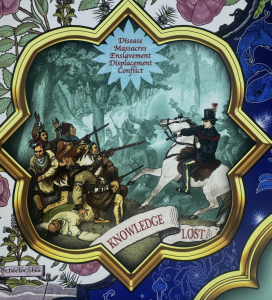


Another detailed picture on the “Science of Botany” including the words “Disease, Massacres, Enslavement, Displacement, Conflict

The Kew exhibition’s hard-hitting short film King Cotton: An Artist’s Tale was first shown in Liverpool and focusses on textiles. Set to a poem written by the twins and narrated by Amrit, it pulls no punches with lines like: “Torture was used to enforce taxation, and monopoly of salt caused devastation – to the mases steeped in poverty…..so that England’s exports might expand, thumbs were broken on weavers’ hands… …the tools of their trade were seized and smashed while Indian servants were routinely thrashed”.

The film’s rhyming poetry is good but there will be objections to some of the criticisms, notably weavers’ “thumbs being broken” that was first voiced in 1853 by Karl Marx. An earlier report in 1772 by William Bolts, a Dutch-born British merchant and employee of the East India Company, suggested that winders of raw silk were treated so badly that they cut off their thumbs to avoid being forced to work, though that is also represented in the film.

Critics will say that the show does not illustrate sufficiently the world-wide benefits reaped by early explorers and botanists who faced extreme challenges travelling to Asia and elsewhere centuries ago.


“Cinchona: What’s in a Name” with an “English family unperturbed by the mosquitos encircling their domesticated environment” in the centre, and “competing interests in quinine production” in the surrounding border

The exhibition includes a work, Cinchona: What’s in a Name marking how in 1860 a British expedition to South America smuggled out cinchona seeds and plants that led to the development of quinine to treat malaria.

Planted extensively in British India and Sri Lanka those stolen seeds and plants saved millions of lives, until an artificial synthesis of quinine was developed in 1944, but the Twins introduce it negatively saying it was “significant in the colonisation of tropical countries”.

“Plants are an essential resource for human survival and they are also the foundation of practically all life on earth,” says one prominent habitat conservationist. “Yes, exotic plants were collected clandestinely in colonial times, just as they are today. But the efforts of those early collectors also brought huge benefits, particularly in the field of medicine”.

That does not however reduce from the importance of the Twins work, displaying in masses of intricate and highly colourful works, the links between botany and the negative side of empire.

This article first appeared on the writer’s blog ‘Riding the Elephant’ and has been republished by permission.

 U$ IMPERIALISM TOO

Opinion: The Greenland scenarios — From the stupid to the insane and back

By Paul Wallis

EDITOR AT LARGE
DIGITAL JOURNAL
January 11, 2026


Donald Trump has coveted Greenland since his first mandate as US president - Copyright AFP Odd ANDERSEN

The “annexation” of Greenland isn’t just dumb. It’s ridiculous.

As a security proposal, this is a lame version of very old Cold War strategy, and the Cold War made it obsolete generations ago.

Against what would the US security be protected by annexing Greenland?

Hypersonic ICBMs? No.

Conventional ICBMs? No.

Nuclear attack subs? Hardly.

Sleeper agents disrupting the US from the inside with massive cyberattacks and terrorism? Not at all.

Fentanyl? No.

Other random boogeymen like pet-eating Ohioans or single mothers from Mars? Not at all.

What about those Greenland mineral assets, you ask with starry eyes?

Getting any of those assets to market, let alone all of them, would take at least a decade and cost many billions. It’s much worse than Venezuelan oil. Mining is always a heavy-duty, capital-intensive cost.

What about territorial advantages?

There aren’t any. Any degree of territorial development would take generations and require huge budget commitments from future American governments just to maintain. It’s a formula for massive failure through capital overextension alone.
A few scenarios

These scenarios are pretty bizarre.

Scenario 1: Direct military annexation

This scenario is likely to cause the most hostile and widespread long-term reactions. American forces arrive in Greenland in force. 82nd Airborne follows up special forces deployment as the US Navy effectively blockades Thule.

NATO objects strongly and deploys friendly forces elsewhere in Greenland A furious Canada stops all talks with the US and sends Canadian special forces to Greenland as a NATO exercise. NATO ground and air troops also arrive but there is no actual combat. The result is an ongoing, expensive, and utterly pointless military standoff. The US military quite rightly objects to any operations whatsoever against NATO forces. Deadlock.

American non-NATO allies like Japan, South Korea, and Australia refuse to cooperate with the US. They either pull or mothball defense and a vast range of other deals.

The military option goes stale in 3 years after much expense and no actual achievements. The irony is that the US military said there was no point in the exercise from any security perspective.

Scenario 2: Diplomatic and economic factors and political maneuvers. Purchasing?

Greenland becomes the subject of political negotiations which drag on for years. Denmark and Greenland refuse to negotiate at all.

Purchasing is off the agenda before it starts. Greenland is worth trillions of dollars. Does the US have trillions of dollars to spare? Is this “impulse buying”?

The EU is by now as furious as Canada and Denmark. The rest of the world ignores the US territorial claims and refuses to recognize American sovereignty over any part of Greenland. The UN calls the US attempts to annex Greenland illegal and infringing on the rights of Greenlanders. No territory is or can be legally acquired.

US trade with the EU is poleaxed. The EU imposes sanctions on the US. EU trade with the US tanks completely. The US is about as popular for doing business as the UK was after Brexit and the result is much the same. The US is progressively excluded from global trade.

The US dollar nosedives in the furore, with some help from China and annoyed Europeans. Even US assets overseas are suddenly under threat of seizure. That’s not good news for America’s vast overseas tax havens.

Scenario 3: US internal political and administrative developments

The US political situation alone effectively derails the Greenland project. The sheer cost of annexation is prohibitively expensive. US Federal revenue stagnates and/or shrinks in real terms. Debt payments increase and blow out due to the rising cost of government.

The 2026 midterms effectively neuter the Greenland project. Political options for Greenland operations are blocked. In 2028, Greenland becomes “just another Trump thing,” which America instantly disowns. There’s no future in it.

The word is no, and there are no other words required.

_______________________________________________________________

Disclaimer
The opinions expressed in this Op-Ed are those of the author. They do not purport to reflect the opinions or views of the Digital Journal or its members.

NATO, Greenland vow to boost Arctic security after Trump threats


“75 years Nato” patch is seen on the arm of a member of the US military at the NATO Airborne Early Warning and Control Force headquarters in Geilenkirchen, western Germany, Nov. 13, 2025. (AFP)


AFP
January 12, 202617:29


NATO chief Mark Rutte said that the alliance was working on “the next steps” to bolster Arctic security

If US followed through with an armed attack on Greenland that it would spell the end of NATO, the Danish PM warned


NUUK: NATO and Greenland’s government on Monday said they intend to work on strengthening the defense of the Danish autonomous territory, hoping to dissuade US President Donald Trump, who covets the island.

On Sunday, Trump further stoked tensions by saying that the United States would take the territory “one way or the other.”

Confronted with the prospect of annexation by force, Greenlandic Prime Minister Jens-Frederik Nielsen placed his hopes in the US-led military alliance NATO.

“Our security and defense belong in NATO. That is a fundamental and firm line,” Nielsen said in a social media post.

His government “will therefore work to ensure that the development of defense in and around Greenland takes place in close cooperation with NATO, in dialogue with our allies, including the United States, and in cooperation with Denmark,” he added.

NATO chief Mark Rutte also said Monday that the alliance was working on “the next steps” to bolster Arctic security.

Diplomats at NATO say that some alliance members are floating ideas, including possibly launching a new mission in the region.

Discussions are at an embryonic stage and there are no concrete proposals on the table so far, they say.

Trump has insisted that Greenland needs to be brought under US control, arguing that the Danish autonomous territory is crucial for national security.

Danish Prime Minister Mette Frederiksen has warned that if Washington followed through with an armed attack on Greenland that it would spell the end of NATO.

In a bid to appease Washington, Copenhagen has invested heavily in security in the region, allocating some 90 billion kroner ($14 billion) in 2025.

Greenland, which is home to some 57,000 people, is vast with significant mineral resources, most of them untapped, and is considered strategically located.

Since World War II and during the Cold War, the island housed several US military bases but only one remains.

According to Rutte, Denmark would have no problem with a larger US military presence on the island.

Under a 1951 treaty, updated in 2004, the United States could simply notify Denmark if it wanted to send more troops.

- Diplomacy -

Denmark is also working on the diplomatic front, with a meeting between Danish and Greenlandic representatives and US Secretary of State Marco Rubio expected this week.

According to US and Danish media reports, the meeting is set to take place Wednesday in Washington.

Danish Foreign Minister Lars Lokke Rasmussen on Monday posted a photo from a meeting with his Greenlandic counterpart Vivian Motzfeldt.

Denmark reportedly wants to present a united front with the leaders of the autonomous territory before the meeting with US representatives.

The Danish media reported last week on a tense videoconference between Danish lawmakers and their Greenlandic counterparts over how to negotiate with Washington.

Facing Trump’s repeated threats, Nielsen said in his message on Monday: “I fully understand if there is unease.”

In a statement published Monday, the government in the capital, Nuuk, said it “cannot accept under any circumstance” a US takeover of Greenland.

A Danish colony until 1953, Greenland gained home rule 26 years later and is contemplating eventually loosening its ties with Denmark.

Polls show that Greenland’s people strongly oppose a US takeover.

“We have been a colony for so many years. We are not ready to be a colony and colonized again,” fisherman Julius Nielsen told AFP over the weekend.

Danish PM says Greenland showdown at ‘decisive moment’ after new Trump threats


By AFP
January 11, 2026


Several European countries have backed Greenland and Denmark over Trump's claims to the territory - Copyright Ritzau Scanpix/AFP Ida Marie Odgaard


Camille BAS-WOHLERT

Denmark’s prime minister on Sunday said her country faces a “decisive moment” in its diplomatic battle with the United States over Greenland, after President Donald Trump again suggested using force to seize the Arctic territory.

Ahead of meetings in Washington from Monday on the global scramble for key raw materials, Prime Minister Mette Frederiksen said that “there is a conflict over Greenland”.

“This is a decisive moment” with stakes that go beyond the immediate issue of Greenland’s future, she added in a debate with other Danish political leaders.

Frederiksen posted on Facebook that “we are ready to defend our values — wherever it is necessary — also in the Arctic. We believe in international law and in peoples’ right to self-determination.”

Germany and Sweden backed Denmark against Trump’s latest claims to the self-governing Danish territory.

Swedish Prime Minister Ulf Kristersson condemned US “threatening rhetoric” after Trump repeated that Washington was “going to do something on Greenland, whether they like it or not”.

“Sweden, the Nordic countries, the Baltic states, and several major European countries stand together with our Danish friends,” he told a defence conference in Salen where the US general in charge of NATO took part.

Kristersson said a US takeover of mineral-rich Greenland would be “a violation of international law and risks encouraging other countries to act in exactly the same way”.


– No ‘immediate threat’ –


Germany reiterated its support for Denmark and Greenland ahead of the Washington discussions.

Before meeting US counterpart Marco Rubio on Monday, German Foreign Minister Johann Wadehpul held talks in Iceland to address the “strategic challenges of the Far North”, according to a foreign ministry statement.

“Security in the arctic is becoming more and more important” and “is part of our common interest in NATO”, he said at a joint news conference with Icelandic Foreign Minister Thorgerdur Katrin Gunnarsdottir.

“If the American president is looking at what threats might come from Russian or Chinese ships or submarines in the region, we can of course find answers to that together,” he added.

But “the future of Greenland must be decided by the people of Greenland” and Denmark, he said.

Asked about a possible strengthening of NATO’s commitment in the Arctic, Wadephul said Germany was “ready to assume greater responsibilities”.

Earlier Sunday, German Finance Minister Lars Klingbeil said: “We are strengthening security in the Arctic together, as NATO allies, and not against one another.”

He was speaking ahead of an international meeting on critical raw materials in Washington.

European nations have scrambled to coordinate a response after the White House said this week that Trump wanted to buy Greenland and refused to rule out military action.

On Tuesday, leaders of seven European countries including France, Britain, Germany and Italy signed a letter saying it is “only” for Denmark and Greenland to decide the territory’s future.

Trump says controlling the island is crucial for US national security because of the rising Russian and Chinese military activity in the Arctic.

NATO Supreme Allied Commander General Alexus Grynkewich told the Swedish conference that alliance members were discussing Greenland’s status.

While there was “no immediate threat” to NATO territory, the Arctic’s strategic importance was fast growing, the US general added.

Grynkewich said he would not comment on “the political dimensions of recent rhetoric” but talks on Greenland were being held at the North Atlantic Council.

“Those dialogues continue in Brussels. They have been healthy dialogues from what I’ve heard,” the general said.

A Danish colony until 1953, Greenland gained home rule 26 years later and is contemplating eventually loosening its ties with Denmark. Polls indicate that Greenland’s population strongly oppose a US takeover.

“I don’t think there’s an immediate threat to NATO territory right now,” Grynkewich told the conference.

But he said Russian and Chinese vessels had been seen patrolling together on Russia’s northern coast and near Alaska and Canada, working together to get greater access to the Arctic as ice recedes due to global warming.

burs-jj/des


‘American? No!’ says Greenland after latest Trump threat


By AFP
January 10, 2026


Trump has refused to rule out military action in Greenland, leaving Europe scrambling to respond - Copyright AFP SAUL LOEB


Camille BAS-WOHLERT

Greenland’s political parties said they did not want to be under Washington as US President Donald Trump again suggested using force to seize the mineral-rich Danish autonomous territory, raising concern worldwide.

The statement late Friday came after Trump repeated that Washington was “going to do something on Greenland, whether they like it or not”.

European capitals have been scrambling to come up with a coordinated response after the White House said this week that Trump wanted to buy Greenland and refused to rule out military action.

“We don’t want to be Americans, we don’t want to be Danish, we want to be Greenlanders,” the leaders of five parties in Greenland’s parliament said in a joint statement.

“The future of Greenland must be decided by Greenlanders,” they added.

“No other country can meddle in this. We must decide our country’s future ourselves — without pressure to make a hasty decision, without procrastination, and without interference from other countries.”

France’s Foreign Minister Jean-Noel Barrot said in an interview published Saturday that Trump’s “blackmail must stop”.

But he also said he did not believe a US military intervention would happen.

“Greenland is a European territory, placed under the protection of NATO. I would add that the Europeans have very powerful means to defend their interests,” he said.


– Fears of invasion –


According to a poll published Saturday by Danish agency Ritzau, more than 38 percent of Danes think the United States will launch an invasion of Greenland under the Trump administration.

A Danish colony until 1953, Greenland gained home rule 26 years later and is contemplating eventually loosening its ties with Denmark.

Many Greenlanders remain cautious about making this a reality.

Julius Nielsen, a 48-year-old fisherman in the capital Nuuk, told AFP: “American? No! We were a colony for so many years. We’re not ready to be a colony again, to be colonised”.

“I really like the idea of us being independent, but I think we should wait. Not for now. Not today,” Pitsi Mari, who works in telecoms, told AFP.

“I feel like the United States’ interference disrupts all relationships and trust” between Denmark and Greenland, said Inaluk Pedersen, a 21-year-old shop assistant.

The coalition currently in power is not in favour of a hasty independence.

The only opposition party, Naleraq, which won 24.5 percent of the vote in the 2025 legislative elections, wants to cut ties as quickly as possible but it is also a signatory of the joint declaration.

“It’s time for us to start preparing for the independence we have fought for over so many years,” said MP Juno Berthelsen in a Facebook post.


– Vast natural resources –


Denmark and other European allies have voiced shock at Trump’s threats on Greenland, a strategic island between North America and the Arctic where the United States has had a military base since World War II.

Trump says controlling the island is crucial for US national security given the rising military activity of Russia and China in the Arctic.

“We’re not going to have Russia or China occupy Greenland. That’s what they’re going to do if we don’t,” the US president said Friday.

“So we’re going to be doing something with Greenland, either the nice way or the more difficult way,” he added.

Both Russia and China have increased military activity in the region in recent years, but neither has laid any claim to the vast icy island.

Greenland has also attracted international attention in recent years for its vast natural resources including rare earth minerals and estimates that it could possess huge oil and gas reserves.

Danish Prime Minister Mette Frederiksen has warned that an invasion of Greenland would end “everything”, meaning the transatlantic NATO defence pact and the post-World War II security structure.


– Flurry of diplomacy –


“I’m a fan of Denmark, too, I have to tell you. And you know, they’ve been very nice to me,” Trump said.

“But you know, the fact that they had a boat land there 500 years ago doesn’t mean that they own the land.”

Secretary of State Marco Rubio is due to meet next week with Denmark’s foreign minister and representatives from Greenland.

A flurry of diplomacy is under way as Europeans try to head off a crisis while at the same time avoiding the wrath of Trump, who is nearing the end of his first year back in power.

Trump had offered to buy Greenland in 2019 during his first presidential term but was rebuffed.

burs-gv/jj


Pound of flesh

The cuddly US that indulged Europe’s domestic spending has gone.

Rafia Zakaria 
Published January 10, 2026
DAWN

The writer is an attorney teaching constitutional law and political philosophy.

ONE would think that everyone in the world knows that nothing is free. Every favour granted, every kindness bestowed has its cost — sometimes the payment is demanded immediately, and at other times, decades later. Europe it appears is only learning the truth of this in these feverish days of the Trump administration. Recently, the Americans carted off Nicolás Maduro and his wife from Caracas to a jailhouse in America. Careful statements came from Europe so as not to anger the American president.

It was the words that came after that were even more unnerving to the watching Europeans. No sooner had images of a handcuffed Maduro appeared on TV screens than the Trump administration officials began to assert that they would take over Greenland next. Post-Maduro, one of the first to make the claim was Stephen Miller — Trump’s Goebbels-esque immigration czar. Then it was Trump himself and also Secretary of State Marco Rubio who said that the US would not militarily take over Greenland but simply buy the country. Controlling Greenland, all three seemed to agree, was necessary for America’s security.

If Venezuela’s takeover had instigated panic attacks in Europe, these overt announcements of US plans brought on a nervous breakdown. The major European countries issued a statement against the claims to Greenland being made across the pond. At the centre of the circle was Denmark, which had laid claim to Greenland 300 years ago and still wants to hold on to it even though Greenlanders themselves do not seem to want it to do so.

Danish Prime Minister Mette Frederiksen has since had increasingly testy exchanges with President Donald Trump. In her words, if the US were to ‘get’ Greenland it would be the end of the international world order.

The cuddly US that indulged Europe’s domestic spending has gone.

The reality is more complex and the source of Danish fretting over every word the US says about Greenland is ironically an international treaty or a series of treaties themselves. The first dates to 1941. At that time, the Danish ambassador who had been cut off from Copenhagen owing to the Nazi takeover of Denmark signed a defence agreement on behalf of Denmark and Greenland with the then US administration.

The motivation behind this was that the Nazis could have used Greenland as a route to North America and thus it made sense for the US to be able to set up military bases there. Another treaty is from 1951 when the US looking to bolster its Cold War defences against the Soviet Union got permission to set up any number of military bases in Greenland if it wanted to.


The US is a military behemoth with a defence budget of over $900 billion. Even as Denmark’s PM dramatically decries US claims on Greenland it seems questionable whether the rest of Europe will forsake the US as a military ally over Greenland. The promise of American military support has enabled Europe to keep up a lifestyle it could not afford had European countries been required to spend gobs of money fending off a threat from the then Soviet Union. The social welfare state, free schools and healthcare for citizens, for instance, would not have been possible if military spending had not been defrayed by Nato.

The cuddly US that never raised a finger at Europe’s indulgent domestic spending is now gone. In its place is a nasty America looking to get paid for past favours. Many in Washington predict that the US plan

to thwart China is to simply get a tighter grip on South and Central America as well as most of the rest of the Western Hemi­sphere. Green­land, sitting on enormous mineral deposits, is part of Ame­rica’s new security strate­­gy. This means that even if there is no dramatic or overt capture of Green­land, it is likely that a takeover will take place quietly.

Beyond Vene­zuela, the US also has its eyes on the area known as the ‘lithium triangle’ constituting Bolivia, Chile and Argentina. The Argentinian prime minister has already sung Trump’s praises. Given Maduro’s fate, his regional counterparts know they better follow suit. America is intent on making sure it has enough oil, precious metals and other components required for technological advancements and it’s not afraid to use its military to make sure it gets just that.

Greenland with its 57,000 inhabitants is likely about to exchange the hegemony of one state for another’s. The Trump administration sees no reason why an icy hinterland of buried treasure should not be theirs. Europe, which had counted on the US remaining a friend forever, is in for a dark and disappointing time ahead. The US wants what it wants and it is Europe’s turn to realise this.

Published in Dawn, January 10th, 2026


Rafia Zakaria is an attorney and human rights activist. She is a columnist for DAWN Pakistan and a regular contributor for Al Jazeera America, Dissent, Guernica and many other publications.

She is the author of The Upstairs Wife: An Intimate History of Pakistan (Beacon Press 2015). She tweets @rafiazakaria

Trump’s Greenland talk brings opportunity, unease for business

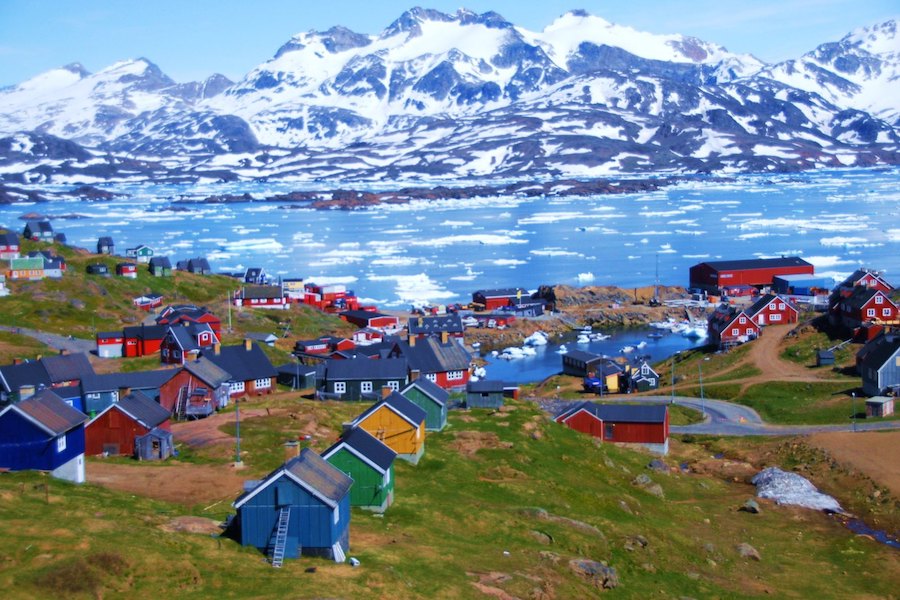
Village of Tasiilaq, Greenland. (Image courtesy of AntoniO BovinO via Flickr.)

Greenland’s business community is split on the impact of Donald Trump’s renewed interest in the Arctic island.

While some see commercial opportunity, others say harsh rhetoric about taking control of the territory is dampening near-term activity.

The revived talk has sparked a new rush by US officials to identify business deals and other ways to deepen ties with Greenland, according to people familiar with the matter. For now, discussions are focused on mining projects, hydroelectric power and other ventures that could expand the US economic footprint on the island.

“Greenland is now in the position to decide its future, to build up its economic independence,” Eldur Olafsson, founder and chief executive officer of Amaroq Ltd, told Bloomberg Television on Thursday. “There is opportunity in this.”

The Toronto-based company operates a newly opened gold mine in Greenland and holds the largest portfolio of mineral exploration licenses in the territory. Last year, Amaroq attracted strong demand from investors on both sides of the Atlantic in an oversubscribed funding round and has since seen interest from state-backed agencies in the US and Europe.

The US president has “really put Greenland on the map” since he first touted the idea of buying the island in 2019, Olafsson said. “People saw there are resources there.”

Trump “doesn’t want to lose time to get something done,” Olafsson said. “That overall is a good thing, because Greenland needs investment.”

The island’s public finances are under mounting pressure and its fiscal position suffered a “surprisingly sharp deterioration” last year, according to an analysis published this week by Denmark’s central bank. It underscores the urgency of discovering new sources of growth as Greenland seeks greater economic self-reliance.

The Arctic island is betting on its mining sector to help diversify the economy and lay the groundwork for future independence from Denmark. Despite Greenland’s vast untapped reserves, commercial extraction remains limited so far. Harsh operating conditions, high production costs and relatively low mineral concentrations have deterred large-scale development.

To bridge that gap, support from other governments will likely be needed. The US and other nations could help projects get off the ground through purchase commitments, price floors, grants or even equity stakes.

Elsewhere in Greenland’s business community, reactions are more mixed.

“Some people do see it as an opportunity to expand into new markets in the US,” Mads Qvist Frederiksen, executive director of the Arctic Economic Council, told Bloomberg Radio. While Greenlanders are unlikely to agree to a sale, he said, companies remain open to doing business.

For now, however, the rhetoric around buying Greenland or taking it by force is proving counterproductive.

“Everything is put on hold at the moment,” Frederiksen said, with companies postponing decisions until there is more clarity about Greenland’s future. “We have to turn off this fire that is on at the moment.”

(By Sanne Wass)


Greenland miner that surged 80% says rare earth supply in focus

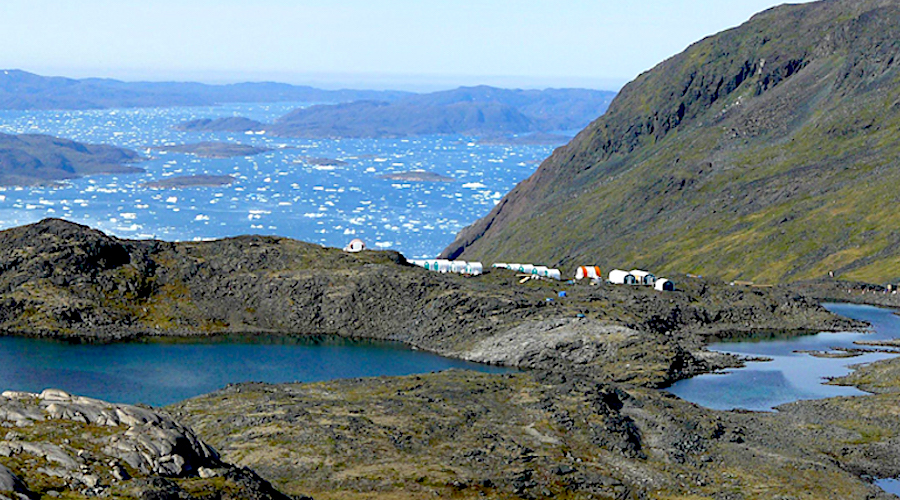
The Kvanefjeld rare earth project. (Image courtesy of Energy Transition Minerals.)

An Australian miner with a rare earth project in Greenland, the Danish territory attracting the interest of the Trump administration, said resource security is increasingly driving prices.

“Supply chains for critical minerals like rare earths are now not just priced based on cost, but more importantly on security of supply,” Energy Transition Minerals Ltd.’s managing director, Daniel Mamadou, said on Bloomberg Television.

“What the West is realizing, and taking steps towards now, is the fact that tough projects need to be funded,” Mamadou said, adding that the company has continued to receive interest from global investors including in Europe and China.

Energy Transition has surged nearly 80% this year in Sydney as the US mulls seeking control of Greenland. President Donald Trump has said he won’t rule out the use of military force to acquire the island, which is a self-ruling territory of Denmark.

Trump has mused about making Greenland part of the US since his first term, but has ramped up the rhetoric after launching a military operation last week to oust Venezuelan leader Nicolas Maduro.

Greenland has sizable natural resources including rare earths – the strategic minerals that have been a focal point of trade talks between China and the US – but commercial extraction in the island remains limited so far.

Energy Transition is developing a flagship rare earth project at Kvanefjeld in southern Greenland, which will consist of a mine, a concentrator and refinery. The company said last month that legal proceedings related to the grant of an exploitation license are still ongoing.

(By Annie Lee and Haslinda Amin)


The US's Magical Realism Show in Venezuela
INDIA


'The United States appear to be destined by providence to plague Latin America with misery in the name of liberty.'


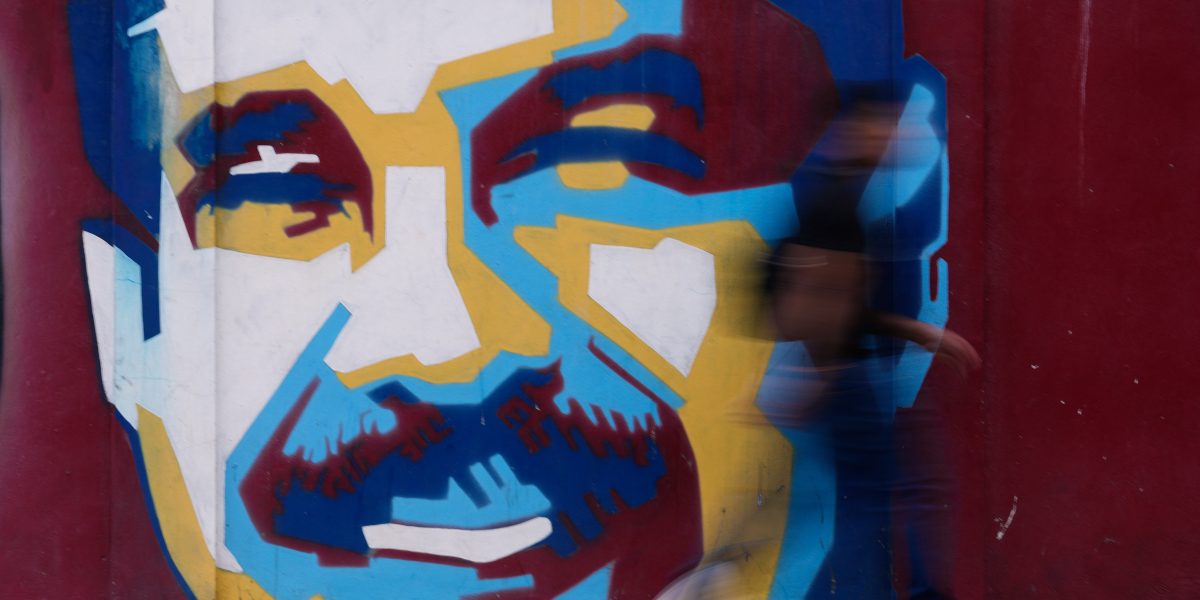
A pedestrian walks past a mural of Venezuelan President Nicolas Maduro Sunday, Jan. 4, 2026. Photo: AP/PTI.


LONG READ

What has happened in Venezuela is not a surprise to those who have read the magical realism stories of Gabriel Garcia Marquez and other famous Latin American writers. In this signature genre of Latin American literature, the writers blur the line between fantasy and facts, weaving magic into reality.

Maria Corina Machado is magic and Delcy Rodriguez is realism in the ongoing magical realism show of Venezuela choreographed by the US.

Maria Corina Machado, the Nobel Prize winner, had the fantasy of flying in an American magic carpet and landing on the Miraflores presidential palace in Caracas after the kidnapping of President Nicolás Maduro by the American forces. Machado has been a relentless democratic activist fighting the Chavista dictatorship in the last two decades. She wanted to wipe out the Chavistas with the military help of US.

But the fact is that Delcy Rodrigues from the ruling Chavista (followers of Hugo Chavez who was president from 1998 till his death in 2013) regime has moved into the presidential palace. Machado has got a reality check from US president Donald Trump who ruled her out “as not having enough support or respect within Venezuela”. He chose to let Delcy Rodriguez, the vice-president under Maduro, to continue as acting president. Rodriguez is a better choice for Tump as he sets his sights on oil and other benefits. On the other hand, Machado’s takeover of power would have resulted in violent clashes between her party cadres and the Chavistas – resulting in bloodshed and instability. This would have complicated Trump’s agenda which was focussed on oil and not restoration of democracy, as imagined by Machado.

This was not the first ‘American Magical Realism Show’ in Venezuela.

The US had recognised Juan Guaido, another opposition leader, as the real president of Venezuela between January 2019 and January 2023. Washington D.C. refused to recognise Maduro, accusing him of rigging the 2018 election. Over 50 countries followed the US diktat (some willingly and some under coercion) and recognised Guaido as the legitimate president. Guaido assumed the role of president seriously, appointing cabinet ministers and ambassadors. He and his appointees as well as his US lawyers and collaborators swindled and spent hundreds of millions of dollars of Venezuelan government funds seized by the US government. Eventually, Guaido succumbed to the scandals of his regime and was dropped as useless luggage. But despite the de-recognition of Maduro, the US and other western governments continued to have official dealings with his government, despite the devious British refusing to hand over the Venezuelan gold in their Bank of England to him when Maduro wanted it back. The excuse was that UK had not recognised Maduro as the president. The Brits continued to deal with Maduro officially but have shamelessly held on to Venezuelan gold even now.


There was a brief magical realism show in May 2020 as well.

A group of ex-marine mercenaries of the US hatched a plan code-named “Operation Gideon”. They attempted a sea-borne raid, through boats which were to land in Venezuela, capture Maduro, take him to the US and claim the $ 15 million bounty which was the going rate announced by Washington D.C. at that time. The mercenaries were caught and some were killed and others jailed by Venezuelan authorities. The US administration claimed that it was not an official operation but got these criminals released through quiet negotiations. They were back to the US in 2023.

Who stole the Venezuelan election?

Maduro claimed to be the winner of 2024 election. Trump and Machado claimed that Edmundo Gonzalez was the winner and accused Maduro of stealing the election. Now Trump has ditched Gonzalez and Machado while jailing Maduro. Trump says he will run Venezuela.

So, it will not be exaggeration to say that the real thief who has stolen the election is Trump. He refuses to give a timeline for election or transition and a digitally altered image he has posted says that he is “Acting President of Venezuela.” Restoration of democracy is not Trump’s priority.

Trump says that the the interim government of Venezuela is “giving us everything that we feel is necessary. They’re treating us with great respect. We’re getting along very well with the administration that is there right now”.

The fable of a monkey and two cats

Once upon a time, two cats were fighting over a piece of bread. Each wanted it more than the other. A monkey saw this and offered a solution. It brought a weighing scale and deliberately broke the bread into two unequal pieces and put a piece each on either side of the weighing scale. When one side weighed heavier it took a bite from that and put the rest on the scale. Then the other side was heavier and the monkey took a bite from the other side. Eventually the monkey finished the pieces on both the sides and the foolish cats were left hungry. Trump has done the monkey trick to Maduro and Machado.

Trump has announced that he will extract Venezuelan oil from its huge reserves. He has already begun to make money for the US by taking oil that has been under sanctions. He says that the US will obtain 30 to 50 million barrels of Venezuelan crude oil in the near future. He talks of a deal with the Venezuelan authorities whereby America would market all Venezuelan oil “indefinitely”. The proceeds “will be disbursed for the benefit of the American people and the Venezuelan people at the discretion of the US government”. Trump adds that all the goods purchased for Venezuela in this way would be American.
Advertisement

Was Maduro a dictator in the classical sense?

One can say that Maduro was not a classical dictator like Augusto Pinochet Ugarte of Chile or Manuel Antonio Noriega of Panama. He did not have absolute powers and control over others in the regime. He was a just a public face of the collective leadership of the post-Chavez regime. He, for one, had less power than Diosdado Cabello, the interior minister, or Padrino Lopez, the defence minister and army chief or the Rodriguez siblings Delcy, his vice-president and her brother Jorge, the president of the national assembly. He could not take any major decisions without the approval of the other four.

Maduro did not have the charisma or grassroots support or any personal vision or agenda, unlike Chavez. Even in speeches, he tried simply to imitate the style and rhetoric of Chavez. The other four powerful figures let him appear in the TV, sing and dance. This was a clever move which paved the way for his being portrayed in the western media as a dictator responsible for rigging of elections and economic collapse.

The Cuba angle

Maduro was not the prime candidate to succeed Chavez. It was Diosdado Cabello, the interior minister, who was expected to inherit the mantle of Chavez. He had better credentials as the second strongest man after Chavez. But the Cubans had influenced Chavez to appoint Maduro as successor during his last days in a Cuban hospital. The Cubans did not warm to Cabello who was independent and did not share Chavez’s or Maduro’s admiration for the country.

After the coup against him in 2002 (in which a few dissident Generals joined), Chavez took on Cuban advisors for personal protection and intelligence services. This system continued for Maduro also. Since he had less power than the other quartet, Maduro relied even more on his Cuban advisors. This was resented by the others and could well be why they let the US kill 32 Cubans during the raid.

Chavez considered Fidel Castro as his role model and mentor. He gave free and subsidised oil, besides monetary and other support, to Cuba which was helpless after the withdrawal of Soviet assistance in 1991. Maduro continued Chavez’s policy of supporting Cuba with oil and money. This was not to the liking of the other Chavista factions.

The US has instructed Delcy Rodriguez to end the support to Cuba, which will become even more vulnerable and an easier game for US. This has pleased the Cuban-origin secretary of state Marco Rubio who has been dreaming of liberating Cuba from communism and claiming the properties owned by his family. Rubio has already warned that the Cuban regime should be afraid.

A stage-managed event

The so called capture and kidnapping of Maduro was a stage-managed event. Delcy Rodriguez and company had willingly offered the head of Maduro to appease the deities of Washington D.C. in return for the US allowing thousands of Chavistas to continue with their heads on their bodies. There is bounty of $ 25 million on interior minister Diosdado Cabello and $ 15 million on defence minister Padrino Lopez. There are some more millions on other heads. Trump is not pursuing them despite the trumped up charges and US court convictions against them. If Machado or Gonzalez had taken power, they would have happily handed over hundreds of Chavista heads to the Americans.

Delcy Rodriguez has been in touch with the US through Chevron which still operates in Venezuela. As the minister in charge of oil sector, she had an excuse to deal with the US. She is more pragmatic and better skilled in negotiations than Cabello or Lopez and is thus the choice of both the sides to do the deal of offering Maduro’s head and lot of oil to the Americans. One must note that even Maduro had been willing to give oil and other perks – except his head – but Trump wanted a trophy and a spectacular display of his macho MAGA image. Rodriguez clearly agreed and let the Americans display the power of airforce jets, helicopters, high-tech weapons and skills of special forces in what appears to have been a prearranged show.

A regime reset

So what has happened in Venezuela is not a regime change but a simple regime reconfiguration minus Maduro but plus Trump.

This arrangement suits the US better than letting Machado-Gonzalez take over the country. If that was the case, the Chavistas (with their armed forces and militias) would have fought with the Machado government fiercely to save their heads and positions of power. There would have been bloodshed. Machado would not have been able to manage the situation and the American ground forces would have become necessary. Having learnt from the mistakes made in Iraq and Afghanistan, the Americans did not want a repeat. In any case, Trump’s priority was not restoration of democracy.

Oil, not democracy

Venezuela has the world’s largest oil reserves of over 300 billion barrels. It was the American companies who had discovered the oil in 1914 and produced it till the nationalisation in 1975 by president Carlos Andres Perez. He had paid them compensation through negotiations and after approval by the Venezuelan Congress. In the 1990s, the Venezuelan government had invited foreign companies back into the oil sector. Some companies such as Chevron, Exxon Mobile and ConocoPhillips went back. But when Chavez came to power in 1998, he wanted these companies to form joint ventures with PDVSA, the national oil company which held the majority shares. Except Chevron, the other companies refused the terms and exited. They claimed compensation but the amounts were exorbitant. So they went to the courts and through arbitration. These claims, with interest, now amount to $ 22 billion. The American companies will certainly plan to take Venezuelan oil against the dues claimed by them.

Despite the dispute over compensation disputes, Chevron has been operating in Venezuela all these years. When the Americans imposed sanctions on Venezuela in 2019, Chevron got a special license to operate in the country. It has been operating with repeated renewal of sanctions.

In the meeting with Trump on January 9, the oil companies asked for change of Venezuelan laws on regulations as well as investment guarantees in order to go back to the country. Because of sanctions, PDVSA’s production capacity has been crippled due to shortage of equipment and materials needed for repairs and modernisation. Billions of dollars would need to be invested to restore production to the pre-sanction level of over three million barrels per day.

Oil is a resource curse for Venezuela

The country has fertile agricultural land, mineral resources including gold and diamond, hydroelectric potential, beautiful beaches and pleasant climate. These resources are sufficient to be a prosperous nation, even without oil. But when the easy money from oil started coming, the Venezuelans abandoned all the other resources and started living exclusively on oil income.

The problems of Venezuela started when oil was discovered in 1914. In just a decade, the country had undergone a rapid transformation from an obscure agricultural backwater somewhere in the Andes to the world’s largest oil exporter and the second-largest oil producer after the United States.

Since then, the Venezuelans have been infected incurably by the Dutch disease and resource curse. Oil has spoiled both the rulers and the ruled. The politicians stole and misspent the petrodollars during the high oil prices and let the economy slide into crisis when the prices went down. The businessmen gave up productive industries and went into imports and quick ways of making fast buck. Farmers neglected agriculture and moved into cities to share the life style spawned by the oil boom.

By 1930, while the world struggled with the Great Depression, Venezuelans began to enjoy enormous riches. Venezuela became a key supplier of the oil that fuelled the Allied efforts during World War II. The flood of oil revenue caused their currency, the bolivar, to appreciate against the dollar. The strong currency was a boon for Venezuelan consumers, who could suddenly afford to import what they used, wore, and ate every day. Caracas became expensive. A US diplomat earning $ 2,000 in Washington DC needed $ 5,000 to live in Caracas.

Venezuela’s days of economic plenty did not last. World War II disrupted global trade and pushed the import-dependent nation into economic disarray, plagued by product shortages. Venezuela quickly went from a nation with enough purchasing power to import fine wines to a place where people struggled to find car tires.


Juan Pablo Pérez Alfonzo (1903-1979) Venezuelan diplomat, politician and lawyer primarily responsible for the creation of the OPEC. Photo: Public domain.

Venezuela had increased its oil revenue thanks to a smart Venezuelan, Juan Pablo Pérez Alfonzo, the minister of development appointed by the military rulers after the 1945 coup. He changed the game of negotiations with the foreign oil companies. He pushed them for fifty-fifty share in the profits the multinational oil companies derived from the sale of crude oil as well as refining, transportation, and sale of fuel. He educated the sheikhs in West Asia and helped them to get a similar arrangement with foreign oil firms. Pérez Alfonzo worked with the representatives of Saudi Arabia, Kuwait, Iraq, and Iran and signed the agreement to create the Organisation of the Petroleum Exporting Countries, OPEC. From that point on, oil companies would have to consult with exporter countries before setting oil prices.

In the period 1950-57, Venezuela accumulated huge foreign exchange reserves, thanks to the hike in oil prices after the coup in Iran and closure of Suez Canal. In 1963, the country churned out 3.5 million barrels of oil a day. The country’s per capita income was the highest in Latin America, and the bolivar remained one of the world’s strongest currencies. The US chai Sears, Roebuck and Co. opened 11 stores in Venezuela.

After the Arab oil embargo in 1973, Venezuela’s petrodollars tripled. The flow of dollars from oil was too much for Venezuela’s economy causing a form of economic indigestion. The newly elected president Carlos Andrés Pérez asked congress for special powers to better handle the avalanche of money. Venezuela was in a state of emergency because it had too much cash.

Venezuelans wasted no time in developing a taste for the finer things in life. The country became known for having the best French and Italian restaurants in Latin America, many of them run by famed chefs. Venezuela became one of the largest importers of premium alcohol, like whiskey and champagne, as well as luxury vehicles, like the Cadillac El Dorado. Caracas became such a chic destination that Air France’s Concorde supersonic jet opened a Paris–Caracas flight in 1976. The per capita income of Venezuelans rivalled that of West Germany.

Chavez and the Venezuelan oligarchs

In the 1980s, Venezuela faced a crisis after the fall in prices due to a global oil glut and lower demand. Since Venezuelans had grown accustomed to generous governments, politicians continued to spend even in the face of less money coming in. The country’s economy in 1989 went into its worst recession ever, with gross domestic product contracting nearly 9%. Venezuela was forced to seek a financial lifeline from the International Monetary Fund and asked for the US government’s help to renegotiate and reduce its outstanding debts. People got frustrated with the austerity programme of the government and took to the streets by the thousands to protest, riot, and loot for 10 days. Protesters set fire to cars and buses, and they clashed with the military. When it was all over, the uprising that became known as El Caracazo had left three hundred people dead and material losses in the millions of dollars. During the eight years ending in 1989, poverty had increased tenfold. Inflation topped 100 percent in 1996.

It was at this time that Chavez entered politics as an outsider challenging the two established political parties – AD (Democratic Action) and COPEI (Social Christian Committee) – run by oligarchs. He asked a simple question to the audience during his election campaign, “Venezuela is a rich country with the largest reserves of oil. Why then 44% of the people are poor?”. The masses voted for him overwhelmingly. He won the subsequent elections and a constitutional referendum overwhelmingly. He did not need to rig them. Chavez started implementing his pro-poor and other socialistic policies. He wanted PDVSA, which was a state within the state to reduce over-dependence on US and diversify other markets.

Rioters of the El Caracazo. Photo: Jheremycg (Own work, CC BY-SA 4.0).

Overthrow of Chavez in a coup

The two oligarchic political parties, who were wiped out in the elections, realised that they could not beat Chavez electorally. So they went to Uncle Sam and organised a coup in April 2002 and overthrew Chavez with the help of a few dissident elements from the army. The PDVSA employees went on a strike and crippled oil production, exports and even internal distribution. There was severe shortage of gasoline. Chavez was sent to jail in a remote island. But the oligarchs started fighting against each other for spoils and refused to give any share to the generals. So the generals freed Chavez and restored him as president after two days. As Ambassador of India to Venezuela, I saw the coup and its aftermath.

Chavez wanted to teach a lesson to those who were involved in and supported the coup. He sacked 15,000 employees of PDVSA and put the company under the control of Chavistas. He started destroying the business and industry of the oligarchs systematically. He imposed strict controls on foreign exchange and business licenses. He took over some factories and put the army in charge of distribution of essential supplies and some business. He let the army commanders and militant followers to make money through corruption. He brought democratic institutions, judiciary and the election tribunal under his control. Since the opposition parties had become insignificant, he assumed more powers and became authoritarian.

This is how the country became a Chavista dictatorship – one which mismanaged the economy. Inflation and devaluation of currency reached five digits. The GDP contracted for several years. This was the system inherited by Maduro when he was appointed as the successor after Chavez’s death in 2013. The system worsened under Maduro who could not control the others involved in corruption and mismanagement. He did not have the power or competency to arrest the deterioration.

The US, with its bounties and sanctions, became the obstacle for free and fair elections

The American sanctions starting from 2006 worsened the Venezuelan situation. The sanctions on oil exports, started and intensified since 2017, crippled the Venezuelan economy. Shortage of foreign exchange meant scarcity of essential items, more control, crime and corruption. This triggered economic emigration of several million Venezuelans.

Maduro and the Chavista party PSUV (United Socialist Party of Venezuela) would have definitely been voted out in the 2024 elections. The people were angry and frustrated with the misery of daily life. But Maduro was forced to rig the elections because of the fear of American bounties.

The US had imposed bounties of $ 50 million on the head of Maduro, $ 25 million on interior minister Cabello and $ 15 million on defence minister Lopez besides several more millions on others. This meant that if the pro-American opposition came to power, they would have sent all of the top Chavista leadership to American jails. So, the Chavista regime could not hold free and fair elections which would have been their death warrant. They had no option but to rig the elections to prevent the opposition from coming to power. Thus, the US became the obstacle for free and fair elections in Venezuela.

The political parties of Brazil, Chile, Argentina and Uruguay restored democracy in the 1980s by internal protests, guerrilla warfare and eventually negotiations with the military dictatorships who were supported by the US. The political leaders offered amnesty to the perpetrators of human rights crimes only after which the Generals agreed to hand over power. But Machado forgot this history of Latin America. She made a dangerous move when she openly sought US military intervention. She did not realise that it would come at a price. Trump says he will run the country. Thus, the US has again become the obstacle for restoration of democracy.

American serial wars

The success of ‘Operation Absolute Resolve’ has whetted the appetite of US for further adventures in Cuba, Colombia and Mexico.

The history of Latin America is filled with American invasions, occupations, military coups and destabilisations. It is like a Netflix serial. Location shootings and subtitles change, but the main plot through the episodes is the same – regime change to remove leftist governments and install pro-US regimes to promote American business and hegemony.

The wars are given different titles such as war on communism, war on drugs, war on terrorism and war on corruption. The last one was used to bring down the government of the Workers’ Party in Brazil and some leftist presidents in the region. In the current campaign to oust Maduro, the Americans started with the title ‘war on drugs’ but changed it to ‘war on terrorism’ and combined the two later to make a ‘war on narco-terrorism’ to get more bang for the buck. Venezuela and Maduro were not significant sources of drugs nor were they terrorist threats to the US.

War on drugs

The US has accused Maduro and his colleagues of involvement in drug trafficking to the US. This is a false accusation. Even according to American official sources, Venezuela accounts for an insignificant portion of drugs which go to the US.

Secondly, drug is not a supply-side problem. Drug is a demand- and consumer-driven multibillion-dollar US business. Out of every drug dollar, only 20 cents go outside the US to the producers and traffickers, while 80 cents remain within the US. Millions of Americans pay top dollars willingly and happily to get high on drugs from wherever they can get them. Some years ago, an American firm, Purdue Pharma, had aggressively marketed its opioid Oxycontin and made billion of dollars while thousands of Americans became addicts and ended up dead. The DEA did not wage a drug war against the company. The Justice Department did a deal with it and the company got away with some fines.

As long as American consumers continue to demand and pay for the drugs, the business will go on. The drug consumption in the US has not decreased after the killing of Pablo Escobar or the arrest of Chapo Guzman. Drugs are simply and clearly an American domestic issue. But the US has created a false and malicious narrative blaming other countries, and the film industry has propagated this falsehood through efforts like the Netflix serial Narcos.

There is a flip side to the drug issue. The Latin American cartels have been empowered by illegally supplied American guns. US is the main source of illegal guns to the cartels. Mexico has only two gun shops for the whole country. These are run by the Mexican military which has rigorous checking and control procedures. But there are nearly 10,000 American gun shops in the border with Mexico. About 200,000 American guns are supplied illegally to Mexico every year. These guns cause more Latin American deaths than the drugs in the US. While the drug is consumed by the user, the guns stay around for many years and kill a lot of people. The US refuse to recognise this issue and do not take any action to stop gun trafficking.

Simon Bolivar’s prophecy

Simon Bolivar, the Venezuelan independence hero and liberator of South America, wrote in a private letter dated August 5, 1829, addressed to British diplomat Patrick Campbell, “The United States appear to be destined by providence to plague Latin America with misery in the name of liberty”.

Venezuela is the latest example of misery caused by US in the name of liberty. The Donroe Doctrine will cause only more misery to the Latin Americans in future.

R. Viswanathan, a Latin America expert, was ambassador to Venezuela in 2000-2003.

This article went live on January twelfth, two thousand twenty six, at thirty-nine minutes past five in the evening.
‘Donroe doctrine’ in action

Trump seeks sole control of the Western Hemisphere and its resources.


Maleeha Lodhi 
Published January 12, 2026 
DAWN

The writer is a former ambassador to the US, UK and UN.


OVERTHROWING governments in Latin America has long been the US practice from a familiar playbook. The US has for decades intervened by military force to oust governments and assassinate leaders in the Western Hemisphere. More often than not, it has succeeded. Sometimes it has failed, as in trying to kill and remove Fidel Castro in Cuba epitomised by the disastrous Bay of Pigs invasion in 1961. This triggered the Cuban Missile Crisis that drove the US and the Soviet Union to the brink of nuclear war.

The US-backed coup in Chile in 1973 involved the assassination of its elected Marxist president Salvador Allende and installation of a brutal regime under Gen Augusto Pinochet. Another CIA-sponsored coup deposed Guatemala’s elected government in 1954. In 1989, the US invaded Panama to oust Manuel Noriega, capture and extradite him to stand trial in America. The US-led invasion of Grenada overthrew its government in 1983. Over 40 US interventions are said to have ‘succeeded’ in the past century and a half. This includes the invasion and capture in the mid-19th century of over half of Mexican territory. The US also engineered regime change and toppled governments in countries beyond Latin America — Iran, Afghanistan, Iraq and Libya.

Against the backdrop of this predatory history, the US attack on Venezuela ordered by President Donald Trump followed a well-trodden path. But that didn’t make it any less egregious. President Nicolás Maduro was captured by American forces and taken to the US for trial. The armed intervention was illegal — a breach of international law and norms and violation of Venezuela’s sovereignty. It sent shock waves across the world and invited condemnation from many countries, while legal experts and some Democratic lawmakers called it an “act of war”. Five Latin American countries and Spain issued a joint statement which said, US actions “constitute an extremely dangerous precedent for peace and regional security”. It expressed concern about any “external appropriation of natural or strategic resources”. Venezuela’s interim President Delcy Rodríguez declared, “we will not be anyone’s colony”.

In a blatant display of imperial ambition, Trump vowed to run Venezuela, “take back” its oil and have American oil companies exploit its oil resources. Venezuela has the world’s largest oil reserves. This laid bare a key motivation of the intervention, which was not strategic deterrence against drug traffickers but commercial aggrandisement. It was a throwback to the past, when in the so-called ‘banana wars’, US-armed interventions sought to secure its commercial interests. Above all, Trump’s action was about establishing dominance over the Western Hemisphere, signalling Washington would dictate policy there and control its resources.

Trump seeks sole control of the Western Hemisphere and its resources.


The US military action came after months of escalating pressure on Maduro who Trump accused of links with drug smugglers without offering evidence. He also blamed Maduro for the influx of Venezuelan migrants into the US. Maduro’s offer for talks on narco-trafficking and oil was spurned by Washington. Instead, the US carried out strikes on Venezuelan vessels alleged to be transporting drugs and imposed a naval blockade to enforce an embargo on oil exports. Maduro accused Washington of aiming to overthrow him and take control of his country’s vast oil reserves.

The attack on Venezuela can be understood in the context of the Trump administration’s recently released National Security Strategy (NSS). This made enforcing the so-called ‘Trump corollary’ of the Monroe Doctrine in the Western Hemisphere a top priority. The original doctrine was to prevent European recolonisation and communist influence in the region. The ‘Trump corollary’ or ‘Donroe doctrine’ is designed to assert a proprietary claim and exclude China (whose trade and investment influence has been growing in Latin America) and other “non-Hemispheric” powers. Trump doesn’t just want the Hemisphere to be in Washington’s sphere of influence but for the US to have sole and exclusive control over its natural resources.

For all Trump’s earlier claims about non-intervention in the internal affairs of countries, also reiterated in the NSS, he has made regime change his policy. He issued warnings to Cuba, Columbia and Mexico about possible action and separately to Iran while repeating the threat to seize Greenland. The latter elicited a response from Denmark that such action will spell the end of NATO.

America’s experience with regime change has hardly been edifying, whether in Iraq, Afghanistan or Libya. It has always ended badly for the US and brought grief and suffering to those countries and shed so much of their blood. When the US tried to ‘run Iraq’ it proved a disaster. No wonder that a majority of Americans express fears about the US getting ‘too involved’ in the South American country, according to a Reuters/Ipsos poll. Alarmingly, the survey also found two-thirds of Republicans supported the attack.

In the UN Security Council emergency meeting called to discuss Venezuela, the US was roundly condemned by China and Russia as well as American allies. Washington was accused of taking the world back to an “era of lawlessness” and undermining the “foundation of world order”. Pakistan’s envoy warned that “unilateral military” actions can lead to “unpredictable and uncontrolled outcomes” for years.

The Trump administration is unconcerned by international criticism. How Trump proposes to “run Venezuela” is the key question. As for his plan to “take over” oil resources, he announced that Venezuelan authorities will hand over up to 50 million barrels of sanctioned crude to the US. The money earned from its sale will be controlled by him. But for American oil companies to reap a bonanza is not simple, given Venezuela’s poor oil infrastructure and need for massive investment. Already US oil giant ExxonMobil has told Trump Venezuela is “uninvestable” without major changes. A private investor is cited in the Financial Times as saying, “No one wants to go in there when a random tweet can change the entire foreign policy of the country”.

The US may have bitten off more than it can chew. Venezuela can descend into chaos and greater regional instability can ensue with the US squandering whatever goodwill it has in the Hemisphere. As the New York Times put it in its editorial, Trump’s action represents “a dangerous and illegal approach to America’s place in the world”. Once again, the tactical success of the US action in Venezuela is likely to end in strategic failure.

Published in Dawn, January 12th, 2026

The morality trap


Published January 12, 2026
DAWN


WHEN Donald Trump says that his power is restrained only by “my own morality”, he is not just boasting, he is making a case for a philosophy that governs his rule.

In a recent interview with The New York Times, the US president argued that international law, treaties and institutions apply only when he decides they do. The argument has surface appeal. Rules are slow, alliances awkward and multilateral bodies frustrating. Why should a superpower bind itself when it can act?

Yet this view misunderstands the purpose of law. Rules between states were not created because leaders are naturally wise or restrained. They were created because history shows us what happens when power goes unchecked. Mr Trump’s remarks suggest that these limits are optional. If international law aligns with US interests, it applies. If it does not, it can be ignored, redefined or brushed aside.


Mr Trump’s worldview is straightforward. Strength decides outcomes; law follows later, if at all. This thinking was visible across the interview. Greenland was discussed as something to be owned rather than respected as an ally’s territory. Venezuela was treated as a problem to be solved by military action. Throughout the discussion, the underlying view appeared to be that strength gives permission. Except, there exists this contradiction: rivals, he insists, must not use the same logic. China should not act on Taiwan; Russia should not redraw borders. The objections lack principle. Whereas American power is exceptional, making the country’s actions acceptable, others’ is destabilising. Such logic cannot hold. Rules applying only to the weak vanish. Other states will take notes and copy the example. Treaties become temporary and morality becomes whatever the powerful declare it to be.

The same pattern appears within the US. Congress is respected until it resists. Courts matter “under certain circumstances”. Emergency powers stretch when challenged. A parallel can be seen closer to home.

Pakistan’s own history shows what happens when power claims to stand above law. Whether under military rulers or hybrid arrangements, decisions have often been justified in the name of stability, security or higher national interest.

Yet this reliance on personal discretion has weakened institutions, blurred accountability and left citizens unsure where authority truly lies. When leaders decide that their judgement is a better safeguard than rules, uncertainty, not order, follows. A system that rests on personal morality is a fragile one. Leaders change. Tempers flare. Incentives shift. What remains is the example set.

If law is treated as optional by those who wrote it, it will soon be ignored by those who did not. The danger is not that America will act forcefully. It always has. The danger is that it will stop explaining why force should be limited at all.

Published in Dawn, January 12th, 2026

Melos to Maduro's

Zarrar Khuhro 
Published January 12, 2026 
DAWN

NOTHING truly fundamental has changed in humanity. Sure, we traded skins for suits and spears for smart bombs but at our core we have remained largely the same, especially when it comes to the dynamics of power, arrogance and empire.

There is nothing new under the sun; watching the Trump administration, flushed with victory after its kidnapping of Venezuelan president Nicolás Maduros, exult in the admittedly unmatched military might of the US army, one cannot help but recall what Thucydides wrote in the Melian dialogues some 2,500 years ago. Speaking from the perspective of the arrogant Athenians as they threatened the small island of Melos: “the strong do what they can and the weak suffer what they must.” Considered the cornerstone of ‘political realism’ the quote encapsulates the mood prevailing in Washington, D.C., where power is the ultimate arbiter and appealing to morality, norms and law (as the Melians did) is to be despised and mocked. The ultimate arbiter of what is right and moral is now the US president himself, and only him. “The only thing that can stop me is … my own morality. My own mind,” says Trump. This is instructive, given the state of both his morals and his mind. But while we can be appalled, perhaps even a bit terrified that even the Assyrian warrior kings provided more justifications for their actions than Trump does, we should not be surprised.

After all, this is the America of Pete Hesgeth and Stephen Miller, the latter of whom recently brushed off Danish concerns about an American seizure of Greenland, saying “you can talk all you want about international niceties … but we live … in the real world that is governed by strength…force…that is governed by power”.

It was an unconscious echo of Pompey during the Roman civil war. Around 80 BC, Pompey laid siege to the Italian city of Messanna and when the governor of that city appealed to Roman law, telling Pompey his siege was illegal and that his forces must be withdrawn Pompey responded: “Cease quoting the law to men with swords.”

In a sense, the honesty is refreshing, and the reaction in Europe at least is amusing. Consider that when the Maduros were taken, European countries responded with the ‘we are monitoring the situation’ line of diplomatic non-speak, along with the ritualistic references to democracy, international law, human rights and free and fair elections.


‘Cease quoting the law to men with swords’.


But when Greenland again entered the chat, those very same countries recoiled in horror. Denmark in particular is aghast, and rightly so, given that this is possibly the most obsequiously Atlanticist and pro-US of all the European countries. Now we see the spectacle of Danish leaders and analysts reminding the US that their country has supported America’s past imperial wars, as former Danish parliamentarian Martin Henriksen complained, tweeting: “I am also surprised that an American president can refer to an ally in that way when we have sent Danish soldiers out into the world to kill Islamic terrorists before they could hit the USA.” This complaint reminds me of the old Twitter joke: “I never thought leopards would eat MY face,” sobs the woman who voted for the Leopards Eating People’s Faces Party.”

Nor has it dawned on Europe that its unstinting support for Israel’s genocide and repeated violations of whatever remains of international law means that their protests now fall on deaf ears. After all, this is the world they themselves have helped build, more through action than inaction, and now they face the consequences. It’s also amusing to see Trump tell Denmark: “The fact they had a boat land there 500 years ago does not mean they own the land.”

The error here is that Europe somehow forgot the eternal lesson that Empire knows no allies, it knows only subjects and vassals. And there is no doubt which category Europe is in when it comes to the world according to Trump.

There are lessons for Empire as well, and these too are as old as recorded history. Take the case of Athens, so arrogant in its treatment of Melos: the Athenian military captured the island, massacred the men and took the women and children as slaves, but the afterglow was short-lived; buoyed by victory, the following year Athens launched an expedition to subdue the island of Sicily and failed miserably. The Athenian forces were utterly routed with the result that, in a decade, Athens was forced to surrender to their Spartan rivals. Similarly, Pompey, so proud with his sword unsheathed, eventually died alone and betrayed when the tide turned, as tides tend to do.

But this is cold comfort; for now, the US remains and will continue to remain the world’s pre-eminent military power with the unique ability to project power anywhere in the world, and more than its enemies, it is its allies who should beware.

Published in Dawn, January 12th, 2026

Zarrar Khuhro is a Dawn staffer. He is a co-host of the TV talk show, Zara Hut Kay.
He tweets @ZarrarKhuhro


When might becomes right

Aisha Khan 
Published January 10, 2026 

The writer is chief executive of the Civil Society Coalition for Climate Change.


THE US invasion of Venezuela — however it is ultimately justified in Washington — marks more than a regional rupture. It signals a deeper shift in how power is exercised and normalised in a world where climate stress, resource scarcity and geopolitical rivalry are converging. History will likely remember this moment not simply as another intervention, but as a test case for a new global logic: that in an era of shrinking resources and accelerating crises, raw power can once again override law, norms and restraint.

The immediate political implications are obvious enough: destabilisation in Latin America, erosion of US credibility, and the hardening of global blocs. But beneath these headlines lies a far more consequential question. What does this approach licence in a world where climate change is transforming resources — oil, water, food, minerals — into strategic prizes? And what does it do to the fragile, hard-won rights architecture that was meant to protect the vulnerable from precisely this kind of power politics?

Venezuela is not only a state in political crisis; it sits atop one of the world’s largest proven oil reserves. In an era where the energy transition is uneven, contested and geopoliticised, control over hydrocarbons remains a lever of global influence. The danger is not that Venezuela is unique, but that it is precedent-setting. If military force can be openly used to secure strategic resources under the banner of national interest, then the line separating competition from conquest dissolves.

The risk is that climate stress becomes the silent accomplice of militarism — an unspoken justification for territorial grabs.

Climate change makes this more dangerous, not less. As droughts intensify, glaciers retreat and arable land shrinks, resources that were once abundant become scarce, and scarcity sharpens incentives for coercion. Water, food systems, rare earths, and energy corridors will increasingly define security calculations. The risk is that climate stress becomes the silent accomplice of militarism — an unspoken justification for territorial grabs, economic sieges and interventions framed as ‘stability operations’.

For decades, international law and multilateral institutions existed precisely to prevent this descent into the law of the jungle. They were imperfect, often violated, and frequently biased. But they represented an aspirational idea: that civilisation advances when power is constrained by rules, and when the strong accept limits for the sake of collective survival. The erosion of that idea carries consequences far beyond borders.

One of the least examined impacts of such moments is psychological and normative. When powerful states openly disregard international law, they do more than break rules — they teach. They signal to other governments, elites and armed actors that restraint is optional and accountability negotiable. Over time, this corrodes not just global order but domestic norms as well. If international verdicts can be ignored with impunity, how long before court judgements at home are treated as inconveniences rather than obligations?

When might becomes right, rights become fragile.

The message received on the ground is: strength wins. For young men in conflict-prone societies, for elites resisting accountability, for armed groups seeking legitimacy, the lesson is corrosive. When behaviour follows belief that law is merely a tool of the powerful, violence becomes easier to rationalise, compromise harder to sustain, and solidarity weaker to defend.

There is also a civilisational cost. The post-war rights-based order asserted that progress lay not in domination but in dignity, not in conquest but cooperation. To retreat from that, especially under the pressures of climate change, is to accept a more brutal future as inevitable rather than resistible.

South Asia sits uneasily in this emerging landscape. It is already one of the most climate-vulnerable regions in the world. Rivers that cross borders — the Indus, the Ganges, the Brahmaputra — are lifelines for hundreds of millions, and potential flashpoints for conflict. If the global norm shifts towards unilateralism and force, water disputes risk becoming security crises rather than governance challenges.

The region’s nuclearised status complicates this further. India, Pakistan and China possess nuclear weapons, which may deter full-scale war but do little to prevent coercion below the threshold of open conflict. History suggests that nuclear deterrence freezes some conflicts while intensifying others — proxy wars, economic strangulation, territorial salami-slicing. Climate stress adds fuel to these dynamics, turning environmental pressures into strategic vulnerabilities.

In such a context, the normalisation of resource-driven intervention elsewhere is deeply destabilising. It lowers the moral and political costs of aggressive behaviour, even as the material stakes rise. It also narrows the space for democratic accountability. When security is framed as survival in a hostile world, dissent becomes suspect, and emergency becomes permanent. Democracy erodes not in a single coup, but through the steady justification of exceptional power.

The invasion of Venezuela may be defended as an anomaly, or a limited action. But history is shaped less by intentions than by patterns. If this moment comes to represent a broader acceptance that money, power and military might can be used without consequence, then we are not merely witnessing a geopolitical shift — we are entering a new moral era.

The question is not whether resources will shrink or crises will multiply. The question is whether humanity responds by reviving restraint or abandoning it. The answer will determine not only the fate of international law or democracy, but the everyday safety and dignity of those who have the least power to defend themselves. If civilisation chooses force over foresight, the future will be governed by the law of the jungle.

The writer is chief executive of the Civil Society Coalition for Climate Change.
aisha@csccc.org.pk

Published in Dawn, January 10th, 2026