Tuesday, January 13, 2026

Driverless robotaxis arrive in US cities, but are they safe?


Issued on: 12/01/2026

05:57 min


In the United States, driverless taxis piloted by artificial intelligence are appearing in cities from Los Angeles to Miami. But are these phantom drivers more or less prone to accidents than humans? Do robotaxis pose risks to our safety? Our France 2 colleagues went for a test drive.

BY: FRANCE 24
Lauren BAIN


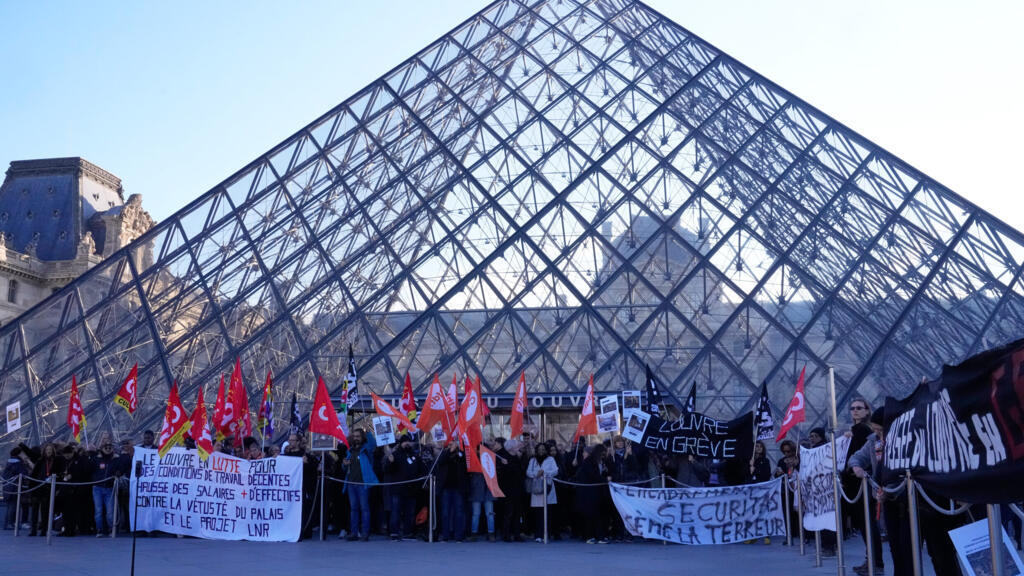
Paris’s Louvre Museum to close for the day due to strike action

Paris’s Louvre Museum closed on Monday as the bulk of its staff went on strike, the institution announced on its website. The world’s most-visited museum has been plagued by problems – ranging from security and maintenance issues to strikes – since it was targeted in a spectacular daytime robbery in October.


Issued on: 12/01/2026
By: FRANCE 24


Workers display banners outside the Louvre museum after they voted to strike for the day over working conditions and other complaints, on December 15, 2025, in Paris. © Michel Euler, AP/ File picture

The Louvre Museum was forced to close on Monday due to strike action from staff in the latest disruption at the world’s most-visited museum, management said.

“Due to public strikes, the Musee du Louvre is closed today,” the museum said in a message posted on its website, informing disappointed tourists and art lovers that their entry tickets would be automatically reimbursed.

The museum closed for a full day last month and has been only partially open on several other days since.

Nearly three months after a daylight heist, which has heaped pressure on Louvre bosses, staff are calling for more recruitment and better maintenance of the vast former royal palace.

Questions continue to swirl since the October 19 break-in over whether it was avoidable and why thieves were able to steal crown jewels worth more than $100 million.

Two intruders used a truck-mounted extendable platform to access a gallery containing the jewels, slicing through a glass door with disk-cutters in front of startled visitors before stealing eight priceless items.

As well as the robbery, two other recent incidents have highlighted maintenance problems inside the building, which chief architect François Chatillon has described as “not in a good state”.

A water leak in November damaged hundreds of books and manuscripts in the Egyptian department, while management had to shut a gallery housing ancient Greek ceramics in October because ceiling beams above it risked giving way.

(FRANCE 24 with AFP)
Fossils discovered in Morocco shed light on our African roots

Paris (AFP) – Where did our species first emerge? Fossils discovered in Morocco dating back more than 773,000 years bolster the theory that Homo sapiens originally appeared in Africa, scientists said in a study this week.


Issued on: 11/01/2026 - RFI

New fossil evidence from North Africa strengthens the case that Homo Sapiens first emerged on the African continent. © PIERRE ANDRIEU / AFP/File

The oldest Homo sapien fossils, dating from over 300,000 years ago, were found at the Jebel Irhoud northwest of Marrakesh.

Our cousins the Neanderthals mostly lived in Europe, while more recent additions to the family, the Denisovans, roamed Asia.

This has prompted an enduring mystery: who was the last common ancestor of Homo sapiens and our cousins, before the family tree split off into different branches?

This divergence is thought to have occurred between 550,000 and 750,000 years ago.

Until now, the main hominin fossils from around that time period were found in Atapuerca, Spain.

They belonged to a species dubbed "Homo antecessor", dated back around 800,000 years ago, and had features that were a mix of the older Homo erectus and those more similar to Homo sapiens and our cousins.

This sparked a contentious debate about whether our species originally emerged outside of Africa, before returning there.

There was "a gap in the fossil record of Africa", French paleoanthropologist and lead study author Jean-Jacques Hublin told the French news agency AFP.

The research published in the journal Nature fills that gap by finally establishing a firm date for fossils discovered in 1969 inside a cave in the Moroccan city of Casablanca.

Over three decades, a French-Moroccan team unearthed hominin vertebrae, teeth and fragments of jaws that have puzzled researchers.

A slender lower jawbone discovered in 2008 proved particularly perplexing.

The 773,000-year-old lower jawbone found in Morocco © Hamza Mehimdate / PROGRAMME PREHISTOIRE DE CASABLANCA/AFP


"Hominins who lived half a million or a million years generally didn't have small jawbones," Hublin said.

"We could clearly see that it was something unusual – and we wondered how old it could be."

However numerous efforts to determine its age fell short.

When Earth's magnetic field flipped

Then the researchers tried a different approach.

Every once in a while, Earth's magnetic field flips. Until the last reversal – 773,000 years ago – our planet's magnetic north pole was near the geographic south pole.

Evidence of this change is still preserved in rocks around the world.

The Casablanca fossils were discovered in layers corresponding to the time of this reversal, allowing scientists to establish a "very, very precise" date, Hublin said.

This discovery eliminates the "absence of plausible ancestors" for Homo sapiens in Africa, he added.

Antonio Rosas, a researcher at Spain's National Museum of Natural Sciences, said it adds "weight to the increasingly prevalent idea" that the origins of both our species and the last common ancestor of Homo sapiens and Neanderthals/Denisovans lie in Africa.

"This work also suggests that the evolutionary divergence of the Homo sapiens lineage might have started earlier than is conventionally assumed," Rosas, who was not involved in the research, commented in Nature.

Like Homo antecessor, the Casablanca fossils have a mix of characteristics from Homo erectus, ourselves and our cousins.

But while clearly closely related, the Moroccan and Spanish fossils are not the same, which Hublin said is a sign of "populations that are in the process of separating and differentiating".

The Middle East is considered to have been the main migration route for hominins out of Africa, however sinking sea levels at certain times could have allowed crossings between Tunisia and Sicily – or across the Strait of Gibraltar.

So the Casablanca fossils are "another piece of evidence to support the hypothesis of possible exchanges" between North Africa and southwestern Europe, Hublin said.
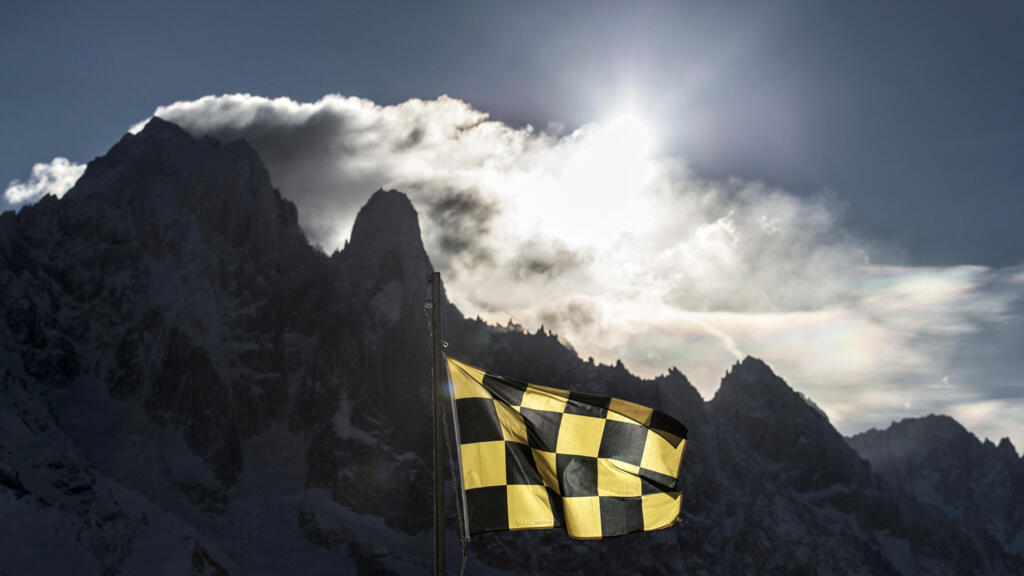
Avalanches claim six lives in French Alps as danger warnings ignored

WHY PEOPLE DIE IN AVALANCHES

A spate of fatal avalanches has struck the French Alps amid persistently unstable conditions following heavy snowfall. This has prompted renewed warnings from the authorities and stark reminders of the dangers of off-piste skiing during periods of high risk.


Issued on: 12/01/2026 -RFI


A flag indicating avalanche risk on Mont Blanc in Chamonix, France. Authorities have warned that unstable snow conditions across the region have sharply increased the risk of deadly avalanches, urging skiers to avoid off-piste terrain. AFP - JEFF PACHOUD

Three more skiers were killed by avalanches in the French Alps on Sunday, taking the death toll over the weekend to six as exceptionally unstable snow conditions continued to claim lives despite repeated warnings from the authorities.


The latest fatalities came a day after three men were swept away while skiing off-piste in Savoie.

Throughout the weekend, the Alpine massifs were classified as high risk because of an unstable snowpack following heavy snowfall.

Speaking on Sunday evening, Vanina Nicoli, the prefect of Savoie, expressed her regret that off-piste skiing – which had been “strongly discouraged” since Friday – had once again resulted in deaths and put both skiers and rescuers in danger. The avalanche risk across much of the region stood at 4 out of 5.

She stressed that the alert issued by Météo-France on Friday, along with the prefecture’s call for “extreme caution”, remains in force for the coming days. Off-piste skiing, she reiterated, is strongly discouraged until the snowpack has stabilised.

Fatal incidents across the Alps

In the Alpine resort of La Plagne, a British skier in his 50s was buried by an avalanche in the early afternoon while skiing off-piste.

A major rescue operation was launched, involving 52 rescuers, avalanche dogs and a helicopter.

Despite their efforts, it took 50 minutes to locate him beneath over 2 metres of snow, and he could not be resuscitated.

Earlier in the day, another off-piste skier was killed in Courchevel, where he was found dead after being buried by an avalanche late in the morning.

Further north in neighbouring Haute-Savoie, a 32-year-old man died after an avalanche struck in the Vallorcine area in mid-afternoon.

The snow slide swept him away while he was skiing off-piste and hurled him against a tree.

He later succumbed to his injuries, according to the Chamonix High Mountain Gendarmerie Platoon, which responded to the incident.

The previous day had already been marked by tragedy. Despite repeated warnings, three off-piste skiers died in two separate avalanches in Savoie – two men in Val d'Isère and another in Arêches-Beaufort.

The two men in Val d’Isère were not equipped with avalanche transceivers and could only be located via their mobile phones, buried under 2.5 metres of snow.

By the time they were found, it was too late.

High risk set to continue


Looking ahead, Prefect Nicoli warned that avalanche danger will remain high in the coming days.

The warning comes at a particularly busy time for resorts. After the Christmas holidays, ski areas tend to remain crowded throughout January, increasing the pressure on both slopes and rescue services.

Heavy snowfall on Friday and Saturday also caused widespread disruption.

Around 800 people were forced to spend Saturday night in gymnasiums in Moûtiers, a key transport hub for Savoie’s ski resorts.

Another 29 people were accommodated overnight in an emergency centre, while about 40 people spent part of the night stranded on a bus on the road to the Arc 2000 resort, according to the gendarmerie.

(with newswires)
EU tightens rules on 'forever chemicals' in drinking water

The European Union on Monday began enforcing stricter limits on PFAS “forever chemicals” in drinking water, requiring authorities across all member states to test tap water for contamination.


Issued on: 12/01/2026 - RFI

Tap water across the European Union is now subject to stricter testing rules for PFAS, a group of highly persistent chemicals known as “forever chemicals”. AP - Attila Kovacs

The measures stem from the recast EU Drinking Water Directive adopted in 2020. They set two safety limits for PFAS in drinking water: one covering 20 of the most concerning chemicals, and another covering all PFAS combined.

The rules require authorities to act if those limits are exceeded.

PFAS, or per- and polyfluoroalkyl substances, are a large group of human-made chemicals used in products such as pesticides, waterproof coatings and industrial materials. They break down very slowly and can remain in the environment for many years.

In France, the new EU rules follow a large national testing campaign carried out by Anses, France’s food and health safety agency, between 2023 and 2025. The aim was to get a clearer picture of PFAS contamination in drinking water before the EU deadline.

France cracks down on 'forever chemicals' in cosmetics, clothing


Nationwide snapshot

Anses screened for 35 PFAS substances in more than 600 samples of raw water and the same number of tap water samples. The testing covered mainland France and overseas territories.

Two-thirds of the samples were taken from areas where regional health agencies had identified a potential risk of PFAS pollution.

Of the 35 PFAS screened for, 20 were detected at least once in raw water and 19 in tap water.

Anses said that in the vast majority of samples, PFAS levels were below the regulatory limits that apply. Only a small number exceeded the EU threshold for the combined level of the 20 PFAS covered by the directive.

The agency said the results would help improve long-term monitoring and decide which substances may need closer attention in future.

For environmental group Générations Futures, the new rules mark a major change in how contamination is tracked nationwide.

“Finally, we are going to have data on the presence of the 20 main PFAS in tap water for the whole of France,” François Veillerette, spokesperson for Générations Futures, told France Culture radio.

Until now, monitoring had been uneven.

“In 2025, we had data in some regions, but not everywhere,” Veillerette said, adding that the new system would allow comparisons between regions, tracking over time and identification of areas most at risk.

French tap water tainted by widespread forever chemicals, study finds


A chemical left out

One substance stood out in the Anses campaign. Trifluoroacetic acid, known as TFA, was detected in 92 percent of both raw and mains-supplied water samples. Its concentration varied widely from place to place.

TFA is not included in the list of 20 PFAS covered by the new EU limit.

“It will be monitored next year, but we would have liked it to be included from 2026,” said Veillerette.

He warned that once PFAS pollution becomes established, treating drinking water becomes expensive. “If these substances settle in and increase, it will cost a lot to filter and treat the water,” he said.
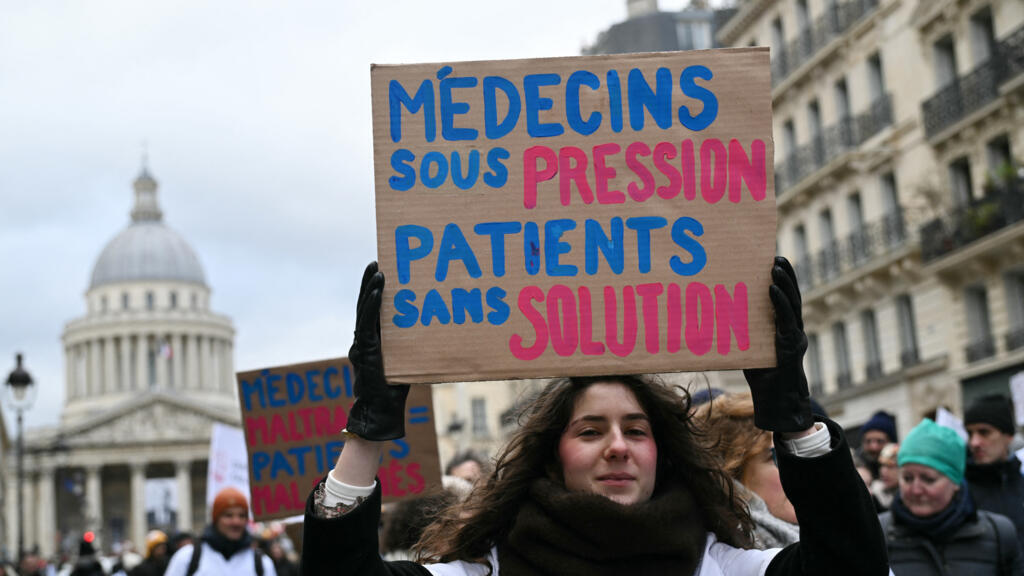
French doctors stage symbolic ‘exile’ to Brussels over health policy row

Hundreds of private-sector doctors have travelled to Brussels in a symbolic protest against French health policy, warning that mounting pressure on private medicine risks undermining patient care and hospital capacity at home.


Issued on: 12/01/2026 - 

Demonstration organised by private sector doctors to denounce an ‘authoritarian drift’ in the healthcare system in Paris, on 10 January 2026. Sign reads "doctors under pressure, patients without solutions". AFP - BERTRAND GUAY

Hundreds of anaesthetists, surgeons and obstetricians donned surgical caps, white coats and packed small suitcases on Sunday as they left France for a symbolic three-day “exile” in Brussels, protesting against the government’s health policy and what they see as a sustained squeeze on private medicine.

Around 20 buses departed from Porte Dauphine in Paris bound for the Belgian capital, carrying doctors determined to make their point heard.

“We want the government to stop attacking private medicine,” said Philippe Cuq, president of Le Bloc doctors union, shortly before the convoy set off.

Once in Brussels, the aim is to get to work. “We are going to prepare around a dozen proposals that we want to submit to the [French] prime minister when we return,” Cuq told reporters, adding that there were “around 1,500 doctors” taking part in the action.

According to him, 1,936 had initially signed up, but “several hundred were requisitioned” by the authorities and ultimately could not join.

Cuq said the organisers were now “waiting for a meeting” with Prime Minister Sébastien Lecornu.

“The head of government takes care of the farmers who feed the French people,” he remarked, “but we take care of the French people’s health.”

French doctors protest 'medical desert' reforms they say threaten independence


The battle over additional fees

At the heart of the doctors’ future proposals is the key issue of additional fees, which operating theatre practitioners argue are essential to keeping their work economically viable.

“Supplementary health insurance must reimburse these excess fees,” Cuq insisted. “Patients understand this, but they do not understand why supplementary health insurance rates are rising while reimbursements are falling.”

Several practitioners explained that official state reimbursement rates alone do not cover either their remuneration or the real costs of specialised procedures.

Dr Didier Legeais, president of the national union of urologists and a participant in the Brussels action, gave a concrete example: a nephrectomy – the removal of part of the kidney in cancer cases – is reimbursed at €506 by the national health insurance system. “It costs at least €600 if a robot is not used, and €1,200 if a robot is used,” he said.

Legeais added that additional fees also help finance care “for the 8 million patients” who do not pay them, including the 5.5 million people covered by the complementary health insurance scheme (CSS).

'Massive investment' doesn't address France's health crisis, critics warn


Knock-on effects for hospitals

The movement is already expected to have a significant impact at home. According to Lamine Gharbi, president of the Federation of Private Clinics (FHP), which backs the protest, “80 percent of private operating theatres” will be closed for the first three days of next week.

“It’s going to be tense,” he warned at Porte Dauphine, predicting increased pressure on public hospitals as patients unable to be treated in private clinics are redirected there.

The Brussels “exile” comes amid a broader wave of unrest among private doctors. Almost all organisations in the sector have called for strike action between 5 and 15 January.

Beyond fees, doctors are also angry about restrictions on sick leave prescriptions and measures they say undermine collective bargaining between the profession and the national health insurance system.

The scale of the discontent was on display on Saturday, when several thousand doctors marched through Paris – 20,000 according to organisers, and 5,000 according to police figures.

(with newswires)
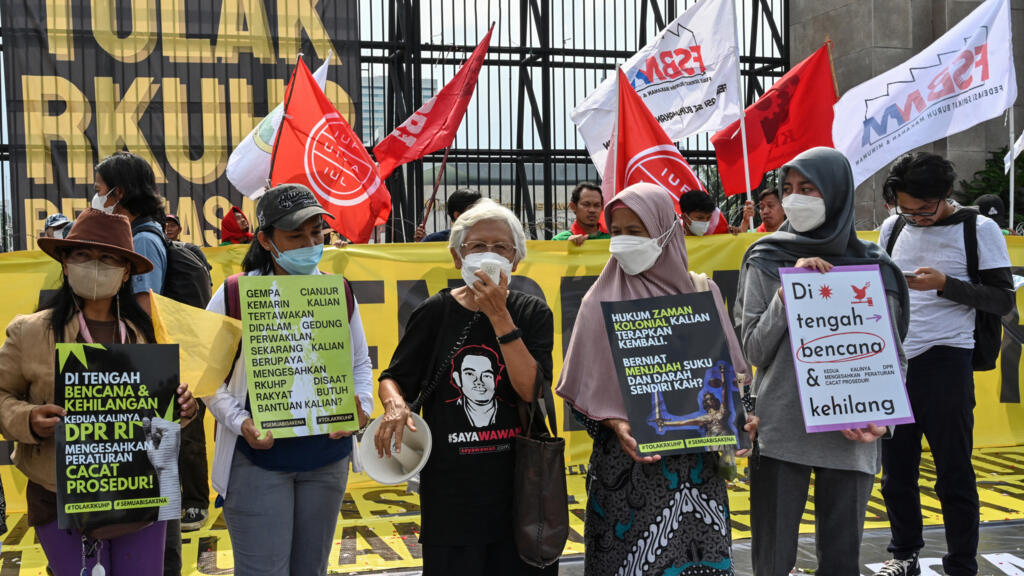
'Serious threat': Indonesia legal reform sparks rights challenges

Jakarta (AFP) – Activists are challenging Indonesia's new criminal code, which outlaws sex outside marriage and the insulting of top officials, saying it threatens rights and gives authorities broad power with minimal oversight.


Issued on: 13/01/2026 - RFI

Activists have challenged Indonesia's new criminal code, with critics have said threatens people's right © ADEK BERRY / AFP

The government has celebrated the new framework, which replaced the Dutch colonial-era criminal code on January 2, and insisted the overhaul was not seeking to quash freedoms.

But activists -- mostly students -- are trying to counter the sweeping legal changes, with some cases already before the nation's highest courts.

The new laws pose a "serious threat" to human rights, said Amnesty International Indonesia executive director Usman Hamid.

"Civil liberties are increasingly threatened by widespread criminalisation, while the rights of suspects and vulnerable groups could be neglected," he told AFP.

Then-president Joko Widodo signed the changes into law three years ago, while a separate procedural law that President Prabowo Subianto ratified last month also came into effect on January 2.

The Constitutional Court began hearing on Friday the first of several petitions challenging the new code, which authorities argue includes sufficient protections.

When lawmakers approved it in 2022, the United Nations office in Indonesia warned that some provisions could infringe on "fundamental freedoms and human rights".

But the government has defended the change.

Yusril Ihza Mahendra, a minister overseeing legal affairs and human rights, hailed a "historic momentum" for Indonesia as it sheds the penal system inherited from Dutch colonial rule, which ended eight decades ago.


'Grateful' for criticism

Sexual relations outside marriage were criminalised and now carry a sentence of up to a year in jail, effectively outlawing same-sex relations as such unions are not recognised in Indonesia.

And the cohabitation of unwedded couples can see violators imprisoned for up to six months.

To ease concerns, Law Minister Supratman Andi Agtas noted last week that only spouses, parents or children of anyone involved in these actions can report them.

Other provisions that sparked backlash include prison terms of up to three years for insults or slanders against the president or vice president.

While the code stipulates that only they can file complaints, activists say this rule would stifle criticism of public officials.

Deputy Law Minister Edward Omar Sharif Hiariej dismissed the claim that the new law was aimed at restricting the freedom of expression.

"Criticism and insults are two different things... critics are not prohibited in this article," Edward told a press conference on January 5.

President Prabowo said he was "grateful" to hear criticism.

"If I am being corrected, I consider it as I am being helped," the former general told a public event after the new code came into effect.
'Low point'

Critics warn that the new criminal procedural law, which lays out the framework for the enforcement of the criminal code, grants officials broad powers with minimal oversight.

Now "the police have a far greater authority to seize evidence, to arrest people", said Andreas Harsono, Indonesia researcher of Human Rights Watch.

The rules grant investigators, for example, the power to decide what constitutes "urgent situations", meaning they can search and seize evidence without a court order.

Authorities can also detain suspects if they do not cooperate during inquiry, said Iftitahsari, a lawyer and researcher at the Institute for Criminal Justice Reform (ICJR).

"Granting these extensive powers could... create greater space for corruption," Iftitahsari, who goes by one name, told AFP.

When the rules "are unfair from the start", abuse of power and procedural injustice can easily increase, she said.

Iftitahsari also warned of a democratic decline in Indonesia, which adopted democracy following the fall of the late leader Suharto, who ruled with an iron fist for more than three decades until the late 1990s.

The new rules "are certainly far from what is aspired" in terms of upholding the rights of citizens in a democracy, said the lawyer.

Amnesty's Usman urged the government to revoke the code, calling it a "low point in rule of law and respect for human rights in Indonesia".

The new regulations "further legitimise authoritarianism by excessively expanding police powers without adequate judicial oversight mechanisms, undermining the principle of checks and balances principle", he said.

Edward, the deputy law minister, declined to comment on these claims, citing the ongoing court case.

© 2026 AFP

Disaster losses drop in 2025, picture still 'alarming': Munich Re

Frankfurt (Germany) (AFP) – Natural disaster losses worldwide dropped sharply to $224 billion in 2025, reinsurer Munich Re said Tuesday, but warned of a still "alarming" picture of extreme weather events likely driven by climate change.


Issued on: 13/01/2026 - RFI
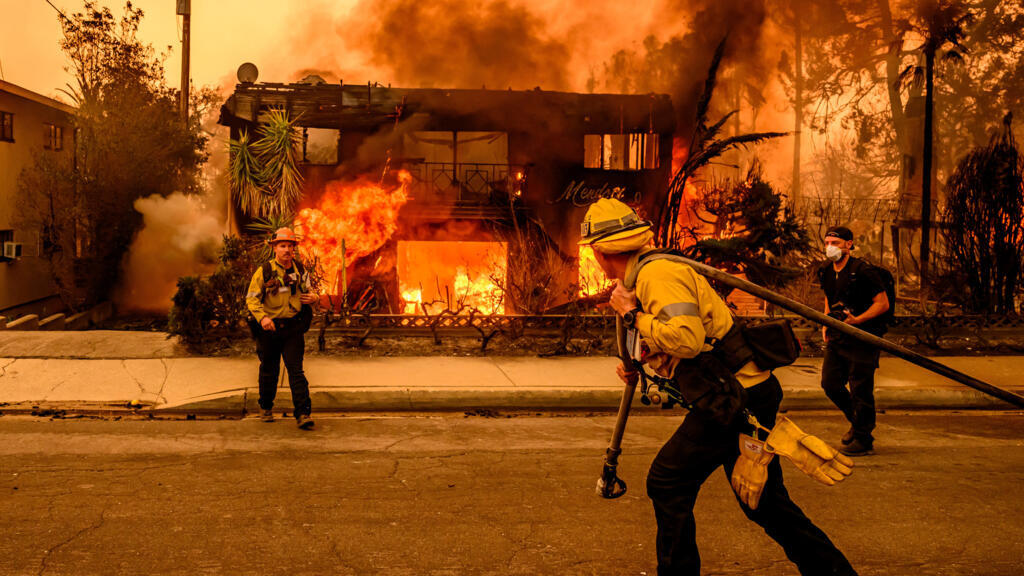
The Los Angeles wildfires were the costliest natural disasters of 2025, according to Munich Re © JOSH EDELSON / AFP/File

The figure was down nearly 40 percent from a year earlier, in part because no hurricane struck the US mainland for the first time in several years.

Nevertheless, "the big picture was alarming with regard to floods, severe... storms and wildfires in 2025", said Munich Re, a Germany-based provider of insurance for the insurance industry.

The costliest disaster of the year came in the form of Los Angeles wildfires in January, with total losses of $53 billion and insured losses of around $40 billion, Munich Re said in its annual disaster report.

It was striking how many extreme events were likely influenced by climate change in 2025 and it was just chance that the world was spared potentially higher losses, according to the group.

"The planet has a fever, and as a result we are seeing a cluster of severe and intense weather events," Tobias Grimm, Munich Re's chief climate scientist, told AFP.

Last month Swiss Re, another top player in the reinsurance industry, also reported a hefty drop for 2025, putting total losses at $220 billion.

According to Munich Re's report, insured losses for 2025 came in at $108 billion, also sharply down on last year.

Around 17,200 lives were lost in natural disasters worldwide, significantly higher than about 11,000 in 2024, but below the 10-year average of of 17,800, it said.

Grimm said 2025 was a year with "two faces".

"The first half of the year was the costliest loss period the insurance industry has ever experienced," he said -- but the second half saw the lowest losses in a decade.
LA wildfires, Myanmar quake
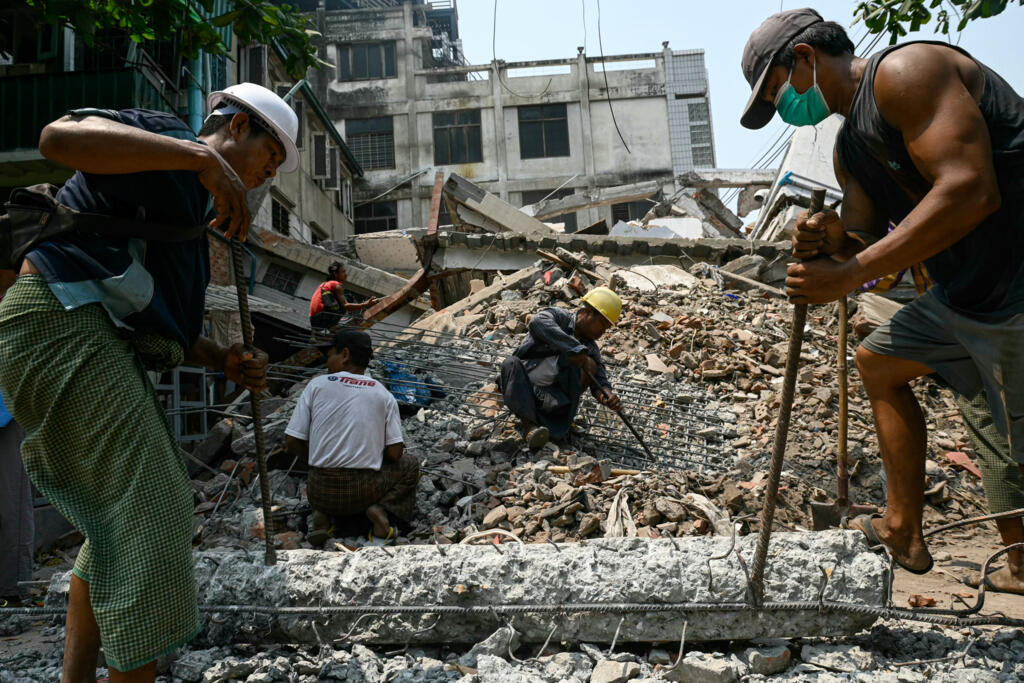

An earthquake in Myanmar was among the costliest natural disasters in 2025, according to Munich Re © Sai Aung MAIN / AFP/File


It is now the cumulative costs of smaller-scale disasters -- like local floods and forest fires -- that are having the greatest impact.

Losses from these events amounted to $166 billion last year, according to Munich Re.

After the LA wildfires, the costliest disaster of the year was a devastating earthquake that hit Myanmar in March, which is estimated to have caused $12 billion in losses, only a small share of which was insured.

Tropical cyclones caused around $37 billion in losses.

Jamaica was battered by Hurricane Melissa, one of the strongest hurricanes ever to make landfall, generating losses of around $9.8 billion.

By region, the United States' total losses amounted to $118 billion, $88 billion of which was insured -- around the same as an estimate of $115 billion total losses from US nonprofit Climate Central.

The Asia-Pacific region had losses of about $73 billion -- but only $9 billion was insured, according to the report.
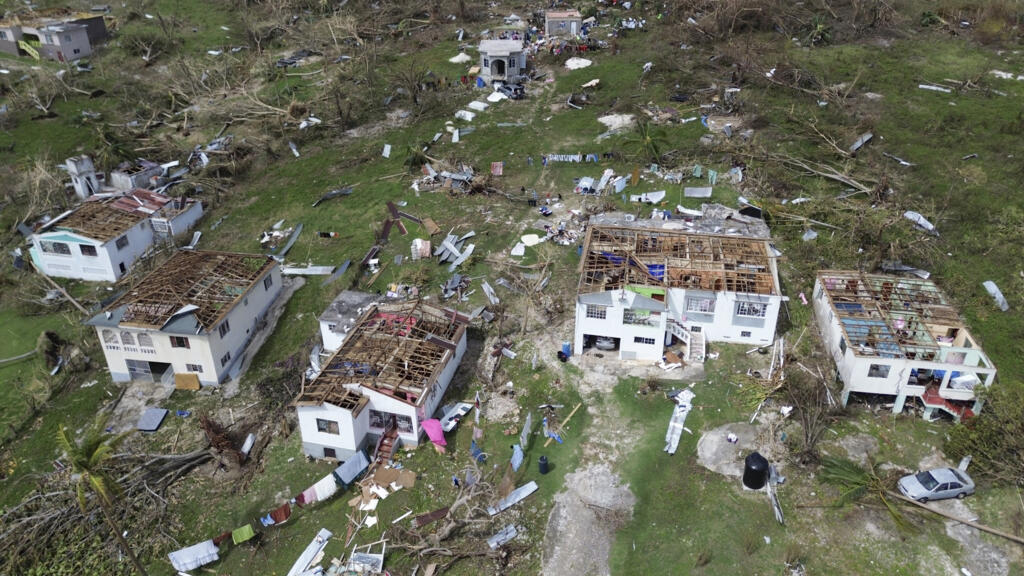

Damaged buildings in Jamaica in the aftermath of Hurricane Melissa © Ricardo Makyn / AFP/File


Australia had its second most expensive year in terms of overall losses from natural disasters since 1980 due to a series of severe storms and flooding.

Europe saw losses of $11 billion. Natural disasters in Africa led to losses of $3 billion, less than a fifth of which was insured.

The report comes at a time when scepticism towards green policies is growing, particularly since the return to power of US President Donald Trump, who derides climate science as a "hoax".

But Grimm warned that the Earth "continues to warm".

"More heat means more humidity, stronger rainfall, and higher wind speeds -- climate change is already contributing to extreme weather," he said.

© 2026 AFP
WORD OF THE DAY

Poland And Turkey Sign Accord Reminding World That Intermarium Countries Have Greater Military Capacities Than All NATO Countries Except The US – OpEd

Turkey and Poland sign a bilateral defense cooperation agreement during an official talks between Poland's Deputy PM and Minister of National Defense Wladyslaw Kosiniak-Kamysz (L) and Turkish Defense Minister Yasar Guler (R) in Ankara, Türkiye on Dec. 15, 2025. (Photo via X/@tcsavunma)


January 11, 2026 
By Paul Goble


Just before the Christmas holidays, Władysław Kosiniak-Kamysz, Poland’s deputy prime minister and minister of national defense, signed a memorandum with Yaşar Güler, Turkey’s defense minister, expanding their security cooperation and calling for development of security ties among the states between Germany and Russia.

Kosiniak-Kamysz underscored the importance of this development at a time when Russia is on the march and the US is at odds with many of its NATO allies. If the countries of the Intermarium “unity our operational possibilities, they would be greater than the majority of the European embers of NATO with the possible exception of the US” (gov.pl/web/obrona-narodowa/wzmacniamy-strategiczna-wspolprace-z-republika-turecka and ritmeurasia.ru/news–2026-01-10–varshava-predlagaet-turcii-proekt-mezhdumorja-85128).

The idea of Intermarium cooperation as a defense against Russia when the West is divided has a long history. For the most comprehensive survey, see Marek Chodakiewicz’s magisterial and in no way dated volume, Intermarium: The Land between the Black and Baltic Seas (Piscataway, 2012).

Poland has long promoted this idea as a key aspect of its foreign policy, and just prior to Putin’s launch of his expanded invasion of Ukraine, Warsaw pushed it and other countries in the region gave attention to it, given uncertainties there about how the West would react to Russian moves.

On those discussions and Moscow’s reaction to them, see windowoneurasia2.blogspot.com/2016/07/intermarium-idea-whose-time-is-coming.html,windowoneurasia2.blogspot.com/2019/11/intermarium-countries-can-no-longer.html and windowoneurasia2.blogspot.com/2022/08/intermarium-project-can-lead-to.html.

At a time, when Moscow has increased its aggression in Ukraine and the West is divided on how best to respond, Intermarium ideas are again spreading; and the Polish-Turkish memorandum is the first fruit of the renewed importance of that concept as a defense of Eastern Europe against Moscow.

Azerbaijan inaugurates its largest wind farm to date

Azerbaijan inaugurates its largest wind farm to date
Azerbaijan's President Ilham Aliyev (left) with Saudi Arabia’s Deputy Minister of Energy Nasser Al‑Qahtani at the inauguration of the Khizi–Absheron wind farm. / Ilham Aliyev via Facebook
By Cavid Aga in Warsaw January 12, 2026

Azerbaijan officially commissioned the 240-megawatt Khizi-Absheron Wind Power Plant, constructed by Saudi Arabia’s ACWA Power, at a formal ceremony held on January 8 at the Gulustan Palace in Baku according to the Presidential News Service. President Ilham Aliyev attended the event and delivered a keynote address.

The Khizi-Absheron facility, now fully operational, is the largest wind power plant commissioned in Azerbaijan to date and is ACWA Power’s first renewable electricity project in the country. The plant has an installed capacity of 240 MW and is expected to strengthen Azerbaijan’s overall power generation capacity and support rising domestic demand while enabling higher electricity exports.

Aliyev said the foundation stone for the project had been laid exactly four years earlier, in January 2022, and described the commissioning as a milestone in the modernisation of Azerbaijan’s energy system. He stated that Azerbaijan’s total installed generation capacity has nearly tripled over the past 20 years to about 10,000 MW, calling this a historic high. He added that this figure would continue to rise as new renewable projects come online in the coming years.

The project was developed with China’s PowerChina acting as the main contractor. Aliyev said PowerChina’s role in the project would extend beyond contracting, noting the company’s interest in participating in future Azerbaijani energy projects, including as an investor.

Aliyev said that renewable energy development has become a core state priority, alongside conventional generation. He said that in addition to the Khizi-Absheron wind plant, a 230 MW solar power plant has recently been commissioned, while three solar plants with a combined capacity of 340 MW are under construction in Jabrayil district. Further wind and solar projects are planned in Bilasuvar, Neftchala, Nakhchivan and other regions, including formerly occupied territories.

He also highlighted Azerbaijan’s offshore wind potential, noting that international assessments estimate wind capacity in the Azerbaijani sector of the Caspian Sea at 157 GW. According to Aliyev, signed contracts envisage the construction of 6 GW of wind and solar capacity by 2030 and a total of 8 GW by 2032. In parallel, Azerbaijan is developing its first battery energy storage systems, starting with a 250 MW project implemented by AzerEnerji.

Saudi Arabia’s Deputy Minister of Energy Nasser Al‑Qahtani described the Khizi-Absheron project as a flagship example of long-term strategic cooperation between Saudi Arabia and Azerbaijan in renewable energy. He said the partnership extends beyond power generation to grid integration, battery storage, transmission infrastructure and human capital development, with further onshore and offshore wind projects under consideration.

China’s Ambassador to Azerbaijan Lu Mei said the facility was the first large-scale wind power project implemented in Azerbaijan and noted that it would supply electricity to around 300,000 households. She highlighted the project as a practical outcome of broader China-Azerbaijan cooperation in green energy, infrastructure and technology under the Belt and Road framework.

ACWA Power founder and chief executive Mohammed Abunayyan said the project reflected Azerbaijan’s long-term energy vision and investment environment, adding that the company plans to expand its activities in the country. He confirmed that ACWA Power is preparing to implement Azerbaijan’s first Caspian Sea desalination project and said the company views Azerbaijan as a future exporter of both hydrocarbons and green energy.

Following speeches by the participating officials, President Aliyev and Abunayyan jointly launched the Khizi-Absheron Wind Power Plant, marking the start of its commercial operation.