Wednesday, January 14, 2026

Modest Gain, Major Headwinds: The Energy Transition at the Crossroads


 January 14, 2026

Solar array, John F. Kennedy High School. Mt. Angel, Oregon. Photo: Jeffrey St. Clair.

This past November, the United Nations annual Emissions Gap Report found modest progress in the fight against global warming over the past year. Yet there was even a reported catch to that small piece of decent news, namely, the progress is at risk due to the policies of the Trump administration. Overall, the report found that based on current policies and technological trends, the planet should be expected to warm by roughly 2.8 degrees Celsius this century compared to preindustrial times. This could be lowered to 2.3 degrees if every country hits its official targets, which many are struggling to do. Of course, this is the tenth anniversary of the Paris Accords, where countries pledged to limit warming to 1.5 degrees.

A year ago, the Biden administration pledged a 61 percent cut in emissions by 2035. However, emissions have dropped only 17 percent so far and the Trump administration has abandoned the goal. There was a nugget of good news this past March when a majority of electricity produced in the U.S. was produced from non-fossil fuels for the first time but just this past week saw the administration pause five offshore wind projects due to unspecified ‘national security’ concerns (perhaps allegedly about interference with radar signals due to electromagnetic radiation, but needless to say, other countries such as the UK and Denmark have offshore wind with no issues). Roughly 10 percent of U.S. electricity comes from wind, but mostly from onshore turbines in the Great Plains and Texas. As of now, the U.S. has three offshore operational windfarms, all in the northeast. Even if one completely disregarded global warming concerns, it’s a bizarre policy given that, after decades of being flat, electricity usage is growing in the U.S. right along with the power bills of Americans. Residential electricity rates have risen across the U.S. to the tune of over 30 percent on average since 2020 and almost double the rate of inflation in the past year. And it’s not like Trump’s vow of more oil production is panning out. Despite throwing the kitchen sink at it, production is up only slightly due to efficiency gains. But it is barely a drop in the global bucket. For a business genius, it appears lost on Trump that profits are dearer to oil companies than producing oil.

There was also the recent news that Ford is ceasing production of its all-electric F-150 Lightning. The F-150 has long been a top-selling vehicle in the U.S. and its EV version was announced in 2021 with great fanfare. Yet Ford wasn’t able to hit its initial target price of $40,000 (the 2025 model started at $55,000) or nor overcome consumer concerns over limited range when hauling. Thanks largely to the Trump administration’s eliminating the EV tax credit, the percentage of EV sales appears to have dropped to the single digits. Transportation is the largest source of carbon emissions in the U.S.

In the midst of a mostly uneventful COP30- the U.S. didn’t even attend and an agreement about deforestation failed to pass, the climate movement looks mostly to China these days for positive news. Of course, it’s not all good news there either. China still accounted for 93 percent of new global coal-power construction in 2024. Coal still accounts for over half of China’s primary energy consumption and China alone burns over half the world’s coal production. China is also the world’s leading emitter of other greenhouse gases such as methane and nitrous oxide. On the other hand, China has driven three-quarters of solar PV manufacturing since 2010. The dominance is similar in wind turbines and industrial electrification technology. The $329 billion China sunk in clean energy supply chains from 2019-2023 dwarfed other countries (of course there are geopolitical reasons: China imports 90 percent of its oil). China now accounts for over 70 percent of electric car production on the planet with production still soaring.

All this is heavily subsidized at both the local and national level. In fact, it may become a classic case of overproduction. According to AlixPartners, there are 129 brands selling EVs and plug-in hybrids in China as of last year, only 15 of which are projected to be profitable by 2030. With production far too much for the national market much of this surplus is being exported. China’s trade surplus reached an unheard of $1 trillion this year. While the U.S. and EU erect barriers most of China’s solar panels end up in the Middle East and Pakistan.

Pakistan in particular is exploding in solar energy. In the first six months alone, Pakistan installed the equivalent of 30 percent of the national grid in solar panels. As of this year, solar is the largest electricity source in Pakistan, about 25 percent (excellent news obviously, blackouts have been endemic in Pakistan for a long time, though with more and more people paying less and less into the grid this risks furthering grid decline. Policy must tackle this as well). As for EVs, even in the UK 13 percent of new car registrations are now Chinese EVs, double from a year ago.

 In his excellent book Apple in China: The Capture of the World’s Greatest Company, Peter McGee explains the sheer amount that Apple poured into the country. He writes:

The size and influence of Apple aren’t properly understood, in part, because they are so difficult to fathom. How can it be, for instance, that demand from China’s 1.4 billion people indirectly supports, across all industries, between 1 million and 2.6 million jobs in America; whereas, by Tim Cook’s estimates, Apple alone creates 5 million jobs in China- 3 million in manufacturing and 1.8 million in app development.

Or take Apple’s 2016 pledge to invest $275 billion in China. This was a greater amount than all American and Canadian private investment into Mexico from the signing of NAFTA in 1993 through 2020. The Marshall Plan itself involved spending $13.3 billion over four years in sixteen European countries- or $131 billion in 2016 dollars. When it comes to, say, EVs is there any law of physics that the technological transfer process can’t swing back the other way with joint ventures between U.S. and Chinese car companies?

Obviously, there are plenty of mountains left to climb. A central fact that still hangs over the energy transition remains that despite the attention that electricity gets, even with the rise of data centers and EVs, electricity still only accounts for about 22 percent of global energy consumption (this goes largely overlooked in books like Bill McKibben’s too rosy Here Comes the Sun). Put it this way: an average person living in an OECD nation uses 8 megawatt-hours of electricity annually, but their total annual energy consumption is 46 megawatt-hours. Vital sectors such as concrete and steel production remain to be decarbonized. Efforts are still in their infancy. Green steel currently makes up less than 1 percent of global production, but recycled steel made with electric arc furnaces accounts for 25 percent. Targets can be set but much more public funding is needed to scale up production for both. Scaling up lab-grown meat also remains a tremendous challenge.

And there is plenty to gain with better efficiency. Buildings consume about 20 percent of global energy, but due to poor insulation and ventilation, they waste between a fifth of a third of it, as compared to well-designed indoor spaces. Perhaps worst of all food production claims about 20 percent of the world’s fuels and primary energy, and estimates are that 20 percent of all food is lost or wasted. All this can be greatly improved.

Trump won’t be president much longer. While pessimism is always tempting, it never really accomplishes anything. The fight is ongoing and every tenth of a degree of warming prevented is important.

Joseph Grosso is a librarian and writer in New York City. He is the author of Emerald City: How Capital Transformed New York (Zer0 Books).


The Fukushima Coverup, Fifteen Years On


January 14, 2026

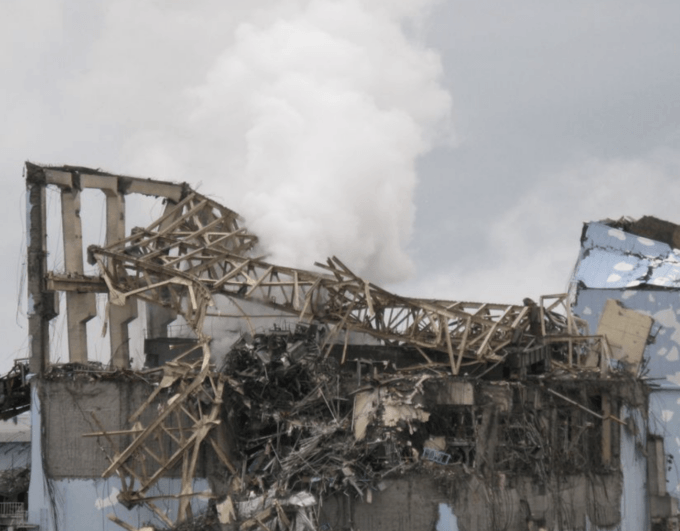
Fukushima Unit 3 after the explosion on 15 March 2011. Image Wikipedia.

Sooner or later, in any foolproof system, the fools are going to exceed the proofs.[1]

I awoke on the Friday morning of March 11, 2011, to a peaceful, sunny, relatively warm early spring day in Vermont. While I was sleeping, an earthquake and tsunami had decimated the Pacific coast of Japan. More than a dozen Japanese nuclear plants took their cooling water from the Pacific Ocean. It was obvious to me by 8 AM that three of the six nukes at Fukushima were already melting down and the remaining reactors in Eastern Japan were also in jeopardy. I knew a catastrophe was unfolding at Tokyo Electric’s (TEPCO) Fukushima Daiich Reactors.

As the United States was waking up that Friday morning, the US nuclear industry spin doctors were already circling the wagons and framing the developing catastrophe as being of little consequence. At 8 AM Pacific time on March 11, in Washington State, Dr. James Conca, the Laboratory Director of the Hanford (Washington) Laboratory, site of the nation’s largest nuclear dump, said:

After representatives of the nuke industry touted the industry’s safety record— working at a nuclear plant is  “safer than working at Toys ‘R’ Us,” Hanford lab director Jim Conca told the committee—committee members asked the industry reps whether they were confident that all the safety systems they’d just praised would hold up in Japan.

Conca added:  “I’m very happy that Japan has 26 percent nuclear because those will not be the problems. When you see the pictures things burning [in Japan], it won’t be nuclear, it’ll be the gas-fired power plants and things like that. Nuclear is no problem at all.”[2]

That same morning, the Public Relations Director of the Nuclear Energy Institute, the Nuclear Industry’s Lobbying, Campaign Financing, Public Relations and Marketing organization, chimed in as well, adding:

Asked specifically about the nuclear situation in Japan,  Nuclear Energy Institute public affairs director Jim Colgary reassured Rep. Deb Eddy (D-48) that the safety systems in place at the nuclear reactors “absolutely” would come through. “It’s a conservative safety system,” Colgary said. … Yes, I’m adequately sure that the safety systems in place work. ”

Those remarks by NEI didn’t age well, but they were never expected to be correct. From my training forty years earlier in the Northeast Utilities Speakers Bureau, I could see the nuclear spin already at work, trying to strike first, to capture the headline. That’s why framing a discussion as early as possible is so important. I wasn’t the only person who witnessed the nuclear spin doctors trying to change the narrative while Fukushima was melting down. In his book, even the former Chairman of the Nuclear Regulatory Commission, Dr. Greg Jaczko, identified the immediate desire of the nuclear lobby to minimize the Fukushima meltdowns on the weekend after the meltdowns began!

“… that ignores the unwritten laws of nuclear politics. Regulators are there to ensure safety, but they must always balance that need against the imperative that the industry survive … we said very little during the first weekend [March 12/13], despite tremendous pressure from nuclear industry proponents who wanted us to speak out. The message they wanted us to deliver was that everything was fine. I was not convinced it was… Vivid images that resembled a Hollywood disaster movie were circulating, and soon the press, the environmental community, and Congress would ask what the Fukushima accident meant to the United States. I knew the nuclear industry would have an answer ready: “This is a Japanese problem. American plants are safe.”[3]

Many tried to dismiss Fukushima as a result of Japanese unwillingness to challenge authority… But that same obeisance to the powerful is exactly what I saw at home at the NRC. American politicians had long ago been lead to believe that these kinds of calamities were no longer possible…In hindsight, the Fukushima accident reveled what has long been the sad truth about nuclear safety: the nuclear power industry has developed too much control over the NRC and Congress. … because the industry relies too much on controlling its own regulation, the continued use of nuclear power will lead to catastrophe…. That is a truth we all must confront.[4]

The efforts to quickly frame nuclear power as safe and to minimize the impact of the Fukushima meltdowns extended to Europe as well as the US and Japan. But in Europe, the UK government was pushing the nuclear industry, not the other way around! According to the UK’s Guardian Newspaper:

British government officials approached nuclear companies to draw up a co-ordinated public relations strategy to play down the Fukushima nuclear accident just two days after the earthquake and tsunami in Japan and before the extent of the radiation leak was known. Internal emails seen by the Guardian show how the business and energy departments worked closely behind the scenes with the multinational companies EDF Energy, Areva, and Westinghouse to try to ensure the accident did not derail their plans for a new generation of nuclear stations in the UK.

“This has the potential to set the nuclear industry back globally,” wrote one official at the Department for Business, Innovation and Skills (BIS), whose name has been redacted. “We need to ensure the anti-nuclear chaps and chapesses do not gain ground on this. We need to occupy the territory and hold it. We really need to show the safety of nuclear.”

The business department emailed the nuclear firms and their representative body, the Nuclear Industry Association (NIA), on 13 March, two days after the disaster knocked out nuclear plants and their backup safety systems at Fukushima. The department argued it was not as bad as the “dramatic” TV pictures made it look, even though the consequences of the accident were still unfolding and two major explosions at reactors on site were yet to happen.

“Radiation released has been controlled – the reactor has been protected,” said the BIS official, whose name has been blacked out. “It is all part of the safety systems to control and manage a situation like this.”

The official suggested that if companies sent in their comments, they could be incorporated into briefs to ministers and government statements. “We need to all be working from the same material to get the message through to the media and the public. “Anti-nuclear people across Europe have wasted no time blurring this all into Chernobyl and the works,” the official told Areva. “We need to quash any stories trying to compare this to Chernobyl.”[5]

Some Japanese scientists became quickly aware of the danger from the radioactive clouds that were enveloping Toyko. As recently as 2025, the Bulletin Of The Atomic Scientists published a previously untold story stating:

Japanese radiochemist Satoshi Utsunomiya found that air samples from March 15, 2011, in Tokyo contained a very high concentration of insoluble cesium microparticles. He immediately realized the implications of the findings for public safety, but his study was kept from publication for years….The controversy surrounding his attempts to publish his findings nearly cost him his career and prevented his results from being widely known by the Japanese public ahead of the 2020 Summer Olympics in Tokyo[6]

What was unfolding on the other side of the world was not a “Japanese problem.” The Fukushima Daiichi reactors that were most in jeopardy were designed in the mid-1960s by a US company (GE) and constructed by a US company (EBASCO) and there were more than 20 reactors with the similar design in the United States, with still others in Germany, Sweden, Spain and Mexico! The worldwide nuclear industry and NEI were singing Bobby McFerrin’s song “Don’t Worry, Be Happy”, while at the six reactors at Fukushima Daiichi and at the four similar Fukushima Dainni reactors several miles to the south, chaos and courage reigned.

Notes

1. Quote created by the author first spoken in California in 1994 

2. (source: https://www.seattlemet.com/articles/2011/3/17/nuclear-is-no-problem-at-all ) 

3. Confessions of a Rogue Nuclear Regulator, by Gregory B. Jaczko, Simon & Shuster, 2019, pages 68, 77 and 80. ISBN 978-1-4767-5576-2 

4. IBID pages 21 and 22. 

5. The Guardian: Revealed: British government’s plan to play down FukushimaJune 30, 2011 By Rob Edwards 

6. https://thebulletin.org/premium/2025-01/how-fukushimas-radioactive-fallout-in-tokyo-was-concealed-from-the-public/#post-heading 

Arnie Gundersen is the Chief Engineer, board member, and resident “science guy” at the Fairewinds Energy Education NGO. Since the catastrophe at Fukushima, Arnie focuses his energy worldwide on the migration of radioactive microparticles. During his multiple trips to Japan, Arnie has met and trained community-volunteer citizen-scientists to study the migration of radioactive microparticles from Fukushima in two co-authored peer-reviewed scientific articles.