Wednesday, January 14, 2026

'Disgrace': Furor as Pete Hegseth's Pentagon partners with Elon Musk

Stephen Prager,
 Common Dreams
January 13, 2026 
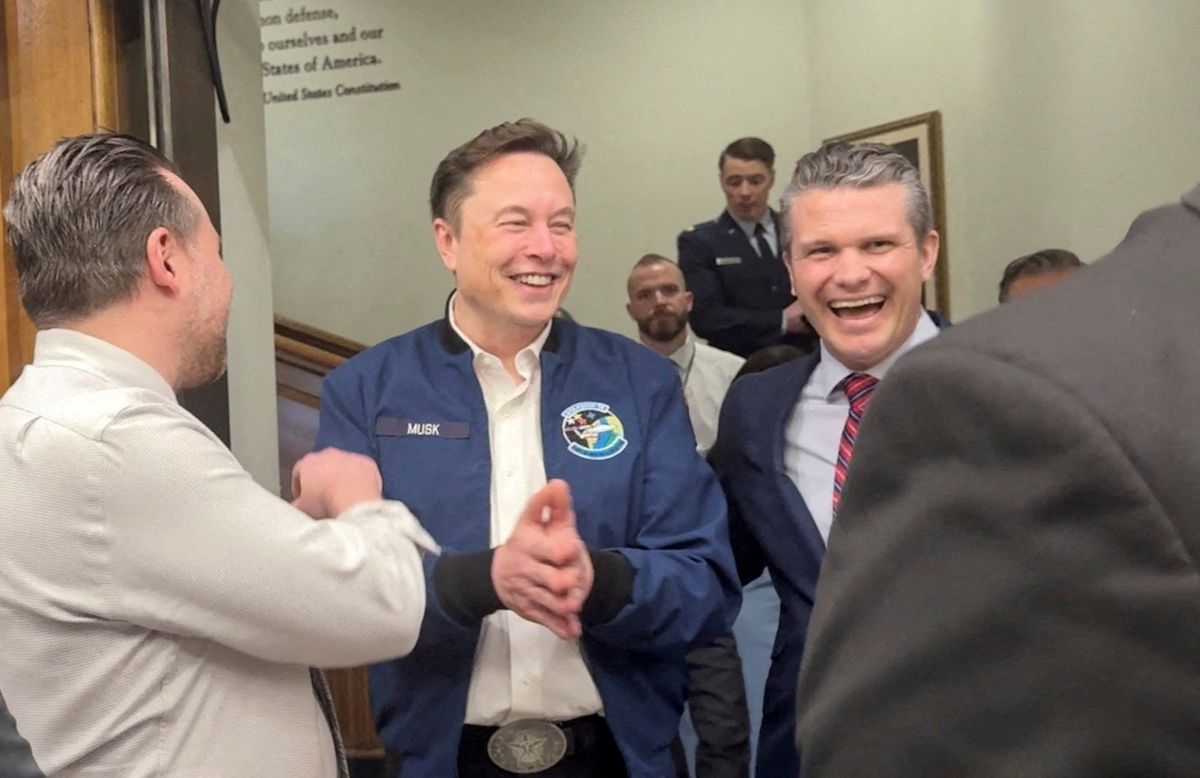

Elon Musk and U.S. Defence Secretary Pete Hegseth laugh at the Pentagon in Washington, D.C., U.S., March 21, 2025 in this screengrab obtained from a video. REUTERS/Idrees Ali

Elon Musk, the world’s richest man and the owner of the social media app X, has faced a mountain of outrage in recent weeks as his platform’s artificial intelligence chatbot “Grok” has been used to generate sexualized deepfake images of non-consenting women and children, and Musk himself has embraced open white nationalism.

But none of this seems to be of particular concern to Defense Secretary Pete Hegseth. Despite the swirl of scandal, he announced on Monday that Musk’s chatbot would be given intimate access to reams of military data as part of what the department described as its new “AI acceleration strategy.”

During a speech at the headquarters of SpaceX, another company owned by Musk, Hegseth stood alongside the billionaire and announced that later this month, the department plans to “make all appropriate data” from the military’s IT systems available for “AI exploitation,” including “combat-proven operational data from two decades of military and intelligence operations.”

As the Associated Press noted, it’s a departure from the more cautious approach the Biden administration took toward integrating AI with the military, which included bans on certain uses “such as applications that would violate constitutionally protected civil rights or any system that would automate the deployment of nuclear weapons.”

While it’s unclear if those bans remain in place under President Donald Trump, Hegseth said during the speech he will seek to eschew the use of any AI models “that won’t allow you to fight wars” and will seek to act “without ideological constraints that limit lawful military applications,” before adding that the Pentagon’s AI will not be “woke” or “equitable.”

He added that the department “will unleash experimentation, eliminate bureaucratic barriers, focus our investments, and demonstrate the execution approach needed to ensure we lead in military AI. He added that ”we will become an ‘AI-first’ warfighting force across all domains.

Hegseth’s embrace of Musk hardly comes as a surprise, given his role in the Trump administration’s dismantling of the administrative state as head of its so-called “Department of Government Efficiency” (DOGE) last year, and his record $290 million in support for the president’s 2024 election campaign.

But it is quite noteworthy given the type of notoriety Grok has received of late after it introduced what it called “spicy mode” for the chatbot late last year, which “allows users to digitally remove clothing from images and has been deployed to produce what amounts to child pornography—along with other disturbing behavior, such as sexualizing the deputy prime minister of Sweden,” according to a report last month from MS NOW (formerly MSNBC).

It’s perhaps the most international attention the bot has gotten, with the United Kingdom’s media regulator launching a formal investigation on Monday to determine whether Grok violated the nation’s Online Safety Act by failing to protect users from illegal content, including child sexual abuse material.

The investigation could result in fines, which, if not followed, could lead to the chatbot being banned, as it was over the weekend in Malaysia and Indonesia. Authorities in the European UnionFranceBrazil, and elsewhere are also reviewing the app for its spread of nonconsensual sexual images, according to the New York Times.

It’s only the latest scandal involving the Grok, which Musk pitched as an “anti-woke” and “truth-seeking” alternative to applications like ChatGPT and Google’s Gemini.

At several points last year, the chatbot drew attention for its sudden tendency to launch into racist and antisemitic tirades—praising Adolf Hitler, accusing Jewish people of controlling Hollywood and the government, and promoting Holocaust denial.

Before that, users were baffled when the bot began directing unrelated queries about everything from cats to baseball back to discussions about Musk’s factually dubious pet theory of “white genocide” in South Africa, which the chatbot later revealed it was “instructed” to talk about.

Hegseth’s announcement on Monday also comes as Musk has completed his descent into undisguised support for a white nationalist ideology over the past week.

The billionaire’s steady lurch to the far-right has been a years-long process—capped off last year, with his enthusiastic support for the neofascist Alternative for Germany Party and apparent Nazi salute at Trump’s second inauguration.

But his racist outlook was left impossible to deny last week when he expressed support for a pair of posts on X stating that white people must “reclaim our nations” or “be conquered, enslaved, raped, and genocided” and that “if white men become a minority, we will be slaughtered,” necessitating “white solidarity.”

While details about the expansiveness of Grok’s use by the military remain scarce, Musk’s AI platform, xAI, announced in July that it had inked a deal with the Pentagon worth nearly $200 million (notably just a week after the bot infamously referred to itself as “MechaHitler”).

In September, reportedly following direct pressure from the White House to roll it out “ASAP,” the General Services Administration announced a “OneGov” agreement, making Grok available to every federal agency for just $0.42 apiece.

That same month, Sen. Elizabeth Warren (D-Mass.) sent a letter to Hegseth warning that Musk, who’d also used Grok extensively under DOGE to purge disloyal government employees, was “gaining improper advantages from unique access to DOD data and information.” She added that Grok’s propensity toward “inaccurate outputs and misinformation” could “harm DOD’s strategic decisionmaking.”

Following this week’s announcement, JB Branch, the Big Tech accountability advocate at Public Citizensaid on Tuesday that, “allowing an AI system with Grok’s track record of repeatedly generating nonconsensual sexualized images of women and children to access classified military or sensitive government data raises profound national security, civil rights, and public safety concerns.”

“Deploying Grok across other areas of the federal government is worrying enough, but choosing to use it at the Pentagon is a national security disgrace,” he added. “If an AI system cannot meet basic safety and integrity standards, expanding its reach to include classified data puts the American public and our nation’s safety at risk.”

Pentagon Partners With Musk’s AI Chatbot Despite Child Porn Scandal and Owner’s Embrace of White Nationalism

“If an AI system cannot meet basic safety and integrity standards, expanding its reach to include classified data puts the American public and our nation’s safety at risk,” said a tech expert at Public Citizen.
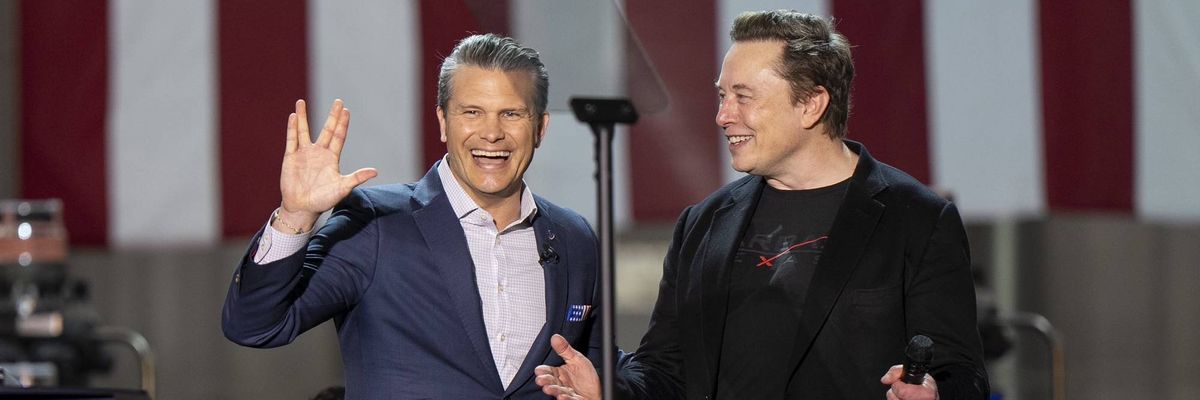

Secretary of Defense Pete Hegseth stands with Elon Musk at the headquarters of his company SpaceX in Starbase, Texas on January 12, 2025.
(Photo from Secretary of Defense Pete Hegseth)

Stephen Prager
Jan 13, 2026
COMMON DREAMS


Elon Musk, the world’s richest man and the owner of the social media app X, has faced a mountain of outrage in recent weeks as his platform’s artificial intelligence chatbot “Grok” has been used to generate sexualized deepfake images of nonconsenting women and children, and Musk himself has embraced open white nationalism.

But none of this seems to be of particular concern to Defense Secretary Pete Hegseth. Despite the swirl of scandal, he announced on Monday that Musk’s chatbot would be given intimate access to reams of military data as part of what the department described as its new “AI acceleration strategy.”

During a speech at the headquarters of SpaceX, another company owned by Musk, Hegseth stood alongside the billionaire and announced that later this month, the department plans to “make all appropriate data” from the military’s IT systems available for “AI exploitation,” including “combat-proven operational data from two decades of military and intelligence operations.”

As the Associated Press noted, it’s a departure from the more cautious approach the Biden administration took toward integrating AI with the military, which included bans on certain uses “such as applications that would violate constitutionally protected civil rights or any system that would automate the deployment of nuclear weapons.”

While it’s unclear if those bans remain in place under President Donald Trump, Hegseth said during the speech he will seek to eschew the use of any AI models “that won’t allow you to fight wars” and will seek to act “without ideological constraints that limit lawful military applications,” before adding that the Pentagon’s AI will not be “woke” or “equitable.”

He added that the department “will unleash experimentation, eliminate bureaucratic barriers, focus our investments, and demonstrate the execution approach needed to ensure we lead in military AI. He added that ”we will become an ‘AI-first’ warfighting force across all domains.


Hegseth’s embrace of Musk hardly comes as a surprise, given his role in the Trump administration’s dismantling of the administrative state as head of its so-called “Department of Government Efficiency” (DOGE) last year, and his record $290 million in support for the president’s 2024 election campaign.

But it is quite noteworthy given the type of notoriety Grok has received of late after it introduced what it called “spicy mode” for the chatbot late last year, which “allows users to digitally remove clothing from images and has been deployed to produce what amounts to child pornography—along with other disturbing behavior, such as sexualizing the deputy prime minister of Sweden,” according to a report last month from MS NOW (formerly MSNBC).


It’s perhaps the most international attention the bot has gotten, with the United Kingdom’s media regulator launching a formal investigation on Monday to determine whether Grok violated the nation’s Online Safety Act by failing to protect users from illegal content, including child sexual abuse material.

The investigation could result in fines, which, if not followed, could lead to the chatbot being banned, as it was over the weekend in Malaysia and Indonesia. Authorities in the European UnionFranceBrazil, and elsewhere are also reviewing the app for its spread of nonconsensual sexual images, according to the New York Times.

It’s only the latest scandal involving the Grok, which Musk pitched as an “anti-woke” and “truth-seeking” alternative to applications like ChatGPT and Google’s Gemini.

At several points last year, the chatbot drew attention for its sudden tendency to launch into racist and antisemitic tirades—praising Adolf Hitler, accusing Jewish people of controlling Hollywood and the government, and promoting Holocaust denial.

Before that, users were baffled when the bot began directing unrelated queries about everything from cats to baseball back to discussions about Musk’s factually dubious pet theory of “white genocide” in South Africa, which the chatbot later revealed it was “instructed” to talk about.

Hegseth’s announcement on Monday also comes as Musk has completed his descent into undisguised support for a white nationalist ideology over the past week.

The billionaire’s steady lurch to the far-right has been a years-long process—capped off last year, with his enthusiastic support for the neofascist Alternative for Germany Party and apparent Nazi salute at Trump’s second inauguration.

But his racist outlook was left impossible to deny last week when he expressed support for a pair of posts on X stating that white people must “reclaim our nations” or “be conquered, enslaved, raped, and genocided” and that “if white men become a minority, we will be slaughtered,” necessitating “white solidarity.”


While details about the expansiveness of Grok’s use by the military remain scarce, Musk’s AI platform, xAI, announced in July that it had inked a deal with the Pentagon worth nearly $200 million (notably just a week after the bot infamously referred to itself as “MechaHitler”).

In September, reportedly following direct pressure from the White House to roll it out “ASAP,” the General Services Administration announced a “OneGov” agreement, making Grok available to every federal agency for just $0.42 apiece.

That same month, Sen. Elizabeth Warren (D-Mass.) sent a letter to Hegseth warning that Musk, who’d also used Grok extensively under DOGE to purge disloyal government employees, was “gaining improper advantages from unique access to DOD data and information.” She added that Grok’s propensity toward “inaccurate outputs and misinformation” could “harm DOD’s strategic decisionmaking.”

Following this week’s announcement, JB Branch, the Big Tech accountability advocate at Public Citizensaid on Tuesday that, “allowing an AI system with Grok’s track record of repeatedly generating nonconsensual sexualized images of women and children to access classified military or sensitive government data raises profound national security, civil rights, and public safety concerns.”

“Deploying Grok across other areas of the federal government is worrying enough, but choosing to use it at the Pentagon is a national security disgrace,” he added. “If an AI system cannot meet basic safety and integrity standards, expanding its reach to include classified data puts the American public and our nation’s safety at risk.”
'We're not going to back down': UK hits back at Trump admin over Elon Musk probe

Ewan Gleadow
January 14, 2026 
RAW STORY


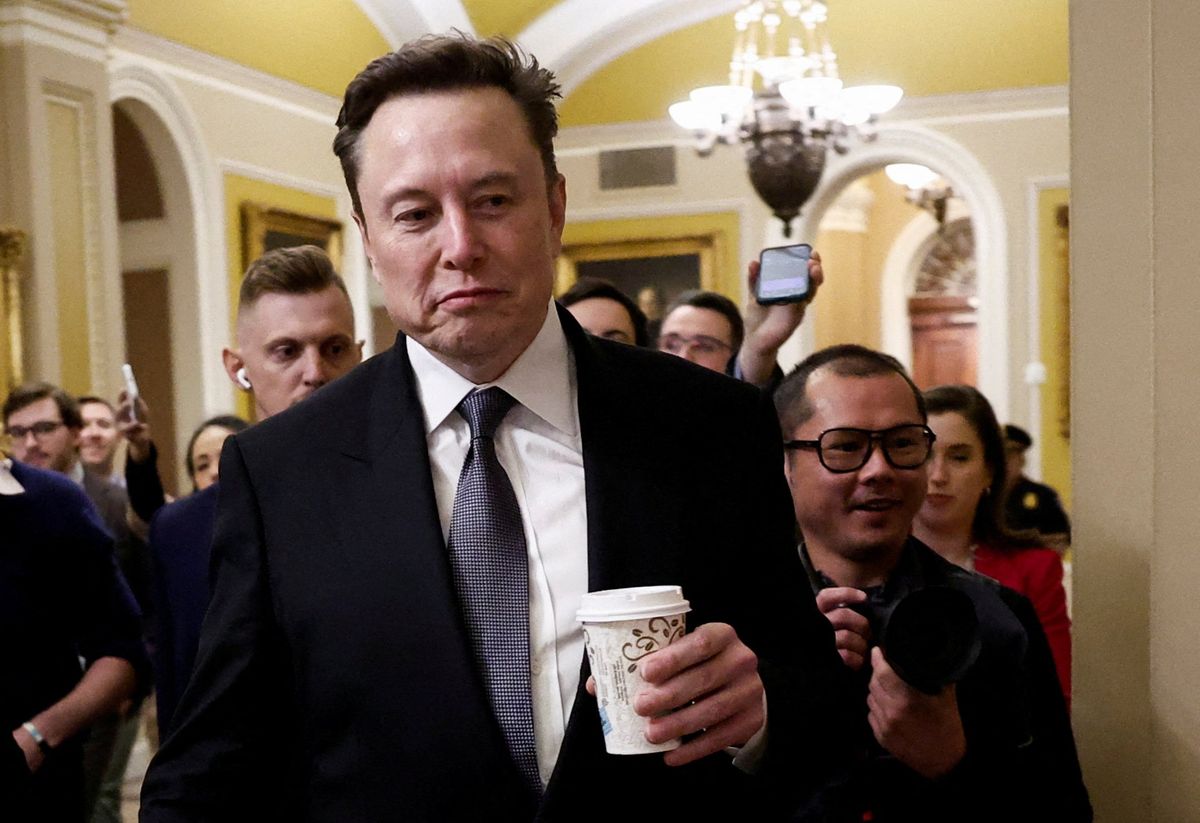
Elon Musk walks on Capitol Hill on the day of a meeting with Senate Republican Leader-elect John Thune (R-SD), in Washington, U.S. December 5, 2024. REUTERS/Benoit Tessier TPX IMAGES OF THE DAY

The UK government has hit back at a US administration official's threat over a probe into Elon Musk and X.

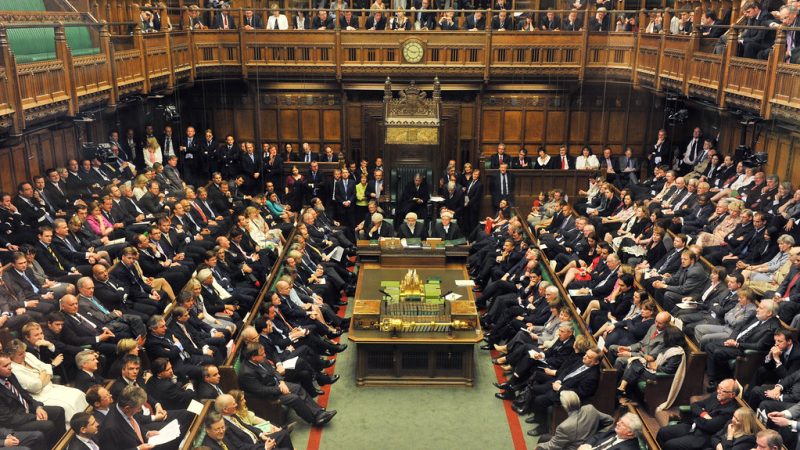
Online safety watchdog OFCOM is investigating the social media app for the sharing of non-consensual sex images which are artificially generated through the Grok tool, Sky News reported. Concerns over the deepfakes spread on the platform have since been aired in the UK's House of Commons, the elected house of representatives.

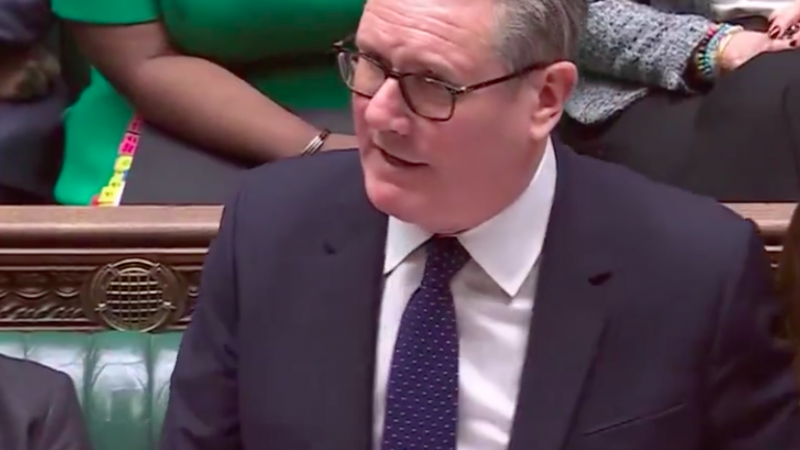
Prime Minister Sir Keir Starmer said, "I have been informed this morning that X is acting to ensure full compliance with UK law. If so, that is welcome, but we're not going to back down, and they must act."

"We will take the necessary measures. We will strengthen existing laws and prepare for legislation if it needs to go further, and Ofcom will continue its independent investigation."

Donald Trump's administration representative, Sarah B. Rogers, weighed in on the investigation into X yesterday (January 13).

Rogers, an under secretary of state for public diplomacy, says the department will wait for the verdict of OFCOM on Musk's platform before it responds.

Rogers, speaking to GB News, said, "I would say from America's perspective... nothing is off the table when it comes to free speech. Let's wait and see what OFCOM does and we'll see what America does in response. This is an issue dear to us, and I think we would certainly want to respond."

"Our leadership understands this because President Trump was himself a target of censorship," Rogers said. "President Trump was banned by Twitter - the old regime before Elon bought it."

"You have to take that comparison seriously. That's why our President cares about this issue - because people couldn't deal with his popularity, they couldn't deal with his success, and they tried to just shut him up so no one could hear him."

OFCOM's powers fall under the Online Safety Act, which states that online platforms have to make sure they're not hosting illegal content.

If X is found to not comply with the Online Safety Act, Ofcom can issue a fine of up to 10% of its worldwide revenue or £18m, and if that is not enough, can go as far as getting a court approval to block the site.

Trump admin issues ominous threat as UK mulls banning Musk's X: 'Nothing is off the table'

Ewan Gleadow
January 13, 2026 
RAW STORY


The Department of State has warned "nothing is off the table" should the UK move to ban Elon Musk's social media platform, X.

Donald Trump's administration representative, Sarah B. Rogers, weighed in on the investigation into X. Rogers, an under secretary of state for public diplomacy, says the department will wait for the verdict of OFCOM on Musk's platform before it responds. OFCOM, the UK's online safety and communications watchdog, is investigating X over concerns about AI-generated deepfakes spread on the platform.

Rogers, speaking to GB News, said, "I would say from America's perspective... nothing is off the table when it comes to free speech. Let's wait and see what OFCOM does and we'll see what America does in response. This is an issue dear to us, and I think we would certainly want to respond."

The Department of State representative said there was an increased interest from Trump and the administration in the investigation because the President and Vice President, JD Vance, are "huge champions" of free speech.

"Our leadership understands this because President Trump was himself a target of censorship," Rogers said. "President Trump was banned by Twitter - the old regime before Elon bought it."

"You have to take that comparison seriously. That's why our President cares about this issue - because people couldn't deal with his popularity, they couldn't deal with his success, and they tried to just shut him up so no one could hear him."

The Prime Minister of the UK, Keir Starmer, says the government will act fast should X fail the OFCOM investigation. He said, "If X cannot control Grok, we will - and we'll do it fast, because if you profit from harm and abuse, you lose the right to self regulate."

Despite Rogers' claims for protecting free speech, it appears Vice President JD Vance is on the side of regulating the social media app's AI tool. According to Deputy Prime Minister David Lammy, both he and Vance are in agreement on what needs to happen with Grok's AI-generated images.

Lammy told The Guardian last week, "We discussed Greenland and I also raised with him the Grok issue and the horrendous, horrific situation in which this new technology is allowing deepfakes and the manipulation of images of women and children, which is just absolutely abhorrent. He agreed with me that it was entirely unacceptable."

"I think he recognised the very seriousness with which images of women and children could be manipulated in this way, and he recognised how despicable, unacceptable, that is and I found him sympathetic to that position. And in fact, we’ve been in touch again, today, about this very serious issue."

Keir Starmer slams Nigel Farage for defending Elon Musk over Grok creating sexualised images of women and children
Today
Left Foot Forward

'This is weaponising images of women and children that should never be made and that’s why we’re acting.'


Prime Minister Keir Starmer has slammed Nigel Farage for defending Elon Musk after a backlash occurred against the tech billionaire’s chatbot Grok from governments around the world after a recent surge in sexualized images of women and children generated without consent by the artificial intelligence-powered tool.

It comes after Starmer last week said that he had asked media regulator Ofcom for “all options to be on the table” after it emerged that child sexual abuse images had been generated using X’s AI chatbot, Grok, as X users continue to generate thousands of pictures of women and children undressed using Grok’s AI, including in sexualised poses and in bikinis.

Addressing concerns over sexualised images of adults and children being produced by Grok, Prime Minister Sir Keir Starmer said: “This is disgraceful. It’s disgusting. And it’s not to be tolerated… Ofcom has our full support to take action in relation to this.”

During today’s PMQs Starmer said that it was astonishing that Nigel Farage is defending Elon Musk over Grok’s images.

He said: “It is astonishing that Reform defend Musk on this issue, I said the images are disgusting their position is disgusting on this. This is weaponising images of women and children that should never be made and that’s why we’re acting. Reform refuse to do anything about it, but more than that they would scrap the Online Safety Act that stops children accessing content like pornography, suicide, self-harm and eating disorders.

“They’re an absolute disgrace.”

Basit Mahmood is editor of Left Foot Forward


‘Britain isn’t talking honestly about how geopolitics is driving the cost-of-living crisis’


Storm over parliament
©Shutterstock/MartiBstock

The Prime Minister’s critics say he is too focused on foreign policy. They’re wrong. His real mistake is failing to say plainly that Britain’s cost-of-living crisis is in large part being driven from abroad. Russia is deliberately using war, energy disruption and instability to make Europe poorer and more divided, in a world that has already become less predictable.

Starmer is right to link foreign policy and the cost of living

At a meeting of Labour MPs last night, Keir Starmer tried to make this case. Defending the two and a half months he has already spent abroad during his premiership, Starmer argued that his international interventions are directly linked to the pressures facing British households. “The cost-of-living crisis will not be solved by isolationism,” he told MPs. “You have to be in the room to tackle the issues working people care about.” Peace in Ukraine, energy stability, and trade deals for companies like Jaguar Land Rover, he said, cannot be delivered through “gesture politics”.

And so Keir Starmer clearly understands the connection between geopolitical instability and Britain’s cost-of-living crisis, the issue is he hasn’t been willing to make this explicit to the public.

Global insecurity is driving the cost-of-living crisis

The government continues to frame the cost-of-living crisis as a problem that can be solved largely through domestic policy choices. Announcements focus on price caps, fare freezes and measures like free school meals and breakfast clubs to ease pressure on family budgets. But these treat the symptoms, not causes. In a world increasingly shaped by war and instability, affordability and security are now inseparable.

Too often, the government talks about these issues as if they were unconnected. Ukraine is one conversation, energy security another, cyber threats, defence spending and growth each treated on their own. What Starmer is trying to say, but hasn’t yet landed, is that these are not parallel challenges, they are one and the same.

Energy prices show this most clearly. The volatility feeding through into bills is the result of geopolitical conflict and the deliberate weaponisation of supply. Since invading Ukraine, Russia has been explicit that economic disruption in Europe is not an unfortunate byproduct of war but one of its strategic aims. That’s because higher bills, political anger and social division weaken European governments and erode public support for Ukraine.

Russia’s actions sit within a broader shift in the global order. We live in a much more transactional geopolitical climate, with a China willing to use economic pressure, and an America whose future commitment to European security can no longer be taken for granted. The assumptions that once underpinned cheap energy, stable trade and predictable alliances no longer hold.

A conversation Britain needs to have

Other European governments have begun to speak more openly to their citizens about this reality. Germany, Sweden and Denmark are publicly debating conscription, food stockpiles and supply-chain resilience.

Britain hasn’t yet started this conversation. Defence spending is still framed as a competing priority. Energy security is argued over as a purely environmental issue.

Subscribe here to our daily newsletter roundup of Labour news, analysis and comment– and follow us on BlueskyWhatsAppX and Facebook.

None of this will surprise the Prime Minister or his advisers. In private, officials acknowledge that global instability and domestic living standards are intrinsically linked. What’s missing is a clear, public explanation of what that linkage means and what trade-offs it entails.

The Prime Minister isn’t alone in avoiding that conversation. No British political leader has been willing to confront the public with the scale of the challenge now facing Britain, and Europe as a whole.

Perhaps politicians of all parties have convinced themselves that voters can’t handle hard truths; that admitting bills may stay high or taxes may rise is electoral suicide. But the reality may be different. People understand the world has changed. They see the war in Ukraine, feel the instability, and recognise that the assumptions of the past no longer hold. What they lack is leadership willing to explain what that means and to chart a course through it.

Politics has become dominated by the promise of simple fixes when the reality is far more unsettling. The truth is that bills may not fall quickly, taxes may have to rise, public spending priorities may have to change, and even assumptions about how we live our lives may no longer hold. This is the world Britain is moving into. Pretending otherwise might feel safer but it leaves the country unprepared and is no longer credible.


‘Thames Water creditors’ sewage deal will not wash with customers’


Photo: Jessica Girvan/Shutterstock

In Roald Dahl’s “Matilda” the headteacher Miss Trunchbull who throws children across the playground gets away with it by going “the whole hog”. She says “Make sure everything you do is so completely crazy it’s unbelievable”.

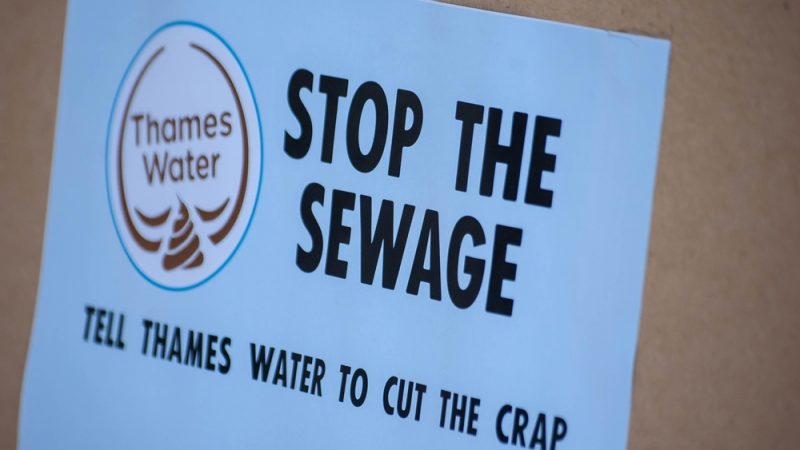
Thames Water’s creditors have certainly been taking lessons from her. Their latest bid to Ofwat is to be allowed to release sewage, outside of legal limits, until 2040.

It’s the government’s job to not get so distracted by all the other crazy things going on in politics that they can’t spot this unacceptable behaviour. And step in to stop it.

Our new polling of Thames Water customers – the first of its kind – shows households in the region are desperate for them to do so.

Labour’s sewage reduction targets and new water legislation will be irrelevant if a whole new precedent is created to increase pollution for the next 14 years.

The polling by Survation reveals that a majority of 1000 Thames Water customers believe that the creditors’ deal is unacceptable, that Ofwat should reject it and should put the company into special administration. 68% of Thames Water customers believe that the company should be nationalised and run in the public sector.

Negotiations over the deal should have concluded before Christmas but haven’t because of the demands for environmental leniency.

If you are a Labour MP now is the time to tell Ofwat and the government that this deal or anything like it cannot be allowed. The government must bring Thames Water into special administration immediately, enabling it to slash far more of the debt than any alternative (40-55% compared to the creditors’ offer of 25%).

In this context it is also quite unbelievable that yesterday former MP Natascha Engel wrote a piece in the Times commenting that “punishing Thames Water will make things worse”. She acknowledges that the country’s mood is to condemn fat-cat chief executives and shareholder dividends – on that we agree!

But her arguments on behalf of private investors are deeply flawed and assume the learned helplessness of a government that believes nothing can be done without the private sector (while simultaneously – and rightly – bringing rail franchises into public ownership).

Engel argues that the government can’t afford to fund water companies, missing the obvious point that they are profitable assets because customers pay bills every month. The problem under privatisation is that a huge chunk of that money gets extracted in dividends and leaves the country instead of being invested in improving infrastructure. This is a state sanctioned rip off and billpayers’ patience is wearing thin.

Our polling shows that 79% consider Thames Water’s recent 35% bill increase to be unreasonable. Over one third (34%) say they can’t afford this bill increase.

Engel argues that we mustn’t discourage investors. But we need investors like Thames Water’s creditors like a hole in the head. Research by the University of Greenwich shows that shareholders have contributed less than nothing since privatisation in 1989.

When asked how much shareholders should be compensated if the entire water sector came into public ownership, the most popular option from Thames Water households was ‘no compensation’, with 36% of respondents in favour. This is a powerful statement.

Subscribe here to our daily newsletter roundup of Labour news, analysis and comment– and follow us on BlueskyWhatsAppX and Facebook.

Instead of ongoing shareholder rule, customers want real, meaningful accountability with environmental groups being on Thames Water’s board (66% in favour) as well as households (77% in favour) and Thames Water employees (64%).

A key argument that Engel links to is that the “fiscal rules” must be defended – but surely they are in place to show sound financial management? It is putting the cart before the horse to force extra costs onto billpayers and achieve a smaller haircut on debt from the creditors simply to have a nominally lower national debt.

The cost of the government tying its own hands on Thames Water is extremely high – the trashing of our environment and households who are getting poorer and angrier about the cost of living by the day. The political cost includes the disillusionment, cynicism and fury of people who believed this government was on their side.

Nigel Farage is ready to harness these emotions and has said – if disingenuously – that shareholders must lose all their money and not be bailed out. A third of Thames Water customers said that the future of the company was likely to influence their vote at the next General Election.

Tony Blair’s government chose to defend the public interest at the cost of angering shareholders over their compensation levels when Railtrack collapsed. This government must bite the bullet and do the same.

It’s the government’s job to restore order to the chaotic, failed privatised water system instead of defending the status quo. If 35 years of privatisation had succeeded we wouldn’t even be having this conversation.

Water ministers must stop putting themselves in the unenviable position of defending a failed system when nine out of ten countries run water in public ownership.

We are contacting all 79 Thames Water MPs this week, asking them to sign an open letter to Ofwat calling on them to reject the outrageous deal being proposed by the creditors.

Thames Water households have made their position very clear in our new polling. It’s time for the government to stop letting a handful of creditors set their own crazy rules. They have already demonstrated that there is no limit to what they will try to get away with.


Opinion

GMB Union: It’s time to tackle inequality within UK Parliament’s workforce. That’s why we’ve launched the One Parliament, One Employer campaign

Today

'In October 2025, the GMB MPs’ and Peers’ Staff Branch launched a report, exposing vast pay inequalities in Parliament'


By Holly Williamson, Office Manager and GMB MPs’ and Lords’ Staff Branch Equalities Officer and Philip Hutchinson, Senior Parliamentary Researcher and GMB MPs’ and Lords’ Staff Branch Youth Officer

In October 2025, the GMB MPs’ and Peers’ Staff Branch launched a report, exposing vast pay inequalities in Parliament. The report showed that women earn £1,000 less than men, non-white staff £2,000 less than white staff, and disabled staff £600 less than non-disabled staff. Moreover, these inequalities also compound, with a non-white woman, for example, earning £6,000 less than white men.

This report demonstrated what many of us already knew: that the systems and structures that exist in Parliament reinforce inequality, and with women, non-white, disabled, non-straight and trans staff all suffering as a result. We hoped this report would be a wake-up call that would cause MPs to ask deep and searching questions about how to end these systemic inequalities.

At the heart of these inequalities lies a power imbalance between MPs and their staff. Politics relies on networks and building a good relationship with the MP you work for can help to advance a staffer’s own political career.

However, this power imbalance is grossly exacerbated by the fact that, instead of being employed by Parliament, staff are employed directly by individual MPs. This creates a system rife for abuse, where staff who raise complaints risk professional isolation, career damage, and loss of access to vital networks of support and advice.

Most constituents would be shocked if they discovered that in electing an MP, they are also appointing someone to run a quasi-mini business, responsible for hundreds of thousands of pounds of staff expenditure, and for managing small teams of staff who often have to work in stressful and toxic environments.

Although this situation is bad for all staff, it particularly impacts women, those from minority groups and younger staff, who are groups that already tend to experience higher levels of bullying and exploitation in the workplace.

However, it does not need to be this way. In many established democracies, such as in Australia, New Zealand, Sweden and the European Parliament, staff are employed directly by Parliament rather than by individual MPs. In these countries, Parliament manages contracts, conditions and complaints while MPs continue to choose their team and direct their day-to-day work.

The One Parliament, One Employer campaign, launched by the GMB MPs’ and Peers’ Staff Branch, is therefore calling for the UK Parliament to follow these examples and make Parliament the legal employer for all MPs’ staff. Rather than just addressing the symptoms, this campaign seeks to remove one of the main systemic issues driving inequality.

Having Parliament as the single employer for all MPs would also drive greater levels of transparency. According to UK legislation, only employers with 250 or more staff must report their gender pay gap. Given that each MP currently acts as a separate employer, there is no requirement for Parliament to report on the gender pay gap between MPs’ staff, even though all large businesses, charities and institutions are required to do so.

The proposed Equality (Race and Disability) Bill will also require all large employers to report ethnicity and disability pay gaps. Yet, the existing structures mean that once again, these requirements will not apply to MPs’ staff.

A problem cannot be solved unless it is first identified, and the existing system meant that until recently, the scale of inequality in Parliament was unknown. When we sent a Freedom of Information request to the Independent Parliamentary Standards Authority (IPSA), asking for data on pay, we were told that they did not have available information about ethnicity, gender and disability, with only data on age and sex available. As a result, we had to collect the relevant data by surveying staff members ourselves.

At the heart of this problem is that Parliament does not live up to the values it legislates for others. As long as Parliament maintains inequality within its own workforce, it will also be blind to inequalities that exist within society more widely.

These inequalities and power imbalances also mean that MPs lose out on talented and capable staffers, as experienced workers leave Parliament rather than remain in an unsafe and unequal system. The British Parliament is known for its constant and fast turnover of staff, meaning that it continually bleeds experience and institutional knowledge.

As a union branch with over 1,500 members working for MPs, we also see a concerning number of cases that stem from the current system. This high caseload would make any other employer ashamed and makes clear that this problem can only be fixed by changing the existing employment model.

The One Parliament, One Employer campaign provides MPs with a chance to create a modern and professional workplace, fit for the 21st century. Our democracy has always evolved in order to adjust to new challenges and to address existing problems.

Through the One Parliament, One Employer campaign, we have the chance to create a more equal Parliament and, ultimately, therefore, a more equal country. It is a campaign that now requires MPs’ full support.


Fire, Farage and his first anniversary in post: LabourList interviews FBU General Secretary Steve Wright


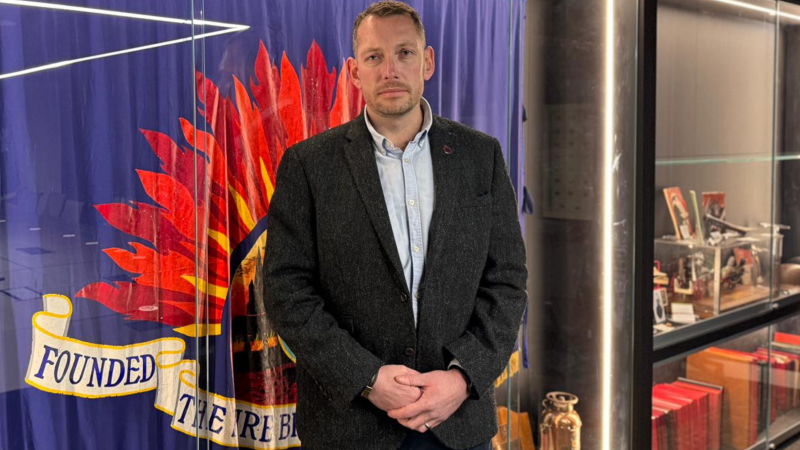
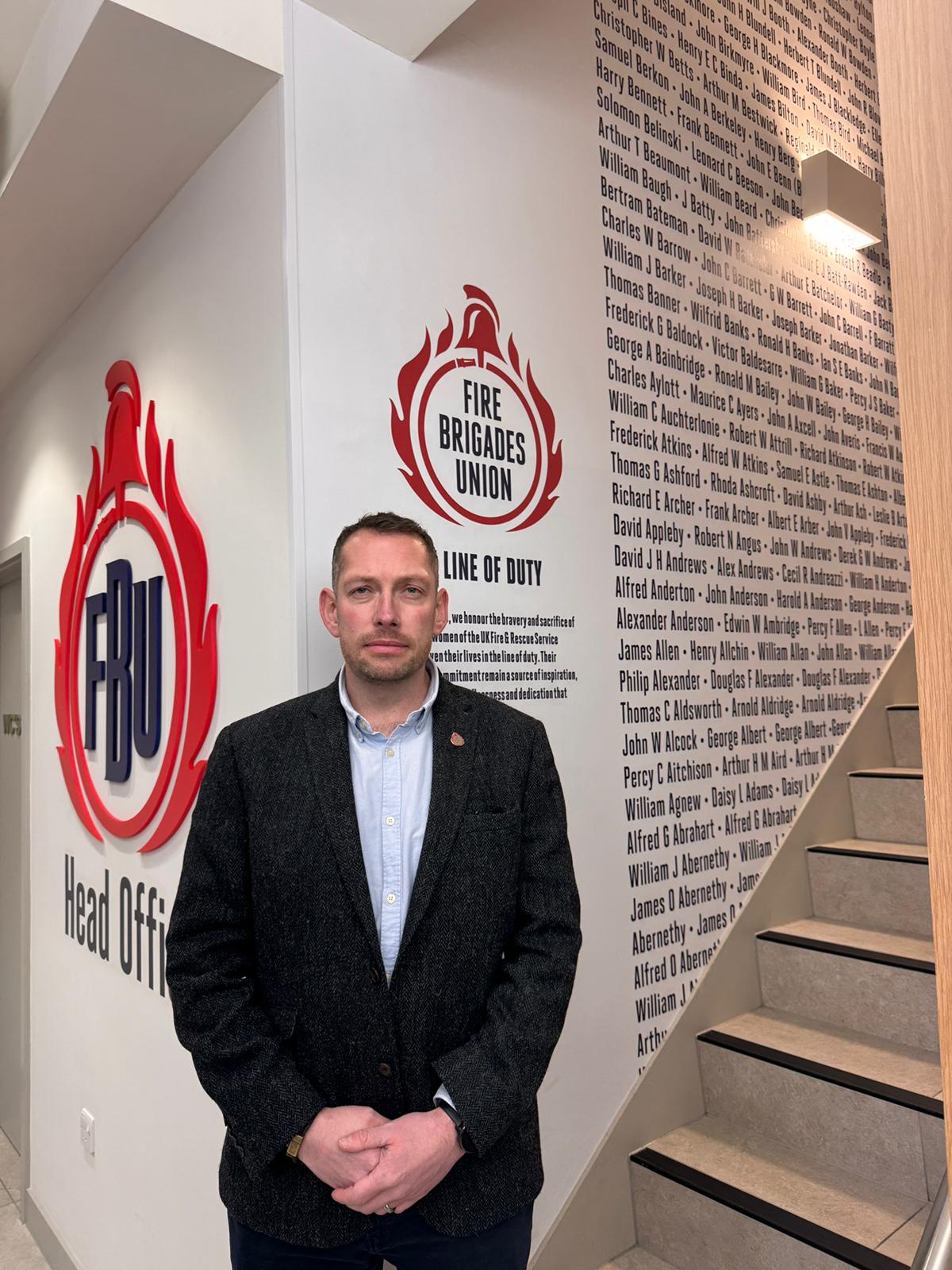
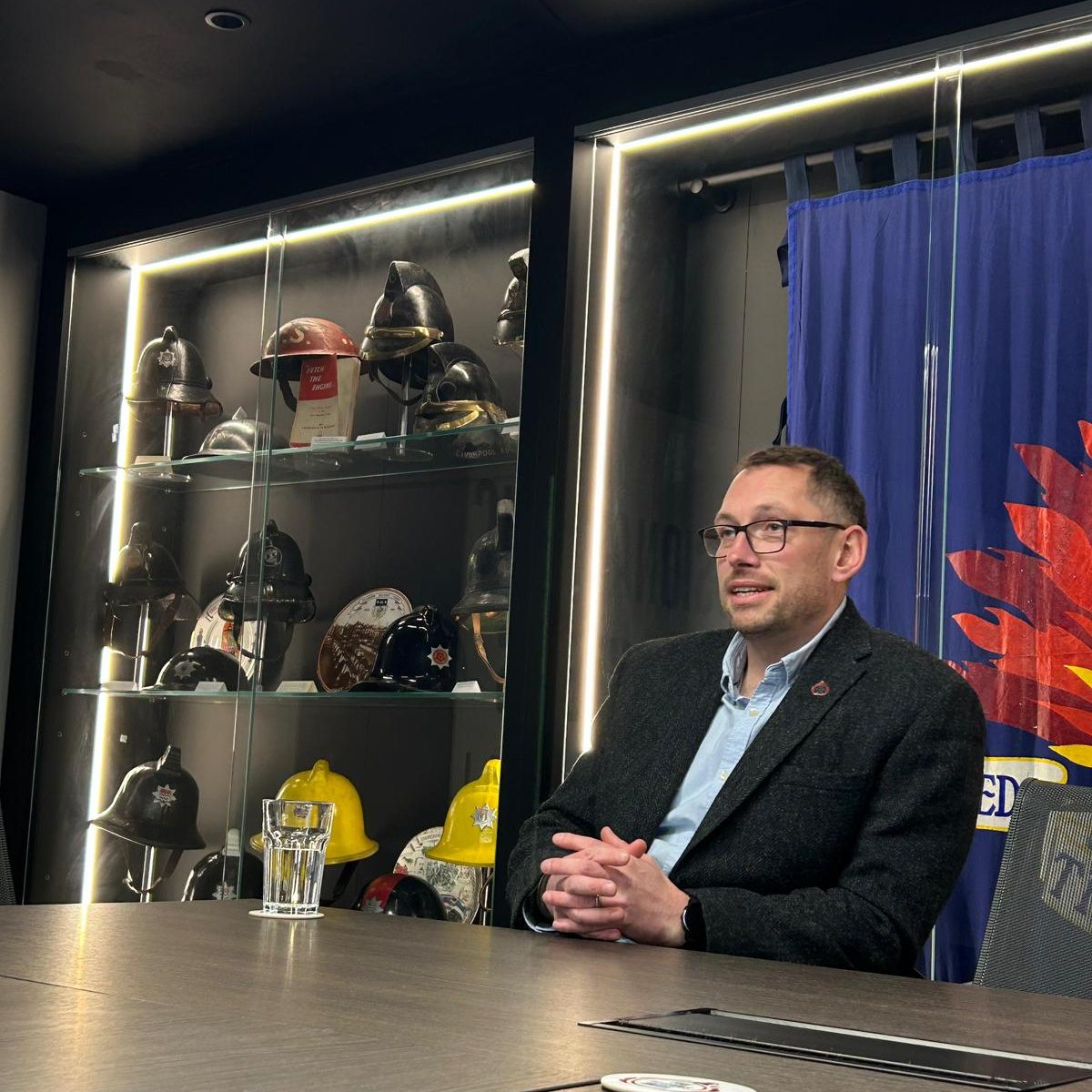
The headquarters of the Fire Brigades Union has a poignant reminder of the job’s cost, with the names of fallen firefighters lining the walls of the building’s staircase. This cost is felt more acutely for general secretary Steve Wright and the union more widely following the addition of two extra names to that long list, commemorating the deaths of Jennie Logan and Martyn Sadler in a fire in Oxfordshire last May.

As he marks a year as FBU general secretary, Wright sees his number one job as not just fighting for better pay and conditions for his members, but also making firefighting safer. 

That mission is incredibly close to home for Wright – his father died of cancer after a long career in the fire service and his son, Ben, marks two years as a firefighter this month.

“He gets a decent pay rise courtesy of the FBU,” Wright notes.

“We’re on the front foot, taking an industrial fight to the bosses, which I think was long overdue. The cuts we have faced in the fire service over the past 14 years under a Conservative government were to dangerous levels – and we’ve seen the effects of that. We’re seeing slower response times, we’ve seen firefighters – our members – killed last year, and we’re seeing fire deaths going up.

“We’re taking the fight to employers and to the government on all those issues, and this is what we are going to press ahead with this year.”

‘More unions should be affiliated to Labour’

Wright’s first year as general secretary has also involved building relationships with the party and with ministers, with Lucy Powell credited for being useful in forging closer relations with trade unions.

“We’re working closely with Hollie Ridley and Labour head office to do some more work and, as part of TULO, I get the opportunity to speak to and question Keir Starmer or one of his ministers, which is good fun. It’s useful to do that. I think they should hear the truth on the floor, and I can talk from years as a public servant extensively about how public services in this country have been downgraded.”

Wright’s work to reset the FBU’s relationship with Labour has come amid calls from some in the union to pursue the road of disaffiliation – a path being actively considered by Unite and also by Unison’s incoming general secretary Andrea Egan.

However, Wright argues trade unions should stay within Labour and be active in trying to change the direction of the party.

“I certainly see elements of the Labour Party that would not want the FBU or any union part of the party, and I think it’s down to general secretaries to make the case for being there.

“Whilst we are affiliated, I do believe that we get opportunities – I get opportunities as a general secretary of an affiliated union to speak out on wider issues.

“I think it would be advantageous if more of the TUC-affiliated unions were affiliated to Labour. There’s only 11 of us – we would have far greater strength if there were more sector-only unions, like ourselves and ASLEF.”

‘Labour have crossed many red lines at the moment’

Is there a red line that would lead to Wright considering disaffiliation?

“My personal point of view is they’ve crossed many red lines at the moment – but my position is to get the best thing for firefighters and FBU members, and I think we’re best placed to do that at the moment with a Labour government.

“We’ve backed the Labour government, we backed the party – and we still do, but our members do want to see some change.

“I think the red line of our members would be job losses, fire station closures and a reduction in our numbers.”

Starmer should be prepared to stand aside, says Wright

The last year has seen increasing questions about Keir Starmer’s future as Prime Minister, but Wright is cautious about a return to the revolving door of leaders from the Conservatives’ years in office.

“There is some argument to be made for keeping people in position for a period of time to make change.”

However, Wright’s caution came with an important caveat: “I think if it gets to the point where the door keeps opening wider and wider for Nigel Farage – which it feels like it is at the moment – and Keir Starmer becomes unable to beat him in the polls, then I think he should step aside.”

Wright said that May would be “a big turning point for that” and suggested that Starmer would “probably” stand down if those circumstances came to pass: “I think actually he will put the country first.”

READ MORE: FBU on ‘industrial footing’ as general secretary prepared for strikes this year

‘God knows what it would be like with Reform running the country’

Wright warned of the spectre of a potential Farage-led government and the dangers such a prospect would bring.

“We’ve had experience of it already. Their flagship council is Kent County Council – the council is responsible for the fire service there, and it fell apart at the end of the last year.

“That was having knock-on effects and repercussions for the fire service in Kent, not being able to make decisions.

“It was absolute chaos with them in charge, so God knows what it would be like if they were running the country.”

He also highlighted Richard Tice’s proposal to attack public sector pensions: “We went on strike, I went on strike, in 2014/15 over our pensions when we faced that attack and our members would stand up for our pensions like we did before.

“Nigel Farage is no friend of working people.”

So concerned is Wright about the rise of the far-right that the FBU joined the Together Alliance of over 80 civil society organisations and unions to challenge their influence – with the union even hosting the group’s first in-person meeting at their headquarters.

“I was there on September 13 at the opposition to the Unite the Kingdom rally and that was frightening. We took members there and what we saw on the streets was quite frightening. I hope that the Together Alliance can make sure there is a big showing in this country of decent people to fight back against them.”

‘Firefighters look at Christmas differently’

Steve Wright with his son Ben

Speaking to Wright shortly after the Christmas holidays, he reflected that the festive season is often different for firefighters and their families.

“The calls we attend, the shifts we work, do not stop at Christmas. I’ve worked many a Christmas Day and Boxing Day away from my family, and I also remember my dad not being there on Christmas, having to wait to open your presents until dad got home from work.

Subscribe here to our daily newsletter roundup of Labour news, analysis and comment– and follow us on BlueskyWhatsAppX and Facebook.

“My son was off this Christmas, but last Christmas worked it.

“I think they look at [the holidays] differently, because things don’t stop for them and it’s also a historically busy period for us as well.”

Wright’s plans for the year ahead

What does Wright hope to achieve in the year ahead?

“We are going to take this industrial fight on, and if that means strike action, that’s where we’ll take it.

“I want to make headway in progress on presumptive legislation, so we are having the first-ever health and safety standalone summit in April to push that ahead.”

One other area Wright wants to work on this year is on ensuring the FBU remains as a sector-only union.

“We’ve seen lots of unions in the past be sucked up by the likes of Unite and Unison. I’m sure they do a great job, but I think our power and strength comes from our elected officials having worked in fire stations and in control rooms and I want to make sure that the longevity of that continues. I’m not saying that’s a threat, but it’s something to be mindful of.”

‘Biden hung around too long – we can’t make the same mistake again’

As we concluded our conversation, Wright’s New Year’s message to the Prime Minister was a clear one.

“It would be not to fall into the trap that the Democratic Party did under Joe Biden. I think he hung around and stayed too long and that allowed the monster that is Donald Trump to come to power in Washington, and I think we can’t make the same mistake again.

“I’d like to think that when the time comes, I want to see another Labour government. I want to see it more progressive, I want to see it more transformative – and I think there are better placed people to do that in the years ahead.”

Does Wright have a person in mind? “I don’t think there is a specific candidate at the moment, but I think someone who is going to be bold. I think with three and a half years away from the election, people want to see change.

“The way you beat Reform is not by out-Reforming Reform. I think that tactic is being tried, and it’s certainly not cutting through with our members or with decent people in society.

“The way you beat them is you start turning things around, so they start seeing meaningful change, they start seeing investment in their communities, they start seeing investment in their public services, they see cuts stopping in the fire service.”

Can Charter Schools Be Meaningfully Reformed?

Charter schools are the main form of school privatization in the United States. As such, they have never been part of a true organic grass-roots movement, that is, they have always been part of a top-down neoliberal agenda right from the start.1 This is why, for example, about 95% of charter schools have not been started, created, owned, managed, or operated by teachers. It is also why these contract schools, which are largely managed or owned by external organizations, are profit-driven whether they are designated as non-profit or for-profit schools.

Not surprisingly, the fraud, corruption, scandal, and failure brought about by charter schools in the U.S. over the past 35 years has been documented in thousands of books, articles, news reports, and websites. Privatization prioritizes profiteering over human rights and is notorious for increasing corruption, lowering the quality of services, and raising costs. More privatization means more harm to the public interest.

For 30+ years, state laws and statutes have been painstakingly written in a manner to promote this antisocial state of affairs, which is why the well-documented problems in the charter school sector have long been the norm and not some aberration affecting a few charter schools here and there.

Over the past 50 years major owners of capital have turned more aggressively to privatization to counter the inescapable law of the falling rate of profit in a desperate attempt to stay viable and avoid extinction. Thus, globally, many programs, services, spheres, sectors, including governance itself, have been rapidly privatized since the 1970s, resulting in great damage to the public interest. Pay-the-rich schemes of all kinds, including so-called public-private “partnerships,” have popped up everywhere and show no sign of diminishing. In this context, the “free market” is heralded as the end-all and be-all. It is no accident that charter school advocates insist that charter schools are marketized schools. They believe education is a commodity, not a right, that should operate according to the vagaries of the “free market.”

Jennifer Klein (2007) states that, “Surveying countries in all continents, a recent international report sponsored by The Club of Rome declared privatization to be ‘one of the defining features of our era’.” Klein stresses that privatization is an attack “on the working classes and on the public claims that workers and citizens are able to make on the economy’s resources and productivity.” For a valuable discussion and analysis of privatization, see The Privatization of Everything (2021) by Donald Cohen and Allen Mikaelian.

As the negation of democracy, equality, and the public interest, privatization necessarily causes many to demand that policies, laws, and rules be rewritten so as to put the public interest in first place and to safeguard the rights of people everywhere.

But when people see things go from bad to worse every year it becomes more urgent to realize that the problems confronting the public are not caused by unenlightened individuals, naïve legislators, uninformed politicians, or lawmakers with “bad ideas” who just need to be persuaded to write better laws and policies, but rather by entrenched historical class forces that act in their own interest. In other words, the issue is not “bad policy” or poorly-conceived laws but class policy, which is why school privatizers and their political representatives are unlikely to stop acting in their own self-interest and rewrite charter school laws and policies so that the problems associated with charter schools disappear. It is well-known that the current neoliberal set-up marginalizes and disempowers people, effectively preventing them from establishing arrangements that benefit them. So long as the class will of the rich dominates the class will of the non-rich, profound pro-social changes will remain elusive.

Over the years, various legal modifications to charter school laws here and there have done little, if anything, to slow the massive onslaught of problems associated with charter schools. Endless calls for more accountability, transparency, and oversight have changed little in the crisis-ridden charter school sector. If anything, the multiplication of charter schools has brought with it more crimes, profiteering, instability, and scandals. Every year things steadily worsen. Consequently, many people, including historian Diane Ravitch, have frequently said “you can’t fix a scam” when it comes to charter schools.

Some questions worth considering: What is to be done under such circumstances to change the situation in favor of the public? Is there any justification for school privatization in the first place? Do charter schools need to exist? Are outsourced schools really needed? Does profiteering belong in public education? Does the private sector have any legitimate claim to public funds that belong to the public? What would happen if traditional public schools were fully funded and not constantly vilified and set up to fail by neoliberals and privatizers? If today’s politicians and institutions are increasingly seen as irrelevant, ineffective, and obsolete what new organizing efforts should people embrace to open the path of progress to society? How can people rely on themselves to bring about deep changes that favor them?

Charter school laws in 47 states, Washington DC, Puerto Rico, and Guam were not written to create high-quality fully-funded public schools controlled by a public authority worthy of the name. They came into being to operate outside public control in order to funnel huge sums of public funds to private interests in the context of a continually failing economy—all in the name of “choice,” “innovation,” and “serving the kids.”

Under the difficult circumstances confronting us today, people from all walks of life need to create spaces for serious analysis and discussion about how to empower themselves to oppose privatization and other obstacles blocking the path of progress to society. Without sustained collective discussion, analysis, and organizing that unleashes the human factor and social consciousness the wrecking activity of the rich and powerful will continue. History is calling on everyone to take collective discussion, analysis, and action to new and different levels so that all that is rotten can be left in the past and a new and bright future can be built. Within all of this, it is important to identify which tactics and strategies work and which do not. For example, begging or pressuring politicians to “do the right thing” for months and years is exhausting and usually fruitless. It can cause burnout and disillusionment. Is there a better way to do things? What would it mean to reject this approach and rely on ourselves to figure out a better way?

ENDNOTE:

  • 1
    It is helpful to study some of the original writings on charter schools from more than 30 years ago (e.g., by Ray Budde, Albert Shanker, Ted Kolderie, Ember Reichgott Junge, and others) to decipher the top-down nature of charter schools.
Shawgi Tell (PhD) is author of the book Charter School Report Card. He can be reached at stell5@naz.eduRead other articles by Shawgi.