Wednesday, January 14, 2026


JPMorgan warns of ‘more volatility’ facing energy transition
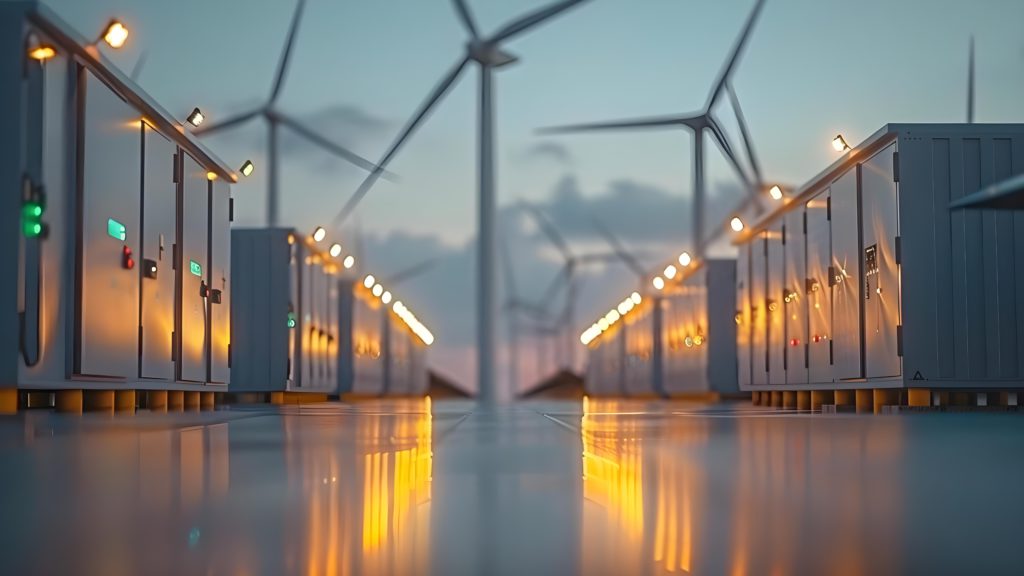
Stock image.

The outlook for the global energy transition is likely to be more volatile than investors may have expected, according to JPMorgan Chase & Co.

“We’ve had a bit of a reset,” James Janoskey, the London-based global co-head of JPMorgan’s natural resources group, said in an interview. The clean-energy transition is “still going to happen, but it will be more elongated than we thought previously, with more volatility and with some sub-sectors going faster than others.”

He says JPMorgan isn’t planning to back away from financing companies tied to the energy transition, noting that the bank is convening a summit in March intended to help clean-tech firms raise equity growth capital. At the same time, the geopolitical, business and economic context means that fossil fuels continue to attract capital, in large part due to the rise of artificial intelligence and the data centers needed to power it.

There’s still growth in the amount of capital being allocated to the low-carbon economy, said Janoskey, whose role within JPMorgan’s investment banking unit covers global energy, power, renewables and mining. “But the predicted trend line that showed traditional fossil fuels going down and then leveling off — and low carbon sources going up and to the right — has not materialized.”

It’s clear that “oil and gas will remain a meaningful part of the energy mix for the foreseeable future,” he said. “So we are not really talking about a transition or replacement at this point, it’s more of an addition to meet growing demand.”
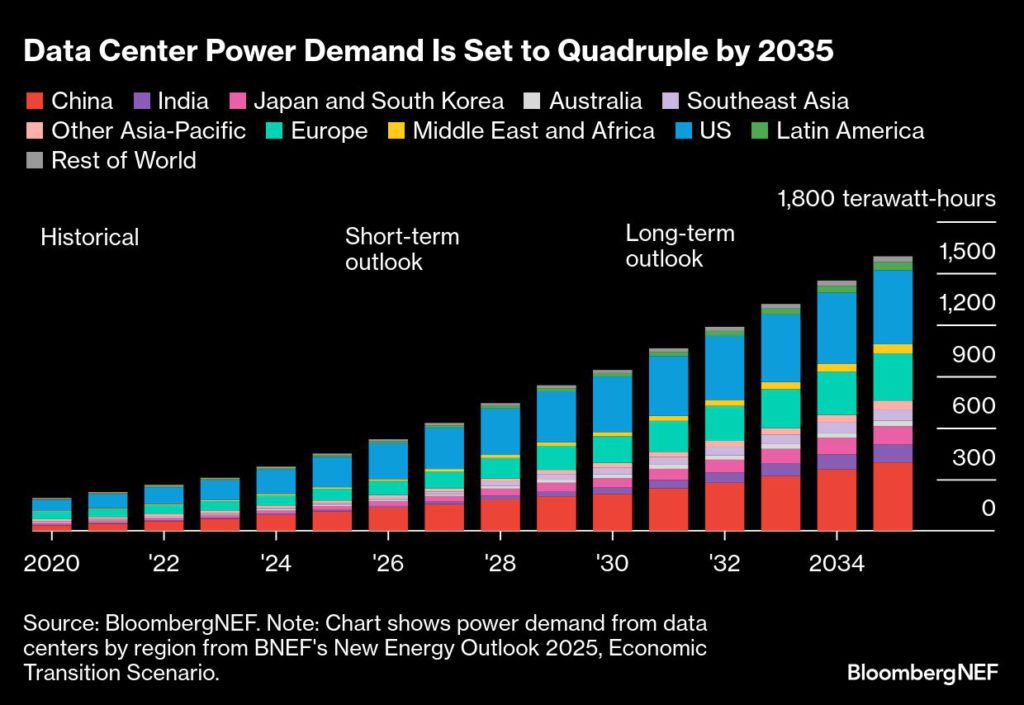
The outlook for a transition away from high-carbon technologies and toward cleaner, greener alternatives has been complicated by a cocktail of political backlash in the US, competitiveness concerns in Europe and the rise of AI globally. Clean energy is drawing record investment, green stocks are outperforming, and renewables are generally the cheapest form of power. At the same time, the Trump administration has pitted itself against sectors such as wind and solar, as it works to turbocharge the production of oil, gas and even coal.

There’s still transition dealmaking to be done, albeit with a somewhat different focus than might once have been expected, Janoskey said. “Today the conversation is not just about energy transition, but also energy security, energy dominance and affordability,” he said.

JPMorgan is looking at financing opportunities in the nuclear power industry, including for small modular reactors, Janoskey said. The bank is also interested in doing deals to help finance power grid modernization and battery storage, he said.

No bank is bigger than JPMorgan when it comes to financing energy deals overall, according to BloombergNEF. For every dollar JPMorgan provided to the fossil-fuel industry — either via direct loans or debt and equity underwriting — it allocated 69 cents to green projects, according to a September BNEF report that looks at transactions through the end of 2024.

BNEF says “fragmentation” has beset global efforts to deliver a low carbon future. Still, while “climate mitigation is no longer the shared priority it once was” and despite “some awkward mood music,” the energy transition “keeps on trucking,” it concluded in a Jan. 6 report.

For the world to have a chance of limiting global warming to the critical threshold of 1.5C, capital allocations to green projects need to be four times the amount those spent on fossil fuels, BNEF has calculated.

Janoskey says JPMorgan continues “to look to actively finance the lower carbon part of that business and try to scale that up.” But the bank has “put in less capital to that area than we may have hoped as some clients pulled back or delayed projects in recent times,” he said.

(By Alastair Marsh)


Credit: Martin Brazill/Shutterstock.com

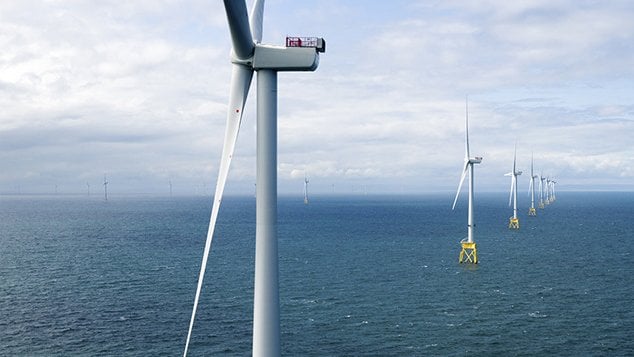
Today’s historic results from the latest offshore wind auction shows the difference a Labour government can make to our communities.

After months of our opponents on the right casting doubt on the benefits of clean power, the results announced today, alongside new analysis on costings are emphatic: we have secured a record amount of clean power at a price that is significantly lower than that of building and operating new gas fired power plants.

The results announced today mean offshore wind in every corner of the country, from Dogger Bank off the Yorkshire coast, to Awel y Mor in Wales, to Berwick Bank in the North Sea.

Labour is delivering our historic promise made at the last election, to deliver energy security through clean power, and bring down bills for good.

READ MORE: ’25 years of offshore wind shows what can be achieved by energy and climate ambition’

We made that promise in the shadow of the cost of living crisis that was, and still is, affecting so many families across our country today.

As Russia invaded Ukraine, the failure by successive Tory governments to invest in our energy system was laid bare.

Households from the Highlands to Cornwall were left to pick up the tab through eye-wateringly high energy bills, and still today face bills that are significantly higher than before the crisis.

At the general election we vowed to never let this happen again, and today we take a significant step forwards in meeting that commitment.

Not only have we secured enough projects to power the equivalent of over 12 million homes, but we are also getting ahead in floating offshore wind, an emerging technology in which we can be a leader here in the UK.

With two successful floating wind projects in the North Sea and Celtic Sea, we are delivering where previous Tory governments failed.

Subscribe here to our daily newsletter roundup of Labour news, analysis and comment– and follow us on BlueskyWhatsAppX and Facebook.

I am particularly pleased to see the Pentland project in Scotland secure a contract, building on the backing it has been given by Great British Energy and the National Wealth Fund.

Taken together, the results we are announcing today will support 6,000 highly skilled jobs in every corner of the country, backed by £22bn in private investment going into our communities.

This is on the back of more than £60bn of private investment that we have secured since coming to office.

While our opponents peddle false arguments around cost, today we are also publishing definitive evidence that clean power is the cheaper option when compared to new gas fired power stations.

This analysis shows that the projects secured today are as much as 40% cheaper than the cost of building and operating new gas capacity in the energy system.

Not only that, but the overall results for all technologies in AR7 will contribute to lower bills for households compared to today.

We were elected with a clear mission to end the cost of living crisis facing families, secure our energy system and create the jobs our communities so urgently need.

Today we take a significant step forwards in delivering on that promise to the British people.

UK Awards Record Offshore Wind Capacity in Latest Auction

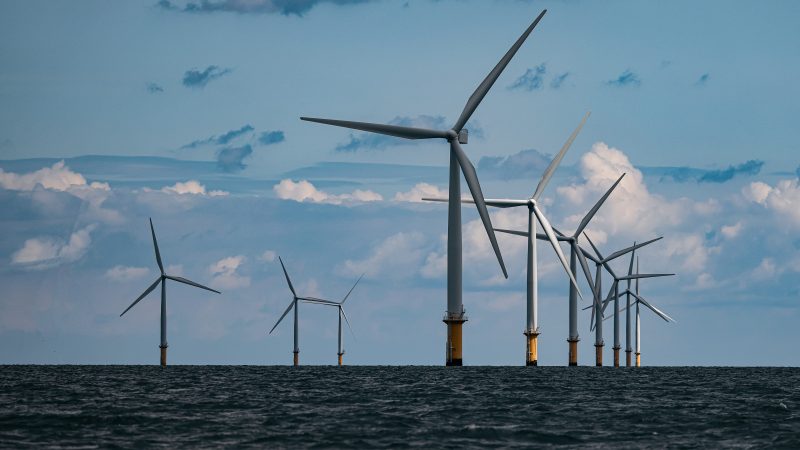
The UK on Wednesday awarded a record-breaking 8.4 gigawatts (GW) capacity of offshore wind in its latest auction round, which puts Britain “firmly on track to achieve its clean power mission by 2030,” the government said.   

The Contracts for Difference AR7 auction secured offshore wind capacity capable of generating enough clean electricity to power the equivalent of 12 million UK homes.  

“The results deliver the biggest single procurement of offshore wind energy in British and European history - confounding the global challenges facing the industry - a major vote of confidence in the UK’s new era of energy sovereignty and abundance,” the UK government said in a statement. 


Projects in all parts of the UK, including Scotland and the first Welsh project to win a contract in more than a decade, won in the offshore wind tender. 

The government also noted that offshore wind is cheaper to build and operate than new gas-fired power generation. In new figures published on Wednesday using the LCOE industry metric, the cost of building and operating a new gas fired power station is £147, or $198, per megawatt hour (MWh). By contrast, the results for fixed offshore wind in today’s auction were £90.91, or $122, per MWh on average. That’s 40% cheaper than the cost of building and operating new gas-fired generation, the UK government said. 

With the latest record-breaking auction, Britain is “taking back control of its energy, and lowering bills for good,” the cabinet noted. 

The UK aims to have at least 43 GW of offshore wind by 2030 to meet its clean power target. To compare, current offshore wind capacity is 16.6 GW while another 11.7 GW is under construction. 

Despite the offshore wind auctions returning back on track, the UK will find it very challenging to connect all these projects to the grid and have it running 95% on clean energy, including renewables and nuclear, analysts say.    

By Tsvetana Paraskova for Oilprice.com

Vattenfall Finalizes Investment for Germany’s Largest Offshore Wind Project

offshore wind farm
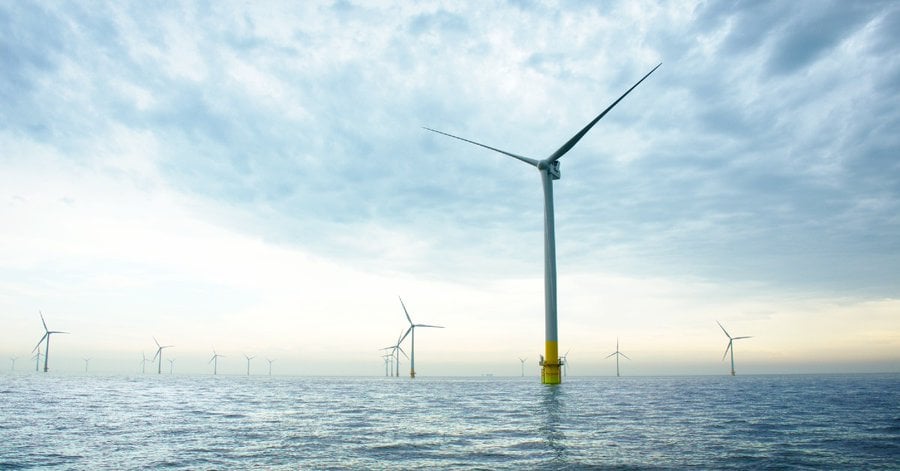
Vattenfall finalized the investment decision after receiving permits for Germany's Nordlicht project (Vattenfall)

Published Jan 13, 2026 8:48 PM by The Maritime Executive


Offshore wind energy developer Vattenfall confirmed that it is moving forward with the Nordlicht offshore wind cluster. With construction due to start later this year, the two-phase project will become the largest wind project for Germany and a key contributor as the country struggles to accelerate development in the offshore wind energy sector.

The permit issued by the Federal Maritime and Hydrographic Agency (BSH) has become irrevocable, making the final step to move forward with the project. Vattenfall had announced in March 2025 that it had made the investment decision for the project, conditional on the receipt of the necessary permits. The company agreed to repurchase the shares in the Nordlicht cluster that BASF acquired in 2024. At the same time, BASF secured access to a long-term supply of renewable electricity, as part of the agreement. The companies said the agreement would secure renewable power for BASF’s chemical production in Europe at a time when such additional supply will be needed.

The Nordlicht wind cluster will be located just over 50 miles north of Borkum in the German region of the North Sea. The company reports monopile installation for Nordlicht I is expected to begin in the third quarter of this year, and when completed, the 980 MW project will be the largest capacity offshore wind farm in Germany. The second phase will add a further 630 MW. Nordlicht II should begin construction in 2027, and both wind farms are expected to be operational in 2028, adding over 1.6 GW to Germany’s energy supply. Electricity production is expected to total around 6 TWh annually.

Catrin Jung, Senior Vice President, Head of Business Area Wind for Vattenfall, called this a “defining moment” for the project. “This project is about more than building offshore wind capacity – it’s about strengthening Europe’s competitiveness and reducing reliance on fossil fuels. By producing clean electricity locally, we help create a more resilient energy system,” said Jung.

The decision to move forward on the project comes as Germany, like other Northern European countries, has experienced reduced interest in future projects due to the challenges and economic pressures on the industry. 

Despite having a target to reach 30 GW by 2030, Germany has been stuck at around 1,600 installed wind turbines since late 2024. It currently has a capacity of approximately 9.2 GW installed. While it has grown from just over 7 GW in 2021, future projects have been delayed. In August 2025, Germany received no bids in its latest allocation round, prompting the government to say it would have to adjust the strategy. It scaled back its plan for offshore-wind auctions in 2026 to between 2.5 and 5 GW, from an original plan for 6 GW. The next allocation was expected to proceed in February, with further rounds planned for mid-year.

Despite similar economic challenges in the Netherlands, Vattenfall highlights that it is moving forward with another large-scale project. Together with Copenhagen Infrastructure Partners, the company has received an irrevocable permit for the Zeevonk wind farm, which will have an installed capacity of 2 GW. It is also designed to produce green hydrogen in a key development for the Dutch industry.
 The project will be built in phases and is now delayed to a target completion of 2032.


Norway Renews Commitment to Offshore Oil & Gas With 57 New E&P Leases

"We have just left behind the warmest year ever measured. The fact that the government chooses to respond to this development by handing out even more oil licenses is a threat to our future,"

Statoil
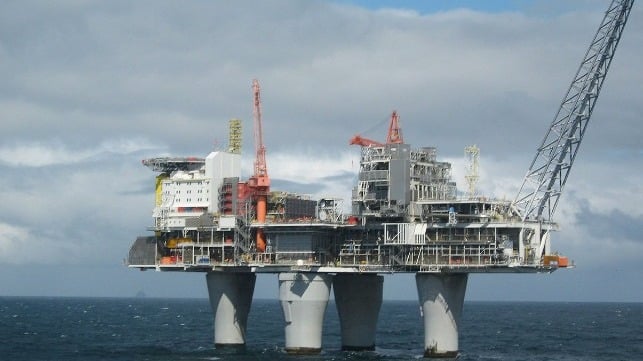
File image courtesy Equinor

Published Jan 13, 2026 6:44 PM by The Maritime Executive


Though Norway may be known best for leadership in green solutions like electric ferries and carbon sequestration, it remains firmly committed to oil and gas E&P, its energy minister reaffirmed this week. The ministry has just approved 57 new offshore energy licenses in the North Sea, Norwegian Sea and Bering Sea, which will help to extend the time horizon of its regional leadership in energy production. 

"Norway is Europe’s most important energy supplier, but in a few years production will begin to decline. Therefore, we need new projects that can slow the decline and deliver as much production as possible," said Minister of Energy Terje Aasland in a statement. "That activity is important for jobs, value creation, and Europe's energy security."

Offshore energy has strong mutual benefits for Norway and for Europe. In the wake of the Russian invasion of Ukraine, Norwegian natural gas has become more important to EU energy security than ever. Norway now accounts for about one third of all EU gas imports; Russia is now in second place, providing only 12 percent as of 2024 (from pipeline and LNG import pathways combined). In turn, oil and gas revenue provides the Norwegian state with about $60 billion in revenue each year, and it underpins the vast wealth of Norway's $2 trillion Government Pension Fund - the world's largest sovereign wealth fund. About 200,000 Norwegians are employed directly or indirectly by the domestic petroleum sector. 

This round of licensing awarded leases to 19 different companies for areas on the Norwegian continental shelf, including five leases in the Barents Sea. 13 firms hold operator status. Participants include Equinor, ConocoPhillips, Aker BP, TotalEnergies, Repsol and a wide variety of independent producers. To keep the leases, the holders will have to execute a work program to explore and develop their claims. 

Oil prices are at an ebb compared to recent years, but interest in the lease auction remained strong. Aasland said that the high turnout among bidders showed "faith in the opportunities that lie in further exploration" in the region. 

Climate advocates protested the awards. On Tuesday, activists from Greenpeace, Extinction Rebellion, Nature and Youth and other groups gathered outside of the meeting hall for the award ceremony to demonstrate their opposition. 

"We have just left behind the warmest year ever measured. The fact that the government chooses to respond to this development by handing out even more oil licenses is a threat to our future," said Elise Åsnes, advisor at Greenpeace Norge.


Equinor Secures 35 New Licenses to Boost Norwegian Shelf Exploration

Equinor has been awarded 35 new production licenses on the Norwegian continental shelf (NCS) as part of Norway’s 2026 Awards in Predefined Areas (APA) licensing round, the company said Tuesday. The licenses span the North Sea, Norwegian Sea, and Barents Sea, with Equinor named operator on 17 of them.

The new acreage strengthens Equinor’s exploration pipeline at a time when Norway’s offshore sector is under pressure to offset natural production decline while maintaining stable energy supplies to Europe. Twenty-one of the licenses are located in the mature North Sea, ten in the Norwegian Sea, and four in the Barents Sea, reflecting a balance between near-field exploration and frontier opportunities.

Equinor said the awards support its ambition to sustain a high level of drilling activity, with plans to drill between 20 and 30 exploration wells annually. Roughly 80% of that activity will be focused near existing infrastructure, enabling faster and lower-cost tie-backs, while the remaining 20% will target less-explored areas and new geological concepts.

The APA system has long been a cornerstone of Norway’s petroleum policy, encouraging incremental exploration around established infrastructure to maximize resource recovery and extend the life of offshore hubs. For Equinor, access to new acreage is critical as it seeks to develop between six and eight new subsea projects per year through 2035 - significantly above current levels.

The company reported a strong exploration performance in 2025, with 14 discoveries from 31 wells drilled, including seven operated by Equinor. Those finds added an estimated 125 million barrels of recoverable oil equivalent, underscoring the continued prospectivity of the NCS despite its maturity.

Equinor has repeatedly emphasized that new discoveries are essential to curb the expected decline in Norwegian oil and gas output over the next decade. The company is targeting production of around 1.2 million barrels of oil and gas per day from the NCS in 2035, roughly in line with 2020 levels—an ambitious goal that hinges on sustained exploration success.

The new licenses also align with Equinor’s broader role in European energy security. As Europe’s largest supplier of gas, the company operates a vast offshore and onshore infrastructure network, including gas processing plants, pipelines, terminals, and an LNG facility. Phasing new oil and gas volumes into this existing system remains a core pillar of its strategy.

Technology is playing an increasing role in that effort. Equinor has highlighted the use of artificial intelligence and machine learning to accelerate seismic interpretation, improve well planning, and support real-time decision-making, tools that are particularly valuable when exploring complex or lesser-known geology.

While the energy transition continues to reshape investment priorities across Europe, Norway’s offshore sector remains a critical source of reliable supply. Equinor’s latest APA awards signal that exploration on the NCS will remain a central part of that equation well into the next decade.

By Charles Kennedy for Oilprice.com


EIA Shows Crude Oil Inventories Continue to Rise

Crude oil inventories in the United States increased by 3.4 million barrels during the week ending January 14, according to new data from the U.S. Energy Information Administration (EIA) released on Wednesday. The decrease brings commercial stockpiles to 422.4 million barrels according to government data, which is 3% below the five-year average for this time of year.

The EIA’s data release follows API’s figures that were released a day earlier, which suggested that crude oil inventories grew by 5.27 million barrels.

Crude prices were trading up again on Wednesday morning after gaining significant ground on Tuesday. The catalyst is a combination of factors, including concerns about a possible oil production disruption in Iran amid protests. At 7:42 a.m. in New York, Brent was trading at $65.88 per barrel—up $0.41 (+0.63%) on the day and up more than $5.25 per barrel week over week. WTI was also trading up, by $0.32 per barrel (+0.52%) in early trade

For total motor gasoline, the EIA reported that inventories had increased by 9 million barrels. The most recent figures showed average daily gasoline production increased to 9.0 million barrels. For middle distillates, inventories fell slightly, with production decreasing by 18,000 barrels daily to an average of 5.3 million barrels daily.

Total products supplied—a proxy for U.S. oil demand—came in at 20 million barrels per day over the last four weeks, down 1.1% compared to the same period last year. Gasoline demand averaged 8.5 million barrels per day over the last four weeks, while the distillate four-week average supplied averaged 3.7 million barrels—up 2.2 percent year over year.

By Julianne Geiger for Oilprice.com


API: Reviving Venezuela's Oil Sector Will Be Long, Multi-Billion Dollar Process

  • Oil industry executives have voiced that reviving Venezuela's oil production will be a long and costly process.

  • Companies will need stable, legally defined frameworks, security for investments, and clear commercial terms before committing major capital.

  • Rystad Energy recently estimated that restoring Venezuela's oil production to its previous peak of 3 million barrels per day (bpd) would require a total investment of $183 billion over 15 years.

American Petroleum Institute (API) CEO, Mike Sommers, alongside other industry leaders like TotalEnergies' (NYSE:TTE) Patrick Pouyanne, have warned that reviving Venezuela's oil industry will be a long, costly, multi-billion dollar process requiring clear legal frameworks, strong investment security, and significant infrastructure amid political pushes for quick returns.

While small production increases (100k-200k bpd) might happen sooner, especially from areas like Lake Maracaibo where Chevron (NYSE:CVX) operates, the energy leaders have emphasized that a significant boost requires massive, long-term investment.

Companies will need stable, legally defined frameworks, security for investments (including protection from expropriation), and clear commercial terms before committing major capital. President Trump has urged U.S. oil majors to invest up to $100 billion to revitalize Venezuela's vast reserves, seeing it as a way to lower global energy prices.


Rystad Energy, a Norwegian energy research firm, recently estimated that restoring Venezuela's oil production to its previous peak of 3 million barrels per day (bpd) would require a total investment of $183 billion over 15 years. This massive investment is needed because the country's oil infrastructure is in severe disrepair due to years of neglect, underinvestment, and sanctions. Rystad views a gradual recovery as the most likely scenario, with a full return to peak production dependent on long-term stable market conditions and a secure investment climate.

ExxonMobil CEO Darren Woods recently termed Venezuela as "uninvestable" due to deep legal, commercial, and political risks, despite U.S. President Trump's push for investment to rebuild its oil sector after the Maduro regime's removal. Other major oil companies, like ConocoPhillips (NYSE:COP) and Chevron, have echoed this sentiment, citing complex issues such as asset seizures, lack of clear frameworks, corruption, and political instability as major barriers to committing billions in investment.

ExxonMobil and ConocoPhillips lost assets worth billions of dollars in Venezuela after former President Hugo Chávez undertook a nationalization drive in 2007, where he forced foreign oil companies to cede majority control to the state oil company (PDVSA) in lucrative Orinoco Belt projects. Venezuela expropriated their operations after the two companies refused to accept minority stakes and renegotiated terms, leading them to exit the country and pursue lengthy, largely unresolved international arbitration for billions in compensation.

By Alex Kimani for Oilprice.com


Shipping Firms Scrambling to Expand Capacity for Venezuela Oil Transfers

Oil traders and shipping companies are scrambling to expand tanker operations to move Venezuelan crude as Washington prepares to take delivery of sanctioned oil following the ouster of President Nicolás Maduro, according to multiple sources familiar with the matter.

Trading houses and oil majors including Chevron, Vitol, and Trafigura are competing for U.S. government-backed export deals after President Donald Trump said Venezuela could hand over up to 50 million barrels of crude to the United States. Trafigura told U.S. officials last week that its first vessel could load within days, sources said.

The logistical challenges are significant. Years of sanctions have left Venezuela storing crude in aging, poorly maintained tankers and nearly full onshore tanks. Many of the vessels holding the oil are under sanctions and cannot be directly accessed by other ships due to insurance and liability restrictions, even with U.S. licenses in place. Onshore storage facilities are also in disrepair, raising safety and operational risks.

Shipping firms, including Maersk Tankers and American Eagle Tankers, are examining ways to expand ship-to-ship transfer operations off Venezuela, sources said. One option under consideration is replicating logistics previously used in Amuay Bay, involving transfers between storage vessels, piers, and export tankers. However, these operations face constraints, including limited availability of smaller feeder ships, competition for loading slots, and poorly maintained port equipment.

Transfers through nearby waters such as Aruba and Curaçao remain possible but are costlier than direct loadings, sources noted.

AET, which already supports Chevron’s Venezuelan crude exports, has been approached by potential clients seeking to expand transfer capacity, according to people familiar with the discussions. Maersk Tankers, AET, and Chevron did not immediately respond to requests for comment.

While exports could eventually approach the roughly 500,000 barrels per day Venezuela shipped to the U.S. before sanctions, sources cautioned that draining accumulated inventories could take three to four months and will depend on resolving bottlenecks at the Jose terminal, where capacity is limited.

To support exports, oil companies are also sourcing naphtha from the United States to blend with Venezuela’s heavy crude, reducing viscosity and making the oil transportable and refinery-ready.

By Charles Kennedy for Oilprice.com