Thursday, January 15, 2026

Palestine Action hunger strike ends after Elbit loses UK contract

Palestine Action hunger strikers end their protest after Elbit loses a major UK defence contract, but campaigners say the fight is far from over.


Oliver Mizzi
London
15 January, 2026
The New Arab


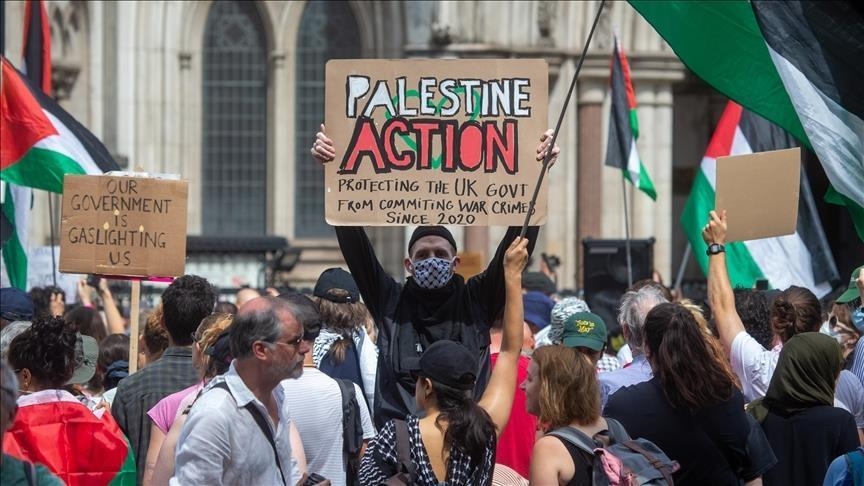
P4P issued a statement late on Wednesday saying that hunger strikers Hamran Ahmed, Heba Muraisi and Lewie Chiaramello had decided to end their strike [Martin Pope/Getty Images]

Detained pro-Palestine Action hunger strikers ​​​​​have called off their strike after it was announced that Israeli arms company Elbit Systems had been denied a government contract.

Prisoners for Palestine (P4P), which represents the strikers, said in a statement late on Wednesday that hunger strikers Hamran Ahmed, Heba Muraisi and Lewie Chiaramello had decided to end their strike.

Speaking to The New Arab, Francesca Nadin, an activist and spokesperson for P4P, said the group was proud of the outcome but stressed that the struggle was far from over.

"This is just the beginning. To see everyone so motivated is amazing," Nadin said. "Even though the people who have just finished their hunger strike will have some time to recover, they’re also really motivated and want to continue doing as many things as possible."

Nadin said several issues remained unresolved, including the trials of the "Filton 24" and the judicial review into the proscription of Palestine Action.


She added that P4P would also support the campaign for the "Brize Norton Five", activists who broke into RAF Brize Norton and damaged military aircraft in an action that preceded Palestine Action’s proscription and led to Umer Khalid undertaking a six-day hunger strike.

P4P said the hunger strikers, alongside Teuta Hoxha, Jon Cink, Qesser Zuhrah and Amu Gib, all members of the "Filton 24" facing terrorism-related charges over the disruption of Elbit Systems’ Filton site in 2024, had begun refeeding.

Elbit Systems UK, a subsidiary of Elbit Systems, had been competing for a 10-year contract worth £2 billion from the Ministry of Defence to train British soldiers.

The bid was mired in controversy, with The Times reporting that former brigadier Philip Kimber, who had overseen the contract before leaving the army, met with Elbit Systems to help it win the deal, in breach of business appointment rules.

A senior civil servant preparing to assess the bid was also dined by Elbit, but not by Raytheon UK, which was also competing for the contract. Elbit also funded a tour of Jerusalem for two senior officers and the official overseeing the army's training programme.

P4P described the cancellation of Elbit's bid as "a resounding victory for the hunger strikers, who resisted with their incarcerated bodies to shed light on the role of Elbit Systems, Israel's largest weapons manufacturer, in the colonisation and occupation of Palestine".

Several other demands were met during the hunger strike, including Heba Muraisi's transfer from HMP New Hall to HMP Bronzefield, which is closer to her home.

Muraisi was the longest hunger striker among the "Filton 24", having refused food for 73 days, raising fears she could die during the protest. The length of her strike exceeded that of Bobby Sands, the Provisional Irish Republican Army member who led the 1981 hunger strike and died after 66 days.

Kamran Ahmed ended his strike after 66 days, while Lewie Chiaramello, who has type 1 diabetes and had been fasting every other day, ended his after 45 days.

Chiaramello said after ending his strike, "It is definitely a time for celebration. A time to rejoice and to embrace our joy as revolution and as liberation," adding that the strikers were protesting for "a free Palestine, for an emancipated world".

Striker Teuta Hoxha has since met with the head of the Joint Extremism Unit at her prison, while national heads of prison healthcare have also met with P4P following requests from the Ministry of Justice.

Withheld mail, including books on Gaza and feminism, has been handed over to prisoners, alongside an apology for a six-month delay in delivering a letter.

In addition, demands to release information covering five years of export licences involving Elbit Systems were met, with the Department for International Trade providing the material to an independent researcher.

"Our hunger strike will be remembered as a landmark moment of pure defiance; an embarrassment for the British state," P4P said.

"Banning a group and imprisoning our comrades has backfired on the British state, direct action is alive, and the people will drive Elbit out of Britain for Good," the group added.

The New Arab has contacted the Ministry of Justice for comment.


3 pro-Palestinian protesters end hunger strike after UK decides not give contract to Elbit Systems UK

Kamran Ahmed, Heba Muraisi, Lewie Chiaramello end hunger strikes


Burak Bir |15.01.2026 - TRT/AA


​​​​​​​LONDON

Three pro-Palestine prisoners, affiliated with the Palestine Action group, ended their hunger strike on Wednesday after the government opted against giving a contract to an Israeli arms company subsidiary, according to media reports.

Kamran Ahmed, Heba Muraisi and Lewie Chiaramello announced the decision to end the hunger strikes as Elbit Systems UK failed to win a £2 billion ($2.6 billion) government contract.

There has been growing fear for the welfare of the protesters as Muraisi, 31, would have been on day 73 of refusing food; Ahmed, 28, who would have been on day 66; and Chiaramello, 22, who has type 1 diabetes, would have been on day 46, The Guardian reported.

Prisoners for Palestine said Wednesday the decision not to grant the contract, under which it would have trained 60,000 British troops a year, fulfilled a key demand.

Umar Khalid, 22, who resumed his hunger strike Saturday after previously pausing it, is continuing to refuse food, according to The Guardian.

Last month, UN experts urged the UK to protect the lives and rights of eight pro-Palestinian detainees linked to the banned group, Palestine Action, who had been on a hunger strike.

They also raised concerns about the treatment of hunger strikers in detention, citing delayed medical care, excessive restraints during hospitalization, denial of family and legal contact and insufficient independent medical oversight.

Labour Party lawmaker John McDonnell said the hunger strikers have also secured meetings with prison officials about their health and conditions, following the news.

"I pay tribute to the dedication of the hunger strikers," he said on the US social media company X.

Palestine Action was banned in July under the Terrorism Act after members of the group entered a Royal Air Force base and spray painted two aircraft, causing £7 million ($9.44 million) in damage, according to police. Hundreds of pro-Palestine activists have since been arrested across the UK.

Trump Intensifies Threats Against Cuba


Pablo Meriguet 

Cuban people rallied in Havana on January 3, to stand in solidarity with Venezuela. Photo: Presidencia Cuba


The US president warned Cuban authorities that if they do not engage in dialogue, it will soon be “too late.” Cuban authorities have announced that Cuba is a sovereign country that is being punished for following a path different from that desired by Washington.

On January 11, US President Donald Trump once again used his social media platform, Truth Social, to “warn” the Cuban government that if it does not “make a change,” there will be serious consequences.

“Cuba lived, for many years, on large amounts of oil and money from Venezuela. In return, Cuba provided “Security Services” for the last two Venezuelan dictators, BUT NOT ANYMORE! Most of those Cubans are DEAD from last week’s U.S.A. attack, and Venezuela doesn’t need protection anymore from the thugs and extortionists who held them hostage for so many years. Venezuela now has the United States of America, the most powerful military in the World (by far!), to protect them, and protect them we will”, Trump wrote.

He also added a clear warning against the revolutionary government in Havana: “THERE WILL BE NO MORE OIL OR MONEY GOING TO CUBA – ZERO! I strongly suggest they make a deal, BEFORE IT IS TOO LATE.”

One of the major incidents that marked the tension in the Caribbean Sea was the seizure of a Venezuelan oil tanker bound for Cuba on December 10, 2025. Both Caribbean nations face serious challenges in finding other countries that are willing to trade with them due to, in Cuba’s case, over 60 years of the US economic and commercial blockade, as well as its inclusion on the US States Sponsors of Terrorism (SSoT) list. Such restrictions, as well as other US legal frameworks like the Title III of the Helms Burton Act, mean that those who engage in trade with Cuba risk criminal prosecution. The comprehensive net of unilateral coercive measures imposed on Venezuela by the US also seeks to isolate it and strangle it economically.

Cuban President Miguel Díaz-Canel responded harshly to Trump on X: “Cuba is a free, independent, and sovereign nation. No one dictates what we do. Cuba does not attack; it has been attacked by the US for 66 years, and it does not threaten; it prepares itself, ready to defend the homeland to the last drop of blood.”

He added: “Those who blame the Revolution for the severe economic shortages we suffer should be ashamed to speak. Because they know and acknowledge that these shortages are the result of the draconian measures of extreme suffocation that the US has been applying to us for six decades and now threatens to exceed… Those who turn everything into business, even human lives, have no moral right to point the finger at Cuba for anything, absolutely anything. Those who today hysterically rail against our nation do so out of rage over the sovereign decision of this people to choose their political model.”

Regarding Trump’s “warning,” which some have called a threat, demanding negotiations, Díaz-Canel said: “There are no talks with the US government, except for technical contacts in the area of migration. We have always been willing to engage in serious and responsible dialogue with the various US administrations, including the current one, based on sovereign equality, mutual respect, principles of international law, reciprocal benefit without interference in internal affairs, and with full respect for our independence.”

For his part, Cuban Foreign Minister Bruno Rodríguez reported that it is false that Cuba has received money or oil in exchange for the security activities carried out by several Cubans in Venezuela, of whom 32 were killed during the US attack on January 3 against the South American country.

“Cuba does not receive nor has it ever received any monetary or material compensation for the security services rendered to any country. Unlike the US, we do not have a government that lends itself to mercenarism, blackmail, or military coercion against other states,” Rodríguez wrote in X.

This exchange of statements comes at one of the most critical moments in the history of the Caribbean. The Trump administration has increased measures that strengthen the economic blockade. In addition, one of its first orders of business in January 2025 was to include Cuba once again on the SSoT list, which has had serious economic consequences for the Caribbean island. With the announced suspension of oil shipments to Cuba, the United States seeks to further suffocate an island that has resisted, in its own way, one of the longest-running economic blockades against an entire country in history.

Courtesy: Peoples Dispatch


(Iraq ) Kurdistan rights body sues cleric over controversial take on female Kurdish fighters


12-01-2026
Rudaw


ERBIL, Kurdistan Region - A Kurdistan Region human rights organization said on Monday that it is suing an Erbil-based religious cleric over remarks deemed disrespectful toward women, following comments he made in connection with the killing of a Kurdish female fighter in Syria last week.

A video widely circulated on social media showed Damascus-affiliated factions throwing the body of a female member of the Kurdish Internal Security Forces (Asayish) off a building during clashes in Aleppo’s Kurdish-majority neighborhoods, while hurling insults.

Asked about the incident in a recent interview with local media, controversial Kurdish cleric Mazhar Khorasani said that “in Islam, women must sit at their homes” and are meant “to pour tea for their husbands.”

The Independent Human Rights Commission of the Kurdistan Region (IHRCKR), which works closely with the Kurdistan Regional Government (KRG), said in a statement that it is “pursuing the case [of Khorasani] through public prosecution and holding the aforementioned accountable before the law.”

Khorasani’s remarks “show great disrespect toward women and their role and position,” the IHRCKR said, adding that he “portrayed women as servants whose duty is only at home.”

The commission further added that the cleric’s statements were “completely against the foundations of religions” and urged the KRG’s endowment and religious affairs ministry, as well as the scholars’ union, to take action against those who disrespect others “under the name of religion.”

In a similar vein, Sleman Sindi, director of media relations at the IHRCKR, told Rudaw on Monday that Khorasani’s remarks violate Article 14 of the 2005 Iraqi Constitution, which stipulates that “all Iraqis are equal before the law without discrimination based on gender, race, ethnicity, nationality, origin, color, religion, sect, belief or opinion, or economic or social status.”

In a Monday interview with Rudaw, Khorsani said, “I apologize to the great and merciful God if I have had shortcomings toward my country, my [Kurdish] nation, or my religion.”

“To easily give up our cherished and valuable women to the enemy, to be held captive, killed... this made me upset,” he said, adding that, in his view, “women are not [meant] for war.”

The backlash against Khorasani followed deadly clashes that erupted on Tuesday in Aleppo’s Kurdish-majority Ashrafiyeh and Sheikh Maqsood neighborhoods after the Syrian Arab Army and its affiliated armed factions seized the areas from the Kurdish Asayish.

The UK-based Syrian Observatory for Human Rights (SOHR) reported on Sunday that at least 82 people were killed, including 43 civilians, 38 government-aligned fighters, and at least one Asayish member. An estimated 150,000 residents have fled Aleppo’s Kurdish quarters, according to the Erbil-based Barzani Charity Foundation (BCF).

An internationally mediated ceasefire came into effect on Sunday. Despite this, several videos emerged online showing armed militants affiliated with Damascus rounding up, arresting, and verbally abusing dozens of Kurdish civilians. Social media users have also shared images and videos of relatives they say have gone missing amid the violence.

Khorasani told Rudaw, “I support the people of [northeast Syria] Rojava - they are all our family.”

“I did not insult that woman,” the cleric said, referring to the slain female fighter whose body was gruesomely thrown from a building, and extended his condolences “to her family and the families of all the victims.”


Ranja Jamal and Shahyan Tahseen contributed to this report from Erbil.


'Darkest period yet': Once a regional leader, Iraq is now failing to protect its women

A viral video of a mob attacking a teenage girl in Basra lays bare the devastating decline of women's rights in Iraq over 30 turbulent years


Hadani Ditmars
13 January, 2026
The New Arab

Iraqi women woke up to the new year with horrific images of a mob attack against a teenage girl in Basra, whose only 'crime' was to walk alone along the riverside Corniche on New Year's Eve without a hijab.

The news outraged Iraqis and resulted in the arrest of 17 assailants who grabbed, groped, kicked, punched and beat the girl as someone filmed the entire sequence on their phone. The video, which the girl's mother has pleaded to be removed from social media as her daughter is now suicidal, went viral and outraged Iraqi women.

Veteran Iraqi journalist and activist Nermeen Al Mufti wrote about the incident in Basra, saying, "Let's all demand that the maximum punishment be imposed on these barbaric scoundrels! We demand that the existing laws on harassment, the articles contained in the Iraqi Penal Law (396, 403 and 404), are no longer sufficient to punish such morally degraded criminals."

While there are many harassment incidents in Iraq, she wrote, "This particular incident can serve as a model for a real social and psychological study — for a deep search for solutions that may be a cure for the Iraqi society, which is in decline. Let the cries of this hurt girl be an alarm bell to initiate such studies, and for the legislators to introduce a new law on harassment."

The social decline Nermeen refers to began, she says, during the 12-year embargo.

Even during the UN sanctions, she wrote, men who harassed women were kept in psychiatric hospitals for three months, to make sure they were not a threat to women.

Sadly, none of the 17 men charged in the Basra attack have been sentenced yet, and all remain at large, technically free to harass other women. The governor of Basra has dismissed the incident as "nothing to make a fuss about" and said, "this kind of thing could have happened anywhere in Iraq," denying that it was particularly a Basran issue.

Unfortunately, he was correct. Sadly, this was not the first male mob attack against a young woman in Iraq, with high-profile cases occurring recently in Sulaymaniyah and elsewhere in the country.

When the country protected its women

This latest mob attack is a grim reminder of the decline in the status of Iraqi women, who, before the UN embargo and 2003 invasion, enjoyed one of the highest statuses in the Arab world, on a par with Tunisia.

They once benefited from state-subsidised day-care, education and health care, including reproductive health, at a time when many American women could not even access birth control.

In the early 80s, nearly half the doctors and half the civil service were women, and Iraq was the first country in the Arab world to produce a woman judge, an ambassador, and a government minister.

I remember reporting from Iraq in the 90's, when in spite of social collapse brought on by sanctions, Baghdad was still a safe place to walk alone and un harassed with or without hijab — much better than say, Cairo.

I recall an ominous turning point in 2002, as the regime lost control and the "mama Stata" was replaced by extremist Islam and criminal gangs, when I was interviewing people in a Baghdad market.

Even with my Ministry of Information-appointed "minder" on hand, I was grabbed by a man who disappeared into the crowd. A few minutes later, things turned ugly as the crowd threw rotten fruit at my minder, and we managed to escape in a taxi just in time.

Fast forward two decades, and now, according to the UN index, more than a million Iraqi women and girls are at risk of gender based violence, including honour killing.

According to UN Women, only about half of the legal frameworks that promote, enforce and monitor gender equality under the SDG (Sustainable Development Goals) with a focus on violence against women, are in place.

Even getting accurate statistics is daunting, as state bodies dedicated to women's rights that existed before 2003 have never been fully replicated, so most are underestimates. Still, they are damning evidence of the decline in Iraqi women's status.

As of December 2024, 27.9% of women aged 20–24 years old were married or in a union before age 18. Women and girls aged 10+ spend 24.1% of their time on unpaid care and domestic work, compared with 4.2% for men.

Women of reproductive age (15-49 years) often face barriers with respect to their sexual and reproductive health and rights: despite progress, in 2018, only 53.8% of women had their need for family planning satisfied with modern methods.

According to UN Women, only 41% of indicators needed to monitor the SDGs from a gender perspective were available, with gaps in key areas, in particular: violence against women and key labour market indicators, such as the gender pay gap.

In addition, many areas — such as gender and poverty, physical and sexual harassment, women's access to assets (including land), and gender and the environment — "lack comparable methodologies for regular monitoring. Closing these gender data gaps is essential for achieving gender-related SDG commitments in Iraq."

While the American invaders facilitated the rewriting of the Iraqi constitution along sectarian religious lines, weakening the old civil code that had championed divorce, property and child custody rights, legislation passed last January under Prime Minister Sudani's watch effectively legalised child marriage.

The amendments give Islamic courts increased authority over family matters, including marriage, divorce and inheritance. Activists argue that this undermines Iraq's 1959 Personal Status Law, which unified family law and established safeguards for women.

Iraqi law currently sets 18 as the minimum age of marriage in most cases. The changes passed let clerics rule according to their interpretation of Islamic law, which some interpret to allow marriage of girls in their early teens, or as young as nine, under the Jaafari school of Islamic law, followed by many Shia religious authorities in Iraq.

Proponents of the changes, which were advocated by primarily conservative Shia lawmakers, defend them as a means to align the law with Islamic principles and reduce "Western influence" on Iraqi culture. The "Coalition 188" – a group of women activists and lawyers – continues to advocate for the repeal of this law.


Sudani's Iraq

According to activist Awatef Rasheed, who works in Baghdad as a consultant on gender issues, a de facto ban on using the term "gender" has undermined efforts to advance the cause of Iraqi women

In August 2023, the Iraqi Communications and Media Commission (CMC) issued a directive banning all media outlets and internet providers from using the word "gender". The commission also ordered that the term "homosexuality" be replaced with "sexual deviance".

This was a regulatory directive from the media commission rather than a law passed by the Iraqi parliament at that specific time. However, this directive was part of a broader anti-LGBTQ+ campaign that preceded the passage of an anti-LGBTQ+ law in April 2024, which explicitly criminalised same-sex relations and transgender expression.

"Within the last four years," Awatef told The New Arab, "Since Sudani came to power, gender equality in the larger context of human rights and freedoms has declined. First, he outlawed the term gender and then, even though there is still a huge need for the UN, he asked the UN to leave Iraq."

Now she says, anyone working for gender equality is harassed by the government, including those who worked for UN Women.

While things are difficult for Iraqi women everywhere, Awatef, who advises the Iraqi government on IDPs, says that internally displaced women who face impoverishment after losing their government subsidies and are still often unable to return to their homes for security reasons, are doubly impacted by gender issues.

While some government proponents proudly point to the 25% quota system for women in parliament as a sign of progress, Awatef says it's a "fake system."

"There is no space for liberal women who speak a feminist language. They are effectively voiceless, brought in by heads of political parties who ask them to toe the line. They are totally submissive to the conservative religious parties.”

While Western countries are more concerned with stability and security in Iraq, Awatef feels they have abandoned Iraqi women, just like George W Bush, who paid lip service to feminism in the build-up to an invasion that made life miserable for women.

"There needs to be a firmer statement from the international community," she told The New Arab.

"They need to tell the Iraqi government to give voice to women who seek gender equality and freedom."

The 'darkest period'

According to Iraqi academic Ruba Ali Al-Hassani, SJD Candidate at Osgoode Hall Law School and Research Consultant at King's College London, domestic violence is on the rise throughout Iraq, as are online verbal attacks, character assassination and death threats.

The trend, she says, can be partially attributed to "the militarisation of society since 2003."

Moreover, she says, the latest election saw "a much lower turnout rate for women throughout Iraq, which points to greater female distrust in the political system than in previous election cycles." This is not surprising, she notes, after the Personal Status Law amendments were passed, "as they heavily disadvantage women's and girls' rights."

Women in Iraq, says Ruba, are "gradually being ousted from many public, recreational spaces, where sexual harassment has been gradually growing. Where women and girls expect to feel safest — in their homes — we are witnessing a rise in domestic abuse."

Now, she told The New Arab, "It is the darkest period of time for women in Iraq's history."

As I reflect on Ruba's dire pronouncement, I recall my last trip to Iraq in May. En route to Babylon one morning to visit the temple of Ninmakh, the Sumerian mother goddess, currently being restored to its former glory by the World Monument Fund, I met her contemporary counterpart.

My driver had brought along his mother, a formidable woman only a few years older than me. She turned out to be a treasure. After a week spent dodging gropers and mukhabarat, I relished the opportunity to speak with a lady who, like so many of her generation, had witnessed Iraq's shift from secular to sectarian.

She immediately opened up to me about her past — she studied English at university in the 80s and once ran a tourism agency — and current realities.

"Now," she told me, "the men are taking advantage of the situation, marrying several wives and abandoning them and their children."

Even though her husband was killed by Saddam's forces in 1991, his remains were found in a mass grave near the same potholed highway we were driving on, "things were better before for women," she said.

As we approached the domain of Ninmakh, she embraced me, wished me luck on my journey and smiled, saying, "Don't worry. You are strong – like an Iraqi woman!" And with that, I went to pay my respects to the ancient mother goddess, as my new friend continued down an uncertain highway.

Hadani Ditmars is the author of Dancing in the No Fly Zone and has been writing from and about the MENA since 1992. Her next book, Between Two Rivers, is a travelogue of ancient sites and modern culture in Iraq. www.hadaniditmars.com


1,200 Yazidi families at imminent threat due to northern Syria violence: Monitor

13-01-2026
Rudaw


ERBIL, Kurdistan Region - Some 1,200 Yazidi families in northern Syria are facing a new wave of displacement and religion-based persecution, a prominent non-profit dedicated to supporting the minority group said, warning of the risk of another genocide and urging urgent intervention from the international community.

In a late Monday press release, the Free Yezidi Foundation (FYF) said the community is alarmed by deadly violence that struck Aleppo’s Kurdish neighborhoods - particularly Ashrafiyeh and Sheikh Maqsood - last week, as well as by the ensuing wave of displacement toward the city of Afrin in northwestern Syria.

The human rights monitor, which operates in the United States, the Netherlands, and the Kurdistan Region, highlighted “the dire situation of approximately 1,200 displaced Yezidi families,” who are originally from Afrin but “were forced to flee their homes several years ago due to targeted attacks by Islamist extremist groups.”

“Approximately 800 Yezidi families have been forced to return to their areas of origin in Afrin amid the chaos,” FYF reported, noting that the area “remains under the control of the same extremist factions that previously drove them out.”

The watchdog warned that this “forced return” places the families in “extreme danger,” adding that as of Monday, “communication with these 800 families has been severed, leaving their current condition unknown.”

Deadly clashes erupted on Tuesday in Aleppo’s Kurdish quarters after the Syrian Arab Army and its affiliated armed factions launched a widescale operation to seize Ashrafiyeh and Sheikh Maqsood from the Kurdish Internal Security Forces (Asayish).

The violence left at least 82 people killed, including 43 civilians, 38 government-aligned fighters, and at least one Asayish member, according to a Sunday report from the UK-based Syrian Observatory for Human Rights (SOHR).

An estimated 150,000 residents have fled Aleppo’s Kurdish quarters, the Erbil-based Barzani Charity Foundation (BCF) told Rudaw on Saturday.

An internationally mediated ceasefire came into effect on Sunday, but despite the halt in fighting, videos have continued to circulate showing arbitrary arrests and verbal abuse of Kurdish civilians, while social media users have also shared images and videos of relatives they say have gone missing amid the unrest.

Manaf Jafo, a Yazidi father and head of a household in Aleppo, described “the assault on the Kurdish neighborhoods” as “a systematic massacre,” recalling “Islamist groups indiscriminately shelling and bombarding the neighborhoods” and noting that some militants were seen carrying the flag of the Islamic State (ISIS).

For its part, the FYF detailed that “approximately 400 families remain trapped in Aleppo, sheltering in churches and makeshift buildings for refuge,” noting that “they are living in fear, with limited access to food, humanitarian aid, or safe passage.”

It further confirmed the killing of at least two Yazidi civilians in the Aleppo violence, identified as Ibrahim Khalil and Jacklin Hassko, and urged “the United States, European allies, Middle Eastern states, and all those committed to the protection of unarmed civilians to stand with us.”

“The Yazidis cannot bear another genocide,” the FYF emphasized.

ISIS in June 2014 seized large parts of northern and western Iraq. By August, the group launched a brutal campaign against the Yazidi community in northern Iraq’s Shingal (Sinjar), killing an estimated 5,000 to 10,000 Yazidi men and older women, and abducting 6,000 to 7,000 women and girls for sexual slavery and human trafficking.

A total of 3,593 survivors have since been rescued, according to the Office of Rescuing Abducted Yazidis - an affiliate of the Kurdistan Region’s presidency - as efforts continue to locate those still missing.

The United Nations has recognized the persecution of the Yazidis by ISIS as genocide.

Mariam Jirdo, a Yazidi woman and head of a household in Aleppo, was quoted in FYF’s report expressing fears that “the same crimes committed against the Yazidi community in 2014 in Sinjar - particularly the sexual violence and slavery - are likely to be carried out again in Syria against Yazidis if immediate intervention does not take place.”
Rojava reaffirms 'partnership' with Washington amid backing from US senators

Rudaw


ERBIL, Kurdistan Region - The Kurdish-led administration in northeast Syria (Rojava) on Thursday reaffirmed its partnership with Washington, expressing gratitude to a veteran statesman who condemned the “egregious acts” committed by Damascus forces against the Kurdish community in Aleppo, and to another prominent senator who warned of a “stronger reaction” if Syrian forces advance further against “our Kurdish allies.”

In a statement on X, Elham Ahmed, a senior official from the Democratic Autonomous Administration of North and East Syria (DAANES) in Rojava, expressed gratitude to Senate Foreign Relations Committee Chairman Jim Risch and influential US Senator Lindsey Graham “for your critical support."

“Your clear messages give us hope that our partnership and sacrifices will not be forgotten,” the co-chair of foreign relations for the DAANES said, adding, “We deeply appreciate your steadfast support for your [Kurdish] allies in our darkest hours.”

The top Rojava official further noted that "the interim Syrian government is demanding we dismantle our defense structures while simultaneously launching brutal and cruel attacks against Kurdish people in Aleppo," affirming, "We remain committed to dialogue, but Syria’s transition cannot come at the expense of Kurdish people and other minorities who fought alongside [the United States of America against [the Islamic State] ISIS."

Ahmed’s remarks came in response to a statement from Risch, who on Tuesday condemned the desecration of a Kurdish female fighter by Damascus-affiliated militants, who executed her, threw her lifeless body from a building, and hurled insults.

The desecration occurred amid a military operation by the Syrian Arab Army and affiliated armed groups to expel the Kurdish Internal Security Forces (Asayish) from Aleppo's Kurdish-majority neighborhoods last week, killing around 100 people and displacing roughly 150,000. The Asayish had been securing the two quarters for nearly 15 years.

Risch said he was “gravely concerned about the conduct of armed forces in Aleppo, Syria, over the past week,” and urged the Syrian interim government to “hold accountable those who committed these egregious acts.”
“After years of war, the role of Syria’s new government and armed forces is to safeguard the inherent rights of its citizens, not to infringe upon them,” Risch emphasized.

For his part, influential US Senator Graham on Wednesday reshared Risch’s post, stating, “I fully endorse and support Senator Risch’s call for calm in Syria, putting the new Syrian government on notice that human rights abuses against minorities will not be tolerated.”

Shortly after a ceasefire was declared in Aleppo’s Kurdish areas on Sunday, the Syrian army’s Operations Command on Tuesday designated the eastern Aleppo towns of Deir Hafer and Maskanah as “closed military zones.”

These towns are controlled by the Kurdish-led Syrian Democratic Forces (SDF), an affiliate of the Asayish, which serves as the de facto military force in Rojava. The SDF is also the primary on-the-ground partner of the US-led Global Coalition to Defeat ISIS, playing a central role in the extremist group’s territorial defeat in Syria in 2019.
Crucially, seizing the eastern Aleppo areas would allow Damascus and its allied factions to open a logistical corridor connecting Aleppo to Raqqa province in north-central Syria, while also enabling increased military pressure on the SDF in key positions along the Euphrates River.

Senator Graham said Wednesday, “Most disturbing of all is that I’m receiving what I believe to be credible reports that Syrian army forces and Turkey may be advancing further against our Kurdish allies - a move that I believe would prompt a strong response from the United States.”

He added, “While I support giving this new Syrian government a chance, I will not tolerate or accept a brazen attack against our Kurdish allies,” concluding, “To the Syrian government and Turkey: choose wisely.”


US lawmakers warn Damascus on Kurdish forces, minority rights

Diyar Kurda@diyarkurda
RUDAW

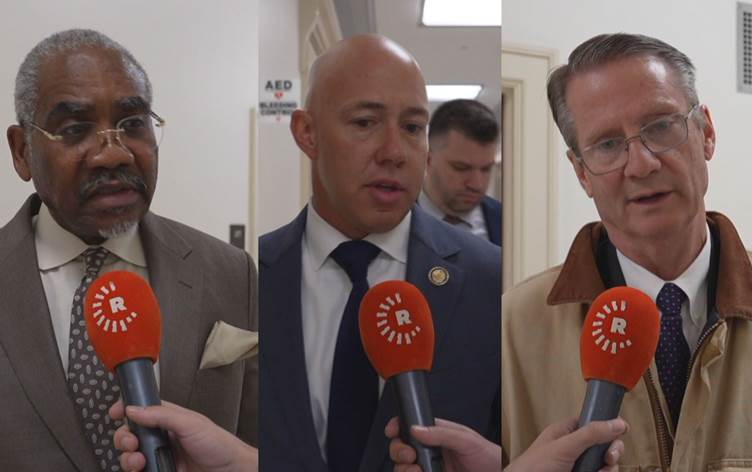
Congressmen who spoke to on January 14, 2026. Photos: Rudaw
Congressmen who spoke to Rudaw on January 14, 2026. Photos: Rudaw


WASHINGTON DC - Senior US House Foreign Affairs Committee members on Wednesday expressed concern over recent attacks on US-backed Kurdish forces in Aleppo, warning they are closely monitoring minority rights and may impose consequences on the Syrian government if abuses continue.

House Foreign Affairs Committee Chairman Brian Mast, a Republican, told Rudaw Washington is focused on ensuring that all Syrian communities, including Kurds and other minorities, have a better future than under former President Bashar al-Assad’s dictatorship.

“I’ve had the opportunity to speak to General Mazloum and others,” Mast said, referring to Kurdish-led Syrian Democratic Forces (SDF) commander Mazloum Abdi.

“Something that the United States of America is paying attention to - whether it’s the Kurds, whether it’s the Alawites, whether it’s the Druze, whether it’s anybody else [in Syria] - is that we want to see a Syria that presents an opportunity unlike what existed under Bashar al-Assad,” he said.

“We want to see an opportunity for all of the people there, and that’s something that we’re working towards,” Mast added.

The comments come amid heightened tensions in northern Syria, where Kurdish-led forces have accused the Syrian military and Damascus-allied armed groups of rights violations. The attacks have raised concerns in Washington about stability and minority rights under the new Sunni Arab-led interim government.

Backed by armed groups affiliated with Damascus, the Syrian Arab Army this week expanded its attack on the SDF in northern Syria following a military operation to expel Kurdish forces in Aleppo. Around 150,000 residents fled the fighting Kurdish-majority neighborhoods, raising fears of ethnic cleansing and threats against Yazidi minorities.

Rudaw asked lawmakers about Washington’s decision last month to lift sanctions on Syria, which was intended to help the interim government rebuild and improve its human rights record despite reports of continued violations.

Gregory W. Meeks, the top Democrat on the committee, told Rudaw Washington is monitoring developments closely “to make sure they respect the rights of all Syrians, minorities and others.”


He said the Syrian government needs “to get the message, and we’ll be reaching out to others … about what they have to monitor. Otherwise, there will be ramifications.”

Asked about attacks by the Syrian Arab Army on Kurdish forces that fought alongside the US-led coalition against the Islamic State (ISIS), Meeks said inclusivity is essential for Syria’s future.

“All of the individuals in Syria, the minority groups, the Kurds, they all should be part of one,” he said. “That is what we’re watching. That is what we’re monitoring. And we’re making that strong message, because just as easily as you take something away, you can bring it back.”

Meeks said Washington hopes Syria is moving in a “new and different direction” after decades of authoritarian rule, adding that US policy will reflect developments on the ground.

Republican congressman Tim Burchett also issued a blunt warning to Damascus, saying Syria’s leadership must change course.

“Syria needs to wake up,” Burchett told Rudaw. US President Donald Trump “is not fooling around. This oppression that [Syrian leaders] do to their people and abuse is just wrong. They’ve had a history of this with these thugs.”

Burchett emphasized that while US military power is significant, economic pressure remains a key tool.


“I believe the President [Trump] understands that the most powerful thing we have is our military, but the second most powerful thing we have is our economic strength,” he said. “I think Syria’s leadership better wake up.”

Responding to a question about attacks on Kurdish forces that fought ISIS, Burchett said, “The enemy of our enemy is our friend, and they’ve been fighting our friends. So, I think they need to shape up.”


Protests in Iran and Rojhilat Kurdistan: Nearly 3 thousand dead and nearly 20 thousand detained

The toll of the protests, which have entered their 19th day in Iran and Rojhilat Kurdistan, is getting heavier, nearly 3 thousand dead and nearly 20 thousand detained.


ANF
NEWS CENTER
Thursday, January 15, 2026,

The protests against the economic, social and political crises in Iran and Rojhilat, which started on December 28, 2025, continue with the support and participation of millions. The extent of the violence used by the Iranian regime forces to suppress the protests is not known due to the communication blackout in the country.

Due to the interruption in internet and telephone lines, information about the massacres and developments in the country cannot be accessed. Images of regime forces raiding homes to destroy internet providers obtained with limited means are shared on digital networks. In Iran, where TV channels cannot broadcast, official television channels continue their broadcasts as a means of pressure by the regime, aiming to increase the fear of the public by broadcasting images of statements that are not known how they were taken, and calls for the seizure of the assets of the protesters.

PEOPLE DO NOT LEAVE THE STREETS

Despite all the violence and torture used by the Iranian regime against the demonstrators, the people do not leave the streets. It is among the information received that the protests, in which slogans such as 'Death to Khamenei, Death to the dictator, Damn Khamenei' were raised, spread to 31 cities, 187 districts and 617 towns of Iran and Rojhilat Kurdistan.

Women and young people leading the protests are also targeted by Iranian regime forces. The fate of the young people and women detained in the protests supported by 55 universities is unknown.

Amnesty International said in a statement that dozens of images recorded in Alborz, Gilan, Kermanshan, Razavi Khorasan and Sistan-Baluchistan were examined and as a result of the examination, it was determined that Iranian regime forces used lethal force against demonstrators. The organization also said in its statement; He stated that the Revolutionary Guards, the Iranian police force FARAJA and plainclothes agents took part in the attacks.

NEARLY 3 THOUSAND PEOPLE WERE BRUTALLY MURDERED

In Iran and Rojhilat Kurdistan, where the bodies could not even be identified for days, there is a lot of different information circulating on digital media networks about the death toll. According to the Human Rights Organization HRANA, 2,615 demonstrators were massacred in 19 days. Of these, 12 are reported to be under the age of 18. However, some sources report that the number of those killed exceeded ten thousand.

Iranian state forces are trying to contain the protests with attacks that directly target the demonstrators. Witnesses in the region say that most of the bodies were shot in the chest. In the footage, it is seen that Iranian state forces shot the demonstrators they were chasing, directly targeting their eyes and heads.

FUNERALS ARE GIVEN TO FAMILIES IN EXCHANGE FOR MONEY

In the broadcasts made on radio channels with limited means, it is reported that Iranian state forces raided hospitals and kidnapped injured demonstrators. It is reported that the demonstrators, who were kidnapped with injuries, were massacred after being detained and the bodies were given to their families in exchange for 700 million riyals. For this reason, protesters injured in the attacks do not apply to hospitals.

HRANA announced that 2,045 demonstrators were injured in the attacks during the demonstrations. However, the number and witnesses that this human rights organization has been able to verify state that this number is much higher.

In the country, where detainees are massacred and their bodies are traded, it is noted that the security forces also called many people to the security centers to testify.

Kurdish refugees in Erbil anxiously await news from families amid Iran unrest

January 14, 2026
Rudaw


ERBIL, Kurdistan Region - A Kurdish refugee family from Iran living in Erbil have said they are anxiously waiting for news from relatives inside the country after communications were severed for several consecutive days. Internet and phone services have been cut, preventing families from contacting loved ones as unrest spreads across Iran.

“I was in contact with my family, my father and mother. I asked about them to see how they are. I [talked] with friends and relatives. It was Wednesday when essential food had run out in Iran. [Cooking] oil and rice also ran out. Nothing remains now,” Bahnam Jamali, a refugee, told Rudaw on Monday.

The prolonged uncertainty has taken a heavy emotional toll on families living in exile.

“We have no rest. We only think about what is happening,” said Glara Mstafawi, Jamali’s wife.

Iran is currently facing its most significant internal security threat in years, marked by a wave of anti-government protests triggered by a historic currency crash that saw the Iranian currency hit a record low of 1.45 million rials to the US dollar.

For those who have already been separated from family members for years, the silence has been especially painful.

“The government is doing a large genocide in Iran. Unfortunately, it has been able to do so quietly. Honestly, we are constantly anxious. I was in contact with two close people in my family. They told me that if they [authorities] see anyone on the streets at night, they shoot at them with war [live] rounds. They do not care if it is a family, a child or a woman,” said Yazdan Farahmand, another Kurd from Iran living in Erbil.

The nationwide protests began on December 28 when merchants shuttered their shops at the Alaeddin Mall in Tehran’s Grand Bazaar, but has since spread to at least 156 separate demonstrations across 27 of Iran’s 31 provinces.

The US-based Human Rights Activists News Agency (HRANA) reported that as of Sunday, at least 483 protesters and 47 security personnel had been killed. However, these figures are likely underestimated, especially given the government-imposed internet blockout that has entered its sixth day on Tuesday. Some reports suggest that several thousands of people have been killed.

Meanwhile, the New York-based Center for Human Rights in Iran (CHRI) reported last week that over 2,000 people had been “arbitrarily arrested,” a figure that has since risen to over 10,000 according to activist aggregates.

Iran’s nationwide internet and communications shutdown is severely disrupting trade, cutting the country off from regional and international markets.

In the past days, authorities have blocked internet and phone services amid ongoing protests, leaving traders unable to work.

Trade between Iran and the Kurdistan Region alone is valued at about $6 billion annually, but commercial activity has now slowed to a near standstill.

Trade in Kurdistan Region paralyzed amid Iran blackout

The internet shutdown is also severely disrupting trade between Iran and the Kurdistan Region, where roughly 30 percent of imported goods originate from Iran.

Kayfi Khoshnaw, spokesperson for the Erbil Exchange Market, said money transfers have nearly collapsed.

“[The rate of our remittances with Iran] has decreased by 90 percent. People do not dare to transfer money to their account numbers [in Iran] because they receive no [reply] or confirmation... You don’t know whether the money has reached your bank account or not,” he said.

Importers say shipments are stalled and untraceable. “We currently have three shipments in Iran, and we have no information on where they have reached or the status of their processing,” said Soran Ali, an importing company owner. “Our shipments were supposed to arrive two to three days ago.”


Others reported similar losses.

“Our goods are purchased from five Iranian factories… We currently have six trucks at the border, and we don't even know which border they are at,” said Rizgar Osman, another importer, adding that each truck is worth about $20,000.

At Sulaimani’s main fruit and vegetable market, traders say the blackout has caused chaos.

“At this moment, when communication is cut, a lot of problems have been created for us,” said Atta Mohammed, a member of the Sulaimani Vegetable Market Syndicate. “We do not know the prices of our goods… This is a major obstacle for us.”

Human rights groups say the shutdown is also preventing information from reaching the outside world.

“The Internet is not [available] there… The people of Kurdistan are being killed, and the Islamic Republic is suppressing them in an extremely brutal manner,” said Zhila Mostajer, co-founder of the Hengaw Organization for Human Rights, warning that violence is unfolding largely unseen.

Horvan Rafaat and Payam Sarbast contributed to this report from Erbil, and Alla Shally reported from Germany.


KCK says US may have approved ‘assault’ on Aleppo’s Kurdish quarters

13-01-2026
Rudaw


ERBIL, Kurdistan Region - The Kurdistan Communities Union (KCK), an umbrella organization of Kurdish parties, said Tuesday that the assault by the Islamist-led interim authorities in Damascus on Aleppo’s Kurdish-majority neighborhoods may have occurred with the “approval of the US and international powers.”

Deadly clashes erupted last week in Aleppo’s Kurdish neighborhoods after the Syrian Arab Army and its allied armed factions launched a large-scale operation to seize Ashrafiyeh and Sheikh Maqsood from the Kurdish Internal Security Forces (Asayish).

The violence left at least 82 people dead, including 43 civilians, according to a Sunday report by the UK-based Syrian Observatory for Human Rights (SOHR), and displaced approximately 150,000 others, the Erbil-based Barzani Charity Foundation (BCF) told Rudaw on Saturday.

In a statement, the KCK said the attack followed meetings involving the US, Israel, and Syria, and coincided with what it described as an agreement to cede southern Damascus to Tel Aviv. The bloc claimed this indicates that “the approval of the US and international powers in the region was obtained, or that their silence was ensured.”

Damascus and Tel Aviv resumed negotiations last week after a four-month pause in Washington-mediated talks aimed at de-escalating tensions along their shared border. Syrian state media confirmed that the talks involved senior diplomatic and intelligence officials and noted that they addressed the establishment of a coordination cell between the two sides.

“The attacks on Kurdish neighborhoods in Aleppo and the approach and attitude of state officials toward our party constitute an attempt to sabotage the peace and democratic society process,” the statement read, referring to ongoing peace efforts between Ankara and the now-dissolved Kurdistan Workers’ Party (PKK) - which rebranded as the Kurdistan Freedom Movement in May and formerly spearheaded the KCK.

The KCK further noted that the attacks on Ashrafiyeh and Sheikh Maqsood were aimed to “de-kurdify them” and were driven by “anti-Kurdish sentiment” and “aim to dismantle the autonomous democratic system established by the Kurdish people [in northeast Syria - Rojava] alongside Arabs, Syriacs, and other peoples throughout Syria,” the bloc said.

The Democratic Autonomous Administration of North and East Syria (DAANES) governs Rojava as a decentralized, multi-ethnic civil administration overseeing local governance, security, and public services.

An internationally mediated ceasefire came into effect on Sunday. Despite this, videos circulated online showing Damascus-affiliated militants rounding up, arresting, and verbally abusing Kurdish civilians. Social media users have also shared images and videos of relatives who they say have gone missing since the violence began.


Ilham Ehmed described the attacks, disclosed documents, demanded an independent investigation

Îlham Ehmed, Co-Head of the Foreign Relations Department of the Democratic Autonomous Administration of North and East Syria, explained with documents how the attacks on Kurdish neighborhoods in Aleppo took place, the war crimes committed and which forces participated.


ANF
NEWS CENTER
Thursday, January 15, 2026, 11:20 AM


Ilham Ehmed, Co-Head of the Foreign Relations Department of the Democratic Autonomous Administration of North and East Syria, made a detailed statement on the attacks in Aleppo.

Ilham Ehmed explained in detail which forces participated in the attacks on three neighborhoods where more than 500 thousand civilians live and the crimes committed.

7 PEOPLE FROM MY FAMILY WERE KILLED BY DRONE

Ilham Ehmed also announced at a press conference on Zoom that 7 people from his own family were shot and killed by a drone on a bus in the Şêxmeqsûd neighborhood: "Only 7 people from my family have lost their lives in Sheikh Maqsoud so far. They were shot with a drone while I was in a bus and 7 people from my family died there. Apart from this, the number of civilians who have lost their lives so far is very high. People's homes were looted. The bodies of female fighters are thrown down from high places."

THEY ATTACKED THE NEIGHBORHOODS WHERE 500 THOUSAND CIVILIANS LIVE

The text shared with the signature of İlham Ehmed is as follows:

Since December 23, 2025, the Syrian government and its forces have been imposing a comprehensive siege on the neighborhoods of Şêxmeqsûd, Eşrefiyê and Banî Zêd in the city of Aleppo. More than 500,000 civilians live in these neighborhoods, including about 55,000 Kurdish families, as well as thousands of Kurds forcibly displaced from the Afrin region occupied by Turkish-backed Syrian National Army (SNA) groups in 2018.

This siege is a continuation of long-standing efforts to marginalize and isolate the Kurdish population of northern Syria, representing the continuation of collective punishment and ethnic targeting practices that have been documented since the start of the Syrian conflict in 2011. These neighborhoods had remained relatively stable compared to other war-torn areas until this new military escalation.

Seven access roads to Kurdish neighborhoods were also blocked by Defense Ministry checkpoints, and only one road was left open intermittently under heavy military control. This blockade severely restricted the entry of essential items such as food, medicine, fuel, and humanitarian aid, exacerbating an already dire humanitarian crisis. The siege violates the principles of international humanitarian law by depriving hundreds of thousands of civilians of their right to basic livelihoods and health services, and amounts to collective punishment.

Despite repeated communications and official meetings with representatives of the Syrian government demanding that the siege be lifted or that basic necessities be allowed into place, no response or assistance has been provided. This further exacerbated civilian suffering and increased the risk of starvation and disease.

BEGINNING OF THE ATTACKS

On January 6, 2026, groups loyal to the Damascus government launched a large-scale military offensive on the neighborhoods of Şêxmeqsûd and Eşrefiyê. Among the units participating in the attack were the 60th, 62nd, 72nd and 86th Brigades of the Syrian Army. Divisions took part. These units were supplemented by armored vehicles, heavy artillery units, Grad and Katyusha rocket launchers, mortars, DShK heavy machine guns and suicide drones.

The attack deliberately targeted civilian infrastructure and residential areas, clearly violating the law of armed conflict, which requires a distinction between military and civilian targets. This is the first time suicide drones have been used against civilian population centers, marking a strategy to terrorize civilians and break their resistance.

The attack began with suicide drone attacks targeting civilian areas, followed by indiscriminate shelling of residential areas inhabited by unarmed civilians. Tanks and armored vehicles moved towards Kurdish neighborhoods, while civilians in neighboring areas were forcibly evicted from their homes. Snipers were deployed in high-rise buildings surrounding neighborhoods.

Despite the dense civilian population, the Syrian Ministry of Defense declared the Şêxmeqsûd and Eşrefiyê neighborhoods as 'military zones'. Following this identification, heavy weapons were used in residential areas and indiscriminate shelling was carried out. This has raised serious concerns about its use to justify violations of the principle of segregation and the protection of civilians under international humanitarian law.

On January 8, the attack intensified with the involvement of hardline jihadist groups such as Asaib al-Hamra (Red Bands), which had previously been affiliated with al-Qaeda. Important reinforcements came from Idlib and other provinces. Turkish-backed SNA groups participated in the operation, while Turkish reconnaissance drones (Bayraktar) provided aerial surveillance and intelligence support. From the morning of January 8, the operations were led by the Chief of Staff of the Syrian Army, Major General Ali al-Naasan.

The involvement of the Syrian army's regular contingents, as well as extremist groups, and the complicity of foreign actors demonstrate the complexity of alliances that perpetuate violations and war crimes in the region. The attack was carried out with intense shelling using tanks, heavy artillery weapons, rocket systems, mortars and multiple suicide drones carrying high-explosive charges, causing widespread destruction of civilian infrastructure.

LAND ATTACKS AND TARGETING OF MEDICAL FACILITIES

After more than twelve hours of continuous bombardment, Syrian army factions launched coordinated ground offensives on Kurdish neighborhoods on January 7 at around 21:00 and advanced along the three main axes.

On January 8, the Osman Hospital in Ashrafiyê and the Xalid Fecir Hospital, the only functional hospital in Şêxmeqsûd, were repeatedly bombed. The attacks caused severe structural damage and Xalid Fajir Hospital was completely unusable with injured civilians, patients and medical staff still inside. Several health workers were killed, which is a serious violation of international humanitarian law.

Osman Hospital and Xalid Fajir Hospital were repeatedly hit, resulting in severe structural damage, and Xalid Fajir Hospital became unusable while patients and medical staff were inside. Medical facilities are protected under the Geneva Conventions, and attacks on these facilities may constitute serious violations of international humanitarian law.

THE OCCUPATION OF ASHRAFIYE AND THE CONTINUATION OF THE ATTACKS ON ŞÊXMEQSUD

Between January 9 and 10, Ashrafiyê was completely occupied by the attacking forces. Military operations then concentrated on Şêxmedsûd. Civilians, including the wounded, children, the elderly and whole families, remained trapped in the hospital, despite the fact that Xalid Fajir Hospital was out of service. The continued bombardments have led to new casualties among civilians and medical personnel. The hospital remained the last refuge for civilians who could not escape. Civilians, including the wounded, children and the elderly, were trapped in and around Xalid Fajir Hospital as shelling continued. International humanitarian law prohibits using civilians and medical facilities in a manner that exposes them to attack, and such behavior may be considered serious violations.

CEASEFIRE AND FORCED EVACUATION

Following the agreement reached on the evening of January 10 with the mediation of international actors, the ceasefire came into force in the early morning of January 11. The agreement facilitated the evacuation of the dead, wounded civilians and the remaining members of the Internal Security Forces from Shêxmeqsûd to areas in northeastern Syria. Then the clashes ended and the Internal Security Forces withdrew from the neighborhood.

While the ceasefire provided temporary relief, the long-term humanitarian and political consequences remain a major concern.

HUMANITARIAN DISASTER

According to local administrative records and documents that have not yet been completed, in the attacks that took place between January 6-10:

a) 47 civilians, including women, children and the elderly, were killed.

b) 133 civilians were injured.

c) At least 276 civilians have disappeared, many of whom are thought to have been arbitrarily detained.

Human rights organizations warn that these figures likely underestimate the actual number of casualties due to restricted access, ongoing detentions and the critical condition of many injured.

The attacks were followed by a mass exodus, with estimates of 148,000 to 155,000 Kurdish civilians being forcibly displaced from the Kurdish neighborhoods of Aleppo.

FOREIGN ELEMENTS AND DOCUMENTED WAR CRIMES

Foreign fighters played a documented role in the attacks, as confirmed by photos and videos published by the perpetrators themselves. This evidence confirms that serious violations have been committed that may constitute war crimes.

DOCUMENTED CASES:

All visual and witness statements referenced above have been archived, timestamped, and retained to ensure the integrity of the evidence.

*Fighters wearing ISIS emblems who openly participated in the attacks on Şêxmesûd and Eşrefiyê during live media broadcasts.

*Turkish citizen Khalil Yavuz, a member of the Turkish Kurds League, is recorded as boasting about the siege and threatening civilians with death.

*Egyptian citizen Ahmed Mansour was filmed participating in the murder and dismemberment of a female member of the Internal Security Forces. Mansour is also alleged to have been involved in previous massacres committed off the coast of Syria and in Suwayda.

*Samit Dagol (Abdul Samad), a Turkish citizen wanted for links to ISIS and al-Qaeda, posed as a journalist affiliated with Asaib al-Hamra during the attacks.

*Members of the Turkish Kurds Union kidnap Kurdish youths and there are reasonable fears that these young people will be extrajudicially executed.

OTHER DOCUMENTED VIOLATIONS:

* Use of tanks and heavy weapons in densely populated residential areas near Xalid Fajir Hospital

* Direct targeting of the Great Mosque in Şêxmedsûd under false pretexts.

* Dragging, dismembering and destroying corpses accompanied by racist and sectarian insults

*Abuse and humiliation of detained civilians, including families and the elderly

*Testimonies of civilian witnesses describing widespread terror, looting and abuse during the five-day attack

POST-CEASEFIRE CONDITIONS

Despite the ceasefire, Kurdish neighborhoods remain under de facto siege. Arbitrary arrests, enforced disappearances, harassment and restrictions on movement continue unabated. Humanitarian access remains severely limited, and the presence of extremist militias integrated into state security structures poses a constant threat to civilian security.

INDEPENDENT INVESTIGATION AND CALL FOR ACTION

The international community should urgently deploy independent observers to oversee the ceasefire and prevent further violations. Diplomatic recognition and assistance to Syria must be conditioned on the verified protection and political participation of Kurds and other minorities. The March 10 agreement, which protects Kurdish rights, must be fully implemented and extremist militias must be removed from the state security forces. Inclusive political participation of all Syrian communities is essential to achieving lasting peace.