Thursday, January 15, 2026


Locust swarms destroy crops. Scientists found a way to stop that


Arizona State University
A locust in the ASU Global Locust Initiative lab 

image: 

Arizona State University PhD student Sydney Millerwise holds a migratory locust in ASU’s Global Locust Initiative lab. A new study by an ASU team and international collaborators identifies a strategy to manage locust populations and prevent damage to crops.

view more 

Credit: Quinton Kendall/ASU Knowledge Enterprises


“They’re very destructive when there's a lot of them, but one-on-one, what's not to love?” says Arianne Cease. She’s talking about locusts.

As the director of Arizona State University’s Global Locust Initiative, Cease has a healthy admiration for these insects, even as she studies ways to manage locust swarms and prevent the destruction they cause.

Locust swarms, which may conjure images of biblical plagues and ancient famines, remain a serious problem worldwide. They can destroy crops across entire regions, ruin people’s livelihoods, and in some places, impact children’s education and future economic opportunities. Swarms can cover hundreds of square miles — equal to a major metropolitan area like New York City or Phoenix.

So, when Cease and her international team of scientists discovered a simple soil-based method to keep locusts from eating crops, they knew their work could change people’s lives. To the team’s knowledge, theirs is the first study to test this new method in real-world farming conditions and confirm that it works.

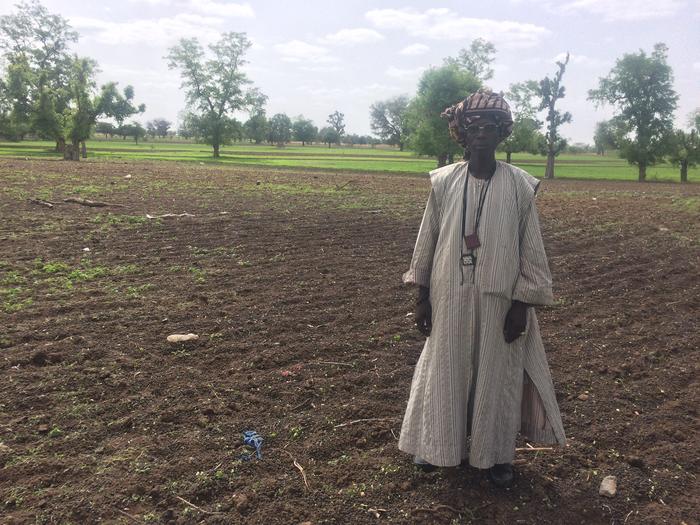
The researchers partnered with farmers in Senegal who experience outbreaks of the Senegalese grasshopper. This grasshopper does not form the extreme swarms like the desert locust, but its consistent outbreaks and smaller swarms can be more devastating for Senegalese farmers. These communities, which worked with Cease for previous studies, advocated for this larger study.

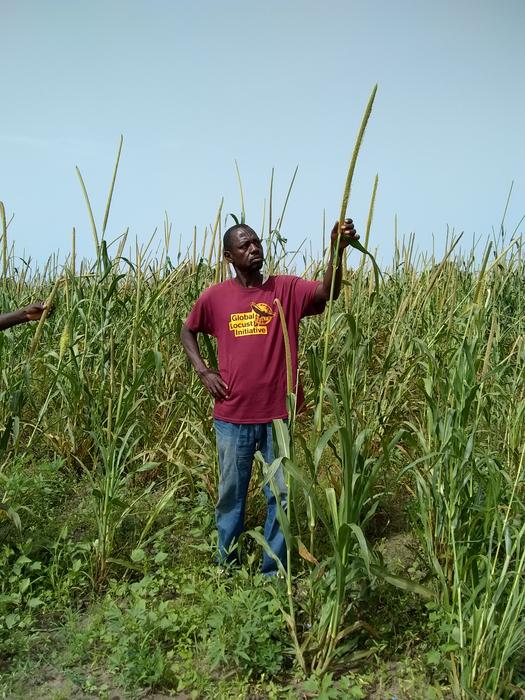
Each farmer grew two plots of millet — one treated with nitrogen fertilizer and one untreated.

Compared to the untreated plots, the treated plots showed three clear differences: fewer locusts, less crop damage and a doubled crop yield.

"This breakthrough represents an important step forward in the sustainable management of migratory pests, offering a community-based tool that expands the available treatment options," says Cease, also an associate professor with the ASU School of Sustainability and School of Life Sciences.

The study published today in the journal Springer Nature. Associate Professor Mamour Touré of Université Gaston Berger in Saint-Louis, Senegal, was the lead author of the study, while Cease served as the principal investigator of this USAID-supported project.

“The results are of major importance to the scientific community and also to Senegalese farmers,” says Touré. “The study gave them a better understanding of grasshoppers and locusts, as well as a practical way to control them at the local level.”

The Global Locust Initiative, part of the Julie Ann Wrigley Global Futures Laboratory, focuses on locusts and the systems that surround them. Environmental factors, biology and behavior, economic impacts, policies, and landscape management all feed into the cycle of locust destruction — and offer opportunities to break it.

Over 15 years of studying locusts, Cease found that plants growing in nutrient-poor soil promote locust outbreaks. These plants are high in carbs and low in protein.

“This carbohydrate bias, or the ‘donut diet,’ is optimal for populations of locusts and swarming grasshoppers,” Cease says. Just like runners who load up on carbs before a marathon, locusts need more carbs to fuel their migration.

In nitrogen-rich soil, plants are higher in protein and lower in carbs. These plants are bad for locusts to eat — their bodies can’t handle the extra protein and don’t get enough energy.

Protein-packed plants prevent pests

All this work led to the question: can we prevent locust damage by changing the protein-to-carb ratio of plants? Small lab studies and field surveys suggested the answer might be yes, but no one had tested it in open, working farmland. To Cease, that was the next logical step.

Two villages in Senegal that collaborated with Cease on previous studies advocated conducting the new study in their communities. Farms there suffer heavy crop damage from swarms of the Senegalese grasshopper.

In the experiment, 100 farmers grew two millet plots each—one treated with nitrogen fertilizer and one left untreated for a controlled comparison.

The scientists were uncertain whether locusts might still enter treated plots via untreated areas, or whether the increase in plant protein would attract different pests.

The team assessed the number of locusts and damage to farmers’ plots three times throughout the growing season. They also recorded millet yields for each plot at harvest time.

The difference between the treated and untreated plots was significant. Treated plots had fewer locusts, less leaf damage to crops and a doubled millet yield at harvest. The team also found no evidence that nitrogen fertilizer made pest problems worse.

While the research team provided nitrogen fertilizer for the purpose of the study, it’s not practical for communities to use on a regular basis. To really work long-term, they need a way to add nitrogen to the soil that is affordable and good for the farmland.

“Ongoing work is focused exclusively on compost, and we seem to be getting the same results,” Cease says.

The project’s funding, provided through USAID, was cancelled in early 2025. However, the farmers on the ground in Senegal are so encouraged by the results that they are continuing the compost system on their own.

“Farmers unanimously stated that they no longer burn crop residues after land clearing, but instead practice composting to fertilize their fields, thereby helping to reduce grasshopper infestations. This technique was fully mastered thanks to the project,” Touré says.

The team is applying for additional funding to expand the project into other regions hard-hit by locusts.

Staying a step ahead of locusts

The U.S. has no locust species inside its borders. Why study them here at all? Cease says it won’t stay that way forever. She’s keeping her eye on the Central American locust, whose range reaches about 200 miles from our border.

“We can say with pretty high certainty that Texas will be very suitable for locusts in about 10 to 15 years,” Cease says. “Whether or not they will create a problem is yet to be determined, but it’s something that we should definitely be aware of.”

Even without locusts, we have enough reasons to study grasshoppers in the U.S. — 12 of them, in fact. They’re called the Dirty Dozen.

These 12 rangeland grasshoppers (plus one cricket) are top species of management concern in the western U.S., according to the U.S. Department of Agriculture. When they swarm, they can outcompete livestock for grass, creating a huge problem for ranchers.

The department relies on chemical pesticides to control the grasshoppers, but through the Global Locust Initiative, it’s identifying alternative treatments that are safer for human health and the environment.

The more we learn about locusts in other parts of the world, the better we can address migratory pests at home and prepare for the day when locusts make their way to the U.S.


​​​​​​​Insects are victims too: Global study shows impacts of invasive alien species on populations


Researchers say insects are often seen as invaders due to high-profile species like yellow-legged hornet and harlequin ladybird


UK Centre for Ecology & Hydrology

Invasives' impacts on insects 

image: 

An infographic showing the average declines in abundance of key terrestrial insect groups due to invasive alien species. The extent of declines varies across species and regions.

view more 

Credit: UKCEH


Insects are often seen as invaders due to high-profile species like the yellow-legged (Asian) hornet, the harlequin ladybird and fire ant. but new research reveals insects are also major victims of invasive alien species – exacerbating population declines and reducing their ability to provide vital services for biodiversity and people from pollination to pest control.

The first global analysis of its kind, led by the UK Centre for Ecology & Hydrology (UKCEH), revealed that invasive alien species, on average,  reduce abundance of terrestrial insects* by 31% and species richness by 26%. Invasive animals outcompete or eat insects while invasive vegetation replaces native plants that insects feed upon.

The study, which analysed data from six continents, shows certain terrestrial insect groups including bees, wasps, ants and true bugs are more negatively affected by invasive alien species than others, such as beetles. But the authors point out that the outcomes vary, depending on the dynamics of the local environment – for example, invasive plants might support insects in places where native vegetation has been lost.

Invasive alien species are already recognised by IPBES as one of the five big direct drivers of global biodiversity loss, alongside land- and sea-use change, direct exploitation, climate change and pollution. These threaten nature, economies, food security and human health.

Grace Skinner, a data scientist at UKCEH who led the new study, said: “It is crucial that we recognise insects not just as invaders but also as victims of invasion. Insects are undergoing concerning declines across the world and as this trend continues, essential ecosystem services will increasingly be at risk.

“Identifying the insects most vulnerable to biological invasions will support better prioritisation of habitat management and also action to prevent and control invasive alien species. This is particularly important when resources are limited.”

It is widely acknowledged that insects are struggling globally, though the magnitude of change varies among species and regions. Despite invasive alien species being a major global threat, their effects on insects have been far less studied than other pressures such as urbanisation and nutrient enrichment. This is the first study to analyse and quantify the impact of invasive alien species on insects on a global scale.

Global transport results in the increased spread of non-native species to new regions while warmer temperatures create more suitable conditions for populations to thrive in some of those areas. 

Scientists warn the multiple challenges to insects will increase further. “We hope our analysis encourages more research into how invasive alien species interact with other threats to insect biodiversity – for example how climate change might influence invasive alien species populations and amplify their impacts,” said study co-author Dr Joseph Millard of the University of Cambridge.

The study, funded by the Natural Environment Research Council, has been published in the journal Nature Communications. It focused on four animal orders, representing 62% of all insect species, that experts have identified as being particularly threatened by invasive non-native species.

The analysis found the average reductions in abundance were: Hemiptera (true bugs) – 58%; Hymenoptera (ants, bees, sawflies and wasps) – 37%; Orthoptera (grasshoppers, locusts and crickets) – 27%; and Coleoptera (beetles) – 12%.

Scientists point out that tackling invasive alien species is urgent but achievable. Enhancing cross-border collaborations on biosecurity is critical to preventing the spread of species to new regions and individuals can make a difference. Gardeners are advised to carefully consider their choice of plants, while anglers, boaters and forestry workers, for example, should ‘check, clean, dry’ equipment.

- Ends -

Media enquiries

An embargoed copy of the paper, an infographic and some suggested images are available on request. For an interview with a scientist or further information, please contact Simon Williams, Media Relations Officer at UKCEH, via simwil@ceh.ac.uk or +44 (0) 7920 295384

Paper information

Skinner et al. 2025. Meta-analysis reveals negative but highly variable impacts of invasive alien species on terrestrial insects. Nature Communications. DOI: 10.1038/s41467-025-67925-9. Open access.

The analysis, which was based on 52 studies from across the world, involved researchers from UKCEH, the University of Cambridge, University of Exeter, University College London, the Zoological Society of London and Stellenbosch University. It received funding from the Natural Environment Research Council (NERC) as part of the GLiTRS (Global Insect Threat-Response Synthesis) project.

About the UK Centre for Ecology & Hydrology (UKCEH)  

The UK Centre for Ecology & Hydrology (UKCEH) is a leading independent research institute dedicated to understanding and transforming how we interact with the natural world.  

With over 600 researchers, we tackle the urgent environmental challenges of our time, such as climate change and biodiversity loss. Our evidence-based insights empower governments, businesses, and communities to make informed decisions, shaping a future where both nature and people thrive.  

www.ceh.ac.uk ukceh.bsky.social  / LinkedIn: UK Centre for Ecology & Hydrology  


Environmental pollutants detected in children aged 0 to 2 years


Researchers at the University of Seville have linked the presence of these substances to problems in the cognitive, motor, language, social and adaptive development of children


University of Seville


Researchers at the University of Seville have carried out a study to determine the relationship between prenatal and early childhood exposure to environmental pollutants with the neurodevelopment of children born in the province of Seville. Their results highlight the presence of a mixture of metals in 100% of the subjects analysed. Each hair sample contained between 2 and 10 metals simultaneously, with an average of 8.37 elements per child. 

The researchers highlight that 7 of the 10 elements studied (copper, zinc, chromium, lead, manganese, aluminium and selenium) were detected in more than 90% of samples. In addition, they found that concentrations of neurotoxic elements (lead, aluminium, manganese, nickel and arsenic) tend to be higher at 6 months of age and decrease progressively towards 24 months, thus suggesting a higher body burden or vulnerability in the earliest postnatal window.

The PID2019-106442RB-C21 project, funded by the State Research Agency, has followed the development of 100 children born between 2020 and 2022 in the province of Seville. Specifically, children born at the Virgen del Rocío and Valme hospitals were analysed in order to include inhabitants from two geographical areas with different characteristics. 

With regard to the impact of this exposure on neurodevelopment, the study highlights that arsenic is the element with the highest neurotoxic consistency as it is negatively associated with all areas of development (cognitive, motor, language, social and adaptive).  

Lead, in contrast, exhibits a specific and gender-differentiated impact. Thus, in the general population, it affects language development, but in boys, its presence has also been correlated with deficits in cognitive and motor development. 

Finally, aluminium and manganese show generalised negative correlations, significantly affecting multiple domains of development, with a statistically more marked impact on the subgroup of girls.

For all these reasons, the authors of the study emphasise that, even in a cohort of healthy children in a non-industrial urban area, silent environmental exposure to metal mixtures is detectable and has a measurable effect on early psychomotor development. They therefore stress the need to consider exposure to complex mixtures (and not just isolated toxins) as a public health determinant to be monitored through routine biomonitoring programmes from childhood onwards. 


Research development

The researchers worked with a cohort of 100 children born between July 2020 and 2022. These children were monitored periodically, with samples taken and evaluations carried out at 6, 12, 18 and 24 months of age. The participants came from two health areas in Seville with different environmental characteristics: the Virgen del Rocío University Hospital, with a predominantly urban profile, greater potential exposure to road traffic and geographical proximity to areas with a history of mining (towns near Huelva); and Virgen de Valme University Hospital, with a more rural/agricultural profile (intensive farming), relevant due to the possible use of plant protection products. To avoid bias, only mothers who had been living in the area for less than 5 years, with single pregnancies (without assisted reproduction) and in good health, were selected. Newborns who were premature (less than 32 weeks), underweight (below 1500g) or had perinatal pathologies that could alter neurodevelopment per se were excluded. 

Hair was used as a biomarker of chronic exposure to xenobiotics, thus allowing for the non-invasive assessment of long-term metal accumulation. Ten elements, namely aluminium, arsenic, cadmium, chromium, copper, manganese, nickel, lead, selenium and zinc, were analysed using inductively coupled plasma mass spectrometry (ICP-MS). The Battelle Development Inventory (BDI), which measures skills in the motor, adaptive, personal-social, cognitive, and language domains, was used for neuropsychological assessment.


Mentoring improves educational outcomes for socially disadvantaged children


University of Cologne
Elementary school student participating in mentoring programme 

image: 

Socially disadvantaged elementary school children can profit in the long run by participating in a mentoring programme.

view more 

Credit: ECONtribute


Socio-economic status continues to have a strong influence on children’s educational outcomes in Germany, according to a recent study by the Cluster of Excellence ECONtribute at the Universities of Bonn and Cologne. The research team, consisting of Professor Pia Pinger (University of Cologne), Professor Armin Falk (University of Bonn), and Professor Fabian Kosse (University of Würzburg), found that parents’ socio-economic status plays a major role in the choice of a secondary school. In most of Germany's federal states, parents make this decision at the end of fourth grade, after receiving a recommendation from the elementary school. The results of the study “Mentoring and Schooling Decisions: Causal Evidence” have been published in the Journal of Political Economy.

Parents’ socio-economic status is decisive

The study shows that children from less privileged families are approximately one third less likely to enter the high track in secondary school that qualifies for university studies (German Abitur) than their peers from better-off households. Even when performance levels are the same, a gap of around 22 percentage points remains.

“Our findings clearly show how strongly social background continues to determine educational trajectories,” explains Pia Pinger, Professor for Economics at the University of Cologne and member of the Cluster of Excellence ECONtribute. “Equal opportunity is still not a reality in the German education system.”

The data used in the study comes from the Bonn Family Panel, which was carried out by the University of Bonn in collaboration with an external agency. Over a period of seven years, it followed more than 700 families with children born between 2002 and 2004 in the Cologne-Bonn area. To participate in the study, all families responded to an initial letter and returned a questionnaire on the socioeconomic situation of their household. They also had to express their interest in participating in the mentoring programme and the accompanying interviews. The data includes interviews with the children and their families, schooling-related information, and details on the tracking-related decision-making process. Using this data, the research team not only examined the gap in transition to secondary school, but also the effect of a childhood intervention programme such as mentoring.

Mentoring programme has long-term benefits for children’s educational trajectories

They found that mentoring programmes improve equality of opportunity in a both enduring and scalable way.

212 randomly selected second- and third-grade elementary school children from families with low socio-economic status took part in a mentoring programme called “Balu und Du”. Over the course of a year, volunteer mentors – typically university students – met with the children to promote their psycho-social development and broaden their personal horizons through joint activities. Among the children who were randomly selected for the mentoring programme, the probability of entering the high track in secondary school increased by 11 percentage points. This effect persisted even five years after the change of school.

“The transition from elementary school to secondary school has a decisive influence on a child’s future educational and professional trajectory,” Pinger concludes. “Mentoring provides children with role models and encourages their parents to consider a high track education.”