It’s possible that I shall make an ass of myself. But in that case one can always get out of it with a little dialectic. I have, of course, so worded my proposition as to be right either way (K.Marx, Letter to F.Engels on the Indian Mutiny)
Thursday, January 15, 2026
US intervention in Greenland 'existential threat for NATO' and Europe, Vestager tells Euronews
Former Danish Minister and European Commissioner Margrethe Vestager told Euronews' flagship morning show Europe Today that a US intervention in Greenland represents “the most existential threat to NATO” in its history.
Former European Commission Margrethe Vestager cautioned "even for President Trump, for one NATO country to attack another NATO country to acquire territory is really far reaching" in an interview with Euronews as the White House piles on pressure on Denmark to cede the semi-autonomous territory of Greenland "one way or another."
Vestager, who rose to prominence as EU chief for competition, echoed a severe warning made by Danish Prime Minister Mette Frederiksen and European Commissioner for Defence Andrius Kubilius against a US takeover of the territory rich in critical minerals.
“For one NATO country to attack another NATO country's territory would be the most existential threat to NATO we have ever seen,” she cautioned, as the US administration increases the pressure on Copenhagen to gain control of the semi‑autonomous Danish territory of Greenland "one way or another. It will happen."
Trump argues the strategically located territory is crucial to US national security as a counterpoint to Russian and Chinese presence in the Arctic, although Denmark and Greenland have firmly rejected the claims and reiterated that the territory is not for sale.
Polls suggest the vast majority of Greenlanders do not want to belong to the US.
Vestager said existing treaties between the US and Denmark allow for further cooperation on the ground without a transfer of Greenland. She also noted that Copenhagen has a long-established commitment to NATO and global security.
European institutions and member states led by France and Germany have expressed their solidarity, prompting suggestions that a European force modelled after NATO could be deployed to the territory to bolster its security in an attempt to show President Trump that Arctic security is a top priority for them too.
NATO Secretary General Mark Rutte said Monday that the alliance is not "in crisis" mode and suggested both countries, Denmark and the US, are working to reinforce security in the Arctic. The Danish prime minister has warned that any move to seize the territory would permanently damage the NATO alliance and the post-WWII security architecture.
When asked about further steps that the European Union could take to assist Denmark and bolster ties with Greenland, Vestager said that the relation could be strengthened through further investments and closer political ties if the Greenlanders choose it.
"These are decisions for the people of Greenland to make. If they ever want to join the European Union again, it's for them to start that discussion," she told Euronews.
US Secretary of State Marco Rubio will meet Danish officials on Wednesday.
Vestager served as economy minister between 2011 and 2014 before her decade-long term as European Commissioner, where she became one of the most known faces of the institutions and one of the most-recognised Danish voices in international circles.
Elon Musk caves to pressure over Grok deepfake porn scandal
The AI chatbot’s developer xAI said on Thursday that it’s implementing "technological changes" to restrict users from creating sexualised images of "real people"
(Photo Illustration by Algi Febri Sugita/SOPA Images/LightRocket via Getty Images)
Elon Musk appears to have bowed to regulatory pressure aimed at controversial capabilities of his AI tool Grok, which in recent weeks has been flooding his social media platform X with sexualised content.
In an announcement posted to X on Thursday, Musk’s company said that it would restrict users from using Grok to generate images of ”real people” being digitally undressed.
“We have implemented technological measures to prevent the Grok account from allowing the editing of images of real people in revealing clothing such as bikinis,” the statement reads, before specifying that: “This restriction applies to all users, including paid subscribers.”
Grok has been facing global outage and regulatory scrutiny, including in the EU, after the AI tool produced sexualised images of women and children – content that the Commission described last week as “illegal”.
Musk’s company initially responded to the outrage by saying that it would limit Grok’s undressing feature to paid subscribers. However, on Thursday, xAI appeared to go further – apparently blocking paid users from using the tool to digitally undress women and children, too.
Notably, xAI’s statement specifies that the expanded restriction on Grok’s image manipulation capabilities applies “via the Grok account on the X platform”.
It does not mention any changes to Grok’s standalone app, where the tool can also be accessed, nor clarify whether new restrictions apply there. But X told Euractiv that it is geoblocking the feature for standalone Grok users “in those jurisdictions where it’s illegal”.
Reacting to the changes, the Commission’s digital spokesperson, Thomas Regnier, told Euractiv: “We take note of the additional measures X is taking to ban Grok from generating sexualised images of women and children.”
Earlier, on Wednesday, Musk had claimed that Grok did not produce any naked images of children.
X’s official statement did not reference Musk’s comments, but reiterated that the platform has “zero tolerance” for any form of child sexual exploitation. It added that it “takes action to remove” such content, including child sexual abuse material (CSAM) – which is typically illegal.
So far, the Commission has asked X to retain all internal records related to Grok until the end of 2026, but has not opened a formal investigation using its powers under the Digital Services Act (DSA) – whereas UK regulator Ofcom confirmed on Thursday that it will continue its probe of the AI tool under the country’s Online Safety Act.
Still, the Commission has indicated that it remains watchful of Grok.
“Should these changes not be effective, the Commission will not hesitate to use the full enforcement toolbox of the DSA,” said Regnier.
(nl)
UPDATE: Updated at 10:18 am on 15 January with X’s response
X bans sexually explicit Grok deepfakes – but is its clash with the EU over?
Copyright Rick Rycroft/Copyright 2023 The AP. All rights reserved.
While Elon Musk’s company has said it is taking steps to prevent its AI chatbot from creating nude images of real people, the European Commission has yet to be reassured.
Amid mounting pressure in Europe and abroad, Elon Musk’s social media platform has announcedthat it is implementing "technological measures to prevent its AI tool, Grok, from allowing the editing of images of real people in revealing clothing such as bikinis", a restriction that will apply to all users, including paid subscribers.
Grok's image editing function had been used by some users to virtually undress pictures of real women and underage girls. The situation, described as "appalling" and "disgusting" by the European Commission, prompted the EU executive to launch a request for information and a document retention order addressed to X.
Speaking through one of its spokespersons, the European Commission said it had taken note of the changes to Grok’s functionality, but warned that it would remain vigilant.
"We will carefully assess these changes to make sure they effectively protect citizens in the EU," the spokesperson said, adding that "should these changes not be effective, the Commission will not hesitate to use the full enforcement toolbox of the Digital Services Act."
If found guilty of breaching EU online platform rules under the Digital Services Act, the Commission could fine X as much as 6% of its global annual turnover.
Last month, the European Commission already fined Elon Musk’s social network €120 million over its account verification tick marks and advertising practices.
Investigationsinto the platform chatbot are currently ongoing in France, the United Kingdom and Germany, as well as in Australia. Grok has been banned altogether in Indonesia and Malaysia.
World-first tool reduces harmful engagement with AI-generated explicit images
World-first tool reduces harmful engagement with AI-generated explicit images. Pictured left to right are UCC School of Applied Psychology researchers Dr Conor Linehan; John Twomey, lead researcher of Deepfakes/Real Harms; and Dr Gillian Murphy.
World’s first research-backed intervention reduces harmful engagement with AI-generated explicit imagery.
As the Grok AI-undressing controversy grows, researchers say user education must complement regulation and legislation.
Study links belief in deepfake pornography myths to higher risk of engagement with non-consensual AI imagery.
Friday, 16 January 2026: A new evidence-based online educational tool aims to curb the watching, sharing, and creation of AI-generated explicit imagery.
Developed by researchers at University College Cork (UCC), the free 10-minute intervention Deepfakes/Real Harms is designed to reduce users’ willingness to engage with harmful uses of deepfake technology, including non-consensual explicit content.
In the wake of the ongoing Grok AI-undressing controversy, pressure is mounting on platforms, regulators, and lawmakers to confront the rapid spread of these tools. UCC researchers say educating internet users to discourage engagement with AI-generated sexual exploitation must also be a central part of the response.
False myths drive participation in non-consensual AI imagery
UCC researchers found that people’s engagement with non-consensual synthetic intimate imagery, often and mistakenly referred to as “deepfake pornography”, is associated with belief in six myths about deepfakes. These include myths such as the belief that the images are only harmful if viewers think they are real, or that public figures are legitimate targets for this kind of abuse.
The researchers found that completing the free, online 10-minute intervention, which encourages reflection and empathy with victims of AI imagery abuse, significantly reduced belief in common deepfake myths and, crucially, lowered users’ intentions to engage with harmful uses of deepfake technology.
Using empathy to combat AI imagery abuse at its source
The intervention has been tested with more than two thousand international participants of varied ages, genders, and levels of digital literacy, with effects evident immediately at a follow-up weeks later.
Lead researcher John Twomey, UCC School of Applied Psychology, said: “There is a tendency to anthropomorphise AI technology – blaming Grok for creating explicit images and even running headlines claiming Grok “apologised” afterwards. But human users are the ones deciding to harass and defame people in this manner. Our findings suggest that educating individuals about the harms of AI identity manipulation can help to stop this problem at source.”
Dr Gillian Murphy, UCC School of Applied Psychology and research project Principal Investigator, said: “Referring to this material as ‘deepfake pornography’ is misleading. The word ‘pornography’ generally refers to an industry where participation is consensual. In these cases, there is no consent at all. What we are seeing is the creation and circulation of non-consensual synthetic intimate imagery, and that distinction matters because it captures the real and lasting harm experienced by victims of all ages around the world.”
“This toolkit does not relieve platforms and regulators of their responsibilities in tackling this appalling abuse, but we believe it can be part of a multi-pronged approach. All of us – internet users, parents, teachers, friends and bystanders – can benefit from a more empathetic understanding of non-consensual synthetic imagery,” Dr Murphy said.
Dr Conor Linehan, UCC School of Applied Psychology, said: “With this project, we are building on our previous work in the area of responsible software innovation. We propose a model of responsibility that empowers all stakeholders, from platforms to regulators to end users, to recognise their power and take all available action to minimize harms caused by emerging technologies.”
Reducing intentions to engage in harmful deepfake behaviours
Feedback from those who have completed the intervention includes:
“I think it was very useful to show that deepfakes can be damaging even if people know they aren't real. Too much of the deepfake discourse focuses on people being unable to tell them apart from reality when that's only part of the issue.”
“What stood out as good about this is that it didn’t come across as judgmental or preachy—it was more like a pause button. It gave space to think about the human side of the issue without making anyone feel attacked. … Instead of just pointing fingers, it gave you a chance to reflect and maybe even empathize a little, which can make the message stick longer than just being told, ‘Don’t do this’.”
Deepfakes/Real Harms is launched as part of UCC Futures - Artificial Intelligence and Data Analytics.
Professor Barry O’Sullivan, Director of UCC Futures - Artificial Intelligence and Data Analytics and member of the Irish Government’s Artificial Intelligence Advisory Council, said: “As we work towards a future of living responsibly with artificial intelligence, there is an urgent need to improve AI literacy across society. As my colleagues at UCC have demonstrated with this project, this approach can reduce abuse perpetration and combat the stigma faced by victims.”
This project is funded by Lero, the Research Ireland Centre for Software.
ENDS
'We need competitive bidding systems for clean power,' wind industry leader tells Euronews
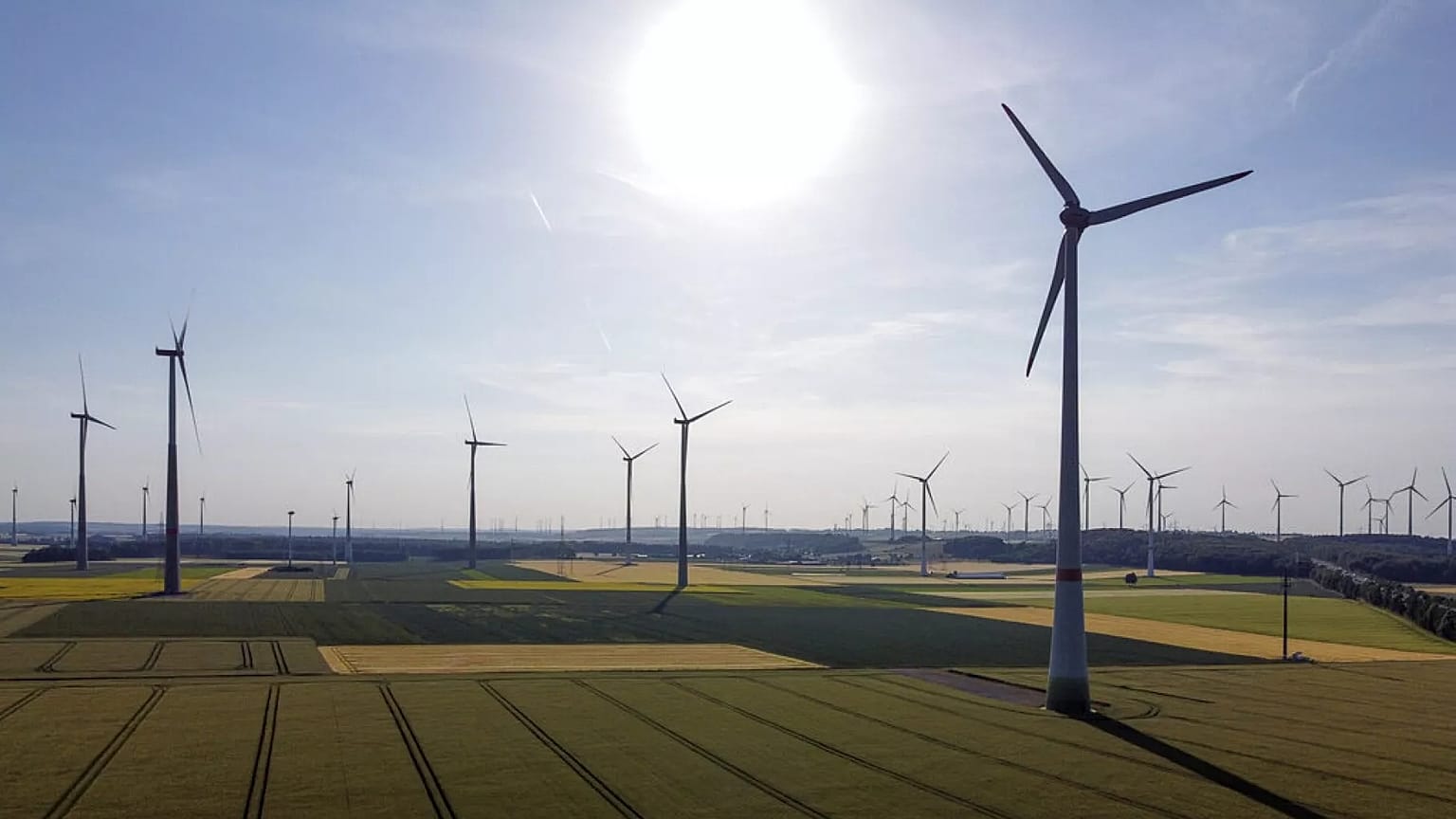
Copyright Martin Meissner/Copyright 2022 The AP. All rights reserved.
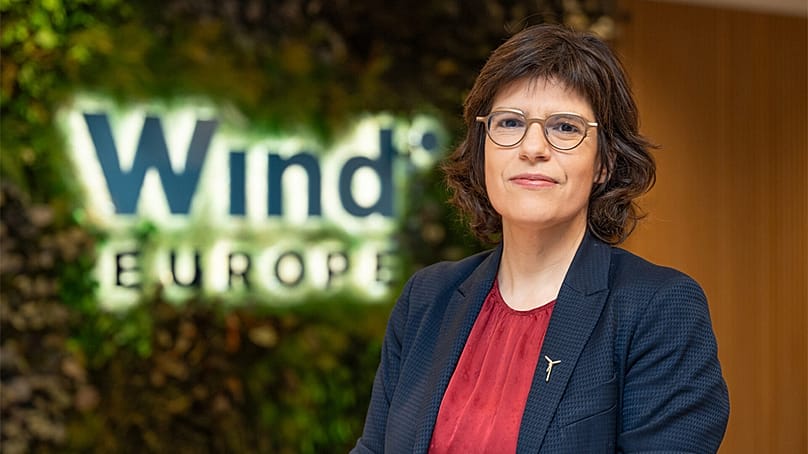
Tinne Van der Straeten, the former Belgian energy minister and new CEO of trade association WindEurope, says the industry is ready to scale up to continue delivering clean power and urged EU countries to effectively implement auction systems.
If the European Union wants to remain a key player in wind power production, member states need to follow Germany's example, a major leader in the continent's wind industry said in an exclusive interview with Euronews.
Former Belgian energy minister Tinne Van der Straeten, who was recently appointed CEO of WindEurope, the wind energy industry trade body in the EU, explained to Euronews that the industry is still facing significant challenges expediting permits to unlock wind power projects in some EU countries, a problem that undermines the bloc's overall climate goals.
Van der Straeten pointed to Germany as "the perfect example" of a member state that has implemented energy legislation efficiently, specifically the 2023 revised renewable energy law that fast-tracks permits for renewable energy projects.
In contrast, Spain has enormous wind power potential and existing capacity across the country, yet lacks the internal organisation to speed up permitting.
"They have a lot more difficulties handling the overriding public interest, the delays to get a permit, and also not much flexibility on commissioning deadlines," Van der Straeten explained.
Part of Germany's success has come in the form of auctions, which governments can use to determine who gets the right to build wind farms and how much they’ll be paid for the electricity they produce. Instead of setting a fixed price, the government lets companies compete.
Of the 20GW installed in Germany in 2025, 14GW came from auctions, something Van der Straeten described as an "incredible success". But in 2024, an auction for the opportunity to deliver 3GW of offshore wind in Denmark received no bids, with industry analysts blaming Denmark’s flawed auction design – including its uncapped negative bidding.
Analysts attribute the lack of bidders in some recent clean power auctions mainly to a combination of rising project costs, high interest rates, and insufficient government-set maximum bid prices, as well as negative energy prices.
"One of the priorities here in this new office is to make failed auctions a thing of the past," Van der Straeten said.
"Surely not every auction will succeed, and there will be failed auctions, but every failed auction is a way to do better, to learn from what went wrong, and to do better the next time."
Negative energy prices
Europe's wholesale electricity markets have seen the advent of negative energy prices, an increasingly common phenomenon in which supply exceeds demand, causing generators to effectively pay the grid to take their surplus electricity.
The former Belgian minister said that negative energy prices are a "sign of success," indicating that the system is producing ever larger quantities of renewable energy, but that they also indicate "immaturity" in the energy system, which could deter investors.
"We need a more balanced build-out of the energy systems, more storage solutions, but also demand side management to increase energy-intensive companies' willingness to produce and work at a time that energy prices are low, and so act as a virtual battery," Van der Straeten suggested, noting that investments in the power grid are also crucial for optimising the use of available clean power.
Under the bloc's law on energy market design, the EU agreed to increase the uptake of support mechanisms such as the two-sided Contract for Difference (CfD) or Power Purchase Agreements (PPA), instruments developed to guarantee developers that their projects will have a return on investment regardless of price volatility driven by marginal pricing.
Wind power targets
The EU has a target of drawing at least 42.5% of its energy consumption from renewable sources by 2030, with the Commission estimating that the installed capacity of clean power needs to grow by 500GW within the next four years.
Europe's wind capacity is dominated by onshore wind, making up around 87-91% of total installed wind power, while offshore wind represents only 9-13%. According to 2025 data from WindEurope, Europe has 291GW of wind power capacity if the United Kingdom is included, with 254GW onshore and 37GW offshore. In the EU-27, the total is 236GW.
However, the industry is working to scale offshore capacity at least 60GW by 2030 and 300GW by 2050 as part of the EU's plan to reach carbon neutrality by mid-century.
On January 26, EU leaders will gather at the North Sea Summit in Hamburg to expand collaboration on offshore wind.
Tinne Van der Straeten will take over as WindEurope’s new CEO on 2 February 2026. WindEurope
Van der Straeten said the decision to commit is "very important" since Europe's offshore sector is "falling a little bit behind".
"What we are looking for is now some sort of a new offshore wind deal where the policymakers commit to a specific volume of energy to be auctioned and the industry commits to build, manufacture, assemble and continue the effort to bring energy prices down," she said.
"The industry is ready to scale. We are manufacturing turbines actively across Europe in a globally diversified supply chain, so we are ready to scale if we have clear policies on the table."
Chinese competition
But China's dominance is growing bigger. The German Aerospace Centre said in December 2025 that Beijing has significantly advanced its offshore wind energy expansion, threatening Europe's steady role as a producer of wind power.
Commenting on Beijing's rise as a leader in wind power, Van der Straeten said the industry has a "global diversified supply chain" and reiterated the wind industry's strong anchoring in Europe across the value chain.
"We welcome competition, but everyone has to play by the same rules. Competition needs to be open and fair," she said.
In April 2024, the European Commission launched an investigation into unfair advantages caused by massive Chinese state subsidies and cheap financing, which could distort the EU market. European industry leaders claim that Beijing's injections of public money have driven Chinese turbine makers' prices down to 50% below those of their European rivals, threatening EU energy security and competitiveness.
Link to EU's bid to speed up decarbonisation of heavy-industry
Looking ahead, Van der Straeten expressed confidence in the Commission's upcoming plan to speed up permitting and the clean transition of energy-intensive sectors.
Dubbed the Industrial Accelerator Act and set to be proposed on January 29, the legislation would introduce sustainability and cybersecurity criteria to strengthen demand for EU-made clean products and deliver a clean European supply for energy-intensive sectors.
"I expect such a policy would have a beneficial aspect to the wind industry," Van der Straeten said.
"I've seen firsthand in Belgium that when we were designing the offshore wind auction, there was a huge interest from heavy industries – Arsormittal and Umicore – because they were very willing to do PPAs directly linked to the energy to be produced."
Van der Straeten said that if heavy industry is committed to buying electricity generated by wind turbines, whether onshore or offshore, that will create a predictable backlog of projects.
"That means that we are sure that wind turbines that are manufactured, that will be bought, will be installed and operated, and it will decrease overall volatility and bottlenecks if we can arrive at very good planning and coordination."
UN chief attacks world leaders putting cooperation on 'deathwatch' in final annual speech
Guterres also used his wide-ranging remarks to urge action against the abuse of artificial intelligence and to call for efforts to fight inequality.
UN Secretary General Antonio Guterres lashed out at world leaders on Thursday who he said were seeking to "put international cooperation on deathwatch" amid brazen violations of international law, but held off naming offending countries.
He also reiterated that he was "deeply concerned about the violent repression in Iran," ahead of an emergency Security Council meeting on the crisis scheduled for later on Thursday.
Guterres, who will step down at the end of 2026, was giving his last annual speech setting out his priorities for the year ahead and said the world was riven with "self-defeating geopolitical divides (and) brazen violations of international law."
He also slammed "wholesale cuts in development and humanitarian aid," an apparent reference to deep cuts to the budgets of UN agencies made by the United States under the Trump administration's "America First" policy.
"These forces and more are shaking the foundations of global cooperation and testing the resilience of multilateralism itself," Guterres told the General Assembly.
"At a time when we need international cooperation the most, we seem to be the least inclined to use it and invest in it. Some seek to put international cooperation on deathwatch."
Guterres said the UN is "totally committed in the cause of peace in Gaza, Ukraine, Sudan and far beyond and tireless in delivering life-saving aid to those so desperate for support."
Those three deadly, protracted conflicts have come to define Guterres' time at the helm of the UN, with critics arguing the organisation has proved ineffective at conflict prevention.
Trump has questioned the UN's relevance and attacked its priorities. The organisation's top decision-making body, the Security Council, is paralysed because of tensions between the United States and Russia and China, all three of which are permanent, veto-wielding members.
Palestinians walk amid buildings destroyed by Israeli air and ground operations in Gaza City, 15 January, 2026AP Photo
"As we meet today, the snares of conflict have trapped millions of members of the human family in miserable, prolonged cycles of violence, hunger and displacement," Guterres said.
On Gaza, the UN chief called for humanitarian aid to "flow unimpeded" and on Ukraine he said "we must spare no effort" to stop the fighting.
He also called for the resumption of talks to bring about a lasting ceasefire in Sudan.
Guterres also used his wide-ranging remarks to urge action against the abuse of artificial intelligence and to call for efforts to fight inequality.