Friday, January 16, 2026

U.S. Wild Horse And Burro Management: Overview Of Costs – Analysis


Background

The Wild Free-Roaming Horses and Burros Act of 1971 (1971 Act, 16 U.S.C. §§1331 et seq.) provides for management and protection of wild horses and burros by the Bureau of Land Management (BLM), within the Department of the Interior, and the Forest Service (FS), within the Department of Agriculture. For decades, federal management of wild horses and burros in western states has generated controversy, study, proposals, and lawsuits on occasion. BLM and FS use several approaches to achieve the appropriate management level (AML) of animals on the range, including placement into private care (primarily adoption and sale), off-range holding, and fertility control, among others. Management costs have increased over time (Figure 1). Issues for Congress include the adequacy and use of funding to achieve AML, primarily on BLM lands.
 
Overview of Authority

Under the 1971 Act, BLM and FS inventory horse and burro populations periodically to determine AML for each herd. When the pertinent Secretary determines that an overpopulation exists and that it is necessary to remove excess animals, the law requires specific actions (16 U.S.C. §1333(b)(2)). First, the Secretary “shall order old, sick, or lame animals to be destroyed in the most humane manner possible.” Second, the Secretary “shall cause … excess … horses and burros to be humanely captured” for private adoption. Third, where there is no adoption demand, the Secretary shall cause excess animals “to be destroyed in the most humane and cost efficient manner possible.”

Congress has enacted additional authorities to reduce excess animals. For instance, P.L. 108-447, Division E, Section 142, authorized excess animal sales, with provisions to (1) direct the agencies to sell, “without limitation,” excess animals (or remains) that are more than 10 years old or offered for adoption unsuccessfully at least three times; (2) remove a ban on sale of wild horses and burros (and remains) for processing into commercial products; and (3) remove criminal penalties for processing the remains of a sold animal into commercial products.

Since 1982, BLM and FS have not used their authority to destroy healthy animals. Further, most (but not all) annual Interior appropriations laws over the past few decades have prohibited BLM from using funds therein for destruction of healthy animals or for sales of animals that result in processing into commercial products. Since FY2020, Interior appropriations laws typically contained a similar FS provision (e.g., P.L. 118-42, Division E, §417(e)).


Population

Achieving and maintaining the number of wild horses and burros at the national AML has challenged BLM for decades. As of March 1, 2025, BLM had set the AML upper limit for all wild horse and burro herds on its lands at 25,556 animals, but the on-range estimate was 73,130 animals. However, this level is 23% less than the 2020 recent high of 95,114 animals, due to factors including increased removals, adoptions/sales, and fertility control.

BLM manages wild horses and burros in 175 herd management areas (HMAs) in 10 western states. Nearly half (83) of the HMAs are in Nevada. Wyoming, Oregon, Utah, and California each have between 14 and 21 HMAs. BLM also manages thousands of these animals—64,205 as of August 2025—off range. During periodic gathers and removals, these additional animals were removed from rangelands exceeding AML. Most (61%) are being cared for in long-term (pasture) facilities, typically for the remainder of their lives. Others (39%) are in short-term (corral) facilities, usually to be readied for adoption or sale. For FS lands, AML is roughly 3,500 (January 2025). The number on range—about 9,000-9,500—is more than double the AML. The animals are on 34 active territories in several states, with about two dozen managed jointly with BLM.
Wild Horse and Burro Program Funding

It is unclear whether funding levels have been appropriate to care for wild horses and burros. Program costs would vary based on the overall management strategy adopted and the particular programs emphasized (e.g., off-range holding, adoption, or population control). For instance, 2018 and 2020 BLM reports (and a 2020 fact sheet) presented management options with varying associated costs.

BLM Historical Appropriations: FY2000-FY2025

The FY2025 appropriation for BLM management of wild horses and burros was $142.0 million. Relative to FY2000 ($20.4 million), this was nearly a 600% increase in nominal dollars and about a 270% increase in 2025 dollars. The FY2025 appropriation also was about 4% less than the FY2023 peak of $147.9 million in nominal dollars and about 9% less in 2025 dollars (Figure 1). FS wild horse and burro appropriations are not separately identifiable.

Since FY2000, appropriations laws periodically have provided BLM funding to reduce animals on the range. For example, in FY2010, BLM received $64.0 million,compared with $40.6 million in FY2009. The increase was for activities (e.g., removal and adoption of animals, population control) to achieve AML by 2013 (which did not occur) and for the escalating cost of long-term holding. As another example, the FY2022 appropriation was $137.1 million, compared with $115.7 million in FY2021, to support “an aggressive, non-lethal population control strategy” as set out in BLM’s 2020 report, according to the explanatory statement. This strategy was to include increased removals, long-term holding, and fertility control.
FY2024 Obligations by Activity

Figure 2 shows FY2024 BLM obligations of wild horse and burro funding of $153.3 million, by activity. Off-range holding accounted for $101.4 million (66%), composed of $70.9 million (46%) for short-term care and $30.5 million (20%) for long-term care. Program support and adoptions and sales were each 10%. Other portions were 5% for gathering (animals on the range), 4% for growth suppression, and 5% for other activities.


Issues and Proposals Related to Costs

Concerns over increasing wild horse and burro populations and program costs have prompted studies and proposals for years. In response to congressional direction, BLM issued a report in 2020 proposing actions to achieve AML over 15-18 years. The emphasis was on animal removals, off-range holding, placement into private care, and fertility control and included related costs. Some Appropriations Committee reports have expressed an intent to fund options in BLM’s 2020 report.

Some questions pertain to how to increase the number, and reduce the average cost, of animals placed in private care. BLM has sought to increase adoptions and sales by partnering with organizations (including new partnerships). BLM typically charges a minimum of $25 to adopt or purchase an untrained animal and $125 per trained animal, but BLM estimated the average cost to the agency at about $1,700 in 2025. This cost includes making the animals more marketable (e.g., by training, advertising, and transporting) but excludes a $1,000 adoption incentive that ended in March 2025. The cost of placement in private care is considerably less than BLM’s average lifetime cost of caring for an animal—about $15,000 in 2025. This was a decrease from $27,500 in 2023, according to BLM, due to the acquisition of additional long-term pasture facilities, which are lower cost than short-term corral facilities.

However, the number of animals in short-term facilities has increased (e.g., by 54% from 16,325 in 2021 to 25,110 in 2025). Another question is whether animals can be moved more quickly from short-term corral facilities into long-term pasture facilities to achieve program savings. Long-term holding typically is used for older and other animals with less potential for adoption or sale, with an average cost in 2025 at about $2.35 per animal per day, according to BLM. The cost of short-term corral facilities was about $6 per animal per day in 2025. Short-term facilities are more expensive due in part to hay costs, veterinary services, and farrier services to prepare the animals for adoption or sale and, in some cases, to the costs of BLM salaried employees.

A third question—how to improve fertility control to reduce herd sizes and costs—has been a focus of BLM research and was recommended by BLM’s Wild Horse and Burro Advisory Board. BLM estimated the cost of the most common method—Porcine Zona Pellucida (PZP) vaccines—at $2,100 per mare in 2025, including gathering, treating with PZP, holding for a short time, and then releasing back to the range. PZP generally is most effective for one year only. To lower costs, areas of research have included longer-lasting fertility control. Since 2018, BLM has increased use of the GonaCon-Equine vaccine, which can produce four or more years of infertility in mares receiving a booster dose. The cost of this treatment was about $2,500 per mare in 2025, including the vaccine; application by dart or gather/treat/hold/release; and staff travel and labor.

A fourth question is how to increase nonfederal funding for management of wild horses and burros. Recent initiatives include BLM establishment of a “micro-donations website.” Also, the BLM Wild Horse and Burro Advisory Board has recommended that the Foundation for America’s Public Lands, BLM’s official charitable partner, serve as a funding source/mechanism for off-range holding.

A fifth question is whether BLM should sell excess animals without limitations and/or destroy excess healthy animals to reduce program costs, as some observers have proposed. President Trump’s FY2026 budget did not prohibit use of funds for destruction of animals. Also, the FY2020 BLM budget justification had called for availability of all authorities under the 1971 Act by removing sale limitations (intended as safeguards against slaughter) and prohibitions on using funds to destroy healthy animals. The FY2020 appropriations law retained these provisions.

About the author: Carol Hardy Vincent, Specialist in Natural Resources Policy

Source: This article was published by the Congressional Research Service (CRS).
The Congressional Research Service (CRS) works exclusively for the United States Congress, providing policy and legal analysis to committees and Members of both the House and Senate, regardless of party affiliation. As a legislative branch agency within the Library of Congress, CRS has been a valued and respected resource on Capitol Hill for nearly a century.

Thursday, January 15, 2026

No Country’s Safe in Imperialism’s Gangster Phase


Prabhat Patnaik 


The difference between Trump and earlier US Presidents lies only in the fact that the others had camouflaged their gangster acts under a patina of “civilised” verbiage.


When the Soviet Union collapsed, liberal bourgeois writers had proclaimed the arrival of an era marked by the universal triumph of democracy and stability; they had considered the socialist challenge unnecessary and counterproductive, and believed that capitalism, which had already given political independence to its colonies, and introduced universal adult franchise and welfare state measures at its core, would, in the absence of this challenge, secure for mankind peace, economic security and individual freedom.

Several Left writers, on the other hand, had seen decolonisation, and the introduction of universal adult franchise and welfare state measures, as concessions wrung out of capitalism at a time when it faced an existential threat because of the socialist challenge, and had anticipated that the abatement of this challenge would make the system assume its usual predatory character and roll back these concessions. They have been proved right, and imperialism, with which alone we shall be concerned here, has shown its blatantly aggressive nature, exhibiting what can only be called a “gangster phase”.

To abduct, as US imperialism has done, a duly elected President of another country, Nicolas Maduro of Venezuela, and his wife, from their residence through a military operation, and bring them to the US in handcuffs to face trial on trumped up charges for which no credible evidence has ever been provided, and to run their country directly as a US colony until a suitable puppet government has been put in place, is an act of incredible audacity which violates all legal and moral norms of international behaviour and typifies this “gangster phase” of imperialism.

This, however, constitutes the latest act of the gangster phase of imperialism. The forcible removal of Iraq’s Saddam Hussein and his execution, again on totally false charges, the brutal killing of Libya’s Muammar Gaddafi, the occupation of Syria, the genocide perpetrated on the Palestinian people whose only “fault” lies in their desire not to be evicted from their homes by an imperialist-backed settler colonial project, the taking over of Gaza as a US colony to be ruled by a “Viceroy” selected by US President Donald Trump and to be converted into a piece of prime real estate, are all episodes in the unfolding of the gangster phase of imperialism.

Liberal opinion, again, holds Trump as a maverick responsible for behaving like a gangster and puts the entire onus of recent predatory acts on him alone. But most of the episodes mentioned above predate Trump’s ascendancy to power; the difference between Trump and earlier US Presidents lies only in the fact that the others had camouflaged their gangster acts under a patina of “civilised” verbiage, while Trump makes no bones about his administration’s intentions.

Besides, every one of the episodes mentioned above, including even the genocide directed against the Palestinians, has the full support of other imperialist countries who never cease to advertise their so-called “liberal” principles. Even the abduction of Maduro, while it has drawn condemnation from all over the world, except a few in the Global South wishing to curry favour with Trump (among whom alas India is included), has enjoyed the active or tacit backing of Germany, France and Britain.

An argument is being put forward, in particular by the European allies of the US, to the effect that Maduro was an authoritarian ruler, so that no tears need be shed over his removal. The utter absurdity of this argument is palpable. International law does not allow the US, or any other country for that matter, to intervene militarily in the affairs of another country to establish democracy there; it is for the people of that country to determine who the ruler should be. Whether Maduro was authoritarian or not is thus completely irrelevant to the issue of US intervention.

Read Also: What Really Does ‘Western Civilisation’ Denote?

Besides, Trump himself has openly admitted that Maduro’s principal opponent in Venezuela, Maria Corina Machado, did not enjoy sufficient popular support to take over the reins of administration after Maduro had been arrested.

In a country with two main political platforms, if one does not enjoy sufficient popular support, then it stands to reason that the other must have greater support. In such a case, to claim, as Trump himself and many European leaders have done, that Maduro lacks political legitimacy, is utterly absurd. If Machado lacks political legitimacy and so does Maduro, then Trump must specify who in Venezuela does enjoy political legitimacy.

The real reason for removing Maduro was revealed by Trump with his characteristic bluntness, when he stated at his press conference on Saturday, January 3: “We are going to be taking out a tremendous amount of wealth out of the ground”. The money made, according to him, would not only go to the people of Venezuela but also to American oil companies and to the “United States of America in the form of reimbursement for damages caused us by that country”.

The “damages” Trump was referring to were caused apparently by Venezuela’s nationalising its oil resources. Venezuela has more oil reserves than any other country in the world, reserves amounting to as much as 17% of total world reserves. And Trump’s proposal to loot Venezuela’s oil is a brazen admission of his motive for taking over and “running” that country. This is nothing else but open gangsterism: you have oil and we shall take it from you by abducting your President if he stands in the way, and either by running your country directly as a colony or by putting in place some puppet government that would allow us to loot your country.

To be sure, looting the resources of other countries, including land or products of land, is what imperialism has always done; it is central to imperialism. After decolonisation, it attempted to carry on the process of looting by toppling governments that stood in the way and putting in place pliant governments.

The CIA-sponsored coups against Arbenz in Guatemala, Mossadegh in Iran, Lumumba in Congo (as it was then called), and Allende in Chile, come to mind as obvious examples. More recently, the various colour revolutions in Eastern Europe and former Soviet republics, and the American assault on West Asia, belong to the same genre. 

The difference between all these earlier cases and Venezuela lies in the fact that in earlier cases the US gave the appearance of supporting one side in an internal conflict, while working on coups behind the scenes; but in Venezuela it has simply carried out a military intervention without this fig-leaf of supporting one side in an internal conflict.

Of course, it also targets those countries which have anti-imperialist governments even when they may not be minerally rich, and Trump has already announced his plans of targeting Cuba, Mexico and Colombia as part of his attempted revival of the infamous Monroe Doctrine. But it is not just Latin America and the Caribbean that constitute the domain of his empire. No country in the world is safe from US intervention today.

The Soviet Union had come to the defence of Cuba during the so-called Cuban missile crisis when the US had threatened to attack that island, even at the risk of provoking a nuclear conflict with the US, just as it had earlier come to the defence of Egypt against an Anglo-French invasion following Egyptian President Gamal Abdel Nasser’s nationalisation of the Suez Canal; in both cases, imperialism had to beat a retreat. The absence of the Soviet Union today will be sorely missed by all countries of the world that are threatened by imperialism led by the US.

This gangster phase of imperialism, which constitutes the highest stage of imperialism to date, cannot obviously last for long. The people of the world, especially of the Third World who have been victims of imperialism, will not allow themselves once again to remain in thraldom to imperialist domination. In fact, even in earlier cases of imperialist gangsterism in the Arab world, the outcome of its interference has been quite different from what was intended.

It is significant in this context that Trump’s bland assumption that, with Maduro out of the way, the Vice-President of Venezuela, Delcy Rodriguez, who has taken his place, will obey American diktat has already proved hollow: she has condemned the US action and demanded the release of Maduro because of which Trump has started threatening her with “a fate worse than Maduro”. And indeed, the entire country has stood up against this act of US gangsterism. While the absence of the Soviet Union has emboldened imperialism in its quest for world domination, this domination will remain a pipe-dream.

Prabhat Patnaik is Professor Emeritus, Centre for Economic Studies and Planning, Jawaharlal Nehru University, New Delhi. The views are personal. 

THE NEW IMPERIALISM IS FASCISM


'To remain free, one must be feared': Macron says of France’s defence priorities


By Sophia Khatsenkova
Published on 

On Thursday, the French president offered his New Year's address to the armed forces. The eagerly awaited annual event comes amid multiple geopolitical crises.

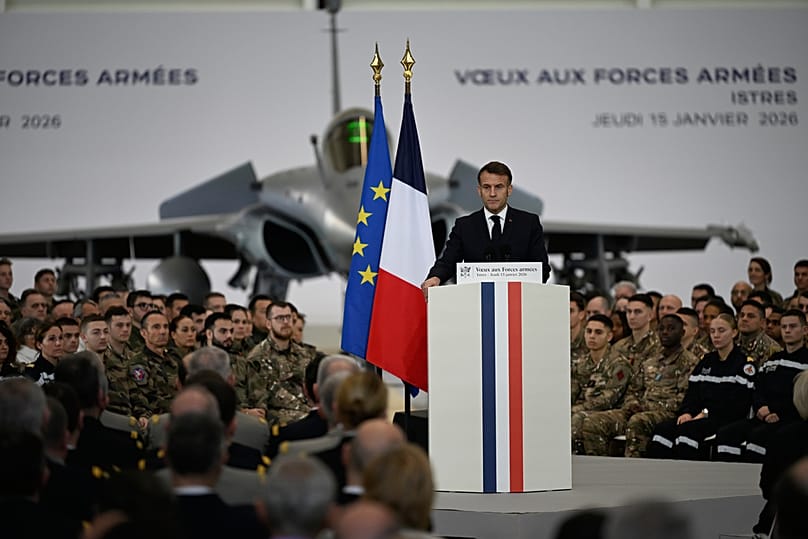
2026 will be “a year of challenges” for national defence, French President Emmanuel Macron told armed forces on Thursday at the Istres Air Base in southern France, against a backdrop of escalating international tensions.

Russia's war in Ukraine continues, tensions are escalating amid violent protests in Iran, and a new source of concern has emerged with US President Donald Trump’s expressed interest in taking over Greenland, an autonomous territory of the Kingdom of Denmark.

Paris has viewed this development as strategically sensitive, given the Arctic region’s growing geopolitical importance.

“We are ready,” Macron declared. “This decade of French rearmament is bearing fruit.”

'To remain free, one must be feared'


Macron reaffirmed his “determination to give our armed forces the means to ensure our defence” in a world he described as increasingly unstable.

“To remain free, one must be feared, and to be feared, one must be powerful. To be powerful in this brutal world, we must act faster and stronger,” he said.

Macron outlined three strategic priorities: increasing ammunition stockpiles, strengthening operational readiness, and safeguarding France’s sovereignty.

On the financial front, Macron confirmed his intention to significantly increase military funding, calling for a €36bn rise over the 2026-2030 period, including €3.5bn as early as 2026.

He had previously pledged in 2017 to raise France’s defence spending to 2% of GDP, a target that has been reached.

French President Emmanuel Macron delivers a speech as he visits the Istres military air force base, southern France, Thursday, Jan. 15, 2026.
French President Emmanuel Macron delivers a speech as he visits the Istres military air force base, southern France, Thursday, Jan. 15, 2026. Philippe Magoni/Copyright 2026 The AP. All rights reserved.

Acknowledging drone capability gaps

The French president also recognised gaps in certain areas, particularly in drone capabilities, which have been heavily used in the war in Ukraine.

“We are behind,” he admitted, calling for a rapid and forceful response. Highlighting the Russian threat, he warned: “We are within firing range of Russia.”

Macron announced that France would strengthen its military presence in Greenland.

Around 15 French soldiers are already deployed in Nuuk for exercises, and the contingent will be “reinforced in the coming days with land, air, and naval assets.” He emphasised that “Europeans have a particular responsibility” in the area.

Earlier on Thursday, Macron convened an emergency defence council to assess the strategic implications, while several allied countries, including Germany, Norway, and Sweden, have begun deploying troops to the Arctic in a show of support.

Another key initiative for the coming years is the reintroduction of a voluntary, paid national service for young people.

Announced last November, the program is designed to bolster military personnel numbers and meet growing staffing needs.

The government and the French armed forces launched a recruitment campaign this week for the new 10-month program.

The army aims to enlist 3,000 young people this year, 4,000 in 2027, and 10,000 by 2030, with the long-term goal of reaching 42,500 volunteers by 2035.

Lithuania on the frontline: How a small EU country is preparing for a possible war

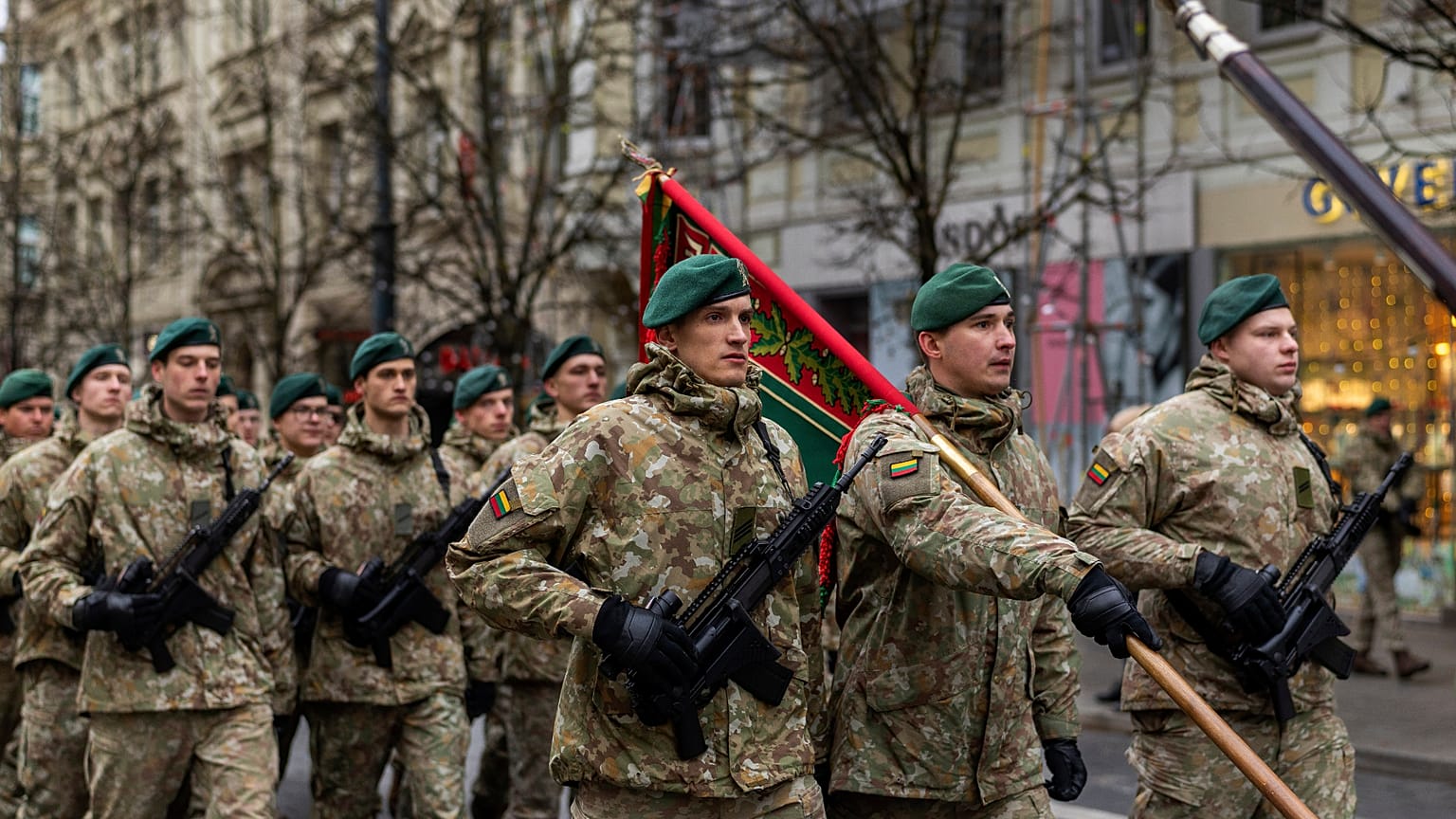
Lithuanian Military parade
Copyright Copyright 2025 The Associated Press. All rights reserved.
By Evi Kiorri
Published o 

For Lithuania, a NATO and EU member bordering Russia’s Kaliningrad exclave and Belarus, the war in Ukraine has not been a distant conflict. It is a warning. How is Vilnius preparing for a possible war with Russia?

In Vilnius, daily life continues as usual, but beneath this normality, Lithuania focuses on reinforcing its security in response to new uncertainty in Europe’s security order.

For Lithuania, a NATO and EU member bordering Russia’s Kaliningrad exclave and Belarus, the war in Ukraine has not been a distant conflict. It has been a warning.

A rising threat perception

Lithuania sees a rising threat from Russia in the next three to five years, according to Vice-minister of National Defence Karolis Aleksa. He cites Russia's military buildup, readiness to use force, and ambition to reshape Europe's security as key drivers.

Lithuania’s preparations are a direct response to these developments.

“Russia has demonstrated both the will and the readiness to employ military force to pursue its goals,” Aleksa told Euronews, pointing to Ukraine as the clearest example. This is not only about Ukraine. "The Russian regime will employ military force as a tool to change the European security architecture.”

The war’s outcome, whether a ceasefire or peace agreement, will affect Russia’s posture. Still, Aleksa said Vilnius expects Moscow to keep strengthening its forces along NATO’s eastern borders, including in Kaliningrad. All indicators show an “increase of the conflict and of the Russian aggression” if deterrence is not strong enough, he added.

Allies on the ground

Deterrence, in Lithuania’s view, begins with a visible allied presence. Since 2022, NATO activity in the country has intensified significantly, with the United States and Germany playing a central role.

A key milestone is Germany’s decision to permanently deploy a brigade to Lithuania by 2027. Aleksa described it as “a huge political and military signal”, demonstrating that the defence of Lithuania is a collective NATO responsibility, not just a national one.

“This is about defending from the first inch of our territory,” he said. “We really have to demonstrate collectively that this is not only a national business of each NATO member state, but it's really a collective effort.”

German forces are already present, while Lithuania is rapidly upgrading its infrastructure to facilitate the missions and host the full brigade. US troops also maintain a constant presence, and other allies, including the Netherlands and Norway, contribute across land, air, and maritime domains.

Air defence now plays an important role. Lithuania is building its own systems, while NATO allies rotate surface-based air defence units and fighter aircraft through the Baltic region. At sea, NATO continues its Baltic mission, complemented by European Union efforts to strengthen critical infrastructure protection.

Building national military power

Beyond allied presence, Lithuania’s top priority is an ambitious national defence build-up to ensure the country is ready and resilient to current threats.

The government has committed to establishing a fully operational national division by 2030, capable of fighting alongside NATO forces. Aleksa identifies this as the central pillar of Lithuania’s military modernisation.

“This means not only combat brigades, but also all the enabling support capabilities in order to fight shoulder to shoulder with our allied forces here in Lithuania.” Logistics, engineering, medical support, command and control are equally important, he explained.

To achieve this, Lithuania is investing billions of euros in modern equipment. Major procurement projects include tanks, infantry fighting vehicles such as the CV90, German and French artillery systems, and US-made HIMARS rocket artillery. These investments are on a compressed timeline, creating pressure to acquire equipment, integrate it, and make units combat-ready by the end of the decade.

“We are not just buying platforms,” Aleksa said. Lithuania is building “interoperable, ready to fight by the end of 2030 units.”

Total defence and society’s role

Preparedness in Lithuania goes beyond the military: the total defence concept centres on strengthening national resilience and readiness at every level of society.

A key element is the Lithuanian Riflemen’s Union, a volunteer force like a national guard. Its membership has grown from around 10,000 in 2021 to more than 18,000 today.

“This shows the energy and commitment of our society,” Aleksa said. “We understand that we are a small nation, but we have to have a resilient and to-the-point defence industry.”

Defence spending reflects this sentiment. This year, Lithuania will spend about 5% of its GDP on defence. Public support for allies and military investment is high. A defence ministry poll found that nearly 80% of Lithuanians support the stationing of allies and NATO forces in the country.

There is also growing acceptance that preparedness must go beyond professional soldiers. While debates continue around the future of conscription, including whether it should be universal and how women should be included, Aleksa said the direction is clear: “A much, much bigger part of the society understands that they need to do more.”

Education is part of these efforts. Lithuania is expanding national security and civil resistance lessons in schools and supporting informal initiatives such as civilian drone training centres. “It is not preparation for war in this brutal sense, but providing possibilities for our kids to use drones,” Aleksa stressed. “It is about building civilian skills and resilience in a modern security environment.

Hybrid threats and grey-zone warfare

Lithuania’s defence planning increasingly focuses on threats that fall short of open conflict. Cyberattacks, disinformation, sabotage, and other forms of hybrid warfare are seen as persistent risks, not only from Russia but also from its partners, like Belarus.

“We already see these methods being used,” Aleksa said. “Future conflicts may begin without tanks crossing borders.”

As a result, Lithuania is investing in cyber defence, information resilience, and counter-disinformation to enable society to resist manipulation and disruption.

The EU’s role: money, mobility and regulation

Lithuania closely links its defence build-up to European and transatlantic support. The EU will provide a significant share of funding through "safe loans," allowing Lithuania to access up to €6.3 billion by 2030 for around 50 defence projects. Lithuania also expects additional support through EU defence programmes and the bloc’s next multiannual budget.

Equally important, Aleksa said, are regulatory reforms aimed at boosting Europe’s defence industry. Cutting bureaucratic hurdles and accelerating production is essential if Europe is serious about deterrence.

Military mobility remains another priority. Faster movement of troops and equipment across borders, often called a "military Schengen", would directly support NATO’s defence plans on the eastern flank.

Ukraine as the first line of defence

Lithuania remains one of Ukraine’s strongest supporters, committing at least 0.25% of its GDP to military assistance. Beyond donations, Vilnius is working on joint defence production projects with Ukraine and European partners.

“Supporting Ukraine is supporting our own security,” Aleksa said. “Ukraine’s resistance is the first line of defence for Europe.”

Lithuanian officials stress that Europe cannot afford complacency. The main challenge is maintaining deterrence momentum, even as others are tempted by complacency or a false sense of peace.

“We don't want war,” he said. “What we want is deterrence.”

His message to Europe is clear: real security demands constant preparedness and investment in collective defence. Europe must be ready and act together, as revisionist powers are already preparing for action.


Putin attempting to freeze Ukraine into surrender

Putin attempting to freeze Ukraine into surrender
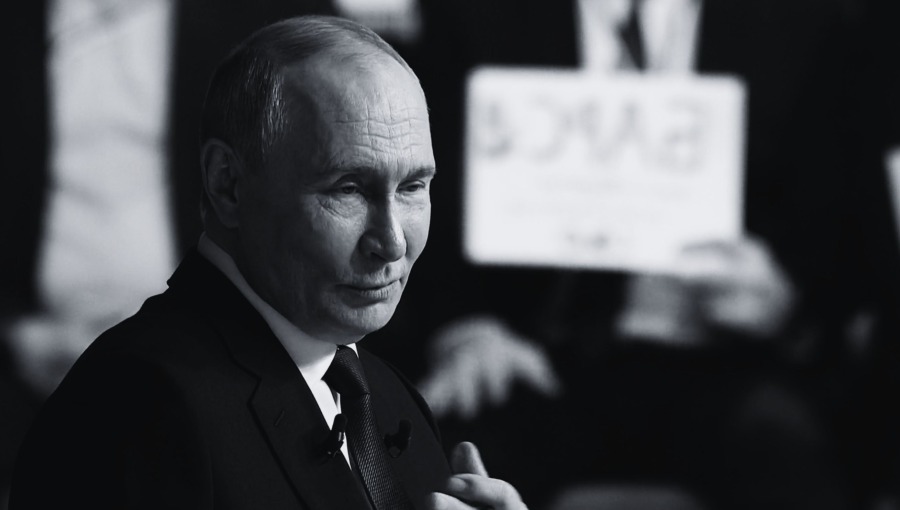
Putin is using Ukraine's freezing winters as a weapon. / bne IntelliNews
By Ben Aris in Berlin January 15, 2026

Russia is trying to freeze Ukraine into submission. As temperatures plunge to -20°C in Kyiv, the Armed Forces of Russia (AFR) has stepped up its barrage of drones and ballistic missiles to take out key heating and power infrastructure. Half of Ukraine’s capital is now in subzero darkness and the city’s mayor, Vitali Klitschko, said that anyone with somewhere else to go should leave. He is not the only one. Other governors in frontline regions have said the same.

The attacks are country wide. Russian forces launched another massive overnight drone attack on Zelenskiy’s home town of Kryvyi Rih on January 13, knocking out heat to more than 700 apartment buildings and cutting electricity to over 45,000 customers as temperatures dropped to –7°C, local officials said.

“Russia is attacking energy infrastructure in Kyiv, Dnipropetrovsk, Kharkiv and Zaporizhzhia regions. Russia deliberately plans these attacks during very cold weather to maximize the damage and bring more suffering to Ukrainian civilians,” Anton Gerashchenko, advisor to Ukraine’s Minister of Internal Affairs and founder of the Institute of the Future, said in a social media post this week.

The extreme cold temperatures of deep winter have arrived, with the mercury falling below -15°C. Russia has been attacking Ukraine’s energy infrastructure for more than two years, but the Kremlin has been waiting for the icy Siberian airmasses to settle over Ukraine, as they do every year, and is now scaling up the attacks. The targets have changed too. The non-nuclear generating capacity is already largely destroyed, but now the AFR is hitting the infrastructure – things like power substations, gas pipelines and hot water pumping stations. In just one attack this week, Russia used over 300 drones, 18 ballistic and seven cruise missiles to target energy that deprived people of power, water, and heating on January 13, according to Ukrainian Foreign Minister Andrii Sybiha.

“Russia is deliberately trying to inflict conditions of life calculated to bring about physical destruction of the Ukrainian people—which falls exactly under the definition of Article II (c) of the Genocide Convention,” Sybiha said following the barrage against Kyiv.

Weaponizing the weather

Turning off the lights in Ukraine has been a long-standing strategy. Putin is using his ability to take out civilian energy infrastructure with highly accurate and powerful guided missiles as a tool in his ongoing efforts to force Ukraine to capitulate on Russian terms. While the damage has been dramatic and devastating, in typical Putin-style it has also been incremental. Putin has been proceeding step by step, starting with the generating capacity, but ignoring the substations until now.

Russia began to target the power sector in 2023 and over the next two years it destroyed virtually all of Ukraine’s non-nuclear generating capacity. Off limits for obvious reasons, the nuclear power stations have been left alone and account for about half of Ukraine’s generating capacity, but the substations that distribute their power have also been largely untouched so far.

With reduced output, last winter was harsh but between the repairs, imports, temporary container-sized generators largely supplied by USAID, and the surviving nuclear capacity the country managed to struggle through the season.

As deep winter arrives this year, the situation is already much more difficult. Since a missile war began this summer and Russia’s military production went into surplus, the AFR has changed tactics. It now flies in waves of hundreds of drones to denigrate air defences that are followed by a few powerful ballistic missiles that can destroy a target completely.

Power plants have been made vulnerable by the Energoatom corruption scandal. While Ukrenergo, the state-owned thermal utilities operator, built some 70 highly effective concrete bunkers to protect its infrastructure, a similar plan for nuclear power infrastructure under the control of Energoatom was never implemented, when Zelenskiy’s close associates siphoned off $100mn in a kickback scheme that was supposed to be spent on defences. At the same time the $1bn in foreign aid for the power sector raised by Ukrenergo fell away to almost nothing partly due to corruption in the sector.

The AFR is now capitalising on this weakness and has been targeting key energy and transport infrastructure that can knock out the power in entire cities and regions. Ukraine’s key ultra-high voltage 750kV substations are especially vulnerable, which provide power to whole cities and act as the regional interconnectors. So far, Russia has deliberately avoided hitting these hard to protect and hard to fix substations, but in the last two months the 750kV substations in Sumy and Odesa were knocked out leaving both in darkness for over a week.

Similar substation attacks are now being reported in Kyiv and other cities. A third of Kyiv is now without power or heat for several days, which has sparked limited public protests as the city starts to be uninhabitable, according to local reports.

Siberian airmasses arrive in Ukraine

Russia has clearly been waiting for the coldest part of the year to scale up its attack. A large cold mass of icy air from Siberia is now trapped over the country and temperatures have dropped below -20°C. In Ukraine, Belarus, and western Russia, temperatures will regularly drop to around −20°C over the next at least 14 days, according to the Ventusky metrological service, while daytime highs will be only around −10°C. These are below-average temperatures which, according to current forecasts, could persist throughout the entire month of January.

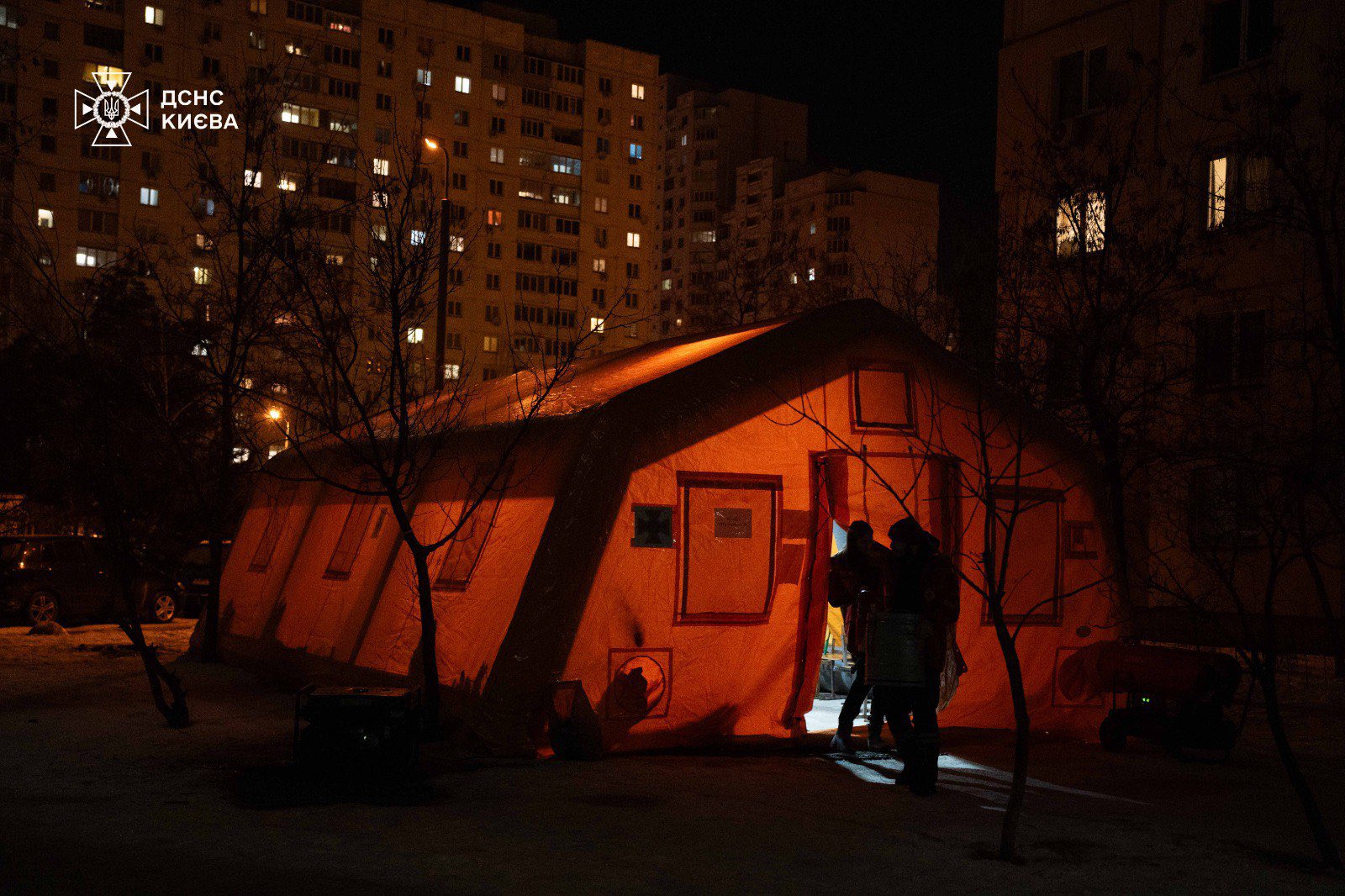
Families in Soviet-era apartment blocks have taken to huddling together in the smallest rooms to try and keep warm as internal temperatures fall to 13°C-15°C and will fall further. The “invincibility points” are back in use – small huts set up in the courtyard of apartment complexes where locals can go to warm up, cook some food and recharge their phones that were deployed after two years of the war during the first big missile barrages in January 2024.

With no prospect of the heating being restored soon, apartment block management have drained the water from central heating pipes to avoid them freezing and bursting. The bitterly cold weather is also shutting down supermarkets and offices.

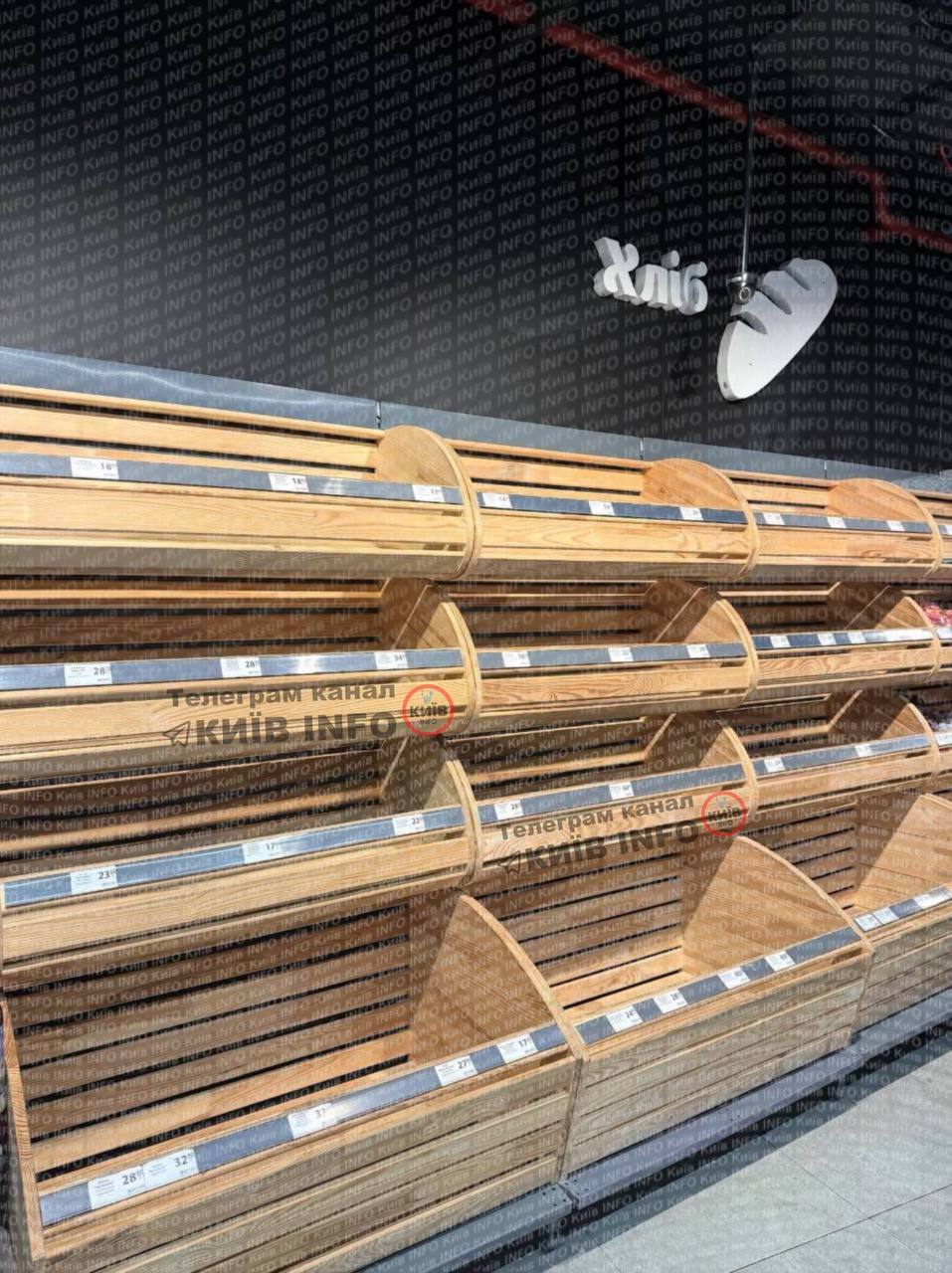
“The humanitarian crisis in Kyiv and the region is intensifying amid prolonged power outages and severe winter conditions, Iuliia Mendel, Zelenskiy’s former press secretary said on social media. “​For the second consecutive day, photos and videos of empty store shelves—particularly bread—have been circulating widely on social media. Several supermarket chains have partially or temporarily closed locations due to extended blackouts and equipment failures in sub-zero temperatures.”

Ukraine's retail chains are starting to collapse. More and more stores cannot open or are suspending operations indefinitely after their equipment -- primarily refrigeration units -- cannot withstand the constant power surges and outages. The surges lead to breakdowns, product spoilage, and massive losses, leaving the urban populations unable to meet their basic needs. Photos of empty shelves are starting to pop up on social media as residents hunt for bread and other basics.

Public transport remains severely disrupted too. Kyiv’s metro is operating with delays or reduced service in many areas, while ground transport struggles with snow, ice, and power issues.

In some districts of Kyiv, residents are blocking roads in protest over multi-day blackouts. Windows in apartment blocks are blown out by constant missile and drone attacks but go unrepaired. In other cases, workers turn up at their offices only to go home again in a few hours thanks to the intense cold, reports Mendel.

A large-scale humanitarian crisis is brewing. If Russia’s campaign continues then western governments have been warned to prepare for a fresh wave of refugees fleeing the freezing conditions, bne IntelliNews diplomatic sources say.


Negotiating tactics

“Production of missiles is way up and interception rates are way down…” says journalist and bne IntelliNews columnist Leonid Ragozin. “Ukrainian air defence forces downed seven of 25 missiles fired by Russia last night. Quite a contrast with earlier in the war when all but a few missiles would be shut down, at least as per official reports.”

For the last two days, people in multiple cities have been without electricity, water, or sewage services, pushing living conditions to a critical brink. Thousands of generators are struggling to provide enough electricity to maintain even the most basic level of normalcy in people's lives as demand starts to overwhelm small-sale generating capacity.

Putin is attempting to freeze Ukraine into submission and has been using his ability to destroy the heating as a negotiating tool. Last summer, when there were hopes that a peace deal could be done after the Alaska summit on August 15, there was a preliminary follow up meeting between a Ukrainian and Russian delegation in Qatar – the first time officials from the warring parties agreed to meet since the failed 2022 Istanbul meeting. Top of the agenda was a limited offer to halt Russia’s attacks on Ukraine’s energy sector.

Putin tends to telegraph his intentions well in advance, although this is not widely appreciated. He made it clear in his Munich Security Conference (MSC) speech in 2007 that he was irked with Nato’s eastward expansion and that “Russia will push back” if it was not stopped, but he didn’t start modernising his army until 2012.

Around the same time, Putin ordered CBR governor Elvia Nabiullina to build up Russia’s hard currency reserves, increase the share of gold and start selling US treasury bills – a process that took years to complete. Putin plans for the long-term.

With the economy sanction-proofed, things went up a level in 2021. In the showdown with the EU over Ukraine, Russian Foreign Minister Sergei Lavrov warned Europe what was coming in his “new rules of the game” speech delivered in February 2021. He warned Russia would break off diplomatic relations with Europe unless the 2014 sanctions were ended. That was followed by breaking off diplomatic relations with Nato in October the same year – another signal - and the Russian Ministry of Foreign Affairs eight-point list of demands in December in 2021. The Kremlin massed troops on Ukraine’s border twice ahead of the actual invasion in 2021 and again in 2022 before actually invading.

What has surprised with the war in Ukraine is when Putin finally loses patience, he has chosen the most extreme and dramatic escalation option on the table – starting with the invasion of Ukraine in February 2022 itself, which few commentators expected from the otherwise cautious and slow-moving Putin.

Now Putin is employing the same step by step escalation of missile attacks on energy infrastructure. He has had the ability to knock out power from the start, but it is being done incrementally and he has waited until deep winter arrives to make it more effective.

The Qatar talks were an olive branch, albeit all the Kremlin was looking for was a capitulation on its own terms. They were called off after Russia launched its largest missile barrage against Kyiv since the start of the war a few days before. Typically, Russia launches increased attacks on Ukraine each time they are scheduled to meet, but in this case it appears Putin overplayed his hand and scuppered the first real attempt by the two sides to meet and negotiate.

Now the peace talks appear to have stalled again and so Putin is turning the screws on Kyiv by ratcheting up the energy attacks. A lot of progress was made in the last quarter, starting with the Witkoff-Dmitriev plan, named after its reported authors, US Special Envoy to the Middle East Steve Witkoff and the head of Russia’s sovereign wealth fund, Kirill Dmitriev, who started meeting in October. That effort culminated in the Moscow meeting on December 3 between the US representatives and Putin and a 27-point peace plan (27PPP) that Russia said it was largely happy with.

However, following the Berlin meeting on December 14-15 and the Mar-a-Lago meeting between Trump and Zelenskiy on December 28 Ukraine came up with an alternative 20-point peace plan (20PPP) submitted to the Kremlin on Christmas Eve, which has since been largely rejected. Both Trump and Putin were pressuring Zelenskiy to do the deal at Mar-a-Lago, but without real Article 5-like security guarantees from his partners, Zelenskiy refused.

US President Donald Trump said that Ukraine, not Russia, is holding up a potential peace deal, in sharp contrast to rhetoric from European allies who have consistently said that Moscow has little interest in ending the war in Ukraine, Reuters reported on January 15. 

"I think [Putin] is ready to make a deal. I think Ukraine is less ready to make a deal," Trump said. Asked why US-led talks have so far failed to resolve Europe’s biggest land conflict since World War II, Trump replied: "Zelenskiy,"

Talks are continuing at the level of foreign ministries and amongst the envoys, but little progress has been made. The talks appear to have stalled again.

Cracks in Bankova’s position appearing

Putin’s tactics appear to be having an effect. Zelenskiy is putting a brave face on the deteriorating situation. “Russia must understand that the cold will not help win the war,” he said this week. But he admitted that the main target of this week’s strikes was again energy infrastructure - generation facilities and substations – and the significant destruction of residential and civil infrastructure. Dnipropetrovsk, Zhytomyr, Zaporizhia, Kyiv, Odesa, Sumy, Kharkiv and Donetsk regions were all simultaneously under attack. Hundreds of thousands of households are without electricity, according to the president.

Cracks in Bankova’s resistance are appearing. Zelenskiy’s call for Europe to rush stockpiled ammo to Kyiv this week smacks of growing desperation. This month Zelenskiy also said that the war might be over by summer – an unusual statement as Zelenskiy typically doesn’t give timelines.

In an interview, Ukraine’s former Foreign Minister Dmytro Kuleba, also said that Ukrainians are ready to accept territorial concessions to end the military conflict with Russia, something that Bankova has been adamant it won’t agree to until recently.

"What everyone sees in ratings and opinion polls is one story. But what people say on the streets and in their kitchens is quite another. When I travelled to villages and started talking to people outside of gas stations, I honestly stopped reading opinion polls,” Kuleba said. “My impression is this: if people are told, 'This is what we need to give up, but it will all stop, and this is what we'll get in return: a strong army, billions for reconstruction, and EU membership,'… I think this is a story that society will be ready to accept. Provided, of course, that it doesn't say anywhere that we are finally and irrevocably giving up any territories forever," Kuleba said.

So far, Zelenskiy is toughing a bad and worsening situation out. However, with temperatures in homes plummeting and shops emptying with at least two or three months of winter still to go, the question is how long can Ukraine’s population hold out.