Saturday, January 17, 2026

NASA rolls out Artemis II rocket for historic Moon mission


Copyright AP Photo/Darko Vojinovic

By Euronews, AP
Published on 17/01/2026 - 


This will be the first crewed mission to travel around the Moon since the Apollo era, with astronauts flying past the far side of the Moon to test life support and navigation systems.

NASA is set to move its tallest and most powerful rocket from its assembly building to the launch pad on Saturday, marking one of the agency's key milestones - getting to the Moon.

In a slow and carefully choreographed operation, the Space Launch System rocket, topped with the Orion spacecraft, is set to launch on February 6.

The rollout this weekend allows engineers to begin final integration, testing and full launch rehearsals, including fuelling simulations and countdown procedures, before the rocket is cleared for flight.

Key to the mission is the Space Launch System, or SLS, a heavy lift rocket designed to send astronauts and large payloads beyond low Earth orbit.

Standing taller than the Statue of Liberty and producing more thrust at liftoff than any rocket before it, SLS is built to carry humans deeper into space than NASA has gone since the Apollo era.

Mounted on top of the rocket is the Orion spacecraft, a crew capsule designed to house astronauts for missions lasting weeks at a time.

Orion is built with a reinforced heat shield to survive the extreme temperatures of re-entry into Earth’s atmosphere, and systems to protect crews from radiation and deep space conditions.

Together, SLS and Orion form the backbone of NASA’s Artemis programme, a series of missions intended to return humans to the Moon and establish a long term presence there.

John Pernet-Fisher, a research fellow at the University of Manchester, says the upcoming mission marks an important step for human spaceflight.

“This is a massive milestone for NASA and the Artemis programme because this is going to be the first time that a crew of humans will see the far side of the moon, and is such an important milestone in NASA’s eventual goal of getting two feet, human feet, back on the lunar surface,” he said.

Artemis I, which flew in 2022, was an uncrewed test mission that sent Orion around the Moon to prove the rocket and spacecraft could operate safely in deep space and return to Earth.

Artemis II, the mission now approaching launch, will be the first to carry astronauts.

The crew will not land on the Moon, but will travel on a looping path around it before returning home, testing life support, navigation and communication systems with humans onboard.

Pernet-Fisher explains how the new system builds on earlier spaceflight programmes.

“SLS and the Orion module that’s going to sit atop it is basically the next generation of rocket technology. So back in the Apollo days, we had the Saturn V with the Apollo module on top," he said.

"These are the modern equivalents, and specifically the SLS, the Space Launch System, is designed to be such a large rocket that it’s actually capable of perhaps even going a bit further eventually in the future. If NASA continues in this trajectory, it could well see missions to Mars, it could see things going deeper into space, for instance, it's been suggested that it's powerful enough to reach Jupiter, for instance," he added.

Later missions will move beyond lunar flybys.

Artemis III is expected to land astronauts on the Moon’s surface, targeting the lunar south pole, an area thought to contain water ice that could be used for drinking water, oxygen and rocket fuel.

Artemis IV and subsequent missions are planned to help assemble the Lunar Gateway, a small space station that would orbit the Moon and act as a staging point for surface missions and scientific research.

NASA sees the Moon as a proving ground for future journeys to Mars.

By operating farther from Earth for longer periods, the agency hopes to test the technologies, habitats and life support systems needed for deep space travel.

“It’s designed to primarily get people to the Moon, but as I said, it’s got that extra capability with potential to go further than the Moon itself. So as I’ve said, potentially to Mars, potentially to places like Jupiter, it has the potential to carry telescopes, for instance, into deep space for deep space observations. Primarily, the focus is integration with Orion... and getting to the Moon with this particular configuration.”

Beyond exploration, researchers say programmes like Artemis often deliver wider benefits.

Technologies developed for space missions have historically led to advances in materials, safety systems and engineering used on Earth.

“We definitely saw that through Apollo... there are huge technological innovations that then filtered down to the general public. A lot of things that we take for granted today, like fire suppression technology, just simple things, things like safety blankets, for instance," he said.

"And so by pursuing big lofty goals, we do see a technological benefit to society at large, and new innovations can happen. So that’s a big reason for continuing to explore in the way that we do like this.”

With the rollout to the launch pad now imminent, NASA’s focus shifts from assembly to final checks, bringing the next chapter of human exploration one step closer to liftoff.


 

Australia under-16 social media ban: How is it going one month since law took effect?

A school girl uses her phone as she walks with a group of kids in Sydney, Monday, Dec. 8, 2025.
Copyright AP Photo/Rick Rycroft

By Pascale Davies
Published on 

Australia has revealed that almost 5 million teen accounts have been deleted by social media platforms.

It has been one month since Australia enforced the world's strictest social media rules for children by banning such platforms for those under the age of 16, and during that time, social media companies have removed almost five million accounts held by minors.

The country's internet regulator said on Thursday that social media companies have removed around 4.7 million accounts held by under-16s to comply with the law, which came into effect on December 10.

The data released on Thursday is an early indication that major platforms are taking meaningful actions to prevent under-16s from holding accounts, the eSafety Commissioner said.

“I am very pleased with these preliminary results,” eSafety Commissioner Julie Inman Grant said.

“It is clear that eSafety’s regulatory guidance and engagement with platforms is already delivering significant outcomes.”

The figures are the first government data on compliance and suggest tech companies are taking significant steps to adhere to the rules.

Other countries, such as Denmark, are already eyeing similar laws. The Nordic country announced in November it had secured an agreement to block access to social media for anyone under 15 – a move that could potentially become law by mid-2026.

Do the rules work?

Rather than hold parents or children accountable, the rules mean platforms face fines of up to A$49.5 million (V27 million) for serious or repeated breaches of allowing under-16 users.

Grant acknowledged reports that some under-16s accounts remain active, adding that it was too early to determine whether there is full compliance by platforms; however, she noted early signs were encouraging.

“While some kids may find creative ways to stay on social media, it’s important to remember that just like other safety laws we have in society, success is measured by reduction in harm and in re-setting cultural norms,” she said.

What has been the impact?

Grant said that three of the country's largest age assurance providers said Australia’s implementation of the social media minimum age has been "relatively smooth".

But she said the real impact of the ban won’t be measured in weeks or months but will likely be generational.

“We are still at the very beginning of this journey, and it is evident platforms are taking different approaches based on their individual circumstances, resulting in variations in the data and outcomes currently surfaced,” Grant said.

“Of course, while some positive changes will be clearly evident today, some of [the] longer-term normative changes and related positive impacts on Australian children and families may take years to fully manifest."


Wikipedia signs deals with Amazon, Meta, Microsoft, saying AI firms should pay 'fair share'

By Roselyne Min with AP   Published on 

The founder of the platform says large language models have been ‘hammering’ Wikipedia’s servers and AI companies should “chip in and pay fair share”.

The online encyclopaedia Wikipedia has announced new partnerships with (artificial intelligence) AI tech companies, including Amazon, Meta, and Microsoft.

The deal with Wikipedia is part of its commercial product, Wikipedia Enterprise, which allows the reuse and distribution of Wikipedia’s content to AI companies.

In recent years, the free platform’s infrastructure has faced new pressure as AI uses Wikipedia content to train its data models.

"They've been absolutely hammering our servers. And so we've been encouraging them to sign up for and use our enterprise products so we can give them a feed,” said Jimmy Wales, the founder of Wikipedia.

The Wikimedia Foundation, the nonprofit organisation behind Wikipedia, has relied largely on donations from millions of individuals.

It says public donations are intended to support free access for readers, not to underwrite commercial AI development.

“They're not donating in order to subsidise these huge AI companies,” Wales said.

They're saying, "You know what, actually, you can’t just smash our website. You have to sort of come in the right way.”

Automated systems, such as large language models (LLMs), are now among the biggest users of Wikipedia’s content, placing sustained pressure on Wikipedia's servers.

"I would say most data sources, including a tracker that we run, show that people are becoming more reliant on Wikipedia at a time when large language models and a lot of the AI tools are also using Wikipedia to help them be able to provide answers," said Maryana Iskander, CEO of the Wikimedia Foundation.

The volunteer-run platform already has an arrangement with Google, which was announced in 2022, and other agreements with smaller AI players such as Anthropic, Perplexity and France's Mistral AI, as well as search engine Ecosia.

Wikipedia’s founder says AI companies relying on the site’s content should contribute more to its upkeep.

“We're trying to work with these companies to basically say, you're using Wikipedia, like everybody needs Wikipedia because it's human-curated knowledge, you should probably chip in and pay for your fair share of the cost that you're putting on us," said Wales.

'Alright, alright, alright': Matthew McConaughey trademarks iconic catchphrase to stop AI misuse

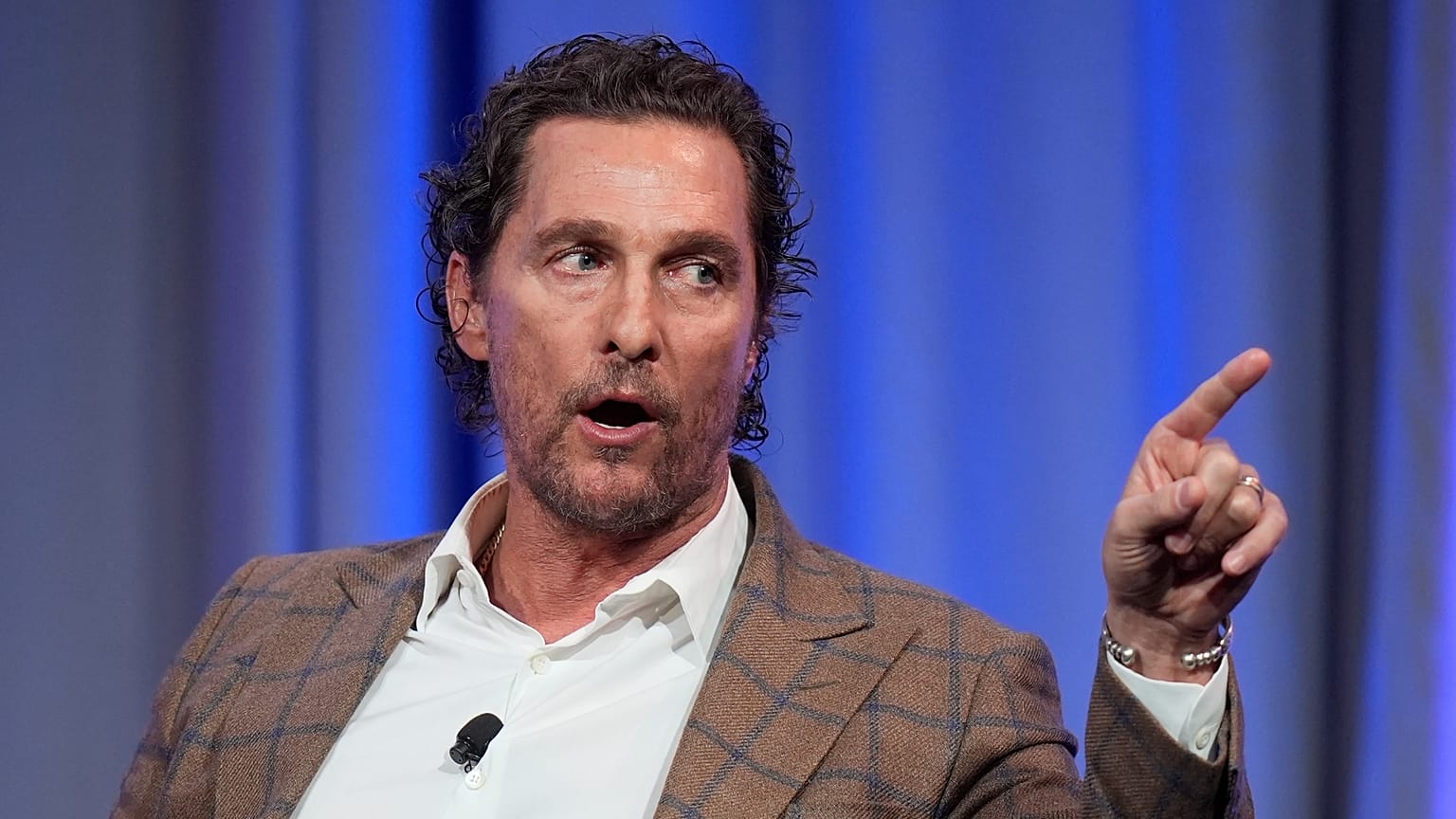
FILE: Matthew McConaughey speaks at the 2024 summer meeting of the National Governors Association, 12 July 2024, in Salt Lake City.
Copyright Credit: AP Photo

By Theo Farrant
Published on 

According to Matthew McConaughey's lawyers and an expert, this is the first instance of an actor using trademark law to protect their likeness from AI misuse.

Matthew McConaughey says it's no longer "alright, alright, alright" for AI to use his likeness.

The Oscar-winning actor has officially trademarked his image and voice, including his iconic three word catchphrase from the 1993 film Dazed and Confused.

According to The Wall Street Journal, McConaughey has secured eight separate approvals from the US Patent and Trademark Office in recent weeks. These cover everything from film clips of him standing on a porch, sitting in front of a tree, to an audio snippet of his signature line: “Alright, alright, alright" from the classic Richard Linkater comedy.

"My team and I want to know that when my voice or likeness is ever used, it’s because I approved and signed off on it. We want to create a clear perimeter around ownership with consent and attribution the norm in an AI world," the 56-year-old actor said in a statement.

Celebrity deepfakes spark growing controversy


This action comes amid a wave of high‑profile celebrity controversies surrounding AI deepfakes and likeness exploitation, which threaten to disrupt the film, music and wider entertainment industries.

Taylor Swift has repeatedly been targeted. In 2024, sexually explicit AI-generated deepfake images of her were widely circulated online, some seen millions of times before removal.

One fake picture posted on the platform was viewed 47 million times before the account was suspended. The material was shared tens of thousands of times before X's security team responded: "We have a zero-tolerance policy towards such content. Our teams are actively removing all identified images and taking appropriate actions against the accounts responsible for posting them."

Taylor Swift arrives at the 67th annual Grammy Awards on Sunday, 2 February 2025, in Los Angeles. Credit: AP Photo

Last year, actor Scarlett Johansson also publicly condemned a deepfake video depicting her and other celebrities in political messaging they never endorsed.

The AI-generated video featured more than a dozen AI-generated versions of Jewish celebrities, including Steven Spielberg, Jerry Seinfeld, Drake, David Schwimmer and Adam Sandler, each wearing t-shirts showing the Star of David alongside a hand giving the middle finger, in response to Kanye West's anti-semitic tirade

“It has been brought to my attention by family members and friends, that an AI-generated video featuring my likeness, in response to an antisemitic view, has been circulating online and gaining traction,” Johansson said in a statement to People magazine.

“I am a Jewish woman who has no tolerance for antisemitism or hate speech of any kind. But I also firmly believe that the potential for hate speech multiplied by AI is a far greater threat than any one person who takes accountability for it. We must call out the misuse of AI, no matter its messaging, or we risk losing a hold on reality.”

Zelda Williams, the actress, filmmaker and daughter of late actor Robin Williams, has also spoken out, asking fans to stop sending her AI-generated videos of her father.

“Please, just stop sending me AI videos of Dad,” she wrote in a post last year. “Stop believing I wanna see it or that I’ll understand, I don’t and I won’t. If you’re just trying to troll me, I’ve seen way worse, I’ll restrict and move on. But please, if you’ve got any decency, just stop doing this to him and to me, to everyone even, full stop. It’s dumb, it’s a waste of time and energy, and believe me, it’s NOT what he’d want.”

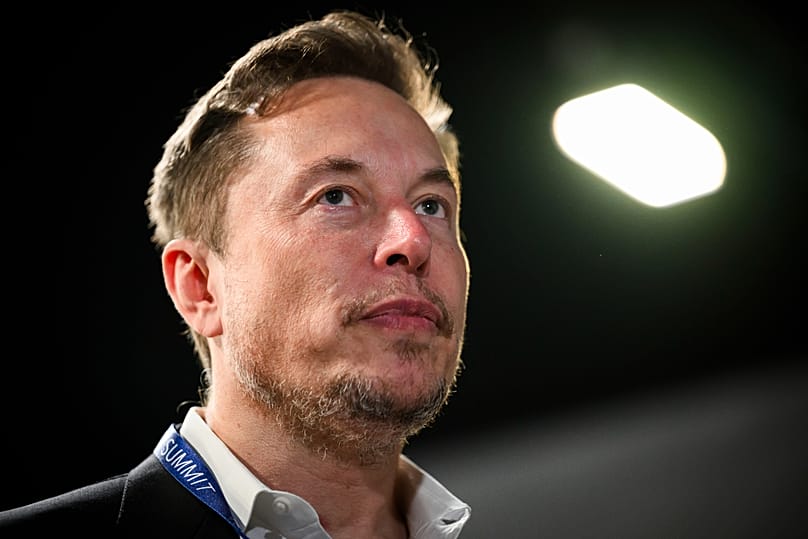
Tesla and SpaceX's CEO Elon Musk attends the first plenary session on of the AI Safety Summit at Bletchley Park, on Wednesday, 1 November 2023 in Bletchley, England. Credit: AP Photo

And most recently, amid mounting pressure in Europe and abroad, Elon Musk’s X, formally Twitter, has announced “technological measures" to prevent its AI tool, Grok, from allowing the editing of images of real people in revealing clothing such as bikinis, a restriction that applies to all users, including paid subscriber

The decision follows a global backlash over a mass wave of sexually explicit AI images and videos generated using Grok, including depictions of women and children.

Musk had previously said he was unaware of any “naked underage images” created by the AI tool.

EU seals contentious trade deal with Mercosur countries


By Peggy Corlin
Published on 

After 25 years of talks, the EU signed the EU-Mercosur trade deal on Saturday, creating a 700 million-person free-trade area. Ratification is still pending, however, with the European Parliament set for a heated debate.

EU chief Ursula von der Leyen on Saturday hailed the choosing of "fair trade over tariffs" as the European bloc signed a major trade deal with South America's Mercosur nations that has been 25 years in the making.

"We choose fair trade over tariffs, we chose a productive long-term partnership over isolation," Von der Leyen said at the ceremony in Asuncion, Paraguay.

European Council head Antonio Costa said the deal sent "a message of defense of free trade, based on rules, of multilateralism and international law as the basis for relations between countries and regions."

He said it stood in contrast to "the use of trade as a geopolitical weapon."

Negotiated over 25 years, the Mercosur agreement would create a free-trade zone of roughly 700 million people, gradually eliminating about 90% of tariffs across the industrial, services and agricultural sectors. The European Commission estimates that EU companies would save more than €4 billion a year in customs duties. Mercosur countries have also pledged to open their public-procurement markets to European firms on the same terms as domestic competitors

The deal provides for the recognition of 344 “geographical indications”, protecting European products from imitation, and is also intended to secure supplies of critical minerals, reducing the EU’s dependence on China.

The agreement has crystallised divisions within the bloc.

Supporters - led by Germany and Spain - argue the EU needs new trade ties as the US closes its market and China pursues an increasingly aggressive trade policy. Opponents, spearheaded by France, say the deal threatens European farmers by exposing them to unfair competition from Latin American imports.

The ball is in the European Parliament's court

Paris ultimately failed to assemble a blocking minority to stop the signing, losing the decisive support of Italy at the last minute. Rome backed the deal after securing funding for its farmers from 2028 and an exemption from the EU’s carbon border tax on fertilisers.

Despite opposing the agreement, France secured a safeguard clause allowing tariffs to be reintroduced if imports from Mercosur rise by more than 5% in sensitive sectors.

The deal also caps tariff-free access for key agricultural products. Annual beef imports will be limited to 99,000 tonnes at a reduced tariff of 7.5%, equivalent to 1.5% of EU production. Poultry imports will be capped at 180,000 tonnes a year, or 1.3% of EU output.

According to Commission estimates, EU exports to Mercosur countries are expected to rise 39% (€48.7 billion) by 2040, while imports from Latin America would increase 16.9% (€8.9 billion).

However, as French President Emmanuel Macron wrote on X last week, “the signing of the agreement does not mark the end of the story.”

With the deal now signed, the ball is in the European Parliament’s court. Ratification requires lawmakers’ consent, and MEPs remain split largely along national lines, even as supporters hope backing from EU governments will sway undecided colleagues.

Opponents are set to test that support as early as next week, when lawmakers vote on a resolution calling for the agreement to be challenged before the EU’s top court.


South American bloc to ink long-awaited trade deal with EU

By AFP
January 17, 2026


The treaty will favor European exports of cars, wine, and cheese, while making it easier for South American beef, poultry, sugar, rice, honey, and soybeans to enter Europe 
- Copyright AFP/File Francisco RAMOS MEJIA

Martín RASCHINSKY

The South American trade bloc Mercosur and the European Union will sign on Saturday a deal 25 years in the making to create one of the world’s largest free trade areas at a time of growing protectionism and volatility.

The long-awaited agreement comes amid the sweeping use of tariffs and trade threats by US President Donald Trump’s administration, which has sent countries scrambling for new partnerships.

Together, the EU and Mercosur account for 30 percent of global GDP and more than 700 million consumers.

The treaty eliminates tariffs on more than 90 percent of bilateral trade.

The deal will favor European exports of cars, wine and cheese, while making it easier for South American beef, poultry, sugar, rice, honey and soybeans to enter Europe.

The treaty between the EU and Mercosur nations Argentina, Brazil, Paraguay and Uruguay was agreed in Brussels last week despite fierce opposition from European farmers.

They fear the deal will lead to an influx of cheaper South American products due to production standards they consider less stringent.

Some in South America are also wary about the impact of the treaty.

In Argentina, it is estimated that there could be a loss of 200,000 jobs just from the dismantling of the local automotive industry, trade and investment researcher Luciana Ghiotto told AFP.


– ‘A powerful message’ –


European Commission President Ursula von der Leyen, European Council head Antonio Costa and EU Trade Commissioner Maros Sefcovic will attend the signing ceremony in Asuncion.

Paraguay’s President Santiago Pena and Uruguay’s Yamandu Orsi will also be present. The attendance of Argentina’s leader Javier Milei is not confirmed.

Brazil’s President Luiz Inacio Lula da Silva, who played a key role in driving negotiations forward, will not attend.

His office said the signing had initially been planned as a ministerial-level event, and Paraguay issued “last-minute” invites to presidents.

Von der Leyen stopped in Rio de Janeiro on Friday to meet with Lula on the way to Asuncion.

She praised Lula’s role in pushing forward the negotiations, and said the deal “sends a powerful message” and shows “the power of partnership and openness. And this is how we create real prosperity.”

Lula said the agreement was “very good, especially for the democratic world and for multilateralism.”

The treaty is among several that countries are rushing to close in an uncertain global environment shaped by Trump’s tariff threats and protectionism.

On Friday, Trump threatened to slap trade tariffs on countries that do not support his plans to take over Greenland, a territory of NATO ally Denmark.

Lula added that the partnership with the EU went “beyond the economic dimension.”

“The European Union and Mercosur share values such as respect for democracy, the rule of law, and human rights,” he said.

The signing of the deal comes as Latin America is still reeling from Trump’s ouster and capture of Venezuelan leader Nicolas Maduro in a dramatic military operation this month.

Brazil, EU hail trade deal as victory for multilateralism


By AFP
January 16, 2026


President of the European Commission Ursula von der Leyen praised Brazil's President Luiz Inacio Lula da Silva for his role in negotiating the EU-Mercosur deal
 - Copyright AFP Mauro PIMENTEL
Fran BLANDY

Brazil’s President Luiz Inacio Lula da Silva and EU chief Ursula von der Leyen on Friday hailed a trade deal between the EU and South America’s Mercosur bloc as a victory for multilateralism at a time of global volatility.

The pair met in Rio de Janeiro on the eve of the signing of the deal, which has been 25 years in the making and will create one of the world’s largest free trade areas.

Lula said the signing of the deal in Asuncion, Paraguay on Saturday was “very good, especially for the democratic world and for multilateralism.”

Von der Leyen praised Lula’s role in pushing forward the negotiations, and said the deal “sends a powerful message” and shows “the power of partnership and openness. And this is how we create real prosperity.”

The deal is among several that countries are rushing to close in an uncertain global environment shaped by US President Donald Trump’s tariff threats and protectionism.

On Friday, Trump threatened to slap trade tariffs on countries that don’t support his plans to take over Greenland, part of the territory of NATO ally Denmark.

Lula added that the partnership with the EU went “beyond the economic dimension.”

“The European Union and Mercosur share values such as respect for democracy, the rule of law, and human rights.”

The signing of the deal comes as Latin America is still reeling from Trump’s ouster and capture of Venezuelan leader Nicolas Maduro in a dramatic military operation.


– Angry EU farmers –


Together, the EU and Mercosur account for 30 percent of global GDP and more than 700 million consumers.

The treaty eliminates tariffs on more than 90 percent of bilateral trade.

This will favor European exports of cars, wine, and cheese, while making it easier for South American beef, poultry, sugar, rice, honey, and soybeans to enter Europe.

The deal between the EU and Mercosur nations Argentina, Brazil, Paraguay and Uruguay, was agreed in Brussels last week despite fierce opposition from European farmers.

They fear the deal will lead to an influx of cheaper South American products due to production standards considered less stringent.

Von der Leyen will head to Asuncion in Paraguay for the signing ceremony, which Lula will not attend. His office said the signing had been initially planned as a ministerial-level event, and Paraguay issued “last-minute” invites to presidents.

In addition to host president Santiago Pena, Uruguay’s president Yamandu Orsi will also attend the signing.

The attendance of Argentina’s leader Javier Milei is not confirmed.


– Global trade deals –


Von der Leyen said it was important for her to meet with Lula before the signing, highlighting his role in the negotiations, which he made a priority of his third term in office.

“You are a leader deeply committed to the values we hold dear, democracy, the rules-based international order and respect. This is the leadership we need in today’s world.”

Lula said Brazil was also working on trade partnerships with Canada, Mexico, Vietnam, Japan and China.

Meanwhile, the EU is working on a trade deal with India, the world’s most populous nation with 1.4 billion people, whose relations have soured with Washington due to punishing tariffs.

Geopolitical tensions are also rising over strategic minerals, with Trump insisting the United States needs access to Greenland’s critical raw materials, which are largely unmined.

Von der Leyen said the EU and Brazil were also “moving towards a very important political agreement on critical raw materials” such as lithium, nickel and rare earths that “tend to become an instrument of coercion.”


Slovakia's Fico to meet Trump in Florida on Saturday with nuclear plant deal in focus

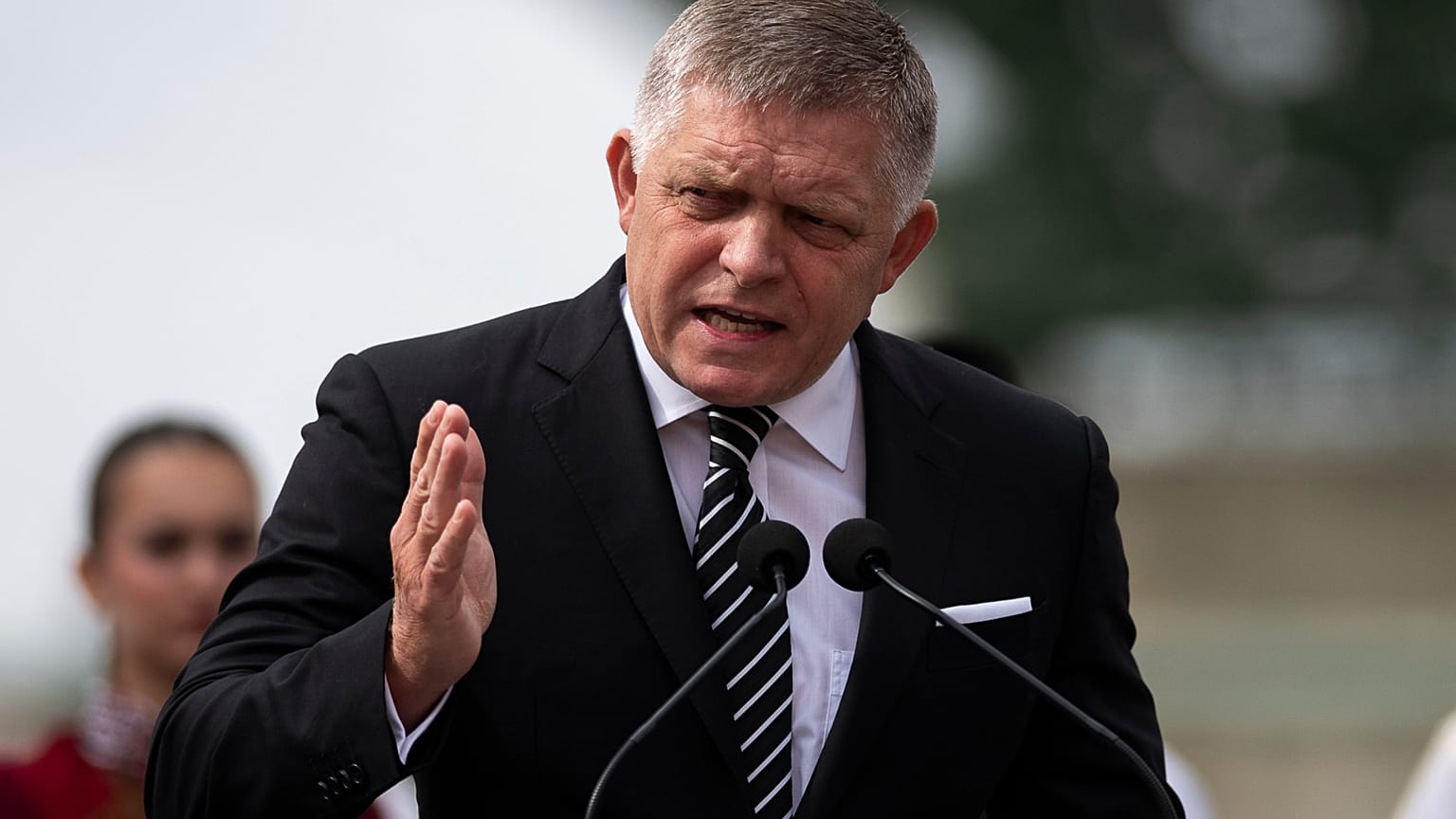
Slovakia's Prime Minister Robert Fico delivers his speech during the 130th anniversary celebration of Mária Valeria Bridge in Esztergom, Hungary, on Sunday, Sept. 28, 2025.
Copyright Copyright 2024 The Associated Press. All rights reserved

By Sandor Zsiros
Published on 

Slovakia's Prime Minister will meet with US President Trump in Mar-a-Lago on Saturday with plans for a nuclear energy deal in focus. Fico is politically aligned with the MAGA agenda from Ukraine to migration.

Slovakian Prime Minister Robert Fico will meet President Donald Trump at his Mar-a-Lago residency in Florida on Saturday, aiming to deepen ties between the two countries.

Fico, who is politically aligned with the MAGA agenda, has praised the US for its efforts to end the war in Ukraine and follows a similar hardline approach to migration.

Separately, the two leaders could discuss plans that would see Slovakia entering a business agreement to buy nuclear reactors from the US in a project that could be worth around €13 to €15 billion, according to Slovak media.

Fico's ally Hungarian Prime Minister Viktor Orbán announced similar plans when he visited Trump last November. Just like Hungary, Slovakia is one few EU countries that is still connected to Russian energy despite efforts from the bloc to unplug from Moscow.

The Slovak government wants to conduct talks with the US company Westinghouse about the construction of the nuclear site, according to local media.

Last year, a controversial US national security document argued the EU is facing civilisational erasure if it does not reverse course from its current policies and vowed to foster ties with what it described as "patriotic forces" resisting Brussels from within.

Fico's political stance is aligned with Trump's agenda in multiple ways despite his socialist background. Fico is highly critical of illegal migration, the EU institutions and its environmental policies and maintains bilateral ties with Russian leader Vladimir Putin.

Still, Fico was critical of the US military intervention in Venezuela, which resulted in the capture and arrest of strongman Nicolás Maduro, arguing in favour of international law.

“If military power is used without the mandate of the UN Security Council, then everyone who is great and strong does what he wants to promote his own interests," Fico said.

White House releases names of board members tasked with temporary governance of Gaza


By Malek Fouda
Published on 

The White House has released the names of some of members of various boards who will play a role in guiding Gaza through the next steps of the ceasefire deal between Hamas and Israel, brokered by Trump in October.

The White House released the names of some of the leaders who will play a part in overseeing the next steps in Gaza after the Palestinian committee set to govern the enclave under US supervision met for the first time in Cairo on Friday.

The committee’s leader, Ali Shaath, an engineer and former Palestinian Authority official from Gaza, pledged to get to work quickly to improve living conditions for the territory’s 2.1 million population.

“The Palestinian people were looking forward to this committee, its establishment and its work to rescue them,” Shaath said after the meeting, in a television interview on Egyptian media outlets.

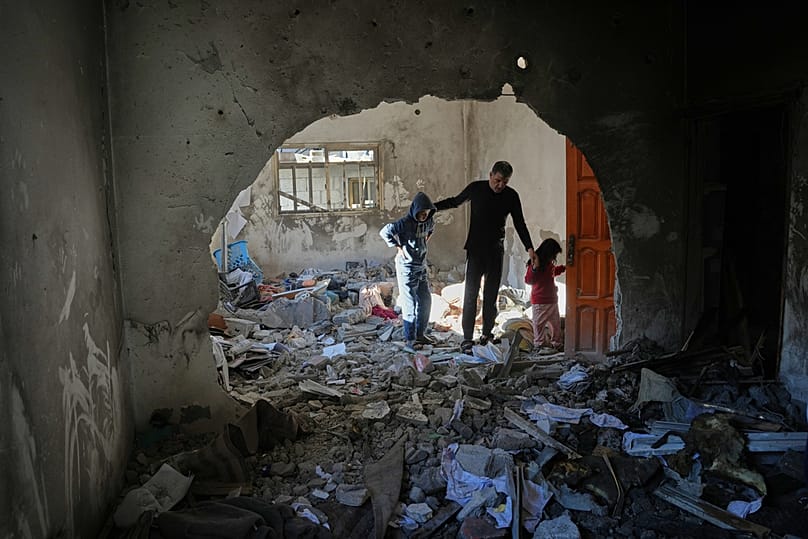
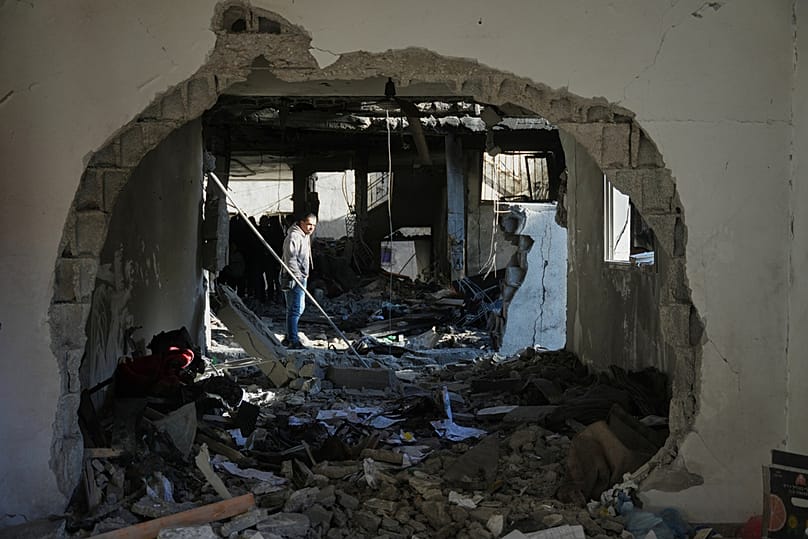
Palestinians inspect the rubble of the al-Hawli family home, destroyed in an Israeli strike in Deir al-Balah, in the central Gaza Strip, Friday, Jan. 16, 2026
Palestinians inspect the rubble of the al-Hawli family home, destroyed in an Israeli strike in Deir al-Balah, in the central Gaza Strip, Friday, Jan. 16, 2026 Abdel Kareem Hana/Copyright 2026 The AP. All rights reserved.

US President Donald Trump supports the group's efforts to govern Gaza after the two-year war between Israel and Hamas. Israeli troops withdrew from parts of Gaza after the ceasefire took effect on 10 October, while thousands of displaced Palestinians have returned to what is left of their homes.

A number of huge challenges still await in the next phase of the truce, including the deployment of an international security force to supervise the ceasefire deal and the difficult process of disarming Hamas.

Under Trump's plan, Shaath's technocratic committee will run day-to-day affairs in Gaza under the oversight of a Trump-led “Board of Peace,” whose members have not yet been named.

The White House said on Friday that an executive board will work to carry out the vision of the Board of Peace.

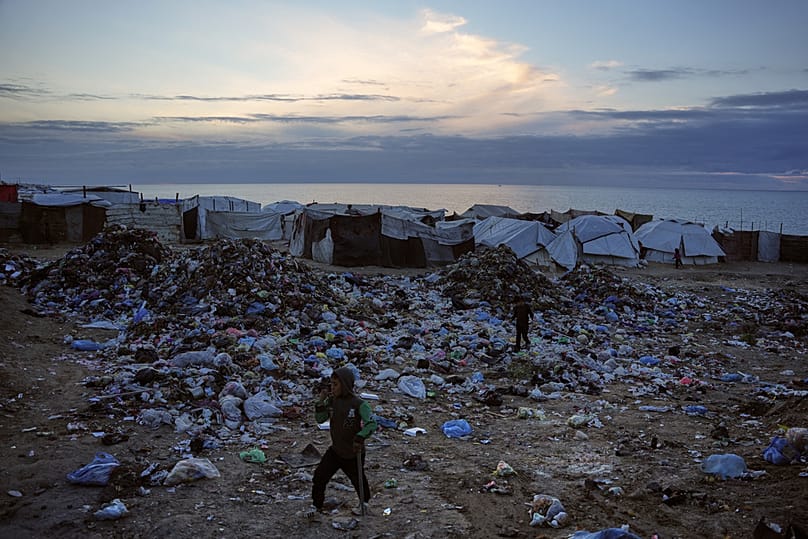
Children walk over a pile of garbage at a makeshift tent camp for displaced Palestinians on a beach in Deir al-Balah, in the Gaza Strip Friday, Jan. 16, 2026
Children walk over a pile of garbage at a makeshift tent camp for displaced Palestinians on a beach in Deir al-Balah, in the Gaza Strip Friday, Jan. 16, 2026 Abdel Kareem Hana/Copyright 2026 The AP. All rights reserved.

The executive board’s members include US Secretary of State Marco Rubio, Trump envoy Steve Witkoff, Trump's son-in-law Jared Kushner, former British Prime Minister Tony Blair, Apollo Global Management CEO Marc Rowan, World Bank President Ajay Banga, and Trump’s deputy national security adviser Robert Gabriel.

Nickolay Mladenov, a former Bulgarian politician and United Nations Middle East envoy, is to serve as the executive board’s representative overseeing day-to-day matters.

The White House also announced the members of another board, the “Gaza Executive Board,” which will work with Mladenov, the technocratic committee and the international stabilisation force.

A Palestinian inspects the rubble of the al-Hawli family home, destroyed in an Israeli strike in Deir al-Balah, in the central Gaza Strip, Friday, Jan. 16, 2026
A Palestinian inspects the rubble of the al-Hawli family home, destroyed in an Israeli strike in Deir al-Balah, in the central Gaza Strip, Friday, Jan. 16, 2026 Abdel Kareem Hana/Copyright 2026 The AP. All rights reserved.

Witkoff, Kushner, Blair, Rowan and Mladenov will also sit on that board. Additional members include Turkish Foreign Minister Hakan Fidan, Qatari diplomat Ali Al-Thawadi and Director of Egypt’s General Intelligence Agency Hassan Rashad.

The board will also include Emirati minister Reem Al-Hashimy, Israeli entrepreneur Yakir Gabay and the Netherlands’ former deputy prime minister and a Middle East expert, Sigrid Kaag.

Washington has not yet announced direct roles each of the named people will play, or when they’re expected to commence, but noted that details will be released in the coming weeks.


Stalemate In Gaza – OpEd


January 17, 2026 
By Neville Teller

President Donald Trump’s Gaza peace plan would appear to be stuck. Whatever covert preparations may be in hand to implement its later stages, the clock seems to have stopped.

The first stages of the 20-point “Comprehensive Plan to End the Gaza Conflict”, signed by Israel and Hamas in Sharm elSheikh on October 9, 2025, required an immediate ceasefire, the return of all the hostages both alive and dead, the transfer of Palestinian prisoners in exchange, and a substantial increase in the flow of humanitarian aid. Having released the live hostages, Hamas chose to eke out the return of the dead over a period of six weeks, and still holds on to the remains of Ran Gvili.

So the first stage has not been completed and Gaza is effectively trapped. A fragile ceasefire is in place, the IDF have withdrawn to the “yellow line,” there is increased humanitarian access – but all are subject to ongoing violations.

As for conditions in the Strip, most media reports suggest that, rather than advancing the peace process, the ceasefire has reduced Gaza’s significance on the world scene. It has changed little on the ground. Large parts of Gaza remain in ruins, hundreds of thousands of Palestinians are still displaced, and aid distribution is even more difficult because of new restrictions placed by Israel on some 37 humanitarian agencies that refuse to reveal whether their staff are connected to Hamas.

The 20point Trump plan was not originally issued as “three phases”. It was first presented essentially as a single 20point framework, and the text adopted as Annex 1 to UN Resolution 2803 is also structured as 20 numbered points. It was media and policy coverage that quickly reframed the 20point scheme into three phases:


Phase 1: immediate ceasefire, hostage–prisoner exchanges, frontline freeze, humanitarian surge.​

Phase 2: demilitarization, destruction of Hamas’s offensive infrastructure, progressive Israeli withdrawal and deployment of the International Stabilization Force.​

Phase 3: governance transition and reconstruction, including the Board of Peace and multiyear rebuilding of Gaza.​ Finally, “when the PA reform program is faithfully carried out, the conditions may finally be in place for a credible pathway to Palestinian self-determination and statehood.”

Any sort of progress is blocked by unfinished business from Phase One. The unresolved issue of hostage Ran Gvili’s missing body has become a precondition for any further Israeli withdrawals, for changes at the Rafah crossing, or for movement to the next stage. In practice, this traffic jam maintains the territorial “yellow line”– in other words, the continued presence of the IDF in eastern Gaza.​

In any case implementation of Phase Two is beset with obstacles. It seems obvious that the bargaining positions of Hamas and Israel are mutually incompatible. Hamas has declared that any disarmament on its part is tied to the prior achievement of Palestinian statehood and a restoration of Palestinian control over Gaza. Israel rejects Hamas disarmament on that basis, or indeed any outcome that concedes Palestinian statehood under pressure.

Hamas’s position is, of course, quite at odds with the Trump plan which it has signed. That places the issue of Palestinian self-determination at point 19 of the 20-point plan, namely well after the total disarmament of Gaza in general and Hamas in particular. The result of Hamas’s intransigence is deadlock as regards further progress. Hamas will not voluntarily disarm and Israel cannot realistically force full disarmament without collapsing the ceasefire.​

On the face of it the Trump peace plan is at an impasse. Despite reports of negotiations in hand, there is as yet no agreed path to the demilitarization, international force deployment, or new governance that would mark a genuine implementation of Phase Two.​

Trump, however, is unlikely to sit idly by while Hamas plays fast and loose with a peace agreement it has signed. The president has repeatedly coupled the Gaza peace plan with threats that if Hamas does not comply, “all hell” or direct military action will follow. Trump’s Venezuela operation is no blueprint for what is likely in Gaza; US or allied operations against Hamas are not currently in prospect. The characteristic Trump ambiguity, however, is deliberate, and designed to coerce Hamas while keeping options open.​

What is more relevant, perhaps is Trump’s warning as he unveiled the 20point plan. If Hamas rejected it, he said, “Israel would have the full backing of the US to proceed with any actions it sees fit.”

In subsequent posts and remarks, he repeatedly referred to his peace proposal as Hamas’s “one last chance” and warned that if agreement was not reached “all hell, like no one has ever seen before, will break out against Hamas.” In short, his consistent core message has been that refusal to comply with the plan and disarm will bring severe, potentially direct, force against Hamas.

Several forms of action are more plausible than a dramatic new USled offensive. The most credible is Trump’s repeated assurances that, if Hamas blocks key steps like disarmament or the transfer of authority, Israel will enjoy “full backing” to intensify targeted operations against remaining Hamas infrastructure and leadership. He has publicly pledged his “complete support” to Israel to “finish the job” and “do what you need to do” against Hamas.​​

An alternative scenario could involve incremental coercive measures applied to Hamas, short of invasion. These could include tighter financial and travel sanctions on Hamas leadership, increased pressure on Qatar and other mediators to curtail Hamas’s external operations, and further restrictions or conditioning of reconstruction money and crossings on verifiable disarmament steps.​

Trump observers will be aware that the language about “all hell” functions as strategic ambiguity. Without any specified timelines or specific troop deployments (both of which would be resisted by allies and Congress), it is designed to convince Hamas that the US and its partners might ultimately enforce disarmament militarily.​

Taken together, these factors suggest that Trump’s recent threats are best read as signaling, designed to push Hamas toward implementing its disarmament, ahead of a greenlight to the IDF to “finish the job” with Washington’s backing.

Hamas, well aware that world opinion would castigate the US and Israel if the Gaza war was resumed, might calculate its best course is to maintain the stalemate.

Neville Teller's latest book is ""Trump and the Holy Land: 2016-2020". He has written about the Middle East for more than 30 years, has published five books on the subject, and blogs at "A Mid-East Journal". Born in London and a graduate of Oxford University, he is also a long-time dramatist, writer and abridger for BBC radio and for the UK audiobook industry. He was made an MBE in the Queen's Birthday Honours, 2006 "for services to broadcasting and to drama."


Lab-grown proteins for a hungry world - made in Europe


 By Hans von der Brelie

Published on 


Food technology made in Europe is a global leader. What is the reason behind this success story? Euronews sent its reporter to East Germany to look for answers in Leipzig's "Bio-City".


Zac Austin from Scotland is one of the founders of Pacifico Biolabs. His international team is working towards a world without hunger. Using a new technique to produce meat substitutes from mushroom cultures.

In Leipzig's Bio-City, regional, national and European funding instruments are interlinked. Hundreds of young companies are laying the foundations here for Europe's market leadership in future technologies.

Austin: "Leipzig is a fantastic location where a large number of start-ups and biotech companies have set up shop." We are not allowed to film everything in the Pacifico laboratory; a lot of the machines and production processes are strictly protected trade secrets - made in Europe.

Co-founder Washington Vintimilla is the biochemical inventor genius of Pacifico: "Together with our food scientists, we achieved the breakthrough of transforming mycelial fibres into (vegan) chicken breast. That was phenomenal. That's when we knew we were on the right track."

The team has discovered a new method of producing vegan steaks and sausages from mushroom proteins. The formula is secret. Vintimilla: "We have to get as close as possible to real meat in terms of texture, that's the key to success."

Food technician Pau Oller Armengol from Spain adds: "With the mycelial fibres, we can produce vegan fish fillet as well as vegan pork medallions, sausage or chicken."

A real chicken needs 60 days to grow up. Pacifico can produce the same amount of protein in just one day. The world's population is growing. Parts of the world are already suffering from hunger. The world's need for protein is growing

Washington Vintimilla: "The science is clear. If you look at the effects of climate change on the most important crops, we will see a 30 to 40 per cent decline in global crop yields. We will not be able to produce enough food for humanity. We need methods of food production that do not rely on land and produce protein independently of the climate."