Saturday, January 17, 2026

Renee Good’s Extrajudicial Killing Escalated the Normalization of State Terror

What happens next will determine whether Good’s killing sets a precedent for more state violence.

January 16, 2026

A federal agent grabs a protester outside the Bishop Henry Whipple Federal Building in Saint Paul, Minnesota, on January 8, 2026, following the ICE-perpetrated killing of Renee Nicole Good in Minneapolis on January 7.
Octavio JONES / AFP via Getty Images

The extrajudicial killing of Renee Nicole Good marks a profound and irreversible escalation against communities committed to justice. A red line has been crossed.

While Immigration and Customs Enforcement (ICE) has previously killed immigrants with impunity, including Silverio Villegas González in Chicago, this incident is distinct because it involves the first public extrajudicial killing of a volunteer monitoring ICE’s terror against her neighbors.

In the United States, death, deportation, forced disappearance, and state kidnappings against migrants have been normalized. This killing causes significant concern because it’s a warning to anyone bearing witness to state terror that they too could be killed if they stand in solidarity with targeted communities. That’s the mark of a pending escalation of state repression that necessitates the full participation from the majority to act as bystanders that will either fully support or look the other way as state terror escalates.

This is the hallmark of how mass forms of state violence move from planning phases to full execution. In such instances, everyday acts of resistance like this from neighbors like Renee Good are key to challenging the ongoing state repression and preventing its escalation, especially when the U.S. has deported and forced out over 2 million immigrants in 2025 alone.

In a publicly released video, Good’s last words toward an ICE officer were, “That’s fine, dude, I’m not mad at you.” Her partner later captured the asymmetry of the violence, writing: “We had whistles. They had guns.”


Fed Agent Shoots Second Person, Days After Miller Claims Agents Have “Immunity”
Miller lied to ICE agents, saying, “Anybody who lays a hand on you or tries to stop you … is committing a felony.”By Sharon Zhang , Truthout January 15, 2026

 
The officer’s composure as he shot her and walked away revealed his absolute confidence in institutional protection. His actions aren’t an anomaly but the natural progression of what civil rights advocates and community organizers have been monitoring — the implementation of National Security Presidential Memorandum-7 (NSPM-7) against neighbors and community rapid responders. Following Good’s killing, U.S. Homeland Security Secretary Kristi Noem immediately labeled Good a domestic terrorist, citing NSPM-7 policies.

The NSPM-7 targets individuals, groups, and networks that the federal government identifies as engaging in resisting government authority and considers such violence as “organized political violence,” “domestic terrorism,” and “anti-fascist movements” that resist so-called “foundational American values of supporting law enforcement, ICE, and border patrol” as a threat to U.S. national security.

Vice President JD Vance echoed this narrative, calling Good’s death “a tragedy of her own making” and asserting without evidence that she was part of a “broader left-wing network.” This swift deployment of the memorandum’s “domestic terrorism” framework to retroactively justify the extrajudicial killing of a community rapid responder by a federal agent represents the worst-case scenario long feared by frontline responders.

Renee Nicole Good’s killing now threatens to become the blueprint for how NSPM-7 will be enforced against community members and rapid responders.

Renee Nicole Good’s killing now threatens to become the blueprint for how NSPM-7 will be enforced against community members and rapid responders. A lack of accountability for her death would signal that the extrajudicial killing of community responders can be retroactively justified under NSPM-7, granting federal agents effective immunity while vastly expanding the state’s license to kill.

What Is NSPM-7?

NSPM–7 is the most sweeping reconsolidation of the national security and domestic “war on terror” apparatus that has occurred since 9/11, redefining its targets so expansively that no one is excluded. It was issued by the White House in September 2025 and operationalized through the Department of Justice, the FBI, Joint Terrorism Task Forces, and other federal executive branch agencies that target anyone under the banner of domestic terrorism.

In practice, NSPM-7 targets three spheres.

First, it targets individual community membersthat resist fascism or the government’s abuses of power. Its loose framework allows anyone to be labeled as a domestic terrorist. Whether the government’s labeling sticks will be contingent upon public condemnation, the strength of legal and community defense against such witch hunts, and prosecutorial discretion.

Second, NSPM-7 targets movement organizations, broader civil society groups, and movement infrastructure that the government views as resisting state violence. Groups targeted under NSPM-7 could face federal prosecutions, loss of funding from institutions, frozen bank accounts and assets, deplatforming, regulatory and lawfare attacks, funding cuts, and targeting of institutional leaders.

Third, NSPM-7 targets the resources and funding of both communities and movements resisting state violence and terror. Bail funds, legal defense projects, mutual aid networks, progressive philanthropy, impact investors, banking institutions, and even individual donors can be subjected to surveillance and financial scrutiny.

What makes NSPM-7 uniquely dangerous is not only its breadth and overreach, but also the speed and coherence of its implementation across federal agencies. In December 2025, Attorney General Pam Bondi issued a directive ordering full implementation within 14 days. The memo mandates retroactive review of at least five years of activity, and potentially sweeps any form of protest, mutual aid, rapid response, legal observation, and online speech critical of state repression into a single dragnet. Prosecutors are instructed to deploy an expansive suite of charges, including obstruction, conspiracy, RICO, material support for terrorism, and seditious conspiracy, and to deploy harsh sentencing guidelines that include terrorism sentencing enhancements.


From the “War on Terror” to the War on Our Neighbors

Renee Nicole Good’s killing must be understood within this broader reality of immigration enforcement terror, where ICE has shot people, had people die while in its custody, and routinely used force against communities, with 2025 constituting ICE’s deadliest year in two decades.

The “war on terror” taught us a clear lesson about how state violence is institutionalized and legitimized through law, policy, and advocacy by government officials, long before the consequences are clear to the wider public. ICE itself was created out of the post-9/11 war on terror infrastructure, shaped by a racist and dehumanizing national security logic that normalized extraordinary force in the name of national security. The modern immigration policy apparatus of the United States is heavily dominated by this framework.

The murder of Renee Nicole Good is a warning. It reveals how quickly policies written in bureaucratic language can become lethal when combined with impunity.

This violence did not arise in a vacuum. In places like Minnesota, it follows years of federal law enforcement and surveillance with the state serving as a testing ground that helped pave the road for today’s policies. After the extrajudicial killing of George Floyd, protests were depicted as riots, and then-Attorney General William Barr publicly stated that “extremist elements” associated with the uprisings, including those he linked to “antifa,” were being investigated under domestic terrorism frameworks, with Joint Terrorism Task Forces deployed for that purpose.

Surveillance programs such as Operation Safety Net monitored and surveilled protesters and organizers in Minnesota for years after the killing of George Floyd. These policies were also deployed after the implementation of counterterrorism programs, such as Countering Violent Extremism programs against Somali Muslim communities. Minnesota also includes a long-standing history of targeting the state’s Indigenous communities — repression that provoked the founding of American Indian Movement during 1968 in Minneapolis. These deep histories of anti-Black, anti-Indigenous, anti-immigrant, and anti-Muslim targeting (particularly of Somali communities) is key, given that it points to the importance of supporting local communities and their long-standing resistance to state repression. Naming this context also matters, because once repression is normalized through policy, it spreads by turning immigration enforcement into a routine form of state terror embedded in everyday life.

Investing in Local Communities

The front line of resistance will always be held by local communities and movements. Real solidarity means following their leadership and investing in their long-term power. Minnesota has a deep infrastructure of local groups, worker centers, and unions that continue to build collective power, making solidarity with local leadership essential in this moment. Minnesota is also home to powerful Black Muslim–led organizing that has successfully resisted the war on terror and defeated state surveillance programs like “Countering Violent Extremism,” which treat every aspect of a community’s life through the lens of potential national security threats, deputizing community members to monitor and report on one another, deeming racial and religious identities as grounds for suspicion. Local communities have also built power through worker centers like Awood, winning victories that benefit communities nationwide. As Somali, immigrant, and refugee communities in Minnesota face intensifying attacks, investing in local leadership as a site of power-building is not optional — it is essential.

Therefore, investing in local leadership includes supporting calls from local organizations. For example, local organizers in Minnesota have called for a statewide day of mourning and action (a day of ​“no work, no school, no shopping”) on January 23, backed by labor unions and community organizations. Practicing real solidarity means supporting these calls and observing boycotts to ensure communities are not isolated and undermined, and to demand that they receive long-term investment. As one Minnesota rideshare driver stated at a press conference announcing the boycott, the community is facing “a tsunami of hate from our own federal government,” and they are committed to overcoming it together. In addition to heeding local calls for boycotts, investing in the ecosystem of local organizations, amplifying frontline narratives, and supporting community groups engaged in critical mutual aid and community defense work is crucial.

Local and State Municipal Resistance Is Key

As federal overreach accelerates, governors, mayors, city councils, and state legislatures must act as a front line of defense. Municipal and state governments should immediately end collaboration with ICE and other federal enforcement agencies through binding rulemaking, executive orders, and policies that prohibit data sharing and joint operations. These policies include ending participation in the 287(g) program that deputizes local police and accelerates the militarization of law enforcement, and withdrawing cities and localities from Joint Terrorism Task Forces.

City councils must also answer the demands of local community-based organizations. For instance, in Washington, D.C., Muslims for Just Futures alongside 58 organizations are demanding an on-the-record hearing for accountability and transparency, a forum to document resident concerns regarding local law enforcement’s cooperation with federal agents and ending collaborations with ICE. Similarly, in Chicago, a packed room of hundreds of community members and organizers demanded Chicago police officers immediately end all collaboration with ICE and other immigration enforcement federal agencies.


Breaking isolation and fear through hosting “know your rights” trainings, shared meals, safety networks, and collective care is a material intervention against fascism.

States must also fully use litigation to challenge federal overreach, even when courts appear hostile or captured by MAGA-aligned judges. Lawsuits are not only a legal strategy; they are a narrative strategy, and a method to contest the hijacking of the law itself and to bring the demands of the streets into the courts. At the minimum, state and local governments have a responsibility to pursue the fullest extent of the law in response. As examples, both Minnesota and Illinois have sued the federal government, challenging ICE, the Department of Homeland Security, and Customs and Border Protection for unconstitutional enforcement practices, arguing that the deployment of heavily armed, often unidentified federal agents into neighborhoods violates constitutional protections and state and local authority. These lawsuits are key in demonstrating that local governments won’t capitulate and will resist federal overreach.

States and cities must also expose the cost of these operations and practice real public transparency and accountability.

The work of exposing the financial and human cost of federal law enforcement, ICE, and National Guard deployments to occupy cities is vital for documenting the human and financial cost of state terror. For example, Operation Midway Blitz alone cost taxpayers in Illinois more than $59 million, including approximately $34 million spent on ICE operations. From Minnesota and across the country, fear of ICE is reshaping daily life as families opt out of schools, immigrant economic corridors collapse, essential workers vanish, and community stability breaks down.

The murder of Renee Nicole Good is a warning. It reveals how quickly policies written in bureaucratic language and directives such as NSPM-7 can become lethal when combined with impunity and unchecked force. Across the country, in the wake of her killing, there is an uptick in reports of ICE and federal law enforcement officers violently shooting and targeting community members. Trump is threatening to escalate the situation further by threatening to invoke the Insurrection Act in order to deploy the military against Minneapolis. Justice for Renee Good requires more than mourning; it demands accountability, organizing, and refusal. The front line of community defense has always been neighbors. Breaking isolation and fear through hosting “know your rights” trainings, shared meals, safety networks, and collective care is a material intervention against fascism. Fascism succeeds when the masses of people are transformed into its enforcing arm. Preventing that transformation is one of the most critical fronts of resistance.

Press freedom is under attack

As Trump cracks down on political speech, independent media is increasingly necessary.

Truthout produces reporting you won’t see in the mainstream: journalism from the frontlines of global conflict, interviews with grassroots movement leaders, high-quality legal analysis and more.

Our work is possible thanks to reader support. Help Truthout catalyze change and social justice — make a tax-deductible monthly or one-time donation today.


This article is licensed under Creative Commons (CC BY-NC-ND 4.0), and you are free to share and republish under the terms of the license.


Darakshan Raja
Darakshan Raja is the founding executive director of Muslims for Just Futures, a grassroots organization that builds power in Muslim communities through community organizing, advocacy, and movement building.
Decades Of Dredging Pushing Dutch Western Scheldt Estuary Beyond Its Ecological Limits


Satellite image of the Scheldt delta showing the Western Scheldt at low tide. Photo Credit: Beeldbank V en W, Wikipedia Commons


January 17, 2026 
By Eurasia Review

The Dutch Western Scheldt Estuary has been pushed onto an unsustainable trajectory since large-scale navigation channel deepening began in the 1970s. The dramatic increase in the annual volume of dredged sediment from the navigation channel has reduced feeding grounds for birds and made the estuary more vulnerable to sea-level rise.

This is shown by the Dutch report De Westerscheldenatuur: Een mooie toekomst vraagt keuzes nu!. Dutch and Flemish researchers call on policymakers to use dredged sediment strategically for nature restoration and climate adaptation.

After analysing nearly seventy years of monitoring data from the Dutch water authority (Rijkswaterstaat), researchers from NIOZ, the University of Antwerp and Utrecht University found that the once diverse mosaic of mudflats, sandbars and tidal channels in the Western Scheldt is gradually being replaced by a more uniform and increasingly vegetated landscape, with less space for open intertidal flats and shallow channels. “This trend occurs throughout the entire estuary,” says NIOZ researcher Tim Grandjean. “We see a structural shift that leads to a major loss of ecological value.”


Disposal of dredged material disrupts the balance

To maintain access to the Port of Antwerp, one of Europe’s largest ports located in Belgium upstream of the estuary, the main shipping channel of the Western Scheldt has been deepened and widened three times since the 1970s. As a result, annual maintenance dredging has increased sharply, from less than 0.5 million m³ before 1950 to 7–10 million m³ per year today. This material is removed from the channel and disposed of elsewhere in the Western Scheldt.

The analyses show that the choice of where this dredged sand and silt are disposed of has a major impact on nature. Due to the annual dredging operations, unvegetated mudflats receive large pulses of fine sediment. Where large volumes of dredged sediment are deposited, the bed level rises more quickly. Elevated mudflats are flooded less frequently, which allows vegetation to establish.


Equilibrium between mudflats and salt marshes

The Western Scheldt is mostly dominated by two types of intertidal habitats: unvegetated mudflats and vegetated salt marshes, which together form the intertidal environment. The bare mudflats of the Western Scheldt are among the most productive ecosystems in Western Europe. They are crucial for migratory birds and seals, while the salt marshes contribute to flood safety by attenuating waves and protecting the coast. The interaction between mudflats and marshes is essential. Marshes are able to keep pace with sea-level rise because tidal action and vegetation trap sediment from the mudflats.

Human interventions in the Western Scheldt have disrupted the balance between mudflats and salt marshes. Since 1996, approximately 500 hectares of mudflat have been lost as a result of dredging and sediment disposal and largely converted into higher-elevation salt marshes. This places the ecological values of the Western Scheldt under pressure: the loss of mudflats reduces habitat for large numbers of migratory birds and other characteristic species. Moreover, the expansion of salt marshes leads to increasing sediment fixation, whereas dynamic erosion and sedimentation are crucial for maintaining biodiversity in the Western Scheldt.

Policy choices are urgently needed

According to the researchers, policymakers must make clear decisions as soon as possible to prevent further degradation of the Western Scheldt’s. “Stopping dredging is not an option – navigation channel maintenance remains essential,” Grandjean emphasises. “But how we handle the dredged sediment will determine how the Western Scheldt develops in the future.”

Restoration targets not being met

The Western Scheldt has a defined ecological restoration target of at least 3,000 hectares, to compensate from historical land reclamation, embankment, channel deepening and intensive dredging. This target is aimed specifically at restoring dynamic intertidal habitats, particularly mudflats and pioneer marshes, in order to bring the estuary back to a favourable conservation status. Over the past two decades, only about 600 hectares have been realised within the Western Scheldt. At the same time, around 500 hectares of mudflats transitioned into higher salt marshes, largely offsetting the intended gain of mudflat and pioneer-marsh habitat, even though the total area of nature has not declined.
Sediment availability also offers opportunities

At the same time, the increased availability of sediment also offers opportunities. Sediment can be used as a strategic building material for climate adaptation, flood protection and nature development. Fine sediments, for example, can be valuable in low-lying dike zones along the estuary, where they are needed to make the landscape more resilient and better able to keep pace with sea-level rise. “The Western Scheldt is at a tipping point,” Grandjean concludes. “Let us use the sediment we are moving today to build a robust and future-proof estuary for the next generations of Zeeland.”


South Africa: Damage Caused By Limpopo Floods ‘Catastrophic,’ Says President Ramaphosa

Flooding in South Africa's Limpopo province. Photo Credit: SA News

January 17, 2026 
By SA News

South Africa’s President Cyril Ramaphosa visited the Limpopo province where heavy rainfall and flooding has left at least 19 people dead and caused destruction to homes, businesses and infrastructure.

The President, together with Minister in the Presidency Khumbudzo Ntshavheni and Limpopo Premier, Dr Phophi Ramathuba, visited the Vhembe and Mopani Districts to assess the damage caused by the more than 400mm of rain that fell in the area.

“We have just seen the catastrophic damage that has been caused here. We started off in the Vheme District where we saw how a number of houses were flooded and how people have lost their possessions with the huge, huge rains … in this part of our country.

“In the Mopani District, it’s even worse … because there are 36 houses that have just been wiped away from the face of the earth. One five-year-old child has also passed away,” the President said.

President Ramaphosa noted that government officials have been on the ground “doing everything they can to assist the people who have been affected by the floods”.

“Provincial government…has come out in a very strong way. So much as disaster befalls us with climate change, with rains that are now devastating, we’ve been able to find a response. Of course, we need to do a little bit more.

“And of course, our South African Airforce…came out with their helicopters and rescued a number of people from rooftops and from trees. That shows that our response to disaster is getting better both at the institutional level like the Airforce, the South African Defence Force and also at local government level,” he added.

The President noted that community members have been standing by each other during this time.

“The solidarity and the cooperation that we have seen amongst our people here is quite amazing. We heard how one person was thoughtful enough and threw a rope to people who were stranded. They tied the rope around each other and pulled each other out of what would have been certain death.

“A number of lives that could have been lost here have been saved and we are grateful to our people,” he said.

The President warned that the effects of climate change are now truly beginning to show.

“We are told that we can expect more rain in the coming days and this is the effects of climate change. Climate change is truly with us and those who don’t believe that it is with us, better believe it now, because wiping out of 36 houses when there’s rain has never really been something that we’ve experienced.

“All those households and families are now stranded [and] now have to pick up the pieces of their lives,” he said.

The Limpopo provincial government is expected to brief the media on the heavy rainfall, on Friday.

SA News
Government Communication and Information System (GCIS) established the SA Government News Agency to enable all media locally and abroad to have easy and fast access to fresh government information, news and current affairs at no cost.
Canada Losing Track Of Salmon Health As Climate And Industrial Threats Mount


January 17, 2026
By Eurasia Review


Canada is failing in a decades-old pledge to monitor the health of Pacific salmon, according to new research from Simon Fraser University.

At a time when government policy is geared towards accelerating industrial development across sensitive B.C. watersheds, an SFU study published today in the Canadian Journal of Fisheries and Aquatic Sciences reports that monitoring of salmon spawning populations has dropped 32 per cent since Canada adopted its Wild Salmon Policy 20 years ago.

The decline in publicly-available data means that scientists are unable to assess the well-being of nearly half (44 per cent) of Canada’s Pacific salmon populations.

Of the five species assessed (Chinook, chum, coho, pink and sockeye), sockeye salmon suffer most from a lack of monitoring, with 58 per cent of Conservation Units (genetically and geographically distinct salmon populations) lacking sufficient data.

“Canada committed to monitoring the health of wild salmon, yet our study shows that capacity to do so has eroded substantially,” says Michael Price, lead author of the study and adjunct professor in SFU’s Department of Biological Sciences.

“Without reliable monitoring, it becomes impossible for resource managers to decide when fisheries should open or close, assess whether conservation measures are needed, or detect when salmon populations are slipping toward extinction.”

An accompanying article published today in the journal Science places these declines in the context of recent federal decisions to fast-track major industrial projects, while reducing environmental oversight.

“The decline in monitoring is particularly concerning as salmon are facing the dual threat of rapid environmental change and industrial projects that are set to be fast tracked by our federal government,” says Price, lead author of the letter.

“When development accelerates while monitoring declines, decisions around development will be made without a clear picture of what is being put at risk – or what the damage may be once a project is completed.”

In June, the government passed the One Canadian Economy Act (Bill C-5), enabling rapid approval of industrial projects deemed to be in the national interest.

At the same time, the most recent federal budget reduced funding to Fisheries and Oceans Canada by $544 million over four years, constraining the agency responsible for environmental monitoring and salmon conservation, according to Price.

“The Wild Salmon Policy promised a conservation-first approach grounded in science,” adds Price.

“We need to see salmon monitoring prioritized, which means rebuilding monitoring programs, strengthening Indigenous-led and community-based data collection, and safeguarding baseline ecological information.”

‘Historic’ High Seas Treaty comes into force. But is it enough to save our oceans?
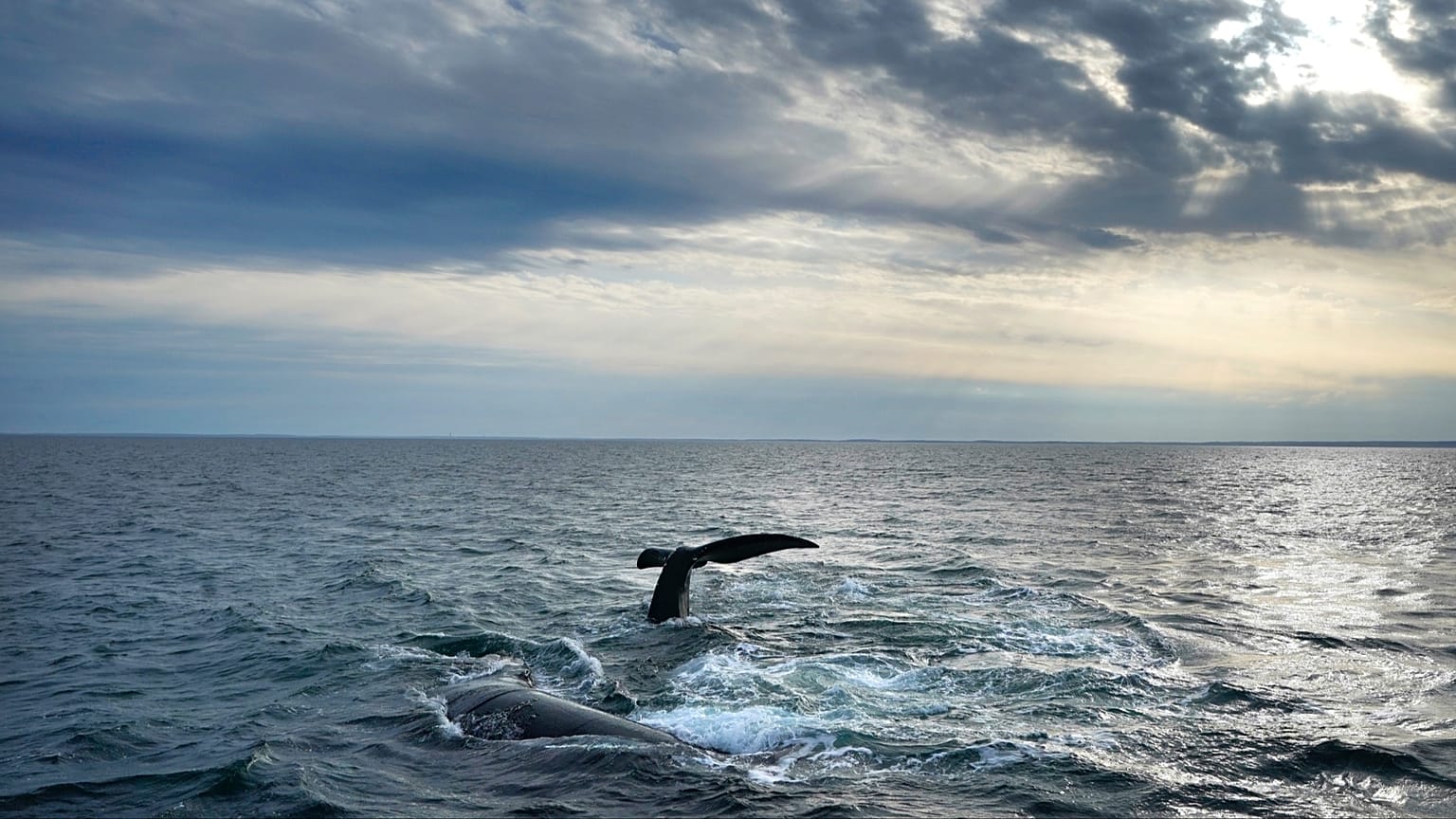
A pair of North Atlantic right whales interact at the surface of Cape Cod Bay, Monday, March 27, 2023, in Massachusetts.
Copyright Copyright 2023 The Associated Press. All rights reserved.

By Liam Gilliver
Published on 

The High Seas Treaty signals a “new era of global ocean governance”, but experts warn that it will not stop irreversible damage.

The highly anticipated High Seas Treaty has come into force today, marking a “historic milestone” for global ocean conservation.

Covering almost half of the planet’s surface, the High Seas lie beyond national borders and form part of the global commons. Until now, there was no legal framework dedicated to protecting biodiversity in these international waters and ensuring the benefits of their resources were shared fairly among nations.

However, following decades of negotiations, a Treaty text was finalised in March 2023, setting clear obligations on how to ensure ocean resources are used sustainably. To come into effect, 60 country ratifications (final approval and consent to be legally bound by a treaty) were required – a milestone that was achieved on 19 September last year.

While experts have praised the agreement as a “turning point” for multilateral cooperation and ocean governance, concern remains around potential loopholes.

What are the High Seas, and why are they so important?

The High Seas is often used to describe all areas beyond national jurisdiction, including the seafloor and water column (the vertical section of water from the surface to the bottom). This equates to international waters that cover more than two-thirds of our ocean - almost 50 per cent of the planet’s surface area.

Once considered barren and desolate, scientists now regard the High Seas as one of the largest reservoirs of biodiversity on Earth. It plays an important role in regulating the climate, supporting “crucial” carbon and water cycles.

In fact, it is estimated that the economic value of carbon stored by the High Seas ranges from $74 billion (around €63.62 billion) to $222 billion (€190.85 billion) per year.

However, human activity poses a growing problem for the High Seas. According to the High Seas Alliance (HSA), which advocated for the treaty, destructive fishing practices such as bottom trawling and illegal fishing are harming High-Seas marine life.

This, combined with plastic and chemical pollution, emerging activities such as seabed mining, and waters being acidified by rising temperatures, puts the High Seas under severe threat.

What will the High Seas Treaty do?

Now international law, the Treaty will empower nations to establish a connected network of High Seas marine protected areas (MPAs) - which can be adopted by a vote when consensus cannot be reached. This helps prevent a single nation from blocking MPAs being established.

It also supports developing countries through capacity building and the transfer of marine technology so that they are better empowered to develop, implement, monitor and manage future High Seas MPAs.

Several legal obligations apply from today. For example, any planned activity under a Party's control that could impact the High Seas or seabed must follow the Treaty’s environmental impact assessment process, and governments need to publicly notify such activities.

Parties must also promote the Treaty’s objectives when participating in other bodies such as those that govern shipping, fisheries and seabed mining.

“At this halfway point of this critical decade, one of the world’s most ambitious ocean initiatives is entering a new era of systemic change in ocean governance,” says Jason Knauf, CEO of The Earthshot Prize.

“This reflects a renewed commitment to our ocean, its wildlife, the millions of people that rely on its health, and the global goals set for 2030. The High Seas Treaty shows us that meaningful progress is achieved through vision, perseverance and leadership.”

Will our oceans be properly protected?

While the High Seas Treaty has been praised by governments, NGOs and environmentalists around the world, concern still surrounds how effective the agreement will be in protecting our oceans.

“Today is a day of celebration for biodiversity and multilateralism, but the job of protecting the ocean is far from complete,” says Sofia Tsenikli of the Deep Sea Conservation Coalition (DSCC)

“The High Seas Treaty raises the bar significantly, but on its own, won’t stop deep-sea mining from beginning in our ocean.”

Several countries that ratified the High Seas Treaty, such as Japan and Norway, have shown interest in digging up vast stretches of the seabed in the race for critical minerals used in green technology.

“Governments cannot credibly commit to protecting marine biodiversity while allowing an industry that would irreversibly destroy life and ecosystems that we barely understand to proceed," Tsenikli adds.

A recent deep-sea mining test found that the controversial practice impacts more than a third of seabed animals, while a report published in 2024 by the Environmental Justice Foundation found that deep-sea mining is not actually necessary for the clean energy transition.

It’s why the DSCC is calling on all members of the High Seas Treaty to use its momentum to establish a deep-sea mining moratorium at the International Seabed Authority.

Dr Enric Sala, founder of Pristine Seas, also warns that the Treaty cannot overlook the value of protecting ocean areas that belong to national governments, as this is where most fishing and other damaging human activities take place.

In a statement, he says the protection of national waters "cannot be put on the backburner”.

“New MPAs – whether they’re established in the High Seas or nearshore – will only be effective if they are strictly protected and fully monitored for illegal activity,” Dr Sala adds.

“This is the only way we can ensure that marine reserves deliver benefits to climate, biodiversity and economies.”


Stronger protection for marine life as


landmark law takes hold on high seas

For decades, vast stretches of ocean beyond national borders have been governed by patchwork rules and weak oversight. On Saturday, that changes. The High Seas Treaty enters into force, creating the first legally binding global framework to protect marine life in international waters that span nearly half the planet.


Issued on: 17/01/2026 - RFI


The High Seas Treaty sets new global rules for protecting marine life beyond national borders. © AP - Annika Hammerschlag

By:Amanda Morrow

Known as the Biodiversity Beyond National Jurisdiction (BBNJ) Agreement, the treaty gives countries a shared legal toolbox to conserve and manage the parts of the ocean that belong to nobody.

After almost 20 years of marathon negotiations, the United Nations adopted it in June 2023. In September, Morocco became the 60th country to ratify the treaty, triggering the countdown to it becoming law. More countries have joined since.

Conservation groups say its long-awaited rollout marks a shift from ambition to obligation.

Nations that have ratified the agreement must begin applying a set of legal duties to protect marine life – even as key institutions are still being built.


Once thought to be lifeless, the high seas are now known to host extraordinary biodiversity, from deep-sea corals to migratory species that travel vast distances across the ocean.

They also play a critical role in regulating Earth's climate. The ocean absorbs around 30 percent of carbon dioxide emissions and more than 80 percent of the excess heat they generate, helping to slow the pace of global warming.

But scientists warn that this vast ecosystem is under growing pressure from human activity – including fishing, pollution and climate change – that often happens far from public view.

An ocean beyond borders

The high seas are the open ocean and deep seabed beyond countries’ exclusive economic zones. They make up about two-thirds of the ocean and nearly half of Earth’s surface.

Despite this extraordinary scale, less than 1 percent of the high seas is currently protected.

One of the treaty’s most anticipated outcomes is the creation of marine protected areas, where human activities would be limited or banned to allow ecosystems to recover.

The treaty sets out a formal process for proposing and adopting these areas, including scientific review and consultation. While final decisions will be taken by the Conference of the Parties, or BBNJ Cop – due to be held within the treaty's first year – countries can already begin preparing proposals.

The High Seas Alliance, a coalition of conservation organisations, has identified several places that could form a first generation of protected areas. They include the Emperor Seamounts, a chain of underwater mountains in the Pacific; the Sargasso Sea, a biologically rich area of the Atlantic; and the Salas y Gomez and Nazca ridges, a vast seafloor region off South America.

“For the first time, the global community has a legal mechanism to protect the parts of the ocean that belong to no one state,” said Kevin Chand, director of Pacific ocean policy at Pristine Seas, an ocean conservation programme of the National Geographic Society.

Chand also pointed to the role of Pacific countries in pushing negotiations over the line, saying their “bold leadership” helped turn a vision into law.

New obligations

While some of the treaty’s bodies are still under construction, a range of obligations apply immediately. Countries that have ratified must promote the treaty’s conservation goals when they take part in decisions at other international ocean bodies – including fisheries, shipping and seabed authorities.

They must also begin cooperating on marine scientific research, technology transfer and capacity building, particularly with developing countries.

Planned activities under a country’s control that could harm marine life in international waters must now undergo environmental impact assessments that meet the treaty’s standards.

The agreement also introduces new reporting and transparency rules around marine genetic resources – genes from plants, animals and microbes that could be used in research or commercial products such as medicines.

Countries must start signalling the collection and use of these resources and sharing non-monetary benefits such as data and access to samples.

A global test of follow-through

Enric Sala, founder of Pristine Seas and a National Geographic explorer, warns that protection on paper will not be enough.

“New marine protected areas – whether they are established in the high seas or near shore – will only be effective if they are strictly protected and fully monitored for illegal activity,” he said.

“This is the only way we can ensure that marine reserves deliver benefits to climate, biodiversity and economies.”

The treaty does not automatically protect any part of the ocean – nor does it override existing bodies that regulate fishing, shipping or seabed mining. Instead, it relies on countries to align their decisions with the new conservation framework.

Supporters say this means that political will, funding and widespread participation will be critical. Only countries that ratify the treaty are legally bound by its rules, but wider uptake will be needed if it is to work as intended.

For now, Saturday marks the start of a new phase. After years of negotiation, scientists say the challenge now centres on cooperation and whether countries will actually use the tools they have given themselves.

China bids to host secretariat of new high seas treaty


By AFP
January 16, 2026

After years of delay, the treaty to protect the high seas was ratified in September with the approval of 60 countries - Copyright AFP/File Sameer Al-DOUMY

China on Friday proposed to host the secretariat of a new treaty governing the high seas, a surprise bid that underscores Beijing’s desire to have greater influence over global environmental governance.

China “has decided to present its candidature of the city of Xiamen to host the Secretariat” of the treaty, the Chinese mission to the United Nations wrote in a letter to Secretary-General Antonio Guterres, according to a copy seen by AFP.

The treaty will officially enter into force on Saturday, and the host country of the eventual secretariat will be decided later this year.

Until now, Belgium and Chile had been vying to host the future organization.

The Xiamen bid signals “China’s intention to help shape global rules,” said Li Shuo, director of the China Climate Hub at the Asia Society Policy Institute in Washington, calling it a “notable move.”

China’s announcement came just days after US President Donald Trump announced his country will withdraw from 66 global organizations and treaties — involving UN and non-UN entities.

They include the United Nations Framework Convention on Climate Change (UNFCCC), the parent treaty underpinning all major international climate agreements, ratified by almost every country in the world.

After years of delays, the treaty to protect the high seas was ratified in September by 60 countries. The law aims to protect biodiverse areas in waters worldwide, extending beyond countries’ exclusive economic zones.

Teeming with plant and animal life, the oceans are responsible for creating half of the globe’s oxygen supply and are vital to combatting climate change, conservationists say.

Once the treaty becomes law, a decision-making body will have to work with a patchwork of regional and global organizations already overseeing different aspects of the oceans.

These include regional fisheries bodies and the International Seabed Authority — the forum where nations are jousting over proposed rules on the environmentally destructive deep-sea mining industry.


Ambitious Model Fails To Explain Near-Death Experiences, Experts Say


By 


An ambitious effort to create a neurophysiological paradigm to explain near-death experiences has failed to capture many fascinating and often perplexing aspects of people’s brushes with death, top University of Virginia experts argue.

UVA near-death researchers Bruce Greyson, MD, and Marieta Pehlivanova, PhD, laud the international team of scientists who developed the model, called Neurophysiological Evolutionary Psychological Theory Understanding Near-Death Experience, or NEPTUNE. The NEPTUNE team aimed to bring scientific rigor to understanding near-death experiences (NDEs) – a goal shared by Greyson and Pehlivanova. But the UVA experts say the model, for all its sophistication, leaves far too many unanswered questions to be considered a satisfactory solution to the mysteries of NDEs.

“The NEPTUNE model was a pioneering attempt to explain NDEs, but it selectively ignored scientific evidence that contradicts the model and failed to address some of the most important and defining parts of NDEs,” said Greyson, part of the Division of Perceptual Studies at UVA’s School of Medicine. 

Understanding Near-Death Experiences

In their new paper, Greyson and Pehlivanova outline many facets of NDEs that the NEPTUNE model – and neurophysiology more broadly – still cannot explain. For example, the NEPTUNE researchers argue that near-death “hallucinations” could be caused by changes in blood brain gases, endorphins or other chemical or electrical activity in the brain. 

But Pehlivanova and Greyson note that neurological hallucinations typically only involve a single sense, such as hearing or sight. Those types of single-sense hallucinations do not align, the UVA researchers say, with the robust and often life-changing encounters near-death experiencers report having with loved ones or even with people they have never met. Experiencers can often recall what they saw, heard, smelled and touched while dead, and the encounters are often burned into their brains for decades – unlike hallucinations, which are quickly forgotten.


The NEPTUNE group also advanced a potential explanation for the out-of-body experiences near-death experiencers sometimes report. In these instances, experiencers feel disconnected from their physical forms and sometimes recall looking down on their own bodies. The NEPTUNE scientists pointed to two studies suggesting that this may be the result of the activation of a particular region in the brain, the temporoparietal junction (TPJ). But Greyson and Pehlivanova counter that the experiences reported in those two studies are “quite unlike” the out-of-body experiences described in NDEs. During TPJ activation, there is a sense of disembodiment, but visual perception remains normal – experiencers don’t see their own forms or feel like they can move about independent of their bodies as near-death experiencers do.

Further, the UVA researchers note that electrical stimulation studies have already tested the TPJ theory. Stimulating the brain region produced visual hallucinations, but study participants did not believe they had left their bodies, Greyson and Pehlivanova write: “There is no evidence that electrical brain stimulation has ever produced accurate perception of anything not visible to the physical eyes, or that persists when eyes are closed, or that is from an out-of-body perspective – all features observed in spontaneous OBEs.”

Seeking Answers About NDEs

While Pehlivanova and Greyson raise several additional concerns about the NEPTUNE model, they were eager to applaud its developers for their efforts. “Martial et al have done a monumental job summarizing the major arguments in this field, relying on both theoretical and empirical contributions from the NDE literature and broader major research,” they write. But they say a lack of empirical data and other flaws in the NEPTUNE model raise concerns that “temper our enthusiasm for the model and our confidence that it can provide a comprehensive explanation for NDEs.” 

In other words, neurophysiology still can’t explain near-death experiences, Pehlivanova and Greyson say. But they are eager for the conversation to continue.

“NDEs are typically triggered by physiological events, so it makes sense to explore those connections and look for cause-and-effect. But this effort is just at the beginning stage, and it is important to keep being open-minded as we continue the search,” Greyson said. “Understanding NDEs can unlock the door to larger questions about consciousness and the brain. We hope the quest to appreciate all aspects of NDEs will lead us not just to mapping the triggers of NDEs but also to their meaning and to a better understanding of the boundary between life and death.”

Billionaire Ivanishvili Turns Against Former Proteges In Georgia

January 17, 2026 
By Eurasianet


(Eurasianet) — The winter has turned particularly chilly for Georgia’s political elite. And for some who have long enjoyed the comfort provided by power and money, the chill has set in abruptly.

Evidence of a power struggle within the country’s dominant political force, Georgian Dream, can be seen in a January 12 plea deal that sent Irakli Garibashvili – once the favored successor of Bidzina Ivanishvili, Georgian Dream’s political impresario and billionaire bankroller – to prison for five years.

Garibashvili, who served as prime minister from 2013-15 and again from 2021-24, was formally charged on October 24 with large-scale financial impropriety. He ultimately arranged a deal under which he admitted guilt. In addition to jail time, he was ordered to pay a roughly $370,000 fine, along with the confiscation of allegedly illegally obtained assets. Without making a plea deal, he would have faced up to 12 years in prison.

Over the past year, Georgian Dream officials have tried to cast the party as an active force against corruption, opening investigations into former and even current high-ranking officials. Critics, however, argue that what looks on the surface like an anti-corruption drive is in fact an internal power struggle, a fight between competing factions for Ivanishvili’s favor.

The list of officials who have fallen out of favor continues to grow. Since last year, several figures who were not merely close to Georgian Dream but part of its core leadership have been arrested and charged. Among them are former Deputy Economy Minister Romeo Mikautadze, former Defense Minister Juansher Burchuladze, and former Prosecutor General Otar Partskhaladze, who has been charged with organizing a murder.

Just last month, the once considered untouchable former head of the State Security Service, Grigol Liluashvili, was arrested on bribery charges linked to several alleged schemes, including those connected to Georgia’s notorious scam call centers. Liluashvili faces up to 15 years in prison, if convicted.

According to the watchdog group Transparency International Georgia, the bevy of arrests do not amount to a genuine assault on grand corruption. Instead, the watchdog argues, they reflect selective justice rooted in factional infighting: the winners retain power, the losers end up behind bars.

“Those under investigation are mainly members of patronage networks, i.e. clans, associated either with the former head of the State Security Service, Grigol Liluashvili, or with former Prime Minister Irakli Garibashvili,” the organization said in a recent report. “Investigations have selectively targeted specific former high-ranking officials of the Georgian Dream. It remains unclear exactly why Bidzina Ivanishvili has turned against his former subordinates.”

Pressure is not limited to prosecutions. In late December, Prime Minister Kobakhidze publicly acknowledged soaring food prices, blaming large markups and excessive profits by businesses, and announcing an investigation. Critics argue the move is less about consumer protection and more about intimidating major distributors and tightening political control over big business.

At the same time, Georgia’s international standing is slipping into territory once considered unthinkable. The country is now among 75 states whose nationals face an indefinite suspension of US immigrant visa processing starting January 21, following a decisionannounced by the US Department of State.

In Brussels, the signals are no less stark. On December 19, the European Commission published its eighth report under the Visa Suspension Mechanism, the first official assessment since the ultimatum deadline set for Georgia to reverse its authoritarian course passed. The report offers a scathing assessment of Georgian Dream’s efforts to address EU concerns.

“Ultimately, Georgia could lose its visa-free status entirely,” the report warns, citing the government’s failure to make “any meaningful progress” on the EU Commission’s recommendations to promote basic freedoms and justice for all Georgians.

\
Eurasianet

Originally published at Eurasianet. Eurasianet is an independent news organization that covers news from and about the South Caucasus and Central Asia, providing on-the-ground reporting and critical perspectives on the most important developments in the region. A tax-exempt [501(c)3] organization, Eurasianet is based at Columbia University’s Harriman Institute, one of the leading centers in North America of scholarship on Eurasia. Read more at eurasianet.org.


Scientists solve mystery of little red dots seen by James Webb Space Telescope

A team of astronomers sifted through James Webb Space Telescope data from multiple surveys to compile one of the largest samples of “little red dots” (LRDs) to date.
Copyright NASA, ESA, CSA, STScI, Dale Kocevski (Colby College)

By Roselyne Min
Published on 

Using Webb’s advanced instruments, scientists discovered that the little red dots are young black holes wrapped in gas.

Astronomers say they have finally figured out the mysterious “little red dots,” first spotted in 2022 in images from NASA’s James Webb Space Telescope.

The objects puzzled researchers because their unusual light made it unclear what was powering them.

Early studies suggest the little red dots are extremely compact, distant galaxies and they were seen at very early times in the universe’s history, which become much rarer as the universe evolves.

The new analysis suggests the red dots are actually young supermassive black holes, a type of gigantic black hole, wrapped in gas.

Using James Webb’s advanced instruments, scientists examined how light from the galaxies is spread across different colours.

They found signs that the light is being scattered by dense, ionised gas, a process that can occur only very close to a black hole that is actively pulling in material.

As gas falls towards the black hole, it heats up and shines through the surrounding cocoon of gas, producing the red glow seen by the Webb Telescope.

The black holes are buried in dense material and therefore emit very little X-ray or radio radiation. This helps explain why they have only been seen by the Webb telescope.

The new study suggests the black holes have masses between about 100,000 and 10 million times that of the Sun.

While still enormous, they are far smaller than scientists previously thought and are the lowest-mass black holes known at such early times in the universe.

The study was published in the journal Nature.