Saturday, January 17, 2026

Why The Taliban Wants To Talk With The US – Analysis

By 


Before Afghanistan in 2021, America was last defeated by a national liberation movement in Vietnam in 1975. After the fall of Saigon, the domino theory” assured Americans that Asia would quickly fall to Communism. That didn’t happen, and the ensuing violence (Vietnam’s 1979 invasion of Cambodia and China’s attack on Vietnam) didn’t affect American security. But Eurasia in 2026 is another situation entirely. While Washington waited 19 years to establish diplomatic relations with the Socialist Republic of Vietnam, it shouldn’t delay diplomatic recognition of the new regime in Afghanistan. 

There is a lot going on: Nuclear-armed India and Pakistan fought a short war in May 2025; relations between Pakistan and Afghanistan are tense over the activities of the Tehrik-e-Taliban Pakistan (Pakistani Taliban) and the Baluchistan Liberation Army; Iran has been accused of developing nuclear weapons and was recently attacked by Israel and America; the region is host to several nascent connectivity networks, and may possess abundant rare earth elements; the Central Asian republics’ economies are rapidly growing; and, everyone depends on Afghanistan for water.

Recent US-Afghanistan history is a history of misunderstandings that caused both sides to commit strategic blunders. 

After the 9/11 attacks, the Taliban erred by not rendering Osama bin Laden to the United States and then proposing that he be tried by a court in an Islamic country. The United States subsequently attacked and occupied the country for 20 years.

After the US attack and rout of the Taliban forces, Taliban leaders attempted to surrender several times, but Washington, intoxicated by a brew of post-Cold War triumphalism and post-9/11 grievance, wanted to make an example of them. America was still the “indispensable nation,” and its neoconservative curators were anxious to operationalize their sacred text, the Fiscal Year 1992 Defense Planning Guidance


The Americans failed to understand that the Taliban were Afghan nationalists inspired by Islam instead of transnational Islamists like Al Qaeda or the Islamic State. This misunderstanding was the root of the argument that Afghanistan would become a center of terrorism against the West; however, in 2024, a CIA official reported, “The dire predictions have not come to pass.” 

In the 1990s, the only major infrastructure project in the region was the UNOCAL natural gas pipelinefrom Turkmenistan to Pakistan via Afghanistan. The project collapsed as Afghanistan’s civil war made construction impossible and the Taliban’s international isolation made financing difficult. After the 1998 US embassy bombings, UNOCAL withdrew entirely as the US government claimed Usama bin Laden, who was believed to be in Afghanistan, was behind the bombings.

But in 2026, Afghanistan will be a key part of most of the regional connectivity projects. 

There is the TransAfghan Multimodal Transport Corridor, which aims to create a “southern corridor” linking Central Asia to the Arabian Sea, ultimately connecting to Jebel Ali Port in the United Arab Emirates (UAE); the Termez-Mazar-i-Sharif-Kabul-Peshawar Railway (Kabul Corridor). Uzbekistan is leading the push to revive this long-planned corridor, which would provide Central Asia with direct access to Pakistan’s seaports; and the Turkmenistan-Afghanistan–Pakistan Railway (Western Corridor), a parallel route to the Kabul Corridor, as Turkmenistan aims for more direct access to Pakistan’s ports, and Kazakhstan wants to diversify its southern transit options. 

The Iran-Afghanistan-China Strategic Railway Link is a strategic railway linking Iran to China through Afghanistan, and avoids maritime chokepoints between China and West Asia. It was added to Iran’s working agenda in 2025.

Then there is road network expansion in Afghanistan as the government aggressively pursues road upgrades to complement rail corridors and improve internal logistics. And in December 2025, Afghanistan’s Ministry of Finance announced a memorandum of understanding with DP World of the UAE to study potential investment in Afghan port infrastructure. If an agreement is finalized, DP World could help modernize ports such as Hairatan, bordering Uzbekistan, and Torkham, bordering Pakistan. 

According to the China Belt and Road Initiative (BRI) Investment Report 2025 H1, the first half of 2025 saw the highest engagement for any six-month period ever, with $66.2 billion in construction contracts and $57.1 billion in investments (greater than BRI engagement in all of 2024, which was $122 billion) BRI’s total engagement since the program’s start in 2013 now totals $1.3 trillion.

Of that spending, $39 billion went to Africa, and $25 billion went to Central Asia. That’s impressive on a per capita basis, as Africa’s population is about 1.5 billion and Central Asia’s is about 84 million.

At the September 2025 summit of the Shanghai Cooperation Group in Tianjin, China, Chinese president Xi Jinping met one-on-one with all the leaders of the republics. In the official picture of the meeting attendees, the five republics’ presidents are standing in the front row, a clear signal of China’s intent.

China looks to be in the driver’s seat, but in June 2025, the Taliban shocked Beijing by cancelling the 25-year contract to develop oil fields in the Amu Darya River basin; China had pledged to invest $540 million in the first three years. Each side blamed the other, and Afghanistan has no formal process to resolve disputes, so a resolution may not be imminent. 

In December 2025, Amir Khan Muttaqi, Afghanistan’s foreign minister, told former US ambassador to Kabul Zalmay Khalilzad that US-Afghanistan relations are in a “new phase” and that bilateral relations can be developed through sustained dialogue. Any salesman would recognize that as a “buy signal.” 

In July 2025, Russia became the first country to recognize the Taliban government. But will this delay more American engagement with Afghanistan if President Donald Trump resists being a follower of Russia’s move?

Improved roads in faraway places don’t excite Americans much, but Americans held hostage to unfriendly governments do. In March 2025, The Wall Street Journal reported there were seven Americans“wrongfully detained” in Afghanistan. Five Americans were released in 2025, and the Taliban likely hoped for a positive response from Washington, but nothing happened. 

If President Donald Trump just pockets the winnings, that will weaken the Taliban, who want better ties with Washington; they will be less likely to accommodate the next American initiative, as the penalty may be more severe than premature retirement followed by a think tank sinecure. 

Trump would prefer to get the remaining detainees immediately, but an opportunity may come when he visits Central Asia (he has been invited several times to Uzbekistan and Kazakhstan). Tashkent has long dealt with the Taliban and can facilitate the release, but it won’t want to midwife an unfair deal with Kabul, its “forever neighbor.” And Uzbekistan has yet to work out a water-sharing agreement with Kabul over the waters of the Amu Darya, the most critical file for Tashkent.

President Bill Clinton was criticized for restarting ties with Vietnam, and Trump can expect the same for outreach to Afghanistan. In any case, hyperventilating about the Taliban hosting Al Qaeda looks unserious since an Al Qaeda alumnus (Syrian president Ahmed al-Shara) visited the Oval Office and was spritzed with cologne. 

The Taliban beat America fair and square. Now, if Trump really wants to advance US engagement in Central Asia, which includes Afghanistan, he must move beyond low-hanging fruit, like inviting Uzbekistan and Kazakhstan to the next G20 meeting, and take decisive action. Clinton weathered the storm, so will Trump.


James Durso

James Durso (@james_durso) is a regular commentator on foreign policy and national security matters. Mr. Durso served in the U.S. Navy for 20 years and has worked in Kuwait, Saudi Arabia, Iraq, and Central Asia.
CANADA IN A MULTIPOLAR WORLD

Trump's erratic trade policies are pushing US partners towards China


Key US trade partners are responding to President Donald Trump’s often belligerent and unpredictable policies by looking to take their business elsewhere. Canada's decision on Friday to cut tariffs on Chinese electric vehicles is the latest example of how Trump's erratic trade policies are pushing allies into the arms of America's greatest economic rival.


Issued on: 17/01/2026 
By: FRANCE 24
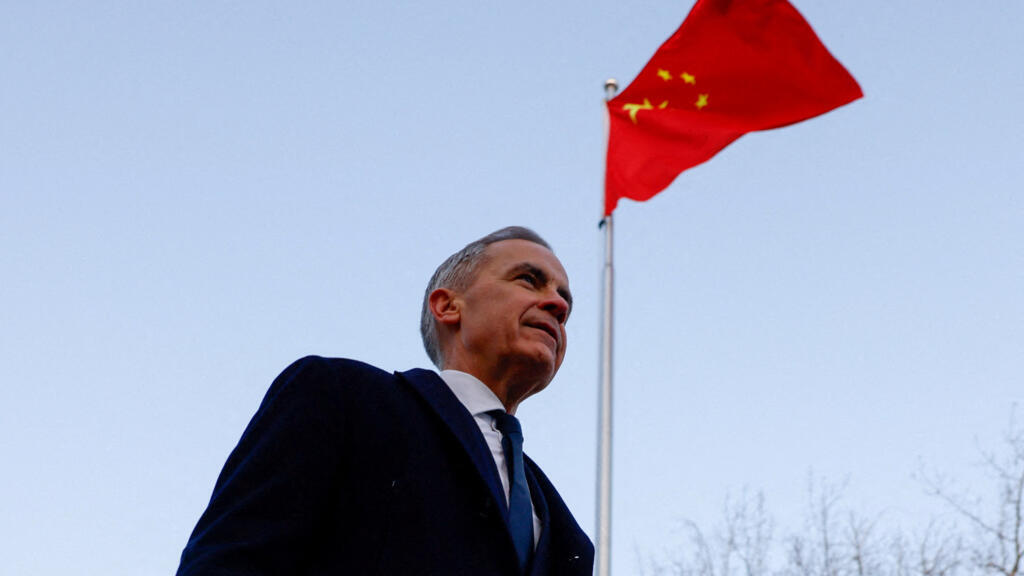
Canada's Prime Minister Mark Carney walks at Ritan Park, during the first visit by a Canadian prime minister to China since 2017, in Beijing, China, January 16, 2026. 
© Carlos Osorio, Reuters

Since returning to the White House in January, Trump has overturned seven decades of US policy supporting ever-freer trade. He has imposed double-digit taxes on imports from almost every country on Earth as well as singling out specific industries, such as steel and autos, for levies of their own.

Critics warn raising tariffs to levels not seen since the Great Depression risks fuelling inflation and undermining US industries.

Canada broke with the United States on Friday by slashing its 100 percent import tax on Chinese electric vehicles in return for lower tariffs on Canadian farm products, particularly canola seeds.

“It’s a huge declaration of realignment in Canada’s economic relations,” said Edward Alden, who studies trade issues as senior fellow at the Council on Foreign Relations.


“The economic threat from the United States is now perceived by Canadians as far bigger than the economic threat from China. So this is a big deal.’’

Canada has repeatedly been the target of Trump’s wrath. In October, for instance, he said he was imposing a 10 percent tariff on Canadian imports as a reprisal for Ontario’s provincial government airing an advertisement that criticised the president’s go-to diplomatic tariff tool. He didn’t follow through on the increase, but tariffs on on some key Canadian sectors like steel and aluminium remain.

The deal with China is a potentially perilous one for Canada’s prime minister, Mark Carney, who risks retribution from Trump ahead of negotiations over the renewal of the US-Mexico-Canada Agreement, which is crucial to Canadian businesses.

But Canada is not alone in looking for alternatives to America’s massive market as Trump slaps huge tariffs on imports in an attempt to strong-arm other countries into moving production to the United States.


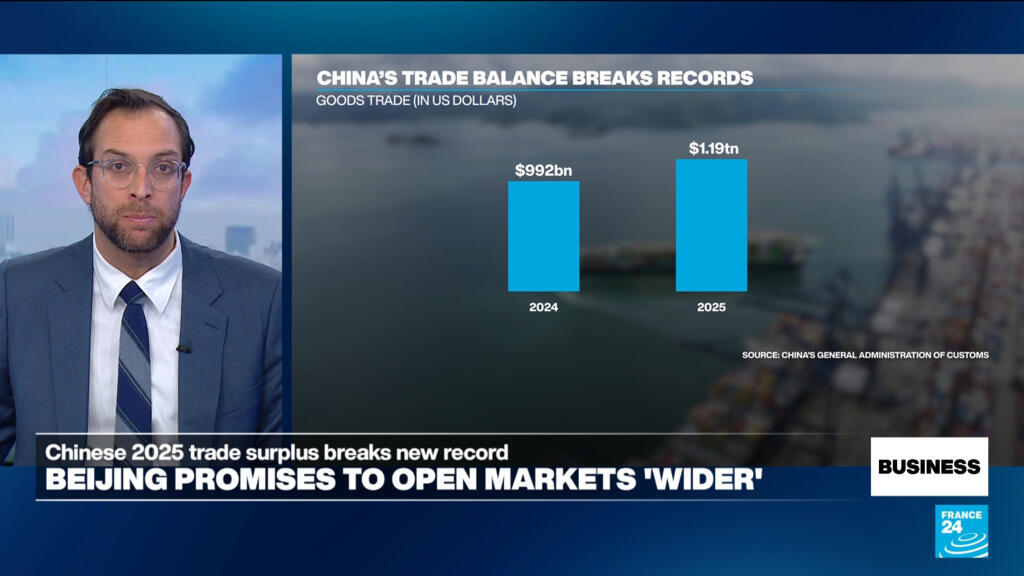
China sees record $1.19 trillion trade surplus in 2025 in spite of US tariffs
BUSINESS © FRANCE 24
05:43


China's record surplus


The European Union is expected to formally sign a trade pact Saturday with the South American alliance known as Mercosur, which includes the region’s two biggest economies, Brazil and Argentina. The EU is also pursuing a trade deal with India.

China, pounded by US tariffs since Trump’s first term, has also diversified its exports away from the world’s biggest economy to markets such as Europe and Southeast Asia.

It seems to be working. China’s trade surplus with the rest of the world surged to a record $1.2 trillion in 2025, the Chinese government reported Wednesday, despite tumbling exports to the US.

Trump says tariffs will raise money for the US Treasury, protect American industries and bring investment into the United States. On Thursday, Taiwan agreed to invest $250 billion in the United States in return for Trump reducing the tariff on its products to 15 percent from 20 percent.

But the US president’s use of tariffs has often been arbitrary and unpredictable.

He targeted Brazil, for instance, for prosecuting his ally, former Brazilian president Jair Bolsonaro. On Friday, he again threatened to slap tariffs on countries that don’t support his efforts to wrest control of Greenland from Denmark.
Carney's gamble

Friday’s deal in Beijing marks a turnabout in Canadian policy.

In 2024, Canada had followed the US lead by imposing 100 percent tariffs on EVs from China, reflecting fears that inexpensive Chinese cars would overwhelm domestic North American automakers.

But the deal with China delivers benefits to Canada.

First, its canola farmers need export markets, and this pact lowers China’s tariff on canola from 84 percent to 15 percent. Canola farmers are hailing Canada’s new trade deal with China as great news that could restore exports for the major crop.

Second, the Trump administration, favouring fossil fuels over green energy, “is actively hostile to EV production in North America’’, said economist Mary Lovely, senior fellow at the Peterson Institute for International Economics.

America’s opposition “threatens to make the North American [auto] industry obsolete in the future, as China moves ahead with rapid quality improvements in batteries and electronics for EVs", she said.

“China’s strengths in electric vehicle sector are undeniable,” Carney said Friday. “China produces some of the most affordable and efficient energy-efficient vehicles in the world. And in order for Canada to build our own competitive EV sector, we need to learn from innovative partners, access their supply chains, and increase local demand.’’

READ MOREGlobal growth to slow in 2026 as tariffs and geopolitical tensions rise, UN says

But Carney’s economic rapprochement with Beijing amounts to a gamble.

“This was an extraordinarily difficult thing for Carney to do,’’ Alden said. “Relations between Canada and China have been extremely fraught.’’

In 2018, China detained two Canadians in retaliation for Canada arresting an executive of the Chinese tech firm Huawei at the request of the United States. All three were released in a 2021 swap. Canada also launched an investigation three years ago into whether the Chinese interfered in Canadian elections in 2019 and 2021.

The deal has drawn criticism already for exposing Canadian autoworkers to competition from low-price Chinese EVs. Ontario Premier Doug Ford, leading the province that is the centre of Canadian auto production, blasted the deal.

“Make no mistake: China now has a foothold in the Canadian market and will use it to their full advantage at the expense of Canadian workers,” Ford posted on social media. “Worse, by lowering tariffs on Chinese electric vehicles this lopsided deal risks closing the door on Canadian automakers to the American market, our largest export destination.”

In response to the criticism, Carney noted that the deal is limited. China can only export 49,000 EVs to Canada at the reduced 6.1 percent tariff rate, rising to about 70,000 in five years.

Other options


But the biggest risk to Canada comes from its prickly southern neighbour.

The US-Mexico-Canada Agreement (USMCA) – a regional trade pact that allows many goods to cross North American borders duty free – comes up for renewal this year. Trump is almost sure to demand changes meant to shift manufacturing to the United States and might threaten to pull out of the deal altogether, especially if he is inclined to punish Carney for reversing his policy with China.

That’s a scary thought for Canada, which sends 75 percent of its goods exports to the United States.

The Canada-China deal Friday “will make the talks more complicated", said William Reinsch, a former US trade official now with the Center for Strategic and International Studies.

"Trump will not be pleased with the Canadian action, will probably take some retaliatory measure, probably against the Canadian auto industry, and will certainly make it an issue in the USMCA talks.’’

On Friday anyway, Trump commended Carney: “If you can get a deal with China, you should do that.″ And Carney noted that the China deal is preliminary, potentially giving him flexibility to seek changes if necessary to head off a conflict with the US.

He also might be counting on getting a little help from US businesses.

American automakers depend on a network of plants across the US, Canada and Mexico and will fight hard to defend the USMCA. American farmers also rely on the pact for access to the Mexican and Canadian markets. And US tech companies like the way it liberalised digital trade in North America.

For now, Lovely said, Carney’s deal with China, sends “a big signal that Canada is looking to other partners and has options that would allow it to walk away from the USMCA before it makes humiliating compromises to serve only American interests".

(FRANCE 24 with AP)


Power, Oil, And ‘End Of The Beginning’: Geopolitics Of State Interest, US Strongman Rule, And Venezuela In Limbo – Analysis

By Jumel Gabilan Estrañero


The political and diplomatic dynamics between the United States of America and the Bolivarian Republic of Venezuela has been strained during the 21st century. But as early as 1stto 4th Quarter of 2025, the United States (US) was rapidly expanding its military presence in the Caribbean, signaling a likely shift from maritime operations to targeted land strikes in Venezuela which busted out as early as 2026. Initially, failed negotiations with President Nicolas Maduro and increasingly aggressive rhetorical acceleration from US from last year’s trajectory.

Heightened U.S. military activity, stalled diplomacy, and consistently confrontational statements combined with wider strategic, political, and economic interests suggest that US has been planning to expand its operations from the Caribbean into strikes on Venezuelan soil not only this 2026 but in the near future.

Since October, the United States has bolstered its regional military footprint, most notably with the deployment of the USS Gerald R. Ford the largest aircraft carrier in the world to the Caribbean on Nov. 16. While interestingly, U.S. actions that were once limited to maritime operations were poised to expand onto Venezuelan soil.

At the same time, U.S. forces have continued targeting vessels they claim are involved in drug trafficking across the Caribbean and eastern Pacific, carrying out 23 strikes that have reportedly killed 87 people. During the first operation on Sept. 2, U.S. forces launched a secondary strike that may have killed surviving crew members. These actions have generated domestic backlash, triggered congressional investigations and raising serious concerns that U.S. forces may have committed war crimes. To give a context, here are the major highlights of unprecedented event in as far as growing tensions and military pressures are concerned:

January 10, 2025 — Maduro Inaugurated. Nicolás Maduro begins controversial third presidential term amid criticism of electoral legitimacy.

Mid-2025 — Expanded U.S. Military Posture. The United States significantly increases its naval and aerial presence in the Caribbean, launching Operation Southern Spearaimed at countering drug trafficking. U.S. forces conduct repeated lethal strikes on maritime vessels alleged to be involved in narco-trafficking, many linked (by U.S. claims) to Venezuelan networks.

December 10, 2025 — Oil Blockade and Tanker Seizures Begin. The U.S. marine and Coast Guard units intercept and seize oil tankers transporting Venezuelan crude in Caribbean waters as part of an oil blockade tied to sanctions enforcement.

Late December 2025 — Shift Toward Land Targets. The U.S. authorizes its first reported land-based strike on Venezuelan soil, targeting drug flows. This marks a clear escalation beyond maritime interdiction. Remarkably, President Donald Trump publicly states the U.S. will “run Venezuela” until a “safe, proper transition” occurs, implying de facto control over governance and resources
January 2026: Major Escalation and Regime Decapitation

January 3, 2026 — Operation Absolute Resolve. U.S. forces launch a large-scale military operation in Venezuela, striking multiple military sites and extracting Venezuelan President Nicolás Maduro and his wife from Miraflores Palace to New York. The operation, involving U.S. Army Special Forces, air assets, and naval support, results in dozens of fatalities, including Cuban military personnel according to Cuban authorities.
Post-Intervention Developments

Early January 2026 — Regional and Global Reaction. Latin American leaders and international organizations condemn the strike as a breach of sovereignty and international law. Some U.S. allies caution against setting dangerous precedents, while others praise the removal of Maduro.

January 10–15, 2026 — Evacuation and Security Warnings. The U.S. issues travel advisories urging citizens to flee Venezuela amid reports of armed militias (colectivos) searching for Americans.

Mid-January 2026 — Continued Seizures and Political Shifts. The U.S. seizes additional sanctioned oil tankers in the Caribbean, reinforcing the strategic emphasis on controlling Venezuelan energy flows. Venezuela’s acting president, Delcy Rodríguez, signals willingness to open the oil sector to foreign investment and pursue diplomatic engagement while condemning Maduro’s detention.

Last semester in my International Political Economy class, I discussed and forecasted that United States is highly likely to escalate military activity from strikes at sea to direct attacks on Venezuelan territory within weeks of December 2025. This is another key topic apart from the current Thailand-Cambodia fallout that has also started in most recent year. Some key manifestations in US-Valenzuela conflict have seen are as follows (as mentioned above): U.S. military presence in the Caribbean especially with the USS Gerald R. Fordcarrier strike group has grown significantly. US has been conducting repeated attacks on vessels allegedly involved in drug trafficking, which have resulted in dozens of deaths and controversy inside and outside the U.S. military and political establishment. Also, there are negotiations between the U.S. and Venezuelan governments failed to de-escalate tensions, while public rhetoric from both sides remains hostile.

Against this backdrop, these military, political, and geostrategic pressures set the conditions for a U.S. decision to strike land targets in Venezuela recently; ostensibly justified as counternarcotics actions but with broader implications.

Now, what are the other things happening right now. The U.S. Military operations have already escalated since December; that carried out repeated strikes on vessels it labels as involved in drug trafficking near Venezuela, as part of Operation Southern Spear a larger military campaign in the Caribbean. Moreover, there are now multiple oil tanker seizures and an imposed blockade on sanctioned Venezuelan oil shipments, reflecting an effort to choke Venezuela’s revenue and influence.

In the meantime, there are already Airspace and Naval Build-Ups. In fact, the U.S. has declared Venezuelan airspace “closed” and positioned a significant naval force offshore, raising the stakes and risk of miscalculation. And apparently, a direct strike has already occurred. Reporting indicates that the U.S. executed an operation that captured Venezuelan President Nicolás Maduro on Jan. 3, 2026, involving extensive military engagement around Caracas. Separate DOJ Memorandums describe U.S. forces planning and anticipating resistance from Venezuelan air defenses during the strike.

There are domestic and international political dynamics occurred too. The U.S. public shows substantial support for intervention, especially when framed in terms of counternarcotics or energy geopolitics. Russia, China, and many Latin American governments strongly condemn U.S. actions as violations of international law and sovereignty.

Some Dynamics and Strategic Analysis

Relative to the counternarcotic narrative, the U.S. frames its operations as targeting drug trafficking networks linked to Venezuela. This narrative aims to build domestic support and provide a legalistic justification for military action. It followed by a regime change pressure. Beyond counternarcotics, U.S. actions suggest an ambition to weaken or remove Nicolás Maduro’s government, a longstanding adversary. This has moved from sanctions and maritime pressure to kinetic operations and, as of January 2026, capture of Maduro. And nonetheless, in terms of energy and economic leverage, Venezuela’s oil reserves are among the largest globally. Control over Venezuelan energy assets could shift global energy markets and reduce U.S. dependency on Middle Eastern supplies, a point raised by some analysts and polling.

There will always be consequences of this geopolitical ramification. Risk-wise, as per regional instability, Venezuelan forces and allied militias may resist fiercely, leading to prolonged conflict. Likewise, civilian harm will escalate even in maritime and ground engagements risk casualties and displacement. And we can see various diplomatic backlash where many governments see such actions as breaches of the U.N. Charter and sovereignty norms.

In longer terms, sustained operations could resemble guerrilla conflicts, similar to Vietnam or Iraq in complexity as military entanglements heighten up. U.S.–Russia/China rivalries could deepen, as both support opposing Venezuelan factions, unfolding a more geopolitical polarization in the region down to domestic political condition. Control over Venezuela’s oil sector will shape both domestic capacities and global market dynamics. Popular sentiment and elite divisions will determine whether the interim government consolidates authority or faces increasing resistance[1]. Russia, China, and regional blocs (CARICOM, MERCOSUR) will compete to define post-Maduro governance norms. Equally, an international legal challenge is brewing as hot military actions without broad international authorization risk labeling the U.S. as a violator of international law as President Trump sets a devastating precedent in Venezuela.

It matters not only in Latin America and nearby American states but across the region. This international crisis is not only an escalation into Venezuelan territorial dispute, but it marks a major shift in U.S. hemispheric strategy, aimed at weakening Maduro and shaping long-term political change. Indeed, such serious and stratified strikes would carry significant geopolitical, economic, and legal consequences but we hope to attract foreign investment (especially in oil) and hoping to flow and stabilize the economy. As way ahead, we can expect more regional tensions ease modestly, though many neighboring countries will push for multilateral oversight beyond this critical crisis overture.

*Ideas and/or views expressed here are entirely independent and not in any form represent author’s organization and affiliation.

Footnote:

[1] The interim Venezuelan government, backed by U.S. influence, initiates political reforms and prepares for new elections under external supervision. Meanwhile, we can expect armed resistance from pro-Maduro factions or foreign volunteer brigades fuel ongoing conflict since infrastructure damage and economic stagnation complicate reconstruction and erode public trust. Interestingly, external actors exploit unrest to push geopolitical agendas.


Jumel Gabilan Estrañero

Jumel Gabilan Estrañero is a defense, security, & political analyst and a university lecturer in the Philippines. He has completed the Executive Course in National Security at the National Defense College of the Philippines and has participated in NADI Track II discussions in Singapore (an ASEAN-led security forum on terrorism). His articles have appeared in Global Security Review, Geopolitical Monitor, Global Village Space, Philippine Daily Inquirer, Philippine Star, Manila Times, Malaya Business Insights, Asia Maritime Review, The Nation (Thailand), Southeast Asian Times, and Global Politics and Social Science Research Network. He worked in the Armed Forces of the Philippines, Office of Civil Defense, National Security Council-Office of the President, and currently in the Department of the National Defense. He is currently teaching lectures in De La Salle University Philippines while in the government and formerly taught at Lyceum of the Philippines as part-time lecturer. He is the co-author of the books titled: Disruptive Innovations, Transnational Organized Crime and Terrorism: A Philippine Terrorism Handbook, and Global Security Studies Journal (Springer Link, United States). He is an alumnus of ASEAN Law Academy Advanced Program in Center for International Law, National University Singapore and Geneva Centre for Security Policy, Switzerland. He is also a Juris Doctor student.

Venezuela: Overview Of US Sanctions Policy – Analysis


January 17, 2026 
By Clare Ribando Seelke
Congressional Research Service (CRS).

Since 2005, the United States has imposed targeted sanctions on Venezuelan individuals and entities that have engaged in criminal, antidemocratic, or corrupt actions. U.S. sanctions have been imposed via both executive and congressional action. Under President Nicolás Maduro (2013-2026), the first Trump Administration expanded U.S. sanctions. The Biden Administration offered limited sanctions relief to try to incentivize Maduro to convene a free and fair presidential election. Maduro claimed victory in the 2024 election even after results indicated he lost. In January 2025, Maduro took office for a third term after a period of postelection repression.

The Trump Administration has designated Venezuela-linked criminal groups as terrorist organizations. The U.S. Department of the Treasury has increased sanctions on individuals, firms, and tankers tied to Venezuela’s oil trade. In December 2025, U.S. seizures of sanctioned oil tankers began. On January 3, 2026, U.S. forces capturedMaduro and his wife and transported them to New York to face narco-terrorism charges. President Trump said that Delcy Rodríguez, Maduro’s vice president and oil minister, is willing to work with the United States as acting president. U.S. officials have said they intend to pressure the acting government to, among other aims, allow the United States to direct oil sales and proceeds, thereby limiting the role of U.S. adversaries in the sector.
Sanctions In Force

The United States has imposed individual, financial, and sectoral sanctions on the Venezuelan government, as well as sanctions on the former Maduro government and its supporters. This product does not discuss foreign aid and financing restrictions.
Visa Restrictions

The State Department has privately revoked the visas of thousands of Venezuelans, including current and former officials. It has publicly imposed visa restrictions on 14 Venezuelan officials for corruption or human rights abuses pursuant to Section 7031(c) of annual Department of State, Foreign Operations, and Related Programs appropriations measures.


Drug-Trafficking-Related Sanctions

The U.S. Department of the Treasury’s Office of Foreign Assets Control (OFAC) has imposed asset-blocking sanctions on 11 individuals and 27 entities with connections to Venezuela by denoting them as Specially Designated Narcotics Traffickers pursuant to the Foreign Narcotics Kingpin Designation Act (P.L. 106-120, Title VIII, as amended; 21 U.S.C. §§1901 et seq.). In December 2025, OFAC imposed sanctions on two additional individuals under Executive Order (E.O.) 14059.
Terrorism-Related Sanctions

Since 2006, the Secretary of State has made an annual determination (most recently in May 2025) that Venezuela is not “cooperating fully with United States anti-terrorism efforts” pursuant to Section 40A of the Arms Export Control Act (22 U.S.C. §2781). The United States has prohibited all U.S. commercial arms sales and retransfers to Venezuela. In 2008, pursuant to E.O. 13224, OFAC classified two individuals and two travel agencies in Venezuela as Specially Designated Nationals (SDNs) subject to asset-blocking sanctions for financially supporting Hezbollah, a U.S.-designated Foreign Terrorist Organization (FTO).

In February 2025, Secretary of State Marco Rubio designated Tren de Aragua (TDA)—a Venezuela-origin gang—as an FTO consistent with E.O. 14157. This designation enables new sanctions, law enforcement, and immigration actions against TDA and its members. President Trump invoked the Alien Enemies Act to enable the removal of alleged TDA members to El Salvador; that invocation remains subject to legal challenges. In June and July, OFAC sanctioned TDA leaders, and in December, OFAC sanctioned a network of individuals and entities for providing material support to TDA.

In July 2025, OFAC designated the Cartel de los Soles (Cartel of the Suns) as a Specially Designated Global Terrorist. In November, Secretary of State Rubio designated the group an FTO. Since September, the U.S. military has carried out lethal strikes on drug vessels at sea, some purportedly tied to TDA or the Cartel of the Suns.
Export Controls and Non-Proliferation

U.S. Department of Commerce export controls related to Venezuela affect dual-use technology, including expanded restrictions since 2020 on sales to military or military-intelligence end users.

Targeted Sanctions Related to Antidemocratic Actions, Human Rights Violations, and Corruption

In response to Maduro’s repression, Congress enacted the Venezuela Defense of Human Rights and Civil Society Act of 2014 (P.L. 113-27850 U.S.C. §1701 note). Among its provisions, the law required the President to impose sanctions on people the President identified as responsible for significant acts of violence, serious human rights abuses, or antidemocratic actions. Congress extended these sanctions through 2023 in P.L. 116-94. President Obama issued E.O. 13692 to implement P.L. 113-278 in March 2015, and Treasury issued regulations in July 2015 (31 C.F.R. Part 591). The E.O. targets (for asset blocking and visa restrictions) people involved in actions or policies undermining democratic processes or institutions; serious human rights abuses; actions that prohibit, limit, or penalize freedom of expression or assembly; and public corruption. It includes any person who is a current or former leader of any entity engaged in any of those activities, as well as current or former government officials. To date, OFAC has imposed sanctions on 160 Venezuelans and eight entities pursuant to E.O. 13692, including Acting President Delcy Rodríguez, Defense Minister Vladimir Padrino López, and Interior Minister Diosdado Cabello.


Additional Sanctions

In 2017, President Trump imposed financial sanctions on Venezuela in response to the government’s human rights abuses and antidemocratic actions. In August 2017, President Trump issued E.O. 13808, which largely prohibited access to U.S. financial markets by the Venezuelan government, including state energy company Petróleos de Venezuela, S.A. (PdVSA). In March 2018, President Trump issued E.O. 13827 to prohibit transactions involving the Venezuelan government’s issuance of digital currency, coin, or token. In May 2018, President Trump issued E.O. 13835, which prohibited transactions related to purchasing Venezuelan debt and any debt owed to Venezuela pledged as collateral. OFAC has since issued time-limited licenses preventing the forced sale of CITGO, a U.S. subsidiary of PdVSA, to creditors. In December 2025, OFAC sanctioned an entity and its owner for purchasing drones from Iran pursuant to E.O. 13949 (Iran sanctions).


Broader Sectoral Sanctions

In November 2018, President Trump issued E.O. 13850. This E.O. set forth a framework to block the assets of, and prohibit certain transactions with, any person determined by the Secretary of the Treasury to operate in designated sectors of the Venezuelan economy or to engage in corrupt transactions with the Maduro government. In January 2019, pursuant to E.O. 13850, OFAC designated PdVSA as operating in the oil sector of the Venezuelan economy, and the Secretary of the Treasury determined that the company was subject to U.S. sanctions. The E.O. froze all property and interests in property of PdVSA subject to U.S. jurisdiction and prohibited U.S. persons from engaging in transactions with the company. OFAC also sanctioned Venezuela’s Central Bank, National Development Bank, and state-owned gold company, Minerven. To date, OFAC has imposed sanctions pursuant to E.O. 13850 on 27 individuals, 95 entities, and 57 vessels. Since mid-December, the United States has seized six vessels transporting Venezuelan oil. Secretary Rubio has repeatedly asserted that such seizures will continue.

Sanctions on the Maduro Government

In August 2019, President Trump issued E.O. 13884, freezing the assets of the Maduro government in the United States. The order prohibited U.S. persons from engaging in transactions with the Maduro government unless authorized by OFAC. It also authorized financial sanctions and visa restrictions on non-U.S. persons who assist the Maduro government. As of January 15, 2026, five individuals, one entity, and several vessels and aircraft were designated under E.O. 13884. OFAC also issued licenses authorizing transactions involving the delivery of food, agricultural commodities, and medicine; remittances; international organizations; and communications.

Licenses Issued and Revoked

During the Biden Administration, OFAC issued and amended licenses to allow certain transactions. In late 2022, after Maduro-opposition negotiations restarted, OFAC issued General License (GL) 41, which allowed U.S. oil company Chevron to resume production in Venezuela and import and export petroleum products at its joint ventures (JVs). In October 2023, Maduro and the opposition signed an agreement that included elections. In response, OFAC issued GL 43, which authorized transactions with Minerven, and GL 44, which authorized transactions by any company involving the oil and gas sector for six months. In January 2024, OFAC revokedGL 43 after Venezuela’s supreme court upheld a ban on the candidacy of María Corina Machado (winner of the 2023 opposition primary). In April 2024, the Administration announced it would not renew GL 44, the oil sector license. Instead, OFAC issued a general license giving companies 45 days to wind down operations authorized by GL 44.

In March 2025, OFAC amended Chevron’s GL to require the company to wind down operations in Venezuela. Most specific licenses that had allowed other companies to operate in Venezuela expired. Since April 2025, any country that imports Venezuelan oil could face a 25% tariff on its exports to the United States. This tariff has been subject to legal challenge. In July 2025, Treasury reportedly issued a specific license allowing Chevron’s JVs to resume operations but prohibiting them from making cash payments to the Venezuelan government.

Post-Maduro Energy Deal

On January 6, 2026, President Trump stated that Venezuelan officials would turn over “Sanctioned Oil,” reportedly worth some $3 billion. According to the U.S.-Venezuela energy deal, the United States would market and sell Venezuelan oil and deposit proceeds into “U.S.-controlled” accounts. Proceeds would be used for the benefit of the “American people and the Venezuelan people.” OFAC reportedly is considering an expanded license for Chevron and has issued new licenses for other companies to import and export Venezuelan oil .

Congressional Considerations

Congress may assess how U.S. sanctions are advancing U.S. interests and consider legislation to expand or ease sanctions on the acting government and/or Venezuela-linked FTOs. Congress also could consider legislation to increase transparency regarding any licenses modified or granted for oil companies to operate in Venezuela. In the 119th Congress, House-passed legislation (H.R. 1486) would authorize targeted sanctions on foreign adversary entities that, among other measures, provide material support to national security entities in Venezuela. Congress also may conduct oversight on how FTO designations are linked to the use of military force and how sanctions may be changed and/or licenses expanded.

Also see, CRS Insight IN12637, Venezuela Oil Sector: Context for Recent Developments; CRS Insight IN12618, U.S. Capture of Venezuela’s Nicolás Maduro: Considerations for Congress.

About the author: Clare Ribando Seelke, Specialist in Latin American Affairs

Source:
 This article was published by the Congressional Research Service (CRS).

The Congressional Research Service (CRS) works exclusively for the United States Congress, providing policy and legal analysis to committees and Members of both the House and Senate, regardless of party affiliation. As a legislative branch agency within the Library of Congress, CRS has been a valued and respected resource on Capitol Hill for nearly a century.


US judge bars ICE from arresting peaceful Minnesota protesters or using pepper spray


A US Judge on Friday barred ICE agents from arresting peaceful protesters in Minnesota or using pepper spray against them. The ruling comes 10 days after an ICE officer killed 37-year-old Renee Good and another wounded a Venezuelan man a few days later.


Issued on: 17/01/2026
By: FRANCE 24

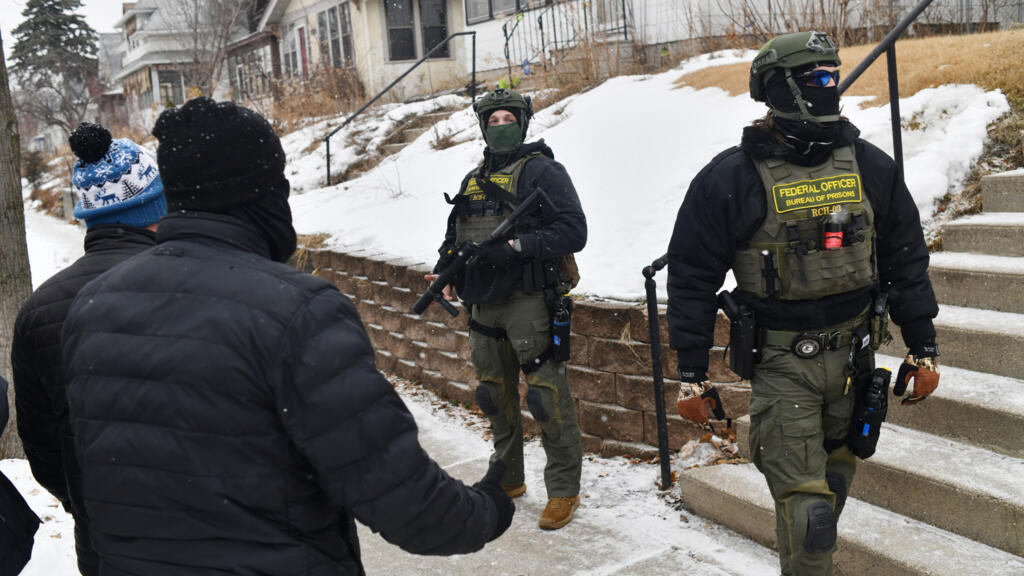
Civilians confront two masked ICE agents in Saint Paul, in Minnesota, on January 16, 2026 © Octavio Jones / AFP


A US judge restricted federal agents on Friday from interfering with peaceful protesters in Minnesota, after President Donald Trump said there was no immediate need to invoke the Insurrection Act over the demonstrations.

READ MOREMinnesota sues Trump administration over immigration crackdown and ICE shooting

US District Judge Katherine Menendez ordered immigration agents to dial back their aggressive tactics, barring the detention or arrest of peaceful protesters and drivers and the use of pepper-spray against demonstrators.

The 83-page order gives the Department of Homeland Security’s (DHS) current operation in the northern US city 72 hours to come into compliance, and follows two incidents where federal agents opened fire, killing one person and wounding another in the span of a week.


In a separate legal move that could inflame the standoff between the White House and Minnesota elected officials, CBS News reported that the Justice Department (DOJ) was investigating Minnesota Governor Tim Walz and Minneapolis Mayor Jacob Frey for impeding federal officers.

Both have called for peaceful protests against immigration sweeps in their state.

“This is an obvious attempt to intimidate me for standing up for Minneapolis, local law enforcement, and residents against the chaos and danger this Administration has brought to our city,” Frey wrote on X on Friday.

Walz said the Trump administration has moved to investigate other Democrats who have spoken out against the president’s policies and mentioned the 37-year-old woman who was fatally shot by an Immigration and Customs Enforcement (ICE) officer in Minneapolis on January 7.

“The only person not being investigated for the shooting of Renee Good is the federal agent who shot her,” Walz wrote on X.

The DOJ did not respond to a request for comment. However, Attorney General Pam Bondi wrote on X on Friday: “A reminder to all those in Minnesota: No one is above the law.”

Trump threatened the drastic measure of invoking the Insurrection Act, which would allow him to deploy the military to police the protests, as the row escalated this week.

“If I needed it, I would use it. I don’t think there is any reason right now to use it,” Trump told reporters at the White House when asked about the move.

The Insurrection Act allows a president to sidestep the Posse Comitatus Act to suppress “armed rebellion” or “domestic violence” and deploy soldiers on US soil “as he considers necessary” to enforce the 19th-century law.

Crowds of protesters have clashed with immigration officers across Minneapolis, opposing their efforts to target undocumented migrants. Some officers have responded with violence.

Demonstrations grew dramatically following Good’s killing as the Trump administration pressed operations to catch undocumented migrants.
Four dead while in ICE detention

Federal agents fired their weapons in two separate incidents, wounding a man from Venezuela on Wednesday and in Good’s killing last week.

In a separate incident, DHS confirmed on Friday that Heber Sanchez Dominguez, a 34-year-old Mexican national, died while detained in ICE custody two days earlier.

At least four people have died in ICE detention so far this year, according to agency data.

Trump backers have also begun to face off with protesters who oppose ICE’s actions in the state, leading to tense encounters.

The Minnesota Star Tribune newspaper reported that divisions within the anti-ICE movement were beginning to emerge over how aggressively to resist the enforcement efforts.

Activists have also become increasingly wary of “far-right provocateurs trying to bait demonstrators into rioting”, it said.

Minnesota’s American Civil Liberties Union (ACLU) chapter has reported an uptick in complaints against ICE officers.

Walz accused federal agents of waging “a campaign of organised brutality against the people of Minnesota” in a video posted to X Wednesday night.

Good’s family announced on Wednesday that they had retained a top law firm to probe the killing ahead of launching possible legal action against the officer and the government.

The lawyers demanded on Thursday that federal officials – including the officer who shot Good – preserve records and evidence relating to the incident.

(FRANCE 24 with AFP)