Sunday, January 18, 2026


My Dream for BRICS and its Critics


Orientation

With the recent kidnapping of President Maduro by Yankee imperialists, I wonder about how BRICS nations and other countries sympathetic to them such as North Korea and Iran will respond. Venezuela has made an attempt to join BRICS and clearly they are in the socialist camp so I would expect it would be especially important to China. Were BRICS countries and their allies aware of the build-up for the kidnaping and what kind of help did they offer?

Some of my Facebook friends with an especially deep appreciation of geopolitics think I am naïve in my hopes that BRICS can be an operative to intervene politically in these events or other coups by a desperate United States. After all, BRICS is a formidable economic organization with infrastructural commitments like China’s Belt and Road Initiative to name just one economic commitment. Also, like the Shanghai Cooperation Organization to name another. However, they are not just international political organization. BRICS, after all has a wide variation of political orientation within its countries. There is a socialist country (China), Hindu fundamentalist (India) and capitalist nationalist (Russia) not to mention two Islamic allies, Saudi Arabia (Sunni) and Iran (Shia). Can all these countries muster enough unity to stand up to the United States now and in the future? Time will tell. Let me provide a world historical perspective as to the uniqueness of BRICS in the overview of the history of capitalism.

A World-Systems Theory of the History of Capitalism
Capitalism gets around. In his great book The Long Twentieth Century Giovanni Arrighi claimed capitalism has gone through four stages, including:

  • commercial capitalism of the Italians trading cities in the high Middle Ages;
  • commercial seafaring Dutch in the 17th century;
  • industrial manufacturing of the British in the 19th century and
  • industrial manufacturing, financial and military capitalism US in the 20th century.

Another world systems theorists, Immanuel Wallerstein writes that each of these countries has gone through 5 phase of capitalism:

  • commercial;
  • slave;
  • industrial;
  • financial and
  • military.

Arrighi points out that the speed through which the four hegemons go through the cycles speeds up so that their risk and decline accelerates. It ranges from 220 years for the Italians to 100 years for the United States (1870-1970). Why did they collapse? It was because of wars and financial ruin. What we have is the rise and fall of four hegemons having gone through the five phases of capitalism. This is all laid out in detail in my articles: “Beyond Socialist Purity” and “The Cycles  and Spirals of Capitalism.”

If the United States has been in decline for 55 years. Where will the world economy go? These days it is easy to say it is China. Both Andre Gunder Frank, in ReOrient: Global Economy in the Asian Age and Giovanni Arrighi Adam Smith in Beijing put their money on China and did so over 25 years ago.

However, today there is something new that neither Arrighi nor Gunder Frank predicted. In the whole history of capitalism over the last 500 years it is only individual political entities that have risen and fallen. Today we have a regional configuration on the rise, BRICS and a regional confederation in decline, the United States and Western Europe. So, if economics was the only thing that matters, BRICS with China in the lead will be the new hegemon. But as most radicals know it is not economics on one hand and political science on the other. There is only political economy. The attack on Venezuela was an international political act in the service of economics (oil, gold and other natural resources). Can or will BRICS countries respond to this politically, either individually or as a collectively?

Can My Dream Come True?
How much do the Russian and Chinese leaders understand this world historical picture of the history of capitalism? My hope is that they do. My hope is they act not just as single nation-states within a region but rather as a regional consciousness within the national policies. Secondly, my wish is that they operate under the following political and economic values:

  • nationalism as a political force that fights against the globalization of capitalism;
  • nationalization that fights imperialism and colonialism;
  • support of industrial capitalism as opposed to finance capitalism whether that system is socialist or capitalist;
  • support of surplus value for technological innovation as opposed to investment in military aggression, and
  • a new concept of the political spectrum which unites left and right against political centrism.

It seems to me that China, Russia and Iran have the most potential to come closest to this dream. India and Brazil seem to still want to imagine deals can be made with the West.

Skeptical Leftist Responds:
No Illusions about China and Russia
This is from my friend Raul:

“I am sorry, my left-leaning ideologue camaradas, but after many disappointments and fiascos from Syria, to Libya, to Palestine, to Venezuela and beyond, I no longer believe in the illusion of Russia and China representing a multipolar option to the empire. I used to believe in that illusion, but the well documented arguments presented by a couple of friends and easily verifiable historical facts broke the spell (and I am glad about it.)

While not exercising the same form of brutal gangster-like form of imperialism as the U.S. or Israel, Russia and China are certainly not going to put their hands on the fire for no one but themselves, and I hope Iran is taking notes of the Syria and Venezuela fiascos before they deposit their trust blindly in Russia and China as allies not willing to do a damn thing when they are attacked by the sick satanic Zionist forces.

Just look at Russia welcoming with open arms the illegitimate terrorist government of Ahmed al-Sharaa former leader of Al Qaeda/Daesh in Syria. Not making any unfounded accusations here, but literally the last meeting Maduro had before his abduction was with China’s Qiu Xiaoqi, special representative of the Chinese government on Latin American affairs, at the Miraflores Palace a day before the U.S. attacks. Again, I am not accusing them of participating in these crimes, but at the very least, they decided to remain passive and limit their response to issuing a few toothless platitudes condemning the war crimes in Venezuela and criminal abduction of the leader of a sovereign nation which was supposed to be their ally.

Now, let us discuss Russia and China’s backstabbing of  Palestine. On the 15th of November Putin initiated a phone call with Netanyahu to discuss Middle East affairs which included discussions on both Syria and Gaza. Just two days later a Russian military delegation showed up in Damascus and was filmed touring Southern Syria just before Russia’s abstention at the UN allowing Trump’s colonial plans to proceed while giving the green light to Israel to bomb a Palestinian refugee camp in Lebanon.

Israeli military claimed that the attack targeted a Hamas training compound where militants were preparing to carry out terrorist operations. In fact it was a sports field within the refugee camp – 15 civilians were killed, many of them young teenagers who were playing football at the time

As we speak, Russian and China are enabling and endorsing war criminal Trump’s ethnic cleansing project in Gaza. So seriously, from now on pro-Russia/China ideologues should spare us any multipolar world rhetoric and stop at once with the foolish notion suggesting that Russia and China are moral models of reference, because evidently they are not. Blind ideology is wrong on the right side of the political spectrum and blind ideology also happens to be wrong on the left side of the political spectrum…”

In the Name of Marxist Leninism
Here is another comment by a friend that Ismael passed on.

Just quick thoughts: China does not practice romantic anti-imperialism. It practices historical materialism under conditions of uneven power. It just cannot come rescue you and trigger a full-fledged confrontation. All socialist states understand the need to avoid actions that collapse contradictions too early, especially when such actions can allow Washington the opportunity to reframe the conflict as “democracy vs authoritarianism”.

In fact, this is what distinguishes Chinese anti-imperialism based on dialectics from isolationist, “civilizational” or elite-led selective populist anti-imperialism  that avoid the real battlefield of global capitalism itself, its circuits of rent, debt, logistics and surplus. Venezuela (even as I understand real constraints it faced under severe sanctions) could be cited as one such example with some nuance.

I thought we knew this as Marxist Leninists. China will not die on someone else’s barricade… It expects states to manage their own internal contradictions. Solidarity means keeping the system open for future autonomy, not rushing in with gunboats to prove ideological virtue.

I know this is exactly what is frustrating inqilab types (not saying history doesn’t favor them when time is ripe and they did make sense in Vietnam, Cuba, Algeria). And I can actually sympathize with them. But premature showdown with empire (from Hungary 1956 to Chile 1970s) tends to end in obliteration. China as a really existing socialism knows these lessons deeply and avoids fetishizing “the moment” that seduces the weak into fatal confrontations, taking away its weapon of time in asymmetric equations. It is this very strategic patience and peace that makes China more “violent” and revolutionary in the most radical sense.

So when China refuses dramatic confrontation over Venezuela, it’s protecting this hard-won positional advantage. Rescue is a liberal fantasy! Trump would LOVE China to break the Western Hemisphere taboo (the Monroe Doctrine). We don’t want that. If China were practicing “dirty realpolitik” we would be seeing it perform coercive “protector” politics, not otherwise. And this makes the BRICS alliance all the more important!

It would be a dirty realpolitik if China was trying to win imperialism’s game. Realpolitik has no concept of negation of the negation. It only knows adjustment. The ethical structure is “immanent”, not performative. This is the key historical point. China’s ethics are expressed through rules of engagement with history. Do we want China to win imperialism’s game or outlive the dirty game itself?

I’m not being a cynic. This is class calculus at the level of the world-system. We are communists, we drag down the heaven from clouds and nail it to the material history. Keep marching, it is always obvious only as an “after the fact”.

Lastly, I would like to show you a 17-minute video by a geopolitical analysis which claims that far from “deciding” to invade Venezuela, the CIA, the Neocons and Trump were trapped by a strategic plan laid out by Russia and China that was three years in the making. While the United States in a case of imperial overstretch will be preoccupied with Venezuela, the Chinese will consolidate their power in the Pacific region, including Taiwan and North Korea. Here is the video:

Conclusion

I began this article with the kidnapping of Nicholas Maduro as a way to take stock of the power and limitations of BRICS as an alternative to Western imperialism. Then I placed Western imperialism in the world-historical context of the history of capitalism to show:

  • the collapse of the United States as the latest capitalist hegemon and
  • the rise of China.

Then I suggested that in today’s world the regional federation of BRICS expresses a transference of the world economy from the West to the East and that BRICS might be the future of the world economy. My dream for BRICS included the following:

  • nationalism as a political force that fights against economic globalization;
  • nationalization that fights political imperialism;
  • support of industrial capitalism as opposed to finance capitalism whether that system is socialist or capitalist;
  • support of surplus value invested in technological innovation as opposed investment in military aggression and
  • a new concept of the political spectrum which unites left and right against political centrism.

I closed my article with three skeptical arguments about BRICS. One is the failure of Russia and China in the past and present to come to the aid of Syria, Palestine, Libya and Venezuela. The other defends Chinese anti-imperialism against a romantic kind of anti-imperialism and says China cannot jeopardize it gains and that other states, even socialist ones have to fight their own domestic battles. The last video presents the power of two countries within BRICS: China and Russia. They have developed a political and economic strategy to trap the United States and limit its capacity to undermine their BRICS projects.

I am sure there are many other international dynamics between the East and the West that are not covered in my three examples. So what else needs to be said? Are there more cynical arguments against the power and reach of BRICS? Are there even more optimistic outlooks based on facts that are about BRICS than my dream? Your comments are most welcome. Reply at Socialist Planning Beyond Capitalism.

Bruce Lerro has taught for 25 years as an adjunct college professor of psychology at Golden Gate University, Dominican University and Diablo Valley College in the San Francisco Bay Area. He has applied a Vygotskian socio-historical perspective to his three books found on Amazon. He is a co-founder, organizer and writer for Socialist Planning Beyond Capitalism. Read other articles by Bruce, or visit Bruce's website.


Oppose Cuts and War in 2026 – Red Weekly Column


Featured image: Cut War Not Welfare placards during the People’s Assembly Against Austerity march on 7 June 2025. Photo credit: Sam Browse, Labour Outlook.


“Whilst cuts continue in many areas, the never-ending ‘magic money tree’ for war and nukes continues.”

By Matt Willgress

The great German socialist and revolutionary martyr Rosa Luxemburg famously said that “the most revolutionary thing one can do is always to proclaim loudly what is happening.”

In Britain today, this is as true as ever. Deep crises on multiple fronts can be seen in every direction. The immense levels of human suffering resulting from these crises are obvious to anyone walking down any high street, yet more often than not they are blatantly ignored by the ruling class (or to put it another way, ignored by much of the media and political establishment, including Keir Starmer’s Government).

There are so many statistics that show the extent of this suffering that it is simply not possible for me to include them all in one column.

On poverty, the Joseph Rowntree Foundation’s “UK Poverty 2025” report last year vividly illustrated the inhumane levels of poverty here as the cost-of-living emergency deepens for millions.

More than 1 in 5 people (21%) were in poverty in 2022/23 – 14.3 million. This figure included 8.1 million working-age adults, 4.3 million children and 1.9 million pensioners.

Around 2 in every 10 adults are in poverty, with about 3 in every 10 children being in poverty.

In a damning indictment of the failures of austerity and neo-liberalism, both under Tories and Labour, it commented that “It is 20 years and counting since we last saw a prolonged period of falling poverty. Taking a longer view, we can see that overall poverty barely changed during the Conservative-led Governments from 2010 to the latest data covering 2022/23. The last period of falling poverty was during the first half of the previous Labour administration (between 1999/2000 and 2004/05), but it then rose in the second half of its time in power.”

On pay, wages today are lower than they were in 2007, and they are not forecast to reach 2007 levels again for years more.

In this context – and we have only scratched the surface when it comes to looking at the desperate situation here – it is striking how the ‘Labour’ Government and Tory opposition front benches offer no new policy solutions at all to these problems, but continue to cling relentlessly to the neo-liberal, austerity policies that have failed for decades.

Tied to this approach, the first year and a half of the Starmer-led Government has seen a policy agenda that continues to protect the interests of the billionaires and profiteers.

Privatisation and part-privatisations continue; a “rip-it-up” approach to planning and environmental regulations will inevitably lead to catastrophe, and redistributive taxation to better fund public services remains firmly off the agenda.

Yet whilst cuts continue in many areas, the never-ending ‘magic money tree’ for war and nukes continues, as the Government acts as a global cheerleader for Trump’s war agenda in Venezuela, the Middle East and beyond.

Like Trump, the Government is also waging war on migrants and refugees, joining the Tories, Reform and others in disgusting levels of scapegoating, including through Keir Starmer’s arch-reactionary “island of strangers” speech, stoking up racism, hate and division.

In the face of this situation, as well as proclaiming “loudly what is happening” – exposing the failures of this rotten Government and the rotten profit-led capitalist system it defends – 2026 must see us build massive resistance on every front against the continuing racism, war and cuts we face.

And additionally, the Left (across different parties and none) must come together to build movements for – and popularise the arguments for – the radical, transformative changes needed to tackle the grave economic, social and environmental crises we face. For this, a clear, alternative economic policy platform is urgently needed from the Left, putting forward an unashamedly socialist agenda that puts public need before corporate greed.


  • The Red Weekly Column will appear each week on Labour Outlook from one of our regular socialist contributors.
  • If you support Labour Outlook’s work amplifying the voices of left movements and struggles here and internationally, please consider becoming a supporter on Patreon


‘Soft Power or Soft Touch? Illegal sports streaming and black-market gambling undermine British standards’


©Shutterstock/Gleb Usovich

Britain likes to think of itself as a global standard-setter: a leader in regulation, sport, and consumer protection. Yet when it comes to illegal online streaming and black-market gambling, the UK is increasingly acting less like a soft power and more like a soft touch.

Illegal online gambling adverts appear on 89% of illegal streams of the top ten sports targeting British audiences. In 2024 alone, there were around 3.1 billion illegal sports streams lasting over 90 seconds, with a further 1.6 billion in the first half of 2025. Accessing illegal streams dramatically increases the risk of being hacked or scammed, as well as falling into the trap of gambling on illegal sites. 

The above figures are from a report by intelligence platform Yield Sec on illegal sports streaming. This follows a Yield Sec report on the UK gambling black market that showed it was largely driven by underage gamblers and people who had self-excluded from the legal market. The Treasury announced in the Budget that it would provide dedicated funds to the Gambling Commission to control this black market. 

READ MORE: ‘Higher gambling tax at last’

But Gambling Commission executive Tim Miller has dismissed concerns about black market activity by Commission licensees outside Great Britain claiming “We are not the world’s policemen.” This is despite one of the Commission’s licensing objectives requiring the prevention of association of gambling with crime. The Commission has produced a weak series of reports on illegal online gambling, as detailed in a report I commissioned. 

The Department for Science, Innovation, and Technology published an ‘Illegal Gambling Website Identification Tool’ (developed with the Commission) purporting to offer a novel methodology, ignoring the established capacity of gambling intelligence platforms.  

A recent Guardian article detailed how Ollie Long, who took his own life, had self-excluded from legal gambling, only to be drawn into gambling on illegal sites. His sister Chloe expressed how abusive, malicious and morally incomprehensible these sites are, describing the highly addictive predatory systems that stole from Ollie his money, peace, future and ultimately his life.   

Ollie Long’s inquest came shortly after another gambling-related suicide inquest, that of Lee Adams. His family had called for gambling disorder to be considered at inquests, to which the Ministry of Justice responded: “Simply asking coroners to record motivation would not provide a reliable picture, as they are often working with incomplete information.”  

Despite the obvious health concerns, gambling sits under the Department for Culture, Media and Sport (DCMS). UK football is increasingly being used to promote gambling companies that profit from black-market-style operations in other countries. Some clubs have marketing deals with gambling sites, such as Stake, which are not licensed in the UK and DCMS appears content to let that continue. The rapper Drake is facing legal action in the US for promoting the unlicensed Stake, which the lawsuit says is a criminal organisation.          

Illegal streamers abuse the affection for UK sports internationally, acting in unison with illegal gambling pirates in jurisdictions that function as regulatory safe harbours. It is embarrassing that this digital exploitation, a modern form of virtual colonialism, is tolerated.  

DCMS and the Foreign Office jointly oversee the UK Soft Power Council, a welcome initiative established in early 2025. Hopefully the Council will recognise how lax the Commission and DCMS have been in allowing gambling harms and criminality to flourish. 

Politics is changing rapidly. Nigel Farage and Grainne Hurst, the CEO of trade lobbyist the Betting and Gaming Council (BGC), cosied up together at the Reform Party Conference. Farage recently echoed BGC rhetoric claiming there would be no betting shops left in a year because of the impending tax increase. Reform are currently favourites to win the next general election. 

Politicians supporting the gambling sector tried to force the Chancellor to make a statement on the impact of gambling tax increases, but were defeated. They must not have read the NERA report which shows how economically detrimental online gambling is to the wider economy. 

If Labour is to enjoy another term, it must be confident and innovative enough to escape the malign influences of inertia and vested interests.Self-serving arms length bodies, such as the Gambling Commission, lack adequate accountability and transparency, using consultations to create delays. I share the frustration expressed by Sir Keir Starmer to the Liaison Committee.

UKIP’s new logo sparks mockery (and concern!)

Yesterday
Left Foot Forward

“This is not a parody.”


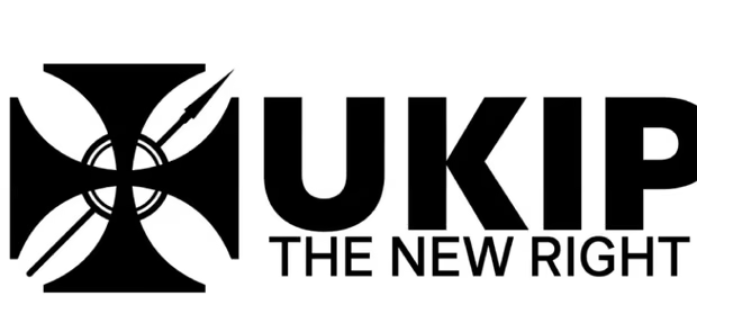
Images circulating online this week of a newly proposed UKIP logo have prompted widespread ridicule, and more serious concern, after users discovered the emblem listed on the Electoral Commission’s website as part of an official party registration update.

Rendered in stark black and white, the emblem bears an unsettling resemblance to the Iron Cross, a military decoration historically associated with the Kingdom of Prussia and later Nazi Germany. It features a shield and spear, accompanied by a slogan branding UKIP as “the new right.”

“Not sure what the spear is supposed to denote, if you have a weapon on your logo it suggests the intent to use violence. This must be a joke!” one commenter wrote.

Another responded: “This actually chills my bones; it’s awful, so sinister and just grim.”

Others were explicit about the historical associations. “It’s the Iron Cross used in Germany… not hiding it anymore it seems,” one user claimed, while another added: “Makes it pretty clear where they would have stood in the 1930s.”

Mockery came in thick and fast. “Given UKIP was founded on 3 September 1993 by Professor Alan Sked, it can hardly call itself ‘new’,” one commenter noted.

The logo has already appeared on flags carried by UKIP supporters at protests, but its submission to the Electoral Commission raises the stakes. If approved, it could appear on ballot papers at future general elections.

Once a player in UK politics, especially during the 2016 EU referendum, UKIP has since faded from political relevance, eclipsed almost entirely by Reform UK and its former leader Nigel Farage. Today, UKIP rarely features in national headlines, a decline that may help explain the apparent rebrand.

The party is currently led by Nick Tenconi, chief operating officer of Turning Point UK, a right-wing youth organisation that promotes free-market economics and a reduced role for government. Turning Point UK attracted controversy in 2020 after spending more than £7,000 in a single week on Facebook advertising attacking then Labour leadership candidate Rebecca Long-Bailey. One advert, titled “Britain does not need a Jeremy Corbyn 2.0,” targeted younger voters and urged them to “use your vote wisely.”

UKIP’s honorary president is Neil Hamilton, the former Conservative MP for Tatton, whose political career has long been overshadowed by controversy. Hamilton lost his seat in 1997 amid allegations, which he denied, of accepting cash for parliamentary questions. Earlier, he sued the BBC over a Panorama claim that he had performed a Nazi salute during a parliamentary visit to Berlin. After the case was settled, Hamilton later admitted he had made a brief two-finger gesture intended to mimic a moustache.

Hamilton went on to lead the UKIP group in the Welsh Assembly after his election there in 2016. He later fell out with Nathan Gill, former leader of UKIP Wales, who was jailed in 2025 for accepting pro-Russian bribes.

UKIP’s leadership, controversies, and now its choice of symbolism suggest less a fresh political movement than an ageing organisation grasping for attention.

If the logo was intended to provoke, it has succeeded. Whether it reassures voters, or instead reinforces fears about where UKIP now stands, is another matter entirely.
Third of students say Reform UK should be banned from speaking at universities


Today
Left Foot Forward

The poll suggests the problem is not with banning speakers as such, but with which speakers.


An interesting, make-you-look-twice headline, was reported in the Telegraph this week, informing that more than one in three British undergraduates believe Reform UK should be banned from speaking at university events.

The finding comes from a new Savanta poll for the Higher Education Policy Institute (HEPI), based on a survey of 1,012 full-time undergraduates conducted in November 2025. HEPI has been asking similar questions since 2016, making it possible to chart the evolution of student attitudes towards free expression.

According to the poll, 35 percent of students think Reform should not be allowed to speak at higher education institutions. This is a record figure for HEPI, surpassing the levels of support previously recorded for banning the British National Party in 2016 (31 percent) and the English Defence League in 2022 (26 percent). Reform, unlike the BNP and EDL, is considered a mainstream party that led the national opinion polls for much of 2025, but that detail appears not to have softened student opinion.

Other parties fare considerably better. 16 percent of students believe Labour should be banned from campus events, while just 12 percent would extend the same treatment to the Conservatives. Support for banning the Greens and Liberal Democrats is lower still, at 7 percent and 6 percent respectively, suggesting that the problem is not with banning speakers as such, but with which speakers.

As the Telegraph notes, the figures sit rather awkwardly alongside students’ professed devotion to free speech. Nearly seven in ten (69 percent) say universities should “never limit free speech,” up from 60 percent in 2016. A growing majority also say academics should be free to research and teach whatever they want, provided, presumably, that nobody from Reform UK is invited to listen.

Nick Hillman, HEPI’s director and author of the Are students still ‘woke’? report, acknowledged the contradiction.

“We have been tracking students’ views on free speech issues for a decade. Today’s students are more definite in their views than their predecessors,” he said. “Confusingly, however, they offer stronger support for the principle of free speech while also being even keener to see specific barriers against free expression.

“I am shocked that more than one-in-three students support banning Reform UK from university campuses.”

The Telegraph also cited comments from Richard Tice, Reform’s deputy leader, who blamed university leadership for what he described as a culture increasingly hostile to his party.

“These findings are appalling,” he said. “British universities abandoned being centres of genuine learning, rigorous debate and intellectual challenge long ago, instead opting to become echo chambers of far-Left indoctrination run by activist academics.

“University leaders bear responsibility for allowing this culture to fester in our institutions. The government must pull grant funding unless this is changed urgently.”

The poll follows the introduction of new free-speech duties for universities in England, requiring them to actively promote academic freedom and protect external speakers. On current evidence, students appear broadly supportive of this principle, in theory, at least just not, it seems, if they’re with Reform UK.
Right-Wing Media Watch: London is safer than it’s been in a generation – much to the alarm it seems, of Khan’s loudest media critics

Today
Left Foot Forward

For years, London has been portrayed by Khan’s critics as a city in terminal decline, undone by liberal governance, diversity and supposed softness on crime. The hard evidence now points in the opposite direction.


News broke this week that London’s murder rate has fallen to its lowest level in more than a decade. According to the Metropolitan Police, 97 homicides were recorded in the capital in 2025, down from 153 in 2019 and 109 in 2024. Both the police and the mayor say the figures place London among the safest major cities in the western world.

Perhaps most striking is the collapse in youth homicides. Killings of under-25s have fallen from a peak of 69 in 2017 to 18 in 2025.

This decline has happened despite London’s population growing, from around 8.1 million in 2010 to roughly 9.1 million today. Met figures show the capital recorded around 1.1 homicides per 100,000 residents in 2025. That compares with 3.2 in Berlin, 2.9 in Brussels and 1.6 in Paris. London is also markedly safer than major North American cities. New York’s homicide rate stands at 2.8, Los Angeles at 5.6, Houston at 10.5 and Philadelphia at 12.3 per 100,000 residents.

These figures landed just weeks after Donald Trump claimed crime in London was “crazy” and suggested police were afraid to patrol parts of the city, comments Met Commissioner Sir Mark Rowley dismissed as “complete nonsense.”

A combination of more targeted policing, a sustained focus on early intervention and youth diversion has driven the change, according to police and the mayor. Sadiq Khan says the “public health” approach to violence is delivering results.

“The evidence shows that violent crime rates are proportionately lower in London than in any other UK city,” he said.

You might reasonably expect this positive news to dominate the national conversation. Yet while outlets such as the BBC, the Guardian and the Evening Standard reported the figures, much of the right-wing media put a negative spin on it.

The Telegraph led with the headline: “Sadiq Khan claims London is getting safer. These charts prove him wrong.” The article bundled together unrelated offences, from shoplifting and dangerous driving to sexual offences, in an apparent attempt to drown out the fact that far fewer Londoners are being murdered.

The piece also quoted Laila Cunningham, Reform UK’s newly announced London mayoral candidate, calling for a “tougher approach” to knife possession, while reminding readers that Khan, a long-standing target of Donald Trump, had dared to say that “many people have been trying to talk London down.”

The Daily Mail took a different tack, framing the statistics as evidence that Scotland Yard was “reigniting” a feud with Trump.

GB News, meanwhile, couldn’t resist inserting criticism from Conservative London Assembly member Susan Hall, who warned against relying on “selective statistics” and pivoted quickly to concerns about violence against women and girls.

For years, London has been portrayed by Khan’s critics as a city in terminal decline, undone by liberal governance, diversity and supposed softness on crime. The hard evidence now points in the opposite direction. And for sections of the press invested in that narrative, acknowledging that success appears to be a step they can’t bring themselves to take. Which is not to say that in a world in which resources for the public sector have been eroded for a generation by taxation and fiscal policies emanating from the political right, public servants like Sir Rowley do not face tough choices. He has chosen to prioritise preventing life-destroying crime, something, I’m sure, Londoners will endorse.


Out of control? No, UK social security is among the lowest in Europe

JANUARY 14, 2026

Is it Government ignorance, weakness or ideological agreement that drives it to let the right set the terms of debate, asks Andrew Fisher.

The UK social security system is one of the least generous in Europe. It is neither generous nor ballooning – despite the hyperbole of right-wing media and politicians.

This is the disconnect of a political media class that never pauses to consider the impact that immiserating disabled people or unemployed workers has on their mental health, their children’s life chances or even on society as a whole.

I’ve been passionate about social security ever since I realised as a primary school kid in the late 1980s and early 1990s that politicians demonised those on benefits (at the time single parent families, like my own, were in the firing line).

Much of the inane political commentariat who view politics as little more than a daily soap opera are now portraying this Labour government delivering ‘welfare reform’ – the oft-used euphemism for cuts – as some sort of virility test for the faltering government.

When Labour decided to finally scrap the two-child limit, much of the Westminster bubble wrote up the story not as the liberation of half a million children from poverty, but as Keir Starmer capitulating to his backbenchers.

On Murdoch’s Times Radio, veteran right-winger Andrew Neil described Labour’s U-turn “not just back down but run up the white flag of surrender” and the reputation of both Starmer and Reeves as “in the dirt”.

What showcases political impotence most is the lack of political strength and leadership to stand up to this nonsense. As on migration, the Labour government has allowed the right – and sometimes the far right – to set the terms of debate. It is hard to tell whether it is ignorance, weakness or ideological agreement that drives this, but all three need to be countered.

Despite the regular assertion that ‘welfare spending is out of control’ – it is not at all.

For the last 15 years at least, UK spending on social security has been consistently between 10% to 12% of GDP (depending on economic circumstances). In 2024, UK social security spending was 10.8%.

Comparable countries, such as France, Germany and Italy, spend far more on social security for their citizens than the UK.

That is hardly surprising; compared to most other countries in Europe, the rate of key UK benefits – whether its unemployment benefit or the basic state pension – is incredibly low. Unemployed workers in countries such as Ireland, France and Germany are entitled to more than double what UK workers get if they become unemployed.

We don’t even have to look abroad to see the unfairness and inadequacy of our own social security system. Unemployment benefit in the UK is now worth just 14% of average weekly earnings. When I was born in 1979, it was about 24%.

If unemployment benefit was the same value relative to wages that it was in 1979 it would today be worth nearly £160 per week, instead of the actual rate of £92.05.

If social security is a safety net, it’s an increasingly threadbare one – and those falling through the gaps are the record 172,000 homeless children, the 14 million people living in poverty, and the rising numbers of people queuing at food banks.

We need social security that actually provides social security.

Andrew Fisher was Labour’s Director of Policy from 2015 to 2019. He is the author of The Failed Experiment: And How to Build an Economy that Works (Comerford & Miller, 2014) and writes a regular column for the i newspaper.

Image: https://commons.wikimedia.org/wiki/File:Andrew_fisher_2020_1.jpg. Source: How Starmer Became Labour Leader (12 Days of Tysky). Author: Novara Media,  licensed under the Creative Commons Attribution 3.0 Unported license.

Into the moral abyss


JANUARY 16, 2026

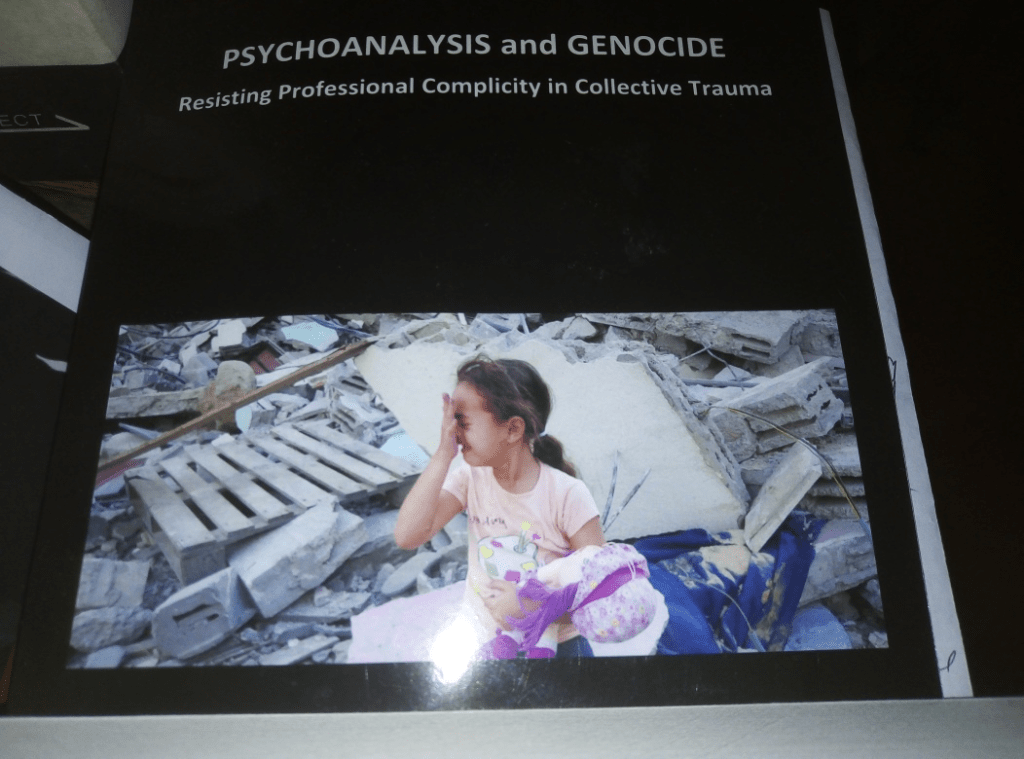
Mike Phipps reviews Complicit: Britain’s Role in the Destruction of Gaza, by Peter Oborne, published by OR Books, and Psychoanalysis and Genocide: Resisting Professional Complicity in Collective Trauma, by Martin Kemp.

British complicity in Israel’s genocide against Gaza has operated on many levels. First and foremost, it’s a bipartisan affair – from the Government and Opposition’s joint rejection of an immediate ceasefire after October 7th, to the support of both party leaderships to Israel’s cutting off of water, electricity and food to Gaza’s civilian population.

The complicity in Israel’s genocide runs beyond the main parties. Peter Oborne contrasts Britain’s outright rejection of South Africa’s detailed case against Israel at the International Court of Justice, with its readiness to accept Israeli allegations about the supposed involvement of UNRWA staff in the October 7th attack – Israel claimed ten members were implicated, out of a staff of 13,000 – on which basis the Government cut off all UK funding to the agency. In this, and its ongoing arms sales to Israel, the Government had fulsome support from much of our mainstream media.

Like the Opposition, they also failed to do their job properly, rarely challenging in interviews the Israeli ambassador’s “well-documented history of supremacist views and naked anti-Palestinian racism”; consistently operating a double standard in reporting Israeli and Palestinian casualties; and frequently displaying a combination of basic ignorance and outright bigotry – Oborne gives many examples.

The book  probes – again in detail – the role of pro-Israel lobby groups in pressuring media organisations to parrot the Israeli narrative, as well as the BBC’s cowardice in failing to support its unjustly criticised journalists. This is controversial territory, as Oborne concedes: many mainstream commentators regard the concept of such an Israel lobby as an antisemitic trope. Oborne challenges this idea, suggesting the allegation’s effect has been to create an “omerta” around the topic, which helps explain why no mainstream media outlet would dare review the eminent Israeli academic Ilan Pappé’s 2024 book on precisely this subject.

Oborne is particularly scathing about the UK media’s glaring indifference to Israel’s killing of their reporter colleagues in Gaza. As Palestinian media workers were increasingly targeted by Israel, Labour Foreign Secretary David Lammy ignorantly claimed: “There are no journalists in Gaza.” According to Amnesty International, over 250 media professionals have been killed in Gaza since October 2023.

The pro-Israel political and media consensus meant that the vast majority of ordinary citizens who were appalled at Israel’s onslaught and wanted it to end were not only left without a voice: any attempt to mobilise for peace and highlight the plight of Palestinians was denounced as extremist or barbaric – “hate marches” in the words of then Home Secretary Suella Braverman.    

Keir Starmer’s own position on the conflict, rejecting a ceasefire as Leader of the Opposition, meant putting to one side a career of expertise in human rights and international law, which had enabled him to mount a charge of genocide against Serbian forces in former Yugoslavia at the International Court of Justice a decade earlier. In contrast, his new-found reverential support for Israel was in lockstep with US policy.

But it also fitted the circumstances which had helped make him Party leader, where he and his advisors had “crudely exploited the issue of antisemitism in the Labour Party to aid their factional battle against the left… Together these dual motivations – external state and internal party – propelled Starmer into the moral abyss of aiding and abetting a genocidal onslaught against the Palestinians of Gaza.” It was the same mindset that led Starmer to excuse Israeli war crimes in a notorious LBC interview.

The damage done to the Labour Party by Starmer’s stance was severe. Resignations by Muslim councillors were sneered at by one senior Labour source as “shaking off the fleas”. But in the 2024 general election, the Party lost five seats to pro-Palestinian independents, including Jeremy Corbyn; and Wes Streeting came within 528 votes of being unseated by a Palestinian independent in Ilford.

In office, Starmer’s government continued UK military support to Israel, including hundreds of RAF spy flights, which may have made Britain complicit in war crimes. Starmer made no serious attempt to pressure either Israel or the US to stop the genocide – not even verbally condemning Israeli crimes or upholding international law. “Starmer’s complicity will stain his reputation, and Britain’s, for all time,” avers Oborne.

Oborne meticulously takes us through the disintegration of Israel’s case at the ICJ and the role of a compliant media in continuing to deny clearly substantiated atrocities by Israeli forces throughout the conflict. Opponents of their groupthink were routinely labelled antisemites. When the UN Secretary António Guterres criticised Israel for blocking humanitarian aid and was declared “persona non grata in Israel” by the Israeli foreign minister, the Daily Telegraph stated: “António Guterres needs to be replaced if the UN is to retain any shred of credibility.”

President Trump’s plan to expel all Palestinians from Gaza and turn it into a riviera of real estate opportunities opened a rift with the Starmer government, which began to distance itself from the expansion of Israeli operations. Starmer finally began to call for a ceasefire and what turned out to be very limited sanctions. The shift in line was due in no small part to the massive ongoing pressure mounted by millions of people who over the last two years have protested in many different ways against Israel’s war. The same movement impelled the 2025 Labour Conference to pass a resolution, despite the obstructive efforts of Party officials, clearly labelling the Israeli onslaught a genocide and calling for an arms embargo.

Yet the damage is done, concludes Oborne. Britain’s governing institutions are now indelibly disgraced. Worse, “any illusions that may have been harboured about Western commitment to moral or legal norms have been dispelled.” In short, by enabling this genocide, our leaders have created favourable conditions for others, some already happening, as in Ukraine, others yet to come. The increasingly lawless world we now face is something our own leaders helped create.

Psychoanalysis and Genocide

Similar themes pervade Martin Kemp’s Psychoanalysis and Genocide, a collection of articles by the eminent professional who has been involved with the UK-Palestine Mental Health Network since its inception.

He opens the book with a quotation: “You are asleep with your family. At 4am your house is surrounded by soldiers and border guards who hammer on the door and break the windows while you emerge, to be told you have 15 minutes to leave. Using whatever violence is necessary – against you, your wife and children – the bulldozer moves in… and you will be sent the bill for the demolition.”

The words are Salim Shraramweh’s and he should know – his house in Jerusalem was demolished four times. Flagged in the UK as an Israeli form of collective punishment against ‘terrorists’, home demolition is more a form of ethnic cleansing. Since 1967, tens of thousands of homes have been demolished in the Occupied Territories and only 5% had anything to do with security.

The psychological impact on family and neighbours, exacerbated by the fear of not knowing who will be next, is incalculable. Children are especially vulnerable – hundreds are in Israeli jails, often for throwing stones at Israel’s illegal Separation Wall. Their incarceration – and routine torture – is also less an issue of security and more a psychological weapon to break their resistance.

The level of continuing traumatic stress disorder among the Palestinian population is extraordinarily high. It fuels depression, other psychological conditions and drug dependency. Much of this book was written before the latest onslaught by Israel: the ongoing trauma will be felt for decades to come.

The destructive impact of the Occupation in Israel is less, but nonetheless noteworthy: a huge increase in violent crime, especially against women, juvenile crime out of control, a steep rise in anti-social behaviour.

But these trends will have a contaminating effect way beyond the borders of Israel. Indifference in the West to the genocide against the Palestinians cannot but encourage indifference to other genocides, invasions and other human rights abuses. The dehumanisation and racism necessitated by colonisation legitimises other forms of racism and extreme nationalism elsewhere. Likewise, impunity for Israel’s leaders fuels impunity for other aggressors – and all humanity suffers the consequences.

Raising these issues as a professional has been a frustrating experience for Martin Kemp. As he says in his Preface, “Faced with the moral dilemmas posed by tyranny, torture and other forms of state terror, now and historically, the foremost priority for the psychoanalytic establishment has been institutional calm, consideration of which trumps any interest in social reality, collective mental health or professional ethics.”

That mindset is seen in the refusal of the Society for Psychotherapy Research in 2016 and the International Association of Relational Psychoanalysis and Psychotherapy in 2019 to relocate their annual conferences away from Israel – despite the difficulties that Palestinian colleagues, who have a great deal to say about what was under discussion,  would encounter in trying to attend.

The author cites many other examples of how attempts to raise the trauma of Palestinians within the psychoanalytical community has met with official responses ranging from complaints that this is excessively political to suggestions that it violates principles of non-discrimination, or that the implicit criticism of Israel constitutes  antisemitism.

This evasion can be contrasted with the International Psychoanalytic Association’s October 2023 statement expressing horror at the “unprecedented” Hamas attack on Israel. While the attack was horrific and worthy of condemnation, it was hardly “unprecedented” in the context of much greater harm to civilians in Gaza – with far worse to follow.

Has ideological fixation distorted psychoanalysis? Kemp asks in conclusion. Sadly, the answer seems to be yes – and probably a number of other scientific disciplines too.

Mike Phipps’ book Don’t Stop Thinking About Tomorrow: The Labour Party after Jeremy Corbyn (OR Books, 2022) can be ordered here.

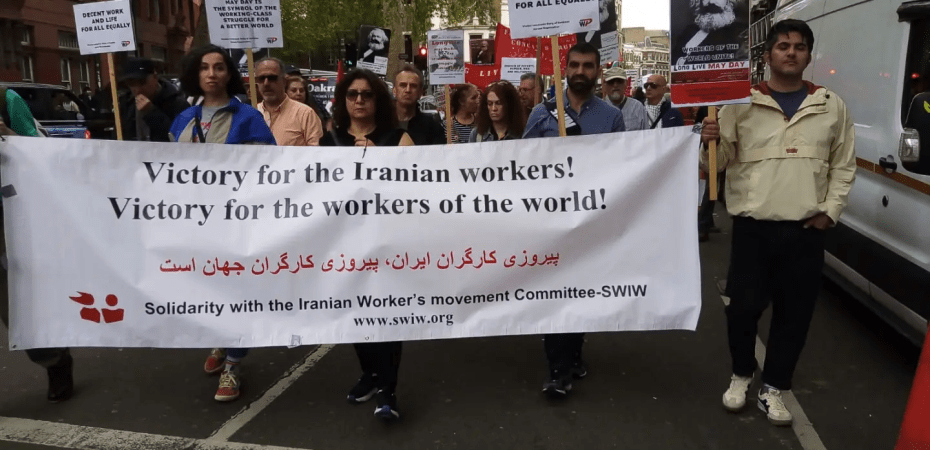
Iran’s Great Uprising: A Struggle for Bread and Freedom!

JANUARY17, 2026

A statement by the Solidarity with the Iranian Workers Movement Committee.

The Beginning of the Protests

On December 28th, protests started at Tehran’s Grand Bazaar and quickly spread to 180 cities across all 31 provinces. This has become the largest and deadliest uprising in the 47-year history of the Islamic Republic. Millions of young, working-class people have joined the movement, risking their lives to chant “Death to the Dictator” and “Death to Khamenei.”

A Deep Economic Crisis

The “rebellion of the hungry” is driven by a massive economic crisis. Recent data shows:

• Poverty: Over 70% of the population now lives below the poverty line, with 30% in absolute poverty.

• Inflation: General inflation is around 50%, but food inflation has climbed above 75%, making basic survival difficult.

• Currency: The Iranian rial has lost nearly 300% of its value against the dollar in less than two years.

• Trigger: The government recently cut fuel subsidies and ended cheap exchange rates for imported goods, causing food prices to skyrocket overnight.

State Violence and Blackouts

On January 8th, the government completely shut down the internet and phone lines to hide their crackdown. Security forces used military weapons against unarmed protesters.

• Casualties: While 3,400 deaths are confirmed, some reports estimate the toll could reach 20,000.

• Injuries: Tens of thousands are wounded. In just one Tehran hospital, over 400 people were blinded after being shot in the eyes with pellet guns.

• Detainees: Thousands remain in prison facing torture. Shockingly, the regime has even demanded money from families before returning the bodies of their loved ones.

The Political Landscape

This movement is spontaneous and was not started by any specific political group or leader. Although outside groups, such as the supporters of Reza Pahlavi, claim to lead the uprising, they lack genuine influence among the workers and students who are on the streets. This is reflected in the popular slogan: “Neither Pahlavi nor the Supreme Leader—freedom and equality.” The Iranian people are not looking for foreign military intervention or harsh sanctions that hurt the poor; instead, they are fighting for grassroots democratic change through their own social movements and organized strikes.

A Call to Action

The situation is critical. We call on international unions and human rights organizations to:

1. Condemn the mass killing of protesters.

2. Demand the immediate release of all political prisoners.

3. Pressure the British government and others to cut diplomatic ties with the regime.

4. Support the Iranian workers and social movements who are the true force for change.

For more information about the Solidarity with the Iranian Workers’ Movement Committee, see https://www.swiw.org/about/

image: c/o Labour Hub.