Monday, January 19, 2026

Adani’s Mannar Wind Project In Sri Lanka: Is The Opposition Unmasked At Last? – Analysis

January 19, 2026 
By A. Jathindra


Development-related environmental debates in Sri Lanka rarely stay rooted in ecology—they are almost always colored by politics. The abandoned Adani wind power project in Mannar is a striking example.

Not long ago, selective Colombo-based “environmentalists” thundered against the Indian conglomerate, branding its plans as ecological disasters. Yet today, as a near-identical project advances under a local company, those same voices have fallen conspicuously silent. Was their outrage truly about protecting the environment—or was it stirred by a hidden geopolitical hand?

Recent reports indicate that 28 Pakistani nationals and two Chinese nationals engaged in Mannar’s wind project have departed following the completion of turbine installation. It has also been noted that two Pakistani workers, while venturing into the sea, were subsequently intercepted by Sri Lankan security forces. One might reasonably reflect—had the Adani project proceeded as originally envisioned, such circumstances may well have been avoided.

Viewed in this light, the opposition to Adani’s initiative appears less an expression of ecological concern and more a matter shaped by broader political considerations.

On January 15, 2025, President Anura Kumara Dissanayake inaugurated the construction of a 50megawatt wind farm in Mannar, developed by Hayleys Fentons Limited. Scheduled for completion in March 2027, the project is part of the government’s pledge to achieve netzero carbon emissions by 2050.

Mannar has long been recognized as one of Sri Lanka’s most promising renewable energy hubs. It was this very potential that drew Adani Green Energy, which proposed a 250 MW wind power project in the region. Yet, shortsighted local opposition forced the plan’s abandonment.

The Adani Group and India suffered no loss. But for Sri Lanka, it was the loss of a significant opportunity to harness clean energy and strengthen its power grid. The episode underscores a troubling pattern: environmental concerns seem to erupt most fiercely only when the projects carry an Indian nameplate.

At the time, Adani’s investment represented the first major foreign capital inflow since Sri Lanka’s bankruptcy during its historic economic crisis. Had it gone ahead, the project would have spurred development in the Northern Province. In January 2023, the Board of Investment approved a $422 million plan for Mannar and Pooneryn, expected to generate 484 MW of electricity—one of the largest green energy projects in the country.

However, the Mannar project faced a fundamental rights petition filed by Bishop Emmanuel Fernando and three environmentalists, who questioned the credibility of the Environmental Impact Assessment (EIA) and warned of potential financial losses. Yet the EIA—covering bird and bat studies—was conducted by the Sri Lanka Sustainable Energy Authority under the leadership of Professor Devaka Weerakoon of the University of Colombo. Despite this, the environmentalists sought to discredit the findings, claiming the wind farm would become a “death trap” for migratory birds.

Globally, however, countries have adopted mitigation strategies. India’s 1,500 MW Muppandal Wind Farm—close to Sri Lanka—operates despite similar concerns. In Norway, researchers found that painting one rotor blade black reduced bird mortality by 70 percent. Studies in the U.S. estimate wind turbines kill between 140,000 and 679,000 birds annually—a tiny fraction compared to the billions killed by buildings or domestic cats. Fossil fuel projects are far deadlier, with 5.18 birds killed per gigawatthour of electricity compared to just 0.269 for wind.

Yet Colombobased environmental groups opposing Adani never highlighted these facts or proposed alternatives. Instead, they misled local communities, with religious leaders echoing flawed guidance. This begs the question: will the 50 MW projects now underway not harm birds? Will migratory species be spared?

The silence following Adani’s withdrawal suggests the protests were less about ecology and more about politics—specifically, blocking Indian investment. Meanwhile, far more environmentally damaging projects, such as the Chineseowned power plant in Nurisolai, escape scrutiny. This selective activism illustrates how environmental concerns in Sri Lanka have been politicized.

Wind power projects worldwide have not been abandoned because of bird deaths. Instead, governments and companies have introduced strategies to mitigate harm. Norway’s experiments with rotor blade painting, UV lighting, and micrositing of turbines show that innovation can reduce risks. Tamil Nadu, with its forwardlooking approach, is positioned to attract €72 billion in offshore wind investment by 2030. Sri Lanka could have shared in this momentum, but the Mannar opportunity was lost to politicized environmental activism.

The broader truth is that every development project carries an environmental cost. Countries that have successfully implemented wind farms have accepted this reality, balancing ecological concerns with the urgent need for clean energy. Sri Lanka’s activists, however, seem to apply their scrutiny selectively. When Indian projects are proposed, opposition is fierce; when Chinese projects advance, silence prevails.

This inconsistency undermines the credibility of environmental advocacy. If the true goal is sustainability, then all projects—regardless of origin—should be judged by the same standards. Otherwise, Sri Lanka risks allowing political agendas to derail its path to renewable energy.

The Mannar case is a cautionary tale. By blocking Adani’s project, Sri Lanka lost not only foreign investment but also a chance to accelerate its transition to clean energy. The government’s target of 70 percent renewable energy by 2030 and netzero emissions by 2050 will remain a distant dream if antidevelopment narratives dominate.

The question remains: was the opposition to Adani’s project truly about protecting birds, or was it about preventing Indian investment in Mannar? The disappearance of protesters after the project’s cancellation suggests the latter. Meanwhile, the new 50 MW project will inevitably face similar ecological challenges. Will migratory birds be spared this time, or will silence prevail because the developer is local?

The Mannar wind farm controversy is not merely about turbines and birds. It is about Sri Lanka’s future—whether the nation will embrace renewable energy with pragmatism, or remain entangled in politicized debates that stall progress. If selective activism continues to dominate, the aspiration of achieving net zero carbon emissions by 2050 risks becoming symbolic rather than substantive.

A. Jathindra is the head of the think tank Trinco Centre for Strategic Studies (TSST) and a Sri Lankan-based independent political analyst.

Day 22 Of Iran Uprising: Regime Relies On Foreign Proxies And Chemical Attacks – OpEd


January 19, 2026 
By Mahmoud Hakamian


The nationwide uprising against the mullahs’ dictatorship in Iran has reached its twenty-second day on Sunday, January 18, 2026. The regime is now resorting to its most desperate measures yet.


Reports emerging on Sunday indicate that the regime, unable to quell the spirit of the rebellious youth with domestic forces alone, is importing foreign mercenaries and potentially deploying toxic chemical agents. Meanwhile, the Resistance has identified dozens more martyrs who sacrificed their lives for freedom.


Day 22 Roundup: Chemical weapons reports, 5,000 foreign mercenaries, and 58 new martyrs identified

On Sunday, January 18, 2026, the twenty-second day of the uprising revealed the depth of the regime’s desperation. As international isolation grows, the mullahs are turning to proxy militias and prohibited weapons to survive.

Key highlights from today include:Potential Chemical Attacks: A report by Newsweek cites credible sources indicating the regime may have used “toxic chemical substances” against protesters, a major escalation and violation of international law.
Foreign Mercenaries Deployed: German outlet Der Spiegel reports that 5,000 foreign militia members, including Iraqi PMU and Lebanese Hezbollah, have entered Iran to assist in the crackdown.
New Martyrs Announced: The PMOI has released the names of 58 additional martyrs of the uprising, including 11 women and several teenagers.
Regime Threats of “Compensation”: In a bid to intimidate families, Expediency Council member Abbas Ali Kadkhodaei demanded that protesters be forced to pay financial “compensation” for damages.
Airspace Warning: The European Union Aviation Safety Agency (EASA) has warned airlines to avoid Iranian airspace due to the high alert status of the regime’s air defense systems.
PMOI releases names of 58 more martyrs

The People’s Mojahedin Organization of Iran (PMOI/MEK) has announced the names of 58 more martyrs of the nationwide uprising following rigorous verification. Among these newly identified heroes are 11 women and several youths, highlighting the widespread participation of all sectors of Iranian society in the revolution.


The martyrs gave their lives in cities across the country, including Tehran, Isfahan, Karaj, Shiraz, Mashhad, and Rasht. Among them are 17-year-olds Borna Dehghani and Sam Afshari from Karaj, and 18-year-old Arshia Ahmad Pour from Baharestan, Isfahan.
Reports of toxic chemical substances used against protesters

In a shocking development, reports suggest the regime may be resorting to chemical warfare against its own citizens. According to Newsweek, former UK lawmaker Bill Rammell has cited a “credible report” from Iranian-Kurdish sources stating that “toxic chemical substances” have been used to suppress the protests.

The report indicates that these substances cause severe injuries leading to death days later. If confirmed, this would constitute a grave violation of the Chemical Weapons Convention and represents an “extraordinary” escalation by the regime.
Regime imports 5,000 foreign mercenaries to quell uprising

With its domestic forces exhausted and demoralized, the regime is bringing in foreign proxies to hold onto power. Der Spiegel and CNN report that approximately 5,000 fighters from the regime’s proxy forces in Iraq and Lebanon have entered Iran to aid in the suppression.

These forces, primarily from the Iraqi Popular Mobilization Units (PMU) and Lebanese Hezbollah, reportedly entered the country under the guise of pilgrims visiting religious sites. This move underscores the regime’s lack of trust in its own security forces and its reliance on the terrorist network it has cultivated across the region.
Regime official demands “compensation” to bankrupt protesters

As the crackdown continues physically, regime officials are also attempting to exert financial pressure on the population. Abbas Ali Kadkhodaei, a member of the regime’s Expediency Discernment Council, has threatened protesters with financial ruin.

Using threatening language, Kadkhodaei stated that imprisonment is not enough and that protesters must be forced to pay “financial damages.” This tactic is viewed by observers as a means to intimidate families and impose further economic hardship on a populace already suffering from the regime’s corruption and mismanagement.


Mahmoud Hakamian writes for The People’s Mojahedin Organization of Iran (PMOI), also known as Mujahedin-e-Khalgh (MEK)

The British North American Colonies Were Not Homogeneous Political Units – OpEd


January 19, 2026 
MISES
By Larsen Plyler

Through the 1600s, the English established colonies along the North American coast. Of course, these colonies shared much in common: shared language, shared appreciation for English citizenship and rights, and a shared commitment to Protestant Christianity (though, with different denominational and traditional commitments). But, it is worth considering just how different these colonies were.

One work that is absolutely worth considering is David Hackett Fischer’s Albion’s Seed. Fischer explains that, from 1629 to 1775, the territory that would become the present-day United States was settled by four major waves of English immigrants.

The first was that of the Puritans from 1629-1640. They came from the east of England to Massachusetts and broader New England.

The second major wave was that of the Cavaliers and their indentured servants from 1642 to 1675. They came from the south of England to settle in Virginia and the Chesapeake.

Then, from 1675-1725, a wave of Quakers came from the North Midlands of England and Wales to the Delaware Valley, including Pennsylvania.

From 1718-1775, a wave of “Scots-Irish” or “Ulster Scots” from the borders of North Britain and North Ireland came to the Appalachian mountains and the backcountry.

Now, Fischer’s book is a massive work with far more than I can convey, but he considers these four major waves and describes their unique characteristics. Of course, he explains that they were similar: English, Protestant, and committed to British liberties and laws, but they were distinct in the denominations, society, history, culture, daily habits, and, most significantly, their considerations of power, order, and freedom. These realities are significant because they will shape the United States for generations, and, arguably, to this day.

Now, of course, we could focus on the environments, religious commitments, and other characteristics that set the colonial regions apart from each other. The environments, including the climate and the soil of the places where the colonists landed, and agendas of the colonists who came shaped the colonies to look very differently from the ways that their towns were organized to the way that they shaped their economy. Fischer goes further than that describing the difference in the ways that the people in certain regions prepared their food, raised their children, built their houses, and used their time. However, I want to consider a particular difference between the colonial regions that Fischer points out was unique between the colonial regions. That is, their visions of liberty.

David Hackett Fischer emphasizes the vision of liberty held by the New England colonies. Rather than fierce independence in the southern colonies, New England held to what Fischer calls “ordered liberty.” New Englanders believed that in order to be a “free” community, the group could place limits on individual freedom in order to ensure the good of the whole. They also believed that liberty meant that the community should provide for those who were on the margins and that a provision of necessities was essential for everyone to experience liberty.

Let us note that the Puritans did not believe in what we think of as “religious freedom” or “tolerance.” They came to the New World to exercise what they believed was right and imposed that on the people in their communities.

Now, this takes us a long way down the road, but it is vital to see. It is no coincidence that ideas like Progressivism, as Murray Rothbard has shown, have their roots in New England and the areas where descendants of those colonists spread. New England had long been the center of support for those who wanted stronger centralization in the government.

Indeed, they lost their religious zeal, but they did not lose their zeal for placing limitations on others for what they viewed as the general good. In the late 1800s and early 1900s, brought to theological liberalism by Darwinism, they were all the more committed to their willingness to force others into their mold, moved by the “Social Gospel” and “Social Darwinism.” Now they are ready to tell you what size soft drinks you can buy at the convenience store and whether or not you’re allowed to use a straw.

Fischer described the Virginian visions as the desire to rule, but not to be ruled. In other words, they had a local vision of rule. This was, in their view, pictured in the paternalistic plantation system. A man’s manor was his domain and they were opposed to outside interference.

It is easy for us to look back at these men and conclude that they were hierarchical and patriarchal. I think they would wonder what the issue was. They would have agreed with those characterizations, believing that they could bring out the best in the people for whom they were responsible. Of course, many of the Cavaliers in Virginia abused their place and their power. But that was not the case across the board as we can see demonstrated in many of those in the Southern colonies.

Pennsylvania, because of the Quaker leadership which led to religious liberty and economic opportunity, was characterized by diverse settlement. Because of that, Fischer explains that the Quaker colonies developed a vision of liberty he called the “reciprocal” or the “golden rule” vision. Because the Quakers wanted and needed toleration of their own beliefs and practices, they granted that to others.

I grew up on the edges of Appalachia in Walker County, Alabama. My people were Borderlanders. Because of their long and troubled history on the border between England and Scotland, they distrusted authority, including the state and established churches, though many of them were connected to the Presbyterian church in some way. They were always willing to move farther west in order to avoid the exertion of authority on them. One historian described them as “always on guard, fiercely protective of family, loyal toward friends, and ruthless toward enemies.” Fischer called their vision of liberty as “natural freedom” which he described as heavy on individual autonomy and fiercely resistant to outside authority.

Now, here is one reason why this matters. When Thomas Jefferson wrote the Declaration of Independence, he was not “bringing forth a new nation conceived in liberty and dedicated to the proposition that all men are created equal,” at least not in the sense that Lincoln meant it at Gettysburg.

This was not one nation; it was multiple. With different agendas, priorities, aims, and especially, as we have seen, different visions for what it meant to be free. Regional tensions did not arise because of slavery, did not develop simply because of westward expansion, nor did they appear in the 1850s. Rather, the colonies were different from the go. This shaped the colonies as they became states. Southerners did not want the New England vision imposed on them. The same was true in the other direction. The same was true for the Middle Colonies and those who settled in the backcountry. This kind of arrangement necessitated a federal approach. No central power could fully satisfy all of the regions.

About the author: Larsen Plyler received his PhD in history from Mississippi State in 2019. He has taught at the high school, college, and graduate school level. He also serves as a Bible teacher in Franklin County, Alabama. He is married to Lydia and together they have four children.

Source: This article was published by the Mises Institute


MISES
The Mises Institute, founded in 1982, teaches the scholarship of Austrian economics, freedom, and peace. The liberal intellectual tradition of Ludwig von Mises (1881-1973) and Murray N. Rothbard (1926-1995) guides us. Accordingly, the Mises Institute seeks a profound and radical shift in the intellectual climate: away from statism and toward a private property order. The Mises Institute encourages critical historical research, and stands against political correctness.


India Between Power Blocs – Analysis

THE COMING MULTIPOLAR WORLD

Image generated by ChatGPT (OpenAI).


By Ramesh Jaura


For close to eight decades since World War II, world trade has been based, though imperfectly, on the premise that rules matter. This was from the General Agreement on Tariffs and Trade (GATT) to the establishment of the World Trade Organization (WTO). Though rules were occasionally bent, states had to justify their conduct within the rules.

This world has come to an end—not in a single disruption but through a gradual erosion.

The WTO’s dispute settlement system has been paralysed for years. “National security” exceptions, which were once narrowly construed and rarely used, have become flexible tools. Export restrictions, sanctions, technology bans, and industrial subsidies have become openly used in strategic competition. The realm of trade has been subsumed into geopolitics; markets have ceased to be neutral spaces and have become battlefields.

The US, the architect and guarantor of the post-war trade system, has de facto abandoned its role of steward. Tariffs and extraterritorial sanctions apply not only to enemies but also to partners. The EU, long a normative cornerstone of the system, has now adopted carbon border tariffs, strategic industrial subsidies, and trade screens that shatter the notion of a level playing field. China continues to pursue selective opening alongside state intervention.

For India, the implications are direct and tangible. With an ever-closer strategic partnership with Washington, New Delhi is now facing penalty tariffs on its oil purchases from Russia, which are not adjudicated by any multilateral body. This is also true for Brazil.

It is in the light of such a collapse of rules and increased leverage that the two foreign policy gestures of India—its increased involvement in Europe in the spirit of the new ‘concept of Indo-Europe’, as well as its plans to assume the BRICS 2026 presidency—need to be understood.

From Bandung to BRICS: autonomy in a fractured order

The Indian government’s tendency to hedge during times of systemic stress is not new. Since the Bandung Conference of 1955 and the Non-Aligned Movement, the Indian government has been advocating self-reliance in an internationally polarised environment shaped by the rivalry of two power blocs. During that time, the focus was not on economic integration but rather on political independence. Non-alignment was a policy of sovereignty within the Cold War order, characterised by ideological inflexibility and military alliances.

The BRICS grouping, established in the wake of the 2008 financial crisis, represented a different moment. This was more of a reformist movement—a desire of the major emerging powers to reform the global economy from the inside out. The implication was that institutions such as the IMF, the World Bank, and the WTO should be reformed.

This assumption no longer holds true.


The institutions are no longer able to impose their rules on the most powerful players. The reform has been overtaken by fragmentation. What BRICS faces today is not a problematic system requiring adjustment, but a void in which power has fewer limits and fewer common premises.

This is also true of the Indian strategy for BRICS. Instead of viewing BRICS as a challenge to Western hegemony, the Indian government has increasingly focused on BRICS as an instrument for managing vulnerability—economic, technological, and geopolitical—in a world where the universality of norms no longer carries the force of compliance.

BRICS 2026: Managing Disorder, Not Remaking the World

When India takes over the presidency of BRICS this year, it will be leading a body that has grown to encompass much more than the founding five, which are Brazil, Russia, India, China, and South Africa, to now include Saudi Arabia, the UAE, Egypt, Ethiopia, and Indonesia.

The expansion has increased the geopolitical importance and demographic weight of the BRICS. However, it has reduced cohesion. The present-day BRICS is neither a bloc, nor an alliance, nor a counter-system. The current BRICS is a loose coalition of states with different interests, threat perceptions, and alignments.

In launching India’s BRICS presidency, External Affairs Minister S. Jaishankar encapsulated India’s agenda as resilience, innovation, cooperation, and sustainability. Note the words themselves. There is no sense of ideology or reformist passion, but a realisation that the challenge is to order the chaos rather than re-establish a previous balance.

This implies that the BRICS are focusing on issues such as resilient value chains, development financing, adaptation to climate change, health collaboration, and resilience. The trade among BRICS nations has surpassed $160 billion but is limited to commodities and energy. The financial talks, ranging from local currency trading to an enhanced BRICS Development Bank, indicate a concern with the weaponisation of finance. However, India has been cautious in approaching these to avoid disturbing its domestic economy.

Perhaps the most obvious contradiction within the BRICS group is the economic dynamic between India and China. Bilateral trade levels have broken the $100 billion mark, but mutual trust in each other’s strategic intentions continues to deteriorate.

During the Indian presidency, the BRICS group is not likely to become an institutionalised or ideologically homogeneous entity. Instead, it will continue to remain a functional group. This instrument will allow its members to better weather the challenges of a world where the safeguarding power of multilateral institutions is waning.

Indo-Europe: why Delhi and Berlin are important today


Whereas BRICS might be seen to embody India’s relations with the Global South within a fractured system, this new concept of Indo-Europe could be said to embody India’s hedge towards Europe and is grounded mainly within its relationship with Germany.

The January 12-13 visit by German Chancellor Friedrich Merz to New Delhi and his meetings with Narendra Modi were widely viewed by the Indian media as more than ceremonial. Indeed, as former Ambassador Gurjit Singh has noted, there are 27 tangible outcomes, including 19 Memoranda of Understanding, which reflect a relationship that has transcended symbolism.

The bilateral trade has already surpassed $51 billion, constituting nearly a quarter of total trade between India and the EU, Modi stated. Both leaders acknowledged that to maintain such momentum, a forward-looking vision was needed. Speaking at the CEOs’ Forum in front of Modi, Merz warned against “dangerous one-sided dependencies.”

Technology cooperation became one of the key elements. Both sides acknowledged the increasing weaponisation of essential technologies and the need for reliable partners to address this challenge. Defence cooperation, long hampered by German export restrictions, also evolved. The export approvals now proceed more swiftly, and an agreement was reached to establish a defence industrial cooperation roadmap, including talks on submarines.

Crucially, differences have been handled in a pragmatic, not ideological, fashion. India has made it clear that its national interest is the overriding consideration in its defence sourcing. Germany has signalled that it is flexible and realises that public pressure on India to move away from Russia is not helpful.

Energy transition has also become another anchor. A long-term off-take agreement between AM Green and Uniper Global Commodities on green ammonia has showcased how climate ambitions are being turned into partnerships.

The people-to-people links are also valuable. There are almost 300,000 people of Indian origin in Germany and 60,000 Indian students. Merz’s open invitation to Indian professionals has both economic and political undertones. However, certain sensitive aspects of the diaspora community, such as cases of custody of children and deportation of students, need to be treated differently.

On matters of geopolitics, opinions differ. Regarding Ukraine, West Asia, and the Indo-Pacific, India and Germany have differing opinions. However, the focus of the visit was on dialogue, principles, and coordination. An invitation extended to Modi for subsequent intergovernmental consultations in Berlin later this year indicated an intention to maintain this momentum.

Indo-Europe, in C. Raja Mohan’s formulation, “is not an alliance, nor a substitute for NATO or the Quad.” Instead, it represents a “supplementary geometry” that seeks to leverage “the demographic scale and market of India with the industrial power and technology of Europe, and to encourage greater burden sharing in Eurasia.”

India’s “multi-alignment” is a system-bridging power blocs

Together, BRICS 2026 and the Indo-Europe initiative represent not so much parallel tracks as intertwined ones. The first fixes India in the politico-economic space of the Global South, while the second seeks to integrate India into the industrial and tech centre of Europe. In either case, the enabling structural condition is the same: an international order in which rules do not effectively govern the behaviour of great powers.

This reflects a more profound transformation in Indian strategic thinking. India is no longer seeking to restore the old order or dismantle it. Instead, it aims to learn how to function in a bipolar world by serving as a bridge rather than a hegemon.

This makes India distinct from other significant players. The United States is increasingly likely to be seen as a rule-breaker; China is trying to use its power and size to shape the rules; the European Union is still a rule-preserver, but one with weaker enforcement capabilities. India does not fit into any of these roles. It cannot impose by force, nor does it want to create dependency. Thus, there is a tendency to create an overlapping network to mitigate risks rather than to require conformity.

The Indian experience in the G20 is a precursor to this strategy, with a focus on mediation rather than mobilisation and an agenda to deliver rather than issue declarations. This thinking is now being taken forward in the context of BRICS and Indo-Europe as well.

This approach does not remove risk. The challenge of dealing with the US, China, Russia, and Europe simultaneously will remain high-risk. However, in a world with no rules, risk management may be the best kind of statecraft that is possible.

A historical coda: Europe and India in the strategic imagination

The emerging Indo-European moment does not occur in a historical vacuum. The idea of Europe and India has appeared in each other’s strategic thinking long before the current concerns in Europe with supply chains, strategic autonomy, or the aftermath of an America in turmoil.

A European perception of India characterises the late nineteenth and early twentieth centuries through the lens of empire. India was the pivot of the empire for Britain, while for the rest of continental Europe, it was a symbol of empire and a possible fault line in British primacy.

Germany’s interest in India during the First World War, evident in the activities of the Berlin Committee and the ill-fated plan to support Indian revolutionaries, was not based on any cultural or value-systemic similarities. India was important because it was a source of leverage in the larger global struggle between European nations.

For nationalists in India, Europe’s position in the strategic imagination was more complex. Europe was, at one level, the source of imperial domination, but also the site on which the rivalries of empires might be turned to advantage. The engagement of Indian nationalists with Europe was not to join Europe but to gain strategic space—a pattern that would continue through the twentieth century.

This ambivalence hardened into a doctrine after independence. The Non-Aligned Movement, among other things, represented a deliberate attempt to avoid India’s assimilation into a bipolar Cold War order led by NATO and the Warsaw Pact. Europe, divided and dependent on the United States’ security umbrella, held a small strategic place in Indian thinking. While contacts with European states were maintained, the continent as a whole was not regarded as a significant actor in international relations.

However, this view was to change only gradually after the end of the Cold War. The European Union became a regulatory and economic power, though not a strategic one. The axes of international politics for India lie through Washington, Moscow and then Beijing. Europe was significant as a market and source of technology, but hardly as a partner for balancing international politics.

The difference in the current decade, the 2020s, is not just in policy, but in mutual perception.

Europe, buffeted by the re-emergence of war on its own continent and the question of long-term American engagement, is returning to the language of strength, resilience, and self-reliance. India, faced with an increasingly bold China and an unpredictable US, is rethinking the parameters of its own bilateral dependence. Here, in this moment of simultaneous reassessments, Europe and India are beginning to view each other less as satellite entities of other power poles and more as autonomous actors facing the same systemic collapse.

This is a subtle but significant shift. The issue of Indo-Europe is not about shared nostalgia for a common past, but about a common present vulnerability. While the previous European engagement in India focused more on development assistance, normative dialogue, and trade, the current engagement is increasingly concentrated on defence industrial cooperation, critical technologies, the transition to a clean energy future, and the resilience of networked systems.

This is a subtle but significant shift in India’s calculations. Europe is not just a market or a moral counterpart; it is being recognised as a partner in its effort to hedge against chaos. For Europe, India is not just a rapidly growing economy or a strategic foil to China; it is now a significant, sovereign power that has experience in dealing with chaos without the protection of formal security arrangements.

Yet this joint process of reframing in no way abolishes the differences. The memory of history continues to count. India remains sensitive to moralising by Europeans, especially when European practices lack consistency. Europe, for its part, remains uncomfortable with India’s failure to align with the West on Russia or global sanctions.

Yet it is the capacity to retain interest in the face of all these differences that makes the Indo-European concept relevant to the current era. Unlike the era of the empire and the Cold War, the current era is not based on notions of superiority or the assimilation of ideals. It is based on the need for pragmatic coexistence in a world where no power can ensure that order is maintained.

Thus, in a way, the course of history stretches not towards alignment but towards a kind of convergence. The rediscovery of each other is not an affair of the heart but a necessity. Each is learning—that is a belated lesson in one case and an intuitive one in the other—that in the twenty-first century no one can gain autonomy alone.
Correcting an old misunderstanding

The Indo-European moment, therefore, is more about correcting an old misunderstanding than building a new partnership. For several decades, Europe has underestimated India’s strategic patience, and vice versa. The current turmoil has compelled both to rethink these views.

Whether this shift will hold will depend not on words but on action: on completing trade agreements, establishing defence collaboration, and transitioning from plans for tech collaboration to action. There is no reason to believe that history will repeat itself. But there is also no need to remind us that, when the world is going through turbulent times, the Indian and European worlds have always found a reason to look at each other differently.

The fall of the world trade order has not been replaced by anything but uncertainty. This is what India’s pursuit of Indo-Europe and its BRICS 2026 chairmanship represents.

Instead of waiting for rules to be re-established, India is learning to live without rules—through diversification, resilience, and strategic cooperation. In a world characterised by leverage rather than law, this ability—to straddle blocs without being tied down by any of them—could well be India’s most significant strategic strength.


Ramesh Jaura is a journalist with 60 years of experience as a freelancer, head of Inter Press Service, and founder-editor of IDN-InDepthNews. His work draws on field reporting and coverage of international conferences and events.


Lava up: New mineral study reveals buried 'dirt' about bath time in ancient Pompeii


By Tokunbo Salako
Published on 

New secrets have been revealed about bathing culture in ancient Pompeii. Researchers have found mineral deposits under lava which suggest the city's famous aqueducts were influenced by the Greeks, thousands of years before the establishment of the Roman empire.

Bath time in ancient Pompeii has been revealed as not the wholesome and clean experience as some might have thought.

A new study on newly found minerals buried deep under lava, in 79 AD from the eruption of Mount Vesuvius, indicate that water in communal areas was unlikely to have been changed regularly.

Combined research by scientists from Germany's University of Mainz suggests the city's bathing culture was influenced by Greeks and then the Samnites, thousands of years before the Roman invasion.

Their findings, buried under ash, come from the discovery of calcium carbonate deposits, a mineral which reveals the composition of communal water and the presence of human contamination.

Water works

Through geochemical historical analysis the team was able to reconstruct the chronology of the city's water system.

This unearthed evidence that illustrates how Pompeii was influenced by the Greeks and then the Samnites way before the Romans ruled the roost.

The Samnites are described by the British Museum as a warlike mountain people, who, in Italy put up the fiercest resistance to the Romans.

Researchers say the city’s entire water system including the Samnite wells, public baths and the aqueduct the Romans built were preserved by the lava which destroyed Pompeii.

Cees Passchier is Professor of Tectonophysics and Structural Geology at the University of Mainz and a co-author of the study on the baths which is published in PNA (Proceedings of the National Academy of Sciences).

"The water in the early stages of the baths was apparently not very clean. It's not surprising because the water was supplied by a water lifting machine, so you must imagine there was probably a slave running in a kind of a hamster wheel lifting up water buckets and supplying the baths with water," says Passchier.

The great innovation came in the wealthy Augustan Period from from 27 BC to 14 CE when Passchier says communal bathing experienced a boon as every city wanted an aqueduct.

"People could not afford to build long, long distance aqueducts, they also didn't have the knowledge of it to build them and it's only the starting Greek time, the Greeks started to build longer and larger aqueducts, but it was the Romans, really, with their talent for organizing things, who managed to set up really large aqueducts supplying cities.

It all came to an end in Pompeii, however, before the height of the Roman era according to Passchier.

"The Central Baths of Pompeii were under construction when the volcano erupted and they were never put in use, so there were a pretty large number of public baths in Pompeii, and they were increasing in size in the course of time because Pompeii was unfortunately destroyed even before the peak of Roman imperial civilization."


Portugal presidential election: Far-right Ventura heads for runoff against centre-left Seguro

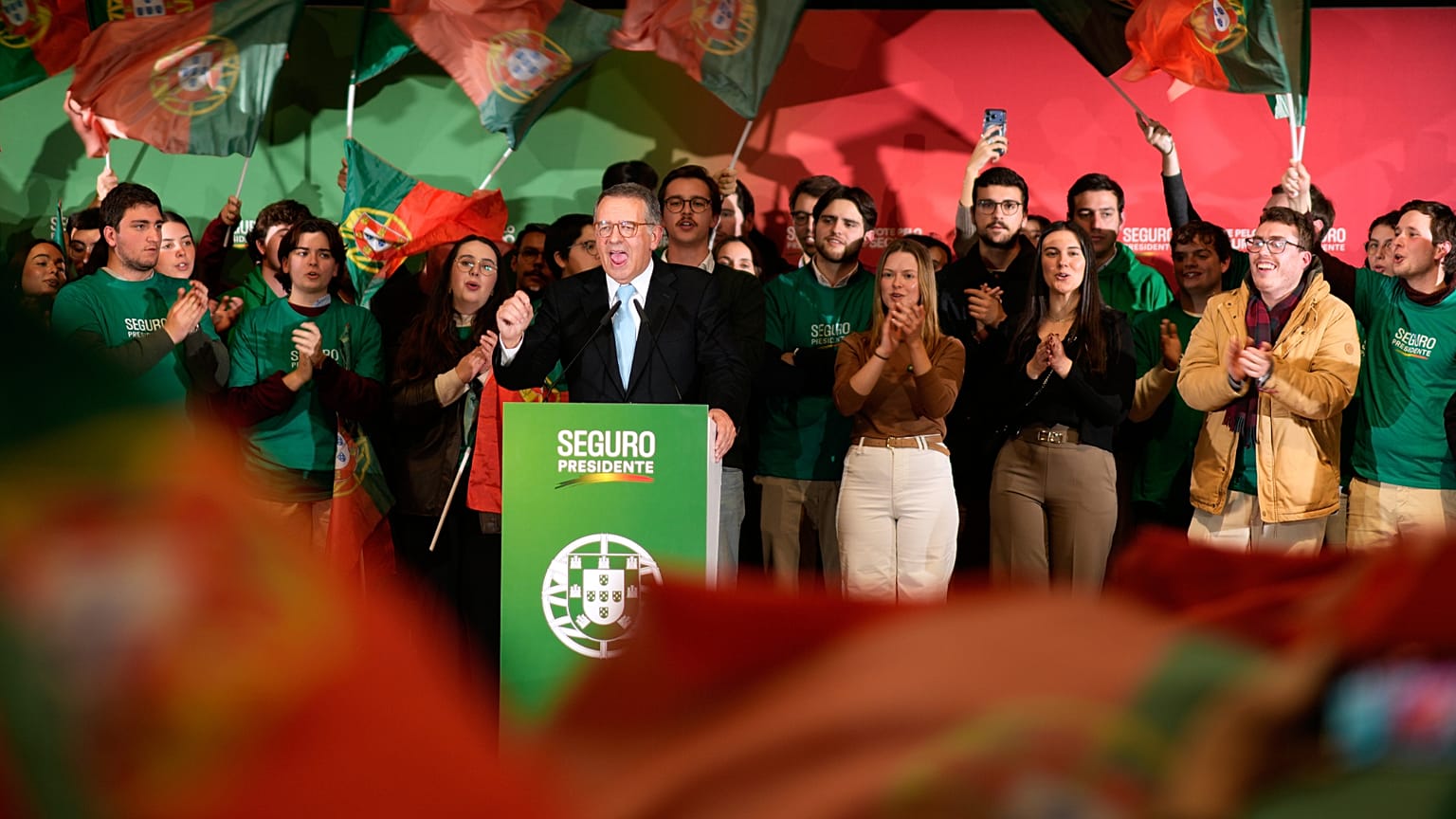
Presidential candidate Antonio Jose Seguro delivers a speech at his campaign closing rally ahead of Sunday's presidential election, in Lisbon, Friday, Jan. 16, 2026.
Copyright Armando Franca/Copyright 2026 The AP. All rights reserved

By Joana Mourão Carvalho
Published on 

In one of the closest contests in recent decades, António José Seguro won most votes in the first round of Portugal's presidential election, with far-right candidate André Ventura securing a place in the runoff set for 8 February.

Portugal's far-right presidential candidate André Ventura placed second in Portugal's presidential election on Sunday, securing a place in a runoff next month against centre-left Socialist (PS) candidate António José Seguro.

Ventura’s strong showing was another milestone in Europe’s shift to the far-right, as populist parties have got their hands on, or edged closer to, the levers of power in recent years.

With almost 98% of votes counted, André Ventura, leader of the Chega (Enough) party that he founded less than seven years ago, captured 24% of the vote and placed second behind Seguro who led with almost 31%. They will face off in a second-round ballot between the two top candidates on 8 February.

It was the best result for a Socialist candidate since Jorge Sampaio in 2001, who at the time obtained 2,411,453 votes (55.76%).

Seguro will now have the arduous task of increasing his vote in a political environment marked by the decline in the weight of the left.

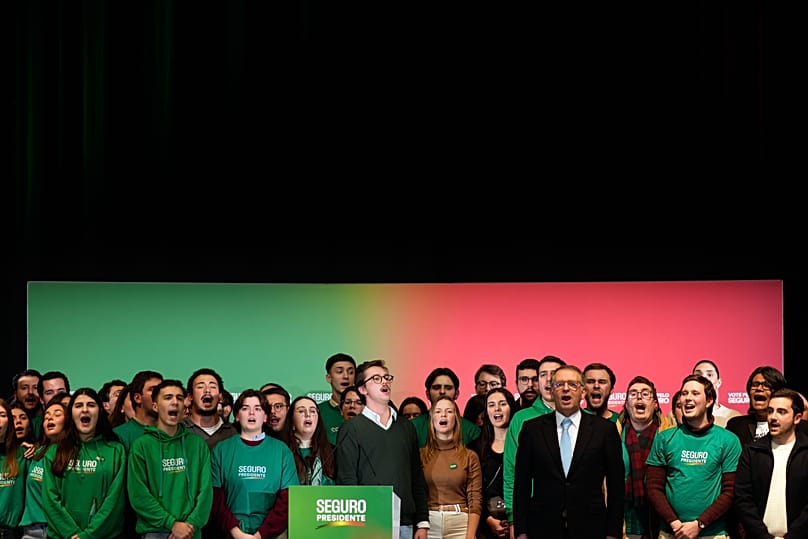
Presidential candidate Antonio Jose Seguro sings the national anthem on stage at the end of his campaign closing rally, in Lisbon, Friday, Jan. 16, 2026. AP Photo/Armando Franca

The PS-backed candidate promised to "honour the vote of confidence" given to him, reaffirming the independent nature of his candidacy: "I am free, I live without ties".

Seguro declared his victory in the first round as one that "won democracy", vowing to do so again on 8 February.

In his speech late on Sunday night, he invited "all democrats, progressives and humanists" to join his candidacy and together "defeat extremism".

The winning candidate in the first round also promised to be "the President of all Portuguese people".

"I'm ready to be the President of the new times. It's time to defeat fear and raise hope," he said, adding that his victory in the second round is the "victory of Portugal, of freedom and democracy".

Ventura winks at non-socialist voters

Ventura's sudden and growing presence in Portuguese politics has snatched support from the country’s two main parties that have alternated in power for the past half-century: the center-right Social Democratic Party (PSD), currently in government, and the centre-left Socialist Party.

One of André Ventura's most significant results in these presidential elections is in the Autonomous Region of Madeira, the historic bastion of the Social Democrats, where he won with 33% of the vote.

André Ventura has qualified for the second round and promises to be the candidate of the non-socialist space Armando Franca/Copyright 2026 The AP. All rights reserved

On Sunday evening, when he addressed his supporters, he said that the country believed he was the "alternative" despite the "talk of the far right and the manipulation of the polls".

"We're going to lead the non-socialist space in Portugal. The right has fragmented like never before, but the Portuguese have given us the leadership of that right," he summarised.

"We managed to defeat the candidate of the government and of Montenegrinism; the candidate who claimed to be liberal, but had been on the globalist agenda, woke, and against Portugal; and we campaigned without personal picardy, without offence," he said.

In an appeal to the non-socialist vote, he addressed "leaders who are not socialists", reiterating that "the right will only lose elections with the selfishness of the PSD, IL and others who call themselves right-wing". "Now we'll see what fibre they're made of."

One of Ventura’s main targets has been what he calls excessive immigration, as foreign workers have become more conspicuous in Portugal in recent years. “Portugal is ours,” he says.

During the election campaign, Ventura put up billboards across the country saying, “This isn’t Bangladesh” and “Immigrants shouldn’t be allowed to live on welfare.”

At the same time, more moderate voters remain sceptical of Ventura, and various opinion polls have pointed to a defeat against António José Seguro in the second round.

PSD faces weakest performance in 25 years

Currently at the head of the government, the PSD and People's Party (CDS-PP) decided to support Luís Marques Mendes, the former leader of the Social Democrats, in this presidential election.

With Marques Mendes not receiving more than 11% of the vote, in fifth place, it was the worst result for a PSD-backed candidate since Joaquim Ferreira do Amaral in 2001, when he got 34.5% of the vote and came second to Jorge Sampaio.

In previous presidential elections, the two social-democratic candidates secured first-round victories and were re-elected for a second term.

Aníbal Cavaco Silva won the 2006 presidential elections with 50.5% of votes, and was re-elected in the 2011 presidential elections with 52.95% of votes.

His successor Marcelo Rebelo de Sousa won the 2016 presidential election with 52% of votes and was re-elected in the 2021 presidential election with 60.67%.

Luís Marques Mendes publicly took full responsibility for his defeat in the presidential elections and revealed that he is not supporting any other candidates in the second round of the presidential elections.

Marques Mendes and PSD do not endorse any candidate in the second round Armando Franca/Copyright 2026 The AP. All rights reserved

In a speech at PSD headquarters, Prime Minister Luís Montenegro also sought to prevent Marques Mendes' result from contaminating the government and the PSD's electoral expression in the legislative elections.

"Our political space will not be represented in this second round. We accept this choice with democratic humility. The PSD will not be involved in the electoral campaign. We won't be giving any indications, nor are we supposed to," said the Social Democrat leader, adding that "the PSD was chosen to govern the country and that's what it will be doing over the next three weeks, as well as over the next few years".

"The PSD will be governing Portugal, the autonomous regions, the majority of local councils, in the course of a legitimate, free, democratic choice by the Portuguese," he emphasised.

When questioned by journalists, Montenegro repeatedly tried to avoid associating a defeat for Marques Mendes with a defeat for the PSD.

"That's what democracy is," he relativised, stressing that the Portuguese make a "distinction" in the different elections. "The Portuguese chose us to govern and we will continue to govern."

Nine other candidates ran in what was the most hotly contested presidential election ever, but none came close to the 50% required for a first-round victory.

The winner will replace President Marcelo Rebelo de Sousa, who has served the limit of two five-year terms.


Carbon-sucking fungi and 'forever chemical' crackdowns: Positive environmental stories from 2026

Tackle eco-anxiety with Euronews Green's round-up of positive environmental stories.
Copyright Canva

By Angela Symons
Published on 

Eco anxiety is very real, so we share this year's most uplifting stories to prove there’s hope for our climate.

With powerful nations rolling back climate protections and temperatures soaring ever closer to dangerous thresholds, it's hard not to feel worried about the state of the planet.

As green journalists, climate anxiety, climate doom and even environmental existential dread are a daily presence.

These terms all describe the negative feelings, such as stress, fear, anger and grief, that confront us when the reality of a warming Earth hits home. With almost daily stories of destruction and loss of life due to extreme weather, it’s impossible to escape the impacts of climate change.

Rather than being paralysed by helplessness, though, experts suggest that we channel these feelings into action.

At Euronews Green, we know we play a key role in combatting climate doom. While it’s our job to be truthful and accurate in our reporting and not downplay or greenwash the realities, we also want to remind you that there is always hope.

This is why, for the past four years, we’ve kept a roundup of positive environmental news. Every year we cover hundreds of good news stories, from eco-innovations and green breakthroughs to climate wins and feel-good reports on nature.

Here are this year's top positive stories so far - including the small and local, the silly that made us smile - and the enormous and potentially world-changing.

If you came across a great, positive story that we haven't covered, please reach out to us on Instagram or X to share your ideas.

Positive environmental stories from January 2026

We’ve neglected the power of carbon-sucking fungi. Meet the scientist determined to change that

An “invisible” key to tackling the climate crisis has taken centre stage after evolutionary biologist Dr Toby Kiers was named the winner of the 2026 Tyler Prize for Environmental Achievement.

The Laureate, which is often touted as the ‘Nobel Prize’ for the climate, recognises “outstanding” scientific work in environmental science, health and energy that benefits humanity. It comes with a $250,000 (around €215,000) cash prize.

How the oceans’ coral reefs could be a secret weapon to tackle food insecurity around the world

Coral reefs could become a crucial part of the pathway to help fight global hunger and improve nutrition around the world.

New research from the Smithsonian Tropical Research Institute (STRI) says that rebuilding coral fish stocks and managing them at a “sustainable level” is still feasible and may be a solution to tackling malnutrition. In some places, this could be achieved in as little as six years.

A rare whale is having an encouraging season for births

One of the world's rarest whale species is having more babies this year than in some recent seasons, but experts say many more young are needed to help stave off the possibility of extinction.

The North Atlantic right whale's population numbers an estimated 384 animals and is slowly rising after several years of decline.

France’s ban on ‘forever chemicals’ comes into force. Here’s what will change

France’s ban on "forever chemicals" came into force on 1 January following mounting concern over the adverse health impacts of these persistent pollutants.

The landmark bill was passed on 20 February 2025, with more than 140,000 citizens calling on their MPs to support the ban.


Will AI replace jobs? Anthropic report finds the answer is not so straightforward

The Anthropic website and mobile phone app are shown in this photo, in New York, July 5, 2024.
Copyright AP Photo/Richard Drew

By Roselyne Min
Published on 

A report by Anthropic looks at how people and companies used the AI assistant Claude, using a large sample of anonymised conversations.

Despite widespread fears about artificial intelligence (AI) replacing jobs, the technology is currently assisting workers instead of t killing jobs, a study by AI firm Anthropic suggests.

Despite the job worries, the research is more complex as AI was found to reshape jobs differently, depending on the role. It marks a contrast to CEO Dario Amodei’s past comments that AI could wipe out half of all entry-level white-collar jobs.

Instead of focusing only on how often AI is used, the report looked more closely at what kind of tasks it is given and whether it succeeds, introducing a set of measures the authors call “economic primitives”.

These measures examine the types of tasks people use AI for, how difficult those tasks are, the level of education required to understand both the user’s request and the AI’s response, how much autonomy is given to the AI, and how reliably it completes the task.

The authors said these markers are intended to give “a new window for understanding AI’s impact on the economy”.

The study found that 49 percent of jobs can now use AI in at least a quarter of the tasks involved, which is a 13 per cent increase from early 2025.

The report analysed how people and businesses used Anthropic’s AI assistant Claude in November 2025, drawing on an anonymised sample of two million real conversations from its free and paid services.

Usage remains uneven across jobs and economies

According to the report, Claude usage is concentrated among certain tasks, most of which relate to coding.

Overall, AI is most often used for assignments that require higher levels of education than the average in the economy, such as Software development requests, the report found.

Not all office jobs are affected in the same way by AI and the technology can both upskill or deskill workers, it added.

“For some occupations ,it (AI) removes the most skill-intensive tasks, for others the least,” the report stated.

The report also highlights geographic differences. Countries with higher incomes tend to use AI more frequently, and more often for work and personal tasks. Lower-income countries show a higher share of educational use.

While work-related tasks account for the largest share of Claude usage, educational use is highest in countries with lower Gross Domestic Product (GDP) per capita. Wealthier countries, by contrast, show higher levels of personal use.

Anthropic said this reflects different stages of adoption, with users in lower-income countries more likely to use AI for education, while usage in richer economies broadens to include everyday and personal tasks.

Understanding how AI is used is ‘important’

Researchers also examined whether people were using Claude to fully automate a task for them or to "augment" their work.

Automation typically involves giving the AI a task to complete with little interaction, such as translating text into another language. Augmentation involves collaboration, such as drafting and revising a document together.

On the Claude site, 52 percent of work-related conversations involved augmented tasks. That share is down five percent from January of last year.

The report also found that more complex tasks tend to be less reliable. As tasks become longer or more difficult, Claude’s success rate falls, which reduces the amount of time humans ultimately save.

Earlier estimates assumed AI tasks were successful whenever the technology was used. By taking account of errors and the need for human checking and correction, the report reached more cautious conclusions about productivity gains.

“Claude struggles on more complex tasks: As the time it would take a human to do the task increases, Claude’s success rate falls,” the authors noted in the report.

This is the fourth edition of Anthropic’s economic index, which tracks how AI is being integrated into work and its potential effects on jobs and productivity.

Authors of the report argue that understanding how AI is used is as important as measuring how widely it is adopted.

“How willing users are to experiment with AI, and whether policymakers create a regulatory context that advances both safety and innovation, will shape how AI transforms economies,” the report said.