Monday, January 19, 2026

Proposed Surcharge On Oil Would Help Pay For Responses To Climate-Related Disasters In Alaska


U.S. Coast Guard MH-60 Jayhawk helicopter aircrews conduct overflights of Kipnuk, Alaska, after coastal flooding impacted several western Alaska communities, Oct. 12, 2025. The Coast Guard continues to support the state of Alaska’s response efforts in impacted communities. (U.S. Coast Guard photo courtesy of Air Station Kodiak)

January 19, 2026 
Alaska Beacon
By Yereth Rosen

(Alaska Beacon) — Landslides, storm-driven floods, infrastructure-damaging permafrost thaw and intensifying wildfires are among the expensive disasters that scientists link to Alaska’s rapidly changing climate.

Now a state legislator is proposing to levy a 20-cent surcharge on every barrel of Alaska-produced oil to fund programs that respond to and prepare for disasters related to climate change.

Rep. Andy Josephson, D-Anchorage, introduced the measure, House Bill 247, in advance of the legislative session scheduled to start on Jan. 20.

To explain why the state needs such a fund, Josephson ticked off a list of recent disasters in Alaska that imposed heavy costs — and, in some cases, killed people. Those events, which include deadly landslides in Southeast Alaska, landslides that have blocked roads, severe flooding 
“It’s a true statement that a lot of the disaster dollars we need right now are related to climate change. That, in my opinion, is sort of inarguable,” he said.

Disasters like those that have occurred in recent years are expected to continue in the future, he said: “We’re in a new normal.”

The bill is logical from a fiscal standpoint, Josephson said.

As of now, the state’s disaster relief fund is “basically a sub-fund of the general fund,” and it gets whatever lawmakers are able to appropriate, he said. But if there is a new stream of money as proposed by his bill, “we would free up those dollars we’re otherwise spending in the disaster relief fund.”

At 20 cents per barrel, the proposed surcharge would raise about $30 million a year, he said.

In comparison, Gov. Mike Dunleavy in December proposed that lawmakers approve a $40 million appropriation for the state’s existing disaster relief fund. The need could increase from that total if the Trump administration fails to reimburse 100% of the costs for Typhoon Halong relief rather than the normal 75%. The Biden administration in 2022 approved 100% reimbursement for Merbok-related costs.

As introduced by Josephson, the bill would give the Alaska Department of Environmental Conservation oversight over the money generated by the surcharge. It would distribute fund money in the form of grants to local governments and other entities for purposes like disaster response, disaster preparation and upgrades that make infrastructure better protected against climate change.

The surcharge idea has precedent in Alaska. The Department of Environmental Conservation already administers another fund with money coming from a per-barrel fee on oil produced in the state.

After the 1989 Exxon Valdez oil spill, the state began levying a 5-cent-per-barrel surcharge on oil that goes into the state’s Oil and Hazardous Substance Release Prevention and Response Fund. The fund itself was created by the legislature in 1986, with the surcharge established after the disastrous Prince William Sound spill.

That surcharge and rules concerning the fund’s operations have been modified over the years, broadening the purposes for which the fund can be used and boosting DEC’s reporting requirements, according to the department.

In its current configuration, each 5-cent-per-barrel surcharge sends 1 cent into a spill response account, to be used for spills that have been officially declared disasters. The other 4 cents goes into a spill prevention account, which can be used to address spills that have not been declared disasters, among other functions.

In 2015, refined petroleum products were added to the program. The state added a small surcharge, 0.95 cents per gallon, on refined fuel projects sold, transferred or used at the wholesale level, according to the DEC.

The idea of a similar levy to raise money for climate change preparedness and response is not new.

Rick Steiner, a retired University of Alaska marine conservation professor who founded and leads an environmental organization called Oasis Earth, has been advocating for the approach for several years.

“The legislature has so far seemed unable or unwilling to connect the dots between the many climate-related disasters we are experiencing — typhoon Merbok, wildfires, landslides, floods, coastal erosion, permafrost thaw, storm damage, infrastructure damage, subsistence impacts, commercial fishing impacts, etc..– to see the larger picture of the threat and costs these interrelated climate disasters pose,” he said in a letter to lawmakers sent last September. “The money to address these issues will have to come from government.”

In advocating for what he called an Alaska Climate Resilience Fund, Steiner said funding issues have become more pressing because of federal cutbacks.

The climate-response surcharge idea is not unique to Alaska, either.

Hawaii has put its version of a climate surcharge into law, a measure that seeks to raise money for responses to future disasters like the deadly 2023 Lahaina wildfire on the island of Maui.

In May, Hawaii Gov. Josh Green, a Democrat, signed a bill that increases the state’s hotel and lodging tax by less than a percentage point. The increase is applied to the state’s Transient Accommodations Tax, known at TAT. The governor said the increase would amount to an additional charge of about $3 on a $400-a-night hotel room fee. It is expected to generate about $100 million a year, according to state officials.

Alaska Beacon is an independent, nonpartisan news organization focused on connecting Alaskans to their state government. Alaska, like many states, has seen a decline in the coverage of state news. We aim to reverse that.
Use of private jets to Davos has soared in the past three years. Is it time for a super-rich tax?


Copyright Copyright 2026 The Associated Press. All rights reserved

By Liam Gilliver
Published on 19/01/2026 


The World Economic Forum (WEF) has gotten off to a bumpy start as participants are criticised for their soaring use of private jets.


All eyes turn to Davos today, as the World Economic Forum (WEF) commences its annual meeting.

Some of the world’s most powerful elite, including government leaders and business execs, have gathered in Switzerland to engage in “forward-looking discussions to address global issues and set priorities”.

One of the key themes of this year’s event is building prosperity “within planetary boundaries” - with WEF highlighting that nature loss impacts 75 per cent of Earth’s land and poses “significant economic risks”.

The argument that the world should transition to nature-positive business models to unlock $10 trillion (around €8.6 trillion) annually by 2030 will be put forward tomorrow (20 January) following discussions around electric vehicles (EVs) and the retreat of glaciers.

However, Davos sparked backlash before participants even touched down in Switzerland.

Has Davos turned into a ‘private jet shuttle hub’?

Environmental organisation Greenpeace has published a new analysis of private jet flights to and from Davos-area airports over the past three years - before, during, and after the WEF.

Titled Davos in the Sky, the report found a “sharp rise” in private jet activity, despite overall attendance at the forum remaining broadly stable.

During the week of the 2025 WEF, 709 additional private jet flights were identified at airports near Davos. This roughly works out at almost one private jet flight per four WEF participants.


It marks a 10 per cent increase from 2024, and a threefold rise compared with 2023. In 2024 and 2025, many private jets flew in and out of Davos multiple times during the same week, which Greenpeace argues has turned the event into a “private jet shuttle hub”.

The organisation calculates that around 70 per cent of the private jet routes could have been travelled by train within a day, or with a train and connecting train.
A tax for the super-rich

“It’s pure hypocrisy that the world’s most powerful and super-rich elite discuss global challenges and progress in Davos, while they literally burn the planet with the emissions of their private jets,” says Herwig Schuster of Greenpeace Austria.

The organisation argues that the time for action is “now” as it calls on governments to curb polluting luxury flights and tax the super-rich “for the damage they cause”.

Greenpeace supports UN Tax Convention (UNFCITC) negotiations towards new global tax rules through 2027 and urges a levy on luxury aviation, including private jets and first and business class flights.


Billionaire wealth at new high, Oxfam warns of political influence ahead of Davos

The fortunes of the world’s ultra-rich have surged to a record high and now pose political threats, warns Oxfam’s annual report on billionaires released ahead of the World Economic Forum at Davos, which opens Monday.

Issued on: 19/01/2026 - RFI


Protesters, one dressed up as US President Donald Trump and another as a police officer, at the start of a demonstration against the annual meeting of the World Economy Forum in Davos, Switzerland, 18 January 2026. © Markus Schreiber/AP

By:RFIFollow
ADVERTISING


The wealth of the world’s billionaires went up 16.2 percent in 2025, the anti-poverty group said in its report released to coincide with the opening of the Davos forum, which brings together some of the world’s wealthiest people together with political leaders, CEOs, financiers, and international institutions.

Oxfam says the increase has been driven in part by policies put in place by US President Donald Trump, including tax cuts, “the championing of deregulation and undermining agreements to increase corporate taxation have benefited the richest around the world”.

It pointed to Washington's decision to exempt US multinationals from an internationally agreed minimum tax rate of 15 percent as an example of policies that ignore growing inequality.

"In country after country, the super-rich have not only accumulated more wealth than could ever be spent, but have also used this wealth to secure the political power to shape the rules that define our economies and govern nations," the report warned.

Drawing on academic research and data sources ranging from the World Inequality Database to Forbes' rich list, the report found that the world’s 3,000 billionaires are 4,000 times more likely than ordinary citizens to hold political office.

Billionaires highlight France’s complicated relationship with wealth

Oxfam highlighted what it sees as the growing influence of ultra‑wealthy business figures over traditional and digital media.

Billionaires now own more than half of the world’s major media firms, Oxfam said, citing Elon Musk’s takeover of X, Amazon's Jeff Bezos ownership of The Washington Post, and French billionaire Vincent BollorĂ©’s control of numerous newspapers and television stations in France, as well as his majority stake in the Vivendi media group..

Oxfam urged governments to adopt national inequality reduction plans, raise taxes on the extremely rich, and strengthen firewalls between money and politics, including tighter limits on lobbying and campaign financing.


Would tax hikes for the wealthiest really drive them to flee France?

Only a few countries currently have wealth taxes. In France, which replaced its wealth tax with a narrower tax on real estate assets, debate over reinstating the wider tax resurfaced during the ongoing politically contested debates over the 2026 budget.

(with newswires)


\
Surging billionaire wealth leads to ‘dangerous’ political risks, Oxfam warns as Davos forum opens

The world’s billionaires grew richer than ever in 2025, charity Oxfam said on Monday, warning of “highly dangerous” political consequences as elites gather at the World Economic Forum in Davos, Switzerland. It said US President Donald Trump’s policies helped boost billionaire wealth 16.2 percent to $18.3 trillion in the first year of his second term.


Issued on: 19/01/2026 
By: FRANCE 24

US President Donald Trump, during his last in-person visit to the World Economic Forum in Davos, Switzerland, January 22, 2020. © JIM WATSON, AFP

The collective wealth of the planet's billionaires soared to a record level in 2025, charity Oxfam reported Monday, warning of "highly dangerous" political consequences as the global elite gathers for the World Economic Forum.

US President Donald Trump's policies in particular spurred the fortunes of the ultra-rich, which jumped 16.2 percent in the first year of his second term to $18.3 trillion, the NGO said in a report released each year ahead of the Davos forum.

"Actions of the Trump presidency including the championing of deregulation and undermining agreements to increase corporate taxation have benefited the richest around the world," Oxfam said.

The world now has more than 3,000 billionaires for the first time, it added, with the top 12 – led by Tesla and SpaceX chief Elon Musk – having "more wealth than the poorest half of humanity, or more than four billion people".


Increasingly this money is buying political power, Oxfam said, pointing in particular to tycoons' buying newspapers and other media, such as Musk's takeover of X or the purchase of The Washington Post by Amazon's Jeff Bezos.

READ MOREBezos announces restrictions on Washington Post opinion coverage

"The widening gap between the rich and the rest is at the same time creating a political deficit that is highly dangerous and unsustainable," Oxfam's executive director Amitabh Behar said.

Trump will arrive with one of the biggest US delegations ever for the Davos conference, where he is expected to dominate an agenda officially billed as "A Spirit of Dialogue".

© France 24
06:56


Davos protests


Trump's participation galvanised around 300 protesters who arrived in Davos on Sunday, many wearing masks of Musk or US Vice President JD Vance and holding fistfuls of euros.

Nathalie Ruoss of the Swiss Young Socialists said the most powerful people in the world make decisions at Davos that impact everyone.

"And they do it with no democratic legitimacy," she said, calling it "unacceptable" that the WEF welcomed "fascists like Donald Trump".

For Oxfam, Washington's decision to exempt US multinationals from an internationally agreed minimum tax rate of 15 percent was a stark example of ignoring growing inequality.

"In country after country, the super-rich have not only accumulated more wealth than could ever be spent, but have also used this wealth to secure the political power to shape the rules that define our economies and govern nations," it said.

"Such power gives billionaires a grasp over all our futures, undermining political freedom and eroding the rights of the many."

(FRANCE 24 with AFP)


Syrian army deploys in former Kurdish-held areas under ceasefire deal

Deir Ezzor (Syria) (AFP) – Syria's army deployed in formerly Kurdish-led areas in the country's east and north on Monday after a ceasefire announced a day earlier, as Syria's president and the Kurds' leader were set to hold talks.


Issued on: 19/01/2026 - RFI

Syria's army deployed in formerly Kurdish-led areas in the country's east and north after a ceasefire announced a day earlier © OMAR HAJ KADOUR / AFP

The leader of the Syrian Kurdish forces said Sunday he agreed to the deal with Damascus to avoid broader war, integrating the Kurds' administration and his fighters into the state after months of stalled negotiations.

Despite the deal, the government and the US-backed, Kurdish-led Syrian Democratic Forces (SDF) traded blame on Monday for fresh attacks that the military said killed three soldiers.

Syrian President Ahmed al-Sharaa announced the accord with SDF chief Mazloum Abdi following two days of rapid gains in Kurdish-controlled territory after the army pushed the SDF out of Aleppo city earlier this month.

Analysts said the deal marked a blow for the minority's long-held ambitions of preserving the de facto autonomy they had exercised in swathes of north and northeast Syria for over a decade.

In Deir Ezzor province in the country's east, an AFP correspondent saw dozens of military vehicles heading to the east of the Euphrates River, while trucks, cars and pedestrians lined up at a small bridge leading to the eastern bank.

Mohammed Khalil, a 50-year-old driver told AFP that he was overjoyed by the arrival of Syrian government forces.

"We hope things will be better than before. There was... no freedom" under the SDF, he said.

Teacher Safia Keddo, 49, said "we want children to return to school without fear, and for electricity, water, and bread to be re

'Protecting civilian lives'

The army said it "started the deployment" into Syria's north and east "to secure it under the agreement", adding that forces had reached the outskirts of Hasakeh city, whose province is the Kurds' stronghold.

The military did not say where its soldiers were killed but accused "terrorist groups" of seeking to disrupt the deal's implementation.

The SDF instead accused the government of launching attacks and reported "violent clashes" near a prison in Raqa that holds detainees from the Islamic State group.

The agreement includes the Kurdish administration's immediate handover of Arab-majority Deir Ezzor and Raqa provinces to the government, which will also take responsibility for IS prisoners and their families held in Kurdish-run jails and camps.

The SDF had seized swathes of the provinces as they expelled the jihadists during Syria's civil war with the support of an international coalition led by the United States.

An AFP correspondent in Raqa said security forces deployed in the main square, while a military convoy passed through the city as sporadic gunfire rang out.

Dozens of residents crossed the Euphrates in boats after two bridges were destroyed, while residents toppled a statue of a woman erected by Kurdish forces.

Raqa resident Khaled al-Afnan, 34, said "we support Kurdish civil rights... but we don't support them having a military role."

"This deal is important for protecting civilian lives," he told AFP.

'Serious doubts'

The SDF on Sunday withdrew from areas under its control in the eastern Deir Ezzor countryside, including the Al-Omar oil field, the country's largest, and the Tanak field.

Local fighters from tribes in the Arab-majority province sided with Damascus and seized the areas before the arrival of government forces.

Some Arab tribes were previously allied with the SDF, which included a significant Arab component.

An energy ministry official told state television on Monday that technical teams were heading to recently taken oil facilities to assess their condition.

The SDF's Abdi said Sunday he agreed to the deal to avoid civil war and end a conflict "imposed" on the Kurds.

Mutlu Civiroglu, a Washington-based analyst and expert on the Kurds, said the government's advance "raises serious doubts about the durability" of the ceasefire and a stalled March agreement between the government and the Kurds.

"Sharaa's confrontations with Kurdish forces, following earlier pressure on Alawite and Druze areas, reinforce doubts about the interim government's legitimacy and its ability to represent Syria's diverse population," he added.

Last year saw sectarian violence in the country's coastal Alawite heartland and in southern Syria's Druze-majority Sweida province.

Sharaa had on Friday issued a decree granting the Kurds official recognition, but the Kurds said it fell short of their expectations.

In Qamishli, the main Kurdish city in the country's northeast, activist Hevi Ahmed, 40, said Sunday's deal was "a disappointment after years of hope that the Syrian constitution might contain a better future for the Kurds."

© 2026 AFP


Decades of suffering: Long-term mental health outcomes of Kurdish chemical gas attacks


Frontiers

Monument 

image: 

 Halabja Monument, Halabja, Iraq

view more 

Credit: Ibrahim Mohammed


Dr Ibrahim Mohammed is a clinical psychologist and researcher specializing in trauma, somatic symptoms, and psychopathology in conflict-affected populations. He has worked for over a decade with survivors of massacres in the Kurdistan Region, integrating clinical practice with research. He is also a lecturer at the Institute of Psychotherapy and Psychotraumatology at the University of Duhok. His current research focuses on validating psychological instruments for Kurdish communities and exploring genetic and phenomic factors related to trauma-related disorders. 

In a new study in Frontiers in Psychiatry, he and colleagues showed exceptionally high levels of trauma among survivors of a notorious atrocity: the 1988 chemical attack on Halabja in Kurdistan. In this editorial, he summarizes their findings.

The Halabja attack was among the most notorious targets of Saddam Hussein's genocidal Anfal campaign of 1988, during which an estimated 182,000 Kurds were killed across Iraqi Kurdistan. At Halabja, an estimated 5,000 people died that day from chemical agents, primarily mustard gas and nerve agents. Thousands still suffer from its long-term effects. Entire families were shattered, homes destroyed, and the community bears the wounds to this day.

When anybody speaks about this chemical attack, the immediate horror often overshadows the story: the thousands of lives lost, the destruction. But less attention is given to what befell those who survived, carrying with them memories, fear, and pain several decades later. Our new study has tried to understand precisely what happens to people after surviving such a catastrophe. How do trauma and loss shape an entire lifetime?

We worked closely with more than 500 survivors of the Halabja chemical attack. We collected information on their experiences, health, and mental state. Somatic complaints, anxiety, depression, and symptoms of post-traumatic stress disorder were also assessed, as were the various traumatic experiences and social and clinical factors. The aim was to ascertain the full impact of such exposure in the long term.

The results were striking: even decades after the chemical gas attack, many survivors showed severe PTSD, depression, and anxiety. Sometimes more obvious than the psychological presentations were somatic symptoms like pain, fatigue, and chronic health issues. It is important to note that trauma does not just disappear with time: it evolves, remains, and weaves itself into the fabric of daily life, particularly in a community that remains under economic pressure and social strain.

Embodied trauma

One of the things we noticed was the tendency of trauma to be embodied. In this part of the world, as in many others, physical symptoms reflect emotional distress, for example in the form of headaches, back pain, exhaustion, or stomach problems. These are not simply medical complaints, but the echoes of psychological injury. We need to understand this in our attempts at care the care that is meaningful and compassionate.

Our study also underlined the cumulative stress. Survivors who faced multiple traumatic events like displacement, loss of loved ones, or witnessing brutal violence, suffered higher levels of distress. Their vulnerability was heightened by factors such as chronic illness, low income, and less education. Yet, despite such hardships, we saw remarkable resilience. After profound experiences, people manage to adjust, provide for their families, and move on.

One story that still stays vividly in my mind is that of a man who was suffering from acute respiratory problems, due to the chemicals at the scene. He bore the scars as deep in his mind as in his body. We arranged for him to see a mental health professional, in hopes of lessening his load. But just a week later, I would hear the news that he had died from complications related to his lung issues. Even decades after the attack, lives are still lost, echoing the enduring toll of that tragedy.

Call to action

In our data, almost 79% of our participants met symptom criteria for PTSD, while 65% had clinically significant depression or anxiety, and well over half experienced severe somatic symptoms. Women, those with lower incomes, and less education were especially vulnerable. Fewer than 17% were receiving psychotropic medications, representing an enormous gap in mental health treatment for survivors.

Perhaps the most sobering finding was the glaring lack of mental health support. Many participants reported never having received proper psychological care. There has been long negligence in attending to the needs of chemical attack survivors, and services in Kurdistan are scant. This study is more than a set of numbers: it is a call to action. Besides recognition, survivors need access to culturally sensitive mental health services, programs to trace missing family members, and official support for compensation and ongoing care.

This is the story of the people behind the statistics. Every number represents a life, a memory, a struggle that extends decades beyond the event. Survivors gave accounts with courage and honesty, reminding us that trauma is very much more than any clinical diagnosis could contain. It is deeply, painfully human.

Healing from mass violence is not a process of forgetting nor returning to some naive version of ‘normal’: for survivors, it may mean carrying memories that will not fade, while finding ways to live with them day after day. Recovery is a journey premised on understanding, empathy, and steadfast care from the community to top levels of policymakers. We hope that this study contributes to such an understanding.

By detailing the long-term psychological and physical effects of chemical attacks, we aim to inform authorities, health professionals, and communities on offering better care. By sharing their experiences, we honor the survivors' resilience and bravery in the face of such profound trauma.

Besides being a story of great loss, Halabja serves as a living reminder that the effects of war continue long after hostilities cease. They echo across lifetimes and generations. By listening closely, studying respectfully, and responding thoughtfully, we can ensure survivors are neither forgotten nor neglected and that their ongoing struggles receive the care and understanding they deserve.

Saved by fans, historic Paris arthouse cinema La Clef reopens

La Clef, a legendary arthouse cinema in Paris's Latin Quarter, remains a symbol of resistance in an era when big screens are struggling to survive. After a long closure, a sit-in and a legal battle, a collective of its supporters bought the venue and reopened it this week.

Photo of the facade of La Clef arthouse cinema in Paris's 5th arrondissement. After a five-year closure, a legal battle and a sit-in, the cinema reopened on 14 January, 2026. © RFI / Ollia Horton
04:07

Issued on: 18/01/2026 
RFI
By: Ollia Horton

The saga could make a script for a David-and-Goliath movie: plucky community group saves local cinema from real estate developers!

That’s exactly what happened to La Clef ("The Key"), one of the few remaining independent arthouse cinemas in Paris, which reopened on 14 January.

Established by cinephile Claude Franck-Forter in 1973, when the 1968 protests still loomed large in the student-dominated fifth arrondissement, the cosy theatre on the corner of Rue de la Clef carved out a niche for non-mainstream films and political debates.

It has always prided itself on supporting rare films from France and abroad, showcasing minority voices and under-represented groups while keeping ticket prices reasonable.

That model came under pressure when the building was taken over by the social committee of a French savings bank in 1981. Although it continued to function as a cinema, its future was uncertain – and even more so when the bank decided to put it on the market, forcing La Clef to close its doors in April 2018.

But the cinema's connection to the neighbourhood and wider film community ran deep – so much so that a collective calling itself La Clef Revival formed to raise funds to buy the building and keep it running as a non-profit organisation.

This ad hoc group of cinema-lovers, activists and local residents organised an illegal occupation of the building from 2019 until 2022, putting on screenings and gatherings and drumming up financial support.


Round-the-clock occupation

After an eviction, a long legal battle and a crowdfunding campaign, the cinema was finally bought by the collective in June 2024 for just over €2.5 million.

Chloé, a member of the collective, has fond memories of the sit-in, when activists occupied the cinema from 6am to midnight everyday to deter police intervention.

“We took turns sleeping in the cinema,” she told RFI. “I remember I had put my mattress behind the screen in the main screening hall and I was awoken by the noise of the 35mm [projector] showing a Gregg Araki film.

“Students from the area were coming in to have a croissant and watch the film before their classes. It was wonderful to wake up in that environment.”
ChloĂ© (L) and Kira (R) are active members of La Clef Revival, a collective that raised money to save La Clef cinema in the 5th district of Paris and keep it running as an independent non-profit organisation. It reopened on 14 January 2026. © RFI / Ollia Horton

The campaign to save the cinema received support from the film world in France and overseas – including in Hollywood, where Martin Scorsese and Quentin Tarantino were among the high-profile backers.

Numerous French directors, including Céline Sciamma and Leos Carax, hosted screenings during the occupation. And in 2023, more than 80 international artists donated works to be sold off in a fundraising auction, including filmmaker David Lynch and photographers Wang Bing and Nan Goldin.

“We were very touched by the recognition from certain figures in the film industry regarding our project and our commitment to saving this place,” says Taddeo, a cinema-goer who helped organise the sale and now acts as one of the collective's programming coordinators.

The day-to-day work of reopening La Clef has been led by ordinary film lovers like him – and Kira, who was in New York at the time of the occupation but remembered the cinema from her childhood in the neighbourhood.

“It’s amazing to show that it's possible to de-commodify an entire building, to take it out of the speculative real estate, to run it together and figure it out, to learn how to use the projectors, to learn how to take care of a space,” she told RFI.


Poster created to help save La Clef cinema in Paris. © RFI / Ollia Horton / La Clef Revival

Simon, who lives nearby, has been a regular spectator for years and loves the variety of films on offer. He became steadily more involved during the occupation and helped renovate the building after the sale was finalised.

“Every time I've seen a screening at La Clef, it's been completely different,” he says. “Being able to discuss amongst ourselves, developing new ways of watching films, is really something we can do in this kind of place.”
A true community cinema

In order to manage the funding and purchase, the collective set up an endowment fund called CinĂ©ma Revival. The new legal status means that the building doesn’t belong to any one entity and decisions must have a consensus from all members, preventing the cinema being sold off on a whim.

To maintain financial independence and limit the need for subsidies, La Clef’s business model is based on a mix of yearly memberships, sales at the bar and pay-what-you-want tickets. This means the price is decided by each audience member according to their means – at an average of €4.

The cinema operates with only two paid employees. The rest are volunteers who receive training to run the building, project the films and liaise with the public.

The collective also rents out the space to other associations for themed screenings and other community activities. And they have partnerships with film schools to allow cinema students to practice using 35mm projectors, as well as image and sound editing.

Model for independents

The cinema is connected to other independent cinemas around Europe via the Kino Climates network, which unites alternative venues in 17 countries.

La Clef Revival hopes their success will be emulated elsewhere, proving that there are viable alternatives to blockbuster films, multiscreen cinema chains and ever bigger streaming platforms.

“We really hope that this serves as an example, and that other people who want to also run spaces that are open to the public in their neighbourhoods and their cities,” says Kira.

“Maybe other countries can come here and see that it actually happened and that they could probably do it too.”
Ice core vault preserving climate history opens in Antarctica

The Ice Memory Foundation on Wednesday opened the world’s first sanctuary for mountain ice cores in Antarctica, aiming to preserve crucial records of Earth’s climate for centuries to come.

]
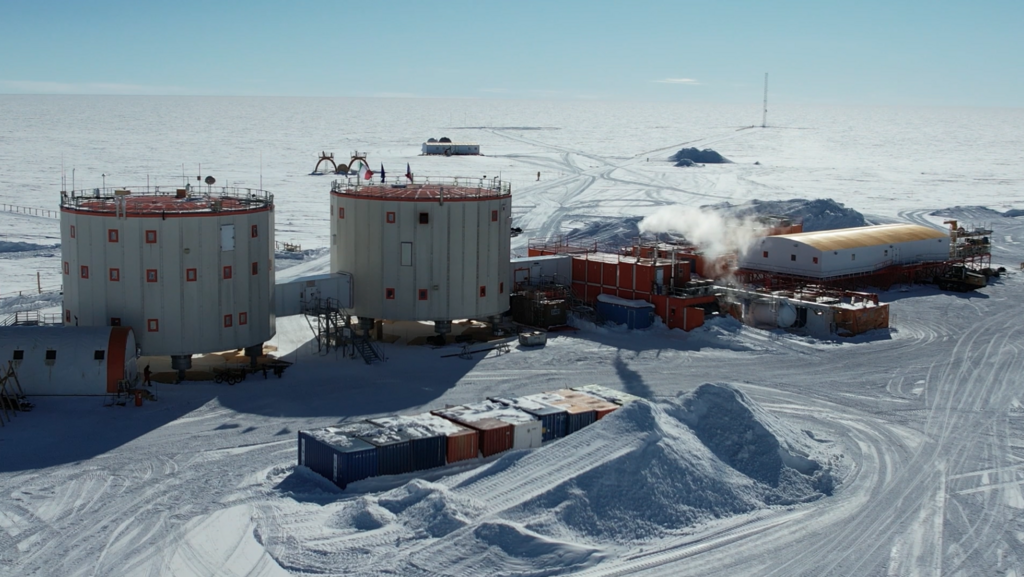
Ice cave and cores storage at the Concordia Station in Antarctica. © Gaetano MaccrÌ-PNRA-IPEV
01:32


16/01/2026 - RFI
By: Isabelle Martinetti

Designed to protect ice cores from glaciers that are rapidly disappearing due to global warming, the sanctuary is housed in Concordia Station, a French-Italian research base located 3,200 metres above sea level.

The first samples, taken from two glaciers in the Alps, are stored in a purpose-built snow cave.

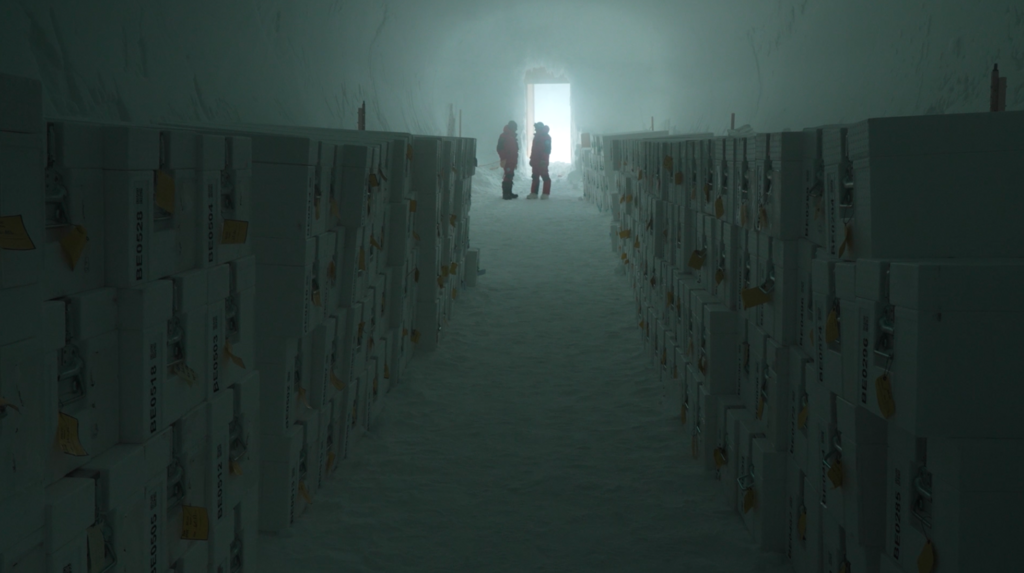
Buried about 5 metres beneath the surface, the cave maintains a constant temperature of -52C, allowing the ice to be preserved naturally without artificial refrigeration. It also minimises the risks from human or technical failures.

The Concordia Station in Antarctica where the ice cores are stored. © Gaetano Massimo Macri _ PNRA-IPEV

Scientists officially inaugurated the Ice Memory Sanctuary on Wednesday, amid outside temperatures of -33C.

"We are the last generation who can act," said Anne-Catherine Ohlmann, director of the Ice Memory Foundation.

"It’s a responsibility we all share. Saving these ice archives is not only a scientific responsibility – it is a legacy for humanity."

Entrance to the Ice Memory Sanctuary at the Concordia Station in Antarctica. © Gaetano Massimo Macri / PNRA-IPEV


Preserving climate records

Launched in 2015 by research institutes and universities in France, Italy and Switzerland, the Ice Memory project was conceived after scientists noticed a sharp rise in temperature on several glaciers.

Since 2000, glaciers have lost between 2 percent and 39 percent of their ice regionally and about 5 percent globally, according to a study published in Nature in 2025.

As they melt, invaluable scientific records are lost.

Preserving ice cores will allow future scientists to study Earth's climate history, explained Carlo Barbante, vice-chair of the Ice Memory Foundation and professor at Ca’ Foscari University of Venice.

"By safeguarding physical samples of atmospheric gases, aerosols, pollutants and dust trapped in ice layers, the Ice Memory Foundation ensures that future generations of researchers will be able to study past climate conditions using technologies that may not yet exist," he said.

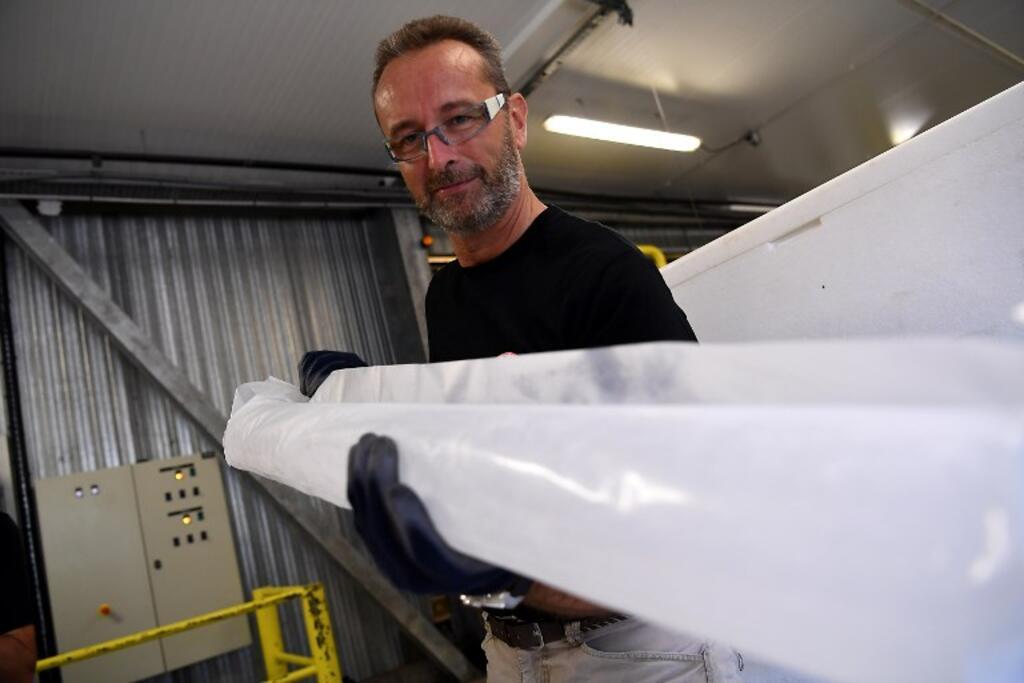
In this 2017 photo, Jérôme Chappellaz, scientific coordinator of the Ice Memory project, shows an ice core from Mount Illimani, Bolivia. @ AFP / Jean-Pierre Clatot

Natural vault

The Ice Memory Sanctuary measures 35 metres long and 5 metres high and wide.


Inside the Ice Memory Sanctuary at the Concordia Station in Antarctica. © Gaetano Massimo Macri _ PNRA-IPEV


Its stability is ensured by the extreme and naturally constant Antarctic temperatures.

The natural and low-impact snow cave was approved in 2024 under the Antarctic Treaty, which regulates the use of Antartica for scientific research, and was funded by the Prince Albert II Foundation.


Where will we store the ice cores?


It currently houses ice cores extracted from the Mont Blanc and Grand Combin glaciers in 2016 and 2025 respectively.


'Race against time'

Dozens of additional ice cores from glaciers worldwide – such as in the Andes, Pamir, Caucasus and Svalbard mountain ranges – are expected to join the Ice Memory archive in the coming years.

An international governance framework will be established over the next decade to ensure fair and transparent scientific access for future generations.

On Wednesday, European climate monitors and US confirmed that 2025 was the third hottest year on record, pushing the planet closer to a key warming limit.

"We are in a race against time to rescue this heritage before it will vanish forever," said Barbante.
US Navy DDG(X) Next-Generation Destroyer Program: Background And Issues For Congress – Analysis


A tomahawk cruise missile launches from the Arleigh Burke-class guided-missile destroyer USS Shoup. (U.S. Navy photo by Mass Communication Specialist 2nd Class William Collins III)


January 19, 2026 
Congressional Research Service (CRS).
By Ronald O’Rourke


Introduction

The Navy’s DDG(X) program has envisaged procuring a class of next-generation guided-missile destroyers (DDGs) to replace the Navy’s Ticonderoga (CG-47) class Aegis cruisers and older Arleigh Burke (DDG-51) class Aegis destroyers. Navy plans have called for procuring the first DDG(X) in the early 2030s. The Navy’s proposed FY2026 budget requested $133.5 million in research and development funding for the program.

On December 22, 2025, the Trump Administration announced a proposed program to build a new class of guided missile battleships (BBG[X]s) for the Navy. (For more on the BBG(X) program, see CRS In Focus IF13142, Navy Guided Missile Battleship (BBG[X]) Program: Background and Issues for Congress, by Ronald O’Rourke.) Somepress reports have stated that the Navy intends to suspend work on the DDG(X) program as a consequence of starting the BBG(X) program.

Navy Large Surface Combatants (LSCs)

Force-Level Goal

The Navy refers to its cruisers and destroyers collectively as large surface combatants (LSCs). The Navy’s preferred 381-ship force-level goal, released in June 2023, calls for achieving and maintaining a force of 87 LSCs.

Existing LSCs

The Navy’s CG-47s and DDG-51s are commonly called Aegis cruisers and Aegis destroyers, respectively, because they are equipped with the Aegis combat system, an integrated collection of sensors and weapons named for the mythical shield that defended Zeus. The Navy procured 27 CG-47s between FY1978 and FY1988. The ships entered service between 1983 and 1994. The first five, which were built to an earlier technical standard, were judged by the Navy to be too expensive to modernize and were removed from service in 2004-2005. The Navy began retiring the remaining 22 ships in FY2022 and wants to retire all 22 by the end of FY2027.

The first DDG-51 was procured in FY1985 and entered service in 1991. The version of the DDG-51 that the Navy is currently procuring is called the Flight III version. The Navy also has three Zumwalt (DDG-1000) class destroyers that were procured in FY2007-FY2009 and are equipped with a combat system that is different than the Aegis system. (For more on the DDG-51 and DDG-1000 programs, see CRS Report RL32109, Navy DDG-51 and DDG-1000 Destroyer Programs: Background and Issues for Congress, by Ronald O’Rourke.)

LSC Industrial Base


All LSCs procured for the Navy since FY1985 have been built at General Dynamics/Bath Iron Works (GD/BIW) of Bath, ME, and Huntington Ingalls Industries/Ingalls Shipbuilding (HII/Ingalls) of Pascagoula, MS. Lockheed Martin and Raytheon are major contractors for Navy surface ship combat system equipment. The surface combatant industrial base also includes hundreds of additional component and material supplier firms.
DDG(X) Program: Program Designation and Lead Ship Procurement

In the program designation DDG(X), the X means the precise design for the ship has not yet been determined. As mentioned earlier, Navy plans have called for procuring the first DDG(X) in the early 2030s. Procurement of DDG-51s—the type of LSC currently being procured by the Navy—would end sometime after the start of procurement of DDG(X)s.

Navy’s General Concept for the Ship

Figure 1 shows a Navy rendering of a notional DDG(X) design. The Navy approved the DDG(X)’s top-level requirements (i.e., its major required features) in December 2020. A January 2025 Congressional Budget Office (CBO) report on the Navy’s FY2025 30-year shipbuilding plan states, “The Navy has indicated that the initial [DDG(X)] design now prescribes a displacement of 14,500 tons—1,000 tons more than the design under the [FY]2024 [30-year shipbuilding] plan and 4,800 tons [about 49.5%] more than a DDG-51.”

Figure 1. Navy Rendering of Notional DDG(X) Design. Source: Navy rendering of notional DDG(X) design accompanying Sam LaGrone, “Navy Wants 3-Year Overlap Between Arleigh Burkes and DDG(X), Considering Propulsion System,” USNI News, January 10, 2024.

The Navy has envisaged the DDG(X) as a ship with (1) DDG-51 Flight III Aegis combat system elements; (2) more growth margin than the DDG-51 Flight III design, meaning more space, weight-carrying capacity, electrical power, and cooling capacity (aka SWAP-C) for accepting additional or higher-power equipment and weapons (including directed-energy weapons) over the ship’s service life; (3) an integrated power system (IPS); (4) reduced vulnerability due to reduced infrared, acoustic, and underwater electromagnetic signatures; (5) increased cruising range and time on station; and (6) increased weapon capacity.

The Navy stated that the baseline DDG(X) design, like the DDG-51 Flight III design, was envisaged as including 96 standard Vertical Launch System (VLS) cells, with an ability to incorporate 12 large missile launch cells in place of 32 of the 96 standard VLS cells, as well as two 21-cell Rolling Airframe Missile (RAM) launchers, and possibly also an ability to be built with an additional mid-body hull section, called the Destroyer Payload Module, that would provide additional payload capacity. The Navy states that


The Future Naval Force Study (FNFS) and the Future Surface Combatant Force Analysis of Alternatives (FSCF AoA) identified the requirement for future large surface combatants (LSCs) to be capable of hosting directed energy (DE) weapons, larger missiles for increased range and speed, increased magazine depth, growth in organic sensors, and an efficient integrated power system to manage the dynamic loads. DDG 51 is highly capable, but after over 40 years in production and 30 years of upgrades the hull form does not provide sufficient space and center of gravity margin to host future capabilities. To reset these design allowances for the future, requirements tradeoff and design studies were performed from FY 2018 to FY 2020 that considered modification of existing surface combatant and amphibious ships in addition to new concepts. These studies concluded that DDG(X) is required to deliver the necessary margins and flexibility to succeed the DDG 51 Class as the next enduring LSC combining the DDG 51 FLT III combat system elements with new hull form, an efficient Integrated Power System (IPS) and greater endurance, reducing the Fleet logistics burden…. (Source: Department of Defense Fiscal Year (FY) 2026 Budget Estimates, Navy, Justification Book, Volume 2 of 5, Research, Development, Test & Evaluation, Navy, June 2025, p. 467.)

Procurement Quantities and Procurement Cost

The Navy’s FY2025 30-year shipbuilding plan projected LSCs being procured in FY2032 and subsequent years in annual quantities of generally one to two ships per year. The January 2025 CBO report estimates the DDG(X)’s average procurement cost in constant FY2024 dollars at $4.4 billion—about 33% more than the Navy’s estimate (shown in the CBO report) of $3.3 billion. The CBO report states that “the Navy’s estimates for its destroyers imply that the DDG(X) would cost about 22 percent more than the DDG-51 Flight III but would have a full-load displacement that was 50 percent greater than that ship. Such an outcome, however, seems unlikely given the history of surface combatants.”

Technical Risk

A June 2025 Government Accountability Office (GAO) report on selected Department of Defense acquisition programs stated


The Navy approved changes to the operational requirements for the [DDG(X)] program in August 2024. The program is assessing how the changes affect its schedule and cost estimates and officials did not provide a time frame for when they will update these estimates. The changes were based on additional input from the fleet and Navy leadership to increase speed and [electrical] power…. The Navy plans to model the IPS at a land-based test site, but the results may not be available to fully inform the ship’s design prior to detailed design. The second critical technology is the ship’s hull form. The program continues to conduct risk reduction activities for both critical technologies.

Issues for Congress

Issues for Congress regarding the DDG(X) program include the following: (1) Does the Navy intend to suspend work on the DDG(X) program as a consequence of starting the BBG(X) program? What would be the net impact on future Navy capabilities and funding requirements of developing and acquiring BBG(X)s instead of DDG(X)s? (2) Would the DDG(X) be more cost-effective than a lengthened version of the DDG-51 design? (3) Did the Navy accurately identify the DDG(X)’s required operational capabilities? (4) Would future Navy budgets permit the procurement of DDG(X)s in desired numbers while adequately funding other Navy priorities? (5) Has the Navy taken adequate steps to mitigate technical, schedule, and cost risk in the program? (6) Has the Navy planned adequately for a transition from DDG-51 procurement to DDG(X) procurement?

FY2026 Funding Request


The Navy’s proposed FY2026 budget requests $51.6 million for Project 0411 (DDG[X] Concept Development) within Program Element (PE) 0603564N (Ship Preliminary Design & Feasibility Studies), which is line 46 in the Navy’s FY2026 research and development (R&D) account, and $81.9 million for “DDG(X) Power & Propulsion Risk Mitigation & Demonstration,” which forms part of Project 2471 (Integrated Power Systems [IPS]) within PE 0603573N (Advanced Surface Machinery Systems), which is line 48.


About the author: Ronald O’Rourke, Specialist in Naval Affairs

Source: This article was published by the Congressional Research Service (CRS).

The Congressional Research Service (CRS) works exclusively for the United States Congress, providing policy and legal analysis to committees and Members of both the House and Senate, regardless of party affiliation. As a legislative branch agency within the Library of Congress, CRS has been a valued and respected resource on Capitol Hill for nearly a century.