Monday, January 19, 2026

A Protest That Kinda Wasn’t


If the first two weeks of January are any indication, the United States is in for a helluva lot more protests and rallies. In fact, unless the current regime in the White House and their cronies turn over a small forest of new leaves real soon, the price of poster board futures is going to shoot sky high. From a journalistic standpoint, a whole new genre of criticism may be called for — that of the protest critic. In fact, I’ll inaugurate that innovation right now.

The January 11 stand-out to denounce the U.S. invasion of Venezuela in Pittsfield, Mass. rates at maybe two out of five picket signs. The event kicked off at 1:15 p.m. (Why on the quarter hour? Who does that?) on a raw Sunday afternoon that delivered winds increasingly cutting as the hour wore on. I arrived more than half an hour early, fearful that I might not find a nearby parking spot. I needn’t have worried. At 12:45 p.m., I was beginning to worry I’d gotten the date or location wrong.

Eventually, people began trickling into the park with their signs. All in all, it was a very low-energy affair. An introductory speech or two that touched only glancingly on the original inspiration for the stand-out. Some chants that failed to sweep the crowd up into righteous, raucous indignation in unison. And then, after an awkward scheduling disagreement caught on a hot mic, some musicians bleated a few senescent protest songs to which few people paid attention.

The two picket signs I am able to award the dissent event were due to an eloquent and fiery speech given by community organizer Fernando León, the creativity in some of the signage, and a small number of people I spoke with who clearly had been educating themselves outside of the tepid, toothless corporate reporting of MSNow and NPR.

Look, is there value to over two hundred souls showing up on their day off to take a stand? Absolutely. As cars drove around the circle, a steady honking racket reinforced that no shortage of Berkshire, or at least Pittsfield, residents share the outrage caused by this imperialist cancer that used to be our country. That sort of public support for the opposition is energizing.

This wasn’t exactly a bad protest — it was a safe protest.

I do kinda wish that I’d showed up with a backpack full of Venezuelan flags instead of recording equipment, though  — I’d have made a killing, I didn’t see a single one.

Unfortunately, my criticism goes deeper than the cosmetic deficiencies I’ve listed so far. And it tracks with my concern that, no, these types of events are absolutely not going to be enough to pull this country back from the brink of full-blown fascism and the climate, social, and economic collapse on a swiftly approaching horizon. It’s taken me a few days to hammer out exactly what fuels the sense of dread I’ve been feeling since driving away from Pittsfield that afternoon. I’ve pinned it down now, with some timely help from a guest on my favorite podcast.

There’s a term political theorists use for this phenomenon: the compatible Left. It describes a layer of organizations and activists who oppose the most grotesque excesses of the Right while remaining fully compatible with the political and economic order that produces them. Their dissent is genuine, but it is also safe — designed to register protest without ever destabilizing the machinery of power.

Not only are standouts like this past weekend’s unlikely to have meaningful impact, they risk eviscerating any actual chance the nation has for enacting the systemic changes required to prevent our descent into totalitarianism because the goal such events serve is the preservation of the corporate state.

Were it not so, the demographics of the crowd would have looked much different. In walking around interviewing attendees, I immediately had difficulty locating young people to talk to. I peg the average age at 60 years old. I spoke to a number of octogenarians, God bless them, who recalled protesting in the ‘60s and ‘70s. Wouldn’t you think, given that theirs is the destiny on the chopping block, the millennials and Gen Z would be out there roaring in defiance of this rogue administration? So where were they? I don’t believe for a second that people under 30 in the Berkshires just aren’t paying attention to the news or that they can’t be bothered to throw on a coat and drive on down to the county seat.

Did the organizers do any outreach to youth? Beyond Facebook? Beyond the newsletters that go out to the middle-aged and older audiences that make up the organizations already? To harness the energies of the twenty– and thirty somethings who will be most impacted by the consequences of U.S. hegemony for decades to come, current capital-R Resistance leadership must identify and nurture younger leaders and push them into the spotlight at these events. Not to get too Logan’s Run here (look, I’m dating myself!), but any social change organization that can’t manage to attract an age-range that has historically been out in the streets needs to interrogate its relevance.

I saw vanishingly few people of color at this event. I’d ask you to mentally copy/paste all of my points about the lack of young people. The necessary recruitment efforts that would have changed the racial and ethnic makeup at the stand-out should have been chugging along during Trump’s first term. Unfortunately, no serious effort to alter the color bars was performed. I don’t believe that the Whiteness is necessarily intentional, but I also don’t believe that it is accidental. It’s a question of where organizational leadership is willing to direct their resources and intentions. Let’s face it, a mutual lack of trust and comfort exists between the dominant White population in the Berkshires and everybody else. You can’t just send out an invite and expect people of color to just show up. You need to foster relationships with communities of color and their own organizations based on a willingness not to impart White wisdom, but to listen to the concerns and lived experience of people for whom ox tails, arroz con pollo, and falafel aren’t just specialty exotic treats indulged in on a Saturday night out.

The last underrepresented group is harder to pin down — the working class. Exactly who is working class is amorphous, I get it. A public school teacher might fall squarely in the definition. So might an associate artistic director of a theatre company who is sorely underpaid with crappy benefits. But that’s not quite who I’m talking about. I’m talking about welders and waitresses. Nursing assistants and landscapers. I did not ask the attendees I approached what they did for a living, which I would do at a future event. Some folks did give off a work-by-the-sweat-of their-brow vibe, I will attest, but the majority of the people I interviewed were clearly highly educated, and radiated distinctly Professional Managerial Class energy.

Again, what were the outreach efforts? Realizing that the proletariat has been captured by MAGA brainwashing, I still believe greater representation of the bottom rungs of the economic ladder could have been possible. Did any of the organizers reach out to workers’ groups such as the Western Mass Area Labor Federation? Perhaps such efforts were made, but I didn’t see any labor buttons or signs, and no one from labor was at the mic from what I saw. Fostering a relationship with unions seems like a natural method of bulking up the numbers at any rally. And I’d point out that reaching out and pulling in people of color would have increased the representation of the working class.

So, what’s the explanation for the presence of such a largely homogenous crowd? I can only point to the organizations actually sponsored the stand-out: The Berkshires Democratic Brigades, Indivisible Pittsfield, and Greylock Together. These groups are committed to getting rid of Trump — surely a good thing. Unfortunately, they are also committed to the Vote Blue No Matter Who mentality that gave us four lackluster years of Biden, the genocide in Gaza, and the beginning of soaring inflation in the interim between Trump’s two terms. In its efforts to appeal to the edges of the Republican base, the Democratic Party, with its “third way” strategy, has shifted to the right with every election since 1992. They have pushed the Overton Window so far that they are nearly indistinguishable from conservatives of the 1980s. No longer relying on traditional supporters, the game they play is all about process and crying helplessness and chasing support from billionaires not yet in the GOP court.

I find it appalling that the local Democratic Party and its affiliated organizations are capitalizing on the shock, grief, and anger of their members and followers to advance their agenda of “things will be better if you just vote us back in power.” We’ve seen the evidence to the contrary. We know that torture morphed into drone striking under Obama and heard him say that we should look forward rather than focus on the war crimes of the Bush administration. We saw the financial criminals responsible for the Crash of ’08 get off scott free. We have Biden on video telling a room full of the masters of the universe that “nothing would fundamentally change” during his administration in their ability to get everything they every wanted out of regulatory agencies and the courts.

For a decade, Democrats in Congress have rubber stamped gargantuan funding increases for the military, ICE, and law enforcement in general. Democrats’ most-voiced complaint about the violation of Venezuelan sovereignty and the abduction of its president and first lady was that Trump didn’t go to Congress to ask permission. The undeniable reality is that, despite accurately assessing Trump to be a vile creature who is an embarrassment to our country (and species),  the Democratic machine doesn’t want to ally itself with workers or people of color or the youth, because that would insinuate an obligation actually to tend to the misery faced by half the population of the U.S.

The response to calls for universal health care, for example, would not be met with “how are you going to pay for it?” despite approval ratings for the idea soaring to upwards of 80 percent within the party rank and file in the last decade. A vast majority of liberals do want nice things, and they’re even okay if the unwashed masses get access, but not if that access could potentially threaten their own comfort or socioeconomic status.

I’ll let Professor Gabriel Rockhill of Villanova sum it up. He was a guest on the most recent episode of Bad Faith podcast with Briahna Joy Gray. The episode is a bonus episode for supporters, and I’ve asked her to “unlock” the program, due to its crazy deep dive into how the “compatible Left” is suppressing the efforts of an actual Left movement to emerge. He explains:

…many in the middle layer who are on the left, and this brings us back to some of your references, like to the work of Adolph Reed Jr., who I think is an incredible and important figure, is that some of that middle layer will pose as leftist while actually just wanting to maintain their status as superior to the broader working class. And that’s the segment of the middle class that is open to, and has been to, at least some extent, bought off by the capitalist ruling class.

And what they want to do is appear as leftists without actually being dedicated to a serious system change. You know, there are these compatible leftists who want the symbolic credibility of appearing on the left, while materially and economically, they want to still be above the working class. They’re actually fearful of being driven down into the working class.

So that middle layer is historically, it’s very unstable, right? It can be perfectly aligned on the ruling class and work for the American Enterprise Institute or other such organizations. It can also pose as leftist without actually wanting a system change because it might mean a change in their, the quality of their own life.

And I think that’s where we are in a place like the Berkshires, where public dissent is visibly in stark contrast to what you see in places like New York, Chicago, or Los Angeles. The argument can be made that all three of those cities are radically more diverse than the Berkshires, but I think that misses the point. People of color, the poor, the young show up at rockin’ protest actions because they feel like they belong, like they have ownership. They don’t have to be invited because they’re already incorporated within the broader cohort of opposition. And these places are, no doubt, exceptional in that regard. The threat to any substantive change in the trajectory of political reform is the national milquetoast reaction to any and all of recent domestic and international atrocities, the dangerous lack of pushback from the Democratic Party.

Pick your catastrophe: climate change, expanding violent conflict across the globe (financed and armed by the U.S. in so many cases), the unchecked rise of fascism here at home. Where the hell is any kind of robust response from Democratic leadership? If one believes that 2026 is rife with emergencies that are civilizational and existential in nature, shouldn’t we adopt a five-alarm fire posture as a people? Deciding that the goal is just to try to vote out a set of Republican grifters in favor of a Democratic set of grifters is only going to waste what precious time we have to reverse course on any number of fronts.

I’ve already written pretty extensively about the situation in Venezuela, so I’m not going to rehash my thoughts here. I will bring it back, though, to the muted rally in Pittsfield. People were absolutely correct in showing up on a Winter’s day to make their voices heard. The United States invading one of our neighbors, saying that we’re going to “run the country,” and take their oil should be interpreted, not as a sign that a pig sits in the Oval Office who does bad things (which he is, and which he does), but that this action is a blaring siren and strobe light alerting the people of the entire planet that we have reached the end game.

In his most recent piece, “The Machinery of Terror,” Pulitzer Prize-winner journalist, Christopher Hedges, warns:

The Trump administration is consolidating the familiar machinery of terror of all authoritarian states. We must resist now. If we wait, it will be too late…

Authoritarian states are constructed incrementally. No dictatorship advertises its plan to extinguish civil liberties. It pays lip service to liberty and justice as it dismantles the institutions and laws that make liberty and justice possible. Opponents of the regime, including those within the establishment, make sporadic attempts to resist. They throw up temporary roadblocks, but they are soon purged.

We are not simply going to vote our way out of this, either in the mid-term elections this year (if they are allowed to proceed) or in 2028. And we are doomed if we do not rapidly expand the base of opposition to fascism to embrace people with whom we have only tenuous fraternity. The largely White, affluent, well-educated liberal class in places like the Berkshires will be crushed as surely as the working poly-ethnic poor if we don’t “Get it Together Now,” to quote a senescent anthem of another era of darkness.

Jason Velazquez farms and writes in western Massachusetts. Read other articles by Jason, or visit Jason's website.
India still plagued by scourge of 'witch-hunting'


Issued on: 19/01/2026
06:13 min
From the show


"Witch-hunting" remains widespread across India, targeting mostly village women who are often single, widowed or otherwise isolated. Many endure severe psychological torment, social ostracism and abuse including sexual violence. Although several states have enacted laws to curb it, "witch-hunting" remains a threat to women. According to the National Crime Records Bureau (NCRB), more than 2,500 women have been killed over "witchcraft" since 2000. FRANCE 24's Khansa Juned and Lisa Gamonet report.


The Witch: A History of Fear, from Ancient Times to the Present 9780300231243. Why have societies all across the World feared witchcraft? This book delves ...


In Sweden, organic steel production is already in progress
In partnership with


Copyright Euronews
By Aurora Velez
Published on 19/01/2026 - 

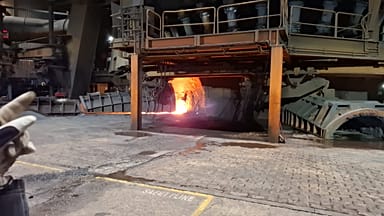
The CO₂-free production revolution is coming to heavy industry. In Sweden, SSAB, the country's leading steel mill, has kicked off this radical shift. By the end of 2029 it will produce green steel, in a compact plant with an electric arc furnace.

The blast furnaces of Luleå, northeast Sweden, are saying goodbye to fossil fuels. SSAB, the country's leading steel mill, is pivoting its production model to produce environmentally friendly, so-called ‘green steel’, free of fossil fuels. Steel production is highly polluting, and the challenge is colossal in both financial and technological terms. According to Jonas Lövgren, head of SSAB's production and processing department, “Today at SSAB at Lulea, we have a blast furnace root steel production. When we are building this new plant in Luleå, we will take away all of that coal and we will use fossil-free electricity instead to melt this scrap coming into the plant. We will reduce the total CO2 amount emitted to the atmosphere by 7% in Sweden.”

“When we are building this new plant in Luleå, we will take away all of that coal and we will use fossil-free electricity instead to melt this scrap coming into the plant. We will reduce the total CO2 amount emitted to the atmosphere by 7% in Sweden.”
 Jonas Lövgren 
Head of SSAB's production and processing department

Carbon neutrality: Sweden, a top pupil

Traditionally, in steel production, the main source of CO₂ emissions comes from coal and coke, when removing oxygen from iron ore. The steelworks plans to phase out the current coal-fired production as well as the blast furnaces in Luleå, replacing them with a compact electric steelworks using an electric arc furnace.

The decision to build the new plant was taken in 2023 and it is expected to produce green steel by 2030. A target in line with the goal of achieving carbon neutrality in the European Union by 2050.

According to Tillväxtverket, the Swedish Agency for Economic and Regional Growth, which manages, among others, the support of the Just Transition Fund, Sweden is an example of Europe’s greening of its heavy industry. Kristin Hedstöm, Programme Manager at Tillväxtverket, say, “The green transition in Sweden is happening in many, many ways and we have lowered CO2 emissions by almost 30% since 2010. So, the Swedish goal that has been agreed in Parliament is to be carbon neutral by 2045, so five years earlier than the EU.”

“The green transition in Sweden is happening in many, many ways and we have lowered CO2 emissions by almost 30% since 2010. So the Swedish goal that has been agreed in Parliament is to be carbon neutral by 2045, so five years earlier than the EU.”
 Kristin Hedstöm 
Programme Manager at Tillväxtverket

At SSAB, this transition to fossil fuel-free steel has been estimated at €4.5 billion, most of which comes from their own funds. The European Union's Just Transition Fund supports it with €71 million, part of which is used for staff training.

More sustainable and efficient production, safeguarding the workforce

The steelworks produces around 6,500 tonnes of steel per day, the equivalent of an Eiffel Tower. In 2029, the new compact electric steelworks will produce more steel without using fossil energy. A technological challenge that goes hand-in-hand with a strategic one: training the workforce in new skills. “From today and until we are up and running with the new plant, all of these 1,100 people somehow need to be educated. So first of all, we have started actually with electricians.” comments Jonas Lövgren.

“From today and until we are up and running with the new plant, all of these 1,100 people somehow need to be educated. So first of all, we have started actually with electricians.”
 Jonas Lövgren 
Head of SSAB's production and processing department

Victoria Blom was a machinist at the steelworks, but a year and a half ago she applied for an electrician training scheme at the SSAB Academy and was one of the ten people chosen out of sixty candidates. Training lasted seven months, with theoretical and practical classes. Before the training, she had no knowledge of electricity. She says that she now loves her job, “You use both body and mind, as problem solving starts with reading the plans, before going out to measure, check and observe with your own eyes.”

The Swedish steel mill is one of the first in Europe to develop fossil fuel-free steel.

Jack Dorsey backs offline messaging app Bitchat as essential tool for protesters

WHICH PROTESTERS; IRAN OR MINNESOTA?!

Jack Dorsey backs offline messaging app Bitchat as essential tool for protesters
Jack Dorsey backs offline messaging app Bitchat as essential tool for protesters / bne IntelliNews
By Ben Aris in Berlin January 18, 2026

A new messaging app backed by Twitter co-founder Jack Dorsey is gaining attention for its decentralised, offline capabilities designed to function during internet blackouts—features that have prompted some to call it a “protester’s secret weapon”.

Bitchat, developed by the crypto-focused company Keet, allows users to communicate without Wi-Fi, mobile data, or centralised infrastructure. Instead, the app relies on Bluetooth and peer-to-peer connections that messages simply jump from phone-to-phone, with no need for mobile towers or internet servers.

The service is ideal for demonstrations where large numbers of people gather, but where the authorities attempt decapitate protest movements by shutting down the internet and prevent demonstrators coordinating their actions, as the Islamic Republic recently did in the mass protests that broke out on December 28.

“No towers, no servers, no kill switch,” the company said in a promotional message.

The app has no login requirement, does not use SIM cards, and stores no data on centralised servers—attributes that make it particularly appealing for use in countries with authoritarian regimes, where data stored on a phone can lead to arrest and prosecution – and even execution in Iran.

“It’s ideal for places like Iran, where regimes love blackouts and protesters need a way to talk when the internet ‘suddenly disappears,’” Bitchat’s developers said in a statement published on January 17.

Bitchat is built on the same peer-to-peer technology as Keet, a video and chat application launched by the team behind Holepunch, a platform funded in part by Dorsey through his Bitcoin-focused company, TBD. Keet and Bitchat both use the Lightning Network and Holepunch’s distributed application protocol to allow users to connect directly without intermediaries.

Dorsey, a longtime proponent of decentralisation and censorship resistance, has previously criticised centralised social media and internet platforms for their vulnerability to government overreach and corporate control. His support for Bitchat aligns with a broader push among crypto and privacy advocates to build resilient tools for free communication.

The emergence of apps like Bitchat comes amid rising concern about the global trend of internet shutdowns. According to digital rights watchdog Access Now, authorities implemented at least 187 internet shutdowns in 35 countries in 2022, with Iran, India and Myanmar among the most frequent offenders.

“No logins. No SIM cards. No surveillance,” the company said in its launch announcement.


What does victory look like? Serbia’s Gen Z’s search for an endgame

JANUARY 19, 2026


By Dragica Felja, Jelisaveta Djordjevic-Ristanovic and Jelena Pavic

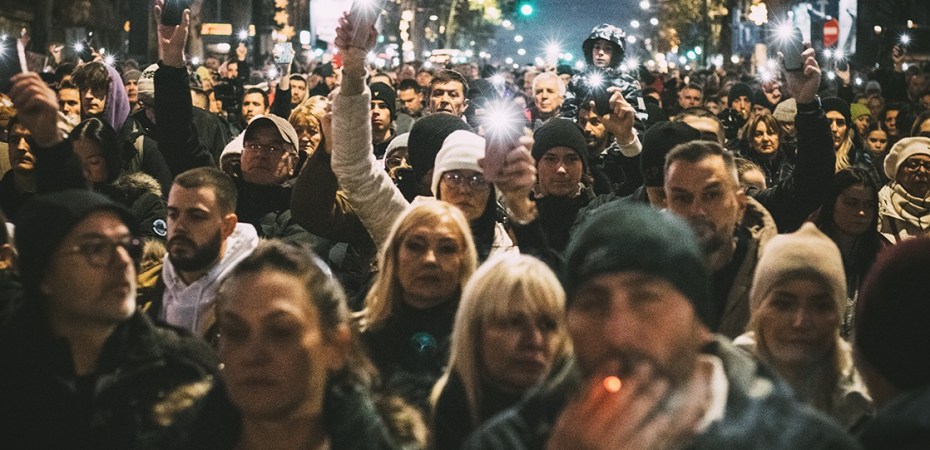
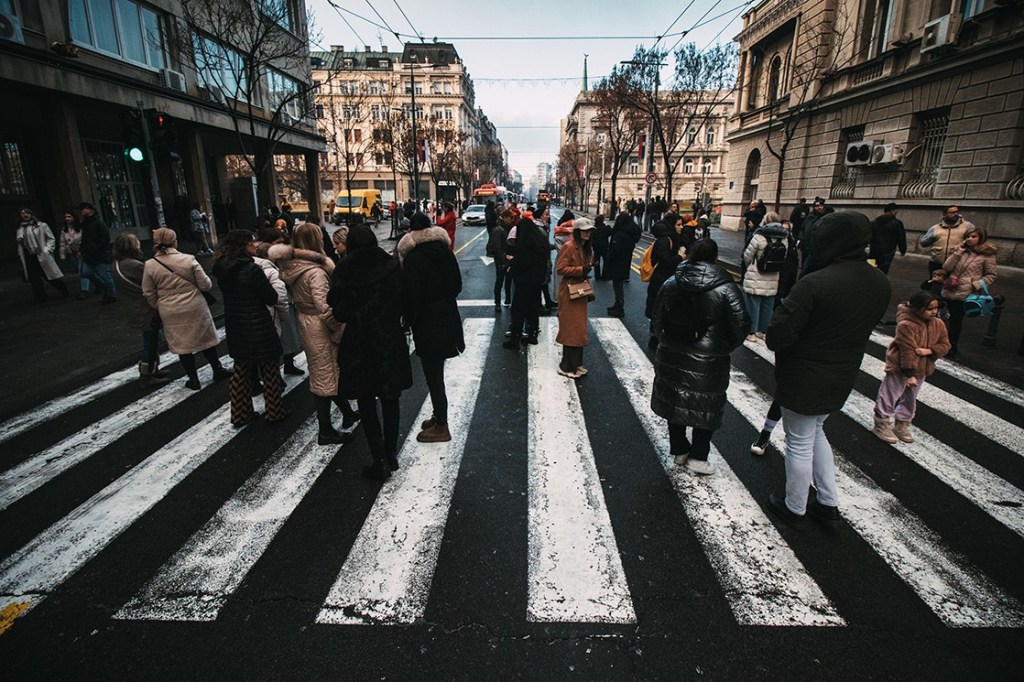
Fourteen months have passed since the collapse of the concrete canopy at the newly refurbished train station in Novi Sad, Serbia – a disaster that claimed 16 lives and seriously injured another. For many citizens, the tragedy was not an isolated incident but a symbol of deeper systemic failures, sparking a wave of mass protests across the country. As Novi Sad-based journalist, Igor Mihaljevic, declared in its aftermath: “What happened in Novi Sad was not a tragedy, it was a crime.”

What made the uprising striking was that it began with those whom society least expected to lead it. For years, Generation Z had been overlooked as apolitical, absorbed in their phones, scrolling through social media and supposedly detached from public life. Yet it was precisely this generation that first refused to accept the official narrative of the station collapse and the broader culture of impunity it represented. What many had mistaken for apathy revealed itself as a different kind of political literacy, one shaped by digital fluency, rapid information‑sharing, scepticism toward authority, and a refusal to normalise corruption. 

Their emergence at the forefront of the protests shattered long‑held stereotypes and signalled that a new, highly networked civic force had entered Serbia’s political landscape. As Marija Petrovic, a student from the Faculty of Agriculture in Novi Sad observes, this mobilisation has already begun to reshape her generation’s priorities: “Protests are leading to a noticeable higher interest in politics amongst Gen Z, compared to a few years ago, placing the fight against nepotism and corruption, as well as support for the rule of law, among their top priorities. Gen Z, as the first true digital generation, has also become the first generation to staunchly oppose cults of personality, something that had persisted for decades.’”

Drawing on this digital‑first organising power, Gen Z students were the first to translate outrage into action. In the aftermath of the canopy collapse, they staged silent vigils and road blockades known as ‘Zastani Srbijo’ (Serbia Stop), actions that quickly set the tone for broader civic resistance. Their peaceful gatherings were met with intimidation, violence, and arrests, exposing the state’s unwillingness to confront its own failures. 

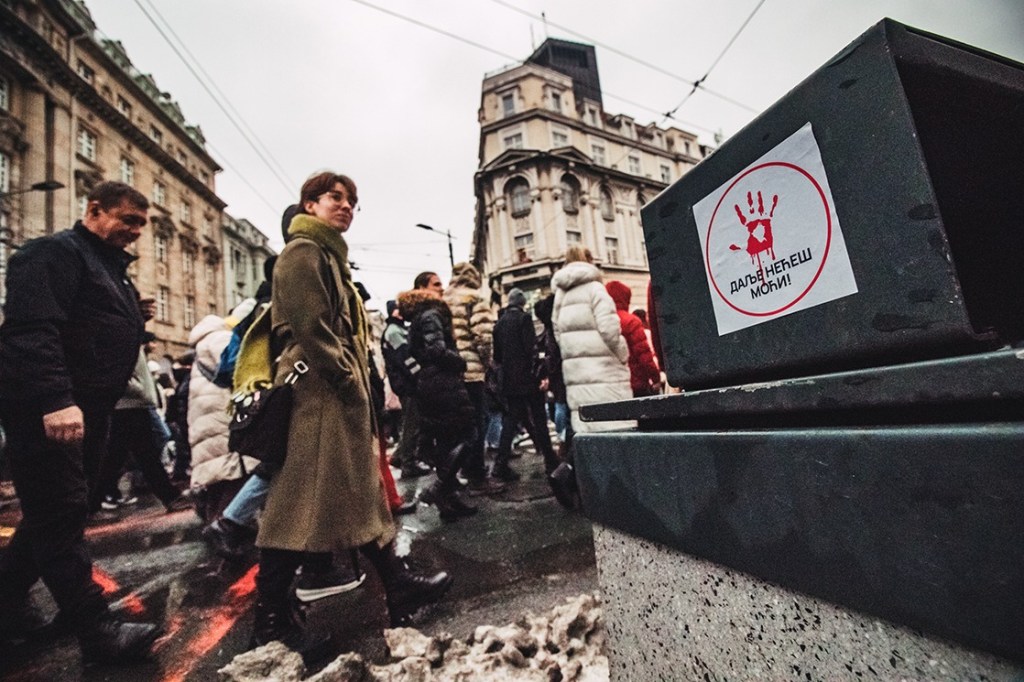
One message in particular – ‘Ruke su vam krvave’ (Your hands are bloody) became the defining symbol of the movement. Paired with red handprint imagery, it marked both a memorial to the victims and a direct accusation against those in power. Chanted at vigils and painted across public spaces, the phrase captured the moral clarity and uncompromising stance that Gen Z brought to the protests.

As repression intensified, this same generation pushed the movement into a more organised and strategic phase. Students began blocking university buildings and forming horizontal, leaderless assemblies known as plenums which embodied their distrust of traditional hierarchies and their commitment to collective decision‑making. Their clarity of purpose, focused on systemic change rather than individual politicians, resonated widely across Serbian society. 

When the president attempted to draw them into a dialogue, they responded with a single sentence – “Nisi nadležan” (You are not in charge of this). The phrase, which quickly spread through the protests, captured growing frustration with what many saw as the president’s influence over institutions meant to operate independently. For many, it was not just a legal correction but a symbolic act of civic resistance, aimed at restoring institutional integrity and the rule of law.

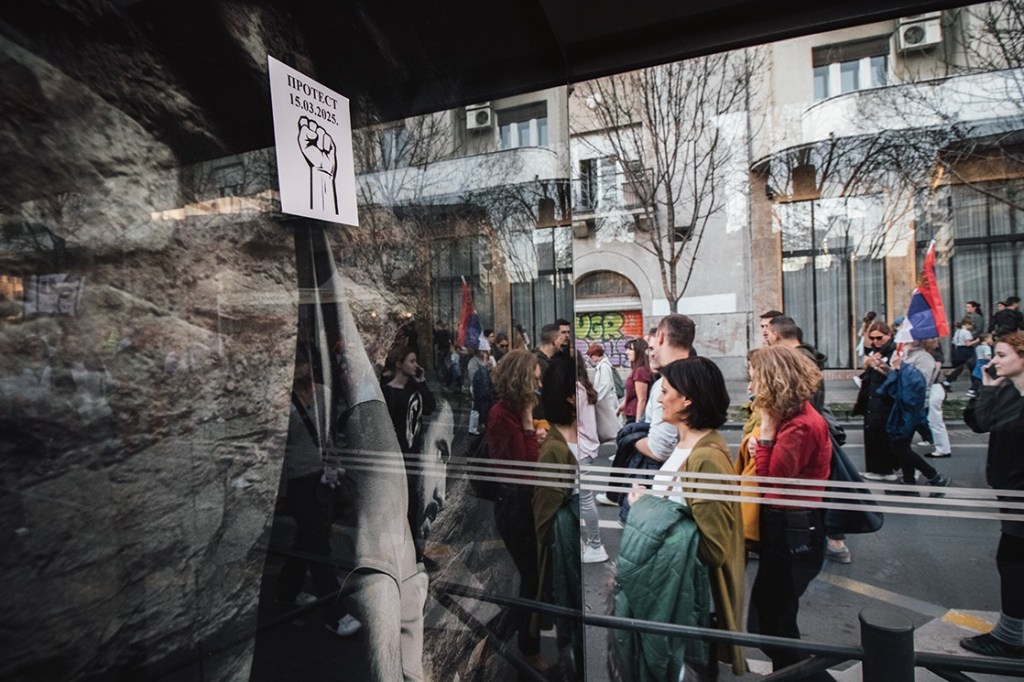
Within weeks, the protests spread beyond university campuses to city squares and rural towns. By December 2024, over 100,000 people gathered in Serbian capital Belgrade, and by March 2025, more than 300,000 filled its streets in what became Serbia’s largest protest in modern history. Students took the lead in organising and overseeing the protest that day, demonstrating extraordinary coordination, foresight, and a willingness to put their own safety on the line. 

Images later surfaced showing emergency contact numbers and blood types scrawled on their arms – a haunting testament to the ever-present threat of state violence in Serbia. It was during this protest, that a banned sonic weapon, known as a Long Range Acoustic Device (LRAD), was used to disrupt a silent vigil, causing panic and a stampede. The government denied they used this weapon, but international scrutiny followed and multiple independent reports strongly suggest that a banned sonic weapon was used during the Belgrade protest, despite official denials. 

From February to the end of September 2025 more than 10,700 protests took place across more than 630 communities and 1,200 local community assemblies. Whilst largely peaceful, they were often met with disproportionate force by state authorities. Numerous footage showed evidence of riot police deploying tear gas and stun grenades in densely populated areas, including near schools and hospitals. Arbitrary arrests (of students, ordinary citizens and in some cases minors) became commonplace and many of them were held without charge, in custody or house arrest for a long time before official trials.

Surveillance of student organisers, journalists, human rights activists or opposition-party politicians intensified, with reports of phone tapping, online harassment, and physical intimidation. Serbia’s Higher Public Prosecutor’s Office was implicated in politically motivated prosecutions targeting student activists and opposition figures, while pro-government media and security agencies played a central role in smear campaigns and unlawful surveillance. 

Increasingly, Serbian state universities also faced mounting pressure to align with government priorities, with appointments and dismissals increasingly tied to political loyalty rather than academic merit. Students and staff who criticised state policies reported disciplinary measures, surveillance on campus, and the withdrawal of institutional support for independent initiatives. Funding decisions have been routinely used as leverage, rewarding compliant faculties while marginalising those seen as centres of dissent.

Particularly alarming was the gendered nature of the repression. Young women were disproportionately targeted, especially in the early days of the protest. In one widely reported case, a 22-year-old woman suffered a fractured jaw after being violently assaulted by a private security guard outside the ruling party’s headquarters. Her only “offence” was placing a protest sticker on a public bin. In another incident, a university student arrested during a peaceful demonstration reported being threatened with rape by the commanding officer while in detention, a tactic seemingly aimed at silencing and terrorising women who dare to speak out. 

These were not isolated cases but part of a broader pattern of intimidation, humiliation, and physical violence that became a hallmark of the state’s response to dissent. The cumulative effect has been a chilling atmosphere in which civic participation is increasingly criminalised, and the cost of protest is borne most heavily by the young and the outspoken. One parent, whose child was among the protesters, expressed deep concern: “What frightens me most is the thought that one of these brave young people might lose their life fighting for justice, while we stand behind them. It should be us taking the risks, standing at the front.”

International pressure mounts as Serbia rejects calls for accountability

In response to sustained student protests and escalating police violence, in October 2025, the European Parliament adopted a resolution denouncing state repression and calling for accountability, safeguards for civil rights, and independent investigations. The resolution called for tying EU financial assistance to demonstrable progress on reforms and even raised the possibility of suspending funds if the Serbian government fails to meet essential democratic standards. 

But instead of initiating independent investigations or addressing the documented abuses, Serbian government officials dismissed the resolution as politically motivated interference, reinforcing a long‑standing pattern of rejecting external scrutiny. Civil society organisations, student groups, and independent media continued to document violations, but without cooperation from state institutions their efforts remain largely symbolic. The result is a widening gap between European expectations of democratic safeguards and Serbia’s entrenched practices of impunity, where international criticism raises visibility but does not translate into concrete protections for citizens.

Alongside the European Parliament resolution, Serbia is also coming under growing pressure from Washington. The United States is preparing sanctions against the Oil Industry of Serbia (NIS), whose ownership links to Russia’s Gazprom Neft have long raised concerns. Although repeatedly delayed, the sanctions highlight Washington’s increasing unease about Serbia’s political direction and its continued alignment with Russian‑controlled energy structures.

In contrast to the mounting pressure from Brussels and Washington, the UK has taken a noticeably different path. Reporting by the Guardian highlighted how the UK government scaled back a number of overseas democracy‑support and governance programmes, including initiatives in the Western Balkans that had previously helped counter malign foreign influence. The cuts affected projects aimed at strengthening independent media, supporting civil society, and improving institutional resilience – areas long recognised as vulnerable to Russian political and informational influence, particularly in Serbia. 

400,000 Signatures, zero answers: why students are marching again

In a striking display of public mobilisation, in December 2025, students launched a support initiative that gathered more than 400,000 signatures in a single day. The initiative was a nationwide petition demanding early parliamentary elections and formal public support for the student movement. 

As the authorities remained silent, reinforcing the sense of institutional paralysis, the student movement shifted toward its next step, announced on the protest that took place on 17th January 2026. Building on the momentum generated by the signature campaign, organisers framed the upcoming rally as the beginning of a new phase in their struggle. The protest was designed not only as a public gathering but as a platform for outlining mechanisms of accountability and renewing calls for institutional reform. 

As Petrovic, who has been active in the student movement explained, this next phase is driven by a renewed commitment to the kind of society students want to build: “One of the main things driving the student movement is the will to live in a fairer society, where corruption is recognised as an issue, the rule of law is seen as a priority, and no one’s life is dictated by party membership or nepotism. Most students want to live in Serbia, and hence there is a level of tenacity not seen for a long time, because we refuse to be driven out of our homes. We are not scared, as shown by our relentless actions despite all attempts at intimidation, including police brutality. They rule through fear. Take that away from them, and you largely turn them into a paper tiger.”

Dragica Felja, Jelisaveta Djordjevic-Ristanovic and Jelena Pavic are three Serbian nationals who were active in the student protest movement of the 1990s. One now lives in the diaspora, while two remain in Serbia. Drawing on their lived experience and long-standing civic engagement, they reflect on the legacy of protest and the resurgence of grassroots resistance. They wrote a shorter piece about Serbian protest, published in The Big Issue, in February 2025.

Serbia’s NIS restarts Pancevo refinery after US sanctions waiver

Serbia’s NIS restarts Pancevo refinery after US sanctions waiver
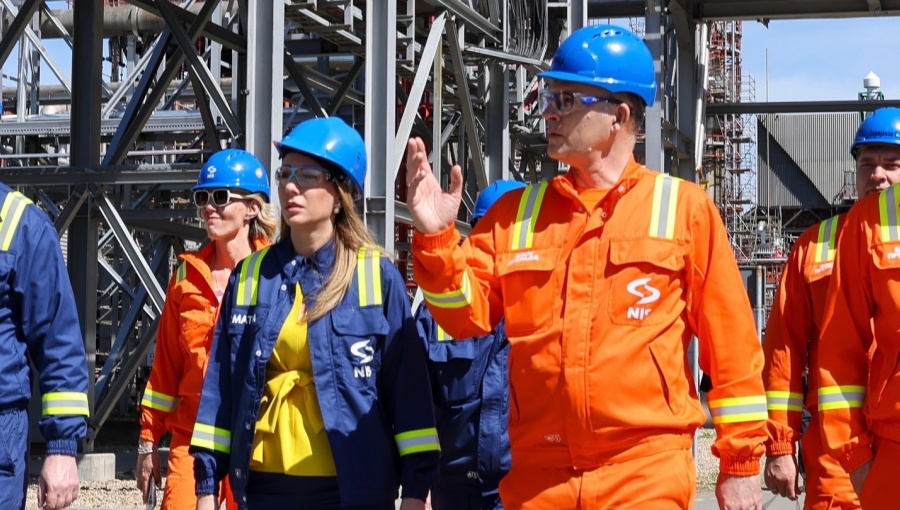
Energy Minister Dubravka Djedovic Handanovic visits the NIS refinery at Pancevo. / Dubravka Djedovic Handanovic via Facebook
By bne IntelliNews January 18, 2026

Serbia’s majority Russian-owned oil company NIS has restarted oil processing at its Pancevo refinery after securing a temporary waiver from US sanctions, Serbia’s energy minister said on January 18.

Production of petroleum derivatives resumed after an almost two-month halt, Energy Minister Dubravka Djedovic Handanovic said in a post on Instagram, adding that the first Euro diesel produced following the restart would reach fuel stations from January 27.

NIS was forced to suspend operations in December after US sanctions imposed in October over Russia’s war in Ukraine restricted its access to crude oil. The measures target Russia’s energy sector and apply to companies with majority Russian ownership.

Russian entities control 56.15% of NIS, with Gazprom Neft holding about 44.9% and Gazprom owning 11.3% via the St. Petersburg-based company Intelligence. The Serbian government holds roughly 29.9%, with the remainder owned by minority shareholders.

The refinery restart follows the granting of a temporary licence by the US Treasury Department’s Office of Foreign Assets Control (OFAC) on December 31, allowing NIS to import crude oil, resume processing and conduct transactions needed to maintain supply security until January 23.

“After almost two months of break, production at the Pancevo refinery began today,” Djedovic Handanovic said, adding that around 2,000 employees were involved in restarting operations.

NIS operates Serbia’s only oil refinery, located near Belgrade, and supplies about 80% of the country’s domestic fuel demand. Crude oil deliveries to the refinery resumed earlier this week via Croatia’s JANAF pipeline following the announcement of the special US licence.

The sanctions waiver comes as NIS negotiates the sale of the Russian-held stakes to comply with US requirements. The company has until March 24 to reach a divestment agreement.

Hungary’s oil and gas group MOL is in advanced talks to acquire a majority stake in NIS. Hungarian Foreign Minister Peter Szijjarto said last week, on January 15, that negotiations with Gazprom were progressing well and that an initial agreement could be signed in the coming days, after which the deal would be submitted to OFAC for approval.

President Aleksandar Vucic said on January 18 that Serbia expects to submit the key terms of a future ownership agreement to OFAC by January 20 at the latest, in order to secure an extension of NIS’s operating licence beyond January 23.

“We do not yet have an agreement, but I believe it will be reached,” Vucic told TV Informer.

In addition to MOL, Abu Dhabi National Oil Company (ADNOC) has expressed interest in a potential partnership in NIS.


Fico visits Trump in Mar-a-Lago, Slovakia signs nuclear deal with US

Fico visits Trump in Mar-a-Lago, Slovakia signs nuclear deal with US
Slovak Prime Minister Robert Fico visited US President Donald Trump at his Florida residence Mar-a-Lago. / Robert Fico via Facebook
By Albin Sybera in Prague January 19, 2026

Slovak Prime Minister Robert Fico visited US President Donald Trump at his Florida residence Mar-a-Lago during a visit to the US to sign a civil nuclear cooperation deal between Slovakia and the US.

As bne IntelliNews covered last week, Fico has reiterated that his government is pursuing close cooperation with the US on a new reactor at the site of the existing Jaslovské Bohunice nuclear power plant (NPP). At the end of 2024, Fico’s cabinet announced plans to launch a new nuclear tender.

“Both countries are fully aware that solutions to serious energy challenges are not possible through wind mills or photovoltaic, but that the base for the future is a sharp development of nuclear energy,” Fico said during the visit to the US in a statement shared on his Facebook social media profile.

Fico and his left-right cabinet has maintained a sharply critical stance towards EU green policies accompanied by Kremlin-pleasing stance since Fico’s return to power in 2023.

The Slovak press agency TASR noted that US Foreign Secretary Marco Rubio and his Slovak counterpart Juraj Blanár were present at the Mar-a-Lago meeting. Slovak Minister of Economy Denisa Saková also posed for photos at Mar-a-Lago, which were shared on Fico’s Facebook profile.  

The Slovak strongman described the talk with Trump as “informal and open” and that their discussion focused on “Ukraine, where American representatives were interested in our stance, because they knew we are not Brussels parrots and we express our own views on the war in Ukraine”. 

Fico said he “declared the Slovak peace stance” in connection to “other sensitive international events” and “there was full agreement in viewing the EU as an institution in deep crisis”. 

“The trip to the USA was another success of ours, as was the case with visits to Russia, China, and many other countries,” Fico stressed, praising the foreign policies of his government, which face criticism from the liberal opposition in Bratislava who have accused him of orienting Slovak diplomacy towards autocrats. 

Fico’s visit comes just weeks after Trump invited Fico to the White House to sign an Intergovernmental Agreement (IGA) on nuclear cooperation under which Slovakia is expected to select American technology for the new nuclear investment. The two national conservative leaders have also exchanged praiseful remarks of each other.

“Under your leadership, Slovakia has become a global leader in nuclear power,” Trump stated in the invitation letter, which Fico shared on Facebook.

The Jaslovské Bohunice site already has two reactors, and the new reactor is expected to cost between €10bn and €15bn. 

Fico said last year he hopes US Westinghouse company will cooperate with Russia on further development of nuclear sources in Slovakia. During the interview for commercial television TA3 last week, Fico noted that cooperation with Russia on the nuclear investment would have been his first choice if there were no sanctions against Russia in place.