Monday, January 19, 2026


BREAKING: Bulgaria’s President Radev to resign amid political crisis

BREAKING: Bulgaria’s President Radev to resign amid political crisis
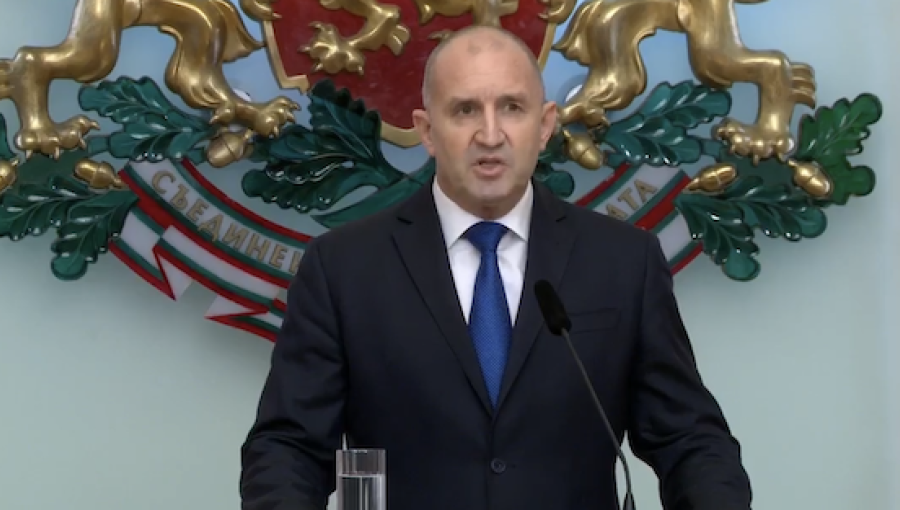
President Rumen Radev announces his resignation in a televised address. / Rumen Radev via Facebook
By bne IntelliNews January 19, 2026

Bulgaria’s President Rumen Radev said on January 19 he would resign from office, ending his second term a year early amid deepening political turmoil and mounting speculation that he is preparing to launch his own political movement ahead of snap parliamentary elections.

“Tomorrow I will submit my resignation as President of Bulgaria,” Radev said in an extraordinary televised address to the nation. “Today is the last time I address you as president.”

Radev, 62, thanked voters for their support over the past nine years and acknowledged mistakes, saying his presidency had unfolded against a backdrop of repeated crises, mass protests and entrenched political deadlock.

“You voted for me to serve Bulgaria as president. Together we went through a number of crises, attacks by the oligarchy and the major protests of 2020 and 2025,” he said.

Radev is Bulgaria’s fifth democratically elected head of state. He was first elected in November 2016 and re-elected in November 2021. His second term was due to expire in January 2027, with regular presidential elections scheduled for October this year.

His announcement comes as Bulgaria heads toward its eighth parliamentary election since 2021 after the country’s third and final attempt to form a government failed last week. Radev said on January 16 that snap elections were unavoidable after months of political paralysis.

“We are going to the elections,” he told reporters, confirming that voters would again be called to the polls following the collapse of coalition talks.

Bulgaria has been without a regular government since Prime Minister Rossen Zhelyazkov resigned on December 11, 2025, after nationwide protests over corruption and a disputed budget proposal. Zhelyazkov’s government, which took office in January 2025 after months of negotiations, fell amid public anger over perceived oligarchic influence, including opposition to businessman Delyan Peevski, who is sanctioned by the United States under the Magnitsky Act.

Political deadlock has plagued the country for more than four years, eroding trust in state institutions and leaving successive minority and caretaker governments in charge.

Radev’s resignation is unprecedented in post-communist Bulgaria and raises procedural questions, as the constitution does not clearly outline the process for a president stepping down before the end of a mandate. Legal experts say his resignation would have to be confirmed by the Constitutional Court.

Speculation has intensified in recent weeks that Radev, the country’s most popular political figure, plans to enter party politics. In recent months he has repeatedly called for the creation of a new political force to confront corruption, describing Peevski as a symbol of a flawed governance model.

“It is important to build a wall against the corruption in power,” Radev said last year, without directly confirming plans to lead a new party.

Opinion polls show Radev enjoys significantly higher approval ratings than other senior politicians. A Market Links survey published on January 12 put his approval at 44%, against 34% disapproval. A December poll by Alpha Research showed trust in most political leaders in single digits, while Radev retained the highest rating at 35%.

Analysts say his early departure from the presidency could clear the way for him to play a direct role in the expected parliamentary elections, likely to be held in late March or early April, although time constraints may force him to rely on an existing political vehicle rather than registering a new party.

Under constitutional rules, the president must appoint a caretaker government and set a date for the snap election within two months.

The President of Bulgaria resigns, seeks to become Prime minister
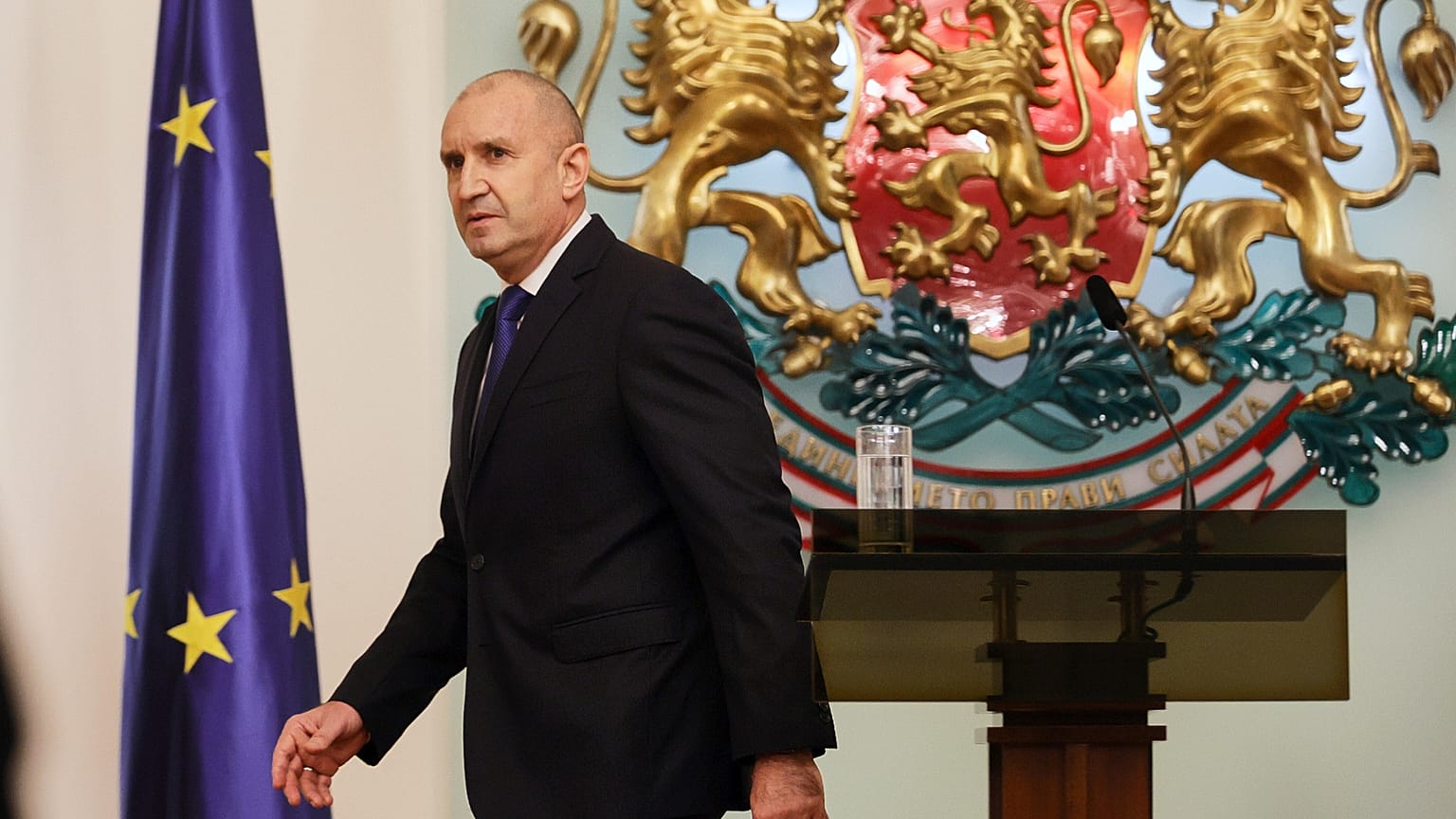
Bulgaria's President Rumen Radev leaves after announcement that he is stepping down from his position at Bulgarian Presidency, Sofia, Bulgaria, Monday, Jan. 19, 2026
Copyright AP Photo

By Marina Stoimenova
Published on 

The emergence of a new political party led by the former president Rumen Radev could significantly reshape not only Bulgaria’s domestic affairs but also its foreign policy.

The Bulgarian President, Rumen Radev, announced that he is resigning as head of state and signaled the launch of a new political project just two months before the next snap parliamentary elections in the country, which has been gripped by an ongoing political crisis.

“Our democracy cannot survive if we leave it in the hands of corrupt figures, deal-makers, and extremists,” the president said, adding that he will formally submit his resignation on Tuesday.

Rumen Radev has held the presidency of Bulgaria for nine years. Speculation that he would enter the parliamentary race and seek the post of prime minister has existed for some time and was confirmed today. Bulgaria is a parliamentary republic, and its governance lies in the hands of the parliament, the Council of Ministers, and the prime minister.

“We are already members of Schengen and the eurozone. The questions here are: why did achieving these goals not bring stability and satisfaction; why did Bulgarians stop voting; why do they not rely on the justice system and do not trust the media; why did citizens flood the squares twice; why, in a European Bulgaria, a large percentage of people feel poor, and even more live in insecurity,” Radev said. He blamed the “conveyor-belt” model of governance, “which has the outward features of democracy but functions through the mechanisms of oligarchy.”

During his tenure as president, Rumen Radev had to appoint seven caretaker governments due to the years-long political crisis and the inability of parties to form stable majorities.

Just weeks ago, the country was shaken by the largest protests since the 1990s, initially triggered by opposition to the draft budget but later escalating into demands for resignations and more - namely, the withdrawal from politics of key political figures such as former Prime Minister Boyko Borissov and Delyan Peevski, who has been sanctioned under the Magnitsky Act.

The emergence of a new political party led by the former president Rumen Radev could significantly reshape not only Bulgaria’s domestic affairs but also its foreign policy. Radev’s position on the war in Ukraine differs sharply from that of previous governments. For this reason, analysts and opponents have often labeled him “pro-Russian.” In today’s speech, Radev also addressed this issue, stating: “In the name of their political future, some politicians are putting the peaceful lives of Bulgarians at risk amid a dangerous war close to our borders and are even encroaching on civil and ethnic peace, which you and I will preserve despite their provocations.”

Weeks before Bulgaria was set to adopt the euro (on January 1, 2026), Rumen Radev called for a referendum on the adoption of the single European currency, but the parliament rejected it. “The final rift between Bulgarians and the political class came with the National Assembly’s refusal to hold a referendum on the date of introduction of the single European currency. The representatives of the people denied the people their right to choose,” Radev said today.

The snap parliamentary elections in Bulgaria will take place in the spring and will be the seventh election since 2021. The role of president will be assumed by Vice President Iliana Yotova.

Uganda's President Yoweri Museveni wins seventh term as rival Bobi Wine rejects 'fake results'

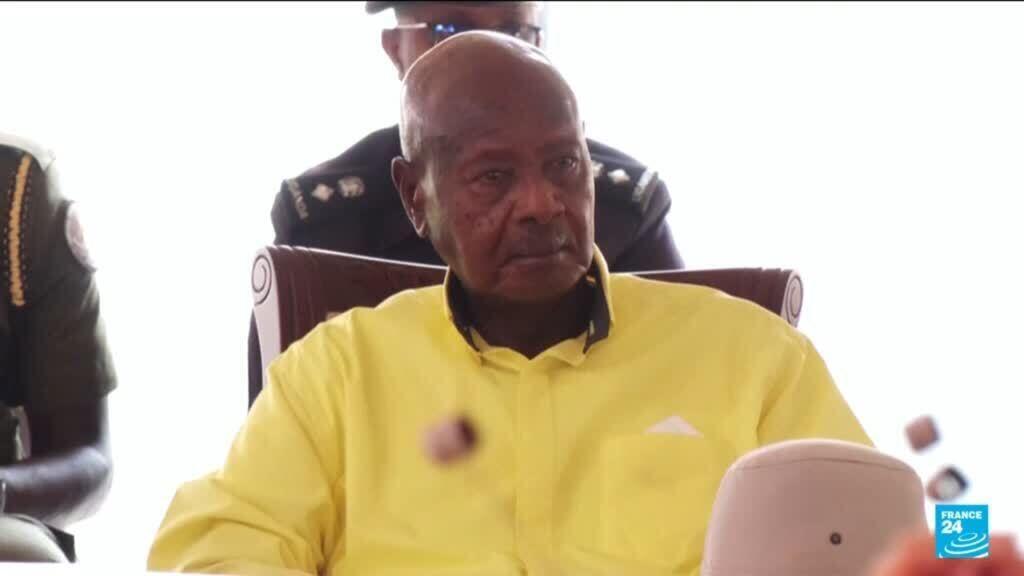
Uganda's incumbent President Yoweri Museveni won a seventh term in office, official results showed Saturday, allowing the former guerrilla to extend his four-decade rule of the East African country. His main opponent, Bobi Wine, remains in hiding after security forces raided his home.


Issued on: 17/01/2026 
By: FRANCE 24


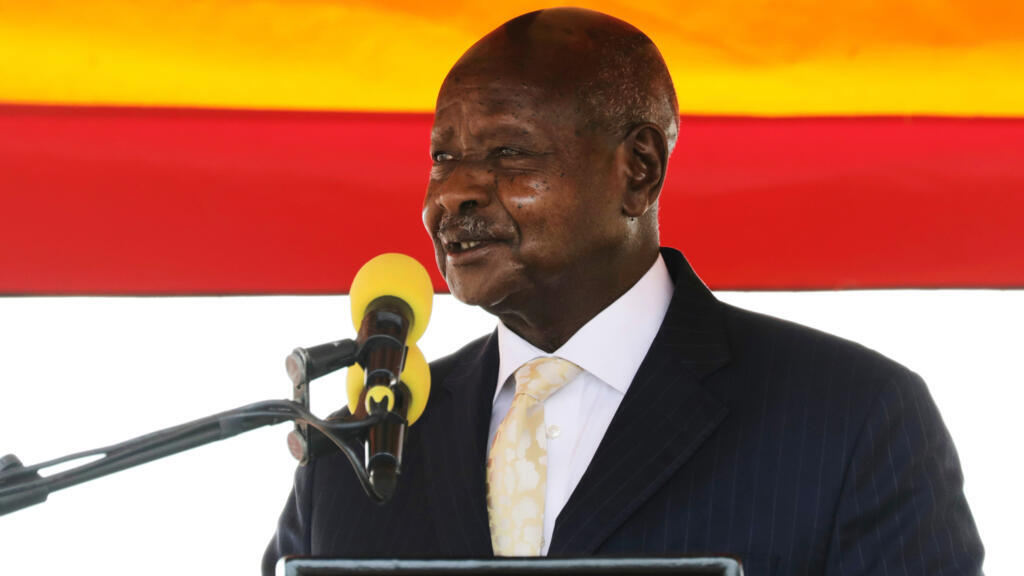
Ugandan President Yoweri Museveni speaks during the 60th Independence Anniversary Celebrations in Kololo on October 9, 2022. © Hajarah Nalwadda, AP

Ugandan President Yoweri Museveni won a seventh term in office on Saturday after an election marred by violence and an internet shutdown, with African observers saying arrests and abductions had "instilled fear".

Museveni, 81, won 71.65 percent of the vote in Thursday's election, the Electoral Commission said, amid reports of at least 10 deaths and intimidation of the opposition and civil society.

His victory allows him to extend his 40-year rule of the East African country.

He defeated opposition leader Bobi Wine, 43, a former singer-turned-politician who won 24.72 percent and said he was in hiding on Saturday after a raid by security forces on his home

Wine has faced relentless pressure since entering politics, including multiple arrests before his first run for the presidency in 2021.

He stated his "complete rejection of the fake results" and said he was on the run after the raid on his home on Friday night.

"I want to confirm that I managed to escape from them," Wine posted on X on Saturday. "Currently, I am not at home, although my wife and other family members remain under house arrest."

"I know that these criminals are looking for me everywhere and I am trying my best to keep safe," he added.

There was a heavy police presence around the capital, Kampala, AFP journalists saw, as security forces sought to prevent the sort of protests that have hit neighbouring Kenya and Tanzania in recent months.


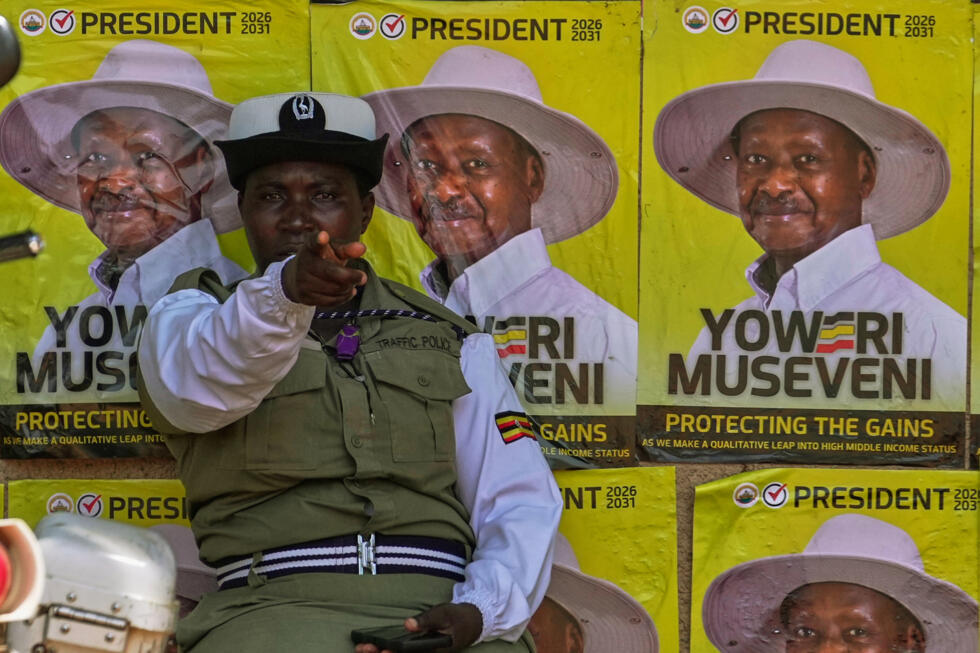
A traffic police officer sits in front of campaign posters of President Yoweri Museveni, the National Resistance Movement (NRM) presidential candidate, during the general election, in Kampala, Uganda, Thursday, Jan. 15, 2026. © Brian Inganga, AP

Electoral officials also face questions about the failure of biometric voter identification machines on Thursday, which caused delays in the start of voting in urban areas – including the capital, Kampala – that are opposition strongholds.

After the machines failed, in a blow to pro-democracy activists who have long demanded their use to curb rigging, polling officials used manual registers of voters. The failure of the machines is likely to be the basis for any legal challenges to the official result.
'A lot of fear'

Police denied they had raided Wine's home but said they had "controlled access in areas we feel are security hotspots", adding they believed the opposition leader was still at home.

"We have not necessarily denied people accessing him but we cannot tolerate instances where people use his residence to gather and ... incite violence," police spokesman Kituuma Rusoke told reporters.

A stall-owner near Wine's home, 29-year-old Prince Jerard, told AFP he had heard a drone and helicopter at the residence the previous night, and saw numerous security officials.

"Many people have left (the area)," he said. "We have a lot of fear."

Wine, whose real name is Robert Kyagulanyi, has emerged as the main challenger to Museveni in recent years, styling himself the "ghetto president" after the Kampala slum areas where he grew up.

He has accused the government of "massive ballot stuffing" and attacking several of his party officials under cover of the internet blackout, which was imposed ahead of the polls and remained in place on Saturday.

Uganda: Africa’s longest-serving leader, Yoweri Museveni, seeks to extend 40-year rule

© France 24
02:08


African election observers said on Saturday they saw no evidence of ballot stuffing but denounced "reports of intimidation, arrest and abductions" targeting the opposition and civil society.

This "instilled fear and eroded public trust in the electoral process", former Nigerian president Goodluck Jonathan told reporters in Kampala.

He was representing election observers from the African Union, as well as regional bodies COMESA and IGAD for east and southern Africa.

Jonathan said the shutdown of the internet "disrupted effective observation" and "increased suspicion" but that the overall conduct of the polls on election day was "peaceful".

Reports of violence

Museveni's ruling party, the National Resistance Movement, also had a commanding lead in parliamentary seats, according to provisional results. Ballots were still being counted.

Analysts have long viewed the election as a formality.

Museveni, a former guerrilla fighter who seized power in 1986, has total control over the state and security apparatus, and has ruthlessly crushed any challenger during his rule.

The other major opposition figure, Kizza Besigye, who ran four times against Museveni, was abducted in Kenya in 2024 and brought back to a military court in Uganda for a treason trial that is ongoing.

There were reports of election-related violence against the opposition.

Muwanga Kivumbi, member of parliament for Wine's party in the Butambala area of central Uganda, told AFP's Nairobi office by phone that security forces had killed 10 of his campaign agents after storming his home.

Police gave a different account, saying an "unspecified number" of people had been "put out of action" when opposition members planned to overrun and burn down a local tally centre and police station.

Yusuf Serunkuma, an academic and columnist for the local Observer newspaper, told the Associated Press on Saturday that Wine “didn’t stand a chance” against the authoritarian Museveni.

“He has quite successfully emasculated the opposition,” Serunkuma said of Museveni. “You would have to credit him for that.”

(FRANCE 24 with AFP and AP)

Ugandan opposition denounces army raid on party leader Bobi Wine


The party of Uganda's main opposition leader Bobi Wine denounced a raid by security forces on his home on Friday amid reports Wine has been cut off from all communication. The raid comes just before the announcement of the results of the presidential election expected on Saturday.


Issued on: 17/01/2026 
By: FRANCE 24


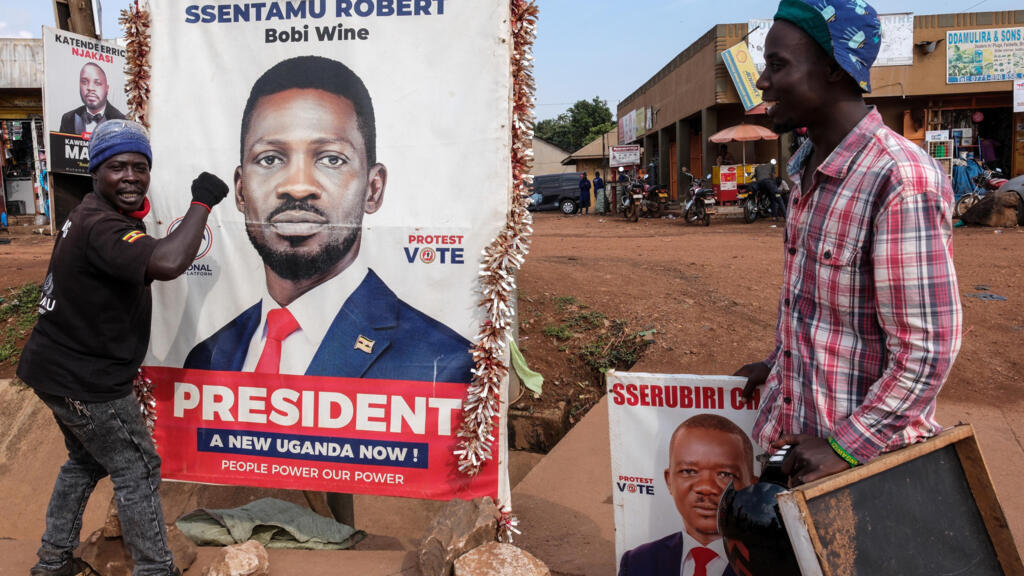
A supporter of Uganda opposition presidential candidate Robert Kyagulanyi Ssentamu, known as Bobi Wine, holds onto a campaign poster in Kampala, Uganda, on January 13, 2026. © Samson Otieno, AP

The Ugandan army on Saturday rejected claims that it had seized opposition leader Bobi Wine as the final stretch of the presidential vote count was under way. Wine said Friday he had been placed under house arrest, with his party later saying that he had been “forcibly taken” from his home in an army helicopter.

Uganda’s January 15 election has been marred by reports of at least 10 deaths amid an internet blackout.

President Yoweri Museveni, 81, looked set to be declared winner and extend his 40-year rule later on Saturday, with a commanding lead against Wine, a former singer turned politician.

Wine said Friday that he was under house arrest, and his party later wrote on X that he had been “forcibly taken” by an army helicopter from his compound.

The army denied that claim.

“The rumours of his so-called arrest are baseless and unfounded,” army spokesman Chris Magezi told AFP.

“They are designed to incite his supporters into acts of violence,” he added.

AFP journalists said the situation was calm outside Wine’s residence early Saturday, but they were unable to contact members of the party due to continued communications interruptions.

A nearby stall-owner, 29-year-old Prince Jerard, said he heard a drone and helicopter at the home the previous night, with a heavy security presence.

“Many people have left (the area),” he said. “We have a lot of fear.”

With more than 80 percent of votes counted on Friday, Museveni was leading on 73.7 percent to Wine’s 22.7, the Electoral Commission said.

Wine, 43, whose real name is Robert Kyagulanyi, has emerged as the main challenger to Museveni in recent years, styling himself the “ghetto president” after the slum areas where he grew up in the capital, Kampala.

He has accused the government of “massive ballot stuffing” and attacking several of his party officials under cover of the internet blackout, which was imposed ahead of Thursday’s polls and remained in place on Saturday.

His claims could not be independently verified, but the United Nations rights office said last week that the elections were taking place in an environment marked by “widespread repression and intimidation” against the opposition.

Reports of violence


Analysts have long viewed the election as a formality.

Museveni, a former guerrilla fighter who seized power in 1986, has total control over the state and security apparatus, and has ruthlessly crushed any challenger during his rule.

Election day was marred by significant technical problems after biometric machines—used to confirm voters’ identities—malfunctioned and ballot papers were undelivered for several hours in many areas.

There were reports of violence against the opposition in other parts of the country.

Muwanga Kivumbi, member of parliament for Wine’s party in the Butambala area of central Uganda, told AFP’s Nairobi office by phone that security forces had killed 10 of his campaign agents after storming his home.

(FRANCE 24 with AFP)

Ivorian village remembers revolt that killed French colonial officer

Residents of the village of Rubino, in south-eastern Côte d'Ivoire, continue to commemorate an uprising against a French colonial army officer killed there on 7 July 1910.


Issued on: 18/01/2026 - RFI

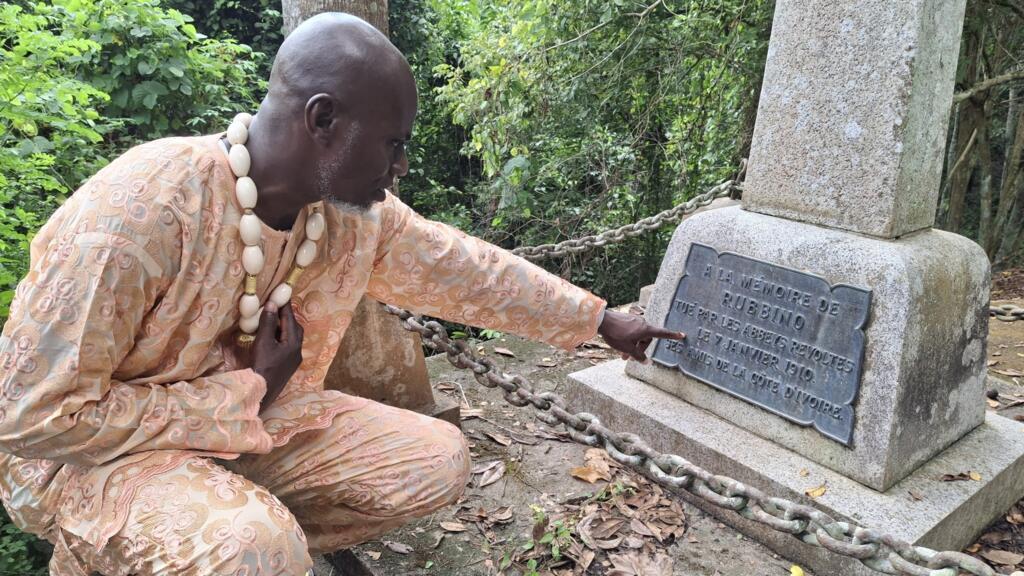
Nanan Lambert Koffi Kokola, the chief of Rubino, shows the grave of the French colonial army officer killed by the Abbé people on 7 July, 1910. © Bineta Diagne / RFI

By:RFIFollow
ADVERTISING


The village is named after Rubino, the officer targeted in the revolt by the Abbé people. The uprising is remembered as an act of resistance against colonial rule, and the event is still commemorated more than a century later.

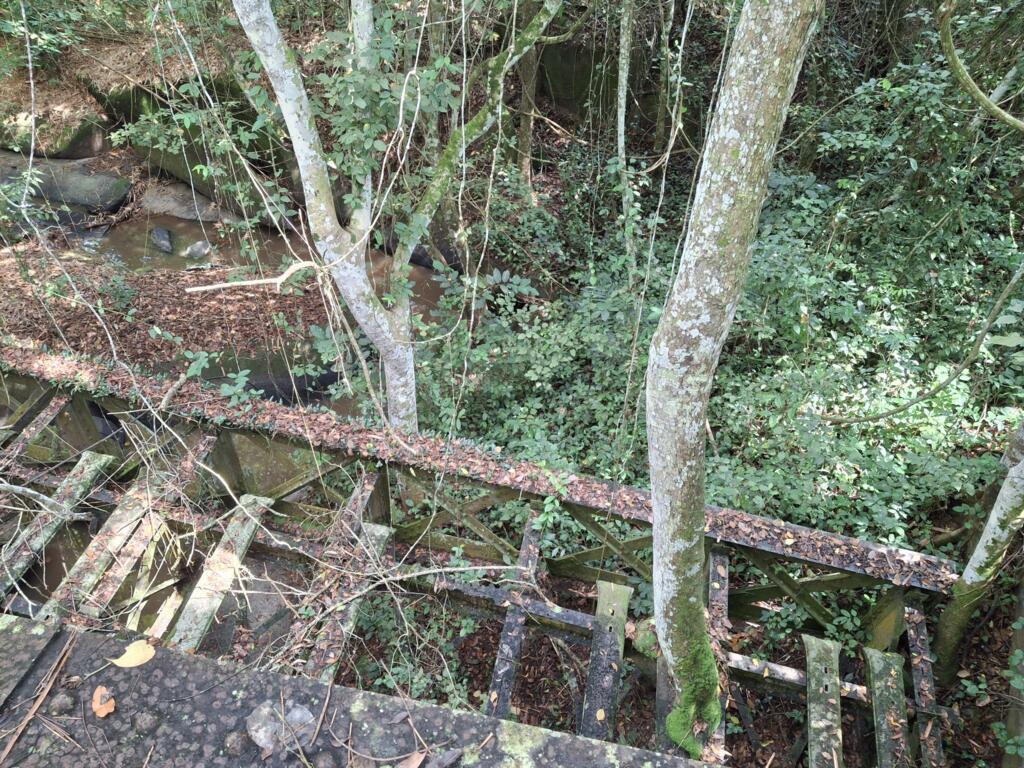
In the middle of a forest near Rubino, a dismantled bridge stands as a reminder of the revolt. The Abbé people removed its bolts by hand to stop a train carrying the officer.

Jean-Claude, a young man from the village, said the story is well known locally.

“When the train arrived, he couldn't cross. This is where Mr Rubino was caught and killed," Jean-Claude told RFI.

The old railway track, sabotaged by the Abbé people as a sign of revolt against the French colonists in 1910. © Bineta Diagne / RFI

Anger over forced labour

The revolt was not only directed at the officer himself, but at the system he represented. The Abbé people rebelled against forced labour imposed during the colonial period.

Rubino worked for the French Company of West Africa (CFAO), a trading business active in colonial West Africa in the late 19th and early 20th centuries.

Eddie Patrick, a resident of Rubino, said the officer’s behaviour angered village elders.

“Rubino was a settler. He was presented as a trader, but in reality, he was trafficking gold. He harassed the villagers and robbed them of their possessions, which annoyed the village elders," Patrick explained.

"To put a stop to this behaviour, something had to be done."

The officer’s grave, located in the forest, has since become a spiritual place for the community.

Nanan Lambert Koffi Kokola, the chief of Rubino, said the site lies on sacred land.

“Because it is located on sacred land where spirits reside, of course, and rivers flow. For us, the Abbé people, it is a place where we come to meditate because it is here that our ancestors finally gained their freedom,” he said.


Railway history

After the revolt, a new railway line was built about 100 metres away from the original track.

Photographer François-Xavier Gbré documented the route in an exhibition titled Radio Ballast, revisiting different periods of the country’s history.

“This railway line has seen colonial times, modern times marked by independence, and is still in operation today. It spans three eras: colonial, independence and the contemporary period,” he said.

Today, the site attracts the occasional tourist or history enthusiast.

This article was adapted from the original version in French by RFI's Bineta Diagne.


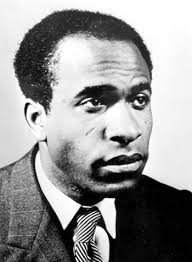
FANON, Frantz

fanonFrantz Fanon was a psychoanalyst who used both his clinical research and lived experience of being a black man in a racist world to analyse the effects of racism on individuals –particularly on people of colour- and of the economic and psychological impacts of imperialism. Fanon is an important thinker within postcolonial and decolonial thought whose work has had widespread influence across the social sciences and humanities.


Like many canonical postcolonial thinkers, Fanon’s personal biography is often viewed as important in understanding his published work. Fanon was born in the French colony of Martinique in 1925. He studied at the Lycée Schoelcher in Fort-de-France, where he was taught by writer and poet Aimé Césaire. Fanon was involved in supporting the French resistance against the Vichy regime in the Caribbean, and against the Nazis in France (though he experienced daily racism while serving in the army). After the Second World War he went to study medicine and psychiatry in Lyon. Following his studies Fanon became involved in struggles against colonialism under the influence of African freedom fighters who went to France to garner support for their struggles. In 1953 he went to Algiers as head of the psychiatric department at the Bilda-Joinville Hospital. In Algeria Fanon was appalled by the difference in living standards between the European colonizers and the indigenous population, and by the racism experienced by the Algerians.


The 1954 Algerian revolt was met with a violent response involving torture, repression, physical abuse and widespread killings of Algerians by the colonisers. This served to radicalise Fanon and he supported the revolutionaries in secret for two years before resigning from his job at the hospital in 1956 and joining the National Liberation Front. He moved to Tunis, founded the Moudjahid (Freedom Fighter) magazine, and became a leading ideologue of the Algerian revolution. He travelled widely in Africa to speak on his anti-colonial ideas and was ambassador to Ghana for a period. Though Fanon was from the Antilles, following his experiences in Algeria he came to think of himself as Algerian. He died of leukimia in Washington 1961.


Fanon’s key works are Black Skins White Masks, A Dying Colonialism, The Wretched of the Earth, and Toward the African Revolution. Black Skins White Masks was published in 1952 but did not gain widespread recognition until the late 1960s. This was one of the first books to analyse the psychology of colonialism. In it Fanon examines how the colonizer internalises colonialism and its attendant ideologies, and how colonized peoples in turn internalise the idea of their own inferiority and ultimately come to emulate their oppressors. Racism here functions as a controlling mechanism which maintains colonial relations as ‘natural’ occurrences. Black Skins White Masks is written in an urgent, fluid style. It is both analytical and passionate, part academic text, part polemic. The book has provided a powerful and lasting indictment of racism and imperialism.


A Dying Colonialism is a historical document. It is a firsthand account of the Algerian revolution, describing how the Algerian people became a revolutionary force, and ultimately were successful in repelling the French colonial government. It is also, however, a philosophical discussion of the meaning of the conflict and what might come after it. Toward the African Revolution is a collection of articles, essays, and letters which spans the period between Black Skin, White Masks and The Wretched of the Earth.


The Wretched of the Earth was published just before Fanon’s death, very much with the Algerian independence struggle in mind. Prefaced by Jean Paul Sartre, the book offers a social-psychological analysis of colonialism, continuing his argument that there is a deep connection between colonialism and the mind, and equally between colonial war and mental disease. In The Wretched of the Earth Fanon argued for violent revolution against colonial control, ending in socialism. These struggles must be combined, he argued with (re)building national culture, and in that sense Fanon was a supporter of socialist nationalism. In The Wretched of the Earth, Fanon not only writes about violence in the international context, colonialism, national consciousness and freedom fighting, but he also includes a psychoanalytic investigation of mental disorders associated with colonial war. The book, then, continues his work of drawing connections between the inner world of subjugated individuals and the workings of international politics. This is something that has been continued by other scholars in the postcolonial tradition including Ashis Nandy and Ngugi wa Thiongo.


Essential Reading

Fanon, F. (1986 [1952]) Black Skins White Masks, London: Pluto Press

Fanon, F. (1970 [1959]) A Dying Colonialism, London: Penguin

Fanon, F. (2001 [1961]) The Wretched of the Earth, London: Penguin

Fanon, F. (1964) Toward the African Revolution, New York: Grove Press


Further Reading

Alessandrini, A. (1999) Frantz Fanon: Critical Perspectives, London: Routledge

Abdilahi Bulhan, H. (1985) Frantz Fanon And The Psychology Of Oppression, New York: Plenum Press

Gibson, N.C. (2003) Fanon: The Postcolonial Imagination, Oxford: Polity Press


Questions:

How does Fanon define decolonization? What does it entail?

What effect does colonization have on the individual and on the community, according to Fanon?

What psychological phenomenon does Fanon refer to in the title ‘Black Skin White Masks’?

How does the process of liberation work? How do peoples become ready for a new battle against colonialism, according to Fanon?

Discuss the complexity of Fanon’s understanding of violence in the context of colonialism.


Submitted by Lucy Mayblin

https://globalsocialtheory.org/

Louvre closes for third time in a month due to staff strike

A staff strike at the Louvre in Paris on Monday led to its closure for the third time in a month as trade unions pressed for more recruitment, higher pay and better maintenance of the museum. The prior closures in December and earlier in January resulted in a loss of "at least one million euros" in revenue, Louvre management said.


Issued on: 19/01/2026 - 
By: FRANCE 24


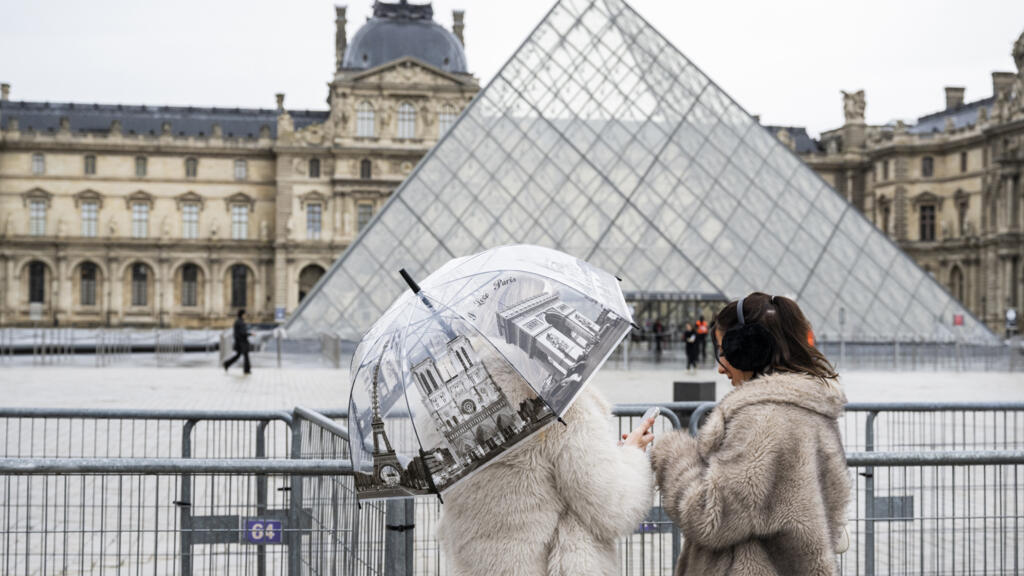
Workers at the Louvre have gone on strike three times in a month to demand better pay and conditions, and better maintenance of the museum. © Martin Lelievre, AF


The Louvre Museum said Monday it was shutting for the day, for the third time in a month, due to a strike by staff.

"The museum is not opening today," said a spokesperson for the most-visited museum in the world.

Trade unions are pressing for more recruitment, pay and better maintenance of the vast former royal palace, and have launched several days of strikes in recent months.

Nearly 140 new hires have been announced since the start of the strike movement in mid-December, and another meeting was scheduled at the culture ministry on Thursday to discuss salary increases.


Some union leaders were also contesting museum director Laurence des Cars' management style which they view as remote and inflexible.

WATCH MORELouvre and Versailles hike prices for foreign visitors: Who should pay for France’s heritage?

"If we get the pay but continue with this governance model, we won’t be out of the woods," Valerie Baud of the CFDT union said.

"There may be announcements, but we are still dealing with a management that digs its heels in and doesn’t recognise that it can sometimes be wrong,” added her colleague Elise Muller from the SUD union.

The two days of museum closures in December and earlier in January have resulted in a loss of "at least one million euros" in revenue, management said.

The security failures highlighted by a spectacular break-in at the museum on October 19 have cast a harsh spotlight on management of the institution and des Cars, who has apologised.

Footage of the heist was broadcast for the first time on French television on Sunday evening, showing the brazen jewel thieves breaking into display cases.

READ MOREMuseums around the world are on high alert following Louvre heist

The images, filmed by surveillance cameras, were shown by the TF1 and public France Televisions channels on Sunday evening, three months after the hugely embarrassing break-in in October.

They show the two burglars, one wearing a black balaclava and a yellow high-visibility jacket, the other dressed in black with a motorcycle helmet, as they force their way into the Apollo Gallery.

After breaking in through a reinforced window with high-powered disk cutters, they begin slicing into display cases under the eyes of several staff members who do not intervene.

Managers at the Louvre have stressed that staff are not trained to confront thieves and are asked to prioritise the evacuation of visitors.

(FRANCE 24 with AFP)

Strike shuts Paris's Louvre again as video of jewel heist aired for first time

The Louvre museum was closed again Monday as staff continue their strike over pay and working conditions, three months after thieves stole crown jewels from the museum – footage of which was broadcast for the first time on French television Sunday night.


Issued on: 19/01/2026 - RFI

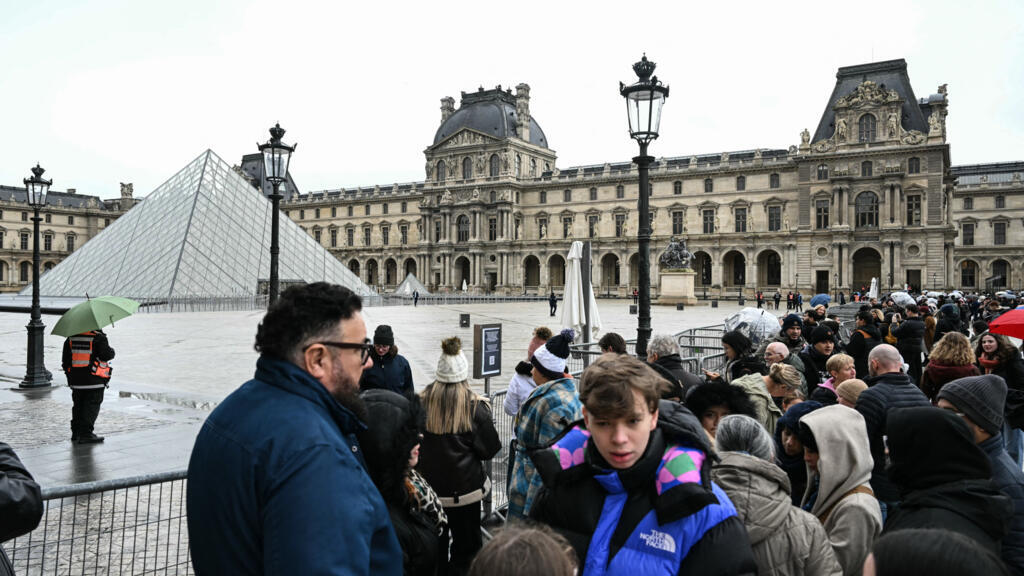
Visitors next to barriers blocking the Louvre plaza on 12 January 2026, when the museum was closed due to a strike, which employees decided to continue on Monday 19 January. © Martin Lelievre/AFP
Louvre employees have been demanding better pay, more recruitment, and improved maintenance of the museum, and their strike action has shut down the museum several times since mid December.

Two previous strike days resulted in a loss of "at least one million euros" in revenue, according to management.

While nearly 140 new hires have been announced since start of the strike movement, and a meeting is scheduled at the culture ministry on Thursday to discuss salary increases, some union leaders remain critical of director Laurence des Cars.

Her management style, which has been described as remote and inflexible, has come under criticism.

"If we get the pay but continue with this governance model, we won’t be out of the woods," Valerie Baud of the CFDT union said.

Culture Minister Rachida Dati, who plans to step down soon as she is running for Mayor of Paris, said Sunday that "major decisions" on the Louvre would be coming soon.

"I reviewed the organisation, the governance," Dati said, answering a question put to her about Des Cars on France Inter radio and public television.

Des Cars offered to resign a few hours after the spectacular break-in on 19 October, which Dati refused.

Images of brazen heist revealed


Surveillance camera footage of the robbery was broadcast for the first time on French television Sunday evening.

The footage showed the two burglars forcing their way into the Apollo Gallery and slicing into display cases under the eyes of several staff members who do not intervene.

After breaking in through a reinforced window with high-powered disk cutters, they begin slicing into display cases.

Managers at the Louvre have stressed that staff are not trained to confront thieves and are asked to prioritise the evacuation of visitors.

Four suspects are in police custody over the robbery, including the two suspected thieves, but the eight stolen items of French crown jewels worth an estimated $102 million (€87 million) have not been found.

During the roughly four minutes that the two men were inside the gallery, one staff member can be seen holding a bollard used to orient visitors through the gallery, according to France Televisions.

The images, as well as multiple DNA samples found at the scene, form a key part of the ongoing criminal investigation into the robbery.

Metal bars have been installed over the windows of the Apollo Gallery since the break-in.

(with AFP)


Trump tells Norway's PM he has no obligation to 'think purely of peace' after Nobel snub

KOMMANDER IN CHIEF; BONESPURS


By Gavin Blackburn
Published on 

Trump has boasted about ending eight wars, styling himself as "the president of peace" and therefore deserving of the Nobel honour but those claims have been exaggerated.

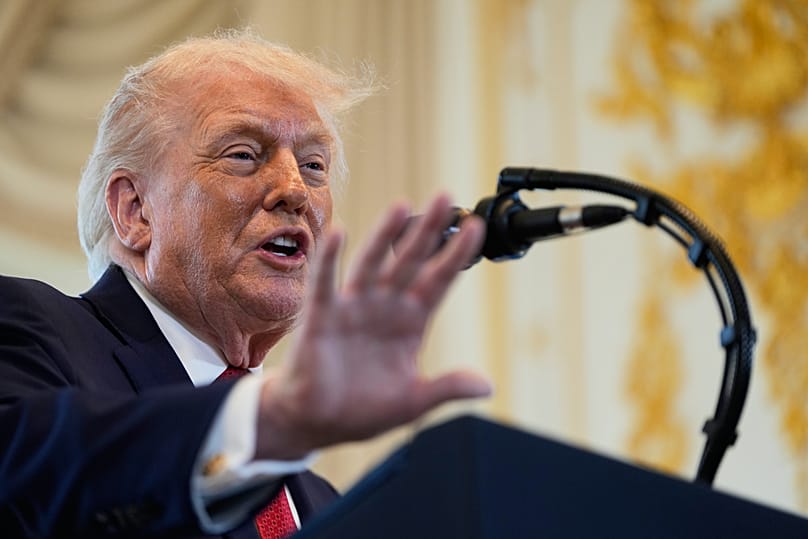
US President Donald Trump told Norway's prime minister he no longer needed to think "purely of peace" after failing to win the Nobel Peace Prize, in a message published on Monday.

"Considering your Country decided not to give me the Nobel Peace Prize for having stopped 8 Wars PLUS, I no longer feel an obligation to think purely of Peace," Trump said in a message to Norwegian Prime Minister Jonas Gahr Støre.

It is unclear why Trump decided to send a message to Støre as the peace prize is decided by the Norwegian Nobel Committee and not the government.

In a written comment, Støre underlined that the Nobel Peace Prize was not awarded by the Norwegian government.

"I have clearly explained, including to president Trump what is well known, the prize is awarded by an independent Nobel Committee," Store said.

US President Donald Trump speaks at a dedication ceremony in Florida, 16 January, 2026 AP Photo

Trump has long coveted the annual peace prize and last week Venezuela's opposition leader María Corina Machado gifted her Nobel Peace Prize medal to him at the White House.

Machado was awarded the 2025 Nobel Peace Prize for her leadership of Venezuela's opposition movement amid a crackdown by President Nicolás Maduro, most notably in the much-maligned 2023 presidential election.

Machado's gesture to Trump followed a series of developments in Venezuela after a blitz US military raid captured Maduro and his wife and brought them to New York to stand trial on drug trafficking charges two weeks ago.

During the visit, Machado gave Trump her Nobel medal "as a recognition for his unique commitment to our freedom," she told reporters outside the US Capitol.

Trump confirmed on social media that Machado had left the medal for him to keep and said it was an honour to meet her.

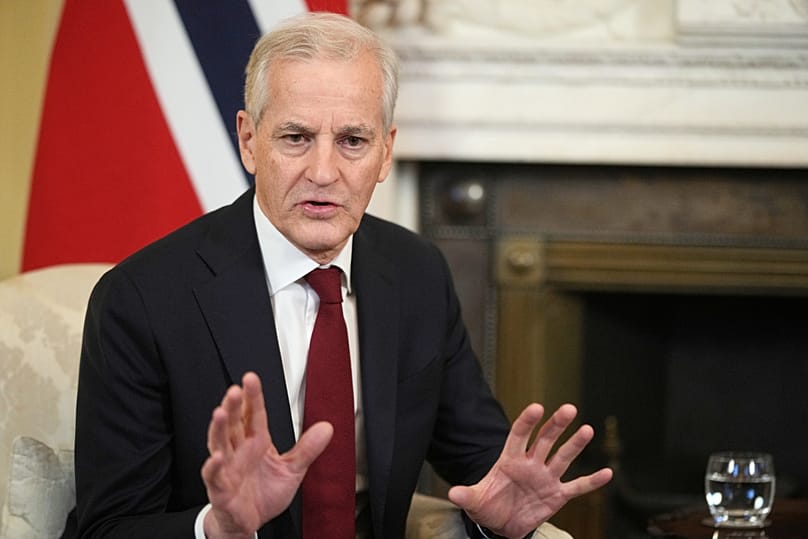
The Prime Minister of Norway Jonas Gahr Støre speaks in London, 4 December, 2025 AP Photo

"She is a wonderful woman who has been through so much. María presented me with her Nobel Peace Prize for the work I have done," Trump said in his post. "Such a wonderful gesture of mutual respect. Thank you María."

Ahead of Machado's visit to Washington, the Norwegian Nobel Institute, organisers of the Nobel Prize, said in a statement that a Peace Prize cannot be withdrawn, transferred or shared once it has been announced.

The Nobel Foundation's statutes and Alfred Nobel's will — which dictate the merits awardees should have — state that the title of the winner belongs personally to the individual and cannot be legally shared or reassigned to another person.

The medal or the associated diploma can be physically given, sold or auctioned, but this does not confer the award's title on anyone else

Ending eight wars?

Trump has often boasted about ending eight wars, styling himself as "the president of peace" and therefore deserving of the Nobel honour but those claims have been exaggerated.

The latest conflict he claims to have ended was two years of fighting between Israel and Hamas in Gaza.

The other seven are Israel and Iran, Pakistan and India, Rwanda and the Democratic Republic of Congo, Thailand and Cambodia, Armenia and Azerbaijan, Egypt and Ethiopia and Serbia and Kosovo.

But some of those conflicts lasted just days and one, Egypt-Ethiopia, had no fighting to end but rather involved long-standing issues of water sharing from the Nile River.

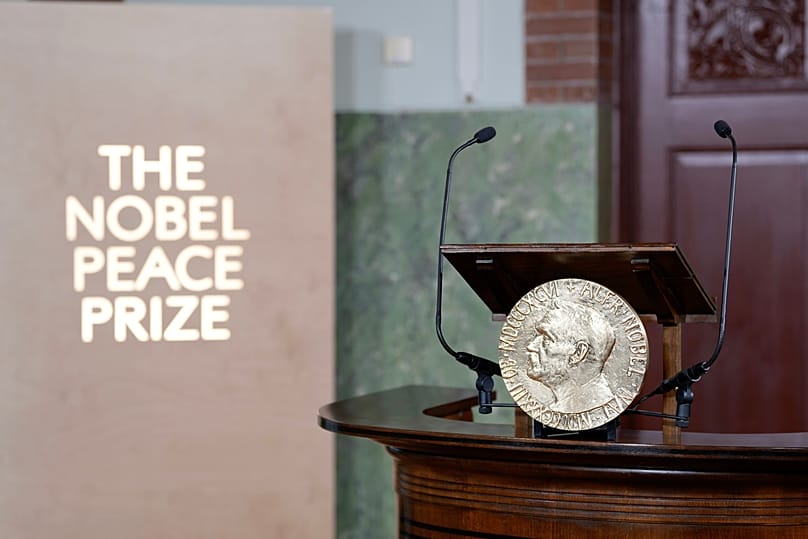
A view of the rostrum where the Nobel Committee announce the winner of the Nobel Peace Prize in Oslo, 10 October, 2025 AP Photo

Ethiopia formally inaugurated the Grand Ethiopian Renaissance Dam (GERD) last year. It sees the dam as a boon to its economy but Egypt opposed its construction, arguing that it would reduce the country's share of Nile River waters.

Trump recently told Fox News that one of the ongoing conflicts that has continued despite his claiming to have stopped it, a simmering border dispute between Thailand and Cambodia, should actually count more than once.

"I did put out eight wars, eight and a quarter, because, you know, Thailand and Cambodia started going at it again," he told Sean Hannity last week.


Considerations on the Morality of Donald Trump

In an interview with the New York Times, when asked if there were any checks on his powers on the world stage, Trump replied: “Yeah, there is one thing. My own morality. My own mind. It’s the only thing that can stop me.”

A voice jumps in to ask: “Not international law?”

“I don’t need international law,” said Trump. “I’m not looking to hurt people.”

Trump’s own morality.

Morality is a set of principles that distinguishes between right and wrong that guide one’s behavior accordingly.

This inquiry into the morality of Trump will leave aside exploration of Trump’s alleged sexual peccadilloessexual abuseadulterous flingsgrabbing pussies, except for his questionable relationship with a known sex offender.

Thou shall not kill

Trump identifies as non-denominational Christian; therefore, the ten commandments should apply to Trump. In this case, the prohibition against taking human life is applicable and particularly worth examining because it is generally considered a universal principle that is also encoded in international law.

The list of lives erased at Trump’s behest is long. The recent US attack launched against Venezuela took 100 lives. That was on the heels of several snuff videos of small boats that Trump alleges were narco traffickers.1 There were no interceptions, no presumption of innocence, just killing. As of 31 December 2025, CBC cited the number of crew members killed at 115.

On 22 June 2025, the US attacked three nuclear facilities in Iran. The number of casualties is unclear.

Clear is that the US sneak attack on Iran was an intrusion into the Iran-Israel war to aid the sneak-attacking Israel belligerent. Israel has been engaged in warring against its neighbors Lebanon, Syria, and was wreaking a genocide in Palestine, with devastating destruction in Gaza. This genocide has been abetted by Trump’s US (of course, with Democrats on side with Israel).

Sovereignty

The sneak attacks speak to the pusillanimity at the core of the Trump and Netanyahu governments.

As well, the US attacks demonstrate a disregard for US adherence to international law as per the UN Charter to which the US is a signatory, thus it is legally binding under the US Constitution. Article 2(1) of the UN Charter recognizes the sovereign equality of states, regardless of size or power. Further, Article 2(7) prohibits outside intervention in domestic matters, such as the protests recently in Iran where Trump threatened intervention, even though protests were also ongoing in the US for the killing of a critic of the Trump administration by ICE operatives.

By launching attacks abroad without Congressional approval, Trump is criticized for failing to abide by the US Constitution which he pledged to uphold in his oath of office.

Lying

Lying is considered an abnegation of morality. Ethics Officer Tim C. Mazur reasoned,

Lies are morally wrong, then, for two reasons. First, lying corrupts the most important quality of my being human: my ability to make free, rational choices. Each lie I tell contradicts the part of me that gives me moral worth. Second, my lies rob others of their freedom to choose rationally.

Trump has a history of documented lying including recently.

The big lies are insidious. For example, the Trump administration kidnapped Venezuela’s president Nicolás Maduro and his wife, Cilia Flores, on the accusation of running a cocaine narco-trafficking operation to the US. The Trump administration has focused on Tren de Aragua (TDA), a cartel that took root in prisons, and is allegedly linked to Maduro. US attorney general Pam Bondi called TDA “a highly structured terrorist organization” and “a foreign arm of the Venezuelan government.”

El País downplayed Bondi’s assertion, citing the opinion of experts that “Tren de Aragua in no way poses a national security issue for Washington, as Donald Trump claims.” Moreover, on 7 April 2025, the US National Intelligence Council issued a memo that stated,

While Venezuela’s permissive environment enables TDA to operate, the Maduro regime probably does not have a policy of cooperating with TDA and is not directing TDA movement to and operations in the United States.

More than two hundred people have died based on, at best, erroneous assessment of intelligence, or worse, outright disinformation.

After the attack on Venezuela, Trump said: “We’re going to take back the oil that frankly we should’ve taken back a long time ago.” And “we’re going to have our very large United States oil companies, the biggest anywhere in the world, go in, spend billions of dollars, fix the badly broken infrastructure, the oil infrastructure, and start making money for the country.”

Not mentioned concerning the theft of Venezuelan oil is why the oil infrastructure is “badly broken.”

However, this is readily understandable when one considers the dire effect of economic sanctions that the US has imposed on Venezuela. One research report estimated that the sanctions had caused more than 40,000 estimated deaths in Venezuela from 2017 to 2018. A 2025 Lancet paper laid bare the perniciousness of economic sanctions for which 564,258 deaths worldwide per year were attributed for the period from 2012 to 2021.

Trump is a known braggart, and oftentimes his lies take the form of boasting. To wit his claim that he’d end the warring between Russia and Ukraine in 24 hours: “They’re dying, Russians and Ukrainians. I want them to stop dying. And I’ll have that done — I’ll have that done in 24 hours.”

It wasn’t just a one-off boast, presumably to attract votes. CNN notes that there were 53 times Trump said he’d end the Ukraine war within 24 hours or before taking office.

Even more unseemly is that the Russia-Ukraine conflict is only partially that. It is a NATO-Ukraine proxy war against Russia. So while Trump is bragging that he’ll bring a quick end to the Ukraine-Russia war, he is deeply involved in it — attested to by US secretary-of-state Marco Rubio: “And frankly, it’s a proxy war between nuclear powers – the United States, helping Ukraine, and Russia.”

Trump’s duplicity in the proxy war came to the forefront when a drone attack was launched from Ukraine targeting a residence used by president Vladimir Putin in the Novgorod region, this while Putin was in telephone discussions with Donald Trump (about which Trump lied) on ending the war in Ukraine. A downed Ukrainian drone provided decoded navigation data information, according to Russia, that proves it contained the precise coordinates of the intended target — Putin’s residence — including data on the flight path of the drone.

Former US Marine intelligence officer Scott Ritter was unambiguous as to the meaning:

American digital “fingerprints” were all over this guidance component, something the Russians knew when their head of military intelligence handed one of these intact components over to the US military attaches in Moscow.

Russia knows the truth.

And the truth is that the United States under Donald Trump still seeks the strategic defeat of Russia.

Rudenness

Are manners not necessarily attached to morality, facilitating social interaction and guiding us to live a virtuous life?2

Social etiquette befuddles Trump who addresses many people in a decidedly rude manner. In fact, he dehumanizes and humiliates people. The examples are myriad: he referred to DPRK president Kim Jong-un as “little rocket man”; he called Canada a 51st state, Canadians “mean and nasty,” and has driven his closest trading partner, Canada, to renewed  relations with China, a nation Trump calls a “threat to the world”; he considered his former appointee as US ambassador to the UN, Nikki Haley, to be a “birdbrain”; former president Joe Biden is demeaned as either “Sleepy Joe,” Crooked Joe,” or even “sleepy son of a bi**h”;  of his director of National Intelligence Tulsi Gabbard relaying the intelligence community’s assessment of Iran not pursuing nuclear weapons, Trump said, “I don’t care what she said” he called one female reporter “piggy”; and the list of people derided by Trump is much, much longer — indicating a penchant for crudely dealing with people he disagrees with.

What are Tariffs and Who Pays

Trump not only uses sanctions to inflict harm on other nations to achieve political aims, he also is imposing tariffs on other nations, friend and foe alike, as a cornerstone of his economic agenda and in support of his imperialist ambitions.

Trump envisions the US as a tariff nation. He frames a tariff as a tax on another country. He hopes to create a surfeit of cash to pay off the staggering US debt (now approximately $38.45 trillion) and create manufacturing jobs in the US.

But the question is who will pay the tariff. Trump maintains it is the exporting nation.

The Institute on Taxation and Economic Policy calls Trump’s claim erroneous and that American consumers will bear much of the cost through higher prices.

Indeed, Trump’s claim that tariffs are borne by exporters is widely held to be false.3

Noted Columbia University economist Jeffrey Sachs predicts the Trump tariff policy will fail.

What is in the Offing?

There is other sordid information that might have strong negative implications for Trump and his morality that is is still seeping out.

The release of the Epstein files may well speak to the morality of Donald Trump. The release of the files is staunchly opposed by Trump, but dribs and drabs have emerged. Epstein is notorious for having been charged with sex trafficking of minors and conspiracy to commit sex trafficking of minors. Children and adolescents who become entangled in sex trafficking sometimes come from backgrounds with traumatic experiences; young age and a history of trauma can be a recipe for exploitation of vulnerable youth.

Epstein operated frequent flights with high profile guests to his private island, Little Saint James, in the US Virgin Islands. There is much documented and video evidence of alleged sex trafficking of minors to the island and Epstein abodes elsewhere. Trump’s relationship with Epstein and his world puts him in an unwanted spotlight.

Trump posted on Truth Social in January 2024, “I was never on Epstein’s Plane, or at his ‘stupid’ Island.” However, documents released by Trump’s own Justice Department –including flight logs and emails — indicate that Trump had been a passenger on Epstein’s private jet “far more often” than realized.

As of 16 January 2026, Will Gottsegen wrote, “Less than 1 percent of [the Epstein files] have been released. A CNN poll reveals that two-thirds of Americans believe the Trump government is holding back certain information.

How do Americans feel about the morality that guides Trump, and do they even care? Time will tell; the US November midterm elections are in the offing.

ENDNOTES:

Kim Petersen is an independent writer. He can be emailed at: kimohp at gmail.com. Read other articles by Kim.