Tuesday, January 20, 2026

AI and Crypto push energy demand to record highs worldwide

By Dr. Tim Sandle
SCIENCE EDITOR
DIGITAL JOURNAL
January 18, 2026


Image: — © AFP

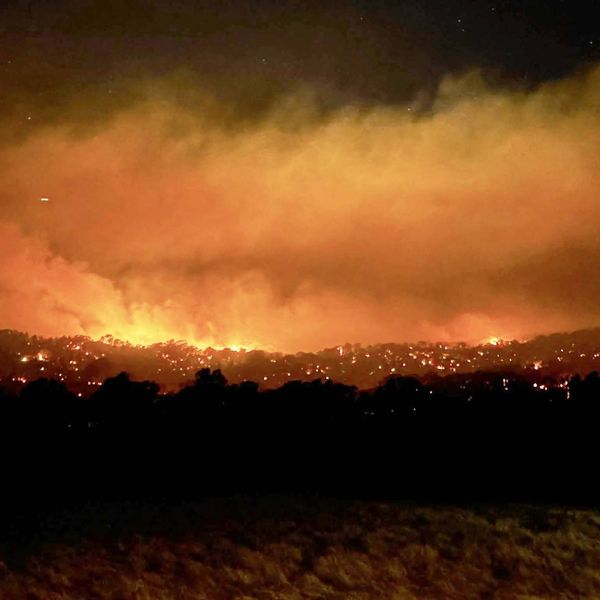
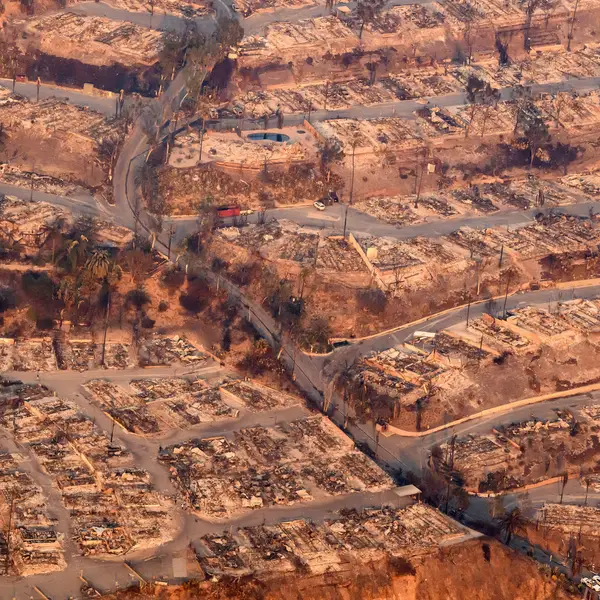
The energy demand from AI (together with digital assets like cryptocurrency) is rapidly increasing due to the growing reliance on data centres and high-performance computing. Overall, AI’s environmental footprint, from soaring energy and water use to e-waste, is a significant concern.

According to a January 2026 report on energy use in the tech sector, the U.S. is the largest electricity consumer among the world’s major technology hubs. The study was conducted by the decentralized crypto exchange firm Atmos, which examined the energy usage of leading tech countries, including data centres, AI infrastructure, and cryptocurrency mining.

The research examined how much power different countries use for tech and how hard that usage pushes their electrical grids. The study measured factors like total electricity consumed by data centres and mining operations, what percentage of a country’s power supply goes to technology, how much AI computing hardware each country has installed (measured in H100 equivalents), and how big their overall power grids are. By combining these indicators, each country got a score out of 100.

The top ten heaviest users of electricity are:

Country Total Power Capacity (MW)Mining vs Capacity ()Electricity Production (TwH)Mining Energy (TWh/yr)Mining vs ProductionEnergy Consumption Score 
United States19817.91.274,494126.72.8296.2
China288.60.339,45670.70.7593.3
United Arab Emirates6363.00.011650.00.0290.2
Canada5.51.6363321.73.4385.1
Malaysia37.12.711888.44.4782.1
Russia5.70.621,17815.61.3378.5
Saudi Arabia2394.604230.00.0174.9
Germany25.20.4851410.21.9971.3
South Korea3024.40.026180.20.0464.1
Iceland0.42.14200.52.6857.4

As evident from the above table, the U,S. takes first place as the world’s most energy-consuming tech hub. American technology companies use 126.7 terawatt-hours annually, enough electricity to power about 12 million homes for a year. Altogether, that’s nearly 3% of the country’s entire power output. The US also has almost 40 million high-performance AI chips installed, which together draw roughly 20K megawatts of power.

Data server. Image © Tim Sandle


The U.S. statistics are:

  • Total Power Capacity: 19,818 MW
  • Electricity Production: 4,494 TWh
  • Estimated Electricity Demand: 15,230 MW
  • Mining Energy: 126.7 TWh/year
  • Mining vs Production: 0.03%
  • AI Compute Power: 39.7 million H100 equivalents

China

China ranks second, with around 400K H100-equivalent AI computing units installed. Alongside this, the country has a sizable mining network that consumes about 70.7 terawatt-hours of electricity per year. Yet, given China’s massive energy production of 9,456 terawatt-hours annually, this technological demand represents less than 1% of the nation’s total power output.

United Arab Emirates

The UAE ranks third with a tech infrastructure that stands out for a country of its size. The Emirates has deployed more than 23 million H100-equivalent AI chips, which is the second-highest concentration globally after the US. The country also produces 165 terawatt-hours of electricity annually, more than enough to support its growing technological needs, with mining alone accounting for just 0.02% of total output.

Canada

Next on the list is Canada, where tech companies consume 21.7 terawatt-hours each year. Mining specifically eats up more than 3.4% of power output here, one of the highest percentages in the study. This means local crypto businesses in Canada use 1.6% of the country’s total grid capacity, drawing power at rates that push harder on the electrical system than what you see in most developed countries.

Malaysia

Malaysia rounds out the top five with 8.4 terawatt-hours in annual tech energy consumption. The country has about 39,000 H100-equivalent AI chips, fewer than other top-ranked states. However, technology operations here still account for 4.5% of total electricity production, among the highest rates in the world. This means Malaysia’s tech sector creates disproportionate strain compared to larger nations.

Across all nations, technology’s share of global electricity use has jumped from around 3% to more than 7% over the last decade. That growth is only going to speed up. This means that new ways need to be found to reduce the consequential environmental impact of this latest technological boom.

‘What Climate Breakdown Looks Like’: 50,000+ Flee Wildfires as Chile Declares ‘State of Catastrophe’

“The first priority, as you know, in these emergencies is always to fight and extinguish the fire. But we cannot forget, at any time, that there are human tragedies here,” said the country’s president.


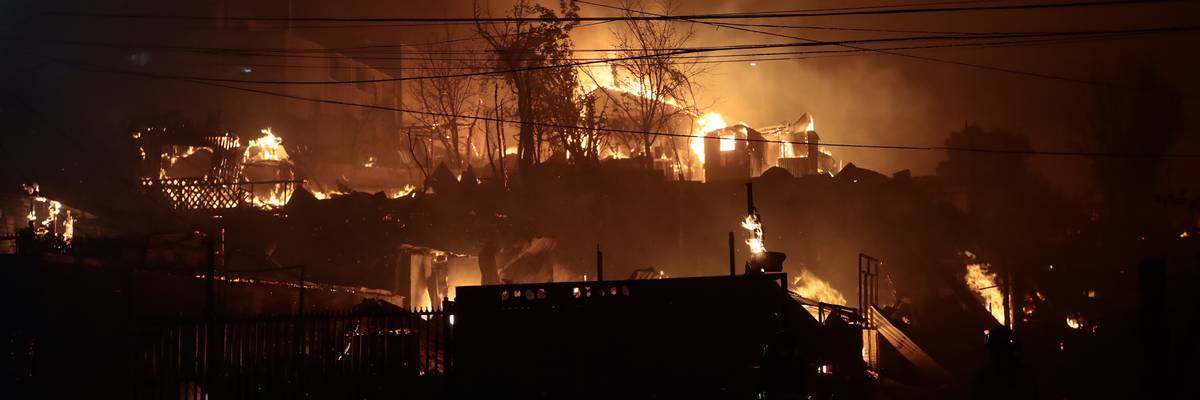
This photo shows the site of a forest fire in Penco, Biobío region, Chile on January 18, 2026.
(Photo by Xinhua via Getty Images)

Jessica Corbett
Jan 19, 2026
PCOMMON DREAMS

On the heels of another historically hot year for Earth, disasters tied to the fossil fuel-driven climate emergency have yet again turned deadly, with wildfires in Chile’s Ñuble and Biobío regions killing at least 18 people—a figure that Chilean President Gabriel Boric said he expects to rise.

The South American leader on Sunday declared a “state of catastrophe” in the two regions, where ongoing wildfires have also forced more than 50,000 people to evacuate. The Associated Press reported that during a Sunday press conference in Concepción, Boric estimated that “certainly more than a thousand” homes had already been impacted in just Biobío.
RECOMMENDED...


‘We Are Running Out of Time’: 2025 Keeps Hot Streak Alive for Global Temperatures


Trump Quits Key Treaties Amid ‘Increasingly Deadly and Expensive’ Weather Disasters

“The first priority, as you know, in these emergencies is always to fight and extinguish the fire. But we cannot forget, at any time, that there are human tragedies here, families who are suffering,” the president said. “These are difficult times.”

According to the BBC, “The bulk of the evacuations were carried out in the cities of Penco and Lirquen, just north of Concepción, which have a combined population of 60,000.”


Some Penco residents told the AP that they were surprised by the fire overnight.

“Many people didn’t evacuate. They stayed in their houses because they thought the fire would stop at the edge of the forest,” 55-year-old John Guzmán told the outlet. “It was completely out of control. No one expected it.”

Chile’s National Forest Corporation (CONAF) said that as of late Monday morning, crews were fighting 26 fires across the regions.

As Reuters detailed:
Authorities say adverse conditions like strong winds and high temperatures helped wildfires spread and complicated firefighters’ abilities to control the fires. Much of Chile was under extreme heat alerts, with temperatures expected to reach up to 38ºC (100ºF) from Santiago to Biobío on Sunday and Monday.

Both Chile and Argentina have experienced extreme temperatures and heatwaves since the beginning of the year, with devastating wildfires breaking out in Argentina’s Patagonia earlier this month.

Scientists have warned and research continues to show that, as one Australian expert who led a relevant 2024 study put it to the Guardian, “the fingerprints of climate change are all over” the world’s rise in extreme wildfires.

“We’ve long seen model projections of how fire weather is increasing with climate change,” Calum Cunningham of Australia’s University of Tasmania said when that study was released. “But now we’re at the point where the wildfires themselves, the manifestation of climate change, are occurring in front of our eyes. This is the effect of what we’re doing to the atmosphere, so action is urgent.”

Sharing the Guardian‘s report on the current fires in Chile, British climate scientist Bill McGuire declared: “This is what climate breakdown looks like. But this is just the beginning...”


The most recent United Nations Climate Change Conference, where world leaders aim to coordinate a global response to the planetary crisis, was held in another South American nation that has faced devastating wildfires—and those intentionally set by various industries—in recent years: Brazil. COP30 concluded in November with a deal that doesn’t even include the words “fossil fuels.”

“This is an empty deal,” Nikki Reisch of the Center for International Environmental Law said at the time. “COP30 provides a stark reminder that the answers to the climate crisis do not lie inside the climate talks—they lie with the people and movements leading the way toward a just, equitable, fossil-free future. The science is settled and the law is clear: We must keep fossil fuels in the ground and make polluters pay.”


Climate risks to insurance and reinsurance of global supply chains


– a new report from Stockholm Environment Institute 


Stockholm Environment Institute


Global supply chains are increasingly exposed to climate-related disruptions, redrawing the boundaries of what can be insured and how risk is distributed across the global economy. In recent years insured catastrophe losses have grown by roughly 5–7% per year in real terms. As insurers retreat from high-risk geographies and sectors, the burden of loss increasingly shifts to public budgets, enterprises, and households.

Disruption of international supply chains are a major systemic risk for Europe and countries beyond – alongside food insecurity, energy instability and financial stress. The 2021 floods in Germany and Belgium paralysed logistics and manufacturing across Europe and droughts in southern Europe in 2022 cut harvests and strained water supplies.

“Climate shocks are now driving supply-chain shocks, cascading through interconnected networks rather than remaining isolated disasters. As local weather extremes ripple through interdependent systems, they can quickly become global shortages and delays that threaten economic security,” says Dr. Mikael A. Mikaelsson, Policy Fellow at Stockholm Environment Institute (SEI).

Insurance and reinsurance, the financial mechanisms normally absorbing these shocks, are being tested by the growing complexity, frequency, and severity of climate hazards. The report Insurance and reinsurance under climate stress: managing systemic risk in global supply chains draws on interviews with leading experts from several of Europe’s top (re)insurance actors to examine how these sectors are responding to climate change challenges and the emerging limits of traditional risk-transfer models.

Without substantial changes to business models, regulation, and public-private coordination, there is a risk the sector will undermine stability by amplifying systemic climate stress, the report says.

“Climate risk is becoming systemic faster than insurance systems can adapt – and when losses can no longer be diversified, insurance stops working as designed,” says Mikael A. Mikaelsson.

Key findings

  • The physical and financial foundations of insurability are eroding. As hazards increase in number and intensity, assets concentrate in exposed regions and correlated losses across portfolios are undermining the principle of diversification on which (re)insurance depends, accelerating market withdrawals and widening protection gaps.
  • While innovative solutions, such as parametric products, Contingent Business Interruption (CBI) cover and resilience-linked assessments, offer valuable tools, they are limited in scope and reliability.
  • The scope of insurance coverage remains narrowly focused on assets and direct damages, excluding slow-onset, indirect and social dimensions of climate risk. Climate-related risks to human health and productivity among supply-chain workers are particularly under-recognized.
  • Structural and technical limits – including reliance on historical data, incomplete climate-adjusted modelling, and fragmented risk metrics – undermine insurers’ ability to anticipate systemic exposure. There is a need for harmonized standards and forward-looking, probabilistic models.
  • Short-term underwriting cycles and annual repricing prevent insurance from supporting long-term adaptation, since the focus on immediate solvency and profitability conflicts with the multi-decadal nature of climate risk.
  • Risks to labour in supply chains are effectively invisible to current life and health insurance systems, particularly in physically exposed roles such as agriculture, construction, and logistics. Workers in such roles often fall outside formal insurance systems, and even when insured, climate-related illness, productivity loss, or mental health impacts are rarely recognized or compensated.

“Insurance alone cannot manage systemic climate risk. Without stronger adaptation, better data, and coordinated public–private governance, risk transfer will increasingly fail where resilience is needed most,” says Mikael A. Mikaelsson.

About the report

The report is based on a literature review and expert consultations with senior climate risk specialists across the European (re)insurance ecosystem. Based on the findings, three recommendations are directed at policymakers and regulators, the (re)insurance sector, and businesses whose operations depend on insurable and resilient supply chains.

For further information, contact:

In Stockholm, Sweden

Mikael Allan Mikaelsson, Policy Fellow, SEI, mikael.mikaelsson@sei.org, +46 73 050 1818

Ulrika Lamberth, Senior Press Officer, SEI, ulrika.lamberth@sei.org, + 46 73 801 7053

In Seattle, US

Lynsi Burton, Communications Officer, SEI US, lynsi.burton@sei.org, +1 360 485 3041

Stockholm Environment Institute is an international non-profit research institute that tackles climate, environment and sustainable development challenges. We empower partners to meet these challenges through cutting-edge research, knowledge, tools and capacity building. Through SEI’s HQ and seven centres around the world, we engage with policy, practice and development action for a sustainable, prosperous future for all. www.sei.org @SEIresearch

Global warming and CO2 emissions 56 million years ago resulted in massive forest fires and soil erosion


Royal Netherlands Institute for Sea Research


56 million years ago, the Earth was already warm. ‘As a result, there was a lot of vegetation, even at high latitudes. That means that a lot of carbon was stored in, for example, vast coniferous forests.’ Biologist Mei Nelissen is conducting PhD research at NIOZ and Utrecht University. She analysed pollen and spores in clearly layered sediment that her supervisors had drilled from the seabed in the Norwegian Sea in 2021. This revealed unique information in great detail – even per season – about what happened when the Earth warmed by five degrees in a short period of time those 56 million years ago.

Layers in drill cores

Nelissen: 'We could see that within a maximum of three hundred years from the start of the explosive increase in CO2, the conifer-dominated vegetation disappeared at the studied site and many ferns appeared. The ecosystems on land were disrupted for thousands of years; an increase in charcoal indicates that there were more forest fires. An increase in clay minerals in the sea sediment also indicates that entire sections of land washed into the sea due to erosion.' Thanks to the exceptionally well-defined layers in the sediment – even per season! – researchers were able to demonstrate for the first time how quickly trees and plants respond to disruption.

More was already known about the major impact on the sea, says Nelissen. ‘In drill cores from the deep sea, for example, we see that there is suddenly no more calcium carbonate, because the seawater rapidly acidified due to all the CO2 it absorbed. This made the water too acidic for organisms to form calcium carbonate skeletons or shells.’

Even faster warming now than then

What was going on? The period around 56 million years ago is known as the PETM: Paleocene-Eocene Thermal Maximum. It was already warm and ‘suddenly’ it became even warmer. Nelissen: 'The cause is unknown; it is probably a combination of factors. Methane hydrates in the seabed became unstable due to the heat, which led to methane emissions. There was also a lot of volcanic activity during that period.' Nowadays, climate change is mainly due to the burning of fossil fuels. ‘Today, CO2 emissions are about two to ten times faster than in the PETM, but the rate at which CO2 concentrations in the atmosphere increased at that time is closest to the increase caused by human emissions. In geological terms, such a rate is unprecedented.’

The disruption amplified the warming

It is important to know what consequences the disruption of the carbon cycle and warming had at that time, because we can deduce what lies ahead if the rapid warming of today continues, the researchers write. We are already seeing more forest fires, but we also expect more extreme weather with more intense rainfall, flooding and drought. Nelissen: 'We must take this seriously. Our results are consistent with findings from other researchers in other areas. We now know that terrestrial ecosystems can respond quickly and dramatically to climate change. The carbon released into the atmosphere by the terrestrial disturbances, including fires and soil erosion,can further exacerbate global warming.'

Milestone in the research

Nelissen's supervisors Joost Frieling (University of Oxford and Ghent University) and Henk Brinkhuis (NIOZ and Utrecht University) went on a sea expedition with the International Ocean Discovery Program in 2021 to take sediment samples.

The drill cores turned out to be particularly clearly ‘laminated’: they showed very distinct layers, even per season. When they found the microfossils of the algae Apectodinium augustum, they happily posed for a photo together. Nelissen: ‘That's when my PhD position came about. This microfossil was proof that this beautifully preserved sediment comes from the PETM period, the period that researchers are keen to learn more about.’

[Article]

Widespread terrestrial ecosystem disruption at the onset of the Paleocene-Eocene Thermal MaximumPNAS, Mei Nelissen, Debra A. Willard, Han van Konijnenburg-van Cittert, Gabriel J. Bowen, Teuntje Hollaar, Appy Sluijs, Joost Frieling, Henk Brinkhuis

Journal

Method of Research

Subject of Research

Article Title

Article Publication Date