Thursday, January 22, 2026

How the Alberta MOU Violates Canada’s 
Climate Obligations

How the Alberta MOU Violates Canada’s Climate Obligations

This post provides a summary of a much longer analysis, one version of which is available on both the Rideau Institute website, and the original on RI Senior Fellow Craig Martin’s Substack.

While there has been much discussion of the Canada-Alberta Memorandum of Understanding (the MOU), there has been rather less analysis of whether it is consistent with Canada’s international law obligations.

There has been much debate about the new Memorandum of Understanding (the MOU) that the federal government and Alberta signed in December. As most readers will recall, it envisions a rapid expansion of Alberta’s production of bitumen from its oil sands fields, the development of a new pipeline from Alberta to the Pacific coast for export to Asia of the expanded oil production, and a massive expansion of electrical generation for data centers and new infrastructure. The agreement also provides for all of this to be facilitated by a streamlining of the climate and energy-related regulatory process, exempting Alberta from many of the current climate and energy policy regulations that would be implicated by the planned expansion.

Canada has both legal and moral obligations to do its fair share in responding to the climate change crisis….

While there has been much discussion of the Canada-Alberta Memorandum of Understanding (the MOU), there has been rather less analysis of whether it is consistent with Canada’s international law obligations. Canada has both legal and moral obligations to do its fair share in responding to the climate change crisis—and understanding what these obligations are, and whether policies such as this new agreement violate them, should be of considerable importance to all Canadians.

Key Elements of the Canada-Alberta MOU

In a nutshell (as most Canadians will know), the federal government and Alberta signed a new Memorandum of Understanding (the MOU) that envisions a rapid expansion of Alberta’s production of bitumen from its oil sands fields, the development of a new pipeline from Alberta to the Pacific coast for export of the expanded oil production to Asia, and a massive expansion of electrical generation for data centers and new infrastructure. All of this is to be facilitated by a streamlining of the regulatory process, and exempting Alberta from current climate and energy policy regulations, including the carbon pricing standards under the Greenhouse Gas Pollution Pricing Act (the GGPPA), and the federal Clean Energy Regulation enacted under the Canadian Environmental Protection Act. The plan assumes that its impact on greenhouse gas (GHG) emissions will be offset by a massive carbon capture, utilization and storage (CCUS) project. The entire project is to be privately funded, and it envisions buy-in and involvement of the First Nations.

Canada’s Legal Obligations – The ICJ Decision

[T]here have been several groundbreaking decisions by international tribunals on the obligations of states regarding their response to the climate change crisis, culminating with the Advisory Opinion on the Obligations of States in Respect to Climate Change from the International Court of Justice (ICJ) just last summer.

Critics, including some within the government itself, quickly condemned the project for making the achievement of Canada’s climate goals—particularly its ultimate long-term goal of attaining net-zero by 2050—all but impossible. But there has also been widespread support for the project as being a boon for the Canadian economy. Strangely, there has been little discussion of how the project relates to Canada’s legal obligations. Yet in just the last year, there have been several groundbreaking decisions by international tribunals on the obligations of states regarding their response to the climate change crisis, culminating with the Advisory Opinion on the Obligations of States in Respect to Climate Change from the International Court of Justice (ICJ) just last summer.

The ICJ established that the states have a fundamental obligation, under both treaty and customary international law, not to harm the climate system. This obligation requires that states take increasingly ambitious action to reduce their net GHG emissions, to do their part in achieving the consensus goal of keeping the average global temperature increase to 1.5º Celsius above pre-industrial levels. This is an obligation of conduct, which requires states to act with due diligence in setting and implementing the measures necessary to reduce their GHG emissions. In addition, states have obligations to cooperate with one another in this effort, and they have separate obligations under human rights law to prevent harm to the climate system, given that it is a precondition to the enjoyment of other fundamental rights.

The MOU…now more clearly violates Canada’s climate change obligations.

Canada’s climate plans submitted in accordance with the Paris Agreement, which committed Canada to be net-zero by 2050, were already deemed insufficient to fulfill Canada’s fair share of the reductions required to meet the global 1.5º C objectives. The MOU, however, now more clearly violates Canada’s climate change obligations. The expansion of bitumen extraction and processing will directly produce an increase in GHG emissions that cannot be completely mitigated by the CCUS project, even if the developing technology for that project is entirely successful. What is more, the expanded energy generation called for will also likely increase emissions. Finally, the relaxation of regulations and the exemptions afforded Alberta will weaken and undermine the Canadian climate change law and policy regime in ways that will further lead to a reduction in the rate at which GHG emissions are being reduced within Canada.


The adoption of such plans in and of itself constitutes a violation of the due diligence obligations identified by the ICJ. Far from increasing the ambitiousness of its plans to reduce GHG emissions, Canada is, with this MOU, implementing plans that will directly increase GHG emissions, weaken its climate change law and policy regime, and make it virtually impossible to meet its already insufficient targets.

There is real injustice in failing to do one’s part in resolving a problem that one has helped to cause, and which is causing harm to innocent people.

Some may think such obligations abstract and of little matter. But Canada is among the group of Western states that are responsible for creating the bulk of historic GHG emissions, and thus bear disproportionate responsibility for creating this existential crisis for humanity. The obligations identified by the ICJ are owed in large part to the states of the Global South, and the peoples of those states, which are highly vulnerable to the increasingly dire consequences of climate change, and which contributed almost nothing to the causes of this crisis. There is real injustice in failing to do one’s part in resolving a problem that one has helped to cause, and which is causing harm to innocent people.

Canada must do its fair share to help the world deal with the crisis.

Finally, Canada owes obligations, as a matter of human rights, to the people of Canada—both those currently alive but also those of future generations. We are now on a trajectory of hitting a temperature increase of 3.8º C by 2100, which will be catastrophic for human civilization. Canada must do its fair share to help the world deal with the crisis.


Our next post will examine Prime Minister Carney’s landmark speech at Davos, Switzerland on 20 January 2026; take stock of President Trump’s so-called Board of Peace for Gaza, and update on the increasingly dire situation in Ukraine

Photo credit: Craig Martin – AI generated (Alberta oil sands).

Ceasefire.ca is a public outreach project of the Rideau Institute linking Canadians working together for peace. We need your support more than ever to promote an independent, sovereign and viable Palestinian state, to help bring peace to Ukraine and to advance our common security globally. 


The Grassy Mountain coal project already had a fair hearing. It was rejected in the 2021 joint review panel for reasons that it would create great environmental harm for little economic benefit. But the Minister of Energy interfered in the AER process to revive the project. How can the public or investors have any trust in Alberta’s regulatory processes when the UCP government interferes in independent processes? #ableg
Mark Carney’s Davos speech marks a major departure from Canada’s usual approach to the U.S.

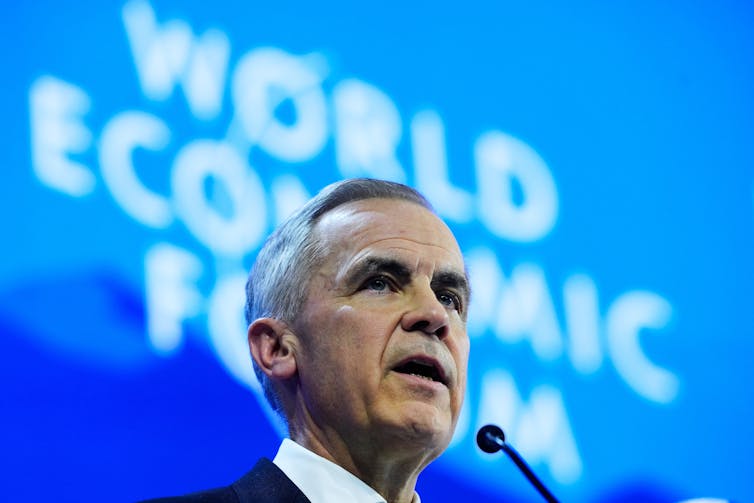
Prime Minister Mark Carney speaks during the Annual Meeting of the World Economic Forum in Davos, Switzerland, on Jan. 20, 2026. 
(AP Photo/Markus Schreiber)


Published: January 21, 2026
THE CONVERSATION

Author


It was a moment of global clarity. Prime Minister Mark Carney’s speech to the world’s political and economic elite gathered in Davos this week described global realities, past and present, with a candour and nuance rarely heard from a serving politician.

The message was twofold.


First, Carney made clear that the world has changed, and the old comfortable ways of global politics are not coming back. Those who wait for sanity to return are waiting in vain. We are in a world increasingly shaped by the threat and the use of hard power. All states must accept that reality.

Despite this, Carney’s second and more hopeful message was that while the globally powerful may act unilaterally, others — notably “middle powers” like Canada — are not helpless.

By finding ways to co-operate on areas of shared interest, states like Canada can pool their limited resources to build what amounts to a flexible network of co-operative ties. Taken together, they can provide an alternative to simply rolling over and tolerating whatever great powers like the United States dole out.

There’s also little choice in the matter if countries want to remain independent. As he eloquently put it: “If we’re not at the table, we’re on the menu.


From ‘elbows up’ to capitulation and back


The speech represented a remarkable departure from Canada’s usual approach to its relationship its neighbour to the south.

For all the talk of “elbows up” during the 2025 federal election campaign, the Carney government has been somewhat ambivalent since then. It’s placed its hopes in achieving a renewed trading relationship and normalized relations with the U.S. through a combination of good faith negotiations and a steady stream of conciliatory gestures on issues that seemed to matter most to U.S. President Donald Trump.


That resulted in Canada committing significant funds to combat a largely non-existent fentanyl trafficking problem and to meet American demands for increased military funding. At times the conciliation verged on placation, as when Canada unilaterally ended relatiatory tariffs on American goods to no discernible effect.

This strategy clearly was not working, however, as Carney made clear in Davos.

While neither America, nor Trump, were mentioned by name, there’s no doubt who’s driving the dramatic global changes Carney was describing. At times the veneer became very thin as Carney reiterated Canada’s support for the sovereignty of Greenland as a territory of Denmark.

In fact, the speech was remarkably blunt in its rebuke of America’s foreign policy during Trump’s second term, drawing attention, as others have, to how U.S. actions leave almost everyone, including Americans, worse off

.
People participate in a rally in response to U.S. President Donald Trump’s threats to Canadian sovereignty on Parliament Hill in Ottawa in March 2025. THE CANADIAN PRESS/Justin Tang


Trump’s response


That not-so-subtle barb was not lost on the audience, either in the room or across the Atlantic in the White House.

Trump wasted little time in firing back in the manner and style the world has become accustomed to. During his own address to the World Economic Forum the next day, Trump delivered a rambling and at times confusing speech.

He reiterated his intent to annex Greenland while confusing the island multiple times with neighbouring and also sovereign Iceland, and he took time to single out Carney by name.

“Canada lives because of the United States,” he said. “Remember that, Mark, next time you make your statements.”

The comments provided helpful proof of Carney’s argument, demonstrating the naked threat of power by the American president to coerce its neighbour and ostensible ally. It revealed the kind of “gangster” mindset we see often from Trump, as he effectively said: “Nice country, Mark. Be a shame if something happened to it.”

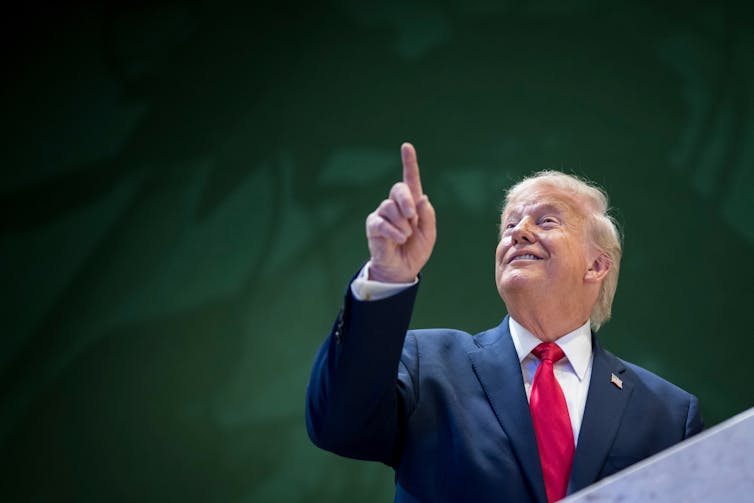
U.S. President Donald Trump gestures in the hallway after his special address during the 56th annual meeting of the World Economic Forum in Davos, Switzerland, on Jan. 21, 2026. (Gian Ehrenzeller/Keystone via AP)

Critique of past

As blunt as Carney’s assessment of the present was — that the rules-based, liberal international order has faded away — in some ways his critique of the past was even more remarkable. The prime minister spoke with a candour one wouldn’t expect to find at the podium at Davos.
Prime Minister Mark Carney departs Zurich, Switzerland on Jan. 21, 2026, after attending the annual World Economic Forum in Davos. THE CANADIAN PRESS/Sean Kilpatrick

Effectively, Carney correctly characterized the old order as one defined as much by its hypocrisy as by its rules. He acknowledged that countries like Canada benefited from a system in which rules are applied unevenly, and superpowers continue to shape outcomes.

This idea, along with the need to look ahead in order to survive a new order, appeared to underpin Carney’s exhortation not to mourn the rapidly vanishing old order.

Carney clearly hopes a new system may emerge that is not only more resilient to diverse and unpredictable threats, but is more honest and just.

By finding common ground on shared issues, middle powers can act in accordance with their own values and interests, instead of deferring to the proclaimed values of global power that are frequently violated in practice. Power will always matter, but it doesn’t have to be all that matters.

History in the making?

Carney’s Davos remarks were powerful by any measure. But will he back up his words with action in the months and years ahead?

His speech was met with a rousing standing ovation, and has justly received plaudits from around the world for its clear-eyed description of a less forgiving world order and its vision for how states like Canada can continue to thrive within it.

Whether it proves a speech for the ages, however, depends on what happens next. If Canada is serious about charting a new path, distinct from the great powers of the world, it must do more than talk. Acts like deploying symbolic forces to Greenland if necessary will show a seriousness of purpose. Canada cannot expect others to stand with it if it doesn’t stand with them.

Similarly, Canada must reject schemes like Trump’s “board of peace,” a thinly disguised attempt to replace institutions of global governance with a body composed by and serving at the president’s whim.

Carney has captured the world’s attention with this speech. There’s a lot hanging on what he does with that attention.


One venue, two speeches – how Mark Carney left Donald Trump in the dust in Davos

Canadian prime minister, Mark Carney, gained widespread approval for his Davos speech, which he delivered in French and English. EPA/Gian Ehrenzeller


One leader donned the cloak of statesmanship at Davos this week. It wasn’t Donald Trump


Published: January 21, 2026 
THE CONSVERSATION

The meeting and venue were the same, but the style and tone of the two most anticipated keynote speeches at the World Economic Forum in the Swiss town of Davos could not have been more different. On Tuesday, January 20, Canadian prime minister Mark Carney addressed the assembled political and business leaders as one of them: a national leader with deep expertise in finance.

He spoke about a “rupture” in the world order and the duty of nations to come together through appropriate coalitions for the benefit of all. It was a paean to multilateralism, but one that recognised that the US would no longer provide the glue to hold alliances together. Carney never mentioned the US by name in his speech, instead talking of “great powers” and “hegemons”.

Carney’s quiet, measured and evocative case-making demonstrated his ability to be the leader France’s Emmanuel Macron would like to be and the UK’s Keir Starmer is too cautious to be. He was clear, unequivocal and unafraid of the bully below his southern border. In standing up to the US president, Donald Trump, he appeared every inch the statesperson.


Mark Carney delivers his speech at Davos, January 21 2026.


Then, on January 21, Trump took the stage. There was none of Carney’s self-awareness and nor did he read the room recognising the strengths, talents and economic power of the audience. Trump started with humour, noting he was talking to “friends and a few enemies”.

But he quickly shifted to a riff on the greatest hits of the first year of Trump 2.0 with the usual weaving away from his script down the rabbit holes of his perceived need for vengeance. Joe Biden still takes up far too much of Trump’s head space, but the next hour could be summed up as: “Trump great: everyone else bad.”

The president is the most amazing hype man for his own greatness, but it’s a zero-sum game. For him to win, others must lose, whether that’s the UK, Macron or the unnamed female prime minister of Switzerland whom he mocked for the poverty of her tariff negotiation skills. It’s worth noting Switzerland has no prime minister and its current president is a man.

While Carney was at pains to connect with his audience of allies, Trump exists happily in his own world where support – and sovereign territory – can be bought, and fealty trumps all. As ever, Trump played fast and loose with facts, wrapping real successes, aspirations and his unique view of the truth into a paean to himself.

He actually returned to his script to make the case for taking Greenland. The case is built on a notional need for “national and international security”, underscored by pointing out the territory is “in our hemisphere”. As so many commentators have said, collective security will do the job Trump insists that only the US can – and won’t require Denmark to cede territory. But Trump is sounding ever-less the rational actor.

Contrasting visions

The coming year is one of inflection for Trump’s presidency. His Republican party may well lose control of the House and possibly the Senate in the November midterms, which would severely curtail his ability to impose his will unfettered.

Trump is focused on his legacy and demands he’s up there with former US presidents Thomas JeffersonJames MonroeJames Polk and William McKinley, expanding the American empire and its physical footprint. This may be a step too far, even for a president with such vast economic and military power.

Donald Trump’ delivers his speech at Davos, January 21 2026.

Carney’s speech played well both at home and around the world. His line, “If we’re not at the table, we’re on the menu,” clearly resonated with his fellow western leaders. His vision for how “the power of legitimacy, integrity and rules will remain strong if we choose to wield them together”, also offered a positive vision in a dark time.

Trump told the audience that he would not use “excessive strength of force” to acquire Greenland. But, ever the real estate developer, he demanded “right, title and ownership” with an ominous threat: “You can say no – we will remember.”

As Trump laid out his grand vision of protecting and cherishing the rich and aligning nations to do America’s bidding, it was in stark contrast to Carney. The hyperbole and self-aggrandising, the insults and threats, and the singular vision of seeing the world only through the personal impact it has on him mark the US president out as remarkable, even exceptional.

But is this the exceptionalism the US wants? Is America about more than the strongman politics of economic and military coercion?

The immediate reaction in the US was relief, jumping on the line that Trump won’t take Greenland by force. It will be telling to look at the commentary as the country reflects on the president’s aim of lifting America up, seemingly by dragging the rest of the world down.

One leader donned the cloak of statesmanship at Davos this week. It wasn’t Donald Trump


Author
Mark Shanahan
Associate Professor of Political Engagement, University of Surrey

Disclosure statement
Mark Shanahan has a new edited collection of essays, Trump Unbound, due for publication by Palgrave Macmillan in October 2026.

.

Beneath Antarctica’s largest ice shelf, a hidden ocean is revealing its secrets

Stevens/NIWA/K061, CC BY-NC-ND


Published: January 21, 2026 
THE CONVERSATION


Beneath Antarctica’s Ross Ice Shelf lies one of the least measured oceans on Earth – a vast, dark cavity roughly twice the volume of the North Sea.

This hidden ocean matters because it is the ice sheet’s Achilles heel. The ice sheet is the continent’s enormous, kilometres-thick mass of land-based ice, while the ice shelf is the floating platform that fringes it.

If warmer water reaches the underside of the shelf, it can melt the ice that holds back millions of cubic kilometres of Antarctic ice, with consequences for global sea levels.

Yet almost everything we know about this cavity has come from brief snapshots at its edges. Until now, no one had captured a long, continuous record from its central heart. Our newly published study set out to change that.

Inside Antarctica’s least-measured ocean

Ice shelves act as buttresses for Antarctica’s 30 million cubic kilometres of ice, built up over millions of years. The Ross Ice Shelf is the largest, among the coldest and most southerly, and perhaps the most sheltered from a warming ocean.

It spans both West and East Antarctica, where dozens of giant glaciers merge to form a wedge of ice 300 to 700 metres thick that flows northward, melting from below and calving the world’s largest icebergs.


Flying out over the Ross Ice Shelf with the Trans Antarctic Mountains in the distance. Stevens/NIWA/K061, CC BY-NC-ND

When studying the ocean, snapshots are useful, but long time series are far more powerful. They reveal the rhythms of currents, eddies, tides and mixing, and how these interact with a warming climate. Beneath Antarctic ice shelves, where measurements are vanishingly rare, developing such records is essential.

Our study describes a four-year record of ocean processes beneath the middle of the Ross Ice Shelf, where the ice is 320 metres thick and the ocean below it 420 metres deep.

Most expeditions focus on the edges of ice shelves. We needed to understand what happens at their centre: so that is where we went
.
Instruments being deployed through the ice shelf borehole – Mike Brewer is monitoring the lowering rate. Stevens/NIWA/K061, CC BY-NC-ND

The work was part of a large, multi-year project that began in 2016 with exploratory missions and ice-drilling trials and ended in 2022 when we finally lost contact with instruments suspended from the underside of the ice.

Once the drilling team reached the ocean – despite bad weather and the technical challenges of working in such a remote, extreme environment – we were able to deploy our instruments. These precision devices reported temperature, currents and salinity via satellite. We expected them to last two years before succumbing to cold or transmission failure. Instead, most continued to operate for more than four years, producing a uniquely long and remote record.

Looking downward in the borehole just before emerging into the ocean cavity. The white specks are sediment particles. Stevens/NIWA/K061, CC BY-NC-ND

The new analysis shows that water properties vary systematically through the year, far from the open ocean and its seasons. The changes in temperature and salinity are subtle, but in a cavity shielded from winds and cold air even small shifts can have large implications.

Our work also reveals how variations in the central cavity align with changes in the Ross Sea Polynya – a wind-swept, ice-free area hundreds of kilometres away where high-salinity water forms. As Antarctic sea ice changes, this connection to the cavity will respond in ways we have not yet fully considered.

Read more: From sea ice to ocean currents, Antarctica is now undergoing abrupt changes – and we'll all feel them

Perhaps most intriguingly, the data show persistent layering of water with different properties within the cavity. This unusual structure was detected in the very first measurements collected there in 1978 and remains today. While much remains to be learned, our results indicate the layers act as a barrier, isolating the ice shelf underside from deeper, warmer waters.

What melting ice brings home


Much recent cavity research has treated the ice shelf as a middleman, passing ocean warming through to the ice sheet. Work like ours is revealing a more complex set of relationships between the cavity and other polar systems.

One of those relationships is with sea ice. When sea ice forms around the edges of an ice shelf, some of the cold, salty water produced as a by-product flows into the cavity, moving along the seafloor to its deepest, coldest reaches. Paradoxically, this dense water can still melt the ice it encounters. We know very little about these currents.

Changes to the delicate heat balance in ice-shelf cavities are likely to accelerate sea-level rise. Coastal communities will need to adapt to that reality. What remains less understood are the other pathways through which Antarctic change will play out.

Instruments being lowered down the borehole. Stevens/NIWA/K061, CC BY-NC-ND

Impacts from ice sheets unfold over decades and centuries. On similar timescales, changes around Antarctica will alter ocean properties worldwide, reshaping marine ecosystems and challenging our dependence on them.

In the near term, we can expect shifts in southern weather systems and Southern Ocean ecosystems. Fisheries are closely linked to sea-ice cover, which in turn is tied to ocean temperatures and meltwater.

Weather and regional climate feel even closer to home. A glance at a weather map of the Southern Ocean shows the inherent wobble of systems circling the globe. These patterns influence conditions in New Zealand and southern Australia and they are already changing.

As ice shelves and sea ice continue to evolve, that change will intensify. Ice shelves may seem distant, but through their ties to the atmosphere and ocean we share a common future.

Authors
Craig Stevens
Professor in Ocean Physics, University of Auckland, Waipapa Taumata Rau; National Institute of Water and Atmospheric Research (NIWA)
Christina Hulbe
Professor and Dean of the School of Surveying (glaciology specialisation), University of Otago
Yingpu Xiahou
PhD Candidate in Physical Oceanography, University of Auckland, Waipapa Taumata Rau

Disclosure statement

Craig Stevens receives funding from the NZ Ministry for Business, Innovation and Employment and its Strategic Science Investment Fund, and the Antarctica New Zealand Antarctic Science Platform. He is a Council member of the New Zealand Association of Scientists.

Christina Hulbe receives funding from the Ministry for Business, Innovation and Employment, the Antarctica New Zealand Antarctic Science Platform, and the Ōtākou Whakaihi Waka Foundation Trust. They are a member of the Board of the Waitaki Whitestone Unesco Global Geopark.

Yingpu Xiahou receives funding from the Ministry for Business, Innovation and Employment to support her PhD research. She is affiliated with NIWA, and is a postgraduate member of the Antarctic Science Platform team and a SCAR INSTANT team member.

The Bright Side: Researchers to test whether deep-sea rocks produce ‘dark oxygen’

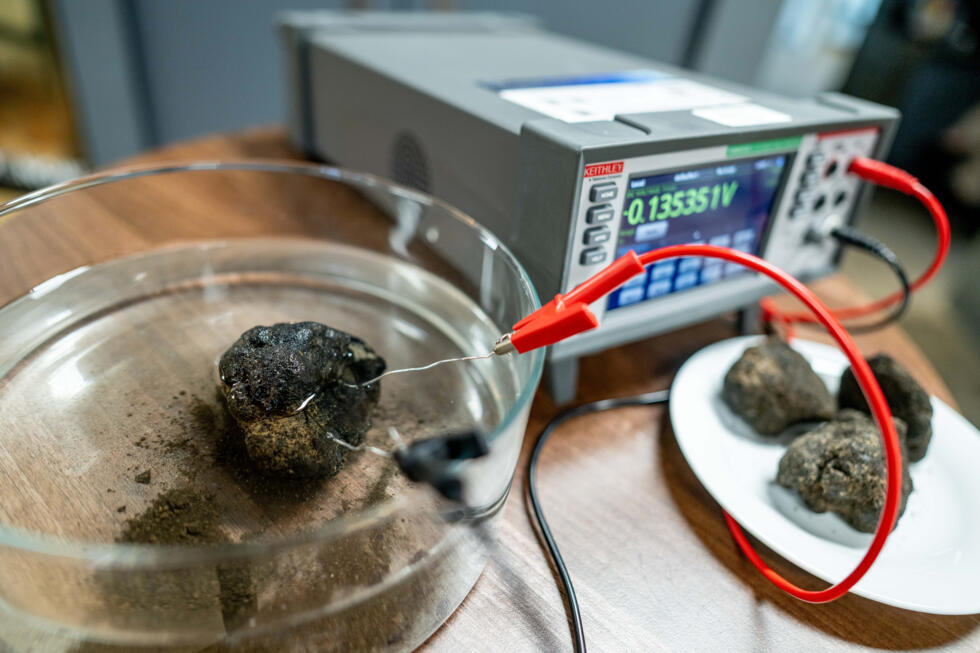
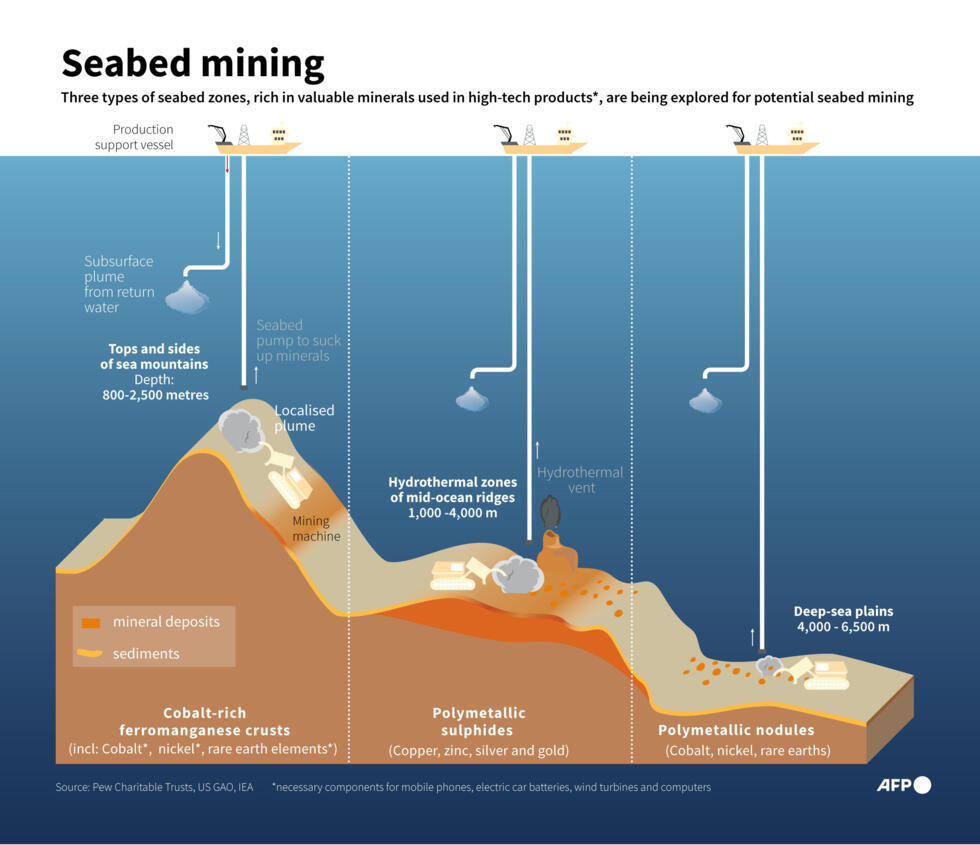
A group of scientists will later this year deploy deep-sea landers to test whether metallic rocks on the ocean floor do in fact produce oxygen. The claim, made in 2024 by British marine ecologist Andrew Sweetman, has been criticised by the deep-sea mining industry, which wants to harvest the nodules to extract precious metals for car batteries and other products.


Issued on: 20/01/2026 
By: FRANCE 24

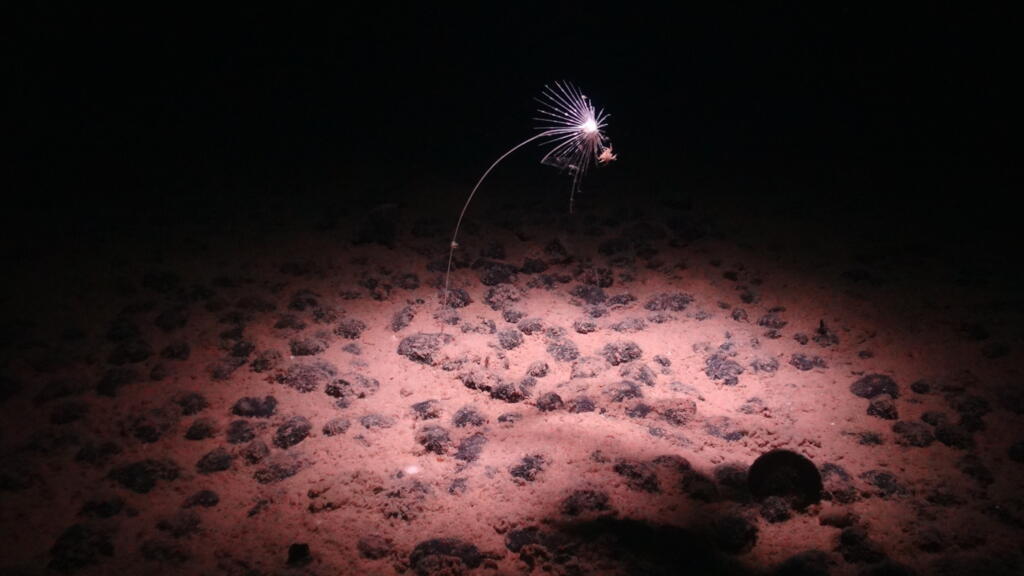
Could something be creating oxygen in the total darkness at the bottom of the ocean? 
© Handout, National Oceanography Centre, Smartex project (NERC), AFP file photo

A team of scientists announced Tuesday they have developed new deep-sea landers specifically to test their contentious discovery that metallic rocks at the bottom of the ocean are producing "dark oxygen".

If a previously unknown source of oxygen has always been lurking in Earth's depths, it would represent a remarkable revelation that would call into question long-held assumptions about the origins of life on our planet.

But the deep-sea mining industry – which is keen to extract precious metals from these potato-sized polymetallic nodules – and some researchers have expressed doubts about the claim.

So British marine ecologist Andrew Sweetman, who led the 2024 research that revealed the possible existence of dark oxygen, is planning a new underwater expedition in the coming months.

If these potato-sized polymetallic nodules do produce oxygen, it would be a remarkable revelation. © Scottish Association for Marine Science (SAMS), AFP


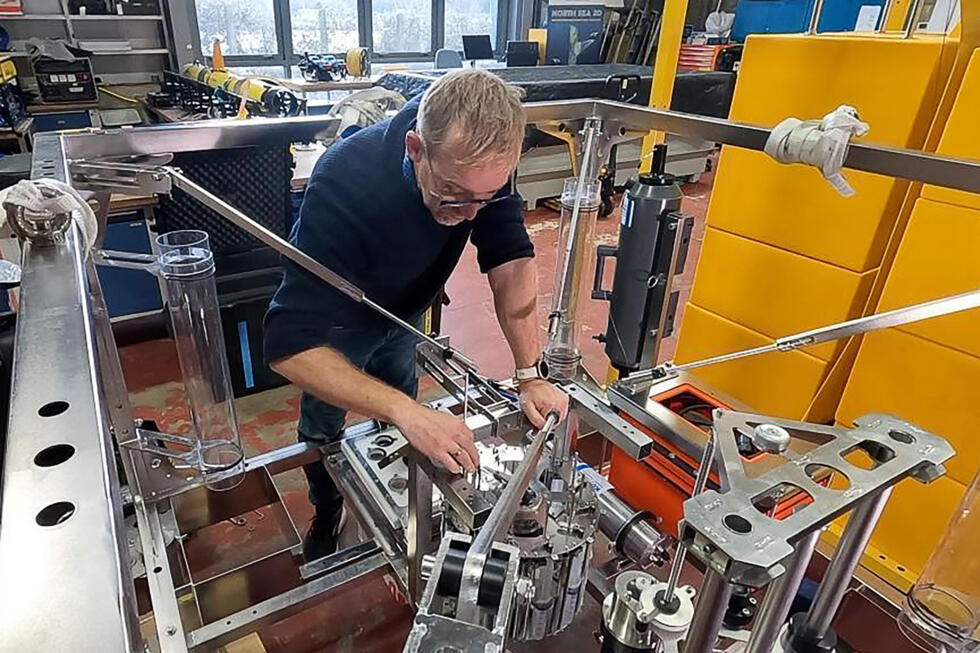
At a press conference on Tuesday, Sweetman and his team unveiled two new landers capable of diving to a depth of 11 kilometres with the aim of finding out how the nodules could be creating oxygen.

Unlike previous missions, these landers will have sensors specifically designed to "measure seafloor respiration", Sweetman explained.

They can withstand 1,200 times the pressure on Earth's surface and more resemble space exploration equipment, a statement said.

The landers will be launched from a research ship in the Clarion-Clipperton Zone, a vast region between Hawaii and Mexico.

Mining companies have plans to start harvesting the nodules, which contain valuable metals used in electric car batteries and other tech.

The scientists believe that the nodules give off enough electric charge to split seawater into hydrogen and oxygen, a process known as electrolysis.
Underwater gold rush?

Sweetman also used the press conference to push back against criticism of his 2024 study.

Some researchers have suggested that the oxygen was not coming from the nodules, but instead were just air bubbles trapped in the measuring instruments.

"We've used these instruments over the last 20 years and every time we've deployed them, we've never had bubbles," Sweetman said, adding that the team conducted tests to rule out such a possibility.
The nodules are right at the bottom of the ocean.
 © Jonathan Walter, Paz Pizarro, Laurence Saubadu, AFP file

The debate comes as companies and nations battle over proposed rules regulating the new and potentially environmentally destructive deep-sea mining industry.

Sweetman's 2024 study was partly funded by a Canadian deep-sea mining firm, The Metals Company, which has since sharply criticised his research.

"If commercial mining goes ahead then there will be quite widespread impacts," Sweetman said, adding that "these nodules are home to a variety of diverse fauna".

But the scientist emphasised it is "not our intention" to find something to stop deep-sea mining.

He instead wants to gather as much information as possible to "minimise the impacts as much as possible" if mining does go ahead.

Matthias Haeckel, a biogeochemist at Germany's GEOMAR Helmholtz Centre for Ocean Research, told AFP that his own research did "not show any hint towards oxygen production" from the nodules.

British marine ecologist Andrew Sweetman's hypothesis has been met with some resistance. © Scottish Association for Marine Science (SAMS), AFP

But he said Sweetman will "join our cruise at the end of this year, where we plan to compare our methods".

For the new research funded by the Japanese Nippon Foundation, Sweetman and his team plan to spend May on a research ship in the Clarion-Clipperton Zone.

"We'll be able to confirm dark oxygen production within 24 to 48 hours after the landers come up," he said.

The world will probably not know the results until the ship returns in June – and further experiments back on dry land could take months, Sweetman added.

(FRANCE 24 with AFP)


Donald Trump's latest visa ban hits African countries hard
DW

A decision by the US government to suspend visa procedures for numerous countries, including African ones, has come into effect. Experts say it is part of Donald Trump's strategy of portraying immigrants as a threat.

Trump's migration policy has affected numerous African countries, including those considered friendly to the US
Image: Olga Yastremska/Pond5 Images/IMAGO

The US is further tightening its immigration policy, following a decision by Donald Trump's administration to suspend the processing of immigration visas for applicants from 75 nations, a third of which are African.

Some of the affected African countries include Egypt, Ethiopia, Tanzania, Uganda, Somalia, Sudan, and South Sudan. In West Africa, Ghana, Cameroon, Cote d'Ivoire, Gambia, Liberia, Togo, Nigeria, Sierra Leone, and Senegal also face US visa restrictions.

The visa ban took effect on January 21, 2026, and applies to individuals seeking to live and work permanently in the US.

With this step, Washington claims to be putting an end to the alleged "abuse of the immigration system by people who want to enrich themselves at the expense of the US."

"President Trump has made it clear that immigrants must be financially independent and not be a financial burden on Americans," Phillip Assis, a spokesman for the State Department and director of the Africa Regional Media Hub in Johannesburg, told DW.

Are only wealthy immigrants welcome?

"The State Department is currently conducting a comprehensive review of all policies, regulations, and guidelines to ensure that immigrants from these high-risk countries do not claim social benefits in the United States and do not become dependent on government assistance," Assis said, adding that tourist visas are not affected.

The duration of the suspension is unclear. But according to Assis, nationals of the affected countries can continue to submit their visa applications.

However, during the suspension period, these nationals would not be granted immigration visas.

"Other visas, such as those for tourists, athletes and their families, and media representatives traveling to the United States for the FIFA World Cup, are not affected," he added.

The US will host the World Cup in 2026 with Mexico and Canada. In addition, Los Angeles is set to host the 2028 Olympic Games. The US is promoting the games as moments that can unify humanity.


At the same time, Trump is continuing the policy he began last November of "permanently stopping migration from low-income and middle-income countries.

In December, the US government suspended immigration applications for citizens of 18 countries and imposed entry bans on citizens of seven countries. Some of the affected countries, such as Mali and Burkina Faso, responded with similar restrictions on US citizens entering their countries.


Nationalism shapes Trump's MAGA movement

"We must not forget that Trump campaigned under the slogan 'Make America Great Again' (MAGA) and that nationalism and self-sufficiency are central features of this movement," Fredson Guilengue, a political scientist at the Rosa Luxemburg Foundation's South Africa office, said.

He explained that the MAGA movement emphasized protecting US workers and taxpayers. "It's about gaining more support within their own movement, as immigrants are portrayed by the current administration and Trump as a threat to American society," Guilengue told DW.


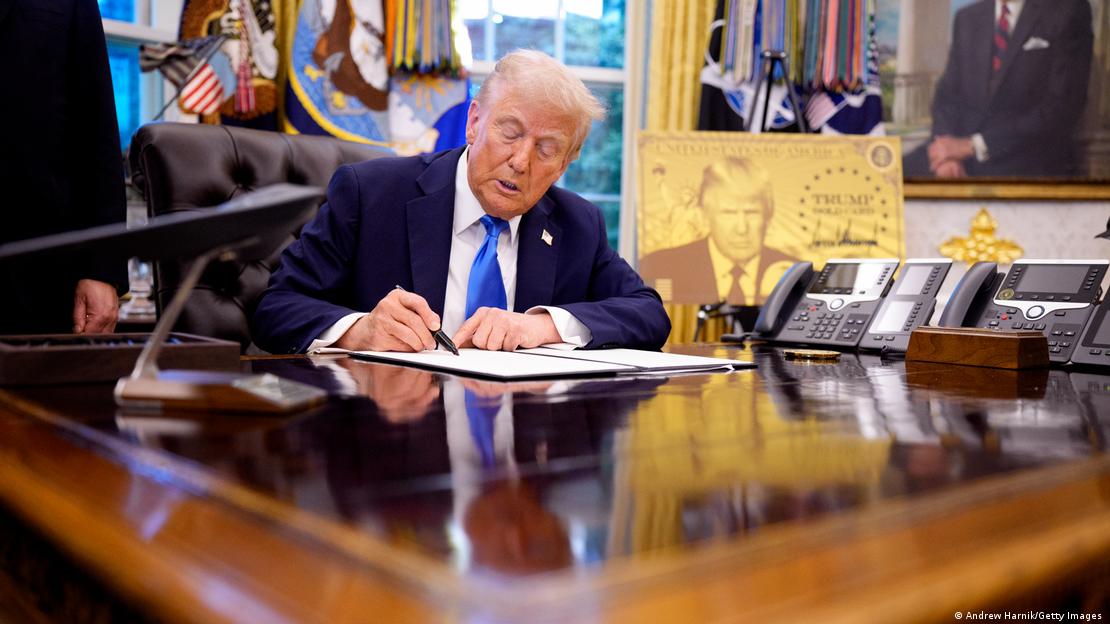
In December 2025, President Trump signed the 'Trump Gold Card' executive order — a quick path to permanent residence in the US upon payment of $1 million (€920,000).
Image: Andrew Harnik/Getty Images

Experts see the US migration policy as a setback for long-standing relations between the two continents. "For Senegal, the impact will be severe. Plans to study, work, or reunite families will be blocked. This decision sends the wrong signal and requires a diplomatic response and decisive advocacy," according to Boubacar Seye, president of the non-governmental organization Horizon Sans Frontieres, which advocates for the rights of migrants from its base in Dakar.

"The argument of 'overstaying' [one's visa] is greatly exaggerated," Seye stressed, referring to an alleged concern of the US government regarding immigration. "It punishes an entire population group because of the behavior of a minority [...] This justification is mainly used to tighten restrictive migration policies."

Nevertheless, the US is a country that offers opportunities on many levels, even for people without qualifications, Seye added.

"Visa restrictions are dangerous for all young people, whether from Latin America or even Europe, but especially for us in the Sahel and for the countries affected," Ahmedou Ould Abdallah, former Mauritanian foreign minister and UN ambassador, who now heads the Centre 4S research institute, told DW.

Is Trump targeting the Sahel Alliance?


The US visa regulations appear to be particularly aimed at the countries that make up the Sahel Alliance, according to Ould Abdallah. "This is not good news for the youth of these countries, who are generally not politicized and where there have been no elections to find out who they will or will not vote for," he said.

He added that the policy does not seem sensible for African countries.

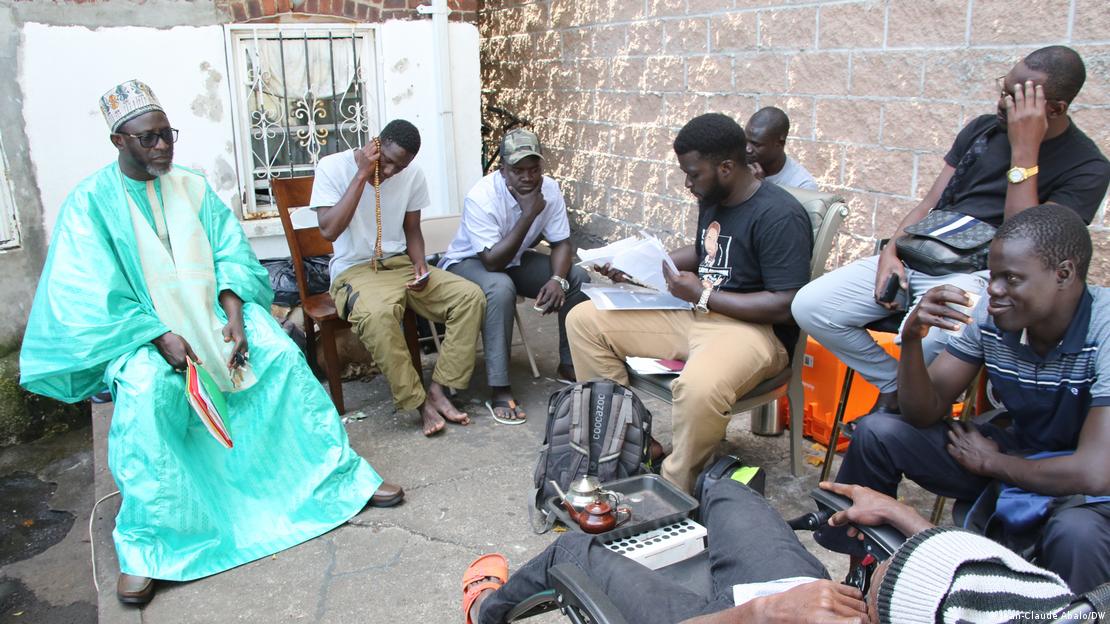
Many migrants from West Africa are not welcome to stay permanently in the US under the new Trump immigration policy
Image: Jean-Claude Abalo/DW

Emigration is not about hiding from political difficulties, he explained, "it's more about having more freedom to work, be successful, and compete on a level playing field without being attributed to a religious, tribal, regional or family affiliation."

The Democratic Republic of Congo is also affected by the visa ban. Fred Bauma, executive director of the Ebuteli research institute in Kinshasa, finds this contradictory. "It is not only in [the DR] Congo that we observe this paradox," Bauma said. "There are other countries that are rich in resources and coveted by the United States, but which find themselves excluded from any movement," he told DW.

Bauma cited Angola as an example of a resource-rich nation subject to some US visa restrictions. "It [Angola] is a central part of US strategy in the southern African region due to the Lobito corridor infrastructure project."


He added that such a strategy reinforces the idea that the race for resources is more critical than cooperation with states. "This is obviously a dangerous and unfavorable perspective for countries in the Global South that want to go beyond the simple exchange of goods."

But cultural identity politics also play a role, according to Guilengue. "These restrictions signal a desire to preserve 'American culture' by allowing fewer and fewer people with different identities to come to America and settle there." Guilengue calls this "exclusionary populism."

The result is that people suffer from exclusion. According to him, immigrants do not represent an economic burden. But instead, they contribute to economic growth and society. "It is not true that suspending the 75 countries [from entering the US] will protect the American economy. It could have the opposite effect."

This article was originally written in German.

Edited by: Chrispin Mwakideu

Martina Schwikowski Author for the Africa desk
HOPE IS ETERNAL

Myanmar junta 'can't last forever': Military in 'worse position now' than ever before

Issued on: 20/01/2026 
FRANCE24

Catherine Viette welcomes Kim Aris, son of Nobel Peace Prize laureate Aung San Suu Kyi, who bears witness to the fraught political landscape of Myanmar five years after the 2021 military coup. Mr. Aris sounds the alarm on the deteriorating condition of his ailing mother who remains imprisoned and whose whereabouts are unknown. He offers a scathing critique of the "sham election" and the contradictions between the junta’s claims of legitimacy and civilians on-going resistance to brutal oppression, political violence and civil conflict.

Video by: Catherine VIETTE

'I am not a criminal': Uganda opposition leader Bobi Wine hits back from hiding

Ugandan opposition leader Bobi Wine on Wednesday insisted that he was "not a criminal" while still in hiding after escaping what he said was a police raid on his home ahead of last week's presidential election. The country's army chief Muhoozi Kainerugaba – and the son of re-elected President Yoweri Museveni – threatened on Tuesday to hunt down and kill Wine, accusing him of being a "terrorist".


Issued on: 21/01/2026 
By: FRANCE 24

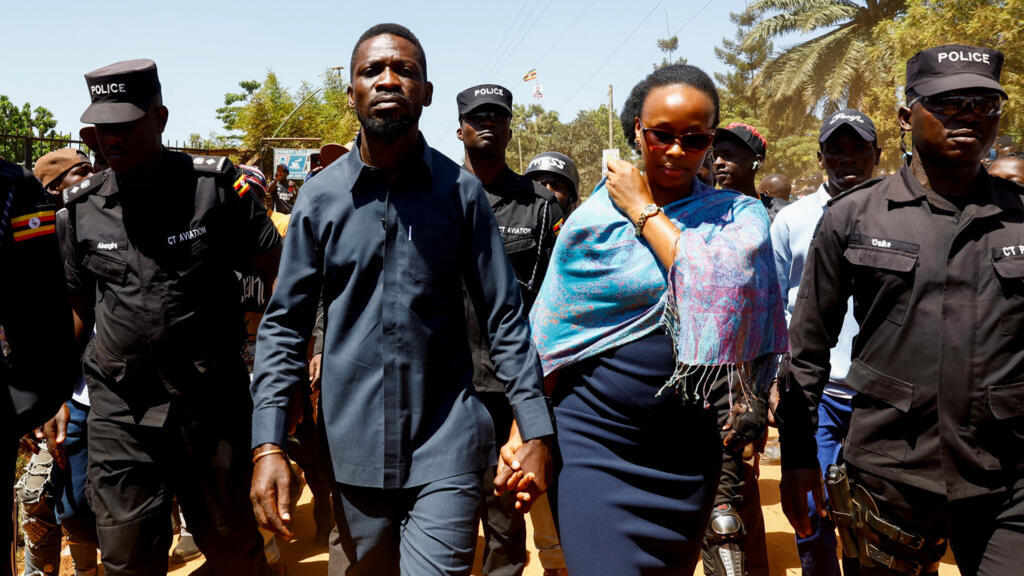
Ugandan presidential candidate Robert Kyagulanyi, also known as Bobi Wine, with his wife Barbara Kyagulanyi in Kasangati town near Kampala, Uganda, on January 15, 2026. © Thomas Mukoya, Reuters

Uganda's opposition leader Bobi Wine said on Wednesday he was "not a criminal" after going into hiding following last week's election in which President Yoweri Museveni won a seventh term.

Wine, 43, a former singer turned politician who was arrested ahead of Uganda's last election in 2021, said on Saturday that he had escaped a police raid on his home. His whereabouts have been unknown since then.

READ MORE Ugandan opposition denounces army raid on party leader Bobi Wine

He had denounced last Thursday's presidential election as "blatant theft".

In a phone interview, Wine said he was constantly on the move but was being "housed and protected by the common people".

Responding to a threat by Uganda's army chief and Museveni's son Muhoozi Kainerugaba, he said: "I'm not a criminal."

"I'm a presidential candidate and it's not a crime to run against his father," Wine – whose real name is Robert Kyagulanyi – said.

Uganda: Africa’s longest-serving leader, Yoweri Museveni, seeks to extend 40-year rule
© France 24
02:08


On Tuesday, Kainerugaba, 51, who has made no secret of his desire to succeed his father, threatened in a post on X to hunt down and kill Wine.

"We have killed 22 NUP terrorists since last week," Kainerugaba wrote, referring to the opposition National Unity Platform led by Wine, who came second in the ballot.

"I'm praying the 23rd is Kabobi," he added, using his nickname for the opposition leader.

In a separate post, Kainerugaba called on Wine to give himself up.

"I am giving him exactly 48 hours to surrender himself to the Police," Kainerugaba wrote. "If he doesn't we will treat him as an outlaw/rebel and handle him accordingly."

Police spokesperson Kituma Rusoke said on ​Monday night that Wine was not being sought.

Asked about the future for his party, Wine said he did not have a firm plan.

"In a dictatorship, you don't draw a strategy, but you respond to the kind of oppression," he said.

Last week's ballot was marred by violence and an internet shutdown, while African observers said arrests and abductions had "instilled fear".

Museveni, 81, who won a landslide with 72 percent of the vote, has said the opposition are "terrorists" who had tried to use violence to overturn results.

(FRANCE 24 with AFP and Reuters)

Ugandan opponent Bobi Wine receives threats from President Museveni's son


Uganda's army chief, who is also the son of long-serving president Yoweri Museveni, said he wants opposition leader Bobi Wine dead, days after Wine claimed he had been forced into hiding. Wine already survived many attacks on his life since entering politics.


Issued on: 20/01/2026 - RFI

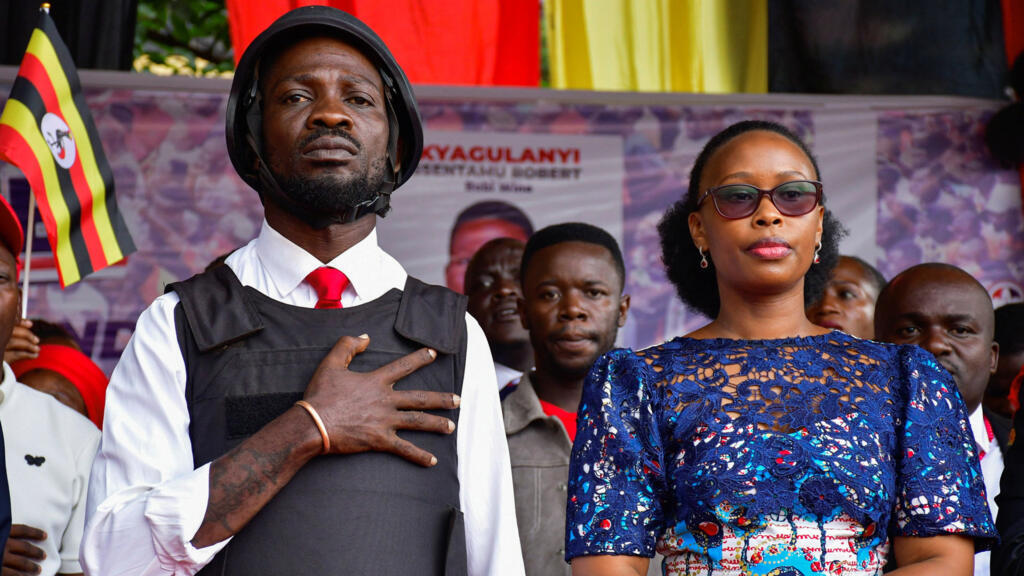
Ugandan presidential candidate Robert Kyagulanyi, also known as Bobi Wine, of the National Unity Platform (NUP), often wears a bulletproof jacket at his campaign rallies, like here in Kampala, Uganda, on 12 January, 2026. REUTERS - Abubaker Lubowa

General Muhoozi Kainerugaba's comments come after his father, President Yoweri Museveni won an seventh term following general elections on Thursday that was widely criticised by poll observers and rights groups.

The embattled opposition, led by 43-year-old Bobi Wine, real name Robert Kyagulanyi, says they faced violence and intimidation ahead of the vote, with international bodies also accusing the government of "brutal repression".

"We have killed 22 NUP terrorists since last week. I'm praying the 23rd is Kabobi," Kainerugaba posted on social media X late Monday night, referring to Wine and his National Unity Platform (NUP) party.

"As for Kabobi, the permanent loser, I'm giving him exactly 48 hours to surrender himself to the Police. If he doesn't we will treat him as an outlaw/rebel and handle him accordingly," he added in a separate post on X.


Ordeal

The east African country's veteran leader Yoweri Museveni, 81, was declared the landslide winner of the January 15 poll with 71.6 percent of the vote against his opponent Bobi Wine with 24.

Wine, the pop star-turned-politician, and his party, the National Unity Platform (NUP) have rejected the results, alleging widespread irregularities including ballot stuffing, enforced disappearance of polling agents and intimidation by security forces.

Wine's whereabouts remain unknown after he said on Saturday he had escaped a police raid on his home, where his wife remains under apparent house arrest. He says he is in hiding.


Wine criticised Kainerugaba's "threats to kill me" on his own social media and demanded the military vacate the his compound, adding: "My wife and people are not safe."

He also appeared on NTV Uganda on Monday night and accused police of vandalising his home and said leaving his residence would free him "to speak to the world," still not disclosing his location.

The opposition leader had already faced arrest and torture in the run-up to the 2021 election, when he first ran for president.
Growing role

Over 100 members of Uganda's biggest opposition party have also been charged with various offences including unlawful assembly related to violence around last week's election, according to court documents and an opposition official.

In the run-up to polls last week, Kainerugaba, infamous for his colourful tweets and regular threats to behead Wine, was unusually silent on social media, but since his father's win he has returned to posting frequently, often late at night.

It has been said on several occasions that Museveni wants his son to succeed him.
Israeli strike kills three journalists in Gaza, civil defence agency says

Three journalists were killed by an Israeli strike in Gaza on Wednesday, the Palestinian territory's civil defence agency said. Israel has been the biggest killer of journalists for three years running, Reporters Without Borders data shows, with the country's forces killing 220 media professionals since the war in Gaza began.


Issued on: 21/01/2026 
By: FRANCE 24

People carry the body of the Palestinian photographer Anas Ghneim, who was killed in an Israeli strike on a vehicle on January 21, 2026. © Abdel Kareem Hana, AP


An Israeli strike in the centre of Gaza killed three journalists on Wednesday, including a freelancer who regularly contributed for AFP, the Palestinian territory's civil defence agency said, despite the ceasefire between Israel and Hamas.

In a statement, the civil defence said "the bodies of the three journalists killed in an Israeli air strike in the Al-Zahra area southwest of Gaza City were transported to Al-Aqsa Martyrs Hospital in Deir al-Balah".

It named the dead as Mohammed Salah Qashta, Abdul Raouf Shaat and Anas Ghneim.

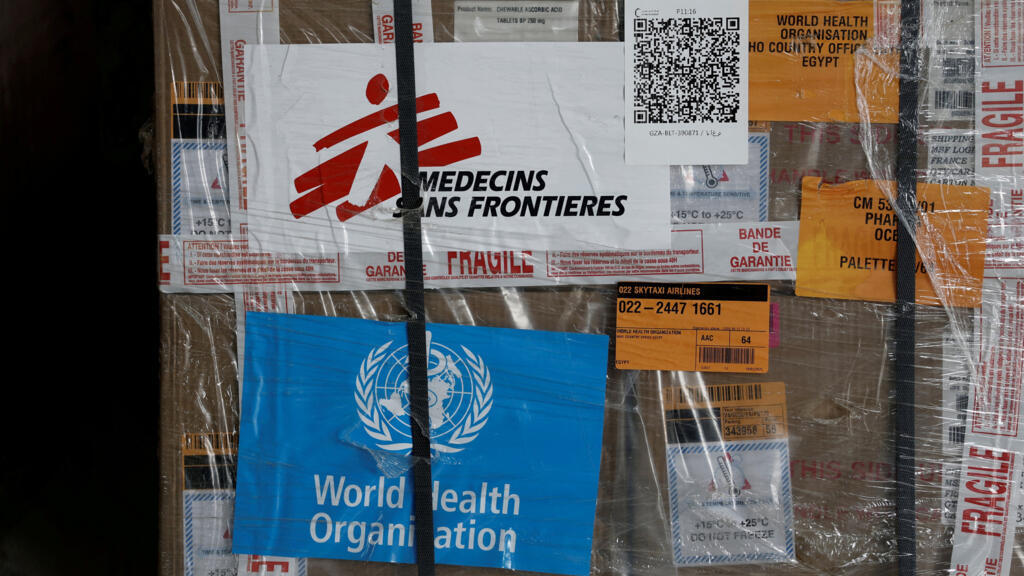
Israel says will bar several NGOs from Gaza, FRANCE 24 speaks to MSF

 Egyptian Red Crescent warehouses storing aid for Gaza in Arish 
REUTERS - Benoit Tessier
09:27


Since October 10, a fragile US-sponsored truce in Gaza has halted the large-scale fighting between Israeli forces and Hamas, but both sides have alleged frequent violations.


Israeli forces have killed at least 466 Palestinians in Gaza since the ceasefire took effect, according to the health ministry in the Hamas-run territory, with the Israeli military saying that militants have killed three of its soldiers during the same period.

READ MOREIsraeli strikes kill at least 13 in Gaza, including children, civil defence says

Shaat had contributed regularly to AFP as a photo and video journalist, but at the time of the strike he was not on assignment for the agency.

The Israeli military said it was checking the reports.

The civil defence, which operates as a rescue force under Hamas authority, said in an earlier statement that an Israeli drone strike had targeted "a civilian vehicle" near Al-Zahra.

Media watchdog Reporters Without Borders said that Israeli forces killed at least 29 Palestinian journalists in Gaza between December 2024 and December 2025.

The most deadly single attack was a "double-tap" strike on a hospital in south Gaza on August 25, which killed five journalists, including two contributors to international news agencies Reuters and the Associated Press.


In total, nearly 220 journalists have died since the start of the Gaza war in October 2023, making Israel the biggest killer of journalists worldwide for three years running, RSF data shows.

Last week, US Middle East envoy Steve Witkoff announced the start of phase two of the Gaza ceasefire, saying it aimed to pave the way for reconstruction and the demilitarisation of all armed factions in the territory.

(FRANCE 24 with AFP)
ANOTHER DAY ANOTHER WAR CRIME

Israel used white phosphorus widely in southern Lebanon, study finds


Issued on: 14/01/2026 
FRANCE24

VIDEO- 11:38


An investigation by open-source researcher Ahmad Baydoun highlights Israel's use of white phosphorus munitions during the recent conflict with Hezbollah in southern Lebanon between October 2023 and November 2024. Although not explicitly prohibited by international law, the use of white phosphorus is regulated as an incendiary weapon, and its use in densely populated areas is banned.

Ahmad Baydoun is an open source intelligence (OSINT) researcher at Delft University of Technology in the Netherlands. The study he led mapped 248 Israeli strikes across southern Lebanon by geolocating photos and videos and gathering accounts from residents.

The findings, released in an interactive map in October 2025, allow residents to check whether their land or homes have been affected.

The study found that a significant proportion of these white phosphorus strikes hit civilian and agricultural areas.

Baydoun told our team:

"According to my research, 91 percent of white phosphorus strikes took place before Israeli forces entered southern Lebanon in October 2024, which contradicts the official Israeli version. Furthermore, 39 percent of all phosphorus strikes we documented took place over civilian areas, 16 percent over agricultural land, and only 44 percent in uninhabited areas or areas far from residents.”

Read our full story in the article below: