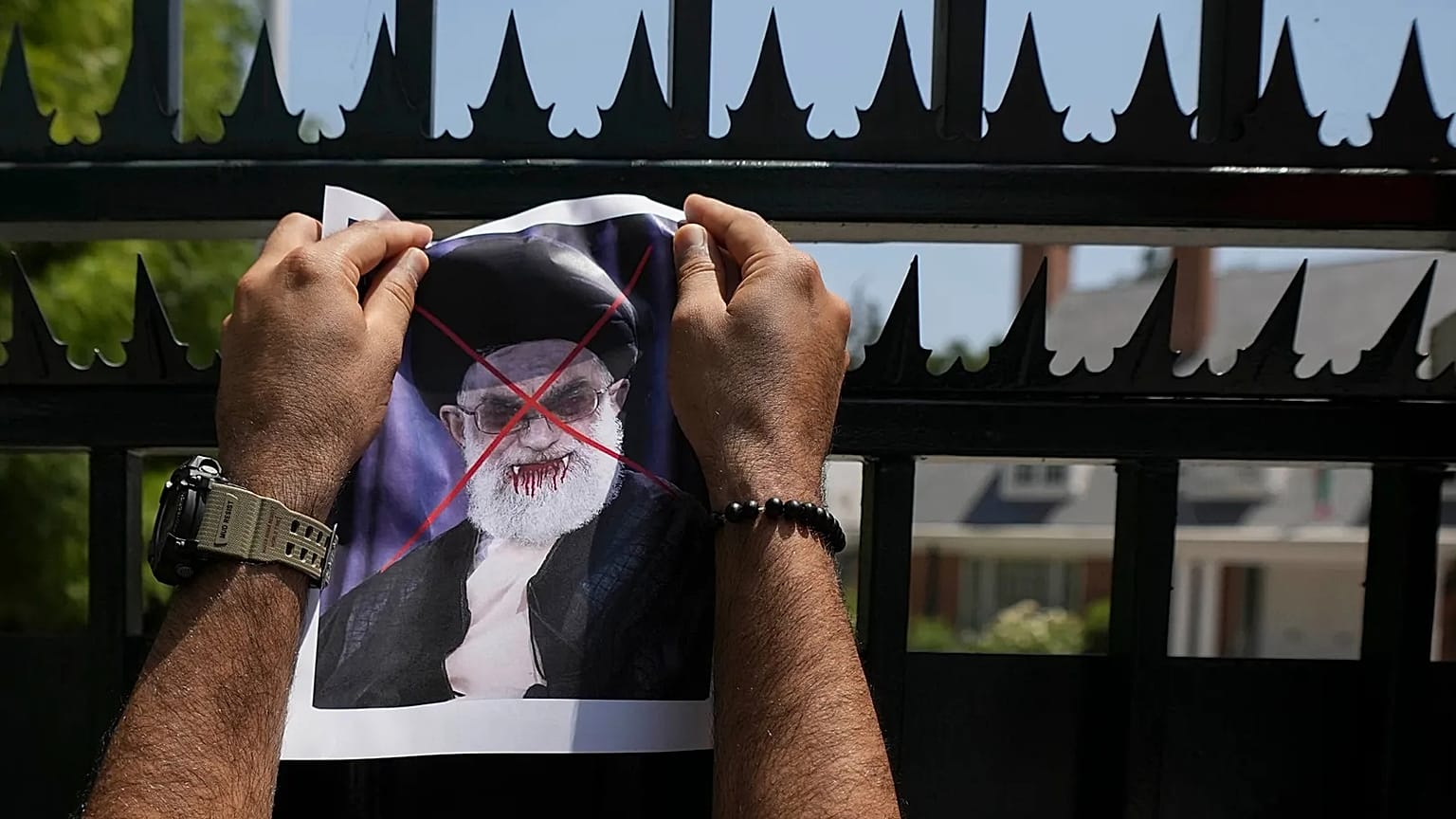
Iran offers first government-issued death toll from security crackdown on protesters
State television carried statements by the Interior Ministry and the Foundation of Martyrs and Veterans Affairs, an official body providing services to families of those killed in wars, saying 3,117 people were killed.
Iran offered its first government-issued death toll late on Wednesday following a crackdown on nationwide protests, giving a far lower figure than activists abroad as the country’s theocracy tries to reassert control after unrest recalling the chaos surrounding its 1979 Islamic Revolution.
State television carried statements by the Interior Ministry and the Foundation of Martyrs and Veterans Affairs, an official body providing services to families of those killed in wars, saying 3,117 people were killed.
It added that 2,427 of the dead in the demonstrations that began on 28 December were civilians and security forces.
It did not elaborate on the rest. Iran's government in the past has undercounted or not reported fatalities from unrest.
The US-based Human Rights Activists News Agency said the death toll early on Thursday was at least 4,902, with many more feared dead.
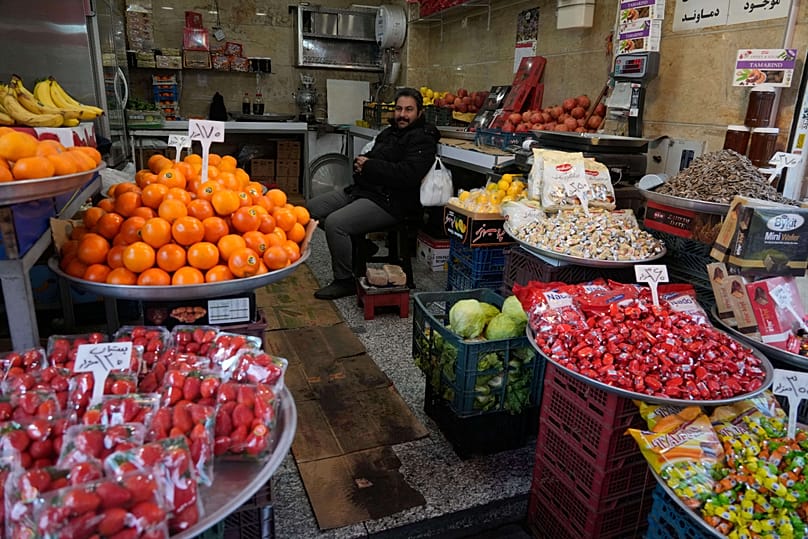 A fruit seller waits for customer at Tehran's historic Grand Bazaar, 20 January, 2026 AP Photo
The human rights group has been accurate throughout the years on demonstrations and unrest in Iran, relying on a network of activists inside the country that confirms all reported fatalities.
Other groups similarly have offered higher numbers than the Iranian government tally.
The Associated Press has been unable to independently assess the death toll, in part due to authorities cutting access to the internet and blocking international calls into the country.
Iran has also reportedly limited journalists' ability locally to report on the aftermath of the protests, instead repeatedly airing claims on state television that refer to demonstrators as "rioters" motivated by America and Israel, without offering evidence to support the allegation.
Nearly 26,500 people have also been arrested, according to the Human Rights Activists News Agency.
Comments from officials have led to fears of some of those detained being put to death in Iran, one of the world's top executioners.
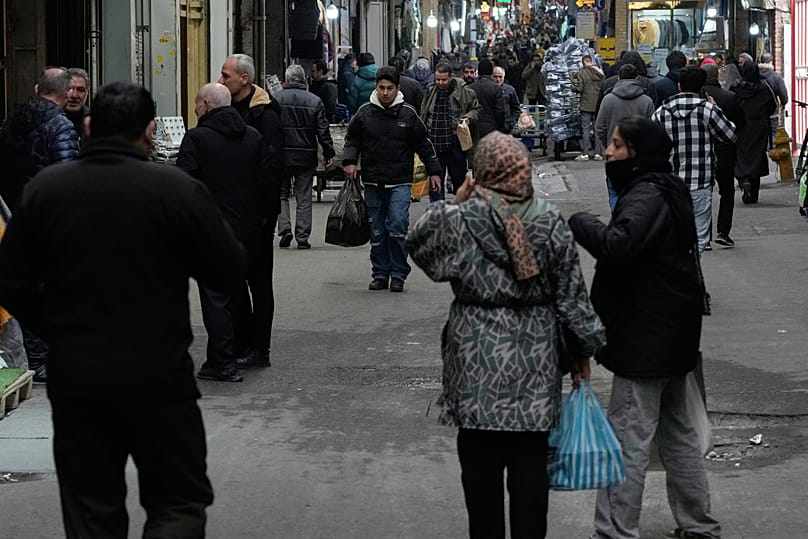
People conduct their business at Tehran's historic Grand Bazaar, 20 January, 2026 AP Photo
Iran offered its first government-issued death toll late on Wednesday following a crackdown on nationwide protests, giving a far lower figure than activists abroad as the country’s theocracy tries to reassert control after unrest recalling the chaos surrounding its 1979 Islamic Revolution.
State television carried statements by the Interior Ministry and the Foundation of Martyrs and Veterans Affairs, an official body providing services to families of those killed in wars, saying 3,117 people were killed.
It added that 2,427 of the dead in the demonstrations that began on 28 December were civilians and security forces.
It did not elaborate on the rest. Iran's government in the past has undercounted or not reported fatalities from unrest.
The US-based Human Rights Activists News Agency said the death toll early on Thursday was at least 4,902, with many more feared dead.
The human rights group has been accurate throughout the years on demonstrations and unrest in Iran, relying on a network of activists inside the country that confirms all reported fatalities.
Other groups similarly have offered higher numbers than the Iranian government tally.
The Associated Press has been unable to independently assess the death toll, in part due to authorities cutting access to the internet and blocking international calls into the country.
Iran has also reportedly limited journalists' ability locally to report on the aftermath of the protests, instead repeatedly airing claims on state television that refer to demonstrators as "rioters" motivated by America and Israel, without offering evidence to support the allegation.
Nearly 26,500 people have also been arrested, according to the Human Rights Activists News Agency.
Comments from officials have led to fears of some of those detained being put to death in Iran, one of the world's top executioners.
Warning from Araghchi
Meanwhile, Iranian Foreign Minister Abbas Araghchi issued his most-direct threat yet to the United States on Wednesday, warning the Islamic Republic will be “firing back with everything we have if we come under renewed attack.”
"Unlike the restraint Iran showed in June 2025, our powerful armed forces have no qualms about firing back with everything we have if we come under renewed attack," Araghchi wrote in the Wall Street Journal, referring to the 12-day conflict with Israel last June.
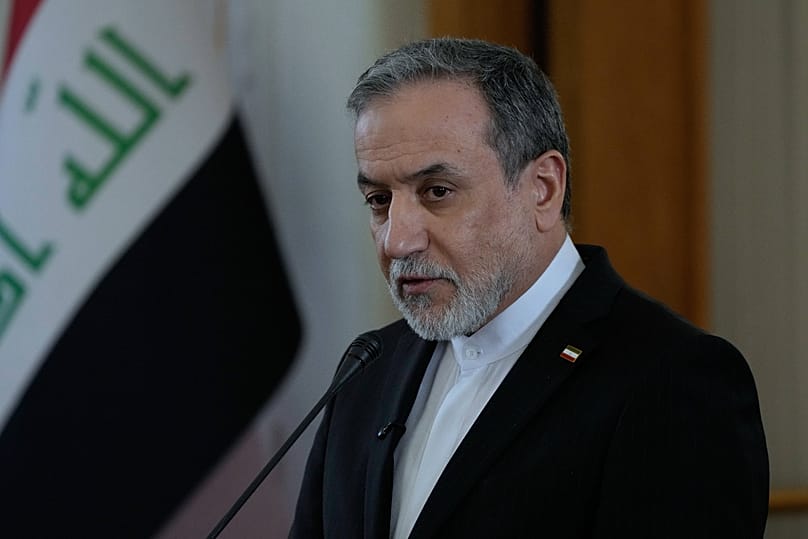 Iranian Foreign Minister Abbas Araghchi speaks in a press briefing in Tehran, 18 January, 2026 AP Photo
"This isn’t a threat, but a reality I feel I need to convey explicitly, because as a diplomat and a veteran, I abhor war."
The comments came as Araghchi saw his invitation to the World Economic Forum in Davos rescinded over the killings and as a US aircraft carrier group moved west toward the Middle East from Asia.
The USS Abraham Lincoln, which had been in the South China Sea in recent days, had passed through the Strait of Malacca, a key waterway connecting the sea and Indian Ocean, by Tuesday, ship-tracking data showed.
How many people have been killed during
the crackdown on Iranian protesters?
The number of people killed in protests against the Iranian regime has been rising since demonstrations began in late December. An NGO reported on January 20 that more than 4,500 people had been killed. However, it added that the figure was provisional because a nationwide internet blackout meant that the death toll had been hard to establish. The real number is thought to be much higher.
Issued on: 21/01/2026 -
By: Nathan GALLO/The FRANCE 24 Observers
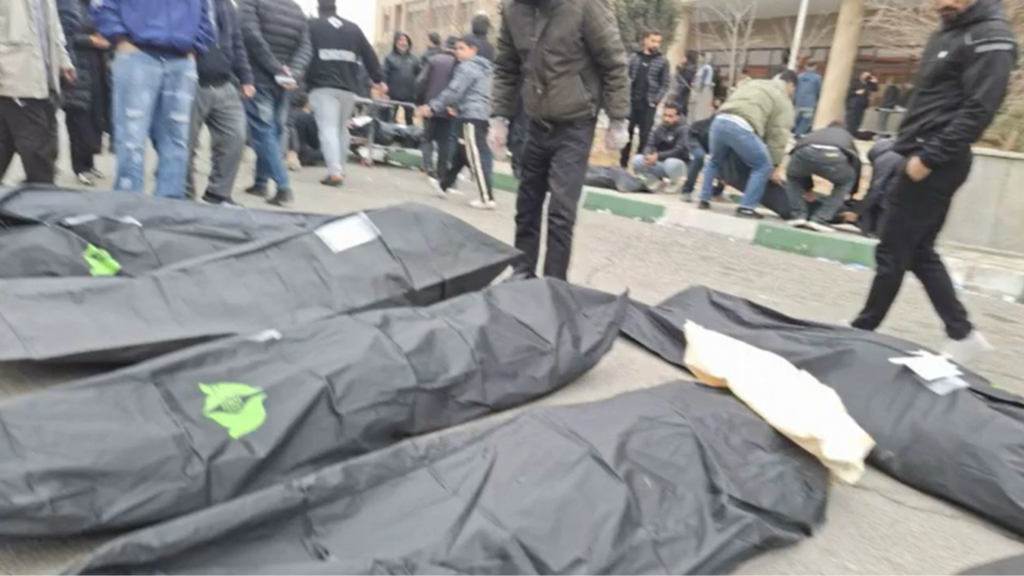 This image, published on January 13, 2026, shows Iranian families identifying the remains of loved ones at the morgue in Kahrizak, south of the Iranian capital. © Telegram, VahidOnline
Weeks after protests in Iran began on December 28 – and with a near-total Internet blackout since January 8 – it is still impossible for activists and observers to establish the exact number of people killed in the government crackdown on protesters. A provisional count puts the death toll at more than 4,500, with a possibility of "up to 20,000 dead".
Supreme Leader Ali Khamenei publicly acknowledged the deaths of "thousands” on January 17. The next day, Iranian authorities, including an anonymous official who spoke to the Reuters press agency, said that at least 5,000 people had been killed during these protests. And on Wednesday, Iranian state TV issued the first official death toll, saying 3,117 people were killed.
"The final toll is not expected to increase sharply," the official added. He blamed the deaths on “terrorists and armed rioters”.
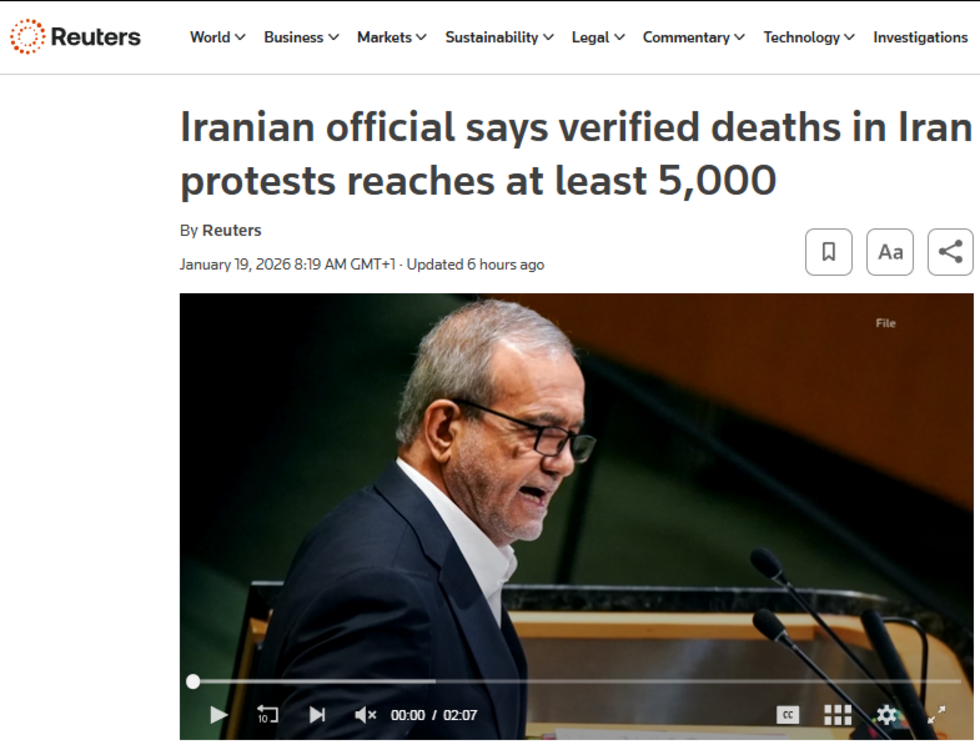 This is a screenshot of an article published by the Reuters news agency on January 18 that quoted an Iranian official who said that there had been at least 5,000 verified deaths in recent protests, including 500 members of the country's security forces. "The final toll is not expected to increase sharply," he added. © Reuters
"Up to 20,000" estimated deaths
Despite statements by the regime, the real toll could be much higher. Numbers calculated by observers and activists are a testament to the extent of the crackdown on protesters carried out by Iranian security forces.
Estimates of the death toll published by several media outlets were four times the number given by Iranian authorities. US media outlet CBS reported on January 13, for example, that between 12,000 and 20,000 people were feared to have been killed in these protests, based on information gathered by Iran-based activists working to compile a death toll from reports from medical officials across the country.
Iran International, a media outlet based in London, reported on January 12 that the death toll was 12,000. The report cited high-ranking government and security sources. The death toll was estimated even higher - between 16,500 and 18,000 people - in a January 18 article by the Sunday Times, which based its reporting on a database of information gathered by sources in 24 hospitals and emergency services across Iran.
4,519 verified deaths on January 20
Despite these varying estimates, most international agencies and media outlets, including FRANCE 24, relied on data gathered by two NGOs dedicated to human rights in Iran: the Norway-based Iran Human Rights and Human Rights Activists in Iran (HRANA), which is based in the United States.
HRANA reported on January 20 that there had been 4,519 "verified” deaths, including 197 members of military and government forces. The NGO added that there were a further 9,049 deaths “still under investigation”. These numbers, based on information communicated by families and medical sources, are the result of a process of victim identification carried out by sources on the ground.
Iran Human Rights reported on January 14 that they had verified 3,428 deaths (see the chart below). The organisation noted that the majority of victims were killed during protests held between January 8 and 12, the period when the crackdown was the most violent. While the internet blackout slowed down the process of verifying the death toll during these protests, these two organisations continue to update their numbers as information comes in.
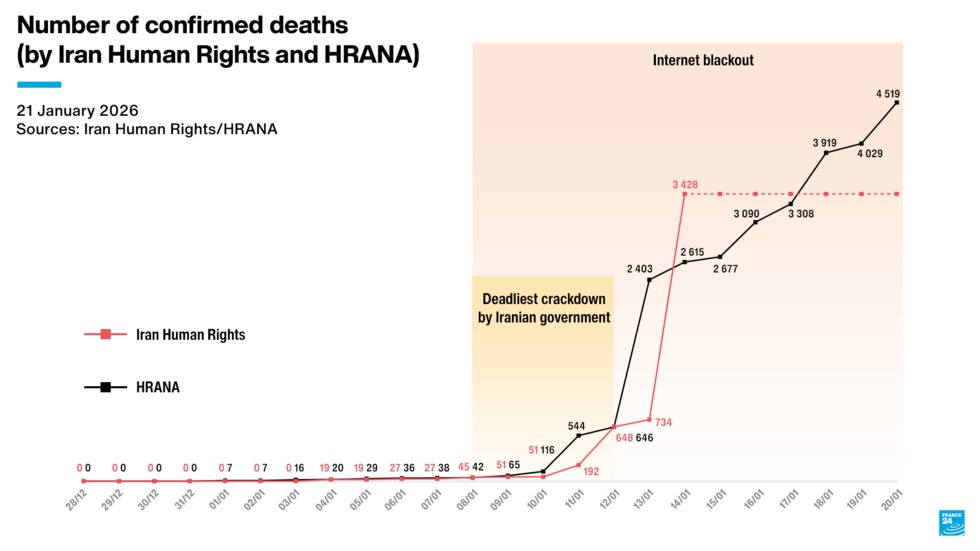 This chart shows the number of deaths confirmed by the NGOs Iran Human Rights and Human Rights Activists in Iran on January 19, 2026. While the internet blackout hindered the establishment of a death toll, these two NGOs continue to gather information. Iran Human Rights has not updated their numbers since January 14, 2026. © Studio graphic, France Medias Monde
\
Some social media users have criticised these death tolls, which remain lower even than those given by Iranian authorities. This conservative estimate is linked to the verification process used by these two NGOs.
"It should be noted that the total figure is an absolute minimum,” clarified Iran Human Rights in their latest report from January 14, which contains data from only 15 of Iran’s 31 provinces.
Jennifer Connet, a Senior Legal Advisor with HRANA, explained how they gathered their numbers:
\
The figures we post should be understood as minimums, not estimates of the full scale of harm. These figures only reflect cases that have been independently verified through primary sources, which is a process that takes additional time, particularly given the extent of cases to verify in this situation and the internet blackout that is compromising information flow.
[We confirm] that each of the [...] confirmed deaths is individually identified and verified through primary sources inside Iran. The '[...] under investigation' refers to cases that are in the process of being independently verified.
In its latest report, published on January 20, HRANA specified that 9,049 additional deaths were currently under investigation. If verified, the death toll would increase significantly.
Aside from being provisional, the death toll is also incomplete because of the difficulty of accessing information on the ground due to the regime’s internet shutdown. For nearly two weeks, Iranian authorities have been blocking internet access in a large swathe of the country, preventing people from using messaging services or calls using the internet. Connet explained:
\
In response to the information vacuum, HRANA issued a public call via telegram urging citizens, eyewitnesses, and individuals with access to reliable documents, images and videos to participate in the independent documentation of the protests.
The internet shutdown poses serious obstacles to documentation and verification. HRA maintains deep concern regarding the internet blackout, which not only violates the right of Iranians to access information but cuts 90 million plus people off from the outside world and facilitates impunity for the continued excessive use of force against protesters, by enabling the concealment of violence and repression.
"We’ve noticed a significant decline in contact in recent days, which corresponds with the severity of communications restrictions,” she added. “However, even during this same period, we have been able to maintain limited contact thanks to more stable but less sophisticated forms of communication, like phone calls with our established contacts.”
Whatever the final death toll, the crackdown on this opposition movement has been historic in comparison to previous protests against the regime.
Around 500 protesters were killed in the 2022 protests in support of Mahsa Amini, who was killed by the morality police after being arrested for “wearing inappropriate clothing”.
This is a translation of the original article in French.
'Khamenei is scared of Trump,' exiled
Iranian activist Masih Alinejad says
Issued on: 21/01/2026
FRANCE24
Play (11:56 min)
In an interview with FRANCE 24, Iranian women's rights activist and journalist Masih Alinejad said Iran's Supreme Leader Ayatollah Ali Khamenei "is scared of" US President Donald Trump and called for the Iranian leader's targeted killing. "Kill Ali Khamenei the way that you kill[ed] Qassem Soleimani," she said, referring to the US assassination of the top Iranian commander in 2020 during Trump's first term in office.
Iran has just seen several weeks of protests, to which authorities responded with an "unprecedented massacre," according to Amnesty International. Activists say several thousands of people have been killed, although the exact death toll could be much higher.
"I strongly believe that people are still angry and the next wave (of protests) will be much heavier" given the brutality of the crackdown, Alinejad said.
Speaking from New York, Alinejad appealed directly to Trump: "You have promised Iranians several times that if the regime start killing them, then you will protect Iranians. The time has come." She cited the regime's suspension of 800 executions as proof that it fears Trump, urging him to unite G7 leaders to take action.
On January 13, Trump urged Iranians to keep protesting, saying "help is on the way."
WATCH MORE Iranian women on the frontline of protests
Alinejad recalled meeting French President Emmanuel Macron back in 2022, when she urged him to shut down Iran's embassy in France. "When their language towards their own people is guns and bullets, they should not enjoy the privilege of diplomacy on your own soil," she told him.
Macron replied that "France is all about diplomacy", Alinejad recalled. To which she responded: "You're wrong, Mr. President. France is also about revolution. The French Revolution inspired millions of Iranians."
Meanwhile, Iranian Foreign Minister Abbas Araghchi issued his most-direct threat yet to the United States on Wednesday, warning the Islamic Republic will be “firing back with everything we have if we come under renewed attack.”
"Unlike the restraint Iran showed in June 2025, our powerful armed forces have no qualms about firing back with everything we have if we come under renewed attack," Araghchi wrote in the Wall Street Journal, referring to the 12-day conflict with Israel last June.
"This isn’t a threat, but a reality I feel I need to convey explicitly, because as a diplomat and a veteran, I abhor war."
The comments came as Araghchi saw his invitation to the World Economic Forum in Davos rescinded over the killings and as a US aircraft carrier group moved west toward the Middle East from Asia.
The USS Abraham Lincoln, which had been in the South China Sea in recent days, had passed through the Strait of Malacca, a key waterway connecting the sea and Indian Ocean, by Tuesday, ship-tracking data showed.
How many people have been killed during
the crackdown on Iranian protesters?
The number of people killed in protests against the Iranian regime has been rising since demonstrations began in late December. An NGO reported on January 20 that more than 4,500 people had been killed. However, it added that the figure was provisional because a nationwide internet blackout meant that the death toll had been hard to establish. The real number is thought to be much higher.
Issued on: 21/01/2026 -
By: Nathan GALLO/The FRANCE 24 Observers
Weeks after protests in Iran began on December 28 – and with a near-total Internet blackout since January 8 – it is still impossible for activists and observers to establish the exact number of people killed in the government crackdown on protesters. A provisional count puts the death toll at more than 4,500, with a possibility of "up to 20,000 dead".
Supreme Leader Ali Khamenei publicly acknowledged the deaths of "thousands” on January 17. The next day, Iranian authorities, including an anonymous official who spoke to the Reuters press agency, said that at least 5,000 people had been killed during these protests. And on Wednesday, Iranian state TV issued the first official death toll, saying 3,117 people were killed.
"The final toll is not expected to increase sharply," the official added. He blamed the deaths on “terrorists and armed rioters”.
"Up to 20,000" estimated deaths
Despite statements by the regime, the real toll could be much higher. Numbers calculated by observers and activists are a testament to the extent of the crackdown on protesters carried out by Iranian security forces.
Estimates of the death toll published by several media outlets were four times the number given by Iranian authorities. US media outlet CBS reported on January 13, for example, that between 12,000 and 20,000 people were feared to have been killed in these protests, based on information gathered by Iran-based activists working to compile a death toll from reports from medical officials across the country.
Iran International, a media outlet based in London, reported on January 12 that the death toll was 12,000. The report cited high-ranking government and security sources. The death toll was estimated even higher - between 16,500 and 18,000 people - in a January 18 article by the Sunday Times, which based its reporting on a database of information gathered by sources in 24 hospitals and emergency services across Iran.
4,519 verified deaths on January 20
Despite these varying estimates, most international agencies and media outlets, including FRANCE 24, relied on data gathered by two NGOs dedicated to human rights in Iran: the Norway-based Iran Human Rights and Human Rights Activists in Iran (HRANA), which is based in the United States.
HRANA reported on January 20 that there had been 4,519 "verified” deaths, including 197 members of military and government forces. The NGO added that there were a further 9,049 deaths “still under investigation”. These numbers, based on information communicated by families and medical sources, are the result of a process of victim identification carried out by sources on the ground.
Iran Human Rights reported on January 14 that they had verified 3,428 deaths (see the chart below). The organisation noted that the majority of victims were killed during protests held between January 8 and 12, the period when the crackdown was the most violent. While the internet blackout slowed down the process of verifying the death toll during these protests, these two organisations continue to update their numbers as information comes in.
\
Some social media users have criticised these death tolls, which remain lower even than those given by Iranian authorities. This conservative estimate is linked to the verification process used by these two NGOs.
"It should be noted that the total figure is an absolute minimum,” clarified Iran Human Rights in their latest report from January 14, which contains data from only 15 of Iran’s 31 provinces.
Jennifer Connet, a Senior Legal Advisor with HRANA, explained how they gathered their numbers:
\
The figures we post should be understood as minimums, not estimates of the full scale of harm. These figures only reflect cases that have been independently verified through primary sources, which is a process that takes additional time, particularly given the extent of cases to verify in this situation and the internet blackout that is compromising information flow.
[We confirm] that each of the [...] confirmed deaths is individually identified and verified through primary sources inside Iran. The '[...] under investigation' refers to cases that are in the process of being independently verified.
In its latest report, published on January 20, HRANA specified that 9,049 additional deaths were currently under investigation. If verified, the death toll would increase significantly.
Aside from being provisional, the death toll is also incomplete because of the difficulty of accessing information on the ground due to the regime’s internet shutdown. For nearly two weeks, Iranian authorities have been blocking internet access in a large swathe of the country, preventing people from using messaging services or calls using the internet. Connet explained:
\
In response to the information vacuum, HRANA issued a public call via telegram urging citizens, eyewitnesses, and individuals with access to reliable documents, images and videos to participate in the independent documentation of the protests.
The internet shutdown poses serious obstacles to documentation and verification. HRA maintains deep concern regarding the internet blackout, which not only violates the right of Iranians to access information but cuts 90 million plus people off from the outside world and facilitates impunity for the continued excessive use of force against protesters, by enabling the concealment of violence and repression.
"We’ve noticed a significant decline in contact in recent days, which corresponds with the severity of communications restrictions,” she added. “However, even during this same period, we have been able to maintain limited contact thanks to more stable but less sophisticated forms of communication, like phone calls with our established contacts.”
Whatever the final death toll, the crackdown on this opposition movement has been historic in comparison to previous protests against the regime.
Around 500 protesters were killed in the 2022 protests in support of Mahsa Amini, who was killed by the morality police after being arrested for “wearing inappropriate clothing”.
This is a translation of the original article in French.
'Khamenei is scared of Trump,' exiled
Iranian activist Masih Alinejad says
Issued on: 21/01/2026
FRANCE24
Play (11:56 min)
In an interview with FRANCE 24, Iranian women's rights activist and journalist Masih Alinejad said Iran's Supreme Leader Ayatollah Ali Khamenei "is scared of" US President Donald Trump and called for the Iranian leader's targeted killing. "Kill Ali Khamenei the way that you kill[ed] Qassem Soleimani," she said, referring to the US assassination of the top Iranian commander in 2020 during Trump's first term in office.
Iran has just seen several weeks of protests, to which authorities responded with an "unprecedented massacre," according to Amnesty International. Activists say several thousands of people have been killed, although the exact death toll could be much higher.
"I strongly believe that people are still angry and the next wave (of protests) will be much heavier" given the brutality of the crackdown, Alinejad said.
Speaking from New York, Alinejad appealed directly to Trump: "You have promised Iranians several times that if the regime start killing them, then you will protect Iranians. The time has come." She cited the regime's suspension of 800 executions as proof that it fears Trump, urging him to unite G7 leaders to take action.
On January 13, Trump urged Iranians to keep protesting, saying "help is on the way."
WATCH MORE Iranian women on the frontline of protests
Alinejad recalled meeting French President Emmanuel Macron back in 2022, when she urged him to shut down Iran's embassy in France. "When their language towards their own people is guns and bullets, they should not enjoy the privilege of diplomacy on your own soil," she told him.
Macron replied that "France is all about diplomacy", Alinejad recalled. To which she responded: "You're wrong, Mr. President. France is also about revolution. The French Revolution inspired millions of Iranians."