Tuesday, February 03, 2026


Trump launches $12B minerals vault to cut China reliance
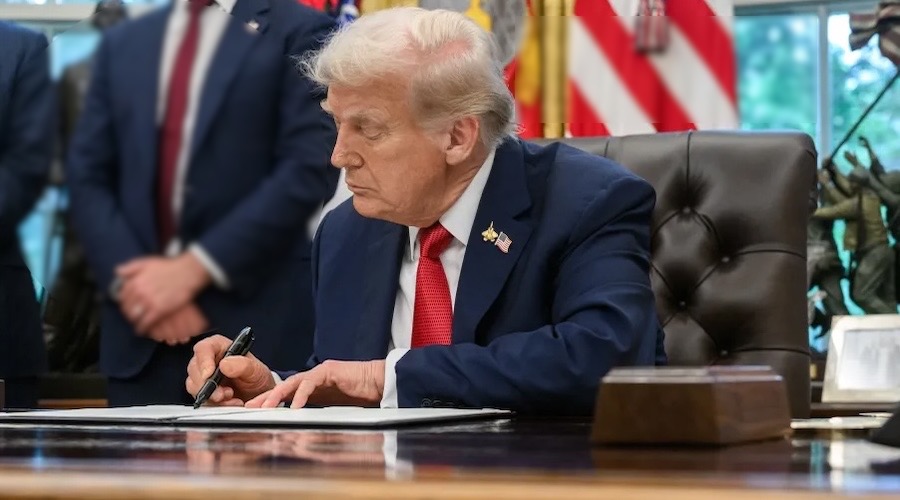

The move would be Washington’s latest bid to counter what it sees as Chinese price manipulation. (Image courtesy of The White House.)

US President Donald Trump is preparing to launch a strategic stockpile of critical minerals backed by $12 billion, aiming to protect manufacturers from supply disruptions as the US accelerates efforts to reduce dependence on Chinese metals.

The White House confirmed on Monday the start of “Project Vault,” which would combine $1.67 billion in private capital with a $10 billion loan from the US Export-Import Bank to buy and store minerals for automakers, technology companies and other industrial users. 

The model mirrors the country’s emergency oil reserve but focuses instead on materials such as gallium and cobalt used in products ranging from smartphones to jet engines.

The project spans the automotive, aerospace and energy sectors and underscores Trump’s broader push to rewire US supply chains away from China, the world’s dominant producer and processor of critical minerals.

More than a dozen companies have reportedly signed on, including General Motors Co., Stellantis NV, Boeing Co., Corning Inc., GE Vernova Inc. and Alphabet Inc.’s Google. Commodities traders Hartree Partners LP, Traxys North America LLC and Mercuria Energy Group Ltd. will handle purchases to fill the stockpile.

“Project Vault is a clear signal that US critical‑mineral policy has moved to deployment,” US Critical Materials chairman, Harvey Kaye, told MINING.COM. “It says unequivocally that secure supplies of rare earths and heavy minerals like gallium are now treated as strategic infrastructure for our economy and defense industrial base, to establish US sovereignty.”

Kaye noted that for companies like US Critical Materials, it confirms that high-grade domestic supply is no longer optional.

Beyond defence 

Trump is scheduled to meet Monday with GM chief executive officer Mary Barra and mining entrepreneur Robert Friedland, representing both consumers and producers of critical minerals. 

While the US already maintains a national stockpile for defence purposes, it lacks a comparable reserve for civilian industry. That gap has taken on urgency as the Pentagon ramps up its own accelerated stockpiling campaign, targeting up to $1 billion in mineral acquisitions in the near term.

The drive is supported by Trump’s One Big Beautiful Bill Act, which allocates $7.5 billion for critical minerals, including $2 billion to expand the national stockpile by 2027, $5 billion for supply-chain investments and $500 million for a Pentagon credit program to encourage private projects.

The administration has also taken the unusual step of investing directly in domestic mining companies to boost US rare earths production and processing.

Last month, a bipartisan group of US lawmakers introduced a bill to create a $2.5 billion stockpile of critical minerals, a move aimed at stabilizing market prices and encouraging domestic mining and refining.

Senior administration officials told Bloomberg News Project Vault was oversubscribed, citing investor confidence in the credit quality of participating manufacturers, their long-term purchase commitments and the backing of the US export-credit agency. Under the plan, companies can draw down their allotted materials as long as they replenish them, with full access permitted during major supply disruptions.

Manufacturers that commit to buying set quantities at fixed prices will also agree to repurchase the same amounts at the same cost in the future, a structure the administration says will help stabilize prices and dampen market volatility.

Bloomberg News was the first to report the creation of the critical minerals strategic reserve.


‘Project Vault’ wins some metals industry support as stocks gain
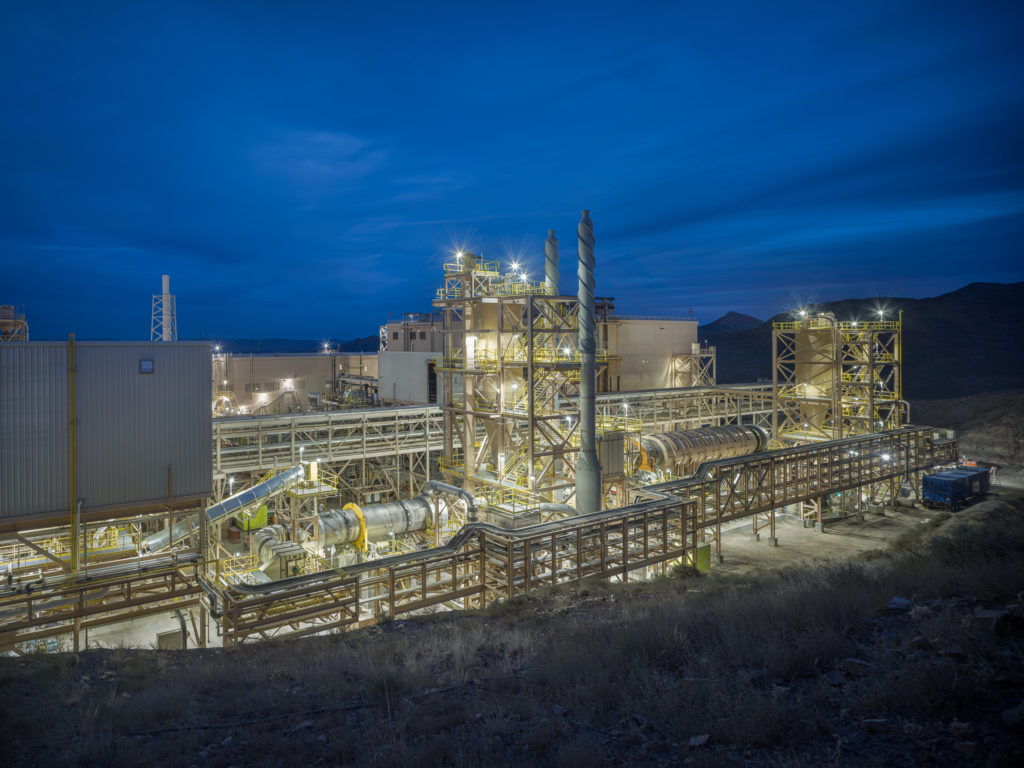

A view from Utility Hill of the Calciner area at the MP Materials mine and ore processing site in Mountain Pass, CA. Credit: Michael Tessler, MP Materials

The US government’s planned $12 billion initiative to stockpile critical minerals is winning support from parts of the metal markets, while raising doubts elsewhere about how effective the initiative will be.

Critical minerals span everything from aluminum to zinc, but it’s smaller, niche markets such as rare earths where federal buying is more likely to move prices and impact trade flows. Developers with ties to the Trump administration reacted more strongly than larger, established miners. MP Materials Corp. jumped as much as 7% on Monday, while Almonty Industries Inc. rose 9.7% before paring gains.

Aclara Resources Inc., which recently secured US funding for a mine in Latin America, said government stockpiling could help get more projects off the ground. An analyst at William Blair & Co. called the plan “a major tail wind” for rare earths.

“Industrial clients are reluctant to provide take-or-pay contracts given the early-stage nature of many initiatives,” said Aclara chief executive officer Ramon Barua. By stepping in as a buyer, the government can help finance alternative supply chains and “bridge that gap,” he said.

The Trump administration’s venture — dubbed Project Vault — would combine $1.67 billion of private capital with a $10 billion loan from the US Export-Import Bank to procure and store minerals for automakers, technology companies and other manufacturers. Ex-Im’s board is scheduled to vote later Monday to authorize the record-setting 15-year loan, more than double the bank’s previous largest deal.

MP Materials, in which the Pentagon agreed to make a $400 million equity investment in July, was up 3.6% at 2:08 p.m. in New York while tungsten miner Almonty had pared gains to 0.2%. USA Rare Earth Inc. rose as much as 16% before retreating, while United States Antimony Corp. was up 10%.

The efforts are part of the government’s push to shore up supply chains critical to autos, aerospace and energy. While details remain limited, the scale alone sets Project Vault apart from earlier proposals and signals a return to a more interventionist federal role in physical commodity markets.

The initiative shows the administration’s “major focus on rare earth” and it’s “determination to take control back from China,” wrote William Blair’s Neal Dingmann, who expects further government funding for rare earth providers and customers.

The approach builds on US inventory accumulation that’s already underway. Exchange warehouses and trade data show rising stockpiles of copper, platinum and palladium over the past year, blurring the line between commercial inventories and state-backed strategy as government-supported investments proliferate across metals markets.

US officials “want to make sure they’re reducing their external vulnerabilities in terms of metal supply chains,” said Helen Amos, commodities analyst at BMO Capital Markets. “They’re investing directly in equity, they’re building up stockpiles and looking at strategic partnerships with trading companies,” Amos said. “They’re coming at it from all possible angles.”

For Almonty CEO Lewis Black, $12 billion is a fairly modest sum when spread across dozens of critical metals and compared with Cold War–era stockpiling. Rules require government purchases to be non-disruptive, further constraining the program’s effectiveness, he said.

In tight markets such as tungsten, the US will still have to compete for global supplies with China, Black said.

“Where are they going to get the material from? There’s nothing out there,” he said. “China is extraordinarily aggressive in buying non-Chinese concentrate and scrap, and the financial regulations that apply to us don’t apply to them.”

Even so, the scale of Project Vault far exceeds the $2.5 billion Strategic Resilience Reserve proposed by lawmakers under the Secure Minerals Act. That gap points to a growing bipartisan consensus that metals deserve the same strategic treatment as oil, as geopolitical risks increase and China’s grip of several critical minerals tightens.

Rather than addressing any immediate shortages though, Project Vault appears designed to enhance resilience and shape market dynamics, according to BMO’s Amos. Stockpiling would give policymakers a tool to smooth domestic prices — buying during downturns and releasing inventory when prices surge — echoing the logic of Cold War–era reserves.

While niche metals may see outsize effects, large and liquid markets such as copper are less likely to move. BMO estimates there is already about $13 billion worth of metal sitting in US warehouses.

Strategically, Project Vault reinforces a broader shift in US industrial policy, adding another lever to reduce reliance on adversarial supply chains, particularly those tied to China. It signals a US government increasingly willing to operate across every layer of the metals ecosystem — from mine to market — in pursuit of security goals.

(By James Attwood)

India Pours Over $10 Billion Into Rare Earths to Cut China Dependence


  • India is moving to break China’s grip on rare earths, launching dedicated mining-to-manufacturing corridors across four coastal states.

  • The 2026–27 budget sharply boosts clean-energy spending, with nearly $10 billion targeted at renewables, rooftop solar, agri-solar, and a new $2.2 billion CCUS program.

  • Nuclear power is a core pillar of India’s energy strategy, with major funding, tax incentives, and R&D support aimed at reaching 100 GW of nuclear capacity by 2047

India’s Finance Ministry has unveiled a budget proposal for the current financial year that will boost domestic rare earths mining and the clean energy sector as part of a broader effort to break global supply chain monopolies--particularly China’s dominance--and achieve strategic self-reliance in critical minerals.

In the Union Budget 2026-27 presented over the weekend, Finance Minister Nirmala Sitharaman unveiled a strategic initiative to establish dedicated rare earth corridors across four mineral-rich coastal states of Odisha, Kerala, Andhra Pradesh and Tamil Nadu. These corridors will act as integrated zones connecting mines, processing units, research labs, and factories to streamline the movement and production of rare earth elements (REEs).

The initiative builds on the ?7,280 crore scheme ($800 million) approved in late 2025 to promote the manufacturing of Sintered Rare Earth Permanent Magnets (REPM). This scheme targets an annual production capacity of 6,000 metric tonnes. India plans to leverage its substantial reserves (estimated at 8.52 million tonnes) of REEs found in monazite-rich beach sands along its coasts.


The budget will also extend tax incentives, including full exemptions, for critical mineral processing. REEs are essential for high-tech industries including electric vehicles (EVs), wind turbines, semiconductors, defense electronics and smartphones. In Kerala alone, the corridor is expected to attract ?42,000 crore ($4.6 billion) in investments and generate approximately 50,000 jobs. The REPM scheme spans seven years, including a two-year gestation period for setting up facilities and five years for sales-linked incentives. Up to five beneficiaries will be selected through a global competitive bidding process to ensure high-tech standards and competitiveness.

Related: Devon and Coterra to Create Shale Giant in $58-Billion Merger Deal

By identifying, exploring, and processing rare earth minerals domestically, India aims to reduce its dependence on external sources,” Civil Aviation Minister Ram Mohan Naidu said.

Beyond minerals, the Indian government has announced a massive, multi-pronged push to develop the renewable energy sector, with total allocations and targeted investments exceeding ?87,000 crore ($9.6 billion) across different initiatives, including power generation and nuclear energy.

The Ministry of New & Renewable Energy (MNRE) budgetary allocation was ?32,914.7 crore ($3.7 billion) representing a nearly 30% increase from the revised estimates of the previous year.PM Surya Ghar: Muft Bijli Yojana received an allocation of ?22,000 crore ($2.4 billion) to accelerate household residential solar adoption while PM-KUSUM (Agri-Solar) was raised to ?5,000 crore ($550 million). PM Surya Ghar: Muft Bijli Yojana is a flagship scheme launched by the Government of India on February 13, 2024, designed to provide up to 300 units of free electricity every month to 10 million households.

The scheme encourages the installation of rooftop solar (RTS) systems in the residential sector. The project has a total financial outlay of Rs. 75,021 crore ($8.2 billion), and aims to reduce carbon emissions by 720 million tonnes over 25 years. Meanwhile, India's PM-KUSUM (Pradhan Mantri Kisan Urja Suraksha evam Utthan Mahabhiyan) is a central government scheme launched in 2019 to promote solar energy in agriculture. It provides up to 60% subsidies for farmers to install solar pumps, solarize existing grid-connected pumps, and set up solar power plants on barren land, aims to enhance income, reduce diesel usage and ensure energy security.

The budget has also proposed a new dedicated plan for Carbon Capture, Utilisation, and Storage (CCUS), with ?20,000 crore ($2.2 billion) proposed over the next five years to support industrial decarbonization in sectors like power, steel and cement, supporting the country's net-zero 2070 goal. Further, the Union Budget 2026-27 reinforces a major push for nuclear energy as a clean baseload power source, aiming for 100 GW of nuclear capacity by 2047. Key highlights include a ?24,124 crore ($2.7 billion) allocation for the Department of Atomic Energy;  an allocation for R&D projects at the Bhabha Atomic Research Centre (BARC) was nearly doubled to ?1,800 crore ($198 million) as well as significant tax concessions to boost infrastructure.

The budget supports the Nuclear Energy Mission, focused on the research and development (R&D) of Small Modular Reactors (SMRs) and "Bharat Small Reactors" (BSRs), with a target to operationalize at least five indigenously developed SMRs by 2033. The existing basic customs duty (BCD) exemption on imports of goods required for nuclear power projects has been extended until 2035. This exemption was expanded to cover all nuclear power plants, regardless of their capacity, to encourage faster development. As part of the strategy, the government is also exploring the use of retired coal plant sites for new nuclear reactors.

The Indian government intends to use these measures to increase nuclear capacity to 22 GW by 2032, 47 GW by 2037, 67 GW by 2042, and finally 100 GW by 2047. India and Russia maintain a strategic civil nuclear partnership centered on the Kudankulam Nuclear Power Plant (KKNPP) in Tamil Nadu, where Russia is building six 1000 MW reactors and supplying required nuclear fuel. With units 1 and 2 operational, Russia remains India’s primary supplier of nuclear fuel.

By Alex Kimani for Oilprice.com

CU

Capstone Copper restarts Mantoverde mine while strike drags on

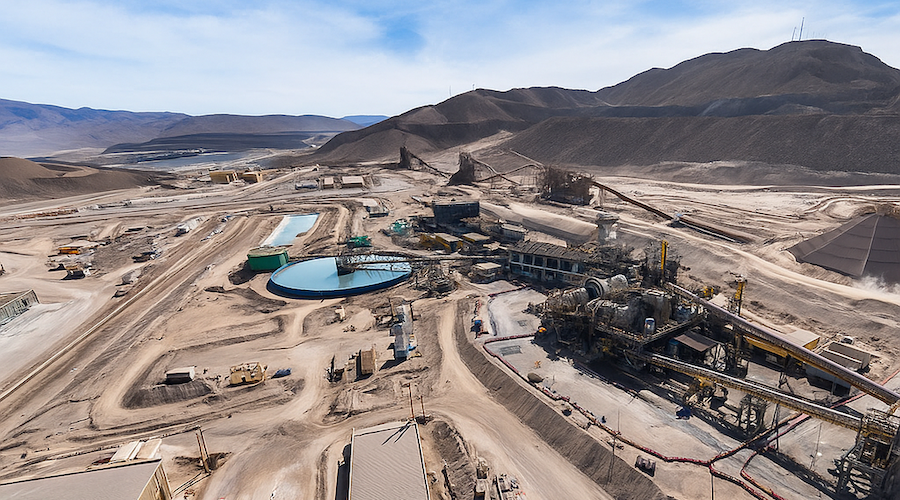
A view of the Mantoverde site. Credit: Capstone Copper.

Capstone Copper Corp resumed operations at its Mantoverde copper and gold mine in northern Chile, even as a strike by a labor union representing nearly 22% of its workforce continued, the Canadian miner said on Monday.

The company, in an Australian exchange filing dated February 1, reiterated it expects to continue operations at a level between 50% to 75% of normal production during the strike.

Shares of Capstone’s Australia-listed depositary receipts fell as much as 4.5% to A$15.810 on the day, their lowest level since January 23.

The decision to resume operations follows a Chilean court ruling last week authorizing the forced removal of striking workers from a desalination plant supplying water to the mine, a key resource for day-to-day operations.

The strike began in January after negotiations over new labor contracts with Union No. 2 of Mantoverde broke down. Unionized workers rejected the company’s latest payment offer, leading to the ongoing impasse.

Capstone said it remains open to further dialogue with the union as it seeks to resolve the dispute.

Union No. 2 at Capstone Copper’s Mantoverde mine is the largest labor union on site, representing around 645 workers, which corresponds to roughly 50% of the mine’s direct workforce. It is the union leading the strike.

The conflict centers on Mantoverde’s desalination plant on the coast, located about 40 kilometers (25 miles) from the mine.

The company reported that on the evening of January 18, individuals entered the desalination facility, interfering with the plant’s electrical system and causing an interruption in water supply.

The water shortage forced the mine to rely on on-site reserves, halt parts of its operations including sulphide processing, and warn further shutdowns could occur if the situation persisted.

Chile, the world’s top copper producer, has grappled with deepening droughts that have forced Santiago to consider unprecedented water rationing.

The shortages have intensified long‑standing tensions over water use as miners – traditionally dependent on continental sources like lakes, rivers and reservoirs – compete for supplies needed to power copper smelting.

In 2025, Mantoverde produced 62,308 tons of copper concentrate and 32,807 tons of copper cathodes, about 0.4% of global production.

Capstone owns a 70% stake in Mantoverde, with Japan’s Mitsubishi Materials holding the remaining 30%.

(By Kumar Tanishk; Editing by Diane Craft and Chris Reese)


Eldorado to buy Foran Mining for $2.8B amid copper push

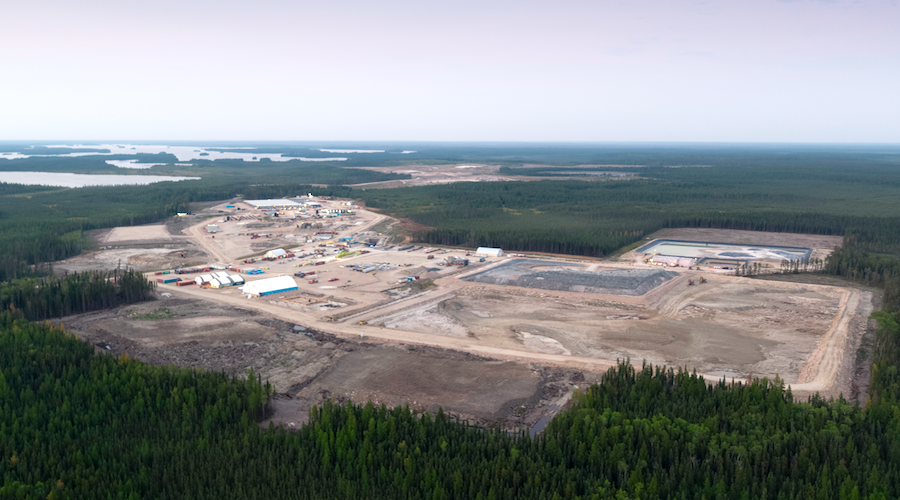
McIlvenna Bay copper-zinc project in Saskatchewan. (Image courtesy of Foran Mining.)

Eldorado Gold (TSX: ELD) (NYSE: EGO) has agreed to buy fellow Canadian miner Foran Mining (TSX:FOM) (OTCQX:FMCXF) in a transaction that values the copper-focused developer at about C$3.8 billion ($2.8 billion).

The acquisition will expand Eldorado’s copper footprint while adding a second near-term growth project as demand for the metal rises alongside electrification and clean energy investment.

The deal brings Eldorado’s Skouries gold-copper project in Greece and Foran’s McIlvenna Bay copper project in Saskatchewan into one portfolio, both targeted for commercial production in mid-2026. Eldorado said the enlarged group could produce about 900,000 gold-equivalent ounces in 2027.

Once combined, the company’s asset base is expected to have roughly 77% exposure to gold and 15% to copper, with operating mines and development projects in Canada, Greece and Turkey.

Eldorado expects the merged business to generate about $2.1 billion in core profit and $1.5 billion in free cash flow in 2027. The miner also plans to increase exploration spending across the portfolio, including at Foran’s Tesla zone in Saskatchewan.

Deal insights

Under the terms of the agreement, Foran shareholders will receive 0.1128 Eldorado shares plus $0.01 per share, giving them about 24% of the combined company. The transaction is expected to close in the second quarter of 2026.

“This transaction gives McIlvenna Bay the scale and financial strength to fully realize its potential, including the ability to accelerate phased expansion opportunities over time,” Foran chief executive Dan Myerson said in the statement.

The combined company will remain headquartered in Vancouver under the Eldorado Gold name. 

McIlvenna Bay is expected to become a cornerstone Canadian asset alongside Eldorado’s Lamaque Complex in Quebec, supporting long-term employment and economic activity in Saskatchewan and across Canada, the company said. 

The project has been recognized by the federal government as a critical minerals development and referred to the new Major Projects Office as a project of national interest.

Both boards have unanimously approved the transaction, and shareholder votes are scheduled by April 14, the companies said.


FEATURE

The world is facing a global copper shortage


LONG READ

The world is facing a global copper shortage
Thanks to the growing combined demand from AI, EVs and the green energy revolution, global demand is going to outstrip supply and copper prices are already soaring in anticipation.  / bne IntelliNews
By Ben Aris in Berlin February 2, 2026

The world is on track to run short of copper that could pose a “systemic risk” to global economic growth, driven by the energy transition and the booming artificial intelligence sector’s demand for the red metal, S&P Global said in a report on January 8

The looming deficit is forecast to reach 10mn tonnes — equivalent to almost one-third of current global demand — by 2040, in the absence of a “meaningful expansion of supply”, according to S&P Global .

“The shortage would be 23.8% shy of the projected demand of 42mn tonnes by 2040, even as recycled copper scrap more than doubles to 10mn tonnes,” according to the "Copper in the Age of AI: The Challenges of Electrification" study.

“The supply gap threatens to constrain technological advancement and economic growth as copper becomes increasingly essential for AI data centres, electric vehicles, renewable energy infrastructure and defence systems,’ the report said.

Production shortfall

Without significant changes to supply, global copper production is projected to peak at 33mn tonnes in 2030 before declining, while demand is expected to surge 50% from current levels.

“The widening disconnect highlights copper's dual role as both enabler and potential bottleneck for the energy transition and digital transformation,” S&P Global said.

Four key demand vectors are driving copper consumption higher. Core economic demand from construction, appliances and traditional industries is expected to reach 23mn tonnes by 2040, representing 53% of global demand. Energy transition demand from electric vehicles, battery storage and renewable power is projected to increase by more than 7.1mn tonnes to 15.6mn tonnes over the same period.

In addition, AI and data centre demand is expected to triple by 2040 as total installed capacity reaches 550 GW, more than five times 2022 levels, according to the study. The world’s biggest mining group BHP estimated in January that the amount of copper used in data centres worldwide will grow “sixfold by 2050”.

Another largely hidden demand factor is defence spending that could double to $6 trillion by 2040 amid rising international tensions.

Together just data centres and defence represent a combined 4mn tonnes of additional copper demand.

Demand for copper is being boosted by the construction of grid infrastructure for the green transition as well as data centres for artificial intelligence. These need between 27 and 33 tonnes of copper per megawatt of power, according to miner Grupo México, over twice the requirement of conventional data centres.

The study also identifies humanoid robots as a potential fifth demand vector; 1bn units in operation by 2040 would require about 1.6mn tonnes of copper annually, equivalent to 6% of current demand.

The study estimates that an additional 10mn tonnes of primary supply will be required by 2040 beyond increased recycling. However, without significant investment, global primary production could reach just 22mn tonnes by 2040, 1mn tonnes below current levels.

Supply side constraints

On the supply side, declining ore grades, rising energy and labour costs, complex extraction conditions and lengthy permitting processes combine to limit new mine development, the report said.

Supply chain concentration adds another layer of risk. Only six countries are responsible for roughly two-thirds of mining production, according to the study. The International Energy Agency said this year that by 2035, production from existing and planned mines was on track to meet only 70% of global demand.

Existing mines, some dating back more than a century, are getting older and less productive, while large untapped deposits are becoming harder to find. 20 mines produce about a third of the copper mined globally. Of the 239 copper deposits discovered between 1990 and 2023, only 14 were discovered in the past decade, according to the IEA.

China accounts for approximately 40% of global smelting capacity and 66% of copper concentrate imports, making the global supply vulnerable to policy shocks and trade barriers, the report said.

Analysts are expecting shortfalls as soon as this year, with consultancy Wood Mackenzie forecasting a 304,000-tonne shortfall of refined copper in 2025, a gap it says will widen in 2026. Prices have already risen to record levels in anticipation. 

Prices rising

Copper is the “new gold” and has already made record gains as fears of a global shortfall mount, rising by the highest amount in over a decade

Copper soared to a record high of more than $13,000 per tonne on January 2 compared with around $8,500 two years ago, as concerns over supply disruption and tariffs extended a rally that has pushed up the price of the metal by almost a third since October, after disruptions at several large mines.

Analysts at BMI, part of Fitch Group, said they expected the price of copper to average $11,000 per tonne this year, while prices would reach $17,000 per tonne in 2034.

US President Donald Trump added to the uncertainty in December, adding copper to a list of critical minerals vital for the US economy. Fears that the Trump’s administration may impose additional import tariffs on the metal have also driven up demand The amount of copper in US Comex warehouses has jumped to a record high of more than 450,000 tonnes, compared with less than 100,000 tonnes a year ago and about 400,000 at the start of December, the Financial Times reports.

Country breakdown of the main copper producers.

Chile

·       Annual copper production (2022): 5.2mn tonnes

·       Proven copper reserves: 190mn tonnes (USGS estimate, 2023)

·       Major companies: Codelco (state-owned), BHP, Anglo American, Antofagasta PLC, Freeport-McMoRan

Chile is the world’s largest copper producer and holds the largest proven reserves globally. State-owned miner Codelco dominates domestic output, followed by major multinational operations, including BHP’s Escondida mine — the largest copper mine in the world. Despite resource abundance, the sector has faced recent challenges, including declining ore grades, water scarcity in arid regions, labour unrest, and regulatory uncertainty linked to environmental reforms and proposed tax changes. Nonetheless, Chile remains the cornerstone of global copper supply.

Peru

·       Annual copper production (2022): 2.4mn tonnes

·       Proven copper reserves: 92mn tonnes

·       Major companies: Southern Copper Corporation, MMG, Glencore, Freeport-McMoRan, Anglo American

Peru is the second-largest global producer of copper and has rapidly expanded its mining capacity over the past decade. The Las BambasAntamina, and Cerro Verde mines are among the country’s most significant operations. Copper accounts for a substantial share of Peru’s export revenue. While the government has maintained a generally investment-friendly stance, mining projects often face delays due to community opposition and social conflicts, particularly in rural Andean regions. Infrastructure and political instability continue to impact investment flows.

Democratic Republic of Congo (DRC)

·       Annual copper production (2022): 2.2mn tonnes

·       Proven copper reserves: 25mn tonnes

·       Major companies: China Molybdenum (CMOC), Glencore, Ivanhoe Mines, Gécamines (state-owned)

The DRC has emerged as a top-three copper producer, driven by heavy Chinese investment and joint ventures with state-owned Gécamines. The Tenke Fungurume and Kamoa-Kakula complexes are among the most productive and rapidly expanding copper sites globally. While rich in high-grade deposits, the sector is hindered by governance risks, poor infrastructure, and fluctuating mining policies. Nevertheless, output continues to rise, positioning the DRC as a key supplier for future green energy demand.

China

·       Annual copper production (2022): 1.8mn tonnes

·       Proven copper reserves: 26mn tonnes

·       Major companies: Jiangxi Copper, Tongling Nonferrous Metals, Zijin Mining, China Nonferrous Mining Corp

China is the world’s largest consumer of copper accounting for around 58% of 2025 demand and among the top five producers, although it relies heavily on imports to meet domestic demand. Copper production is concentrated in several provinces, including Jiangxi and Yunnan. State-owned firms dominate the sector, and the government continues to invest heavily in both domestic mining and overseas copper assets. Environmental regulations have tightened in recent years, leading to modernisation and consolidation in the domestic industry.

China itself only produces around 9% of the world’s mined copper, but that figure rises to around 20% after taking into account overseas projects it has ownership stakes in, according to Benchmark Mineral Intelligence. China now controls around half of copper smelting capacity worldwide. The US, by contrast, has just two operational copper smelters.

In China, the domestic build-out of smelters has been so dramatic in recent years that there is not enough copper ore to feed all the facilities globally. Miners used to pay smelters to process their ore; now it is the other way around. The prospect of new copper smelters opening outside China in the short term — something western policymakers want, in order to reduce their reliance on Beijing — is unlikely. They are expensive to build, energy-intensive to operate and run on thin profit margins.

United States

·       Annual copper production (2022): 1.2mn tonnes

·       Proven copper reserves: 48mn tonnes

·       Major companies: Freeport-McMoRan, Rio Tinto, Grupo México (via Asarco), Capstone Copper

The US copper sector is led by Freeport-McMoRan, which operates the Morenci and Bagdad mines in Arizona. Domestic production has been relatively stable but is challenged by permitting delays, environmental opposition, and aging infrastructure. Projects such as Rio Tinto’s Resolution Copper remain stalled due to legal and community opposition. Nevertheless, the US retains significant untapped reserves and has seen renewed policy interest in critical minerals, including copper, amid supply chain and energy transition concerns.

Australia

·       Annual copper production (2022): 900,000 tonnes

·       Proven copper reserves: 87mn tonnes

·       Major companies: BHP, Glencore, OZ Minerals (acquired by BHP), Sandfire Resources

Australia is a leading copper reserve holder, with large-scale operations such as BHP’s Olympic Dam and Glencore’s Mount Isa complex. The country benefits from a stable regulatory environment, advanced infrastructure, and strong ESG standards. In 2023, BHP completed its acquisition of OZ Minerals, consolidating control over several copper and nickel assets critical to the energy transition. While not among the top three in annual output, Australia is well-positioned for long-term supply growth.

Russia

·       Annual copper production (2022): 900,000 tonnes

·       Proven copper reserves: 62mn tonnes

·       Major companies: Norilsk Nickel, Ural Mining and Metallurgical Company (UMMC), Russian Copper Company

Russia holds large copper reserves and maintains significant domestic production, largely consumed by its own industrial base or exported to Asia. The sector is dominated by vertically integrated giants like Norilsk Nickel, which also produces palladium and nickel. Since the onset of Western sanctions in 2022, Russia has faced reduced access to equipment and capital markets, which may hinder future development and investment in the copper sector.

After more than a decade in the making, strip-mining operations began in the depths of Siberia at Udokan, one of the largest copper deposits in the world, in August 2020. As bne IntelliNews reported, the mine belongs to Alisher Usmanov, one of the richest men in Russia and contains an estimate 26.7mn tonnes of copper ore that was discovered in Soviet times, but proved technically difficult to develop thanks to its remote location in the region near Lake Baikal. Usmanov have invested some $3bn into developing the mine,

Mongolia

·       Annual copper production (2022): 350,000 tonnes

·       Proven copper reserves: 30mn tonnes (estimated)

·       Major companies: Rio Tinto (via Turquoise Hill Resources), Erdenes Oyu Tolgoi (state-owned), Mongolyn Alt (MAK)

Mongolia is a rising copper producer with significant long-term potential, driven primarily by the massive Oyu Tolgoi mine — one of the largest known copper and gold deposits in the world. Located in the South Gobi Desert, Oyu Tolgoi is operated by Rio Tinto and co-owned with the Mongolian government through Erdenes Oyu Tolgoi. Underground development of the mine began commercial production in 2023, substantially boosting national output. Mongolia’s copper sector is strategically important due to its proximity to China, which receives the bulk of its exports. However, the country faces logistical challenges, regulatory uncertainties, and the need to balance foreign investment with national resource sovereignty. Additional deposits such as Tsagaan Suvarga and projects under MAK may further expand production in the coming decade.

Kazakhstan

·       Annual copper production (2022): ~600,000 tonnes

·       Proven copper reserves: ~20mn tonnes

·       Major companies: Kaz Minerals, KAZ Minerals Group (formerly part of ENRC), Glencore (via Kazzinc), East Copper Company (ERG)

Kazakhstan is a significant copper producer in Central Asia, with a well-established mining sector and extensive undeveloped mineral potential. The industry is led by Kaz Minerals, which operates several large-scale open-pit mines, including BozshakolAktogay, and Artemyevsky. These assets have undergone major expansion since 2015, boosting national output and positioning the company as a key supplier to China. Glencore, through its subsidiary Kazzinc, is also active in the sector, operating polymetallic mines with copper by-products.

The country’s copper sector is supported by substantial reserves and improving infrastructure, including rail and energy links to China and Europe. State-backed industrial policy has prioritised mining investment, though challenges persist around environmental regulation, water availability, and fluctuating export demand. The sector is also home to East Copper Company, part of the Eurasian Resources Group (ERG), which operates copper concentrate facilities as part of its diversified mining portfolio. Kazakhstan is considered strategically important for the global copper supply chain due to its location, resource base, and growing trade ties with China and the Eurasian Economic Union.

Ørsted’s Sunrise Wind Receives Injunction Against Trump Administration

offshore wind farm
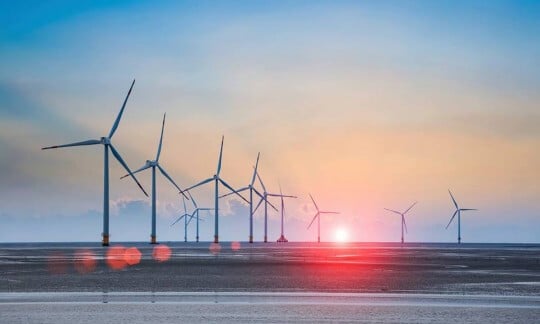
Judge gave Sunrise Wind off New York a preliminary injunction so if can resume offshore construction (BOEM file photo)

Published Feb 2, 2026 3:17 PM by The Maritime Executive


A U.S. District Court Judge issued a preliminary injunction on Monday, February 2, for Sunrise Wind against the Trump administration’s December stop-work order. With today’s ruling, all five of the under-construction offshore wind farms have received permission to resume work despite the administration’s claims of new information about potential radar interference from the wind turbine blades and towers.

Ørsted’s Sunrise Wind had reported in early January that it would follow the lead of the other wind farms and also file seeking a court order. The company said that its project was 45 percent complete, with 44 of its 84 foundations installed as part of a total investment of $7 billion.

The New York Times reports that Judge Royce Lamberth said during a two-hour hearing today that he was unconvinced after reviewing under seal the classified report, which is the basis for the government’s claims about national security issues.

“Purportedly new classified information does not constitute a sufficient explanation,” the judge ruled, according to The New York Times. Lambert reportedly called the administration’s actions “likely arbitrary and capricious” and ruled the company would be irreparably harmed unless work resumed.

Ørsted told the court the stop-work order, which was imposed on December 22, was costing it $2.5 million a day. 

Sunrise Wind is the least advanced of the five projects that were stopped. It is located approximately 30 miles east of Long Island, New York. Due to be completed in 2027, it will have a capacity of 924 MW.

Other judges also questioned the government’s argument. One said the issue, if there is one, relates to operations and not construction. The companies each argued they had spent years in review and received approvals from the Department of Defense and others. 

The orders permit the companies to resume offshore construction work while the courts continue to hear the case challenging the stop-work order. Last week, Dominion Energy confirmed that it had installed the first turbine for its Coastal Virginia Offshore Wind project after receiving its injunction, while Vineyard Wind 1 shipped out its last tower as it nears completion by the end of next month.

In the past, the Department of the Interior has vowed to continue to fight these five cases in the courts. It has also sought to stop other projects, including Maryland’s offshore wind farm, before they begin construction. 

The opposition to offshore wind by the Trump administration has effectively stopped most future development and ended the schedule of future lease sales. The Biden administration was targeting at least 30 GW of offshore wind energy capacity. Bloomberg estimates that the U.S., in the near term, will only reach approximately 6 GW of offshore wind energy capacity due to the Trump administration’s efforts to curtail the industry.


Ørsted to Sell European Onshore Business for $1.7 Billion

Ørsted, the world’s largest offshore wind developer, is selling its entire European onshore business as the embattled firm looks to strengthen its balance sheet after a major rights issue last year.

Ørsted on Tuesday said it had signed a deal with Copenhagen Infrastructure Partners (CIP), through its fifth flagship fund, Copenhagen Infrastructure V (CI V), to divest its entire European onshore business.

Ørsted’s European onshore business comprises onshore wind, solar, and battery storage projects in Ireland, the UK, Germany, and Spain.

The total value of the transaction is $1.7 billion (1.44 billion euros) with closing expected in the second quarter of 2026, subject to regulatory approvals.

The sale marks the completion of the divestment program for Ørsted, which last year turned to its shareholders – including the Danish state – for a $9.35 billion rights issue to raise funds amid major industry headwinds, especially in the U.S.

Last year, Ørsted signed a deal to divest 50% in its 2.9 GW Hornsea 3 Offshore Wind Farm to funds managed by Apollo Global Management in a transaction valued at $5.6 billion.

At the end of 2025, the Denmark-based firm also signed an agreement with Taiwan’s Cathay Life Insurance and its affiliate Cathay Power to sell 55% of its 632?MW Greater Changhua 2 Offshore Wind Farm in the Taiwan Strait for about $790 million.

The sale of the European onshore business to CIP for the equivalent of about $1.7 billion represents the third cornerstone transaction that Ørsted had previously announced in efforts to bolster its balance sheet and stop cash bleeding.

“Ørsted has thereby finalised its divestment programme as planned and significantly strengthened its financial foundation,” the company said today.

With the divestment of its European onshore business, Ørsted has signed transactions during 2025-2026 with proceeds totalling about $7.3 billion (46 billion Danish crowns), delivering on its target of more than $5.5 billion (35 billion crowns) in divestment proceeds during this period.

“We’ve now substantially strengthened Ørsted’s financial position,” chief financial officer Trond Westlie said on Tuesday.

By Tsvetana Paraskova for Oilprice.com