Darlington refurb completed ahead of schedule, under budget
_13618.jpg)
Candu units are pressurised heavy water reactors designed to operate for 30 years before refurbishment. Refurbishment is a major undertaking: it includes the replacement of key reactor components such as steam generators, pressure tubes, calandria tubes and feeder tubes, and involves removing all the reactor's fuel and heavy water and isolating it from the rest of the power station before it is dismantled. Thousands of components are inspected before the plant is rebuilt and is ready for another 30 years of operation.
Ontario Power Generation's (OPG's) Darlington units were refurbished in a ten-year, CAD12.8 billion (USD9.4 billion) project that will extend the plant's operating life to at least 2055. Unit 2 was the first to be refurbished and returned to service in June 2020; unit 3 returned to service in July 2023; and unit 1 returned to service in November 2024.
Stephen Lecce, Ontario Minister of Energy and Mines, on Monday announced the completion of construction on the refurbishment of the Darlington unit 4 nuclear reactor. Originally expected to return to power in August this year, the unit has now received approval from the Canadian Nuclear Safety Commission (CNSC) to enter the initial power testing, which is expected to begin on 12 February, and will be at full power shortly after. In September last year, the CNSC announced it was authorising the Darlington plant to continue operating for a further 20 years, until November 2045.
"With all four units refurbished and ready to be brought back online, this marks the completion of the world’s largest refurbishment project to date, with the Darlington Nuclear Generating Station ready to deliver more than 3,500 MW of clean, reliable, emission-free electricity - enough to power 3.5 million homes - for at least 30 more years," the Ministry of Energy and Mines said. It noted that the Darlington refurbishment project - carried out by more than 6,000 Ontario workers - was completed CAD150 million under budget. During the construction phase, the project contributed an estimated CAD14.9 billion to Ontario's GDP, with 96% of project spending retained in the province.
"Ontario is proving to the world that we can deliver major nuclear energy projects on-time and on-budget," Lecce said. "Last year we returned another refurbished unit at Darlington four months ahead of schedule, and today we've done it again. Completing the full Darlington refurbishment on-time and under-budget is a made-in-Canada win for our economy, generating CAD90 billion in economic benefits and supporting 14,200 good-paying jobs. In a world of uncertainty, our government is doubling down on Canadian nuclear technology and workers, with 94% of investment benefiting Ontario's supply chain. It is a tremendous industrial advantage that Canada is among only six nations that own civilian nuclear technology."
"Bringing the Darlington refurbishment in ahead of schedule and under budget will clearly demonstrate our team's ability to deliver large and complex nuclear projects," said OPG President and CEO Nicolle Butcher. "The skills we developed and lessons we learned during this project are invaluable as we proceed with refurbishing Pickering Nuclear Generating Station, continue construction on the G7's first small modular reactor at the Darlington New Nuclear Project, and study the potential for up to 10,000 MW of new nuclear at Wesleyville."
According to a report by the Conference Board of Canada, the Darlington refurbishment project and the subsequent 30 years of station operation are expected to generate a total of CAD90 billion in economic benefits for Ontario.
In November 2025, the Ontario government approved OPG's plan to refurbish four Candu nuclear reactors at its Pickering plant, clearing the way for a start to the execution phase of the project, subject to final regulatory approvals.
George Christidis, president and CEO of the Canadian Nuclear Association, added: "This milestone is the result of years of project management excellence and sustained collaboration across Ontario's nuclear sector. Completing the Darlington refurbishment ahead of schedule and under budget demonstrates the strength of Canada's nuclear industry, while helping position Canada as a global leader in nuclear refurbishment and life-extension projects. It also underscores the industry's ability to deliver clean, reliable power that supports long-term economic growth."
"Darlington's ahead of schedule and under budget refurbishment stands as a remarkable achievement for Ontario and a powerful demonstration of what Canada's nuclear sector can achieve," said World Nuclear Association Director General Sama Bilbao y León. "This accomplishment is a testament to the excellence of the entire team, including Ontario Power Generation, Atkins Réalis, the Canadian Nuclear Safety Commission, and the many suppliers and technical partners from throughout the nuclear value chain, as well as to the support and the visionary leadership of the government of Ontario. This success is more than a milestone; it is a foundation. The industrial capabilities, the supply chain strength, and the project discipline proven at Darlington will be essential as Canada and Ontario move forward with new nuclear deployment, from next generation SMRs to large scale reactors. The world is watching, and Darlington shows that Canada is ready to lead the next era of clean energy with nuclear as its anchor."
Serbia discusses new nuclear with French development agency
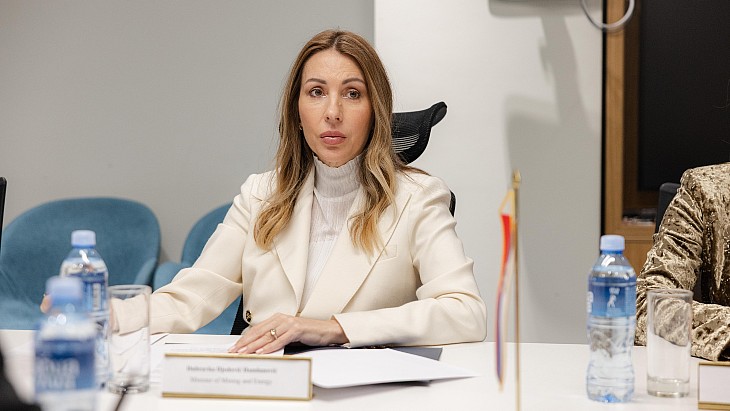
Đedović Handanovic, pictured above, noted the existing cooperation agreement in the field of nuclear energy between the Serbian Government and France's state-owned energy giant EDF, which included a preliminary technical study on the peaceful use of nuclear energy in Serbia.
"Given that Serbia needs new sources of base energy, due to the growth of electricity consumption and the need for decarbonisation, we have sent a request to AFD (Agence Française de Développement) for support in the first phase of the nuclear programme ... which includes support in the development of professional staff and assessment of the impact of nuclear power plants on the transmission network," she said.
"Given that France is recognised as a country that has extensive experience in nuclear energy, Serbia finds their experience very useful. We are discussing the continuation of cooperation with EDF in the implementation of the first phase of the development of the nuclear programme, which includes the training of personnel and informing the general public about the potential application of nuclear energy in Serbia."
The energy ministry said that the next steps agreed were on the development of a special study of the French agency's support in the development of nuclear energy in Serbia, as well as cooperation in the field of energy efficiency. "With the technical support of the AFD, we will also work on long-term planning of the energy transition, in line with the goals we have set for 2050," the minister added.
Serbia had a longstanding law banning the construction of nuclear power plants, but in December 2024 the National Assembly voted through amendments to the energy law ending that 35-year prohibition.
In October 2024 EDF and French engineering consultancy Egis were awarded a contract by Serbia's Ministry of Mining & Energy to conduct a preliminary technical study on the potential use of nuclear power in the country, and the country has also held talks with Russia's Rosatom about non-energy applications of nuclear technologies. President Aleksandar Vučić has also discussed the option of Serbia acquiring 5 to 10% of Hungary's Paks nuclear power plant.
Vučić said at 2024's multinational Nuclear Energy Summit in Brussels, that the country was seeking support from other countries in terms of know-how and financing to achieve its aim of getting 1200 MW of capacity from small modular reactors.
The French development agency says it finances and support projects aiming to build "a fairer, more inclusive, and sustainable future. In a world facing climate challenges, growing inequalities, and geopolitical tensions, we invest to develop concrete, humane, and responsible solutions".
Kursk II's first unit reaches 40% capacity
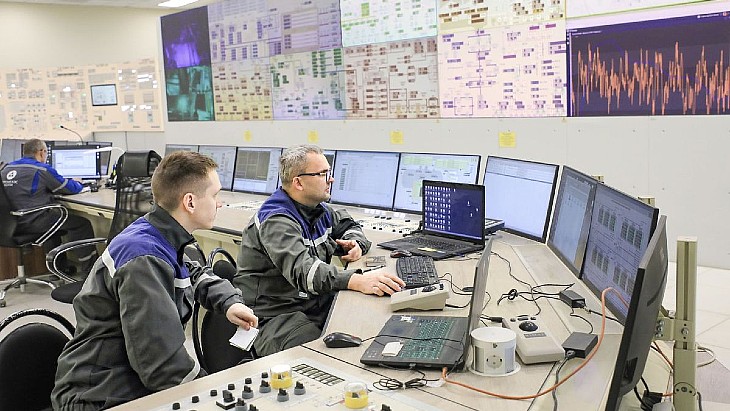
By 13:00 local time on 30 January the unit was operating at a load of 408 MW, which is about 40% capacity for the VVER-TOI reactor. Pilot operation began the previous day, for the unit which was connected to the grid on 31 December.
Prior to the start of pilot operation a series of tests were carried out before Russia's nuclear regulator Rostekhnadzor gave approval for the go-ahead.
At each stage of the commissioning process, as the power is gradually increased, tests and checks take place before moving on to the next level, with the regulator overseeing all stages to confirm it complies with all safety standards.
Alexey Likhachev, Rosatom Director General, said: "Pilot operation is a crucial stage, confirming the design conformity of the power unit's systems and equipment under various operating conditions. This is a significant achievement for the entire Kursk NPP-2 team and Rosenergoatom, whose daily efforts are bringing the power unit closer to commercial operation."
The plan is for the power unit to enter commercial operation during 2026.
Background
Kursk II is a new nuclear power plant in western Russia, about 60 kilometres (37.5 miles) from the Ukraine border, that will feature four VVER-TOI reactors, the latest version of Russia's large light-water designs. They have upgraded pressure vessels and a power rating of 1,250 MW. Construction of the first unit began in 2018, its polar crane was installed in October 2021 and the reactor vessel was put in place in June 2022. Concreting of the outer dome of the first unit was completed in August 2023. The second unit is also under construction and the target is for all four units to be in operation by 2034.
Rosatom says the service life of the main equipment has doubled, and that the VVER-TOI units feature a mix of passive and active safety systems and include a core meltdown localiser. The new units at Kursk II will replace the four units at the existing, nearby Kursk nuclear power plant, which are scheduled to shut by 2031. The first unit was shut down after 45 years of operation in December 2021 and the second unit followed in January 2024. The original design life for the four RBMK-1000 reactors at the plant was for 30 years but had been extended by 15 years following life extension programmes.
US Department of Energy opens search for Nuclear Innovation Campus hosts
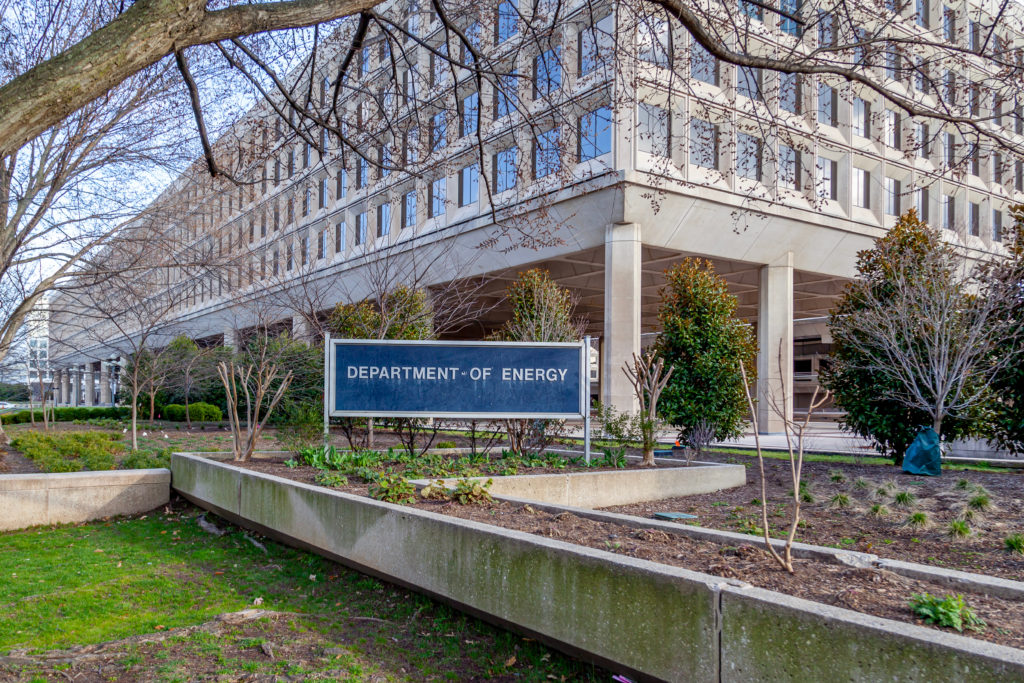
The US Department of Energy (DOE) has issued a Request for Information (RFI) inviting states to express interest in hosting Nuclear Lifecycle Innovation Campuses, to modernize the nation’s full nuclear fuel cycle and strengthen America’s leadership in advanced nuclear energy.

This action marks the first step towards potentially establishing voluntary Federal-State partnerships designed to advance regional economic growth, enhance national energy security, and build a coherent, end-to-end nuclear energy strategy for the country.
“Unleashing the next American nuclear renaissance will drive innovation, fuel economic growth, and create good-paying American jobs while delivering the affordable, reliable and secure energy America needs to power its future,” US Energy Secretary Chris Wright said in a news release.
“Nuclear Lifecycle Innovation Campuses give us the opportunity to work directly with states on regional priorities that support President Trump’s vision to revitalize America’s nuclear base,” Wright said.
The proposed campuses could support activities across the full nuclear fuel lifecycle, including fuel fabrication, enrichment, reprocessing used nuclear fuel, and disposition of waste.
Depending on state priorities and regional capabilities, the sites could also host advanced reactor deployment, power generation, advanced manufacturing, and co-located data centers.
The DOE is inviting states to provide clear statements of interest and constructive feedback on the structure of the Innovation Campuses.
Submissions should outline state priorities—such as workforce development, infrastructure investment, economic diversification, or technology leadership— and describe the scope of activities the state envisions hosting.
States are also encouraged to identify the funding structures, risk sharing approaches, incentives and federal partnerships required to successfully establish and sustain a full-cycle Innovation Campus.
Responses to the RFI are requested by April 1, 2026. More information is here.