Tuesday, February 03, 2026

Russia Raises Pipeline Gas Supply to Europe via TurkStream

Russia’s natural gas exports via the TurkStream pipeline to Europe jumped by 10.3% in January from a year earlier, Reuters calculations showed on Monday, as Gazprom boosted supply via the only gas route left from Russia to the EU.

Last month, Russian gas supply via TurkStream totaled 1.73 billion cubic meters (bcm), up from 1.57 bcm in January 2025, according to the calculations made by Reuters.

On January 1, 2025, Russian pipeline gas supply to Europe crumbled again, after Ukraine refused to extend the pipeline transit deal with Russia.

Russian gas supply via pipelines to Europe has slumped since 2022, after Russia cut off many EU customers from its gas deliveries, and Nord Stream stopped supplying gas to Germany, after Russia reduced flows and after a sabotage in September 2022.

Russian pipeline gas supply via Ukraine stopped on January 1, 2025, after Ukraine refused to negotiate an extension to the transit deal.

That left only TurkStream as the conduit of Russian natural gas via pipeline to Europe.

Some European countries, including Hungary and Slovakia, continue to receive Russian gas through the TurkStream pipeline via Turkey and the Balkans.

Supplies via TurkStream have increased over the past year. 

Daily flows in January 2026 averaged 55.8 million cubic meters (mcm), up from 50.6 mcm in January 2025, per the Reuters calculations based on data from European gas transmission group Entsog. December 2025 flows averaged 56 mcm per day, so the past two months have seen consistent flows via TurkStream.

Despite higher gas flows on TurkStream, Russia’s gas sales to Europe last year plunged to a 50-year low, after crashing by 44% from 2024 in the absence of transit via Ukraine.

Moreover, the 27 EU member states last month formally adopted the regulation on phasing out Russian imports of both pipeline gas and LNG into the EU. A full ban will take effect for LNG imports from the beginning of 2027 and for pipeline gas imports from the autumn of 2027.

By Tsvetana Paraskova for Oilprice.com


Equinor Exits Vaca Muerta With $1.1 Billion Sale to Vista Energy

Equinor will sell all its assets in Argentina’s Vaca Muerta basin to Vista Energy in a cash and stock deal worth $1.1 billion, the Norwegian energy major said on Monday as it continues to high-grade its international portfolio.

The deal includes Equinor’s 30% non-operated interest in the Bandurria Sur asset and its 50% non-operated interest in the Bajo del Toro asset in the premier Argentinian shale basin that has seen oil and gas production surge over the past year.  

Equinor retains its acreage offshore Argentina as these assets are not part of the transaction with Vista Energy.  


The total consideration for the Vaca Muerta assets is around $1.1 billion. At closing, Equinor will receive an upfront cash payment of $550 million as well as shares in Vista. The consideration also includes contingent payments linked to production and oil prices over a five-year period. The transaction has an effective date of July 1, 2025.

Equinor entered Argentina in 2017 with offshore and onshore assets. The Vaca Muerta position was through a joint exploration agreement with YPF on the Bajo del Toro asset. The onshore portfolio was expanded in 2020 with the acquisition of Bandurria Sur.

Equinor’s share of the Bandurria Sur production averaged 24,400 barrels of oil equivalent per day (boepd) in the third quarter 2025, while Bajo del Toro, which is still in an early development phase, contributed 2,100 net boepd, Equinor said.  

Oil and gas production in Argentina’s Vaca Muerta is booming, thanks to fracking technology and business-friendly policies under Argentinian President Javier Milei.

Yet, Equinor has decided its assets in the basin are not core operations.

“We are realising value from two high-quality assets we have actively developed as we continue to high-grade our international portfolio,” said Philippe Mathieu, executive vice president for Exploration & Production International.

Equinor expects its international portfolio to grow production and cash flow through 2030, driven by core positions in Brazil, the U.S., and the UK.


Equinor Exits Argentina’s Vaca Muerta Shale Play

Equinor will sell all its assets in Argentina’s Vaca Muerta basin to Vista Energy in a cash and stock deal worth $1.1 billion, the Norwegian energy major said on Monday as it continues to high-grade its international portfolio.

The deal includes Equinor’s 30% non-operated interest in the Bandurria Sur asset and its 50% non-operated interest in the Bajo del Toro asset in the premier Argentinian shale basin that has seen oil and gas production surge over the past year.

Equinor retains its acreage offshore Argentina as these assets are not part of the transaction with Vista Energy.

The total consideration for the Vaca Muerta assets is around $1.1 billion. At closing, Equinor will receive an upfront cash payment of $550 million as well as shares in Vista. The consideration also includes contingent payments linked to production and oil prices over a five-year period. The transaction has an effective date July 1, 2025.

Equinor entered Argentina in 2017 with offshore and onshore assets. The Vaca Muerta position was through a joint exploration agreement with YPF on the Bajo del Toro asset. The onshore portfolio was expanded in 2020 with the acquisition of Bandurria Sur.

Equinor’s share of the Bandurria Sur production averaged 24,400 barrels of oil equivalent per day (boepd) in the third quarter 2025, while Bajo del Toro, which is still in an early development phase, contributed 2,100 net boepd, Equinor said.

Oil and gas production in Argentina’s Vaca Muerta is booming, thanks to fracking technology and business-friendly policies under Argentinian President Javier Milei.

Yet, Equinor has decided its assets in the basin are not core operations.

“We are realising value from two high-quality assets we have actively developed as we continue to high-grade our international portfolio,” said Philippe Mathieu, executive vice president for Exploration & Production International.

Equinor expects its international portfolio to grow production and cash flow through 2030, driven by core positions in Brazil, the U.S., and the UK.

By Charles Kennedy for Oilprice.com


U.S. Extends License Protecting Venezuela-Owned Citgo From Creditors

The United States has extended a Treasury license that shields Venezuela-owned refiner CITGO Petroleum Corp from creditor actions through March 20, a move that preserves the company’s legal status while debt disputes continue, Reuters reported on Monday. 

The license prevents creditors from seizing Citgo’s U.S. assets as part of ongoing litigation tied to defaults by its ultimate owner, Venezuela’s state energy company. The protection has been repeatedly renewed over successive months and years as courts and claimants press to resolve claims linked to Venezuela’s sovereign debt and defaulted bonds backed by Citgo shares.  

Citgo’s status remains central to both U.S. and Venezuelan interests as Washington adjusts its broader policy toward Caracas. The license extension comes alongside, but is separate from, recent U.S. steps to ease some sanctions on Venezuela’s oil sector, which have allowed limited crude trading and operational activity under specific authorizations. Those measures are part of a wider effort to manage Venezuela’s energy assets while legal and political disputes continue.


Despite relaxed restrictions on trading and refining Venezuelan oil, Venezuela’s hydrocarbon industry faces profound structural and investment challenges. Production has languished for years due to underinvestment, decayed infrastructure, and legal uncertainty that have deterred major international firms from large-scale commitments. Rebuilding output to pre-sanctions levels will demand significant capital over many years.  

The license extension hands the U.S. government continued control over the legal trajectory of Citgo during a period of shifting Venezuela policy. Citgo has been at the center of creditor battles since 2019, when bondholders sought to enforce claims by targeting the valuable Houston-based refiner; past extensions have bought time for negotiations and court rulings while the broader energy and legal landscape evolves.  

U.S. action on Venezuela’s oil assets comes as Caracas moves to overhaul its hydrocarbons law to attract foreign and private investment and as trading houses re-enter Brazilian-heavy crude markets previously restricted under sanctions. Those policy shifts reflect an emphasis on stabilizing Venezuelan energy output while managing complex financial and geopolitical risks.  

By Charles Kennedy for Oilprice.com

The Clean Energy Supply Chain Europe Still Doesn’t Control

  • Europe’s dependence on China for clean-energy minerals is a policy choice, not a geological one.

  • Concrete projects are finally emerging, including high-grade graphite mining in Greenland and large-scale lithium processing in Germany.

  • The real bottleneck is processing and refinement, a step in the supply chain where China still dominates.

As stated earlier last month, Europe’s reliance on China for the minerals and materials underpinning the clean energy transition is no accident; it was a policy choice. And just as it chose dependency, Europe can choose resilience. The contours of that choice are now sharp and urgent: this is not about isolationism, but about strategic autonomy, industrial renaissance, and practical competitiveness.

Europe’s vulnerability lies not in geology but in policy and capacity. Europe is not barren of lithium, nickel, graphite, rare earths, or manganese. These minerals are present from the Iberian Peninsula to Scandinavia. What Europe lacked, until recently, was the projects to turn them into secure supply chains on its own shores. Enough talk. The next phase must be action.

Concrete Groundwork: Mining and Processing Capacity


European policymakers have begun to pivot from rhetoric to reality. Under the Critical Raw Materials Act (CRMA), the EU has defined clear targets: by 2030 ensure at least 10% of critical raw materials extraction occurs within Europe, 40% processing capacity is domestic, and 25% of demand is met through recycling.

Real projects are now part of that roadmap:

  • Graphite Mining in Greenland: The Greenland government recently granted a 30-year mining permit for the Amitsoq graphite project, designated a strategic project under the EU framework. This deposit is one of the highest-grade graphite sources on Earth, critical for lithium-ion battery anodes. Backed by the European Raw Materials Alliance, the project illustrates a new model of responsible extraction tied directly to European battery supply chains.
  • Lithium Production in Germany: In Germany, a massive funding package, roughly $3.9 billion, has been secured for a lithium hydroxide plant aimed at powering electric vehicle batteries. Stretching beyond mere extraction, it combines upstream raw materials with downstream refining and renewable energy production, a blueprint for integrated European supply chains.

These projects show ambition, but scale matters. Europe must attract far greater capital deployment to match the huge global demand for clean technology metals.

Institutional Engines: Policy and Finance

Europe is far from passive. The EU has rolled out several important structural initiatives that highlight the focus given to this topic:

  • The Critical Raw Materials Act itself institutionalizes industrial strategy around raw materials for the first time, providing regulatory certainty and supply chain safeguards.
  • Through the ReSourceEU programme and a related €3 billion plan, Brussels aims to de-risk essential supply chains, seed public-private partnerships, and build joint stockpiles. Initiatives ranging from magnet recycling to collective procurement strategies are emerging as tools to blunt external pressures.
  • The European Raw Materials Alliance (ERMA) mobilizes industry, finance and governments to diversify suppliers, build capacity, and foster innovation across the value chain. European member states are now collaborating on coordinated exploration programmes and permitting reforms to unlock domestic geology.

If Europe is serious about resilience, these mechanisms must be scaled up and integrated with national strategies.

Processing and Circularity: The Overlooked Strength

Extraction is only half the battle. The true chokepoint historically has been processing and refinement, where China today commands an estimated 80-plus percent of global capacity.

Europe’s answer is multifaceted:

  • Domestic refining facilities are being prioritised through strategic projects under the CRMA. Dozens of designated initiatives, spanning rare earth separation to battery precursor production, are intended to reduce chokehold dependencies.
  • Recycling must become industrialised. Europe is now pushing hard on advanced magnet recycling for wind turbines and EVs, including potential export restrictions on scrap magnets so they recirculate inside the EU industrial ecosystem. This is literally turning waste into strategic material.
  • Innovation networks like SCRREEN are accelerating cross-cutting technology research in mining, processing, recycling and substitution, blending industry, policy, and science to create competitive European processes.

These efforts, from cradle to cradle, must be amplified if Europe wants autonomous supply chains that are also environmentally and socially credible.

Lessons From Competitors

One reason the U.S. has advanced faster recently is its willingness to industrialize with money. Subsidies, tax credits, and government anchor offtake agreements have catalysed projects that otherwise would stall. Europe must match strategic ambition with equally bold financing, not just rules.

Permitting bottlenecks and political pushback remain genuine barriers. European regulators must balance environmental standards with streamlined, predictable approval processes, rather than defaulting to prohibitive delays.

The Road Ahead: Strategic Autonomy, Not Autarky

Europe’s path to resilience is not to sever ties with global suppliers, including China, but to diversify, internalise capacity, and hedge against shocks. Strategic autonomy does not mean self-sufficiency at all costs; it means having options, leverage, and redundancy.

The next decade will define whether Europe remains dependent or becomes a producer, processor, and recycler on its own terms. The minerals are there. The industrial base remains world-class. What remains is the political will to translate promise into production. Europe must show that strategic choices can, indeed, rewrite supply chains just as geopolitics once wrote them.

By Leon Stille for Oilprice.com

Cleantech firm EnviroGold set to list on TSXV


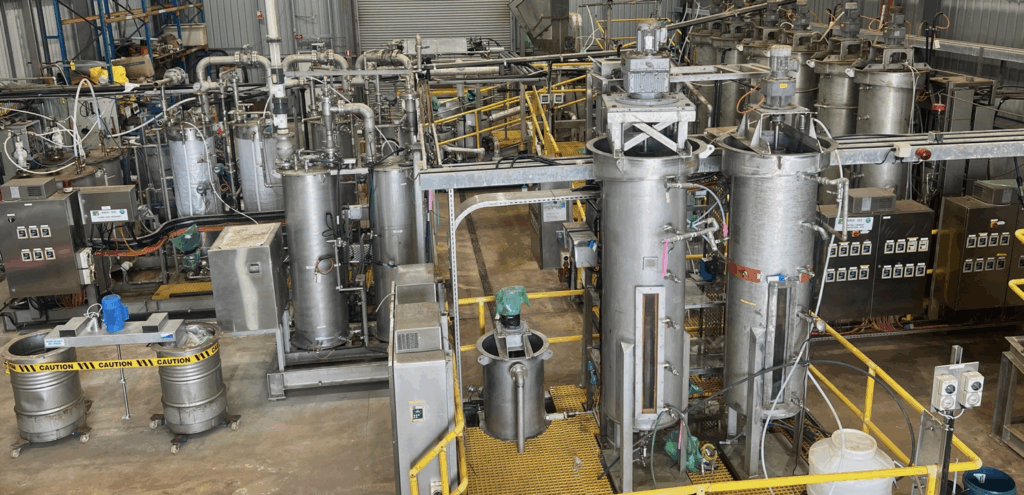
NVRO demonstration plant. Credit: EnviroGold Global

Canadian cleantech firm EnviroGold Global (CSE: NVRO) is set to begin trading on the TSX Venture Exchange on Wednesday, Feb. 4, following exchange approval. Its ticker symbol will remain unchanged.

The TSXV listing is expected to provide increased access for institutional and international investors, improved trading liquidity, and broader market visibility, consistent with the company’s growth strategy, it stated in a press release on Monday.

EnviroGold is currently developing a hybrid acid leaching solution known as NVRO to recover gold and other metals from mine waste and tailings. The technology is designed to operate at low temperatures and atmospheric pressure to break sulphide bonds and recover valuable metals.

According to the company, its NVRO process is able to recover gold and silver at above 95%, with strong performance on copper and other base metals as well. The process is also expected to result in 70% reduction in plant footprint and capital requirements due to pre-concentration integration.

Compared to traditional methods, NVRO could reduce carbon emissions by up to 96%, EnviroGold said.

CEO Grant Freeman said the TSXV listing represents an “important milestone” for the company as it continues to advance its NVRO technology.

“A TSXV listing will provide an opportunity for institutions and international investors to participate in our growth, while supporting our mission to deliver scalable, lower-impact metal recovery solutions that complement traditional mining operations,” he said.

EnviroGold’s shares currently trade at C$0.11 apiece on the CSE with a market capitalization of C$51.5 million ($37.6 million).

Pentagon strikes deal with Canada’s 5N Plus

Credit: 5N Plus

The US Department of Defense made an $18 million investment in Canada’s 5N Plus Inc. to help the company expand refining capacity for germanium metal, which is used in night-vision systems and other applications.

“Our warfighters depend on next-generation optics for surveillance, reconnaissance and targeting, and germanium is a key element in their manufacture,” Mike Cadenazzi, a Pentagon official, said in a statement announcing the deal.

The US has been looking to secure supplies of critical minerals to reduce risks and lower the country’s reliance on China. Since 2024, it has unlocked more than $60 million for small Canadian firms producing those materials, including Nano One Materials Corp. for lithium iron phosphate cathodes and other firms that produce graphite and tungsten.

The Defense Department has worked with 5N Plus since 2020 to improve semiconductor-production processes for space programs and to make germanium wafers used in solar cells for defense and commercial satellites.

Shares of Montreal-based 5N Plus have increased more than 650% over the past three years. Management told analysts in November that several demand trends, including solar energy and the acceleration of artificial intelligence, will continue to support its growth this year.

The firm, which started in 2000 as a provider of materials for medical imaging, now has market capitalization of more than C$2 billion ($1.5 billion).

5N Plus sources its germanium from Teck Resources Ltd. in Canada, as well as from Umicore SA and Nyrstar NV in Europe and scrap recyclers in the US. It’s manufactured into germanium wafers at a 5N Plus facility in St. George, Utah.

“This award will allow 5N Plus to greatly expand its refining capacity for germanium metal and also support the company’s plans to source germanium from underutilized and previously untapped domestic sources,” 5N Plus chief executive officer Gervais Jacques said in a statement to Bloomberg News.

In September, Jacques told Montreal-based news outlet La Presse that the company plans to make a mid-size acquisition in the US, followed by smaller ones, to expand its manufacturing capacity.

(By Mathieu Dion)

MAX Power makes new natural hydrogen discovery in Saskatchewan

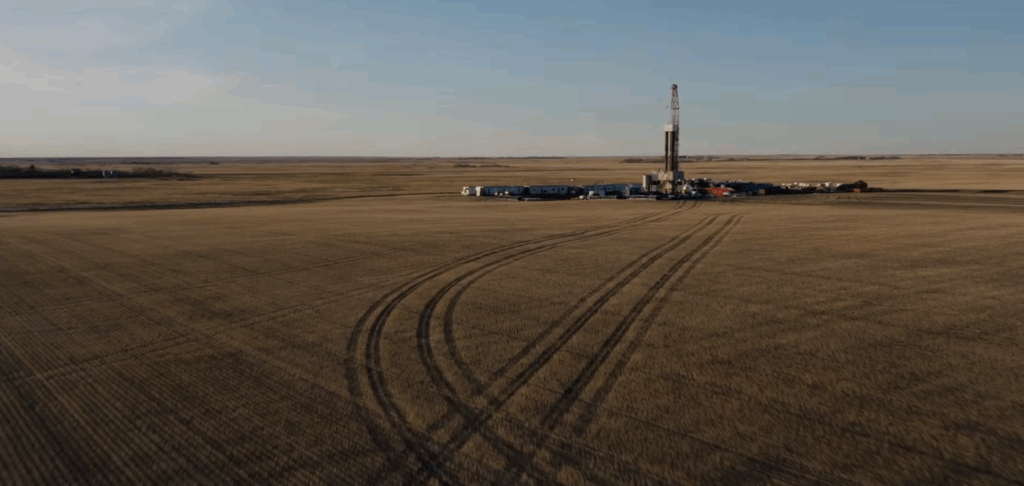
Image: Max Power Mining.

MAX Power Mining (CSE: MAXX) says it has identified a robust target for drill testing of a second natural hydrogen discovery in Saskatchewan.

The target, situated at the Bracken well location, will test a second “play concept” with its own unique trap and seal mechanisms compared to Lawson — Canada’s first natural hydrogen drilling discovery — located 325 km to the northeast, MAX Power said.

Licensing is underway to commence the Bracken well along the Saskatchewan-Montana border in February, it added.

Meanwhile, the company continues with its analytical testing, resource modelling and resource estimation program at the Lawson discovery along the 475-km-long Genesis Trend. The plan is to advance this discovery to commercialization while simultaneously testing additional play concepts across Saskatchewan.

District potential

The Bracken prospect forms part of a broader, regionally extensive exploration fairway across the 75-km-wide permitted Grasslands project. According to MAX Power, this emerging play has meaningful district-scale potential, with Bracken serving as a key calibration point for future drilling locations.

The Bracken well, on a different trend to Genesis, represents an important step in demonstrating basin-scale continuity, supporting the geological team’s interpretation that natural hydrogen systems in Saskatchewan are repeatable and scalable across multiple trends, the Vancouver-based company said.

Like Genesis to the northeast, the Grasslands project is considered prospective for multiple potential natural hydrogen discoveries that may also include helium, it added.

“We continue to move at a rapid pace with respect to natural hydrogen exploration and development in Saskatchewan, where we have the advantage of a mature and favorable policy framework,” MAX Power CEO Ran Narayanasamy said.

“This also highlights the stark timeline difference between exploration and potential commercialization of natural hydrogen versus traditional mineral and metal projects,” he said. “This is months to molecules, not years. Our goal is to quickly unlock scalable, low-carbon energy resources in Saskatchewan, and leverage the MAXX LEMI model for natural hydrogen on a global basis.”

EU mulls ban on Russian copper, platinum in new sanctions

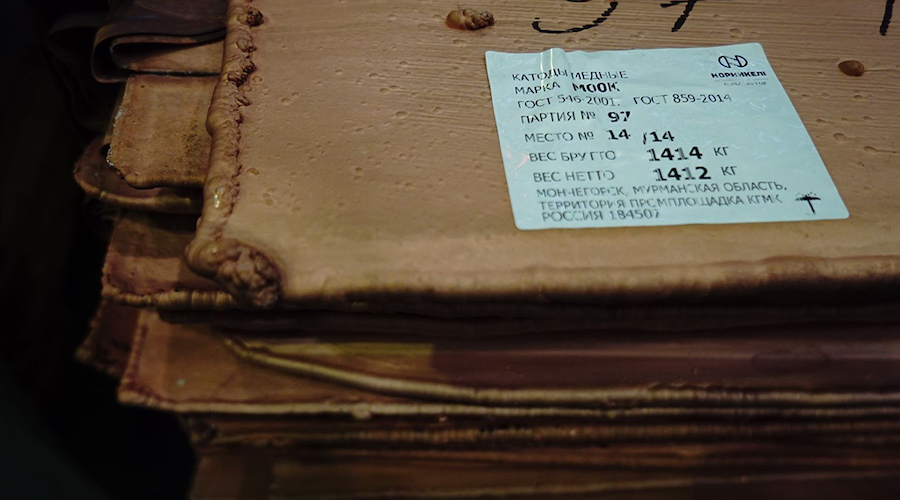
Copper cathodes produced by Nornickel. (Image courtesy of Nornickel).

The European Union is considering to ban Russian imports of several platinum group metals and copper as part of new sanctions targeting Moscow for its war against Ukraine, according to people familiar with the matter.

The restrictions, if backed by member states, may cover iridium, rhodium, platinum and copper, according to the people who asked not to be identified because the information is not yet public. EU sanctions require the backing of all EU member states, and the bloc is aiming to adopt the new package this month.

Spokespeople for the European Commission, which handles sanctions actions for the EU, declined to comment.

Tight markets

The ban is planned amid tight markets for the targeted metals. Copper prices have hit record highs this year amid strong demand and constrained mine supply worldwide. Platinum is also seen in deficit.

Russian metals have steadily been pushed out of main trading hubs. UK sanctions bar Russian-origin copper produced after April 13, 2024 from being traded or delivered on the London Metal Exchange, while the London Platinum and Palladium Market removed Russian refiners from its delivery list in 2022.

The steps have curtailed demand even among industrial consumers, who can no longer be able to use Russian metal for funding. In copper, European buyers have largely turned away altogether as several of Russia’s biggest producers have also been sanctioned.

Still, many of those metals enter Western markets, even as the bulk of volumes has been redirected to Asia.

If adopted, the new restrictions would mainly target MMC Norilsk Nickel PJSC, Russia’s largest mining company, which has not been sanctioned due to its important role in global industries. The miner accounts for about 40% of global palladium used in automotive catalysts, which the EU is not targeting in the new package. It is also Russia’s largest producer of platinum, iridium, rhodium, nickel and copper.

Separately, the EU is also considering a proposal to replace its price cap on Russian oil with a ban on maritime services, Bloomberg previously reported.

(By Alberto Nardelli)

FE

China’s Baowu takes control of Simandou iron ore operator

Simandou iron ore in Guinea. (Image courtesy of Winning Consortium Simandou.)

China’s Baowu Resources, the world’s largest steelmaker, has tightened its grip on one of the biggest untapped high‑grade iron-ore deposits by taking control of the operator of Guinea’s Simandou Blocks 1 and 2 after raising its stake in the Winning Consortium Simandou to 51% from 49%, the company said on Friday.

The Singapore-registered parent company and its Guinean unit have been renamed Baowu Winning Consortium Simandou following the deal, the statement said. It was approved by Guinea on May 30, 2024 and formally completed on January 30, 2026.

BWCS owns 85% of the Guinean operating company for Blocks 1 and 2, strengthening Beijing’s leverage over Simandou in a country that also exports bauxite and other minerals.

On the southern Blocks 3 and 4, Chinese state groups also hold stakes via a Chinalco-led joint venture alongside Rio Tinto and the Guinean state in the Simfer partnership.

Simfer co-developed shared rail and port infrastructure with BWCS for Simandou, which debuted iron ore shipments in November after nearly three decades of stop-start development, regulatory disputes and infrastructure delays.

Baowu said the deal confirms its long-term industrial and strategic commitment to “one of the world’s most significant integrated mining and infrastructure projects,” adding it will pursue “project competitiveness, the promotion of local content, (and) compliance with internationally recognized ESG standards.”

At full-run rate, Simandou’s two mining hubs are designed to ship up to 120 million metric tons of high-grade iron ore a year through the shared rail and Atlantic port, positioning Guinea as a key supplier of the steelmaking material alongside Australia and Brazil.

Guinea’s mines ministry did not immediately respond to a request for comment.

Guinea is also the world’s largest bauxite exporter, with Chinese firms controlling over 70% of output.

(By Maxwell Akalaare Adombila; Editing by Louise Heavens and Chris Reese)


Algeria opens 600-mile railway to tap vast iron ore deposit

Stock image.

Algerian President Abdelmadjid Tebboune inaugurated a 950-kilometer (590-mile) railway built in collaboration with China that’s key to exploiting vast iron-ore deposits in a bid to diversify the OPEC member’s economy.

The step gives the green light for the first shipments of ore from the Gara Djebilet mine in the western desert near the Moroccan border — a project mooted for decades. Feraal, a subsidiary of Algeria’s state miner Sonarem, and China’s Sinosteel are among companies involved in the broader project.

The new line, built by Algerian state firms and China Rail Construction Corp., connects the distant mine with the cities of Tindouf and Bechar. From there, an existing railway links to the Mediterranean coast and the city of Oran, where Turkey’s Tosyali Holding operates a steel complex.

The official opening — aired live Sunday on Algerian state TV — comes as the North African nation that’s a major gas supplier to Europe focuses on developing its mining industry. Hydrocarbons typically account for more than three-quarters of Algerian exports and about half of state revenue, making it vulnerable to volatile energy prices and in search of other income streams.

(By Salah Slimani)

UK firm signs deal with Mitsui to make iron ore pellets from Pilbara material

Stock image.

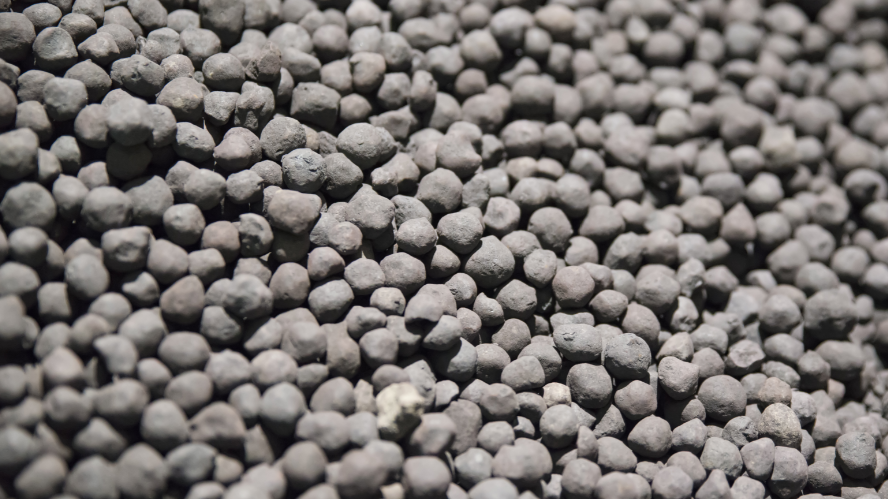
British firm Binding Solutions has signed an agreement with a unit of Japanese trading house Mitsui & Co to turn iron ore in Western Australia’s huge Pilbara region into low-carbon pellets, Binding Solutions said on Monday.

The privately held company says its technology cuts energy and CO2 emissions in the production of iron ore pellets compared to the established method.

Binding Solutions has signed a memorandum of understanding with Mitsui Iron Ore Development over the production of cold agglomerated pellets, a statement said, which use less energy to make than conventional pellets.

Its CEO Jon Stewart said the progress it had already made working with MIOD to develop the pellets from Pilbara, the world’s largest iron ore producing region, creates “a significant additional market opportunity” for the firm.

Under the preliminary agreement, Binding Solutions will use its technology to turn lower-grade “fines” iron ore material from the Pilbara into pellets, which command a price premium.

Mitsui has investments in Pilbara iron ore operations with major producers BHP and Rio Tinto.

Binding Solutions has had industrial trials with British Steel and with Germany’s Salzgitter, and is seeking to build an industrial-scale plant.

Iron ore fines have to go through a process called sintering, which uses very high temperatures and is usually highly polluting, before they can be used in a blast furnace.

Pellets are also in demand because they can be used in electric arc furnaces, which many steelmakers are switching to in a drive to cut carbon emissions.

In February last year, Mitsui said it would acquire a 40% stake in the Rio Tinto-operated Rhodes Ridge iron ore project in Western Australia for $5.34 billion.

(By Eric Onstad; Editing by Jan Harvey)


Indonesian coal association says quota cuts risk mine shutdowns

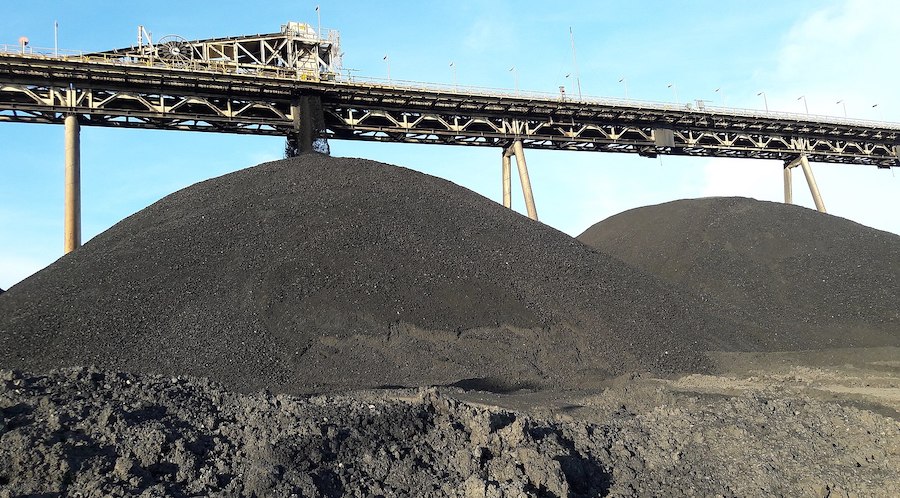
Coal mining in East Kutai, Indonesia. (Reference image by Consigliere Ivan, Wikimedia Commons.)

The Indonesian Coal Miners Association said drastic cuts in production quotas granted by the government may force some operations to shutdown, adding to the woes of the country’s already beleaguered industry.

Output quotas permitted under annual work-plans, known as RKABs, are significantly below last year’s tonnage, the association said in a statement on Saturday. Cuts to individual miners vary from 40% to 70%, likely forcing some to halt if production falls below a viable level, it said in the statement.

Indonesia flagged plans to slash coal output to about 600 million tons a year in a bid to boost prices for the commodity, of which it is the world’s top exporter. Coal prices have fallen for three straight years amid muted demand from top consumer China and a surge in Indonesian production to a record in 2024.

The cuts come as Indonesia’s mining industry faces its toughest conditions in years, with the government looking to levy large fines on operations deemed to have breached their forestry permits. The country is also looking to apply an export levy to coal, which would further undermine profitability.

The association called on the government to review the quota cuts to take into account the viability of operations, saying they could lead to massive layoffs and defaults on loans to miners. Companies may also be unable to meet their pre-agreed supply contracts, it said.

(By Eddie Spence)