It’s possible that I shall make an ass of myself. But in that case one can always get out of it with a little dialectic. I have, of course, so worded my proposition as to be right either way (K.Marx, Letter to F.Engels on the Indian Mutiny)
Friday, September 05, 2025
Burkina Faso seeks to ease worries around mining stake plans
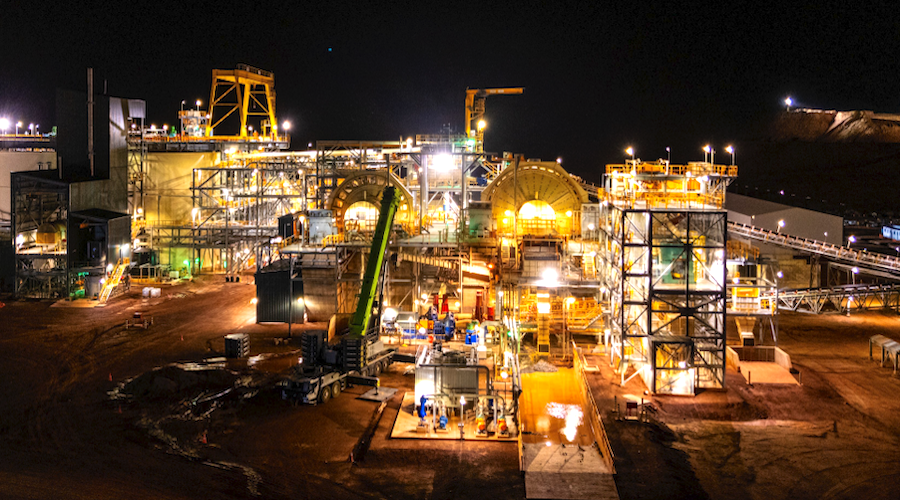
Burkina Faso has moved to reassure investors that its request to acquire an additional 35% stake in West African Resources’ (ASX: WAF) Kiaka gold mine is an option, not a demand, under the country’s new mining framework.
Speaking at a mining conference in Australia, Mamadou Sagnon, director-general of the mining registry, explained that the Mining Code introduced in July last year allows the state to secure a minimum 30% paid interest in mining projects, in addition to its 15% free-carried stake. The paid portion is linked to exploration and feasibility costs rather than the mine’s market valuation.
The Code also gives the government and local investors the right to acquire further equity on commercial terms.
“In the case of West African Resources, the government addressed a letter to solicit the opening of participation up to 35%,” Sagnon said. “For the moment, it is a solicitation – it is not forcing.”
Sagnon stressed that the measure was intended to strengthen confidence in the sector, rather than deter foreign capital.
He argued that state participation would boost confidence rather than drive capital away. “We believe that if the State is in the participation of the company, there will be more confidence to stay in the country and make more investment,” he said.
Shares in West African Resources have been halted since last Thursday. The company had previously announced trading would resume Monday.
Regional changes
Investor unease reflects broader concerns about resource nationalism in West Africa, where governments are revising mining codes to capture more local benefit. Burkina Faso’s neighbours, including Mali, have already shaken investor sentiment with new rules and political instability.
WAF’s general manager of sustainability, Mirey Lopez, declined to comment beyond referring stakeholders to the company’s announcements. “We are in dialogue with the government and we are looking forward to a resolution,” she said during her presentation at the mining conference.
Burkina Faso, Africa’s fourth-largest gold producer, has already moved major assets into its new state-owned mining company, Société de Participation Minière du Burkina (SOPAMIB).
In June, five gold mines and exploration permits, previously held by Endeavour Mining and Lilium, were transferred to SOPAMIB. The push followed the nationalisation of the Boungou and Wahgnion mines in August 2024 for about $80 million, far below their estimated $300 million value.
Newly producing
West African Resources poured first gold at Kiaka in June. The mine is now in production and is expected to average 234,000 ounces annually for 20 years starting in 2025, generating roughly $795.6 million per year at current prices.
Last week, WAF confirmed that it had aligned the equity structure of its Sanbrado, Kiaka and Toega projects with the new Code, raising the government’s free-carried stake in each to 15%.
The company also revealed that Burkina Faso had enforced a mandatory dividend rule. In August, WAF’s subsidiary Somisa, owner of Sanbrado, declared a $98.35 million priority dividend to the government, representing 15% of retained earnings through 2024. WAF expects Somisa, Kiaka SA and Toega SA will all be required to distribute 15% of profits annually, with WAF entitled to repatriate the remainder.
WAF also revealed last week that the Burkina Faso government had enforced a non-discretionary dividend rule.
Strong leader at the helm
The mining reforms reflect the growing influence of Ibrahim Traoré, the 37-year-old military leader who seized power in 2022 and declared himself president. Traoré has pushed for greater state control of resources while casting his rule as part of a Pan-African, anti-Western revival.
His supporters hail him as a defender of sovereignty. In April, thousands rallied in Ouagadougou after an alleged counter-coup attempt failed. Demonstrations spread to London, Kingston and Montego Bay, where diaspora groups praised him as a “Black liberator.”
Meanwhile, Orezone Gold (ASX, TSX: ORE), which operates the Bomboré mine, also halted trading after the news of the government’s request at Kiaka. Following weekend talks, Orezone confirmed Tuesday that authorities have no plans to purchase an interest in Bomboré, calling the Kiaka situation “specific and not a reflection of any broader intent.”
Lloyd’s Register Launches Risk-Based Containership Fire Safety Notation
The new notation benefits designers, shipyards, owners, and operators as they plan next-generation container ships or consider retrofits and fleet upgrades.
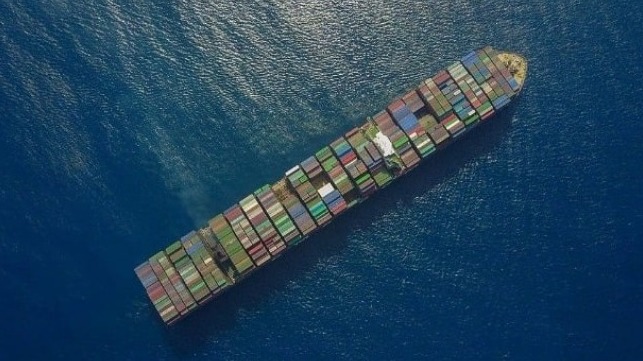
Lloyd’s Register (LR) has launched Fire (C, Risk), a new risk-based notation developed to enhance the assessment of fire safety arrangements on board container ships.
The notation is accompanied by guidance to support shipowners, designers, and operators in selecting appropriate, best-practice mitigations based on the specific fire risk profile of a vessel.
The new notation, introduced in the July 2025 update to LR’s Rules and Regulations for the Classification of Ships, is the first of its kind to apply the LR ShipRight Risk Based Certification (RBC) methodology to container ship fire safety. This provides a flexible yet robust framework for identifying and validating tailored safety enhancements, from the design phase through to operational deployment.
By aligning with the RBC framework, Fire (C, Risk) also supports LR’s broader goals around innovation and assimilation of new technology, digitalisation and data-driven design verification.
Gabriele Sancin, LR’s Risk Notation Technical Lead, said: “LR understands that there are many options to enhance container ship fire safety, from advanced detection systems to alternative hold arrangements and smart suppression technologies. Our new notation Fire (C, Risk) ensures that tailored, effective fire safety solutions are selected from demonstrated best practice to reduce risk to crew, cargo and operations.”
The notation and accompanying guidance are now available via the latest edition of LR’s Rules and Regulations.
Ends
The products and services herein described in this press release are not endorsed by The Maritime Executive.
President Mulino & Japanese Shipowners Meet to Improve Panama Ship Registry
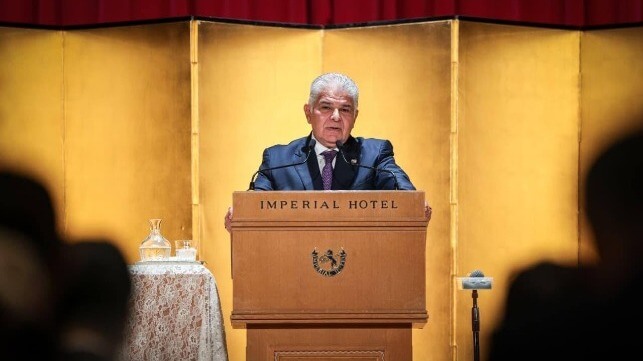
President José Raúl Mulino met with more than 40 representatives of shipping companies from Japan’s Kanto region, where he presented Panama’s new ship registry strategy aimed at safeguarding its global leadership through enhanced safety standards and fully digitalized processes.
Mulino emphasized that Panama’s registry is positioning itself as the flag of the future, driven by new policies aligned with international benchmarks for safety, efficiency, and environmental protection.
The stakes are high for Japan: 7 out of 10 Japanese shipowners already fly the Panamanian flag, and 41% of Japan’s total tonnage is registered under Panama. For Panama, consolidating its role as Japan’s preferred registry is vital, as 66% of new shipbuilding comes from the Japanese market.
Reflecting on the registry’s long history dating back to the 1920s, Mulino stressed that unlike other registries, Panama’s flag is not a maritime franchise but a national emblem backed by the full weight of the state. He also revealed that his administration is pushing forward a comprehensive modernization plan for the registry, framed within a broader maritime and logistics strategy that integrates the Canal and Panama’s port system. “This plan will bring together our entire maritime cluster under what we now call the National Maritime Strategy—the future of our country,” Mulino declared, pledging to see this project through during his presidency. He underscored his vision of a more flexible Maritime Authority and registry that provides streamlined, user-friendly services. “You can count on Panama’s registry to continue working in favor of the global maritime community, especially Japan,” Mulino told the gathered shipowners.
Joining him were Panama Maritime Authority (PMA) Administrator Luis Roquebert and Merchant Marine Director Ramón Franco, both of whom reinforced the president’s message.
“Panama has been the world’s natural bridge since ancient times. The creation of our Ship Registry in the early 20th century, alongside the construction of the Canal, positioned the Isthmus as a global benchmark in ship registration—changing the course of maritime history,” Roquebert noted.
He highlighted that the PMA has successfully diversified its services, now offering integrated solutions in over 50 countries. “Thanks to our broad network of partners and our expertise, we provide unmatched technical, legal, and diplomatic support,” Roquebert said.
For his part, Merchant Marine Director Ramon Franco presented “The Panamanian Ship Registry: Renewing Our Strategy for a New Era,” outlining Panama’s new direction and the competitive advantages it offers.
He explained that the Mulino administration’s guiding principle is quality over quantity, focusing on:
A safer fleet and significant accident reduction.
100% digital, streamlined processes.
A younger fleet, with active policies to phase out high-risk vessels.
Rigorous inspections and enhanced pre-checks to ensure only compliant ships fly Panama’s flag.
Trust from industry leaders—Japanese shipowners choose Panama because its security and reputation protect both investments and cargo.
Franco also underlined Panama’s pioneering role as the first registry to enforce mandatory traceability for ship-to-ship (STS) transfers, part of a strategy to modernize the fleet by gradually phasing out older tonnage and aligning with the IMO’s decarbonization goals for 2050.
As of August 25, 2025, Panama’s ship registry includes 8,812 vessels totaling 241.5 million gross tons (GT), according to IHS Markit—representing 14% of the global fleet, based on Clarksons Research’s World Fleet Monitor.
Franco reported that the new strategy is already delivering results: fewer accidents and a 13% increase in newbuilding registrations compared to the previous year. He closed by reminding Japanese shipowners that Panama’s registry offers more than just a flag—it comes with the full backing of a country that provides political and economic stability, a robust banking system, special economic zones, investment incentives, world-class logistics hubs, and, of course, the Panama Canal.
The products and services herein described in this press release are not endorsed by The Maritime Executive.
Turbines Installed for France’s Pilot Deep Water Floating Wind Project
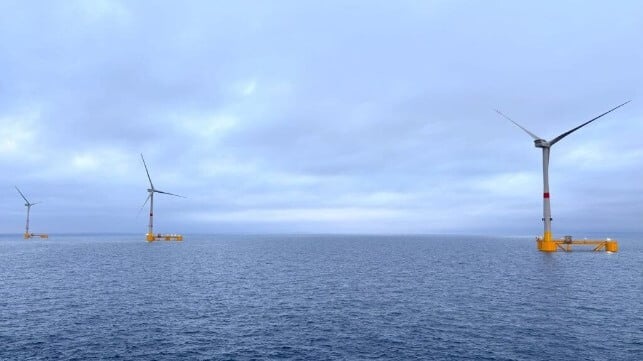
The three floating wind turbines are installed in water depths up to approximately 230 feet as a pilot for the technology (Ocean Winds)
Ocean Winds reports it has successfully completed the third and final turbine installation of its Éoliennes Flottantes du Golfe du Lion (EFGL) project located in southeast France along the Mediterranean. Developed as a pilot project in partnership with Banque des Territoires, EFGL is now the first floating offshore wind farm in the Occitanie region to complete its offshore turbine installation phase.
The company highlights that the project marks a major step for floating wind on a global scale. With three 10 MW turbines installed on floating foundations, EFGL demonstrates the viability of floating offshore wind in deeper waters, unlocking high-wind areas previously out of reach.
The success of EFGL, the company says, demonstrates floating wind’s readiness to scale, both in France and internationally, contributing to the global acceleration of offshore wind energy.
Assembled at Port-La Nouvelle, the turbines were towed 16 km (10 miles) offshore. The turbines are now ready for the final stage of cable and grid connection works done by RTE, before starting to deliver clean energy to approximately 50,000 inhabitants each year. The water depth ranges between 68 and 70 meters (220 to 230 feet).
“EFGL is not only a first for France but a global benchmark for floating offshore wind,” said Marc Hirt, Country Manager France for Ocean Winds. “It showcases the industrial maturity, precision, and collaboration needed to bring floating wind to commercial scale.”
Ocean Winds, an international offshore wind energy company created by EDP Renewables and ENGIE, is at the forefront of the development of floating wind turbines. The company has five years of operating its 25 MW WindFloat Atlantic project in Portugal. It said the successful installation of EFGL paves the way for larger developments, including the Eoliennes Flottantes d’Occitanie (EFLO), a 250 MW floating offshore wind project awarded to OW and Banque des Territoires in late 2024.
India Inaugurates Its Largest Container Terminal as Part of Global Strategy
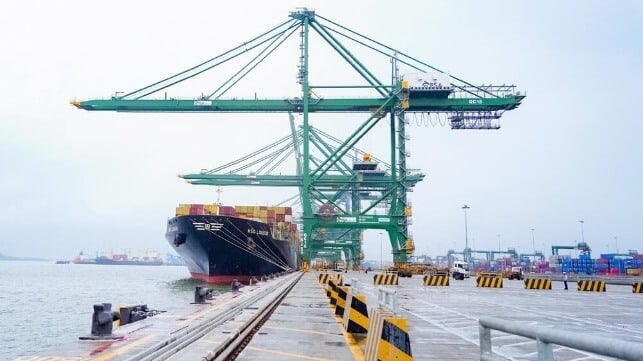
JN Port-PSA Mumbai Terminal becomes the largest container terminal in India (CMO Maharashtra)
Ceremonies in Mumbai on September 4 marked the completion of the Phase 2 expansion of the JN Port-PSA Mumbai Terminal, which doubled its capacity and became the largest container terminal in the country. The Prime Ministers of India and Singapore joined the ceremony virtually to mark what they said is the largest foreign direct investment from Singapore in India to date.
The Mumbai terminal, which is built on 200 hectares, doubled its annual handling capacity to 4.8 million TEUs. It is designed to accommodate multiple mega container vessels alongside its 2,000-meter (6,560-foot) quay. The project brought together enhanced yard capacity and multimodal infrastructure and adopted the use of electric equipment.
“PSA Mumbai’s Phase 2 expansion brings together capacity, connectivity, and sustainability in a terminal for India — a catalyst for advancing India’s trade ambitions,” said Mr. Ong Kim Pong, Group CEO, PSA International.
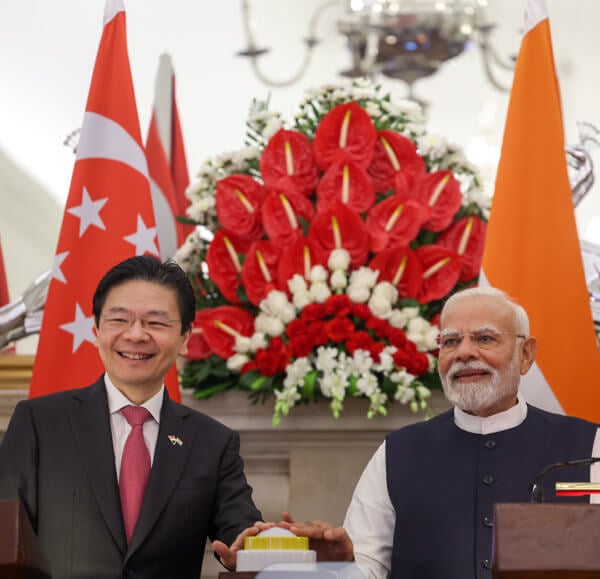
Prime Ministers of India and Singapore jointed the inauguration ceremony virtually highlighting it as the largest foreign direct investment from Singapore in India (CMO Maharashtra)
The inauguration of the port was timed to the official visit of Singapore’s Prime Minister and Minister for Finance, Lawrence Wong, and used to highlight the growing cooperation between the two countries. Wong joined Indian Prime Minister Narendra Modi in a virtual appearance from New Delhi to mark the port’s completion. The two leaders were meeting to discuss ways to enhance cooperation in forward-looking areas such as sustainability, digitalization, connectivity, skills development, advanced manufacturing and semiconductors, space, and biotechnology.
The Chief Minister of Maharashtra region hailed the port development as a key step in India’s efforts to become a global maritime superpower. He highlighted the project as an element in Prime Minister Modi’s strategic vision of Port-led Development to drive India’s growth. He noted that the port is emerging as the nation’s largest container hub, poised to handle over 10 million containers annually. They expect Mumbai will secure a place among the world’s 10 largest ports.
Singapore-based PSA International highlights that this development is the result of a $1.3 billion commitment by the company under a public-private partnership. In notes that it made its first investment in India in 1998. Today, PSA India operates container terminals in Navi Mumbai and Chennai, container freight stations in Mumbai and Mundra through its subsidiary PSA Ameya, and collaborates with its affiliate supply chain business PSA BDP.
Philippines Hails Shipbuilding Revival as HD KSOE Starts at Subic Yard
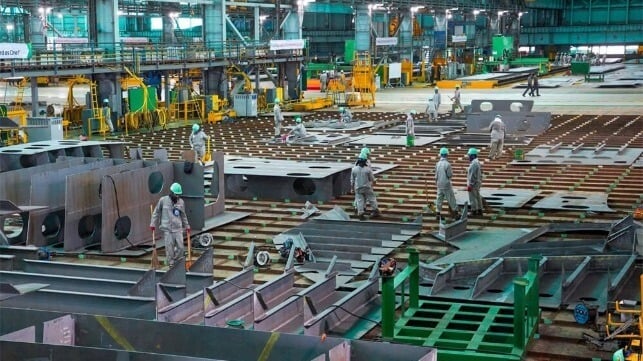
The Philippines and HD Hyundai marked the start of shipbuilding at the yard in Subic Bay (Bongbong Marcos)
The Philippines is celebrating the revival of its shipbuilding industry after South Korean giant HD Korea Shipbuilding & Offshore Engineering (HD KSOE) commenced the construction of a large bulk carrier at its newly leased facility in Subic Bay, Philippines. It will be the first large ship to be built in the country since 2019.
In a significant move that the Philippines expects will help the country reclaim its position among the world’s leading shipbuilding nations, HD KSOE held a steel-cutting ceremony at Subic Shipyard to mark the start of the building of a 115,000-tonne petrochemical carrier. The vessel will be the first to be built at the HD Hyundai Heavy Industries Philippines (HHIP) and is the first of a four-vessel order placed by an unnamed Asia-based shipping company in December.
The commencement of the project is of significant importance to the Philippines, a country that had a long tradition of shipbuilding until 2019, when the industry melted down during the financial crisis and slowdown in shipbuilding. At its pinnacle, the country used to produce up to two million gross tonnes of ships annually and was one of the major contributors to economic growth and job creation.
With the South Korean giant investing $180 million this year in the revival of the Subic Shipyard and another $50 million expected to be invested by 2030, the Philippines expects massive economic benefits. Currently employing 1,200 people, the yard is expected to employ 4,300 people by 2030.
“Together with our partners, we are reviving shipbuilding in the country to strengthen industries, promote livelihood, and build a better, stronger future for the Philippines,” said President Ferdinand R. Marcos Jr during the ceremonies. “Today, we will begin reclaiming our rightful place among the world’s great shipbuilding nations.”
HHIP, a wholly owned subsidiary of HD KSOE, signed a 10-year lease for Subic Shipyard last year. The U.S. private equity fund Cerberus Capital took rights to the broader facility, as part of a plan to create a manufacturing and industrial park in Subic Bay.
In 2022, Cerberus paid $300 million to acquire the distressed Subic Bay shipyard from the former HJ Heavy Industries, which went bankrupt in 2019. It has invested $40 million to revitalize operations on the 300-hectare facility now known as the Agila Subic Shipyard. Located in Zambales Province on the western coast of Luzon, the facility has become a vital strategic hub for shipbuilding, subsea infrastructure, and logistics operations.
HD KSOE is commencing ship construction in the facility just a week after Cerberus and HD Hyundai announced the formation of a strategic partnership that saw the launch of Cerberus Maritime. Through the partnership, the two companies hope to play an instrumental role in the “Make America Shipbuilding Great Again” (MASGA) projects.
The South Korean company has already announced plans to utilize the Philippines yard as a strategic stronghold for the MASGA project, which is a joint Seoul-Washington shipbuilding cooperation initiative.
“Backed by government support, natural advantages, and a skilled workforce, the Philippines is emerging as a rising shipbuilding nation,” said Kim Sung-joon, HD KSOE CEO. “We will leverage HD Hyundai Subic Shipyard to further enhance our global competitiveness.”
During the site visit in August, reporters were told the goal is to build up to 10 ships a year within the next three to five years. The initial plan is to use the yard to build product carriers measuring 656 to 820 feet (200 to 250 meters) in length. The ships will be built in 16 to 18 months, and they also anticipate using the yard for offshore structures to support the wind energy sector.
Report: Denmark and Sweden Are Close to Orders for UK Frigates
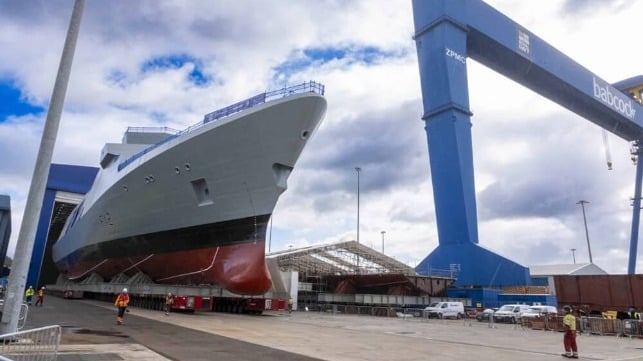
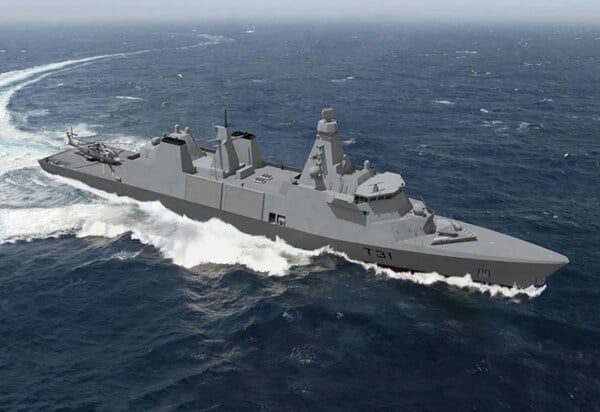
Babcock rolls out the first of the UK's new Type 31 Frigates
UK naval shipbuilding appears to be on the verge of a major surge in new orders. According to a report in the Financial Times, hot on the heels of Norway’s decision last week to acquire British Type 26 frigates, Denmark and Sweden are in “advanced talks” to acquire British Type 31 frigates. Negotiations with Denmark are in the closing stages, according to the Financial Times, while Sweden is still considering a French option as well.
Contract negotiations, the BBC reports, have been underway for more than a year, and the decisions are expected within the next six months. BBC estimates the value of the Danish contract at more than £1billion.
Whereas the Type 26 is a specialist anti-submarine warfare platform built by BAE, the Type 31 “Arrowhead 140” is built by Babcock at Rosyth in Scotland, and has a multi-functional role. The Royal Navy has ordered five Type 31s. The design has also been sold to Indonesia and Poland for domestic manufacture.
HMS Venturer (F12) is expected for Royal Navy service in 2027 (Royal Navy)
The first of class, HMS Venturer (F12), was semi-launched in June and has now been fitted with its 24-ton mast. It seems likely to come into full service with the Royal Navy in 2027. HMS Active, the second in class, is still in the assembly shed in Rosyth, and is following about six months behind. The last of what will be known as the Inspiration Class, HMS Campbelltown, is scheduled to come into service in May 2030. Inevitably, there may be delays if production slots are reallocated to new purchasers, to the detriment of the Royal Navy. Nevertheless, the new orders and accelerated production will have the effect of increasing the overall number of vessels available to NATO.
The Inspiration Class will be fitted with a vertical launch system able to launch Standard Missile SM-2, SM-3, and SM-6s, Tomahawk cruise missiles, and SeaSparrow short-range anti-missiles. The frigates will have a hangar for a Merlin or Wildcat helicopter, a launch capability for three 8m Pacific 24 rigid inflatable boats, and a flexi-use space plumbed into the ship’s combat system for six TEU containers, with configuration dependent on mission.
The Norwegian order, the previous purchase of the Type 31 design by Poland, and these potential Danish and Swedish orders are a reflection of the emphasis that the United Kingdom has placed on working with Northern European countries within the NATO context. In May 2022, the government of Boris Johnson took the lead in offering the security support of a nuclear nation to the governments of Finland and Sweden, while both contemplated joining NATO. The Joint Expeditionary Force was formed in London in 2014 to better integrate high-readiness forces of member nations, and is currently made up of Denmark, Estonia, Finland, Iceland, Latvia, Lithuania, the Netherlands, Norway, Sweden, and the UK.
Ernst Russ Orders First New Ships in Years in Partnership with Eimskip
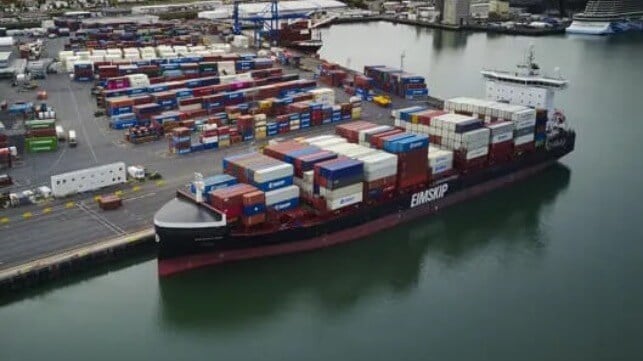
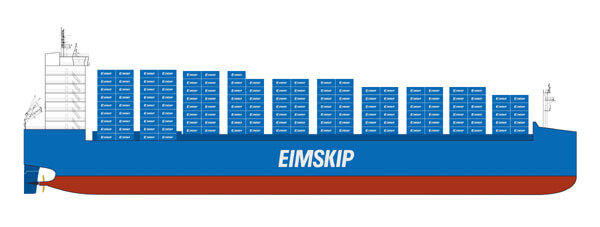
Eimskip working with Ernst Russ will enhance its Iceland operations with a 10-year charter for next-generation feeders (Eimskip)
Germany’s Ernst Russ is moving forward with its first newbuild orders in years, an innovative pair of feeder containerships specially designed for Iceland’s Eimskip and the challenges of the North Atlantic. The companies report that the design incorporates future technology while also being specifically designed with customer service needs in mind.
The project builds on a partnership between the companies and provides a financial structure to support the newbuild effort. The joint-venture company ElbFeeder, majority owned by Ernst Russ, has signed the contract to build the two vessels with China Merchants Jin Ling Shipyard (Nanjing), while the board of Eimskip approved a 10-year time-charter.
“This investment will be a milestone for Ernst Russ, marking our first newbuild investment in decades,” said Joseph Schuchmann, Co-CEO and Chief Commercial Officer of Ernst Russ. “We are delighted to be able to implement it together with our long-standing partner Eimskip, who will also function as the initial long-term charterer and thus contributes significantly to the financial viability of the project.”
Due for delivery in the second half of 2028, the vessels will be 185 meters (607 feet) in length with a capacity of 2,280 TEU. They will be the largest vessels in Eimskip’s operation and will be used on the company’s Blue Line sailing between Reykjavik and Rotterdam as well as Teesport in the UK.
“We see great opportunities with the delivery of these new vessels, especially considering the ambitious plans to increase exports of fresh seafood and salmon,” said Vilhelm Mar Thorsteinsson, CEO of Eimskip. He notes that the time-charter in combination with the newbuilding contract enables Eimskip to future-proof its Iceland-Europe trade, while ElbFeer secures long-term revenues.
The new ships use advanced designs suited to the North Atlantic (Eimskip)
The vessels were designed for the demanding conditions of North Atlantic routes in collaboration with the Shanghai Merchant Ship Design and Research Institute (SDARI). Their optimized hull structure has been engineered to enhance hydrodynamic performance, enabling higher service speeds and maneuverability while maintaining fuel efficiency and operational reliability, ideal for the conditions in the North Atlantic.
In addition to the design supporting service speed in an efficient way, they report that the focus is also on optimal energy utilization, including hull design, silicone coating, shore power connection, and other equipment selection. The vessels will also feature a dual-fuel propulsion system, methanol- and LNG-ready.
ElbFeeder currently operates a fleet of seven container vessels. The newbuilds will increase the fleet to nine, and options for two additional vessels were negotiated. Eimskip operates a total fleet of 14 vessels, while Ernst Russ manages a fleet of 26 vessels with a focus on smaller containerships, as well as bulkers and multipurpose vessels.
Construction Starts on First Short-Sea, Ammonia-Fueled Containership
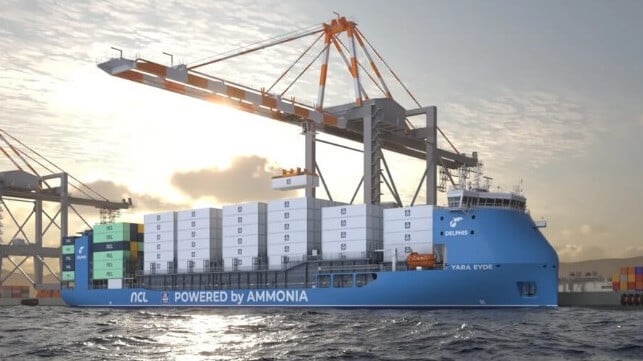
Construction started on Yara Eyde which is likely to be the first ammonia-fueled containership (CMB.TECH)
Nearly two years after the project was unveiled, construction started today in China for what is likely to become the world’s first ammonia-fueled containership. The project, which is being led by CMB.TECH, as part of its efforts to accelerate the transition in the shipping industry, will launch a vessel that they report will transform short-sea shipping and demonstrate the potential of ammonia as a low-emission fuel.
The vessel, which is named Yara Eyde, is being built in China the Qingdao Yangfang Shipbuilding and will be a 1,400 TEU ice-class containership optimized for operations between Norway and Germany. The vessel will be owned by Delphis, the container division of CMB.TECH and operated by NCL Oslofjord, a joint venture between North Sea Container Line and Yara Clean Ammonia. The Norwegian Government, through its Enova Investment Fund, provided approximately $3.6 million in grants to the project.
Today, September 5, marked the first day of steel cutting for the vessel. The companies previously said delivery is scheduled for mid-2026.
“This is more than the start of a ship – it is the start of a new chapter in maritime decarbonization,” said Hans Olav Raen, CEO of Yara Clean Ammonia. “Yara Eyde embodies our ambition to make low-emission ammonia a reality for shipping and to inspire the industry toward solutions that reduce emissions.”
So far, ammonia-fueled shipping has mostly been a few pilot projects as the leading engine manufacturers work to perfect their first offerings and complete certification. The industry is also awaiting the finalization of regulations and is still working to develop the fueling infrastructure and safety protocols for ammonia, which is highly toxic.
The potential for ammonia as one of the fuels to address decarbonization, however, has created strong anticipation in the shipping industry. While there are only three vessels currently in service with ammonia as their primary fuel, an offshore supply vessel and two tugboats, there are now 39 ammonia-fueled vessels on order for delivery over the next four years, according to data from DNV.
Yara Eyde is set to operate on a route between Oslo, Porsgrunn, Bremerhaven, and Rotterdam. NCL will manage the commercial operations. Yara Clean Ammonia will deliver ammonia fuel to the vessel, while Yara International has entered into a contract for shipping containers between Yara’s fertilizer plant in Porsgrunn, Norway, and Hamburg and Bremerhaven in Germany.
In addition to being a demonstration of the potential for ammonia-fueled operations, the goal is to use the ship to drive investment and build industry support for the infrastructure and adoption of ammonia technology.
“Yara, NCL, and CMB.TECH are walking the talk to decarbonise shipping by combining our know-how on clean ammonia, operational excellence in the North Sea, and state-of-the-art low-carbon ships,” said Alexander Saverys, CEO of CMB.TECH in 2023, announcing the project. “We want to prove to the world that we can decarbonise today to navigate tomorrow.”
Med Marine Launches Third RAmparts 2800 Tug to Reinforce OMMP’s Fleet
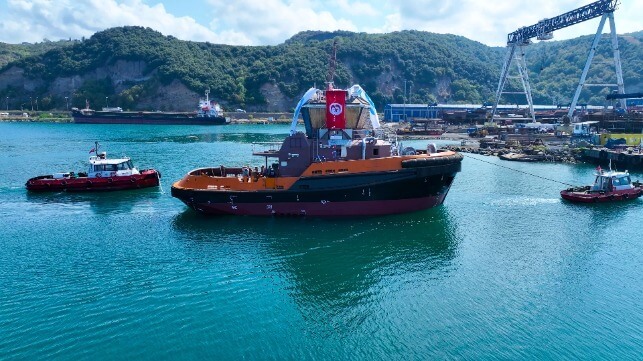
Turkey’s leading shipbuilder and tug operator, MED MARINE, proudly announces the successful launch of the MED-A2800SD tug on August 23, marking the third vessel in the six-unit RAmparts 2800 series ASD (Azimuth Stern Drive) fleet being built for Tunisia’s renowned port authority, OMMP. The launch, held at MED MARINE’s EREGLI SHIPYARD, underscores the steady progress of this fleet project and further strengthens the partnership established under the prestigious contract signed between OMMP and MED MARINE.
Measuring 28.20 meters in length and delivering a forward bollard pull of 60 tonnes, the MED-A2800SD tug has been engineered by the internationally renowned naval architecture firm Robert Allan Ltd. to meet the rigorous demands of modern port operations. Powered by twin medium-speed diesel engines and fully compliant with Class FIFI-E standards, the tug ensures both operational excellence and safety.
Thanks to its optimized hull design, the MED-A2800SD tug delivers exceptional manoeuvrability, stability, and fuel efficiency, even under the most demanding harbour conditions. Capable of performing a wide range of operations—including towing, mooring, escorting, firefighting, pollution control, and coastal support—this vessel exemplifies MED MARINE’s commitment to providing reliable and versatile assets for international operators.
This milestone represents a key advancement in the six-vessel fleet program, reaffirming MED MARINE’s ability to deliver world-class tugboats on schedule while maintaining the highest standards of quality. The launch of the RAmparts 2800 series tug highlights the ongoing progress of the project and OMMP’s strategic vision to strengthen its towing capabilities with future-ready assets.
Technical specifications of the tugboat: Length: 28.20 m Beam: 11.50 m Depth: 5.49 m Draft: 5.40 m Gross Tonnage: 428 Bollard Pull: 60 tons Speed: 12 knots @ 80% MCR Crew: 8
The products and services herein described in this press release are not endorsed by The Maritime Executive.
Video: Israeli Navy Conducts Coastal Exercise as New Gaza Flotilla Forms
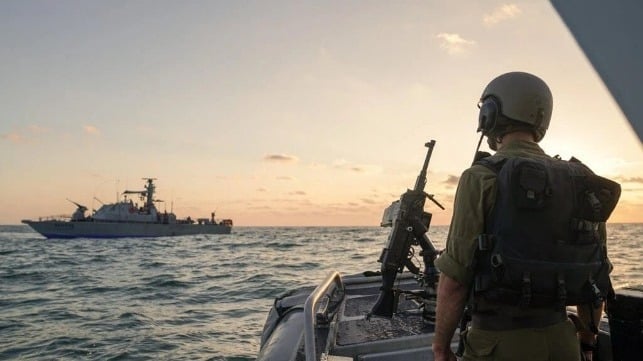
Israeli Navy rehearses coastal defense drills (Israel Defense Forces)
The Israeli Navy is highlighting that it is conducting coastal defense training in conjunction with the Gaza Division’s Northern Brigade. These efforts are in advance of the potential arrival off the coast of a flotilla of activists seeking to open a humanitarian corridor into Gaza.
The Global Sumud Flotilla Mission, with Greta Thunberg on board the MY Sirius, set off from Barcelona on August 31, but had to return to port because of bad weather. The twenty boats set off again the next day, and hope to rendezvous with other flotillas from Catania and Tunis before reaching the Gaza coast in ten days. About 350 pro-Palestinian activists are on board with as many as 30 or more small boats expected to participate.
The protestors’ efforts, however, have been turned back twice by the Israelis, and there is no indication that they will let the larger flotilla proceed. The Israeli Navy employed peaceful tactics to apprehend the last flotilla in June, taking those on board to Ashdod before deporting them. These tactics may have been adopted after 10 activists on board the MV Mavi Marmara were killed when their vessel was intercepted by Israeli commandos in 2010, an incident which provoked a crisis in Turkish-Israeli relations.
From the nature of the Israeli Navy’s exercises, Israel is at least preparing for a worst-case scenario, with the hard-right Israeli Justice Minister calling for anybody arrested on board the flotilla to be subject to prison sentences in the Ktzi'ot and Damon detention centers. Others are suggesting that the activists be allowed to land in Gaza, and as an act of solidarity and protest to share the plight of Palestinians trapped in Gaza.
The Israeli response to any closing on the Gaza coastline is, however, likely to be primarily influenced by the need to ensure that such events do not occur again. Whatever tactics the Israeli Navy employs, their biggest challenge is likely to be the number of vessels sailing with the Global Sumud Flotilla, which could overwhelm the number of patrol boats the Israelis have available to interdict them.
The Israeli Navy operates seven Shaldag Class high-speed patrol boats and 18 Super Dvora Class fast patrol boats for coastal patrol duties, and may have to call on helicopters and their 15 larger Sa'ar Class missile boats. Some of Sa'ar Class boats are in the Red Sea, covering the threat from the Houthis. Others are needed for high-priority tasks off the Lebanese and Gaza coasts. Hence the Global Sumud Flotilla is likely to impact ongoing Israeli operations in Gaza if it comes within range.
The latest from the flotilla is that they expect to set off from Tunis on Sunday, September 7. They are expected to reach the Israeli coast and Gaza around mid-month.
US: South Koreans detained in ICE raid on Hyundai plant
Most of the 475 people arrested in a raid on a Hyundai-LG battery factory under construction in the state of Georgia were from South Korea. Relations between Washington and Seoul have become strained of late.
South Koreans suspected of working illegally in the US made up most of the 475 people detained in a raid on a Hyundai-LG battery factory being built in the state of Georgia, an official said Friday.
The raid came as US President Donald Trump maintains a hard line stance on migrants across the country, vowing to carry out the largest deportation drive in American history.
The raid at the Hyundai plant stemmed from a "criminal investigation into allegations of unlawful employment practices and serious federal crimes," Steven Schrank, a Homeland Security Investigations special agent in Atlanta, said.
"This, in fact, was the largest single site enforcement operation in the history of Homeland Security Investigations," Schrank said at a news conference.
"This operation underscores our commitment to jobs for Georgians and Americans," Schrank added.
The South Korean car marker said that none of those detained were directly employed by Hyundai Motors and that it would conduct an investigation to ensure its suppliers and their subcontractors also go by the rules.
"Hyundai has zero tolerance for those who don't follow the law," it said. South Korea-US relations under the microscope
South Korea has expressed its "concern and regret" to the US Embassy in Seoul while urging Washington to respect the rights of its citizens.
"The economic activities of our investors and the legitimate rights and interests of our nationals must not be unjustly infringed in the course of US law enforcement," South Korean foreign ministry spokesperson Lee Jae-woong told reporters.
The arrests could worsen relations between the United States and South Korea, normally close allies.
The countries have been at odds over the details of a trade deal that includes $350 billion (€300 billion) of investments. At a summit last month, South Korea pledged $150 billion in US investments, including $26 billion from Hyundai Motor.
Edited by: Dmytro Hubenko
John Silk Editor and writer for English news, as well as the Culture and Asia Desks.@JSilk
Philippines: Ten years after Duterte's war on drugs, families fight for justice
It was a campaign promise with deadly consequences. In the Philippines, the war on drugs led by former president Rodrigo Duterte resulted in over 30,000 deaths, according to international organisations. It also left behind broken families who are fighting for justice. Duterte was arrested in March and now faces charges at the International Criminal Court for crimes against humanity. FRANCE 24's Lisa Gamonet reports.