India Inaugurates Its Largest Container Terminal as Part of Global Strategy
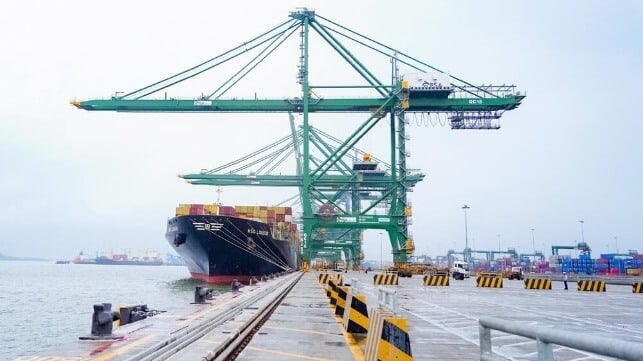
Ceremonies in Mumbai on September 4 marked the completion of the Phase 2 expansion of the JN Port-PSA Mumbai Terminal, which doubled its capacity and became the largest container terminal in the country. The Prime Ministers of India and Singapore joined the ceremony virtually to mark what they said is the largest foreign direct investment from Singapore in India to date.
The Mumbai terminal, which is built on 200 hectares, doubled its annual handling capacity to 4.8 million TEUs. It is designed to accommodate multiple mega container vessels alongside its 2,000-meter (6,560-foot) quay. The project brought together enhanced yard capacity and multimodal infrastructure and adopted the use of electric equipment.
“PSA Mumbai’s Phase 2 expansion brings together capacity, connectivity, and sustainability in a terminal for India — a catalyst for advancing India’s trade ambitions,” said Mr. Ong Kim Pong, Group CEO, PSA International.
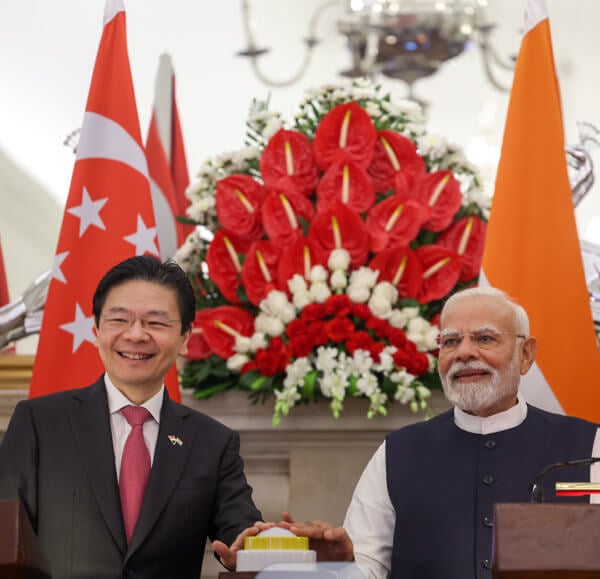
Prime Ministers of India and Singapore jointed the inauguration ceremony virtually highlighting it as the largest foreign direct investment from Singapore in India (CMO Maharashtra)
The inauguration of the port was timed to the official visit of Singapore’s Prime Minister and Minister for Finance, Lawrence Wong, and used to highlight the growing cooperation between the two countries. Wong joined Indian Prime Minister Narendra Modi in a virtual appearance from New Delhi to mark the port’s completion. The two leaders were meeting to discuss ways to enhance cooperation in forward-looking areas such as sustainability, digitalization, connectivity, skills development, advanced manufacturing and semiconductors, space, and biotechnology.
The Chief Minister of Maharashtra region hailed the port development as a key step in India’s efforts to become a global maritime superpower. He highlighted the project as an element in Prime Minister Modi’s strategic vision of Port-led Development to drive India’s growth. He noted that the port is emerging as the nation’s largest container hub, poised to handle over 10 million containers annually. They expect Mumbai will secure a place among the world’s 10 largest ports.
Singapore-based PSA International highlights that this development is the result of a $1.3 billion commitment by the company under a public-private partnership. In notes that it made its first investment in India in 1998. Today, PSA India operates container terminals in Navi Mumbai and Chennai, container freight stations in Mumbai and Mundra through its subsidiary PSA Ameya, and collaborates with its affiliate supply chain business PSA BDP.
Philippines Hails Shipbuilding Revival as HD KSOE Starts at Subic Yard
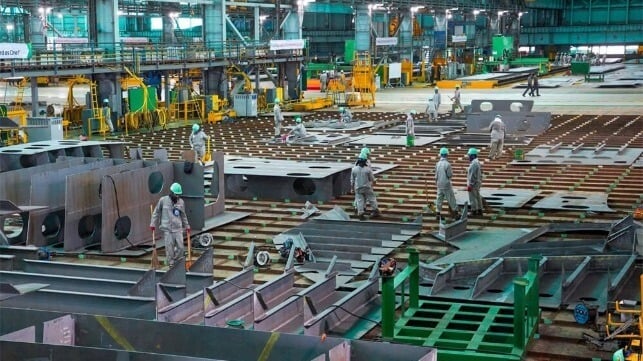
The Philippines is celebrating the revival of its shipbuilding industry after South Korean giant HD Korea Shipbuilding & Offshore Engineering (HD KSOE) commenced the construction of a large bulk carrier at its newly leased facility in Subic Bay, Philippines. It will be the first large ship to be built in the country since 2019.
In a significant move that the Philippines expects will help the country reclaim its position among the world’s leading shipbuilding nations, HD KSOE held a steel-cutting ceremony at Subic Shipyard to mark the start of the building of a 115,000-tonne petrochemical carrier. The vessel will be the first to be built at the HD Hyundai Heavy Industries Philippines (HHIP) and is the first of a four-vessel order placed by an unnamed Asia-based shipping company in December.
The commencement of the project is of significant importance to the Philippines, a country that had a long tradition of shipbuilding until 2019, when the industry melted down during the financial crisis and slowdown in shipbuilding. At its pinnacle, the country used to produce up to two million gross tonnes of ships annually and was one of the major contributors to economic growth and job creation.
With the South Korean giant investing $180 million this year in the revival of the Subic Shipyard and another $50 million expected to be invested by 2030, the Philippines expects massive economic benefits. Currently employing 1,200 people, the yard is expected to employ 4,300 people by 2030.
“Together with our partners, we are reviving shipbuilding in the country to strengthen industries, promote livelihood, and build a better, stronger future for the Philippines,” said President Ferdinand R. Marcos Jr during the ceremonies. “Today, we will begin reclaiming our rightful place among the world’s great shipbuilding nations.”
HHIP, a wholly owned subsidiary of HD KSOE, signed a 10-year lease for Subic Shipyard last year. The U.S. private equity fund Cerberus Capital took rights to the broader facility, as part of a plan to create a manufacturing and industrial park in Subic Bay.
In 2022, Cerberus paid $300 million to acquire the distressed Subic Bay shipyard from the former HJ Heavy Industries, which went bankrupt in 2019. It has invested $40 million to revitalize operations on the 300-hectare facility now known as the Agila Subic Shipyard. Located in Zambales Province on the western coast of Luzon, the facility has become a vital strategic hub for shipbuilding, subsea infrastructure, and logistics operations.
HD KSOE is commencing ship construction in the facility just a week after Cerberus and HD Hyundai announced the formation of a strategic partnership that saw the launch of Cerberus Maritime. Through the partnership, the two companies hope to play an instrumental role in the “Make America Shipbuilding Great Again” (MASGA) projects.
The South Korean company has already announced plans to utilize the Philippines yard as a strategic stronghold for the MASGA project, which is a joint Seoul-Washington shipbuilding cooperation initiative.
“Backed by government support, natural advantages, and a skilled workforce, the Philippines is emerging as a rising shipbuilding nation,” said Kim Sung-joon, HD KSOE CEO. “We will leverage HD Hyundai Subic Shipyard to further enhance our global competitiveness.”
During the site visit in August, reporters were told the goal is to build up to 10 ships a year within the next three to five years. The initial plan is to use the yard to build product carriers measuring 656 to 820 feet (200 to 250 meters) in length. The ships will be built in 16 to 18 months, and they also anticipate using the yard for offshore structures to support the wind energy sector.

No comments:
Post a Comment