Tuesday, December 02, 2025

Stopping dog meat sales in Indonesia is more about shuffling paperwork than morality
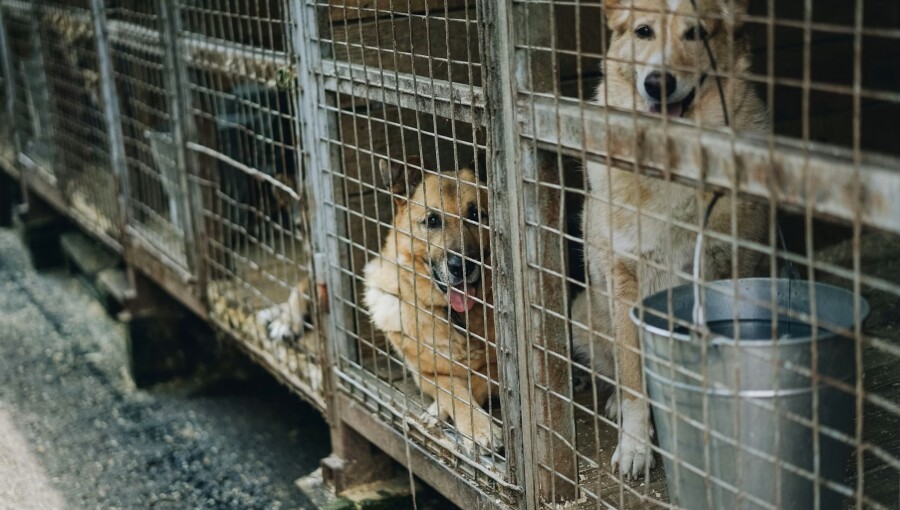
Stopping dog meat sales in Indonesia is more about shuffling paperwork than morality
/ Sasha Sashina - Unsplash
By bno - Surabaya Office December 3, 2025

Dog meat consumption in Indonesia sits at the intersection of cultural food traditions, public health challenges, animal welfare concerns, and political risk. Unlike many mainstream livestock animals, dogs are increasingly recognised as companions in urban households, service roles, and community protection efforts across Indonesia. This evolving social perception has built momentum for legal intervention, particularly as rabies remains a deadly risk in several regions.

Although national legislation has yet to impose a blanket prohibition on dog meat consumption, especially in rural areas, provinces and cities are now accelerating local frameworks to restrict its trade and processing. The capital, Jakarta, has become a focal point of this regulatory shift, influencing discourse in neighbouring provinces and reigniting long-dormant legislative discussions.

Jakarta legalises ban, establishing a major precedent

Jakarta introduced a binding provincial rule in late 2025 that outlaws the trade and slaughter of animals categorised as carriers of rabies for food-related purposes. The Jakarta Governor, Pramono Anung, became a central figure in the rollout by confirming the regulation’s operational date as November 24, which was publicly shared via his Instagram channel, MerahPutih.com reports. This regulatory milestone positions dog and cat meat sales as formally unlawful in Jakarta. The policy’s intention was framed as a safeguard for public health, sanitation, and zoonotic disease prevention, rather than an assessment of cultural dietary customs.

The newly enacted rule, numbered 36/2025, extends beyond household pets to include a larger group of rabies-transmitting species such as monkeys, bats, civets, and similar animals, explicitly banning them from market circulation for dietary uses. The regulation establishes clear supply-side restrictions, making the sale of live dogs, raw meat, or processed food products from rabies-transmitting animals illegal if directed for consumption. Markets under Jakarta governance are now expected to adhere to these health classifications when selling or slaughtering animals.

The Jakarta food marketplace operator, Pasar Jaya, had previously confirmed that dog meat sellers operated within parts of Jakarta, including at Pasar Senen, which motivated regulatory tightening and enforcement commitments from the provincial leadership.

To ensure compliance, the ban includes escalating administrative penalties. For initial breaches, authorities are expected to issue written cautions and temporarily confiscate rabies-transmitting animals for disease monitoring, especially where symptoms such as rabies are detected. Repeat offences allow the government to seize animals again, close businesses, or remove trading permits entirely. The ban, according to the governor, completed a campaign promise to activists advocating for domestic animal protection and stricter consumer health measures, Antaranews reports.

Jakarta legislator Hardiyanto Kenneth emphasises sustained advocacy by animal welfare communities, veterinarians, and activists, Tempo.co reports. He highlighted the governor’s political resolve in establishing firm legal controls despite the complexity of navigating culturally sensitive consumption habits. Kenneth underscored that activists had pushed for years to solidify Jakarta’s regulation against dog and cat meat trading. He further cited resident concern over rabies spread, calling the issue a public health imperative rather than a symbolic cultural revision.

Kenneth also reinforced legislative backing for enforcement oversight, urging Jakarta’s Dinas Ketahanan Pangan, Kelautan dan Pertanian Provinsi DKI Jakarta to coordinate monitoring, conduct routine checks, and deliver firm administrative enforcement when necessary. He stressed that the rule protects citizens from rabies, a serious zoonotic disease risk that public institutions must prioritise. This marked Jakarta’s political transition toward building a humane and modernised livestock health governance model, grounded in consumer protection and portable to possible future national frameworks.

Additionally, Kenneth applauded Pramono’s campaign fulfilment, recognising it as a milestone in Jakarta’s urban development narrative, with potential influence across provinces wrestling with enforcement gaps. He urged exporters and local traders to ignore the rule to be held accountable through multi-agency operations and licencing oversight.

Antaranews also documented Pramono’s regulatory endorsement, reiterating that rule 36/2025 shuts supply routes permitting dog meat distribution for consumption in Jakarta.

Bantul at the heart of controversy and enforcement barriers

Just outside Jakarta’s regulatory lens, however, a viral video circulated in late 2025 showing dogs packed into sacks in an alleged dog meat supply chain in Bantul, Yogyakarta, sparking public outrage and new regional commitments, detiknews reports. Gubernur Daerah Istimewa Yogyakarta, Sri Sultan Hamengku Buwono X responded by confirming that new regulatory reinforcement was being prepared to restrict the dog meat trade. He noted that local authorities had been unable to act due to the absence of enforceable trading laws prohibiting dog meat consumption.

Although the DIY administration had previously distributed a regional circular in 2023 to control the distribution of rabies-transmitting animals for food purposes, he publicly acknowledged that the circular lacked sufficient enforcement weight.

Sultan proposed strengthening the circular into a governor decree, elevating the administrative enforceability of dog meat restrictions across districts and cities, which may require consultation with regencies and municipalities. This gap between administrative intent and enforcement authority has been a repeated theme in the national dog meat discourse, illustrating how regulatory escalation often encounters friction in the informal trading economy.

Sultan’s announcement followed police inspections led by AKP I Nengah Jeffry who verified the location of dog meat processing stalls in Bantul at Kapanewon Bambanglipuro where authorities recorded five active food stalls selling dog meat products. Jeffry confirmed that police had inspected the viral video site but found no animals being traded at the time, although processed dog meat sales were occurring. However, due to the absence of enforceable trading prohibition laws, police actions remained advisory in nature, focusing on outreach rather than obstruction. Local enforcement lacked regulatory authority to issue legal penalties, as Indonesia’s penal code currently sanctions animal abuse but does not prohibit consuming dog meat itself.

Legislature begins drafting fundamental food safety law

The legislative body in DIY has restarted regulatory drafting to supply the province’s first framework governing all animal-sourced food safety controls, including animal health conditions, slaughtering standards, and processed meat quality oversight. The proposal, named Pemberian Jaminan Keamanan Pangan dan Mutu Pangan Asal Hewan, is only in initial stages. The head of DIY legal drafting committee Yuni Satia Rahayu confirmed that the policy remains in early academic drafting, requiring comprehensive supporting research before the legislative process advances, HarianJogja reports.

Rahayu explained that the proposal aims to govern the health and safety controls for all animal-derived food products in the province, including mainstream livestock, non-mainstream meat, and rabies-transmitting species such as dogs. The proposal will form the province’s first consolidated foundation for animal-sourced food safety governance, establishing public inspection authority, legal penalties, oversight mechanisms, and trader compliance education. She also confirmed that when passed, the regulation may introduce surveillance pathways, compliance support, and penalties for breaches involving illegal or unsafe meat trade.

Human rights, religious freedom

In one of the most sensitive and related controversies in late 2025, national ministry Kementerian Imigrasi dan Pemasyarakatan confirmed that authorities had opened investigative proceedings to examine an allegation that a correctional facility administrator coerced Muslim detainees to eat dog meat, a dietary violation under Islamic law. The facility administrator under scrutiny, Chandra Sudarto, remains under internal review, with sanctions promised if coercion is proven. This allegation was released publicly by Indonesia’s national parliament member Mafirion, who argued that regardless of detainee status, religious freedom and dietary boundaries remain protected rights under human rights frameworks.

Mafirion demanded administrative suspension and law enforcement progression to restrict social polarisation around the matter. The ministry spokesperson Rika Aprianti confirmed formal provincial verification had been initiated, promising administrative action if abuse or coercion is evident, CNBC Indonesia reports.

From local experiment to national implications

As is, Jakarta’s binding rule creates Indonesia’s most substantial experiment in stopping the dog meat trade by using a public health classification strategy, targeting supply channels rather than cultural beliefs. Bantul, lacking enforceable laws, reveals the compliance risk that may redirect trade rather than reduce it. DIY legislature, now drafting the region’s first animal-sourced food safety regulation, reflects how local controversy has revived legal prioritisation.

What happens next will not be decided only in government offices. Tracking supply routes, educating consumers, supporting traders in transition, expanding rabies prevention, and unifying veterinary inspection standards will determine whether regulations sustainably reshape behaviour or reorganise the contours of informal trade in man's best friend.


If Europe wants war with Russia, 'we are ready': Putin

Issued on: 02/12/2025 - 

Russian President Vladimir Putin said Tuesday that Russia was "ready" for war if Europe seeks one, accusing Europe of trying to sabotage a deal on the Ukraine conflict before he met with US envoys. FRANCE 24's Gulliver Cragg reports from Kyiv.


Video by:  Gulliver CRAGG


Flaws In Putin’s Art Of No-Deal For Peace Become Apparent – Analysis
The Jamestown Foundation
By Pavel K. Baev


Frantic negotiations for a truce in Russia’s 45-month-long war against Ukraine in the last two weeks of November are likely to continue late into December. U.S. negotiators have faced backlash from other Western leaders following the November 19 leak of a draft U.S.–Russian peace proposal that heavily favored Moscow.

Leaked phone calls between top Kremlin advisers Yuri Ushakov and Kirill Dmitriev and between Ushakov and U.S. Special Envoy Steve Witkoff heightened the controversy (Carnegie Politika, November 27). Ukrainians were shocked by Witkoff’s readiness to integrate many Russian demands into the 28-point proposal. The initial proposal was at least partly drafted during a meeting between unofficial U.S. advisor Jared Kushner, Witkoff, and Dmitriev (The Insider; Reuters, November 26). European leaders were angered by their exclusion from the drafting process. They took issue with the proposed appropriation of frozen Russian financial assets, the majority of which are in European banks and remain a matter of internal debate in the European Union (Meduza, November 21).

Several rounds of revisions and Ukrainian input have curtailed and clarified the now roughly 19-point proposal, which Witkoff is set to present to Russian President Vladimir Putin in Moscow this week (RBC, November 28). The problem for Putin is that rejecting this updated plan could antagonize U.S. President Donald Trump. Suggesting changes would mean accepting the basic framework of the updated draft, which reportedly dismisses aspects of the Russian demand to address “root causes” of the war by increasing the number of troops that Ukraine is allowed to keep and potentially leaving the question of Ukraine’s future North Atlantic Treaty Organization (NATO) membership open (Nezavisimaya Gazeta, November 26).

Even the initial 28-point plan departed from many of the Kremlin’s maximalist demands that it has presented as non-negotiable since the start of its full-scale invasion of Ukraine, which some hyper-nationalist Russian commentators criticized (Topwar.ru, November 24). The initial leaked plan’s ceiling of 600,000 for Ukrainian troops—which Kyiv rejects as a matter of principle—is seven times higher than Moscow’s original demand. Without any restrictions on key weapon systems, Ukraine’s army could become a “steel porcupine,” extensively armed to deter further Russian aggression (Nezavisimaya Gazeta, November 23).

The stance that Putin appears to assume to avoid further compromises is the demand for a full retreat of the Ukrainian forces from the Donetsk oblast, justified by the assumption that continued steady Russian advances are inevitable (Izvestiya, November 27). The real situation in the battle for Pokrovsk is somewhat different from the triumphant reports from Chief of the Russian General Staff Valery Gerasimov, but what matters for Putin’s intention to delay genuine peace talks is the assumption that giving up Ukrainian-held territory is unacceptable to Kyiv (The Insider, November 28).


Ukrainian President Volodymyr Zelenskyy may nevertheless be compelled—amid a very difficult domestic political situation—to take the risk of agreeing to withdraw from Donbas on the condition of Russian retreat from smaller occupied territories in the Dnipro, Kharkiv, Mykolaiv, and Sumy regions, if a “stabilization force” of European “coalition of the willing” is deployed, backed by strong U.S. security guarantees (The Moscow Times, November 25; Radio Svoboda, November 27). This diplomatic maneuver is likely to be resented by Ukrainian troops, but their anger can be redirected toward Putin, who is loath to accept any conditions that would ensure Ukraine’s sovereignty and its anchoring to Europe (Novaya Gazeta Europe, November 28).

The main incentive Witkoff can offer Putin to show greater flexibility is the prospect of a new meeting with Trump. Hungarian Prime Minister Viktor Orbán said during his Moscow visit last Friday that Budapest would be a perfect place to make a peace deal (Izvestiya, November 29). Russian public opinion is ready to accept a cessation of hostilities as a “victory,” and some mainstream pundits are advancing arguments for the benefits of preserving the Kremlin’s territorial gains, even if incomplete, and for rehabilitating the new provinces and restoring Russia’s strength (Rossiiskaya Gazeta, November 24). The Kremlin’s war of attrition has depleted Russia’s human and financial resources, and many regions are reducing payments to sign up for contracts to serve in the war zone (see EDM, October 21; Radio Svoboda, November 30). Underfunding for infrastructure inevitably results in various breakdowns, with the serious damage to the space launch site at the Baikonur cosmodrome in Kazakhstan and the failed test of the Sarmat intercontinental missile just two examples (Naked Science, November 29; The Moscow Times, November 30).

Putin may have a more positive view of Russia’s economic performance than most experts, but the enforcement of new U.S. sanctions against Rosneft and Lukoil has clearly upset him (Kommersant, November 28). The sharp drop in oil export revenues is a serious setback for government efforts to slow the rapidly rising budget deficit, but Putin appears to be less concerned about macroeconomic impacts and more concerned about the unexpected application of U.S. sanctions (Glavportal, November 26). Putin

Putin appears to hope for a swift resumption of unimpeded economic relations with the United States. The drafts disregard EU reservations about lifting sanctions, and the initial 28-point draft contained the odd provision that all “ambiguities of the last 30 years” would be considered settled (Vedomosti, November 21). Corrupt and sanctioned “oligarchs” with close ties to Putin, such as Yuri Kovalchuk and Gennady Timchenko, have already begun discussing new joint ventures, including access to gas fields and rare-earth metals, with anonymous U.S. partners (The Moscow Times, November 30). Ukraine, in the meantime, has expanded its war against the Russian energy sector by directly hitting two tankers of the Russian “shadow fleet” in the Black Sea with naval drones (Vzglyad, November 29).

Putin makes proposals for an end to his war so beneficial for Russia that they are unacceptable for Kyiv, and attempts to blame Ukraine for the lack of peace. This art of no-deal has repeatedly been exposed as fraud through determined efforts by Zelenskyy, his many allies in Europe, and some politicians and experts in Washington. Profits from doing business with Russia are a mirage—the economic environment in Putin’s militarized autocracy would remain, even after a hypothetical ceasefire, harsh and severely corrupt. No beautiful peace can come from the ugly war that makes a lot of sense for the ageing dictator in the Kremlin. If Putin’s calculus is altered by consistent and collective Western pressure, however, a difficult compromise could be reached that would neutralize his obsession with subjugating Ukraine.


About the author: Dr. Pavel K. Baev is a senior researcher at the International Peace Research Institute, Oslo (PRIO).

Source: This article was published by The Jamestown Foundation


The Jamestown Foundation

The Jamestown Foundation’s mission is to inform and educate policy makers and the broader community about events and trends in those societies which are strategically or tactically important to the United States and which frequently restrict access to such information. Utilizing indigenous and primary sources, Jamestown’s material is delivered without political bias, filter or agenda. It is often the only source of information which should be, but is not always, available through official or intelligence channels, especially in regard to Eurasia and terrorism.
Malaysia says search for long-missing flight MH370 to resume

Kuala Lumpur (AFP) – The search for missing Malaysia Airlines flight MH370 will resume at the end of December, Malaysia's transport ministry said on Wednesday, more than a decade after the plane disappeared.


Issued on: 03/12/2025 - FRANCE24

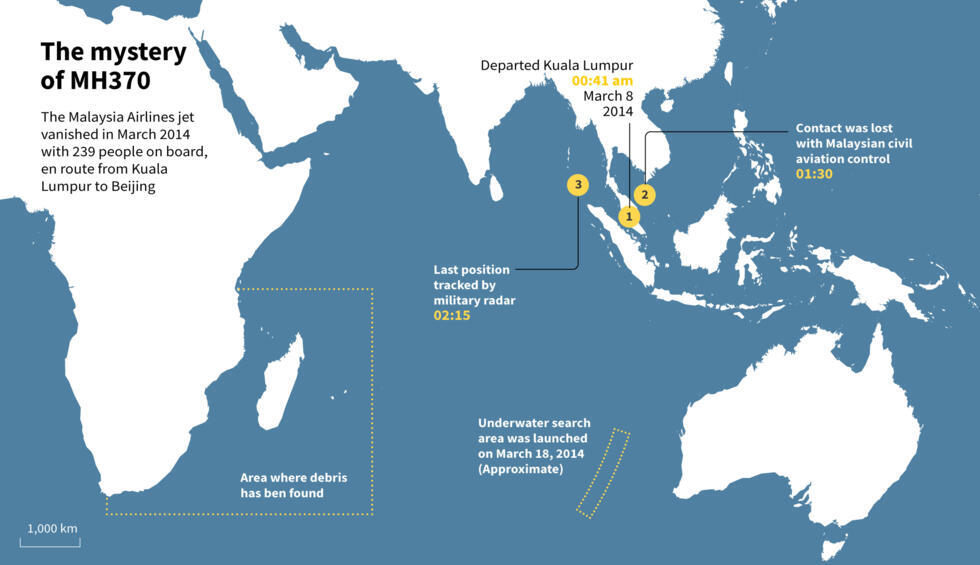
MH370 carrying 239 people vanished from radar screens on March 8, 2014, while en route from Kuala Lumpur to Beijing in one of aviation's greatest enduring mysteries © Mohd RASFAN / AFP/File

The Boeing 777 carrying 239 people vanished from radar screens on March 8, 2014, while en route from Kuala Lumpur to Beijing in one of aviation's greatest enduring mysteries.

Two-thirds of the passengers were Chinese, while the others included Malaysians, Indonesians and Australians, as well as Indian, American, Dutch and French nationals.

The mystery of MH370 © John SAEKI, Nicholas SHEARMAN / AFP

Despite the largest search in aviation history, the plane has not been found.

Kuala Lumpur said in a statement it "wishes to update that the deep-sea search for (the) missing wreckage of Malaysia Airlines Flight MH370 will be resuming on 30 December 2025".


Maritime exploration firm Ocean Infinity will be conducting the search "in (a) targeted area assessed to have the highest probability of locating the aircraft", the ministry said.

The latest search in the southern Indian Ocean was suspended in April as it was "not the season".

It was conducted on the "no find, no fee" principle as Ocean Infinity's previous search, with the government only paying out if the firm finds the aircraft.

Ocean Infinity, based in Britain and the United States, led an unsuccessful hunt in 2018, before agreeing to launch a new search this year.

An initial Australia-led search covered 120,000 square kilometres (46,300 square miles) in the Indian Ocean over three years but found hardly any trace of the plane other than a few pieces of debris.

The ministry said the latest development underscores its commitment in "providing closure to the families affected by the tragedy".

Previous searches for MH370, including the massive Australia-led initial search, have yielded no results © LSIS BRADLEY DARVILL / AUSTRALIAN DEFENCE/AFP/File

Relatives of the victims had voiced hope in February that a new search could finally bring some answers.

When contacted by AFP, relatives of victims were not immediately available for comment.


Aviation mystery

The plane's disappearance has long been the subject of theories -- ranging from the credible to outlandish -- including that veteran pilot Zaharie Ahmad Shah had gone rogue.

A final report into the tragedy released in 2018 pointed to failings by air traffic control and said the course of the plane was changed manually.

Investigators said in the 495-page report that they still did not know why the plane vanished and refused to rule out that someone other than the pilots had diverted the jet.

Relatives of passengers lost on the flight have continued to demand answers from Malaysian authorities.

Family members of Chinese passengers gathered in Beijing outside government offices and the Malaysian embassy in March on the 11th anniversary of the flight's disappearance.

Attendees of the gathering shouted, "Give us back our loved ones!", with some holding placards asking, "When will the 11 years of waiting and torment end?"

© 2025 AFP


French unions take Israel to court for restricting media access to Gaza

Two major journalism organisations have filed a legal complaint in Paris accusing the Israeli authorities of blocking French reporters from covering the war in Gaza – a move that could test how France applies its own press-freedom protections in an international conflict.


Issued on: 02/12/2025 - RFI

Mourners and colleagues holding 'press' signs surround the body of Al-Jazeera Arabic journalist Ismail al-Ghoul, killed along with his cameraman Rami al-Refee in an Israeli strike during their coverage of Gaza's Al-Shati refugee camp, on 31 July 2024. © Omar Al-Qattaa / AFP

The National Union of Journalists (SNJ) and the International Federation of Journalists (IFJ) confirmed on Tuesday that they had lodged a complaint for “obstruction of the freedom to practise journalism” at a Paris court.

They argue that Israel’s restrictions on media access, along with reported intimidation and violence against French journalists working in the region, amount not only to a breach of press freedom but potentially to war crimes.

Because the allegations concern French citizens, the national anti-terrorism prosecutor’s office (PNAT) is authorised to open an investigation.

In a 100-page submission – made public by FranceInfo – the unions say the case is the first to lean on France’s specific offence of obstructing journalistic freedom, and the first to urge prosecutors to consider its application in an international setting where, they argue, attacks on the media have become “structural”.

'Violation of humanitarian law'


“This complaint denounces a concerted, sometimes violent, obstruction preventing French journalists from working in the Palestinian Territories and undermining press freedom,” said lawyer Louise El Yafi, one of the legal representatives behind the filing.

Her colleague, solicitor Inès Davau, said the complaint also draws attention to rising risks faced by French reporters in the West Bank. “These attacks, which violate international humanitarian law, also constitute war crimes,” she added.

The unions’ action is further supported by a French journalist – working across several French-language outlets and requesting anonymity – who has filed his own complaint after allegedly being assaulted by settlers while reporting in the occupied territories.

Multiple cases linked to Gaza

This comes as Reporters Without Borders (RSF) says more than 210 media workers have been killed since Israel launched its military operation in Gaza following the Hamas attacks of 7 October 2023.

Press groups have repeatedly criticised Israel’s longstanding refusal to allow foreign journalists to enter Gaza independently, with only a small number permitted to join Israeli troops under tight supervision.

The Paris complaint arrives amid a swathe of other France-based legal actions linked to the conflict.

These include cases concerning Franco-Israeli soldiers serving in an elite IDF unit, the French arms manufacturer Eurolinks, and several Franco-Israelis accused of complicity in the crime of colonisation.

Separately, PNAT has already asked an investigating judge to examine potential war crimes in the deaths of two French children killed during Israeli airstrikes in Gaza in October 2023.

(with newswires)


Tens of thousands of Gazans need medical evacuation: MSF

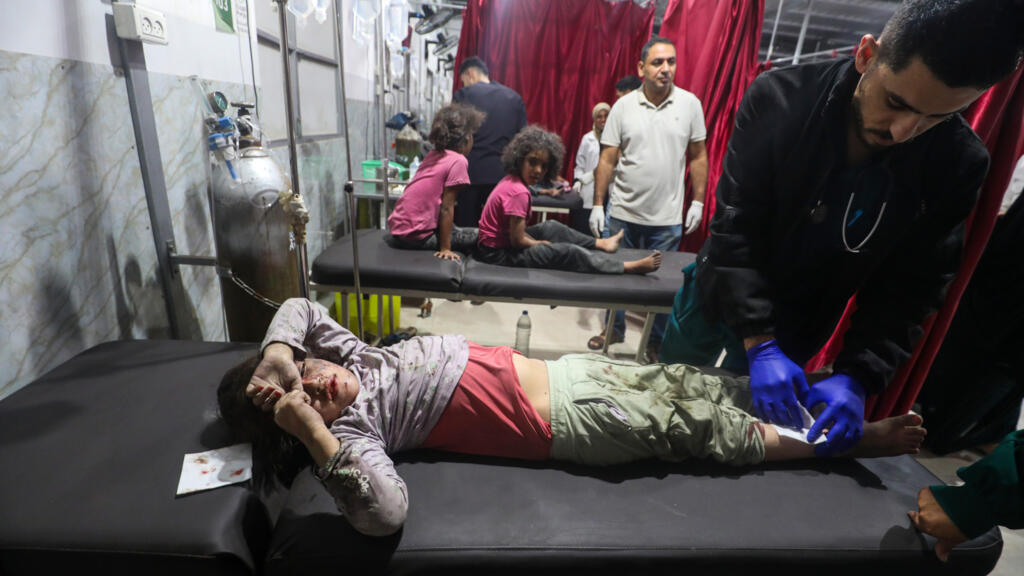
Geneva (AFP) – A Doctors Without Borders official has pleaded for countries to open their doors to tens of thousands of Gazans in dire need of medical evacuation, warning that hundreds have already died waiting.

Issued on: 03/12/2025
RFI


Thousands of sick and wounded Gaza Palestinians need emergency evacuations, according to the MSF charity © - / AFP

"The need is really huge," said Hani Isleem, who coordinates medical evacuations from Gaza for the charity, known by its French acronym MSF.

The numbers taken in by countries so far remains "just a drop in the ocean", Isleem told AFP in an interview on Tuesday.

The World Health Organization estimates that more than 8,000 patients have been evacuated out of Gaza since the war erupted following Hamas's attack inside Israel on October 7, 2023.

It says more than 16,500 patients still need treatment outside of the Palestinian territory.

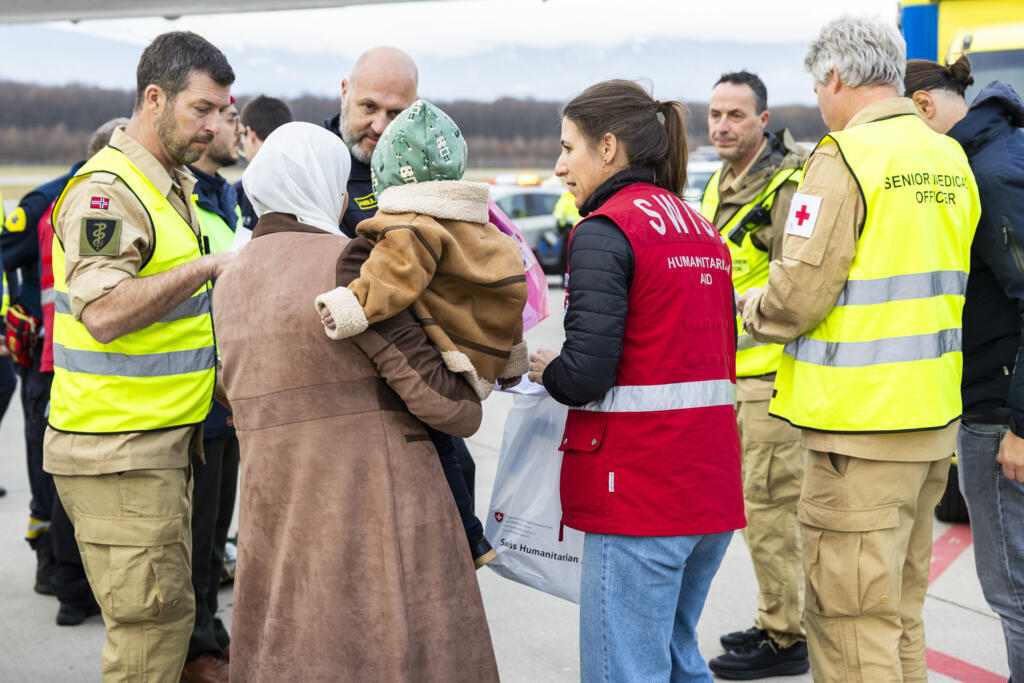
A woman and her baby arrive in Geneva among 13 children and 51 family members moved from Gaza under medical evacuations © SALVATORE DI NOLFI / POOL/AFP


Speaking at the MSF headquarters in Geneva after accompanying seriously ill and injured Gaza children to Switzerland for treatment, Isleem said that number was based only on patients registered for medical evacuation and the true figure was higher.

"Our estimate is that it is three to four times that number," he said.

To date, over 30 countries have taken patients, but only a handful, including Egypt and the United Arab Emirates, have accepted large numbers.

In Europe, Italy has taken over 200 patients, while large countries like France and Germany have taken none so far.

Evacuation pace slowing

Switzerland in November took in 20 Gaza children who arrived in two batches.

The 13 children aged two months to 16 years whom Isleem accompanied last week included four babies with severe congenital heart disease, as well as cancer patients and children requiring complex orthopaedic surgery.

Without the evacuation, some of those children would not have made it, he said, pointing out that the babies basically went straight to surgery after their arrival in Switzerland to avoid "irreversible damage".

Isleem lamented that as conditions in Gaza become more desperate, the pace of medical evacuations has slowed.

Initially, some 1,500 patients left each month on average, but after Israel in May 2024 closed the Rafah crossing into Egypt, the monthly average has dropped to around 70.

A US-brokered ceasefire that came into effect on October 10 has not seemed to speed up the process.

Nor, surprisingly, has a dramatic drop in Israeli evacuation refusals.

Isleem pointed out that the Israeli authorities' denial rate had plunged from an average of around 90 percent to just five percent in recent months, adding that this was still too high.

They should not "block any patients from leaving Gaza to access treatment", he said.


Stop the 'shopping list'


Despite these shifts, there has been no big uptick in evacuations, with 148 carried out in October and 71 last month, with only around 30 expected to take place in December, Isleem said.

The problem, he said, was the long and often "politicised" process for nations to accept Gaza's medical evacuees.

"Countries are taking a long time to decide or allocate the budget for these patients, but (they cannot) wait for this discussion to happen."

More than 900 people have died while waiting for evacuations from Gaza since October 2023 -- a figure Isleem said was an underestimate.

Another problem, Isleem warned, was that "99.9 percent of countries are asking for children".

"They are ignoring completely the adults (who also) need support and lifesaving aid," he said, pointing out that three quarters of those waiting for medical evacuations were over 18.

Governments also impose other criteria, including refusing patients with accompanying family members, and especially with any male siblings over 18.

Isleem urged countries to "stop this selection shopping list", and to "focus only on the needs and saving people's lives".

© 2025 AFP
'HIV-free generations': prevention drug rollout brings hope to South Africa

Ga-Rankuwa (South Africa) (South Africa) (AFP) – Kegoratile Aphane did not flinch when the needle pierced the skin of her right buttock, injecting a yellow-coloured drug touted as a revolution that could end the HIV pandemic.


Issued on: 03/12/2025 - RFI

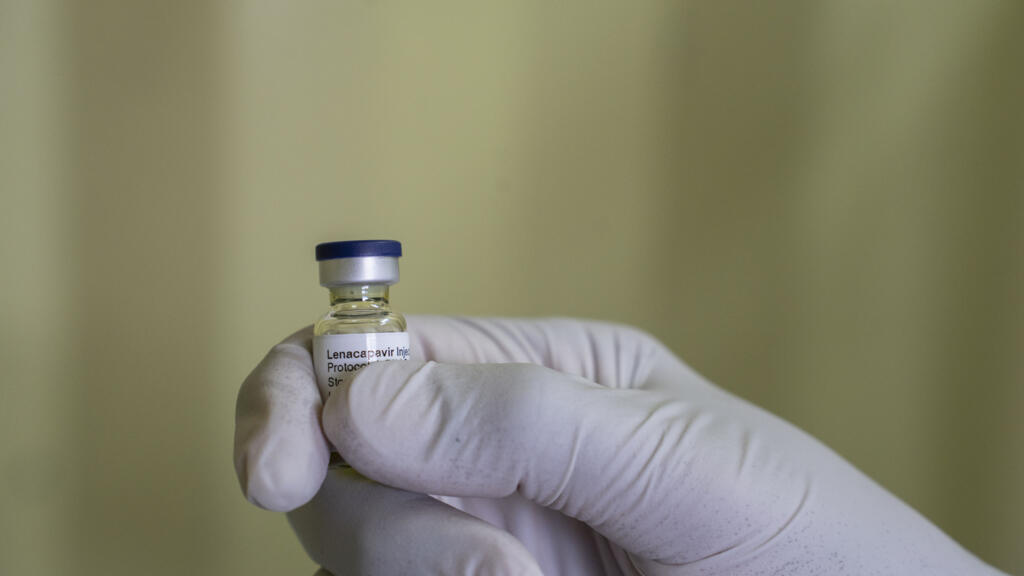
A nurse holds a vial of Lenacapavir at a clinic north-west of. The drug has been shown overwhelmingly to reduce the risk of HIV transmission © Ihsaan Haffejee / AFP

The 32-year-old was among the very first South Africans -- and Africans -- to receive a dose of lenacapavir, a drug taken twice a year that has been shown to reduce the risk of HIV transmission by more than 99.9 percent, making it functionally akin to a powerful vaccine.

"I didn’t even feel any pain," she said with a relieved smile after receiving the two injections that form the first dose.

Five other patients received lenacapavir Tuesday at a clinic outside of Pretoria as part of an implementation study by a Wits University research unit and funded by the international health agency Unitaid, which works on ensuring equitable access to medical innovations.

The study would enrol 2,000 people and "follow them for at least a year to understand how this prevention option works in real life", according to the Wits Reproductive Health and HIV Institute (RHI)'s Saiqa Mullick.

'Life-changing'

With close to one in five adults living with HIV, South Africa has one of the highest rates in the world, and reported last year the highest number of new infections for any single country -- 170,000.

Until now, the best available prevention drug for HIV-negative people was through a daily pill.

The twice-yearly lenacapavir jab would be "life-changing", said the clinic’s manager Magdaline Ngwato, especially for young people who struggled to maintain the daily schedule of the pill and groups like sex workers or LGBTQ patients who wanted to be discreet.

"Now with the injection it will be fine, because you can do it secretly," she told AFP, adding that many people had already expressed interest.

"Even mothers said they will send their children to come get it," Ngwato enthused. "I think we are going to have a lot of HIV-free generations."

For Aphane, the decision to take the groundbreaking treatment was deeply personal.

"I just lost my mom in 2021 -- she was HIV positive," she told AFP with emotion.

"It's a very, very, very painful disease. So that's why I (am) so serious about this. Let me be safe and try this."

Twenty-year-old student Katlego, who asked to speak under a pseudonym, was "proud" to have received one of the very first doses.

A broader national rollout is expected next year, starting with 400,000 doses that would be received through a deal between lenacapavir's manufacturer Gilead Sciences and the Global Fund to Fight AIDS.

While lenacapavir currently costs around $28,000 a year in the United States, generic versions are expected to be available from 2027 at around $40 per year in more than 100 countries through agreements by Unitaid and the Gates Foundation with Indian pharmaceutical companies.

The rollout could usher in a different world for Aphane's daughters and future grandchildren, she said.

"The more they introduce, the more they talk about it, the more they show (it) everywhere, it will save lives," she said.

© 2025 AFP
Nigeria’s defence minister steps down as abductions trigger security emergency

Nigeria’s defence minister has resigned, as the country continues to grapple with a deepening security crisis marked by a surge in mass kidnappings of schoolchildren.


Issued on: 02/12/2025 - RFI


A signboard for St Mary's Private Catholic Secondary School stands at the entrance of the school in Papiri, Agwarra local government, Niger state, on 23 November 2025. AFP -

 IFEANYI IMMANUEL BAKWENYE

According to presidential spokesman Bayo Onanuga, Minister of Defence Mohammed Badaru Abubakar, stepped down with immediate effect on Monday.

The 63-year-old minister reportedly cited health reasons for his departure – a move that comes in the wake of President Bola Tinubu’s declaration of a nationwide security emergency last week.

“His resignation comes amid President Tinubu’s declaration of a national security emergency, with plans to elaborate on its scope in due course,” Onanuga said in a statement.

The government has promised more detail soon on what this emergency will entail, but the message for now is that Abuja intends to move swiftly


Nigeria’s former Minister of Defence, Mohammed Badaru Abubakar © Nigeria Presidency

Nigeria – Africa’s most populous nation and no stranger to security challenges – has been left scrambling after a spate of abductions that have seen hundreds of people, mostly schoolchildren, seized within just a few days last month.

The crisis has also drawn sharp international attention. In October, US President Donald Trump designated Nigeria a "Country of Particular Concern" for religious freedom violations, citing what he described as killings of Christians by “radical Islamists”.

He even went so far as to threaten military intervention. Abuja and independent security analysts have firmly rejected Washington’s claim, but it has undoubtedly put the spotlight back on Nigeria’s long-running instability.

Mass abductions


The most dramatic incident came on 21 November, when armed gangs stormed St Mary’s co-education school in north-central Nigeria, abducting more than 300 pupils, teachers and staff.

Fifty managed to escape, yet the remainder are still being held. On a high-profile visit to Kontagora in Niger state, national security adviser Nuhu Ribadu sought to reassure anxious families, saying: “The children are fine and will be back soon.”

Such kidnappings carry grim echoes of the 2014 Chibok schoolgirl abductions, when Boko Haram militants seized nearly 300 students from their dormitories – an episode that shocked the world and exposed the Nigerian government's limited reach in remote regions.

Since then, mass abductions have become common, usually driven by criminal gangs seeking quick ransom payments.

Jihadist campaign

Alongside the kidnappings, Nigeria has been battling a jihadist insurgency across its northwestern regions since 2009, adding yet another layer to the country’s complex security landscape.

Recent raids have targeted schoolchildren and teachers, worshippers and priests, a bride and her bridesmaids, farmers, women and children – a grim roll call that spans multiple states and communities.

In response, Tinubu’s government has ordered a major recruitment drive for both police and military personnel, suggesting a push to bolster security forces stretched thin across vast territories.

(with newswires)


Italy's luxury brands shaken by sweatshop probes


Rome (AFP) – A series of investigations into exploitative work conditions within fashion subcontractors has roiled Italy's luxury industry, with the government decrying attacks on "Made in Italy".


Issued on: 03/12/2025 - RFI

Tod's iconic leather shoes are handmade, but Italian prosecutors say they have found 'degrading' conditions at its Chinese subcontractors © Gabriel BOUYS / AFP/File

Five fashion brands have been put under court administration since 2024 following probes by Milan prosecutors that uncovered worker abuses and a lack of oversight into the supply chains of some of Italy's most respected brands.


Most recently, lawyers for luxury leather company Tod's were due in a Milan court Wednesday, where prosecutors want to impose a temporary advertising ban and outside administrators in light of what they have called "malicious" actions by the company.

The investigations led by prosecutor Paolo Storari have cast a spotlight on the dark underside of the luxury industry.

At issue is the near-ubiquitous practice of brands subcontracting work to suppliers, who in turn contract to others, amid ever-tighter margins and scant oversight of labour conditions.


To date, investigations have targeted Loro Piana, Dior's Italian subsidiary Manufactures Dior, Giorgio Armani Operations and Alviero Martini -- and prosecutors have suggested more probes could come.

Italy's government has gone on the offensive, with Industry Minister Adolfo Urso saying the reputation of Italian brands was "under attack".

It has proposed a certificate for luxury companies to show they are in compliance with current law -- a measure critics have called toothless, in part because it is voluntary and would unduly shield brands from liability.

"We are taking concrete measures to firmly defend Italian fashion, to protect its reputation and the values that have made it synonymous with beauty, quality and authenticity," Urso said in October.

'Chain of exploitation'

Prosecutors last month said Tod's -- whose leather loafers can reach over $1,000 -- and three of its executives had "full awareness" of the exploitation of Chinese subcontractors but failed to set up systems to prevent it.

Tod's allegedly ignored its own audits revealing working hours and wage violations -- with workers paid as little as 2.75 euros per hour -- breaches of safety measures and what prosecutors called "degrading" sleeping areas within the factory.

Under Italian law, companies can be held responsible for offences committed by representatives -- such as approved suppliers -- acting in their interest.

Advocates for fashion industry workers have for decades pointed to widespread abuses in the supply chain.

Suppliers "are at the mercy of big brands that impose commercial conditions, starting with prices that are too low to cover all costs", said Deborah Lucchetti, national coordinator of the Clean Clothes Campaign in Italy.

That, in turn, fuels a system in which first-tier suppliers turn to subcontractors, imposing ever more stringent terms, which leads to labour abuses, most often against migrants.

"It's a chain of exploitation," she told AFP.

Italy's fashion suppliers are predominately small- and medium-sized companies, tens of thousands of whom have shuttered in recent years, according to industry associations, amid a luxury downturn and higher production costs.

Unable to invest, due to lack of guaranteed work from the commissioning brands and hyper-thin margins, the suppliers stay small. When a big order arrives, they turn to subcontractors for quick help, a system that "effectively pushes players in the supply chain to engage in illegal conduct", said Lucchetti.

Prosecutors said both Tod's and Loro Piana could not have been unaware that one of their main suppliers was externalising all its production -- given that the supplier did not have any production equipment, such as sewing machines, in its facility.

The companies targeted thus far have variously responded by cutting ties with the suppliers, condemning their actions, or blaming them for concealing abuses.

Reputational risk

Amid the reputational risk, some brands have sought to reassure consumers.

Last week, one of Italy's top luxury brands, Prada, invited journalists to its Scandicci factory outside Florence, showing the step-by-step transformation of supple leather into luxury handbags.

Asked about the investigations, Prada's Chief Marketing Officer Lorenzo Bertelli, who also heads social responsibility, said production had never been an afterthought for the company.

Other fashion executives, Bertelli said, don't view production "as an area of responsibility": "And this has led to many of things you have read in the newspapers."

Prada does not disclose how much of its production is in-house, but says it is the highest in the industry. Prada owns 25 factories, 23 of which are located in Italy.

Bertelli called it a "constant battle" to keep Prada's supply chain clean.

"We must constantly carry out inspections or checks on suppliers, this is the daily work we do."

© 2025 AFP


Angoulême's 2026 comic festival cancelled amid boycott and management row

The 2026 edition of the Angoulême International Comics Festival, France’s largest event dedicated to the art form, has been officially cancelled, one of the organisers’ lawyers confirmed on Monday. This comes after the withdrawal of public funds and a boycott by dozens of authors and publishers who say the event has been mismanaged for years.


Issued on: 02/12/2025 - RFI


Visitors look at comics on the street during the 52nd Angouleme International Comics Festival in Angouleme, on January 30, 2025. AFP - ROMAIN PERROCHEAU

"The 2026 edition is cancelled. A letter was sent at the end of last week to inform the festival’s public partners," said lawyer Vincent Brenot, representing the organising company 9e Art+.

He added that the decision, first reported by regional newspaper La Charente Libre, was “the straightforward consequence” of the stance taken by public funders.

On 18 November, the French government withdrew €200,000 of public subsidies for next year's event, putting a major hole its finances.

It marks the first time since the festival’s creation in 1974 – apart from the Covid-19 hiatus – that the event will not take place. The 53rd edition had been scheduled for 29 January to 1 February 2026.


Street in Angouleme featuring heroes from comics, 7 August 2023. © RFI/Jan van der Made

At the heart of the scandal is the management model of the festival, which has helped turn Angoulême into a centre of European production and comics expertise.

It is run by a non-profit association presided over by Delphine Groux, the daughter of co-founder Francis Groux, but has been organised by a private company, 9eArt+, since 2007.


The 9eArt+ director, Franck Bondoux, was the subject of an investigation by left-wing magazine l'Humanité before this year's event which accused him of mismanagement and an increasingly contested style.

It also reported that the company had dismissed an employee shortly after she reported being raped at the 2024 event.

French author Anouk Ricard won the Grand Prize during the 52nd Angouleme International Comics Festival in Angouleme, on 29 January, 2025. AFP - ROMAIN PERROCHEAU

Lack of transparency

For weeks, doubts have mounted over the festival’s future as a major portion of the French comics community turned against the organisers.

Many writers and artists denounced what they described as the growing commercialisation and lack of transparency at the event.

Among the authors who planned boycotters was Anouk Ricard, winner of the 2025 Grand Prix d’Angoulême and "Maus" creator Art Spiegelman.

"It is high time to turn the page on 9eArt+ so that the festival can regain, with new operators, the values that helped build its international reputation," read an open letter on 10 November signed by 22 former winners of the festival's top prize.

Superman and Spanish artists lead the charge at Angoulême Comics Festival

Several leading publishers have also withdrawn support, calling this year’s edition "compromised" and saying their trust in the organisers had been "broken".

On 20 November, the festival’s main public funders – who normally provide around half of its €6 million budget – recommended that the 2026 edition be scrapped, saying it would be “extremely difficult” to stage the event under the current circumstances.

"The 2026 Festival cannot physically go ahead under satisfactory conditions," lawyers for 9e Art+ said in a statement sent to AFP. "This situation is in no way a voluntary decision by 9e Art+, whose sole purpose is to run the Angoulême Festival, but rather a unilateral decision made without consultation by public funders."

The company expressed concern over the “human and economic consequences” of the cancellation and warned of "significant uncertainty" surrounding the 2027 edition, which it remains legally entitled to organise.

(With newswires)
Brussels In Shock As Ex-EU Diplomat Mogherini Arrested In Tender-Rigging Probe

December 3, 2025 
EurActiv
By Eddy Wax and Elisa Braun

(EurActiv) — Belgian police arrested the EU’s former top diplomat Federica Mogherini and senior Commission official Stefano Sannino as part a sweeping fraud investigation that is renewing fears about corruption in the highest ranks of the European bureaucracy.

The arrests came amid dawn raids, first reported by Euractiv, on the EU diplomatic service in Brussels and the College of Europe in Bruges, where Mogherini, who previously served as Italy’s foreign minister, is the rector. The ongoing probe involves alleged misuse of EU funds, according to people familiar with the investigation and witnesses.

In addition to Mogherini, a socialist who headed the EU’s foreign service between 2014 and 2019, and Sannino, a fellow Italian diplomat who heads the Commission’s directorate general for the Middle East and Northern Africa (DG-MENA), a third person, who works in the executive education department of the College of Europe, was also detained.

All three were questioned on suspicion of procurement fraud, corruption, and criminal conflict of interest. Sannino and Mogherini did not immediately respond to requests for comment. A spokesperson for the EEAS said he had no information.

The criminal probe began after allegations that the European External Action Service (EEAS), the EU’s diplomatic arm, and the College of Europe colluded to misuse EU public money in 2021 and 2022 to start a new diplomatic academy, according to four people with knowledge of the investigation.


The affair the latest major scandal to hit the EU in the wake of the Huawei and ‘Qatargate‘ investigations and raises serious concerns about the integrity of the senior leadership of the institutions at the core of the European ‘project’.
In Bruges

At the core of the investigation is a suspicion that the College of Europe or its representatives had prior knowledge of a public tender launched by the EEAS to host a new EU diplomatic academy. The tender, which was awarded to the College of Europe in 2022, was open to institutions of higher education across Europe.

Founded in 1949, the College of Europe is regarded as the premier finishing school for aspiring European civil servants, with alumni including top politicians and officials in the European institutions. Though it is closely affiliated with the EU, which helps fund it, the college is nominally independent.

Investigators have focused on the circumstances surrounding the college’s €3.2 million purchase of a building on Spanjaardstraat in Bruges, which now houses a dormitory for diplomats who attend the academy, the four people with knowledge of the probe said. The competition to host the academy required bidders to propose plans for housing.

The College of Europe purchased the building in 2022 during a period of financial strain for the institution, two people with knowledge of the probe said. Shortly thereafter, the EEAS awarded the college €654,000 in funding.

Authorities suspect the College of Europe and its representatives had privileged access to confidential information about the tender, giving them an unfair advantage over other bidders. During the period in question, Mogherini was rector of the College of Europe and Sannino, who had worked for Mogherini in the Italian foreign ministry, was secretary-general of the EU’s foreign service, a position that may have given him sway over the tender.

Whatever happened behind the scenes, there’s no doubt that the tender ended in Mogherini’s favour. In addition to running the College of Europe, she now also oversees the new EU Diplomatic Academy, which was launched in 2022. She began a second five-year term in Bruges this year.

During the period under scrutiny, the EEAS was led by another socialist former foreign minister, Spain’s Josep Borrell. Spokespeople for Borrell and the College of Europe declined to comment.
Early morning raids

Tuesday’s police raids, which included private residences, took place across Belgium in the early hours of the morning, with police seizing documents. Around 10 officers dressed in civilian clothes entered the EEAS headquarters at 7:30 am on Tuesday, one eyewitness said. Another EU official from the EU’s diplomatic service confirmed the raid.

Belgian federal police from West Flanders, and the EU’s anti-fraud office, OLAF, took part in the operation as part of a criminal probe led by the EU’s Public Prosecutor’s Office (EPPO).

Spokespersons from EPPO and OLAF declined to comment.

OLAF, which has administrative powers to pursue suspected fraud involving EU money, interviewed several individuals before passing its findings to EPPO, tasked with investigating and prosecuting serious crimes against the EU’s interests.

There is no indication that OLAF or EPPO have reached conclusions of wrongdoing, and no one has been formally charged yet.