Friday, December 26, 2025

Inside Chernobyl, Ukraine scrambles to repair radiation shield

By AFP
December 25, 2025


The 1986 meltdown at Chernobyl was the world's worst ever nuclear power plant incident - Copyright AFP Glody MURHABAZI


Sergii VOLSKYI and Tetiana DZHAFAROVA

Inside an abandoned control room at Ukraine’s Chernobyl nuclear power plant, a worker in an orange hardhat gazed at a grey wall of seemingly endless dials, screens and gauges that were supposed to prevent disaster.

The 1986 meltdown at the site was the world’s worst ever nuclear incident. Since Russia invaded in 2022, Kyiv fears another disaster could be just a matter of time.

In February, a Russian drone hit and left a large hole in the New Safe Confinement (NSC), the outer of two radiation shells covering the remnants of the nuclear power plant.

It functions as a modern high-tech replacement for an inner steel-and-concrete structure — known as the Sarcophagus, a defensive layer built hastily after the 1986 incident.

Ten months later, repair work is still ongoing, and it could take another three to four years before the outer dome regains its primary safety functions, plant director Sergiy Tarakanov told AFP in an interview from Kyiv.

“It does not perform the function of retaining radioactive substances inside,” Tarakanov said, echoing concerns raised by the International Atomic Energy Agency.

The strike had also left it unclear if the shell would last the 100 years it was designed to.

The gaping crater in the structure, which AFP journalists saw this summer, has been covered over with a protective screen, but 300 smaller holes made by firefighters when battling the blaze still need to be filled in.

Scaffolding engulfs the inside of the giant multi-billion-dollar structure, rising all the way up to the 100-metre-high ceiling.

Charred debris from the drone strike that hit the NSC still lay on the floor of the plant, AFP journalists saw on a visit to the site in December.


– ‘Main threat’ –


Russia’s army captured the plant on the first day of its 2022 invasion, before withdrawing a few weeks later.

Ukraine has repeatedly accused Moscow of targeting Chernobyl and its other nuclear power plants, saying Moscow’s strikes risk triggering a potentially catastrophic disaster.

Ukraine regularly reduces power at its nuclear plants following Russian strikes on its energy grid.

In October, a Russian strike on a substation near Chernobyl cut power flowing to the confinement structure.

Tarakanov told AFP that radiation levels at the site had remained “stable and within normal limits”.

Inside a modern control room, engineer Ivan Tykhonenko was keeping track of 19 sensors and detection units, constantly monitoring the state of the site.

Part of the 190 tonnes of uranium that were on site in 1986 “melted, sank down into the reactor unit, the sub-reactor room, and still exists,” he told AFP.

Worries over the fate of the site — and what could happen — run high.

Another Russian hit — or even a powerful nearby strike — could see the inner radiation shell collapse, director Tarakanov told AFP.

“If a missile or drone hits it directly, or even falls somewhere nearby … it will cause a mini-earthquake in the area,” he said.

“No one can guarantee that the shelter facility will remain standing after that. That is the main threat,” he added.


Russian strike could collapse Chernobyl shelter: plant director


By AFP
December 23, 2025


Kyiv has accused Russia of repeatedly targeting the Chernobyl site throughout the invasion - Copyright AFP Farooq NAEEM

A Russian strike could collapse the internal radiation shelter at the defunct Chernobyl nuclear power station in Ukraine, the plant’s director has told AFP.

Kyiv has accused Russia of repeatedly targeting the facility, the site of a 1986 meltdown that is still the world’s worst ever nuclear disaster, since Moscow invaded in February 2022.

A hit earlier this year punched a hole in the outer radiation shell, triggering a warning from the International Atomic Energy Agency (IAEA) that it had “lost its primary safety functions.”

In an interview with AFP, plant director Sergiy Tarakanov said fully restoring that shelter could take three to four years, and warned that another Russian hit could see the inner shell collapse.

“If a missile or drone hits it directly, or even falls somewhere nearby, for example, an Iskander, God forbid, it will cause a mini-earthquake in the area,” Tarakanov told AFP in an interview conducted last week.

The Iskander is Russia’s short-range ballistic missile system that can carry a variety of conventional warheads, including those to destroy bunkers.

“No one can guarantee that the shelter facility will remain standing after that. That is the main threat,” he added.

The remnants of the nuclear power plant are covered by an inner steel-and-concrete radiation shell — known as the Sarcophagus and built hastily after the disaster — and a modern, high-tech outer shell, called the New Safe Confinement (NSC) structure.

The roof of the NSC was severely damaged in a Russian drone strike in February, which caused a major fire in the outer cladding of the steel structure.

“Our NSC has lost several of its main functions. And we understand that it will take us at least three or four years to restore these functions,” Tarakanov added.

The IAEA said earlier this month an inspection mission found the shelter had “lost its primary safety functions, including the confinement capability, but also found that there was no permanent damage to its load-bearing structures or monitoring systems.”

Director Tarakanov told AFP that radiation levels at the site remained “stable and within normal limits.”

The hole caused by the drone hit has been covered with a protective screen, he said, but 300 smaller holes made by firefighters when battling the blaze still need to be filled in.

Russia’s army captured the plant at the start of its 2022 invasion, before withdrawing a few weeks later.

RED ESG

Analyzing corporate ESG reporting through data mining: Evolutionary trends and strategic model


Shanghai Jiao Tong University Journal Center

Analyzing Corporate ESG Reporting through Data Mining: Evolutionary Trends and Strategic Model 

image: 

· Within-industry representiveness (x-axis) measures how representative a company's ESG reporting is compared to other firms in the same industry, reflecting conformity to common industry practices.

· Cross-sector distinctiveness (y-axis) measures how distinctive a company's ESG reporting is compared to firms in different sectors, highlighting its differentiated approach across sectors' boundaries.

view more 

Credit: Ziyuan Xia, Anchen Sun, Xiaodong Cai & Saixing Zeng.


A recent study, led by researchers from Shanghai Jiao Tong University and the University of Miami and published in Journal of Management Analytics, explores the evolution of corporate Environmental, Social, and Governance (ESG) reporting within the technology sector. The research examines over one thousand ESG reports from global tech firms to uncover trends and patterns in corporate sustainability practices over time, utilizing advanced data mining techniques.


The study reveals a significant trend toward the homogenization of ESG reports, with firms placing greater emphasis on social issues, followed by governance, and less attention on environmental concerns. This convergence is largely driven by institutional pressures and the growing expectation for companies to align with industry norms. The findings suggest that companies are increasingly adopting similar ESG frameworks, which can enhance legitimacy but may limit innovation in reporting.


In response to these trends, the researchers propose a strategic framework that measures ESG strategies across industries. This framework evaluates two key dimensions: within-industry representativeness, which assesses how well firms align with industry standards, and cross-sector distinctiveness, which measures how firms differentiate their ESG practices across domains. The results indicate that many firms are converging toward common ESG practices, underscoring the influence of institutional isomorphism in driving conformity.


Additionally, the study introduces the Overall Similarity Index (OSI), a metric designed to track the similarity of ESG reports over time. The OSI reveals that as ESG reporting becomes more standardized, companies’ practices align more closely, reflecting the growing influence of regulatory frameworks and industry guidelines.


For managers and investors, the study highlights the importance of understanding ESG alignment with industry standards. While conformity ensures legitimacy, the study suggests that firms must balance adherence to norms with innovation to maintain a competitive edge. This research offers both valuable theoretical insights and practical tools for navigating the evolving landscape of ESG reporting.

Thursday, December 25, 2025

The message of my favorite Christmas movie has never been more urgent

Robert Reich
December 25, 2025


James Stewart in It's a Wonderful Life. Picture: Screenshot

For me, the real lesson of Frank Capra’s delightful holiday film It’s a Wonderful Life was never as powerful as it is this year. That lesson: it’s our choice.

We can wallow in despair at the hell that Trump and his sycophants have created, as in the fictional “Pottersville.” Or we can actively and purposefully generate kindness and decency — as in “Bedford Falls.”

Today, I want to share with you a short video I did with my young and talented colleagues who somehow put me into “It’s a Wonderful Life.” (I’m hardly “starring,” as they entitled this video; they’ve given me a bit part).


Running time — 3 minutes, 52 seconds. Enjoy!


Robert Reich is a professor of public policy at Berkeley and former secretary of labor. His writings can be found at https://robertreich.substack.com/.

Robert Reich's new memoir, Coming Up Short, can be found wherever you buy books. You can also support local bookstores nationally by ordering the book at bookshop.org


‘Carol of the Bells': Christmas, Ukraine’s resistance and the fight for freedom’


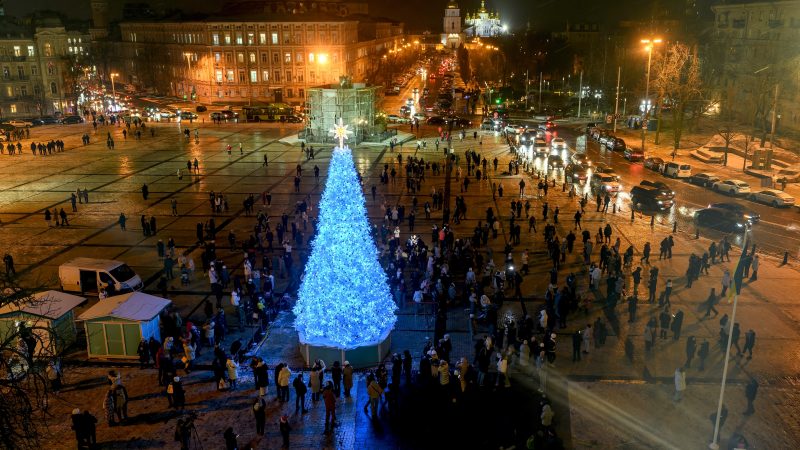
Ukraine's main Christmas tree lights are switched on amid Russia's attack on Ukraine in Sophia Square in Kyiv.
©Shutterstock/paparazzza Ukraine’s main Christmas tree lights are switched on amid Russia’s attack on Ukraine in Sophia Square in Kyiv.

Christmas is a time for carols, music, happiness and goodwill to all people.

One of the most beautiful of all the Christmas songs is the Carol of the Bells which has become internationally popular. It symbolically resonates the sound of the church bells of Eastern orthodox churches.

December is also the 150th birthday of its Ukrainian composer Mykola Leontovych. He adapted an ancient Ukrainian folk song about a New Year’s Eve swallow flying into a house and wishing the family  good will and prosperity. The song’s original name is “Schedryk” which means generosity. Leontovych composed the song whilst living and working in Pokrovsk in the Donetsk oblast of Ukraine.

This December Ukrainians will be celebrating Christmas for the third time during the war started by Putin’s illegal invasion. Pokrovsk has become symbolic of their resistance to Russia and their struggle for independence, freedom and democracy.

READ MORE: ‘Britain’s G20 Presidency is Labour’s chance to lead a global reset’

Each night, Russia attacks civilian targets. As temperatures plummet often to below 20 degrees centigrade it launches inter ballistic missiles and Shahid drones to attack energy infrastructure in an attempt to terrorise the population into submission.

Pokrovsk is all but destroyed. A fortnight ago Putin announced that Ukraine was losing the “three day special military operation” and that he had captured the key Ukrainian city of Pokrovsk. Of course this was Russian propaganda being used to influence purported peace discussions between Trump and Ukraine. A week later Ukrainian forces expelled the Russian infiltrators capturing hundreds of Russian prisoners.

As the Russian economy stagnates, Putin is desperate to try and portray Ukraine as losing the war. The reality is different.

After almost three years of war they control only half the territory captured when they invaded in February 2022. They throw mainly ethnic minority soldiers, conscripted from the extremities of the Russian Federation, into the frontline known as the meatgrinder. To date they have lost around one million two hundred thousand soldiers who have been killed or wounded. Ukraine, which has a very limited navy, has destroyed one third of the famed Black Sea Fleet. Just the other week naval drones destroyed a Russian submarine. In the extremities of the Russian Federation, Ukraine is destroying its financial lifeline, its oil and gas production facilities which have lost up to an estimated 37 per cent capacity. Inflation, arrears of wages and economic stagnation increases month by month in Russia.

For Ukrainians the situation is also incredibly difficult. The cold; erratic energy supply; continual air raid warnings; daily attacks on schools, hospital and civilian accommodation; children attending school in underground bunkers.

Earlier this week I had messages from friends and family in various parts of Ukraine. From the Eastern city of Pavlograd they report drone attacks near where we stayed and loss of electricity. From Kyiv regular losses of electricity and hundreds of drone attacks. From the East fighting and losses on the front line.

Yet all carry the same message. They curse the Russians, but declare that they will never give up. They will not submit to becoming part of a Russian empire.

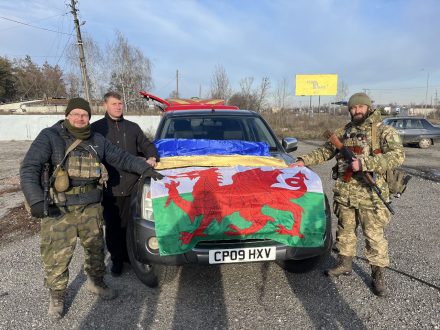
A family member of mine on the front line tells me how he lost his best friend and it took three days to recover the body because of Russian shelling and drones. In October our Senedd cross party group Friends of Ukraine delivered a four by four pick up vehicle to his unit with medical supplies and power banks. He thanked us. He said it is the support from abroad that raises their morale and gives them the inspiration to carry on fighting, knowing they are not alone.

So in February we will drive to Kyiv to deliver another six vehicles and supplies bringing our total to 55 and over a million pounds of humanitarian supplies.

It is difficult to describe in words the Ukrainian’s bravery and determination. But for them, this is a war of survival.

For Europe they are the front line defenders of democracy. We all watch and listen carefully to the ‘peace’ discussions taking place and Trump’s betrayal and realignment with Russia with disbelief. It is now up to Europe to stand alone and defend European democracy. Were Ukraine to fail, then the next in line will be the Baltic states, Moldova, Poland. Europe may at last have woken up to the fact that America can no longer be relied upon and that there is a new and aggressive fascism that has arisen in Russia that owes no allegiance to democracy, human rights or the rule of law.

All over Ukraine, despite the missiles, bombs and drones, there are Christmas trees, Christmas lights (when energy supplies allow) and the sort of celebrations we see all over Europe. Ukrainians have a tradition of going from house to house, carrying a Yule star  singing carols old and new. Among the songs they sing will be Mykola Leontovich’s “Schedryk”.

So as we in Wales and the rest of the UK celebrate Christmas in the warmth of our homes and listen to ‘Carol of the Bells’ on our televisions and radio, give a thought to those Ukrainians in the freezing cold fighting to defend Pokrovsk, praying for peace but determined not to become slaves to Russia. 

The Ukrainian “Shchedryk”: How “Carol of the Bells” Became a Song of Resistance

The Ukrainian “Shchedryk”: How “Carol of the Bells” Became a Song of Resistance
Image: t2.gstatic.com

Every December, millions of people around the world hear the familiar melody of Carol of the Bells. Few know that this iconic tune is not American, not Western European—and not even originally a Christmas song.

Its true name is Shchedryk, a Ukrainian folk melody arranged over a century ago by composer Mykola Leontovych.

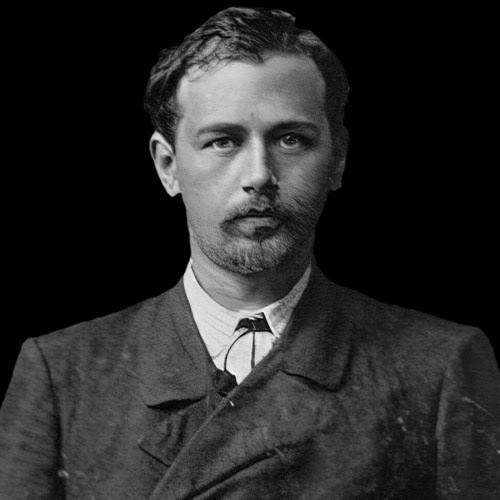
Portrait of Ukrainian composer Mykola Leontovych and sheet music of Shchedryk, the original melody behind Carol of the Bells
Photo: Ukrainer.net

A Song Older Than the 20th Century

“Shchedryk” dates back more than 100 years and is rooted in Ukraine’s ancient folk traditions. The song tells a simple but powerful story: the turning of the seasons, the end of winter, and the arrival of spring. It is about renewal, abundance, and hope—the reassurance that light will ultimately defeat darkness.

Despite its modern association with Christmas, “Shchedryk” was never meant to celebrate the holiday. It was a song about survival, continuity, and faith in the future.

Those themes would later become tragically prophetic.

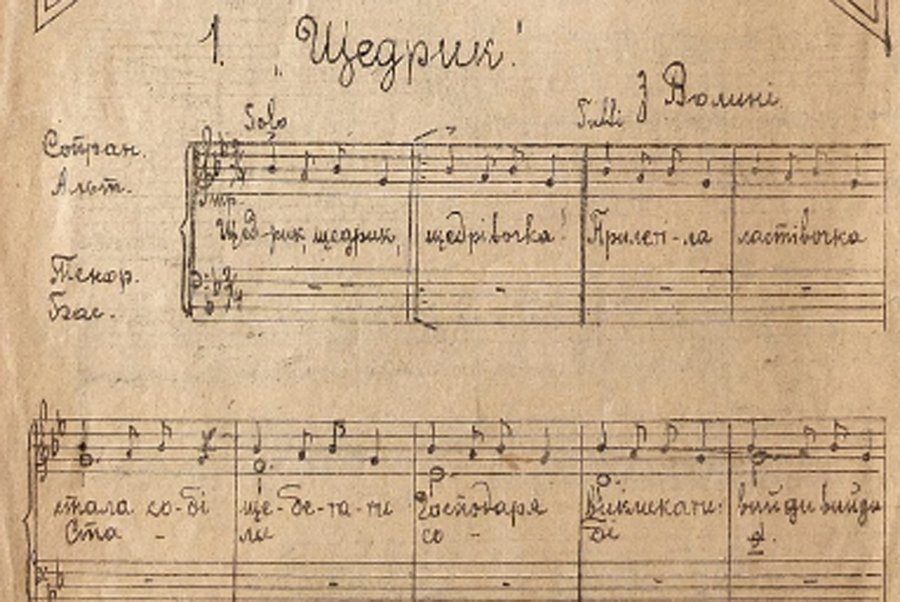
1918 first edition sheet music fragment of Shchedryk by Ukrainian composer Mykola Leontovych
Photo: Ukrainer.net Fragment of the page of the first edition of “Shchedryk” by Mykola Leontovych, 1918

From Ukrainian Folk Song to Global Phenomenon

In the early 20th century, Ukrainian choirs toured Europe and North America, introducing “Shchedryk” to the world. In 1936, English lyrics were added, transforming the song into “Carol of the Bells.” The melody spread rapidly through films, concerts, and holiday traditions—often stripped of its Ukrainian origin.

While the tune became globally famous, its creator would not live to see its lasting legacy.

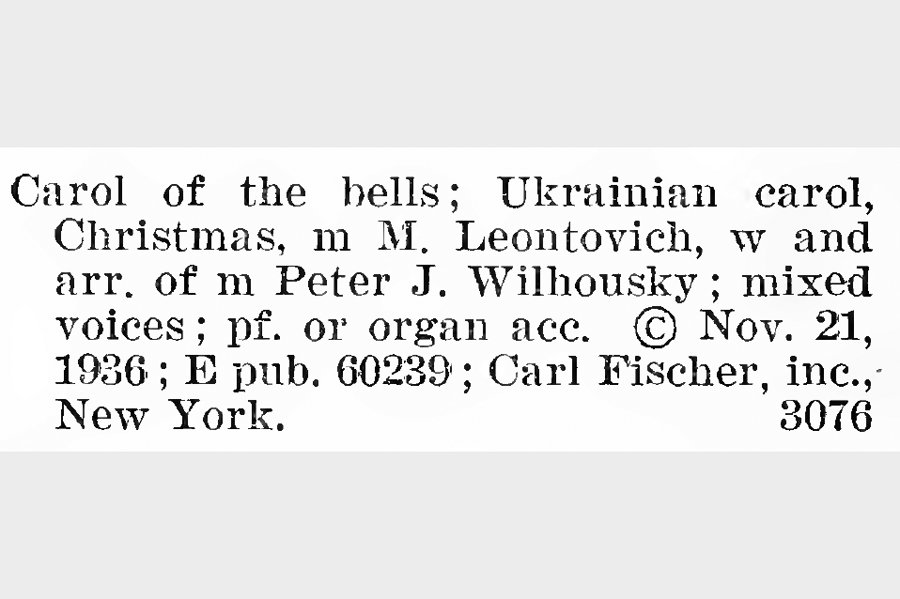
1937 United States Copyright Office catalogue extract documenting the registration of Shchedryk, later known as Carol of the Bells
Photo: Ukrainer.net Extract from the catalogue of the United States Copyright Office, 1937

Murdered for His Culture

On January 23, 1921, Mykola Leontovych was murdered by an agent of the Soviet Union. He was just 43 years old.

His death was not an isolated crime. It was part of a broader campaign to eliminate Ukrainian cultural elites after Ukraine lost its independence in 1919. Composers, writers, poets, scientists, and artists were systematically targeted because Ukrainian culture itself was seen as a threat.

Imperial ideology dismissed Ukrainians as a “nation of peasants” incapable of producing high culture. “Shchedryk”—beloved, refined, and unmistakably Ukrainian—directly contradicted that myth.

A Genocide That Did Not End

The destruction of Ukrainian culture did not stop in the 1920s.

Today, history is repeating itself. In territories occupied by Russia, Ukrainian writers, actors, musicians, and cultural figures have been detained, tortured, or executed. Libraries and theaters are destroyed. Ukrainian language and identity are suppressed.

Many artists have laid down their instruments and taken up weapons—not because they want war, but because they refuse to let genocide happen again.

Why Ukrainians Fight

Ukrainians fight not only for land or borders, but for memory, dignity, and the right to exist as a people with a culture of their own.

That is why “Shchedryk” matters.

The next time you hear “Carol of the Bells,” remember:
this melody was born in Ukraine.
It is a song about light defeating darkness.
And its story is still being written.

EMPR

Urgent Appeal for the Suspension of Forced Removals from the UK to Iraq

December 23, 2025

An appeal by the International Federation of Iraqi Refugees to refugee rights organizations, human rights institutions, and international advocacy bodies.

The International Federation of Iraqi Refugees (IFIR) issues this urgent appeal regarding the imminent deportation of Iraqi Kurdish refugees currently held in UK detention centres. Many of these individuals have resided in the UK for over two decades, establishing deep-rooted lives, raising families, and contributing to their communities.

We strongly condemn the recent bilateral agreement between the United Kingdom and the Government of Iraq, which facilitates forced returns. We contend that these actions constitute a clear violation of international law and binding human rights treaties, specifically:

– The 1951 Refugee Convention: Violating the principle of non-refoulement by returning individuals to environments where they face credible threats of harm.
– The ECHR (Article 3): Risking the exposure of individuals to torture or inhuman and degrading treatment.
– The ECHR (Article 8): Systematically dismantling family units and violating the right to private life.

Iraq remains a landscape defined by political instability and security threats. Deporting long-term residents who lack support networks in Iraq is not only a breach of legal duty but a profound humanitarian failure.

Our Demands:

 – Immediate Annulment: We call for the cancellation of all agreements facilitating forced deportations to Iraq.
– Political Pressure: We urge Iraqi and Kurdish regional authorities to reject these agreements and refuse to accept forced returnees.
– Civil Society Mobilization: We call upon UK trade unions and human rights groups to publicly oppose these inhumane policies.

Protection is a legal obligation, not a political choice. We urge you to act now to uphold the principles of human dignity.For more information about the International Federation of Iraqi Refugees, see  https://www.federationifir.com/en/


Iraq's political future in limbo as factions vie for power

BAGHDAD (AP) — The November election didn't produce a bloc with a decisive majority, opening the door to a prolonged period of negotiations.


Qassim Abdul-zahra
December 23, 2025
AP

BAGHDAD (AP) — Political factions in Iraq have been maneuvering since the parliamentary election more than a month ago to form alliances that will shape the next government.

The November election didn’t produce a bloc with a decisive majority, opening the door to a prolonged period of negotiations.

The government that eventually emerges will be inheriting a security situation that has stabilized in recent years, but it will also face a fragmented parliament, growing political influence by armed factions, a fragile economy, and often conflicting international and regional pressures, including the future of Iran-backed armed groups.


Uncertain prospects

Prime Minister Mohammed Shia al-Sudani’s party took the largest number of seats in the election. Al-Sudani positioned himself in his first term as a pragmatist focused on improving public services and managed to keep Iraq on the sidelines of regional conflicts.

While his party is nominally part of the Coordination Framework, a coalition of Iran-backed Shiite parties that became the largest parliamentary bloc, observers say it’s unlikely that the Coordination Framework will support al-Sudani’s reelection bid.

“The choice for prime minister has to be someone the Framework believes they can control and doesn’t have his own political ambitions,” said Sajad Jiyad, an Iraqi political analyst and fellow at The Century Foundation think tank.

Al-Sudani came to power in 2022 with the backing of the Framework, but Jiyad said that he believes now the coalition “will not give al-Sudani a second term as he has become a powerful competitor.”

The only Iraqi prime minister to serve a second term since 2003 was Nouri al-Maliki, first elected in 2006. His bid for a third term failed after being criticized for monopolizing power and alienating Sunnis and Kurds.

Jiyad said that the Coordination Framework drew a lesson from Maliki “that an ambitious prime minister will seek to consolidate power at the expense of others.”


He said that the figure selected as Iraq’s prime minister must generally be seen as acceptable to Iran and the United States — two countries with huge influence over Iraq — and to Iraq’s top Shiite cleric, Grand Ayatollah Ali al-Sistani.

Al-Sudani in a bind

In the election, Shiite alliances and lists — dominated by the Coordination Framework parties — secured 187 seats, Sunni groups 77 seats, Kurdish groups 56 seats, in addition to nine seats reserved for members of minority groups.

The Reconstruction and Development Coalition, led by al-Sudani, dominated in Baghdad and in several other provinces, winning 46 seats.

Al-Sudani’s results, while strong, don’t allow him to form a government without the support of a coalition, forcing him to align the Coordination Framework to preserve his political prospects.

Some saw this dynamic at play earlier this month when al-Sudani’s government retracted a terror designation that Iraq had imposed on the Lebanese Hezbollah militant group and Yemen’s Houthi rebels — Iran-aligned groups that are allied with Iraqi armed factions — just weeks after imposing the measure, saying it was a mistake.

The Coalition Framework saw its hand strengthened by the absence from the election of the powerful Sadrist movement led by Shiite cleric Muqtada Sadr, which has been boycotting the political system since being unable to form a government after winning the most seats in the 2021 election.


Hamed Al-Sayed, a political activist and official with the National Line Movement, an independent party that boycotted the election, said that Sadr’s absence had a “central impact.”

“It reduced participation in areas that were traditionally within his sphere of influence, such as Baghdad and the southern governorates, leaving an electoral vacuum that was exploited by rival militia groups,” he said, referring to several parties within the Coordination Framework that also have armed wings.

Groups with affiliated armed wings won more than 100 parliamentary seats, the largest showing since 2003.

Other political actors

Sunni forces, meanwhile, sought to reorganize under a new coalition called the National Political Council, aiming to regain influence lost since the 2018 and 2021 elections.

The Kurdish political scene remained dominated by the traditional split between the Kurdistan Democratic Party and Patriotic Union of Kurdistan parties, with ongoing negotiations between the two over the presidency.

By convention, Iraq’s president is always a Kurd, while the more powerful prime minister is Shiite and the parliamentary speaker Sunni.


Parliament is required to elect a speaker within 15 days of the Federal Supreme Court’s ratification of the election result, which occurred on Dec. 14.

The parliament should elect a president within 30 days of its first session, and the prime minister should be appointed within 15 days of the president’s election, with 30 days allotted to form the new government.

Washington steps in

The incoming government will face major economic and political challenges.

They include a high level of public debt — more than 90 trillion Iraqi dinars ($69 billion) — and a state budget that remains reliant on oil for about 90% of revenues, despite attempts to diversify, as well as entrenched corruption.

But perhaps the most delicate question will be the future of the Popular Mobilization Forces, a coalition of militias that formed to fight the Islamic State group as it rampaged across Iraq more than a decade ago.

NEW: Bring more puzzles and play to your week with RNS Games

It was formally placed under the control of the Iraqi military in 2016, but in practice still operates with significant autonomy. After the Hamas-led attack in southern Israel on Oct. 7, 2023 sparked the devastating war in Gaza, some armed groups within the PMF launched attacks on U.S. bases in the region in retaliation for Washington’s backing of Israel.

The U.S. has been pushing for Iraq to disarm Iran-backed groups — a difficult proposition, given the political power that many of them hold and Iran’s likely opposition to such a step.


Two senior Iraqi political officials, who spoke on condition of anonymity because they weren’t authorized to comment publicly, said that the United States had warned against selecting any candidate for prime minister who controls an armed faction and also cautioned against letting figures associated with militias control key ministries or hold significant security posts.

“The biggest issue will be how to deal with the pro-Iran parties with armed wings, particularly those… which have been designated by the United States as terrorist entities,” Jiyad said.

Kataib Hezbollah, one of the most powerful militias in Iraq, designated by the U.S. as a terrorist organization, issued a statement Saturday rejecting the possibility of giving up its weapons.

The statement said the group’s “weapons will remain in the hands of its fighters, and no discussions with the government can take place before the departure of all occupation forces, NATO troops, and Turkish forces, and before ensuring the protection of the people and the sacred sites from extremist groups.”


Associated Press religion coverage receives support through the AP’s collaboration with The Conversation US, with funding from Lilly Endowment Inc. The AP is solely responsible for this content

Iraq Pulls the Plug on Iranian Gas

Iraq on Tuesday announced a complete suspension of natural gas imports from Iran, a move the electricity ministry said immediately knocked between 4,000 and 4,500 megawatts off the national power grid.

On its face, the decision sounds dramatic. In practical terms, it is but the final step in a process that was already well underway. Iraqi officials have spent the past year declaring victory over fuel imports, first halting shipments of gasoline, diesel, and kerosene while pitching a broader narrative of energy self-sufficiency. Gas was the remaining—and most politically sensitive—piece of that puzzle.

Iranian supplies had been covering roughly 30 to 40 percent of Iraq’s power generation needs. Of course, those volumes had already been diminishing due to payment disputes, U.S. sanctions pressure, and Iran’s own domestic shortages. The “complete suspension” isn’t the sudden cutoff that it appears. Baghdad is merely taking the next logical step in the breakup with Iran through partial import reductions and unreliable flows.

Washington has been steadily pushing Iraq to unwind its dependence on Tehran, and Baghdad has been eager to show compliance without triggering a full-blown electricity crisis. The fallback plan—burning locally produced alternative fuels—is not new, nor is it ideal. It keeps the lights on at a higher cost and with greater strain on infrastructure, but it buys political breathing room.

More importantly, this announcement fits into a much larger strategic shift. Western-backed energy projects are finally moving from paper to production. BP’s $25 billion, five-field development in Kirkuk is now active, with a heavy emphasis on capturing associated gas that would otherwise be flared. TotalEnergies’ multi-billion-dollar integrated gas project in southern Iraq is designed to feed power plants directly, cutting Iran out of the loop altogether.

None of this means that Iraq has solved its power problem. Summer demand still dwarfs the country’s installed capacity, and gas capture takes time. Still, Baghdad wants to send the appropriate message,  to Washington, to Tehran, and to investors, that Iranian gas is no longer a pillar of its energy system. Whether the grid can tolerate that ambition is the real test still ahead.

By Julianne Geiger for Oilprice.com

UK

Jeremy Corbyn MP calls for communities to unite against hatred, racism and fear


23 December, 2025 

"The great dividers want you to think the problems in society are caused by migrants and refugees. They’re wrong."


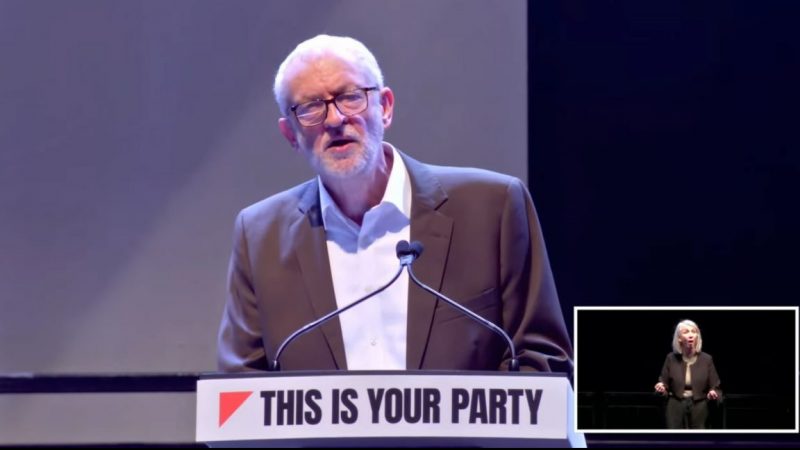
Jeremy Corbyn, the Independent MP for Islington North, has warned that the UK is at a “critical juncture” and said the country needs “an alternative voice” to the anti-migrant rhetoric that has gained ground this year.

Speaking to Left Foot Forward, the co-founder of Your Party said “we need an alternative voice” and added that “to build this alternative, we need to unite our many communities in fierce opposition to hatred, racism and fear”.

Corbyn encouraged people to keep turning up at demonstrations, “and bringing together people of all backgrounds and languages.”

“That means going out into our communities, engaging with people, and mobilising support for a more hopeful alternative. One based on inclusion, respect and humanity,” he added.

He said that in the New Year, he will undertake a constituency-wide consultation to hear from “the many people who are terrified by the recent planned changes to asylum and immigration policies”.

He highlighted the concerns of carers, teachers, cleaners, and others, noting that “people who have come to this country and contributed so much are fearful for their future in this country.”

Corbyn added: “We don’t just have a message to Reform. We have a message to the Labour government who have emboldened them.

“Shabana Mahmood’s latest assault on asylum seekers is utterly appalling. Labour needs to wake up and realise that you won’t defeat Reform by imitating them. You will embolden them.”

The former Labour leader called the scapegoating of migrants and refugees “a deliberate ploy by governments to distract from their own domestic failures”.

In closing, Corbyn said: “The great dividers want you to think the problems in society are caused by migrants and refugees. They’re wrong. They’re caused by an economic system that protects the interests of the super-rich.”

Olivia Barber is a reporter at Left Foot Forward


Left Foot Forward 

Letters to the editor: What progressives can learn from 2025


23 December, 2025 


We asked progressives from across the political spectrum about what lessons they think we need to learn and how to fight back in the year ahead.


As the year draws to a close, there are lots of lessons for progressives to learn from 2025. The snake oil populism offered by Reform UK will not deliver for ordinary Britons and yet Nigel Farage’s party continues to surge in the polls.

A Reform government would be a disaster for the country, just look at how their councils are being run, plagued by incompetence, broken promises, and scandal. The policies Reform offer such as tax cuts for the rich, austerity and privatisation of the NHS will only harm working families.

We asked progressives from across the political spectrum about what lessons they think we need to learn and how to fight back in the year ahead.

Mike Tapp, Labour MP for Dover and Deal, Parliamentary Under-Secretary of State for Migration and Citizenship:

“We are delivering a firm but fair immigration system to restore order and control. We are firm by making it less attractive to come here – to stop asylum shopping, by making it easier to deport and remove people and by introducing Counter Terror powers to take on the criminal gangs.

‘And we are fair, by helping those that need it and introducing viable safe and legal routes. It is important that we play our part as a compassionate nation. That’s British values – the nasty politics of Reform that uses division and cynicism is not what we stand for as a country. We beat them by being strong and by being decent.”

Cat Hobbs, founder and director of We Own It:

“In 2025, we’re really proud to have been part of some huge wins for public ownership – not least winning public control of South Yorkshire’s buses; galvanising people to challenge Thames Water’s outrageous request to pollute illegally for 15 years; and shining a spotlight on this government’s plans to introduce new PFI into our NHS.

“This wouldn’t have been possible without the unrelenting commitment, campaigning and dedication of the many of us out there who want to see the services that we use; rely upon and pay for in public hands.

“We win or we build. Through our campaigning this year we have built formidable networks and coalitions – as well as a huge amount of knowledge – which we’ll take with us into 2026 to continue the fight against privatisation.”

Tom Griffiths from Keep Our NHS Public:

“As the NHS enters yet another annual winter crisis–and the second under this Labour Government–it’s clear that for all the talk of 10 Year Plans, AI, or bold new genetics programmes, the reality is this new administration does not represent the kind of break from previous Conservative Governments voters hoped for. Wes Streeting, like his boss Starmer, is now in the process of finding a scapegoat for his own failings. While Starmer flirts with far-right populism and mimics Enoch Powell blaming migrants for broken Britain, Streeting is targeting Resident Doctors in the BMA who have rejected a below inflation pay offer and are taking strike action. Streeting says ‘he can’t guarantee’ no one will come to harm this winter, but this surely must be taken as an admission of his own failure. The truth is, health experts, patients, healthcare workers and campaigners all know that what the NHS must have urgently; proper funding to put it right and an end to privatisation. While we will do all we can to fight for those things, in the meantime, we hope the Health Minister will take responsibility for the duties he was elected to carry out.”

Zack Polanski, leader of the Green Party:

“It’s been an amazing year for the Green Party. Over 120,000 new members, record high polling and campaigns right across the country ready to win.

“There’s not a shred of complacency though about the scale of the challenge ahead. This year has been grim for so many people and the racist rhetoric of the right – being fuelled by Labour – is a dangerous warning of the path ahead.

“In 2026, something has to give. The status quo cannot maintain – let’s make sure we collectively weave the path towards reducing bills, taxing billionaires and creating a liveable future.”