Saturday, January 17, 2026


Syrian troops clash with Kurdish forces as both sides trade blame for breaking withdrawal deal

At least four Syrian soldiers and an unknown number of Kurdish-led troops have been killed in clashes that broke out during the agreed withdrawal of Kurdish fighters across the Euphrates River. The Syrian army says it has now entered the city of Taqba on the river's west bank, which the Kurdish-led Syrian Democratic Forces say they had not agreed to leave.


Issued on: 17/01/2026 

By:
FRANCE 24

Video by:
FRANCE 24


Syrian troops swept through towns in the country's north on Saturday following an agreed withdrawal by Kurdish fighters there, but clashes erupted when the army kept up its advance deeper into Kurdish-held territory.

For days, Syrian troops had amassed around a cluster of villages that lie just west of ​the winding Euphrates River and had called on the Kurdish-led Syrian Democratic Forces (SDF) stationed there to redeploy their forces on the opposite bank of the river.

Overnight, SDF ‍head Mazloum Abdi said his forces would withdraw early on Saturday morning as a gesture of goodwill, leaving the river as a front line between Syrian government troops to its west and Kurdish forces to its east.

But clashes broke out ​in some towns and oil fields on Saturday as the SDF and Syria's army accused each other of violating the agreement, with Kurdish ​authorities saying Syrian troops were pushing into towns not included in the withdrawal deal.

Kurdish authorities in northern Syria ordered a curfew for the Raqqa region "until further notice", as government forces advanced and threatened to bomb sites in the area.

After taking control of territory outside Aleppo city earlier Saturday, the army designated a swathe of Kurdish-held territory in Raqqa province southwest of the Euphrates River, including the city of Tabqa, a "closed military zone".

'A lot of contradictory information': Syrian and Kurdish forces clash along the Euphrates River


The Syrian army said on Saturday night it had begun entering the city of Tabqa, adding that it was "encircling" the Kurdish forces at their military airport.

"Syrian army forces have begun entering the city of Tabqa via various axes, in parallel with encircling the PKK terrorist militias inside Tabqa military airport," the operations unit of the army told the official SANA news agency.

The United States Central Command urged Syrian government forces to halt its advance.

CENTCOM "urges Syrian government forces to cease any offensive actions in the areas between Aleppo and al-Tabqa", it said on X. "Aggressively pursuing ISIS (the Islamic State group) and relentlessly applying military pressure requires teamwork among Syrian partners."

Remaining Arab residents celebrate troops' arrival

Syrian troops moved relatively smoothly into the main town of Deir Hafer and surrounding villages whose residents are predominantly Arab, according to statements from the military.

Some residents had left in recent days through a humanitarian corridor set up by Syria's army but those who stayed celebrated the army's arrival.

"It happened with the least amount of losses. There's been enough blood in this country, Syria. We have sacrificed and lost enough – people are tired of it," Hussein al-Khalaf, a resident of Deir Hafer, told Reuters.

Kurdish granted national language status in Syria


SDF forces had withdrawn east, some on foot, towards the flashpoint town of Tabqa – downstream but still on the western side of the river, according to a Reuters reporter in the ‍area.

But when Syria's army announced it was aiming to capture Tabqa next, the SDF said it wasn't part of the original deal and that it would fight to keep the town, as well as oil fields in its vicinity.

Syria's army ​said four of its troops had been killed in attacks by Kurdish militants, and the SDF said some of its own fighters had been killed, but did not give a number.

US-led coalition planes flew over the flashpoint towns, releasing warning flares, according to a Syrian security source.

'The goal is to destroy the Syrian Democratic Forces': Clashes break out between army and Kurds


In a bid to end the fighting, ‌US envoy Tom Barrack travelled to Erbil in northern Iraq on Saturday to meet with both Abdi and Iraqi Kurdish leader Masoud Barzani, according to two Kurdish sources. There was no immediate comment from Barrack's spokesperson.

France's President Emmanuel Macron and the president of Iraqi Kurdistan, Nechirvan Barzani, in telephone talks on Saturday urged a cessation of fighting in Syria, the French presidency said.

They "called on all parties for an immediate de-escalation and a permanent ceasefire", it said, after fighting between Syrian Kurdish forces and government troops in the country's north.

Deepening divides


Weeks of tensions between Syrian troops and the SDF have deepened the ‍fault-line between the government of President Ahmed al-Sharaa, who has vowed to reunify the fractured country after 14 years of war, and local Kurdish authorities wary of his Islamist-led administration.

The two sides engaged in months of talks last year to integrate Kurdish-run military and civilian bodies into Syrian state institutions by the end of 2025, insisting repeatedly that they wanted to resolve disputes diplomatically.

But after the deadline passed with little progress, clashes broke out earlier this month in the northern city of Aleppo and ended with a withdrawal of Kurdish fighters.

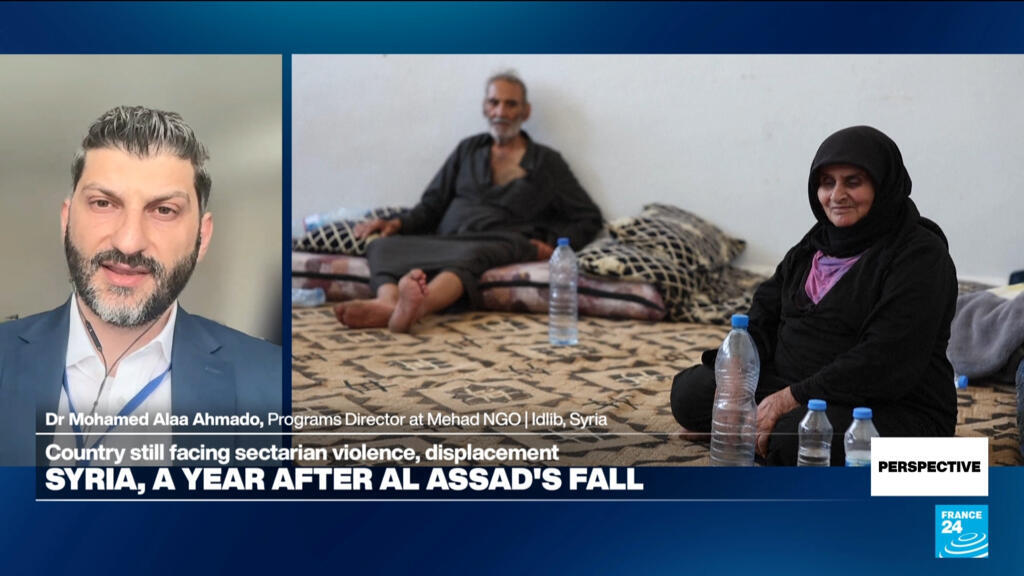
Amid continued sectarian violence, Syrians face mass displacement
PERSPECTIVE © FRANCE 24
08:48


Syrian troops then amassed around towns in the north and east to pressure Kurdish authorities into making concessions in the deadlocked talks with Damascus.

Kurdish authorities still hold key Arab-majority areas in the country's east, including some of Syria's largest oil ‍and gas fields. Arab tribal leaders in SDF-held territory have told Reuters they are ready to take up arms against the Kurdish force if Syria's army issues orders to do so.

Kurdish fears have been deepened ‌by bouts of sectarian violence last ​year, when nearly 1,500 Alawites were killed by government-aligned forces in western Syria and hundreds of Druze were killed in southern Syria, some in execution-style killings.

(FRANCE 24 with Reuters and AFP)


Syrian army enters areas east of Aleppo as Kurds withdraw
DW with AP, AFP, dpa, Reuters
16 hours ago16 hours ago

The Syrian army announced that it had taken control of Deir Hafer, a town previously under Kurdish control located east of Aleppo.

The Syrian army entered Deir Hafer, which is located 50 kilometers east of Aleppo
Image: Abdulfettah Huseyin/Anadolu Agency/IMAGO


The Syrian army announced on Saturday that it had taken control of Deir Hafer, a town located to the east of Aleppo.

The announcement came one day after the US-backed, Kurdish-led Syrian Democratic Forces (SDF) agreed to withdraw from the area.

The army announced on state television that it had established "full military control" of Deir Hafer. Meanwhile, reporters from news agencies on the ground witnessed troops deploying inside the town.

The Syrian military announced that they had also captured the Jarrah airbase, located east of Deir Hafer, as well as the nearby town of Maskana and more than 30 villages.

Later on Saturday, both sides accused each other of not adhering to the withdrawal deal. The Syrian army claimed that two of its soldiers were killed, while the SDF claimed that several of its fighters were killed.

What did SDF say?

On Friday night, after government forces began attacking SDF positions in Deir Hafer, Mazloum Abdi, the commander of the Kurdish-led fighters, announced on X that his group would withdraw from contested areas in northern Syria.

Abdi announced that the SDF would start moving east of the Euphrates River at 7:00 a.m. local time on Saturday.

Earlier on Friday, Syrian authorities said that thousands of people had fled the towns of Deir Hafir and Maskana to escape the ongoing conflict between government troops and the SDF.

Last week, deadly clashes erupted between government troops and SDF in Aleppo. The fighting ended with the evacuation of Kurdish fighters from three neighborhoods that had been taken over by government forces.


Why are Syrian army and SDF clashing?

Fighting broke out between the Syrian army and Kurdish-led forces as negotiations stalled between Damascus and the SDF over an agreement reached in March 2025. The agreement aimed to integrate their forces and allow the central government to take control of institutions, including border crossings and oil fields, in the northeast.

During Syria's civil war, the SDF was considered the United States' most important ally in fighting the extremist "Islamic State" group.

However, the transitional government led by President Ahmed al-Sharaa accuses the SDF of tolerating al-Assad loyalists and members of the banned Kurdistan Workers' Party (PKK) within its ranks.

In turn, Kurdish representatives distrust assurances by al-Sharaa, the former leader of the Islamist group HTS, that their rights will be protected. They also warn of a possible resurgence of the "Islamic State".

Edited by: Jenipher Camino Gonzalez


 Syria's new president issues decree granting Kurdish language and citizenship rights

Syria's new president issues decree granting Kurdish language and citizenship rights
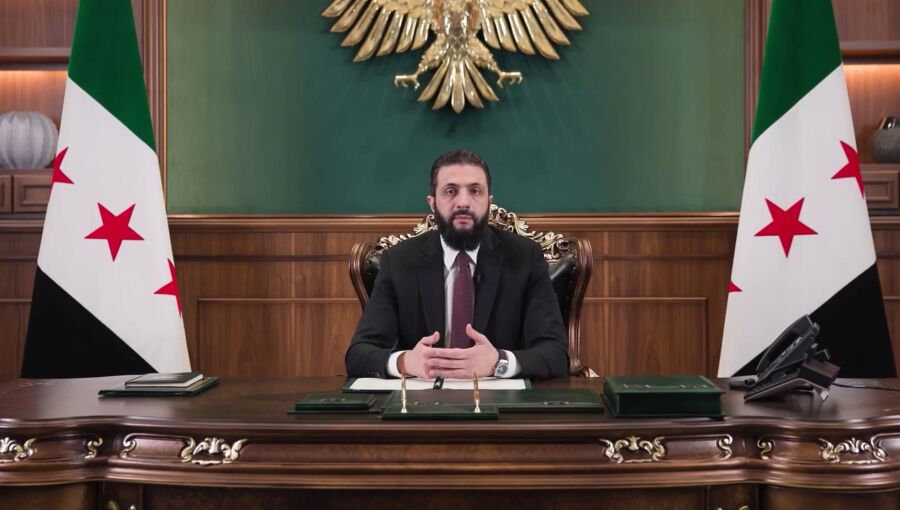
Syrian President Ahmed al-Sharaa in speech to nation on January 16 broadcast on national television. / bne IntelliNews
By bnm Gulf bureau January 16, 2026

Syrian President Ahmed al-Sharaa issued a decree on January 16 granting Kurdish citizens language rights and citizenship while declaring the Persian and Kurdish new year Nowruz a national holiday, state news agency SANA reported.

The decree affirms that "Syrian Kurdish citizens are an integral and authentic part of the Syrian people, and that their cultural and linguistic identity is an inseparable component of Syria's unified and diverse national identity," according to the document published by the president's office.

The decree followed violent clashes in Aleppo last week that killed at least 23 people and forced more than 150,000 to flee two Kurdish-run neighbourhoods, according to Syria's health ministry reported by Reuters. Kurdish fighters withdrew following the confrontations.

Kurdish was declared a national language and will be permitted for teaching in state-run and private schools in areas where Kurds constitute a significant percentage of the population, as part of the elective curriculum or cultural activities, in a turnaround of fortunres from recent weeks of clashes between Damascus authorities and Kurdish leaders in the north.

The decree annuls all exceptional laws and measures resulting from the 1962 census in Al-Hasakah province and grants Syrian citizenship to all residents of Kurdish origin living in Syria, including those previously unregistered, with full equality in rights and duties.

Nowruz, the ancient festival celebrating the start of the new year on March 21, was recognised as a paid official public holiday across Syria. The decree prohibits any discrimination based on ethnicity or language.

Al-Sharaa addressed the Kurdish population in a video message posted on social media, urging displaced Kurds to return safely without conditions other than laying down weapons.

"Our Kurdish brothers, descendants of Salah al-Din, beware of believing the narrative that we wish harm upon our Kurdish people. By God, whoever harms you is our adversary," al-Sharaa said.

The move came hours before a meeting between US Syria envoy Tom Barrack and Syrian Democratic Forces commander Mazloum Kobane in Erbil.

Barrack is expected to secure agreement for SDF withdrawal from territory west of the Euphrates River, a key demand from Syrian and Turkish governments.

Kurds constitute between 10% and 15% of Syria's population and represent the second-largest ethnic group, living primarily in northeastern regions, TASS reported.

Shortly after the decree's announcement, the Syrian military launched operations against positions "of the terrorist PKK militias and remnants of the ousted regime allied with the SDF organisation" in Dayr Hafir, east of Aleppo, i24NEWS reported.


Syrian activist Sarah Mardini acquitted of migrant trafficking in Greece

By AFP
January 15, 2026


Sarah Mardini, a 30-year-old Syrian who sought refuge in Germany in 2015, was present at the court - Copyright AFP Yamil LAGE

A Greek court Thursday acquitted Syrian competitive swimmer and activist Sarah Mardini, whose rescue of her sister inspired a hit Netflix film, and 23 others of migrant trafficking.

The verdict came almost a month after the start of their trial at a court on Lesbos, ending a legal ordeal for the activists since 2018.

They had been charged in the Greek island with “forming a criminal organisation” and “illegally facilitating the entry of third-country nationals into Greece”.

“All defendants are acquitted of the charges” because their aim was “not to commit criminal acts but to provide humanitarian aid”, presiding judge Vassilis Papathanassiou told the court.

Prosecutor Dimitris Smyrnis had earlier recommended their acquittal, emphasising that “no independent basis establishing the criminal liability of the defendants has been demonstrated”.

Mardini, a 30-year-old Syrian who sought refuge in Germany in 2015, was present at the court along with her Irish-German co-defendant Sean Binder, AFP said.

The 2022 Netflix film “The Swimmers” is inspired by the story of Mardini and her sister Yusra, who was one of 10 athletes who competed in the Rio Olympics for a Refugee Team.

Their family made the perilous journey across the Aegean Sea in 2015, and the sisters saved other people from drowning along the way.

This is the second time Greece has brought criminal charges against the volunteers.

In 2023, they were acquitted in another case involving offences related to their humanitarian work, including “espionage”.

In 2018, Mardini was part of a group of volunteer activists with the NGO ERCI trying to help migrants reach the island of Lesbos from Turkey.

She was arrested at the time and spent three months in prison in Greece.


Greek court clears group of humanitarian workers of migrant smuggling charges


By Estelle Nilsson-Julien
Published on 

After more than seven years of legal limbo, a Greek court has acquitted 24 defendants for charges related to smuggling migrants into Greece.

Two dozen humanitarian workers on trial for participating in search and rescue operations on the island of Lesvos accused of smuggling migrants were acquitted by a Greek court on Thursday evening.

After more than seven years of legal limbo, the Lesvos Court of Appeal cleared the defendants of charges, which included membership of a criminal organisation, facilitating the entry of third-country nationals into Greece and money laundering, for a period from 2016 to 2021.

The group faced up to 20 years in prison if convicted.

Presiding judge Vassilis Papathanassiou told the court that the defendants would be acquitted because their intention was "not to commit criminal acts but to provide humanitarian aid", according to Greek media reports.

Prior to the verdict, the prosecutor told the court that the charges ultimately lacked evidence, recommending the defendants' acquittal. Greek media reported that he underlined a lack of evidence to prove the existence of a hierarchical structure which would constitute a criminal organisation.

One aspect of the prosecution's arguments initially centred around the defendants' use of WhatsApp — a popular encrypted messaging service owned by Meta — to communicate about migrant boat arrivals, which was presented as evidence of a criminal conspiracy.

Yet, this was also dismissed by the judge who ruled that "a communication group on the internet cannot be regarded as a criminal organisation."

Euronews has contacted Greek authorities for comment, but not received a response at time of publication.

Once a tourist hotspot, Lesvos became the primary entry point for individuals and small boats seeking to reach Europe in 2015, the year that marked the peak of the continent’s migration crisis.

While Greek authorities said the protracted case was a matter of national border security, rights groups labelled it “baseless” from the outset and were supportive of the defendants.

"There was huge applause in the room after the verdict was handed, defendants were falling in each others' arms," Wies de Graeve, Amnesty International's Belgium executive director who was on site inside the Lesvos courtroom, told Euronews.

De Graeve qualified the outcome as “bittersweet", describing the “heartbreaking" testimonies shared by defendants on the stand, displaying "the trial’s psychological, financial and emotional implications on their lives.”

'Huge relief not to spend next 20 years in a cell'

Seán Binder, a German-Irish citizen who travelled to Lesvos in 2017 — in his early 20s at the time — was among those acquitted.

He worked as a search and rescue volunteer with the now-defunct Emergency Rescue Centre International (ERCI), a registered Greek humanitarian NGO.

"It is a huge relief that I will not spend the next 20 years in a prison cell, but at the same time, it is troubling that this should ever have been a possibility", said Binder.

"Today, it was made clear, as it should always have been, that providing life-saving humanitarian assistance is an obligation, not a crime", he added.

Speaking to Euronews in December, Binder explained that he had spent "most of his time on 'spotting shifts', looking out at the Turkish mainland a few (nautical) miles away, where smugglers push people into boats and send them over to seek asylum in Europe."

“The boats don’t want to be caught, so there aren’t any bright lights. Instead, we would be on the lookout for distress calls, screaming and shouting. I communicated with the coast guard weekly and would inform the port authority when we went out to sea," Binder recalled at the time.

Binder's work came to a halt when he was arrested alongside Sarah Mardini, whose story of swimming across a stretch of the Mediterranean was fictionalised in a 2018 Netflix film.

In 2023, the pair and a group of defendants were acquitted of misdemeanour crimes which included alleged forgery, illegally listening to radio frequencies and espionage. Outstanding misdemeanour charges for 16 other defendants were dropped the following year.

Aid workers slam Europe's migration enforcement

Humanitarian groups say this trial has deterred the work of humanitarian and rescue organisations on the Aegean islands, where the scale of such operations has been dramatically reduced.

They also argue it epitomises broader European pushback against individuals and organisations assisting migrants and asylum seekers: an estimated 124 others faced similar judicial proceedings in Europe in 2024 alone, according to Brussels-based NGO PICUM.

Reacting to the verdict, Eve Geddie, Amnesty’s Director of International European Institutions Office urged the EU to “introduce stronger safeguards against the criminalization of humanitarian assistance under EU law."

In recent years, European migration policy has shifted as the 27-member bloc's leaders increasingly embraced firmer views and explored new ways to curb arrivals.

Greece and its islands have recently experienced a fresh uptick in migrant boat arrivals, with more than 1,000 migrants arriving on Crete and nearby Gavdos mostly from North Africa, according to Greek authorities.

Smugglers operating from Libya increasingly favour Crete and Gavdos as destinations due to improved weather conditions and proximity to the North African coast, Greek officials said.

Greece recorded 39,495 illegal border crossings by the end of October 2025, an 18% decrease from 48,415 arrivals in the same period in 2024, according to official figures.


Turkey blocks calls for regime change in Iran as protests escalate

FEAR OF(IRAN)KURDISTAN REVOLUTION


Issued on: 17/01/2026 -

Turkey is opposing calls for regime change in Iran as security forces carry out a deadly crackdown on nationwide protests. The Turkish government accuses Israel of exploiting the unrest, and is leading efforts to block any military action against Iran – warning that a collapse of the regime could destabilise the region.

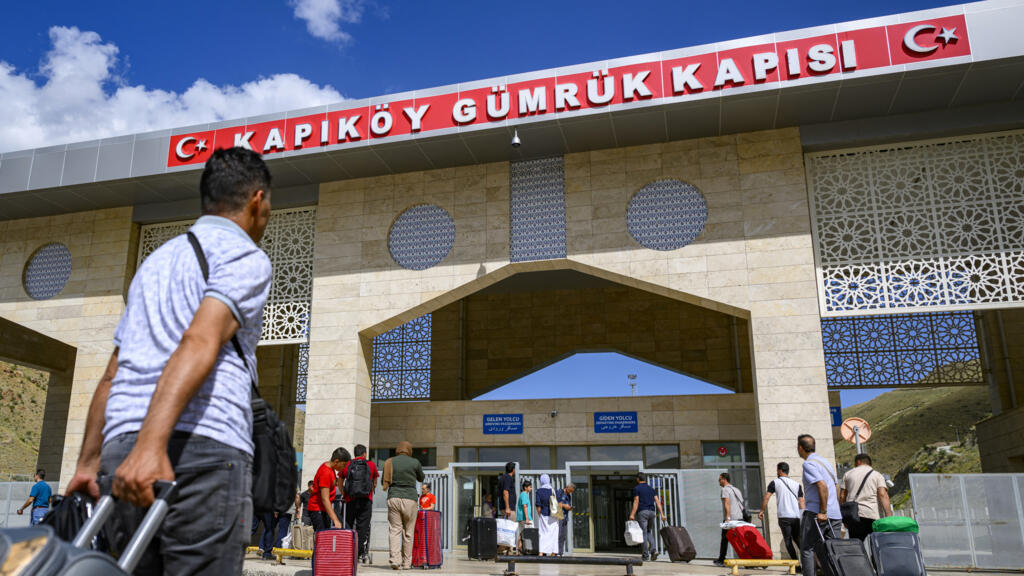
Iranians cross the Razi-Kapıköy border between Iran and Turkey, in north-eastern Turkey, on 18 June 2025. © AFP - YASIN AKGUL

Since protests began across Iran almost three weeks ago, Turkey has tried to play down the scale of the unrest. It has distanced itself from Western allies calling for regime change and avoided offering explicit support for those demands.

The protests began on 28 December after a currency collapse triggered demonstrations by merchants and traders in Tehran. The unrest quickly spread nationwide. Activists say more than 2,000 protesters have been killed.

Alongside Saudi Arabia, Oman and Qatar, Turkey has lobbied Washington against any military response to the killings. Turkish Foreign Minister Hakan Fidan said such a move would worsen the situation.

“We oppose military intervention against Iran; Iran must resolve its own problems,” Fidan said. “We want the issue resolved through dialogue.”

Fear of regional collapse

According to The Guardian newspaper, US President Donald Trump’s decision to step back from attacking Iran was influenced by Turkey and its Arab allies – who warned of regional chaos if an attack went ahead.

Turkey fears that Iran could descend into civil war similar to Iraq after the collapse of its regime, said Serhan Afacan, head of the Ankara-based Center for Iranian Studies, adding the consequences would be more severe due to Iran’s size and diversity.

“Iran has a population of about 90 million, including many ethnic minorities such as Turks, Kurds, Arabs and Baluchis,” Afacan explained.

“If a conflict erupts among these groups, it could result in a prolonged civil war. Any resulting immigration from Iran to Turkey could reach millions.”

PKK security fears

Turkey already hosts about three million refugees. Experts say Ankara’s biggest security concern is the Kurdistan Workers Party, or PKK, which has fought Turkey for an independent Kurdish state and has an Iranian affiliate, PJAK.

Although the PKK announced a ceasefire last year and pledged to disband, Ankara fears unrest in Iran could give the group new opportunities, said Iranian expert Bilgehan Alagoz, of Marmara University.

“Day by day, we have started to see the PKK groups in certain cities of Iran demanding some separatist demands, and this is the main concern for Turkey,” he said.

Ankara also accuses Israel of exploiting the situation in Iran.

“Israel has targeted all these PKK groups and tried to motivate the PKK groups inside Iran,” Alagoz said. “Any instability inside Iran can create a space for the PKK.”

Fidan has also accused Israel of manipulating the protests.

Turkey is already confronting another PKK-linked group in Syria, the Syrian Democratic Forces, which controls large parts of the country. Ankara accuses Israel of supporting the SDF, adding Iran to a broader Israeli-Turkish regional rivalry.

Energy pressure


Turkey could also clash with Washington over Iran if the protests continue. Trump has warned that countries trading with Tehran could face 25 percent tariffs.

Iran supplies Turkey with about one-fifth of its gas needs, according to Atilla Yesilada, an analyst at the Global Source Partners think tank. “Iran pumps 10 billion cubic metres of gas to Turkey every year, roughly one-fifth of total consumption,” he said.

That supply could theoretically be replaced by liquefied natural gas imports, but Yesilada warned that Turkey is already struggling to cut its dependence on Russia, its main energy supplier.

“Combine this with increasing American and EU pressure to cut gas purchases from Russia, and Turkey is in a very difficult situation,” he said.

By:  Dorian Jones


‘I saw 12 people collapsed in a pool of blood’: Eyewitness describes Iran’s deadly crackdown


INTERVIEW

A Tehran resident who took part in the protests that have roiled Iran before fleeing the country has described a deadly crackdown – with security forces firing indiscriminately at protesters with machine guns and assault rifles – in an exclusive interview with FRANCE 24.


Issued on: 16/01/2026 
FRANCE24
By: Mariam PIRZADEH


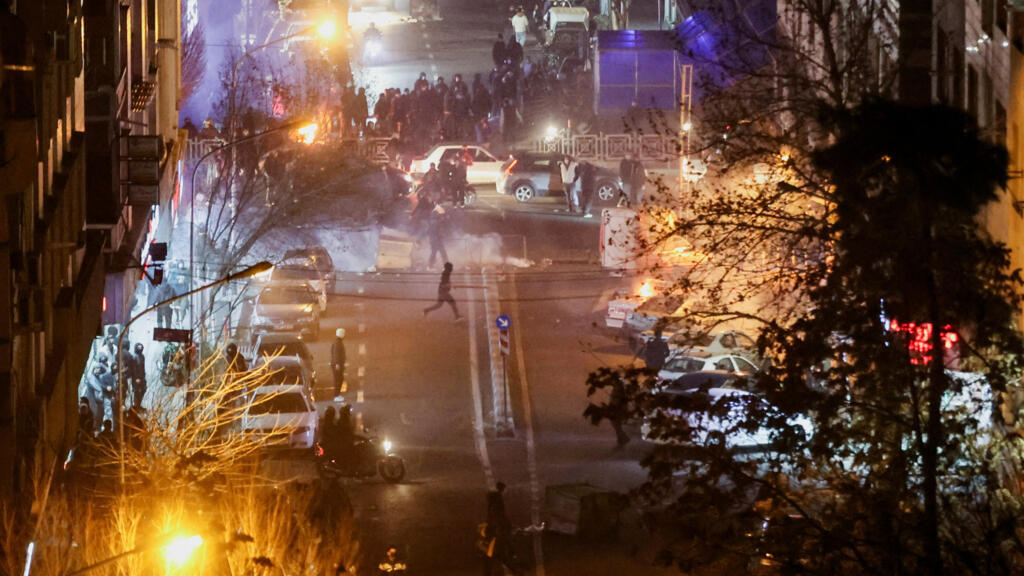
Protesters take part in a 12th night of protests in the streets of Tehran on January 8, 2026. © Stringer via Reuters

Iran has been largely shut off from the outside world since the authorities cut internet access last week in an attempt to smother massive nationwide protests against the country’s theocratic regime.

Activists say at least 2,637 people have been killed in a brutal crackdown on the protest movement, which kicked off in late December with demonstrations against crippling price rises before escalating into a broader challenge to Iran’s Islamist rulers.

FRANCE 24’s Mariam Pirzadeh spoke to a Tehran resident who took part in some of the largest protests between January 8-10, when the regime dramatically stepped up its deadly riposte.

The eyewitness, who spoke on condition of anonymity and has now sought refuge in Europe, described seeing paramilitary forces fire indiscriminately into the crowds of protesters, seemingly aiming to kill.

He also said he witnessed demonstrators call for the return of the shah, Iran’s pre-revolution monarch, and spoke of their hopes that US President Donald Trump would make good on his promise to come to the “rescue” of protesting Iranians.

Read his account below.


“I went out to protest on Thursday, January 8. There were so many people, I had never seen anything like it. There were millions of us in Tehran. I set off from a northern neighbourhood of the capital; there were people in every street, every thoroughfare. It was extraordinary.

There were mothers with strollers, lots of women, some in chadors (full-body garments that cover the head) shouting “Javid Shah!” (“Long live the shah!”), which was unimaginable for me to see. We were all shouting: “Death to the dictator, death to (Iran’s Supreme Leader Ali) Khamenei!”

There was obviously a lot of anger, but we were all peaceful protesters. We felt safe because there were so many of us, united. We told ourselves that they couldn't shoot us. The security forces were there, watching us.”

‘They aimed for the head and torso’

“I later learned that the security forces had assembled outside Tehran, in Karaj (a town northwest of the capital) in particular. At the end of the march, they opened fire.

The next day, on Friday, even more of us turned out to protest. And there were a lot of them (security forces) on the other side. They began by firing tear gas and flash-balls (a handheld projectile launcher) using metal pellets.

They rode motorcycles in pairs, one driving, the other shooting indiscriminately into the crowd. They aimed for the head and torso, to hit the protesters’ eyes and lungs. Everyone ran away, trying to regroup elsewhere.

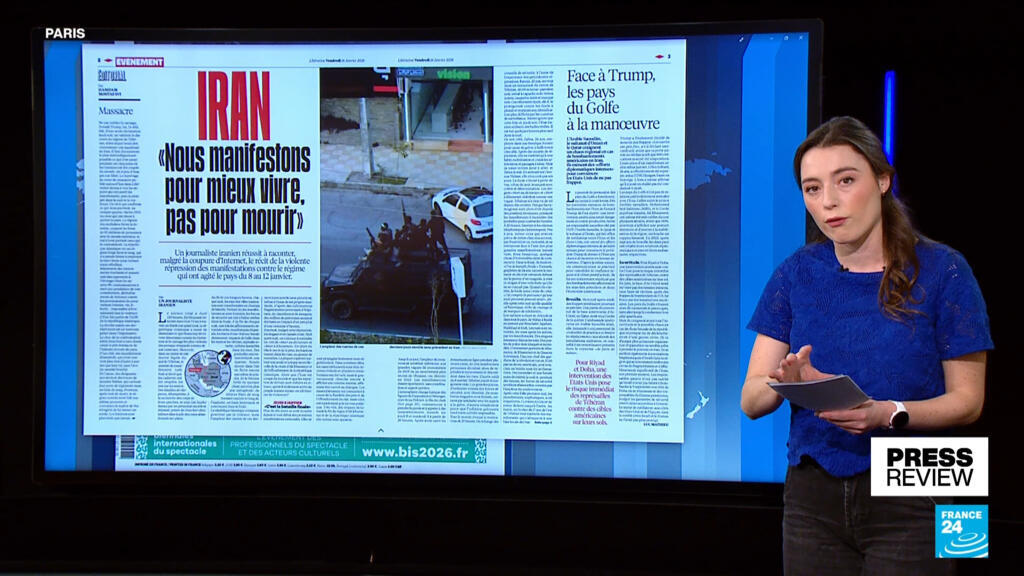
IN THE PRESS © FRANCE 24
05:22


The next day, there were more gatherings, with lots of young people. They were ready to fight, with stones in their hands, but the other side had machine guns.

The security forces changed their strategy on Saturday (January 10), riding their motorcycles into smaller streets where people gathered, shooting and then moving on to the next street. I was in a shop when I saw them firing machine guns and assault rifles at a group of people. Twelve people collapsed before my eyes, in a pool of blood.

A friend of mine lost his three children, ages 17, 20 and 23. He found the bodies of his two sons first, and later that of his daughter. She had been shot three times.

The Basij (pro-regime paramilitary force) demanded 400 million tomans per bullet, the equivalent of €2,700 (to recover her body). They said they would declare that she was a Basij, to inflate casualty numbers among the regime's forces, if he couldn't afford to pay.”

‘We are all thirsty for revenge’

“My friend refused. His relatives raised the money to recover the bodies of his three children. Everyone refuses, there is a real spirit of mutual aid.

The dead are so numerous they arrive in dozens of tipper trucks at the morgues and cemeteries. Everyone knows someone who has lost a loved one.

There is no turning back, we want to put an end to the Islamic Republic. I feel once again the atmosphere of the Islamic Revolution in 1979 (which toppled the previous regime).

At the airport, I saw families of regime officials leaving the country. It's impossible to quantify, but some are afraid. We’re living a revolution: We are all thirsty for revenge, we are filled with burning anger.

The only solution for Iranians I talk to, and myself, is Donald Trump: we are waiting for him, like the Messiah.”

This article was translated from the French original by Benjamin Dodman.

Iran's protests wane amid crackdown as US backs off intervention threats


The Iranian authorities' crackdown on nationwide protests has largely quieted the movement for now, residents said, as US President Donand Trump appears to have backed down from his threats of attacking Iran's leadership. Trump claimed on Friday that Iran had called off mass executions, while state media said that protesters were still being arrested.


Issued on: 16/01/2026 
FRANCE 24
Video by:  Siavosh GHAZI

Iran's deadly crackdown appears to have broadly quelled protests for now, residents said on Friday, as ⁠state media reported more arrests in the shadow of repeated US threats to intervene if the killing continues.

US President Donald Trump, whose repeated threats to act had included a vow to "take very strong action" if Iran executed protesters, said Tehran's leaders had called off mass hangings.

"I greatly respect the fact that all scheduled hangings, which were to take place yesterday (Over 800 of them), have been cancelled by the leadership of Iran. Thank you!" he posted on social media.

Iran has not publicly announced ​plans for such executions or said it had cancelled them.

Iran protest movement subsides amid intense crackdown
© FRANCE 24
01:12


The protests erupted on December 28 over economic hardship and swelled into widespread demonstrations calling for the end of clerical rule, culminating in mass violence at the end ‍of last week.

According to opposition groups and an Iranian official, more than 2,000 people were killed in the worst domestic unrest since Iran's 1979 Islamic Revolution.

But several residents of Tehran reached by Reuters said the capital had now been comparatively quiet for four days.

Drones were flying over the city, but there had been no ​sign of major protests on Thursday or Friday. Another resident in a northern city on the Caspian Sea said the streets there also appeared calm. The residents declined to be identified ​for their safety.


Prospect of US attack retreats

The prospect of a US attack has retreated since Wednesday, when Trump said he had been told killings in Iran were easing. But more US military assets were expected to arrive in the region, showing the continued tensions.

US allies, including Saudi Arabia and Qatar, conducted intense diplomacy with Washington this week to prevent a US strike, warning of repercussions for the wider region that would ultimately impact the United States, a Gulf official said.

Israel's intelligence chief David Barnea was also in the US on Friday for talks on Iran, according to a source familiar with the matter, and an Israeli military official said the country's forces were on "peak readiness".

As an internet blackout eased this week, more accounts of the violence have trickled out.


The US is expected to send additional offensive and defensive capabilities to the region, but the exact makeup of those forces and the timing of their arrival was still unclear, a US official said speaking on condition of anonymity.

The US military's Central Command declined to comment, saying it does not discuss ship movements.

Pahlavi calls for increased pressure

Reza Pahlavi, the US-based son of Iran's last shah who has gained increasing prominence as an opposition figure, on Friday urged the international community to ramp up pressure on Tehran to help protesters overthrow clerical rule.

"The Iranian people are taking decisive action on the ground. It is now time for the international community to join them fully," said Pahlavi, whose level of support inside Iran is hard to gauge.

Trump this week appeared to ‌downplay the idea of US backing for Pahlavi, voicing uncertainty that the exiled royal heir who has courted support among Western countries could muster significant backing inside Iran. Pahlavi met US envoy Steve Witkoff last weekend, Axios reported.

Iranian-Kurdish rights group Hengaw said that there had been no protest gatherings since Sunday, but "the security environment remains highly restrictive".

"Our independent sources confirm a heavy military and security presence in ‍cities and towns where protests previously took place, as well as in several locations that did not experience major demonstrations," Norway-based Hengaw said in comments to Reuters.

Reports of sporadic unrest


There were, however, still indications of unrest in some areas. Hengaw reported that a female nurse was killed by direct gunfire from government forces during protests in Karaj, west of Tehran. Reuters was not able to independently verify the report.

The state-affiliated Tasnim news outlet reported that rioters had set fire to a local education office in Falavarjan County, in central Isfahan Province, on Thursday.

An elderly resident of a town in Iran's northwestern region, where many Kurdish Iranians live and which has been the focus for many of the biggest flare-ups, said sporadic protests had continued, though not as intensely.

Describing violence earlier in the protests, she said: "I have not seen scenes like that before."

Video circulating online, which Reuters was able to verify as having been recorded in a forensic medical center in Tehran, showed dozens of bodies lying on floors and stretchers, most in bags but some uncovered. Reuters could not verify the date of the ‍video.

The state-owned Press TV cited Iran's police chief as saying calm had been restored across the country.

A death toll reported by U.S.-based rights group HRANA has increased little since Wednesday, now at 2,677 people, including 2,478 protesters and 163 people identified as affiliated with the government.

Reuters has not been ‌able to independently verify the HRANA death toll. ​An Iranian official told the news agency earlier this week that about 2,000 people had been killed.

The casualty numbers dwarf the death toll from previous bouts of unrest that have been suppressed by the state, including in 2009 and 2022.

(FRANCE 24 with Reuters)

Iran protest movement subsides in face of ‘brutal’ crackdown

By AFP
January 16, 2026


Iranians outside of the counry have also protested against the government as it cracked down on rallies - Copyright AFP KAREN MINASYAN
Stuart Williams

The protest movement in Iran has subsided after a crackdown that has killed thousands under an internet blackout, monitors said Friday, one week after the start of the biggest protests in years challenging the Islamic republic’s theocratic system.

The threat of new military action by the United States against Iran has also appeared to have receded for the time being, with a Saudi official saying Gulf allies have persuaded President Donald Trump to give the Iranian leadership a “chance”.

Protests sparked by economic grievances started with a shutdown in the Tehran bazaar on December 28 but turned into a mass movement demanding the removal of the clerical system that has ruled Iran since the 1979 revolution.

People started pouring into the streets in big cities from January 8 but authorities immediately enforced a shutdown of the internet that has lasted over a week and activists say is aimed at masking the scale of the crackdown.

The repression has “likely suppressed the protest movement for now”, said the US-based Institute for the Study of War, which has monitored the protest activity.

But it added: “The regime’s widespread mobilisation of security forces is unsustainable, however, which makes it possible that protests could resume.”

Norway-based rights group Iran Human Rights (IHR) says 3,428 protesters have been verified to have been killed by security forces, but warns this could be a fraction of the actual toll.

Its director Mahmood Amiry-Moghaddam said authorities under supreme leader Ayatollah Ali Khamenei have “committed one of the gravest crimes of our time”.

He cited “horrifying eyewitness accounts” received by IHR of “protesters being shot dead while trying to flee, the use of military-grade weapons and the street execution of wounded protesters”.

Lama Fakih, programme director at Human Rights Watch, said the killings since last week “are unprecedented in the country”.

Monitor Netblocks said that the “total internet blackout” in Iran had now lasted over 180 hours, longer than a similar measure that was imposed during 2019 protests.


– ‘Give Iran a chance’ –


Trump, who backed and joined Israel’s 12-day war against Iran in June, had not ruled out new military action against Tehran and made clear he was keeping a close eye on if any protesters were executed.

But with the belligerent rhetoric on all sides appearing to tone down for now, a senior Saudi official told AFP on Thursday that Saudi Arabia, Qatar and Oman led “a long, frantic, diplomatic last-minute effort to convince President Trump to give Iran a chance to show good intention”.

While Washington appeared to have stepped back, the White House said Thursday that “all options remain on the table for the president”.

White House Press Secretary Karoline Leavitt told reporters Thursday that “the president understands today that 800 executions that were scheduled and supposed to take place yesterday were halted”.

Iran is the most prolific user of capital punishment after China. But there has been no suggestion from Iranian authorities — or rights activists who have repeatedly condemned a recent surge in hangings before the protest wave — that so many people were due to be executed in a single day.

Attention had focused on the fate of a single protester, Erfan Soltani, a 26-year-old who rights activists and Washington said was set to be executed as early as Wednesday.

The Iranian judiciary confirmed Soltani was under arrest but said he had not been sentenced to death and his charges meant he did not risk capital punishment.


– ‘All Iranians united’ –


Asked about a New York Times report that Israeli Prime Minister Benjamin Netanyahu warned Trump against strikes, Leavitt said: “Look, it’s true that the president spoke with (him), but I would never give details about their conversation without… the express approval by the president himself.”

The US Treasury also announced new sanctions targeting Iranian officials on Thursday including Ali Larijani, secretary of Iran’s Supreme Council for National Security.

Despite the internet shutdown, new videos from the height of the protests, with locations verified by AFP, showed bodies lined up in the Kahrizak morgue south of Tehran, as distraught relatives searched for loved ones.

At the UN Security Council in New York, Iranian-American journalist Masih Alinejad, invited to address the body by Washington, said “all Iranians are united” against the clerical system in Iran.

Iran’s representative at the meeting Gholamhossein Darzi accused Washington of “exploitation of peaceful protests for geopolitical purposes.”

Iran's internet shutdown inflicts $60mn daily economic losses

Iran's internet shutdown inflicts $60mn daily economic losses
Iran's internet shutdown inflicts $60mn daily economic losses. / bne IntelliNews
By bnm Tehran bureau January 16, 2026

Iran's nationwide internet blackout is costing the country potentially $60mn daily as the shutdown enters its second week, with the cumulative damage already exceeding $700mn-$840mn, according to calculations based on macroeconomic data reported on January 16.

The nationwide connectivity cut commenced on January 8, following twelve days of nationwide protests. Following the government’s internet crackdown, protests continued to swell across major cities, including Astara, Shiraz, Isfahan, and the capital of Tehran.

The disruption has severed access to e-commerce platforms, online banking services and global trade networks as authorities maintain restrictions amid ongoing demonstrations. Iran's digital economy contributes between 6% and 6.5% of gross domestic product, valued at $27bn-$29bn annually from a projected 2026 GDP of $452bn, according to Emerging Markets intelligence research shared with bne IntelliNews.

With internet penetration at more than 80% across 92mn people, representing 73mn active users, the shutdown has eliminated digital sector output entirely, with those who use social media platforms particularly affected in recent days.

E-commerce platforms valued at $107bn in 2024 are facing significant disruption, with forecasts for 2025 projecting growth to $180bn by March 2026.

The sudden shutdown at the beginning of January forced people to use regular telephone lines inside the country to conduct business, which has dramatically damaged all sectors of the economy, the report noted.

Social media platforms including Instagram, Telegram and WhatsApp, which handle 83% of small business sales, remain blocked alongside broader internet access.

Payment processing volumes have declined between 50% and 90% during the outage, with limited offline alternatives available for small and medium enterprises, according to internal data.

Previous internet disruptions provide context for the current damage. A 2019 blackout cost Iran $1.5bn over one week, whilst restrictions between 2022 and 2023 tallied $1.6bn across 17 months.

Recent disruptions during a 2025 conflict with Israel resulted in $170mn losses over one month, Bloomberg reported in July.

The shutdown occurs as Iran confronts currency devaluation, trade challenges and protest-related capital flight wit the rial trading near an historic low of IRR1.42mn against the US dollar and above IRR1.65mn against the euro, the latest available data shows.

According to the EMI report, the technology sector is under pressure as startups close operations, undermining the government's ambitions to expand the digital economy's contribution to national output.

Protesters have had limited connectivity via Elon Musk's Starlink satellite services, though these appear to be few and far between and not used as part of a commercial connection for most businesses. 

Two weeks of restrictions already represent 0.2% of projected annual GDP, according to monitoring data from Cloudflare.

Iran's ongoing internet blackout has exceeded 190 hours of continuous disruption, surpassing the core duration of the 2019 shutdown, according to NetBlocks' monitoring data earlier on January 16. 

Most Iranian government websites still exist and function over the "National Information Network" or local intranet, but foreign networks, users will only reliably see stubs or gated front pages for a handful of top‑level portals and state media mirrors, with the bulk of .ir government content effectively dark to the outside world at present.

On January 12, Iranian security forces reportedly escalated their crackdown by conducting house-to-house searches to confiscate satellite dishes and Starlink internet equipment, targeting the limited technological resources available to citizens for accessing external communications.


By 


The nationwide uprising against the religious dictatorship in Iran has reached its twentieth day on Friday, January 16, 2026. Following a nineteenth day marked by the revelation of over 50,000 arrests and the regime’s use of drones to hunt down civilians, the people have shown no signs of backing down.

On Friday, the brave people of Zahedan took to the streets once again, defying a massive security crackdown. Simultaneously, the mullahs’ regime faces deepening diplomatic isolation for its crimes against humanity.

Day 20 Roundup: PMOI identifies martyrs, Zahedan protests, and direct fire in Dezful

On Friday, January 16, 2026, the twentieth day of the uprising saw the Baluch compatriots in Zahedan challenging the regime’s authority, while the PMOI released the identities of brave Resistance Unit members killed by suppressive forces.

Key highlights from today include:

  • PMOI Identifies Martyrs: The PMOI has released the names and details of several Resistance Unit members killed by regime fire, including an 18-year-old student in Tehran and three young workers in Kermanshah.
  • Zahedan Uprising: Despite a heavy military siege and mass arrests, the people of Zahedan took to the streets after Friday prayers, chanting “Death to Khamenei” and “Death to the dictator.”
  • Direct Fire in Dezful: Shocking video footage newly obtained from Dezful confirms that repressive forces used live ammunition in previous days, aiming directly at the heads of protesters in Sa’at Square.
  • Record Internet Blackout: The total internet shutdown has now exceeded 180 hours, surpassing the duration of the 2019 blackout, with no sign of restoration.
  • Portugal Closes Embassy: In a blow to the regime’s diplomatic standing, Portugal announced the temporary closure of its embassy in Tehran due to the “context of tension.”
  • US Congress Support: 59 bipartisan Members of Congress sent a letter rejecting both the current theocratic regime and the former monarchical dictatorship, supporting a secular, democratic republic.

PMOI publishes names of Resistance Unit members killed by regime

As the regime attempts to hide the true cost of the uprising behind an internet blackout, the People’s Mojahedin Organization of Iran (PMOI/MEK) continues to break through the censorship. The PMOI has identified several members of its Resistance Units who have been killed by direct regime fire during the protests.

These martyrs, ranging from university students to young workers, exemplify the courage of a generation determined to end the dictatorship. The identified martyrs are:


  • Zahra (Raha) Bohlouli-Pour: 18 years old, a student at the University of Tehran. She was shot dead on January 8, 2026, in Fatemi Street, Tehran.
  • Yasin Mirzaei Qaleh Zanjiri: A student shot dead on January 8, 2026, in Kermanshah.
  • Reza Ghanbari: 17 years old, a worker. He was killed during clashes on January 3, 2026, in Kermanshah.
  • Rasoul Kadivarian: 17 years old, a worker. He was killed during clashes on January 3, 2026, in Kermanshah.
  • Reza Kadivarian: 20 years old, a worker. He was killed during clashes on January 3, 2026, in Kermanshah.
  • Diar Pour-Chehriq: 32 years old, self-employed, from Salmas. He was shot dead on January 9, 2026, at Keshavarz Boulevard in Tehran.

Zahedan: “Death to Khamenei” echoes despite martial law atmosphere

On Friday, January 16, the brave people of Zahedan turned the weekly Friday prayers into a major protest against the regime. Reports indicate that the city has been under a heavy security siege for days.

The regime deployed a large number of forces around the Makki Mosque to control the crowds. Checkpoints were established at the city’s entrances and main streets, where citizens were subjected to body searches and inspection of their mobile phones.

Despite these repressive measures and the ongoing wave of arrests, citizens took to the streets after prayers, chanting “Death to Khamenei.” Mrs. Maryam Rajavi, President-elect of the National Council of Resistance of Iran (NCRI), saluted the people of Zahedan, stating that their demonstration “stands as a clear expression of the Iranian people’s firm resolve to bring down this criminal regime.”

Crimes against humanity in Dezful: Shooting to kill

Harrowing video footage obtained from Dezful, Khuzestan province, reveals the sheer brutality of the regime’s forces. In Sa’at Square (Imam Square), armed agents were filmed firing live ammunition directly at unarmed protesters. The footage indicates that the forces were aiming specifically at the heads of the demonstrators without any prior warning.

Diplomatic Isolation: Portugal closes embassy; US Congress rejects Shah and Mullahs

The international community is increasingly isolating the regime. Portugal has announced the closure of its embassy in Tehran, citing “tension” and the violent repression of demonstrations. The Portuguese Foreign Minister also stated readiness to join EU sanctions against the regime.

Meanwhile, a significant bipartisan letter from 59 U.S. Members of Congress to State Secretary Marco Rubio has clarified the stance of the American legislature regarding Iran’s future. The lawmakers emphasized that the Iranian people want a “secular, democratic, non-nuclear republic” and explicitly noted that Iranians have “rejected all forms of authoritarian rule, whether Iran’s former monarchy dictatorship or its current theocratic system.”

Global condemnation continues to pour in. Marko Mihkelson, Chairman of the Foreign Affairs Committee of the Estonian Parliament, described the current crackdown as “the bloodiest suppression of protests in modern history,” while Australian Foreign Minister Penny Wong condemned the brutality and advised Australians to leave Iran.

Internet blackout exceeds 2019 record

As the regime attempts to conceal its crimes, the internet blackout in Iran has now surpassed the duration of the infamous 2019 shutdown. NetBlocks confirmed that after 180 hours, there is still no restoration of connectivity. It is worth noting that in 2019, the true scale of the massacre only became known after the internet was restored.


Mahmoud Hakamian

Mahmoud Hakamian writes for The People’s Mojahedin Organization of Iran (PMOI),

 also known as Mujahedin-e-Khalgh (MEK)

  A timeline of events in Iran: From cost-of-living protests to political revolt

Issued on: 15/01/2026 
04:59 min


Iranians began taking to the streets in late December. What initially began with protests against the spiralling cost of living has grown into a nationwide protest movement against the country's theocracy led by Ayatollah Ali Khamenei. In response, authorities have cracked down hard. Will these protests lead to the end of the regime that has ruled Iran for 45 years? Our France 2 colleagues chronicle the events of the last two weeks, with FRANCE 24's Lauren Bain.