Saturday, May 08, 2021

Long-time Edmonton politician Amarjeet Sohi hasn’t decided if he will run for mayor in the upcoming election, contrary to a news report Thursday.
© Provided by Edmonton Journal Former member of Parliament and Edmonton city councillor Amarjeet Sohi said is considering running for mayor in the upcoming Edmonton municipal election, but hasn't made a final decision.

Sohi, a former member of Parliament and city councillor, told Postmedia Thursday afternoon he was surprised to see an article by The Hill Times citing anonymous sources that he would be officially entering the race to be Edmonton’s mayor race this month.

Instead, Sohi said he is “seriously considering” a run for mayor but hasn’t made a decision. He said he is continuing to engage with residents on what they would like to see in a leader and has no timeline for an announcement either way.

“I’ve lived in Edmonton for 40 years and I love our city and we have faced a number of difficult challenges over the last few years, particularly over the last 14 months living through a pandemic and we’re still living through that. But I also believe that coming out of this pandemic we will continue to face significant challenges as well as opportunities, so that is why I’m seriously considering to run to be Edmonton’s next mayor,” Sohi said. “It’s a huge, huge responsibility and I want to continue to engage with more Edmontonians over the next while to understand their priorities and what their ambitions are about our city. But I am deeply committed to our city and I want to play my part in providing that leadership.”

Sohi was elected as Ward 12 city councillor for three terms starting in 2007 before resigning in 2015 to run federally. He then served as the Liberal member of Parliament for Edmonton Mill Woods and took on the roles of minister of natural resources and minister of infrastructure and communities before losing his seat in the 2019 election.

If Sohi does enter the mayor’s race, he will join three other candidates who have served on Edmonton city council. Mayor Don Iveson announced last November he would not be running for a third time leaving an open race for the mayor’s chair. Current Ward 11 Coun. Mike Nickel is running for mayor for the third time ADVERTISING IN THE FAR RIGHT RAG WESTERN STADARD and former councillors Kim Krushell and Michael Oshry have confirmed their candidacy.

Cheryll Watson, Diana Steele, Brian Gregg, Rick Comrie, Abdul Malik Chukwudi and Augustine Marah have also registered, bringing the number of confirmed candidates to nine.

Aspiring candidates for both mayor and the 12 councillor seats have until Sept. 30 to officially register. Edmontonians will go to the polls on Oct. 18.

duscook@postmedia.com

twitter.com/dustin_cook3
USA DUMPING
Millions of Johnson & Johnson vaccine doses made at a Baltimore plant are reportedly being held across Europe, Africa, and Canada as a precaution


acooban@businessinsider.com (Anna Cooban)  
© Photo by Tasos Katopodis / Getty Images Emergent BioSolutions disposed of 15 million doses of J&J vaccine in March Photo by Tasos Katopodis / Getty Images


Johnson & Johnson vaccine doses are on hold in Europe, Africa, and Canada, the New York Times reported.

The doses were produced in a Baltimore plant around the time some batches were contaminated.

Emergent BioSolutions had to discard 15 million J&J doses in March after the incident.

Millions of doses of the Johnson & Johnson vaccine are sitting unused across three continents as national regulators assess their safety, The New York Times has reported.


Health officials across Europe, Africa and in Canada are reviewing batches of the J&J vaccine manufactured at a Baltimore plant after some were found in March to be contaminated by portions of a harmless version of the virus that is used to make the AstraZeneca vaccine, which is also manufactured at the plant.

Emergent BioSolutions, the biopharma company running the facility, had to dispose of up to 15 million doses after the incident.

An estimated six to nine million doses are on hold worldwide because they were manufactured during the time of the original contamination in February, according to the NYT.

Regulators in the EU, Canada and South Africa have said there was no evidence to show the doses they received were contaminated, but they required further testing. Some doses from a batch produced at the site are being used in Europe.

The Food and Drug Administration has not approved doses produced at Emergent's plant for use in the US, and did not say whether it had helped ship doses to other countries when asked by the NYT.

"In general, individual importing countries determine if a product meets that country's standards for importation," an FDA spokeswoman said in a statement to the NYT.

The pause threatens to slow down the vaccination programs of countries relying on the J&J vaccine, such as South Africa, which stopped using AstraZeneca's vaccine in February after a study suggested it offered "minimal protection" against a COVID-19 variant spreading through the country.

South Africa has one of the lowest vaccination rates of any country, while Europe and Canada also use vaccines by AstraZeneca, Moderna and Pfizer-BioNTech to make up for a shortfall of J&J shots.

Read the original article on Business Insider

Researchers work to authenticate Titanic passenger’s message in a bottle


Duration: 01:49 


A message in a bottle found on a beach at the Bay of Fundy in 2017 could actually be a letter written by a 13-year-old girl who was on the Titanic. Experts are studying it to confirm, but they believe it's possible the letter is authentic.
Tories accused of politicizing education

Nearly 15 years after he was hired by Manitoba Education, John Finch retired as a public servant this year — earlier than planned — because of his concerns about the growing politicization of the department in charge of K-12 schooling.

Finch, 56, worked in consultant, managerial, and co-ordinator roles during his career in the department; most recently, he was in charge of learning support and technology, a unit responsible for all curricular areas outside of numeracy and literacy.

He left his post in early January, two months before the Pallister government released the kindergarten to Grade 12 review, an action plan to address it, and Bill 64 (Education Modernization Act).

“I really wasn’t seeing the values that I had reflected in the department any longer; there’s no educators in the senior ranks,” he told the Free Press.

“Assistant deputy ministers have traditionally been educators, but that’s not the case now, and so you have people that don’t necessarily understand how schools function making the decisions on what should happen within schools.”

Finch, who got his start in education as a public school teacher, had planned to retire in a year’s time, but said the prioritization of policy over educational philosophy, in part, prompted an earlier leave. He sees Bill 64, which aims to overhaul the existing school governance model, as a political decision rather than one related to curriculum or education management.

“I can’t think of anyone in the education department who would think about removing elected trustees from the education milieu of Manitoba. It’s something that I think took everybody by surprise. It certainly did not come from the education department. It wasn’t even in the K-12 review,” Finch said.

The commission tasked with examining all things education recommended the province downsize its school board roster into six to eight regional boards, and create both appointed and elected trustee positions for them.

Instead, the province wants to replace all 37 English boards with a centralized authority run by government appointees who will oversee 15 regions. The new model will allow for administrative services to be streamlined. It also calls for approximately $40 million in the $2.5-billion education budget to be redirected to classrooms, according to Education Minister Cliff Cullen.

Amalgamation of some kind makes sense, Finch said, but what has been proposed — Winnipeg as a single region with more than 100,000 students, 41 times the size of the smallest region, a combination of Evergreen and Lakeshore — “makes absolutely no sense from a management perspective.”

“Hanover, Seine River, the areas that were (not) combined have a political perspective that would match the government perspective,” he added.

The contents of the legislation only reinforce his worry that major curriculum developments in the works could be subject to political involvement, given various new advisory councils made up of external appointees will be created to consult on everything from curriculum to funding.

The challenges the department faced in overseeing dozens of entities during the COVID-19 pandemic are being used as rationale for change.

Finch, however, said divisions were “far more responsive” in comparison to government-led efforts, which require a time-consuming approval process, when it came to everything from setting up remote learning to providing nutrition support.

“Some of the school divisions, for example, went way beyond what we ever had envisioned — Winnipeg School Division was using their culinary arts kitchens to send meals to students at home, to the magnitude of a couple thousand per day,” said Finch, who worked on the department’s COVID-19 nutrition program. “The response that we had for the home nutrition learning program didn’t come close, and it took three months for our nutrition program to get off the ground.”

He credits Deputy Education Minister Dana Rudy for playing a key co-ordination role in communicating with superintendents about their needs throughout the pandemic, but said he doubts scrapping agile divisions will result in a more responsive system.

Rudy was executive director and chief allied health officer of Winnipeg Regional Health Authority before she moved to Manitoba Education in February 2020 — one month before the province was originally scheduled to release the K-12 review. The current assistant deputy minister’s résumé includes leadership roles in the families and finance departments.

Cullen, who is in charge of the education portfolio, has a background in agricultural and environmental sectors.

In a prepared statement Thursday, he said, “We know not everyone will agree with decisions made by their current elected government.

“The role of Manitoba Education is to provide leadership and oversight to the system and ensure a consistent standard of high-quality education is available to all students across the province. The strategic direction for the education system set by the department is grounded in educational philosophy and informed by expert advice including that from educators.”

The education minister added the province is confident in the qualifications and credentials of its dedicated ministry staff and will continue to engage educators on the future of the public school system.

Meantime, Finch said he hopes there is some “sober second thought” about the changes on the table.

“We have a really good education system in the province and the way that it’s being characterized… it’s basically saying, ‘(Teachers), you’re not doing your job so government is going to step in and make it better,’ without really specifying how they’re going to make it better.”

Maggie Macintosh, Local Journalism Initiative Reporter, Winnipeg Free Press
After 4 years, bill requiring sexual assault training for new judges becomes law

A long-awaited bill that would require prospective judges to undergo training in sexual assault law was finally adopted by the Senate Thursday, clearing the way for it to be officially added to the federal Judges Act and Criminal Code

  
© Adrian Wyld/The Canadian Press A gavel sits on a desk in Ottawa, Wednesday February 13, 2019.

Bill C-3 quickly received royal assent after passing through third reading in the Senate. The bill officially became law once the Speaker of the House of Commons was informed shortly afterwards.

The bill, which will also require judges to commit to continued education in how systemic racism and discrimination factors into assault cases, unanimously passed the House last November.

Read more: Rona Ambrose’s judicial sex assault law training bill gets 2nd shot as Liberals retable

It began as a private members bill introduced in February 2017 by former interim Conservative leader Rona Ambrose, which the Liberal government supported.

The bill had made it all the way to the Senate in May 2017, but it was held up there for two years and ultimately failed to pass before the 2019 federal election.

Justice Minister David Lametti reintroduced it as a government bill in February 2020 with amendments that senators had proposed to Ambrose's bill. But he then had to reintroduce it again last fall after Parliament was prorogued by Prime Minister Justin Trudeau in late August.

Reintroduction of bill requiring sexual assault law training for judges to break down myths, stereotypes: Lametti


Lametti had urged the Senate in March to pass the bill quickly and avoid adding further amendments that he feared would doom the bill once again.


"This bill sends a clear message to all survivors of sexual assault, and to all Canadians," Lametti said on Twitter after the bill passed the Senate.

"The justice system must serve you fairly and respectfully. Sexual assault cases will be heard without the influence of myths and prejudices."

He thanked Ambrose for her "support and cooperation" as the bill wound its way through Parliament.

MPs working across party lines to pass bill that aims for mandatory sexual assault law training for Canadian federal judge

Trudeau says Conservatives ‘played politics’ with Rona Ambrose’s proposed legislation

The idea that judges need added training to hear sexual assault cases was driven by rulings that critics have said relied on stereotypes about victims of sexual abuse.

The bill would also require the Canadian Judicial Council to report on continuing education seminars offered on matters related to sexual assault law and social context.

It also amends the Criminal Code to require judges to put their reasons for decisions in sexual assault proceedings on the record.

— With files from the Canadian Press

Judges' sexual assault training bill receives royal assent after clearing the Senate

OTTAWA — Rona Ambrose says she had no idea it would take so long and require such determination to see that new judges are properly trained in sexual assault law.
© Provided by The Canadian Press

Four years and three attempts later, Bill C-3 received royal assent in Parliament on Thursday evening.


The legislation will require new federally appointed judges to agree to take training, including learning about rape myths and stereotypes and how to make sure biases about race, gender and other social factors do not influence their decisions.

It will also require judges to put their reasons on the record when ruling on sexual assault cases.


The legislation originated as a private member's bill that Ambrose presented in 2017 while she was interim Conservative leader, but after it received cross-partisan support in the House of Commons, it stalled in the Senate.

Ambrose said there were certain senators who purposely tried to hold up the bill with the intent of quashing it. These individuals, whom she did not name, posed questions and made statements about the bill that she says were sexist and misogynistic.


"There were senators who knew that they could hold it up. They said things like, 'This will sway the legal system in favour of victims,' which was the most bizarre thing I've ever heard because it was just about education, and things like, 'This is just another part of the Me Too movement,' " she said in an interview Friday.

"It was misogyny, without a doubt. Sexism and misogyny, and from corners I didn't expect."

The Liberal government supported her original bill, but because of the stalling tactics employed in the Senate, it died when Parliament was dissolved for the 2019 election.

The Liberals revived it last year, making it a government bill that could not be killed in the Red Chamber.

Justice Minister David Lametti said the new law will help ensure survivors of sexual assault are treated with respect and dignity in their interactions with the criminal justice system.

"We expect that these changes will have a broad and positive impact that reach beyond sexual assault matters," he said Friday.

"Judges will benefit from new tools and perspectives that they can apply in all of their work."

Lametti gave full credit to Ambrose for championing the passage of this legislation, which she has continued to do even though she is no longer involved in federal politics.

"Rona's ongoing support and collaboration were important to getting this bill through the parliamentary process, and I wanted to thank her, personally, for her commitment to this issue and to this legislation."

Looking back over the long road to royal assent, Ambrose said she was emotional when she learned the bill had finally passed.

Her thoughts were with the victims of sexual assault who have reached out to her over the last four years, many of whom disclosed their painful experiences, including triggering and re-victimizing ordeals within the justice system.

It was these women's stories that kept her driven to ensure federal judges are properly applying Canada's laws when it comes to sexual assault and rape victims.

"This isn't the be-all and end-all that's going to solve all kinds of things, this is just a small thing that we needed to do, but it's incredible that a small thing took so long to get done," Ambrose said.

"Because the truth is institutions are pretty opaque at times. We're seeing that with the military now too and with the RCMP — there are a lot of great things about our institutions, but willingness to reform themselves is not one of them."

The bill was sparked by some high-profile rulings that led to public outcry. Alberta judge Robin Camp asked a sexual-assault complainant in 2014 why she couldn't keep her knees together; Halifax judge Gregory Lenehan said "a drunk can consent" while acquitting a taxi driver of sexual assault on a passenger in 2017.

Camp resigned from the bench after the Canadian Judicial Council eventually recommended he be removed. Lenehan was cleared of misconduct, though a committee examining his decision said his words were "ill-considered."

The new law will only apply to federally-appointed judges and training will not be mandatory for those already on the bench, in order to respect the principle of judicial independence.

However, the training will be available for all judges who wish to take it, Lametti said.

"We can't force judges who are currently sitting to undergo training, but we do hope that this will create a positive environment to receive that training, and hopefully we will, with time in particular, have a much better-equipped bench that will instill confidence in Canadians."

Some provinces have begun taking steps toward adopting similar mandated or voluntary training programs for judges, including Prince Edward Island, which passed legislation in 2018, and Saskatchewan, which committed to developing a training program for judges, lawyers and other justice system professionals in 2019.

Ambrose said she hopes all the provinces and territories will pass legislation similar to the new federal law, although she is aware of intense push back from the legal and judicial community in many jurisdictions that has made this challenging.

She plans to continue working with any province that wish to make courtrooms a safer and more sensitive place for victims.

"Some of the things that judges have said and some of the mistakes that they've made are just unacceptable for people who hold those positions," Ambrose said.

"To me, the easiest way to rectify that is to make sure they have the right education and training, so yeah, I'm going to keep pushing for it at the provincial level because that's where a lot of these cases are."

This report by The Canadian Press was first published May 7, 2021.

The Canadian Press


DNA used to ID sailor from doomed 1845 Franklin Expedition with living relative

Logan Turner


When Sir John Franklin, two ships and some 130 sailors left a British port in 1845, they hoped to successfully navigate the fabled Northwest Passage through the Canadian Arctic and into the Pacific Ocean.

Last spotted in Baffin Bay later that year, the ships disappeared and every crew member perished. The expedition reportedly resulted in the greatest loss of life event in the history of polar exploration, and left more questions than answers about what happened.

But 176 years later, a DNA match has identified the skeletal remains of a sailor aboard HMS Erebus as Warrant Officer John Gregory, the first time genetics have been used to name any of the officers and crew.

In a study recently published in the Polar Record journal, scientists said the discovery provides clues about the final movements of the Franklin expeditioners.

"We now know that John Gregory was one of three expedition personnel who died at this particular site, located at Erebus Bay on the southwest shore of King William Island," said Douglas Stenton, an adjunct professor of anthropology at the University of Waterloo in Ontario and co-author of the study.

© Supplied by Robert W. Park Douglas Stenton, an adjunct professor of anthropology at Ontario's University of Waterloo, works to excavate the remains of an unidentified crew member of the 1845 Franklin Expedition through the Northwest Passage. Gregory's remains were found in the same area.

Since the mid-19th century, the skeletal remains of dozens of crew members had been found on King William Island, but none had been positively identified.

"The identification proves that Gregory survived three years locked in the ice on board HMS Erebus. But he perished 75 kilometres south," added archeology anthropology professor Robert Park, co-author of the paper who's also at the University of Waterloo.

The remains of Gregory and two others were first discovered in 1859 and buried in 1879, before being rediscovered in 1993 and excavated two decades later to extract DNA samples. To date, the DNA of 27 members of the Franklin Expedition have been extracted, yielding important information about their estimated health, stature and age at death, according to a news release.

Stephen Fratpietro, the self-described DNA guy with Paleo-DNA lab at Thunder Bay's Lakehead University and another author of the study, was present when the DNA matched with a sample from one of Gregory's living relatives.

"I had to double check my results because up to that point, I think we tested 16 or 17 individuals and we hadn't had any matches at all," said Fratpietro.

Since 2013, Fratpietro and his team have been working with remains of crew on the Franklin Expedition to develop a database of different DNA profiles. Meanwhile, a genealogy team has been trying to "scout out possible living descendants" of the original expeditioners, and ask them to donate DNA to help identify other remains.

In this case, the living descendant was John's great-great-great grandson, Jonathan Gregory, of Port Elizabeth, South Africa.

"Having John Gregory's remains being the first to be identified via genetic analysis is an incredible day for our family, as well as all those interested in the ill-fated Franklin expedition," Jonathan said in a release.

Fratpietro said this discovery gives the research team hope they'll identify the remains of the 26 others, and help answer the questions shrouding the centuries-old mystery.

"We want to know what happened, what killed them, how they moved, why were some remains found in this part of the Arctic … just basically, what happened in those years where they were all stuck in the

'Kiss baby for me': First use of DNA to link Franklin expedition sailor to descendant
© Provided by The Canadian Press

Canadian archeologists have used DNA analysis to identify the remains of a Franklin expedition sailor and to link him with his modern-day descendants.

"The news came by email and I was at work," said Jonathan Gregory of Port Elizabeth, South Africa, the great-great-great-grandson of John Gregory, whose remains were found on King William Island in Nunavut.

"I literally needed to hold on to my seat when I was reading."

It's the first time genetics have been used to identify any of the 129 officers and crew on the expedition, which was lost in the Arctic in 1848 while searching for the Northwest Passage. The men's fate has given rise to one of the North's most enduring mysteries, now slightly less so.

"The real story lies in learning as much as we can about the men who perished on this expedition. This was an opportunity to do that," said Doug Stenton, a University of Waterloo archeologist who co-led the research.

Capt. John Franklin led an expedition out from England in 1845 to look for a sea lane to Asia over the top of North America. HMS Erebus, its sister ship HMS Terror and the officers and seamen aboard both never returned.

More than 30 expeditions tried to find them. A few artifacts, graves and horrible tales of cannibalism were all that was uncovered.

Three sailors were found in marked graves on Beechey Island and another three men were tentatively named through artifacts buried with them. Through a blend of Inuit oral history and high-tech surveys, the Erebus was found in 2014 and the Terror two years later.

But remains found at three sites on King William Island — about 100 kilometres from the ships — were never identified.

The 23 sailors died after having spent three years frozen in sea ice. They abandoned their ships and hauled Royal Navy lifeboats across the tundra on sledges in an attempt to escape.

In 2013, Stenton investigated one of the sites — an isolated cairn atop the partial skeletons of three men.

"I paused and just stopped and looked around and imagined," recalled Stenton, whose research is published in the journal Polar Record.

"These men were hauling heavily laden sledges with boats. Snow blindness, frozen fingertips ... It's pretty daunting trying to visualize what it was like."

Stenton and his colleagues have analyzed DNA from 27 of Franklin's crew.

That DNA was mentioned in a museum show after the excavation of the two ships. A sign posted in that show asked visitors with family links to the expedition to get in touch.

The Gregory family has long known about its Franklin connection.

"We've got lots of memorabilia," said Gregory, 38. "It was something we always knew of."

So when a relative of his in British Columbia heard about the request and passed it along, Gregory reached out. Once it seemed possible that there was a direct paternal connection, researchers sent him a DNA testing kit.

Eventually, the results came in. Gregory, who manages a retail outlet in Port Elizabeth, still remembers the shock of reading the message.

"'We are pleased to inform you it was a positive match,' (it said)."

"It was an incredible day for me and my family."

John Gregory wasn't even a sailor. Contemporary records show he was an engineer at the firm that made the steam engines in Franklin's ships. He went along to mind them as a newly minted warrant officer.

There are no pictures of John Gregory. The research team has constructed a bust of what he may have looked like.

"I definitely think it had a resemblance to my grandfather," said Gregory. "My mom is still alive and she's extremely proud."

John Gregory's remains were returned to the site in 2014 and placed in a new cairn.

His great-great-great-grandson said there's just one more thing he'd like to do — stand on the lonely, remote spot where his namesake ancestor suffered and died.

"I think that would be quite eerie," he said. "But I like to believe that closure would be a good word, that we've joined the dots."

More dots could be joined, Stenton said.

"We're always working on this. We're very interested in anyone else who is a descendant."

John Gregory himself was last heard from in a letter to his wife Hannah and their five children dated July 9, 1845, posted from Greenland. It closes:

"Give my kind Love to Edward, Fanny, James, William, and kiss baby for me — and accept the same yourself."

This report by The Canadian Press was first published May 4, 2021.


Researchers work to authenticate Titanic passenger’s message 

in a bottle


Global News
Veteran intelligence officer fought for mandatory masking months before COVID-19 outbreaks at CSIS
Duration: 02:09

A veteran staffer at Canada’s security intelligence service, CSIS, is slamming his employer for its initial refusal to have a mandatory masking policy amid the COVID-19 pandemic. CSIS only recently made this an office-wide rule after its building had already been hit with coronavirus outbreaks this year.
CANADA
Opinion: There's no replacement for paid sick days

Judy Henley is president of CUPE Saskatchewan.

Saskatchewan is struggling with an intense third wave of COVID-19, fueled by more infectious and deadlier variants of concern. This third wave continues to push our health-care system to the brink. Admissions to intensive care units have never been higher. Increasingly, those hospitalized are younger and previously healthy. Our rate of active cases and hospitalizations remain among the highest in the country. Too many Saskatchewan residents are losing their lives during this pandemic.

© Provided by Leader Post Paid vaccination leave is one step, but full employer-paid sick days are needed, writes CUPE Sask. president Judy Henley.

Many COVID-19 outbreaks are occurring in workplaces.

Health officials have repeatedly urged workers to stay home if they are feeling unwell, develop COVID-19 symptoms or have been exposed to the virus.

This is all good advice, but not a viable option for most workers.

According to the latest data, 58 per cent of Canadian workers reported having no access to employer-paid sick leave. Among those earning less than $25,000 per year, 74 per cent said they had no paid sick leave. Those without paid sick leave are more likely to be in low-wage, precarious jobs and are disproportionately women, Indigenous and racialized workers.

Too many workers cannot afford to lose even one day of pay. The choice comes down to staying home or going to work sick so they can pay rent or put food on the table. Tragically, those infected at work will often infect family members, despite best efforts to isolate. No one should be put in this situation.

Video: Manitoba announces 5-day paid sick leave program (Global News)

For some time, the labour movement has called for paid sick leave to be made available to all workers, whether unionized or non-unionized. As the COVID-19 pandemic drags on, a growing chorus of doctors and public health experts have added their voices to these calls.

In early April, nearly 300 Saskatchewan doctors signed an open letter calling on the provincial government to, among other things, provide paid sick time for essential workers . The Ontario COVID-19 Science Advisory Table also recently called on the Ford government to enact paid sick leave to essential workers to limit the spread of the virus.

After much pressure, the Ontario government finally announced that it will temporarily require employers to provide three days of paid sick leave, which can then be reimbursed by the province. This is clearly inadequate, but sadly better than what most provincial governments provide. The federal labour code and Prince Edward Island mandate three employer-paid sick days a year, while Quebec offers one annual paid sick day. The remaining provinces don’t mandate any paid sick leave.

The Saskatchewan Party government has resisted calls to enact paid sick leave. They point to the paid vaccination leave passed earlier this year and job protection leave enacted last year to provide expanded unpaid leave without the requirement of sick notes. While these are welcome initiatives, they do not go far enough and most certainly do not replace the need for paid sick days.

Our provincial government, like others, also passes the buck by pointing to the Canada Recovery Sickness Benefit. This program excludes many workers, is cumbersome, does not guarantee full replacement of income and is not immediate. Workers who wake up sick in the morning need to know immediately that they will not be financially penalized if they stay home sick.

Our provincial government needs to get serious about protecting front-line workers from COVID-19 and promoting public health. The government needs to immediately legislate a minimum of 10 employer-paid sick days for all workers in Saskatchewan. The province could set up a fund to reimburse small businesses to ensure they are not unduly impacted while struggling through the pandemic. Paid sick days need to be permanent, available during COVID-19 and beyond, and not conditional upon receipt of a sick note.

Public health experts and doctors all agree: Paid sick leave should play a key role in getting us out of this pandemic. Our provincial government must act now.


Economy lost 207,000 jobs in April, unemployment rate rises, Statistics Canada says

OTTAWA — Canada's labour market lost 207,000 jobs last month as a spike in COVID-19 variant cases led to renewed public health restrictions and raised concerns about longer-term economic consequences from the pandemic
.
© Provided by The Canadian Press

The unemployment rate rose to 8.1 per cent from 7.5 per cent in March, Statistics Canada reported. It would have been 10.5 per cent had it included in calculations Canadians who wanted to work but didn’t search for a job.


Ontario led the way on losses regionally with a drop of 153,000, and British Columbia witnessed its first decrease in employment since a historic one-month plunge in the labour market in April 2020.

Nationally, losses were heavier in full-time than part-time work, with retail and young workers hit hardest as a resurgence of the virus and its variants forced a new round of restrictions and lockdowns.

With lockdowns continuing into May, CIBC senior economist Royce Mendes said more losses this month are possible.

Leah Nord, senior director of workforce strategies with the Canadian Chamber of Commerce, said the latest setback in the labour market will carry a long-term impact on the workers and businesses affected, particularly in high-touch sectors that are falling further behind.

"It's not a K-shaped recovery," she said, "it's a K-shaped crisis where the up is going up and the down is going down and that's where the scarring is going."

Scarring, or longer-term economic setbacks for the country, could be seen in ranks of the long-term unemployed, which climbed to 486,000 as about 21,000 more workers crossed the threshold of being without a job for six months or more.

Among them are 312,000 workers who have been unemployed for at least one year, up from the 99,000 recorded pre-pandemic, meaning almost one in every five unemployed workers have been searching for a job for a year or more, noted Behnoush Amery, senior economist at the Lamour Market Information Council.

The concern is that as time goes on, it will become harder for those workers to find new jobs, or they may drop out of the workforce altogether and set back any recovery.

"The good news is that these individuals are still looking for work and have not left the labour market entirely," Amery said.

"The bad news is that there is a risk that they leave the labour market entirely. If that happens, encouraging them to come back ... is challenging and expensive."

With April's losses, the country was short about 503,100 jobs, or 2.6 per cent below levels in February 2020 prior to the pandemic, but Statistics Canada suggested the actual gap may be larger.

Although population growth over the last year has slowed with fewer immigrants arriving in the country, the overall workforce is still about 302,000 higher than it was in February 2020.

The gap would be closer then to 686,000 jobs to bring the employment rate even with where it was pre-pandemic.

"Getting back to pre-pandemic levels is just a milestone, but it's not victory," said Jimmy Jean, chief economist at Desjardins. "It means that there's more to be created if you want to recover."

The federal government will be keeping a close eye on the workforce numbers nearing the summer and fall to see what, if any, changes might be needed to the package of pandemic aid.

Last month's federal budget proposed extending aid through the summer to hard-hit workers, and keep easier access to employment insurance in place for another year.

"We're hoping with the economy being where we expect it to be because of where we expect vaccination levels to be that we're going to see this reopening and recovery," Employment Minister Carla Qualtrough said in a recent interview.

"If we had a fourth wave, if that isn't the case, we are absolutely able and focused on course-correcting, as we've always done, as early as possible going into the end of September when these current measures expire"

On Friday, Conservative Leader Erin O'Toole blamed the federal government's vaccination efforts for April's jobs losses when asked what level of responsibility provinces needed to take for the workforce setback.

"The provinces have done their best with limited vaccines, limited rapid tests and limited information from the federal government." O'Toole said.

NDP Leader Jagmeet Singh called for sector-specific support to the tourism, service and live entertainment industries, as well as more relief benefits, particularly to help women who have given up work to take care of children and loved ones.

"A lot of women are choosing — not choosing; they don’t have a choice, they can’t go back to work," he said.

— With files from Christopher Reynolds and Stephanie Taylor

This report by The Canadian Press was first published May 7, 2021.

Jordan Press, The Canadian Press
Two lions test positive for Covid-19 in Indian state Uttar Pradesh

By Meenketan Jha, Manveena Swati and Eoin McSweeney, CNN 

Two lions at the Etawah Safari Park in the northern Indian state Uttar Pradesh have tested positive for Covid-19, according to officials at the park.
© pankaj.singh/Shutterstock A statue greeting visitors at Etawah Wildlife Safari park in the Indian state of Uttar Pradesh. Two lions at the park tested positive for Covid-19, but their condition is stable.

The samples were sent for testing after both the lions were found to have high temperatures.

Authorities added that the pair were in stable condition. They have been kept in self-isolation with their health being monitored regularly.

This comes after eight lions had tested positive for the same at the Nehru Zoological Park in Hyderabad earlier this week.

The Ministry of Environment, Forest and Climate Change had previously stated that based on experience with other zoo animals who had also tested positive for Covid-19 across the globe, there is "no factual evidence that animals can transmit the disease to humans any further.

The Etawah Safari park has been closed to visitors due to the rise in Covid-19 cases across the state of Uttar Pradesh, home to 200 million people according to India's 2011 census. The country's most populous state recorded a seven day rolling average of 28,765 cases Friday, according to data from John Hopkins University.

In a strong criticism of the Uttar Pradesh government's handling of the crisis, the state's top court said Tuesday that deaths of Covid-19 patients due to lack of oxygen is a "criminal act and not less than a genocide," according to a judgement posted on the court's website.

India's second wave has hit its major cities and populous states hard. Cases in the capital, New Delhi, began climbing in late March, accelerating rapidly in April -- and as the virus spread from state to state, other parts of the country began to see their own surge in cases, sometimes weeks after the central hotspots.

The world's second most populous country reported its highest number of coronavirus deaths Saturday with 4,187 recorded over a 24-hour period, according to figures released by the country's health ministry. This is the first time the daily number of deaths has exceeded 4,000, bringing the total figure to 238,270.

India also added 401,078 new Covid-19 cases, the third day in a row that over 400,000 cases have been recorded. The total number of cases stands at 21,892,676.

Over 167 million vaccine doses have been administered in India, according to a press release issued by the health ministry on Friday evening. With over 34 million having received their second dose, 2.6% of India's 1.3 billion-strong population is fully vaccinat
Las Vegas couple finds a horse skeleton from the Ice Age during backyard pool excavation

A Las Vegas couple’s backyard turned into the site of an archeological dig when construction workers found the skeleton of a horse thought to be from the most recent Ice Age
.
© Provided by National Post Pool builders found the bones about five feet deep during construction

Matthew Perkins’ plans to build a pool were put on hold last week after the workers found bones buried about five feet deep and alerted police. Perkins and his husband found out about the discovery only after the police arrived, he told CNN , but their investigation took only minutes.

“They came in, dug up the bone, saw that it was fairly large and at that point told us, ‘Too big to be human. Not our concern anymore,'” he said. Curious to learn more, Perkins decided he’d get answers from the experts.

After a few unreturned calls, Perkins was able to get ahold of palaeontologist Joshua Bonde, research director of Nevada Science Center. Bonde told CNN he gets these kinds of calls often and they usually amount to far less interesting finds. What the Perkins had stumbled into were in fact the skeletal remains of “a prehistoric horse.”

So far, the right front leg and shoulder blade, some hair, vertebrae and jaw have been unearthed, roughly four to five feet underground, per New York Times .

The remains are preserved in a way that indicates they were quickly buried, before they could be dispersed by the flow of water or hungry scavengers, according to media reports. Native horses in North America are thought to have become extinct during the Ice Age, which lasted from 2.6 million years ago until about 11,700 years ago.

Bonde estimates the bones are dated between 6,000 and 14,000 years ago. Since Las Vegas was a wetland during the Ice Age, fossils are a common find there, he told New York Times .

Researchers with the US Geological Survey are set to test the fossil to pin down a more exact date.

Perkins said kids often dream of finding a fossil and that he “didn’t really grow out of it.” He plans to pause the build while scientists can study the remains, then loan the fossil to the Nevada Science Center to display.
Newly Identified Species of Saber-Toothed Cat Was So Big It Hunted Rhinos in America

David Nield 


Using detailed fossil comparison techniques, scientists have been able to identify a giant new saber-toothed cat species, Machairodus lahayishupup, which would have prowled around the open spaces of North America between 5 and 9 million years ago.

© pixeldigits/iStock/Getty Images Plus 
The new species is related to this saber-toothed skull.

One of the biggest cats ever discovered, M. lahayishupup is estimated in this new study to have a body mass of some 274 kilograms (604 pounds) or so, and possibly even bigger. It's an ancient relative of the well-known Smilodon, the so-called saber-toothed tiger.

A total of seven M. lahayishupup fossil specimens, including upper arms and teeth, were analyzed and compared with other species to identify the new felid, with the fossils collected from museum collections in Oregon, Idaho, Texas, and California.


1920 mochairodusorcutt
Artist's impression of the new saber-toothed cat. (Roger Witter)

"One of the big stories of all of this is that we ended up uncovering specimen after specimen of this giant cat in museums in western North America," says paleobiologist John Orcutt from Gonzaga University. "They were clearly big cats."

"What we didn't have then, that we have now, is the test of whether the size and anatomy of those bones tells us anything – and it turns out that yes, they do."

The age and size of the fossils gave the researchers a good starting point. Then they used digital images and specialized software to find similarities between the relics – and differences from other cat species, which was just as important.

Points of reference on the specimens showed that they were from the same giant cat and that this cat was a species that hadn't been identified before. Additional evidence came from the teeth, although the researchers admit that the details of how early saber-toothed cats were related to each other is a little "fuzzy".

Upper arms are crucial in these cats for killing prey, and the largest upper arm or humerus fossil discovered in the study was about 1.4 times the size of the same bone in a modern-day lion. That gives you an idea of just how hefty and powerful M. lahayishupup would have been.

"We believe these were animals that were routinely taking down bison-sized animals," says paleontologist Jonathan Calede from Ohio State University. "This was by far the largest cat alive at that time."

Rhinoceroses would have been abundant at the same and may have been animals that M. lahayishupup preyed on, alongside camels and sloths significantly bigger than the ones we're used to today.

While the discoveries made of this new species so far don't include the iconic saber teeth themselves, it's significant that M. lahayishupup has been identified mostly from humerus bones, showing what's possible with the latest analysis software added to many hours of careful study.

Peering back so many millions of years into the past isn't easy, and the researchers say that a more detailed saber-tooth cat family tree is going to be needed to work out exactly where this species fits in. The findings also open up some interesting evolutionary questions about these giant cats.

"It's been known that there were giant cats in Europe, Asia, and Africa, and now we have our own giant saber-toothed cat in North America during this period as well," says Calede.

"There's a very interesting pattern of either repeated independent evolution on every continent of this giant body size in what remains a pretty hyper-specialized way of hunting, or we have this ancestral giant saber-toothed cat that dispersed to all of those continents. It's an interesting paleontological question."

The research has been published in the Journal of Mammalian Evolution.
After a six year legal battle, Aussie surfer granted the tooth of the shark that took his leg

An Australian man got the whole tooth after a six-year legal battle to retrieve a souvenir from the 18-foot Great white shark that almost killed him.
© Provided by National Post Bowles' costly tooth.

At Fishery Bay in the state of South Australia in 2015, surfer Chris Blowes lost his left leg in a shark attack that left him in a coma for 10 days.

The shark’s tooth became lodged in his surfboard but, under state law, possession of animal parts of protected species was illegal and punishable by two years’ jail time and thousands in fines.

Blowes has been granted the first legal exemption to the protected species rule after a drawn-out ordeal he described to the Australian Broadcasting Corporation as “ridiculous.”

Summer of the shark: Why they are attacking and what to do if it happens to you

“It seems stupid that I wasn’t able to have it in the first place, but that’s what the law says.”

Blowes was out surfing when the great white came up behind him and attacked, BBC reported .

“It shook me about and played with me for a bit — and it ended up pulling my leg off,” he told the outlet.

Blowes was pulled ashore by two friends and treated by paramedics, then hurried to hospital.

“My heart had completely stopped and they had to administer CPR until I showed any signs of life,” he says. Police took his surfboard — and the tooth embedded in it.

He asked state officials for the tooth several times to no avail. Under the Fisheries Management Act in South Australia, possession, sale and purchase of White Sharks can result in a $100,000 fine or two years imprisonment

.
Chris Blowes/ Facebook Chris Blowes, 32, back to surfing after
 he lost his leg to a Great white in 2015.

“I would never kill a shark for its tooth but it took my leg [so] I can’t see any reason why I can’t have that,” he said.

“The shark isn’t getting its tooth back [and] I’m not getting my leg back.”

Finally with the help of a local politician, the Department of Primary Industries and Regions granted Blowes the morbid memento, but it came at a huge cost, Blowes told ABC.

“It’s not a fair trade, a leg for a tooth.”

Blowes, who has also written a book about the incident, said he plans to hold on to the tooth as a story for his grandkids and carry it along for motivational speeches.
EL CONDOR PASA REDUX
Group of endangered condors take up residence outside of a California woman's home

By Lauren M. Johnson, CNN

There are only about 200 California condors in the wild in California, but for some reason, 15 to 20 of the massive birds decided to congregate in one location — on a woman's deck.

© Courtesy Cinda Mickols Condors are an endangered species and one of the largest flying birds in the world.

Cinda Mickols, who lives about two hours outside Los Angeles in Tehachapi, California, told CNN that she was coming back into town Monday when her neighbor sent her the first picture of her temporary visitors.

Mickols, 68, had seen condors on her property before, but she was not prepared for what she found.

"When I walked up to my (side) deck where they were sitting on my spa ... I waved my cane and said, "OK, guys, party's over!" and some of them started to fly away," said Mickols, who is 5-foot, 3-inches tall. "But when I went in my house and went out my back deck ... they flew away ... especially when I got the hose out."

Condors are an endangered species and one of the largest flying birds in the world. Their wingspan can spread almost 9 feet and they can weigh more than 20 pounds. In the 1970s, only a few dozen were left in the wild, according to the California Department for Fish and Wildlife.

Because of their endangered status, solutions for removal cannot include anything that could hurt the animals, but residents are allowed to make loud noises and use water to get the birds off their property.

Mickols said she has been using the tactic with other condors who have decided to perch on her roof in the last five days, mostly because of the damage they caused. The birds knocked down planters, shredded her spa cover, and pooped all over her deck.

Her daughter, Seana Quintero of San Francisco, shared images of the mess that quickly went viral on Twitter. But Mickols said she's mostly happy that the species is rallying.

"This is a good news story," she said. "The condors are coming back from extinction. They are welcome to be around, but I want them off my house now."

There is no explanation as to why they chose her home, but Mickols liked how one of her daughter's Twitter followers put it — she must live in a "condor"-minium.

"Nature is amazing," she concluded.
© Courtesy Cinda Mickols The birds knocked over planters and shredded a spa cover on Cinda Mickols' deck.

© Courtesy Cinda Mickols Condors have a wing span of up to 9 feet and can weigh over 20 pounds.


KameraOne

Fishermen surrounded by hundreds of dolphins
Duration: 01:06 

Passengers onboard a fishing boat captured this stunning footage which shows a huge pod of dolphins and a whale tucking into some food together.


Liechtenstein prince accused of killing one of Europe's biggest bears

Romanians have been bombarding the website of the family's Riegersburg Castle with abuse. Travel review site TripAdvisor says it has temporarily suspended reviews of the castle.

By Jack Guy and Tim Lister, CNN

© Agent Green via AP Arthur, one of Europe's biggest brown bears, is seen in Romania in this 2019 handout photo provided by NGO Agent Green.

Romanian authorities are investigating after one of Europe's largest brown bears was allegedly shot and killed by a prince from Liechtenstein.

Prince Emanuel von und zu Liechtenstein -- the 32-year-old nephew of the tiny principality's reigning Prince Hans-Adam II -- is accused of shooting 17-year-old Arthur in March during a hunting expedition.

Prosecutors opened an investigation Thursday on two grounds: The bear's killing was not licensed and some of those involved may not have had weapons permits, according to CNN affiliate Antena 3.

Environmental organization Agent Green believes the prince was granted a four-day hunting permit from the Ministry of Environment to shoot a young female bear that had been attacking farms in Covasna county, Transylvania.

Instead it is alleged that the prince shot Arthur, who lives in a protected area.


Gabriel Paun, the president of Agent Green, said in a statement on the group's website that he didn't understand how the prince could confuse a young bear that had been stealing chickens from a village with the largest male bear that existed in the depths of the forest.  
© Schneider-Press/Frank Rol/SIPA/Shutterstock Prince Emanuel von und zu Liechtenstein is the nephew of Liechtenstein's reigning prince.

Romania has the biggest bear population in Europe outside Russia and is proud of its ursine heritage.

It outlawed trophy hunting in 2016. However, exceptions are made in extreme cases, such as when a bear has damaged property or threatened human life.

This story has received widespread media attention in the country.


Romanian Prime Minister Florin Citu said media reports were incorrect and Arthur may not be the biggest brown bear in Europe. His response has been widely criticized.

The prince has said "he doesn't want to be involved in this sensitive matter," Antena 3 reports.

Romanians have been bombarding the website of the family's Riegersburg Castle with abuse. Travel review site TripAdvisor says it has temporarily suspended reviews of the castle.
They need to care about our humanity’: death of Tongan LGBTQ+ activist sparks calls for reform

After the alleged murder of Polikalepo Kefu, Pacific LGBTQI groups are calling for change, including revoking sodomy laws


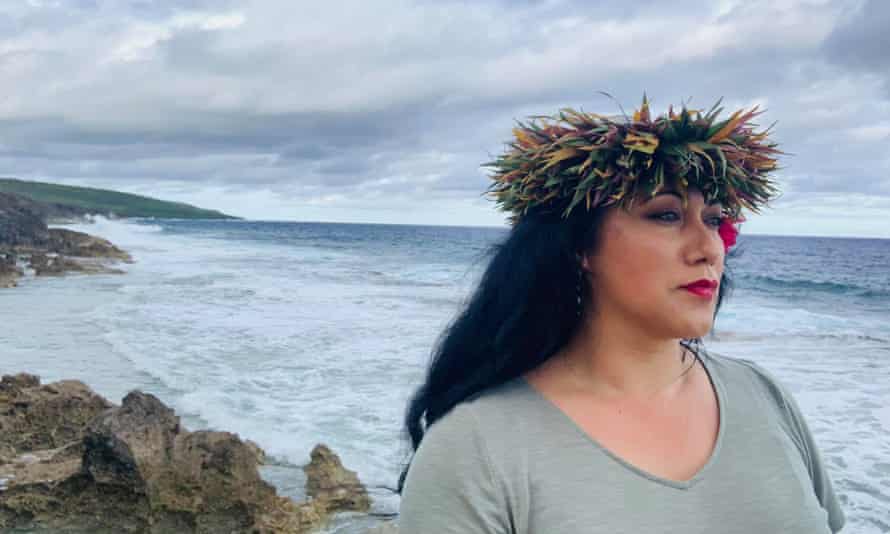
Phylesha Brown-Acton, a fakafifine woman from Tonga, is calling for legislators in the Pacific nation to revoke queerphobic laws and protect LGBTIQ+ people. Photograph: Supplied

Supported by
About this content

Leni Ma'ia'i
Sat 8 May 2021 06.28 BS

The large hall of the basilica in the Tongan capital Nuku’alofa, hasn’t seen many crowds since Covid restrictions were introduced a year ago.

But on Thursday night, people from across all parts of society packed every inch of available space in the venue, clad mostly in black and the traditional woven ta’ovala dress.

Tongan authorities have granted an exemption to the 50-person cap on indoor gatherings, so that people from across the Pacific country can come together for a candlelight vigil in memory of LGBTQ+ and humanitarian activist Polikalepo “Poli” Kefu.


Outpouring of grief after alleged murder of leading Tongan LGBTQI activist


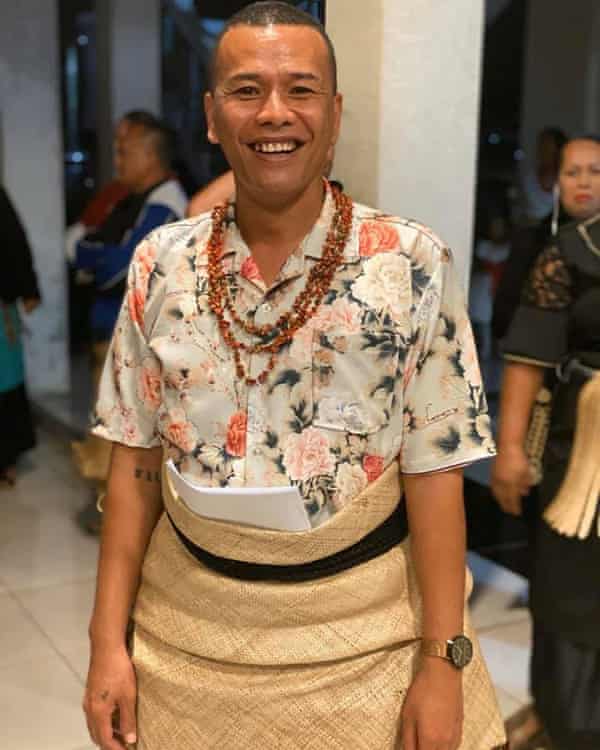
Kefu, 41, a beloved leader in Tonga, was killed on Saturday on a beach near his home in Lapaha. Police have charged a 27-year-old man with his murder. The death has sent shock waves through the small country and through its LGBTQI+ community, who hope that it will spur action to tackle homophobic attitudes and to repeal thediscriminatory laws in the country.

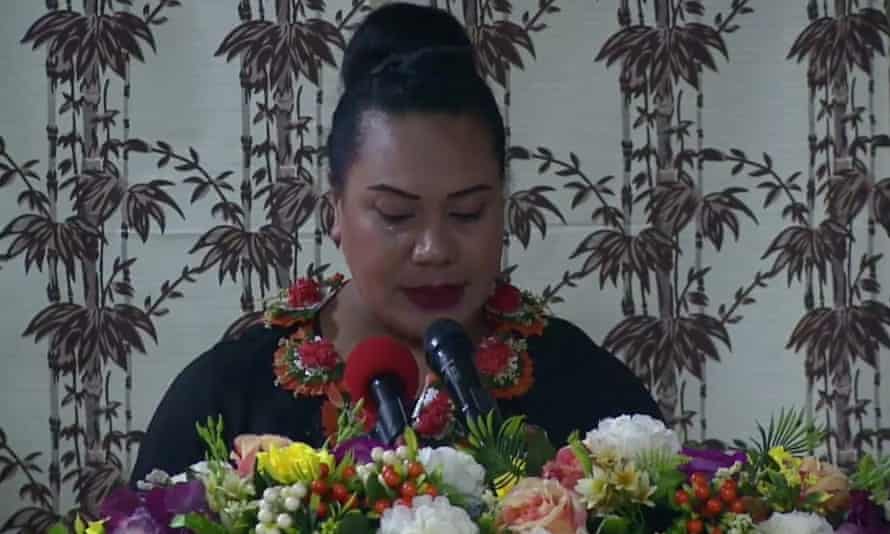
Among those who have come to pay tribute is a member of the country’s royal family, Princess Frederica Tuita, who struggles through tears as she speaks about her close friend of nearly 20 years.

“Being Tongan means living as Poli did, embodying our society’s values of love, humility, respect, and loyalty,” said Tuita.

Princess Frederica Tuita speaks at a candlelight vigil held in Tonga for Polikalepo Kefu. Photograph: Broadcom fm Broadcasting

As diplomatically as she can, considering her high-profile position, Princess Tuita proceeds with an indictment on Tonga for allowing Kefu’s death to happen.

“Our society has yet to take command of the responsibility required to truly commit to those [Tongan] values, and implement them where it counts.”

Where it counts, Tuita implies, is in the greater protections of leitī people against the threat of hate crime.

The Tongan word leitī is one of the many descriptors across the Pacific region to recognise the diverse sexual and gender expressions in their populations.

“It’s more of a comfort word for the LGBTQ+ community. We just call everybody leitī, whether you are trans, a lesbian, or however you identify,” says Joey Joleen Mataele, founder of the Tonga Leitīs Association, who passed down her presidency to Kefu in 2018.

A man handed himself in to police on Monday and has been charged with Kefu’s murder. Tongan Police have not commented on whether they believe Kefu was the vitim of a hate crime, or not.

The hashtag #JusticeForPoli has stayed trending as communities from around the South Pacific gather to host their own vigils. Specifically, the justice the Pacific LGBTQ+ groups are calling for is sweeping law reform, including the repeal of Tonga’s Criminal Offences Act, which makes sodomy punishable by up to 10 years in prison.
President of Tonga Leitis Association Polikalepo Kefu who was killed in Tonga. Photograph: Twitter

These legal issues are not unique to Tonga. In popular tourist destinations like Samoa and Cook Islands, homosexual sex acts are punishable by a prison sentence.

Samoa, which has hosted fa’afafine – understood in western terms as the third, non-binary gender – beauty pageants since the 1970s, only repealed laws criminalising the “impersonation” of females in 2013.

According to Phylesha Brown-Acton, a fakafifine (a Niuean gender identity designation) woman and executive director of F’ine Pasifika, these discriminatory laws empower some members of the community to feel comfortable acting in hateful ways toward leitī people.

“It gives people the permission to further treat leitī worse than dogs. I’m sorry to say, but in Tonga, Tonga has a Dog Act. Dogs have vets and doctors that look after them. There’s absolutely nothing for the leitī, we’re seen as a lower class of animals such as a dog,” said Brown-Acton.

Ymania Brown, the co-secretary of the International Lesbian, Gay, Bisexual, Trans and Intersex Association (ILGA World), works hand-in-hand with LGBTQ+ groups in the Pacific to help lobby for law reform.

“There are many, many variables to successfully change laws and some of those variables include the cultural attitudes of different countries, which are different between Pacific nations. To know what’s right for Papua New Guinea, is not right for the Solomon Islands, or for Tonga, or Samoa,” said Brown.

‘The police told me it was my fault’

Police in most Pacific nations do not specifically record incidents of hate crime, so getting conclusive data on how frequently these cases occur is difficult, but Brown-Acton has her own harrowing story of how bad it can be.

She says in 2007 she was the victim of an attempted gang-rape by a group of about 10 men.

She says they pinned her down and tried to tear her pants off, but she was able to get free and run for help. Brown-Acton immediately went to the police to file a charge, but says her complaints were met with ambivalence.

“Basically the police were just like, ‘this is your fault, you should never have been there.’ Nothing eventuated. Nobody was held accountable,” said Brown-Acton. She believes she was attacked because she is queer and that police did not take her seriously for the same reason.

“I’m not isolated to being the only person that has had experienced this, leitī endure and experience violence, day after day”

Tongan Police deputy commissioner, Tevita Vailea said he wasn’t aware of this particular case but invited Brown-Acton to come forward to provide more information about the incident.

“Tongan police have come a long way in trying to develop our capacity and development of Tonga police,” said Vailea. “And part of that you see, is treating people in our society in a more fair and equitable way. So we are doing our best to encourage all victims of crime to come forward and report to us.”
Advertisement

By all accounts, police work into Poli’s death has been thorough and efficient. The accused murderer is remanded in custody and is due to appear at the magistrates court on 19 May. Investigations into the death are ongoing.

‘We must win our battle before the church’

Beyond policing, Brown-Acton says the fraught relationships between Pacific Island nations and their LGBTQ+ communities largely stems from the introduction of Christianity into the South Pacific from the 18th century.


Before missionaries arrived in the Pacific, all Pacific cultures were known to have wide acceptance of leitīs, fa’afafine, and the many other sexual identities that make up the Pacific.


For religious institutions, which are a fundamental cornerstone of life in the Pacific Islands, the road to accepting these cultural practices has been long and complicated.

Joey, the founder of the Tonga leitīs Association, and a trans woman, remembers the shock on the faces of the congregation when in the late 1970s, she plucked up the courage to wear a dress to a busy Sunday mass. As far as she knows, she was the first first leitī to ever do it in Tonga.

“It was an electric blue pleated dress and I remember walking in that I turned a lot of heads, I was the biggest show of the day,” said Joey. “I don’t know if I was trying to make a statement, but I was just wanting to be me.”

Today, leitī in Tonga can mostly feel free to dress as they please in church, and they’re seeing acknowledgment by some religious institutions.

At Kefu’s vigil, Cardinal Soane Patita Paini Mafi, the Roman Catholic Bishop of Tonga, spoke of the community that “mourn together with the leitīs’ association.”

Ymania Brown, from ILGA World, says that while there may be some progress, there’s a long way to go.

“We need to win the battle in front of the church before we can win in front of the law reformers, because if we win it in front of the clergy, they will stand in front of us. They will actually argue for us, for our inclusion,” said Brown.

In the meantime, the Tongan Leitīs’ Association and various other LGBTQ+ groups are looking to push reform urgently in the legal system.

“It’s hard for me to say, yes, Poli’s death is going to result in wide sweeping changes, because a lot of it depends not on us, because we’re ready, it depends on legislators and parliamentarians in the Pacific to stand up and develop a backbone. They need to care enough about humanity to say, yes, this is a group of people that need protection and then we can have changes,” said Brown.

In Australia, support is available at 1800Respect (1800 737 732). In the UK, Rape Crisis offers support for rape and sexual abuse on 0808 802 9999. In the US, Rainn offers support on 800-656-4673. Other international helplines can be found at ibiblio.org/rcip/internl.html
Revealed: 46m displaced people excluded from Covid jab programmes

WHO review finds many national vaccination plans exclude asylum seekers, refugees, migrants and IDPs

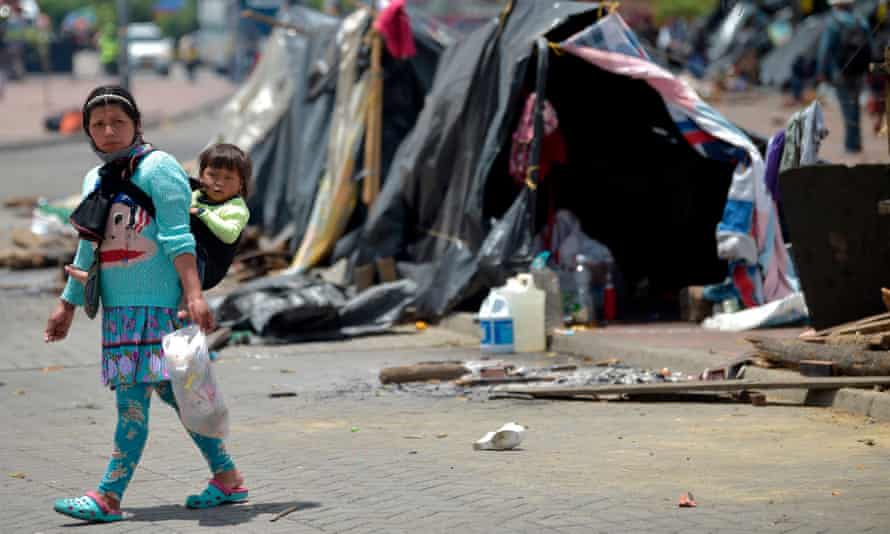
Among those excluded are 5.6 million Colombians internally displaced by six decades of civil war. Photograph: Raúl Arboleda/AFP/Getty Images

Michael Safi
@safimichael
Fri 7 May 2021
THE GUARDIAN

Tens of millions of asylum seekers, migrants, refugees and internally displaced people around the world have been excluded from national Covid-19 vaccination programmes, according to World Health Organization research seen by the Guardian.

The gaps mean that a scattered group numbering at least 46 million people, about the size of the population of Spain, may struggle to get vaccinated even if a global shortage of doses eases.

Among the excluded are 5.6 million people internally displaced by six decades of civil war in Colombia, hundreds of thousands of refugees in Kenya and Syria and nearly 5 million migrants in Ukraine.

India, Nigeria and Indonesia are among several large countries whose vaccination programmes exclude displaced people, according to the WHO’s review, which was conducted in March. Others, such as Pakistan, appear in the list but have since amended their plans to make them more inclusive.

International health groups have been considering the problem of excluded populations for months, and the groups behind the vaccine-sharing facility Covax approved the establishment in March of a channel of doses reserved as a source of last resort for the most vulnerable people in communities with no other pathway to a jab.


The channel, called the “humanitarian buffer”, will draw on 5% of the doses allocated to poor and lower-middle income countries through Covax, redirecting them toward the most vulnerable 20% in excluded communities, to be administered by NGOs such as Médecins Sans Frontières.
Advertisement


Covax has estimated a maximum of about 33 million people would be eligible for vaccines from the buffer, accounting for the most at risk within these groups – health workers, older people and those with risky co-morbidities. It is unclear when, if ever, others in these excluded communities will be vaccinated and from what source.

Humanitarian groups have said that even if all migrants, refugees and other vulnerable populations were included in national plans, there would still be between 60 and 80 million people living in rebel-held territories around the world who would be out of reach.

The WHO research illustrates the scale of the gaps within government schemes. More than 70% of the 104 vaccination plans reviewed excluded migrants, leaving out more than 30 million around the world, including 4.9 million people in India and 2.6 million in the Ivory Coast.

Nor did the majority of plans studied include refugees and asylum seekers, stranding nearly 5 million people without a shot, including 1.8 million in Colombia, 590,000 in Syria and 489,000 in Kenya.

About 11.8 million internally displaced people were also omitted from most plans, leaving out 2.7 million Nigerians and more than a million Indians, according to the research.

Public health experts have argued that exclusionary vaccine plans are ultimately self-defeating, leaving large pockets of the population unprotected and still able to contract and transmit the virus, including variants that may have the potential to evade the immunity granted by vaccines.

“As we learned from the outset of Covid-19 and all the restrictions put in place, availability of testing and access to healthcare for coronavirus, no one is safe until everyone is safe, and that is absolutely the same for vaccination programmes,” said Nadia Hardman, a researcher in refugee and migrant rights at Human Rights Watch.

“What we’re seeing in India now, and what we saw in the UK, is the development of variants which rely and depend on a community not being immune, and the extent to which vaccinations are rolled out to all in a territory is critical for the containment of the virus and containment of threatening variants.”

Vaccine distribution tends to illuminate a state’s blind spots, and even some governments that putatively included refugees in their plans were doing too little to make sure they were actually vaccinated, Hardman said.

She gave the example of Lebanon, which has included the 1.5 million refugees who make up a third of its population in its national plan, “but what we’ve seen is extremely low take-up rates and an unwillingness by authorities to put forward the kinds of promises and assurances and mechanisms to get refugees and vulnerable groups to vaccination centres”, she said.

Countries can also apply to access Covax’s humanitarian buffer in extraordinary circumstances, such as the inflow of a large population of refugees.

There is also a separate “contingency provision”, drawing from the same emergency stockpile, which allows countries to apply for an immediate surge of extra doses through Covax in case of an extraordinary outbreak, potentially such as that which India has experienced over past weeks.

A spokesperson for the WHO did not comment on how many of countries named in the research had subsequently addressed the gaps in their vaccination programmes, but said: “Experience shows that despite best efforts, at-risk populations in humanitarian settings are often left behind and are at risk of being missed by government-led vaccination activities.”