Agios Efstratios: the first Greek island to get all its electricity from renewables
Euronews
By Aurora Velez
Published on
In ten months, the small island of Agios Efstratios has gone from relying entirely on fossil fuels to producing more than 90% of its electricity from renewable sources. Thanks to an EU-funded project, this volcanic island is now self-sufficient with green energy.
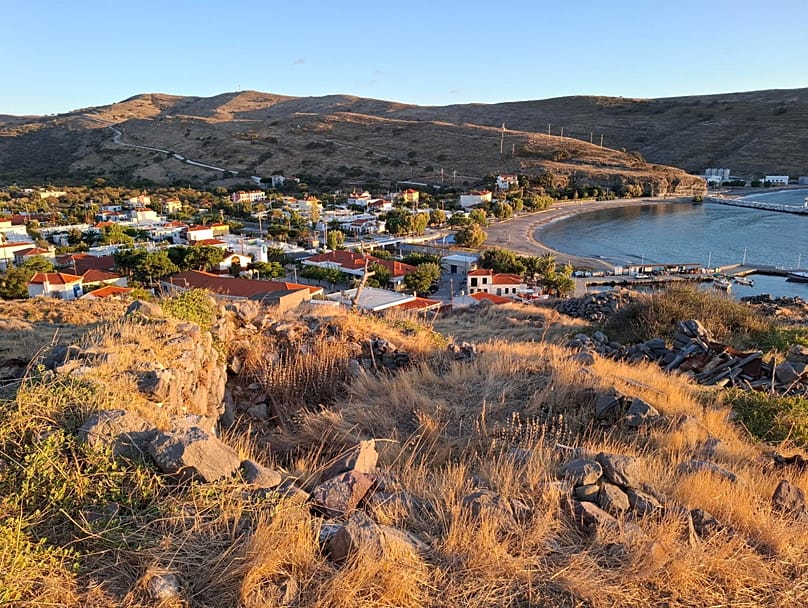
The Greek island of Agios Efstratios, colloquially known as Ai Stratis, is betting big on renewable energy. Located in the north-eastern Aegean Sea, this small volcanic island with just 250 residents literally runs on the sun and wind. Previously, the island depended entirely on fossil fuels; now it produces 91% of its electricity from renewables, thus avoiding the emission of about a thousand tonnes of CO₂ into the atmosphere each year, thanks to the European Union-funded Ai Stratis – Green Island project.
According to Dimitrios Kardomateas, Chairman and CEO of the Centre for Renewable Energy Sources and Savings (CRES):
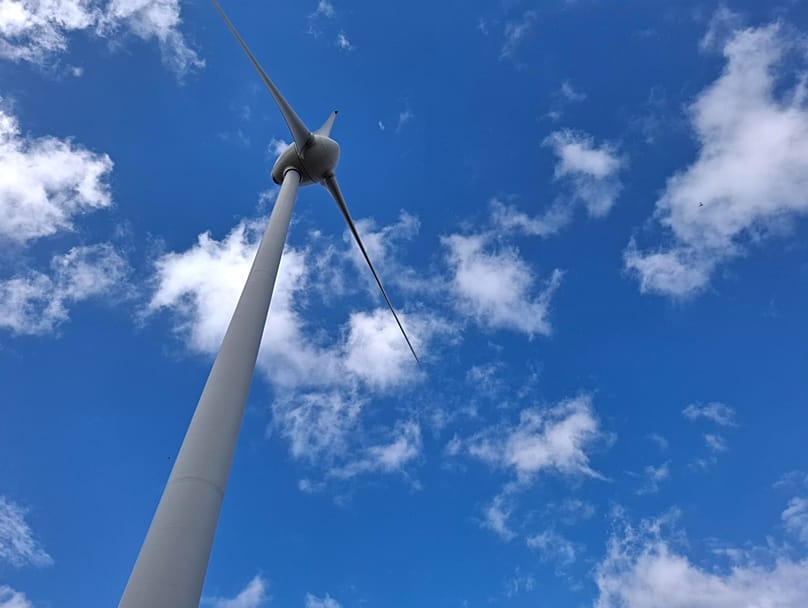
The project relies on a hybrid system consisting of a 900-kW wind turbine, a 225-kW solar farm, a battery system for electricity storage, and automated, real-time energy management—the crown jewel of the project.
Surplus renewable energy is used for heating
Manolis Klados, Project Manager at GEK TERNA Group, explains that “any excess energy is being stored in the battery. And the battery also releases power when there is a shortage on the production of the renewables. And during winter, any surplus from the renewable energy production is being utilised to produce thermal energy. This is stored in this four hot water storage tank of a total volume of 500 cubic metres.”
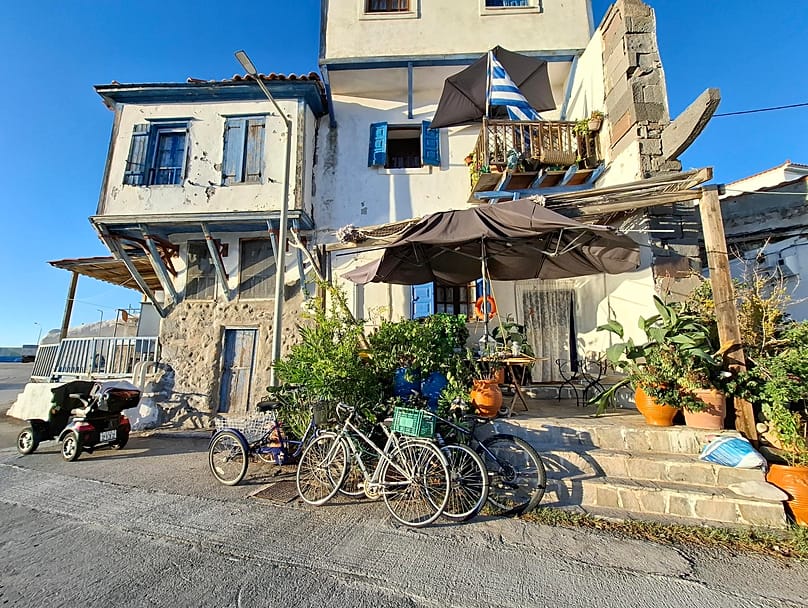
Green energy from renewable sources is distributed to the island’s residents using the existing electrical grid. As for heating, the independence from fuel oil is a relief for Charalambos Makris, a local resident and manager of two guesthouses. According to Makris, since the project was launched, “There is no need to operate a boiler inside the house, there is no noise at all when the heating is running, and it is very economical.”
Zoi Vlastou, Deputy Mayor for Citizen Services, highlights the importance of the Ai Stratis – Green Island pilot project as a model for other Greek islands and for the country more broadly: https://x.com/goizlyon/status/2105998565247963462?s=20
The total budget for Ai Stratis – Green Island amounts to 7.23 million euros, of which 85% has been financed by the Cohesion Policy of the European Union and the remaining 15% by Greek national funds.
To get this pioneering project off the ground, the team had to overcome numerous challenges, such as the transport, assembly, transfer, and installation of the wind turbine, measuring 77 metres tall and weighing close to 30 tonnes, now located at the island’s highest point. But the biggest challenge was changing Greek energy standards, according to Panagiotis Zorlos, Project Manager at CRES: “Because it's a pilot project, the regulatory framework was very general and not specifically concentrated to such a system which has a lot of particularities.”
Ai Stratis is at the forefront of Europe’s green energy transition. Other Greek islands such as Tilos, Ikaria, and Astypalea are following its example.

No comments:
Post a Comment