Showing posts sorted by relevance for query ARTISANAL MINING.. Sort by date Show all posts

Saturday, December 03, 2022

In Peru’s hills, an artisanal miner boom frustrates Big Copper’s plans

Reuters | December 1, 2022 | 
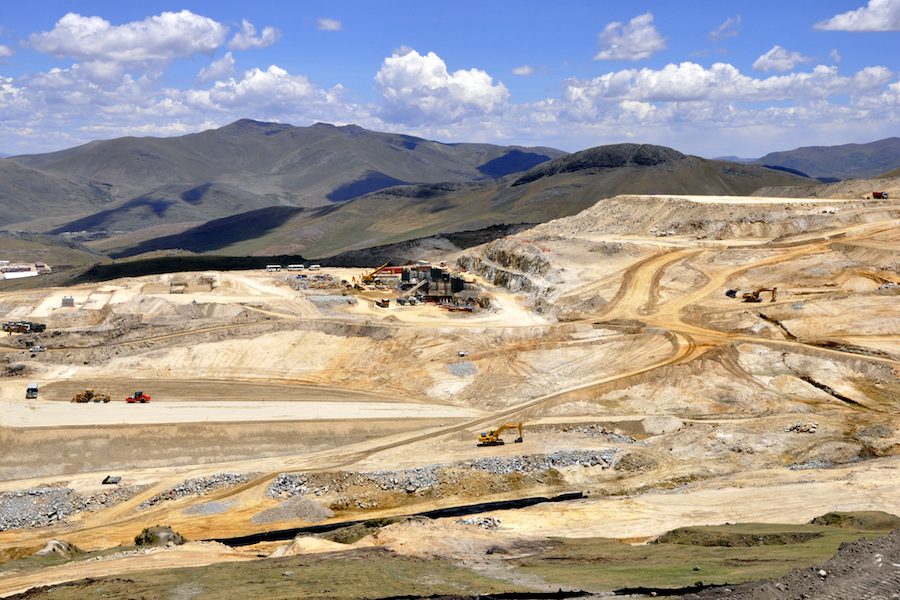
Las Bambas is considered the world’s ninth-largest copper mine with an output of about 400,000 tonnes of the industrial metal per year. (Image courtesy of MMG.)

In the hills of Tapairihua in Peru’s Andes, Samuel Retamozo and other artisanal miners have found a rich seam of copper on their indigenous community’s land. Armed with temporary government permits, they started exploiting it earlier this year.


There’s just one problem – the seam is within the site of Southern Copper Corp’s planned $2.6 billion Los Chancas mine. One of the world’s biggest copper miners, it also has a permit to dig in the same area.

Grupo Mexico’s Southern Copper aims to start producing here in 2027 after decades of studies. The planned mine is crucial to the company’s goal of producing 1.8 million tonnes of copper annually by 2030.

But the rise of artisanal copper mining – driven by high global metal prices and sustained by a messy government permitting system – is threatening billions in new investments by Southern Copper and others in Peru, according to Reuters reviews of internal company reports, interviews with executives and a visit to Tapairihua to meet the miners.

Small-scale copper miners are now challenging Big Copper for territorial control of rich deposits of the red metal. Artisanal copper mining is creating much-needed income for impoverished Andean Peruvians even as it brings them into conflict with major miners, a rare and previously unreported trend in the world’s No. 2 copper producer.

“This used to happen with silver and gold, but now it’s affecting copper,” said Raul Jacob, Southern Copper’s chief financial officer, bemoaning what the company sees as the government’s poor handling of artisanal mining permits.

In Peru, artisanal mining permits have doubled to 80,000 since 2020, government records show. And copper is the new focus.

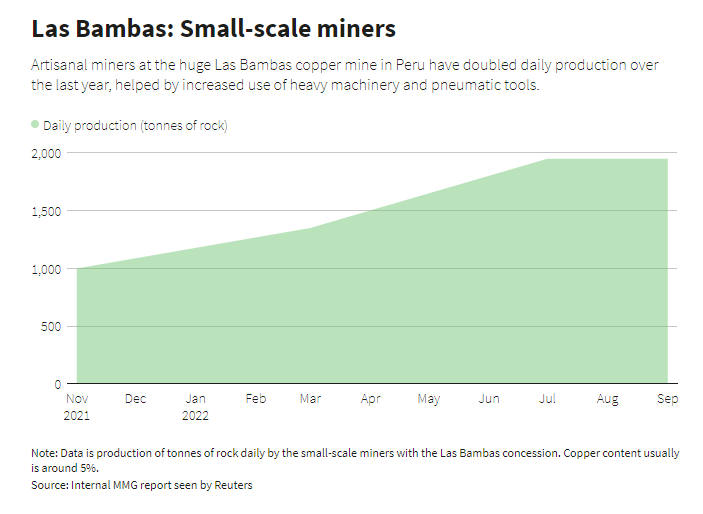
Southern Copper is not the only mining company in a stand-off with the miners. Chinese-owned MMG Ltd’s nearby Las Bambas copper mine is struggling to develop two new open pits because of artisanal miners who have settled on the same land. The company says its current pit is running out.

“Informal mining is entering lands granted to formal (mining) companies and threatening the development of large-scale projects,” a source close to MMG told Reuters.

While companies often call small-scale miners “informal” or “illegal,” what complicates the matter are two dueling authorizations – one for artisanal mining and another to hold the mining rights to a given area. Mining companies own the latter, known as concessions.

But since 2012 Peru has been granting artisanal mining permits on lands that overlap with concessions, giving the small-scale miners some legal protection, Reuters found after checking the geolocations of the permits and reviewing an internal document in which Peru’s mining ministry did the same.
Potential for more disputes

Disputes between mining firms and artisanal miners may only increase over time. Peru’s leftist administration presented a new framework for artisanal mining last week that declared artisanal mining is “as important” as big mining.

Southern Copper has asked the government to revoke all artisanal mining permits on its concession. About half have now been canceled, causing resentment in Tapairihua.

“We are going to defend ourselves. At the end of the day we are at home, and from home there is nowhere to go,” Retamozo, a mining engineer and president of the Tapairihua Mining Association, told Reuters.

While artisanal permits have existed since 2012, lower copper prices that decade meant they were not in demand. But copper has risen more than 60% since 2020 due to demand for electric vehicles.

The surge in artisanal copper mining is forcing the government to review its artisanal permitting system, a mechanism that was meant to be a temporary bridge toward formalization and intended mostly for gold miners.

“Our country is a mining country but we haven’t had until now a mining framework that gives a long-term view about small-scale mining,” Alberto Rojas, Peru’s top mining formalization official, told Reuters.


Rojas, however, suggested artisanal miners would lose in a dispute against concession holders.

“Where we have concessions we can’t have (artisanal mining permits),” Rojas said. “We can’t disavow the concessions that have already been granted.”
Diggers, trucks

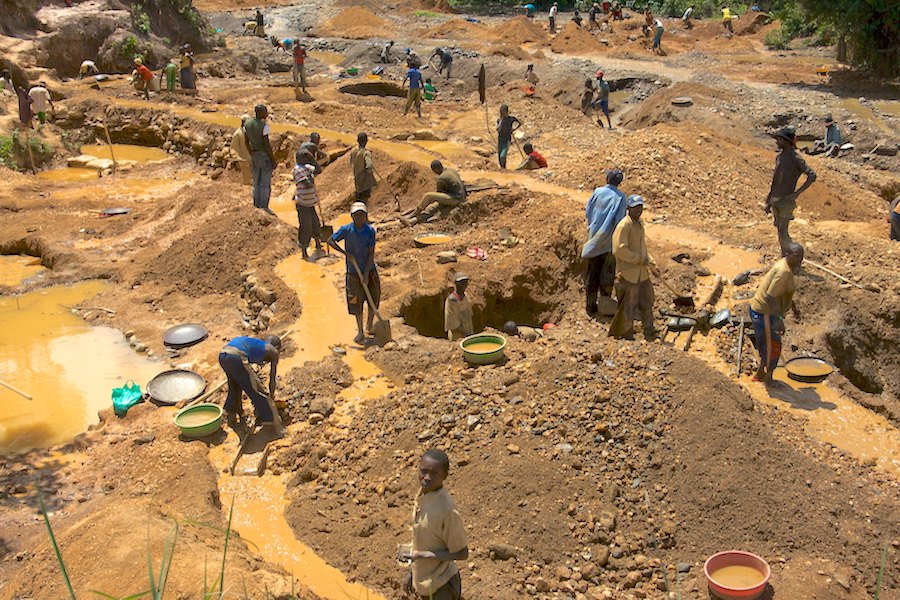
On a recent day in Tapairihua, Reuters visited the artisanal mining operations, where dozens of wood and blue tarpaulin homes were erected, and tunnels supported with wooden beams burrowed into the steep rocky hillside.

In Peru’s Andes many feel the copper under the ground is a right, with mining dating back to the Incas and other cultures that existed before Spain’s colonization. Tapairihua looks down onto the river Antabamba, meaning “copper plain” in the Andean Quechua language.

Many of the miners are also local subsistence farmers who took up mining in search of income. Many declined to be named because they have been sued by Southern Copper over their mining activities.

To extract copper, they use dynamite to explode rock that they bring out in wheelbarrows and bags. Miners earn 80 soles ($20.61) a day, extracting enough rock to fill a handful of trucks a week, usually containing around 5% copper, though this level can rise as high as 18%.

Gherson Quintanilla arrived in Tapairihua earlier this year with a background in artisanal gold mining. He came because he heard copper was abundant and expertise was low.

“My goal is to extract up to two truckloads a day,” he told Reuters.

But artisanal copper mining is not always as small scale.

An internal Las Bambas presentation seen by Reuters estimated informal miners were blasting some 1,950 tonnes of rock per day, almost double their output a year ago.
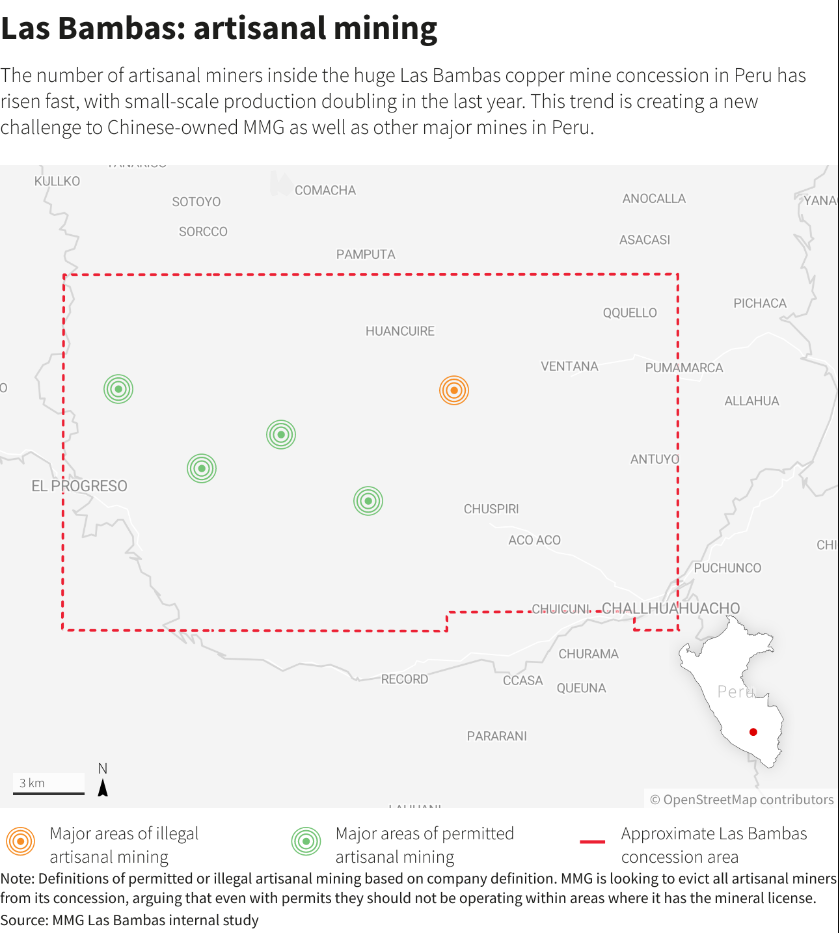

The report said artisanal miners were using heavy machinery and diggers as well as pneumatic tools.

Overall, it estimated the government has issued 700 permits that overlap with Las Bambas’s concession,

But removing those miners is not straightforward. While Las Bambas and Southern Copper hold mining rights – which grants them access to the mineral underground – in most cases they have yet to buy the property rights to the surface terrain.

That limits their options because they cannot file an eviction claim on land they do not own.

The source close to Las Bambas said MMG recognized this difficulty and anticipated it would have to buy out the miners if it wants them to leave the site of its third pit, set to open in 2027 – if there are no delays.

At the site of its second pit, which was supposed to open this year, Las Bambas has filed eviction claims against the miners there because it already owns that particular parcel of land. The company estimates almost a dozen mining sites in the area. Reuters was unable to determine the number of miners working in them.
‘Fuel to the fire’

In May, Southern Copper sued Retamozo and other Tapairihua miners, saying their mining permits were non-compliant.

Weeks later a fire destroyed Southern Copper’s local headquarters, which is made up of tents, just minutes downhill from where the small-scale miners are operating. Burned-out cars remain there today.

Nobody was hurt in the fire and no arrests have been made. Peruvian authorities say the matter remains under investigation.

The miners have distanced themselves from the arson, though Retamozo acknowledged the lawsuits have angered them and that some individual members may have acted out of “resentment.”

The number of valid artisanal mining permits in Tapairihua has fallen from 100 to 32 since May, according to government records. An internal mining ministry document seen by Reuters shows that the process is under way to revoke the remaining permits.

Retamozo cautioned about what would happen if those were canceled.

“Canceling them would add fuel to the fire,” he said.

($1 = 3.8811 soles)

(By Marco Aquino and Marcelo Rochabrun; Editing by Adam Jourdan and Ross Colvin)


Thursday, July 14, 2022

USGS deploys satellite imagery in the global fight against illegal mining

USGS deploys satellite imagery in the global fight against illegal miningArtisanal miners digging a mining pit using simple tools such as shovels, buckets and water pumps. This was taken in 2013 in Fourona in Côte d’Ivoire, Africa. Credit: Science for a Changing World.

The organization’s scientists are playing a leading role in a project involving a collaboration between the U.S. Department of State, U.S. Agency for International Development, United Nations and other governmental and non-governmental organizations working to address conflict mining.

“USGS science helps determine the extent and value of mineral production in conflict-prone regions,” said Peter Chirico, associate director of the USGS Florence Bascom Geoscience Center and special advisor to the U.S. Department of State’s Office of Threat Finance Countermeasures, in a statement to The Northern Miner.

“The USGS conducts field investigations, uses satellite imagery, creates geologic maps and publishes reports to pinpoint resource deposits, estimate mineral quantities and determine production capacity,” he says.

“The ability to use satellite imagery to acquire detailed information on artisanal mining activities is invaluable for researchers and policymakers, as it allows us to evaluate challenging and often difficult-to-access regions that also have associated conflict and safety concerns,” said Chirico.

Minerals are frequently mined by artisanal and small-scale miners, who commonly operate in the informal sector, meaning they are not licensed and don’t own the land on which they mine. They often transport and sell resources outside the legal flow chain in violation of local or national law.

Artisanal and small-scale mining involves individuals or groups of miners using simple tools such as picks and shovels and sometimes larger equipment to dig in river floodplains and sedimentary deposits across large stretches of terrain. Industrial-scale mining occurs at permitted and regulated sites and typically requires heavy infrastructure to extract resources.

The informality and sizeable geographic extent of artisanal and small-scale mining can lead to commodities being mined, sold and purchased through unofficial channels and potentially financing criminal or terrorist organizations. This can increase the risk of conflict, violence, and terrorism within a country and other nations, including the U.S.

Blood diamonds

USGS scientists also do on-the-ground fieldwork to study the deposits and small-scale mining pits to investigate artisanal and small-scale mining processes and determine the extent and quality of the resources.

The researchers also work to understand the miners’ viewpoint and their methods, tools, habits and organization. Scientists conduct interviews with artisanal miners to understand how much can be mined over a certain period, how they are organized and how frequently they move from site to site, according to the organization.

For example, USGS information assists the U.S. Department of State in implementing the Clean Diamond Trade Act, which prohibits the import or export of rough diamonds unless accompanied by a Kimberley Process certificate confirming that it is not a conflict diamond. The Kimberley Process is an international initiative to increase transparency and oversight in the diamond industry to eliminate trade in conflict diamonds.

“The USGS has been instrumental in supporting a fact-based approach to the Kimberley Process work on eliminating conflict stones from the rough diamond supply chain,” said George Cajati, a foreign affairs officer at the U.S. Department of State and the interim U.S. representative to the Kimberley Process.

“USGS has provided unsurpassed scientific analysis and expertise to inform U.S. policy in this high-profile international forum and earned the respect of international partners in the process,” he said.

The USGS has collaborated with several international organizations working to track and monitor illegal mining and armed groups funded by natural resources around the world.

In 2006, the U.S. Geological Survey was asked by the U.S. Department of State to help address illegal diamond mining in Africa.

The USGS regularly provides training to foreign governments, including collaborating with their ministry of mines, geological surveys and civil society organizations, ultimately enhancing their ability to assess and regulate resources. Training has been provided on remote sensing and mapping techniques, artisanal miner community surveys, artisanal mine site evaluation and geologic fieldwork methods to assess deposit potential.

Guyana artisanal mining

The USGS also assists programs that formalize and legalize the artisanal and small-scale mining sector, such as those implemented by USAID.

One example of the USGS has worked with the Guyana government to help improve their regulatory oversight and law enforcement for the artisanal mining sector.

Illegal mining and export of gold are concerns for the country of Guyana. At the government of Guyana’s request, the USGS and the U.S. Embassy began a project in 2021 to help document nationwide artisanal and small-scale gold mining. Work is being done in cooperation with Guyana’s Ministry of Natural Resources.

The effort includes using satellite imagery to identify mining sites and associated deforestation. Identifying unpermitted mining locations can also help the government address mercury contamination, as mercury is often used in the gold mining process but can pollute the environment and impact human health.

Friday, December 08, 2023

Detoxifying Artisanal Gold Mining

by Michigan State University
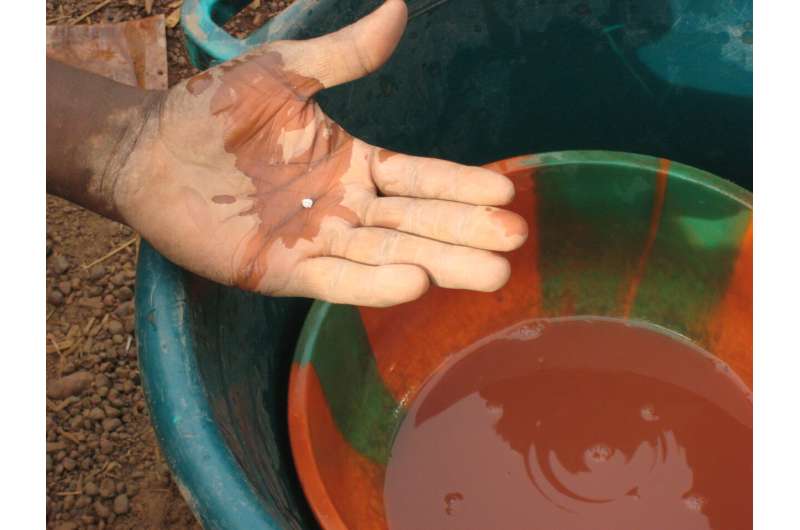
A miner's hand holds a pebble-sized bit of mercury-covered gold ore over a bowl of water. The picture was taken at a small-scale gold mine in Senegal. 
Credit: Jacqueline Gerson

Jacqueline "Jackie" Gerson knows very well how "artisanal gold mining" sounds to people who haven't heard the phrase before

"It sounds quaint, right?" asked the assistant professor of Earth and environmental sciences in Michigan State University's College of Natural Science.

But that innocuous name belies the dangers of a practice that exposes miners and their communities to a poisonous chemical that's been banned by an international treaty. So, when Gerson thinks of artisanal gold mining, her mental image is anything but quaint.

"I think of it like the Wild West days in the United States," said Gerson. "During the gold rush here, people were using mercury to extract gold. That's exactly what's happening now in these artisanal and small-scale gold mines."

Artisanal and small-scale gold mining, abbreviated ASGM, supplies about 20% of the gold bought and sold around the world, said Gerson. Gerson is also a faculty member with the W.K. Kellogg Biological Station and the Ecology, Evolution and Behavior, or EEB, program at MSU.

At the same time, ASGM accounts for 40% of the global emissions of mercury—a neurotoxic metal—into the atmosphere. That's more than any other source, including the burning of fossil fuels, which are naturally laced with trace amounts of mercury.

What becomes of that atmospheric mercury largely remains a mystery. To better understand the fate of this heavy, unhealthy metal, Gerson, her lab and her colleagues have been awarded a grant.

In the meantime, she's also part of a team that's been working with miners and their communities to reduce mercury emissions. And they have piloted an approach that can do just that, which they have now reported in the journal Cleaner Production Letters.

Assistant Professor Jacqueline "Jackie" Gerson of Michigan State University is working with artisanal and small-scale gold mining communities in Senegal and other countries to better understand and reduce the mining's health risks. 
Credit: Jacqueline Gerson


What is artisanal mining?


In the context of mining, "artisanal" is all about the word's denotation, rather than its charming connotations that we tend to associate with things like cheese, chocolate and coffee.

"Artisanal means the miners are using very rudimentary approaches, without modern technology," Gerson said. "And they're small-scale, meaning small groups of people, but in a given community, there can be hundreds or thousands of people mining."

Miners dig up ore and sediment containing gold, then add mercury to help extract the precious metal. They then burn the mercury off—often in huts where miners and their families live—leaving the gold behind.

The process is cheap, easy and accessible. That's why miners used it over a century ago during the gold rush in the U.S. What's different today is that mercury is outlawed.

"Artisanal mines are almost always illegal," Gerson said. "But miners can buy mercury on the black market."

In 2013, more than 140 countries signed a United Nations treaty called the Minamata Convention on Mercury, which went into effect in 2017 to curb mercury emissions, including those from ASGM.

The treaty is named after the Japanese city of Minamata, where, in the mid-20th century, thousands of residents were poisoned by mercury from industrial pollution. The exposure led to many adverse health outcomes including death, paralysis and neurological disease.

Today, mercury poisoning typically isn't something people in the U.S. or other developed and densely populated countries worry about (a notable exception is people who are pregnant and must avoid certain types of seafood that can have elevated levels of mercury, which disrupts fetal development).

In developing nations and remote areas, however, ASGM operations can thrive because of lax or nonexistent regulatory enforcement. Artisanal gold mines are operating in more than 70 countries worldwide, mostly in the southern hemisphere.

Artisanal and small-scale miners sell their gold to dealers who introduce it into the global supply, where it's indistinguishable from gold mined in accordance with the Minamata Convention. That means, if you own gold jewelry, some of that metal probably came from artisanal gold mines.

"They are a major source of gold," Gerson said. "It's a global issue, and we're all part of it, whether we want to admit it or not."

Research from Michigan State University shows that education provided by trusted sources in a community can be a potent intervention strategy for reducing mercury usage in and emissions from artisanal and small-scale gold mining. 
Credit: Falaye Danfakha
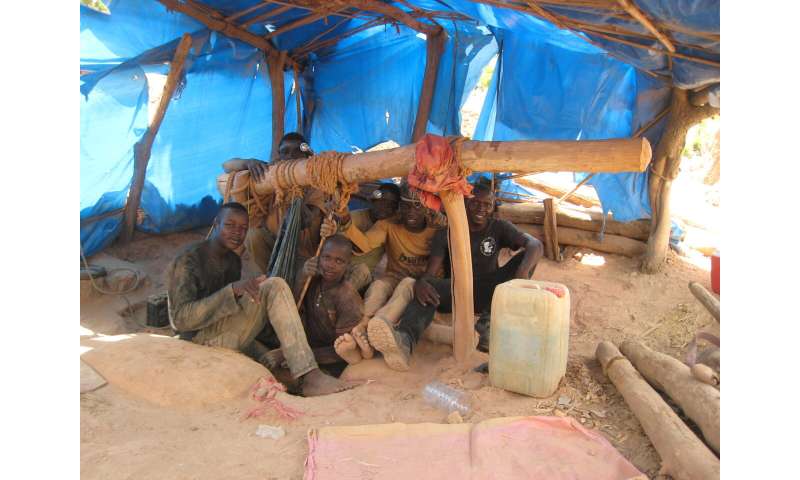
Miners pose for a photo near a dug-out mining pit under a blue tarp held up by a frame made from logs and branches. Credit: Jacqueline Gerson
Research from Michigan State University shows that education provided by trusted sources in a community can be a potent intervention strategy for reducing mercury usage in and emissions from artisanal and small-scale gold mining. 
Credit: Falaye Danfakha
Miners pose for a photo near a dug-out mining pit under a blue tarp held up by a frame made from logs and branches. 
Credit: Jacqueline Gerson


Making mining safer


Although most artisanal miners understand that the mercury they work with is dangerous, they accept that risk to support themselves and their families.

Researchers have been working to try and help these miners keep their livelihoods while reducing its associated health risks. Most new approaches, however, focus on replacing mercury with techniques or technologies that are more expensive or harder to use than the toxic metal.

"Getting rid of the mercury is the most ideal solution," Gerson said. "But studies show these approaches just aren't being picked up."

So, Gerson decided to try a different approach working with collaborators at Colorado State University, the Peace Corps and Duke University. Gerson started this work while she was a doctoral student at Duke, and the project was supported by the Duke University Global Health Institute and World Connect.

The researchers' approach started with talking with miners in Senegal to identify emission-reducing opportunities that would stick. Using what they learned, the team developed an approach based on two pillars.

The first was an educational program, delivered by trusted, local community members about the dangers of mercury, the symptoms of exposure and ways miners could protect themselves.

The instructors also shared information about the second pillar, devices known as retorts.

Retorts are metal enclosures that allow miners to burn the mercury off from gold without releasing vapors into the atmosphere. Instead, the vapors are collected and exhausted into a bucket of water, where the mercury condenses and can be retrieved.

Local metal workers built the retorts for the study using readily available materials and a design provided by the research team that also incorporated tweaks from the miners.

The team worked with nine mining communities to measure the effects of these interventions. Three of the communities received both the education and retorts, three received education only and three provided a control group—that is, they received neither the education nor the retorts.

This enabled the team to conclusively demonstrate that providing education and retorts worked. Miners were more aware of the dangers of mercury and how they could limit their exposure. They used mercury less and, when they did, they used retorts more.

And that wasn't all.

"These effects permeated into the control villages," Gerson said. "There was this sort of social spillover where people were sharing the education and the retorts."

Based on the project's success in Senegal, Gerson believes the approach could be extended to mining operations in other countries to further curb emissions. But she stressed that it has to be the entire approach, not just the solutions they found in Senegal.

"Miners have to be involved from the beginning to identify specific solutions that will work in their unique physical and social environments," Gerson said.

Artisanal mining in Senegal is different from artisanal mining in Peru, for example. So the specific techniques that worked in Senegal may not work in Peru, but the approach of working with miners and their neighbors to find trustworthy solutions will translate.

"That's a theme in my work," Gerson said. "We have to collaborate with the people who are living and working in these places if we're going to be successful."

Artisanal gold miners work with a retort constructed out of metal. Credit: Falaye Danfakha
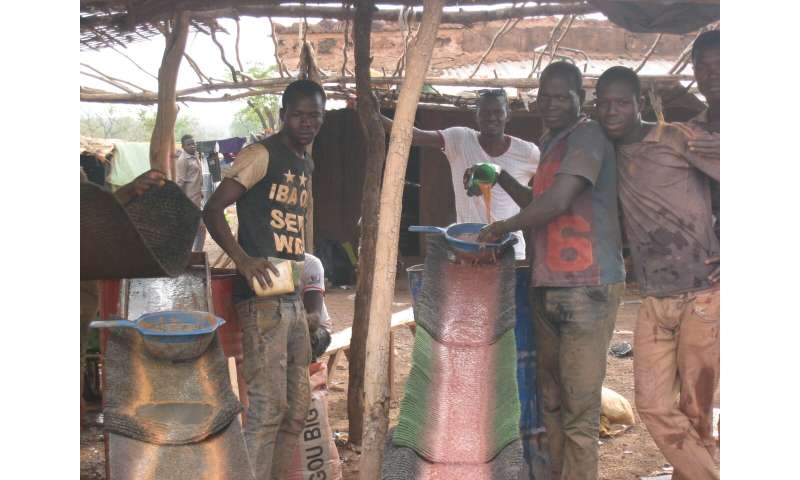
Miners pose for a photo while one pours an earth-toned liquid through a strainer and down a sluice to separate out the fine-scale gold-laden sediment from larger soil particles. By collaborating with mining communities in Senegal, Michigan State University researchers were part of a team that found practical solutions to reduce mercury emissions from artisanal and small-scale gold mining. Credit: Jacqueline Gerson
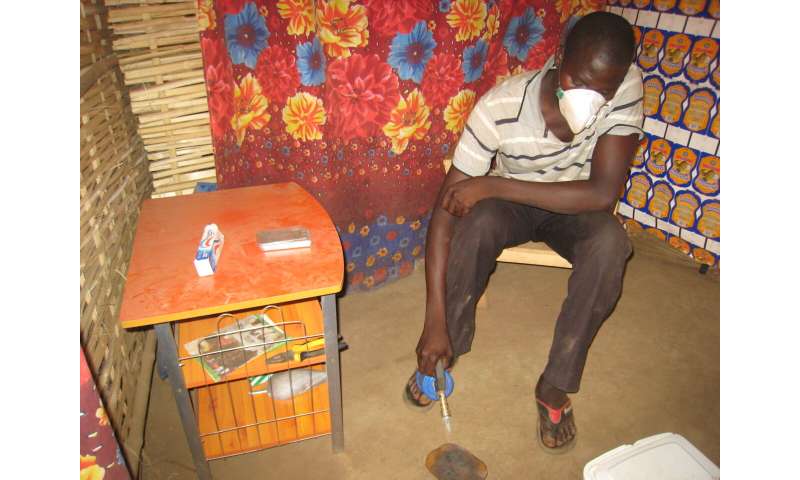
An artisanal gold miner burns mercury off a gold-mercury amalgam using a blow torch on the floor of a hut. Credit: Jacqueline Gerson


'That's what we hope, but we don't know'

That theme is also evident in Gerson's grant, which is a collaboration led by Gerson, Associate Professor Heidi Hausermann at Colorado State University and Professor Richard Amankwah, who is the vice chancellor at the University of Mines and Technology in Ghana.

Hausermann, who was also an author on the new Cleaner Production Letters report, has been working with Ghanaian collaborators on ASGM research for a dozen years. Amankwah is a mining engineering and ASGM expert who also has served as a consultant for the World Bank, the United Nations and the World Health Organization.

Together, they're trying to answer large, looming questions about where mercury emissions from ASGM go and how and whether these mercury emissions can enter the food web through crops.

This knowledge could help create policies and practices to better protect miners, their neighbors and nearby communities.

"Locally and regionally, we don't know where a lot of that mercury goes once it's emitted," Gerson said. "The question is whether crops are taking it up in their leaves or through their roots, and it could be that they don't. That'd be great. In fact, that's what we hope, but we don't know."

To date, most research on mercury emissions has focused on what happens to it in aquatic environments, which makes sense, Gerson said.

There are microbes living in ecosystems without a lot of oxygen—underwater, for example—that are very efficient at converting mercury into a compound called methyl mercury, which is the form of mercury that causes neurotoxic impacts.

In aquatic environments, then, methyl mercury gets in on the ground floor of the food chain. The chemical accumulates in larger fish and sea life preying on smaller organisms, which is why certain seafoods present mercury concerns for humans. Young children and developing fetuses are especially vulnerable.

With an abundance of oxygen above water, however, research on the fate of methyl mercury on land has been scant.

"We know terrestrial conversion of mercury to methyl mercury is less efficient, but there's a lot of mercury entering the terrestrial ecosystems near artisanal gold mining," Gerson said. "So, it is a concern."

Underscoring that concern is the fact that, during earlier work in Peru, Gerson observed evidence that songbirds in forests near ASGM activity had been exposed to mercury, likely through their diet of fruit and bugs.

Now, with the grant, Gerson and her teammates will track how mercury moves through terrestrial environments and where it ultimately ends up to paint a much more comprehensive picture of its effect on public health.

Also joining the research team are Edith Parker, dean of the College of Public Health at the University of Iowa; Elsie Sunderland, a professor at Harvard University; and Emmanuel Effah, a lecturer at the University of Mines and Technology.

The project will begin Jan. 1, 2024.


More information: Arabella Chen et al, Education and equipment distribution lead to increased mercury knowledge and retort use in artisanal and small-scale gold mining communities in Senegal, Cleaner Production Letters (2023). DOI: 10.1016/j.clpl.2023.100050


Provided by Michigan State University


Explore further Small gold mines in Senegal create high mercury contamination

Researchgate.net

https://www.researchgate.net/publication/359333723_Formalizing_artisanal_and_small-scale_gold_mining_A_grand_challenge_of_the_Minamata_Convention

Our perspective argues that signatories to the Convention will only succeed in reducing ASGM mercury emissions and releases with comprehensive bottom-up ...


Minamataconvention.org

https://minamataconvention.org/en/news/empowering-communities-mercury-free-artisanal-gold-mining-takes-stand-against-biodiversity

Aug 16, 2023 ... This goal was pursued by strengthening institutions, increasing mining communities' access to the financing needed to purchase mercury-free ...

Sciencedirect.com

https://www.sciencedirect.com/science/article/abs/pii/S0301420721003998

In recent years, the formalization of artisanal and small-scale gold mining (ASGM) activities has become a key strategy for governments to better govern and ...


Wednesday, December 17, 2025

Bus carrying mineworkers pelted by stones in DR Congo


Issued on: 17/12/2025 


In the Democratic Republic of Congo, a bus transporting company mineworkers was pelted by stones by artisanal miners in early November. We spoke to several locals who said this was not an isolated incident, blaming the tensions on a lack of space for the artisanal miners.

A video shared online on November 9, 2025, shows a bus being pelted by stones in the Democratic Republic of Congo. The scene took place on a road often used by mining companies in Kolwezi, in the south of the country. The bus was attacked by artisanal miners, small operators with basic equipment, known locally as "diggers".

Didier Katshongo, an engineer at a mining company, told our team that this is not an isolated incident:

“When our workers' buses take that road, the artisanal miners throw stones at the buses. Attacks like this have become more frequent in 2025.”

These incidents took place along a road near the KOV open-pit mine, operated by the joint venture KCC. But it's not just the KOV mine that causes tensions.


‘The few sites where artisanal mining is tolerated are not enough’

Artisanal mining is legal in DR Congo. This means mining is performed both by artisanal miners and big companies.

Diggers are supposed to work in "artisanal mining zones” established by authorities or in areas belonging to mining companies, provided the latter tolerate their presence.

But there aren't enough mines open to artisanal miners. That is why they often force their way onto mines operated by companies.

Schadrack Mukad Mway End Naw, national coordinator of the platform “Understanding and Acting in the Industrial, Artisanal Mining, and Governance Sectors” (CASMIA-G ASBL), explained:

“There are more than 250,000 artisanal miners in Lualaba province [where Kolwezi is located]. This sector helps tackle youth unemployment. They need access to the mines to make a living. But there's not enough territory. The few sites where artisanal mining is tolerated are not enough. That's why they break down company fences.”

The authorities announced the creation of 64 artisanal mining zones in Lualaba in November.

Saturday, August 26, 2023

ECUADOR
Luminex Reaches Historic Agreement with Informal Miners Around Condor North


NEWS PROVIDED 
BY Luminex Resources Corp.
21 Aug, 2023, 

Highlights:

Luminex participated in a mediated negotiation process with 19 mining operators, most of whom hold historical operating permits granted by the Ministry of Energy and Mines within the Condor project.

The agreement resolves outstanding issues with a critical mass of local miners through a newly constituted local entity, Minera La Pangui S.A.S.

The 53-hectare area that will be transferred to Minera La Pangui S.A.S. is not of interest to Luminex for integration into the Condor North mine plan.

Once they become mineral concession owners, the mining operators will assume responsibility for all legal and regulatory obligations arising from their current and historic operations, as well as collaborate with Luminex to facilitate the Condor project's peaceful development.

This agreement is unprecedented in Ecuador and will serve as a model to be replicated in other projects facing development challenges from artisanal mining operations.


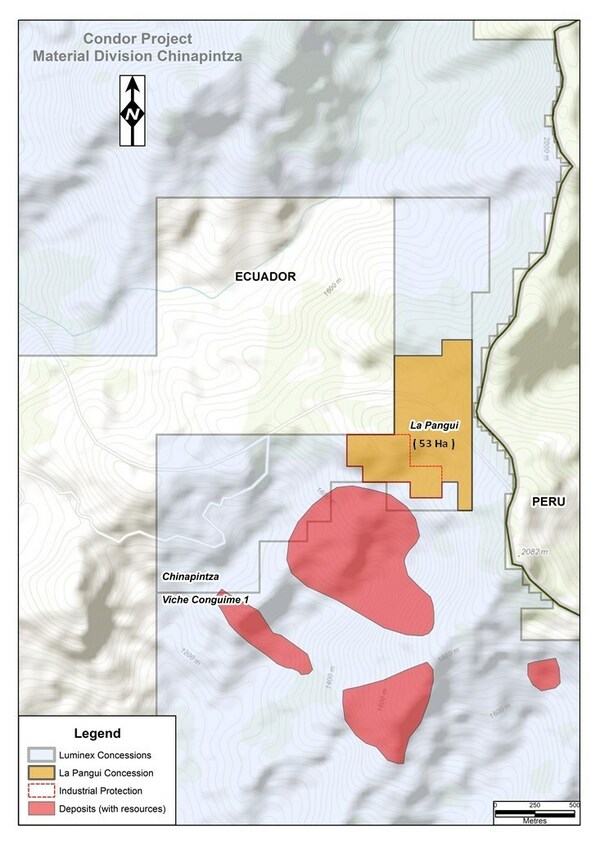
VANCOUVER, BC, Aug. 21, 2023 /PRNewswire/ - Luminex Resources Corp. (TSXV: LR) (OTCQX: LUMIF) (the "Company" or "Luminex") is pleased to announce that it has reached a historic and unprecedented mediated agreement with informal miners in the Condor North portion of its Condor gold project in southeast Ecuador (the "Condor Project"). The Ecuadorian counterparty is Minera La Pangui S.A.S. (the "Local Entity"), which incorporated members of Asolapanguina and Asopromidiche, neighbouring associations of informal miners. The Agreement enables the Company to secure areas in strategic proximity to the Condor North portion of its Condor Project and, at the same time, satisfies the decades-long desire of these informal artisanal miners to gain legal mineral concession rights over informal mining properties in the Company's Chinapintza area (see Figure 1, La Pangui area). The Local Entity has 19 shareholders (all operators), and the Agreement is expected to benefit a large number of additional individuals within the area of influence of the Condor Project.


Figure 1: Planned concession areas to be transferred within the Chinapintza area 
(CNW Group/Luminex Resources Corp.)

The majority of the shareholders of the Local Entity were granted artisanal mining permits to work within the Chinapintza mineral concession area following the Government of Ecuador's 2010 Artisanal Mining Census, which registered a number of artisanal miners with long-term operations in the area of the Condor Project. These artisanal mining permits are approaching expiration, a condition which generated concern among the shareholders of the Local Entity regarding their future prospects. Over the past decade, Luminex has improved its understanding of the areas that might be necessary for mine development, as well as identified areas of mineral value that, owing to economic and technical reasons, will not be incorporated into the Condor North mine plan. In order for the Condor Project to advance successfully towards production, a sustainable solution to the issues with the informal miners had to be found; the mediation process and ensuing agreement provided a forum that enabled both parties to build trust and negotiate positive outcomes that ensure their long-term economic and technical viability.

The Agreement is the result of a series of negotiations that commenced in February 2022, under the leadership of a highly regarded professional mediator, who promoted transparency and good faith to build trust between the parties. The process enabled the parties to discuss their critical needs and find long-term solutions to the benefit of all those involved. Throughout the negotiation process, as well as in the drafting and finalization of the terms, each of the parties were supported by independent legal, financial and tax advisors. Pursuant to Article 47 of the Ecuadorean Law on Arbitration and Mediation, the mediation act has the effect of a legal judgment and executed sentence, effectively making the agreement between the Company and the Local Entity final and legally binding.

Under the terms of the Agreement, the Company agrees to execute a material division of its Chinapintza concession in order to create four new mining titles, one of which will be transferred to the Local Entity. The transfer of this title (La Pangui, 53 hectares) will ensure that the Local Entity has legally secure and long-term mineral concessions, along with the obligation to obtain all the regulatory and environmental permits and licenses necessary for the mining operations. This was possible, because, based on past exploration and technical studies, the Company determined that these areas were not required for the development of the Condor Project now or in the future.

The Local Entity agrees that, once the transfer of the mining title has been completed, it will grant the Company a voluntary mining easement (see Figure 1, Industrial Protection area) for the duration of said mining title and its renewals and extensions. This easement will cover a portion of the Local Entity's concession that, due to technical and industrial safety considerations, the Company may require when the Condor Project is at a more advanced stage. As part of the agreement, the Local Entity and the five directly affected shareholders agree that they will over time abandon certain current operations located in this area, which will be necessary for industrial safety.

In addition to relinquishing their permits and committing to not request any new rights or undertake operations in any areas where the Company has mining rights, the shareholders of the Local Entity collectively and individually agree to collaborate with the Company to help restrict the entrance of illegal miners to the concessions of the Condor Project. The Local Entity and their shareholders also commit to conduct environmental audits that may be requested by the Ministry of Environment, Water and Ecological Transition of its operations, as well as to remediate any environmental impacts their operations may have caused and assume responsibility for any environmental liability that may arise as a result of their past activities. They also grant the Company a right of first refusal over any future sale of the mining title, and commit that if this right is not exercised, any future purchaser of the mining title will commit to abiding by the terms of the Agreement.

The parties are bound to make their best efforts to execute their respective commitments, staggered across three defined phases. The process of implementing the Agreement is expected to take approximately two years in total to complete, depending on regulatory approvals.

The Company will continue working to resolve issues with other smaller groups of long-established miners within the Condor Project through a similar mediation approach.

About Luminex Resources

Luminex Resources Corp. (TSXV:LR, OTCQX:LUMIF) is a Vancouver, Canada based precious and base metals exploration and development company focused on gold and copper projects in Ecuador. Luminex's inferred and indicated mineral resources are located at the Condor Gold-Copper project in Zamora-Chinchipe Province, southeast Ecuador. Luminex also holds a large and highly prospective land package in Ecuador, including the Pegasus and Orquideas projects, which are being co-developed with Anglo American and JOGMEC respectively.

Further details are available on the Company's website at https://luminexresources.com/.

Sunday, September 24, 2023


Peru's Operation Mercury stopped most illegal gold mining in one biodiversity hotspot—then the COVID-19 pandemic hit

Peru's Operation Mercury stopped most illegal gold mining in one biodiversity hotspot in the Amazon. Then the COVID-19 pandemic hit.
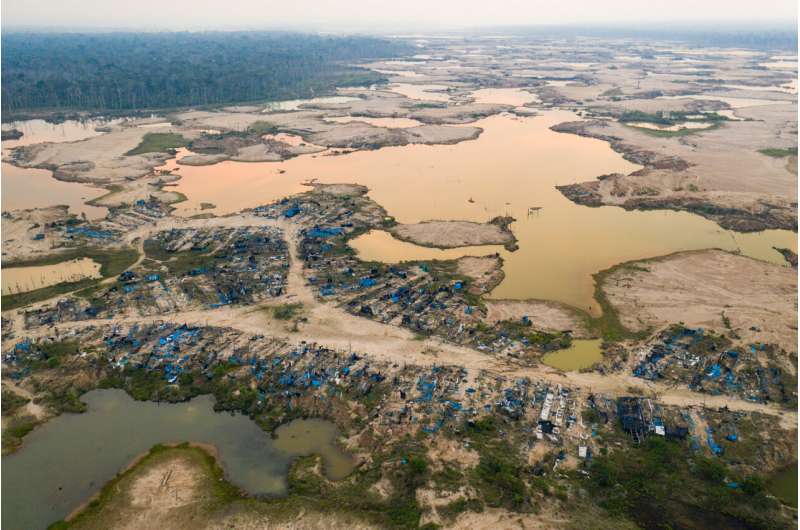
A former mining camp shows where shallow mining ponds have overwhelmed a former
 river system in the La Pampa region of Madre de Dios, Peru. 
Credit: Jason Houston  (iLCP Redsecker Response Fund/CEES/CINCIA))

Artisanal and small-scale gold mining is a lifeline for many who live in Madre de Dios, a region in southeastern Peru, where poverty is high and jobs are scarce. But the economic development in this part of the Amazon basin comes at a cost, as it causes deforestation, build up of sediment in rivers, and mercury contamination in nearby watersheds, threatening public health, Indigenous peoples, and the future of the biodiversity hotspot. And much of the mining activity is unauthorized.

Seeking to eliminate illegal artisanal and  activity and its many , the Peruvian government deployed "Operation Mercury" (Operation Mercurio) in February 2019 in the La Pampa region, an area where gold  is banned in most places. La Pampa straddles the Interoceanic Highway. North of the highway, mining is mostly legal in mining concessions. However, south of the highway mining is strictly prohibited in the buffer zone of the Tambopata National Reserve.

Through Operation Mercury, armed military and national police were dispatched to the region and had a sustained presence until March 2020. Miners were evicted and mining equipment was destroyed. The intervention was successful in stopping illegal gold  in La Pampa but activity in legal areas spiked, triggering many of the same environmental concerns, according to a Dartmouth-led study. The results are published in Conservation Letters.

"Although illegal gold mining operations in La Pampa came to a near halt during Operation Mercury's two intervening years (2019—2020), mining activity essentially just shifted across the road to legal areas on the other side of the Interoceanic Highway," says lead author Evan Dethier, an assistant professor at Occidental College, who conducted the study while he was a postdoctoral fellow at Dartmouth.

Following Operation Mercury, mining decreased by 70% to 90%. Excavated mining pits ("mining ponds") in illegal mining areas decreased by up to 5% per year as compared to increasing by 33% to 90% per year before the intervention.

Although deforested areas experienced revegetation at a rate of 1 to 3 square kilometers per year, progress was offset by increases in deforestation in legal mining areas north of the Interoceanic Highway at a rate of 3 to 5 square kilometers per year. Most of the revegetation occurred on the edges of deforested areas, with the highest revegetation in La Pampa south. Mining pond areas outside intervention zones also saw increases ranging from 42% to 83%

"The spillover effect in areas near the intervention zone demonstrates that stronger regulations are also needed in legal gold mining areas, to help mitigate the environmental effects," says Dethier. "But this intervention did have some of the intended effects, limiting mining in a protected area for a sustained period."

To assess Operation Mercury's impact on mining activity, the research team drew on  from 2016 to 2021 from the European Space Agency's Sentinel-1 and Sentinel-2. Data were obtained from nine mining areas: four illegal mining areas targeted by the intervention, two legal areas to the north on the other side of the Interoceanic Highway, and three distant sites that were not part of the enforcement, which served as a control for the study.

Using the radar and multispectral data, the researchers were able to quantify changes in water, water quality, mining pond areas, and deforestation in La Pampa following Operation Mercury, by comparing data from before, during, and after the intervention.

As part of the analysis, the team examined the spectral properties of the mining ponds and changes in pond color. Mining ponds typically take on a yellow color, which acts as a marker for gold mining activity. The "yellowness" of the ponds is associated with increases in suspended sediment in the water, according to prior research led by Dethier.

Through gold mining processes, sediment is churned up from the land, creating turbid water with lower reflectance levels, while clearer water has higher reflectance. After Operation Mercury was implemented, reflectance increased in mining ponds in La Pampa south but then stabilized.

Following Operation Mercury, pond yellowness decreased rapidly after mining activity was suspended in all areas of La Pampa, except in the north. In La Pampa northwest, mining activity spiked and pond yellowness increased by 43%, as compared to before the intervention. In La Pampa northeast, yellowness remained stable due to continued mining activity.

"Like many other countries around the world with highly prized natural resources, with Peru's rich deposits of gold, it has had to determine who controls this extractable resource and how this particular mining sector will be formed," says co-author David A. Lutz, a research assistant professor in the Department of Environmental Studies at Dartmouth.

By January 2023, when this paper was under review by the journal, illegal gold mining had resumed in protected areas, as enforcement and anticorruption activities by the military and national police had ceased, once they were redeployed to focus on the COVID-19 pandemic.

"Our results demonstrate how intervention at the federal level can effectively stop illegal mining in Peru," says Dethier. "But that is just one aspect of the problem, as a multifaceted approach is necessary to address the long-term impacts of both illegal and legal  activity on humans, wildlife and the environment in the Madre de Dios watershed."

Dethier says that "strong governance and conservation and remediation strategies are needed to protect this tropical biodiversity hotspot. And, as we continue to show in our related work, this challenge is a global phenomenon."

Dethier, Lutz, and others just published a related study that showed the rise of similar mining operations in 49 countries across the global tropics. They showed that as much as 7% of large tropical rivers have been degraded by these expanding mining operations.

More information: Evan N. Dethier et al, Operation mercury: Impacts of national‐level armed forces intervention and anticorruption strategy on artisanal gold mining and water quality in the Peruvian Amazon, Conservation Letters (2023). DOI: 10.1111/conl.12978


Journal information: Conservation Letters 


Provided by Dartmouth College Illegal gold mining continues to harm Amazon ecosystem

Friday, October 25, 2024

East DR Congo grapples with Chinese gold mining firms

Kamituga (DR Congo) (AFP) – Italian priest Davide Marcheselli has been fighting for years against Chinese companies illegally mining gold in the town of Kitutu in eastern Democratic Republic of Congo.

Illegal gold mining has marred the town of Kitutu in South Kivu province, polluting rivers and destroying fields © Glody MURHABAZI / AFP

He says mining has spoilt the town which lies in South Kivu province, polluting rivers and destroying fields.

Hundreds of foreign companies, most of them Chinese-owned, mine gold in the mineral-rich province often without permits and without declaring profits, according to local authorities.

For a long time, civil society groups and members of the church in Kitutu, have been the only people taking a stand against the powerful mining businesses, who often have friends in high places.

In the town of Kamituga, some 40 kilometres (25 miles) from Kitutu, gold mining is in full throttle © Glody MURHABAZI / AFP

"From the deputies, to the village chief, everyone receives something (from the companies), money or shares (in businesses)," Marcheselli told AFP.
Advertising

In July, South Kivu governor Jean-Jacques Purusi suspended "illegal" mining activity in the province until companies could comply with Congolese mining laws.

Under the legislation, companies would have to renew their mining permits, some of which have been expired for decades.

Since the ban, firms, which normally operate in the shadows, have come in hordes to the governor's office in an attempt to get authorisation to resume business.

"In place of the 117 illegal companies we invited, 540 showed up here overnight", Purusi said.

- Access denied –

In the town of Kamituga, some 40 kilometres (25 miles) from Kitutu, gold mining is in full throttle.

In one site mined by Congolese cooperative Mwenga Force, around 400 people delve into vast open pits hoping to make a few dollars a day.

The president of an association for artisanal diggers, Felicien Mikalano, says local operators "don't have the same means" as Chinese firms, such as machinery and cash.

Artisanal mining refers to small-scale mining, carried out by individuals without big machinery and not employed by big businesses.

Artisanal mining is forbidden to foreigners by the country's mining code, but Chinese companies partner with local cooperatives to circumvent the ban © Glody MURHABAZI / AFP

The practice is forbidden to foreigners by the country's mining code, but Chinese companies use local cooperatives as "partners" to circumvent the ban.

Around half of the Congolese cooperatives in the province are partnered with Chinese companies, according to the bureau of scientific and technical study (BEST), a Congolese NGO specialising in mining governance.

A few kilometres from Kamituga, at the end of a dirt track, access to a mine operated by one of these cooperatives is controlled at three checkpoints.

AFP was not allowed to pass them.

Officials employed to control and inspect mining sites are also refused entry.

"It is difficult to monitor these companies," said inspector Ghislain Chivundu Mutalemba.

"These Chinese partners mine (and) the cooperatives sell the product over the counter. We don't know what percentage the Chinese take, or how much they produce", he said.

"All that I know is that the bosses take the gold and bring it to Bukavu, I don't dare ask questions," says gold buyer Siri Munga Walubinja.

"But I have never seen a Chinese person, it is uniquely the Congolese buying," he adds.

Gold bought in Kamituga is transported to South Kivu provincial capital Bukavu by "big traders", most of them Congolese.

The production of gold in the DRC has boomed from 42 kilograms (92 pounds) in 2022 to more than 5 tonnes (11,200 pounds) in 2023 © Glody MURHABAZI / AFP

Once they arrive in the provincial capital, some declare only a fraction of their merchandise and sell the rest illegally in DRC, which is then transported by smugglers to Rwanda, according to BEST.

In December 2022, the government granted a monopoly on gold exports from South Kivu to Congolese state-owned business Primera Gold.

The move aimed to "break the ore export routes to Rwanda", and "to target political opposition business", according to a note from the French Institute of International Relations published in February 2024.

Gold exports out of South Kivu have boomed from 42 kilograms (92 pounds) in 2022 to more than five tonnes (11,200 pounds) in 2023 -- about a sixth of the officially declared national production.

But Primera Gold now lacks the liquidity to buy the mineral and has failed to curb the black market, according to BEST.

The channels used by the Chinese companies, none of which responded to AFP's requests for comment, remain unknown to the authorities and NGOs.

Even Purusi is having trouble getting answers from businesses.

"Their representatives put you through to this general (telephone line) or a minister in Kinshasa on the phone, to tell you not to bother them," says the provincial governor.

© 2024 AFP

Saturday, April 08, 2023

Column: Is it time to embrace Congo’s artisanal cobalt miners?

Reuters | April 7, 2023 |

(Image courtesy of Enough Project | Flickr)

(The opinions expressed here are those of the author, Andy Home, a columnist for Reuters.)


The problems around artisanal cobalt mining in Democratic Republic of Congo (DRC) will take “a coalition to solve”, according to Microsoft.

The $1.9 trillion US tech giant was recently in the DRC to see what the other end of the consumer electronics supply chain looks like.

Microsoft chief of staff, tech and corporate responsibility Michele Burlington paid a visit in December to the Mutoshi artisanal mining site, where up to 15,000 miners, including children, are working in highly dangerous conditions.

The irony is that Mutoshi was a highly successful pilot scheme for formalizing artisanal workers until it was closed in 2020 due to coronavirus restrictions.

The site’s subsequent deterioration sums up the Congolese government’s struggle to realise its vision of integrating the entire artisanal cobalt workforce into the official sector.

Yet the West still needs Congo’s cobalt and everyone agrees that formalization is the solution to the high human and economic costs of artisanal mining.

Microsoft’s reference to a coalition suggests a collective rethink is under way, not least by a US government desperate to loosen China’s grip on the cobalt market.
Ethical dilemma

The ethical dilemma facing Western cobalt users, which is just about everyone with a mobile phone, is headline news again after the publication of “Cobalt Red” by Siddarth Kara.

The book’s subtitle – “How the blood of the Congo powers our lives” – captures both the horrors of informal cobalt mining and the near impossibility of keeping tainted ore out of the formal supply stream.

Kara’s searing first-hand accounts of artisanal life are validated by an independent report published in February by Dorothée Baumann-Pauly, the director of the Geneva Center for Business and Human Rights, on the current conditions at Mutoshi.

The report noted an increase in artisanal miners from 5,000 under the two-year formalization scheme to 15,000, a renewed exclusion of the female workforce, the return of child workers and a rapid deterioration in safety conditions as miners switched back from open-cast to tunnel mining.

The local artisanal cooperative reported five deaths in November alone, compared with zero under the formalization experiment.

The ore that was once sold for processing directly to Chemaf, owner of the site, and its marketing partner, Trafigura, is now being sold to middle men, mostly Chinese, for onward sale to processors, also mostly Chinese.

Mutoshi’s artisanal miners have lost their collective pricing power and their cobalt is once again flowing down opaque channels into the industrial supply chain, the report claims.

Most of the country’s estimated 150,000-200,000 cobalt miners have never even had the chance of formalization.

The government launched the Enterprise Generale du Cobalt in 2021, aiming to formalize the entire sector and buy all its output, but the initial drive ran aground in Congo’s regional power politics.

A critical dependence

The Western response to its cobalt dilemma has been either to try to not use it at all or to avoid any supply tainted with artisanal mining in Congo.

Apple, for example, has said that 13% of the cobalt shipped in its products in 2021 came from recycling.

Electric vehicle (EV) makers are embracing non-cobalt battery chemistries such as lithium-iron-phosphate.

But around 74% of the EV battery market is still using the metal for its energy density, safety and performance attributes, according to The Cobalt Institute, and the EV sector is still expanding fast.

Global usage surged by 22% in 2021 and is forecast by the Institute to grow by around 13% a year for the next five years.

The world is going to need a lot more cobalt and right now it’s China that will supply it.

The country accounts for around 72% of global processing capacity, much of it fed with Congolese ore, both from Chinese industrial operators and the informal sector via the shadow middle-man market.
Western coalition

China’s supply-chain dominance is a headache for both the United States and Europe, which have identified cobalt as a critical mineral.

A collapse in the cobalt price from over $40 per lb a year ago to a current $17 per lb, largely due to over-production in Congo, has made it more difficult to bring on new Western supply.

Jervois Global has just announced the suspension of the final construction stage of its Idaho cobalt project due to the combination of low price and higher input costs.

The only obvious source of immediate large-scale supply remains Congo, which accounts for around 70% of global production.

Congo’s metallic riches place it at the heart of the great game that is playing out between West and East as they seek control of the critical minerals needed to decarbonise.

The United States signed in December a memorandum of understanding (MOU) with Congo and Zambia to jointly develop a supply chain for EV batteries.

The MOU “opens the door for open and transparent investment to build value-added and sustainable industry in Africa and creating a just energy transition for workers and local communities,” the US State Department said.

One local community just happens to account for around 12% of cobalt production in the world’s largest producing nation. It is the same community at the heart of the West’s ethical dilemma about artisanal working conditions.

Formalizing the sector could help solve both problems.

It will, as Microsoft pointed out, need a coalition of government, industrial producers prepared to offer sites for artisanal workers, battery makers and the big brands at the end of the cobalt supply chain.

And us, the ultimate consumer.

Integrating artisanal mining is expensive. Chemaf used industrial excavation equipment to create the open pits mined under the pilot scheme at Mutoshi. It was much safer than tunnelling but expensive at $50,000 per round and had to be repeated every six months, according to Baumann-Pauly’s report.

The Western consumer’s desire to pay a premium for responsibly sourced cobalt may be the ultimate test of whether a Western coalition can simultaneously loosen China’s grip on the cobalt market and alleviate the plight of Congo’s artisanal miners.

(Editing by Susan Fenton)

Monday, February 14, 2022

Brazil 

BOLSONARO launches plan to expand mining in Amazon

Brazilian President Jair Bolsonaro has come under fire for his plans to expand gold mining in the Amazon
Brazilian President Jair Bolsonaro has come under fire for his plans to expand gold mining in the Amazon.

Brazilian President Jair Bolsonaro launched a plan Monday to expand gold mining in the Amazon rainforest, drawing criticism from environmentalists for bolstering an industry accused of rampant deforestation, pollution and attacks on indigenous peoples.

Bolsonaro signed a decree creating a program to support the development of artisanal , a controversial activity known as "garimpo" that occupies something of a legal gray area in Brazil.

The decree says the aim is to "propose public policies and stimulate the development of artisanal and small-scale mining, fostering sustainable development for the region and the nation."

It also creates an inter-ministerial commission on artisanal mining, whose "priority region" will be the nine states that make up Brazil's 60-percent share of the Amazon.

Artisanal miners, or "garimpeiros," are divisive in Brazil.

Bolsonaro, whose father was once a "garimpeiro," defends wildcat miners as hardscrabble frontiersmen.

Critics paint a different picture.

Mining destroyed a record 125 square kilometers (nearly 50 square miles) of the Brazilian Amazon last year—more than twice the size of Manhattan.

Much of the destruction was on protected indigenous reservations.

The use of mercury to separate gold dust from soil has also left toxic pollution in rivers.

Prosecutors say illegal gold miners have links to organized crime, and there have been deadly clashes between armed miners and indigenous groups opposed to them.

Artisanal mining is legal in Brazil, provided miners have environmental licenses and work on authorized land.

But many don't.

The government estimates there are 4,000 illegal miners operating on indigenous territory in the Amazon. Activists say the figure is much higher.

"What (the government) should be doing is proposing and supporting environmental licensing of this activity and monitoring its implementation," said Suely Araujo of the Climate Observatory, a coalition of environmental groups.

"Instead... the Bolsonaro administration looks set to defend the sector's 'historical values,' which is to say, ," she said in a statement.

Bolsonaro, who has pushed to expand agribusiness and mining in the Amazon, has faced international outcry over the destruction of the world's biggest rainforest.

Deforestation in the Brazilian Amazon has surged since the far-right leader took office in 2019, to a 15-year high of 13,235 square kilometers from August 2020 to July 2021.

Deforestation in Brazilian Amazon hits January record

© 2022 AFP