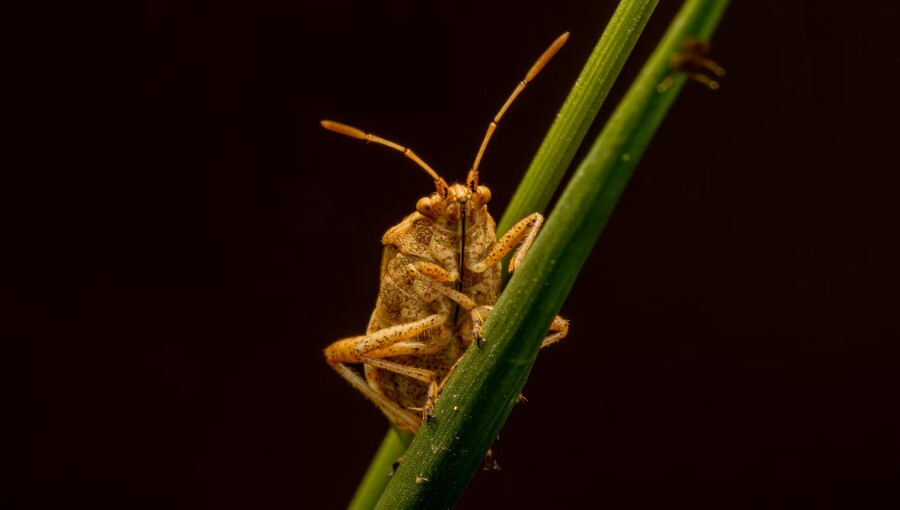
Rice stink bugs have been found in 37 of Japan's 47 prefectures and are damaging crops across a wide area, Kyodo News reported on October 6. The government and researchers warn that warmer winters could let the insect spread further.
The species is native to Japan and feeds on rice. Its numbers fell so sharply after the 1960s that it was thought to have died out. A survey by the Ministry of Agriculture, Forestry and Fisheries found it in 37 prefectures as of 2025, covering an area from the Kyushu region in the southwest to Fukushima Prefecture in the northeast.
Tochigi Prefecture, north of Tokyo, has been among the hardest hit. Farmer Masayuki Watanabe lost two thirds of his normal harvest to the bugs in 2024. In mid-August this year he was flying a drone to spray pesticide over a paddy.
Damage across southern Tochigi in 2024 led the prefecture to set up a task force in 2025. The group shares guidance on which pesticides work best and when to apply them, along with updates on how far infestations have spread. This year the bugs have also reached the central and northern parts of the prefecture. According to Kyodo, a Tochigi official said farmers needed to spray as the rice heads and switch between pesticide types so the chemicals stay effective.
The insects spend the winter in woodland and move into paddies around July, when the rice begins to head. They are thought to shelter near the base of the plants in daylight and feed on the rice ears after dark. Farmers are advised to spray earlier than they would for other stink bugs, and to spray again once grains start forming.
Hiroya Higuchi, a former professor of insect ecology at Ryukoku University who has long studied stink bugs, said milder winters allowed more of the insects to survive. He said their range could move further north if warming continues.
"There are few natural enemies and with rice varieties that head in the fall also now being grown, food remains abundant (for the bugs) until just before winter, creating a vicious cycle in which their numbers do not decline," Higuchi said.

No comments:
Post a Comment