Showing posts sorted by date for query HUMAN ZOO. Sort by relevance Show all posts

Saturday, September 26, 2026


The radical ecology of Rosa Luxemburg
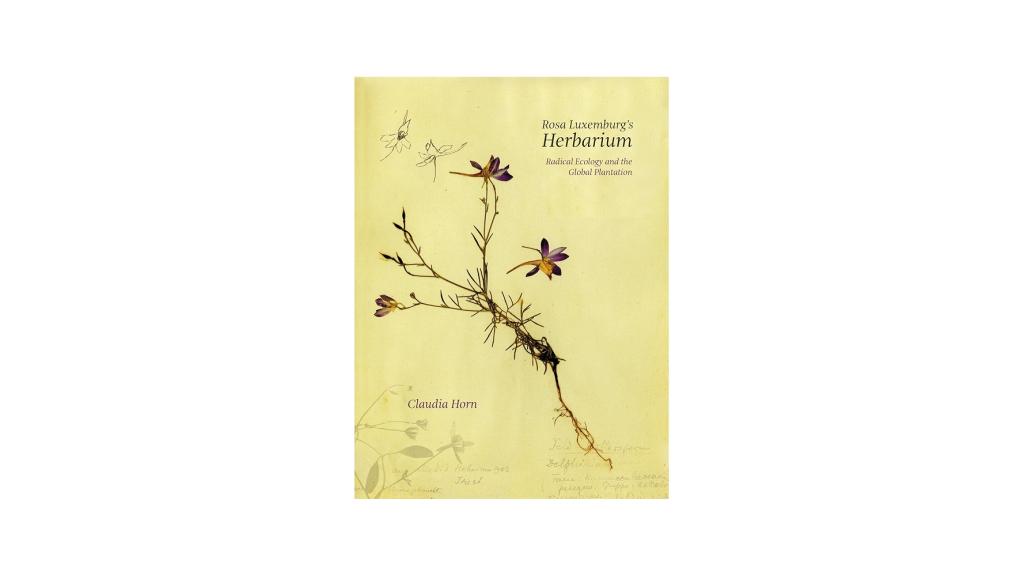


Rosa Luxemburg radical ecology

The following is a review by Paul Le Blanc of Rosa Luxemburg’s Herbarium: Radical Ecology and the Global Plantation, edited by Claudia Horn. New York: OR Books, 2026. 256 pages. $30 US/ £23 UK. This review is simultaneously published on LINKS and Communis.

Rosa Luxemburg’s Herbarium: Radical Ecology and the Global Plantation is a handsomely crafted and inspiring volume to be savored and shared, thanks to the uniquely exquisite sensibilities of Rosa Luxemburg and the splendid labors of the book’s editor, Claudia Horn. Richly illustrated by Luxemburg herself — with beautiful reproductions from among the many hundreds of samples in the 17 notebooks that contain Luxemburg’s drawings of vegetation and the pressed plants themselves, enhanced with numerous marginal notes by her in German — the book also provides well-chosen slices from correspondence with some of her closest friends, along with insightful and informative commentary from the editor. Revealed to us are little known dimensions of Luxemburg the outstanding thinker and revolutionary, but also the generously gifted human being.

Qualities of thought and revolutionary practice

Luxemburg wanted to replace the established order with a genuinely democratic and socialist future. The old order in Germany had taken the form of voracious capitalism integrated with a reactionary elite of land-based aristocrats. Much has changed in the world since, and yet Luxemburg’s perspectives have never stopped resonating in countries throughout the world to the present moment.

For her revolutionary commitments, she was denounced as “bloody Rosa”. Many (including moderate socialists) agreed with the highly esteemed centrist-liberal/conservative sociologist Max Weber. He was fiercely critical of the Spartacus League, which Luxemburg led with her comrade Karl Liebknecht in 1919. Several days before they were brutally killed in the so-called “Spartacist uprising,” Weber said that “Liebknecht belongs in a lunatic asylum, and Rosa Luxemburg in a zoo.” While he had not advocated their murder, it seems not to have shocked him. “Liebknecht was undoubtedly an honest man,” Weber commented, once the deed was done. “He called on the street to fight — the street killed him.” Much the same could have been said of Luxemburg. Of course, they were not killed by “the street,” but by a right-wing paramilitary, the Freikorps, commanded by officers from Germany’s reactionary elite, with tacit support from more moderate “law and order” elements.1

The personal qualities of “bloody Rosa” — who spent years in prison for her beliefs — do not correspond, though, to Weber’s anti-revolutionary caricature. Horn cites the testimony of one of the many prison staff members who befriended her (in this case a non-commissioned officer, Arthur Gertel, who was tasked with accompanying her on walks that she was permitted to take):

She was an intellectual genius yet full of kindness and compassion for all beings, human or animal… And yet the newspapers called her “Bloody Rosa.” The sharpness and refusal to make fundamental compromises that characterized Rosa Luxemburg’s political speeches and writings undoubtedly stemmed from her outrage at all injustice.2

It is the crescendo of injustice and horrific violence — inherent in capitalism, imperialism and global war — that would finally bring an end to Luxemburg’s life in 1919. That is not the focus of this volume. What Horn presents to us, however, transcends the violence in a way that refuses to push aside Luxemburg’s determined struggle to replace it with something better. As she emphasizes, “Luxemburg’s expansive sensitivity to human and non-human suffering drove her unswerving, unfailing, and uncompromising commitment to the cause of world revolution.”3

Enlightenment, Romanticism and the natural world

The great intellectual-cultural streams of the Enlightenment and Romanticism blend in this remarkable woman, with — at the very same time — rock-hard yet supple Marxist convictions that had become inseparable from a passionate yet very conscious connection to the natural world. Her strong bond with blue-feathered titmice is especially evident. She would feed them between the bars of her prison window and copy their bird song. In a letter to Mathilde Jacob, Luxemburg boasted that she could imitate them so well “that they all immediately come running,” adding: “In spite of the snow and frost and loneliness, we believe — the titmice and I — in the coming of spring!” In another letter to Sophie Liebknecht, she confessed that “sometimes, it seems to me that I am not really a human being at all, but rather a bird or a beast in human form.” In yet another letter, she proudly confided to Luise Kautsky:

The great titmice are in loyal attendance in front of my window; they already know my voice exactly; and it seems they like it when I sing. Recently I sang the Countess’s aria from Figaro, about six of them were perched there on a bush in front of the window and listened without moving all the way to the end; it was a very funny sight to see.4

Little wonder that she fantasized: “on my grave, as in my life, there will be no pompous phrases. Only two syllables will be allowed to appear on my gravestone: ‘Tsvee-tsvee’” (her transliteration of the titmouse call that she had mastered). While expressing the fervent hope that her death would come in the struggle for the socialist cause, she confessed “my innermost self belongs more to my titmice than to the ‘comrades’.”5

In fact, her expansive temperament embraced the whole of the natural world. “Inwardly,” she wrote, “I feel so much more at home in a plot of garden … and still more in the meadows when the grass is humming with bees, than at one of our party congresses.” As this little volume reveals, Luxemburg shared the passionate engagement of the bees and other creatures with the flourishing and sometimes struggling plants of all kinds — which delighted and fascinated her. Yet she insisted that nature was not, for her, “a restful refuge,” noting that “in nature too, at every step, I find so much that is cruel that I suffer very much.”6 The point was to be vibrantly aware, conscious of, and in tune with the wondrous reality of life — deeply in touch with herself and the vast and complex world around her.

In more than one way, this informed her political understanding and orientation. Luxemburg tirelessly analyzed the causes and impacts of the catastrophic horrors of World War I, with the conviction that “by its nature, socialism cannot be imposed” — that the key to reaching it could only be found through “uninhibited, effervescing life,” which meant that “experience alone is capable of making corrections and opening up new paths.” While the failure of the international socialist movement to stay true to its principles in resisting the global imperialist war brought a devastating “misfortune for humanity,” she insisted, “socialism will be lost only if the international proletariat refuses to learn from it.”7 Revolutionary consciousness and insurgency cannot be manufactured from the top-down. It must flow from actual experience as a collective process.

Capitalism and metabolic rift

Even more than was the case with the cataclysms of global war in 1914-18 and 1939-45, all human and non-human life on our planet is threatened by unfolding and intensifying ecological disasters. Just as imperialism and the global wars it generated were not simply the fruit of mistaken policy decisions — according to Luxemburg’s penetrating analyses — so is the environmental crisis not the outcome of policies that can simply be reversed. Both flow inexorably from the accumulation process at the heart of the capitalist economic order in which we live. Horn notes the same point when she writes, “profit seeking capitalist behavior causes various kinds of economic imbalance.”8

This imparts a special urgency to aspects of Luxemburg’s application of ecological sensibilities to her development of Marxist analysis. It is related to the notion of “metabolic rift,” recently highlighted in significant studies by such “eco-Marxists” as John Bellamy Foster and Ian Angus.9 Foster and Angus, following Marx — as Horn puts it — use the metaphor of “metabolism” to describe “the complex, interdependent process linking human society to nature.” According to Horn, “all economies transform — metabolize — physical materials such as wood, water, and soil into goods for use or exchange.” But “if producers do not exploit those natural resources in a sustainable way, both the resources and the economic system they support may be exhausted.” 

Drawing from Luxemburg’s classic The Accumulation of Capital (1913), Horn presents the view that “capitalism was not a closed system but rather operated within and depended upon a wider, non-capitalist ‘milieu’.” In fact, “capital accumulation had required the continuous absorption and transformation of resources — both human labor power and natural materials like wood or minerals — that originated outside capitalist societies.” Capitalism existed “not as a stable equilibrium but as a ceaseless, violent churn.” This was stressed in Luxemburg’s theory of imperialism as a perpetual invasion and exploitation of non-capitalist portions of our planet. 

In Luxemburg’s words, “capitalism feeds on the ruins of such organizations, and, although this non-capitalist milieu is indispensable for accumulation, the latter proceeds, at the cost of this medium, by eating it up.” Horn draws out this point: “Eating up the conditions for its survival, ‘capitalism prepares its own downfall under ever more violent contortions and convulsions.’” Nonetheless, as Horn observes later, “the capitalist system continues to displace the real costs of production, such as environmental destruction, outside the realm of capital accumulation, to be borne off-books by exploited people, non-human animals, and future generations.”10

Horn strongly suggests that Luxemburg’s particular analysis of imperialism suffered from its own flaws, to which she gives serious attention, but insists on the relevance of much of what she had to say about the capital accumulation process:

If history has not borne out Luxemburg’s argument that capitalism depends upon both exploiting and incorporating the non-capitalist world, such that it must inevitably exhaust itself, still, the enduring relevance of her analysis lies in its global scope; its sensitivity to the physical predicates of economic growth; its focus on the boundaries that capital constantly transgresses, polices, and redraws; and its attentiveness to the broad coalitions these trespasses and depredations could bring together in resistance.

The qualities of this remarkable book certainly do justice to the multifaceted person who was Luxemburg, but they also speak to us on a variety of levels about the meaning of life and about what must be done in the present moment.

Thursday, August 13, 2026


Mutation hotspots help 'friendly' viruses outmaneuver the bacteria in your gut


Could we harness their chameleon-like nature to treat infections when antibiotics don’t work?


Michigan State University

Cryo-electron microscopy image of bacteriophages attacking a cell. 

image: 

Certain bacteriophages found in the human gut have mutation hotspots scattered throughout their genomes that help them modify key defense genes, researchers report.

view more 

Credit: Sundharraman Subramanian and Alaina Pabbathi, Cryo-EM Core Facility, Michigan State University


Every 15 minutes, someone in the U.S. dies of a drug-resistant superbug. A few decades from now, antibiotic-resistant bacterial infections threaten to become the leading cause of death worldwide, outpacing cancer.

In the race for a solution to the antibiotic resistance crisis, a century-old practice is attracting renewed interest. The treatment, called phage therapy, involves co-opting friendly viruses that kill bacteria but ignore human cells.

Bacteria can — and do — develop resistance to phages, just as they do with antibiotics. But unlike antibiotics, phages can evolve counter defenses of their own.

Now, researchers at Michigan State University have identified a counter defense used by a group of phages common in the human gut, called Enterobacteria phage T2, that helps them stay one step ahead of their bacterial hosts.

These phages have mutation hotspots scattered throughout their genomes that help them modify key defense genes, the researchers report.

In a study published Aug. 13 in the journal Nature Microbiology, they show that these mutation hotspots help diversify their progeny to employ different survival strategies, ensuring that at least some continue to infect and kill no matter what countermeasures their bacterial hosts throw at them.

“They’re essentially hedging their bets,” said co-author Chris Waters, a core faculty member in MSU’s Ecology, Evolution, and Behavior program.

“If we can harness these kinds of evolutionary tricks, we might be able to make more effective phage therapies in response to the antibiotic resistance crisis,” Waters added.

The idea of using phages in medicine isn’t new. Cocktails of phages have been used since the 1920s to treat dysentery, sepsis, pneumonia and other ailments, particularly in France, Poland and parts of the former Soviet Union.

Interest in phage therapy waned in the West after the discovery of penicillin and other chemical antibiotics in the 1940s. But now, with deadly microbes from MRSA to tuberculosis becoming resistant to more and more of these drugs, researchers are revisiting phage therapy to combat antibiotic-resistant infections.

When phages invade, they latch onto a bacterium and inject their genes into the cell. Once inside, they hijack the bacterium’s internal machinery and turn it into a virus factory, forcing their host to churn out new phages until the cell bursts and releases them.

To fend off these attacks, bacteria have their own tactics. The researchers were studying one such strategy — a system in the bacterium that causes cholera — when they noticed something odd. In previous work, they identified a set of genes in cholera that spot the DNA of invading phages and chop it up before the phages can take over. But interestingly, this anti-virus protection didn’t last for long.

First author Jasper Gomez conducted the work while earning his Ph.D. in the Waters lab in MSU’s department of microbiology, genetics, & immunology.

In their experiments, the researchers transferred cholera DNA encoding the protective system to E. coli, a bacterium that is easier to work with in the lab, and exposed the bacteria to phages. Before long, the engineered E. coli were under attack. In other words, the phages quickly devised a workaround to bypass their hosts’ defenses, allowing them to sneak in and hijack their victims’ cells anyway.

“Within a few hours, the phages always started to win,” Waters said. “We couldn’t understand why,” he added.

The researchers sequenced the DNA of the resistant phages and found that many had “typos” in a gene called agt, particularly in a region of repetitive DNA where the same letter, or nucleotide base, appeared multiple times in the gene sequence.

“When I saw the data, I thought, oh my gosh,” Waters said. The region resembled a type of mutational hotspot called a contingency locus. Well studied in other organisms but never shown in phages before, such regions of the genome are known to be places where the cell’s DNA copying machinery sometimes “slips” and makes mistakes, Waters said.

The result is that, each time new phages are produced, they aren’t producing exact genetic copies of their ancestor. Some of the resistant mutants gain an extra repeat unit in the agt gene, while others lose one, throwing off how the gene’s instructions are read.

The researchers found that the repetitive region accumulates mutations thousands of times faster than the rest of the genome.

While mutations are often harmful, this changeability can give phages an evolutionary edge, Waters said. By continually churning out new mutants, they increase the odds that at least some will carry a mutation that lets them evade or disarm their host’s ever-changing arsenal.

“This changes our understanding of how phages evolve,” Waters said. “Instead of hijacking their hosts to mass produce exact copies of themselves, they are actually using these mutation hotspots to make a zoo.”

Phages outnumber bacteria by around ten to one, making them the most abundant organisms on the planet. The researchers focused on a type of phage that lurks in the gut, where it specializes on E. coli bacteria, but phages can be found just about anywhere, from the sands of the Sahara Desert to the ice of the Arctic Sea.

Working with MSU microbial evolution expert Jeffrey Barrick, the team found hundreds of similar mutation hotspots scattered across the genomes of other phage species as well.

Next, the researchers are looking into whether these mutation hotspots give phages an edge in other situations, such as adapting to survive and exploit their bacterial hosts after a shift in the environment, or evolving to infect new types of bacteria.

In much of the U.S., the U.K., and elsewhere, phage therapy is still far from mainstream; regulatory hurdles make it available only as a last resort. In the meantime, Waters and other researchers at MSU are exploring potential applications beyond the clinic, to treat bacterial infections in everything from honeybees and crops to pets and livestock.

“MSU could be a great phage therapy center for veterinary and agriculture applications,” Waters said.

“We’re never going to be able to completely get rid of resistance,” he added. “But if we can better understand how bacteria protect themselves from phage infection and how phages fight back, we might be able to minimize it.”

This research was supported by grants from the U.S. National Institutes of Health (GM139537, AI158433, GM088344 and F31AI186463) and the National Science Foundation (DEB-1813069 and DEB-1951307).

CITATION: "Phage-encoded contingency loci enable bet-hedging against host defence mechanisms," Jasper B. Gomez, Jeffrey E. Barrick, Christopher M. Waters. Nature Microbiology, Aug. 13, 2026. DOI: 10.1038/s41564-026-02445-w  

Friday, August 07, 2026

Antwerp's 'human zoo': Belgium confronts shame of colonial past

Cover image: FOCUS © FRANCE 24

Issued on: 07/08/2026 - 
05:34 min

In 1894, when the Belgian city of Antwerp was hosting a World's Fair, 144 Congolese people were forcibly brought to the city to be exhibited in the Congo Pavilion. In this "human zoo", seven Congolese men ultimately died of disease. Today, this shocking episode still haunts Belgium as one of its colonial history's darkest chapters.


But in May of this year, the city of Antwerp began to confront this painful past by heeding demands from its Congolese community by unveiling a monument to the victims. It's a way to confront the demons of the wealthy Belgian port city that greatly benefitted from the colonial period. FRANCE 24's Alix Le Bourdon reports.

BY:

Alix LE BOURDON

Dave KEATING


Thursday, August 06, 2026


Can egg oiling help protect prey from raven predators?


Wiley


Common ravens are intelligent omnivores that regularly consume the eggs and young of nesting birds, and their populations are boosted by human-provided food and nesting resources. This has resulted in elevated predation by ravens on many sensitive prey species, including greater sage-grouse. A study in The Journal of Wildlife Management indicates that coating developing raven eggs with non-toxic mineral oil helps to protect sensitive prey populations by reducing raven reproduction.

Investigators found that egg-oiling—a management technique which stops the developing raven embryo from surviving without destroying the egg itself—reduces local raven numbers and improves nest survival and population growth of greater sage-grouse, one of the vulnerable prey species targeted by ravens.

“Applying egg oil to raven nests offers nesting sage-grouse some reprieve from nest predation. When raven nests were treated, sage-grouse nest survival more than doubled and relative abundances of sage-grouse increased by 44% compared with control populations,” said leading author Steven Mathews-Sanchez, PhD, who conducted this work while at the US Geological Survey Western Ecological Research Center and who is currently a biologist for the San Diego Zoo Wildlife Alliance. “Although highly effective at a local scale, egg oiling does not address the anthropogenic sources driving raven population growth, which must ultimately be addressed to protect sage-grouse and other sensitive species, nor does it address critical habitat required for sage-grouse to persist long-term.”

URL upon publication: https://onlinelibrary.wiley.com/doi/10.1002/jwmg.70247

Additional Information
NOTE:
The information contained in this release is protected by copyright. Please include journal attribution in all coverage. For more information or to obtain a PDF of any study, please contact: Sara Henning-Stout, newsroom@wiley.com.

About the Journal
The Journal of Wildlife Management publishes original research contributing to fundamental wildlife science. Topics encompass biology and ecology of wildlife and their habitats with implications for conservation or management. Published research covers habitat use, genetics, demographics, behavior, population ecology, human dimensions, and contemporary conservation issues. Our aim is to support wildlife practitioners. Our journal welcomes theoretical advancements, quantitative analyses, modeling, and reviews offering a new synthesis. The Journal of Wildlife Management is a journal by The Wildlife Society.

About Wiley      
Wiley is a global leader in authoritative content and research intelligence for the advancement of scientific discovery, innovation, and learning. With more than 200 years at the center of the scholarly ecosystem, Wiley combines trusted publishing heritage with AI-powered platforms to transform how knowledge is discovered, accessed, and applied. From individual researchers and students to Fortune 500 R&D teams, Wiley enables the transformation of scientific breakthroughs into real-world impact. From knowledge to impact—Wiley is redefining what's possible in science and learning. Visit us at Wiley.com and Investors.Wiley.com. Follow us on Facebook, X, LinkedIn and Instagram.

Wednesday, August 05, 2026

Zoo-housed lions show wild-style behaviors when fed whole carcasses


Adelaide University


A new Australian study has found that feeding zoo-housed lions whole animal carcasses on a feast-and-fast schedule encourages behaviours more closely aligned with those seen in the wild.

Published in Applied Animal Behaviour Science, the research from Adelaide University and Monarto Safari Park in South Australia examined how African lions responded when animal care staff introduced whole animal carcasses every nine days, building on an existing feast-and-fast feeding routine for a group of adult males.

Using around-the-clock video monitoring over three months, researchers found the lions spent significantly longer feeding, rested more after meals, and displayed activity patterns that mirrored the natural cycles of wild lions.

Lead author Lesia Hryhorenko from Adelaide University's School of Animal and Veterinary Sciences said the study offers new insights into how feeding schedules influence the behaviour of carnivores in human care.

“Wild lions don't eat at the same time every day. They experience natural periods of feasting and fasting depending on hunting success,” Hryhorenko said.

“We wanted to understand how African lions in human care respond when feeding routines more closely resemble those natural patterns.”

The research team – which included visiting Belgium Masters student Florence Demoulin from the University of Liege – monitored three adult male lions at Monarto Safari Park before and after the introduction of whole-carcass feeding.

During the experimental phase, zookeepers fed the three adult male lions with approximately 200 kilograms of carcasses, which remained available for up to three days, followed by a period of rest and digestion.

Eight infrared cameras recorded the lions' behaviour continuously, creating one of the most detailed 24-hour datasets yet collected on African lions in human care under a carcass feeding regime.

The study found that feeding activity increased dramatically on carcass days, with lions spending almost three times longer feeding than they normally would. Feeding bouts were also more frequent and lasted longer as the animals tore, manipulated and consumed the carcasses, exhibiting a wider range of natural feeding behaviours.

After feeding, the lions spent much more time lying down and resting. As the fasting period progressed, movement gradually increased again, creating a behavioural rhythm that closely resembled the feast-and-fast cycles observed in wild lion populations.

“Providing whole carcasses changes much more than the nutritional content of the diet,” Hryhorenko said.

“It gives lions the opportunity to engage in behaviours such as tearing, pulling and manipulating food over extended periods, which are important components of their natural feeding ecology.”

Researchers also examined pacing, a repetitive behaviour often associated with anticipation in carnivores in human care.

While pacing increased slightly over the course of the study, it did not steadily rise during fasting periods. Instead, peaks occurred around routine keeper arrival and habitat-shifting times, suggesting the behaviour was linked more closely to predictable feeding routines than hunger.

The researchers observed no increase in aggression or social instability around carcass feeding events.

Co-author Associate Professor Alexandra Whittaker said the study highlights the value of long-term, continuous monitoring when assessing animal behaviour and management practices.

“Many zoo studies focus only on what happens immediately after food is provided,” Associate Professor Whittaker said.

“Our results show that feeding schedules can influence behaviour for days afterwards, making it essential to look at behavioural patterns across the entire feeding cycle rather than a single feeding event.”

The researchers say future studies combining behavioural observations with physiological measures could help further evaluate how different feeding regimes affect animal welfare and wellbeing.

‘Effects of implementing a whole-carcass feeding routine on the behaviour of zoo-housed African lions’ is published in Applied Animal Behaviour Science. DOI: 10.1016/j.applanim.2026.107041


Notes for media

Footage of African lions at Monarto Zoo can accessed via this link