Sunday, November 12, 2023

Webb and Hubble Telescopes Team Up to Image ‘Mothra’ and a Massive ‘Christmas Tree’ Cluster

Isaac Schultz
Thu, November 9, 2023 

A swathe of the recently imaged galaxy clusters.

It’s not yet December, but NASA is already in a festive mood: the Webb and Hubble space telescopes recently imaged MACS0416, a pair of colliding galaxy clusters 4.3 billion light-years from Earth that is bedecked in sparkling lights.

The image combines visible and infrared light, the respective wheelhouses of Hubble and Webb, to create a sweeping view of the colliding clusters. The Webb observations were taken as part of the Prime Extragalactic Areas for Reionization and Lensing Science, or PEARLS, program, and the Hubble data was collected as part of the Frontier Fields program, which began in 2014.

Two papers detail aspects of the image. One, published in Astronomy and Astrophysics, describes the “extremely magnified monster star” nicknamed Mothra, after the fictional monster that features prominently in the Godzilla franchise. The other paper is accepted for publication in The Astrophysical Journal and is currently hosted on the preprint server arXiv; that work details 14 transient objects seen in the galaxy cluster. These transients are objects that vary in their observed brightness over time, causing the smattering of colors to twinkle in the eye of a telescope.

“We’re calling MACS0416 the Christmas Tree Galaxy Cluster, both because it’s so colorful and because of these flickering lights we find within it. We can see transients everywhere,” said Haojing Yan, an astrophysicist at the University of Missouri in Columbia and lead author of one of the papers, in the same release.

The full image of the galaxies, complete with smears of gravitational lensing.

Twelve of the transients spotted are too faint and red for Hubble to see, so the Webb data was critical in getting a more complete image of the field. The researchers believe the other two transients are supernovae—vast explosions that occur at the end of a star’s life.

The star nicknamed Mothra is located in a galaxy that existed about three billion years after the Big Bang. The research team believes that the monster star is probably in a binary system with another supergiant star, which the team has fittingly nicknamed Godzilla. Mothra is anywhere between 10,000 and one million times our Sun’s mass, and may hint at the nature of dark matter.

In their paper, the team stated that axionic dark matter models (which focus on axions, a theoretical particle named for a detergent) are consistent with their observations in certain mass ranges for the axion. Earlier this year, another case of extreme gravitational lensing boosted the case for axionic dark matter.

As Webb and Hubble continues their investigation of the cosmos, our understanding of dark matter, the universe’s evolution, and the myriad objects that compose the cosmos will come into sharper relief. Their data—as well as the observations of other telescopes, like the nascent Euclid Space Telescope—will help us understand the makeup of the cosmos.
Gizmodo

Cosmic ‘Christmas tree’ dazzles in new image captured by Hubble and Webb

Ashley Strickland, CNN
Thu, November 9, 2023 

A panorama of colliding galaxy clusters glimmers in a new image, captured by the combined forces of the two most powerful space observatories ever created.

The cosmic phenomenon, called MACS0416, is 4.3 billion light-years from Earth. Eventually, the merging pair of giant clusters will combine to form an even more massive collection of glittering galaxies.

New details of the celestial feature have emerged in the colorful image, which unites the observational powers of Hubble Space Telescope in visible light and the James Webb Space Telescope in infrared light, which is invisible to the human eye.

Together, the renowned observatories present a more comprehensive look at the universe. Hubble has long been used to search for faint, distant galaxies across different wavelengths of light. Webb’s infrared gaze enables that search to occur at even farther distances, detecting invisible light deeper into the early days of the universe.

A light-year, equivalent to 5.88 trillion miles, is how far a beam of light travels in a year. Given the distance between Earth and the objects from the early days of the universe, when telescopes such as Webb observe this light, it’s effectively like looking into the past.

“We are building on Hubble’s legacy by pushing to greater distances and fainter objects,” said Rogier Windhorst, regents professor in Arizona State University’s School of Earth and Space Exploration, in a statement.

Windhorst is the principal investigator of the PEARLS, or Prime Extragalactic Areas for Reionization and Lensing Science, program that conducted the Webb observations.
A ‘Christmas tree’ of galaxies

The colors in the new image, released Thursday, are used to indicate distance. Blue-hued galaxies are the closest, bursting with star formation and easily seen in visible light by Hubble. The red galaxies are more distant, best detected by Webb in infrared light.

“The whole picture doesn’t become clear until you combine Webb data with Hubble data,” Windhorst said.

The new Webb observations were used to search for objects that change in brightness over time, called transients.

Within the galactic clusters’ field of view, Webb helped astronomers identify 14 transients, all of which were visible due to gravitational lensing. This cosmic effect occurs when closer objects — such as the galactic clusters — act like a magnifying glass for distant objects. Gravity essentially warps and amplifies the light of distant galaxies in the background of whatever is doing the magnifying, enabling observations of otherwise invisible celestial features.

The transients include 12 stars or star systems and two supernovas in galaxies that were amplified using gravitational lensing.

“We’re calling MACS0416 the Christmas Tree Galaxy Cluster, both because it’s so colorful and because of these flickering lights we find within it. We can see transients everywhere,” said Haojing Yan, associate professor of physics and astronomy at the University of Missouri. Yan is lead author of one study describing the findings that has been accepted for publication in The Astrophysical Journal.
Spotting a stellar giant

One transient in particular captured the attention of astronomers, a star system they have nicknamed “Mothra,” the titular giant monster of a 1961 Japanese film. The stellar system, magnified by a factor of 4,000 due to gravitational lensing, was traced to a galaxy that existed 3 billion years after the big bang created the universe.

The Webb and Hubble composite image includes "Mothra," a star system magnified by the galactic cluster pair as well as another unseen object. - NASA/ESA/CSA/STScI

The team nicknamed the star system Mothra due to its extreme magnification and brightness.

Surprisingly, Mothra has appeared before, detected in Hubble observations nine years ago. Astronomers are stumped as to how this happened, because there must be a specific alignment between the galactic cluster and the more distant star to cause the magnification at a point in time. So how did Mothra also appear magnified in the new Webb observations?

“The most likely explanation is a globular star cluster that’s too faint for Webb to see directly,” said José Diego, researcher at the Institute of Physics of Cantabria in Spain and lead author of another paper describing the finding, published in the journal Astronomy & Astrophysics. “But we don’t know the true nature of this additional lens yet.”

James Webb Space Telescope gets ready for the holidays with a cosmic Christmas Tree 

Robert Lea
Thu, November 9, 2023 

A smattering of galaxies seen as countless dots of light.


The James Webb Space Telescope (JWST) left astronomers feeling festive recently as it allowed them to image a distant, colorful cluster of galaxies they have dubbed the "Christmas Tree Galaxy Cluster."

In this cluster, the James Webb Space Telescope discovered flickering "Christmas lights" in the form of 14 new transient objects — celestial objects that brighten dramatically before dating . The winter wonderland is officially called MACS041, and is located about 4.3 billion light-years from Earth.

"We're calling MACS0416 the Christmas Tree Galaxy Cluster, both because it's so colorful and because of the flickering lights we find within it," Haojing Yan, an associate professor in the University of Missouri Department of Physics and Astronomy, said in a statement. "Transients are objects in space, like individual stars, that appear to suddenly brighten by orders of magnitudes and then fade away. These transient objects appear bright for only a short period of time and then are gone; it’s like we’re peering through a shifting magnifying glass."

Related: James Webb Space Telescope reveals most distant Milky Way galaxy doppelganger


a smattering of galaxies seen as countless dots of light

Spotting so many transients in this galaxy was achieved by teaming the JWST up with the Hubble Space Telescope; the sheer number of transients spotted in one go, thanks to the duo, implies there are a lot more yet to be found within the Christmas Tree Galaxy Cluster. It's almost like the Christmas gift for astronomers that'll keep on giving.
Putting up the Christmas tree with Einstein

The light from the Christmas Tree Galaxy Cluster began its journey across the cosmos when the solar system, now 4.6 billion years old, was newly formed and just around 300 million years old. This would ordinarily make it too faint for even the JWST to see in detail, but a little trick first acknowledged by Albert Einstein made observing this cosmic Christmas a little easier.

In his 1915 theory of general relativity, which concerns the nature of gravity, Einstein said objects of great mass must warp the very fabric of space and time, united as a single entity called space-time, giving rise to a curvature we experience as gravity. And when anything — including light — passes these curved regions of space, those things' paths get curved. The closer to the body of mass a thing is, the more extreme the curvature it experiences.

As a result, when an object passes between Earth and a distant light source, the light from that background object takes a varied amount of time to reach us, as its path isn't following a straight line due to the curvature created by the passing object. This can ultimately cause that background object to appear amplified from our vantage point. The concept is called "gravitational lensing" as the intervening object acts as a natural, cosmic magnifying glass.

The JWST has been tapping into this phenomenon, with great success, to see some of the universe's earliest galaxies — and its view of the Christmas Tree Galaxy Cluster is its latest example.

"We can see so many transients in certain regions of this area because of a phenomenon known as gravitational lensing, which is magnifying galaxies behind this cluster," Yan said. "Right now, we have this rare chance that nature has given us to get a detailed view of individual stars that are located very far away. While we are currently only able to see the brightest ones, if we do this long enough — and frequently enough — we will be able to determine how many bright stars there are and how massive they are."
A monster in the Christmas tree?

The transients were found by Yan and the team as they were looking at four sets of images captured by the JWST over around four months, as part of the JWST’s PEARLS GTO 1176 program. The team has identified two objects in the images as supernova explosions that happen as stars reach the end of their lifespans. Yan is thrilled by this result, as he and his team can now use those supernovas to study the galaxies in which they are happening.

"The two supernovas and the other twelve extremely magnified stars are of different nature, but they are all important," Yan explained. "We have traced the change in brightness over time through their light curves, and by examining in detail how the light changes over time, we’ll eventually be able to know what kind of stars they are."

The astronomers also found something else extraordinary in the Christmas Tree Galaxy Cluster: A monster star in a galaxy, seen as it was when the universe was just 3 billion years old. They have named the star "Mothra" after the monstrous moth, Kaiju, from Japanese cinema.

The galaxy in which Mothra lurks was lensed to around 4,000 times its original brightness. The object lensing this galaxy is currently unknown, but Yan and the team estimate it has a mass of between 10,000 and 1 million times that of the sun. "The most likely explanation is a globular star cluster that’s too faint for the JWST to see directly," Jose Diego, research lead author and a scientist at the Instituto de Física de Cantabria scientist, said in a separate statement. "But we don’t know the true nature of this additional lens yet."

What is extra interesting about Mothra's galaxy is the fact it was also visible and lensed in Hubble Space Telescope images taken nine years ago. Normally, a lensing object and a background galaxy would move out of alignment over such a period, but Mothra's home galaxy and the object lensing it seem to have stuck together. In the future, Yan and the team hope to both figure out the nature of this lensing object and uncover some of its characteristics.

"We'll be able to understand the detailed structure of the magnifying glass and how it relates to dark matter distribution," Yan concluded. "This is a completely new view of the universe that’s been opened by JWST."

One of two papers detailing the observation of the Christmas Tree Galaxy Cluster was published in November in the journal Astronomy and Astrophysics, while the other has been accepted for publication in the Astrophysical Journal with a preprint available on the research repository arXiv.


The Hubble Space Telescope has found evidence of a "wandering" black hole about 5000 light years away in the Milky Way galaxy. Astronomers estimate that there could be 100 million black holes wandering around our galaxy. Credit: NASA Goddard Space Flight 


NASA's James Webb telescope spotted the most distant galaxy in the universe that looks like ours

Marianne Guenot
Fri, November 10, 2023 

The James Webb Space Telescope spotted a twin of the Milky Way in the depths of the universe.


The galaxy formed shortly after the Big Bang, which was thought to be impossible.


This could mean there's a missing ingredient in our models of how the univer
se formed.

The James Webb Space Telescope (JWST) has spotted the most distant example of a galaxy in the universe that looks similar to the Milky Way.

The galaxy, named ceers-2112, is more than 11.7 billion years old and is the earliest example of a barred spiral galaxy ever seen.

Astronomers were surprised to see it because cosmic models suggest barred spiral galaxies only started emerging around 6.9 billion years after the Big Bang.

The latest discovery, published in the journal Nature, could upheave our models of the universe and how dark matter influenced galaxy formation in its early days, study authors said.
A barred spiral galaxy exists in the universe's infancy

With its advanced imaging capabilities, JWST has allowed us to peer into the early universe with more precision than ever before.

The latest study is no exception. To a layperson, the picture below may look like little more than a colorful blob — and when looking at information coming from the early days of the universe, that's the kind of image that we're usually working with.
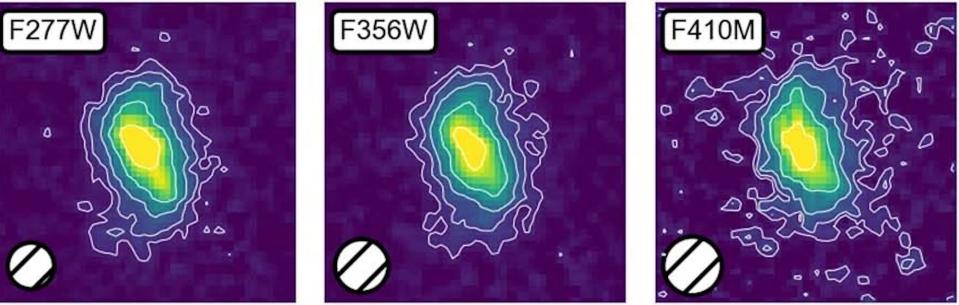

Three near-infrared pictures of ceers-2112 provided by JWST imaging are shown here. This image was cropped from the original.Costantin, L., Pérez-González, P.G., Guo, Y. et al. A Milky Way-like barred spiral galaxy at a redshift of 3. Nature (2023). https://doi.org/10.1038/s41586-023-06636-x. CC-BY 4.0

But with JWST's precise measurement instruments, scientists were able to squeeze out crucial information about ceers-2112's characteristics. For them, there is little doubt: this picture suggests this is a barred spiral galaxy.

But this galaxy is in redshift 3, a technical term suggesting it appeared about 2 billion years after the birth of the universe

That's a conundrum, as a barred spiral galaxy is a very tall order for such a young universe.

Previous models had suggested such complex galaxies would take at least a few billion years to evolve. Scientists had thought you couldn't find a barred spiral galaxy before the universe was about 6.9 billion years old.

"The discovery of ceers-2112 shows that it can happen in only a fraction of that time, in about one billion years or less," Alexander de la Vega, a physicist and cosmologist at the University of California, Riverside, said in a press release accompanying the findings.

"It is the first publication that finds in the childhood of the universe these spiral galaxies that have a disk with a central bar," Yetli Rosas Guevara, an astrophysicist of the Spanish Donostia International Physics Center who was not involved in the study, told El País.
The findings could shed light on the early days of dark matter

The new finding suggests something is wrong with models predicting what was happening in the early days of the universe.

"In the past, when the universe was very young, galaxies were unstable and chaotic. It was thought that bars could not form or last long in galaxies in the early universe," de la Vega said.

Simulations "really struggle to reproduce such systems at those epochs," Luca Costantin, study lead author and astrophysicist at the Centro de Astrobiología in Madrid, told Space.com.

"We now need to understand which key physical ingredient is missing in our models — if something is missing," Costantin told Space.com.

One factor that doesn't quite align is the role of dark matter in the early days of galaxy formation.

As a reminder, the stuff that makes up everyone on Earth, our planet, our galaxy, and everything we can observe, is ordinary matter, or baryon. But physicists think baryon makes up only 5% of our universe. The other 95% — about 27% of dark matter and 68% of dark energy — remain huge mysteries in physics.

Some models suggest there was an "over-abundance" of dark matter in the early days of the universe, study co-author Jairo Abreu, a researcher at the University of La Laguna, told Space.com.

But that doesn't quite make sense with the latest findings: barred spiral galaxies are more likely to be made up of baryon, said Abreu.

This suggests that "these models may need to adjust how much dark matter makes up galaxies in the early universe, as dark matter is believed to affect the rate at which bars form," said de la Vega.
Venus’s Skies Are Covered in Oxygen, Actually
Isaac Schultz
Fri, November 10, 2023 

Venus' cloudy skies.

While air is a gaseous delight unique to Earth, a team of astrophysicists have made a satisfying discovery: the direct observation of atomic oxygen on Venus’ dayside, confirming that the element crucial for our existence exists on both sides of the hellish planet.

About 96% of the atmosphere on the second planet from the Sun is made up of carbon dioxide, a smidge of other gasses including nitrogen, and practically no oxygen. But there is some oxygen, and some of the element was found previously on Venus’ dark side. Now, the same can be said of the world’s scalding sunny side.

Venus wasn’t always so uncomfortable, with an average temperature of 850° Fahrenheit and a toxic atmosphere rich with clouds of sulfuric acid. The planet is sometimes referred to as Earth’s fraternal twin, due to the similarities and obvious differences between the two worlds. Venus may have had oceans once, which evaporated when the planet got stuck in a runaway greenhouse effect (though later research indicated what may have been water oceans were actually lakes of lava).

“Venus is not hospitable, at least for organisms we know from Earth,” Heinz-Wilhelm Hübers, a physicist at the German Aerospace Center and lead author of the study, told Reuters. “We are still at the beginning of understanding the evolution of Venus and why it is so different from Earth.”

In quick succession in Spring 2021, NASA and ESA announced three missions focused on Venus; the United States’ space agency had greenlit VERITAS and DAVINCI+, while the Europeans announced the Venus orbiter EnVision. The VERITAS mission has since been delayed due to funding issues, but space agencies remain committed to better understanding the yellowish world, which could offer insights into Earth’s own evolution over its 4.6-odd billion years of existence.

In other words, we’re setting ourselves up for a whole new portrait of the second planet from the Sun, which will come into focus around 2030.

More: Why Venus Is Soon to Be the Most Exciting Place in the Solar System

Oxygen detected in Venus' hellish atmosphere

Joanna Thompson
Fri, November 10, 2023 

Hemispheric view of Venus.


Venus' atmosphere is notoriously hellish. Its air is corrosive and hot enough to melt lead. Its billowing clouds are poisonous to humans. Sometimes, it rains acid. But researchers just discovered that, sandwiched between layers of toxic gas, this inhospitable atmosphere contains a thin layer of molecular oxygen.

Historically, Venus has received far less scientific attention than Earth's other neighbor, Mars. Recent reports that the organic compound phosphine may (or may not) exist in the Venusian clouds, however, have sparked new interest in studying the planet.

The new measurements come courtesy of NASA's Stratospheric Observatory for Infrared Astronomy (SOFIA), a Boeing 747 that the agency retrofitted with a 2.7-meter (8.9 feet) infrared telescope. A team of German astrophysicists pored through data from SOFIA, focusing on 17 positions in Venus' atmosphere, on both the planet's dayside and nightside. They detected molecular oxygen — a gas composed of nonbonded oxygen atoms — in all of them. The results were published Nov. 7 in the journal Nature Communications.

But that doesn't mean astronauts would be able to breathe oxygen on Venus just as they would on Earth. Molecular oxygen is distinct from the oxygen that we breathe on our planet: Whereas breathable oxygen consists of two bonded oxygen atoms, creating the molecule O2, molecular oxygen is a soup of single, free-floating oxygen atoms. If we tried to breathe it, it would react too easily with the tissues in our lungs and wouldn't make it to our bloodstream.

Oxygen had been previously observed on the nightside of Venus, but this marks the first time researchers have detected it in the day-lit regions as well. The researchers suspect that the molecular oxygen builds up as the sun's heat breaks down carbon dioxide and carbon monoxide molecules. Winds high in the atmosphere then whisk it over to the planet's nightside, where the free oxygen atoms gradually react with other elements.


Surface warmth on a Venus volcano.

RELATED STORIES

Mysterious flashes on Venus may be a rain of meteors, new study suggests

Venus has thousands more volcanoes than we thought, and they might be active

1st evidence of recent volcanic activity on Venus detected in groundbreaking study

The molecular oxygen layer also probably has a slight cooling effect on the upper layers of Venus' atmosphere. This modest cooling isn't enough to offset the planet's runaway greenhouse effect, but it does hint at Venus' milder, more pleasant past.

The finding also highlights how much scientists still have to learn about Earth's hostile "twin." With two upcoming NASA missions, as well as one helmed by the European Space Agency, Venus is about to receive a lot more attention, which may mean more discoveries in the near future.

Between Venus' atmospheric currents, a layer of reactive oxygen

Conor Feehly
Thu, November 9, 2023 

This image of the Venus southern hemisphere illustrates the terminator – the transitional region between the dayside (left) and nightside of the planet (right).

Today, our sister planet Venus resembles an environment as close to hell as one can imagine. Surface temperatures on the amber world soar to 450 degrees Celsius (842 degrees Fahrenheit), while about 96% of the planet's crushing atmosphere is made up of carbon dioxide. Once upon a time, however, Venus may have resembled something much closer to our balmy home — Earth.

That was until runaway greenhouse gas processes, likely triggered by volcanic activity, sent Venus on a trajectory that resulted in the noxious neighbor we see today. However, in new research that furthers our understanding of the planet's atmospheric evolution, astronomers announced they've directly detected the presence of atomic oxygen in both the day and night side of the Venusian atmosphere.

Atomic oxygen is the highly reactive chemical cousin of molecular oxygen (the stuff we breathe and simply refer to as oxygen.) Unlike molecular oxygen, or O2, made of oxygen atom pairs, atomic oxygen is composed of individual oxygen atoms.

Related: The deadly atmosphere on Venus could help us find habitable worlds. Here's how

At risk of simplification, those individual oxygen atoms are therefore always ready to pair with another atom or molecule. That's what makes atomic oxygen so reactive — pairing up would make a single oxygen atom more stable, so these oxygen singlets want to react. This is also why molecular oxygen isn't as reactive. Its oxygen atoms are all buddied up.

Detecting atomic oxygen

The team of astronomers led by Heinz-Wilhelm Hübers, director of the German Aerospace Center, used the Stratospheric Observatory for Infrared Astronomy (SOFIA) — an airborne observatory, to collect data on Venus' atmosphere.

"We were able to plan a flight route which allowed us to observe Venus (which is at low elevation) shortly before sunset for three days, each day for about 20 minutes," Hübers told Space.com.

Onboard SOFIA was the upGREAT Terahertz heterodyne spectrometer, which was used for the observations. Hübers explained that this particular spectrometer is especially sensitive to the frequency and wavelength of atomic oxygen, which are 4.74 terahertz and 63.2 microns, respectively.

The atmosphere on Venus houses two strong currents. The lower of the two sits below 70 kilometers (43.5 miles) in altitude, where the equivalent of hurricane-force winds on Earth blow against the direction of Venus' rotation. The higher current sits above 120 kilometers (74.6 miles) in altitude with winds that flow in the direction of the planet's rotation.

"A layer of atomic oxygen exists between these two opposing atmospheric currents," Hübers says.

This layer of atomic oxygen, the scientists believe, is produced by ultraviolet radiation coming from the sun, which breaks down carbon dioxide and carbon monoxide in Venus' atmosphere into atomic oxygen and other molecules. In this process, known as photolysis, high-energy photons collide with carbon molecules to force the molecules to essentially rip apart.

Because the atomic oxygen is predominantly concentrated around 100 kilometers (62 miles) in altitude between the two circulation patterns, it's possible these currents play a role in distributing the substance around the planet. However, Hübers says the team couldn't quite quantify this yet with their current measurements.

Although, he does mention they observed a local enhancement of atomic oxygen on the planet's nightside, close to the line which separates day and night, known as the "terminator." Possibly, this enhancement could be caused by the terminator's winds.
Should future missions to Venus be worried?

While atomic oxygen was detected in Venus' atmosphere, it's worth noting that the concentration was much lower than what we find in Earth's atmosphere. Earth's atmosphere has roughly 10 times more atomic oxygen than Venus' does. In fact, the relatively high concentration of atomic oxygen in the atmosphere around our planet is considered a threat — these particles are responsible for some corrosion of satellites in Low Earth Orbit (LEO), including the International Space Station.

The presence of the highly reactive oxygen on Venus, therefore, shouldn't pose too much of a corrosive threat to any future satellites that get sent there.

"Besides that, it is very interesting to measure the altitude distribution of the atomic oxygen in the Venusian atmosphere in order to understand the chemistry and physics of the atmosphere better and to compare it with Earth," says Hübers.
Atomic oxygen, day and night

Related Stories:

Planet Venus: 20 interesting facts about the scorching world

Life on Venus? Intriguing molecule phosphine spotted in planet's clouds again

'Lightning' on Venus is actually meteors burning up in planet's atmosphere, study says

It was important for researchers to collect data from both the day and night side of Venus, largely because the planet rotates at an excruciatingly slow pace — one day on Venus lasts 243 Earth days, or 5,832 hours.

According to Hübers, the most likely explanation for this slow rotation is that the gravity of the sun induced tides on Venus during an early stage of the planet's lifecycle, when it was more or less a liquid, molten body. The rotational energy of Venus possibly worked against the formation of tides on the world due to that molten structure, and eventually, scientists think it slowed to its current-day rotational speed.

Ultimately, the results from the study paint a picture of the Venusian atmosphere as starkly different to our own, and highlight how small differences in our past can accumulate over time to result in dramatically different futures.

The study was published Tuesday (Nov. 7) in the journal Nature Communications.


SEE 


Saturday, November 11, 2023

Komfo Anokye kola tree: Man denies chopping down 300-year-old tree in Ghana

Thomas Naadi - BBC News
Fri, November 10, 2023 


A man has appeared in court after a famous 300-year-old kola tree in southern Ghana was chopped down.

Pictures of the felled tree, located in the town of Feyiase, caused outrage among Ghanaians online.

The ancient tree dated back to the Ashanti Kingdom, part of modern-day Ghana. It was thought to have healing powers and became a tourist attraction for Ghanaians and foreigners alike.
The man pleaded not guilty to causing unlawful damage, and was granted bail.

He has not been named.

According to local lore, the tree grew in the spot where renowned priest Komfo Anokye spat a kola nut on the ground in the early 1700s.

Many in the community believed the black and white seeds of the kola tree could cure ailments and curses.

The tree was in the middle of a major road linking Ghana's commercial hub, Kumasi, to Lake Bosomtwe, a national tourist destination.

It was spared during the construction of the highway because of its popularity.

It is not clear why it was cut down now.

The director of research at Manhyia Palace, seat of the Ashanti royal family, Osei-Bonsu Safo Kantanka, told the BBC on Thursday that the site of the tree was significant in the history of the Ashanti Kingdom.

The Battle of Feyiase saw the Ashanti people battling for their independence against the powerful kingdom of Denkyira.

Mr Kantanka said the location of the tree "was the same spot the people of Denkyira were defeated by the Asantes".

Komfo Anokye, the man said to be responsible for the tree, was a powerful fetish priest - a person believed to act as a mediator between the spirit and living.

Oral tradition says he buried a sword in the ground, which remains firmly in place and can never be removed, on the premises of a hospital in Kumasi that bears his name.

The presence of the tree was a constant reminder of his exploits.

This new nuclear stealth bomber is top secret. So why is the B-21 Raider flying over Palmdale?

Samantha Masunaga
Fri, 10 November 2023 a

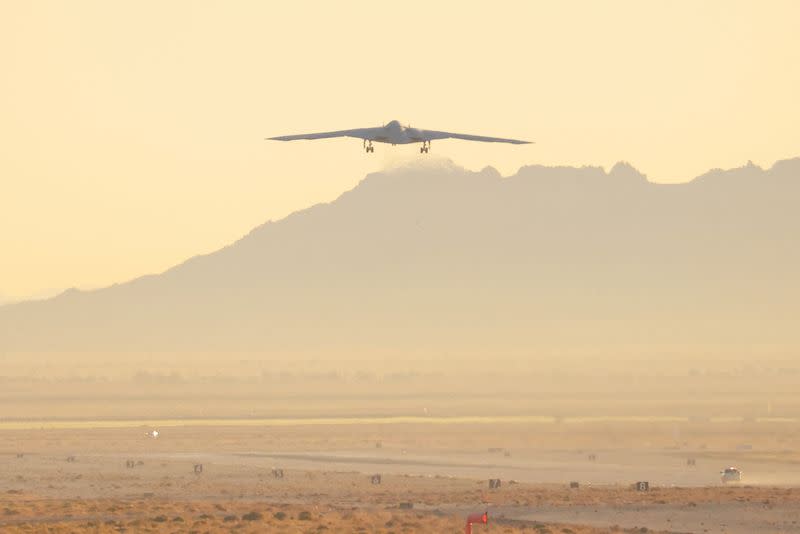
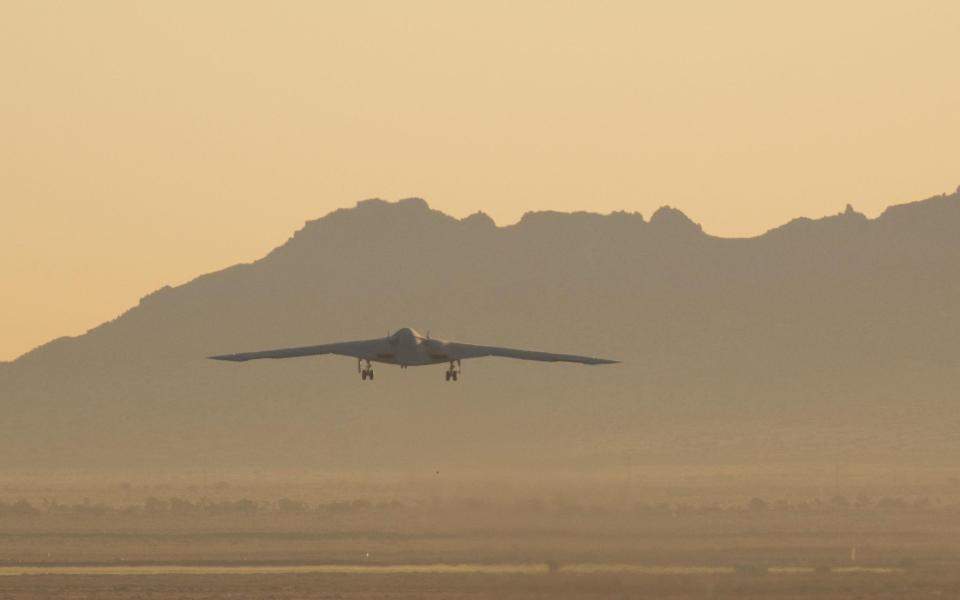
The new B-21 bomber takes its first flight Friday morning, Nov. 10, 2023, in Palmdale, Calif. (Matthew C. Hartman)

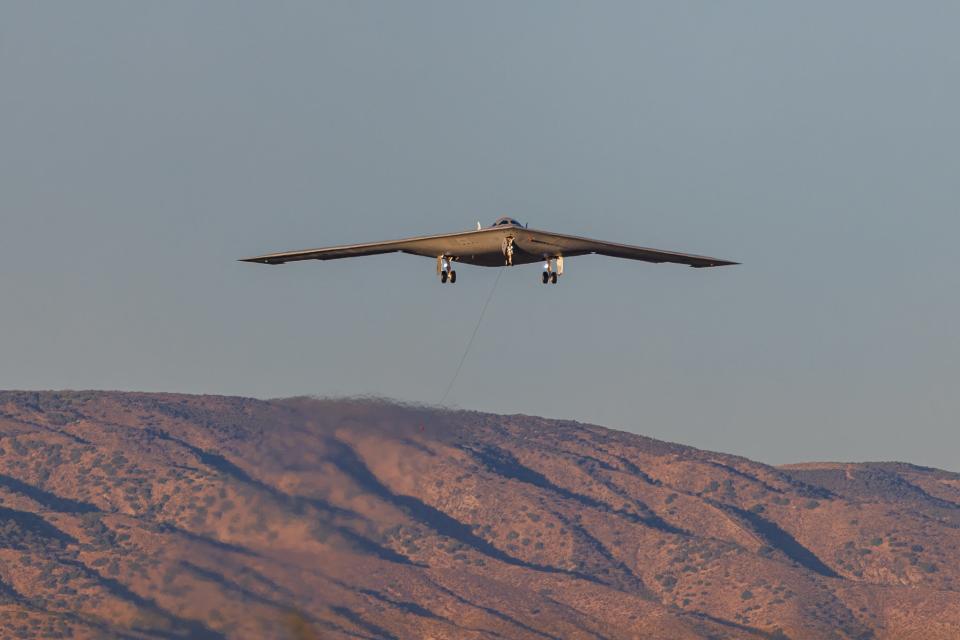
After years of secrecy, the B-21 Raider emerged from its Palmdale hangar Friday morning and took its first flight, soaring through the sky and giving plane enthusiasts, contractor employees and the public its first glimpse of the futuristic-looking bomber in air.

The B-21 bomber, which is being built by Northrop Grumman Corp., took off from the secretive Air Force Plant 42 in Palmdale before heading north toward Edwards Air Force Base, said Matt Hartman, a photographer who was out in Palmdale in hopes of taking photos of the plane after he'd heard rumors that a flight might be imminent.

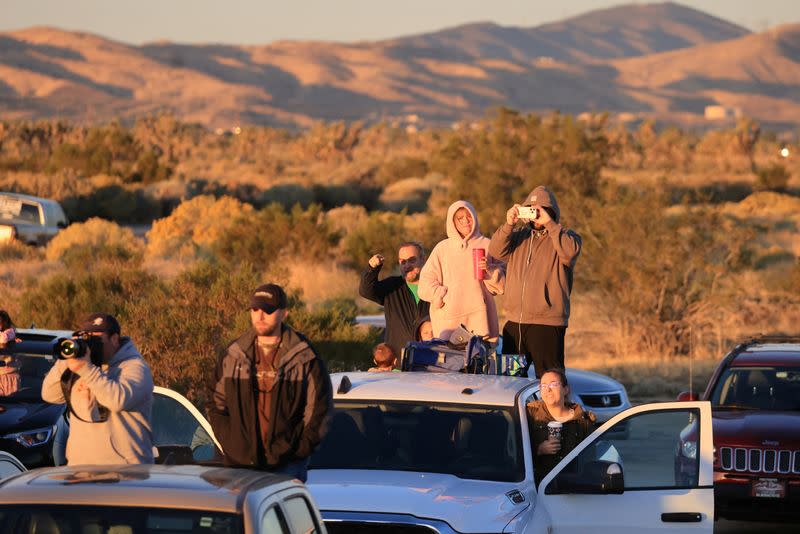
About 80 people crowded near the Palmdale Regional Airport to try to see the first flight with their own eyes. Once the bomber flew by, "you could hear a pin drop," Hartman said.

Read more: Northrop Grumman debuts new B-21 bomber as aerospace employment rebounds

The U.S. Air Force confirmed that the B-21 is in flight testing, and called it a "critical step" in the bomber's test program. Flight testing includes not just flying operations but also ground and taxiing tests. Edwards Air Force Base is in charge of testing and evaluation for the B-21.

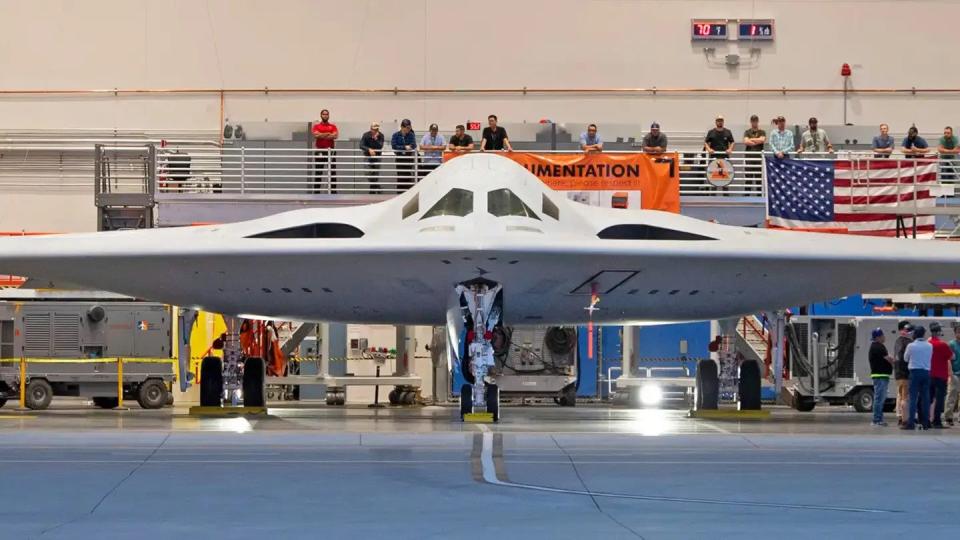
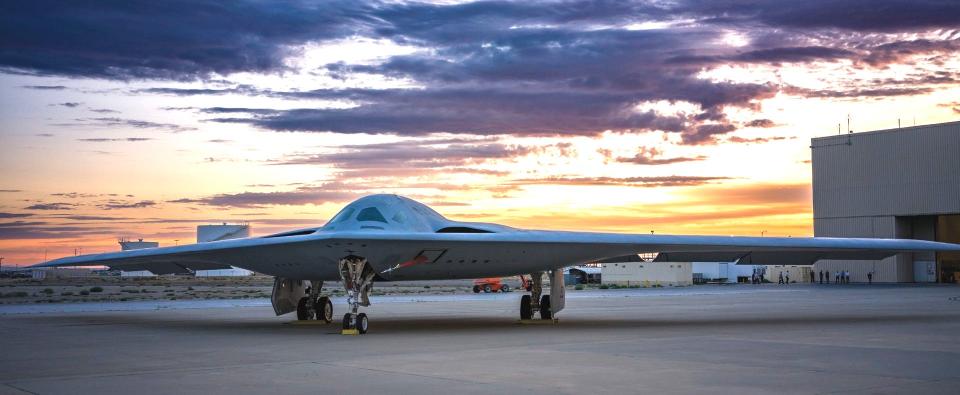
The flight test program "moves us another step closer to reaching operational capability," Northrop Grumman said in a statement Friday. In December, Northrop Grumman unveiled the B-21 bomber for the first time, although that reveal only showcased the front of the aircraft. Technical details of the plane have so far been highly classified.

The Air Force plans to buy at least 100 B-21 stealth bombers by the mid-2030s for about $80 billion. Already, six B-21 bombers are in production, the Air Force said. The new planes will eventually replace the aging B-1 and B-2 bomber fleets.

Although the B-21's flying-wing shape looks similar to that of the B-2, it has improved stealth technology and will be more supportable and maintainable than its predecessor, which has notoriously high maintenance costs.

The bomber is designed to fly both crewed and uncrewed missions, reflecting technological updates that were not available when the B-2 was built in the 1980s.

Read more: 30 years after the B-2 took flight, Northrop is applying lessons to a new stealth bomber

The Air Force plans to get its first few B-21 bombers, which are designed to fly long-range missions while evading radar detection, by the mid-2020s. The bomber is part of the U.S. military's effort to update its nuclear triad, which includes warheads, submarines and missiles, as global rivals such as China also improve their weapons technology.

The program has boosted aerospace employment in the Antelope Valley, long known for its aerospace manufacturing jobs. In December, more than 7,000 people were employed at Northrop Grumman's Antelope Valley facilities, which is double the number there in 2015 when the company won the bomber contract.


The B-21 Raider stealth bomber is unveiled at Northrop Grumman, Dec. 2, 2022, in Palmdale, Calif. The B-21 Raider has taken its first flight, moving the futuristic warplane closer to becoming the nation's next nuclear weapons stealth bomber. (Marcio Jose Sanchez / Associated Press)

This story originally appeared in Los Angeles Times.

Video appears to capture first flight of the B-21 Raider, the US Air Force's newest stealth bomber


Chris Panella
Fri, 10 November 2023 

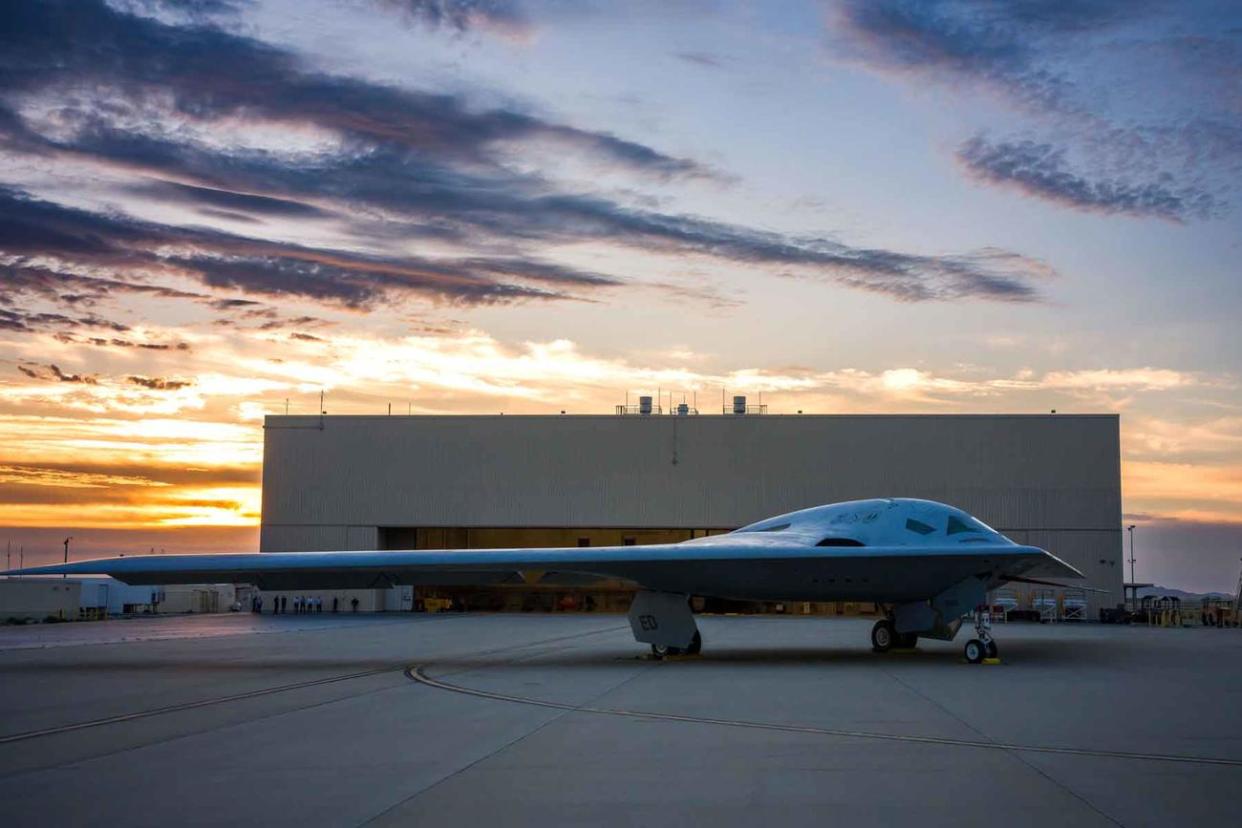
The B-21 Raider after its unveiling to the public at a ceremony on December 2, 2022.US Air Force

A new video shows the first flight of the US Air Force's newest stealth bomber, the B-21 Raider.


A US Air Force spokesperson confirmed the testing of the B-21, which is the US' first new bomber in decades.


The aircraft's developer previously praised its next-gen stealth tech, long range, and payload flexibility.


A new video appears to show the long-awaited first flight of the US Air Force's newest strategic bomber and the first new stealth bomber developed in decades, the B-21 Raider.

On Friday, footage shared on X, formerly known as Twitter, by freelance photojournalist Matt Hartman showed what he said was the new B-21 Raider flying high in the sky after taking off from the Northrop Grumman Corp facility at the Air Force's Plant 42 in Palmdale, California.


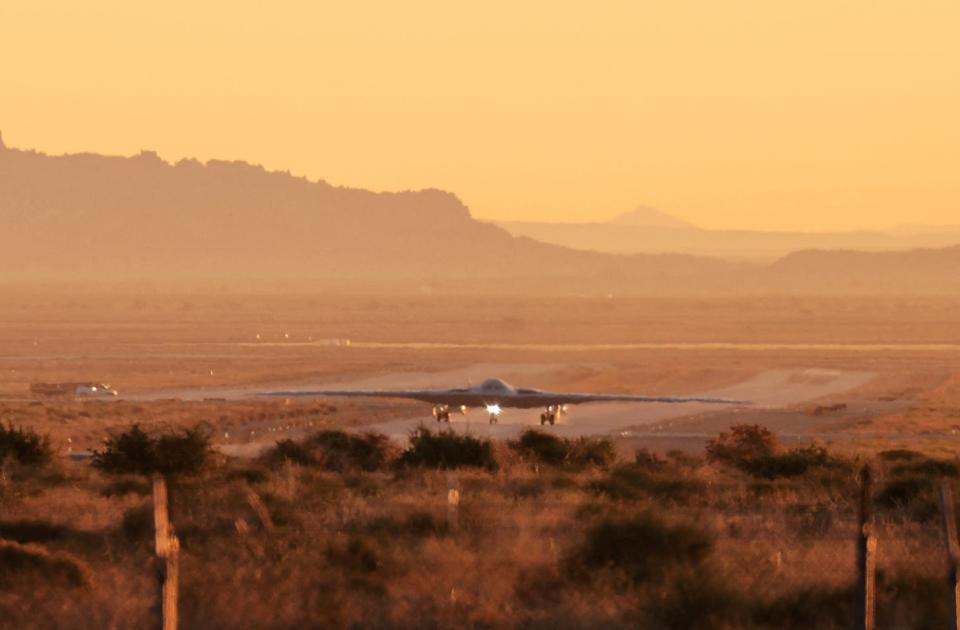
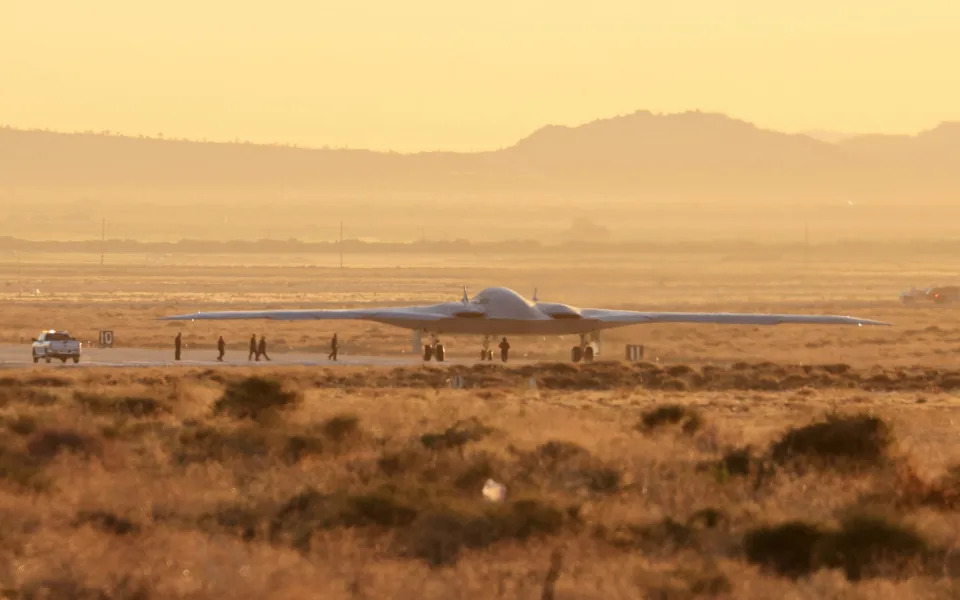
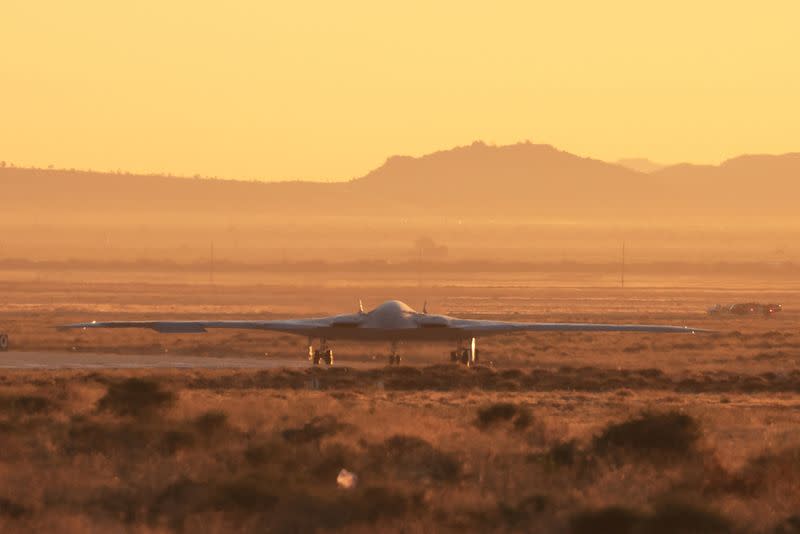
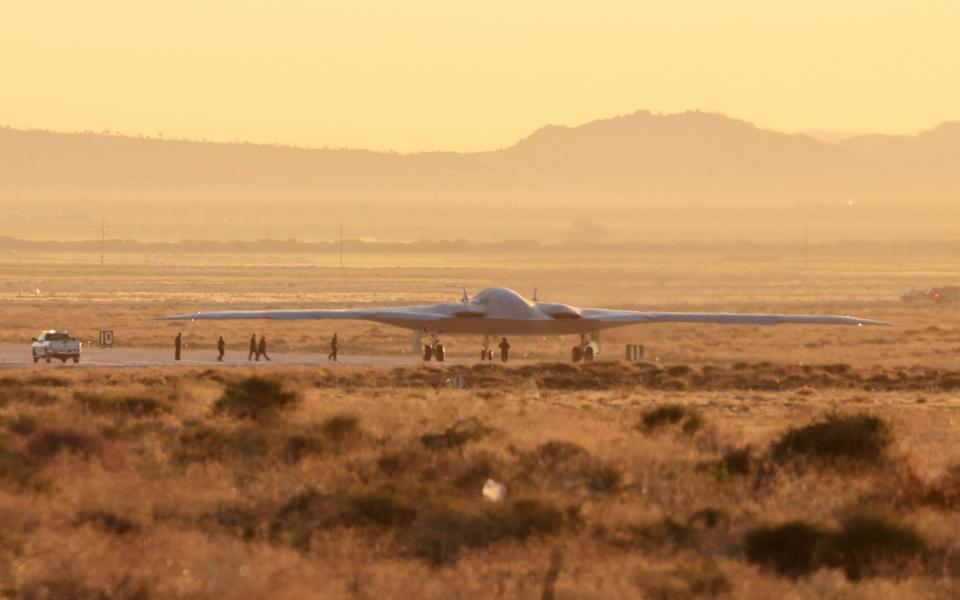
Reuters captured a shot of the plane on the runway ahead of the flight.


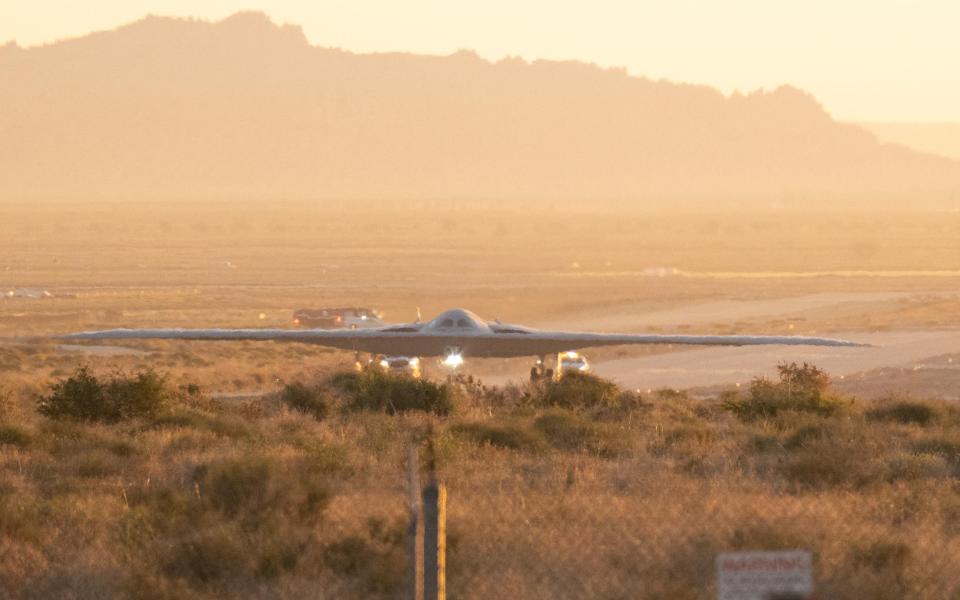
The B-21 "Raider", the long-range stealth bomber that can be armed with nuclear weapons, rolls onto the runway at Northrop Grumman's site at Air Force Plant 42, during the first flight of the United States Air Force's B-21 "Raider", in Palmdale, California, U.S., November 10, 2023.REUTERS/David Swanson

The first flight was confirmed by US Air Force spokesperson Ann Stefanek, who said in a statement provided to multiple outlets that the B-21 Raider "is in flight testing." She explained that this stage "is a critical step in the test campaign managed by the Air Force Test Center and 412th Test Wing's B-21 Combined Test Force."

That's a major step for what has been touted as the "world's first sixth-generation aircraft," which was unveiled in December 2022.

At the time of that big reveal, Northrop Grumman said that its first flight was projected for sometime in 2023 and that six test planes were being built in preparation. After it was unveiled, Doug Young, sector vice president and general manager of Northrop Grumman Aeronautics Systems, said "the B-21 is the most advanced military aircraft ever built and is a product of pioneering innovation and technological excellence."

The aircraft the first new US stealth bomber in over 30 years, and, according to its producer, it was designed with next-generation stealth technology and long-range flight capabilities to make it adaptable to whatever missions it's needed for.

Pentagon leadership has said that the penetrating strike stealth bomber "will serve as the backbone of America's bomber force."

The "flying wing" B-21 Raider is the successor to the B-2 Spirit and is able to carry both conventional and nuclear payloads. And it is designed in such a way that it can be adapted to carry new weapons as they come about, "new weapons," the secretary of defense said last year, "that haven't even been invented yet."

Next-generation US stealth bomber capable of disguise takes first flight


David Millward
Fri, 10 November 2023 

The B-21 is the first new American bomber in three decades

A next-generation stealth bomber capable of disguising itself as another object has taken to the air for the first time.

The B-21, the long-awaited successor to the B-2 Spirit stealth bomber that entered service in the late 1990s, took off from the manufacturing plant at Palmdale California on Friday morning.

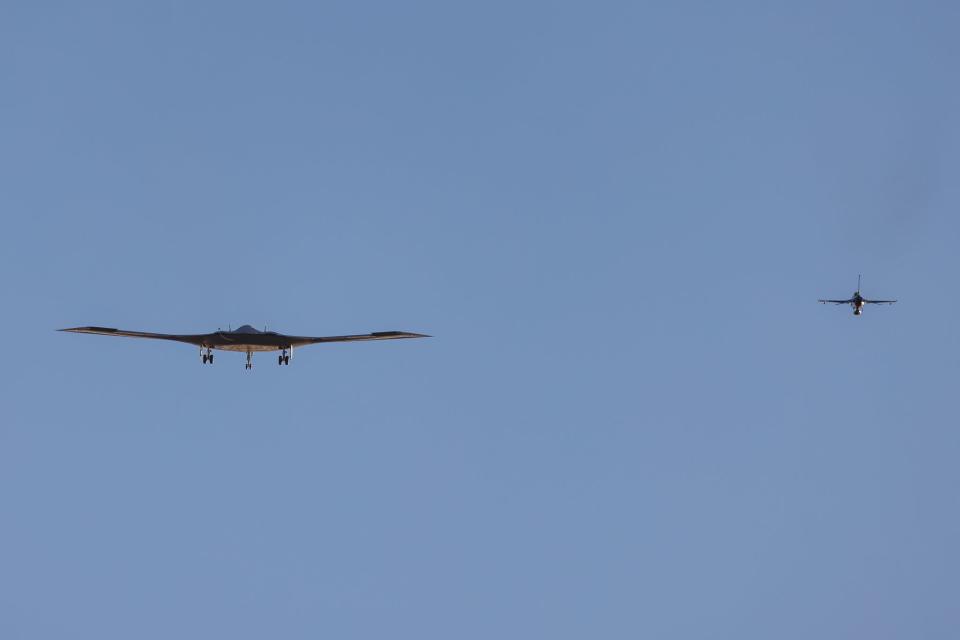
Accompanied by an F-16 chase plane, the aircraft completed a 39 mile journey to Edwards Air Force Base, where further testing will take place.


“The B-21 Raider is in flight testing,” said a US Air Force spokesman.

The force is planning to build 100 of the planes, which will be capable of being flown with and without pilots.

Little has been made public about the aircraft’s capabilities.

Similar in shape to the original stealth bomber, it will be built from more advanced materials and use updated technology to make it more capable of surviving in a future conflict.

It is also said to have the ability to spoof enemy air defences by disguising itself as other objects, such as other aircraft, by controlling its electronic emissions and radar signature.

It is the first new American bomber in three decades.

The new stealth bomber rolls onto the runway at Air Force Plant 42 in Palmdale during its first flight - David Swanson/Reuters

“Flight testing is a critical step in the test campaign managed by the Air Force Test Centre and 412th Test Wing’s B-21 Combined Test Force to provide survivable, long-range, penetrating strike capabilities to deter aggression and strategic attacks against the United States, allies, and partners,” the spokesman said.

Named after the historic Doolittle Raid to strike back at Japan after Pearl Harbour, the Raider’s construction was shrouded in secrecy.

The US Air Force and manufacturer Northrop Grumman have been striving to keep the technology hidden from China, fearing it could build a version of its own.

On the ground, signal-emitting devices such as iPhones and earbuds were banned as security guards patrolled the 5,800-acre facility.

High above the plant, orbiting satellites monitored activity at the site.

In Washington, the Senate Armed Services Committee voted not to release the cost of the project, despite objections from John McCain.

By the end of last year, the cost of each aircraft was estimated at $750 million (£614 million), compared to the almost $2 billion price tag of its predecessor.


The bomber can spoof enemy air defences by disguising itself as other objects, such as other aircraft, by controlling its electronic emissions and radar signature - Gene Blevins/ZUMA Press Wire/Shutterstock

The B-21 was initially due to make its first flight in 2021 but production of the bomber was delayed by the Covid pandemic.

The project, which began in 2011, was also hit by the global economic slowdown in the wake of the Russian invasion of Ukraine.

It was part of America’s strategy, drawn up by the Trump administration, of maintaining all three components of its nuclear force, known as the nuclear triad.

There had been suggestions that land-based missiles would be ditched, but the stealth bomber and submarine-launched weapons would remain.

Underpinning the project is the belief that the aircraft has to be able to evade Chinese and Russian missile defences if it is to be an effective deterrent.

Later, explaining the strategy, Lloyd Austin, the US defence secretary, stressed its ability to carry conventional and nuclear devices.

“We are again making it plain to any potential foe: the risks and costs of aggression far outweigh any conceivable gains.”


US Air Force's new B-21 Raider "flying wing" bomber takes first flight - Reuters witness

Mike Stone and David Swanson
Updated Fri, November 10, 2023 


(Reuters) -The U.S. Air Force's B-21 "Raider" bomber shaped like a flying wing took its first flight on Friday, the next step in rolling out a new fleet of long-range nuclear-capable stealth bombers built by Northrop Grumman, according to a Reuters witness.

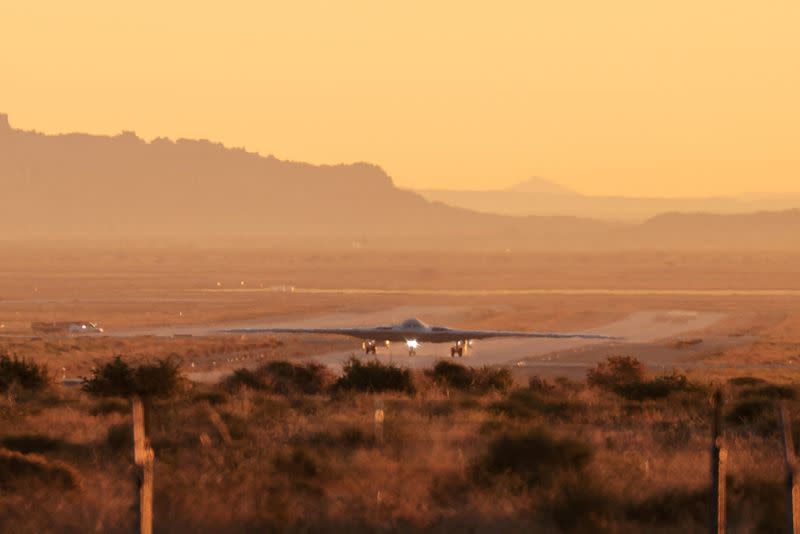
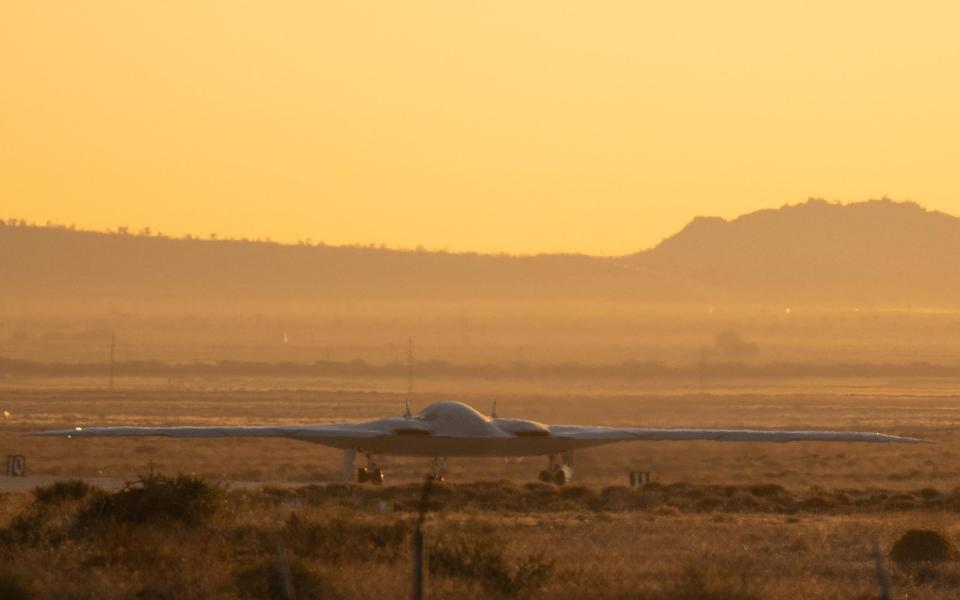
The B-21 left Northrop's facility at the Air Force's Plant 42 in Palmdale, California, at sunrise on Friday offering the first unscripted look at the new bomber which has been developed under strict security.

The plane took off at 6:51 a.m., according to a Reuters witness. Air Force leaders did not publicize the B-21's first flight, but about three dozens aviation enthusiasts and amateur photographers gathered around Plant 42 on Friday hoping to see the bomber take to the skies, according to the Reuters witness.

The B-21, which carries the same "flying wing" shape of its predecessor, the B-2, will be able to deliver both conventional and nuclear weapons around the world using long-range and mid-air refueling capabilities.

The aircraft are projected to cost approximately $550 million each in 2010 dollars, or about $750 million in today's inflation-adjusted dollars. However, the Air Force has kept other price information classified, "which makes validating the proposed cost difficult," the Congressional Research Service said in a 2021 report.

The Air Force plans to buy at least 100 of the planes and begin to replace B-1 and B-2 bombers. The B-1 costs about $60,000 per hour to operate and the B-2 costs about $65,000 per hour, according to Pentagon data.

Ann Stefanek, an Air Force spokesperson said, "The B-21 Raider is in flight testing. Flight testing is a critical step in the test campaign managed by the Air Force Test Center and 412th Test Wings B-21 Combined Test Force."

Six test aircraft are being produced now. They are being built on the same line, using the tools, processes and technicians that will build the production aircraft.

Northrop beat out a team comprised of Boeing and Lockheed Martin when it won the 2015 contract to make the bomber. Engine-maker Pratt & Whitney, Collins Aerospace, GKN Aerospace, BAE Systems and Spirit Aerosystems are among the more than 400 suppliers in 40 states.

The B-21 was publicly unveiled in December 2022, but anticipation surrounding its first flight has been building for years.

In 2019, one top Air Force general hinted that the bomber could fly as early as December 2021, but the service later pushed that date to mid-2022. In early 2022, the Air Force further delayed it until 2023.

The B-21 program is in the Engineering and Manufacturing Development Phase and is on track to deliver aircraft to Ellsworth Air Force Base in the mid-2020s, according to the Air Force.

Northrop is calling the plane a sixth generation aircraft given its ability to connect to other aircraft and easily integrate future weapons into its systems architecture.

The B-21 also features more durable, stealth-enabling low observable surface material that is expected to require less maintenance and decrease operations costs and downtime.

(Reporting by David Swanson in Palmdale, California and Mike Stone in Washington, additional reporting by Valerie Insinna, Editing by Franklin Paul)

The Air Force's Newest, and Highly Classified, Stealth Bomber Makes Its First Flight

Thomas Novelly
Fri, November 10, 2023 


The Air Force's new highly classified nuclear-capable stealth bomber, the B-21 Raider, made its first flight Friday morning, nearly one year after the multimillion-dollar aircraft was revealed to the public and as global tensions in the Pacific and Middle East continue to grow.

Images and videos of a B-21 taxiing on the runway of the Air Force's Plant 42 in Palmdale, California, and later taking to the skies began circulating online early Friday morning. Ann Stefanek, an Air Force spokeswoman, confirmed to Military.com that the B-21 has begun flight testing.

"Flight testing is a critical step in the test campaign managed by the Air Force Test Center and 412th Test Wing's B-21 Combined Test Force to provide survivable, long-range, penetrating strike capabilities to deter aggression and strategic attacks against the United States, allies and partners," Stefanek said. "Flight testing includes ground testing, taxiing and flying operations."

Read Next: As America Celebrates Its Veterans, the Population Is Younger, More Diverse and Shrinking

Videos show the B-21 Raider slowly whooshing over Palmdale. The flight was not publicized by the Air Force, and freelance and aviation photographers were among the first to see it take off. The bomber was unveiled to the public in December 2022.

The Northrop Grumman-developed B-21 is capable of carrying conventional bombs and missiles, as well as nuclear munitions. It will play a significant role in modernizing America's nuclear triad -- the combination of aircraft, land-based missiles and submarines that can deliver a nuclear payload. The defense manufacturer was awarded the contract for the aircraft in 2015.

Northrop also makes the B-2 Spirit, the previous generation of bomber, which bears more than a passing resemblance to the B-21. That aircraft, which first flew in the 1980s, has been a backbone of U.S. force projection for decades. It was one of the first major aircraft designed as a "flying wing" that didn't have a tail, an approach that gained prominence during World War II with aircraft developed for Germany by the Horten brothers.

The B-21 was named for the U.S. Army Air Force's Doolittle Raiders, whose surprise attack against Japan during World War II boosted American morale.

Many of the details of the B-21, such as its size, payload and technology, have not been made public.

But according to an Air Force fact sheet, the B-21 was "designed to accommodate manned or unmanned operations," a reflection of the increasing reliance on unmanned aircraft by the U.S. military and the future of the pilot specialty.

The Pentagon currently plans to build 100 B-21s. The average unit cost for each bomber is around $700 million, according to the fact sheet.

Historically, aircraft purchasing estimates tend to be high, with tight budgets eventually forcing the services to cut order expectations. Budget documents show that producing the Raider program will cost around $20 billion through 2027, Military.com previously reported.

Numerous Air Force bases will have a hand in the B-21's mission.

Following extensive environmental studies, in 2021, Ellsworth Air Force Base near Rapid City, South Dakota, was selected as the first installation to receive the aircraft. It will serve as the main operating base and B-21 formal training unit.

Whiteman Air Force Base in Missouri and Dyess Air Force Base in Texas will receive the aircraft as they're built, pending environmental studies. Tinker Air Force Base, Oklahoma, will oversee maintenance of the B-21, and Edwards Air Force Base, California, will lead the testing and evaluation of the bomber, according to the Air Force.

“Six test aircraft are being produced now," Stefanek said. "The test aircraft are being built on the same production line, using the same tools, processes and technicians that will build the production aircraft."

-- Thomas Novelly can be reached at thomas.novelly@military.com. Follow him on Twitter @TomNovelly.

B-21 Raider Has Flown For The First Time (Updated)

Thomas Newdick
Fri, November 10, 2023

B-21 has flown for the first time

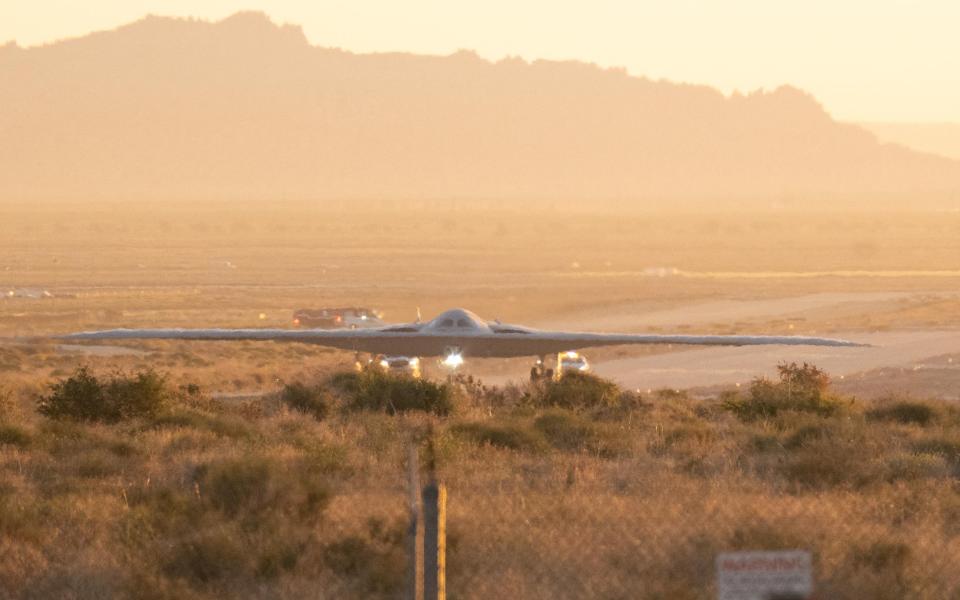
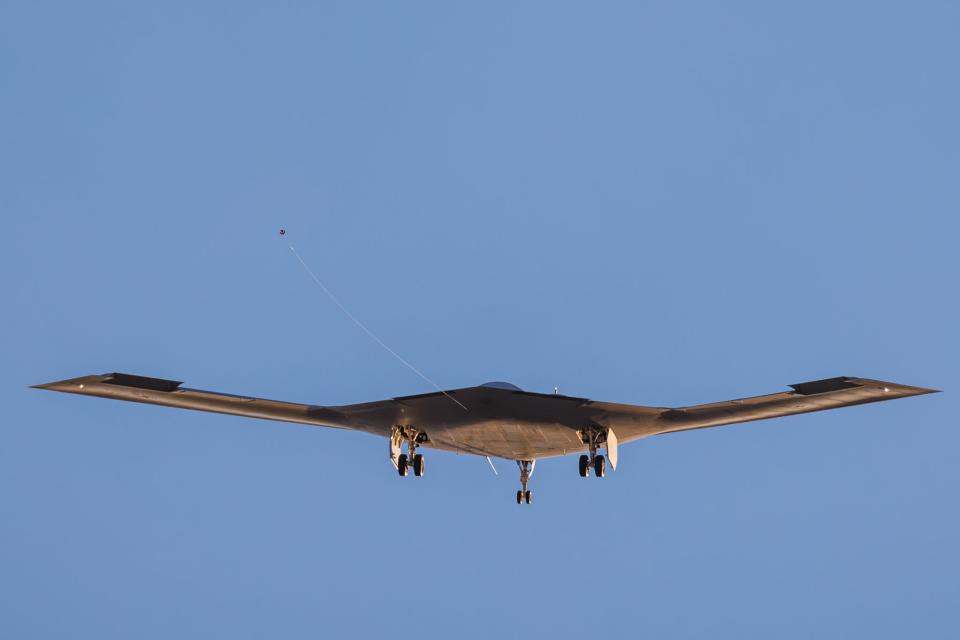
In one of the most significant airpower developments in recent years, the U.S. Air Force’s new B-21 Raider — the world’s second stealth bomber, at least that we know about — has taken to the air. A video taken from outside the Air Force’s storied Plant 42 in Palmdale, California, early this morning, showed the B-21, with its landing gear down, accompanied by an F-16 chase plane. Other high resolution photos have followed.

https://twitter.com/ShorealoneFilms/status/1722993343485866184


The aircraft has now headed to nearby Edwards Air Force Base, California, where formal flight testing will take place.


B-21 taking off on its way to Edwards with its wire and air data cone in trail. (Uncredited)

In a statement, Ann Stefanek, an Air Force spokesperson, told The War Zone:

“The B-21 Raider is in flight testing. Flight testing is a critical step in the test campaign managed by the Air Force Test Center and 412th Test Wing’s B-21 Combined Test Force to provide survivable, long-range, penetrating strike capabilities to deter aggression and strategic attacks against the United States, allies, and partners.”

Mike Henry

Mike Henry

Mike Henry

There had been growing signs in recent weeks that the B-21’s maiden flight was imminent. This included multiple daytime sightings of the first pre-production example doing taxi testing on the ground. The War Zone was the first to report that the Raider had started undergoing taxi tests, typically the last step for an aircraft before flight testing, back in October.

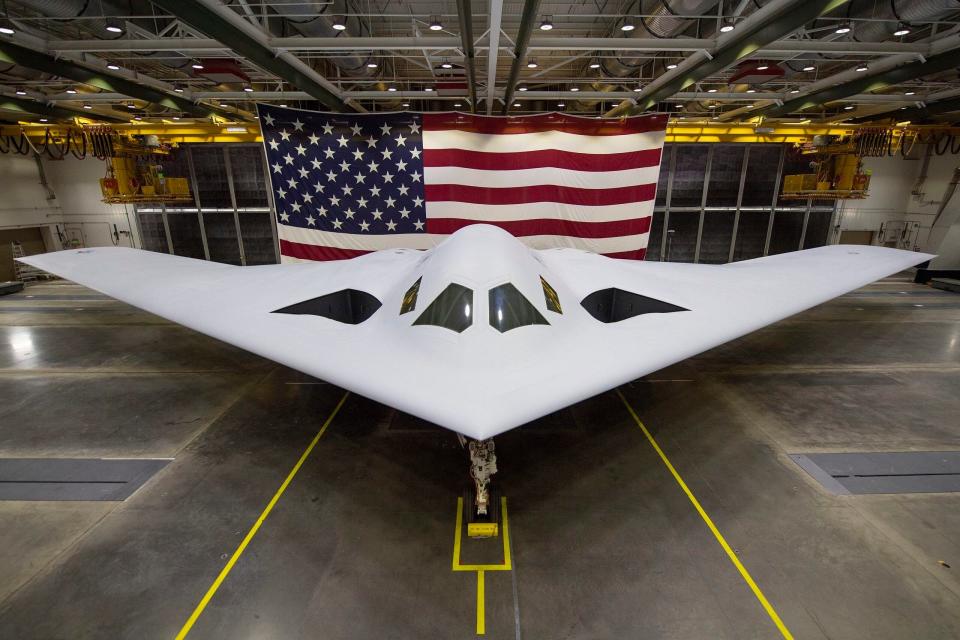
The first pre-production B-21 in a hangar at Plant 42. USAF

“The B-21 is conducting taxi activities. Extensive testing evaluates systems, components, and functionalities," an Air Force spokesperson had told The War Zone on November 9 when asked for an update on Raider's activities. "This testing allows us to mitigate risks, optimize design, and enhance operational effectiveness. Rigorous testing is a critical step in the B-21 flight test program."

The B-21’s first flight has been hotly awaited for years now, but the schedule has been pushed back multiple times over the years due to various issues, not least the effects of the COVID-19 pandemic.

Back in September, Secretary of the Air Force Frank Kendall had said the service was “still hopeful on having first flight this year,” before backtracking somewhat with the statement: “If I were to say it will, I would be making a very specific prediction. And I never do that about an acquisition program for something that hasn’t happened yet. Okay?”

The B-21 had already hit a number of other milestones earlier in the year, including the first powering on of its systems in July and the start of engine test runs on the ground two months later. Then came the aforementioned news about taxi testing.

Northrop Grumman

The first B-21 is now set to start more rigorous developmental flight testing at Edwards and will eventually be joined there by other pre-production examples that will form a combined test force. Another five of the bombers are in various stages of production at Northrop Grumman’s facility within Plant 42.

If all runs to plan, the first operational B-21s should start to enter service in the mid-2020s. The Raiders are set to replace the Air Force’s B-2 and B-1 bombers. Ellsworth Air Force Base in South Dakota is set to be the first base to get the new bombers, followed by Whiteman Air Force Base in Missouri and Dyess Air Force Base in Texas.

While the B-21 will become a key part of the U.S. nuclear deterrent triad, it will do much more beyond that critical role. As well as being capable of conventional strikes, it will offer a host of other capabilities.

USAF

“The B-21 is multi-functional. It can handle anything from gathering intel to battle management,” Secretary of Defense Austin declared at the Raider's rollout ceremony last year.

After all, the B-21 is also a component of the wide-ranging and secretive Long Range Strike Family of Systems (LRS FoS). LRS FoS is known to include the stealthy Long Range Stand-Off (LRSO) nuclear-armed cruise missile, which will be one of the Raider’s main weapons. The weapon is already in flight testing.

The LRS FoS also includes other advanced, but highly classified capabilities, as you can read more about here. This is understood to include the high-altitude long-endurance stealth drone commonly referred to as the RQ-180, which may also be getting close to entering service, if it isn’t already in some capacity.

The B-21 was unveiled to the public at a ceremony on December 2, 2022, in Palmdale, California. USAF

It is very likely that the B-21 will leverage developments from the Next Generation Air Dominance (NGAD) initiative, as well. As part of NGAD, the Air Force plans to acquire thousands of highly autonomous drones under the Collaborative Combat Aircraft (CCA) program, which could work together with Raiders in the future. NGAD is also a family of systems, but a more tactical one, but there’s expected to be a crossover between the two, with drones and networking architecture being two obvious points of potential synergy.

More details about the B-21 and its capabilities, as well as related developments, may increasingly emerge now that the Raider has taken its first flight. Regardless, this is a historic day for aviation and a huge accomplishment for Northrop Grumman and the USAF.

We will have our full analysis on this historic first flight and what we are seeing now that the B-21 is finally in the air, soon.

A huge thanks to Matt Hartman (@shorealonefilms) and to Mike Henry — make sure to follow him on Instagram @mykenry — for their amazing shots.

UPDATE: 12:30 PM EST—

Some additional gorgeous photos of the departure from Andrew Kanei:

Andrew Kanei

Andrew Kanei

Andrew Kanei

Andrew Kanei

Andrew Kanei

UPDATE: 1:07 PM EST—

We now have confirmation that the B-21 safely landed at Edwards AFB.

The B-21 landed safely, said USAF a spokesperson. It took off at 7 a.m local time and touched down at Edwards at approximately 8:30 a.m. local time,

Howard Altman contributed to this story.

UPDATE: 6:45 PM EST—

Full analysis about what we saw and learned from the B-21's first flight can be found in this new post.

Contact the author: thomas@thedrive.com


Next-generation US stealth bomber capable of disguise takes first flight

David Millward
Fri, November 10, 2023 

The B-21 is the first new American bomber in three decades


A next-generation stealth bomber capable of disguising itself as another object has taken to the air for the first time.

The B-21, the long-awaited successor to the B-2 Spirit stealth bomber that entered service in the late 1990s, took off from the manufacturing plant at Palmdale California on Friday morning.

Accompanied by an F-16 chase plane, the aircraft completed a 39 mile journey to Edwards Air Force Base, where further testing will take place.

“The B-21 Raider is in flight testing,” said a US Air Force spokesman.

The force is planning to build 100 of the planes, which will be capable of being flown with and without pilots.

Little has been made public about the aircraft’s capabilities.

Similar in shape to the original stealth bomber, it will be built from more advanced materials and use updated technology to make it more capable of surviving in a future conflict.

It is also said to have the ability to spoof enemy air defences by disguising itself as other objects, such as other aircraft, by controlling its electronic emissions and radar signature.

It is the first new American bomber in three decades.


The new stealth bomber rolls onto the runway at Air Force Plant 42 in Palmdale during its first flight - David Swanson/Reuters

“Flight testing is a critical step in the test campaign managed by the Air Force Test Centre and 412th Test Wing’s B-21 Combined Test Force to provide survivable, long-range, penetrating strike capabilities to deter aggression and strategic attacks against the United States, allies, and partners,” the spokesman said.

Named after the historic Doolittle Raid to strike back at Japan after Pearl Harbour, the Raider’s construction was shrouded in secrecy.

The US Air Force and manufacturer Northrop Grumman have been striving to keep the technology hidden from China, fearing it could build a version of its own.

On the ground, signal-emitting devices such as iPhones and earbuds were banned as security guards patrolled the 5,800-acre facility.

High above the plant, orbiting satellites monitored activity at the site.

In Washington, the Senate Armed Services Committee voted not to release the cost of the project, despite objections from John McCain.

By the end of last year, the cost of each aircraft was estimated at $750 million (£614 million), compared to the almost $2 billion price tag of its predecessor.

The bomber can spoof enemy air defences by disguising itself as other objects, such as other aircraft, by controlling its electronic emissions and radar signature - Gene Blevins/ZUMA Press Wire/Shutterstock

The B-21 was initially due to make its first flight in 2021 but production of the bomber was delayed by the Covid pandemic.

The project, which began in 2011, was also hit by the global economic slowdown in the wake of the Russian invasion of Ukraine.

It was part of America’s strategy, drawn up by the Trump administration, of maintaining all three components of its nuclear force, known as the nuclear triad.

There had been suggestions that land-based missiles would be ditched, but the stealth bomber and submarine-launched weapons would remain.

Underpinning the project is the belief that the aircraft has to be able to evade Chinese and Russian missile defences if it is to be an effective deterrent.

Later, explaining the strategy, Lloyd Austin, the US defence secretary, stressed its ability to carry conventional and nuclear devices.

“We are again making it plain to any potential foe: the risks and costs of aggression far outweigh any conceivable gains.”

B-21 Raider's First Flight: What We Learned

Tyler Rogoway
Fri, November 10, 2023 

B-21 first flight


The B-21's first flight — a massive milestone for Northrop Grumman and the USAF — provides us with totally new looks at the world's most advanced flying machine. Here are some key takeaways from what is really the Raider's first full unveiling.

Check out our morning coverage of the B-21's first flight here. You can read our past analysis on the B-21 and its mission set, which mirrors what we are seeing today with our own eyes, here and here.

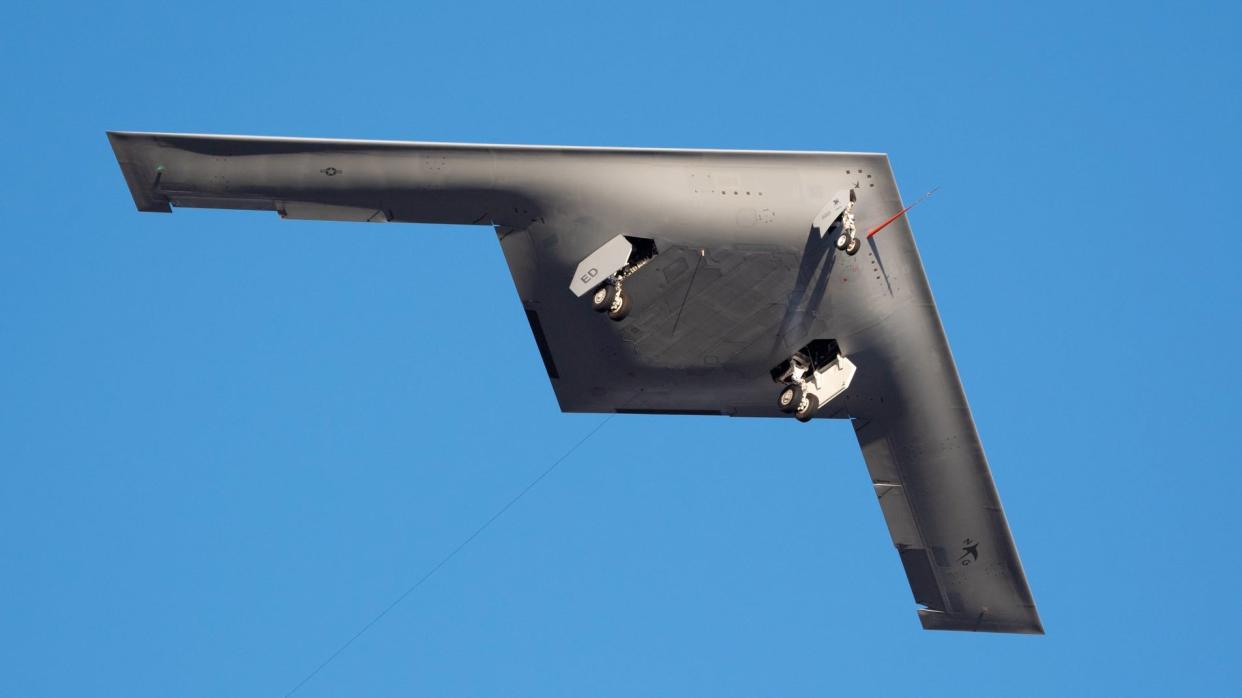
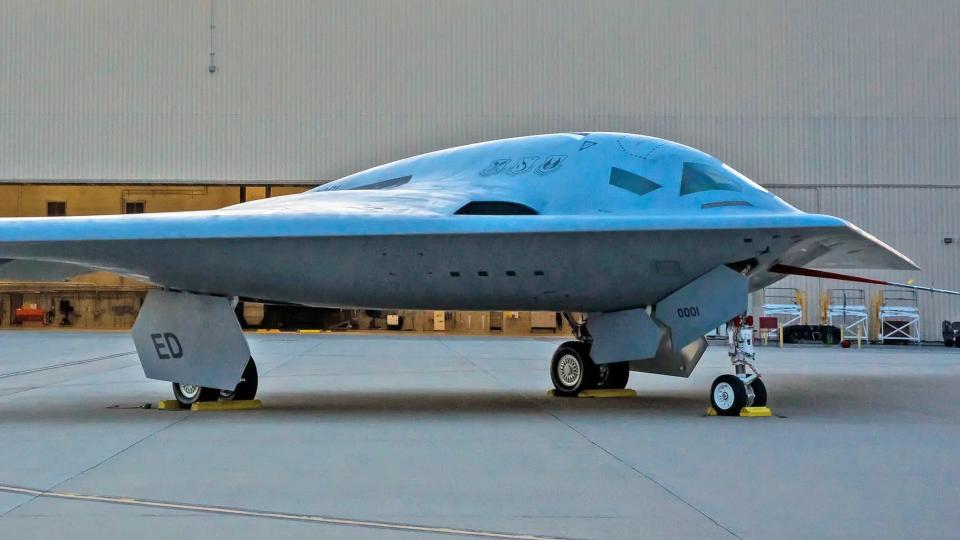
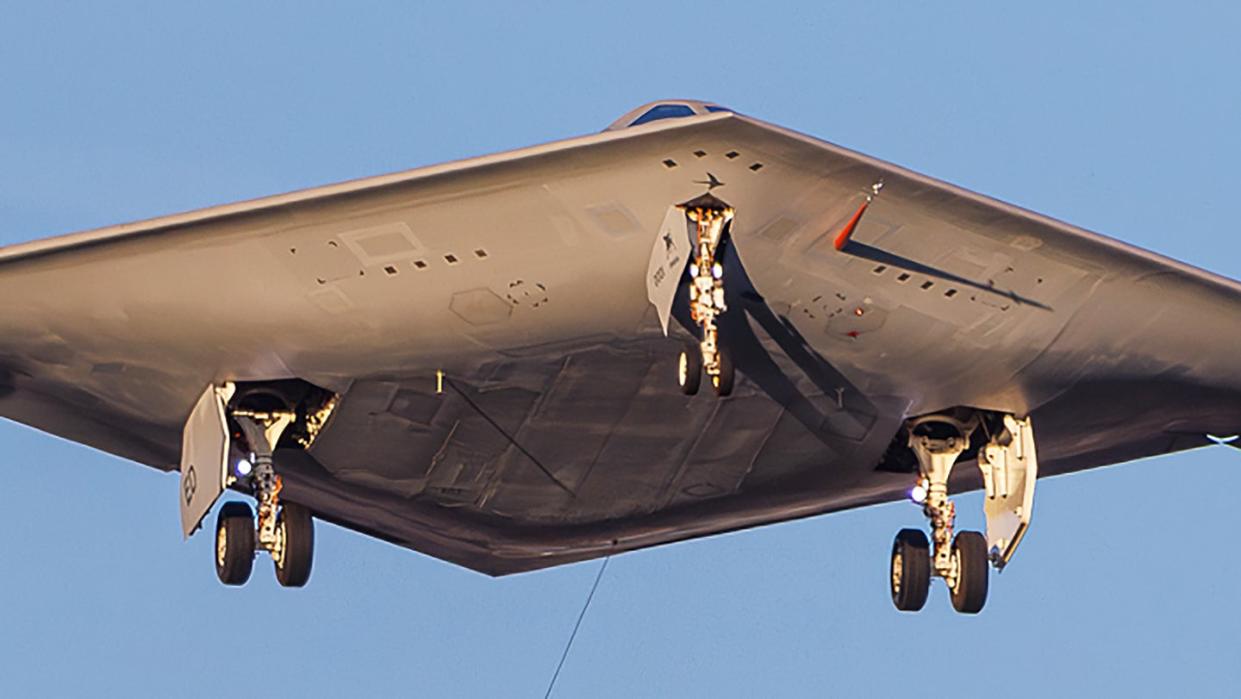
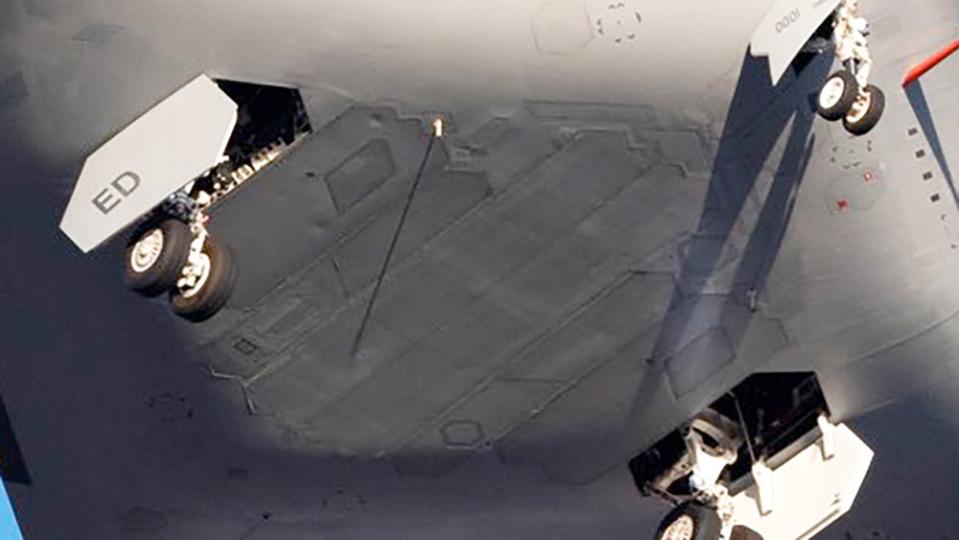
First off, the name. Yes, It's the B-21 Raider, but the first example of the type has a special nickname that is adorned on its gear door: Cerberus.

https://twitter.com/Y_Mokko/status/1723068967462326436?s=20

Cerberus is the hound of Hades that guards the gates of the underworld to prevent the dead from escaping. So, in Greek Mythology terms, the first of the B-21s has a very dark and ominous name. It is fitting for what is arguably among the most destructive flying machines ever created.

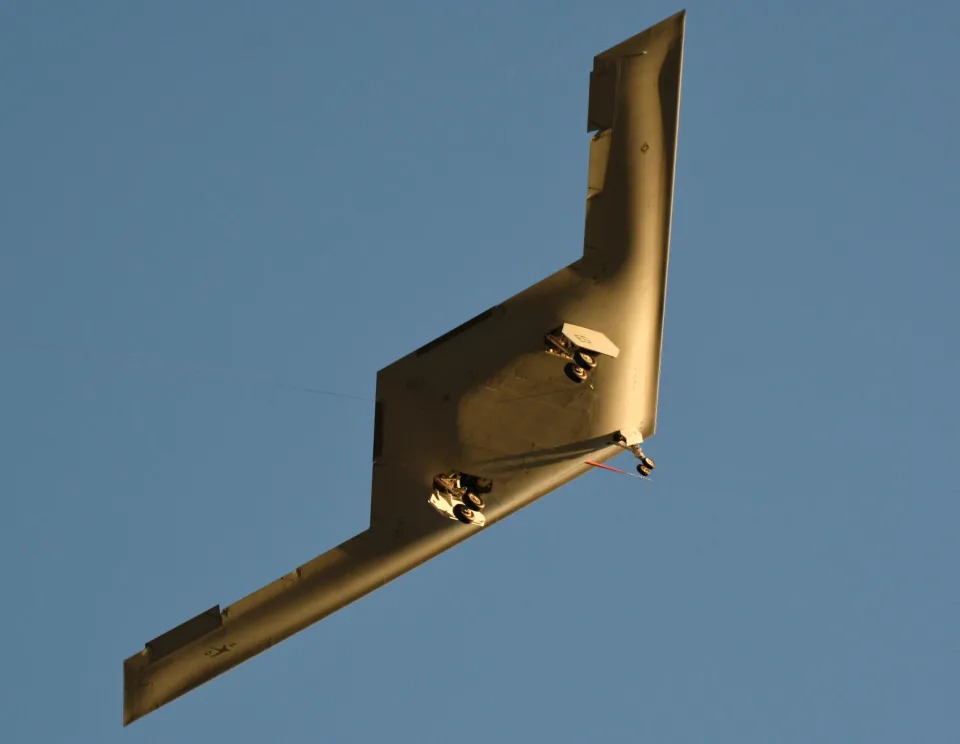
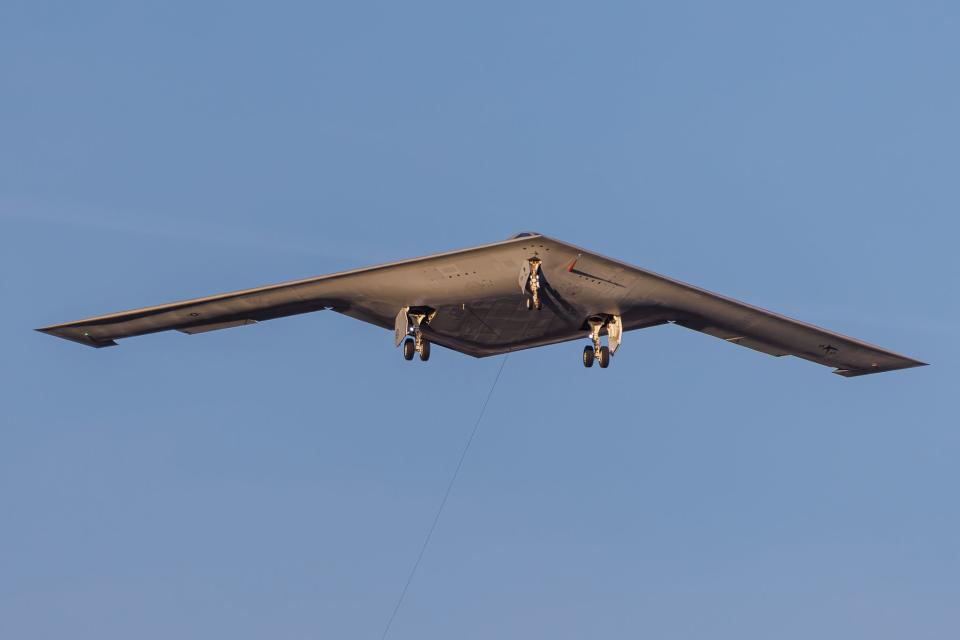
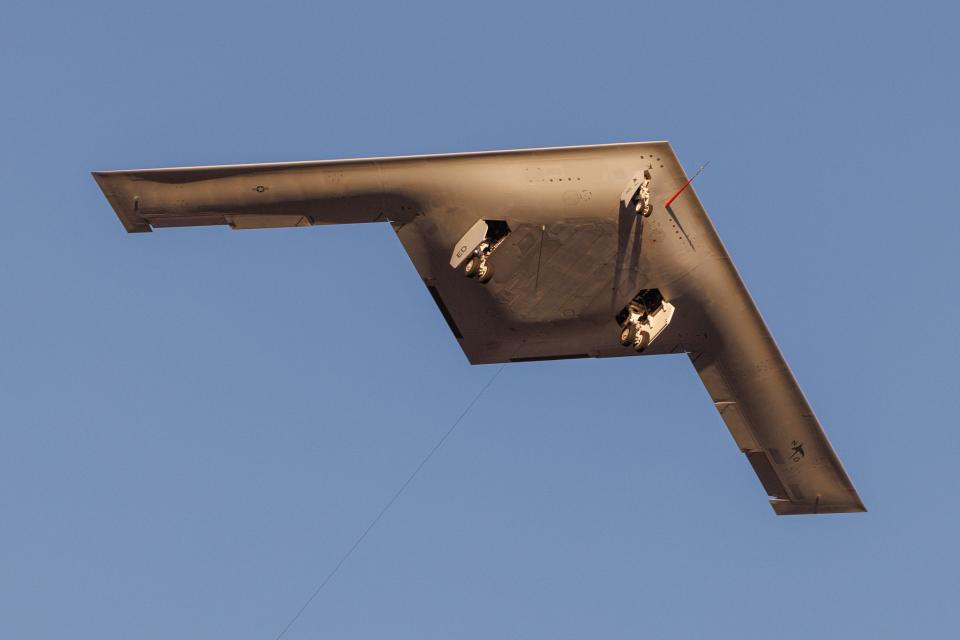
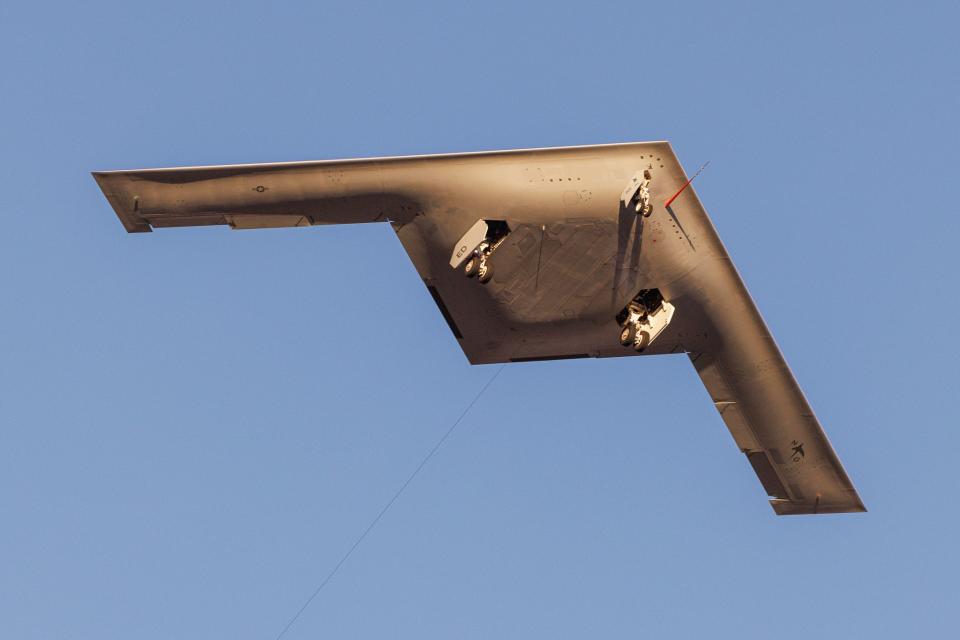
Many are asking about the long wire and aerial the B-21 was towing behind it on takeoff. Its presence should not come as a surprise as it is a normal fixture for initial flight testing. It is an air data 'trailing cone' used to capture 'clean' static air measurements that are undisturbed by the aircraft. This sensor is in addition to the jet's long flight test air data probe installed on its lower front left side. These are critical instruments for gathering precise data for the B-21's initial flight testing activities, in addition to the myriad standard sensors that are installed conformally around the aircraft and specialized test equipment situated inside.

Contributor

Moving on to the big takeaways regarding the jet's structure and features. Chief among them is the B-21's planform. It is exactly what we thought it would be and it's also what a higher-flying earlier iteration of the B-2 was supposed to be. You can read all about the B-21 design's direct link to the Advanced Technology Bomber program's Senior Ice design, which became the B-2 Spirit, in our feature from six years ago bringing it to light.

While pictures of the B-21 taxiing, including its empennage, have been circulating for weeks, we can now say conclusively that the B-21's strange 'horns' on either side of the center fuselage barrel (or hump in this case) are indeed auxiliary air intake doors. There was speculation that they were posts for additional air data sensors, or even radar reflectors, but that is not the case.

Andrew Kanei

Mike Henry

The B-21's conformal inlets are among the program's most exotic (known) features that are documented publicly to have been a major challenge to realize during development. Low observable inlets are among a stealthy aircraft's most critical attributes. Separating turbulent boundary layer air and just getting enough air at all through serpentine ducts used to hide the highly reflective engine fan faces to not starve the aircraft's engines are major hurdles. In addition, what may not be a problem while cruising can become a huge issue at high power settings and increased angles of attack seen during terminal operations.

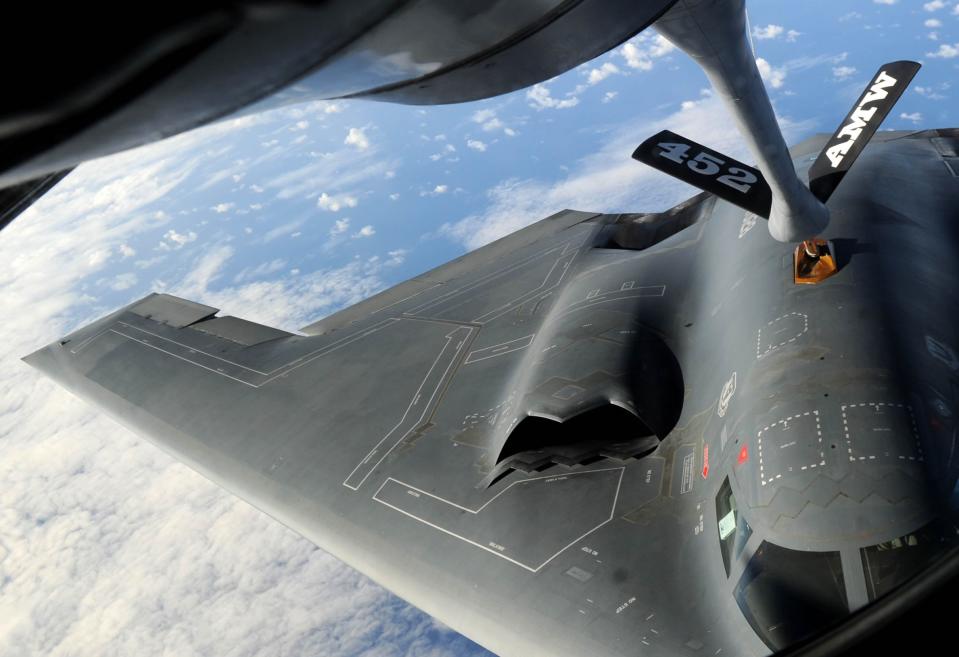
The B-2's far more prominent serrated intakes can be seen here, including the splitter plate between the fuselage and the intake opening that separates turbulent boundary layer air from the stable air entering the intake. (U.S. Air Force photo by Senior Airman Christopher Bush/Released)

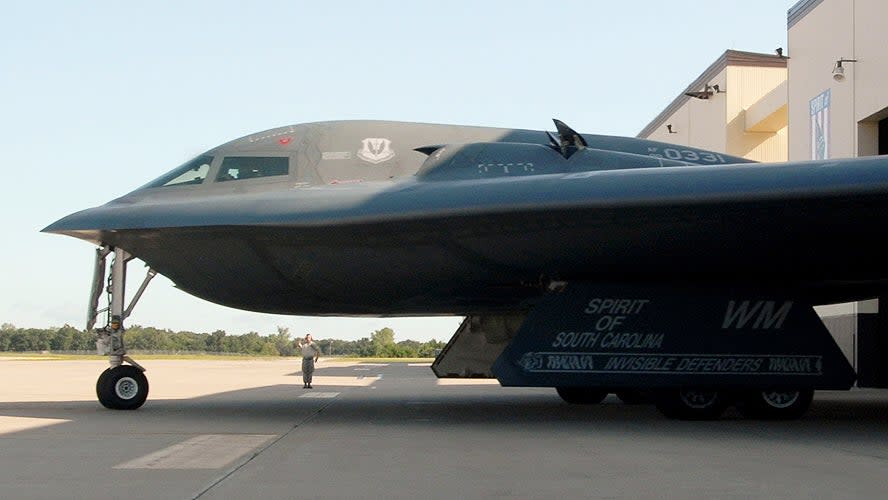
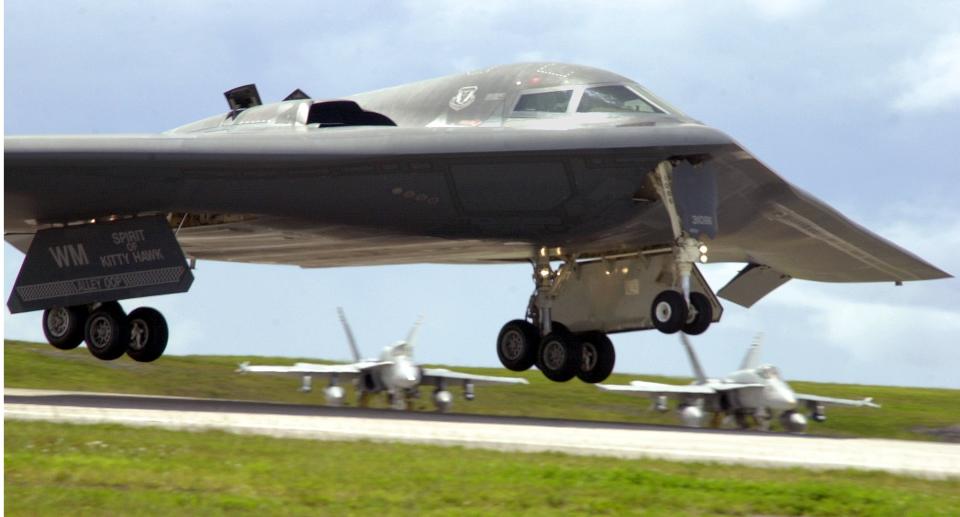
The B-2 has much more predominant intakes with serrated splitters along their lower edges compared to the B-21. Still, they feed serpentine ducts with the engines buried deep in the B-2's inner wings. Getting enough air during takeoff and landing is accomplished via 'butterfly' or scoop-like auxiliary inlet doors that open atop the mid portion of the blended intakes/nacelles.

A B-2 taxiing out with its auxiliary air inlets popped open. (U.S. Air Force photo/Senior Airman Kenny Holston)

Another shot of the B-2's scoop-like auxiliary air inlets in use. (U.S. Air Force photo by Senior Airman Josshua Strang)

The B-21 accomplishes this same thing via relatively large plank-like triangular doors that open vertically back from the intake openings, similar to where the B-2's doors are. This provides additional direct air to the Raider's still unknown (in quantity and model) engines. This gives the jet a unique 'horned' or devilish appearance when on the ground taxiing, as well as while taking off and landing.

https://twitter.com/ReutersUS/status/1723018205470314818?s=20

 https://twitter.com/SwansonPhotog/status/1723016850551054553?s=20

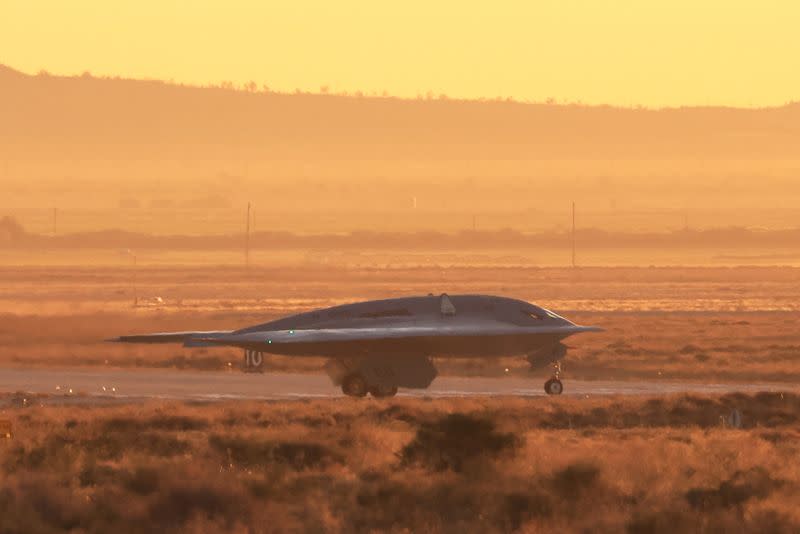
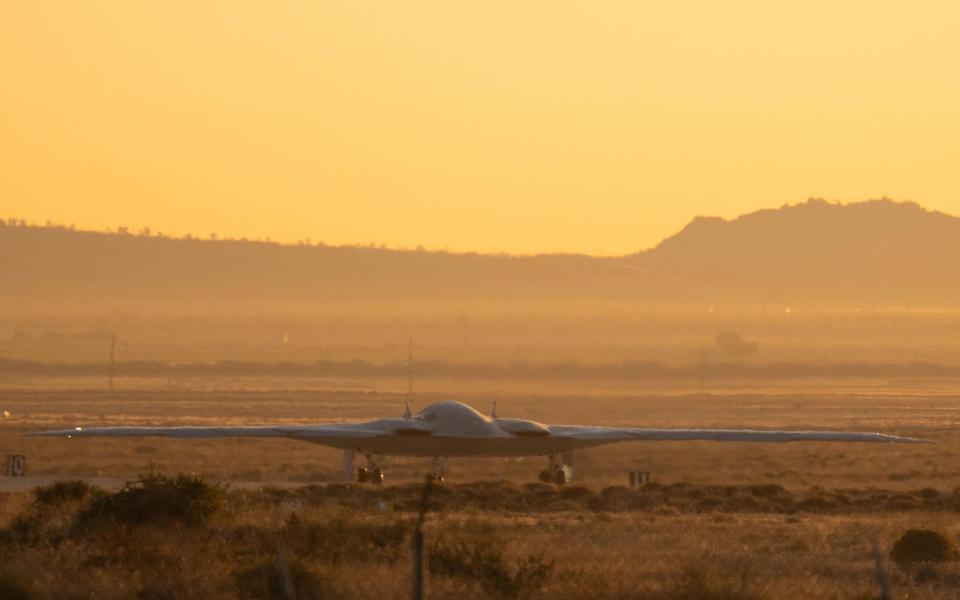
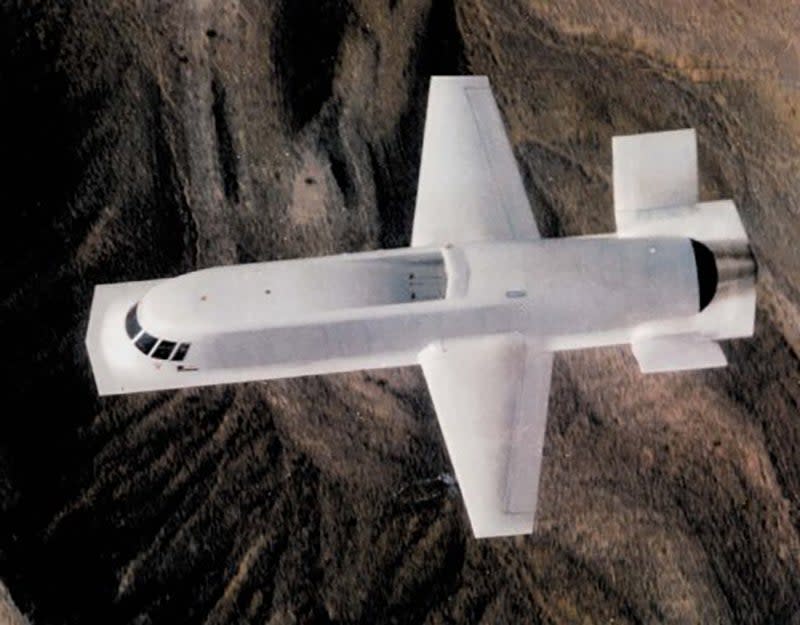
The B-21's profile is also more striking than we pictured, with its angled side windows giving it a sinister 'angry' look. Its smaller stature than its bigger progenitor, the B-2, is also apparent from this angle. Its massive shelf-like 'duckbill' leading edge/nose is very visible, a major low-observable attribute that limits line-of-sight to the B-2's upper fuselage from lower viewing angles, among other advantages. Considering it will likely be flying higher than most other aircraft, and ground defenses are perhaps its most important threat to evade, it is a key attribute. It's also one that has a long history with low-observable aircraft design dating far back, with it being especially prominent on Northrop's Tacit Blue demonstrator, the grandfather of the B-21 Raider.

Tacit Blue under flight test near Area 51 back in the early 1980s. (USAF)

We also see the black areas between the B-21's blended engine nacelles and the center fuselage hump towards the rear portion of the jet. It remains unclear exactly why this area is that tone, although it could have something to do with the engines being mounted near there.

Overall, the B-21's profile is remarkably sleek and its inlet and engine 'humps' are far less prominent than the B-2's when viewed from the side.

The B-21's belly is perhaps the most intriguing part of the aircraft we saw in today's first flight. We now clearly see its primary weapons bay (more on the primary part in a moment). It is much smaller than that of the B-2, but we knew that would be the case, with the aircraft likely having less than half the B-2's weapons payload capacity. Instead of being able to carry two Massive Ordnance Penetrators (MOPs), one will likely be contained in a B-21. It is possible that the bay is even too small for the MOP, with a new, smaller deep-penetrating weapon taking its place, but that seems less likely at this time.


Andrew Kanei

The bay will likely be 'smarter' and more easily reconfigurable for different weapons arrangements than its predecessor too, leveraging the aircraft's open architecture systems for easier integration of new weapons, decoys, and air-launched drones.


(Contributor)

One major question that remains is does the B-21 have smaller secondary weapons bays, as well? This is something I have posited could (or at least should) exist to take advantage of the jet's expanded roles and new weapons available to it. These include advanced air-to-air missiles for self-defense and the Stand-In Attack Weapon (SiAW) for fighting its way into highly protected locales and defending itself in general.

https://twitter.com/Aviation_Intel/status/1661125671358464004?s=20

Using up space on a large primary rotary launcher for these weapons seems somewhat problematic, so having smaller and shallower auxiliary bays to accommodate them would be beneficial. It looks like this may be the case, with definite hatches of some sort next to the primary weapons bay, but it is unclear if these are there for maintenance access, including engine access, or if they are for weapons storage. The B-2 has similar panels, as well, so it is hard to tell, but the inner panels next to the primary bay are intriguing.

Adding to the possibility of additional weapons bays flanking the primary one is the fact that the B-21's gear, while using a single truck instead of two like on the B-2, seems to stow similarly, hinging forward under a single large door that closes inward.

https://youtube.com/shorts/QE0gZAYZXvA?si=n145rZWmjblEGhsu


Finally, we have the rear. A stealthy aircraft's exhausts are very critical to the type's low observable capabilities, both on the radiofrequency (RF) and infrared (IR) spectrums. In this case, they look quite similar to the B-2's exhausts, although they look even more conformal, with the engines very deeply buried, and smaller than their predecessors. They also do not have a chevron trailing edge to their planar heat diffusers. Once again, this raises the question of if the B-21 is a twin or quad-engined aircraft. We just don't know, but if it does leverage four engines, they would need to be relatively small in size based on what we are seeing. The B-2 can fly with two engines out on the same side, just as a side note, so the B-21 should be able to with an engine out, as well, if it is indeed a twin-engine aircraft.

The B-21 appears to have a prominent shelf-like extension from its fuselage 'hump' at its trailing edge apex and lacks the variable geometry 'beaver tail' of its predecessor. This makes sense considering its similarity to the B-2's original design, which lacked the low-altitude penetrating requirements that ended up giving birth to the aircraft's serrated trailing edge and 'gust-alleviating' beaver tail.


Mike Henry

Mike Henry

Then there is the color, which has not changed. It remains a light gray, which would indicate that the aircraft is intended for day and night operations. This could always change, but it makes sense and is something we thought could be the case prior to the roll-out.

https://twitter.com/Aviation_Intel/status/1598736144296181760?s=20

Size-wise we estimated the B-21 to be between 135-155 feet wide, compared to the B-2's 172 feet. It will likely be shorter as well and the B-2 is already a transformer when it comes to viewing it head-on compared to side-on, which turns the aircraft into something akin to the size of an F-15.

https://twitter.com/Aviation_Intel/status/957133858830352384?s=20


The video below of the B-21 followed by its chase F-16 shows just how small it looks side on:

https://twitter.com/thenewarea51/status/1723026708138209614?s=20


Finally, we have all the apertures around the aircraft. Not a lot is new there from our last look and analysis of the jet. What's missing are the big dual radar arrays seen on the B-2. It's very possible the B-21 will not rely on such large arrays, with advances in AESA technologies and the possible need to use semi-mature off-the-shelf systems resulting in smaller arrays. On the other hand, conformal load-bearing antenna structures (CLASs) could conceal large arrays that are built right into the B-21's structure. Smaller common AESAs placed around the aircraft for near 360-degree sensing, communications, and electronic warfare are also quite probable. You can read all about these possibilities and about advances in radar technologies in this previous report of ours.

Northrop Grumman's Electronically-Scanned Multifunction Reconfigurable Integrated Sensor (EMRIS) is a great example of a scalable, wideband, multi-mode array that can provide major advantages in many different types of installations that add up to far more than the sum of its functions. These placed around the B-21 could provide sensing, some networking communications, and electronic warfare capabilities.
 (Northrop Grumman)

It's also worth noting that the B-21 was built around a family of systems, with some capabilities being handled by other aircraft and sent through secure networks to the B-21. This could very well (and probably does) include a stealthy radar-toting asset like the so-called RQ-180. In other words, it may have offset even some features found on the B-2 to other platforms. And of course, this is a prototype — a very production representative one though. Certain systems and avionics could (and likely will) be added later and/or featured in follow on aircraft now under construction. The B-21 was also dreamed-up with spiral development in mind, so new capabilities will be inserted as they emerge or as they are needed with far greater ease than on the B-2. And, as we always stress, the outside only tells part of the story, what's inside is where the real magic happens.

So there you have it, our initial analysis of what we have seen on a historic day in aviation, as well as a huge accomplishment for the USAF and the hard-working folks and Northrop Grumman's B-21 Raider program. Now the aircraft is in the hands of its testers at a sprawling facility at Edwards Air Force Base that was specifically upgraded to support the program.

As such, we should slowly learn more official details about the Air Force's pride and joy in the not-too-distant future.

Contact the author: Tyler@thedrive.com