Friday, May 01, 2026

How Serbia's government controls much of the media

Sanja Kljajic in Novi Sad
DW
April 30, 2026

Since Serbia's ruling SNS party came to power, it has tightened its grip on the media. With an election expected soon, experts fear that authorities will try to eliminate the last pockets of independent reporting.

Aleksandar Vucic on the cover of two tabloid newspapers

Image: RĂ¼diger Rossig/DW


"Backsliding," "pressure," "political influence over editorial policy" — this is how numerous international reports describe the state of the media in Serbia.

Year after year, the international diagnosis of the health of Serbia’s media landscape remains the same: While the space for professional independent media is shrinking, the government's propaganda tools are becoming more developed and sophisticated.

"The main goal of the Serbian Progressive Party (SNS) after coming to power in 2012 was to place the entire media landscape under firm control. And they did this very systematically," journalist and media analyst Nedim Sejdinovic told DW.

The model, he says, was simple: Media outlets willing to cooperate with the authorities received financial and institutional support, while those that refused faced economic and political isolation.
Takeover of local and provincial outlets

One of the first steps was the takeover of the provincial public broadcaster in Vojvodina, where the entire management, along with editors and presenters of news programs, was replaced after the SNS came to power in the region.
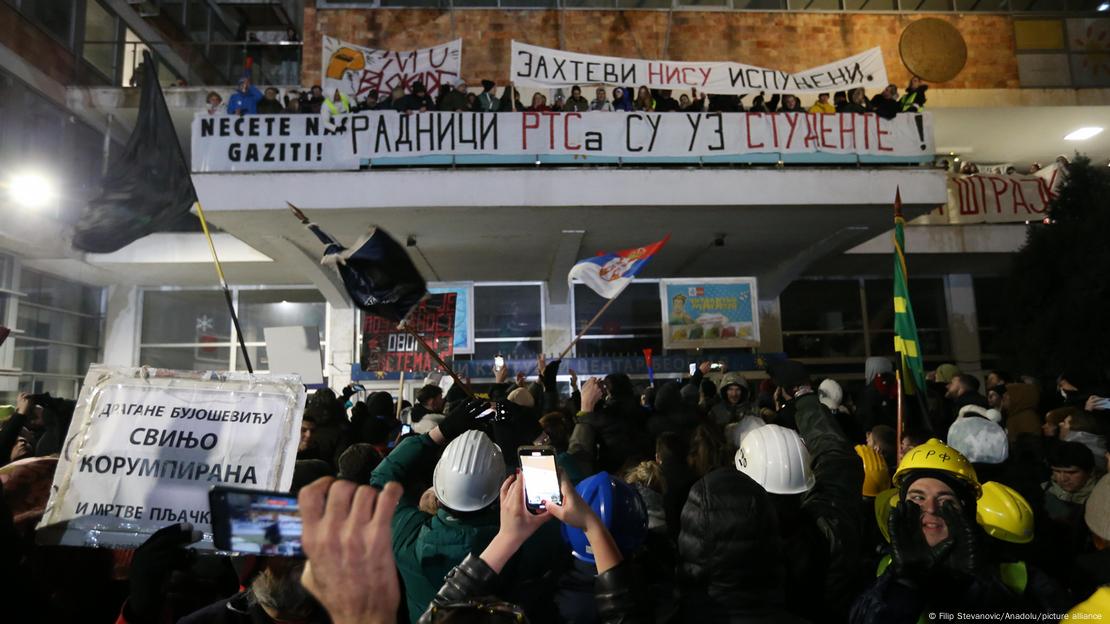
Thousands of Serbs gathered outside the premises of Serbia's public broadcaster RTS in Belgrade in January 2025 to demand objective reporting
Image: Filip Stevanovic/Anadolu/picture alliance

"But one of the most important elements of this media engineering was the purchase of media outlets, especially at the local level, by people who are part of the ruling elite, such as the family of (minister) Bratislav Gasic, or tycoons like Radojica Milosavljevic," said Sejdinovic.

"The result is that around 90% of media outlets are directly or indirectly linked to Aleksandar Vucic's regime," he added.

The role of public funding

Sejdinovic says that these media are sustained by public money, which is provided through several parallel channels. This has been confirmed by numerous watchdog reports.

The first channel is project co-financing, where public funds are allocated to media outlets through competitive calls to support media content that serves the public interest. According to analyses by BIRN and the Center for Sustainable Communities, around €120 million ($140 million) has been spent on this at the local, regional and state level over the past decade, with the majority going to media outlets that openly support the government.

The second, much larger and less transparent channel is state advertising, which analyses show is also largely directed toward the same pro-government outlets.

A third form of pressure comes from the market. "An atmosphere has been created in which even large private companies avoid advertising in independent media, so as not to damage their relationship with the authorities, and in a deregulated political and economic environment, that is necessary for doing business," said Sejdinovic.

The line between journalism and propaganda


In such a system, the line between journalism and propaganda is almost erased.

Critical voices are delegitimized and demonized, while scandals are reported without context and framed solely through the lens of government officials.

At the same time, the public space is saturated with the presence of President Vucic. His addresses are often broadcast live, interrupting regular TV and radio programs, while party rallies are aired simultaneously across national, regional and local TV stations.

President Aleksandar Vucic is a constant presence on television: His addresses are broadcast live, interrupting regular TV and radio programs
Image: N. Rujevic/DW

Viewers switching channels often encounter the same content: the same face, the same message.

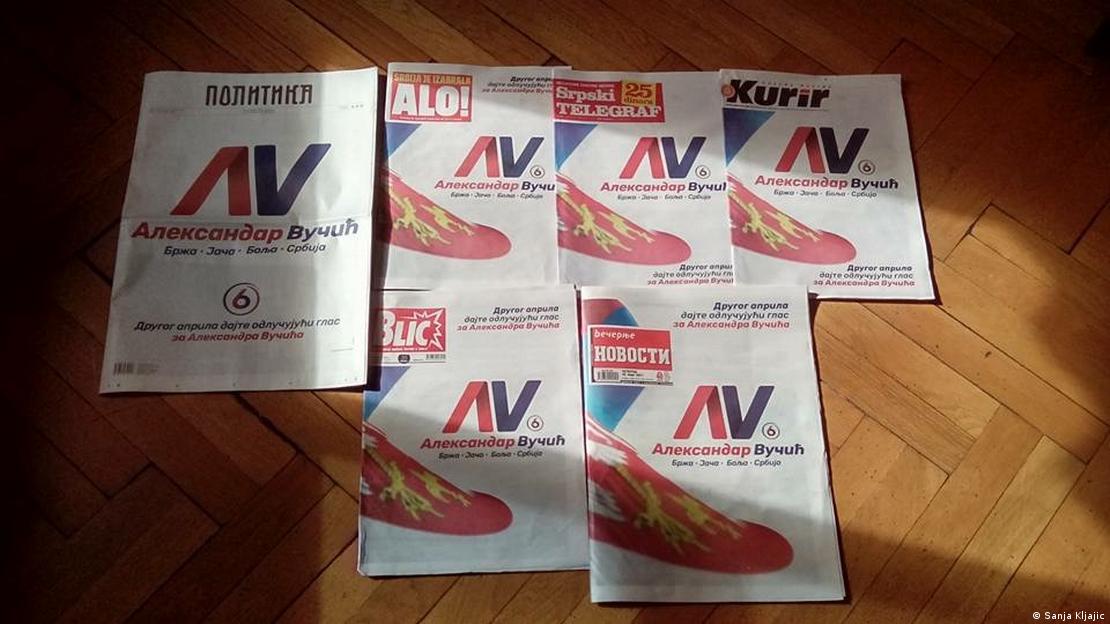
The scale of control was also visible during the 2017 presidential campaign, when almost all daily newspapers carried front-page advertisements for then-Prime Minister Aleksandar Vucic — an unprecedented development in Serbia's modern political history.

The opposition rarely features in regular reporting, and dissenting voices are frequently labeled as "traitors," "foreign mercenaries" or "enemies of the state."

In this environment, the targeting and discrediting of government opponents have become routine.

From loyalists to 'super-loyalists'

Sejdinovic says that as the political crisis deepens, particularly following waves of protests over the past 18 months, control over the media is entering a new phase.

"SNS loyalists are now being replaced with super-loyalists," he explains.

Some pro-government media, he notes, previously limited themselves to positive coverage of the government and ignoring critical voices, but that was obviously not enough.

"Now the goal is to turn all media into a kind of primitive political weapon that will spread the most blatant lies, defame people, use crude language and create an atmosphere of deep political divisions in society," he told DW.
New outlets springing up

This trend is also reflected in the rapid emergence of new media outlets. The Association of Independent Electronic Media (ANEM) in Serbia has noted the registration of 78 new outlets since the beginning of 2026 alone.

During the 2017 presidential campaign, almost all daily newspapers carried front-page advertisements for then-Prime Minister Aleksandar Vucic
Image: Sanja Kljajic

"This is an expansion of the media machinery for spreading government propaganda," said Bojan Cvejic of ANEM. "Their texts are unsigned and almost identical, making them more like pamphlets than journalistic content, used for campaigns against critics," he told DW.
Serbia drops in the rankings

According to the latest World Press Freedom Index published by Reporters Without Borders, Serbia has dropped to 104th place and is now classified among countries with a "difficult situation" for media freedom.

The report highlights that despite some previous fluctuations in ranking, the overall environment for journalists in Serbia continues to deteriorate, marked by increasing political pressure, limited media pluralism and worsening conditions for independent reporting.

President Vucic is expected to call a parliamentary election soon, with many speculating that a poll could be held sometime between June and the end of the year.

Sejdinovic warns that the situation could deteriorate further, with the next phase potentially involving stronger pressure on the digital sphere, following patterns observed in other authoritarian systems.

"The problem of media freedom in Serbia is a political problem," concludes Sejdinovic. "It is difficult to resolve without a change of government, because this government, by its very nature, is essentially an opponent of professional journalism."

Edited by: Aingeal Flanagan

Sanja Kljajic Correspondent for DW's Serbian Service based in Novi Sad, Serbia

Iran war expands press crackdown, leaving information vacuum

Daniel Ameri
DW
01/05/2026

For many journalists in Iran, the truth is increasingly being treated as a security threat. Authorities are tightening an already repressive reporting environment, where information is strictly controlled.


The Iranian regime tightly controls the domestic narrative of the war
Image: AO/Middle East Images/IMAGO

Iran has long ranked among the world's most repressive countries for press freedom. In the 2026 World Press Freedom Index, Reporters Without Borders placed Iran 177th out of 180 countries, below Taliban-ruled Afghanistan, which ranked 175th.

But journalists and media watchdogs say the US-Israel war with Iran has pushed reporting conditions to an even more dangerous point.

Authorities in Iran have long tried to control the public narrative during moments of crisis. But according to journalists inside the country, wartime conditions have made that grip even tighter.

One journalist working for a well-known Iranian outlet told DW that the publication is now being more closely monitored and that editorial instructions are being passed down from above on how coverage should be handled.

According to this journalist, who asked to remain anonymous, the newspaper's website cannot be accessed from outside Iran. Only a limited number of outlets close to the security establishment appear to have reliable access to the global internet.

That account fits a broader pattern described by press freedom groups.

In March, Reporters Without Borders (RSF) reported that journalists in Iran were facing an information blackout at the same time as they were trying to report under dangerous wartime conditions. The group also said some reporters had received threatening phone calls from state-linked institutions.

RSF said access to information inside Iran has been "severely restricted," with reporters working under bombardment while also facing pressure from state institutions.


Selective internet access


The pressure on journalists has unfolded alongside severe internet restrictions that have sharply limited the flow of information out of Iran.

Reuters news agency reported on April 28 that Iran had entered the third month of an internet blackout, with the authorities introducing limited access for some businesses under a temporary scheme known as "Internet Pro."

According to the report, the blackout first began on January 8, briefly eased in February, and was reimposed after the war began on February 28.

In practice, that has created a two-tier information system. While much of the population has faced little or no normal access to the global internet, some journalists say a small number of media actors and institutions have been given exceptions.

Another Iranian journalist told DW that some colleagues had tried to collect names for access to so-called "white SIM cards," which reportedly allow freer access to the international internet for people approved by security agencies.

She said she refused, believing the arrangement was discriminatory and politically compromising. In her view, the expectation behind such privileges is clear: those who receive access are expected to stay within the boundaries of the state narrative.

Fear, censorship and propaganda


Journalists inside Iran say the pressure extends far beyond internet access. Some describe a climate in which even routine reporting has become risky, especially around sensitive sites or politically charged events.


A journalist based in Tehran told DW that independent reporting has become nearly impossible. In his account, even some credentialed reporters who tried to cover strike locations were briefly detained and had their footage deleted.

DW could not independently verify each of those individual cases, but the broader pattern matches what press freedom groups have described: a wartime environment in which access to information is narrowing and the cost of reporting is rising.

At the same time, state media have continued to frame unauthorized reporting as harmful to national security.

Journalists say domestic outlets are effectively confined to the official version of events and avoid publishing sensitive details from the ground, including the public mood and the full human impact of the war.

Yet some analysts argue that the state's propaganda effort is failing to convince much of the public. Behrouz Turani, a media expert and journalism trainer who has worked with several international outlets, said the Iranian regime's "media propaganda during this war has failed."

Turani told DW the messaging has often appeared clumsy and disconnected from people's lived reality. Rather than persuading the public, he argued, it has exposed the growing gap between official narratives and what many Iranians are experiencing.
Pressure on Iran's diaspora journalists

The crackdown has also extended to exiled journalists and political activists. Reuters reported on March 9 that Tehran had warned Iranians abroad who publicly backed the US and Israel that they could face legal consequences, including the confiscation of their property in Iran.

The report said the warning came from the prosecutor general's office and was directed at members of the diaspora who had expressed support online for the attacks on Iran.


That threat was reinforced later in March, when Iran's judiciary said people accused of spying, cooperating with "hostile states" or helping enemy targeting could face the death penalty and the confiscation of all assets under a law strengthened during the war.

Iranian authorities said the law could also apply to some media-related activity, including sharing images or videos deemed useful to hostile forces.
Iran's information vacuum

Iran's judiciary and security apparatus have for years pursued journalists, media outlets and ordinary citizens over reporting and public commentary. What many reporters describe now is not an entirely new system, but a much harsher version of an old one, leading to an information vacuum.

As independent reporting becomes harder and internet access remains restricted, the space for verified journalism shrinks.

That gives the state more room to promote its own version of events while making it harder for citizens, reporters and the outside world to understand what is really happening on the ground.

Edited by: Wesley Rahn
Belgium seeks nationalization of nuclear power plants

Muna Turki 
DW with AFP and dpa
April 30, 2026

Belgium is reversing its decadeslong phasing-out course, seeking more energy independence by reviving its nuclear plants.
In the 1990s, more than half of Belgian energy production was nuclear

IMAGO/alimdi

The Belgian government signed on Thursday a Letter of Intent to acquire Electrabel's (ENGIE) entire nuclear operations in the country.

Such a move would reverse the phase-out of nuclear energy legislation adopted in the early 2000s amid safety concerns.

Belgian Prime Minister Bart De Wever stated that the country is aiming to reduce its reliance on fossil fuels and gain greater autonomy in managing its own energy supplies.

A reversal of nuclear phase-out in Belgium

The negotiations will include all seven reactors ENGIE manages, including staff, assets and liabilities such as waste management.

"This government chooses safe, affordable, and sustainable energy," De Wever said of the plan. "With less dependence on fossil imports and more control over our own supply."

Of the seven reactors, only two are operational and generating electricity. The agreement would suspend the planned dismantling of the remaining facilities.

The nationalization plan comes after Belgium scrapped a two-decade old nuclear phase-out plans last year. In recent years, Belgium has also introduced attempts to extend the lives of the country's oldest reactors. Both moves were motivated by the surge in energy prices following the war in Ukraine.

In 2003, the Belgian Senate approved an act amid safety concerns prohibiting the building of new nuclear power plants and limiting the operating lifetimes of existing ones to 40 years.

According to the International Energy Agency (IEA), the share of electricity generated by the country's reactors has declined from a high of about 60% in the early 2000s to about 40% today.


Is Europe going back to nuclear?

In the last two months, the war in Iran has sent energy prices soaring across the world. This marks the second blow to the energy markets in Europe after the continent had largely transitioned away from Russian fossil fuels following Russia's invasion of Ukraine.

The ongoing blockade of the Strait of Hormuz has tightened supplies, sending Belgium's energy inflation up 10.6% in April, the Belga news agency reported.

Europe, which imports a large share of its energy, is attempting to revive homegrown nuclear power to stabilize its energy markets.

European Commission President Ursula von der Leyen said last month that Europe's turn away from nuclear power had been a "strategic mistake."

In a 2024 EU survey, about 56% of EU citizens believed that nuclear energy would positively affect their way of life over the next 20 years, while 35% held a negative view.


Edited by: Alex Berry
SPORTS WASHING FAIL

Saudi Arabia's public fund to withdraw LIV Golf funding
DW with SID, AFP, Reuters, dpa
April 30, 2026

Public Investment Fund cites "current macro dynamics" as it slashes funding for breakaway golf tour. LIV isn't the only casualty of changing Saudi "investment priorities" amid economic turmoil and war in the Middle East.

The Saudi PIF launched LIV Golf as a rival to the established US PGA Tour
 [FILE: Jul 29, 2022]
Image: Peter Foley/UPI Photo/Newscom/picture alliance

Saudi Arabia's sovereign wealth fund, the Public Investment Fund (PIF), confirmed on Thursday that it will be cutting funding for its breakaway LIV Golf tour at the end of the current golf season, citing a change in investment strategy and "current macro dynamics" amid the ongoing conflict in the Middle East.

The PIF launched LIV Golf in 2022 as a rival to the established US PGA Tour, which has organized professional golf across North America since 1968.

It followed similar billion-dollar Saudi sports investments across Formula 1, boxing, snooker, tennis, e-sports and football, with PIF purchasing a majority stake in Premier League club Newcastle United in 2021.

Last year, Saudi Arabia was awarded the rights to host the 2034 FIFA World Cup as it looks to diversify its economy, despite allegations of attempts to "sportswash" a democratic deficit and a poor human rights record.

In golf, LIV, backed by PIF to the tune of over $5 billion (€4.26 billion), managed to lure several top stars away from the PGA Tour with multi-million-dollar contracts, including major champions Brooks Koepka, Phil Mickelson and Dustin Johnson, leading to an acrimonious split in the sport.

As of September 2026, however, LIV will have to find alternative sources of funding after the PIF announced that it would be withdrawing financial support.


Saudi Arabia: Why is PIF cutting LIV Golf funding?

"PIF has made the decision to fund LIV Golf only for the remainder of the 2026 season," read a PIF statement.

"LIV Golf is transitioning ​from a foundational launch phase to a diversified, multi-partner investment model, with a formal process underway to attract long-term financial partners," the circuit said in a statement later on Thursday.

Signs of potential fractures in the relationship between PIF and LIV emerged earlier this month when US outlet ESPN obtained an email from LIV chief executive Scott O'Neil to staff in which he said the current season would continue "exactly as planned" but pointedly made no mention of the tour's future beyond 2026.

This week, a LIV tournament planned for June in New Orleans was postponed and is yet to be rescheduled, despite organizers voicing vague hopes that it could be rearranged for some point later this year and fueling speculation that the tour's financial foundations were under threat.

"The ⁠substantial investment required by LIV Golf over a longer term is no longer consistent with the current phase of PIF's investment strategy," read the PIF statement on Thursday. "This decision has been made in light of PIF's investment ​priorities and current macro dynamics."


Saudi sports investments on the retreat

PIF haven't elaborated on what exactly those "investment priorities" and "macro dynamics" are, but LIV Golf isn't the first casualty of an apparent reduction in Saudi sports investments amid an economic downturn exacerbated by the war in the Middle East.

Earlier this month, ⁠Yasir Al-Rumayyan, PIF's governor ​and LIV's main financial backer, presented a strategy for the Kingdom to cut back on international investments and focus on more domestic projects between 2026 and 2030 – which didn't mention sport.

"Whether due to the war or reasons related to economic feasibility, we continuously reassess our priorities," Al-Rumayyan told the state-owned Al Arabiya news channel two weeks ago, adding that PIF were reviewing "some deals and investments."

Last week, the Saudi Arabia Snooker Masters, one of the richest events on the World Snooker Tour with a $3 million total prize fund, was abruptly canceled after only two editions.

The week before that, PIF sold a 70% share in Saudi Pro League football club Al-Hilal worth €374 million, although slightly reduced transfer spending at Newcastle United is also linked to Premier League and UEFA financial restrictions.


Neom: Saudi mega-project also scaled back

More significantly, Saudi Arabia has also massively scaled back plans for "Neom" – a $500 billion desert redevelopment project championed by Crown Prince Mohammed bin Salman which envisaged the construction of a 170-kilometer (100-mile) long horizontal, futuristic megacity called "The Line."

Two years ago, however, Bloomberg reported that only 2.4 kilometers would be completed by 2030, housing fewer than 300,000 people rather than the initial target of 1.5 million. And, earlier this year, the 2029 Asian Winter Games were stripped from Neom and given to Almaty, Kazakhstan.

Now, LIV Golf has also felt the pinch and, according to US outlet MSN, some LIV players have already reached out to the US PGA Tour and the European DP World Tour about potential returns.

Such requests are unlikely to be viewed entirely favorably given the involvement of some breakaway players in a PIF/LIV-backed antitrust lawsuit against the PGA Tour.


Edited by: Rana Taha

Matt Ford Reporter for DW News and Fact Check
Opening Hormuz 'not a humanitarian gesture': Essential to keeping global food system operating

Issued on: 01/05/2026 - FRANCE24

Amid geopolitical volatility and economic fragility, François Picard is pleased to welcome John W.H. Denton, Secretary General of the International Chamber of Commerce. Denton is warning that "the Strait of Hormuz is about much more than oil and gas": we are drifting towards a food security crisis of global proportions. While headlines fixate on oil and conflict, Denton insists that "the sharpest issue at the moment is actually the deterioration of access to fertiliser", a development he links directly to "cataclysmic risk" for global food systems.

Study finds Indonesian hotspots are 'like home' for endangered whale sharks


Two bays in Indonesia are hotspots for endangered whale sharks, who frequent their waters year-round and not seasonally as previously thought, a new study has revealed. The research tracked 70 whale sharks over a decade, shedding new light on their migration habits.


Issued on: 30/04/2026 - 
By: FRANCE 24

A whale shark swims off the coast of the Raja Ampat Islands in West Papua, Indonesia, on 19 March 2023. © Jonathan Irish, Conservation International via AFP

A decade-long study tracking dozens of whale sharks off Indonesia's coast has revealed the secrets of their migrations and two hotspots where they gather year-round.

The research published Thursday fills in critical gaps in knowledge about the endangered species, and builds the case for increased protection of the Indonesian bays that the species flocks to, scientists said.

Whale sharks, which are a type of shark, not whale, face threats including pollution, tourism and vessel strikes.

While their speckled skin and stunning size make them instantly recognisable and a tourist draw, little was known about how the species moved between well-established gathering points.


Researchers in Indonesia aimed to change that by tagging Indo-Pacific whale sharks, which represent about 60 percent of the species, and tracing their movements.

Over a decade, they tagged 70 whale sharks at sites in Indonesia. Some were tracked for nearly three years.

"We could actually map or identify many variations of whale shark movement," said Mochamad Iqbal Herwata Putra, the study's lead author.

"The whale sharks that we tagged moved through (waters of) 13 different countries as well as the high seas," he told AFP.

The research, published in the Frontiers in Marine Science journal, also revealed that two bays in Indonesia host whale sharks year-round, rather than seasonally as previously thought.

"This is very unique," said Putra, focal species conservation senior manager at NGO Konservasi Indonesia

While most "aggregation sites" for whale sharks are believed to be seasonal gathering points, Cenderawasih Bay off Indonesia's Papua province and Saleh Bay in Sumbawa are "like home for them", Putra said.

A combination of protection from predators and high availability of food such as krill make the bays crucial hotspots, with some evidence they may also function as nurseries.

Cenderawasih Bay is already protected as a national park, and its remote location has helped temper mass tourism.

But Saleh Bay is both popular with visitors and in a region with growing corn production on land and aquaculture at sea.

Both these industries can produce pollution – include pesticide runoff and sedimentation – that impacts water quality and whale sharks.

Putra noted that Indonesia recorded dozens of whale shark strandings in recent years. Pollution and interactions with fishing vessels are believed to be among the causes.

Konservasi Indonesia is working with the government to establish the country's first whale shark-specific marine protected area in Saleh Bay, which Putra said he hoped would come into effect this year.

(FRANCE 24 with AFP)
FIFA to review World Cup ticketing after backlash over 2026 prices

FIFA said Thursday it will review its ticketing strategy for the 2030 World Cup after a backlash over soaring prices for the 2026 tournament in North America, as officials defended costs as a reflection of demand while acknowledging fan anger.


Issued on: 01/05/2026 
By: FRANCE 24

Mattias Grafstrom, FIFA Deputy Secretary General, said high ticket prices for the 2026 World Cup reflect the reality of the market in North America. © Karim Jaafer, AFP

FIFA said Thursday it will review its ticketing strategy for the 2030 World Cup following anger over skyrocketing prices for the 2026 finals in Canada, Mexico and the United States.

Speaking to reporters after the conclusion of the FIFA Congress in Vancouver, secretary-general Mattias Grafstrom said high ticket prices for this year's tournament reflected "the reality of the market in North America".

"I will always have understanding for fans and their opinions, but I think there are quite a wide array of ticket prices – some are cheap, some are more expensive," he said.

"But of course, you know, we listen, we take into the account the comments, and of course, as for every World Cup, we will review and see how we do it for the next one," Grafstrom added.

FIFA has faced searing criticism over soaring ticket prices for this year's World Cup, with fan organisation Football Supporters Europe (FSE) branding the pricing structure "extortionate" and a "monumental betrayal" of fans.

FSE last month filed a lawsuit with the European Commission targeting FIFA over "excessive ticket prices" for the tournament.

FIFA president Gianni Infantino insists ticket prices are simply a consequence of the huge demand.

"In the US in particular there is this thing called dynamic pricing, meaning the prices will go up or down", depending on the match in question, Infantino has said.


FIFA's own ticket resale exchange this week showed four tickets on offer for the July 19 World Cup final at MetLife Stadium for an eye-watering $2 million apiece, according to reports.

Other resale platforms commonly show tickets for the World Cup final costing tens of thousands of dollars.

Asked on Thursday if he was concerned that anger over ticket prices would harm the legacy of the 2026 World Cup, Grafstrom pointed out that revenues from the World Cup – estimated to generate up to $13 billion – would be pumped back into football.

"I think, you know, the legacy is also what we'll be able to do with the money that it generates," Grafstrom said.

"This is a true legacy through the (FIFA) Forward program and in order to really develop the game of football in our member associations, and this will have a true impact."

(FRANCE 24 with AFP)
Hungary: What will become of Orban and his system?
DW 
30/04/2026 

Outgoing Hungarian Prime Minister Viktor Orban and his Fidesz party are still reeling from their election defeat earlier this month. There is much speculation about what their political future looks like.

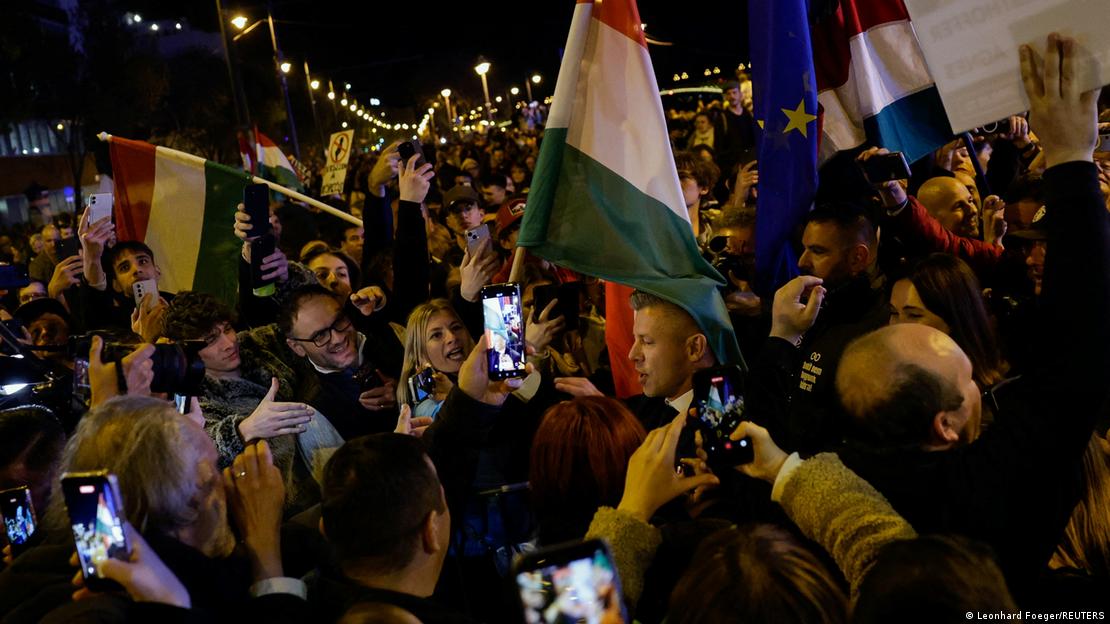
There were celebrations all over Hungary after Viktor Orban conceded defeat on April 12
Image: Leonhard Foeger/REUTERS

When Viktor Orban was narrowly voted out of office for the first time in 2002, he went through a deep personal crisis. "The homeland cannot be in the opposition!" he said at the time.

In other words, according to his image of himself, only he and his Fidesz party could truly represent the interests of the Hungarian nation; he was its sole legitimate representative. The statement left a deep impression on the Hungarian public.

It was the experience of 2002 that prompted Orban from 2010 to use his two-thirds majority to establish the System of National Cooperation (NER), intended to prevent a reoccurrence of his defeat. Not only did he tailor the electoral system to his party but he also created a vast clientelist system, a sophisticated surveillance apparatus and a massive propaganda machine to secure his power. This system helped him remain in power for 16 years.

That is likely why, up until the election on April 12, the defeat of his Fidesz party was unimaginable for Orban. When the results were announced in the evening, his defeat was so significant that he initially seemed almost speechless.

He disappeared from public life for a few days. Then he gave the only in-depth interview since election day, to Patriota, a YouTube channel that has been loyal to his party. In it, he spoke of the "pain and emptiness" that he had been filled with. Orban also announced that he would resist "the destruction of what we have built."

With regards to mistakes made while he was in government, he admitted that he regretted that the expansion of the Paks nuclear power plant, undertaken with Russian assistance, had not been completed. The journalist, a supporter, was visibly taken aback.

Much speculation in Hungarian society

What will now become of Orban and the system he has built over the past 16 years? Does the long-time autocrat have a chance of remaining in politics? Or is his career over? Will he leave the country, as rumors suggest? What will happen to his party, Fidesz, which was tailored entirely to him? What about the Orban dynasty, which has amassed immense wealth, and what about the oligarchs and tens of thousands of well-paid beneficiaries of the outgoing prime minister's regime?

These are the questions Hungarian society is asking right now. In search of answers, many media outlets are reporting on every single remark made by Orban and his allies, and every move made by his oligarchs and cronies. It shows how many Hungarians felt as if they were held hostage for years and how strong the desire is for a reckoning and systemic change.

Widespread corruption and abuse of power

So far, Orban has refused to take any responsibility for the alleged abuse of power in his regime and shown no public remorse. During the campaign, he announced that he would remain a parliamentarian but would step down as head of Fidesz in case of an election defeat, all the while brushing off this eventuality.

Instead, Orban has indeed stepped down from his parliamentary seat, but not yet announced his resignation as party leader. He has offered to quit but underlined that he stands ready "for the community."

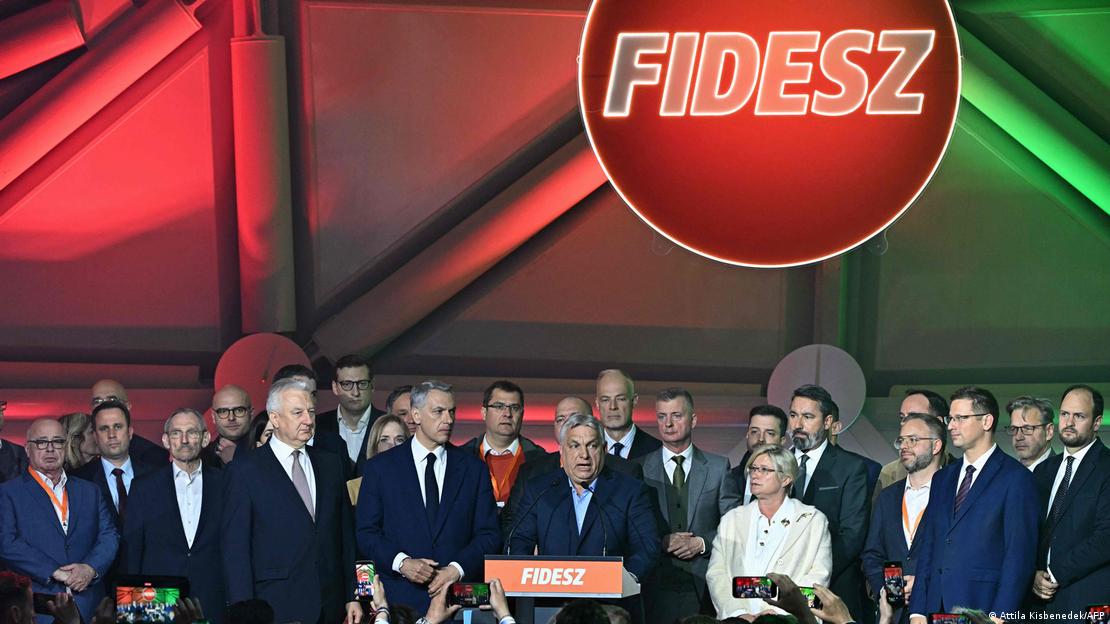
The party has said that it will hold a new leadership conference in June. The dilemma faced by Fidesz is that it would fall apart without Orban, as the party is completely centered on him. And yet with him it will retain the reputation of being a corrupt and autocratic party among all but its small core voter base.

In a video posted on Facebook, Orban himself announced his future plans in a way that was quite remarkable in semantic terms: "I am not needed in parliament right now but in the reorganization of the national side."

For many Hungarians, this is a continuation of Orban's long-standing story: That the part of the Hungarian population that supports him are the true Hungarians, but nobody else.

Many view the gesture of giving up his parliamentary seat as both shirking responsibility and an attempt to reassert dominance. Many feel Orban probably does not want to subject himself to the humiliation of having to hear criticism of himself and his system in parliament. At the same time, he apparently also considers it beneath his dignity to be just a lawmaker.
Fidesz will decide on the next party leader in June
Image: Attila Kisbenedek/AFP


Are oligarchs transferring funds?

The political scientist Daniel Rona recently predicted on the Hungarian news portal Telex that Orban would likely wait to see how things developed over the coming months before making a concrete decision on how to shape his political and personal future.

Investigative journalist Szabolcs Panyi wrote that Orban was considering going to the United States and applying for asylum there, but that is unlikely. This would destroy his work in Hungary, deal a fatal blow to his party and political community and also severely damage his family dynasty.

Orban's father and younger brother are two of the wealthiest business people in Hungary, involved predominantly in the mining and construction sectors. His eldest daughter Rahel and her husband Istvan Tiborcz, who are also among Hungary's richest individuals, emigrated to the US last year. The European Anti-Fraud Office (OLAF) investigated Tiborcz on several occasions based on alleged irregularities and conflicts of interest regarding state tenders. It forwarded recommendations to the Hungarian authorities and called for EU funds to be returned. In Hungary, the proceedings were shelved.

There are signs of movement among Orban's associates too. A few days ago, incoming Hungarian Prime Minister Peter Magyar accused the people many regard as Orban's cronies of transferring billions to foreign accounts in order to evade anti-corruption investigations and planned attempts to recover assets. Though there is no concrete evidence of this, Hungarian media outlets have reported on numerous financial transactions on the part of oligarchs, such as Orban's childhood friend Lorinc Meszaros, a businessman and former politician.

Many in Orban's party are still in a state of disbelief over their election defeat, and have turned to religion in an attempt to explain it. Outgoing Speaker of the National Assembly Laszlo Kover described it as a "temporary victory for satanic forces" but added that "in the end, victory belongs to Jesus Christ."

Zsolt Jeszenszky, a well-known influencer from the Orban camp, said that he thought the outgoing prime minister had "unintentionally committed idolatry" during a visit to India in early 2025, thereby "opening the door to evil spirits in his life."

Others have said that the defeat was caused by opportunistic profiteers in the Orban system. But few Fidesz loyalists have blamed corruption and abuse of power for the party's defeat.

This article was translated from German.


INTERVIEW

Dismantling Orban’s legacy: the reforms that lie ahead for Hungary


After 16 years of illiberal governance under outgoing prime minister Viktor Orban, restoring the rule of law in Hungary is not just a political transition but a full-on regime change, says Balint Magyar, a former Hungarian education minister and author of a study on Orban-era state capture. It will also mean bringing some of Orban's high-profile loyalists to trial.


Issued on: 30/04/2026 - 
FRANCE24
By: Sonya CIESNIK


Hungary's election winner Peter Magyar talks to the media after talks between parties on preparations for the first session of the Parliament in Budapest, Hungary on April 17, 2026. © Bernadett Szabo, Reuters

Following Viktor Orban’s election defeat on April 12, new Hungarian premier Peter Magyar has promised to seek justice for crimes committed by his predecessor's network of political allies and the oligarchs who supported them.

The corruption is well entrenched: Orban dominated Hungarian politics for years without any serious challenger, and there has never been another figure in the country’s modern history who amassed so much power in such a relatively short period of time.

From the media to the judicial system and from universities to local governments, Orban’s empire infiltrated every state institution. Nothing could be done in Hungary without political connections, one of Hungary’s wealthiest businessman told the Polish newspaper Gazeta Wyborcza in April, while asking to remain anonymous.

Magyar’s centre-right Tisza party won 141 seats in parliament out of 199 in the April elections, giving it a large majority to strengthen the rule of law and potentially unlock billions in funding from the European Union, which froze the allocation under Orban due to concerns over corruption and democratic backsliding.


Yet time is of the essence: Magyar has warned that oligarchs allied with Orban have begun siphoning off assets to the United States, the United Arab Emirates, Uruguay and "other distant countries”.

The Polish experience could provide some insight into what options exist for Hungary. After a liberal opposition bloc led by Donald Tusk came out ahead in October 2023 parliamentary elections, Tusk pledged as prime minister to reform Poland’s institutions following eight years of right-wing Law and Justice (PiS) party rule. He immediately fired high-profile figures and bypassed some of the legal obstacles left by the previous government.

FRANCE 24 spoke with Balint Magyar – a sociologist, former education minister and author of the book, “The Hungarian Octopus: The Post-Communist Mafia State” – who argues that Hungary is embarking on not just a change of government, but a full-on regime change.

Magyar has promised to go after corrupt officials who were part of the so-called Orban system. Does he risk falling into the very illiberalism he pledged to abolish in seeking a rupture from the Orban years?

Peter Magyar won 53% of the votes in the elections on April 12, which gives him a more than two-thirds majority in the parliament. It meant that Orban’s attempts to make election law more disproportionate backfired. Such a constitutional majority is enough to change any law.

Among Magyar’s promises during the elections was instituting a proportional electoral system. The incoming premier has also promised to limit the maximum time for future prime ministers to two terms – eight years total.

What happened was not a government change but a regime change. A government change means that basic values are shared by the competing parties. In a regime, the competing parties do not share the same political values.

Hungarians witnessed the first regime change in 1990 from a communist dictatorship to a liberal democracy.

The second regime change happened in 2010, from a liberal democracy to an autocracy. This is what Orban called “a revolution at the ballot boxes”. In 2011, he rushed a new constitution through the parliament without any consultation with the public (called the Fundamental Law of Hungary, the new constitution codified a new interpretation of history and ethno-nationalist principles).

Magyar’s victory represents the third regime change in Hungary’s recent history, from an autocracy – hopefully – back to a liberal democracy. The incoming premier has pledged to hold a referendum on accepting a new constitution.

How difficult will it be to prosecute high-placed officials like Peter Szijjarto, the minister of foreign affairs and trade, who reportedly leaked information on EU summit discussions to Russia?

Looking to turn the page on Orban’s tenure, Magyar has pledged to pursue officials and corporate leaders accused of corruption: during his campaign, he launched a programme called “Road to Prison”. This was not an ordinary type of corruption. If you look at the international scene, you can see charges brought against Poland's former deputy minister of justice in the Law and Justice government, Marcin Romanowski, or against Romanian politicians. These are minor cases compared to the scale of robbery of the state committed by the Orban clan’s politicians and oligarchs.

The Fidesz government operated like a mafia state. All contributing members of society were subordinated to it: it was a political enterprise which captured the state, the economy and the oligarchs. The mafia state had two motivations: monopolising political power and accumulating personal and family wealth. With the possibility of unilaterally appointing the heads of the controlling organisations and the presidents of the republic, central bank, constitutional court, chief attorney’s office and state account office, Orban could exercise direct coercion and blackmail over the whole society. As all these figures were subordinated to Orban, he could govern the state as a criminal organisation. Most of these actors and Orban-related oligarchs committed crimes, according to existing Hungarian legal code.

Magyar has called on all the leaders of the above-mentioned institutions to resign. If they don’t comply, he will use legal means to oust them from their positions.

Police have already begun investigations even though Magyar’s government isn’t in office yet. I don’t think rank-and-file loyalists will be prosecuted. What we will witness is the total collapse of the mafia-state organisation led by Orban.

Also, the difference between the Hungarian and Polish cases is that the Polish leader of the PiS party, Jaroslaw Kacznyski, was an autocrat but not a criminal, while Orban was an autocrat and a criminal at the same time.

There will be widespread legal procedures, although I have some doubt that stolen state assets will be recouped. (Wealthy Hungarians are leaving the country and transferring financial assets, according to the Financial Times.)

Orban has been voted out, but he once famously said in an interview with an Austrian tabloid that he "would like to tie the hands of the next government. And not only of the next, but of the following 10 governments." How big of a threat does he and Fidesz present to the incoming government?

Orban’s defeat in the latest elections represents not only a political, but a total moral collapse. There is a difference between a mafia state and a “classic” mafia. The positions within a classic mafia are informal positions: they can bribe public servants if needed, but they mainly operate outside the governmental bodies.

In the case of the mafia state, the positions are positioned within the state apparatus. After winning a constitutional majority, Magyar’s centre-right Tisza party can take back these political and administrative positions. Orban’s political-economic clan, therefore, faces an unavoidable collapse.

A national opinion poll published this week asked Hungarians for the main reason for Orban’s defeat. Some 49% responded that it was corruption, around 18% responded that it was the bad economic situation, and around 10% attributed the defeat to the lies of the government. This represents the dual nature of wide popular discontent: namely, the complete amorality and incapacity of Orban’s regime.

This interview has been lightly edited for length and clarity.


Trump backs proposal to rename ICE as 'NICE'

Issued on: 30/04/2026 - FRANCE24

04:20 min From the show

What started out as a joke on social media has now got the US president's backing. Donald Trump says he supports the idea of changing the name of Immigration and Customs Enforcement – or ICE – to a new acronym, "NICE". This comes as the US immigration agency continues to face mounting scrutiny over its operations, funding and record-high deaths of detainees in its custody.


A month ago, conservative influencer Alyssa Dehen posted on social media that she wants Trump to rename ICE as the National Immigration and Customs Enforcement, so that "the media has to say NICE agents all day every day."

Weeks later, the US president reshared her post, responding "GREAT IDEA!!! DO IT." Soon after his online backing, the official social media accounts of the White House and the Department of Homeland Security (DHS) both used this proposed name change on their accounts, captioning posts "ICE is NICE".

However, in order to make this change a legal one, the DHS would have to submit the proposed name change to Congress for approval, where a law would then have to be passed amending the legislation that created ICE within the Department of Homeland Security. This would require updating regulations, contracts and budgets and likely cost millions of dollars.

Though it's true that Trump has endorsed this viral idea online, it's unclear how far it will be pursued at this stage.

That said, his administration has already pushed to rename various other elements. Trump signed executive orders to change the name of the Department of Defense to the Department of War (used by his administration, though not yet codified), and changed the name Gulf of Mexico to the Gulf of America.

This new initiative comes as the Immigration and Customs Enforcement agency is under mounting scrutiny. Earlier this month, ICE reported its 29th death of a detainee in custody since October, the highest record of deaths in custody since the agency's establishment in 2003.

Vedika Bahl explains what we know in Truth or Fake.


New Zealand's kiwi bird returns to Wellington hills after a century-long absence


A citizen campaign is returning New Zealand's flightless kiwi bird to the hills around the capital Wellington more than a century after Europeans – and the animals they introduced – decimated their numbers across the country.


Issued on: 01/05/2026 - 
By: FRANCE 24

A staff member of a conservation organisation holds a kiwi bird during an event at Parliament in Wellington, New Zealand, on April 28, 2026. © Sara Tansy, AP

The kiwi, New Zealand’s sacred national bird, vanished from the hills around Wellington more than a century ago. Now the capital's residents are waging an unlikely citizen campaign to return the endangered flightless birds to the city.

“They are a part of who we are and our sense of belonging here,” said Paul Ward, founder of the Capital Kiwi Project, a charitable trust. “But they’ve been gone from these hills for well over a century and we decided as Wellingtonians that wasn’t right.”

A staff member of a conservation organisation carries a kiwi bird during an event at Parliament in Wellington, New Zealand, on April 28, 2026. © Charlotte Graham-McLay, AP


On a hill wreathed in mist above the dark sea that runs between New Zealand’s North and South Islands, Ward and others crossed rugged farmland late on Tuesday night, carrying seven crates in silence by dim red torchlight. Inside each one nestled a kiwi, including the 250th bird relocated to Wellington since the Capital Kiwi Project began.

The kiwi gives New Zealanders the name by which they’re often known. It’s a shy and odd-looking bird with underdeveloped wings and a whiskery face.

Spiritually significant for many New Zealanders, the kiwi’s image appears everywhere, including on the tail of the country’s air force planes – curious for a bird with no tail that can’t fly.

It’s thought that there were 12 million of the birds roaming the landscape before humans arrived in New Zealand. Today only about 70,000 kiwi are left across the country, with the population dropping 2 percent each year.

In the hills where Wellington’s kiwi now live and breed, the only late-night sound on Tuesday was the whoosh of wind turbines. Ward and his friends set their crates down in pairs, slid them open and gently tilted the boxes.

A staff member of a conservation organization watches as a kiwi bird is released at Terawhiti Station, Makara, near Wellington, New Zealand, Tuesday, April 28, 2026. © Sara Tansy, AP


Some in the small group of hushed onlookers were tearful. One man chanted a karakia, a Maori prayer.

From each crate, a long, curved beak eventually protruded as kiwi took their first tentative steps into the shadowed landscape, then sped to a run and disappeared into the darkness.

One place kiwi had never set foot until this week was inside New Zealand’s Parliament. Hours before Wellington’s seven newest residents were transported to their hillside home, they were carried into Parliament’s grand banquet hall by handlers for a celebration of the 250th kiwi's arrival in the city.


Lawmakers and schoolchildren alike expressed whispered delight at seeing the timid, nocturnal birds up close, many for the first time, as conservation workers cradled the large birds like human babies, with their gnarled feet outstretched.

“This animal has given us as a people so much in terms of our sense of identity,” Ward said. “We want to challenge our civic leaders, our politicians and say this is a relationship we need to honour.”

New Zealand is home to some of the world’s strangest and rarest bird species. Some have only survived because of against-all-odds conservation programs, at times with uncertain funding.

Initiatives decades ago saw all surviving birds of some species moved onto offshore, predator-free islands or into sanctuaries where they could be carefully monitored and protected, but where few New Zealanders would ever see one.

Ward and his group had a different dream: that New Zealand’s iconic national bird could flourish alongside people in a bustling capital city, where human encroachment and introduced predators had wiped out the kiwi before.

“Where people are is also the places where we can bring them back because we’ve got the means to do that guardianship,” Ward said

Staff members of conservation organisations hold kiwi birds during an event at Parliament in Wellington, New Zealand, on April 28, 2026. © Charlotte Graham-McLay, AP


Although unmanaged kiwi populations are shrinking, their numbers have thrived in carefully managed wild bird sanctuaries – so much, in fact, that some of these protected areas have run out of room for them.

That’s prompted their relocation to places like Wellington, where groups such as Ward’s rally residents to embrace their new neighbours. Kiwi have been spotted by late night mountain bikers and on backyard security camera footage in the capital, he said.

“They’re living and calling and being encountered on the hills surrounding our city,” Ward said.

That's taken work. Over the past decade, efforts between landowners, the local Maori tribe and the Capital Kiwi Project have produced a sprawling, 24,000-hectare tract of land where kiwi can roam.

It’s dotted with more than 5,000 traps for stoats, the main predator of kiwi chicks. So far, the Wellington population has a 90 percent chick survival rate.

The kiwi initiative is part of New Zealand’s quest to rid the island nation of introduced predators, including feral cats, possums, rats and stoats, by the year 2050. Since a previous government established the target in 2016 its chances of success have been debated, but community groups have taken up the work in earnest.

Parts of Wellington are now entirely free of mammalian predators apart from household pets, and native birds flourish. Volunteers monitor suburbs with military precision for the appearance of a single rat.

“When I think of endangered species globally, for the most part you can’t do much other than campaign or donate money,” said Michelle Impey, chief executive of Save the Kiwi. “But we have this incredible movement throughout the country where everyday people are taking it on under their own steam to do what they can to protect a threatened species.”

(FRANCE 24 with AP)

Myanmar's former leader Aung San Suu Kyi moved to house arrest

01.05.2026, dpa

Photo: Kay Nietfeld/dpa

Myanmar's former leader Aung San Suu Kyi has been moved from prison to house arrest, local media reported on Thursday.

The announcement was broadcast on Myanmar's state media, according to the New Day Myanmar portal.

President Min Aung Hlaing commuted the remainder of Suu Kyi's prison sentence to house arrest, broadcaster Channel News Asia reported, citing a statement from the presidential office.

State broadcaster MRTV published a photo showing Suu Kyi sitting on a wooden bench opposite two uniformed men. It was the first image of her released in a long time, after years in which she had been largely cut off from the outside world.

Concern about Suu Kyi's condition had grown recently, with activists in Myanmar launching an international campaign calling on authorities to provide proof that she was alive.

UN Secretary General AntĂ³nio Guterres welcomed Thursday's decision, according to his spokesman.

"It is a meaningful step towards conditions conducive to [a] credible political process," spokesman Stéphane Dujarric said in New York.

Suu Kyi, 80, was detained following the February 2021 coup that brought the junta to power. She was subsequently sentenced to a lengthy prison term.

She previously spent 15 years under house arrest at her home in Yangon, becoming known worldwide for her non-violent opposition to the junta and earning the Nobel Prize in 1991.

Myanmar's military junta has repeatedly released thousands of prisoners to mark major holidays over the past few years.

On Thursday, the authorities granted a large-scale amnesty to mark a Buddhist holiday. Prisoners who were not pardoned had their sentences reduced by one sixth.