Wednesday, August 26, 2026

 One Eye Squinted

The church has a Cambridge problem

(RNS) — Christians can criticize affirmative action and DEI hires all they want, but the continued employment of disqualified pastors in the pulpit is the church’s own form of an employment program.
(Image by Mohamed Hassan/Pixabay/Creative Commons)

(RNS) — Fake testimony. Inflated credentials. Fabricated personal history. Embellished resume. Incompetent scholarship. Blatant, repeated and rampant plagiarism.

I’m not talking about Cambridge University and the recent tragedy involving Jason Arday, a professor who was accused of all these things, subsequently resigned and was found dead just a few days later, presumably by suicide.

No, I’m not talking about Cambridge. I’m talking about the church and Christian leaders.

The problems I list above are far more common and overlooked or excused than they should be among those who claim the Christian faith.

To be sure, charlatans and cheaters are everywhere. But Christians would do well to examine how the church attracts and fails to prevent these forms of fraudulent behavior, especially among leaders. Christians can criticize affirmative action and DEI hires all they want (and they do), but the continued employment of disqualified pastors in the pulpit — whether disqualified by sexual abuse, cover up of abuse, plagiarism or not upholding the character requirements of 1 Timothy 3:1-7 and Titus 1:5-9 — is the church’s own form of an employment program.

This is partly why “fallen pastors so rarely walk away.” Church institutions have their own boxes to check when it comes to hiring (as they should), but having some boxes checked should not cancel out the other boxes that list the most essential qualifications. As I’ve written before, the church is not a sugar daddy.

Many forms of dishonesty have made church headlines in recent years, and these forms range in severity and impact. Yet each form occurs within a culture, and that culture likewise exhibits degrees of tolerance or intolerance for such dishonesty. A culture that overlooks the little things is a culture that more easily overlooks the big things.


Perhaps the most seemingly harmless form of deceit in Christian ministries and institutions is the insistence by some on using the title of “Doctor” when a doctoral degree is honorary rather than earned. For example, I worked at an evangelical university for years before I learned that the university’s founder and president — whom everyone referred to as “Doctor” — had only earned an undergraduate degree from a Bible college. But long-held rules of etiquette and academic standards say that honorary doctorates do not confer the privilege of being addressed by the title of “Doctor” beyond use by the institution conferring the honor. (The same rules say that people like me with an earned Ph.D. are not to be referred to as “Doctor” outside an academic or professional setting.)

On the surface, this may seem like merely an etiquette question and not an ethical or moral one. But when you stop to ask why someone would want to appear to have more credentials than they do, moral and ethical questions come up fast. An institution that puffs up the credentials of its president is less likely to closely examine the credentials of a celebrity hire — or to hold that celebrity sufficiently to account when discrepancies in his life story emerge that cannot be explained away.

One of the earliest red flags around the once-beloved apologist Ravi Zacharias was his faked academic credentials. Later, more serious revelations of serial sexual misconduct emerged, more proof that institutional accountability must happen early and often.

But the modern American church has a celebrity problem, a topic RNS podcast host Katelyn Beaty addresses compellingly in her 2022 book “Celebrities for Jesus: How Personas, Platforms, and Profits Are Hurting the Church.”

Celebrity status covers a multitude of sins. Pastors of national renown, in presidential positions or in high-profile churches plagiarize, sometimes repeatedly, with near immunity. But Christians of all people should recognize and respect the connection between authorship and authority. One becomes an authority not through originality alone but through the study of reliable, trustworthy sources. Showing that one has done such study increases one’s authority rather than diminishing it. But celebrity status blinds us to false authorities and those who would tickle our ears by telling us the stories we want to hear, whether about themselves or ourselves.


This lack of robustness leads inevitably to an inferiority complex, one that seems to be growing among Christians now that we live in a time when to be a Christian will almost certainly bring skepticism or disdain from the rest of the world (as if the Bible hadn’t told us it would), a context one writer calls a “negative world.”

One way of being shielded from that sense of inferiority is to create one’s own schools, seminaries, publishers and businesses that mirror what the secular world does but keeps it all “in house,” thereby eliminating, or at least mitigating, the competition. Of course, there are very good reasons for building these institutions. However, what may begin as a desire for purity and biblical fidelity can end up constructing an echo chamber, an intellectual and cultural ghetto, a closed system in which those inside are cut off not only from what is bad in the world but also from what is good. (As someone who has lived and worked most of my adult life in such institutions, I know of what I speak.)

This echo chamber effect is exactly what many critics point to as the problem that is the undoing of higher education.

A recent study from Yale University warns that the ideological echo chamber that has been cultivated in institutions of higher education over the past few decades is bringing about their own “irrelevance” as colleges and universities become increasingly “disconnected from mainstream American life.”

Inasmuch as this has been increasingly evident in academia, it also can be true of the church and its institutions. 

But it’s not merely irrelevance at stake. It’s integrity. It’s our testimony to the world and each other of whether or not we really believe what we say we believe.

Is a school trip to a mosque preaching or teaching? California school district gets hit with lawsuit.

PALO ALTO, Calif. (RNS) — A group of parents of various faiths sued Palo Alto Unified School District over a 2025 school trip to a mosque, claiming students were gifted Qurans and female students were encouraged to wear hijabs.
(Photo by Jose Alonso/Unsplash/Creative Commons)

PALO ALTO, Calif. (RNS) — Last fall, a group of students at Palo Alto High School took a field trip to a local mosque, meeting the mosque’s imam and a Muslim civil rights lawyer. The students observed Dhuhr prayers, listened to students recite passages from the Quran and were given Qurans as gifts, while female students also were encouraged to wear hijabs, according to a civil rights lawsuit filed by some parents and students.

The lawsuit, filed in federal court by Jewish, Hindu and Zoroastrian parents and students, claims Palo Alto Unified School District violated students’ First Amendment rights and state laws requiring religious neutrality by elevating one religion and disfavoring or stigmatizing “students and families who do not share the promoted religious perspective.” The lawsuit is raising questions about where the line is drawn between education about religion and religious indoctrination.

The fall 2025 trip was part of the high school’s Social Justice Pathway curriculum, a three-year track beginning in students’ sophomore year. A recruitment video highlights field trips to the San Francisco Museum of Modern Art and the former immigration station on Angel Island, and it includes photographs of students during a prior trip to the mosque. The plaintiffs, who include several Jewish parents and students, one Hindu parent and one Zoroastrian parent, belong to a group called Community Members for Religious Neutrality in Public Schools – San Francisco Bay Area.

“The flavor of this trip was that this particular faith is particularly worthy for this particular purpose (social justice),” David Rosenberg-Wohl, the plaintiffs’ lawyer, said in an interview. “When you favor one faith, you denigrate the others.”

The plaintiffs also contend that Zahra Billoo, the executive director of the Bay Area office of the Council on American-Islamic Relations, spoke to students unchallenged, even though she had previously made “publicly documented hostile and discriminatory statements regarding Jews and sharply ideological political views.” In 2021, she referred to the Anti-Defamation League, chapters of Hillel International, The Jewish Federations of North America and “Zionist synagogues” as “enemies” for supposedly stoking Islamophobia, according to news reports.

The plaintiffs are asking the court to bar the school district from religious activities without parental consent and to institute new policies on photographing students and vetting speakers. The lawsuit claims students were photographed wearing religious attire without parental consent, and the mosque later posted the photos online. Rosenberg-Wohl said some of the photos were removed after the lawsuit was filed.

Both the mosque and some Palo Alto students disputed some of the claims in the lawsuit — including that all students were given Qurans as gifts and that the school program, by only visiting a mosque, was giving preferential treatment to Islam. The mosque’s communications director, Mongi Dhaouadi, said staff simply left the books on a table at the back of the hall for anyone who wanted to take one home. 

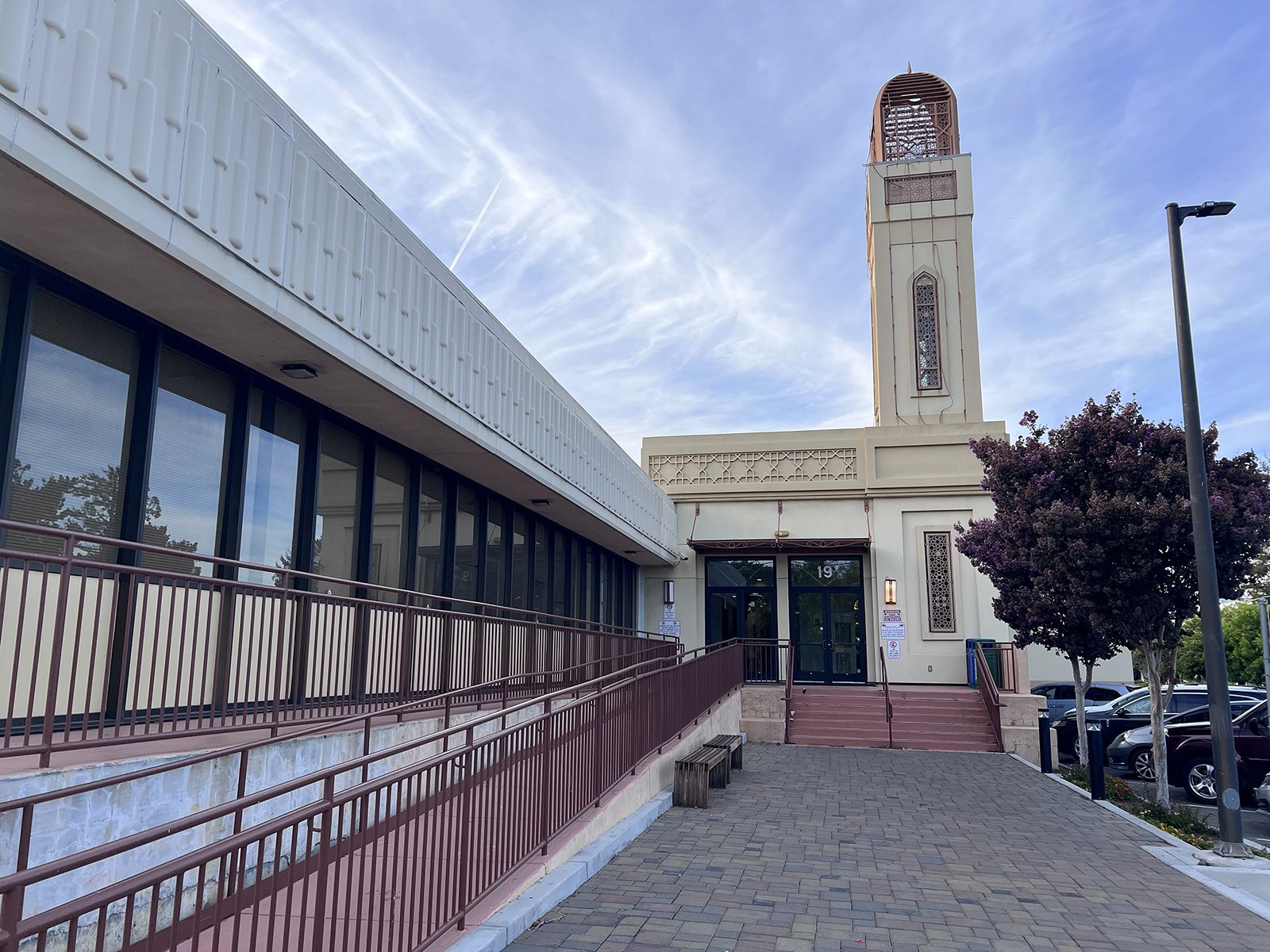
The exterior of the Muslim Community Association (MCA) in Santa Clara, Calif. (Photo by Andrew Esensten)

The school district didn’t respond to requests for comment. Local NBC affiliate KRON4 said the superintendent noted that district policy requires instruction about religion to be “academic, not devotional.”

Ari Y. Kelman, a Stanford professor of education and Jewish studies, said the lawsuit highlights the challenges public high schools face in teaching about religion in an experiential way. “It’s one thing to say these are the Five Pillars of Islam, or these are the books of the Torah — you can answer those kinds of questions on a multiple-choice test,” he said. “But if you want to help students get inside of the material, that kind of approach can be mistaken for proselytizing, even if it is not.” In college, a standard assignment in a religion course is to visit a house of worship for a faith that is not your own, according to Kelman. “But there are developmental differences between 18-year-olds and 15- or 16-year-olds that their teachers should be conscious of,” he said.

The mosque that hosted the students, the Muslim Community Association (MCA), is located in the city of Santa Clara in Silicon Valley. Founded in 1981, it is one of the largest Islamic centers in the U.S., with more than 3,000 people attending Jumah prayers on Fridays, according to its website. The religious director, Imam Fuad Mohamed, was born in Ethiopia, and community members hail from 50 different countries.

The center, which is not being sued, released a statement this week reaffirming its commitment to hosting groups like the one from Palo Alto High School. “Visitors to MCA have the opportunity to learn about our faith, ask questions, and observe our community as it practices its traditions,” it read in part. “Learning about a religion is not the same as being asked to practice it.”

Dhaouadi, the mosque’s communication and outreach director, gave RNS a tour of the center on Thursday. In the lobby, an exhibit on famous Muslim converts included photos and biographies of Malcolm X, Muhammad Ali, British broadcaster Lauren Booth and social media personality Sneako, among others. Dhaouadi, who was born in Tunisia, pointed out the men’s and women’s prayer halls, classrooms for students enrolled in a pre-K through twelfth-grade Islamic school, a Zakah (charity) office, a bookstore and an outdoor field, where dozens of children were doing soccer drills.

Over tea in the center’s halal cafe, he disputed the idea that the students were coerced to take home Qurans or put on hijabs. “Some did and some didn’t,” he said. “It was completely up to them. Same thing with the hijabs. There was no coercion.”

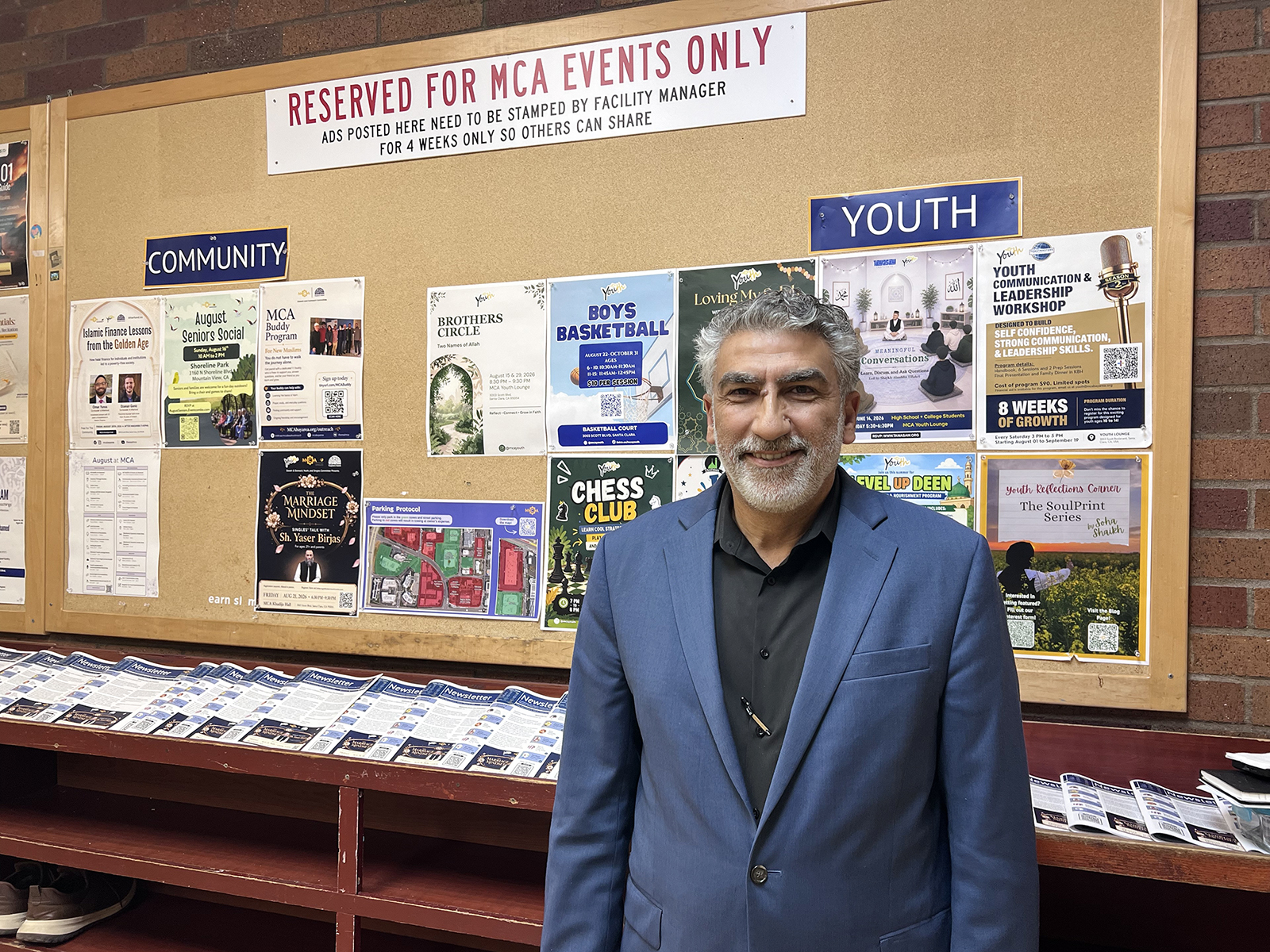
Mongi Dhaouadi, the communication and outreach director at Muslim Community Association (MCA) in Santa Clara, Calif. (Photo by Andrew Esensten)

Juni Thurston, a 17-year-old senior, is not involved with the lawsuit and missed the mosque visit due to illness, but in an email, she pushed back against the idea that the Social Justice Pathway program gave preferential treatment to one religion. She said classmates studied seven religions: Judaism, Christianity, Islam, Hinduism, Buddhism, Baha’i and Taoism. “While the Santa Clara Muslim Community Association was the only religious site visited, other religions received specialized attention in other ways,” she said in an email, noting that students read “Night” by Elie Wiesel and other texts to gain a deeper understanding of Judaism.

Students who visited the mosque last fall had to have permission slips signed by their parents, according to Thurston, who is the editor-in-chief of the school newspaper. In an opinion piece published last week, she wrote that a female student told her women were encouraged to cover their hair only if they wished to enter the prayer hall. That student chose to cover her hair with her hoodie rather than with a hijab. Thurston also wrote that another student told her that speakers did not promote Islam over other faiths.

When asked to comment on the students’ accounts, Rosenberg-Wohl said, “I’m sure there are a number of students who came out liking what happened. What they think about it is irrelevant. What the Constitution says about it is relevant.”

Thurston, however, did write that she was “disappointed” that the mosque invited Billoo to speak. She defended her teachers against accusations of being complicit in religious indoctrination.

“The idea that they would be working to indoctrinate students into Islam, or any religion, is an idea extremely foreign to me as a student who has had them as my teachers for the past two years,” she wrote.

Billoo addressed another cohort of students at the mosque in the fall of 2022. In a statement, Billoo said, “We are concerned that this lawsuit risks turning ordinary engagement with Islam and Muslims into something suspicious and could have a chilling effect on educators who want their students to learn about the diverse communities around them.”

Settler attacks threaten the West Bank’s final Christian village

(RNS) — As settler violence escalates in Taybeh, a Catholic priest and a papal charity are working to give Palestinian Christians security, jobs and community support to remain in the Holy Land.
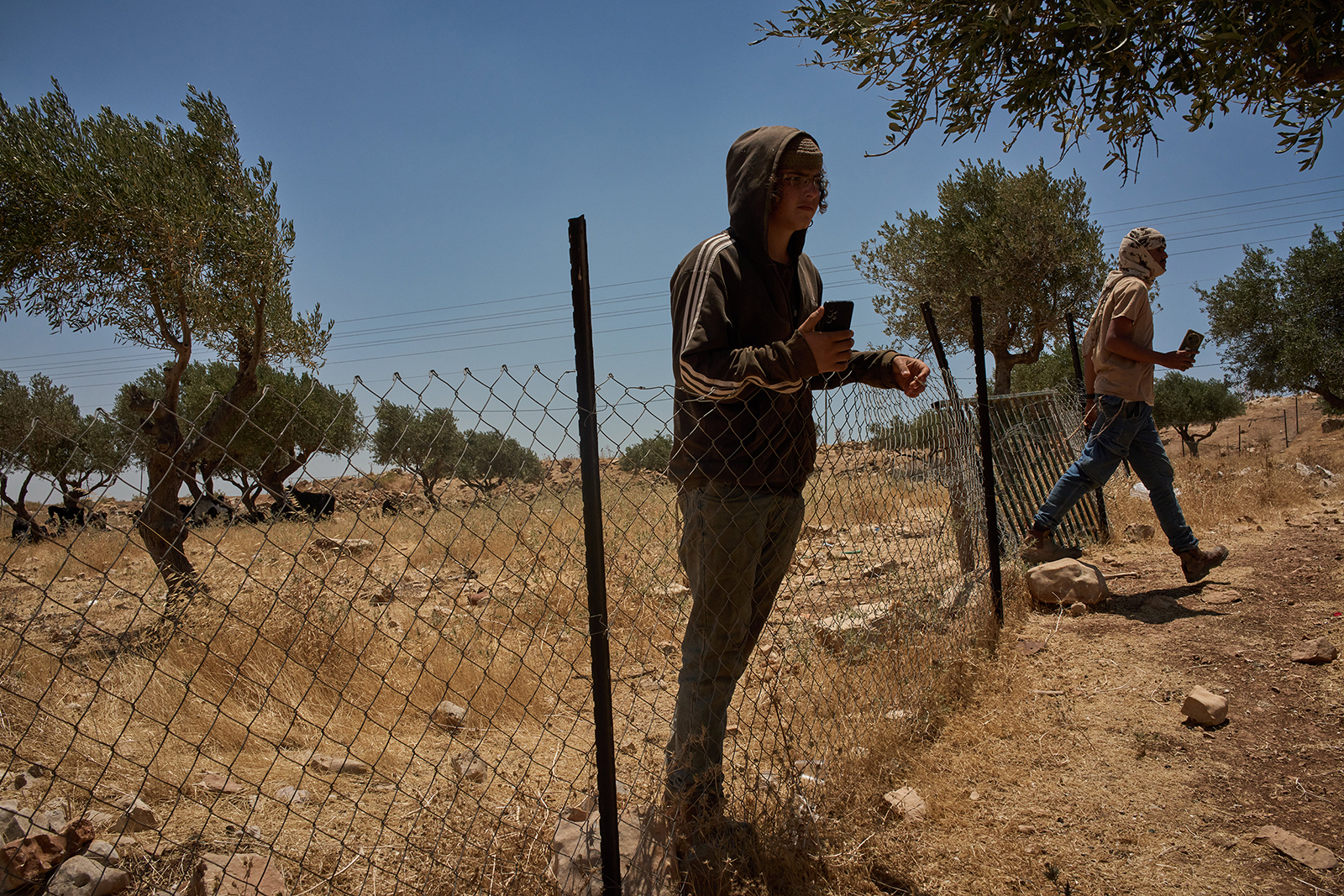
An Israeli settler steps into the courtyard of a home as another stands next to the fence, trespassing on Palestinian property on the outskirts of the West Bank town of Taybeh, Thursday, June 25, 2026. (AP Photo/Leo Correa)

(RNS) — In early August, Joseph Hazboun visited a newly built home among the fields near Taybeh, considered the last Christian village in the West Bank. Its owner, a local Palestinian Christian, claimed he could not access his property safely because of intimidation by Israeli settlers.

As Hazboun inspected fencing that was reportedly cut to allow settlers’ sheep onto the land, a settler approached him driving a tractor at full speed, he said, an attempt to intimidate and chase him and his group away.

“I witnessed firsthand how this settler terrorizes the local community,” Hazboun said, adding that the man carried a gun concealed beneath his shirt. The intervention of two Israeli peace activists prevented the confrontation from escalating.

Hazboun is the regional director for Palestine and Israel for the Catholic Near East Welfare Association, a papal agency that supports Eastern churches and vulnerable communities and reports to the Vatican. A CNEWA delegation visited Taybeh and nearby properties on Aug. 5, investigating what the organization described as the “systematic intimidation” of Palestinian families by Israeli settlers.

CNEWA documented portions of Hazboun’s encounter in photographs and a video published on its YouTube channel and described the delegation’s findings in an Aug. 7 situation report.

“Standing on that contested hillside, the human cost of the West Bank’s expanding outposts became starkly evident — leaving families stranded away from the very homes they built, caught in a cycle of displacement and daily intimidation,” Hazboun wrote in the report.
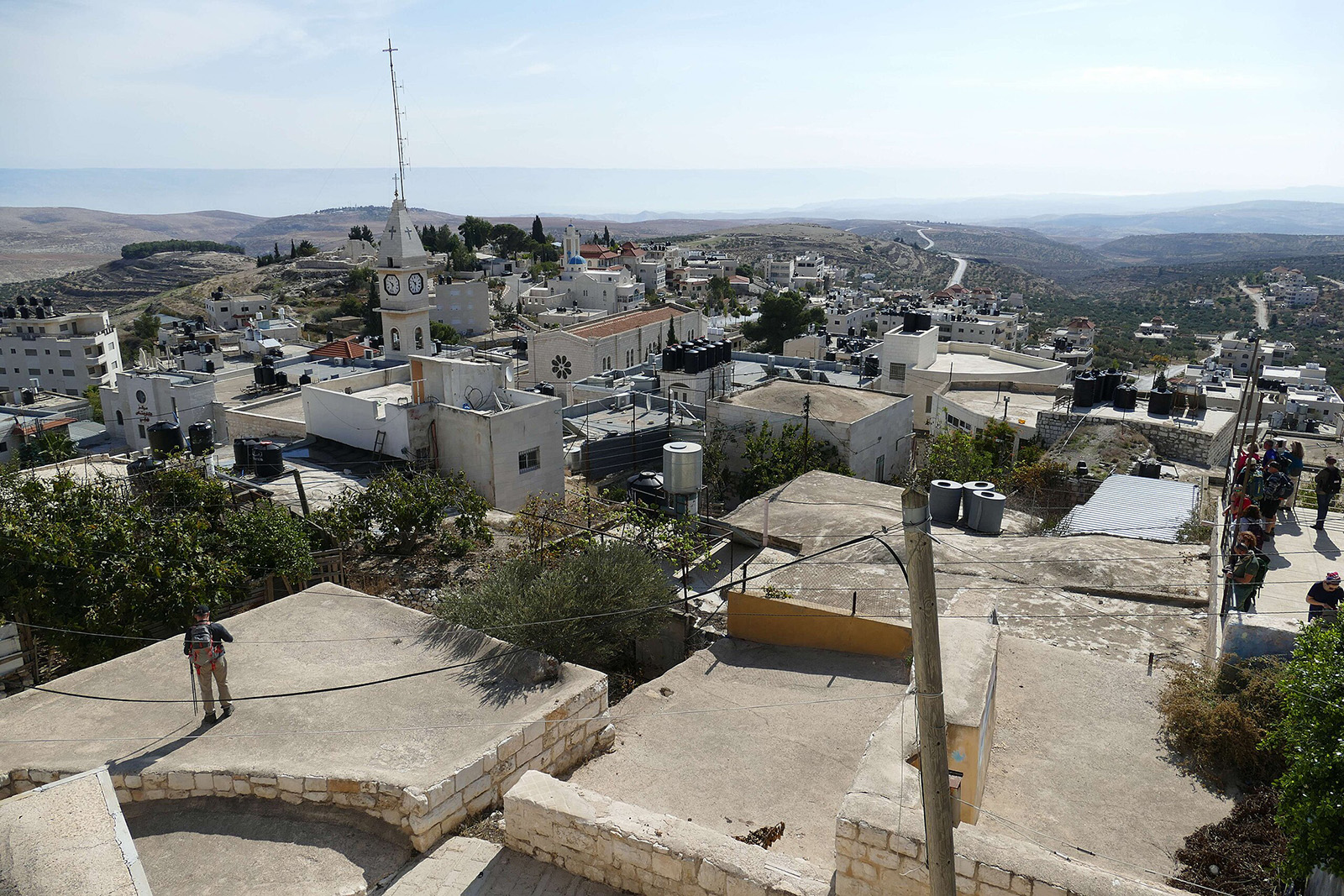
Overlooking Taybeh in the West Bank in 2018. (Photo by Bukvoed/Wikimedia/Creative Commons)

The confrontation was one episode in a growing struggle over land in the West Bank, a Palestinian territory captured by Israel in 1967 that remains under its occupation. Settler violence has escalated in recent weeks, drawing widespread condemnation and causing Israel’s military to declare Taybeh closed to non-residents to attempt to prevent attacks.

“This is the worst, the worst crisis that we have witnessed even since 1967,” said Hazboun, who has over 30 years of experience at CNEWA and has lived in the Holy Land his entire life.

Settlers have received support from some far-right leaders in Israel’s government, such as National Security Minister Itamar Ben-Gvir and Finance Minister Bezalel Smotrich, Hazboun said. 

Unlike Israel’s large, government-authorized settlements, herding outposts may begin with little more than a tent, a trailer and a flock — a tactic settlers are using to expand. Some will enter private Palestinian properties with their sheep, with some incidents including arson and large, coordinated raids.

“A settler could go anywhere in the West Bank and set up a tent,” Hazboun said. “Then, after a couple of months, it will turn into barracks or a container. Then, after a few months or a couple of years, it will turn into homes and then a settlement.”

Like elsewhere in the West Bank, in Taybeh — the majority-Christian Palestinian village identified as the biblical town of Ephraim, where Jesus took refuge — tensions escalated this summer.
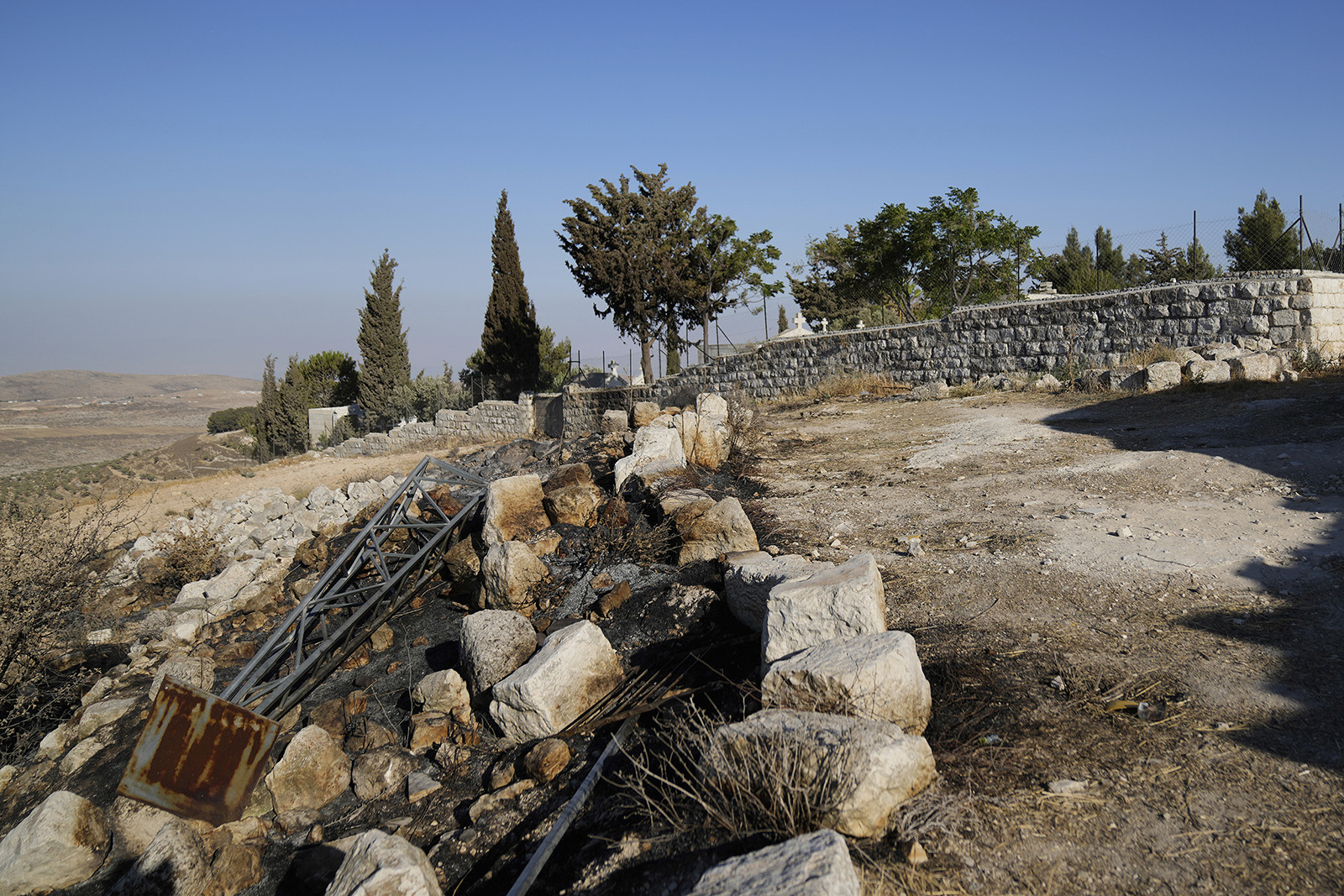
Char marks, which Palestinians say are from an attack by Israeli settlers, are visible in the cemetery near the St. George Greek Orthodox Church in the West Bank village of Taybeh, July 14, 2025. (AP Photo/Nasser Nasser)

“Taybeh has experienced fires, incursions, attacks on private property, the intimidation of families and obstruction of emergency services,” said Father Bashar Fawadleh, the Latin parish priest of Christ the Redeemer in Taybeh. He said that in June, settlers obstructed Palestinian firefighters from responding to a large blaze near the town.

Bashar described a situation where “insecurity has become a daily reality.” He said that in recent weeks, settlers have cut fences, bathed in private water cisterns and stolen a beehive. Palestinian workers have been impeded from reaching their workplaces, and on Aug. 18, he said, two settlers on horseback terrorized a Palestinian family by approaching the wall of their home.

“For a family, seeing strangers come up to its garden or the wall of its home is not merely an inconvenience — it is a message of intimidation,” Bashar said.

Despite Taybeh’s Christian identity, Bashar underscored that the settler attacks are not motivated by religion. “We are Christians, but we are also Palestinians,” he said. “Settlers entering Palestinian land generally do not first ask whether its owner is Catholic, Orthodox or Muslim.”

The incursions continued after the Israeli military’s closure of the village two weeks ago, Bashar said. “A decision has value only if it is enforced,” he said. 
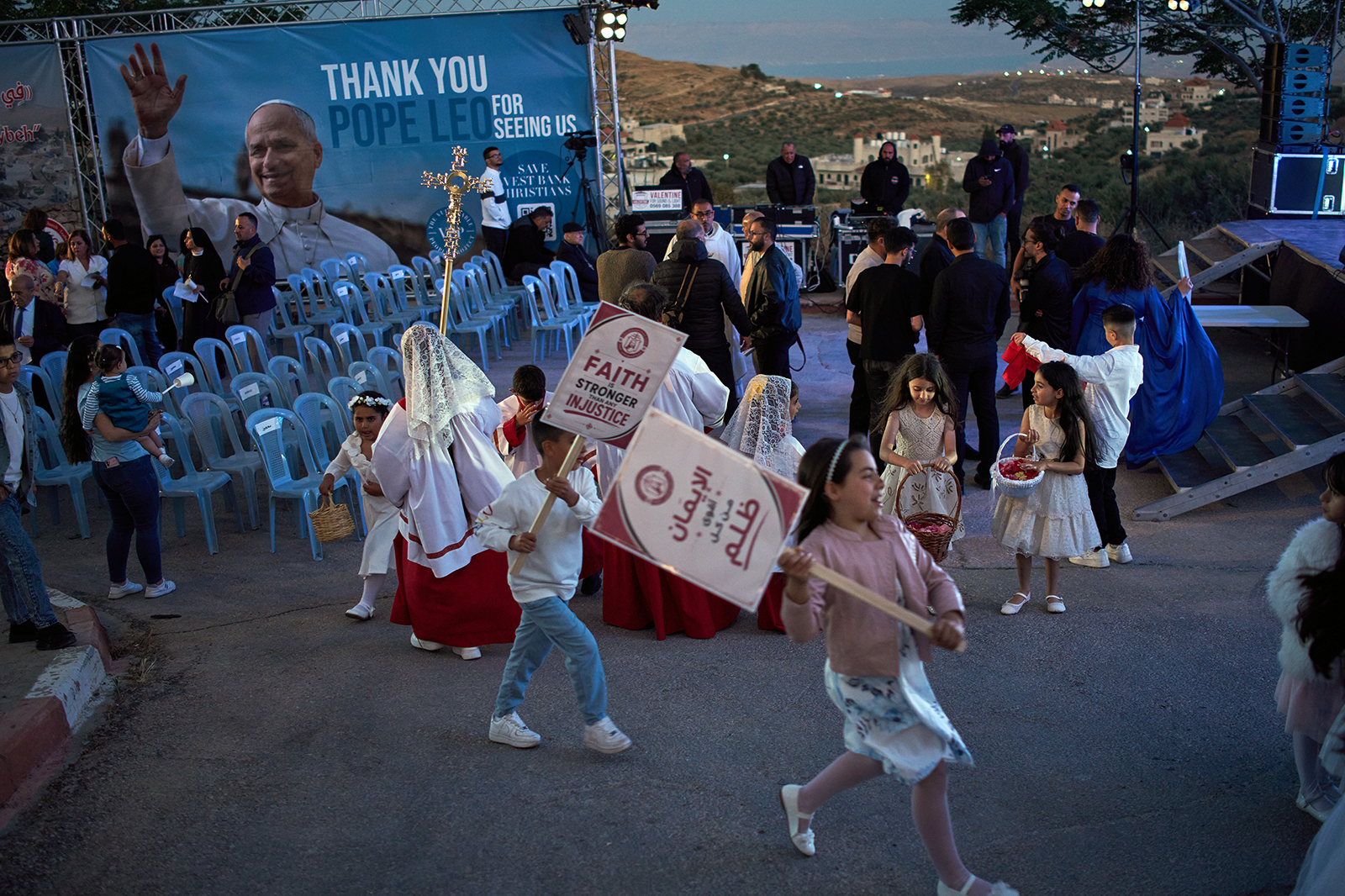
A Palestinian altar girl carries a cross after taking part in a procession during celebrations honoring the Virgin Mary in the West Bank town of Taybeh, Friday, May 29, 2026. (AP Photo/Leo Correa)

The priest asked that the restrictions be applied only to those who act illegally to intimidate residents, not farmers, visitors or others who want to support the community.

Bashar said he attempts to guide his flock spiritually through feelings of rage, desperation or the desire to leave.

“Today, perhaps the gravest problem is invisible,” he said. “Residents are beginning to lose the basic sense that they are safe in their own homes.”

The situation in the West Bank also drew the attention of Pope Leo XIV, who made an appeal in his Angelus address on Aug. 16 “for an end to the ongoing violence against the Palestinian civilian population.” Bashar said the pope has continued contact with the only Catholic parish in Gaza, the Holy Family Church, which continues to celebrate Mass and provide shelter as Israeli attacks continue, despite a tenuous ceasefire between Israel and Hamas since October 2025.

The Latin Patriarch of Jerusalem, Cardinal Pierbattista Pizzaballa, visited Taybeh on the feast of Mary’s Assumption into heaven on Aug. 15 — “at a time when many people felt vulnerable and exhausted,” Bashar said. He said the visit reminded the small Christian community that they are not alone.

In his homily at the Christ the Redeemer church, Pizzaballa urged the faithful to “not be afraid” and to remain a Christian voice despite the “very complex situation” in the Holy Land.

“We will continue to do everything in our power to preserve the Church’s presence here, at every level, throughout the Holy Land,” Pizzaballa said.

For Bashar, the message was clear. “We will relinquish neither our presence nor our right to live on this land,” he said.

Palestinian Christians represent only an estimated 1% of the population of the West Bank and Gaza, according to a 2017 Palestinian Authority census. In Gaza, the number of Christians has declined sharply since 1997 to approximately 1,000 before the war, and church leaders say that number is roughly halved today. Taybeh counted an estimated 1,700 residents recently, Bashar said, but the figure is now around 1,200.

Christian charities like CNEWA are attempting to sustain the population by providing food security, part-time employment, maternal and infant care and educational services tailored especially for young women. The organization aims to help fund a regional football field and a track-and-field space to allow youth in the Taybeh area to have a space to play and grow together.

Hazboun emphasized the importance of “investing in Christian-Muslim relations on a grassroots level,” allowing children to grow and play together to overcome conflict.


But road closures, military blockades, poverty and unemployment continue to threaten the Palestinian population, including Christians. And charities struggle to fund aid in the West Bank as tensions unfold in other parts of the world, including Gaza, Lebanon and Ukraine.

“I do believe that we are very privileged to be Palestinian Christians — we are Christians from the land of Jesus Christ,” said Xavier Abu Eid, a political scientist and a Palestinian Christian.

A former adviser to the Palestine Liberation Organization, Abu Eid said he was almost killed two years ago after an ambush by Israeli settlers as he drove with his pastor from Jericho to Ramallah, not far from Taybeh.

“I think some people are focusing on people that are leaving the country,” he said. “And many Palestinians are leaving, not just Christians.

“But it’s important to support and focus on those who are struggling to stay in Palestine,” he added.


13 US citizens denied entry to Israel for weeklong trip to learn about Palestinian Christians

(RNS) — Amid escalating violence in the West Bank, an interfaith group, led by a retired Emory University theology professor, was turned back at Israel's border.
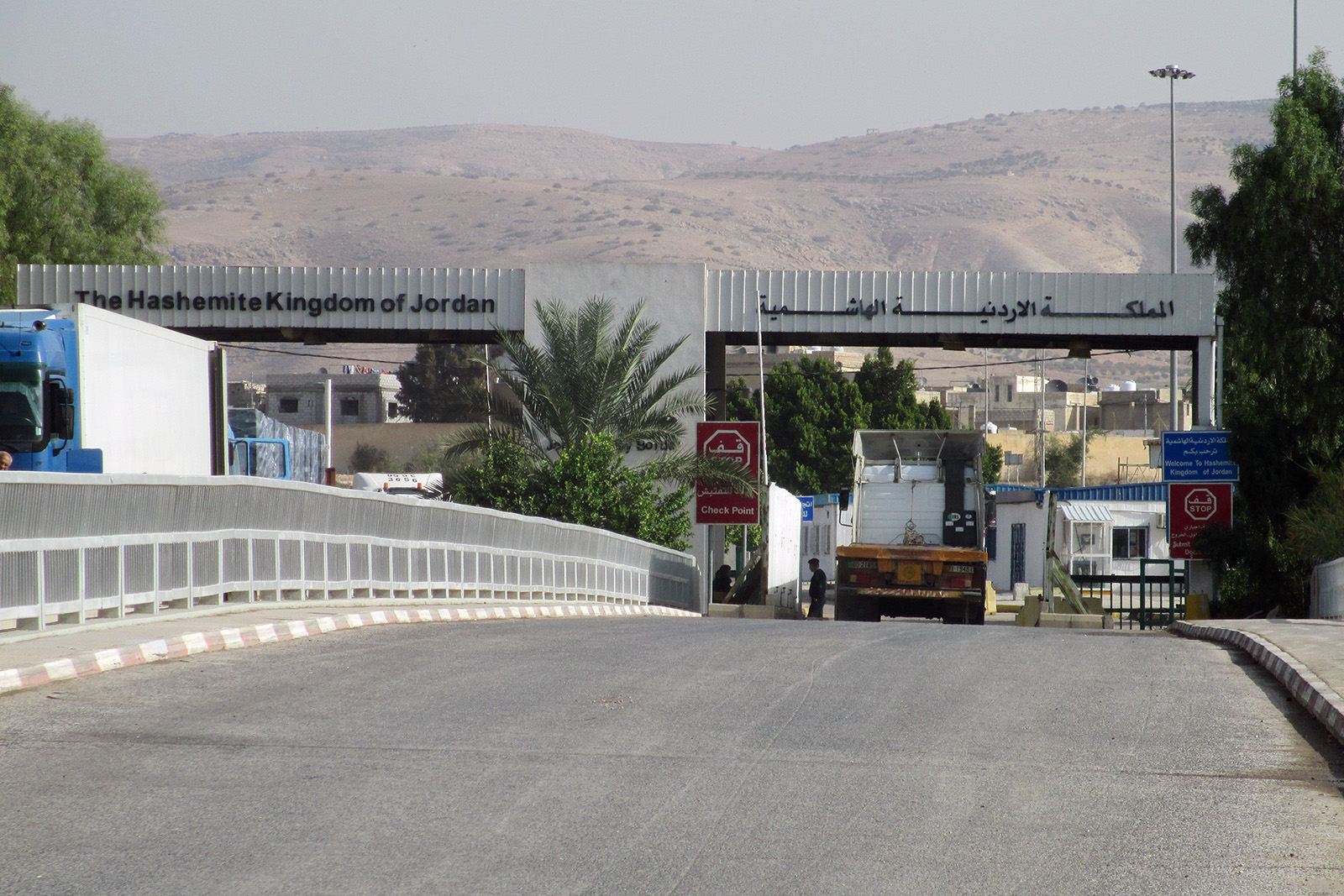
The Sheikh Hussein Crossing, or Jordan River Crossing, between Jordan and Israel. (Photo by Avishai Teicher/Wikimedia/Creative Commons)

(RNS) — A group of 13 United States citizens who traveled to Israel to take part in a weeklong trip with a Christian organization dedicated to Palestinian liberation theology were denied entry at the border last week.

The interfaith group, led by retired Emory University theology professor L. Edward Phillips and his wife, the Rev. Sara Webb Phillips, an ordained United Methodist minister, were set to tour Jerusalem and West Bank sites with the Sabeel Ecumenical Liberation Theology Center, a 40-year-old nonprofit organization registered in Israel.

They traveled from the U.S. to Jordan and had planned to enter Israel via the Sheikh Hussein Crossing when they were interrogated by Israeli border agents. Nine were initially granted visas and allowed into Israel, while four were denied. Then in a turnabout, Israeli border authorities boarded a bus where the nine were waiting and seized and cancelled their visas.

“I always wanted to be first at something,” said L. Edward Phillips, 71, who taught historical theology and worship at Emory’s Candler School of Theology in Atlanta, speaking by phone from Jordan. “Now I’m the first person to lead a Christian delegation into the West Bank to be categorically denied entry.”
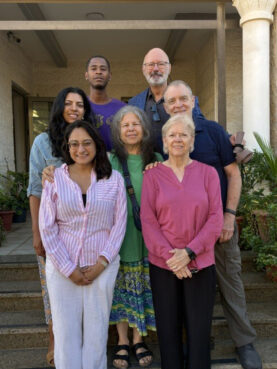
Seven of the 13 members of the delegation to Israel gathered for a photo prior to crossing the border and being denied entry to Israel last week. L Edward Phillips and his wife, Sara Webb Phillips, right, second and third row, are ordained United Methodists from Atlanta. (Photo courtesy of Edward Phillips)

Israel’s Border Control Administration, part of the Ministry of Interior, did not respond to RNS’s emailed requests for comment.

Sabeel’s director, Omar Haramy, said that although Israel has denied entry to a handful of individuals over the years, it has never denied an entire delegation.

“This is something you don’t expect in a country that labels itself as a liberal democracy,” Haramy said. “This is how you’d expect somebody going into Iran or Iraq or North Korea. You don’t expect a group of interfaith people, Jews, Christians, Muslims, Hindus, with a clean record, many of them professors, graduates of top-notch universities, to get treated like this.”

Sabeel, which has welcomed thousands of visitors to Israel and the West Bank over the years, is appealing the denial of two in the group. Jonathan Kuttab, a lawyer and the executive director of Friends of Sabeel North America, an affiliate organization, said Israel does not allow groups to appeal.

Two reasons were citied for each of the denials: public safety and immigration considerations, specifically that some members of the group might overstay their visas, Kuttab said.

Kuttab also protested the Israeli decision to the U.S. Embassy and Ambassador to Israel Mike Huckabee. The State Department did not respond immediately to RNS’s request for comment.

In the past couple years, the Israeli government has arrested and swiftly deported dozens of international activists, including U.S. Jews who traveled to Israel as volunteers with nonprofits to help Palestinians in the West Bank.

Both Muslims and Christians in the West Bank have suffered escalating violence at the hands of Israeli settlers and/or the Israeli army. A United Nations report from late July estimated 2,000 such attacks will occur by the end of 2026 — an all-time high.


RELATED: These US Jews wanted to show solidarity with Palestinians. Israel deported them.


Israel has not routinely denied access for tourists on short stays.

But that may be changing.

Sara Webb Phillips, among the last four delegation members denied visas, said she was hectored and intimidated by border agents, accused of being an activist and asked to write down every organization she is a part of. She listed the Red Cross, Habitat for Humanity and the Atlanta Community Food Bank. Sabeel is not a membership organization.

“They were bullying me, and finally (the border agent) says, ‘We know about your work. We know you are with Sabeel,’ and she said, ‘You know they’re a terrorist organization,’ and I said, ‘No. They’re an organization that’s working peacefully for Palestinian rights,'” Phillips said.

Friends of Sabeel North America, or FOSNA, has called for an investigation into the incident and posted a petition to its website.

The eight-day trip was supposed to include stops in Jerusalem, Bethlehem and Hebron, and meetings with Palestinian Christians in those cities, many of whom have endured Israel’s brutal occupation. The itinerary also included a trip to Yad Vashem, Israel’s Holocaust museum.

L. Edward Phillips said the purpose of the trip, like several others he has participated in over the years, was to learn about Palestinian Christians’ lives and to tell others about what they saw. 

“This is a come see what’s happening, learn about the situation, and go back and tell the stories trip,” he said. “We tell the stories of the people we’ve encountered, the histories of the places we’ve seen, the strength of the people locally that are putting up with amazing odds and the tradition of ‘sumud,’ or perseverance.”