Tuesday, September 15, 2026

Poland revives 60% windfall tax on fuel companies

Poland revives 60% windfall tax on fuel companiesFacebook
By bne IntelliNews September 15, 2026

Poland’s government has revived plans for a temporary windfall tax on fuel companies, proposing a 60% levy on revenues deemed to result from unusually high margins during this year’s energy-market disruption.

The tax would apply to fuel producers and companies importing or acquiring certain liquid fuels from other EU countries, PAP reported on September 14. The government is due to consider the proposal on September 15.

The taxable amount would be calculated as revenue exceeding what a company would have earned using its average 2025 fuel-sales margin, increased by 20%.

The government says this should exclude normal profitability and gains resulting from business expansion or investment. Payments would be made through monthly advances followed by an annual settlement.

The proposal replaces legislation passed by parliament in July that also imposed a 60% rate and was expected to raise about PLN4bn.

President Karol Nawrocki referred that law to the Constitutional Tribunal on July 24 before signing it, arguing that taxing gains dating from March violated the principle that legislation should not operate retroactively.

Government officials subsequently said a revised version would avoid retroactive taxation.

Warsaw wants the levy to recover part of the cost of measures introduced after the Middle East conflict and oil-supply disruption drove fuel prices higher. The government’s CPN fuel-price package cost about PLN4.7bn, while fuel companies benefited from sharply higher refining and trading margins, the Energy Ministry said.


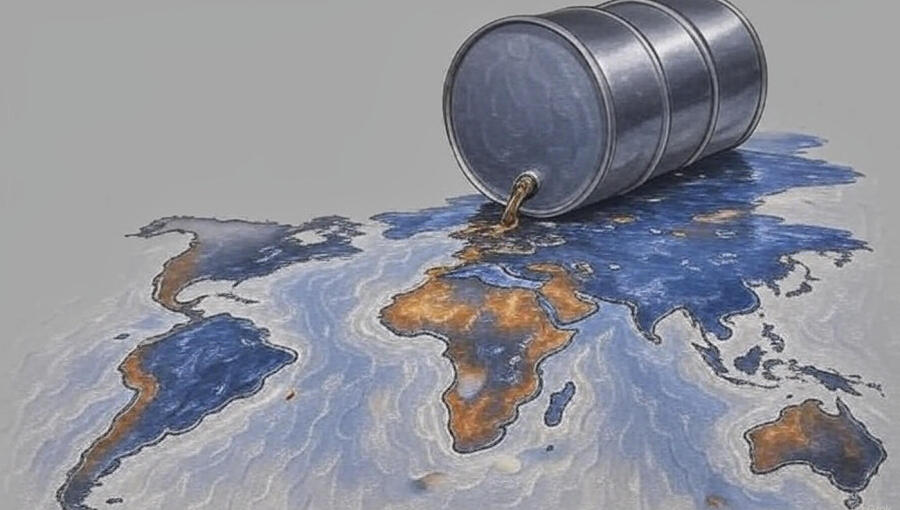
MACRO ADVISORY: Oil price to rise as reserve dipping ends

MACRO ADVISORY: Oil price to rise as reserve dipping ends
A global oil crisis is building as the US and China withdrawals from reserves are coming to an end. / bne IntelliNewsFacebook
By Ben Aris in Berlin September 15, 2026

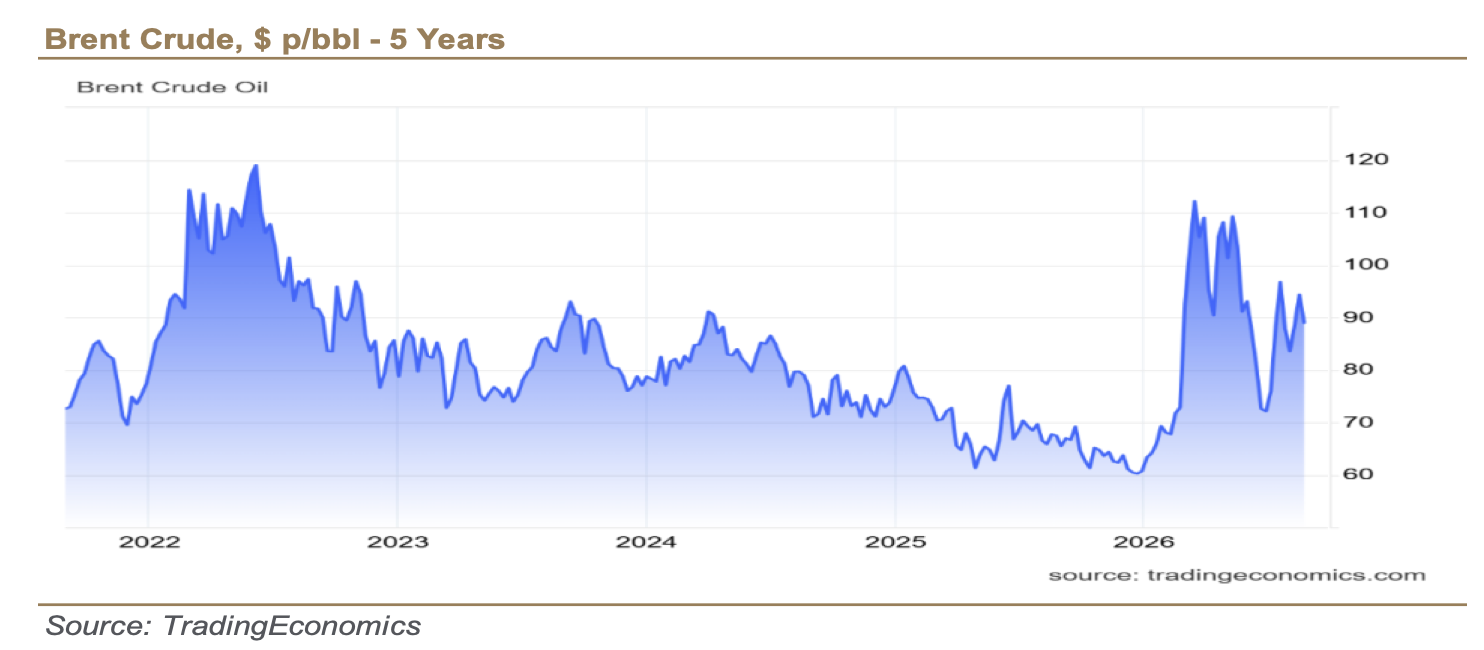
The price of oil is expected to rise steadily as “reserves dipping” is close to ending. Many traders and oil companies say that the oil price should be higher and expect it to rise in the next couple of months. The reason why the price of oil has not been higher in spring and summer is because both the U.S. and China have been drawing significant supply from their respective oil reserves. The reason to assume a higher price in the coming months is that this drawdown must end and against a backdrop of a still (mostly) blocked Strait of Hormuz.  

The IEA chief recently warned that oil markets are entering a "red zone". He cited the continued blockage in the Strait and the fact that previously large global inventories have been being steadily depleted. According to the IEA, roughly 2.5-3 mln barrels per day of oil from emergency reserves are currently being supplied to the global market.

The IEA now sees global supply falling by 4.3 mbpd this year to around 102 mbpd, with growth in supply from the Americas only partly covering losses in the Middle East and Russia. The third-quarter deficit has swollen to 1.8 mbpd, more than double the roughly 800,000 bpd gap the agency saw only weeks ago.

The U.S. Energy Information Administration (EIA) agrees and is predicting a major deficit in oil supply for the full year. The EIA expects global oil and liquids supply to fall by 7.08 mln barrels per day in 2026, while demand is forecast to decline by a smaller 1.09 mbpd, resulting in a deep supply deficit as disruption in the Middle East continues to hit energy markets.

The EIA raised its 2026 Brent price (average) forecast to US$95.39 per barrel while keeping its 2027 forecast unchanged at US$79.39 per barrel. Its forecast for WTI crude (average) was raised to US$88.32 per barrel for 2026, while the 2027 outlook remained unchanged at US$74.39 per barrel.

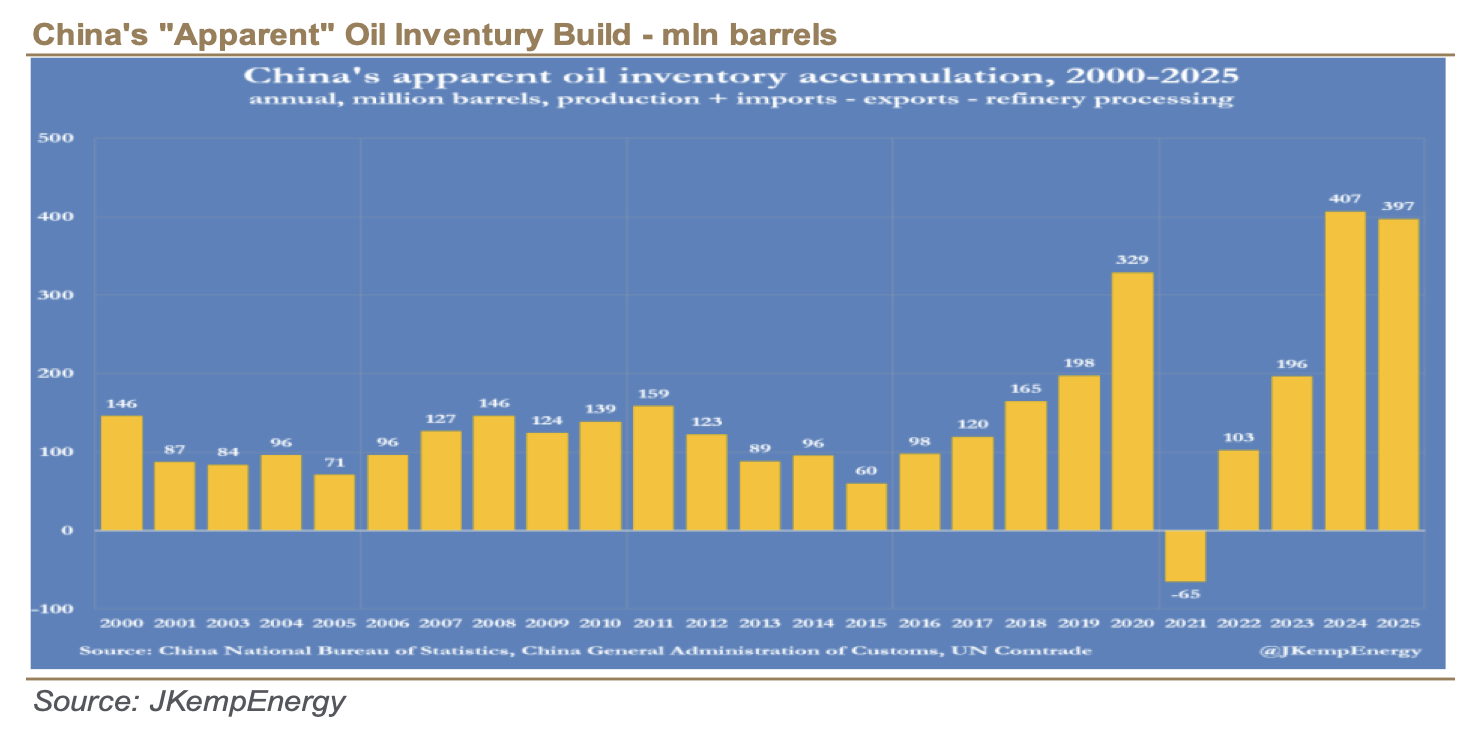
China reduced purchases and used reserves. Chinese apparent oil demand fell about 20% YoY in July. Crude imports were down close to 30% in 2Q26. Rather than pay up and risk pushing the oil price even higher, China used its 1.2 bln barrels of reserves (roughly four months of cover). It is unclear how much China’s reserves have fallen this year.

The U.S. is in a more difficult position. Strategic oil inventories in the U.S. have reached a 40-year low, and experts warn their continued depletion could damage the underground caverns where the reserves are stored. In mid-August, the Strategic Petroleum Reserve (SPR) fell below 300 mln barrels for the first time since the 1980s, when the reserves were being filled, according to the Department of Energy. That pool is expected to drain further to 243 mln barrels as the U.S. releases 172 mln barrels to manage severe supply disruptions and due to the Iran war.

U.S. reserves are kept in 60 salt caverns across two sites in Texas and two sites in Louisiana, with each thousands of feet underground. They have a total storage capacity of 714 mln barrels. But geologists are warning that, as oil is drained from these reserves, the integrity of the caverns may be at risk.

It is clear that most traders and governments thought that the Iran war and the closure of, or severe restrictions of traffic flow via the Strait of Hormuz, would be relatively short lived. That was, after all, the very clear message from the White House. Against that backdrop, no country wanted to chase the price of oil higher and, where they could, instead shifted to drawing down strategic reserves to supplement imports. But the reality of the situation is now very clear – the Iran War is not about to end anytime soon, and oil (and LNG) flows from the Gulf will remain severely restricted for many more months.

Countries, such as the U.S., China and others, now must end so-called Reserves Dipping and return to the market, not just with normal demand but with increased demand to allow them start rebuilding depleted strategic reserves


US military says it is facing a shortfall in ammunition as a result of Iran war

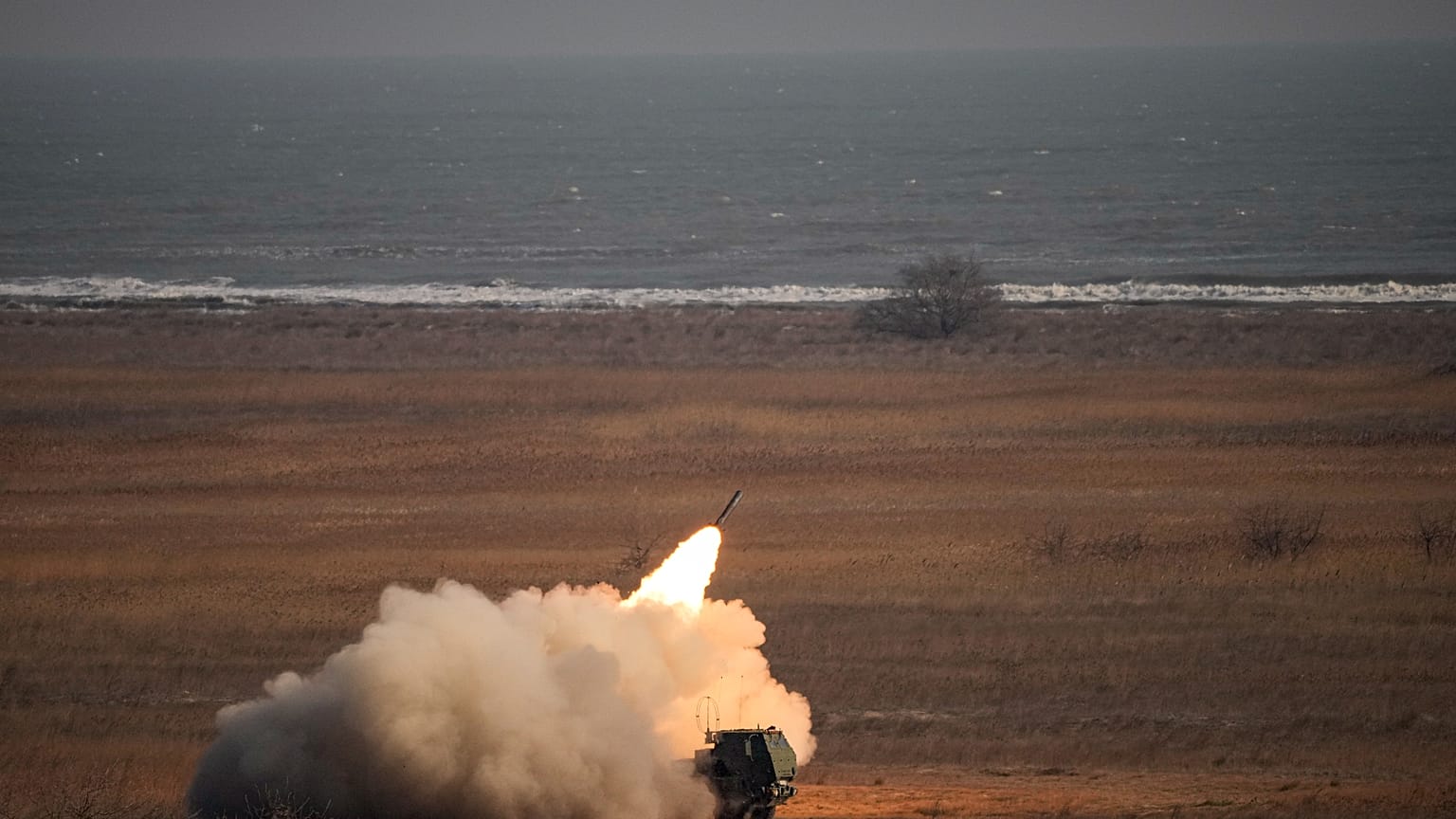
A rocket being launched
Copyright AP Photo/Andreea Alexandru

By Harry Bligh
Published on

President Trump has continued to brush off the concerns, insisting the US has "virtually unlimited" stock just a few weeks ago.

A report by the US Defence Department's inspector general has confirmed that the war with Iran has caused shortages of ammunition and advanced weapons in the US military.

Between the start of the war on 28 February and 30 June, "Operation Epic Fury" cost an estimated $33.4 billion (€29 billion). Of that, $22.3 billion was spent on munitions alone.

The report to Congress said the scale of weapons used during the conflict had resulted in “strategic inventory shortfalls” and exposed bottlenecks in the US defence industry’s ability to replenish supplies. Experts have estimated it could take around three years to restore stocks of advanced missiles and defensive interceptors to pre-war levels.

It also detailed losses of military equipment, including four F-15 fighter jets destroyed, one F-35 damaged and seven KC-135 tanker aircraft damaged or destroyed, five of them after being struck by Iranian munitions while on the ground in Saudi Arabia. Up to 30 MQ-9 Reaper drones, which cost around $30 million (€26 million) each, it says were also destroyed.

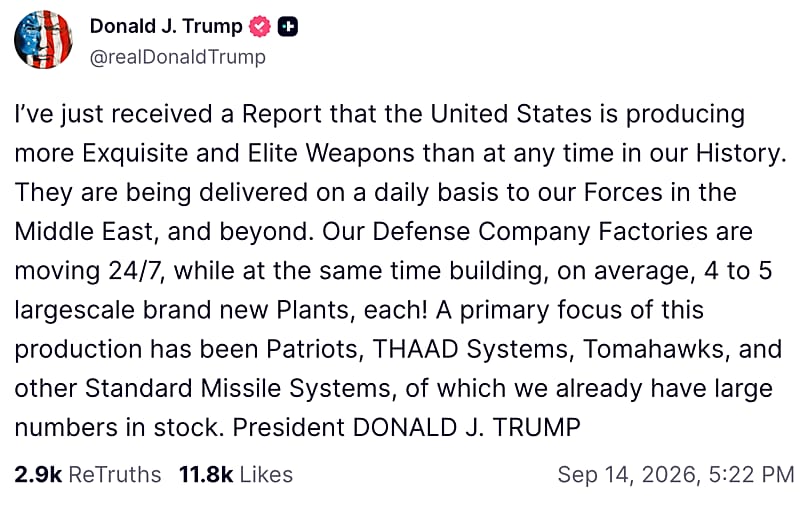
Responding to the report, President Trump has continued to insist that the military’s ammunition supplies are “virtually unlimited” and that weapons production is at record levels.

In a post on his Truth Social platform on Monday, Trump claimed the US was producing “more exquisite and elite weapons than at any time in our history”.

President Donald Trump posting on his own online platform, Truth Social
President Donald Trump posting on his own online platform, Truth Social via Truth Social

The Pentagon has maintained that the US military has the weapons it needs to fight any conflict.

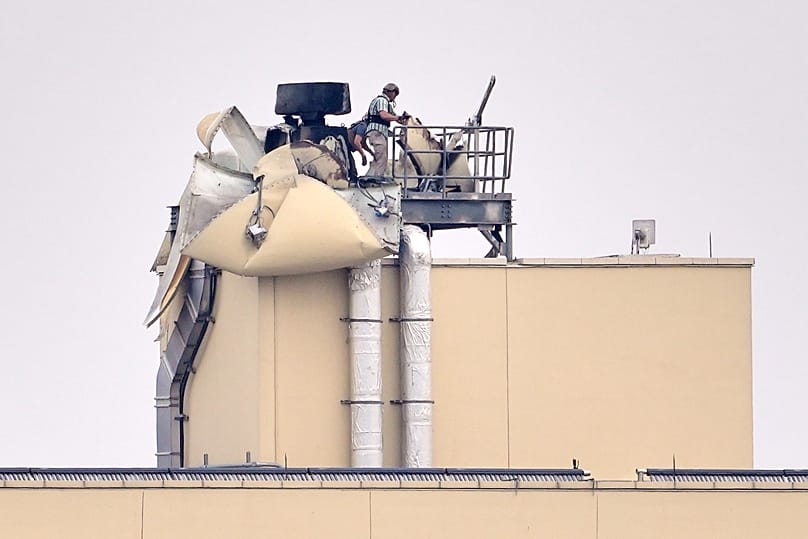
The inspector general’s report also documented extensive damage to US bases from Iranian strikes. Hundreds of buildings and other structures were damaged or destroyed at bases in Kuwait, Bahrain, Qatar, the United Arab Emirates, Saudi Arabia, Iraq, Oman and Jordan.

U.S. embassy personnel inspect the damage caused by a bombing in Baghdad in March
U.S. embassy personnel inspect the damage caused by a bombing in Baghdad in March AP Photo/Hadi Mizban

The cost of repairing or rebuilding those facilities is not included in the $33.4 billion estimate. US authorities have not yet determined whether all of the damaged facilities will be rebuilt or who will foot the bill.


UN urges full access for investigators as Gaza death toll mounts

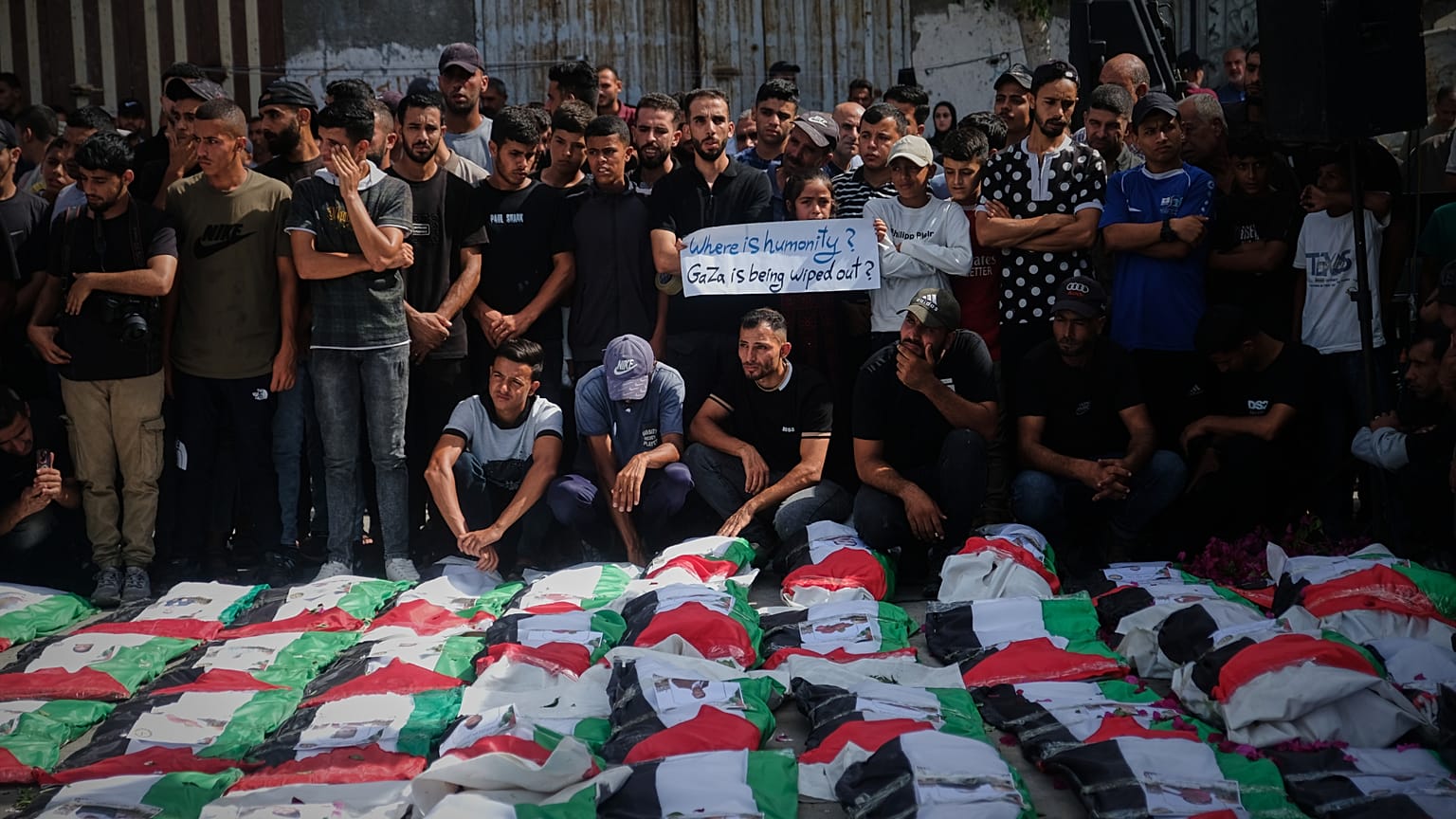
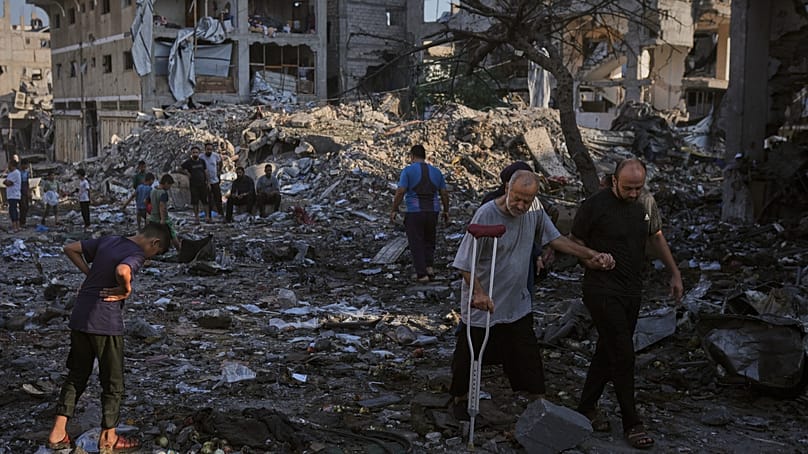
Bodies are still being recovered from the rubble in Gaza.
Copyright AP Photo


By Simon Ormiston
Published on

A UN access request over Gaza's uncounted dead raises questions that could shape how this war is judged.

The United Nations has called on Israel to grant international investigators access to every part of Gaza, as the recovery of human remains from the territory's ruins continues nearly three years after the war began.

The UN's human rights office said gathering evidence at destroyed sites was essential, urging that "international investigators be allowed into all parts of Gaza to assist with evidence-gathering."

Most of the dead being recovered are reported to be women and children, a detail the UN says points to the likelihood that war crimes were committed during the campaign.

"The remains of what appears to be entire families are now being unearthed at locations that were pulverised by Israeli attacks," UN rights chief Volker Turk pointed out in a statement.

"I worry the remains recovered so far may only be the tip of the iceberg," he said, pointing to how "much of Gaza has been flattened by Israeli bombing or demolition and clearing by heavy machinery and explosives".

"Today, many areas in Gaza where the Israeli military is deployed continue to be levelled by bulldozers with no respect for the dead under the rubble," he said.

According to UN data, as much as 82% of the Gaza strip has been reduced to rubble following the Israeli military's offensive.
According to UN data, as much as 82% of the Gaza strip has been reduced to rubble following the Israeli military's offensive. AP Photo

According to the Palestinian Civil Defence, more than 630 bodies and other remains have been pulled from beneath collapsed buildings across Gaza since last November alone.

The UN's rights office cited an estimate that over 8,000 people remain missing under the rubble — a figure that underscores how much of the territory's devastation has yet to be fully accounted for.

Turk insisted that "every feasible effort must be taken to document and identify these victims, preserve forensic information and biological samples, record their burial locations and inform their families".

"The discovery of extensive remains under the rubble in Gaza City resurfaces (the) concerns of war crimes and other atrocity crimes," he warned.

The war began after Hamas's October 7, 2023 attack on Israel, which killed at least 1,195 people according to official Israeli data. Israel's subsequent bombing campaign and ground invasion left much of Gaza in ruins.

Gaza's health ministry, which operates under Hamas authority, says the offensive has killed more than 73,000 Palestinians in total, including over 1,350 since a ceasefire was signed last October.

For European governments navigating the diplomatic fallout of the conflict, the UN's call adds pressure on Israel to open Gaza to independent scrutiny at a moment when the scale of civilian loss is still being uncovered.


Benjamin Netanyahu joins Israeli ministers attacking Venice-winning documentary 'NAZA'

Netanyahu joins Israeli ministers attacking Venice-winning documentary NAZA
Copyright AP Photo

By David Mouriquand
Published on

The documentary 'NAZA', which won the Special Jury Prize at the Venice Film Festival, examines Israel's targeting practices in Gaza and alleges that mass civilian deaths are routinely factored into decisions over military strikes.

Israeli Prime Minister Benjamin Netanyahu has attacked the makers of the documentary NAZA, accusing the award-winning film of contributing to “global antisemitic incitement”.

“It’s shocking. We are fighting global antisemitic incitement and when it comes from within us it is intolerable,” Netanyahu said in a video posted on Telegram. “And now two Israeli directors portraying the IDF (Israel Defense Forces) as war criminals receive applause at the Venice festival.”

NAZA left this year's Venice Film Festival with the Special Jury Prize and received a record-breaking 25-minute standing ovation at the festival. It shows “in detail the systems behind Israel’s calculated mass killing of Palestinian civilians in Gaza,” according to its official synopsis.

Netanyahu's comments follow those of Israeli Culture Minister Miki Zohar, who directly equated criticism of Israel's actions to antisemitism and announced that he would “act immediately to revoke the Israeli citizenship” of the Israeli directing duo Yuval Abraham and Rachel Szor.

Zohar called NAZA “vile” and the Venice Film Festival honour “shocking,” adding: “The self-loathing that burns in the creators, who are willing to harm their homeland just to get applause from antisemites around the world, is inconceivable and constitutes a betrayal of the state.”

National Security Minister Itamar Ben-Gvir also described Abraham and Szor as a “disgrace and an embarrassment” and told them to leave the country. “I am certain that your friends, that is to say our enemies Hamas in Gaza, will welcome you with open arms," he wrote on X.

Yuval Abraham and Rachel Szor accept the Special Jury Prize for 'NAZA' during the closing ceremony of the 83rd edition of the Venice Film Festival - 12 September 2026 AP Photo

The participants' faces and voices were digitally altered to protect their identities.

When accepting the Special Jury Prize, Yuval Abraham said in his acceptance speech: "We believe that the denial of a crime is what helps it ⁠persist and this is why it is especially important for us that Israelis watch this film, it is our country that is doing these crimes.”

Yuval Abraham and Rachel Szor's previous film, No Other Land, was released in 2024 and followed Israeli settler violence against Palestinian communities in the West Bank. It won the Oscar for Best Documentary.

Hamas launched an attack on Israel on 7 October 2023. The Gaza health ministry has reported more than 73,000 deaths in the last three years of Israeli bombardment. Organisations including Amnesty International, Human Rights Watch and the United Nations have described Israel's actions as "genocide" - as well as a report published in June by a UN independent commission which found that "Israeli authorities and security forces have deliberately targeted Palestinian children, resulting in genocide and atrocity crimes in the Gaza Strip and war crimes in the West Bank."

NAZA builds on reporting between 2023 and 2025 published by the Israeli-Palestinian +972 Magazine, the Hebrew-language outlet Local Call, and The Guardian. The documentary will screen in Spain at the San Sebastián International Film Festival on 23 September and then at the New York Film Festival on 26 September.

As of now, no official theatrical release date has been announced, but French distributor MK2 Films holds the world sales rights.


Ron Paul: The Crippling Effects Of Unnecessary War – OpEd

The author says California station signs top out at $9.99 a gallon and some diesel prices have hit that cap—or use $9.99 to mean no diesel left. Trucks and freight trains run on diesel, so the fuel bill shows up in goods prices; that is offered as inflation the official numbers understate.

Trump, in this telling, admits the squeeze but blames Ukrainian strikes on Russian energy (strikes the author says use U.S. targeting data) rather than the Iran war or the Ukraine proxy fight. Hormuz is described as under Iranian say-so; a Houthi hit on Saudi’s bypass pipeline is said to have taken more crude off the market.

The “nuclear” leverage named is oil-flow control, not a bomb. Press reports that Tulsi Gabbard warned Hormuz would close are cited. Wars of choice are blamed for wrecking the attacker’s economy; the Founders put war-making in Congress, which the piece says the executive ignored.

In California, gas stations are facing a unique challenge. The station signs are only configured to go up to $9.99 per gallon and at several stations the price of diesel has reached that maximum. Diesel prices are higher than they have ever been in history.

Worse, according to some news reports the advertising of the maximum price of $9.99 per gallon is meant to signal to truck drivers that they have run out of diesel altogether. Expensive diesel is a hit to the economy, but running out of the fuel at any price is a whole different kind of crisis.

Our highways are filled with semi-trucks burning diesel to bring the products we depend on to the markets. Our freight trains use diesel to transport what is not transported by truck. When the price of diesel increases, the cost of everything moved by that diesel also increases. This is one reason we are seeing much more inflation than the government wants to admit.

The diesel crisis is getting so serious that even President Trump has been forced to admit it. Of course, instead of taking at least part of the blame over his war of choice against Iran and his continuation of the proxy war against Russia through Ukraine, he is blaming Ukraine’s military strikes on Russian energy infrastructure.

President Trump is now asking Ukraine to stop attacking Russian energy resources because diesel is a global commodity and the scarcity produced by the attacks is hitting us here at home. But the strikes deep inside Russia are guided by US intelligence, which provides the targeting data for Ukraine.

The Russia/Ukraine war is only part of the problem. Despite President Trump’s bluster about controlling the Strait of Hormuz, the fact is Iran is in control and very little oil – or anything else – makes it out without Iranian approval.

Yemen’s Iran-allied Houthis joining the fight only makes matters worse. Over the weekend they attacked Saudi Arabia’s bypass pipeline, taking much more oil off the market.

The real problem here is not oil or diesel. The real problem is that wars of choice spin out of control and destroy the economies of those who launch them. Empires throughout history have been undone by endless overseas wars. No amount of bragging about the size and strength of our military can change this reality.


Now we are seeing the chickens coming home to roost.

President Trump has justified tanking the US economy by claiming the attack on Iran was essential because they were about to get a nuclear weapon. Our intelligence community disagreed, but he refused to listen and took his cue from Netanyahu instead.

It turns out Iran actually does have a “nuclear weapon.” That weapon is the ability to control the world’s oil flows at a margin high enough to cripple the economies of any country seeking to conquer it. According to press reports, former Director of National Intelligence Tulsi Gabbard tried to warn President Trump that Iran would close the Strait of Hormuz if attacked but he didn’t want to hear it.

The Founders were determined to prevent the executive branch from being able to start wars for this very reason. The “people’s branch” of government – Congress – is where they placed the power to launch wars. We are now seeing the consequences of ignoring their very wise advice.

This article was published at Ron Paul Institute


About Ron Paul
Ronald Ernest "Ron" Paul (born August 20, 1935) is an American physician, author, and politician who served for many years as a U.S. Representative for Texas. He was a three-time candidate for President of the United States, as a Libertarian in 1988 and as a Republican in 2008 and 2012.
View all posts by Ron Paul →

How Cascading Crises Are Testing Saudi Arabia’s Foundations – OpEd
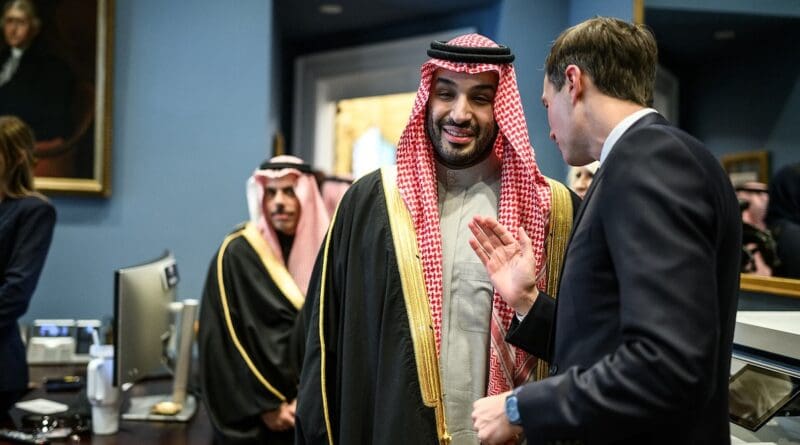

Jared Kushner speaks with Crown Prince and Prime Minister Mohammed bin Salman Al Saud of Saudi Arabia in the Outer Oval Office, Tuesday, November 18, 2025. (Official White House Photo by Daniel Torok)

September 15, 2026

By Murray Hunter

Key Takeaways:

The author says September 2026 piled pressure on Mohammed bin Salman after Houthi seizures of Mocha, Dhubab, Perim in the Bab al-Mandeb, and most of Yemen’s Red Sea coast, plus strikes into southern Saudi provinces.

Drones hit the East–West pipeline to Yanbu while Hormuz was already tight, cutting oil export room. Reports say Riyadh sought help via CENTCOM; the Mecca pact with Turkey and Pakistan has not produced visible military aid.

Oil wealth and security forces still buffer the throne. Named risks are money, legitimacy, and border tribes. How long Yemen stays closed, the piece says, decides whether the shock stays contained.


Events in the Middle East can shift with startling speed, much as the Arab Spring demonstrated how localized triggers can rapidly erode long-standing regimes.

In September 2026, a sequence of military, economic, and diplomatic setbacks has placed significant pressure on Saudi Arabia under Crown Prince Mohammed bin Salman (MBS). What began as a response to Houthi advances in Yemen has disrupted oil exports, exposed gaps in alliances, and raised questions about legitimacy, factors that, if prolonged, could amplify internal vulnerabilities in a system long reliant on oil revenues, coercive control, and regional standing.

The immediate catalyst lies in Yemen. Following Saudi-linked actions, including reported airstrikes, the Houthis launched a rapid offensive. They captured the port of Mocha (Mokha), Dhubab, and other coastal areas, then seized Perim (Mayun) Island in the Bab al-Mandeb Strait along with the Hanish Islands.


This consolidates Houthi control over nearly all of Yemen’s Red Sea coastline (save limited pockets near the Saudi border). Perim sits astride the narrow strait, where sea passages on either side roughly 12 miles (under 20 kilometers). This places shipping within range of short-range missiles and artillery.

The Houthis have restricted traffic, effectively complicating or blocking Saudi-linked vessels while claiming openness to others. Concurrent missile and drone strikes have hit southern Saudi provinces including Jizan, Najran, Asir (Abha and Khamis Mushait), and Sharurah, wounding dozens of civilians, damaging infrastructure (including a mosque), and forcing shelter alerts.

These are primarily aerial attacks rather than sustained ground occupations of Saudi soil, yet they underscore the spillover.

Compounding this, Saudi Arabia’s East-West (Petroline) pipeline, which is critical for moving crude from eastern fields to Red Sea terminals at Yanbu, bypassing the disrupted Strait of Hormuz was hit by drones launched from not yet determined positions. The roughly 1,200-kilometer line was shut down as a precaution amid fires and damage to pumping stations.


With Hormuz constrained by the broader Iran conflict and Red Sea routes now contested, Saudi oil export capacity faces serious constraints. Revenue shortfalls strike at the core of the kingdom’s economic model and Vision 2030 diversification efforts.

Diplomatic isolation has deepened the situation. According to reports citing regional diplomatic officials (including Israel Hayom), MBS indirectly sought intelligence and other assistance from Israel via U.S. Central Command (CENTCOM) amid the Houthi advances threatening Bab al-Mandeb.

This followed U.S. President Donald Trump’s reluctance to commit direct military intervention, offering only limited intelligence and targeting support.

Saudi Arabia holds the prestigious role of Custodian of the Two Holy Mosques, the Al-Masjid al-Haram in Mecca (surrounding the Kaaba) and Al-Masjid an-Nabawi in Medina (containing the Prophet’s burial site). Seeking help from Israel, widely viewed in parts of the Islamic world as a Zionist state, risks perceptions of compromised legitimacy among religious conservatives, Islamists, and the broader Ummah (the Muslim public). Experts note that direct Israeli cooperation remains unlikely due to political sensitivities on both sides.

The recently formalized Makkah (Mecca) Joint Defense Agreement with Turkey and Pakistan, signed in August 2026 and featuring collective-defense language treating an attack on one as an attack on all has yet to yield visible support. Analyses highlight its limited institutionalization, absence of automatic military mechanisms, and credibility gaps, where neither partner has intervened despite ongoing attacks.

Reports of a delayed regional summit in Salalah, Oman (involving Iran and Gulf states on maritime arrangements), further illustrate constrained regional maneuvering, with Saudi Arabia citing the Yemen crisis.

These external shocks intersect with internal dynamics within Saudi Arabia itself. MBS has consolidated power since 2015–2017 through centralization, sidelining rivals (including former Crown Prince Mohammed bin Nayef), co-opting or repressing the religious establishment, and neutralizing organized opposition via surveillance, arrests, and high execution rates.


Support among youth and women for social reforms has broadened the base, while oil wealth and security forces provide buffers. Residual risks exist, where royal family frictions (long-term succession ambiguity), conservative backlash against reforms, Shiite grievances in the Eastern Province, economic discontent from fiscal strain, and fragmented Islamist networks could pose potential issues for the MBS regime.

Border tribes in Najran, Jazan, and Asir add volatility. Transnational confederations (e.g., elements of Khawlan, Waylah, Yam) straddle the Yemen frontier, where Houthi mobilization of aligned factions, cross-border strikes, economic disruption from closed trade and energy attacks, and spillover insecurity create pressures. Divided loyalties and Houthi outreach could complicate local security if the conflict intensifies.

Prolonged revenue loss, military setbacks, and legitimacy questions could embolden elite maneuvering, tribal opportunism, or broader discontent, especially if external actors perceive openings, echoing how rapid crises have historically tested authoritarian systems.

Saudi Arabia retains substantial resources and coercive capacity. Yet the combination of contested chokepoints, oil disruptions, alliance shortfalls, and a high-profile outreach to Israel has created a compressed crisis. Like earlier regional upheavals, the speed of these developments underscores how external shocks can rapidly test internal resilience.

Whether the pressures remain contained or cascade further depends on the duration of the Yemen conflict, restoration of export routes, and the regime’s ability to manage perceptions and potential internal fissures.

Saudi Arabia is currently under immense political strain, where no political partners like the United States and Pakistan are willing to assist presently.


About Murray Hunter
Murray Hunter has been involved in Asia-Pacific business for the last 30 years as an entrepreneur, consultant, academic, and researcher. As an entrepreneur he was involved in numerous start-ups, developing a lot of patented technology, where one of his enterprises was listed in 1992 as the 5th fastest going company on the BRW/Price Waterhouse Fast100 list in Australia. Murray is now an associate professor at the University Malaysia Perlis, spending a lot of time consulting to Asian governments on community development and village biotechnology, both at the strategic level and “on the ground”. He is also a visiting professor at a number of universities and regular speaker at conferences and workshops in the region. Murray is the author of a number of books, numerous research and conceptual papers in referred journals, and commentator on the issues of entrepreneurship, development, and politics in a number of magazines and online news sites around the world. Murray takes a trans-disciplinary view of issues and events, trying to relate this to the enrichment and empowerment of people in the region.
View all posts by Murray Hunter →

Monday, September 14, 2026


Ghana, China expand mining cooperation as Accra targets illegal gold mining

Ghana, China expand mining cooperation as Accra targets illegal gold mining
/ illustration by bne IntelliNewsFacebook
By bne IntelliNews September 14, 2026

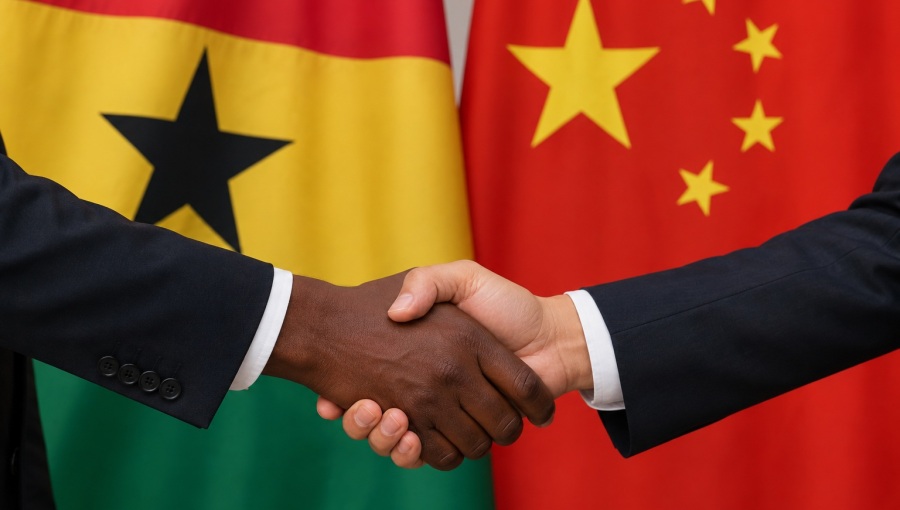
Ghana and China have agreed to strengthen oversight of Chinese mining companies operating in Ghana and deepen geological cooperation as Accra intensifies its campaign against illegal gold mining.

The two sides agreed to deepen cooperation during talks between Ghana’s Ministry of Lands and Natural Resources and China’s Ministry of Natural Resources on the sidelines of the 2026 China Mining Conference in Tianjin, Citi News reported.

The three-part strategy covers enforcement against illegal mining, technical cooperation in geological surveys and mapping, and efforts to attract more responsible Chinese investment into Ghana’s mining sector.

Lands and Natural Resources Minister Emmanuel Armah-Kofi Buah also used the Tianjin conference to seek Chinese investment in domestic mineral processing, technology transfer and infrastructure as Ghana seeks to capture more value from its mineral resources rather than relying primarily on raw-material exports.

Chinese groups already have a significant presence in Ghana’s gold industry. Zijin Mining (HKEX: 2899; SSE: 601899) operates the Akyem mine after acquiring it from Newmont (NYSE: NEM) for $1bn in 2025, while Chifeng Gold (HKEX: 6693; SSE: 600988) owns the Wassa mine and Shandong Gold (HKEX: 1787; SSE: 600547) controls the Cardinal Namdini operation. 

The new arrangement is intended to strengthen enforcement against illegal mining, locally known as galamsey, while expanding technical and investment cooperation with China, a major source of mining capital, equipment and technology for Ghana’s minerals industry.

Ghana has intensified its anti-galamsey campaign as environmental damage mounts and public pressure grows over polluted rivers and degraded forest reserves. Buah said in August that 258 suspects had been arrested in operations against illegal mining in forest reserves, while the government estimated that about 8,900 hectares of forest reserves had been completely degraded.

The National Anti-Illegal Mining Operations Secretariat announced a broadened Operation WATER SHIELD campaign in September targeting financiers, facilitators, logistics networks and equipment suppliers supporting illegal mining around rivers and watersheds.

Buah said cooperation with Beijing would create a mechanism for holding Chinese companies and nationals operating in Ghana to higher standards.

“This is very important in how we collaborate on critical areas of the natural resources sector. This includes how to work with them in policing Chinese companies that are working in Ghana to make sure that they meet the highest standards,” he said.

Buah said the arrangement could also allow Chinese authorities to take action against Chinese nationals found to have breached Ghanaian mining laws.

“Those who are found to have broken the law, especially those who engage in illegal mining activities (galamsey), are not only punished in Ghana, but we have a pathway where the Chinese will also police their people who are working in Ghana,” Buah added.

The cooperation comes as Ghana struggles to convert arrests into successful prosecutions, a weakness Buah identified in August as a central problem in the anti-galamsey campaign.

Ghana is seeking to protect gold production and attract fresh investment into lithium and other minerals while curbing unregulated mining that damages forests and waterways and undermines confidence in regulation.

China’s Deputy Minister of Natural Resources Sun Shuxian proposed deeper cooperation in geological surveys, mineral mapping, technological innovation and assessments of Ghana’s critical-mineral potential.

Citi News reported that potential Chinese technical support discussed during the talks included satellite remote sensing and airborne geophysical surveys, which could help close gaps in Ghana’s geological data, particularly in areas that remain poorly mapped.


Google’s €13bn Finnish data centre push could hike Estonian power prices by €5/MWh

Google’s €13bn Finnish data centre push could hike Estonian power prices by €5/MWh
Google’s energy-intensive data centres will buy electricity equivalent to half the output of Finland’s Loviisa nuclear power plant over the next 22 years. / Image by Akela999 from Pixabay


By Linas Jegelevicius in Vilnius September 13, 2026

Google’s €13bn investment in large data centres in Finland could push Estonian electricity prices higher by reducing the amount of cheap Finnish power available for export, Estonia's public broadcaster ERR reported on September 11.

Estonia has imported around 40% of its electricity from Finland and other Nordic countries in recent years. Rising Finnish consumption could therefore feed into Estonian prices, although additional demand is also expected to encourage investment in new generation.

Google’s energy-intensive data centres will buy electricity equivalent to half the output of Finland’s Loviisa nuclear power plant over the next 22 years.

Tiit Hobejogi, a management board member at Eesti Energia subsidiary Enefit, said Finnish electricity consumption has already risen by around 500 MW compared with 2025. Excluding the coldest winter months, Finnish prices have increased by around €5/MWh over the past year, also affecting Estonia.

“This naturally means that prices there will rise, and if prices rise there, they will also rise for us during periods when we import electricity from Finland. Looking at this year, electricity consumption in Finland has actually increased by around 500 megawatts compared with 2025. There may be several factors behind that, but excluding the coldest winter months, the price in Finland has risen by €5 per megawatt-hour over the past year and that has also had an impact on us,” Hobejogi said, ERR.ee reported.

The potential impact is estimated at around €5/MWh, or 0.5 cents/kWh, if additional demand is not matched by new generation.

Elering CEO Kalle Kilk said the development highlighted Estonia’s dependence on neighbouring electricity markets.

“If consumption increases and supply has not increased by the same amount, that clearly affects both security of supply and prices. We have to take into account that we in Estonia have been quite dependent on the situation in our neighboring countries. The main conclusion for us is that in the future we need to take somewhat greater responsibility ourselves for ensuring that we have enough electricity that can also be generated domestically,” Kilk said, ERR.ee reported.

Additional Finnish wind and other generating capacity could nevertheless limit the longer-term impact on average prices.