Tuesday, September 15, 2026


Why do spruce take decades to reproduce? A genetic study offers some clues


KTH, Royal Institute of Technology

Norway spruce cone

image: 

A Norway spruce bears new cones. A recent genetic study marks an important step toward understanding the reproductive process of this key species in forestry. 

view more 

Credit: Jens Sundström


New techniques have enabled researchers in Sweden to begin decoding how one of Northern Europe's most important coniferous tree species switches from growing branches to producing cones – their seed-bearing reproductive organs.

In a recent study that may have implications for the forestry industry, researchers from KTH Royal Institute of Technology report the creation of a genetic map that reveals new insight into the Norway spruce’s transition from vegetative to reproductive development. The resulting gene atlas, developed in collaboration with the Swedish University of Agricultural Sciences (SLU), shows when and where genes are active during cone development and identified key genes involved in the process.

In addition, the researchers discovered a previously unknown gene called DAL55.

With their enormous genomes and long life cycles, Norway spruce trees are notoriously difficult to study. Their juvenile period can last longer than 25 years, followed by infrequent cone production—once every three to five years. This poses obstacles for efficient forest tree breeding. These challenges leave important questions about cone development unanswered, despite the species' ecological and economic importance as a source of timber, construction materials, paper and other forest products.

In an unprecedented investigation, the researchers used a technology developed at KTH called spatial transcriptomics, which allows scientists to see which genes are active in a tissue and exactly where that activity occurs.

“The technology enables us to study the expression patterns of all genes simultaneously,” says Stefania Giacomello, associate professor at the Department of Gene Technology at KTH. Now commercialized as Visium by 10x Genomics, the technique was used to study gene expression in extremely thin sections of spruce cone tissue, measuring just 10 micrometers (0.01 millimeters) in thickness.

While the immediate goal was to better understand cone development in spruce, the work also touches on a broader evolutionary question: Are some of the genetic mechanisms that control reproduction in flowering plants (angiosperms, such as apple trees) inherited from a much older common ancestor that flowering plants share with cone-bearing trees (gymnosperms) like spruce?

Jens Sundström, a researcher in plant biotechnology at SLU, says: “The findings improve our understanding of the evolutionary processes that contributed to the development of all living seed plants, including both flowering plants and conifers.”

He says the research addresses questions relevant to forestry-dependent economies – such as in Sweden and Finland, where Norway spruce underpins the sector.

Giacomello says the findings could help breeders develop spruce varieties better suited to climate change. 

“By learning more about the molecular mechanisms that regulate cone formation, we hope to accelerate breeding efforts and facilitate the production of climate-adapted spruce seedlings for forest owners across the country,” Giacomello says.

A Norway spruce bears new cones. A recent genetic study marks an important step toward understanding the reproductive process of this key species in forestry. 

Credit

Jens Sundström

 LabourStart


The fight for workers' rights knows no borders

10 days later: DHL's union busting is being challenged all over the world

Thank you so much to everyone who supported this campaign, which we launched 10 days ago.

With 3,655 supporters so far, the company is taking notice.

We hope to win this campaign very soon so please -- spread the word in your union, let's mobilise many more people to send messages to DHL today.

Please click here to learn more and to send off your message of protest and solidarity.


And meanwhile in Hong Kong ...

It has been just three days since we learned of the sentence handed out to Hong Kong trade union leader Lee Cheuk-yan. Since then, thousands of you have sent off your messages of protest in a campaign sponsored by the International Trade Union Confederation (ITUC) and other global unions. The campaign is here:

Click here to send off your message!

We need many more of you to do so.  Please share this message with your friends, family and fellow union members.

New podcast: Interview with South Korean union leader Chanyoung Heo

Chanyoung is leader of a small union in Korea that represents workers at Kuehne+Nagel, a German-owned logistics company.  For 20 years, industrial relations at the company were good.  Now they aren't.  What happened?  Why did the workers vote overwhelmingly to go on strike?

Listen to the podcast to learn more, including about the company's new manager, imported from Europe, who told the union that he did not feel bound by a collective bargaining agreement which he did not sign.  Yes, really.  He said that.

Hear the whole interview here.


In Europe, one union has been giving cleaners a voice with a remarkable new podcast series.

Today I interviewed Mark Bergfeld. about the two groups of workers represented by UNI Europa's Property Services department -- security guards and cleaners. Mark explained some of the issues that these workers face and the challenge of organising them into unions. UNI Europa recently produced a five-part podcast series about these workers entitled "Unsung Cleaners" in which the workers speak and we get to hear their own voice and words.  It had a surprisingly large listenership.  

Click here to hear the whole interview.

And remember - you can also listen to LabourStart Podcasts on your favourite podcasting platform - Spotify, Apple, etc.


Venezuela opposition delegation returns to Caracas for US-brokered talks

Venezuela opposition delegation returns to Caracas for US-brokered talks
The delegation, led by Dinorah Figuera, president of the opposition-controlled 2015 National Assembly, arrived ahead of meetings scheduled to resume on September 15.Facebook
By bnl editorial staff September 15, 2026

Venezuela’s opposition has returned to the country for a new round of negotiations with the government led by interim President Delcy Rodríguez, putting judicial reform, political rights and freedom of expression at the centre of talks backed by the US.

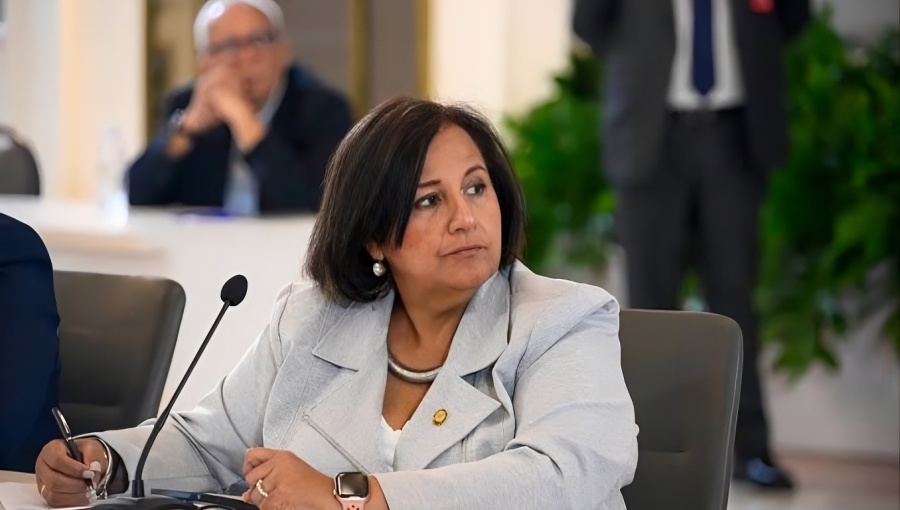
The delegation, led by Dinorah Figuera, president of the opposition-controlled 2015 National Assembly, arrived in Caracas ahead of meetings scheduled to resume on September 15. The sides are expected to continue work on restructuring the Supreme Tribunal of Justice and selecting new magistrates, while expanding discussions to civil and political guarantees.

Figuera said the delegation would work on the remaining details of the nomination process for judges and other judicial officials, as well as protections for political activity and free expression. The opposition wants those issues addressed before elections are called and expects to report progress in the next few days.

"We are going to continue working toward a Supreme Tribunal of Justice with honorable, independent, and impartial judges who can provide Venezuela—after so many years—with a transparent and independent judicial system," Jorge Millán, a member of the opposition delegation, said.

Millán said the negotiators would establish clear and verifiable goals at the end of the process, including measures to dismantle what the opposition describes as the repressive apparatus and strengthen freedom of expression.

No election date has been agreed, though the delegation said voting should take place as soon as possible. The first round, held from August 6 to 12, produced partial agreements on judicial reform and efforts to recover Venezuelan state assets held overseas, primarily around $4bn worth of gold reserves stuck in the Bank of England since 2018.

The new phase will broaden the agenda to political prisoners, electoral arrangements and the legal framework governing freedom of expression, with civil-society and NGO representatives expected to participate.

The question of political bans could prove more contentious. The opposition wants to review the rules underpinning administrative disqualifications imposed by the regime of ousted president Nicolas Maduro and restore the political rights of figures including María Corina Machado and Henrique Capriles. Machado, currently exiled in Panama and sidelined by the US in the transition talks, has questioned the dialogue's legitimacy but said she would not oppose it on principle.

The Rodriguez government, which has fully complied with Washington's demands to open up the country's oil and mineral riches to US investors, has taken a different position, arguing that court rulings upholding disqualifications are settled while favouring a broader review of punitive measures or a general pardon rather than case-by-case reversals.


Brazil's Lula and Bolsonaro locked in razor-tight race as bank fraud scandal engulfs campaign

Brazil's Lula and Bolsonaro locked in razor-tight race as bank fraud scandal engulfs campaign
The scandal has largely overshadowed other key campaign themes such as public safety, the economy and national sovereignty, even as the two camps expect fresh revelations from the unsealed files to use against one another.Facebook
By bnl Sao Paulo bureau September 15, 2026

Brazilian President Luiz Inácio Lula da Silva and right-wing Senator Flávio Bolsonaro are running neck-and-neck in conflicting opinion polls just weeks before an October 4 election dominated by a multibillion-dollar bank fraud scandal that has ensnared the president's chief rival and a Supreme Court justice.

Two surveys released on September 14 showed starkly different pictures of a potential second-round run-off. A BTG Pactual/Nexus poll had the seasoned leftist leader regaining a narrow lead over Bolsonaro, the eldest son of imprisoned former president Jair Bolsonaro, with 47% support against 46%, reversing a result a week earlier that had shown the senator ahead 46% to 45%.

A separate Quaest poll commissioned by broadcaster Globo, meanwhile, put Flávio Bolsonaro numerically ahead of the incumbent for the first time in the campaign, with 42% against 40% for Lula, according to Valor.

Quaest said the figures fell within its two-percentage-point margin of error, meaning the race remained a technical tie, with 13% of voters saying they would cast blank or null ballots and 5% undecided.

Bolsonaro's improved standing in recent polls has helped Brazilian assets rally over the past week, as investors view the senator as more market-friendly, Reuters reported. If no candidate wins more than half of valid votes in the first round, the top two contenders will advance to an October 25 run-off.

An earlier Datafolha poll, cited by Lula's Workers' Party, had given the president a stronger first-round lead of 39% to 35%, with the two effectively tied at 46% to 44% in a hypothetical run-off.

The tightening race has unfolded against the backdrop of an investigation into Banco Master, whose collapse and alleged multimillion-dollar fraud has implicated Flávio Bolsonaro, Justice Alexandre de Moraes and a string of other senior political and judicial figures across the political spectrum.

Disgraced banker Daniel Vorcaro, the alleged mastermind of the scheme, was arrested last year and Banco Master was subsequently liquidated by Brazil's central bank.

Flávio Bolsonaro was confirmed earlier in September to be under formal investigation for corruption, currency evasion and money laundering over his efforts to secure financing for a film about his imprisoned father, but the senator had previously denied even knowing Vorcaro.

Moraes, a justice seen as friendly to Lula who led the legal proceedings that saw Jair Bolsonaro convicted and jailed over a 2022 coup plot, has himself been named a suspect over his close relationship with the banker, after Vorcaro reportedly exchanged more than 50 text messages with the judge over 20 days seeking help with investigators, police and prosecutors.

Brazil's Supreme Court is due to convene on September 15 to examine those messages, after court president Edson Fachin ordered the lifting of secrecy on the entire case file.

The scandal has largely overshadowed other key campaign themes such as public safety, the economy and national sovereignty, even as the two camps expect fresh revelations from the unsealed files to use against one another.

The controversy, meanwhile, spilled onto the streets in recent weeks, with thousands of Lula supporters marching in several Brazilian cities to back his re-election bid and to protest against the corruption allegations swirling around Bolsonaro.

Lula used a nationwide mobilisation on September 13 to urge Workers' Party supporters to intensify both street and online campaigning over the final 20 days before the vote. The leftist ruling party said it had staged more than 1,120 rallies and other events across 26 of Brazil's 27 states, with activity reported in roughly 130 cities.

"We need to turn these remaining 20 days of the campaign into absolute truth to overcome absolute lies," Lula said during a live broadcast.

The president defended his government's record on the economy and social policy, citing figures showing food inflation had fallen to 13.6% under his administration from 56.17% under his predecessor, while acknowledging prices remained high.

He also pledged to expand federal police intelligence operations against organised crime and cellphone theft gangs, and outlined plans including ending Brazil's six-day working week and expanding full-time education.

Lula said his government had arrested Vorcaro and that if evidence emerged implicating his own son Fábio Luís, who faces a separate investigation over alleged lobbyist dealings with the health ministry, he would be prosecuted to the full extent of the law.

Lula is seeking the backing of seven progressive parties in his bid for a fourth nonconsecutive term, having previously governed Brazil from 2003 to 2010 before returning to office in 2023.


Imperialist Realism And The Persistence Of American Empire – Book Review


"Imperialist Realism: Politics and Culture at the End of the American Century," by Daniel Bessner

September 11, 2026

By Joseph Solis-Mullen
Key Takeaways:
The reviewer says Daniel Bessner’s Imperialist Realism argues Americans treat U.S. global military dominance as a fact of nature, not a choice—echoing Mark Fisher’s “capitalist realism.”
He finds that useful for describing the culture of bases, alliances, and interventions, but incomplete: voters often picked less-interventionist candidates, so persistence needs more than imagination.

The author’s add-on is public choice: Pentagon, contractors, districts, allies, think tanks, and the press get concentrated gains from the status quo while costs are spread thin. Culture makes that lock-in feel inevitable; incentives keep it in place.

Daniel Bessner’s Imperialist Realism: Politics and Culture at the End of the American Century begins with a provocative question: Why do Americans find it easier to imagine the end of the world than the end of the American empire? His answer is that Americans have come to regard US hegemony as effectively immovable. The empire persists, in other words, not simply because Americans believe that it is good, necessary, or even particularly virtuous, but because they have difficulty imagining that it could be otherwise.

It is an important insight, and Bessner—a non-resident fellow at the Quincy Institute for Responsible Statecraft—is an unusually thoughtful writer on American foreign policy. Imperialist Realism, just published in late July, collects essays examining American power through political theory, intellectual history, foreign-policy analysis, and popular culture. Bessner, a leftist, moves easily from Barack Obama, George Soros, and Samantha Power to video games and the culture surrounding contemporary American militarism. The result is an engaging attempt to understand not merely what the United States does abroad, but how Americans understand—or in cases fail to understand—the world their government has created.

Bessner’s central concept, “imperialist realism,” borrowed from Mark Fischer’s “capitalist realism,” is particularly useful as a description of the prevailing American consciousness. The basic idea is that empire has become so deeply embedded in American political culture that it ceases to appear as a political choice. The United States maintains hundreds of overseas military installations, sustains a vast network of alliances and security commitments, intervenes repeatedly in foreign conflicts, and assumes responsibility for maintaining a particular international order. Yet much of this is treated not as the result of deliberate political decisions but as simply the way the world works: impossible for it to be otherwise.


That is a valuable observation. Ideas matter. Political orders require intellectual justifications, and the categories through which people understand the world can constrain what they regard as politically possible. Bessner is therefore right to emphasize the psychological and cultural dimensions of the American empire.

But there is an important question left unanswered: Does imperialist realism explain why the American empire persists, or does it primarily describe the ideological consciousness surrounding its persistence? The distinction matters.

Americans may indeed believe that the American empire is immovable. But why is it immovable in the first place? Here Bessner’s account seems less satisfying. The persistence of American hegemony is not simply a consequence of Americans being unable to imagine an alternative—indeed, if voting is something to be considered of consequence, it is telling that from 1990–2020 the candidate that was elected was the one who promised to do less in foreign policy in terms of interventionism. Clearly, ideas alone are not enough, and to understand the persistence of the empire one must understand its underlying political economy.

Consider the incentives facing the institutions that actually make foreign policy. The Pentagon has little reason to advocate a smaller Pentagon. Defense contractors have little reason to lobby for fewer weapons contracts. Members of Congress whose districts benefit from military spending have incentives to preserve those expenditures—and to avoid the wrath of the overwhelmingly interventionist opinion-maker class of the corporate press. Bureaucracies develop constituencies, careers, expertise, and organizational cultures around existing policies. Alliances create reciprocal commitments. Foreign governments lobby Washington to maintain American security guarantees. Think tanks, universities, consultants, journalists, and former government officials develop professional interests around the existing foreign-policy establishment.


None of this requires anyone to believe that the American empire is morally righteous.

Indeed, that is precisely the point. An empire can persist even after belief in its righteousness has weakened. Political institutions do not require ideological conviction from every participant. They require incentives.

This is where public-choice economics offers a useful complement to Bessner’s cultural analysis. The question is not merely why ordinary Americans cannot imagine an alternative. It is why the people and institutions with the greatest ability to alter American foreign policy frequently have strong incentives not to do so. The benefits of intervention, military spending, and global commitments are often concentrated, while their costs are diffuse. A defense contractor knows exactly what is at stake in a weapons program. The average taxpayer does not know how much of his or her tax bill is ultimately connected to it. The resulting political equilibrium can persist without requiring a national consensus in its favor.

There is also a problem of inertia. Once institutions, alliances, military deployments, bureaucratic procedures, and international commitments exist, dismantling them becomes politically more difficult than maintaining them. Every individual commitment can be defended as modest and reasonable even when the cumulative result is extraordinary. No single decision necessarily creates an empire. Millions of decisions can nonetheless sustain one.

This does not make Bessner wrong. Quite the opposite: his concept helps explain why this equilibrium can become culturally invisible. Political economy can explain the incentives that reproduce empire; Bessner helps explain the consciousness that makes those incentives appear natural.


But the causal relationship is important: Americans may think empire is inevitable partly because powerful institutions have made it extraordinarily difficult to dismantle. In that sense, what appears as a cultural inability to imagine alternatives may itself be partly the product of material and institutional arrangements.

Bessner is therefore most persuasive when he is describing the experience of living within American empire. He is less persuasive if “imperialist realism” is treated as a complete explanation for the empire’s persistence.

Whatever its shortcomings, Bessner has given us a compelling account of why Americans find the end of empire difficult to imagine. From the Austro-libertarian perspective, the question remains how to overcome the ideational and institutional impediments to ending it and freeing the American people. The struggle continues.           This article was also published by the Mises Institute


About Joseph Solis-Mullen
A graduate of Spring Arbor University and the University of Illinois, Joseph Solis-Mullen is a political scientist and graduate student in the economics department at the University of Missouri. A writer and blogger, his work can be found at the Ludwig Von Mises Institute, Eurasia Review, Libertarian Institute, and Sage Advance. You can contact him through his website http://www.jsmwritings.com or find him on Twitter.
View all posts by Joseph Solis-Mullen →
ANARCHO CAPITALIST CRITIQUE

It Is Impossible For Milei To Establish A (Free) Market Economy – OpEd


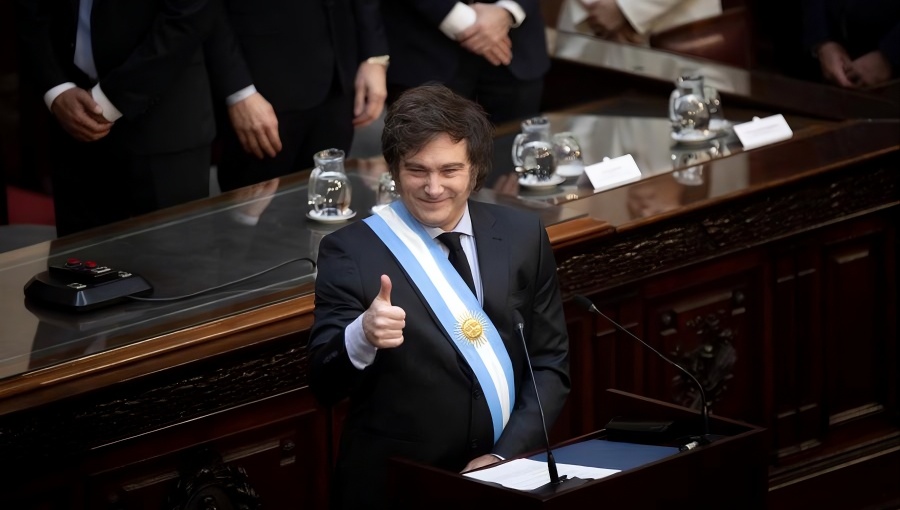
Argentina's President Javier Milei. Photo Credit: casarosada.gob.ar


September 15, 2026

By Alejandro A. Tagliavini

Key Takeaways:

The author says Milei never grasped markets and, from December 2023, raised the private burden (higher PAIS-type tax, subsidy cuts, tariffs far above CPI). Official 2024 GDP −1.7%; disposable income is put down 22–31%.

Official 2025 GDP +4.4% is tied partly to state-levered finance. About 31,000 firms closed (DW Español); July 2026 manufacturing and construction fell. The state’s share of jobs rose because private work fell more.

CPI ~33.5% y/y, very high real lending rates, and a peso ~30% stronger in real terms since 2023 are blamed for arrears and cheaper imports. The slump, the piece argues, is a heavier state—not a free market.

About ten years ago, after decades of studying the market and society with the greatest possible scientific rigor, ignoring all ideological bias, I suddenly learned of the existence of Javier Milei. I am suspicious of revolutions because science says that, in the universe, everything develops by slow maturation.

Soon we met at a seminar, and the room where I was doing my dissertation was practically empty, his was packed. I took the opportunity to listen to him.

I couldn’t get over my surprise: he uttered elaborate phrases, quotes from famous authors, with a lot of logical disconnection between them. Clearly, he “spoke in difficult”, to pass for a great intellectual and so that most would not understand what he was saying and would not notice his intellectual laziness.

Ten minutes later, the shame of others for him and for the listeners overcame me and I withdrew. Years later, I read a proposal of his that included aid from the IMF which, as a (multi) state bank, by the principle of survival, promotes the sustained intervention of the State.

Milei from the beginning is incapable of establishing a free economy because, as his already long government confirms, he never understood how a society, the market, works. And, of course, he does not understand freedom, but only for himself and for those he considers deserving it, not in its entirety as it should be or is not.

The first year of his government, 2024, GDP fell 1.7% according to official data, my perception is that it fell more.

I have heard a lot of “reasons” about what happened, starting with the classic official disclaimer blaming the “inheritance received” when common sense, logic, says that a bad inheritance means starting with few resources if any, even debts, but not that it continues to fall.

Most analysts, those who have been the most cited and listened to for decades – hence the vicious Argentine mediocrity – rehearsed excuses such as inertia, the international scenario, the lack of consumer confidence and other arguments without scientific foundation.

When the question is very simple: an economy that falls is one that produces less, why, because it has “less strength” – less money – because it is absorbed by the State. Milei does not understand this and believes that he must first “put the State in order”, even at the cost of the private sector, which shows his true ideology: first it is the State and, with this excuse, he does not release even the most basic, the monetary system by keeping the currency exchange corseted.

At the beginning of his term, in December 2023, he strongly increased the relative tax burden, thus taking away strength, resources, from the private sector, which is the one that produces efficiently. He raised some taxes – such as the “For an Inclusive and Supportive Argentina”, very woke, from 7.5% to 17.5% – but the most serious thing was that he removed subsidies from many companies, which resulted in a sharp increase in tariffs that he did not compensate for by returning the taxes with which those subsidies were financed, then, with personal disposable income reduced by the rise in tariffs and taxes, the economy fell.

Real private wages fell 3.6% since 2023, but disposable income plummeted between 22% and 31% as utility rates accumulated an increase of up to 944% since December 2023, when the official CPI advanced by around 328.57%.

This extraordinary initial increase in the tax burden was never reversed despite the official discourse, and my perception is that it increased even more, although this is difficult to calculate since some taxes were cut, others went up and there is a lot of cross-information impossible to quantify seriously.

His incoherent discourse is severely damaging the idea of freedom, because many, with little scientific ability, repeat his rant and attribute the economic debacle to the free market. For example, The Economist publishes an unserious article propagating the idea that the free market is faltering in Argentina, when the crisis is due to the sharp increase in the weight of the State.

If I had to define Milei ideologically, I would say that he is neo-fascist, which is not surprising in the conservative – like any human society – Argentina that has lived like this for decades. Its political system is based on corporations: the business (now strengthened by the so-called RIGI), the trade union, the military exultant by Milei and the media.


How the economy continued after 2024. In the best of cases, mediocre with a tendency to fall. In 2025, according to official data, GDP rose 4.4% thanks, for example, to financial intermediation (+24.7%) leveraged by the State. In 2026, GDP is weak and with a downward trend, according to official data. In addition to the fact that this is official data, let us remember that GDP measures the “inflow of money”, not the real growth of the economy, which is the increase in production when it results from a consolidated increase in productivity.

As DW Español has achieved, so far during Milei’s government, some 31,000 companies have closed and although new ones have emerged, they are not enough to compensate. Among the direct causes is the 10% drop in mass consumption, including e-commerce.

In July 2026 – the latest data known – manufacturing production plummeted 5% month-on-month, while construction plummeted 4.6%, according to official data. Sectors that represent 25% of registered private salaried employment.

As can be seen in the chart published by the prominent economist Roberto Cachanosky, the Industrial Production Index is on a downward trend:


It is not accurate to say that the structure of the State was “reduced” because, although it was reduced by a minimum proportion in absolute terms, the fall of the private sector was greater, so that, in relation to – which is what counts – Milei has achieved what he really wanted: to strengthen the State, to enlarge it. Consistently, a few state jobs were cut, but the fall in the private sector was greater, so today there are more state employees for each in the private sector, which is what counts.


As for deregulation, in the best of cases, it can be said that they have been few and weak.

The uncontrolled state interventions in the monetary system cause very high inflation with an official CPI rising to 33.5% year-on-year because of an excess of issuance. It has no scientific basis, it is only propaganda, to justify it by arguing that it fell compared to the previous government.


In addition, interest rates are destined, literally, to destroy the citizens. The graph of the Argentine Fintech Chamber shows the real rate reaches, in this case, 850% per year:


Causing a record in the delinquency of family debts:


To top it off, due to state control over the currency exchange market, the peso appreciated by 30% – discounting the rise in the CPI – since 2023, which raised local production costs and made external competition cheaper. This leads to the accusation of free trade, the “indiscriminate opening” – “opening” that is only partial – of imports, for the destruction of local industry, which is not true, but that, with the overvalued peso, foreign products have been artificially cheapened.

Corollary: in addition to Milei’s lack of knowledge about how the market and society work, the fall in the economy brings a drop in tax collection, causing, in a vicious circle, that in his eagerness to keep the State strong, he punishes the private sector even more.


About Alejandro A. Tagliavini
Alejandro A. Tagliavini works in private investment and academic activities. Since 2006, he has been a member of the Advisory Board of the Center on Global Prosperity of The Independent Institute of Oakland, California, USA. He is a graduate of the University of Buenos Aires, where he received a degree in civil engineering.
View all posts by Alejandro A. Tagliavini →


Argentina moves to tighten Falklands sanctions as Milei defends economic course

Argentina moves to tighten Falklands sanctions as Milei defends economic course
This week's legislative agenda combines the Falklands sovereignty initiative with the 2027 budget and political reforms, while Milei seeks to stay the course with the sweeping economic agenda his administration considers central to its stabilisation strategy. / xinhua

By bnl editorial staff September 15, 2026

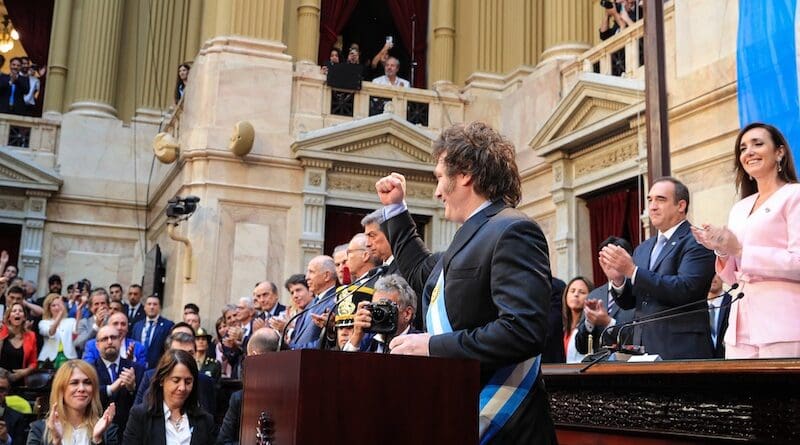
Argentine President Javier Milei met with his cabinet on September 14 to review the economy and advance a government strategy on the British-controlled Falkland Islands (also known as Malvinas), with the executive preparing legislation that would tighten sanctions on companies involved in hydrocarbon and fishing activities in the disputed territory.

The meeting at the Casa Rosada lasted about 90 minutes and included Chief of Cabinet Diego Santilli, Economy Minister Luis Caputo, Foreign Minister Pablo Quirno, Human Capital Minister Sandra Pettovello, Health Minister Mario Lugones and Justice Minister Juan Bautista Mahiques, as well as congressional leaders Martín Menem and Patricia Bullrich.

Quirno briefed the cabinet on criminal complaints and notifications sent in recent days to companies linked to activities around the islands. He also presented an updated version of the sovereignty bill that the government plans to submit to the lower house this week.

The legislation would strengthen Law 26,659, passed in 2011 under former president Cristina Fernández de Kirchner, which already bans and penalises hydrocarbon activities carried out without Argentine authorisation on the disputed continental shelf. The government plans to boost the sanctions framework after filing a criminal complaint against five companies associated with the Sea Lion oil project, run by British firm Rockhopper Exploration and Israel-based Navitas Petroleum, and opening administrative proceedings against 60 people and companies.

The proposed package would also establish a National Security Council involving the foreign, defence and economy ministries and the State Intelligence Secretariat. The government says the body would help identify potential threats to national security.

The sovereignty initiative, stemming from a recently revived long-standing Argentine claim over the disputed archipelago, comes alongside plans for greater Argentine strategic involvement in the South Atlantic. During the cabinet meeting, officials reviewed the geopolitical importance of the region in the context of international trade and growing interest in its natural resources.

The economic discussion focused on preserving the government's current policy framework. Milei told ministers that Argentina needed to protect what he described as its restored economic reputation and avoid changes that could undermine the programme used to stabilise key economic indicators.

“Populism is not defeated with populism,” Milei said.

The president is also due to meet La Libertad Avanza lawmakers as the government prepares for a busy period in Congress. The 2027 budget is expected to be submitted this week, while the Senate is due to discuss electoral reform and the administration continues to seek support for other economic measures.

The sovereignty bill is heading into a difficult legislative environment. La Libertad Avanza, Milei's right-wing libertarian party, recently lost votes in the lower house and was unable to secure enough support to convene a Senate session.

Opposition lawmakers have questioned whether the government should introduce tougher sanctions before fully enforcing the existing legal framework. Socialist deputy Esteban Paulón has also called for the reactivation of the National Council on Matters Relating to the Malvinas Islands, established in 2020 but convened only once, in August 2024.

The package also intersects with the government's plans for security and defence. A recent emergency decree allocated 30.519bn pesos to the State Intelligence Secretariat, 217.954bn pesos to defence and 119.290bn pesos to the National Space Activities Commission. The planned integrated naval base in Tierra del Fuego is covered by the decree, although no separate amount was specified.

Defence Minister Carlos Presti and Foreign Minister Pablo Quirno travelled to Tierra del Fuego to restart the naval base project in recent days. But the move has drawn criticism over what opponents call the government's inconsistent policy: former Peronist defence minister and lawmaker Jorge Taiana said construction had begun in 2021 and reached only about 9% completion before the current administration halted it on cost-cutting grounds, citing the province's short construction season.

This week's legislative agenda therefore combines the Falklands sovereignty initiative with the 2027 budget and political reforms, while Milei seeks to stay the course with the sweeping economic agenda his administration considers central to its stabilisation strategy.


Canada pitches itself as a haven for investors 'in a very uncertain world'

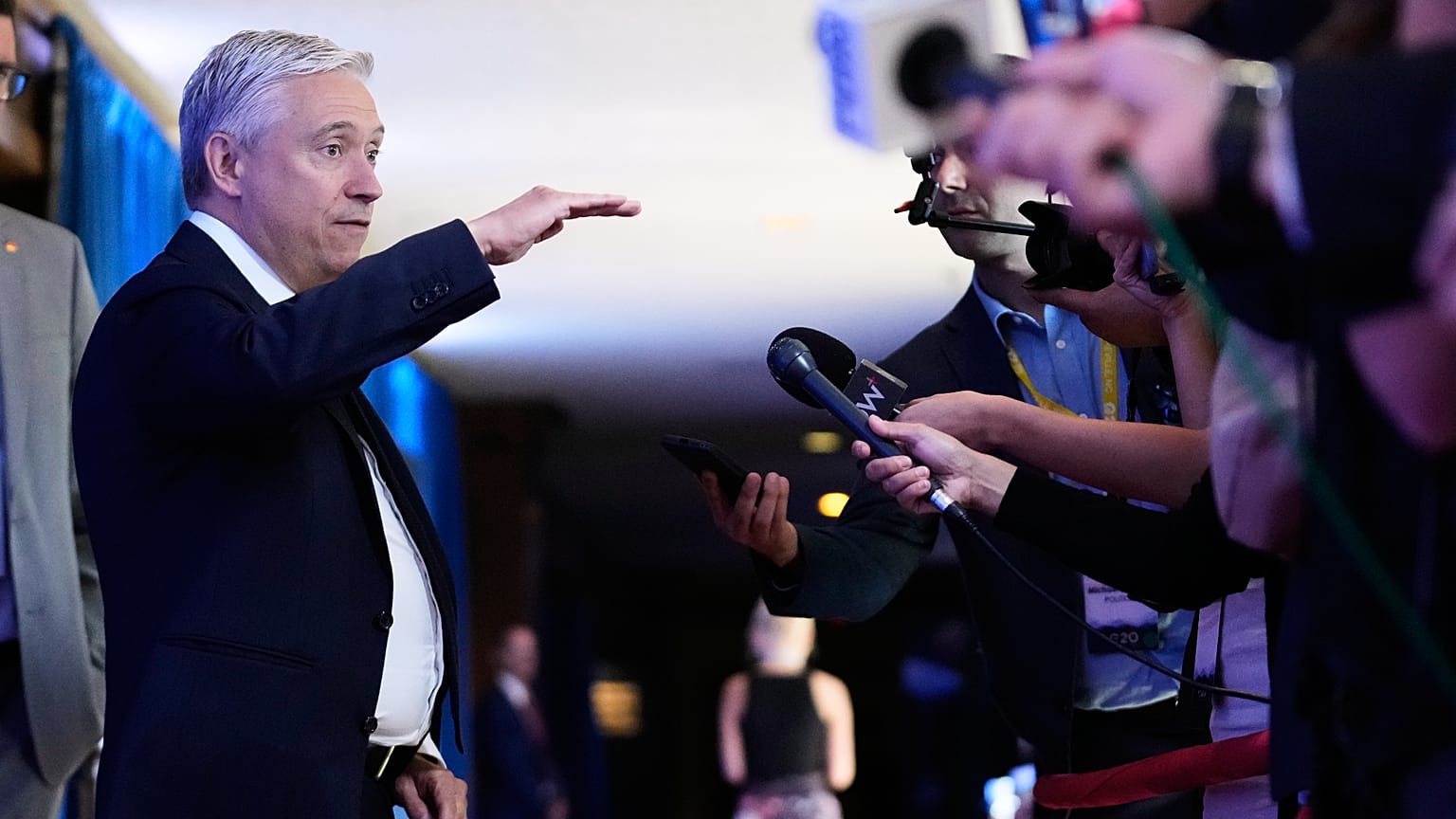
Canadian Finance Minister Francois-Philippe Champagne speaks to reporters at the G20 Finance Ministerial in Asheville, North Carolina, 1 Sept. 2026
Copyright AP Photo/Gerald Herbert


By Quirino Mealha
Published on


Canada is positioning itself as a refuge for global capital, with Finance Minister François-Philippe Champagne saying the country is a safe place to invest "in a very uncertain world" as Ottawa hosts the largest investment summit in its history.

The Canadian government is making its case to global investors, and it is arguing that trust is now the scarcest commodity on offer.

Prime Minister Mark Carney has framed this week's Canada Investment Summit as a chance to sell chief executives and investors on a country rich in minerals and energy that is actively trying to reduce its reliance on the US.

The guest list is substantial.

Finance Minister François-Philippe Champagne said those attending control more than C$120 trillion (€74.7tn) in global capital.

Representatives of Bank of America and Berkshire Hathaway are due at Tuesday's main event, alongside Nigerian industrialist Aliko Dangote, Africa's wealthiest businessman, and envoys from major Gulf investment agencies.

Answering the critics

Canada has spent years being told by investors that it is a difficult place to do business, with project approvals slow and burdened by bureaucracy, but Champagne argues that this is now in the past.

Officials, he told AFP, "understand now that speed and skill are what's needed to seize this golden opportunity", adding simply that "the world has changed."

The Canadian finance minister also pointed to shifts in the global economy that favour Canadian resources.

"We have the critical minerals to power the growth, and I would say a lot of people see critical minerals as the fuel of the 21st century," Champagne said, noting that the country also has "an abundance of energy."

Selling trust, not comparisons

The summit takes place against the backdrop of deteriorating relations with Washington.

Trade ties have unravelled since US President Donald Trump returned to office, and the White House is expected to impose further tariffs this month, yet American investors are still coming.

Asked whether Canada was marketing itself as a hedge against a more protectionist US, Champagne pushed back against that characterisation.

"I don't compare with others. Capital will go where it finds the opportunities," he said, adding that "the most sought-after commodity today is trust. Canada is more and more seen as a trusted partner in a very uncertain world."

The EU sits at the centre of the Canadian prime minister's realignment efforts.

Carney will fly to Strasbourg after the summit to address the European Parliament, continuing a push that began with his address to the World Economic Forum in January, where he called on middle powers to band together against what he termed "superpower aggression".

Champagne also said that the alliance between Canada and the EU would deepen this week.

"Our European partners are keen on a strong transatlantic relationship," he said, arguing that the bloc is drawn to Canadian "certainty and predictability".