Saturday, October 24, 2026


Japanese firms shut websites over PHP security flaw

Japanese firms shut websites over PHP security flaw
/ Unsplash - Markus Spiske


By IntelliNews - Tokyo Bureau October 23, 2026

Sony Group (TYO: 6758), Nojima (TYO: 7419) and Bandai Namco Holdings (TYO: 7832) were among the Japanese companies that took online services offline while dealing with a vulnerability in the PHP programming language, the Yomiuri Shimbun reported on October 23.

The disruption reached retail, transport and finance. Companies chose to suspend web services before any harm occurred, putting the protection of customer data ahead of convenience as cyberattacks become more frequent.

Sony launched emergency maintenance on the night of October 21 at Sony Store, the online shop selling the group's smartphones and game consoles. Some services were unavailable until around 7pm the next day. The group also shut down the official website of its semiconductor subsidiary.

Electronics retailer Nojima took its official website and online shopping site down at 8:30pm on October 21. It brought them back on the morning of October 22 once it had confirmed they were secure. Bandai Namco began maintenance at about 10pm on October 21, and by 5pm on October 22 parts of its amusement arcade online services and online store were still suspended.

Central Japan Railway halted bookings for the private booth workspaces it operates at major Tokaido Shinkansen stations.

Takahashi, of Tokyo-based security company Trend Micro, said applying software fixes takes some time. He added that the gap in recovery between companies came down largely to whether they had organised staff with the business impact in mind, and that firms which had not prepared for such a scenario would struggle to respond quickly.

Banks and other financial institutions restricted some web services. Payment functions such as deposits, withdrawals and transfers were not affected. Mitsubishi UFJ Morgan Stanley Securities suspended online identity checks and other services from the evening of October 21.

Tokio Marine & Nichido Fire Insurance stopped displaying its website from the early hours of October 22. A spokesperson said the company had emergency patches ready but went offline to avoid damage while the work was carried out. The insurer described the decision as a difficult one. It said it took precautionary action to keep customer data safe and to prevent a prolonged outage.

Another financial industry source said their systems had stayed offline on vendor instructions until the vulnerability was fixed. The source added that preventive shutdowns to stop customer data leaks would become more important

'Backbone of the web': What is PHP and how has it raised AI hacking fears?


EXPLAINER


As governments and corporations alike scramble to install a patch to fix fundamental security flaws in a programming language that helps run roughly 70 percent of the world's websites, here's what you need to know about how AI has helped bring these critical vulnerabilities to light.


Issued on: 22/10/2026 - 
By: FRANCE 24


AI can find ways to hack into computer systems that have long gone unnoticed by humans. © Kirill Kudryavtsev, AFP


Artificial intelligence has found critical security flaws in a major programming language called PHP, with many websites taken offline Thursday as organisations worldwide scramble to fend off would-be hackers.

As AI's fast-advancing capabilities fuel concern over the increased risk of cyberattacks, here are some questions and answers about the situation:
What is PHP and how widely used is it?

Created in the early 1990s, PHP is a computer programming language that helps run an estimated 70 percent of the world's websites.

It is "a backbone of the web", according to security firm Wiz Research, which says it used AI to find vulnerabilities hidden in PHP for more than a decade.

PHP – a name that originally stood for Personal Home Page – underpins popular web design platforms, meaning the flaws could allow hackers to break into various sites, from online stores to government services.

A fix was released Wednesday, with the PHP Foundation telling the tech departments of companies and organisations around the world: "If you run PHP, it is imperative that you update now."

That has resulted in a slew of apps and websites – from the Paris police website to a Pokemon sleep tracker – going dark as developers work to protect their underlying code from hacks.

China's ​industry ​ministry said Thursday organisations and users ​should ‌immediately ⁠conduct a ‌comprehensive inspection of their ⁠technology systems and upgrade to ​the ‌latest secure PHP version.

The ‌ministry also ​recommends strengthening cybersecurity monitoring and timely ​changing of ​accounts, ​passwords and keys, it ​added.


How did AI find the flaws?

Cutting-edge AI models, such as those from US giants OpenAI and Google, were used by Wiz and other groups to uncover PHP's weak spots in August.

This was kept under wraps while a fix was developed.

OpenAI called the flaws "one of the most impactful vulnerabilities in recent memory", adding that it "marks a new phase, where AI can find security bugs with internet-scale impact".

WATCH MOREConcerns mount over artificial intelligence as Silicon Valley sees AI boom


Separately to Wiz, security firm Calif found the flaws as part of an OpenAI-funded audit of PHP's code.

"The trouble with tools like AI is that the moment all the information's out there, people can weaponise it very, very quickly," Steve Kerrison, senior lecturer in cybersecurity at the Singapore campus of James Cook University, told AFP.

"That's why everybody's acting with such urgency to respond to this issue."


Have sites already been hacked?

"Taking websites offline does not necessarily mean they have been hacked. It can be a responsible measure to protect systems while security updates are applied," said Dimitrios Salampasis from Australia's Swinburne University of Technology.

So far "the evidence that security researchers are seeing is that nobody was actively performing attacks using the techniques available", Kerrison said.

Larger institutions, from government agencies to news outlets, should be able to fix their websites relatively quickly – but others may be left vulnerable.

"There are sites, systems and people out there who will have no idea about this and still won't for days, weeks and months," Kerrison warned.

That may include user-run blogs that could be used to spread computer viruses, spam people or distribute malicious content.

Could there be other consequences?

A data breach could affect customers in the future if their personal information is used in so-called "phishing" attacks, where someone is tricked into revealing their password to an online service.

The complex and interlinked nature of online systems, which often use third-party interfaces, means some vulnerabilities could remain even after the problem is fixed.

If the third parties use PHP, "then even though you patched yourself ... you're still unsecure", said Rahat Masood, senior lecturer in cyber security at the University of New South Wales, Sydney.

PHP isn't everything, however – strong cybersecurity measures should include several layers of defences, Kerrison said.

(FRANCE 24 with AFP and Reuters)


Turkey to Trump: Put your bombs away

Turkey to Trump: Put your bombs away
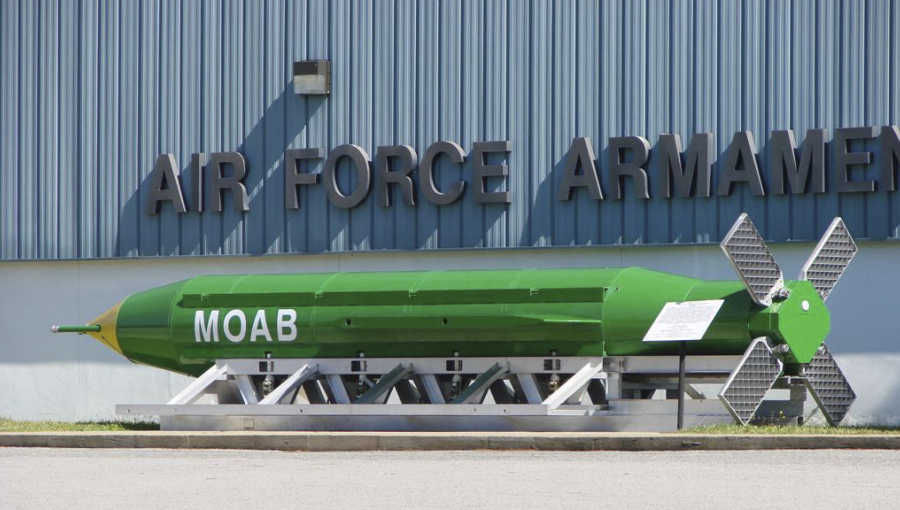
A GBU-43/B Massive Ordnance Air Blast (MOAB) weapon colloquially referred to by the US military as the "Mother Of All Bombs". / Fl295, cc, public domain.Facebook
By IntelliNews Turkey desk October 24, 2026

Turkey has warned Donald Trump off launching further attacks on Iran.

Amid multiplying news reports that the US president is planning to hit the Islamic Republic hard with military strikes after the American midterm term elections (Tuesday, November 3), Ankara sent a loud and clear message to Washington: “Don’t”.

What’s more, in sending out the warning on October 23, Turkish Foreign Minister Hakan Fidan said he had the backing of ‌Germany, France, Britain, Italy, Egypt, Pakistan and Saudi Arabia.

After meeting his counterparts from those seven countries in Istanbul, Fidan said at a press conference: "We are all in agreement that a new attack on Iran would expand the war in the region."

He added: "A military intervention on Iran is not in any way a solution. Nobody approves this ⁠at ⁠the moment.”

Diplomacy and dialogue were the only way to end the war between the US/Israel and Iran, Fidan stressed.

The meeting of the eight foreign ministers was the first collective meeting of what are known as the Regional Four (R4) and the EU 3 (E3), alongside Italy.

The top diplomats gathered to discuss developments in the Iran war as well as attacks on ⁠Saudi Arabia by ⁠Iran-backed Houthi militants and Russia's war in Ukraine.

British Foreign Secretary Ed Miliband told ITN in a TV interview that the “very clear message” is that “diplomacy, dialogue and de-escalation has to be the answer to this conflict, and frankly this conflict has gone on too long, the British people have suffered too much from it and we cannot afford months more of it.”

French Foreign ⁠Minister Jean-Noel Barrot told reporters that if the conflict escalated it would only produce losers and higher oil prices.

A New York Times report on October 21 said that the US and Israeli militaries had drawn up detailed plans for renewed strikes against Iran after the US midterm elections. It cited US officials as saying that likely targets would include Iran's energy infrastructure, nuclear facilities and missile and ⁠drone arsenal.

IntelliNews reported on October 22 that among the retaliatory strikes that Iran could launch in response to another military campaign by the US and Israel could be hits on cables, data centres and artificial intelligence (AI) assets in the Middle East that are owned wholly or partly by US investors and interests.

Reuters reported that Fidan also said that the meeting of foreign ministers discussed possible parameters to ensure the war does not expand further, but did not elaborate.

German Foreign Minister Johann Wadephul said Germany, France and Britain were ready to enter into talks with Tehran to rule out Iran’s acquisition of nuclear weapons. He also called for support for Saudi Arabia and Yemen.

Friday, October 23, 2026

Alberta rejects plan for referendum on independence from Canada

Canada's province of Alberta rejected a plan to hold a binding independence referendum, results showed Tuesday, a setback for separatists backed by allies of US President Donald Trump. Prime Minister Mark Carney welcomed the result and said Albertans had made a "clear choice" in favour of unity.


Issued on: 20/10/2026 - RFI

Supporters cheer as results begin to display at the pro-Canada watch party in Edmonton, Alberta Monday, 19 October 2026. © James Maclennan / The CanadianPress via AP

Public broadcaster CBC and leading private network CTV projected a comfortable victory for the federalist side, with official results showing more than 76 percent support for national unity with more than a third of ballots counted.

"They chose unity, to build together, and to take care of each other," Prime Minister Mark Carney said in a statement on social media platform X.

Carney had campaigned for national stability as the country faced Trump's trade war and annexation threats.

A sombre mood took over the restaurant in the provincial capital Edmonton where a leading separatist group watched the returns.

Jeffrey Rath, a top leader of the separatist Alberta Prosperity Project, told reporters his push for an independent Alberta will "absolutely" continue, despite the result from Monday's vote.

"We've learned a lot of lessons from this fight," he said.

Separatist supporter Jour Dain said he was "disappointed in [his] fellow Albertans."

"Honestly, if this continues down this path of remaining in Canada, I'm just going to move," the 40-year-old said, expressing a desire to live in the United States.

At the federalist election night party in Edmonton before the results were announced, a band warmed up ahead of an anticipated positive result.

"It was amazing to see the enthusiasm and resolve among Canadians," said Thomas Lukaszuk, who heads Forever Canadian, the group that campaigned across the province for national unity.

Alberta Premier Danielle Smith, a conservative, said she voted against independence but called the referendum to settle an issue that has divided the province.

She had said a federalist victory would settle the secession question.

Alberta has the world's fourth-largest proven oil reserves, and much of the separatist momentum has been driven by anger over oil industry management.

Smith has blamed Carney's predecessor Justin Trudeau for igniting the separatist fire, accusing him of trying to crush oil production to advance his pro-climate agenda.

Push from Trump allies


Alberta's independence push has also drawn sustained interest from Trump allies.

US Treasury Secretary Scott Bessent called Alberta a "natural partner" for the United States. Elon Musk, the world's richest person and a top Trump supporter, posted on X this month that Alberta "should separate."

Separatist leaders also held meetings at the US State Department and received advice from Republican political operatives.

Carney, who grew up in Alberta, has worked to improve relations between the province and Ottawa since taking office last year.

He has partnered with Smith on advancing a new pipeline to export more Alberta bitumen overseas, a project considered a non-starter during Trudeau's tenure.

Alberta Prosperity Project leader Mitch Sylvestre told French news agency AFP earlier Monday that Carney had "threatened" the province in the closing days of the campaign.

Carney's message was "voting against Canada is dangerous," Sylvestre said, calling that "very unreasonable."

Haley Erdegard, a 44-year-old who voted in Edmonton, voiced discomfort with the idea advanced by some separatists that Alberta is forced to share too much of its oil revenue with the rest of Canada.

"I think we probably need to put some more work towards cooperation before making rash decisions about trying to start our own country," she told AFP.

(with newswires)


EU and Canada draw closer in Trump’s unpredictable world – with Britain looking on

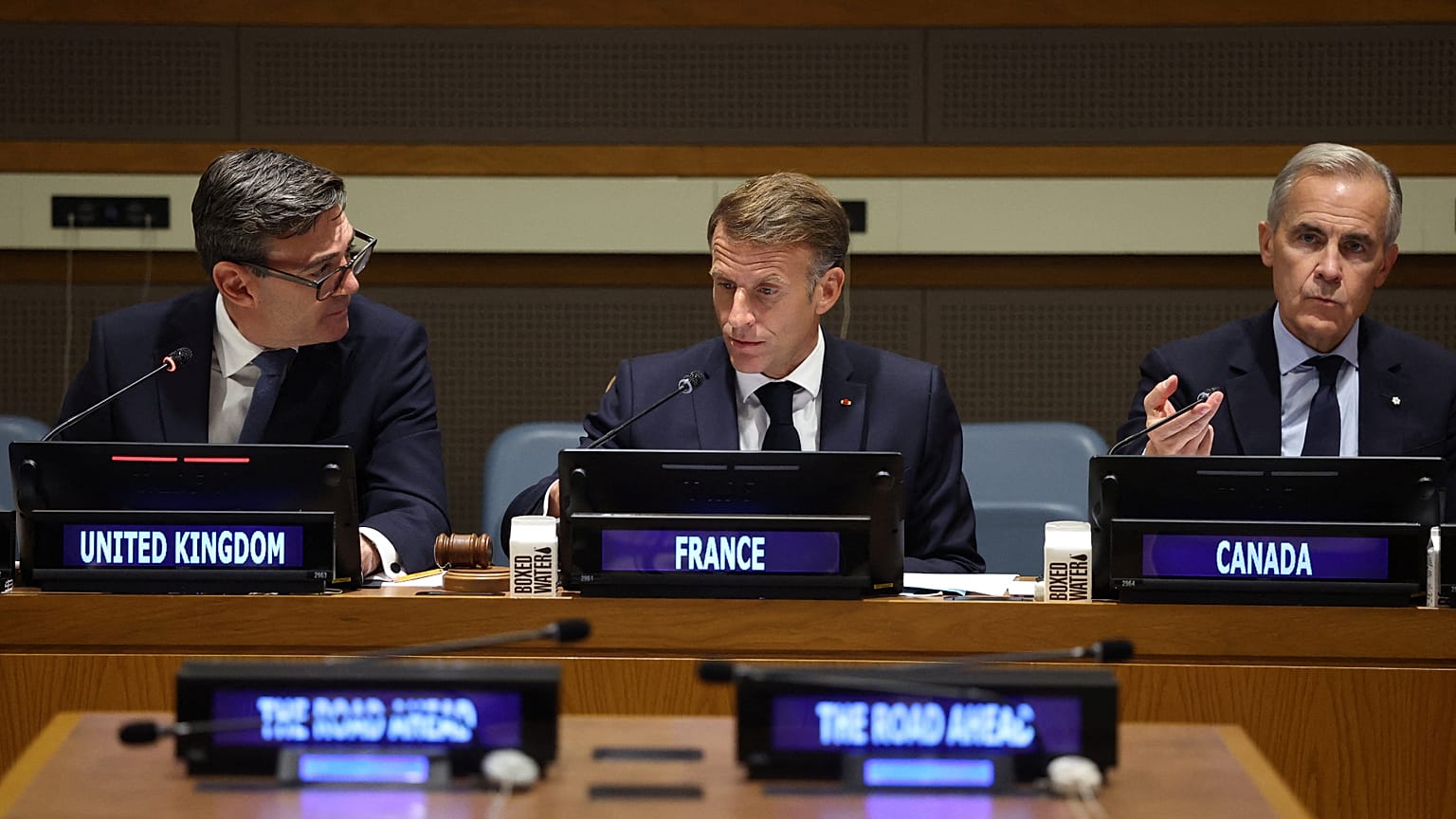
From left, From left, British Prime Minister Andy Burnham, French President Emmanuel Macron and Canadian Prime Minister Mark Carney.
Copyright AP Photo/Toby Melville


By Luca Bertuzzi
Published on


The EU and Canada are hoping to deepen ties at their upcoming Montreal summit, in areas like trade, energy, defence and critical minerals. Meanwhile, the UK is seeking its own reset with Brussels.

The European Union has offered Canada something it has never offered another country: associate membership. Quite what that means remains unclear, but Brussels and Ottawa are determined to turn their shared values and increasingly close relationship into a new kind of partnership in a world shaken by Donald Trump's unpredictable foreign policy.

The experiment is being watched closely in London, where Prime Minister Andy Burnham is seeking to rebuild Britain's post-Brexit relationship with the EU, raising the question of whether a similar arrangement might eventually be available to the UK.

The offer, made by European Commission President Ursula von der Leyen last month, has raised questions about whether associate membership is a meaningful new status, an honorary title or something in between.

At a summit in Montreal next week, the two sides will begin putting substance behind the idea, seeking closer cooperation on trade, defence, technology and energy without Canada formally joining the bloc.

But while Canada is searching for a new framework, Britain is attempting to improve an existing one, with EU and UK leaders set to meet next month to seek a much-needed reset in their relationship.

"This is a moment to act with clarity and ambition. By aligning more closely - economically, technologically, and strategically - Canada and the EU are building an Alliance for the Future based on trust and shared values," reads the latest draft of the EU-Canada joint statement, discussed by ambassadors on Wednesday.

A blank sheet

Since European Commission President Ursula von der Leyen invited Canada last month to become the EU’s first “associate member,” Brussels and Ottawa have been exploring what this privileged partnership could look like.

Canadian Prime Minister Mark Carney prefers to talk about an “Alliance for the Future.” He has sidestepped questions on whether he is comfortable with the “associate membership” label, stressing that substance matters more.

The summit in Montreal on 29-30 October is the first real chance to define the partnership in more detail. The latest draft uses “associate membership” interchangeably with “Alliance for the Future.”

Crucially, the proposal envisages giving Canada a more regular place at the EU's table, with participation in summits, ministerial meetings and technical discussions.

It calls for "early consultations on major policy and regulatory initiatives, with Canada’s participation in these processes as an associate member of the Union."

Whether the term survives in the final text is an open question. In any case, “the full scope of this associate membership will be defined by the 2027 Canada-EU Summit,” the conclusions read.

From trade to defence

The document nonetheless tries to put more meat on the bone. It builds on the 2016 Comprehensive Economic and Trade Agreement (CETA), which 10 EU countries have yet to ratify, to remove remaining trade barriers and ensure reciprocal market access.

“We will ensure mutually favourable treatment in our respective economic security measures, based on the principle of reciprocity in industrial sectors where both sides have agreed to align their external measures to ensure the same outcome,” the draft statement reads.

On energy, the conclusions open the door to “the development of liquefied natural gas exchanges,” notably through a joint long-term feasibility study on LNG exports to Europe.

On technology, Canada will join the EU’s supercomputer initiative, a new digital partnership will tackle issues like AI and digital identity, and an agreement to facilitate cross-border data flows is in the making.

Critical raw materials, one of Canada’s key assets for the EU, are also on the table. The two sides have agreed that the European Investment Bank will play a role in critical mineral projects, from extraction and processing to manufacturing and recycling.

In defence, Canada is already part of several EU projects, including the Permanent Structured Cooperation and the Capability Coalition, and both sides intend to deepen that cooperation on maritime security, crisis management and industrial cooperation.

The partners also envisage a cooperation framework to safeguard the information space and protect electoral integrity, with an early warning mechanism and a dialogue dedicated to foreign interference.

Other areas under discussion include border security cooperation with EU agency Frontex, criminal justice, climate security, transport and the Arctic.

Taken together, the proposals suggest a partnership extending far beyond conventional trade agreements, even if its institutional form remains uncertain.

Searching for a reset

The EU's growing closeness to Canada comes as Britain searches for a new relationship with the bloc, a decade after the Brexit referendum.

The contrast is striking. While Ottawa is being offered an undefined but potentially far-reaching new status, London is still negotiating improvements to its relationship with Brussels, largely one sector at a time.

The next EU-UK summit, postponed from the summer following Keir Starmer's resignation and Burnham's arrival in Downing Street, offers an opportunity to make progress.

While the UK government was already searching for amending ties with the bloc, Canada's approach to the EU definitively shattered one of the Brexiteers' key hopes to turn the so-called Anglosphere into a free trade area encompassing the UK, US, Canada, Australia and New Zealand.

"It is hardly surprising that Brexit has not delivered on that promise, and UK opinion polls have slowly started to shift in favour of rejoining," Charles Tannock, a former Conservative MEP who campaigned for Remain, told Euronews.

Since becoming Prime Minister, Burnham has repeatedly signalled that he wants to take the UK closer to the EU. He considers the status quo “not good enough” and has vowed to consider options ranging from following Canada’s example to re-entering the bloc.

While Burnham has restarted the domestic debate about rejoining the EU, the post-Brexit relationship between Brussels and London has not always been easy, with some UK officials asking why "associate membership" should not also be available for them.

“In an ideal world, with the UK we have even closer ties to the extent that the UK is a European country and if it wishes so, the ambition should not be an associate membership, but full membership,” Tobias Cremer (Germany/S&D), a leading lawmaker on EU-Canada relations, told Euronews.

Moving forward

Speaking during a European Parliament debate on Wednesday, Bernd Lange, the German Socialist who chairs the Trade Committee, welcomed a “new mood” in EU-UK relations.

He suggested that Britain could pursue an arrangement resembling Switzerland's relationship with the bloc, alongside closer political and security cooperation and a customs union.

But Brussels rejected the Swiss model as a template for Britain during the Brexit negotiations.

Switzerland's complex network of bilateral agreements has long frustrated EU officials, who argue that such arrangements are difficult to oversee and enforce, particularly when they provide access to parts of the single market without all the accompanying obligations.

Instead, British and EU negotiators are focusing on specific agreements covering agricultural trade, emissions trading and youth mobility.

A recent Franco-German proposal to include the UK in the 'Made in Europe' rules removed one sore point, but London is hoping to extend it to other sectors where it sees EU industrial policy becoming increasingly protectionist.

In defence, the EU needs the UK as part of a broader European security architecture, but the two sides failed to agree to include Britain in the planned Security Action for Europe (SAFE) for defence procurement.

Brussels offered Canada much better terms for SAFE, with a token upfront payment of around €10m. It asked the UK for a whopping €6.5bn, with no guarantee its industry would win any contracts, leading to a breakdown in the negotiations.

“Burnham is on a learning curve, to be honest," Tannock said. "He needs to. He’s been the mayor of Manchester for some years. He hasn’t been focused on this issue. He will be trying to get fully up to speed with what’s available."

Peggy Corlin contributed to the reporting.


EU-Canada 'love story' needs more than warm words, senior MEP warns

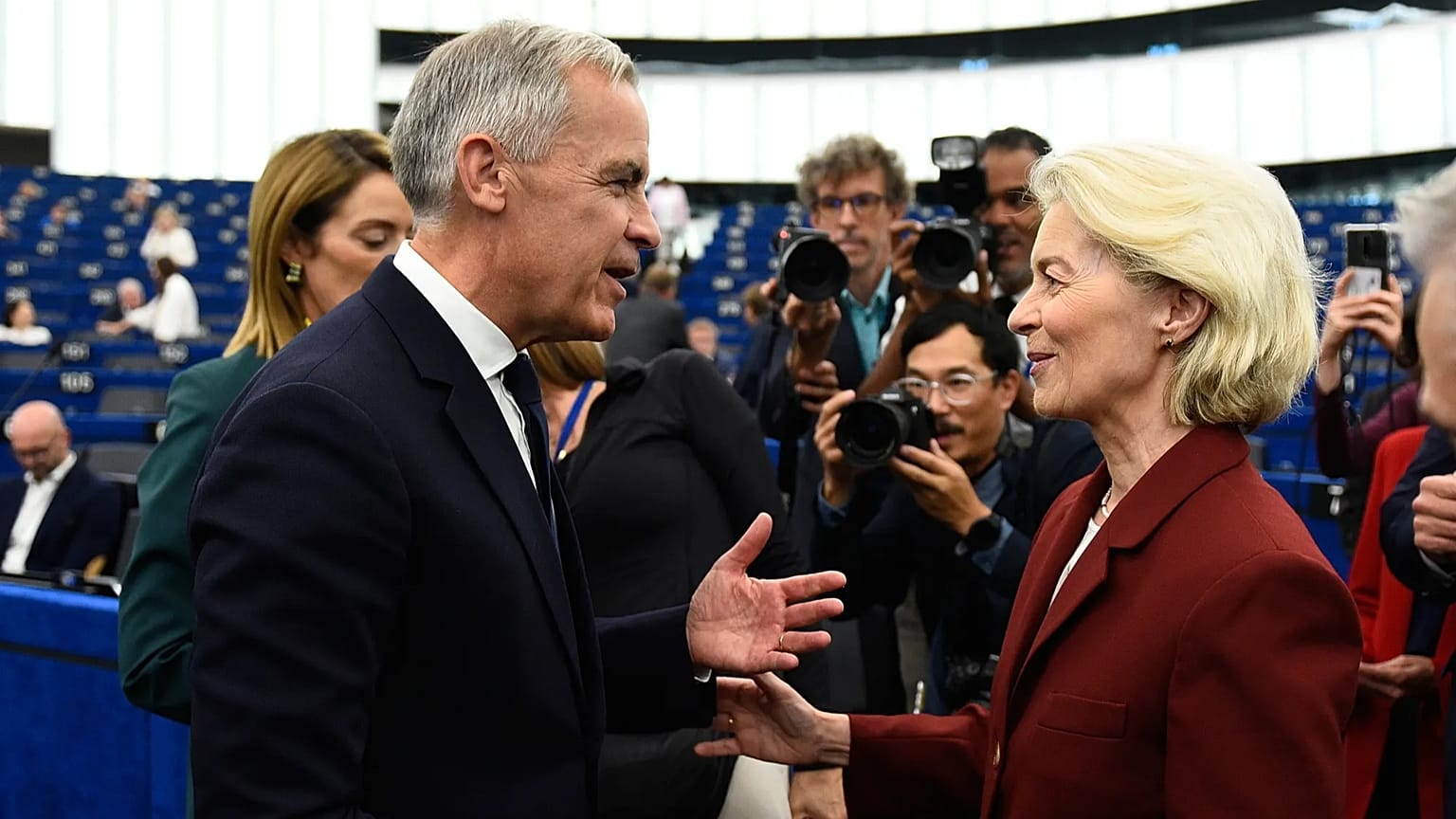
Canada's Prime Minister Mark Carney speaks with European Commission President Ursula von der Leyen at the European Parliament in Strasbourg, France, Sept 17, 2026.
Copyright AP Photo

By Peggy Corlin
Published on

European Parliament’s point man on Canada, Tobias Cremer, told Euronews that the planned “associate membership” should include an institutional framework formalising closer ties between the EU and Canada.

The EU must turn its offer of “associate membership” to Canada into a meaningful partnership that goes well beyond trade, Tobias Cremer, the European Parliament's standing rapporteur on Canada, told Euronews.

European Commission President Ursula von der Leyen invited Canada to become the EU's first “associate member” in September, but gave little indication of what the unprecedented status would mean in practice.

The offer comes as geopolitical upheaval draws Brussels and Ottawa closer together. Canada is embroiled in a trade war with its traditional US ally, while the EU is struggling to keep Washington on its side over Ukraine.

The two sides are due to meet at a summit in Montreal at the end of next week, with agreements expected in several areas, including critical raw materials and digital cooperation.

“For the last couple of months, we've been great, Canada and Europe, at writing each other love letters and saying how much we really want to work together,” said Cremer, a German socialist MEP. “But I think now is really the time to start to get serious and turn that love story into concrete commitments.”

He added that “associate membership” must mean the “closest possible partnership that the EU can offer to a non-European country and since Canada is probably the most European of non-European countries that should be very close.”

Beyond trade deals

Cremer insisted that the relationship must amount to more than “a trade deal ‘plus’”.

“There must be a new quality to the relation.”

He called for a “pragmatic approach,” involving sectoral agreements covering trade, defence, digital cooperation, the Arctic and students, but also going further.

“We should go a step further and start embedding all of these great initiatives into something more enduring, into a common institutional framework of coordination and cooperation.”

Cremer suggested that Canada could participate “as an observer” in the Council of the EU, where national ministers meet, and called for the creation of a formal parliamentary partnership assembly.

Such a body could follow the model of the existing EU-UK Parliamentary Partnership Assembly, which brings together 35 members from each side twice a year for sessions that can focus on specific policy areas.

Regarding the UK, however, the MEP described it as a European country for which, “if it wishes so,” the ambition “should not be associate membership, but full membership.”

His comments came as UK Prime Minister Andy Burnham recently floated the idea of rejoining the EU, with polls showing that a majority of Britons want to return to the bloc.

But Cremer also argued for closer cooperation not only with the UK and Canada, but also with countries such as Australia and South Korea.

“I think it is of our interest to bring all of these actors together and say 'hold on, actually the majority of the world wants to play 21st century politics which is focused on collective security, on shared interests, on mutual respect rather than might is right.'”


Turkey, Canada unveil new “strategic partnership” as Carney visits Ankara

Turkey, Canada unveil new “strategic partnership” as Carney visits Ankara
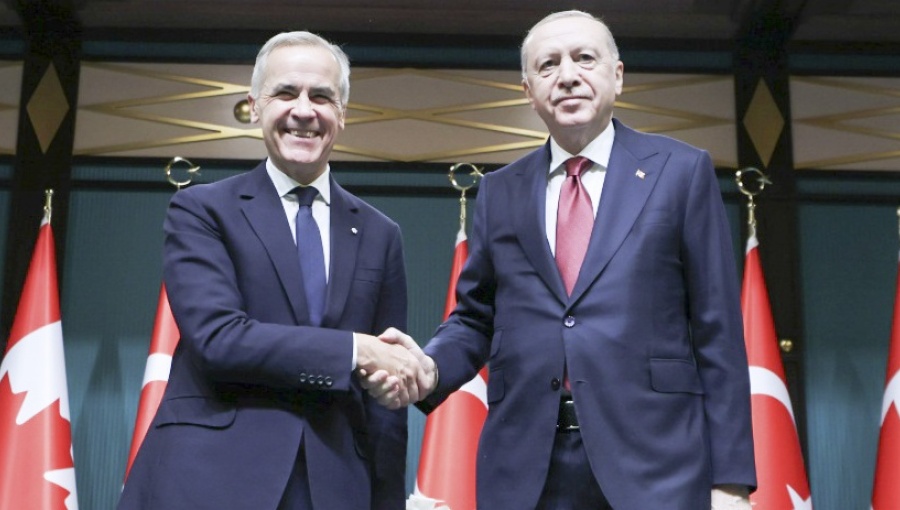
Erdogan, right, was reported as telling Carney: "We had diplomatic relations, but we had some kind of disconnect for a very long time now. And today we put an end to it." / Turkish presidencyFacebook
By bne IntelliNews October 22, 2026

Defence, transportation and energy will be at the heart of a new “strategic partnership” between Canada and Turkey, Canadian Prime Minister Mark Carney said on October 22, while on an official visit to Ankara.

Carney is eager to build ties with countries around the world, given that he is locked in an escalating and bruising trade war with US President Donald Trump that means he is in a hurry to reduce Canadian dependence on neighbouring America.

Carney and Erdogan signed the partnership declaration between the two middle powers together and announced the start of negotiations on a free trade agreement.

“We have taken a historic step toward the future of our relations,” Erdogan said after the signing ceremony, as quoted by the Associated Press (AP). “Elevating our relations to the level of a strategic partnership will not remain merely on paper; it will not be a merely symbolic step,” he added.

“No country, whatever it’s blessed with, no country builds strength alone,” Carney said. “The most resilient countries bring together complementary strengths, with trusted partners.”

Carney will visit Istanbul on October 23 for talks with Turkish business groups.

Erdogan said Turkey and Canada are hopeful of building up their annual bilateral trade from around $3bn to $5bn initially, and then to $10bn.

In investment, there is some prospect that Ottawa and Ankara will study the feasibility of a bid by Canada's Candu nuclear team to build Turkey's planned second or third nuclear power plant.

In 2024, Canada ended an export ban on the sale of weapons to Turkey. It was imposed in a response to military incursions into Syria conducted by Turkey, as well as to show Canada’s opposition to the provision by Ankara of backing for Azerbaijan in its conflict with Armenia. Some military drone equipment provided to the Azerbaijanis by Turkey was, to Ottawa's displeasure, partly made with Canadian parts.

“Allies must be able to rely on each other for equipment and capabilities that keep us safe,” Carney was further reported as saying by the AP.

“Today’s new agreement on defence industry partnership will connect Canadian and Turkish companies to work together, creating good jobs at home, export opportunities abroad, greater security for our citizens and contributing to a stronger Nato alliance,” he added.

CBC reported Erdogan as saying that a new chapter in relations between Turkey and Canada was opening, stating: "We had diplomatic relations, but we had some kind of disconnect for a very long time now. And today we put an end to it. Now comes a new period, a new era for Turkey and Canada. This is what we're starting today."

The fact that Turkey has become increasingly authoritarian under Erdogan, its leader of 23 years, has not gone unnoticed in Canada and there is considerable disquiet in the country at the upgrading in relations with Ankara.

"This is morally a difficult dilemma on the Canadian side, but the calculus appears on the part of the government that if Canada were to choose to diversify only with democracies the ceiling for success would be low," Thomas Juneau of the University of Ottawa, an expert on the Middle East, was quoted as saying by CBC.

What we know about the people behind France’s riots and looting

Images of young people looting shops and setting fire to public buildings in French cities last weekend have travelled around the world. The government has described those responsible as “scum” and accused ultra-left groups of organising an insurrection ahead of the 2027 presidential elections. But the first defendants to appear in court show a more mixed picture – with students, workers and people with previous convictions among those prosecuted.


Issued on: 21/10/2026 - RFI

Lyon's tourism office was torched during protests on 17 October, but there is still relatively little known about who carried out similar violence and looting in France's big cities. 
AFP - JEFF PACHOUD


By: Alison Hird

At least 3,000 shops were damaged or looted nationwide on 17 and 18 October, with losses estimated at several hundred million euros.

With presidential elections just six months away, the question of who was behind the violence – whether it was politically organised, largely opportunistic or linked to immigration – has become central to the debate over public order and the government’s authority.

Some 2,500 people have been taken into police custody in connection with last weekend’s violence and 174 have been jailed, Justice Minister Gérald Darmanin said Wednesday. Another 917 had been formally prosecuted, he added.

“If we don't deliver an extremely firm penal response, then residents will take justice into their own hands,” Darmanin said on Tuesday.

'Barbarians' to blame


Government spokesperson Maud Bregeon said those primarily responsible were “troublemakers and scum”.

“There are delinquents on the one hand, and then there is the planning of an insurrection led by far-left groups,” Bregeon told BFMTV. “We've seen the pictures; we know who we're dealing with.”

Racaille, the French word for “scum”, carries strong class and racial connotations. It became politically charged in 2005 when Nicolas Sarkozy, then interior minister and later president, visited a poor housing estate in the Paris suburbs and offered to clean it up.

“Are you fed up with this bunch of racaille? We’ll get rid of them for you,” Sarkozy said.

The violence was “predictable”, Marine Le Pen, presidential candidate for the far-right National Rally, told FranceInfo on Wednesday morning. “We’ve been seeing far-left rioters and looters in the suburbs for several years now.”

Far-right presidential candidate Eric Zemmour explicitly linked the violence to immigration the day after the rioting.

“What we saw yesterday is the true face of the Great Replacement,” he told LCI, referring to the ungrounded theory that there is a deliberate plan to replace the white, Christian European population with Africans through immigration and demographics.

The “face”, he said, was “a horde of Maghrebi and African barbarians entering the cities”. He claimed the rioters’ faces, voices and language showed “who they are” and “where they come from”.

Zemmour’s comments prompted viewer complaints to France’s broadcast regulator Arcom and a criminal complaint by an MP from the hard-left France Unbowed, known as LFI.

'No typical profile'


President Emmanuel Macron rejected claims on Wednesday that France had been “invaded” by migrants and Islamists, accusing foreign leaders of spreading false information about the recent unrest and exploiting the situation in France for their own political ends.

Little is known about the ethnic origins of the rioters and looters because France’s strong anti-discrimination laws ban the publication of such data.

About 70 percent of those taken into custody were adults and the vast majority were men, the Justice Ministry has said.

Those arrested for looting and rioting fall into two broad categories: organised ultra-left activists, known as black blocs, who defend the use of violence for political aims, and people exploiting chaos on the streets to steal from shops.

The first group was largely known to police and the justice system, while the second included people with no previous criminal record and no apparent political affiliation, Justice Ministry spokesperson Sacha Straub-Khan said on Tuesday.

The first court hearings have so far provided little evidence of a single profile.

In Brest, two people accused of looting a sports-shoe shop were 18-year-old students taking vocational courses in accounting and electrical engineering. Neither had a criminal record, regional newspaper Le Télégramme reported.

They appeared alongside a 32-year-old homeless man with previous convictions for offences including theft and drug use.

In Rennes, a 22-year-old man with a clean criminal record was convicted after being found with luxury glasses and electrical appliances reported stolen during the unrest, the newspaper reported. He told the court he held three jobs and earned between €2,700 and €2,800 a month.

His father described him as the pillar of the family, notably helping his autistic brother.

“There is no typical profile. We have people from all walks of life, of all ages, whether they’re from Paris or not,” lawyer Sonia Boundaoui, who is representing defendants on a voluntary basis, told RFI.

“As for the disturbances that took place in the capital – whether politically motivated or not – there is absolutely no typical profile that can be identified amongst those arrested.”

Boundaoui deals mainly with minors, including pupils who had “come to demonstrate and found themselves there without really knowing why”.

“We’ve got secondary school pupils who, purely by chance, walked into a shop that had already been ransacked and were arrested because the police were already in the vicinity.”

Political motives unclear

Paris prosecutor Laure Beccuau has also urged caution over attributing far-left political motives to those arrested.

“I absolutely can’t tell you what political position they wish to take,” Beccuau told TF1 on Monday.

A number of those in custody were remaining silent and had made no political demands.

While some defendants have described targeting public buildings as a way to express political anger, others have said they joined crowds impulsively or took advantage of the opportunity to steal.

In Avignon, a 26-year-old man convicted of damaging the gate of the Vaucluse prefecture said he believed traditional demonstrations were no longer an effective way to be heard.

Quoted by public broadcaster ICI, he told the court there needed to be “symbolic destruction”, but admitted it had not been a good idea.

In the southern city of Pau, a 43-year-old delivery driver with no previous criminal record was sentenced to four months in prison for throwing projectiles at police. He said he had acted impulsively after becoming angry at the use of tear gas.


Politically charged debate

The clearest reported link between a suspect and an organised political movement concerns the torching of the historic town hall in Limoges, central France. French security forces arrested a man on Tuesday believed to have links to the ultra-left in connection with the fire.

The violence has intensified an already confrontational debate between the government and the radical-left LFI party led by Jean-Luc Mélenchon.

Interior Minister Laurent Nuñez has accused LFI of bearing some responsibility for the unrest through what he called its “support for the radicalised far left”.

LFI denies encouraging the violence, though it has actively supported the protests, which were first launched by high school pupils in mid-September over failings in education.

A report this week by investigative website Mediapart alleges that regional intelligence officers were instructed to state that LFI initiated the protest movement.


OTHER SIDE OF THE BOSPORUS: 

PKK-tied group in France condemns country’s violent mayhem

OTHER SIDE OF THE BOSPORUS: PKK-tied group in France condemns country’s violent mayhem
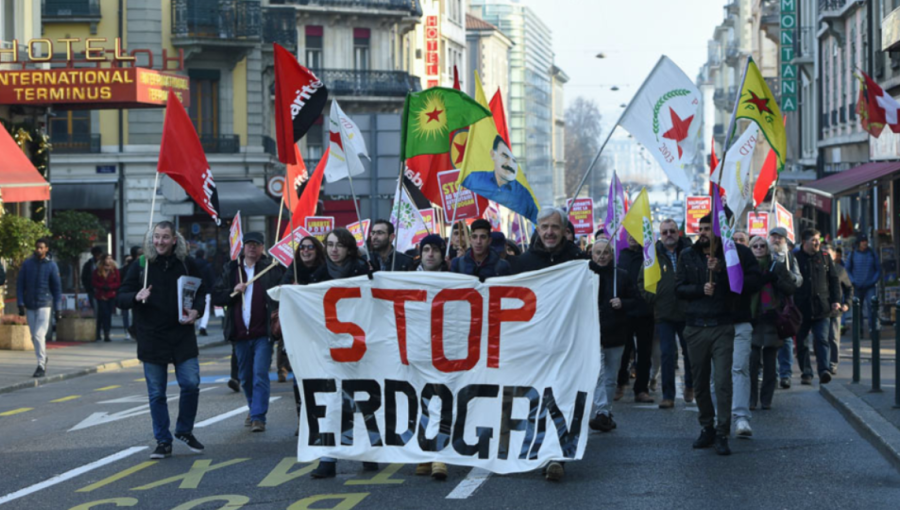
Once upon a time in 2019: The CDK-F exhibits an example of non-looting, non-vandalism and non-violent protest in Paris as it hoists banners opposing Turkey’s president, Recep Tayyip Erdogan. / cdkf.frFacebook
By Akin Nazli in Belgrade October 22, 2026

The Democratic Kurdish Council in France (Conseil Démocratique Kurde en France, or CDK-F) has condemned in the strongest terms the looting, vandalism and severe violence witnessed over October 17-18 in Paris, Marseille and other urban locations.

CDK-F, which in some ways can be described as a wing of the Kurdistan Workers’ Party (PKK) in France, issued its statement of condemnation on its X account (@Le_CDKF). The PKK is designated as a terrorist organisation by the EU.

“The right to protest, to express anger or to present demands is a fundamental freedom in a democracy,” the umbrella group, which represents dozens of Kurdish associations across France, also said.

“However”

“However, no claim, whatever it may be, can justify violence, attacks on individuals, businesses, public or private property or the scenes of looting we have witnessed,” CDK-F added.

The CDK-F called for “calm, responsibility and respect for democratic principles.”

The riots across the weekend saw smashed storefronts, looted retail premises and disrupted commercial districts in France's largest metropolitan areas. For the French government, the protests present a unresolved dilemma.

Coalition with Socialist Party

On October 12, the CDK-F inaugurated the House of Kurdistan of France (la Maison du Kurdistan de France/MKF) at Paris City Hall (Hôtel de Ville) “in the heart of Paris”.

About 300 people, including politicians, academics and representatives of institutions, community associations and cultural spheres, were present at the event co-organised by the MKF and the City of Paris.

Among them were Mayor of Paris Emmanuel Gregoire and French ex-president Francois Hollande. They are members of the Socialist Party. Both politicians (@egregoire and @fhollande) and their party (@partisocialiste) accused protesters of “violence, looting and vandalism”. 

For the March local elections this year, the CDK-F formed a coalition with the Socialist Party. For the first time, more than 30 Kurds were elected to municipal councils across France.

The remarkable thing about the Socialist Party of France, launched in 1969 as a social democratic party, is that it is not socialist. The PKK, meanwhile, left socialist ideology behind it following the collapse of the Soviet Union.

Who was the perpetrator?

The mayor opened the MKF inauguration ceremony with a speech. He evoked “the shared memory of the Kurds and Paris, deeply marked by the attacks of 2013 and 2022.” 

Gregoire paid tribute to the victims, namely Sakine Cansiz, Fidan Dogan, Leyla Soylemez, Evin Goyi, Mir Perwer and Abdurrahman Kizil. To “all those calling for truth and justice,” the mayor reaffirmed the solidarity of the City of Paris while acknowledging that the French state could do more to reveal the truth of the events.

The 2013 reference points to the assassination of three women (Cansiz, Dogan and Soylemez) during the night of January 9-10 at the Centre d'Information sur le Kurdistan located on 147 Rue La Fayette. The CDK-F accused Turkey’s intelligence service (MIT) of being behind the incident.

Coalition with Turkish government

Lately, the CDK-F has preferred to not refer to the alleged perpetrator. On August 11, the CDK-F welcomed the Turkish parliament's adoption of a law establishing a first legal framework for the establishment of peace and a democratic society in Turkey.

“Abdullah Ocalan [the PKK’s leader, who is imprisoned in Turkey] must have the legal, material and political conditions allowing him to communicate freely and to continue his role as coordinator in the implementation and success of the process,” the CDK-F said.

Back in 2023, the CDK-F was wont to describe Turkey’s government as “the Islamo-fascist regime of Erdogan”.

Turned vehicles upside down, wounded police officers

The mayor of Paris’s reference to 2022 points to the murder of the other three individuals on December 23 by a racist gunman on Rue d'Enghien in the 10th arrondissement of Paris, near Ahmet Kaya Kurdish Cultural Centre.

The day after the killings, Kurds in Paris took to the streets. They wounded dozens of police officers in street protests, set vehicles on fire and flipped them over.

Female fighters, symbol of feminism

Ex-president Hollande addressed the crowd at the inauguration ceremony. Looking back at the events that marked his presidency, he praised the decisive role of Syrian Kurdish fighters against the Islamic State.

He also recalled that he, as the president of France, had welcomed Kurdish female fighters at the Elysee Palace.

420,000 Kurds in France

Hollande also underlined the need to maintain French solidarity with the Kurdish people without relating it to geopolitical shifts or short-term political agreements. The former head of state also underscored the importance of the Kurdish community in France, numbering some 420,000 people.

The CDK-F brings together 27 associations located in the main cities of France and has  62,000 members, according to its official website.

No to drugs and criminal networks

On October 6, the CDK-F launched a “France-wide campaign against drugs and criminal networks”. The comprehensive national awareness-raising and prevention campaign aims to protect the youth from addiction, drug trafficking, violence and the control mechanisms of criminal networks.

The phenomena related to narcotics, addiction, violence and organised crime are issues that concern the whole of French society, the association also said.