Showing posts sorted by relevance for query Josephine Baker. Sort by date Show all posts

Sunday, July 17, 2022

Inside Josephine Baker’s badass life as a resistance spy during WWII

As Josephine Baker moved through international checkpoints in Spain and Morocco, the dancer and singer teased the agents who asked to see her papers, saying they just wanted her “autograph.”

Her official story was that she was on a “tour of Spain.” She was really working as a spy for the resistance, with state secrets neatly hidden in her bra.

Baker took a gamble that no one would dare to strip-search her. She smiled her famous smile — she was at the time the most photographed woman in the world — as the documents stayed “snugly in place, secured by a safety pin.” 

Baker’s role as one of the true heroes of World War II, fighting against the Nazis at great risk to herself, is detailed in the new book “Agent Josephine: American Beauty, French Hero, British Spy” (PublicAffairs) by Damien Lewis. In 1961, she received a Legion D’Honneur, France’s highest decoration for military service, for her Spain and Morocco mission, and was commended for retrieving “precious information.”

Josephine Baker — shown here receiving the Legion D’Honneur and the Croix de Guerre on August 19, 1961 — would also receive admission into the Pantheon in 2021, one of only five women to earn a place there.
AFP via Getty Images

Born in St. Louis in 1906, Josephine Baker moved to France at 19. She emigrated with the hope of leaving the racism that hindered her American aspirations behind. She quickly became famous for her singing and dancing, including her beloved act where she wore only a skirt made of rubber bananas. She befriended French luminaries like the writer Colette. She bought a chateau, wore gowns by the most exclusive designers, and often walked the streets with her pet cheetah, Chiquita, who wore a diamond collar. 

And for a while she was treated equally.

Josephine Baker was once the most photographed woman in the world.
Corbis via Getty Images

Once, when a visiting American seeing her dance at the Folies Bergere theater remarked, “At home a n—-r woman belongs in the kitchen,” the room fell silent in horror.

“You are in France,” the manager curtly replied, “and here we treat all races the same.” 

But dark forces were rising in Europe.  

In 1925, when Hitler’s “brown shirt” storm troopers were still considered a fringe group, Baker performed in Berlin to thunderous applause. When she returned two years later — after Hitler had gained prominence with the publication of his book “Mein Kampf,” which denounced black people as “half-apes” — the response was very different. German and Austrian newspaper headlines denounced her as a “black devil” and a “jezebel.”

“How dare they put our beautiful blonde Lea Seidl with a Negress on stage?” asked one paper, while another claimed “the convulsions of this coloured girl” would undermine Dresden’s sense of dignity. The mobs were such that Baker feared for her life.

Ten years later, Baker’s face adorned the cover of a 1937 brochure denouncing decadent artists issued by Joseph Goebbels, the chief propagandist for the Nazi Party. That same year, Josephine married the Jewish industrialist Jean Lion. Her passion to fight against the Nazis — and to defend her adopted country and husband, as well as herself — grew to a fever pitch. In 1938, she declared that Nazis were criminals and “criminals need to be punished.” She claimed she would kill them with her own hands if necessary. 

Baker was not shy to call out the evil of the rising Nazi power in Germany, declaring in 1938 that she would kill [Nazis] with her own hands if necessary.
Baker was not shy to call out the evil of the rising Nazi power in Germany, declaring in 1938 that she would kill [Nazis] with her own hands if necessary. 
Provided by Svce Historique DeLa

That same year, she was approached by the Deuxième Bureau as an Honorable Correspondent, a voluntary position that involved retrieving intelligence for the bureau. It was entirely unpaid, as was typical for such a role. Throughout the war, Josephine refused to accept money for her work and sometimes resorted to selling off jewels and other assets to help finance her excursions.

Soon after she began working as a spy, Baker learned through friends at the Japanese Embassy that Japan had signed a secret anti-communist pact with Hitler. It was the first of many pieces of information she’d convey back to the bureau. Shortly after that, she informed the bureau that — through friends at the Portuguese embassy — she had learned that Germany planned to occupy neutral Portugal to use their ports. She quickly became one of France’s most valuable assets. Espionage gave Baker the ability, as Lewis puts it, “to strike back, without necessarily ever needing to draw blood.”

Baker’s country home, the Château des Milandes in the Dordogne region, where she housed refugees.
courtesy of Damien Lewis

When the war came to France in 1940, Josephine’s glamorous country home — the Château des Milandes in the Dordogne region — became a base of operations for the local members of the resistance, as well as refugees, including a Belgian Jewish couple whom Baker sheltered there. A radio transmitter was installed on the tower for contact with Britain, and the cellar was filled with weapons for the resistance. When German soldiers stopped by to investigate after receiving a denunciation, Baker assured them that she was merely a dancer.

Though, she informed them pointedly, “I would not have the heart to go on stage when there is so much suffering.” In fact, Baker did go on stage throughout the war — she just wouldn’t perform for Nazis.

As a star performer, Baker had a cover that allowed her to easily travel to other countries — from Portugal to Spain to Morocco — something most people could not obtain visas for during the occupation.

“I come to dance, to sing,” she told journalists abroad who asked her why she’d left France. She’d actually come to ferry missives, photos and documents that might be helpful to the allies, and to meet with those sympathetic to the cause of the resistance. She carried sheet music with information written in invisible ink regarding the positions of the enemy defenses in southwestern France. She stuffed notes about other important details in her lingerie. Fellow agents would travel with her, pretending to be her “tour manager.” 

Born Freda Josephine McDonald on June 3, 1906, in Saint-Louis, Missouri, Josephine Baker (center, with dog) obtained French nationality in 1937.
Provided by Svce Historique DeLa

Throughout the war, she worked with “Berber leaders, Rif chiefains [from the Northeastern region of Morocco], Arab dignitaries, American troops both black and white, (former) Vichyites, plus the Free French forces.” Even as her friends were murdered by Nazis or sent off to concentration camps, Baker maintained her cool. When she performed for American troops in Northwestern Algeria, she survived enemy fire by diving near the buffet tent. A Texan soldier crawled over on all fours with a bowl of ice cream for her, which she happily ate.

14. Casino de Paris
A poster from Casino de Paris, where Baker performed.
public domain

Afterward, she joked, “Me, belly down, amongst soldiers from Texas, Missouri and Ohio in my 1900 Paris dress, must have been an irresistibly funny sight. Mostly because I kept on eating.”

After the war, Josephine returned again to Germany in 1945. This time, she was honored at the Allied Victory ceremony at Hohenzollern Castle, the historic home of the German royal family. She took the place of honor in a country that had degraded and ridiculed her only a few years before. Then, she performed for the survivors of Buchenwald death camp who were too feeble to leave the prison. Although the camp was riddled with typhus and still littered with bodies, and Baker was in poor health, she still found the strength to sing a number called “In My Village” about the simple pleasures of home.

Even after France was liberated from the Nazis in 1944 and the war ended the following year, Baker never stopped fighting for equality for all people.

“She would never forget the lesson of the war years: freedom must be fought for, every day,” writes Lewis.

She died in 1975 at the age of 68. While she danced right up until the day before her death in a revue at the Bobino Theatre in Paris celebrating her 50 years in show business, she said that “the war years” had been the highlight of her life.

Baker lounging on a tiger rug, circa 1925. She said “the war years” had been the highlight of her life.
Getty Images

“I gave my heart to Paris, as Paris gave me hers,” she said onstage at the Revue’s opening night.

In 2021, she was given her greatest honor — admission to the French Pantheon, which recognizes only the greatest figures in French History, such as Voltaire, Victor Hugo and Marie Curie.

She is one of only five women to earn a place there.

Wednesday, December 01, 2021

JOSEPHINE BAKER
France celebrates the legacy of the American-born artist
Issued on: 01/12/2021 
 Josephine Baker honoured: Jennifer Boittin speaks to France 24
 
Nita Wiggins: "Josephine Baker decided to control her own narrative"


Black artist Josephine Baker honored at France's Pantheon

PARIS (AP) — Josephine Baker — the U.S.-born entertainer, anti-Nazi spy and civil rights activist — was inducted into France's Pantheon on Tuesday, becoming the first Black woman to receive the nation’s highest honor
.
© Provided by The Canadian Press

Baker's voice resonated through streets of Paris' famed Left Bank as recordings from her extraordinary career kicked off an elaborate ceremony at the domed Pantheon monument. Baker joined other French luminaries honored at the site, including philosopher Voltaire, scientist Marie Curie and writer Victor Hugo.

Military officers from the Air Force carried her cenotaph along a red carpet that stretched for four blocks of cobblestoned streets from the Luxembourg Gardens to the Pantheon. Baker’s military medals lay atop the cenotaph, which was draped in the French tricolor flag and contained soil from her birthplace in Missouri, from France, and from her final resting place in Monaco. Her body stayed in Monaco at the request of her family.

French President Emmanuel Macron paid tribute to "a war hero, fighter, dancer, singer; a Black woman defending Black people but first of all, a woman defending humankind. American and French. Josephine Baker fought so many battles with lightness, freedom, joy.”

“Josephine Baker, you are entering into the Pantheon because, (despite) born American, there is no greater French (woman) than you,” he said.

Baker was also the first American-born citizen and the first performer to be immortalized into the Pantheon.

She is not only praised for her world-renowned artistic career but also for her active role in the French Resistance during World War II, her actions as a civil rights activist and her humanist values, which she displayed through the adoption of her 12 children from all over the world. Nine of them attended Tuesday's ceremony among the 2,000 guests.

“Mum would have been very happy,” Akio Bouillon, Baker's son, said after the ceremony. “Mum would not have accepted to enter into the Pantheon if that was not as the symbol of all the forgotten people of history, the minorities.”

Bouillon added that what moved him the most were the people who gathered along the street in front of the Pantheon to watch.

“They were her public, people who really loved her,” he said.

The tribute ceremony started with Baker’s song “Me revoilà Paris” (“Paris, I’m Back”). The French army choir sang the French Resistance song, prompting strong applause from the public. Her signature song “J’ai deux amours” (“Two Loves”) was then played by an orchestra accompanying Baker’s voice on the Pantheon plaza.

During a light show displayed on the monument, Baker could be heard saying "I think I am a person who has been adopted by France. It especially developed my humanist values, and that's the most important thing in my life.”

The homage included Martin Luther King's famed “I have a dream" speech. Baker was the only woman to speak before him at the 1963 March on Washington.

Born in St. Louis, Missouri, Baker became a megastar in the 1930s, especially in France, where she moved in 1925 as she sought to flee racism and segregation in the United States.

“The simple fact to have a Black woman entering the pantheon is historic,” Black French scholar Pap Ndiaye, an expert on U.S. minority rights movements, told The Associated Press.

“When she arrived, she was first surprised like so many African Americans who settled in Paris at the same time ... at the absence of institutional racism. There was no segregation ... no lynching. (There was) the possibility to sit at a cafe and be served by a white waiter, the possibility to talk to white people, to (have a) romance with white people,” Ndiaye said.

“It does not mean that racism did not exist in France. But French racism has often been more subtle, not as brutal as the American forms of racism,” he added.

Baker was among several prominent Black Americans, especially artists and writers, who found refuge in France after the two World Wars, including famed writer and intellectual James Baldwin.

They were "aware of the French empire and the brutalities of French colonization, for sure. But they were also having a better life overall than the one they had left behind in the United States,” Ndiaye, who also directs France’s state-run immigration museum, told The Associated Press.

Baker quickly became famous for her banana-skirt dance routines and wowed audiences at Paris theater halls. Her shows were controversial, Ndiaye stressed, because many activists believed she was "the propaganda for colonization, singing the song that the French wanted her to sing.”

Baker knew well about “the stereotypes that Black women had to face,” he said. “She also distanced herself from these stereotypes with her facial expressions."

“But let’s not forget that when she arrived in France she was only 19, she was almost illiterate ... She had to build her political and racial consciousness,” he said.

Baker became a French citizen after her marriage to industrialist Jean Lion in 1937. The same year, she settled in southwestern France, in the castle of Castelnaud-la-Chapelle.

“Josephine Baker can be considered to be the first Black superstar. She’s like the Rihanna of the 1920s,” said Rosemary Phillips, a Barbados-born performer and co-owner of Baker’s park in southwestern France.

Phillips said one of the ladies who grew up in the castle and met with Baker said: "Can you imagine a Black woman in the 1930s in a chauffeur-driven car — a white chauffeur — who turns up and says, ‘I’d like to buy the 1,000 acres here?'”

In 1938, Baker joined what is today called LICRA, a prominent antiracist league. The next year, she started to work for France's counter-intelligence services against Nazis, notably collecting information from German officials who she met at parties. She then joined the French Resistance, using her performances as a cover for spying activities during World War II.

In 1944, Baker became second-lieutenant in a female group in the Air Force of the French Liberation Army of Gen. Charles De Gaulle.

After the war, she got involved in anti-racist politics and the civil rights struggle, both in France and in the United States.

Toward the end of her life, she ran into financial trouble, was evicted and lost her properties. She received support from Princess Grace of Monaco, who offered Baker a place for her and her children to live. Baker died in Paris in 1975 at age 68.

___

AP journalists Jamey Keaten and Arno Pedram in Castelnaud-la-Chapelle, France, and Bishr Eltouni in Monaco contributed.

Sylvie Corbet And Jeffrey Schaeffer, The Associated Press

Saturday, November 27, 2021

The day Josephine Baker refused to sing in segregated Miami club

Author: AFP|
Update: 27.11.2021 

In this photo taken on November 27, 1973, US-born dancer and singer Josephine Baker performs during a France-US gala at Versailles Castle, outside Paris / © AFP/File

In December 1950, Josephine Baker received a telegram from Copa City, a posh nightclub in Miami Beach, inviting her to give a series of concerts.

But with segregation rife in the United States, the Black French singer refused to perform in a venue where African-Americans were not accepted, a decision that became a turning point in her struggle for racial justice.

On November 30, the US-born star, who died in 1975 at age 68, will become the first Black woman to be entombed in the Pantheon in Paris, a mausoleum that houses the remains of the most notable figures of French history.

By the late 1940s, the singer, music hall dancer, and member of the French Resistance, Baker was already a world star who triumphed in the cabarets of Paris, where she had lived since 1925.

But even Baker's fame did not prevent her from facing discrimination in the country of her birth.

In 1948, many New York hotels refused to host Baker with her white husband, Frenchman Jo Bouillon. A trip she took to the American South that summer, alone and incognito, made her even more resentful.

That's why Baker did not hesitate to turn down Copa City's offer and repeat her stance to the manager of the club, Ned Schuyler, who personally travelled to Havana to try to convince her.

Segregationist laws in southern US states prevented African-Americans from accessing beaches, restaurants and other public venues, unless they worked there.

"I cannot work where my people cannot go," Baker told him, according to an article by Mary Dudziak, a civil rights historian in the United States. "It's as simple as that."

Faced with Baker's resolve, Schuyler signed a document that guaranteed entry to all customers regardless of their skin color.

- Historical tour -

On the opening night of her concert at Copa City in January 1951, Baker told the audience: "This is really my first appearance in this, my native land in 26 years."


Josephine Baker, seen here in 1968, will be the first Black woman to be entombed in the Pantheon in Paris, the mausoleum that houses the remains of the most notable figures of French history
/ © UPI/AFP/File

She added, according to Dudziak: "The other times didn't count. Now it is different. I am happy to be here and to be performing in this city under these circumstances when my people can be here to see me."

Baker's concerts at the Copa City were a success. Praised by the media, she undertook a new tour of the United States in 1951, demanding every time that the host desegregate.

In Los Angeles, Baker had a white man arrested for insulting her and refusing to eat breakfast alongside her. It would still be another 13 years before the Civil Rights Act of 1964 against racial segregation was passed.

Using her voice, her money and her popularity, Baker fought against racial discrimination in the United States.

"Because of her fame and her wealth, she was able to do things at the cutting edge of the civil rights movement that very few other people would have been able to do without danger of physical harm or state repression," Matthew Guterl, a professor at Brown University, explained in his book "Josephine Baker and the Rainbow Tribe."

- Accusations -


In this photo taken on June 23, 1949, Josephine Baker poses during an automobile elegance contest at the Bois de Boulogne near Pari
s / © AFP/File

But Baker's activism also began to make some people uncomfortable.

In October 1951, she complained that the waiters at the prestigious Stork nightclub in New York were ignoring her for being Black.

The ensuing scandal cost Baker some contracts she had signed to perform in clubs in the city. But the Stork Club faced no backlash.

Soon after, Baker was accused of being a Communist, a common complaint used to silence voices critical of the United States during Senator Joseph McCarthy's campaign against people perceived as disloyal.

After those accusations, Baker left the United States and did not return for the next decade.

Monday, November 29, 2021

French honor for Josephine Baker stirs conflict over racism


 Entertainer and American ex-patriate Josephine Baker gestures as she discusses the American Black Power movement, 1970, in Roquebrune, south of France. this is the summary: France is inducting Missouri-born cabaret dancer Josephine Baker, who was also a French World War II spy and civil rights activist – into its Pantheon. She is the first Black woman honored in the final resting place of France’s most revered luminaries. On the surface, it’s a powerful message against racism, but by choosing a U.S.-born figure -- entertainer Josephine Baker – critics say France is continuing a long tradition of decrying racism abroad while obscuring it at hom
e. (AP Photo, File)More

ARNO PEDRAM
Mon, November 29, 2021

PARIS (AP) — On the surface, it’s a powerful message against racism: a Black woman will, for the first time, join other luminaries interred in France’s Pantheon. But by choosing a U.S.-born figure -- entertainer Josephine Baker – critics say France is continuing a long tradition of decrying racism abroad while obscuring it at home.

While Baker is widely appreciated in France, the decision has highlighted the divide between the country's official doctrine of colorblind universalism and some increasingly vocal opponents, who argue that it has masked generations of systemic racism.

Baker’s entry into the Pantheon on Tuesday is the result of years of efforts from politicians, organizations and public figures. Most recently, a petition by Laurent Kupferman, an essayist on the French Republic, gained traction, and in July, French President Emmanuel Macron announced Baker would be “pantheonized.”


“The times are probably more conducive to having Josephine Baker’s fights resonate: the fight against racism, antisemitism, her part in the French Resistance,” Kupferman told The Associated Press. “The Pantheon is where you enter not because you’re famous but because of what you bring to the civic mind of the nation.”

Her nomination has been lauded as uncontroversial and seen as a way to reconcile French society after the difficulties of the pandemic and last year’s protests against French police violence, as George Floyd’s killing in the U.S. echoed incidents in France involving Black men who died in police custody.

Baker represented France’s “universalist” approach, which sees its people as simply citizens and does not count or identify them by race or ethnicity. The first article of the constitution says the French Republic and its values are considered universal, ensuring that all citizens have the same rights, regardless of their origin, race or religion.

In 1938, Baker joined what is today called LICRA, a prominent antiracist league and longtime advocate for her entry in the Pantheon.

“She loved universalism passionately and this France that does not care about skin color,” LICRA President Mario Stasi told The Associated Press. “When she arrived from the United States, she understood she came from a ‘communautaurist’ country where she was reminded of her origin and ethnicity, and in France, she felt total acceptance."

Universalists pejoratively call opposing anti-racism activists “communautarists,” implying that they put community identity before universal French citizenry. Radical anti-racist groups, meanwhile, say that France first needs a reckoning with systemic racism — a term that is contested here — and the specific oppression experienced by different communities of color.

The term “communautarist” is also used to describe American society, which counts race in official censuses, academic studies and public discourse, which is taboo in France and seen as reducing people to a skin color.

For Rokhaya Diallo, a French commentator on issues related to race, “universalism is a utopia and myth that the republic tells about itself that does not correspond to any past or present reality,” she told The AP. “For Black and non-white people, the Republic has always been a space of inequality, of othering through the processes triggered by colonization.”

Lawyers, activists and academics have chronicled discrimination in police violence, in housing and in employment in France, notably against people with African or Arab origins. Universalists say this isn't a structural part of French society, however, identifying racism as a moral matter and not inscribed within the state.

Kévi Donat, a Black French guide who gives tours of Black Paris, said Baker is the “most controversial” figure he highlights in his tours, in part because she initially earned fame in France for dancing in a banana belt that “played into stereotypes around Black and African people.”

“Sometimes Josephine Baker is used to say ‘in the U.S. there was racism, (but) all these Black Americans were welcomed in France,' meaning we’re ahead, that we don’t have that problem here,” Donat said.

Baker was among several prominent Black Americans, especially artists and writers, who found refuge from American racism in France after the two World Wars, including the famed writer and intellectual James Baldwin.

But Françoise Vergès, a political scientist on questions of culture, race and colonization, said “symbolic gestures” like putting Baker in the Pantheon aren’t enough to extinguish racial discrimination in France.

“In 2021, even if it’s morally condemned, racism still exists and still has power over people’s lives,” she said.

In addition to her stage fame, Baker also spied for the French Resistance, marched alongside Martin Luther King Jr. in Washington, and raised what she called her “rainbow tribe” of children adopted from around the world.

For Stasi, the LICRA president, her “fight is universalist, so nationality in some way is irrelevant. ... She perfectly inscribes herself in the (French) fight for ‘Liberty, Equality, Fraternity.’”

“Of course there was racism in France, but it wasn’t institutionalized like it was in America during segregation,” Kupferman said.

For Vergès, this obscures France’s own history of racism and colonialism, which includes a brutal war with Algeria, a former French colony, when it fought for independence from 1954 to 1962.

“It’s always easier to celebrate people who aren’t from your country,” she said. “It avoids questioning your own situation at home.”

Verges explained that moving abroad for anyone may offer some protection from racism, simply because you are seen by locals as different anyway, more American or French or Nigerian than Black.

“A country’s racism is in relationship with its own history,” Vergès said. “You also have French Black people in the U.S. who find it less racist than France, because being French protects them from being treated like Black Americans.”

Baldwin, the American writer, noted the same thought in a 1983 interview with the French news magazine Le Nouvel Observateur.

“In France, I am a Black American, posing no conceivable threat to French identity: in effect, I do not exist in France. I might have a very different tale to tell were I from Senegal — and a very bitter song to sing were I from Algeria," he said.

Sunday, August 22, 2021

Josephine Baker to be first Black woman in France's Pantheon


Issued on: 22/08/2021 - 
US-born Josephine Baker poses in Paris in the 1920s: she went on to fight against the Nazis and later against racism AFP


Paris (AFP)

Josephine Baker, the famed French-American dancer, singer and actress who fought in the French resistance during WWII and later battled racism, will become the first Black woman to enter France's Pantheon mausoleum.

The remains of American-born Baker will be laid to rest in the hallowed Parisian monument on November 30, an aide to President Emmanuel Macron told AFP on Sunday, confirming a report in the Le Parisien newspaper.

"Pantheonisation is built over a long period of time," the aide said.

Baker will become just the sixth woman to join the around 80 great national figures of French history in the Pantheon after Simone Veil, a former French minister who survived the Holocaust and fought for abortion rights, entered in 2018.

Jennifer Guesdon, part of a group campaigning for Baker's induction that includes one of the dancer's sons, said they met with Macron on July 21.

"When the president said yes, (it was a) great joy," she said.

"It's a yes!" Macron said after the July meeting, Le Parisien reported.

The Baker family have been requesting her induction since 2013, with a petition gathering about 38,000 signatures.

Baker, who was born in Missouri in 1906 and buried in Monaco in 1975, pictured in Paris in 1949 - AFP/File

"She was an artist, the first Black international star, a muse of the cubists, a resistance fighter during WWII in the French army, active alongside Martin Luther King in the civil rights fight," the petition says.

Guesdon said the campaign has "made people discover the undertakings of Josephine Baker, who was only known to some as an international star, a great artist," Guesdon said.

But "she belongs in the Pantheon because she was a resistance fighter," she added.

- From Missouri to Paris -

Baker, who was born in Missouri in 1906 and buried in Monaco in 1975, came from a poor background and was married twice by the age of 15. She then ran away from home to join a vaudeville troupe.

She quickly caught the eye of a producer, who sent her to Paris where at the age of 19 she became the star of the hugely popular "La Revue Negre", which helped popularise jazz and African-American culture in France.

Baker salutes after receiving the Legion d'honneur in 1961 - AFP/File

She became the highest-paid performer in the Paris music hall scene during the roaring twenties.

On November 30, 1937, she married Jean Lion, allowing her to get French nationality. She would go on to divorce him and remarry twice more, adopting 12 children along the way.

In 1939, she joined the French resistance movement, passing on information written on her musical scores.

She later went on a mission to Morocco and toured the resistance movement, being appointed a lieutenant in the French air force's female auxillary corps.

She was awarded the Croix de Guerre, a Resistance medal, and was named a Chevalier of the Legion d'honneur.

"I only had one thing in mind... to help France," she told Ina archives.

Another member of the campaign group, Pascal Bruckner, said Baker "is a symbol of a France that is not racist, contrary to what some media groups say".

French US-born dancer and singer Josephine Baker and French conductor Jo Bouillon sit at their wedding mass in 1947 in the chapel of the Milandes Castle in Castelnaud-la-Chapelle, Dordogne, France. - AFP

"Josephine Baker is a true anti-racist, a true anti-fascist," Bruckner told AFP.

Culture Minister Roselyne Bachelot tweeted that Baker was "a valiant and generous woman", adding that "we owe her this honour".

The Pantheon is a memorial complex for the legendary national figures in France's history from the worlds of politics, culture and science.

Only the president can decide on moving personalities to the former church, whose grand columns and domed roof were inspired by the Pantheon in Rome.

laf-jri-ggy-mlb/dl/pbr

© 2021 AFP

Sunday, July 20, 2025

Paris unveils mural of Josephine Baker to honor her legacy

Published : July 20, 2025 -
Korea Herald

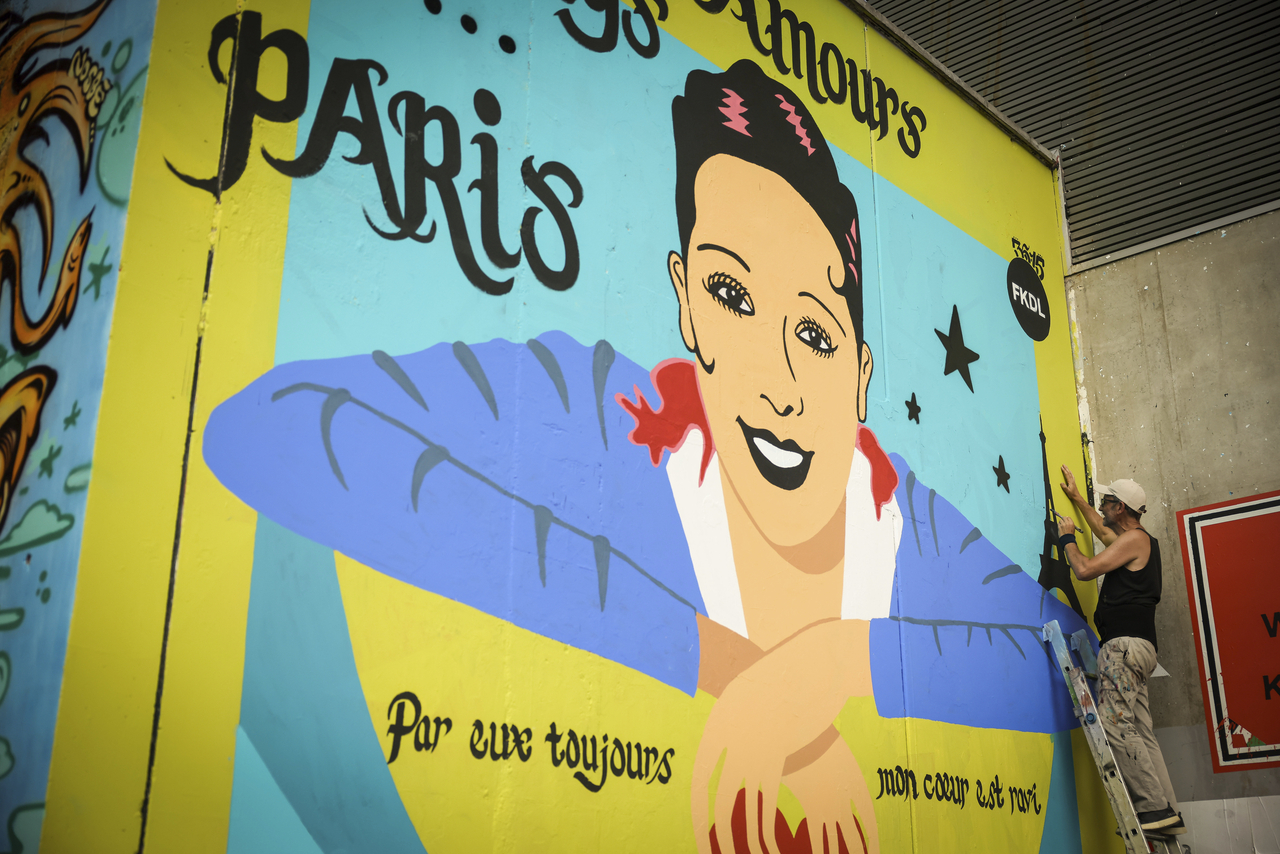
The mural of Josephine Baker in Paris, Saturday (AP-Yonhap)

PARIS (AP) — Paris is reviving the spirit of US-French entertainer and civil rights activist Josephine Baker with a new mural.

Fifty years after her death, Baker now gazes out over a diverse neighborhood of northeast Paris, thanks to urban artist FKDL and a street art festival aimed at promoting community spirit.

Born in St. Louis, Missouri, Baker became a megastar in the 1930s, especially in France, where she moved in 1925 as she sought to flee racism and segregation in the United States.

In addition to her stage fame, Baker also spied on the Nazis for the French Resistance and marched alongside Martin Luther King Jr. in Washington. She died in Paris in 1975.

"I feel moved and I feel happy, because this is part of a memory of my mother," her son Brian Baker told the Associated Press at the unveiling of the mural Saturday. He was one of 12 children Josephine Baker adopted from around the world that she called her "rainbow tribe" and what her son called "a little United Nations."

The mural of Baker, meant to symbolize freedom and resistance, is among several painted in recent days in the neighborhood and organized by the association Paris Colors Ourq.

The artist FKDL said he focuses on "bringing women back into the urban landscape."

"Josephine Baker has always been, for me, a somewhat iconic figure of that era. Both wild and free-spirited, but also deeply connected to music, musicals, and dance," he said. "She was an extraordinary character, an incredible woman."

Baker was the first Black woman inducted into France's Pantheon, joining such luminaries as philosopher Voltaire, scientist Marie Curie and writer Victor Hugo.

"My mother wouldn't have liked words like iconic, star, or celebrity. She would have said, no, no let's keep it simple," her son said.

khnews@heraldcorp.com

Wednesday, February 05, 2025


Zionism is Far-Right Bigotry, Hate of “the Other,” and Supremacy


Eliding a far-right racist’s own religious heritage


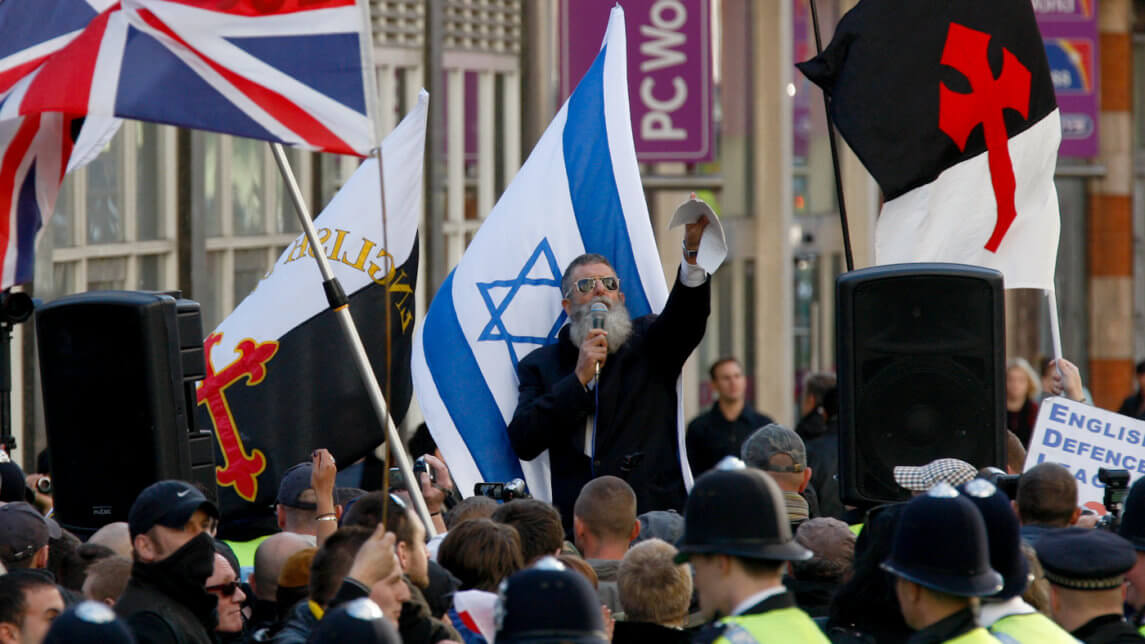
They are trying to elevate France recognizing Josephine Baker as a hero, yet, Amy Goodman has the ability — and whatever else is going on with the Black journalist she interviews, French journalist Rokhaya Diallo — to sidestep the tribal and religious and historical and intellectual identity of this French monster, Éric Zemmour (above image).

When Josephine Baker Sprinkled Her Stardust on the Tour de France - Podium Cafe

He’s Jewish and he openly uses his Jewishness as a cuddle to get where he is today — published writer and candidate for office? Where is the money trail, that is the question. I ask this as I did get a reader’s comments (from the Dissident Voice newsletter where I am published) who is from California but has lived in New Zealand for 25 years. He’s a businessman, in hospitality, and he writes me from time to time. He is concerned with employees from South America, in his New Zealand restaurant, still skeptical of the Pfizer and how the NZ government makes it illegal to work without a series of jabs — booster madness is what 2022 will be. Just a little research on NZ —

New Zealand Terrorist Attack: The Israel Connection

“The corporate press is correct that Tarrant and Breivik follow the practices of the anti-Islam xenophobic movement on the rise in Europe, North America and now Oceania, but the key element they deliberately avoid mentioning is their strong collective affinity for the state of Israel.”

New Zealand Terrorist Attack: The Israel Connection

You know, the Christian Identity politics in the world, well, of course they are tied to Identity, and that is Christianity. The Jewish Identity politics (an entire country, Israel, Jewish, and like In God We Trust USA Christian nation) tie into of course, Jewish-ness. Zionism Identity, well, of course, Zionism is the identifier. Why would Jewish Amy Goodman not mention this person’s — Zemmour’s — Jewish identity? He’s anti-Muslim, and he’s a proponent of murder and mayhem. He’s misogynistic as HELL.

Oh, Josephine Baker —

‘Baker wrote about the injustices she had witnessed for a French paper, France-Soir. From Montevideo to Copenhagen, she gave talks about the evils of US segregation, and on 28 August 1963, she was the only official female speaker to speak alongside Martin Luther King at the March on Washington. In her French military uniform, Baker spoke about her own struggle for justice to a quarter of a million people. Looking out at the mix of races in the crowd, she declared: “Salt and pepper — just what it should be.”

Yet these actions did not go down well with the FBI, who had a file open against her since 1951 because of her “anti-United States statements and her fight for racial equality”. For 15 years, until Baker’s 60th birthday, they recorded her actions and called her a Communist Party apologist, not least because she occasionally partied with the Castro brothers in Cuba.’

Being the first black woman to become a global celebrity and to star in a major feature film – 1934’s Zouzou  undoubtedly made Josephine Baker an influential cabaret siren and fashion icon. Yet she was also so much more. A Second World War spy for the French Resistance, a civil rights activist, a suspected communist sympathiser, and a single mother to twelve adopted children from all over the globe, Baker refused to dance to anyone’s drum but her own.

Her words still resonate today: “Surely the day will come when colour means nothing more than the skin tone, when religion is seen uniquely as a way to speak one’s soul, when birth places have the weight of a throw of the dice and all men are born free.”

(Ailsa Ross is a journalist living in the Canadian Rockies. She’s the author of The Woman Who Rode a Shark: And 50 More Wild Female Adventurers [AA Publishing, 2019])

Josephine Baker lounges on a tiger skin around the time she starred in La Revue Nègre

So, how do we frame all of this through the lens and looking glass of racism and bigotry, a real foundation of Zionism, which is the founding force of the state of Israel? This by, Yoav Litvin, an Israeli-American doctor of psychology/neuroscience, a writer and photographer. His work can be found at yoavlitvin.com.

Early Zionists syncretised many aspects of European fascism, white supremacy, colonialism and messianic Evangelism and had a long and sordid history of cooperating with anti-Semites, imperialists and fascists in order to promote exclusivist and expansionist agendas.

In fact, throughout the past century, anti-Semites and Zionists have worked towards the mutual interest of concentrating Jews in Israel; the former as a means of scapegoating and expelling an unwanted population, and the latter to combat the “demographic threat” posed by native Palestinians. Further, both anti-Semites and Zionists construct Jews as a biological race, which needs to be segregated as part of a utopia of global apartheid.

Zionism is a racist and settler colonialist movement, which opportunistically coopts aspects of Judaism in an attempt to justify its criminal practices of apartheid and genocide of indigenous Palestinians. White supremacy is dominant within Israeli society, which privileges white-skinned Ashkenazi Jews at the expense of dark-skinned African Jews, Sephardi and Mizrahi Jews as well as African refugees. African/black Jewish communities are often denied recognition by Israeli authorities with some members even deported.

Zionism is based on a distinctly secular outlook, which embraces aggression and expansion as an acceptable response to trauma and denounces the traditional Jewish pacifist approach of viewing hardship as divine punishment for sins. The Israeli regime capitalises on a dynamic of violence and inequality reinforced by fear-mongering and the rewards of resource acquisition to promote a privileged ruling class at the expense of colonised Palestinian people. Zionist strategists manipulate the past traumas Jews have endured to galvanise support for aggressive policies that disenfranchise Palestinians.

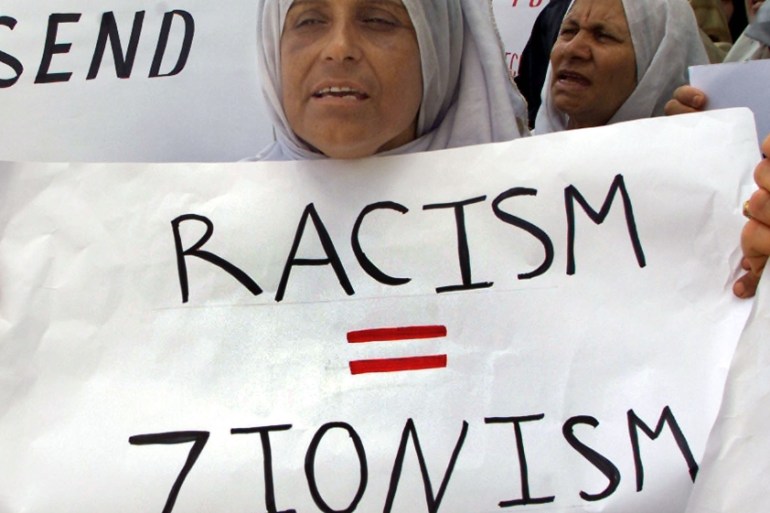
Zionism racism protest Reuters File

They call it double punishment, or at least that’s what Yonathan Arfi, vice president of the Representative Council of French Jews, describes it. False narratives from Jews, and then coming from people who are Jewish. Stephen Miller, anyone? Remember his prominence in Trump-Alt-Hatred politics? So, Zemmour is Jewish, espouses supremacist views of whites (Jews over Goyim, but he doesn’t yammer too much on that), and he thinks all women are baby breeders and do not have the capacity for politics and can’t be geniuses. So, the legitimacy he claims as a Jew with his Nazi patina, well, that is the double take, double tap, double punishment.

So many will question how much Zemmour truly engages with his Jewish identity – but, as philosopher Bernard-Henri Lévy argues, that has become irrelevant. Despite rigorous criticism from the Jewish community, “what Mr. Zemmour does, whether he likes it or not, [is] in the Jewish name”. (source)

The heads of Trump administration officials attached to parachutes.

They all do land with parachutes, pariahs and war criminals, one and all.

Israeli military hegemony is indeed no long-term guarantee of US interests in the region, but the scale of the US-Israel military relationship and the close synchronization of US and Israeli strategy down to the present are determined by a strategic calculus, not by sentiment. Kissinger’s comments do reflect an important shift in US policy at this time, towards greater reliance on compliant Arab regimes to preserve the status quo. But Israel’s function as a “strategic asset” is no mere rhetorical flourish of Ronald Reagan’s campaign. US policy, in 1975 as now, aimed to enhance Israel’s strategic capacity in the region, consolidate friendly Arab regimes, and to isolate and debilitate the Palestinian movement.
— “Kissinger Memorandum: ‘To Isolate the Palestinians,’” Middle East Report, 96 (May/June 1981).

In a recent interview with the New York Times, Pulitzer-prize winner Alice Walker caused much controversy by recommending David Icke’s book And the Truth Shall Set You Free, claiming it was “a curious person’s dream come true”.

Many reacted sharply to Walker’s endorsement of what is widely considered to be an anti-Semitic book, accusing her of embracing Icke’s racist conspiracy theories; others, like Palestinian-American writer Susan Abulhawa, defended Walker, claiming her ideas are anti-Zionist and not anti-Semitic. In her article, In defence of Alice Walker, Abulhawa claimed Palestinians are “killed, humiliated and destroyed in visible and invisible ways by Israel’s notions of Jewish supremacy”.
— Yoav Litvin, “The Zionist fallacy of ‘Jewish supremacy,’” Al Jazeera

Alice Walker
This, Alice Walker, or …
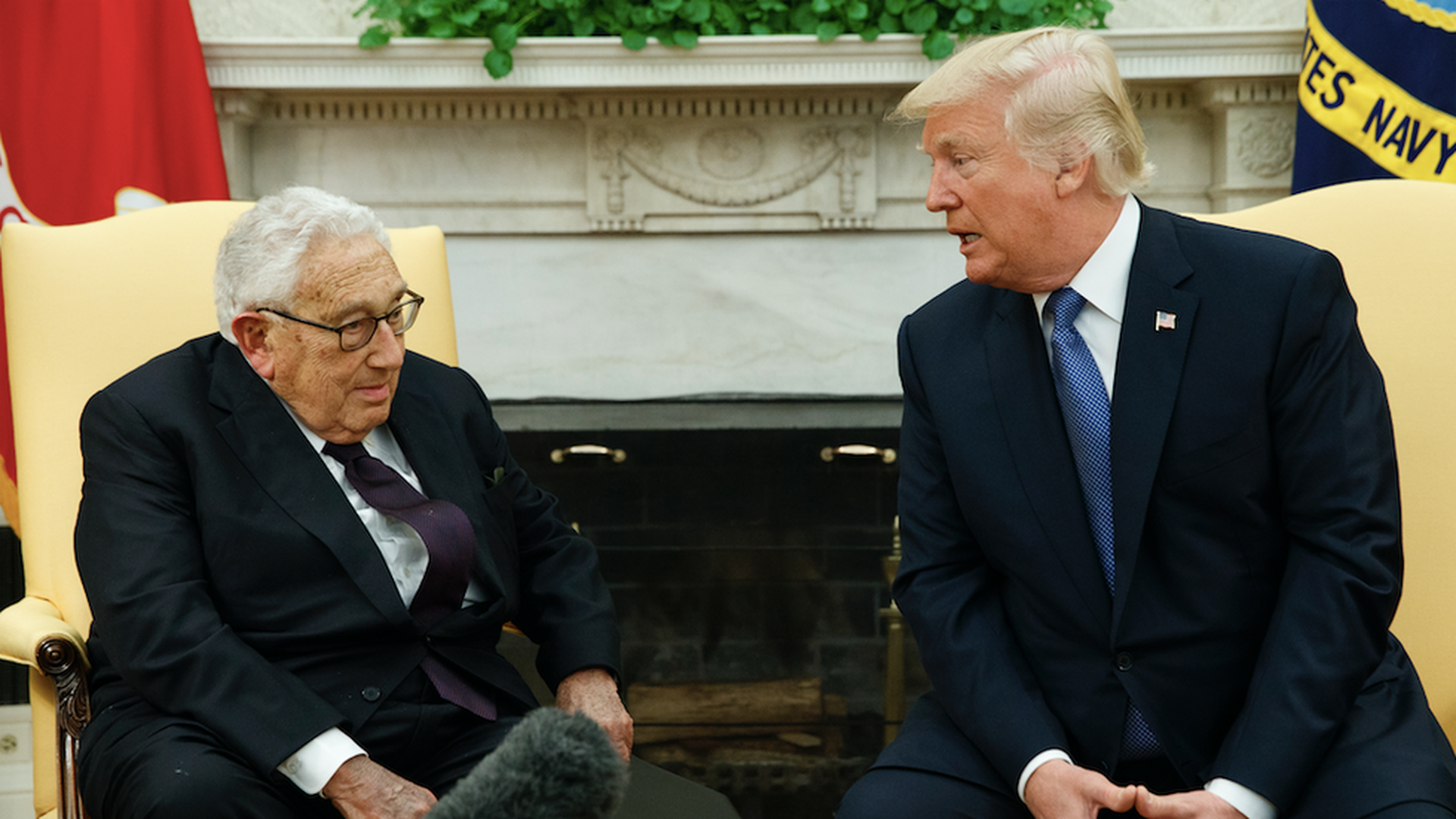
Trump talks North Korea with Henry Kissinger - Axios
Kissinger and the Tribe . . .
Hillary Clinton Emails: How Henry Kissinger Could Help | Time

On December 2, Democracy Now— Read the transcript and see more of Diallo’s words.

We go now to France where we are joined by French journalist and filmmaker Rokhaya Diallo. Her latest op-ed for the Washington Post is headlined Josephine Baker enters the Panthéon. Don’t let it distract from this larger story. Thank you so much for joining us, Rokhaya. Why don’t you start off by telling us that larger story and then go into the significance of Josephine Baker being recognized?

Rokhaya Diallo: Thank you so much for inviting me. I am very happy—to me, it’s very good news to finally have a woman of color in the Panthéon, which is, as you said, one of the most prestigious places to welcome the most revered French figures. It is something that is very meaningful, because as well as being an entertainer, she was also a hero of resisting during the Second World War but also took part to the March on Washington. As you said, she was the only woman.

But there are two things that left me with mixed feelings. First, the fact that France tends to use the fact that it has been very welcoming to African Americans throughout the 20th century to picture itself as a very open and welcoming country. But the thing that we tend to forget is that while Josephine Baker was celebrated and dancing on Parisian stages, France was a very violent colonial power, so it was also colonizing Africa and Asia and also the Caribbean, and perpetrating very much violence to people who were colonized and also displaying them in what was called at that time the Colonial Exhibitions, which were basically human zoos where you could see people coming from the colony to be seen by visitors from Paris and from other regions of France.

So there was a double standard with African Americans being welcomed because they were American and didn’t have any historical agreement to settle with France. At the same time, other people of color were actually submitted to the French state.

I go back to New Zealand, because it is very easy to believe New Zealand is this great, well-run, law abiding, great place!

US bombing base
Survival Bunker Feature photo

Sources:

  1. “New Zealand’s Hidden Role at the Biggest US Bombing Base in the Middle East”
    A recent issue of Air Force News revealed that a senior NZDF officer served a six-month posting at the Qatar base, placing New Zealanders at the heart of the main targeting and bombing center in that region
  2. “World’s Super Rich Buying Pandemic Escape Mansions in New Zealand”
    A number of the planet’s richest people, including billionaire co-founder of Paypal Peter Thiel, are escaping to New Zealand to shelter in luxury bunkers amid the COVID-19 pandemic.
    FacebookTwitter

  3. Paul Haeder's been a teacher, social worker, newspaperman, environmental activist, and marginalized muckraker, union organizer. Paul's book, Reimagining Sanity: Voices Beyond the Echo Chamber (2016), looks at 10 years (now going on 17 years) of his writing at Dissident Voice. Read his musings at LA Progressive. Read (purchase) his short story collection, Wide Open Eyes: Surfacing from Vietnam now out, published by Cirque Journal. Here's his Amazon page with more published work Amazon. Read other articles by Paul, or visit Paul's website.


    Zionism: Jews and Penguins


    Zionists have sought to delegitimize Palestinian opposition to Zionism or Jewish settler-colonialization of their lands, by accusing them of antisemitism, that is, of harboring hatred for Jews as such, not because of what they had/have been doing to Palestinians.

    Yahweh gave Palestine to the Jews in perpetuity: thus the story goes in the ancient literature of the Hebrews as recorded some 2,500 years ago in Genesis. Why would the Palestinians refuse to handover their country to the ‘original’ Ashkenazi title-holders to Palestine: if not for their hatred of Jews – if not for their inveterate hatred of Jews? Is there be any merit to this accusation? Could it be that in fact, this accusation is a smear – one instance of the weaponization of antisemitism – employed by Zionist Jews to malign their Palestinian victims? Indeed, this smear is hurled at anyone with the temerity to disagree with the narrative that Zionist Jews have constructed to justify their European exclusionary settler-colonialism in Palestine, now ongoing for more than a century.

    It is as if the Whites in the United States were to accuse the Blacks of anti-white racism whenever they demanded their human rights. It appears that the Whites in the USA have not thought to be this creative when defending their apartheid, their exclusion of Blacks from the rights of citizenship. That is not to say that they have not been nearly as creative in other ways.

    Consider a simple test to discover where the truth might lie in this matter, with the Jewish accusers or the Palestinians accused? Imagine a replay of the history of Palestine starting with the announcement of the Balfour Declaration on November 2, 1917.

    In this infamous Declaration – actually a letter written by one British Lord, Sir Arthur Balfour, to another British Lord, Lionel Walter Rothschild, a prominent member of the Rothschild banking family in Britain. In this letter, Lord Balfour, the British Foreign Secretary – tersely and artfully – conveyed the British government’s commitment to create a “a national home for the Jewish people” in Palestine. In other words, the British Empire would use all the authority at its disposal to enable European Jewish Zionists to create a Jewish colonial-settler state in Palestine.

    Soon after the Balfour Declaration, European Jews began arriving in Palestine, under the military protection of the British colonial government in Palestine. Over the next thirty-one years, these Jewish colonial-settlers – drawn almost entirely from Europe – built the political, social, administrative and military infrastructure of an exclusionary Jewish state in Palestine – one that rigorously excluded Palestinians – with the fullest support and cooperation of its British colonial government.

    When the Palestinians organized to resist the settler-colonization of their lands, the British colonialists were ready to use brutal force against them. Starting in 1936, as the resistance gained momentum, the British responded with blunt and brutal force. They made mass arrests of Palestinians, incarcerating them in concentration camps without trial; they demolished homes and villages suspected of supporting the resistance; and clamped curfews on villages and cities to disrupt the movement of Palestinian fighters. By the time the Palestinians resistance was crushed in 1939, nearly all the leaders of the resistance had been executed – often staged as public spectacles – sentenced to long prison terms or exiled. In other words, the British had created the conditions for the ethnic cleansing of Palestinians by the Jewish colons.

    In 1947, the Ashkenazi Jewish colons began to employ their superior societal, state and military power to initiate the ethnic cleansing of Palestinians. By the end of 1948, they had captured 78 percent of mandatory Palestine; simultaneously, the Jewish military and militia perpetrated dozens. of massacres to expel 80 percent of the Palestinians from the lands conquered for the Jewish state. Israel banned the return of Palestinian refugees to their homes inside Israel, and those attempting to return were repulsed with deadly force.

    Of the Palestinians who remained inside Israel, many lost their homes, agricultural lands and businesses. In addition, all were placed under military rule that would not be lifted until December 1966. After military rule ended, these Palestinians have lived under a variety of restrictions that remain in force to this day. Israel has been an apartheid society since its inception, with two sets of laws, one for Jewish colons and another for Palestinians.

    In a mere thirty-one years, then, the European Jewish colons had created a Jewish state in Palestine after ethnically cleansing more than half its population, a unique achievement in the history of settler colonialism. In June 1967, Israel conquered the rest of Palestine – East Jerusalem, Gaza Strip and the West Bank – while also expelling another 200,000 Palestinians from these areas.[1]

    All the other European colonial-settlers in the Americas, Oceania and Southern Africa had taken centuries to create their own state, something the Jewish colons in Palestine achieved in a mere thirty-one years. In addition, the Jewish colons achieved this without a natural ‘mother country.’ How did a tiny, hated, weak and persecuted minority manage to achieve this miracle?

    In our replay of this history, we will not change any of the events of this history of the settler-colonization of Palestine. We will only change the identity of the colons; we will replace the European Jewish settler-colonists with Penguin settler-colonists from Antarctica. These Penguins too will enter Palestine to establish an exclusionary Penguin settler-colonial state after expelling 80 percent of the Palestinians from 78 percent of Palestine. In other words, the Jews and Penguins do not differ in their aims, methods or achievements as
    colonial-settlers in Palestine. They differ only in their identity: one group consists of Jews – at first overwhelmingly from Europe – another consists of Penguins from Antarctica.

    If Palestinian opposition to the Zionist project was motivated by their antisemitism or prior hatred of Jews – then we should expect them to react differently to an identical settler-colonial project, now undertaken by Penguins from Antarctica. The Palestinian reaction has to be different because the Penguins are not Jews, and no one could accuse the Palestinians of antipenguinism, or an ancient hatred of Penguins because of their Penguin identity.

    No Orientalists – Jewish, Christian, or secular: English, French or German – have accused Islam, the Qur’an, Prophet Muhammad, Muslim rulers, Muslim theologians, Muslim poets – Hafiz, Rumi, Omar Khayyam – Muslim philosophers – Al-Kindi, Avicenna, Averroes – of teaching the Muslims to hate the Penguins.

    Simply stated, the Palestinians could not have brought a prior anti-Penguinism to their encounter with the Penguin settlers-colonists in Palestine. Without prior hatred of Penguins, therefore – using the logic of the Zionists – we can expect the Palestinians to welcome the Penguin settlers who begin arriving after November 1917. Since the Palestinians not infected with anti-Penguinism, they would not object to their dispossession by the Penguins.

    Indeed, if the Penguin settlers could cite ancient Penguin could cite chapter and verse from their ancient scriptures to prove that a feathered Yahweh, some 5000 years ago, had awarded Palestine in perpetuity to the progeny of a Penguin Abraham and Jacob, we might expect the Palestinians to honor the feathered Yahweh’s pledge, since there is only one God, whether he reveals himself to Penguins, Jews, Arabs, Ostriches or Kangaroos. We might even expect the most devout Muslims among the Palestinians to insist on serving the divinely chosen Penguins as their slaves in perpetuity.

    However, we would be sorely disappointed in these expectations. Once we grant the Palestinians their humanity – and we have to, willingly or not – surely they will oppose the Penguin settler-colonists – as they had resisted the Jewish settlers-colonists – but not because of any prior hatred of their Penguin identity. The Palestinians would oppose the Penguin settlers because of what they must do to them as exclusionary settler-colonists. Like their Jewish counterparts, they too will use terror to ethnically cleanse them, and establish an exclusionary Penguin settler-colonial state in Palestine.

    In other words, the Palestinians will oppose the Penguins because they have arrived in their land with the same intentions as the Zionist Jews. Notwithstanding their disparate identities, both are exclusionary settler-colonists entering Palestine under the military protection of a British colonial government. Regardless of why the Jews or Penguins may have launched their exclusionary settler-colonial project, regardless of who they are, both will use terror to expel the Palestinians from their lands. Since the Palestinians are humans, as human as the Jews, no more and no less, their human instincts of self-preservation, their human pride in their history and culture, their human love for their homes and their children will persuade them to oppose both the Jewish and Penguin colonial project. Indeed, they have the right and moral obligation to resist settler-colonialism, no matter who the colons are, no matter the promises the deities may have made to the colons, no matter the national mythologies they believe or pretend to believe in.

    We may now summarize the argument of this essay. Since an exclusionary settler-colonialism seeks the total or near total erasure of another people, the natural instinct for self-preservation (common to all forms of life) will propel its victims to resist and repel the settlers. The victims’ instinct for self-preservation is not predicated on any prior hatred towards the settler-colonists; their present revulsion over the past and ongoing actions of the colons will suffice to activate their instinct of self-preservation. In other words, the Palestinians resisted Zionism because it sought their erasure as a people, not because the people who sought their erasure were Jews, real or fictive descendants of the Hebrews.

    One has to conclude that Zionist accusation of antisemitism against Palestinians is based on the premise that the latter do not possess the instinct for self-preservation. In the Zionist narrative, the Palestinians opposed Zionists not because they were opposed to their own erasure, but because this erasure would be effected by the hated Jews. They would have welcomed their own erasure if only this were to be effected by any other people – Yemenis, Vietnamese, Nepalese or Australian Aboriginals – or any other species – Penguins, Kangaroos, Koala Bears or Dolphins.

    Notwithstanding the pretext of Zionism – claiming that the European Jews were reclaiming their divine patrimony – the mostly secular Zionist leaders must have understood that this was a cover for their exclusionary settler-colonial project. The white settlers who effected the erasure of native Americans also sought cover for their slaughter in divine sources. Many of them thought of themselves as the new chosen race, and of America as their promised land. Other white settlers in North America spoke of their manifest destiny: this was part of God’s plan to create a new freer, Christian society in a new land.

    The Jewish Zionists owe their success to brute force, not originally their own, but the brute force of antisemitic Western imperialist powers. This is not to suggest that the results of brute force cannot endure. I will claim exemption from such naïvet&eacute. No doubt, the Jewish Zionists were inspired by the many successful European colonial-settler states in the Americas and Oceania. There were many failures too. I am thinking of the many European settler-colonies in North Africa, East Africa and Southern Africa that were dismantled in the second half of the twentieth century. There were also two settler-colonial states that belong in this category: South Africa and Southern Rhodesia.

    Certainly, history will decide whether Zionism belongs in the first or second category of settler-colonialisms, not time that is measured in years or decades, but historical time that is witness to the birth and death of hundreds of states.

    Unfortunately, it may be the case – and I may be wrong about this – that the pioneers of Zionism were not thinking of historical time. Smart as they were, they may have been misled by their own recent successes and by their envy of European nation states.


    Notes

    1. Israel also captured the Golan Heights and the Sinai, territories belonging respectively to Syria and Egypt.

    M. Shahid Alam is professor emeritus of economics at Northeastern University. He is author of two books of poetry: Intimations of Ghalib (Orison Books, 2018) and Yardstick of Life (KDP, 2024). He may be reached at moc.oohay@06720malaqla.