Showing posts sorted by relevance for query REICHSTAG FIRE. Sort by date Show all posts

Monday, February 27, 2023

THE ORIGINAL'FALSE FLAG'

Chance or Nazi plot? Exhumation of 1933 Reichstag fire 'arsonist' could show Hitler orchestrated blaze to stay in power

27 February 2023
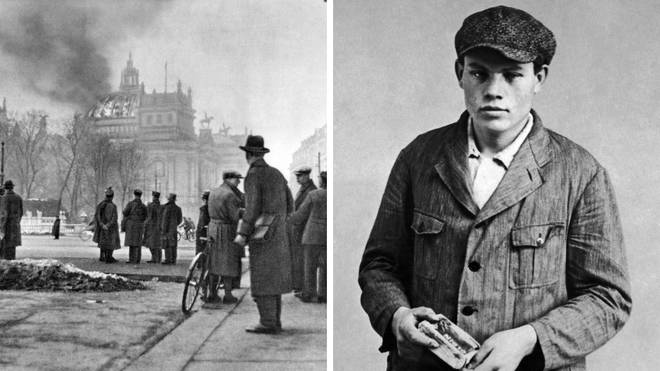
The Reichstag fire took place in 1933
The Reichstag fire took place in 1933. Picture: Getty

On this day 90 years ago, flamed engulfed Germany's parliament building - the Reichstag - six days before a national election, which historians say helped Adolf Hitler secure re-election as chancellor.

Dutch communist Marinus van der Lubbe confessed to the attack and was sentenced to death, aged 24. Then, and for a longer time afterwards, he was considered the sole perpetrator of the fire.

There have been some debates among some historians over whether the fire was simple dumb luck, handing Hitler his re-election, or whether it was an orchestrated manoeuvre by the Nazi Party to regain power.

Now, nearly 100 years on, van der Lubbe's body has been exhumed in the hope of finding a more definitive answer.

The main purpose of his exhumation was to determine whether it was indeed van der Lubbe that had been buried in the Leipzig South Cemetery.
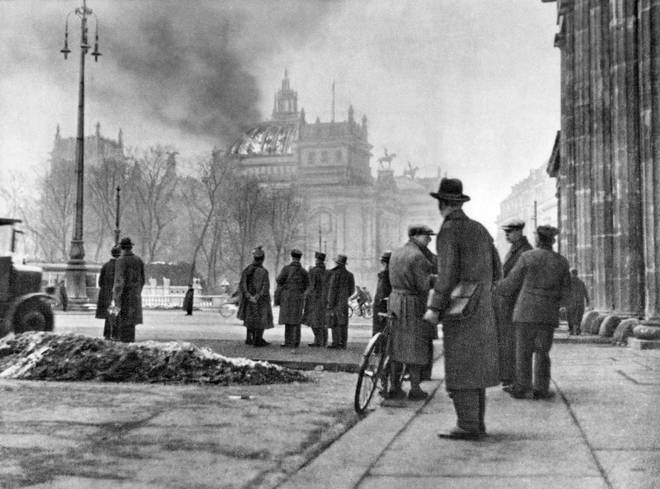
The fire took place on this day in 1933
The fire took place on this day in 1933. Picture: Getty

But a pathologist is also examining his remains to see if there are any traces of toxins due to speculation that he had been given to confess to his crime, The Guardian reported.

There has been major support for the theory that it was solely van der Lubbe that committed the crime since Fritz Tobias published a book that argued the Reichstag fire was a "blind chance".

This theory argues that only one perpetrator could have carried out the attack as the Nazi party appeared surprised by the news, worrying that it was the beginning of a communist revolution.

Read More: Vladimir Putin's £274 million spy plane 'destroyed by drones' as pro-Ukraine partisans swoop

Read More: Putin will eventually be killed by his inner circle, Zelenskyy says

Van der Lubbe was also the only person arrested in the building at the time of the fire and was the only person who confessed to the crime.

But others believe that the "thoroughly prepared" nature of the arson attack suggests a larger plan beyond the capabilities of a mere 24-year-old communist.

“When it comes to the question of whether Marinus van der Lubbe could have carried out the arson attack all by himself, the evidence is overwhelming,” Carter Hett told the publication.
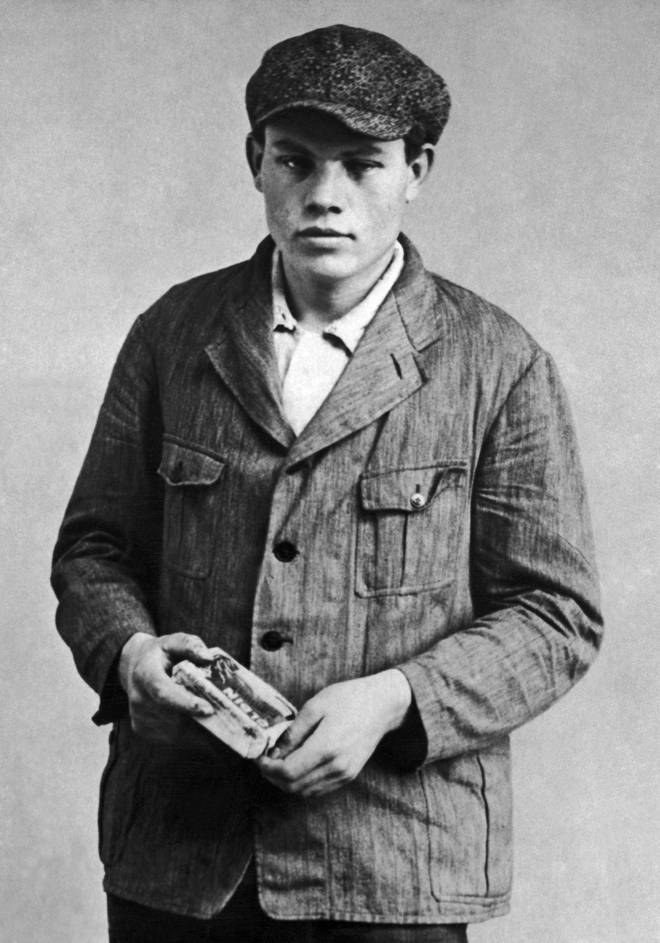
Marinus van der Lubbe
Marinus van der Lubbe. Picture: Getty

“There is no way he could have set fire to the plenary chamber within the 15 to 20 minutes at his disposal. He would have needed a hydrocarbon accelerant.”

“It is true that we are lacking any evidence as to how a link-up between Van der Lubbe and the SA could have come about,” Carter Hett added.

“It does still seem insane that they would have picked this unstable, almost blind young man as the fall guy.”

"Blind chance, an error" or Nazi plot?
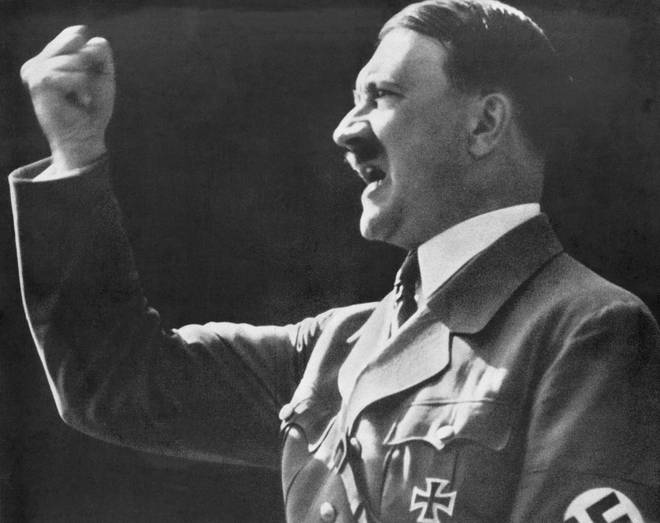
Adolf Hitler used the fire to seize power in Germany
Adolf Hitler used the fire to seize power in Germany. Picture: Getty

Regardless of the cause of the fire, it is widely accepted that the chaos generated by the Reichstag fire helped Hitler to secure re-election as chancellor.

The fire, which was blamed on the "enemy within", took place just six days before the 1933 German federation.

Hitler was able to persuade Germany's president at the time to issue the Reichstag Fire Decree, suspending civil liberties in Germany.

A huge number of communists were arrested, including in the Reichstag, crippling communist participation in the election and helping Hitler to victory.

How the Nazis Exploited the Reichstag Fire to Launch a Reign of Terror


Ninety years ago today, a fire engulfed the Reichstag in Berlin. The arsonist, Marinus van der Lubbe, was hoping to inspire resistance to fascism, but the Nazis used the fire as a pretext to impose a regime of violent terror against the German left.


The Reichstag in flames, February 1933. (Wikimedia Commons)

02.27.2023
 Jacobin

Ninety years ago today, on February 27, 1933, a fire engulfed the German parliament, the Reichstag. The inferno came just weeks after the appointment of Adolf Hitler as Germany’s chancellor.

The Nazis had not yet established an untrammeled dictatorship, and they immediately used the Reichstag fire to strengthen their position. Claiming that the fire was meant to be the signal for a communist insurrection, they cracked down violently on their enemies — most of all the activists of the Communist Party (KPD).

Many people assumed that the Nazis must have been responsible for the fire, which came at such a convenient moment. Indeed, “Reichstag fire” still serves as a shorthand term for an act of terror used as an excuse to seize power.

However, the truth was simpler. The man responsible was a Dutch left-wing radical, Marinus van der Lubbe, who had been arrested inside the burning Reichstag. Van der Lubbe was a tragic figure whose actions contributed to the very outcome he wanted to prevent — a Nazi dictatorship that suppressed the organizations of the German working class.

A Political Maverick


Van der Lubbe was born on January 13, 1909, in the Dutch town of Leiden. He grew up in poverty. His father abandoned his mother and her seven children when Van der Lubbe was seven years old, and his mother died when he was just twelve. From that point on, Van der Lubbe was taken care of by his half sister and her husband. Both later described him as a sincere and selfless man.‘Reichstag fire’ still serves as a shorthand term for an act of terror used as an excuse to seize power.

Marinus — or Rinus as he was known — wanted to become a mason and started to work at a construction site. His fellow workers nicknamed him “Dempsey,” after the boxing champion Jack Dempsey, on account of his strength. It was at work that he encountered radical ideas, joining the Communist Youth Movement at the age of sixteen.

A work accident damaged his eyes, leaving him unable to work as a mason. He had to rely on a measly sum paid by social insurance and whatever jobs he could find. But he also became an activist, chairing meetings, putting up posters, selling the publications of the Communist Party of the Netherlands (CPN) in the street, and joining demonstrations.

Soon he engaged in his first confrontations with the police. The front page of the January 26, 1931 issue of the Dutch Communist Party newspaper De Tribune carried an article denouncing police violence against Van der Lubbe. It described him in glowing terms as a thoughtful comrade who was as strong as he was brave. In his hometown of Leiden, Van der Lubbe became a well-known figure among working-class radicals.

A headstrong, rebellious character, Van der Lubbe did not really fit in the CPN. He started doubting the party as it became increasingly rigid and top-down in the early 1930s. In 1932, Van der Lubbe and some of his comrades produced their own journal for unemployed workers called Werkloozenkrant. They insisted that the CPN’s rhetoric about “independent struggle from below” was no more than empty words.

In the late ’20s and early ’30s, while still a party member, Van der Lubbe traveled across Europe by walking and hitchhiking, working at farms in return for a meal and a place to stay for the night. After the Wall Street crash of 1929, there were many unemployed workers like him wandering Europe. Sometimes, Van der Lubbe traveled in company, but more often he preferred to go his own way. The party leadership did not appreciate the fact that he went on such travels on his own initiative.The council communists were a current of Marxists who rejected any role for political parties or trade unions in the emancipation struggle of the working class.

In 1931, Van der Lubbe left the CPN and joined the activities of the loosely organized council communist movement. The council communists were a current of Marxists who rejected any role for political parties or trade unions in the emancipation struggle of the working class. They put their hope in workers’ self-activity instead to form the workers’ councils that would reorganize society.

As Van der Lubbe and his comrades explained it in Werkloozenkrant:

Workers should unite, make decisions, and elect some of their own to implement those decisions under supervision of the others. This is what is called a workers’ council.
On a Knife’s Edge

In the early weeks of 1933, the situation in Germany was on a knife’s edge. The Nazis were approaching power, yet millions of workers were still organized in left-wing parties and trade unions opposing them.In the early weeks of 1933, the Nazis were approaching power, yet millions of workers were still organized opposing them.

Communist propaganda was a mixture of bravado and ominous warnings. On February 1, 1933, the KPD paper Rote Fahne carried the headline “Storm over Germany!” and claimed that the working class was in a state of feverish activity. However, there was no mass resistance when Hitler was appointed chancellor on January 30 and the Nazis began to install their dictatorship.

Van der Lubbe wanted to see the situation for himself and traveled to Berlin. He arrived in a country where the two main workers’ parties, the Social Democrats (SPD) and the KPD, were unable to organize effective resistance to the rise of Nazism. Both underestimated the danger posed by Hitler in power and both lacked an adequate analysis of fascism.

As the German socialist historian Wolfgang Abendroth later observed, the SPD “stuck its head under the sand while fascism grew,” comforting itself with the mantra ‘‘Germany is not Italy.” The party leadership believed that a possible Hitler dictatorship might follow the precedent of Otto von Bismarck’s anti-socialist laws in the nineteenth century, when the state had banned socialist publications but respected the immunity of SPD parliamentarians from prosecution and allowed individual socialists to run in elections.

Attempting to defend the Weimar Republic, the SPD increasingly abandoned the struggle for social and political rights. From 1930 onward, it gave toleration in the Reichstag to the government of Heinrich Brüning, who would otherwise have been unable to stay in power. This enabled Brüning to ignore parliament and rule by decree as he imposed deep cuts to public spending that worsened the current economic depression.In 1932, the SPD supported the right-wing nationalist Paul von Hindenburg in the presidential election.

In 1932, the SPD supported the right-wing nationalist Paul von Hindenburg in the presidential election. Hindenburg rewarded them for their votes by backing a coup that removed the Social Democrats from their stronghold in the regional government of Prussia. Shortly afterward, he appointed Hitler as chancellor.

The Social Democrats refused to join the KPD in a general strike against the coup in Prussia or in response to Hitler’s appointment. The SPD leadership declared it would not be the first to “leave the sphere of the constitution and legality” and instead filed a motion of distrust against Hitler. By doing so, the SPD leaders avoided a dangerous and bloody struggle against fascism, at the cost of much greater bloodshed a little further down the line.

Dissolving Like a Sugar Cube

For its part, the KPD was a determined opponent of the Nazis and prepared for a period of illegality. However, it also underestimated the terror that was to come. The KPD expected the Nazi movement to quickly fall apart because of the contradictory interests running through it. Leading Communists referred to Brüning’s rule as already representing “fascism,” which suggested that Hitler’s accession to power would make little difference.The KPD expected the Nazi movement to quickly fall apart because of the contradictory interests running through it.

The KPD’s attitude toward the SPD was based on Stalin’s concept of “social fascism,” according to which social democracy in a country like Germany played a similar role to Italian fascism by repressing the working class and ensuring the survival of capitalism. This false theory justified sectarian hostility to Social Democrats and stood in the way of joint action against Nazism.

Visiting Berlin in late 1932, the Argentinian revolutionary Hippolyte Etchebéhère described what he encountered:

Confusion, disarray, an utter lack of confidence in their party and in their leaders . . . And beneath our very eyes the formidable German Communist Party, Berlin’s premier party, the most powerful section of the Communist International, dissolved like a sugar-cube in water.

Van der Lubbe observed similar helplessness. He attended rallies organized by the SPD and the KPD that the police broke up without meeting resistance. Meanwhile, Nazi stormtroopers marched through the streets unhindered.

After his arrest in the Reichstag, Van der Lubbe explained what motivated him. The new German government, he stated, meant continuing oppression of the working class and war. He had seen already how the Nazis were limiting the freedoms of workers and their organizations, but he believed that the workers were not ready to act without approval from their leaders: “In my opinion, something needed to be done to protest against this system.” He decided to set fire to a building associated with the state.

Van der Lubbe insisted he had acted alone: “No one has helped me with this.” However, the Reichstag fire became the ideal pretext for the Nazis to tighten their grip on power. In addition to arresting Van der Lubbe, the police apprehended Ernst Torgler (the chairman of the KPD faction in the Reichstag) and three Bulgarian communists, Blagoy Popov, Vasil Tanev, and Georgi Dimitrov, accusing them of participating in a conspiracy to seize power by force.

The Nazis used the supposed threat of a communist revolution to justify the elimination of civil liberties. They arrested thousands of their opponents, most of whom were communists, and put them in concentration camps. Dozens were killed right away.

The Brown Book

Suspicions quickly arose that the Nazis had started the fire themselves. The Brown Book of the Reichstag Fire and Hitler Terror appeared to confirm those suspicions. It was published in August 1933 by the World Committee for the Victims of German Fascism, a project of Willi Münzenberg, the brilliant propagandist of the Communist International.

The Brown Book mixed facts about the brutality of the Nazis with fiction about a Nazi conspiracy involving Van der Lubbe, adding a large dollop of character assassination to the mix. Van der Lubbe, according to the Brown Book, was a “tool” of the Nazis. It made him out to be a vain, attention-seeking figure and a habitual liar.The Brown Book mixed facts about the brutality of the Nazis with fiction about a Nazi conspiracy involving Marinus Van der Lubbe.

In a sentence that was omitted from the English-language version, the Brown Book described Van der Lubbe as a patsy who “at the latest in the final months of 1932, had succumbed to National Socialist temptations” and was manipulated by the Nazis to take the blame for arson committed by their stormtroopers.

Another passage left out of the English translation depicted Van der Lubbe as someone who was homosexual “in his whole essence”:

His character is feminine, his reserve and shyness in front of women is established by the testimony of many, his need for closeness and tenderness from men is notorious.

All versions of the Brown Book insisted that Van der Lubbe’s alleged sexuality provided the link with the Nazis.

It was well-known that Ernst Röhm, the head of the Sturmabteilung (SA) paramilitary squad, was homosexual. The Brown Book claimed that the Dutch council communist had been one of Röhm’s lovers. The German-language version labeled Van der Lubbe a Lustknape — a “pleasure boy.” The supposed proof of Van der Lubbe’s complicity and the role of the SA presented in the Brown Book and in the campaign that followed later turned out to be fake.

In the Netherlands, a small group of Van der Lubbe’s comrades came to his defense. They published a Roodboek that included statements from various radicals who had known Van der Lubbe, as well as his diary and letters. But their efforts could not match the Münzenberg propaganda machine.

“A Miserable Faustus”

Much was made of Van der Lubbe’s conduct during the trial. He was mostly silent, his head sunk onto his chest. He struck a pathetic figure, seemingly unable to wipe his nose.

Was he perhaps being drugged to prevent him from revealing the truth? Surely his behavior showed that he was at best a fool, unable to answer for his actions. So the speculation went from observers of the proceedings.

Van der Lubbe’s behavior also surprised his Dutch comrades, who had expected him to take the opportunity to explain what he had done. It contrasted strikingly with the conduct of Georgi Dimitrov. An experienced leader with a record as a parliamentarian and trade union organizer, Dimitrov eloquently defended himself. Following what was now the Comintern line, he also attacked Van der Lubbe as the tool of the Nazis, a “miserable Faustus.”A comrade who saw pictures of Van der Lubbe in court, with his silent, sunken head, remarked that this is what a defeated working class looks like.

However, when we take Van der Lubbe’s situation into account, his behavior was not so mysterious. On March 29, the Nazis introduced the Lex Lubbe — a law that imposed the death penalty for his action. Van der Lubbe had not been afraid of jail, but now he faced execution.

Meanwhile, as the months went by, it must have become clear to him that his action had resulted in no positive effect. Most of the Left abandoned him and he found himself attacked not only by the Nazis but also by his codefendants. A comrade who saw pictures of Van der Lubbe in court, with his silent, sunken head, remarked that this is what a defeated working class looks like.

Van der Lubbe’s silence was a refusal to participate in the charade. At times, confronted by what for him must have been incredible stories, Van der Lubbe broke out in laughter. When he did speak, he repeated the message that he alone had set the Reichstag on fire, insisting that his codefendants were innocent.

Despite all the attempts by the Nazis, there was no evidence to prove that Van der Lubbe was part of a conspiracy. The legal system had not yet been completely subordinated to the Nazi state at this point. On December 23, 1933, the court finally decided to acquit Torgler, Popov, Tanev, and Dimitrov. Only Van der Lubbe was found guilty and sentenced to death. Hitler was furious, feeling humiliated by Dimitrov and what he called “senile judges.” He would never permit a court to disobey his wishes again.

In the early morning of January 10, 1934, a silent, seemingly calm Van der Lubbe went to the guillotine. He would have turned twenty-five three days later.

Remembering Van der Lubbe

The controversy over Van der Lubbe’s role briefly resurged in 2019 when journalists reported a new finding that supposedly proved the existence of a Nazi conspiracy to burn down the Reichstag. In 1955, Hans-Martin Lennings, a former SA member, had filed a statement with a notary that he and several other stormtroopers had transported Van der Lubbe into a burning Reichstag.

In fact, people had known about this statement for decades. Over the years, several proponents of the theory that the Nazis were responsible for the fire had made oblique references to the statement, without publishing it or revealing the name of its author.

They obviously had doubts about the credibility of Lennings, who had suffered serious brain trauma in 1930 after a fight with communists. He tried to have himself committed to a mental hospital during the Third Reich and had difficulty distinguishing fact from fiction, according to his close relatives.

In any case, the statement was contradicted by witnesses who had seen Van der Lubbe loitering around the Reichstag before the fire. In his recent book The Hitler Conspiracies, historian Richard Evans went over the available evidence yet again, concluding that Van der Lubbe had indeed spoken the truth.

Van der Lubbe was mistaken in his assessment of the political situation in Germany at the beginning of 1933, and in his expectations of what might result from his action. But those mistakes surely pale in comparison to the abject stupidity of the KPD and SPD leaders who obstructed united action against the rise of Nazism.

The arson unquestionably played into the hands of the Nazis. However, if it had never happened, they would no doubt have found — or made — another excuse for imposing their dictatorship. Van der Lubbe’s sincerity led to his death. We can recognize his error while remembering him as a working-class revolutionary.

CONTRIBUTOR
Alex de Jong is editor of the socialist journal Grenzeloos and an activist in the Netherlands.

Mar 29, 2007 — Philippe Bourrinet on the reaction of council communists in Holland to Marinus Van der Lubbe burning down the Reichstag in Germany, ...

Friday, September 12, 2025

Has Trump’s Reichstag Moment Arrived?

All Hitler needed in 1933 was an excuse, and it didn’t take him long to find one. The fire this time may be the assassination of a key figure in the MAGA movement.

MAGA'S HORST WESSEL


Chuck Idelson
Sep 12, 2025
Common Dreams

Is this America’s Reichstag moment? The murder of conservative organizer Charlie Kirk, founder of the right-wing Turning Point USA organization, and the overheated response it generated in MAGA world, may come to be seen as its own turning point on the path to autocratic rule in the United States.

Officials in Utah on Friday announced the apprehension of 22-year-old Tyler Robinson as the suspected murderer, but already in the less than 48 hours since the abhorrent assassination of a top Trump confidant, chilling echoes can be heard that remind us of how Adolph Hitler exploited a fire at the German Parliament, the Reichstag, in 1933 to remove his final impediments to unleashing a horrific dictatorship in the Third Reich.


RECOMMENDED...


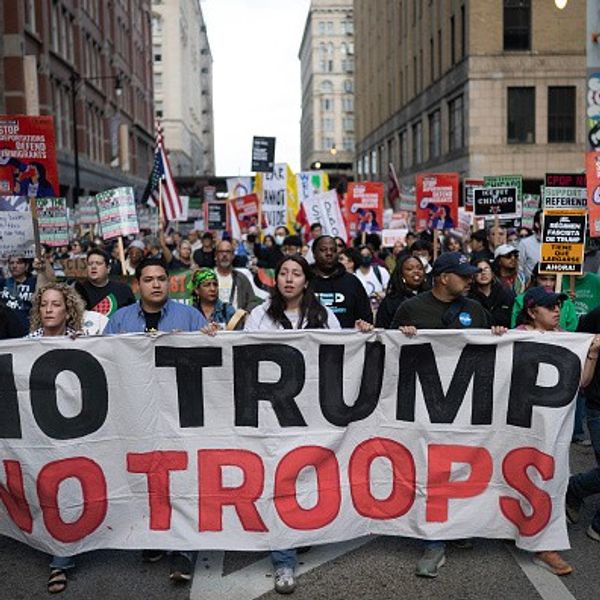
‘No Trump! No Troops!’ Thousands March in Chicago as President Threatens ‘War’


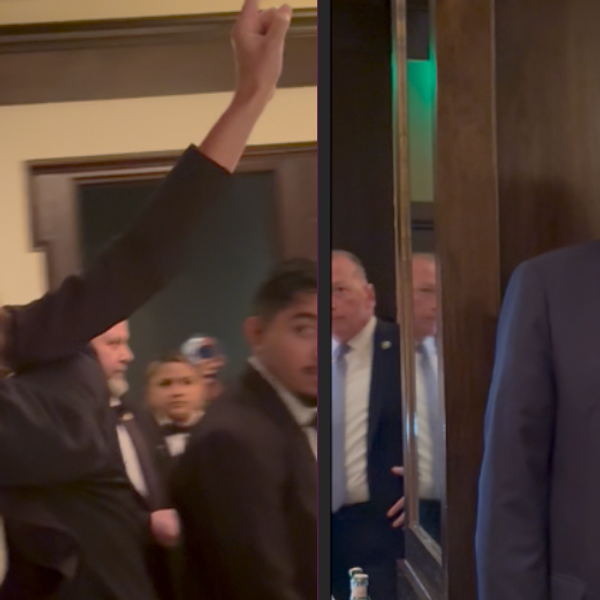
‘The Hitler of Our Time!’ Trump Confronted Inside DC Steak House

Kirk had become a key figure in the Trump movement. His mobilizing on college campuses which was credited as spiking the youth vote for Trump, proclivity at demonizing Democrats and the left, mainstreaming racism, and outspoken role as a 2020 election denier, led Trump to call him “one of 3 or 4 people most responsible for my (2024) election.” Trump and multiple Trump followers quickly branded the murder as a violent attack on the entire Trump movement, “all of us,” promising threats of war. Fox News talking head Jesse Waters declared, “we’re going to avenge Charlie (Kiirk’s) death.”

As usual, Trump led the recriminations and threat of retaliation. “For years, the radical left has compared wonderful Americans like Charlie Kirk to Nazis and the world’s worst mass murderers and criminals,” said Trump in a widely broadcast video. “This kind of rhetoric is directly responsible for the terrorism that we’re seeing in our country today and it must stop right now. My administration will find each and every one of those who contributed to this atrocity, and to other political violence, including the organizations that fund it and support it.”

In singling out attacks by the so-called “radical left” in his video, Trump seeks to create a counter-narrative of who is provoking political violence, for example, ignoring the recent murder of Democrat Melissa Hortman, the former state house speaker and her husband, Mark, by a reported Trump supporter, an act Utah Sen. Mike Lee blamed on “Marxists.”

Trump and others on the right mocked the attempted murder of former House Speaker Nancy Pelosi’s husband, Paul. Trump routinely urged supporters to assault protesters at 2016 campaign rallies. And, most notably, Trump pardoned over 1,500 rioters who attacked the U.S. Capitol on January 6, 2021, including those who assaulted Capitol police officers and some of whom have since been re-arrested and charged with subsequent crimes.

Further, some of the most notorious mass killings in recent years were committed by shooters with far-right and white supremacist leanings, including at an El Paso Walmart, Buffalo grocery store, Charleston Black church, and Pittsburgh synagogue.

Blaming the left and Democrats in general for the Kirk shooting, and the broader array of what Fox personality Sean Hannity calls “ten nonstop years of rage and hatred and a vile language,” and a left whose “ideology is pure evil,” as GOP Rep. Rob Onder insisted on the House floor Thursday, signals the specter of a broader, dangerous response.

Since starting his second term, Trump has steadily moved to expand his authoritarian rule, emphatically evidenced by his draconian secret agent deportation raids and use of federal troops to invade cities in Democratic-led states and cities not to “fight crime,” but as a warning to political opponents. However, he has chafed against lower court legal setbacks and other perceived restraints on his power grab and prepared for opportunities to take the next step. Kirk’s murder, and the vitriolic demands for further crackdown by influential members of Trump’s MAGA team and supporters, draw a parallel in history.

When Hitler was appointed Chancellor in Germany on January 30, 1933, he still had some limits imposed by right-wing coalition partners and the aging Weimer Republic President Paul von Hindenburg. A month later, on February 27, 1933, a fire broke out in the Reichstag gutting the building. Hitler quickly seized on the blaze as an opportunity to fulfill his dreams.

Rushing to the Reichstag, Hitler boasted “we will show no mercy anymore,” notes Peter Fritzsche in Hitler’s First Hundred Days. “Whoever gets in our way will be slaughtered.” He meant Communists,” but also proclaimed “we also have to move against the Social Democrats. We are not sparing anyone.”

“You are now witnessing the beginning of a great new epoch in German history,” Hitler told British journalist Sefton Delmer “that night as they watched the flames consume Parliament. The fire is the beginning,” recounts Ruth Ben-Ghiat in Strongmen: Mussolini to the Present.

The next morning, Hitler persuaded the cabinet, and Hindenburg signed an executive order, the Decree of the Reich President for the Protection of the People and State. The Reichstag Fire Decree, writes Benjamin Carter Hett in The Death of Democracy “tore the heart out of the democratic constitution of the Weimar Republic, cancelling at a stroke freedom of speech and assembly, and freedom from arbitrary arrest and detention.”

The decree not only “suspended all legal protection of speech, assembly, property, and personal liberty, and permitted authorities to arrest” people at whim,” observes Robert Paxton in The Anatomy of Fascism, it had another provision that may look especially attractive to Trump. “It gave the federal government authority over the state governments’ police power.” Now, adds Carter Hett, it even “allowed the central government to remove any state government from office.”

A month later, following a new election that increased Hitler’s hold on government, an additional emergency decree transformed the “constitutional and temporary dictatorship” into what Fritzsche calls an “unconstitutional and permanent dictatorship.”

“Hitler had secured the ability to govern without any checks on the exercise of his authority,” says Ben-Ghiat. “The fire allowed the Nazis to create a society where it was always wartime, the single act of terror a justification for emergency rule,” writes Fritzsche. “The Reichstag Fire Decree became the legal foundation for Hitler’s twelve-year dictatorship,” says Carter Hett.

“The Left is the party of murder,” posted Elon Musk on his X platform after Kirk’s murder. “It’s time for the Trump administration to shut down, defund, & prosecute every single Leftist organization,” declared Trump’s influential friend Laura Loomer. Trump reiterated the heart of these themes in his video address.

Will he make this his Reichstag moment? Only stepped-up opposition by all of us to dictatorship can stop him.

Thursday, June 16, 2022

Trump’s pick for Pa. governor says he sees ‘parallels’ to Hitler’s power grab in Capitol riot

Ryan J. Reilly
Tue, June 14, 2022, 

WASHINGTON — The Donald Trump-endorsed nominee for governor in Pennsylvania compared the Jan. 6 attack to historical events staged by the Nazis, saying that he saw "parallels" between the criticism of the Jan. 6 attack and the 1933 Reichstag fire, which Hitler used to seize more power.

Doug Mastriano was at the U.S. Capitol on Jan. 6.


Mastriano, a Pennsylvania state senator, has been subpoenaed by the House Jan. 6 committee. He organized buses to D.C. that day, according to receipts his campaign's lawyer previously acknowledged turning over to the Jan. 6 committee. Video shows he was just feet away as rioters ripped down police barricades, but he has said he followed police lines “as they existed” and says he left the Capitol when it was “apparent that this was no longer a peaceful protest.”

His primary election victory last month has prompted a renewed look at his role on Jan. 6, including previously unpublished photos that show him in the back of a crowd that breached a police barricade.

He is also receiving increased attention about his comments about Jan. 6.

Last week, Mastriano live-streamed on Facebook as he was interviewed Friday for the podcast "The World According to Ben Stein."

Stein — a former Richard Nixon speechwriter who hosted the 1990s gameshow "Win Ben Stein's Money" and played an economics teacher in the 1986 movie "Ferris Bueller's Day Off" — called the deadly Jan. 6 attack "a ridiculously trivial thing" on the podcast.

Stein said the country is getting "more and more into a dictatorship," and compared Jan. 6 to the 1933 fire on the Reichstag, the legislative branch in Berlin, that Hitler blamed on communists. The Nazis then used the fire as a pretext to suspend civil liberties and assume more power.

"The Nazis immediately seized upon it [the Reichstag fire] to impose emergency measures," Stein said. "I think something like this is happening with the Jan. 6 nonevent."


Stein called the riot a "ridiculously trivial thing."

“It was not an insurrection," he added. "It was not an attempt to take over the government. It was a demonstration by a group that felt frustration by the statistical impossibility of the vote having gone the way the Democrats said it did.”

Mastriano responded to Stein's comparison, saying he concurred with the comparison between Jan. 6 and the Reichstag fire.

“I agree with the political, with the historic analogy laid out there, so using something that was very suspicious in Berlin to advance their agenda, you know, the national socialists there," Mastriano said. "I do see parallels.”

Mastriano, who previously said that those who broke the law on Jan. 6 "must be prosecuted," said on Stein's podcast that law enforcement had taken "extreme, heavy-handed measures" in response to the attack.

"It's just really heartbreaking watching how quickly our country's falling down, and that we have people being publicly arrested for show to send a message," Mastriano said. "I think what we're seeing in America now makes McCarthy in the '50s look like an amateur."

A member of the online sleuths Sedition Hunters — individuals who have spent the past 17 months investigating the Jan. 6 attack and identifying hundreds of rioters to law enforcement — say they have found new photos of Mastriano on the Capitol grounds moments before the rioters breached a police barricade line on the eastern side of the U.S. Capitol. Minutes later, rioters smashed the window of a door leading into the Capitol rotunda, according to timelines the online sleuths have constructed using the videos, photos, press coverage and social media posts of the day.

Online sleuths have assisted the FBI in hundreds of Capitol riot investigations, successfully identifying rioters months before they are arrested.

NBC News has reviewed the videos and images used to construct the timelines and compared other images of Mastriano at the rally with those identified by the sleuths. In the images, Mastriano appears to be wearing the same scarf and hat and is in a consistent place in the crowd. In the series of images, Mastriano is accompanied by a woman who appears to be his wife, and Mastriano has publicly acknowledged that his wife was with him that day. He has never disputed his identification in previous images.

The images, shared with NBC News, appear to show Mastriano holding up his cellphone as rioters in the front of the mob face off with police at the Capitol steps. Reconstructed timelines and other videos filmed nearby show rioters would breach this police line within minutes, ripping away a crowd control rope line and rushing past officers up the stairs. The timelines and videos, including unedited versions, that show Mastriano in the crowd were reviewed by NBC News.


A man who appears to be Doug Mastriano takes photos or video with his cell phone on the steps of the U.S. Capitol on Jan. 6, 2021. (@MichaelCoudrey via Twitter)

Online sleuths also identified a video posted by "Stop the Steal" organizer Mike Coudrey on Jan. 6 that appears to show Mastriano taking photos or video with his cellphone as rioters face off with police on the steps of the U.S. Capitol. Coudrey's tweet celebrated the mob, which he said "broke through 4 layers of security at the Capitol building.

Mastriano’s campaign did not respond to NBC News’ request for comment. Mastriano previously said that he “respected all police lines as I came upon them" and that he never stepped foot on the Capitol stairs. One of his campaign aides, Grant Clarkson, was near the front of the mob, NBC previously reported. There has been no evidence that Clarkson entered the Capitol that day and he has insisted he did not.

Mastriano is facing Pennsylvania Attorney General Josh Shapiro, the Democratic gubernatorial nominee, in November.

Wednesday, January 08, 2025

Historian reveals how Hitler 'dismantled' democracy in less than two months


Adolf Hitler in 1941 (Creative Commons)


January 08, 2025
ALTERNET

After Nazi dictator Adolf Hitler was appointed chancellor in 1933, he promptly packed the government full of loyalists and used Weimar Germany's constitution to turn himself into an absolute dictator.

In a Wednesday essay for the Atlantic, historian Timothy W. Ryback, who is the director of the Institute for Historical Justice and Reconciliation in The Hague, described the process in which Hitler rapidly disintegrated Germany's constitutional republic in just 53 days. Ryback noted that after the failed Beer Hall Putsch — in which the Nazi leader attempted to violently overthrow the government — Hitler abandoned his goal of violent revolution in favor of "destroying the country's democratic system" through legal means.

"Having spent a decade in opposition politics, Hitler knew firsthand how easily an ambitious political agenda could be scuttled," Ryback wrote. "He had been co-opting or crushing right-wing competitors and paralyzing legislative processes for years, and for the previous eight months, he had played obstructionist politics, helping to bring down three chancellors and twice forcing the president to dissolve the Reichstag and call for new elections.

After his election in 1933, Hitler bragged that the German electorate welcomed him with "jubilation," and rolled out a plan to force out longtime career civil servants with political stooges committed to his vision. He then executed a plan to get two-thirds of the Reichstag (the German parliamentary body) to pass an "empowering law" that would allow him to centralize his authority and govern by decree.

Hitler was convinced that he needed the empowering law to follow through on his campaign promises, which, according to Ryback, included calls to "revive the economy, reduce unemployment, increase military spending, withdraw from international treaty obligations, purge the country of foreigners he claimed were “poisoning” the blood of the nation and exact revenge on political opponents." He also notably ran on draining den parlamentarischen Sumpf, or "the parliamentarian swamp," and his economic agenda including sweeping new tariffs on grain imports.

Ryback — who has authored multiple books about the rise of Hitler and the Nazi regime – explained that Hitler becoming an absolute dictator was a significant comeback story. After the Beer Hall Putsch, Hitler was jailed and his movement was discredited. And when the Nazi Party lost the 1932 election and 34 Reichstag seats, he was apparently "contemplating suicide" and had effectively "given up all hope."

However, after President Paul Von Hindenburg agreed after a negotiating session to make him chancellor and gave him two cabinet posts to fill, Hitler picked two staunch loyalists (Wilhelm Frick and Hermann Göring) and "put his two ministers to work targeting the Weimar Republic’s key democratic pillars: free speech, due process, public referendum, and states’ rights."

As part of his duties as minister of the interior, Frick had oversight over Germany's 18 federated states and the press. Ryback wrote that he focused on "suppressing the opposition press and centralizing power in Berlin," which included banning the daily newspapers run by the Communist Party and the Social Democrats.

Meanwhile, Göring used his position as minister without portfolio — which included oversight of the state of Prussia, which encompassed two-thirds of Germany — to purge state security forces. Hitler then put a Schiesserlass, or "shooting decree," in place, allowing police to shoot on sight without fear of accountability. And following the Reichstag fire, which was rumored to have been a false flag operation by the Nazis to scapegoat the Communist Party (the Nazi's biggest enemy), Hitler used the arson attack to successfully push for new powers allowing him to imprison his political opponents.

"The Communist Party was banned (as Hitler had wanted since his first cabinet meeting), and members of the opposition press were arrested, their newspapers shut down," Ryback wrote. "Göring had already been doing this for the past month, but the courts had invariably ordered the release of detained people. With the decree in effect, the courts could not intervene. Thousands of Communists and Social Democrats were rounded up."

Elections were held shortly after the Reichstag fire that saw the Nazis dramatically increase their representation in parliament. A few weeks later, Ryback wrote that Hitler issued a decree indemnifying any Nazi who committed crimes "in the battle for national renewal," including murder. He noted that "men convicted of treason were now national heroes," and that the first batch of detainees soon arrived at the Dachau concentration camp.

Click here to read Ryback's essay in its entirety (subscription required).

Tuesday, November 15, 2022

Student-loan borrowers who applied for Biden's debt relief shouldn't have to worry about living with 'crushing student loan debt as a result of a court challenge,' the nation's largest labor federation says

Democratic presidential candidate Joe Biden briefly visits with local labor leaders following a group photo at the state's AFL-CIO headquarters on Labor Day, September 07, 2020 in Harrisburg, Pennsylvania.Chip Somodevilla/Getty Images
  • President Biden's student loan forgiveness plan is currently paused after two court rulings.

  • A major labor federation "is extremely disappointed in the partisan legal effort" to stop relief for borrowers.

  • The White House is reportedly considering extending the current payment pause as the cases play out.

Millions of student loan borrowers are stuck in forgiveness limbo, as President Joe Biden's relief plan remains on ice.

Over the past week, courts handed Biden's student-debt relief plan two major blows. Last Thursday, a federal judge in Texas ruled the loan forgiveness illegal in response to a lawsuit filed by two student-loan borrowers who didn't qualify for the full amount of relief. On Monday, the 8th Circuit Court of Appeals ruled the temporary stay it placed on the relief nearly three weeks ago should remain in place. That decision was in favor of the six Republican-led states who sued the debt relief, arguing it would hurt their states' tax revenues.

The country's largest labor federation, the AFL-CIO, isn't pleased.

"The AFL-CIO is extremely disappointed in the partisan legal effort to shut down the Biden administration's life-changing student loan relief. Borrowers who have filed for forgiveness should not have to wonder if they will once again be forced to live with crushing student loan debt as a result of a court challenge," AFL-CIO director of government affairs Bill Samuel said in a statement. "With the payment pause end date of Dec. 31 rapidly approaching, the AFL-CIO will continue to advocate for the full implementation of the Biden administration's student loan debt cancellation plan."

The AFL-CIO, which represents 12.5 million American workers, was one prominent group in pushing for the initial forgiveness plan to go through. The federation's president, Liz Shuler, called on Biden to cancel student debt in the spring. Now, the administration's plans to do just that have been put on pause.

Advocates have already chimed in, calling for payment pauses to continue past December. Senator Elizabeth Warren slammed the decision from a Texas judge to block relief, saying that they're playing politics "instead of actually following the law."

The White House and Education Department have not commented on whether a further extension of the payment pause is on the table, but The Washington Post reported on Monday that White House aides are discussing an extension past December 31 as Biden's debt relief remains held up in federal courts.

At this point, the 26 million student-loan borrowers who have already submitted their online applications for relief are in legal limbo, waiting to learn if they will have to resume payments with any reduction to their balances. Biden's Justice Department has appealed the rulings, but it's a process that could take months, and during this time the administration is not accepting any new applications.

Still, the Biden administration remains confident the legal battles won't permanently block student-loan forgiveness.

"We believe we're going to prevail in court," Anita Dunn, a senior advisor to Biden, told NBC News on Sunday. "And at that point, we will swiftly move to make sure that the over 26 million people at this point who have — whose information this administration has — that we'll move swiftly for loan forgiveness."

The Trump-appointed judge who blocked Biden's student-loan forgiveness compared the debt relief to a law enabling Hitler

  • Mark Pittman, a federal judge in Texas, blocked Biden's student-debt relief last week.

  • In a hearing prior to the ruling, Pittman compared the relief to a law that gave Hitler power.

  • Some legal experts have criticized the decision, arguing the plaintiffs did not have standing to challenge the relief plan in court.

A federal judge who just blocked student-loan forgiveness likened the relief to a law that gave Adolf Hitler absolute power.

On Thursday, Mark Pittman — a Trump-appointed federal judge in Texas — struck down President Joe Biden's plan to forgive up to $20,000 in student loans for federal borrowers making under $125,000 a year, declaring it illegal. The ruling was in response to a lawsuit filed by two student-loan borrowers who sued because they did not qualify for the full amount of debt relief.

But shortly after the ruling, a transcript of the hearing for the lawsuit was made publicly available.  The Biden administration used the HEROES Act of 2003 to enact one-time debt cancellation, which gives the Education Secretary the ability to waive or modify student-loan balances in connection with a national emergency, like COVID-19. Replying to that argument, Pittman suggested that allowing loan forgiveness in response to an emergency is similar to a German law that gave Hitler power.

"You know, you could also make the argument that so was the authority given to Hitler after the Reichstag fire," Pittman said. "What is the Court's role if Congress has given away too much of the authority that is supposed to be deemed in that branch under the Constitution? There has to be some sort of recourse, doesn't there?"

The Reichstag fire was an arson attack on the German parliament in 1933, weeks after Hitler was sworn in as Chancellor of Germany. Pittman was referring to the Reichstag Fire Decree, which gave Nazis the power to supress and imprison anyone they considered their opponents. That decree was followed by the Enabling Act, which allowed Hitler and his government to directly enact laws without legislative approval. Historians said these  laws gave rise to Hitler assuming full power over Germany.

Pittman didn't elaborate on the comparison in the transcript, but some legal experts have criticized Pittman's ruling because they argued the plaintiffs in the case did not have standing to sue. Leah Litman, a professor at the University of Michigan School of Law, wrote on Twitter that the court should never have taken up the case in the first place because the plaintiffs' arguments did not line up.

"At some point, Democrats are going to have to confront this -- and do something about our federal courts," Litman wrote. "Again this is a Trump-appointed judge invalidating student debt cancellation (after likening statutes authorizing debt cancellation to ... the rise of Hitler!!!!!!!!!!!!!!!)"

Biden's administration filed an appeal to Pittman's decision, which came right before the 8th Circuit Court of Appeals also ruled the debt relief should remain paused on Monday, in response to a different lawsuit filed by six Republican-led states who argued the loan forgiveness would hurt their states' tax revenues.

For now, the 26 million borrowers who submitted their applications for debt relief are in legal limbo awaiting a final decision from the courts, and given that the legal processes could take months, the White House is reportedly considering extending the student-loan payment pause again, beyond its current expiration of December 31.